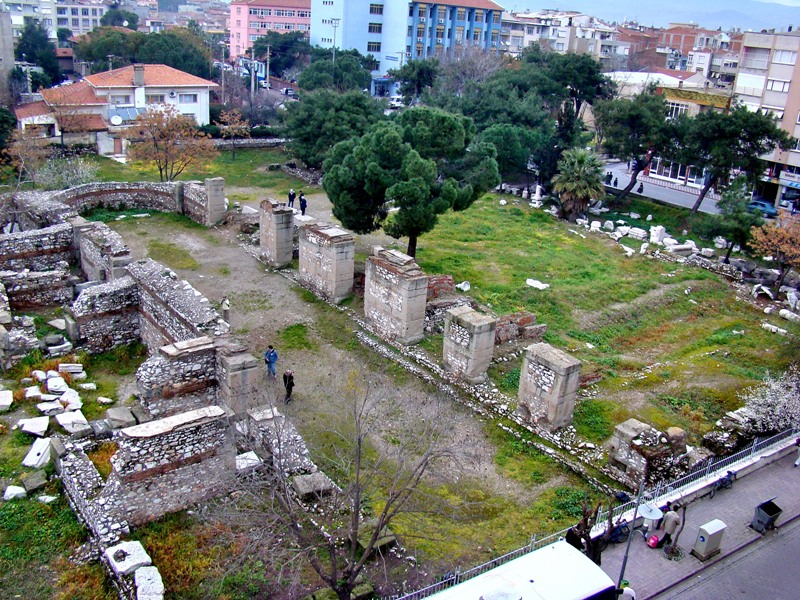
Isaac Went Out To Meditate

October 1, 2010

Genesis 24:63 reads, “Isaac went out to meditate in the field toward evening; and he lifted up his eyes and looked, and behold, camels were coming” (NASB).

This lengthy chapter narrates how a faithful servant of Abraham left Canaan to travel to Mesopotamia (Abraham had family there) to procure a wife for Isaac.  Abraham did not want his son to marry one of the idolatrous Canaanites whom God condemned; Abraham’s descendants were to be a separate people.  And thus Genesis 24 tells how Rebekah willingly made the journey to marry Isaac, whom she had never met.

Our text of Gen. 24:63 takes us to the time when Isaac saw Rebekah coming. He was meditating.

Previously he had been to Beer Lahai Roi, (v.62) which means “the well of the Living One who sees me” (see Gen. 16:14).  At this time the text tells us that Isaac “dwelt in the Negev” (Gen. 24:26). The word Negev is the designation for the southern desert region of Canaan.  Gen. 23 tells us that the patriarchal family was living in Hebron (v.2). Prior to that they were living in Beersheba (22:19).  See our map to locate these sites:

Beer lahai roi, Beersheba and Hebron. Map by Scott Richardson.

The Hebrew word for meditate in Gen. 24:63 is suach, which in this form is found only here in the Old Testament. It is derived from siach, of which the Theological Wordbook of the Old Testament says,

The basic meaning of this verb seems to be “rehearse,” repent,” or “go over a matter in one’s mind.” This meditation or contemplation may be done either inwardly or outwardly. Since English differentiates these two notions, the word is usually rendered “meditate,” or “talk” (II.875-6).

Consider first the idea of meditation as silent reflectionSiach is used of reflection on God’s works, “I will meditate with my heart” (Psa. 77:6) during a time when he was so troubled that he could not speak (v.4).  See the context: “I will meditate [here Heb. hagah] on all Your work And muse on Your deeds” (v.12, etc.).

Second, there is the idea of meditating, of silent reflection, on God’s word. Psalm 119 is that great chapter that in each of its 176 verses declares some point or principle regarding God’s word! It is not surprising that several verses speak of meditation. v. 15: “I will meditate on Your precepts And regard Your ways.” v. 48: “And I shall lift up my hands to Your commandments, Which I love; And I will meditate on Your statutes.” See also vv. 23, 27, 79, 148, each of which have our word siach.

For the use of the word siach meaning to talk, consider Proverbs 6:22, which speaks of the young man who has bound his father’s command and his mother’s law to his heart: “When you walk about, they will guide you; When you sleep, they will watch over you; And when you awake, they will talk [siach]to you.” What a beautiful picture: the son has listened, he has made wise teaching from his parents his own.  As he goes about in life, denoted by the words walk about, sleep, and awake, the teaching is always with him.  The word of the Lord talks to him!

But regarding Isaac, of what did his meditation consist?  In short, we don’t know what he was meditating about.  But from the context we can make a couple of suggestions:

1. Consider the emphasis that is given to the LORD (YHVH) in this chapter. He is referenced in vv. 3, 6, 12, 21, 26, 31, 35, 40, 42, 44, 48, 50, 51, 52, 56! This is truly a chapter about the LORD, about His will and His purpose!

2. Perhaps meditating on his future marriage? Considerable trouble and time was involved in Abraham’s servant making a journey of some 900 miles or so to obtain a wife for Isaac.  I would suggest Isaac may well have been meditating, reflecting, on the marriage he was about to enter, with a woman he had never seen before.  Isaac was a godly man, and he no doubt wanted his marriage, his home life, to be pleasing to God.

Lessons.

Time is well spent when it is devoted to meditating on God’s word. This is more than mere reading.  It means to make it your own, to let it dominate your thoughts.

Also, there is much to be said for preparation for marriage.  First, to be what God wants you to be, and second, to have a marriage that is pleasing to God, that He can bless.

We’ll close with another camel photo, as camels are referenced in our text of Gen. 24:63.  This shot was taken at St. Catherine’s Monastery, at the foothills of Mt. Sinai.
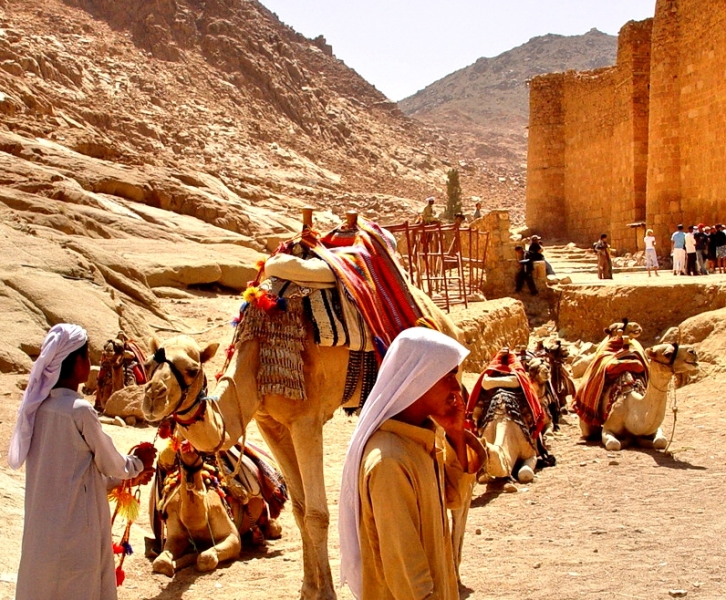
Camels at St. Catherine's at Foothills of Mt. Sinai. Photo ©Leon Mauldin.

Click on images for higher resolution.


Merneptah Stele

September 9, 2010

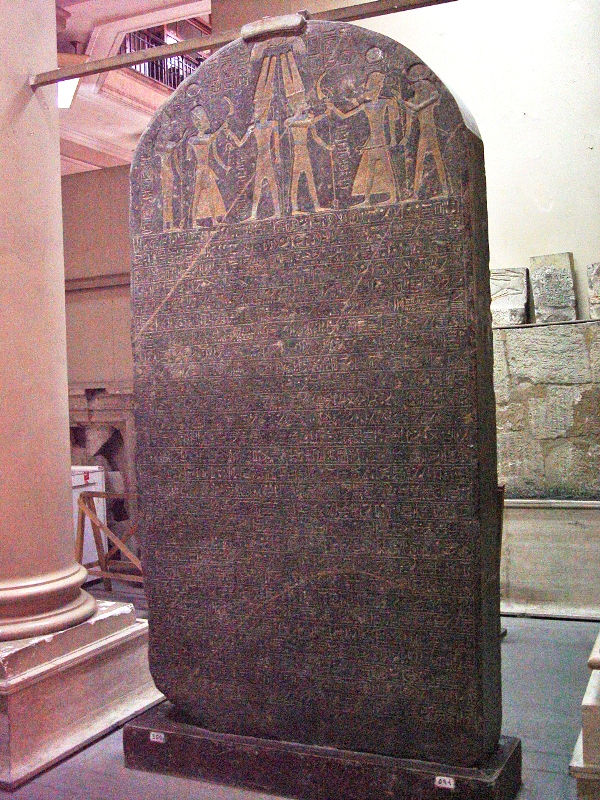
Merneptah, son of Rameses II, ruled Egypt 1213-1203 B.C.  The Merneptah Stele is an inscription of great archaeological and biblical importance.  It contains the first mention of Israel in a source besides the Bible.

Merneptah Stele. Egyptian Museum, Cairo. Photo ©Leon Mauldin.

The stele was discovered in 1896 at Thebes. It is 7.5 feet high, and made of black granite.  It is displayed now in the Egyptian Museum at Cairo. The inscription includes the lines:

“The princes, prostrated, say ‘Shalom’;

None raises his head among the Nine Bows.

Now that Tehenu has come to ruin, Hatti is pacified.

Canaan has been plundered into every sort of woe. Ashkelon has been overcome.

Gezer has been captured.

Yano‘am was made non-existent.

Israel is laid waste (and) his seed is not.

Hurru has become a widow because of Egypt.

All lands have united themselves in peace.

Anyone who was restless, he has been subdued by the King of Upper and Lower Egypt, Ba-en-Re-mery-Amun, son of Re, Mer-en-Ptah Hotep-her-Ma‘at, granted life like Re, daily. (BAR 16:05, Sept/Oct 1990).

Note: italics are supplied to emphasize the portion of the inscription that references the area of Canaan and Israel.

The date of this inscription would be about 1207 B.C.  By that point in time, Israel was established in the land of Canaan to such an extent that it would be included in a listing of nations defeated by the world’s most powerful monarch.

Many “scholars” deny that Israel even existed as a nation by this point in time, but the inscription proves them to be wrong.

For further reading I recommend Todd Bolen’s article in The Bible and Interpretation. He wrote on his blog, “I thank God every day for the Merneptah Stele.” Go to:

https://bibleinterp.arizona.edu/opeds/bolen357916

“The princes, prostrated, say ‘Shalom’;

None raises his head among the Nine Bows.

Now that Tehenu has come to ruin, Hatti is pacified.

Canaan has been plundered into every sort of woe. Ashkelon has been overcome.

Gezer has been captured.

Yano‘am was made non-existent.

Israel is laid waste (and) his seed is not.

Hurru has become a widow because of Egypt.

All lands have united themselves in peace.

Anyone who was restless, he has been subdued by the King of Upper and Lower Egypt, Ba-en-Re-mery-Amun, son of Re, Mer-en-Ptah Hotep-her-Ma‘at, granted life like Re, daily.”[i]


Editor, H. S. (2004; 2004). BAR 16:05 (Sep/Oct 1990). Biblical Archaeology Society.


Lectures at Kamenice

August 3, 2010

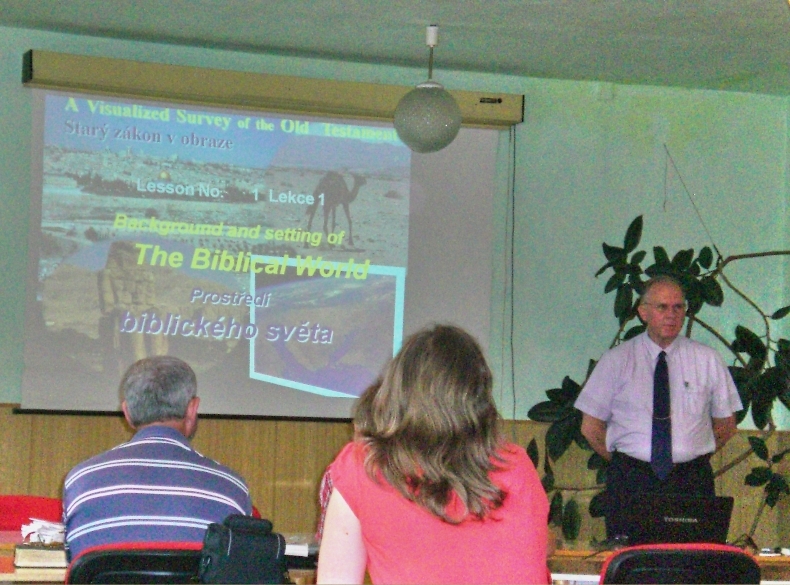
This evening completes day two of the lectures at Kamenice.  Sessions are scheduled from 9 AM to 9 PM, so we’ve not had much time for posting.  We are sure enjoying the association of Christians who have gathered here for the week, many of whom have traveled hundreds of miles to be here.  I am thankful to God for such opportunities.

I have been asked to do a historical survey of the Old Testament.  I’m making use of hundreds of photos of Bible places as the events of scripture are narrated.

Lectures Kamenice Czech

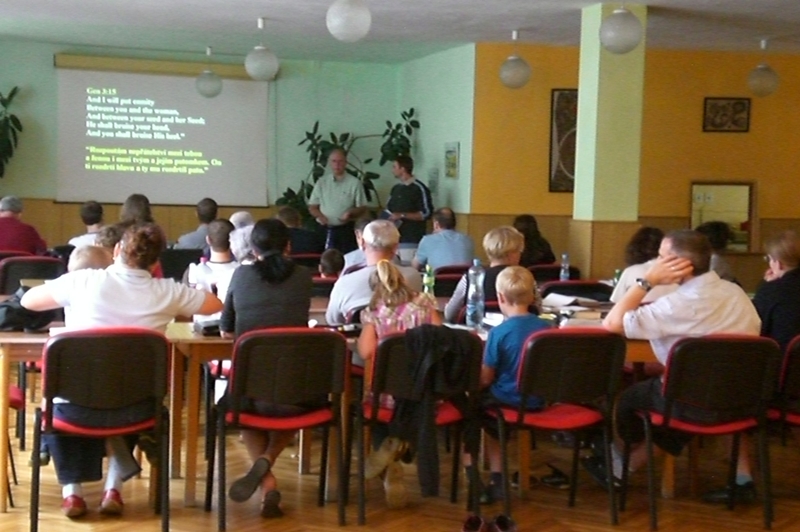
My slides which include text are in both English and Czech.  As I speak a Czech translates for me.

This series gives us an opportunity to study the theme of the Bible, the unfolding of God’s plan to save mankind through the redemptive work of Jesus Christ.  The first promise of Christ is found in Genesis 3:15, depicted below:

Lectureship at Kamenice

Kamenice is a very nice Czech village.  Perhaps I can share a few photos with you in the next day or two.

It is great to be associated with my friend and fellow preacher Bill Bynum.  He makes two trips per year to encourage European Christians in remote places.  Previously he has lived and worked as evangelist both in Czech as well as Hungary.

Click on photos for larger view. More later.


Safe Arrival at Prague

July 31, 2010

My wife and I arrived safely in Prague this morning.  I’m looking forward to teaching at the local congregation Sun AM, and then speaking at the annual lectureship at Kamenice Mon-Fri. It is good to be with Mike Morrow for this effort.

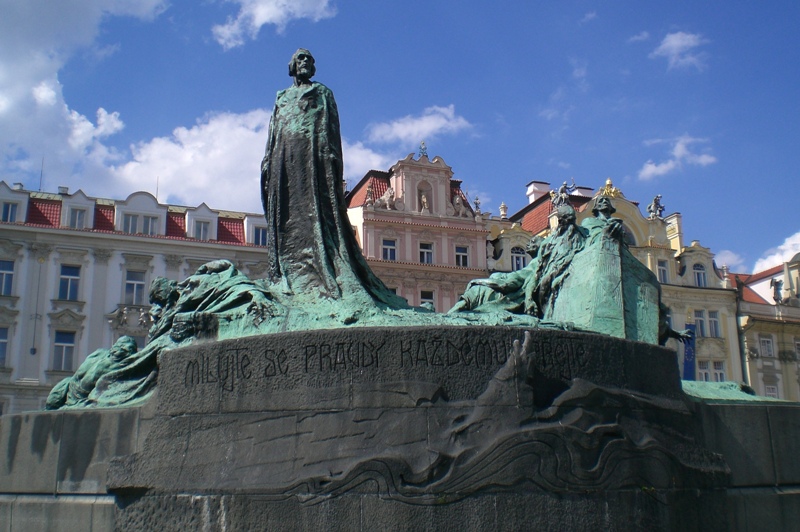
This afternoon Linda and I had the occasion to do some walking in and around the historic square in Prague.  There is a monument to the reformer John Huss, a Czech priest, philosopher and religious reformer.

John Huss. Prague. Photo ©Leon Mauldin.

John Huss was burned at the stake for his faith on July 6, 1415.  He continues to be held in high esteem by the Czechs.

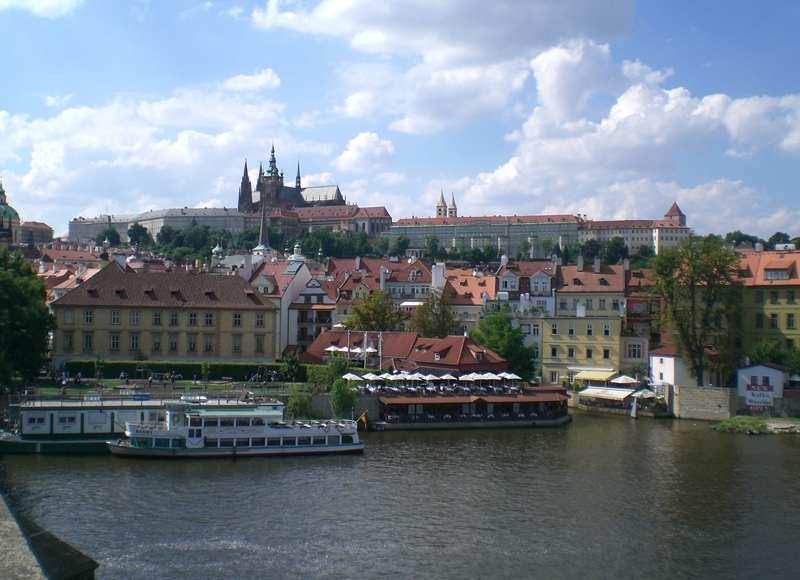
From the Charles Bridge over the Vltava River you have a view of the Czech Castle, seen at skyline of our photo.

Prague Castle. View from Vltava River. Photo ©Leon Mauldin.

Click on images for larger view/higher resolution.


“The next day unto Rhodes” (Acts 21:1)

July 28, 2010

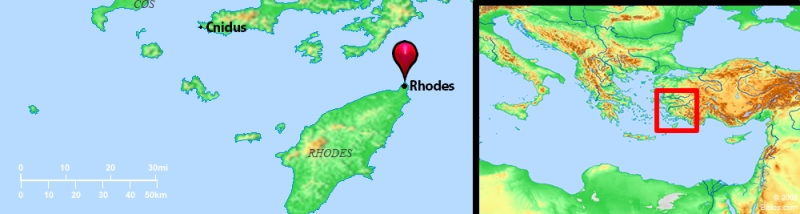
As Paul’s Third Missionary Journey neared its close, with Paul and his fellow travelers sailing the Mediterranean toward their destination of Jerusalem, Luke notes,  “Now it came to pass, that when we had departed from them [Ephesian Elders at Miletus] and set sail, running a straight course we came to Cos, the following day to Rhodes…” (Acts 21:1). Rhodes was an island off the southwestern shore of the Roman province of Asia Minor.  See map:

Island and City of Rhodes. Map courtesy of bibleatlas.org

You will notice both the island of Rhodes, and the city by that same name.  Regarding our Acts 21:1 passage quoted above, F.F. Bruce observes,

“Rhodes” here refers to the city rather than to the island of the same name (the chief island of the Dodecanese). The city of Rhodes, lying at the island’s north-eastern extremity, was founded in 408 B.C. by the amalgamation of three earlier settlements.  As the prevailing wind was from the north-east, they were able to accomplish this part of the voyage with a straight course (NICOT, Acts.420).

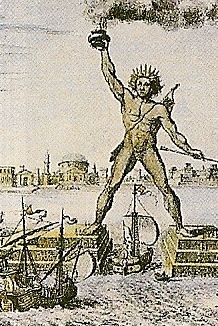
At Rhodes was one of the Seven Wonders of the Ancient World, the Colossus of Rhodes, a huge statue of the sun god Helios. It is traditionally depicted as straddling Mandraki harbor, but other believe it stood at the Temple of Apollo. See artist conception below:

Colossus of Rhodes, Painting by Fischer von Erlach, 1700. Source: Eyewitness Travel, The Greek Islands.

Gareth Reese, quoting Dale, writes:

For 56 years the brazen Colossus of Helios stood across the mouth of the barbor.  It was so large, being 105 feet high, that ships sailed between its legs.  It was considered one of the seven wonders of the ancient world.  The brazen Colossus represented the sun which shown almost every day on the island.  About 224 B.C., an earthquake threw the idol down. [Its fragments were still on the spot at the time of Paul’s visit.] In 600 A.C., its remains were sold to a Jew by the conquering Saracans.  It took 900 camels to carry the brass away (Acts.778).

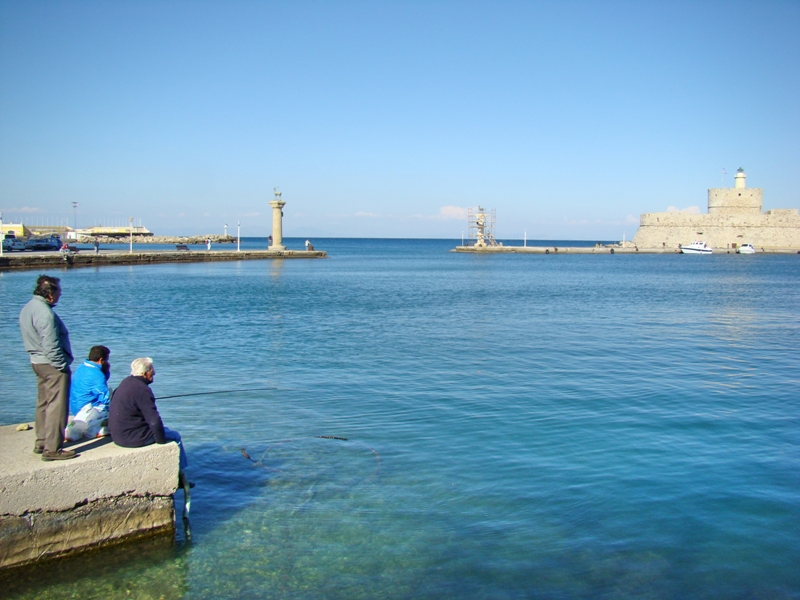
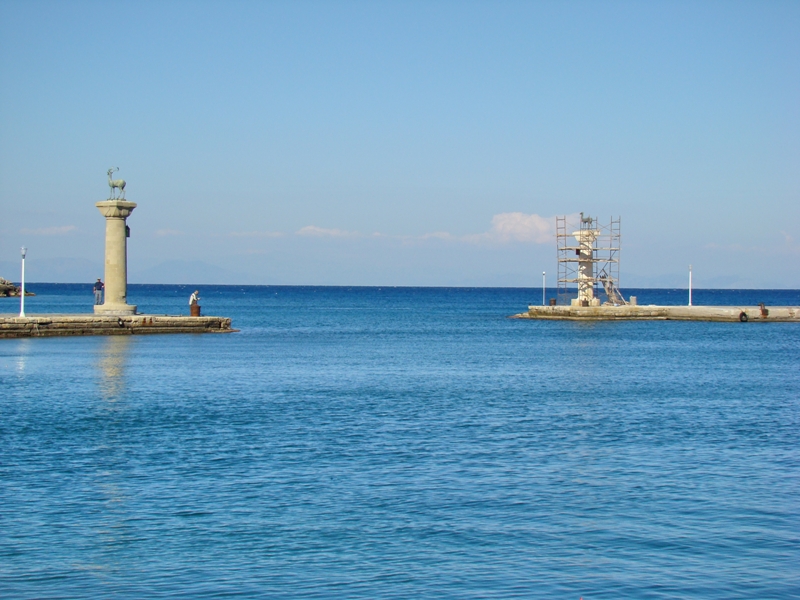
Our photo below, taken in March of this year, shows the harbor looking out through the entrance to the sea.

Harbor of Rhodes. Possible site of Colossus. Photo ©Leon Mauldin.

And here is a closer view:

Rhodes Harbor. Closer View. Photo ©Leon Mauldin.

Click on photos for larger view/higher resolution.


At Pergamum, the god Asclepius

May 25, 2010

We have been looking at the biblical city of Pergamum, the city where one of the seven churches of Asia (Rev. 2-3) was located.  Our last post featured photos from the Asklepieion, where the god of healing, Asclepius, was worshiped. There were other famous temples dedicated to this medicine god at Epidaurus in north-eastern Peloponnese, also on the island of Kos, as well as Trikala, and Gortys.

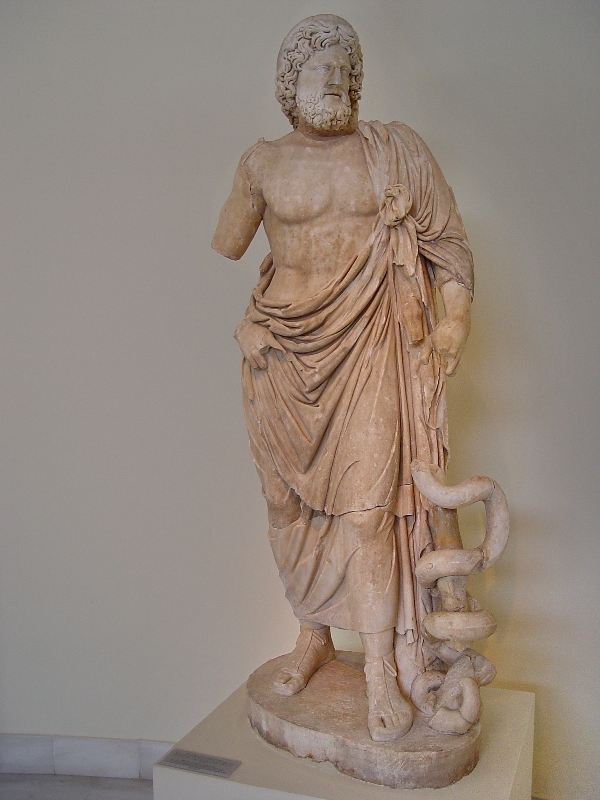
This photo is a statue of  Asclepius on display at the Athens Museum.  Notice the serpent intertwined on his staff.

Asclepius. Athens Museum. Photo ©Leon Mauldin.

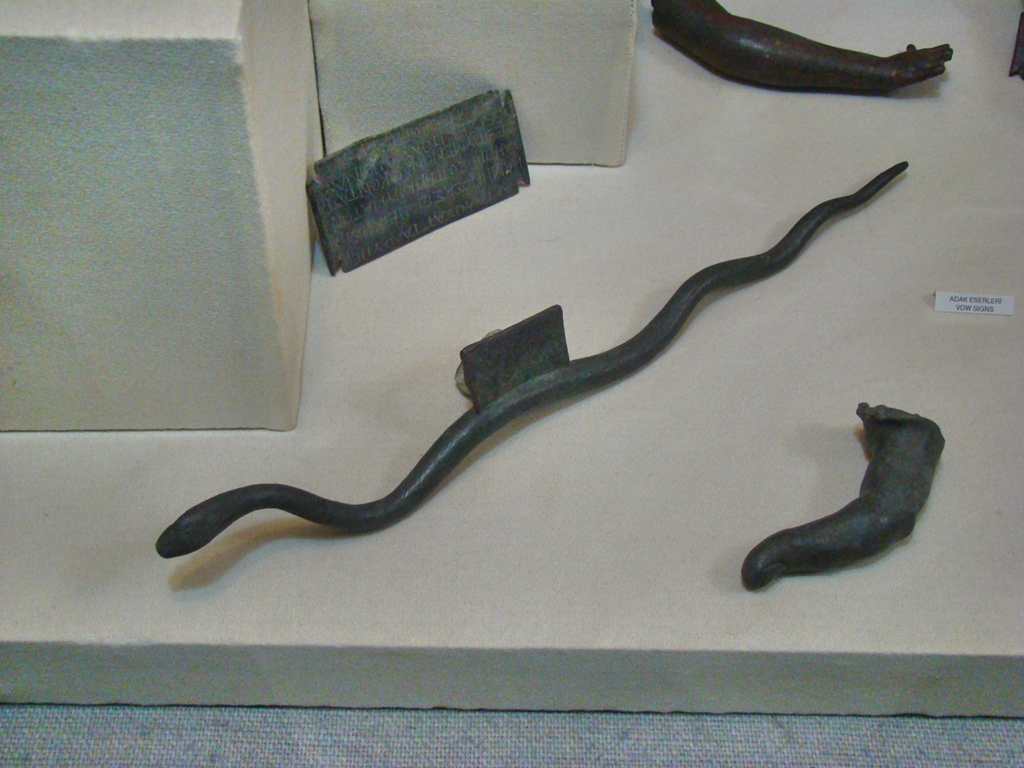
The museum at Pergamum, modern Bergama, displays a serpent, symbol of Asclepius, along with votive offerings left by those who traveled there for healing.

Serpent, symbol of Asclepius. Photo ©Leon Mauldin.

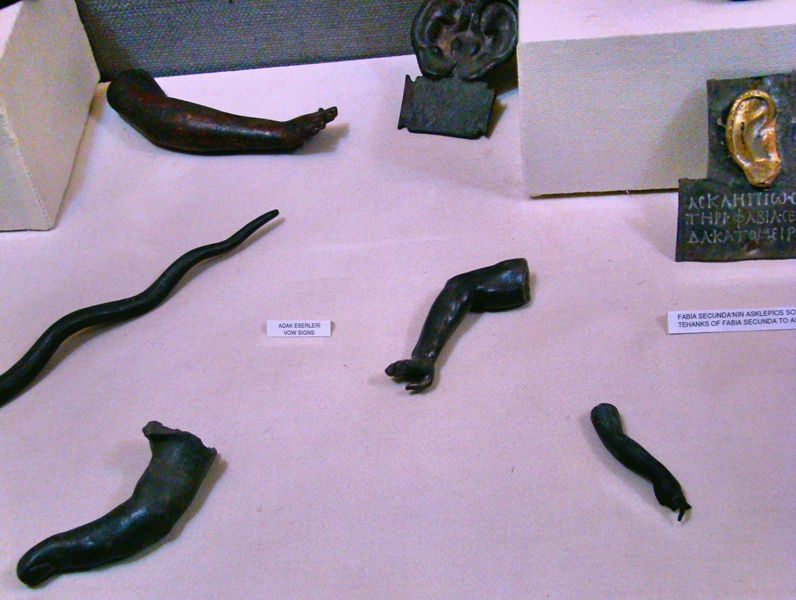
Here is a shot of body parts, left as votive offerings to the god Asclepius.

Body Parts, as Votive Offerings for Asclepius. Photo ©Leon Mauldin.

Temples devoted to Asclepius served a dual purpose, as not only a place of worship for the god, but also a luxury health spa of sorts, i.e., supposedly a healing center.

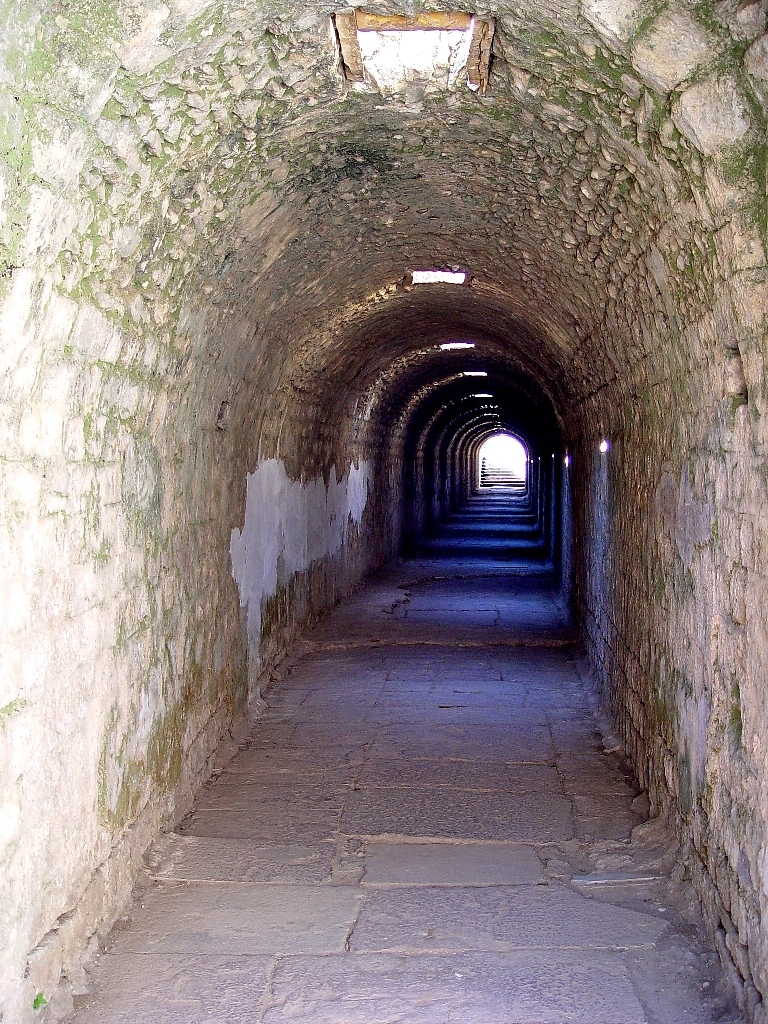
The patients would travel through the sacred passageway, seen in photo below.

Sacred Passageway. Photo ©Leon Mauldin.

You see the openings which let in light.  Also it is suggested that “physicians” may have spoken down to the patients as they moved through the passageway, speaking encouragement with their incantations, etc.

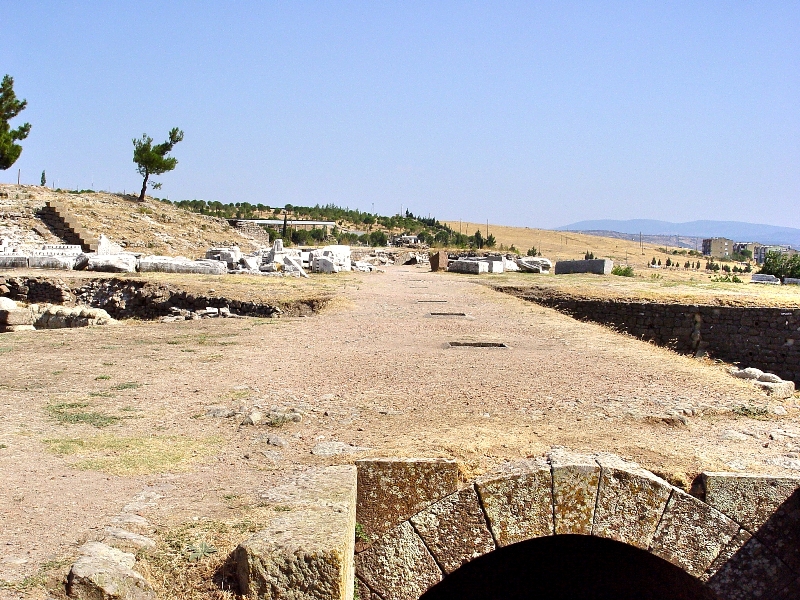
Asklepieion Sacred Passageway, top. Photo ©Leon Mauldin.

When Jesus wrote the church at Pergamum, He described the Christians there as dwelling “where Satan’s throne is” (Rev. 2:13).  Some see in that a specific reference to Asclepius, with his serpent symbol. Satan appeared in the Garden of Eden in the form of a serpent.  He is called “that serpent of old, the Devil and Satan, who deceived the whole world” (Rev. 12:8; cf. 2 Cor. 11:3).  Others suggest that Jesus is referring to the prominent worship of Zeus there at Pergamum. Still others would say that it is Pergamum’s position as a center for imperial worship that is under consideration.  Not to mention Bacchus, the wine god!  It is possible that Jesus had in mind specifically  one of these false systems, but it may well be that it is a combination of all of the above that gave rise to His description.

It is instructive to consider what Jesus does NOT tell the church to do.  He doesn’t tell them to pack their bags and move to some other location where it would be easier to live the Christian life.  He expected them to be faithful where they were, to be lights in that world of darkness, to do what was right, even when they lived next door to Satan!

Asclepius

The Shadow on the Sundial

March 26, 2010

King Hezekiah was one of Judah’s best kings. He faithfully led the nation in very difficult times.  Then he became sick and was near death. God sent the prophet Isaiah to Hezekiah with the message, “Set your house in order, for you shall die and not live” (Isa. 38:1).  Hezekiah fervently prayed to the Lord, his prayer was heard, and the Lord promised to add 15 years to his life. As a sign to confirm this promise, God said, “Behold, I will bring the shadow on the sundial, which has gone down with the sun on the sundial of Ahaz, ten degrees backward” (Isa. 38:7,8, NKJV).

Some translations render the Hebrew term maalah as “stairway” (see NAS, CSB).  The NET Bible notes, “These steps probably functioned as a type of sundial.”

Whether the term means “steps” or “sundial,” certainly what is under consideration is a means of telling time by the moving shadow cast by the sun.  The miraculous sign was that the shadow would return, it would go backward by 10 “steps” or “degrees.”

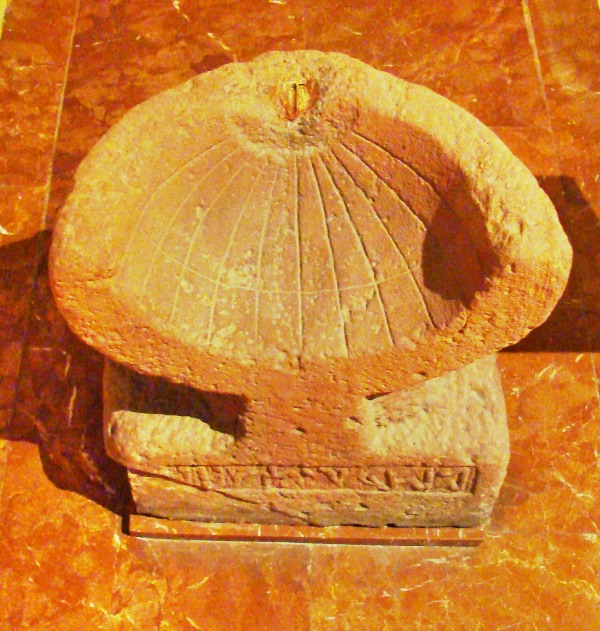
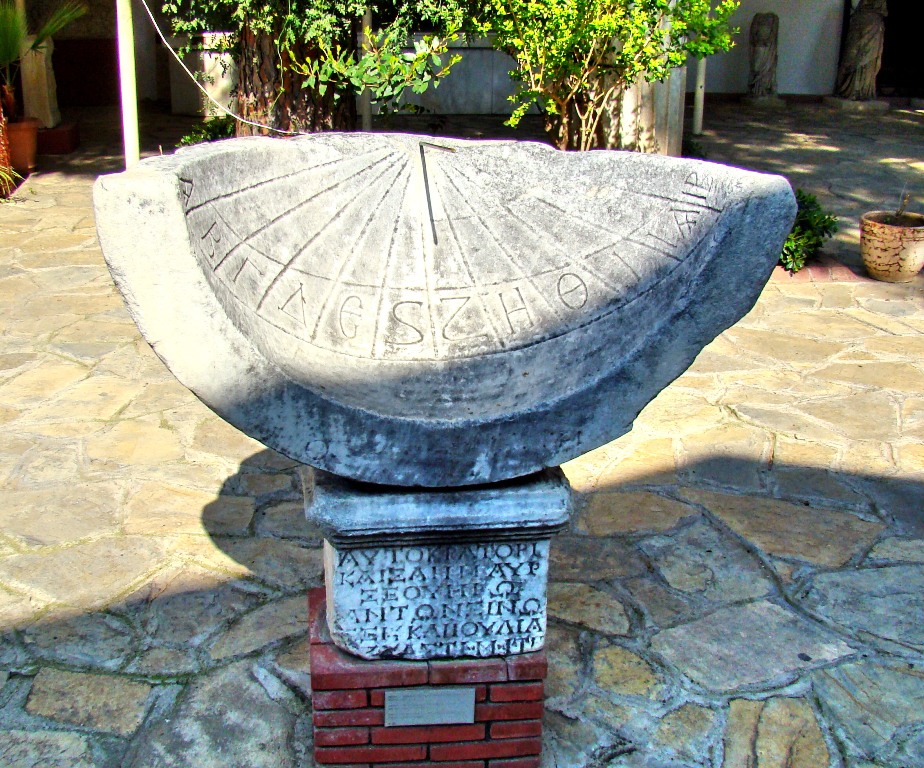
Today’s photos feature a couple of ancient sundials.

Sundial. Archaeological Museum, Istanbul. Photo by Leon Mauldin.

This sundial is housed in the Archaeological Museum in Istanbul, and is dated as 1st century B.C. The accompanying sign has this info: The concave inner side of the half dome shaped dial is divided into twelve parts by eleven radial lines.  The rod, perpendicular to the center, is the pointer. The shadow of the pointer falls on the radial lines as the sun moves. Although the system of dividing the time passing between sunrise and sunset into twelve equal units was used in Mesopotamia as early as the Sumerian times this type of dial is known as the Babylonian dial.

The rod referenced above is missing from this sundial.  But you can see the rod in the sundial below, casting its shadow.  This artifact is located in the Ephesus Museum.

Sundial. Ephesus Museum. Photo by Leon Mauldin.

Whether what is intended in Isa. 38 is this type of sundial, or another system (steps, stairway) is meant, the principle is the same.  God miraculously returned the shadow to confirm to Hezekiah that He would extend his life as He had promised.


Nebuchadnezzar’s Ishtar Gate Lions

March 25, 2010

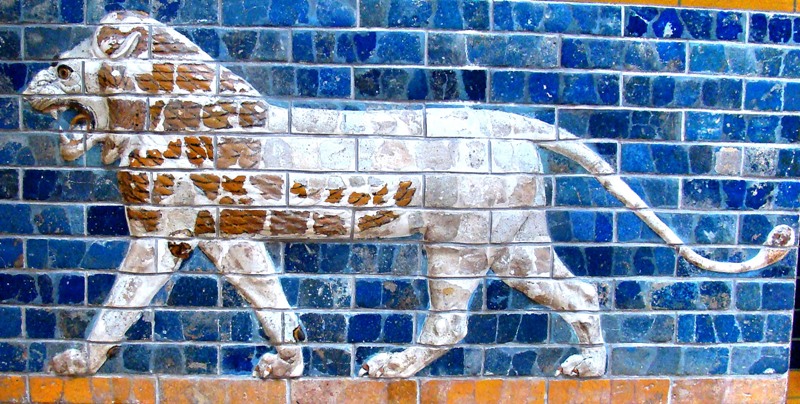
Nelson’s New Illustrated Bible Manners and Customs informs us that in Nebuchadnezzar’s original arrangement in Babylon, “…a section of paved road over two hundred yards long led into the Ishtar Gate. On either side of the roadway lions (sixty on each side), symbols of Ishtar, in molded glazed brick, in red, white, and yellow, lined the walls. The roadway still contains the paving stones inscribed with Nebuchadnezzar’s dedication” (p. 309).

Today’s photo shows one of the panels of glazed bricks, depicting a lion.

Babylon Ishtar Gate Lion. Istanbul Museum. Photo by Leon Mauldin.

“The excavator Koldewey carried off to Berlin many bricks from the Ishtar Gate and the approach to it, and a diminutive gate with its approach has been recreated in the archaeological museum in Berlin. Anyone who walks through this part of the museum can imagine himself as Daniel or Ezekiel walking into Babylon to meet Nebuchadnezzar. Panels of these sacred animals are also on display in the archaeological museums in Baghdad and Istanbul and the Metropolitan Museum in New York” (ibid.).

Such displays may give us a glimpse of the splendor and beauty of ancient Babylon. It gives us some insight into Nebuchadnezzar’s boast: “The king uttered these words: ‘Is this not the great Babylon that I have built for a royal residence by my own mighty strength and for my majestic honor?'” (Dan. 4:30, NET).  The mighty monarch learned that “the Most High rules the kingdom of men and gives it to whom he will and sets over it the lowliest of men” (Dan. 4:17, ESV), when God humbled him. “He was driven from human society, he ate grass like oxen, and his body became damp with the dew of the sky, until his hair became long like an eagle’s feathers, and his nails like a bird’s claws” (v. 33).  When he realized that God is sovereign, and that he reigned only because God permitted it, then he again ascended the throne.  He praised God saying, “But at the end of the appointed time I, Nebuchadnezzar, looked up toward heaven, and my sanity returned to me. I extolled the Most High, and I praised and glorified the one who lives forever. For his authority is an everlasting authority, and his kingdom extends from one generation to the next” (v.34).


Homeward bound

March 21, 2010

Today completed our biblical study tour of Turkey and Greece, as we have traveled in the steps of Paul and John.  Our flight is to leave early tomorrow (Mon) morning.  We have all profited from the trip, and our understanding of Scripture in its historical and geographical context has been enhanced.

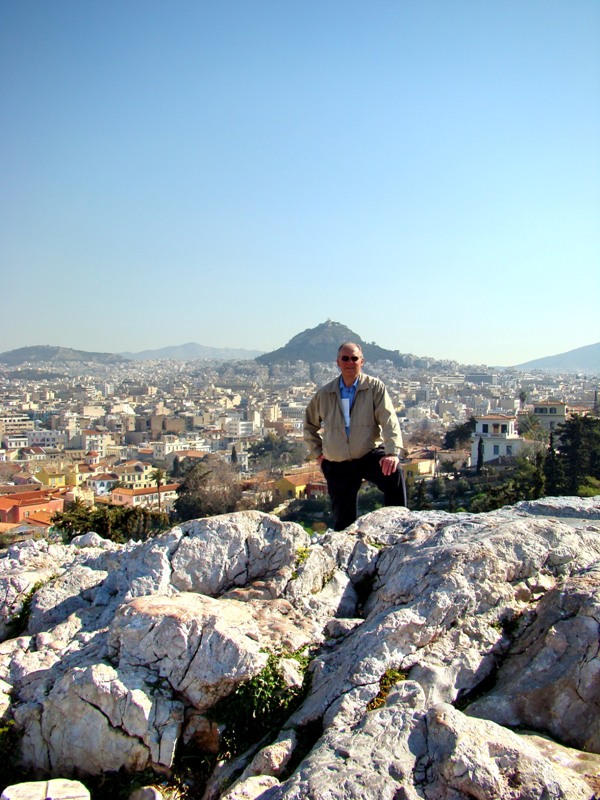
On Friday our group stood on Mar’s Hill in Athens.  During the 2nd Missionary Journey, it was in this area that Paul addressed the Stoic and Epicurean philosophers. While an invitation to speak to them sounded potentially promising (Acts 17:19), Luke informs us, “For all the Athenians and the foreigners who were there spent their time in nothing else but either to tell or to hear some new thing” (v.21).  It turned out that these people who were looking for novelty were not looking for truth.  Paul wrote of those who are “always learning and never able to come to the knowledge of the truth” (2 Tim. 3:7).  Sadly, when Paul spoke of the resurrection of Christ, the Athenians mocked (Acts 17:32). A few responded favorably, but the message of the Gospel was quickly dismissed by most of the hearers there.

Today’s photo shows the Areopagus (Mar’s Hill), which is situated slightly below the acropolis.  Ares was the Grecian mythological god of war; “pagos” means “a rocky hill.” Thus Areopagus means the “Hill of Mar’s; hence, Mar’s Hill.

Areopagos (Mar's Hill) at Athens.


Thyatira, home of Lydia

March 20, 2010

Today our group visited Corinth and then Cenchreae. The day was beautiful weather-wise, and thus provided great opportunities to take photos which we plan to share on this blog as well as use in other teaching/publishing formats.

For today I want to backtrack a bit and go back to Thyatira, one of the Seven Churches addressed in Revelation 2-3, and also home of Lydia, the first convert in Philiipi (Acts 16:14).  Philippi, where we meet Lydia, is described as “a leading city of the district of Macedonia and a Roman colony” (Acts 16:11, ESV). Philippi is now in Greece, north of where we are presently (Athens).

The text reads, “We remained in this city some days.  And on the Sabbath day we went outside the gate to the riverside, where we supposed there was a place of prayer, and we sat down and spoke to the women who had come together.   One who heard us was a woman named Lydia, from the city of Thyatira, a seller of purple goods, who was a worshiper of God. The Lord opened her heart to pay attention to what was said by Paul.   And after she was baptized, and her household as well, she urged us, saying, “If you have judged me to be faithful to the Lord, come to my house and stay.” And she prevailed upon us” (Acts 16:12-15, ESV).

Thyatira, Lydia’s former home, was known for its trade guilds. “No other city seems to have had so many guilds as Thyatira: coppersmiths, bronze workers, tanners, leather workers, dyers, workers in wool and linen, potters, bakers, and slave dealers” (Biblical Sites in Turkey, by Blake and Edmonds, p.132).

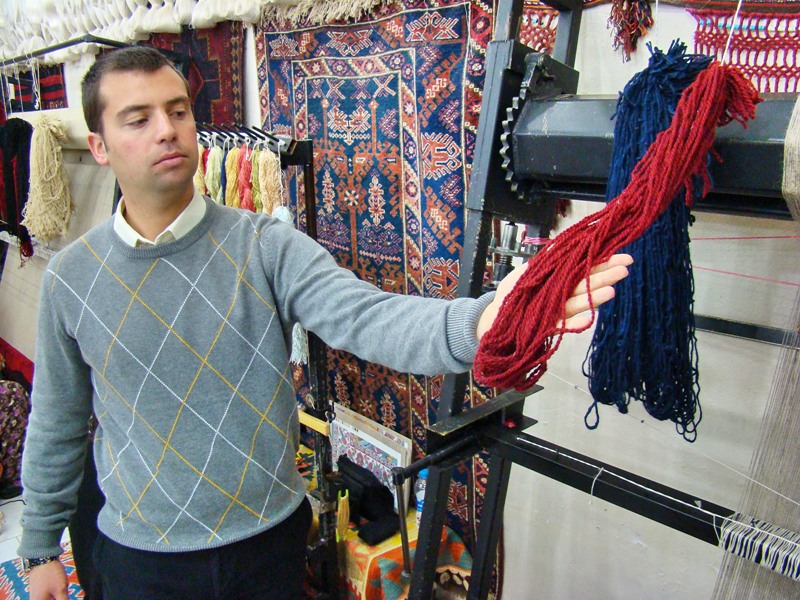
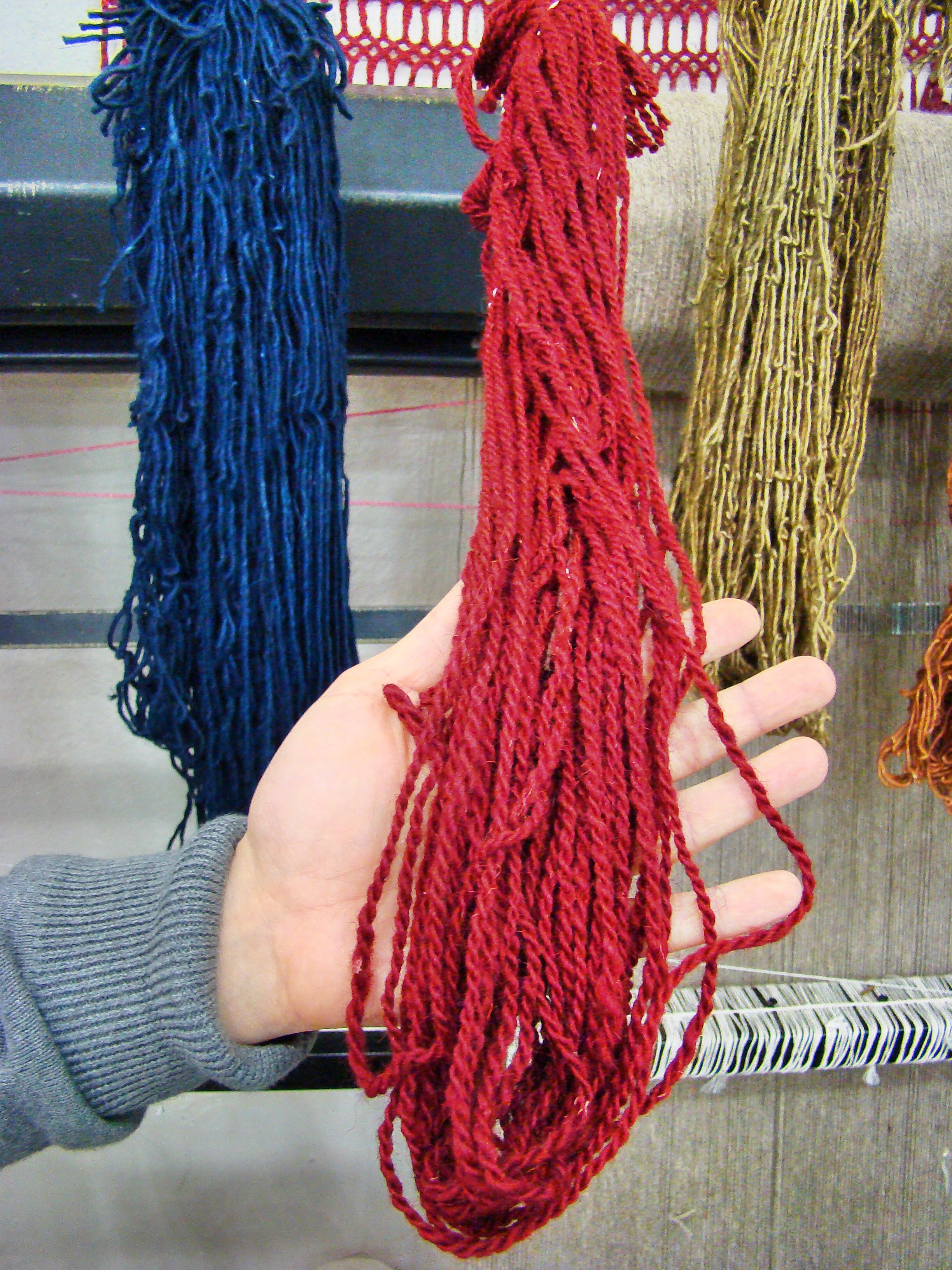
Regarding the purple dye, Todd Bolen observes, “Thyatira was most known for the dyeing of purple cloth, a fact which Homer even references in his Iliad.  There are two theories as to how the dye was made.  One theory holds that the dye came from sea slugs and shells found in the Mediterranean; the other postulates that the dye was extracted from the roots of plants.  Thyatira’s inland location most supports the latter theory.”

With that in mind, we post here a photo of the madder root from which the purple dye comes:

Madder Root. Photo by Leon Mauldin

Notice the color of the wool dyed with the madder root in these next two shots:

Wool dyed with madder root. Photo by Leon Mauldin.

Close up of wool dyed with madder root. Photo by Leon Mauldin.

Look at this small carpet; note the part of the pattern which was dyed with the madder root.

Carpet dyed with madder root. Photo by Leon Mauldin

The city of biblical Thyatira is modern Akhisar, with a population of about 100,000. Very little has been excavated; archaeological excavation was done by Rustem Duyuran  from 1968 to 1971. The ruins of the basilica in the photo below date to the 5th or 6th century A.D. The white objects on your right are architectural fragments of arches, columns, etc., and date back to Roman times.

Ruins of Thyatira, home of Lydia. Photo by Leon Mauldin

The church that met in the ancient city was commended for its love, faith, service and patient endurance (Rev. 2:19). However, Jesus went on to say, “But I have this against you: you tolerate the woman Jezebel, who calls herself a prophetess, and teaches and deceives My slaves to commit sexual immorality and to eat meat sacrificed to idols” (Rev. 2:20).  The wicked Jezebel of Old Testament fame had a modern counterpart.  She was condemned for her false teaching and evil influence, and the church was wrong to fellowship her.

More later!