Boaring at Beitin

March 22, 2011

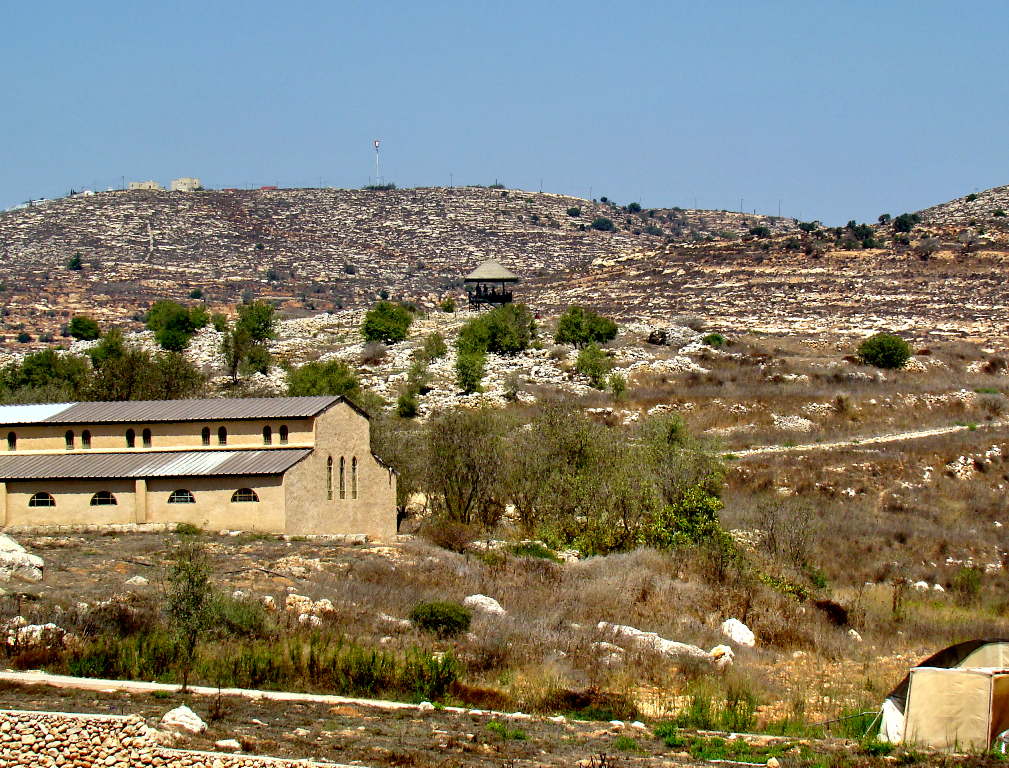
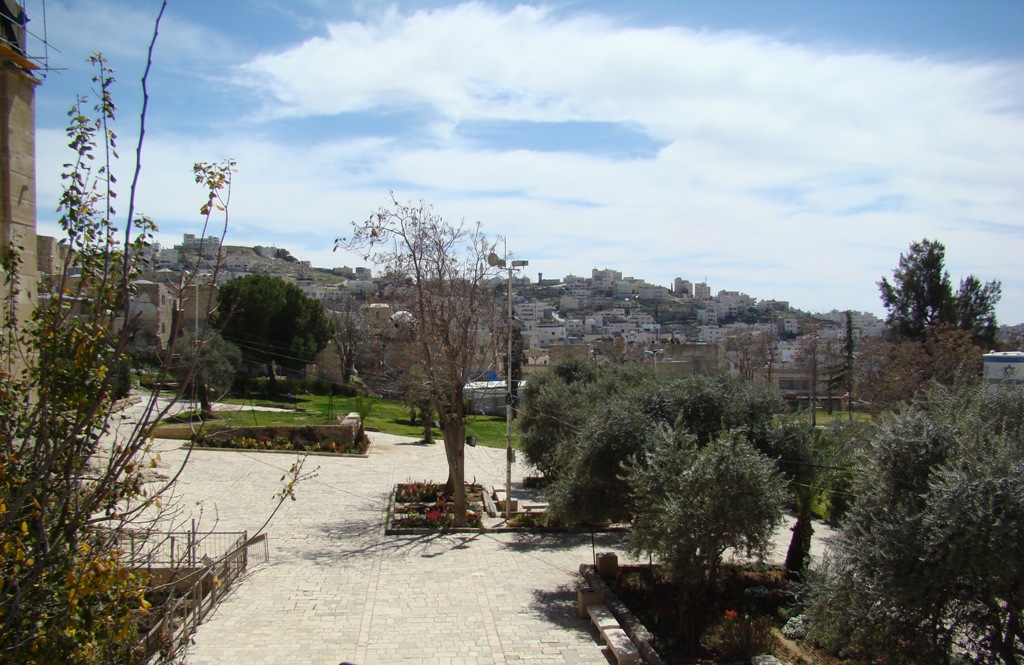
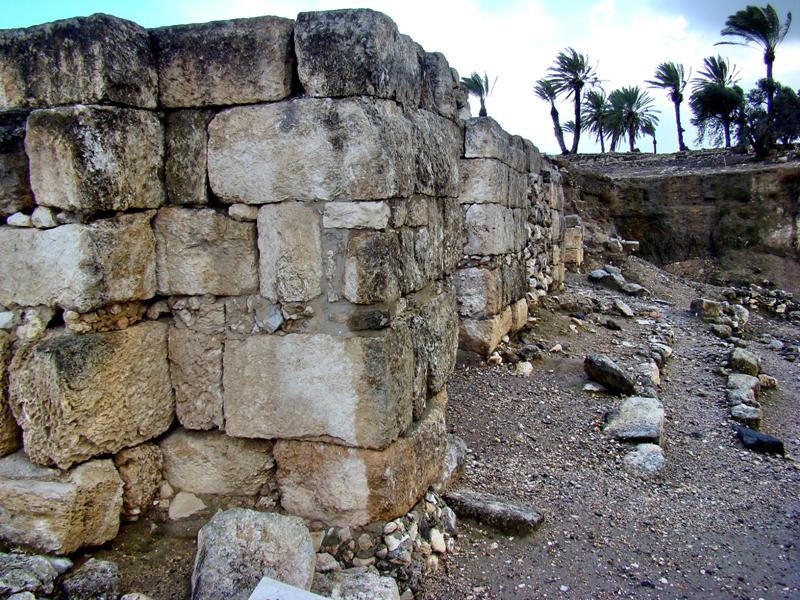
Most scholars today identify Old Testament Bethel as the Arab village of Beitin about 11 mi north of Jerusalem. Edward Robinson was the first to identify it in the 1830’s, equating the modern Arabic name of Beitin with Bethel.  This identification was also accepted by W. F. Alblright, who believed that the identification was maintained by the Biblical and patristic (church fathers) evidence. We were fortunate to see Beitin last week during our tour of Israel.

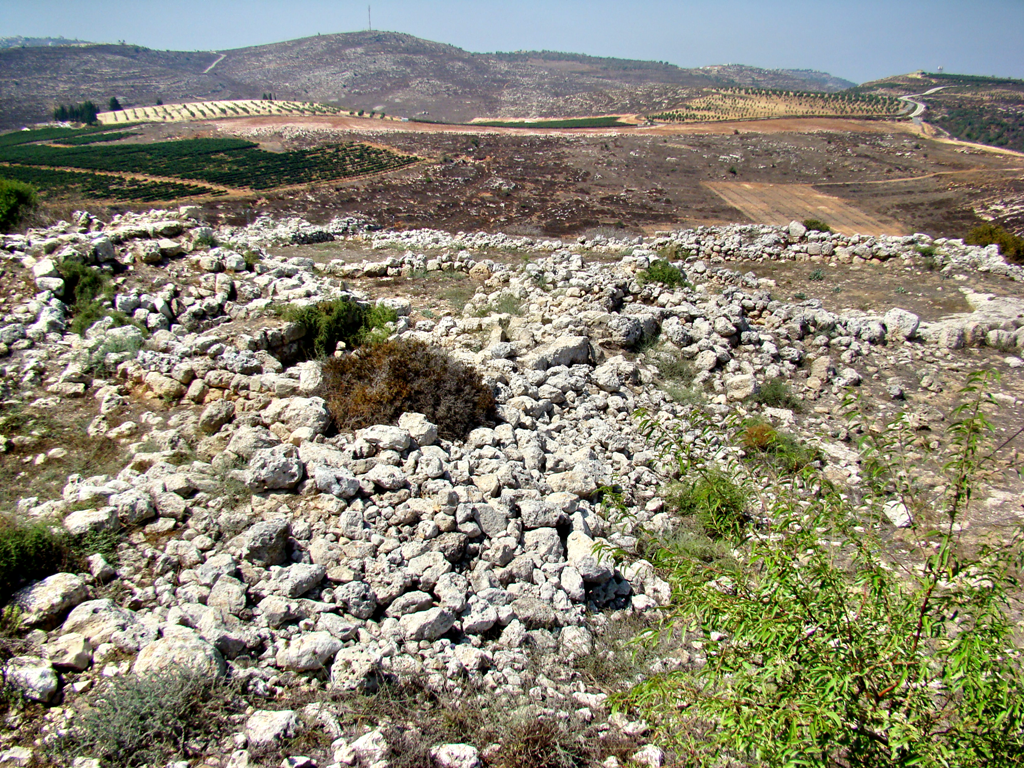
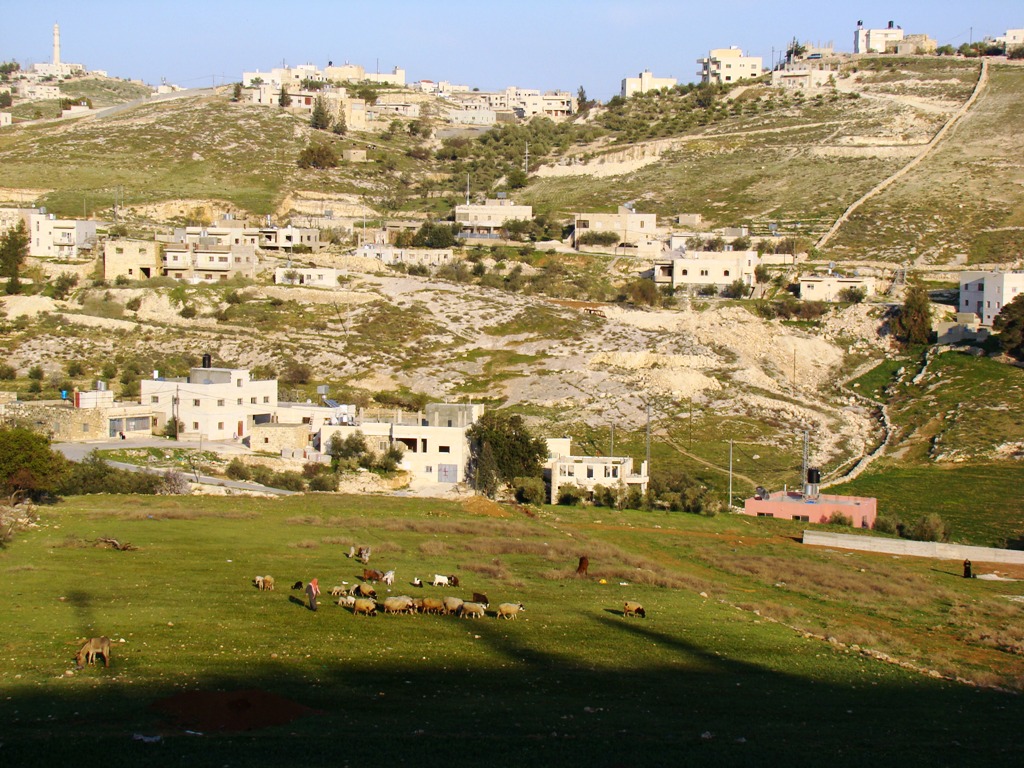
Beitin, proposed site for biblical Bethel. Photo by Leon Mauldin.

Beitin is on the hill in the distance. In the Bible, Bethel received its name as a result of God appearing to Jacob there (formerly Luz), and giving him the Abrahamic promises–(1) to make of him a great nation (2) to give his descendants the land of Canaan (3) through his Seed would all families of the earth be blessed. Jacob named the site Bethel, which means “house of God” (Gen. 28:11-19).

The identity of this site as Bethel is questioned by others (David Livingston, of ABR, Associates for Biblical Research). One of the exciting things about archaeology is that relevant discoveries continue to be made.

Hopefully more info will be forthcoming; perhaps excavations will uncover an inscription, a boundary stone, or some other evidence that will be helpful in making a more certain identification. It the meantime we saw the site that has been identified as biblical Bethel. More excavations are needed!

Here is another shot from a different location.

Beitin. Possible site for biblical Bethel. Photo by Leon Mauldin.

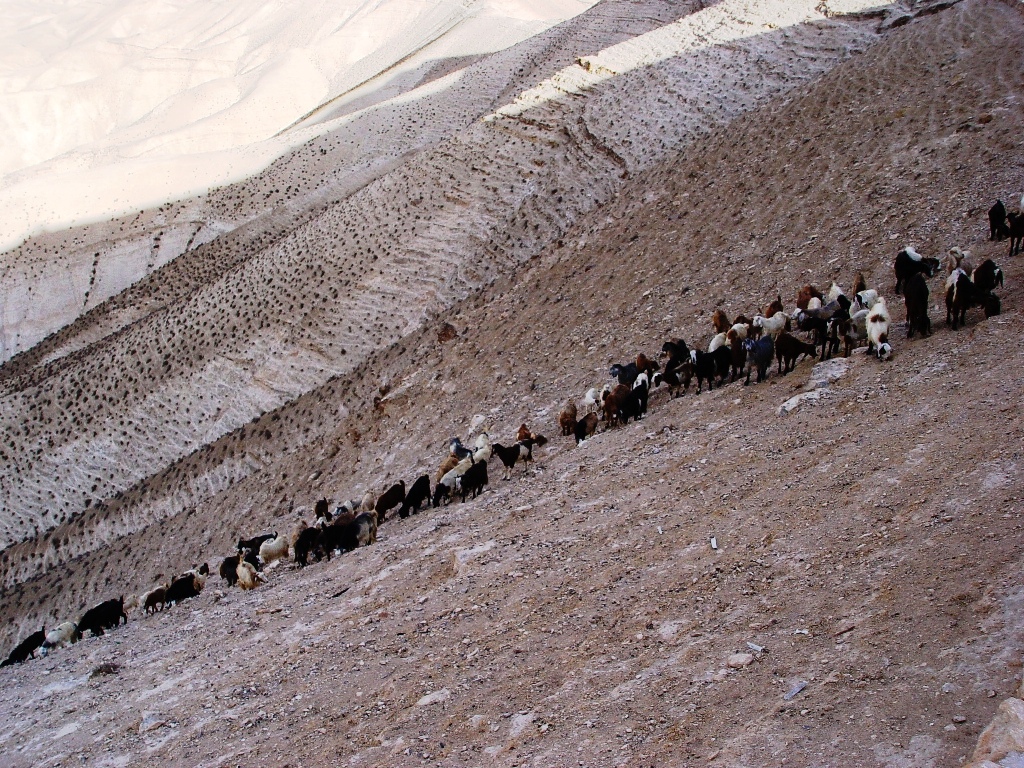
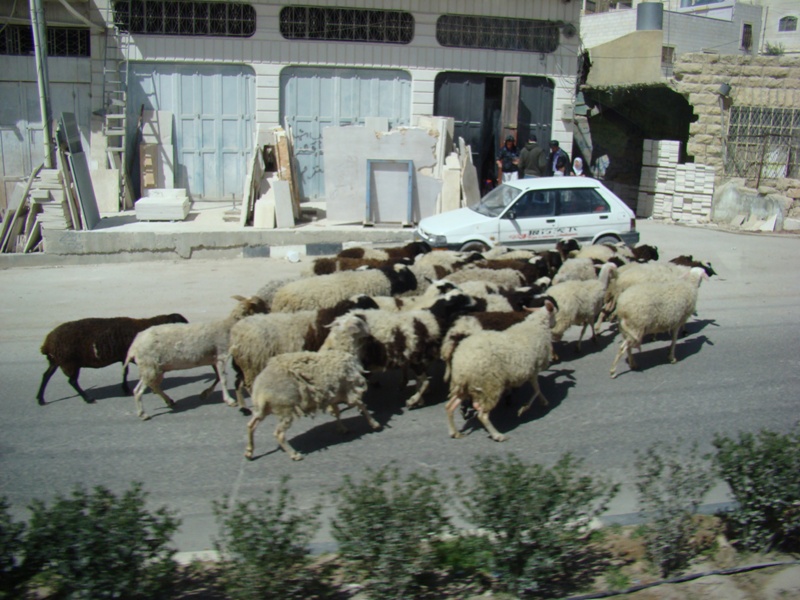
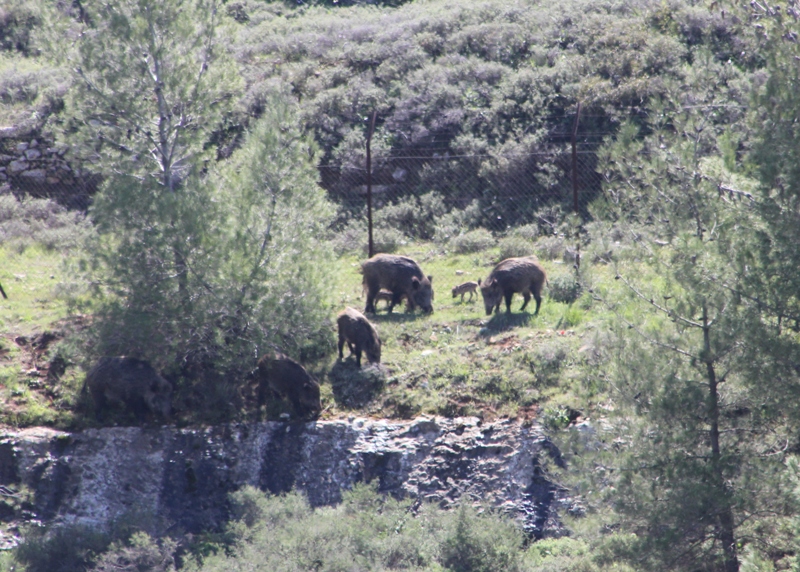
While at the above location some of our tour members noticed some movement in the distance on the side of the hill. It turned out to be wild boars. There were in fact several of them. Keith Welch zoomed in and made this shot:

Wild Boars at Bethel. Photo by Keith Welch.

Of course swine were listed among unclean animals during the Old Testament period, animals which could not be eaten (Lev. 11:7).

There was an article in the 6/12/09 IsraelNationalNews.com on the problem of wild hogs in Israel. The article, “PA Blames Israel for Wild Boars,” is authored by Maayana Miskin.

Palestinian Authority media outlets continue to blame Israel for problems caused by wild boars in Samaria, despite Israeli efforts to cull the animals. On Thursday, PA farmers near Ariel complained that “Israeli settlers” had engineered a wild boar attack that destroyed agricultural produce.

The farmers’ claims were repeated by the head of the regional PA farmers’ union, who accused Israelis living in Ariel and nearby towns of planning the attacks. The union head did not explain how Israelis allegedly trained the pigs to destroy only Arab crops.

Arab residents of Samaria have made several similar claims over the past three years. The claims have been backed up by PA armed forces, whose officers have been quoted as confirming to PA media that Israel is behind wild boar attacks.

Media outlets have also lent credence to the claims, with the PA-based Ma’an news agency stating, “The wild boars are being released by Israeli settlers in order to destroy the plants and crops of Palestinians.”

The claims of malicious Israeli control of the wild animals have continued this year despite Israel’s efforts to cull the wild boar population in areas under its control. The Nature and Parks Authority has worked to control the boars since May of this year, due to damage caused by boars in the Haifa district.

Israel is unable to cull the boar population in Arab villages in Samaria, as those areas are entirely under PA control.
http://www.israelnationalnews.com/News/News.aspx/131834

More to come. Click on photos for higher resolution.


From Dan to Beersheba

March 17, 2011

Tonight as I write this we are in Beersheba, so we have traveled the biblical “from Dan to Beersheba” that is referenced so many times in Scripture (1 Sam. 3:20, etc.), having been to Dan earlier last week.

Last evening we spent the night at the Dead Sea at En Boqeq, but the internet was down when I was attempting to use it. Yesterday AM before leaving Jerusalem we visited the Wailing Wall. This wall was not part of the temple itself, but was the retaining wall for the temple and the structures on the temple mount.

Wailing Wall in Jerusalem. Photo by Leon Mauldin.

Jerusalem is defined by three valleys: the Kidron, Tyropean and Hinnom. In the above photo we are standing in the Tyropean Valley.

The first several courses of larger stones starting from bottom are Herodian. Jews come here to mourn the destruction of the temple, among other reasons.

Just south of the wailing wall, excavations have reached down to first century street level. There you can see the stones that have been uncovered that were part of the temple buildings, hurled down into the valley during the AD 70 destruction. This photo shows the fulfillment of Jesus’ promise that not 0ne stone would be left upon another, that would not be cast down (Matt. 24:2). He said that this would occur during that generation (v.34).

Temple Stones from AD 70 Destruction. Photo by Leon Mauldin.

After leaving Jerusalem, we went to see Anathoth. This was the site of the city which was home to Jeremiah.

Anathoth, home of prophet Jeremiah. Photo by Leon Mauldin.

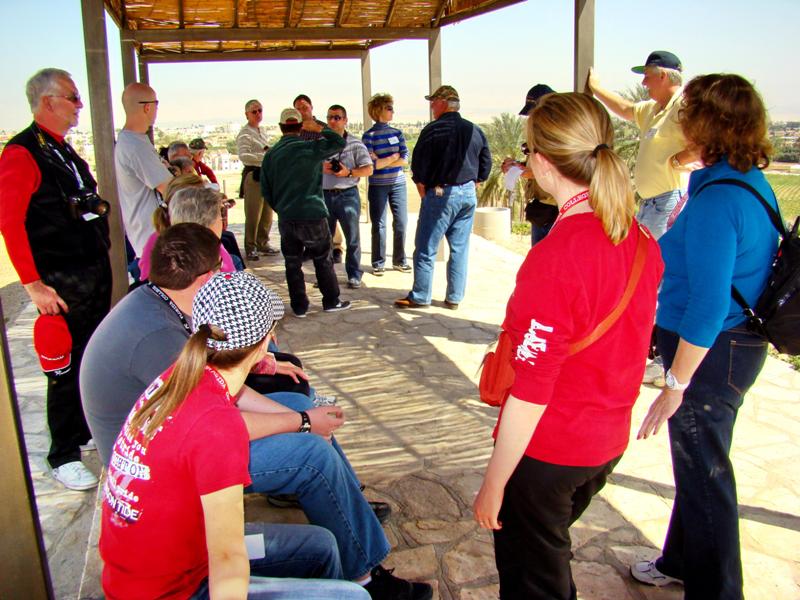
We also went to Old Testament Jericho. While there I took a group photo.

Group Photo at OT Jericho. Photo by Leon Mauldin.

We’ve learned a lot on this journey. We are truly blessed.

This morning upon leaving En Boqeq we went to Masada.

Leon Mauldin at Zoar.

En route to Masada we stopped at Zoar for the view. The brook drains down to the Dead Sea. It is not clear if there is any connection between  this location and the Zoar mentioned in Gen. 19:22ff., in connection with the narrative of lot and the destruction of Sodom and its surrounding cities. The mountains just south of this area are called the Mountains of Sodom.

Masada was a Herodian fortress. It was here that the Zealots fled after the Roman destruction of Jerusalem in AD 70. The Romans laid siege to Masada, and in AD 73 broke through the wall. They found the Jews inside chose death by their own hands rather than be captured by the Romans.

Tomorrow is a full schedule of sites from Tel Sheva (Beersheba) working our way up to Joppa, and from then to TLV for our departing flight home, the Lord willing.  Thanks again for following our travels, and for the many kind notes & prayers.

Click on photos for higher resolution.


The Church of St. Peter in Gallicantu

February 25, 2011

The Church of St. Peter in Gallicantu is one of the proposed sites of the house High Priest Caiaphas, High Priest who presided at Jesus’ “trial” (Matt. 26:57-68). The word “Gallicantu” means cock crowing, and is a reference to Peter’s denial as he sat outside in the courtyard of the High Priest (Matt. 26:69-75). It was on this occasion that Peter denied the Lord three times, “And immediately a rooster crowed. And Peter remembered the word of Jesus who had said to him, ‘Before the rooster crows, you will deny Me three times.’ Then he went out and wept bitterly.”

Church of St. Peter in Gallicantu. Jerusalem. Photo by Leon Mauldin.

Note the steps leading up to the church.

Steps leading to Gallicantu. Photo by Leon Mauldin.

The value of this view is that of helping us visualized Jesus being led to the house of the High Priest, for that unforgettable night when, “He was led away after an unjust trial– but who even cared? Indeed, he was cut off from the land of the living; because of the rebellion of his own people he was wounded” (Isa. 53:8, NET).

There is imagery on the site to remind the visitor of Peter’s denial.

Peter denies the Lord. Photo by Leon Mauldin.

This is a representation of Peter, denying his discipleship of Jesus to a maid. Behind, as soldier stands. What a warning–how easy it is to let down one’s guard and do the unthinkable. Later Peter would warn others about our Adversary, the Devil (1 Pet. 5:8).

View from Gallicantu toward temple area. Photo by Leon Mauldin.

Sign commemorating Peter's Denial. Photo by Leon Mauldin.

On another note, tonight we begin a 3-day series on the History and Geography of the Bible in Lafayette, IN. The first lesson in the series is tonight (Fri) on campus at Purdue University, and continues Sat. and Sun. at the Lafayette church building. I’m looking forward to working with my friend Alan Yeater. Check out their website at http://www.lafayettecoc.org/cms/

Click on images for higher resolution.


The True Meaning of Deisidaimonia

January 22, 2011

A reader writes to ask about the meaning of Acts 17:22, “Then Paul stood in the midst of the Areopagus and said, ‘Men of Athens, I perceive that in all things you are very religious’.” Specifically his question is about the interpretation of “very religious.” The Greek term is deisidaimonesterous. Should the text be rendered as “I perceive that you are worshippers of many demons” rather than “very religious” or “too superstitious” (KJV)? He asks, “What would be your answer to this interpretation?”

1. My first observation would be to look at how various reliable translations render the text. The KJV has “too superstitious.” The ESV, NASB, NKJ, NIV and NET have “very religious.” The CSB and NRSV have “extremely religious.” Always be wary when one suggests a meaning for a biblical term that cannot be found in commonly used, accurate translations.

2. The real discussion among biblical students/scholars about deisidaimonesterous is whether it is best rendered by “superstitious” or “religious,”—not whether it means worshiper of demons. For example, the NET note here observes, “The term deisidaimonesterous is difficult. On the one hand it can have the positive sense of ‘devout,’ but on the other hand it can have the negative sense of ‘superstitious.’ As part of a laudatory introduction (the technical rhetorical term for this introduction was capatatio), the term is probably positive here. It may well be a ‘backhanded’ compliment, playing on the ambiguity.”

3. Paul wants to appeal to the hearts of the Athenians with the Gospel.  How can he best approach them? F.F. Bruce says, “He begins by mentioning that what he has seen in their city has impressed him with the extraordinarily religious nature of the Athenians. . .” (The Book of the Acts, p. 355). In his work, The Greek New Testament, Henry Alford observes, “He wishes to commend their reverential spirit, while he shews its misdirection” (vol. 2, p. 196). In his Greek-English Lexicon, Thayer states that Paul uses the term with “kindly ambiguity” (p.127).

These above statements seem to best fit the context.  Paul states a fact—they were religious—without expressing approval or agreement with the object of their religion. But that served as an opener to go on to show basic truths about the nature of God and His will for man, His creation.

Acropolis at top. Stoa to your left. Paul's preaching in Athens is recorded in Acts 17. View from north. Photo by Leon Mauldin.


4. What then is the evidence for the interpretation “worshipers of many demons.”

First, in fairness, there is the literal meaning of the compound word, as seen in W.E. Vine’s work. Deisidaimon is composed of deido, “to fear,” and daimon, “a demon.” On the surface it would seem that it should be translated “one who fears/worships demons.” But that is not how word meanings are established.  Try that with the word “butterfly.”  When you define “butter” and “fly” have you shown what “butterfly” means? Vine goes on to give the best meaning of the word in Acts 17:22, as “more than others respectful of what is divine.” He says, “It also agrees with the meaning found in Greek writers; the context too suggests that the adjective is used in a good sense” (Expository Dictionary of New Testament Words. IV, p. 94). Meaning is established by usage.

Gareth Reese says, “It must be noted in passing that deisidaimon could be rendered “worshipper of many demons,’ an expression exactly suited to a pagan people like the Athenians who lived in fear of evil spirits and who went out of their way to keep from offending the spirits” (Acts, p. 627; thusly rendered in Amplified and Darby).  But one important rule of interpretation is to consider how the same word is used within Scripture. Our word is found in Acts 25:19 (noun form), where Festus explained to King Agrippa that the Jewish leaders, “. . . had some questions against him [Paul] about their own religion [deisidaimon] and about a certain Jesus, who had died, whom Paul affirmed to be alive.” Here Reese says, “There are reasons to believe Festus used it [deisidaimon] in a good sense here. It was the regular word by which a Roman would designate his own worship, and not being familiar with any technical Jewish word for worship, would naturally use the same word for their religion as he did for his own. Further, Agrippa professes a certain deference for the Jewish religion. Festus would not speak of the religion of his royal guest [Agrippa] in a derogatory sense” (Acts, p. 866).

In conclusion, my judgment is that deisidaimon is best rendered “religion” and deisidaimonesterous as “very religious.” “It was well suited to a general and supremely neutral expression for religion or piety because diamon is used generally for a supernatural power. In the NT it is used in this sense by Festus in Acts 25:19 and the adj. is used by Paul of the Athenians in Ac. 17:22” (Kittel, Vol. 2, p. 20).


The Erechtheion in Athens

January 18, 2011

Among the important ruins situated upon the acropolis in Athens is the Erechtheion, a unique sanctuary dedicated to Athena Polias; Poseidon and Erechtheus were worshiped here.

Erechtheion at Athens. Photo by Leon Mauldin.

This view shows the Porch of the Kayatids, which used female figures as architectural supports as columns. These figures are a representation of the “Maidens of Karyai,” an ancient town of Peloponnese. The structure dates to the 5th century BC.

Below is a close up view:

Close-up of Porch of the Maidens. Photo by Leon Mauldin.

These maidens are actually replicas. The originals are encased in glass in the museum.

More to come.  Click on image for higher resolution.


Hollywood Hitpael

January 7, 2011

“There is one who makes himself rich, yet has nothing; And one who makes himself poor, yet has great riches” (Proverbs 13:7, NKJV). There may be many levels of application of Solomon’s words here. I think of the rich young ruler, who appeared to be rich, but when he “turned away sorrowful,” showed that he was in reality poor (Matt. 19:16-22). The rich man of Luke 12:15-21 was not really wealthy because he was “not rich toward God” (v.21).

It is interesting to compare the rendering of the English Standard Version which renders the text, “One pretends to be rich (emp. mine, L.M.), yet has nothing; another pretends to be poor, yet has great wealth” (Prov. 13:7; likewise rendered in NAS, CSB, NET, NIV, NRS).

This makes for an interesting word study. The NET textual note on the phrase pretends to be rich, states, “The Hitpael of עָשַׁר (’ashar, ‘to be rich’) means ‘to pretend to be rich’ (BDB 799 s.v. עָשַׁר Hithp); this is the so-called ‘Hollywood Hitpael’ (emp. mine, L.M.) function which involves “acting” or pretending to be something one is not.”

Hollywood Hitpael. That was a new one on me, but it makes sense. The world of Hollywood is a pretend world. Bearing this in mind may help us to pursue what is real and substantive: the Word of God, and being in right relationship with Him!


Jacob Watered the Flock of Laban

November 8, 2010

Jacob left Canaan to go to Haran of Padan Aram, fleeing from the wrath of his brother Esau who had determined to kill him.  Beyond that urgency however, was the fact that Isaac and Rebekah did not want Jacob to marry a Canaanite woman, as Esau had done (Gen. 27:46; 28:1-2).  Those women “were a grief of mind to Isaac and Rebekah” (Gen. 26:35).

When Jacob arrived in the vicinity of Haran, he “saw a well in the field; and behold, there were three flocks of sheep lying by it; for out of that well they watered the flocks. A large stone was on the well’s mouth” (Gen. 29:2). Jacob found out from the men who were there that he was at the right place. They knew Abraham’s family.  They knew Laban, who was Rebekah’s brother.  At the very time they were speaking, Rachel, Laban’s daughter, arrived with their sheep.

Jacob removed the stone that covered the well and watered the flocks of Laban.  Our photo helps us to visualize that scene.


Ancient Well. Photo ©Leon Mauldin.


You can see the grooves worn into the stone by ropes hauling up the water. This well is in Israel, but we use it here to illustrate the Genesis text with the setting in Mesopotamia.

Click on image for larger view.


Beth Guvrin

November 2, 2010

The site of Beth Guvrin is also known as Betogabris, Eleutheropolis,Tel Maresha, Tell Sandahanna, Beith Jibrin, Bet Giblin, Beth-guvrin, Bet Guvrin, Gibelin and Maresha according to Todd Bolenhttp://www.bibleplaces.com/bethguvrin.htm

Aeriel Beit Guvrin. Photo ©Leon Mauldin.

An underground system of caves and tunnels was discovered where Jewish rebels hid from the Romans during the Second Jewish Revolt against Rome in the second century A.D. (132-135).  The Roman army was stationed in and around the city during this time.

At Beit Guvrin  an amphitheater has been excavated which can easily be seen in our photo (center). It was first identified in 1981 during an archaeological-architectural survey of Beth Guvrin.  Under the direction of Amos Kloner and A. Hubsch, large-scale excavations were conducted from 1993 to 1995.  Maximum measurements are 71 by 56 meters.  Gladiatorial contests, animal hunting exhibitions, contests between beasts and men as well as other forms of entertainment were conducted here.

“The construction of the amphitheater stemmed from the presence of these Roman army units in the area and the rebuilding of the city” (The New Encyclopedia of Archaeological Excavations in the Holy Land, Vol. 5, p. 1607).

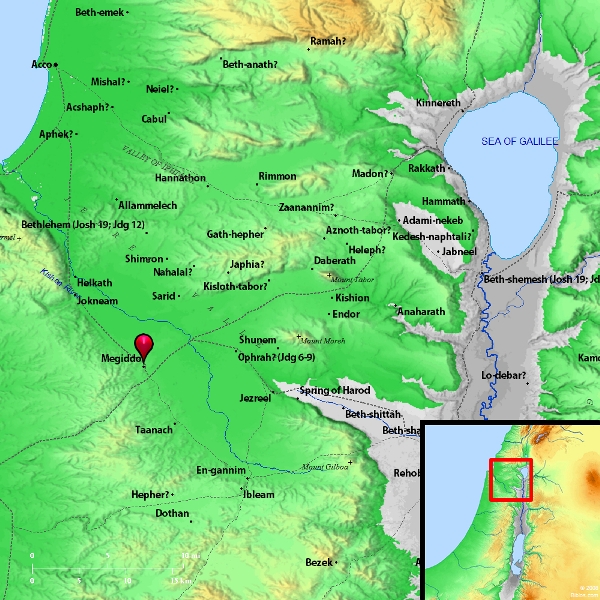
Beit Guvrin is about 1 1/2 miles north of biblical Mareshah, of the Shephelah. See map for orientation.

Mareshah. Map by BibleAtlas.org

Click on map/photo for larger image & higher resolution.


Khirbet-Qeiyafa

October 18, 2010

An archaeological site of current interest is Khirbet-Qeiyafa, the Elah Fortress.  Luke Chandler has been involved in digs there, and his blog reports on some of the findings there and their implications. Go to:

lukechandler.wordpress.com


Many believe this site will prove to be an Israelite fortress that dates back to the reign of King David. Our aerial photo below shows the site in its context overlooking the Valley of Elah:

Khirbet-Qeiyafa, the Elah Fortress overlooking Valley of Elah. Photo ©Leon Mauldin.

You can see the circular tel on your right in the photo.  It was in the valley below that David killed Goliath.

Click on image for higher resolution.


Aphek/Antipatris

October 15, 2010

Aphek is mentioned in 1 Sam. 4:1 as the site of the Philistine camp as they prepared for battle against Israel.  This was in the last days of Eli’s tenure as High Priest and Judge of Israel.

Holman’s Bible Dictionary has this info on Aphek:

Place-name meaning “bed of brook or river” or “fortress.”  City whose king Joshua defeated (Josh. 12:18), where Philistine armies formed to face Israel in days of Samuel (1 Sam. 4:1) resulting in Philistine victory and capture of Israel’s ark of the covenant. Philistine armies including David and his men gathered in Aphek to fight Saul. The Philistine commanders forced Achish to send David back from battle (1 Sam. 29). Eventually the Philistines defeated Israel, bringing death to Saul and Jonathan. Aphek is located at modern Tell Ras elʹ Ain near the source of the Yarkon River in the Sharon plain northeast of Joppa. Egyptian execration texts from about 1900 B.C. apparently refer to Aphek.

Our photo below gives an aerial view of Aphek. Click on image for higher resolution.


Aerial of Aphek. This was NT Antipatris. Photo ©Leon Mauldin.


In the New Testament this location was known as Antipatris, and is mentioned in Acts 23.  When the Roman commander Claudius Lysias became aware of an assassination plot to kill the Apostle Paul in Jerusalem, he order a military escort of Paul to Caesarea.  This was for Paul’s own protection.  The commander was thorough: two centurions were commanded to prepare 200 soldiers, 200 spearmen, and 70 horsemen.  The Roman militia departed at 9:00 PM (Acts 23:23). On the way to Caesarea, the governor’s residence, they went through Antipatris: “Then the soldiers, as they were commanded, took Paul and brought him by night to Antipatris” (v.31). The next day the horsemen went on with Paul to his destination, whereas the soldiers returned to the barracks (v.32) at Jerusalem.

On another (personal) note, I mentioned in a previous post that we were currently conducting a meeting at Pine Lane, Birmingham, which concluded last night.  On Wed PM our granddaughter was with my wife and me. One of the members there took this photo:


Leon & Granddaughter.