The Tabernacle at Gibeon

October 1, 2011

Recent posts have featured Shiloh as the site of the Tabernacle, and then Kiriath-jearim as the location of the Ark of the Covenant after the Philistines destroyed Shiloh.

When King David captured Jerusalem he prepared a tent for the ark and had it transported there, carried by the Levites (1 Chron. 15:1). The biblical record continues, “So they brought the ark of God, and set it in the midst of the tabernacle that David had erected for it. Then they offered burnt offerings and peace offerings before God” (16:1). Again, that was in Jerusalem. It was a time of great rejoicing.

What we have at this time is this: the ark of the covenant was now at Jerusalem, but the tabernacle and the altar of burnt offering were nearby but north at Gibeon. The text explains,

So he [David] left Asaph and his brothers there [at Jerusalem, LM] before the ark of the covenant of the LORD to minister before the ark regularly, as every day’s work required; 38 and Obed-Edom with his sixty-eight brethren, including Obed-Edom the son of Jeduthun, and Hosah, to be gatekeepers; 39 and Zadok the priest and his brethren the priests, before the tabernacle of the LORD at the high place that was at Gibeon, 40 to offer burnt offerings to the LORD on the altar of burnt offering regularly morning and evening, and to do according to all that is written in the Law of the LORD which He commanded Israel” (1 Chron. 16:37-40).

Later when David ill-advisedly took the census of Israel it was again noted, “For the tabernacle of the LORD and the altar of the burnt offering, which Moses had made in the wilderness, were at that time at the high place in Gibeon” (21:29).

When David died, and was succeeded by his son Solomon, it would be at Gibeon where YHVH would appear to him, the point being significantly included that Gibeon was the site of the tabernacle and altar (2 Chron. 1:1-12).

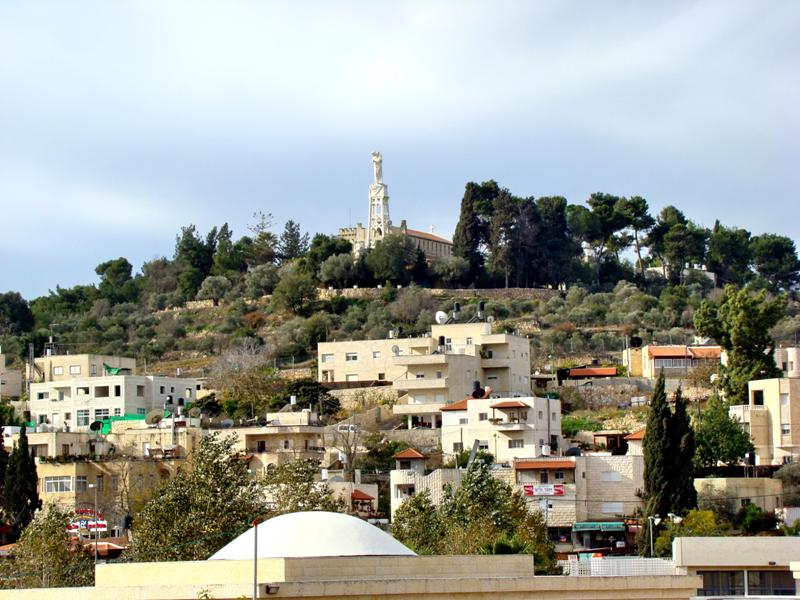
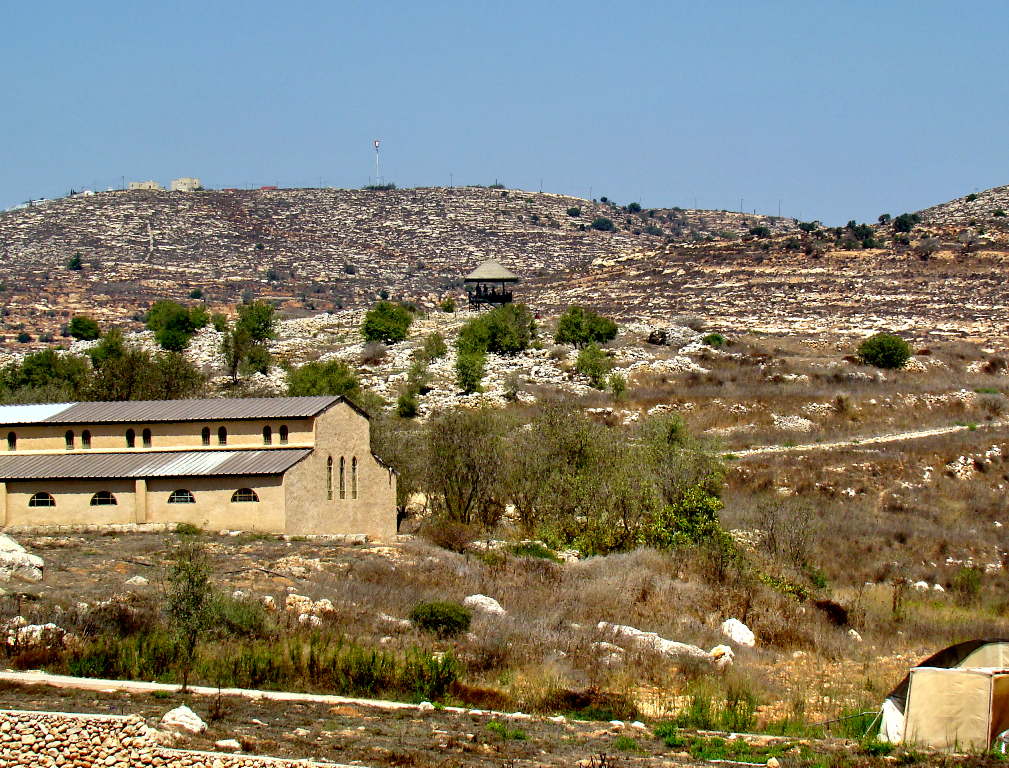
We were able last month to see Gibeon, El Jib.
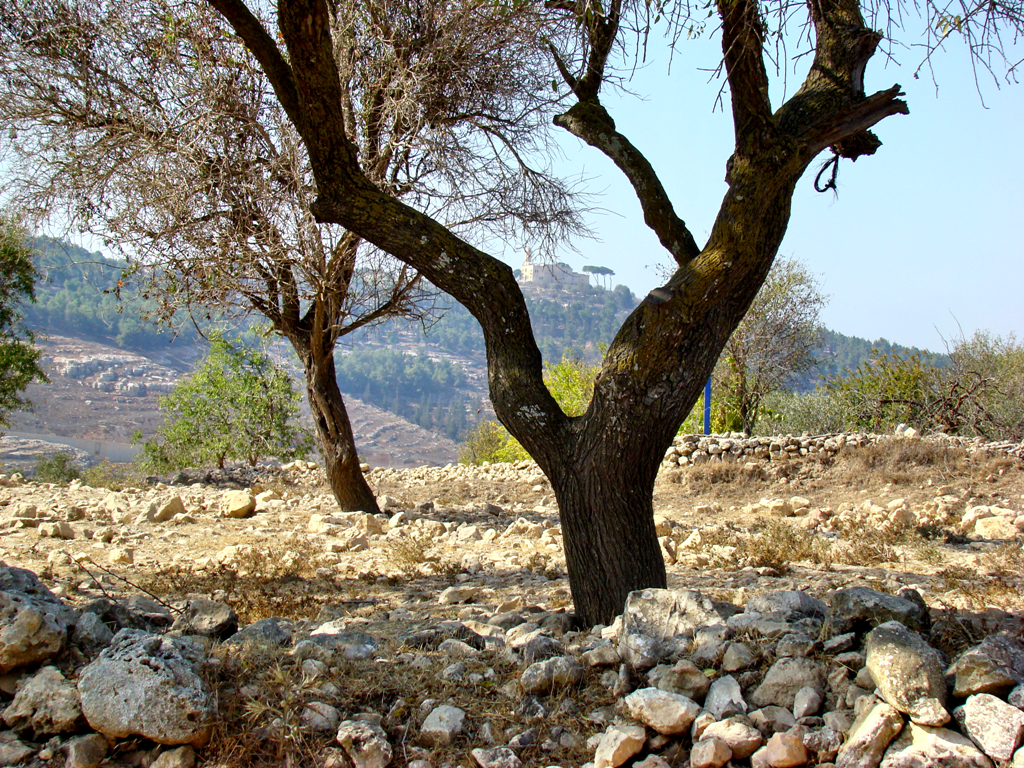
Biblical Gibeon, site of tabernacle in Davidic & early Solomonic reign. Photo by Leon Mauldin. Click image for high-resolution.

In the distance you can see Nebi Samwil, named for the prophet Samuel.


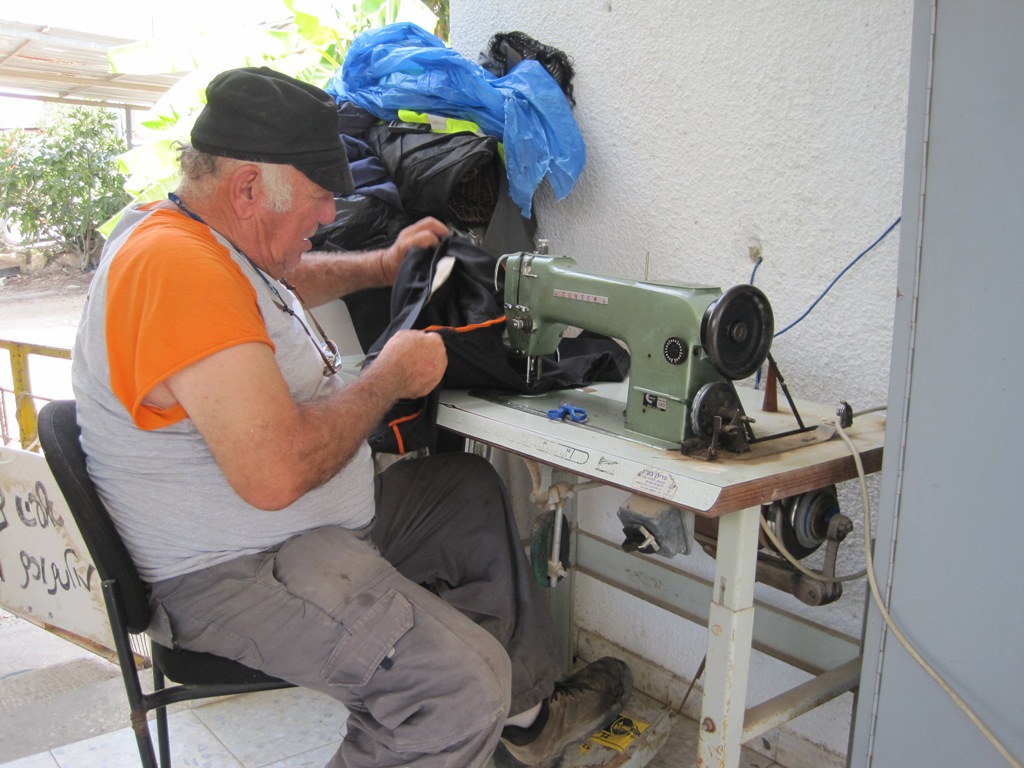
Made in China, Repaired in Israel

September 29, 2011

I think there’s something to be said for taking seriously matters of import, while one doesn’t take himself too seriously. That being said, Ferrell Jenkins and I seriously wanted to see the tel of Adullam, as well as the cave (he posted on that earlier this month here).

The biblical narrative of 2 Sam. 23:13-17 has impressed me with the concept of loyalty and devotion. At the cave of Adullam (which David was using as his stronghold) three of David’s men heard him verbalize how he would like a drink of water from the well of his home town Bethlehem. The problem was that the Philistines had a garrison posted there. That did not matter. Those three left the cave and “broke through the camp of the Philistines, drew water from the well . . . and took it and brought it to David” (v.16). David was so overcome with emotion and gratitude that he could not drink it, but instead poured it out as an offering to YHVH (vv.16-17).

These men loved David so much that they were willing to risk everything, including their lives, to do what they perceived that David wanted.  I’ve often said that if we loved the Lord just about half as much as they loved David, we’d be well on our way in the right direction.

Those concepts I take seriously. But back to the part about not taking yourself too seriously. Of course I wanted to go inside the cave, which we did. I had on a brand new pair of pants. In the process of bending around and getting in position to take photos from inside the cave I heard an unmistakable ripping sound. It wasn’t a neat rip. It wasn’t even in the seam. It was say from the knee all the way up to the zipper. What do you do in a situation like that? By the way, Adullam was to be our first stop of the day.

Another question, what are the odds of finding a sewing machine at Adullam or nearby?

Emergency Pants Repair at Adullam. "Made in China, Repaired in Israel." Photo by Ferrell Jenkins.

Our driver/guide we had secured for this excursion which required 4-wheel drive, Daphna (see above reference in Jenkin’s post), helped secure my dignity. Among the equipment possessed by Haelah Desert Tours was indeed a sewing machine, and there was also a very helpful worker who knew how to use it. As I waited inside the (thankfully unoccupied) office, Mr. Jenkins recorded the moment with the above photo.

Things like that give you something to smile about (after it’s over), and also to remember about your visit. I could never forget Adullam, especially not now.

Another BTW, Mr. Jenkins said that for me to be a good steward it would be essential to take those pants back for a refund. I complied. Actually my wife did, but she got a full refund for the pants that were made in China and repaired in Israel.

************

On a personal note, I’m glad and thankful to God to be making this post tonight. I’ve had a  two-day hospitalization, due to what turned out to be a very low potassium level and a med that needed changing, but all seems well and progressing at present.

I’m looking forward, the Lord willing, to being with the Southside church of Christ in Pasadena, TX, for a 5-day meeting, Mon-Fri. This will be my Visualized Survey of the Bible, which emphasizes the theme of the Bible, and narrates the record in survey form from Genesis to Revelation. I am thankful for such opportunities. In such lessons we make use of numerous photos of the Bible lands, showing the geographical context for the events of Scripture.


The Ark of the Covenant After Shiloh

September 26, 2011

In previous posts we have seen Shiloh as the location of the tabernacle in the days of Joshua through the days of the judge and high priest Eli and into the judgeship of Samuel (Josh. 18:1ff; 1 Samuel 1-4).

The Philistines captured the ark at the battle of Aphek, and then the evidence is that they went on to destroy Shiloh. Upon realizing that they were being plagued by God because they were in possession of the ark of the covenant, they allowed it to return to Israel’s territory, specifically the tribe of Judah (1 Sam. 5-6). First the ark when to Beth-shemesh, and then was taken to Kiriath-jearim. It would remain there until the days of David, about 120 years or so.

Kiriath-jerarin, Site of Ark of Covenant for over a century. Photo by Leon Mauldin

Our photo shows Kiriath-jeream, which Todd Bolen notes is

also known as Tel Qiryat Ye’arim, Baalah, Baalah of Judah, Baale-judah, Baale of Judah, Deir el-Azar, Gibeath-Kiriath-Jearim (?), Kirath, Kiriath, Kiriath-arim, Kiriath-jearim, Kiriath Baal, Kiriath-baal, Kirjath, Kirjatharim, Kirjathbaal, Kirjathjearim, Kuryet el-‘Enab, Qaryet el-Enab, Qiryat Yearim.

To which we might also add the designation, Abu Ghosh.

But as they say, “the plot thickens.” Though the ark was at Kiriath-jearim until David 8th year as king (at which time he moved it to Jerusalem), the tabernacle and altar of burnt offering were at Gibeon. We plan to deal with that in upcoming posts.


More on Shiloh

September 23, 2011

At the battle of Aphek the Philistines defeated the Israelites in the days of Eli and Samuel (1 Sam. 4:1-11). Look at map to see Shiloh, where the tabernacle was, and Aphek. Both are in the tribal territory of Ephraim.

Location of Aphek relative to Shiloh, tribal territory of Ephraim. Map by Scott Richardson.

The best evidence is that it was then that the Philistines destroyed Shiloh. Ample traces of this destruction were found in the excavations. Israel Finkelstein wrote,

This complex of buildings [buildings in location designated area C] was destroyed by a violent conflagration whose traces were visible everywhere: charred floors and heaps of fallen bricks, sometimes more than one meter deep (some of the bricks were visibly baked by the fierce fire). Here and there parts of the fallen roof were identifiable. As suggested by Albright following the Danish expedition’s excavations, this may be attributable to the Philistine destruction of the site (mid-eleventh century BCE) (The New Encyclopedia of Archaeological Excavations in the Holy Land, IV.1368).

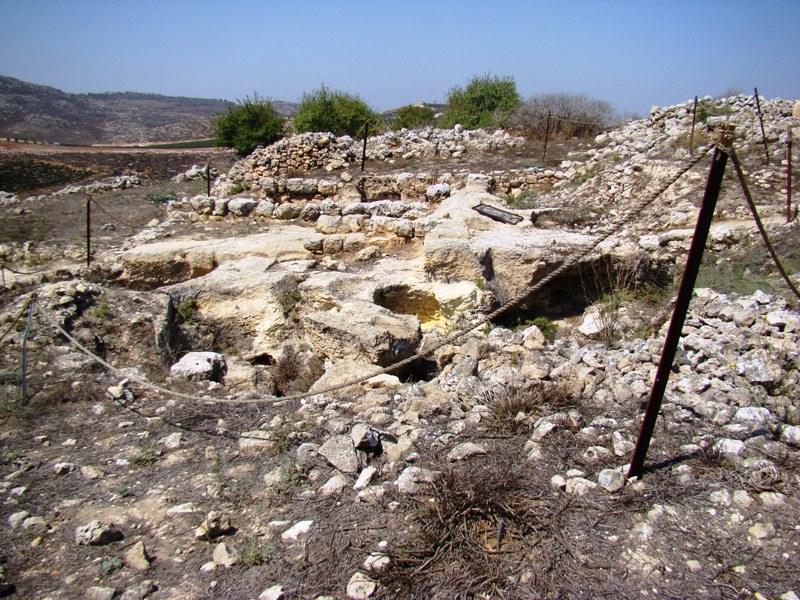
This photo shows some of the excavations at Shiloh.

Excavations at Shiloh. Photo by Leon Mauldin.

Following the destruction of Shiloh, the tabernacle was at Gibeon in the days of David and Solomon, until Solomon built the temple in Jerusalem. We plan to follow-up on that in subsequent posts.

Moving ahead to the Byzantine Period, churches have been found from the fifth and sixth centuries AD. A section of Mosaic floor may be seen in our photo.

Mosaic Floor at Shiloh. Byzantine Period. Photo by Leon Mauldin.

To see the remains of Bible places can be tremendous help in visualizing the biblical text, don’t you agree?

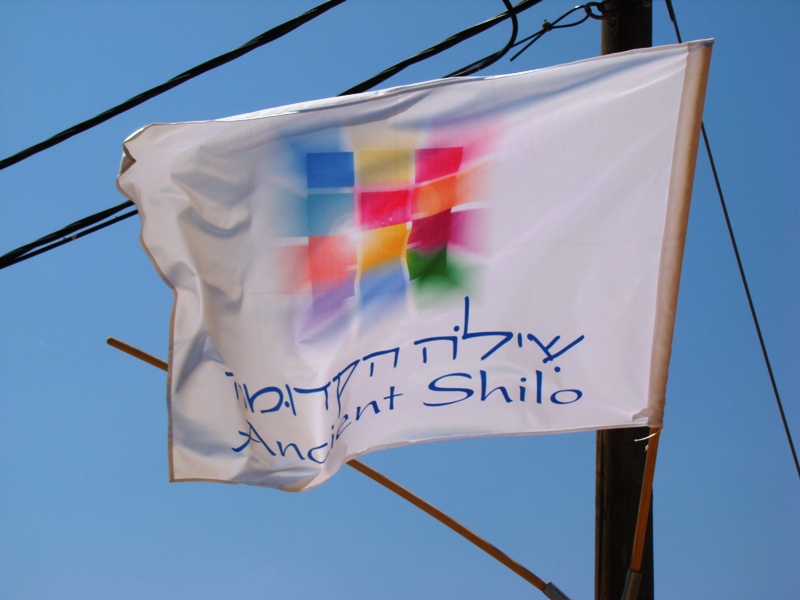
Shiloh Flag. Photo by Leon Mauldin.

Remember to click on images for higher resolution.


Shiloh, cont’d.

September 22, 2011

Using the early date of the Conquest (1407/6 BC) as the approximate time that the tabernacle would have been erected at Shiloh (Josh. 18:1), and accepting W.F. Albright’s dating of Shiloh’s destruction at 1050 BC, that would mean that the tabernacle stood at that site for about 350 years. As we saw in our previous post, the biblical text makes reference to Shiloh’s destruction as a well-known fact but does so without recording the event itself. Most likely it was the Philistines who followed through with the destruction of the sacred site after the capture of the ark as recorded in 1 Sam. 4.

Later the Psalmist would write,

55 He drove the nations out from before them; he assigned them their tribal allotments and allowed the tribes of Israel to settle down. 56 Yet they challenged and defied the sovereign God, and did not obey his commands. 57 They were unfaithful and acted as treacherously as their ancestors; they were as unreliable as a malfunctioning bow. 58 They made him angry with their pagan shrines, and made him jealous with their idols. 59 God heard and was angry; he completely rejected Israel. 60 He abandoned the sanctuary at Shiloh, the tent where he lived among men. 61 He allowed the symbol of his strong presence to be captured; he gave the symbol of his splendor into the hand of the enemy (Psalm 78:55-61, NET).

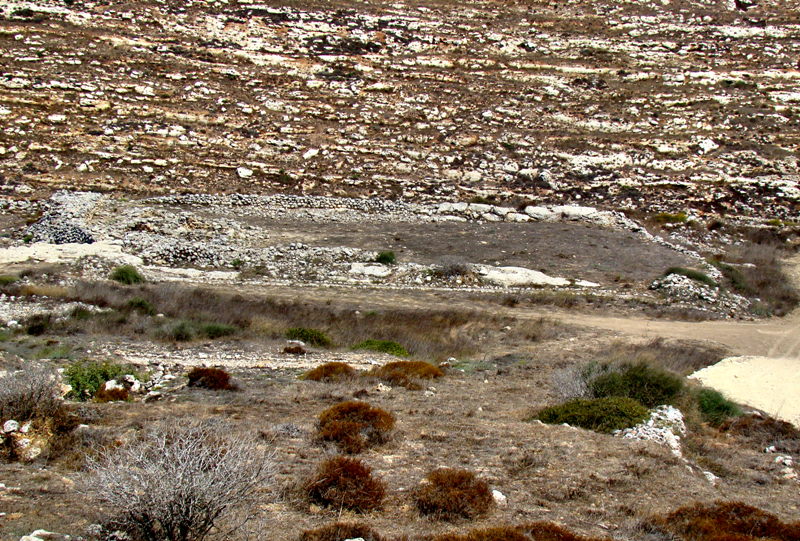
In our photo the proposed location of the tabernacle at Shiloh may be seen. Note the small rectangular area in upper center.

Shiloh. Possible location of tabernacle in upper center. Photo by Leon Mauldin.

Here is a close up:

Shiloh. Area in shape of rectangle is proposed site of the tabernacle. Photo by Leon Mauldin.

Shiloh was central to the nation of Israel for several centuries.

Click on images for higher resolution.


“Go To Shiloh” (Jer. 7:12)

September 20, 2011

The professed people of God of Jeremiah’s day had a serious problem–they weren’t listening to God. They convinced themselves they could do as they pleased and claim allegiance to God, and everything would be OK; after all, they had the temple.

Jeremiah addressed this:

7 If you stop doing these things, I will allow you to continue to live in this land which I gave to your ancestors as a lasting possession. 8 But just look at you! You are putting your confidence in a false belief that will not deliver you. 9 You steal. You murder. You commit adultery. You lie when you swear on oath. You sacrifice to the god Baal. You pay allegiance to other gods whom you have not previously known. 10 Then you come and stand in my presence in this temple I have claimed as my own and say, “We are safe!” You think you are so safe that you go on doing all those hateful sins! 11 Do you think this temple I have claimed as my own is to be a hideout for robbers? You had better take note! I have seen for myself what you have done! says the LORD. 12 So, go to the place in Shiloh where I allowed myself to be worshiped in the early days. See what I did to it because of the wicked things my people Israel did. 13 You also have done all these things, says the LORD, and I have spoken to you over and over again. But you have not listened! You have refused to respond when I called you to repent! 14 So I will destroy this temple which I have claimed as my own, this temple that you are trusting to protect you. I will destroy this place that I gave to you and your ancestors, just like I destroyed Shiloh (Jer. 7:7-14, NET).

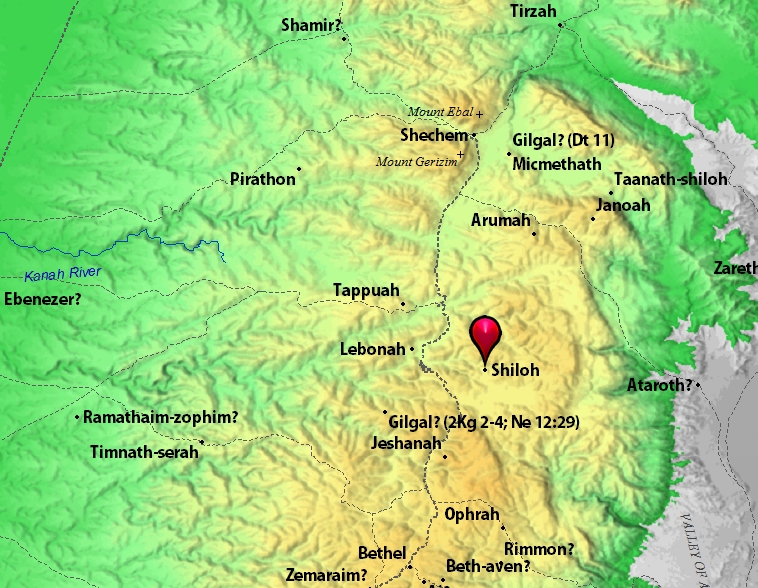
The tabernacle had previously been in Shiloh (Josh. 18; 1 Sam. 1-4, etc.), but God had allowed it to be destroyed because of Israel’s disobedience. Jeremiah warned that the same fate was awaiting the temple, for the same reason.

Location of Shiloh. Map courtesy of BibleAtlas.org

We recently had the opportunity to visit Shiloh. Some archaeological excavations were taking place at the time.

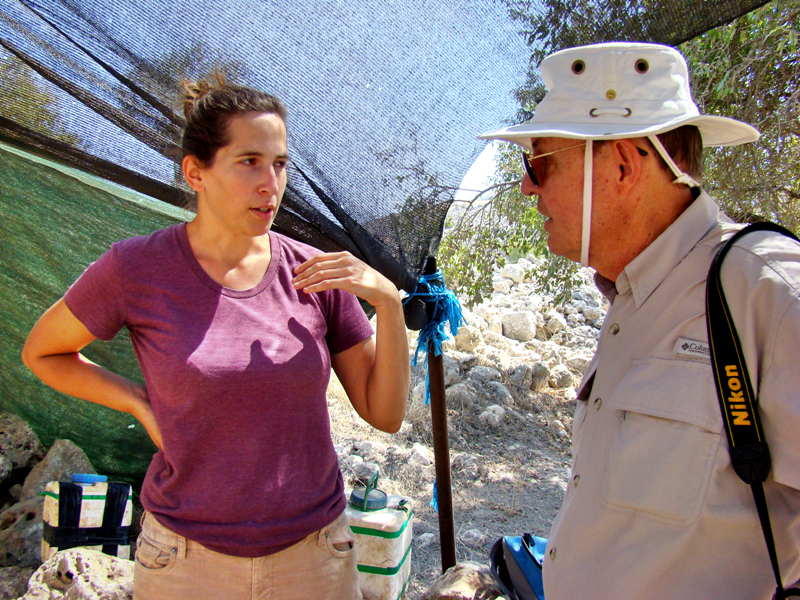
Michal Haber, IAA staff member, and Ferrell Jenkins. Photo by Leon Mauldin.

Mr. Jenkins mentioned to Michal Haber of the Israeli Antiquities Authority, who was supervising the excavation  that he and I are members of the Society of Biblical Literature, Near East Archaeological Society, etc., and had an interest in what they were doing there at Shiloh. She graciously showed us around. What was being uncovered at this level was Byzantine and Islamic. The older remains (what she called “the good stuff”) were higher up.

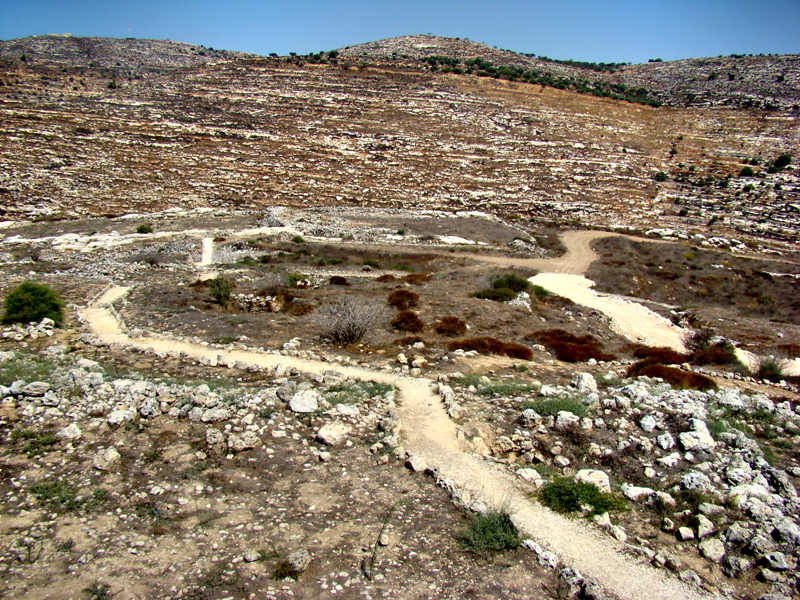
There is a covered platform conveniently situated that is helpful in giving a good view of the ruins of Shiloh. Note the upper center in photo below.


Ancient Shiloh. At center is a covered platform helpful in viewing the site. Photo by Leon Mauldin.

Several biblical texts flooded my mind while here. Early on during the Conquest of Canaan, the tabernacle was pitched here (Josh. 18:1ff). Then I thought of the days of the Judges, and of barren Hannah, praying here silently, when Eli the Judge and High Priest misjudged her to be drunken. She explained that she was praying that God would give her a son, and if He would do so, she would give him back to the Lord. That prayer was honored and Samuel was born (1 Sam. 1).

Then I thought of the day that the Israelites battled the Philistines and were defeated (1 Sam. 4). Word came back to Shiloh that the Philistines had killed both of Eli’s sons (wicked sons, but they were priests). That was bad news, but then when Eli was told that the Philistines had taken the ark of God, he fell off his seat, breaking his neck and dying.

It was at this point also that one of Eli’s daughters-in-law was in childbirth. When she heard that the ark of God was taken, as well as the news of her husband’s death and Eli’s death, with her dying words she said to name the boy Ichabod, which means “no glory.” Indeed, when God cannot dwell among His people because of sinfulness and stubborn rebellion, there is no glory.

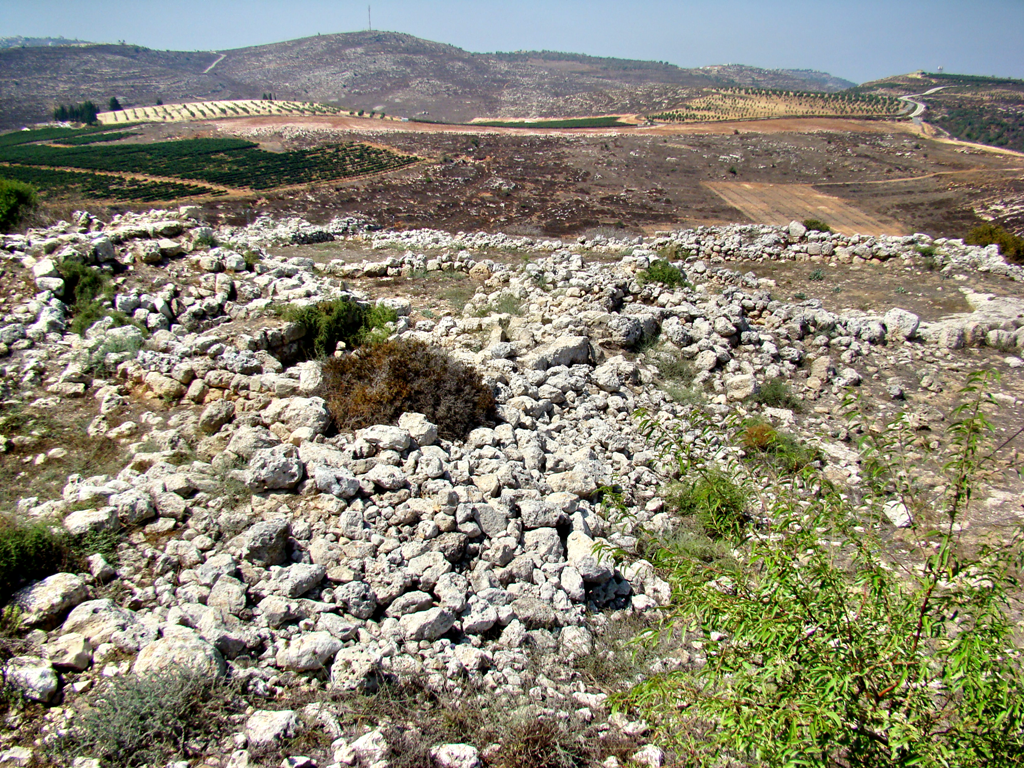
These and other texts come into play at this site. In our photo below you can see Shiloh in foreground, and then surroundings in the distance.

Ruins at Shiloh. Photo by Leon Mauldin.

Click on images for higher resolution.


Tel Ptolemais/Acco/Acre

September 9, 2011

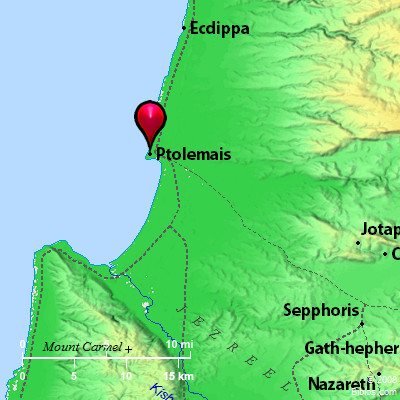
In our previous post we featured a photo of the waterfront of Ptolemais. Ptolemais (Acts 21:8) was mentioned in the Old Testament (designated Acco) among other cities which Israel failed either to capture or to retain after the conquest: “Nor did Asher drive out the inhabitants of Acco or the inhabitants of Sidon, or of Ahlab, Achzib, Helbah, Aphik, or Rehob” (Judges 1:31). Because Acco was a port city, it was a very significant loss to fail to possess this strategic location. Our map below, which shows NW Israel, helps orient us:

Ptolemais/Acco. Bibleatlas.org.

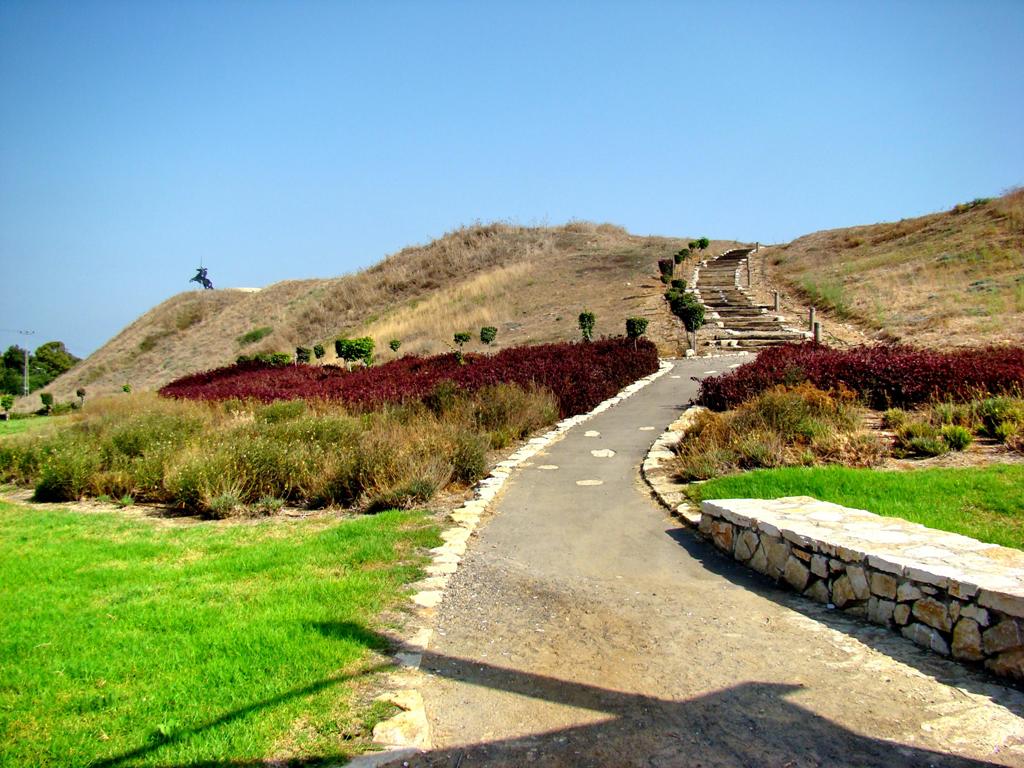
Acco was one of the oldest harbors in existence. In our present photo, we see the remains of the tel itself.

Tel Ptolemais. Photo by Leon Mauldin.


“We Came to Ptolemais”

September 9, 2011

Greetings, friends, now from Dade City, FL. I enjoyed and profited from the trip to Israel, as Ferrel Jenkins & I traveled to numerous biblical sites, many of which we had not seen before. I have held Mr. Jenkins in the highest esteem since my being a student at Florida College (’70-72) and am delighted that we have been able to make numerous trips to Israel and other biblical places. I have learned much from him.

I came back to the states a day earlier than planned in order to attend and participate in the funeral of dear friend & sister in Christ, Sandra Waldron, wife of Bob Waldron. That will be conducted Fri. 2:00 PM here in Dade City.

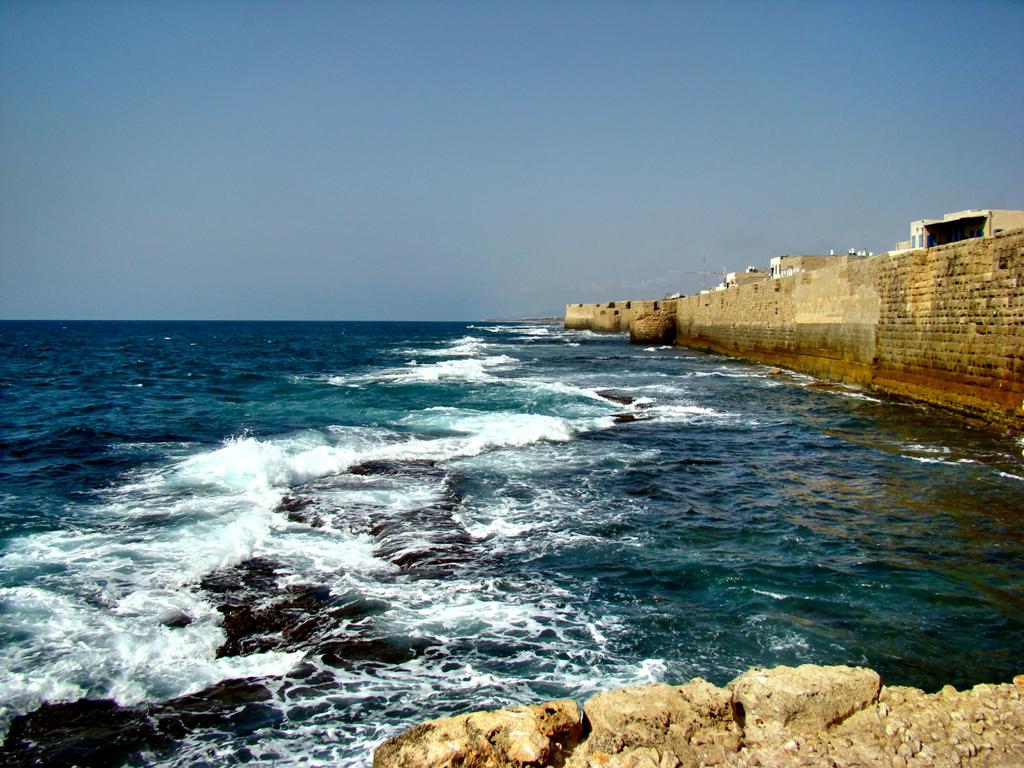
Our photo displayed in this post was taken at Ptolemais (Hellenistic and Roman times), known as Acco in OT times (Jud. 1:31), and today known as Acre. The ancient tel is Tel-el-Fukhar.

Coast of Ptolemais, mentioned in Acts 21:7. Photo by Leon Mauldin.

As Paul’s 3rd Missionary was concluding, en route to Jerusalem, Acts 21:8 reads, “And when we had finished our voyage from Tyre, we came to Ptolemais, greeted the brethren, and stayed with them one day.”

Click image for higher resolution.

More later. 2:30 AM at present!


Hazor, Head of All These Kingdoms

September 5, 2011

As we have mentioned, our purpose on this current trip to Israel is to visits sites we have not seen before, many of which would not be practical to visit with a tour group. We were successful again today in doing so.

One place Ferrell Jenkins and I have seen previously many times is Hazor, but we included that city because recent visits have been either during or immediately following rain. Today it was dry and sunny. It was hot but it was nice not to have to walk in mud.

The signifance of this city which was conquered during Israel’s conquest of Canaan led by Joshua is seen in Josh. 11:10:

Then Joshua turned back at that time, and captured Hazor and struck its king with the sword; for Hazor formerly was the head of all these kingdoms.

Later during the days of the United Monarchy of Israel, King Solomon fortified this city.

Now this is the account of the forced labor which King Solomon levied to build the house of the LORD, his own house, the Millo, the wall of Jerusalem, Hazor, Megiddo, and Gezer (1 Kings 9:15).

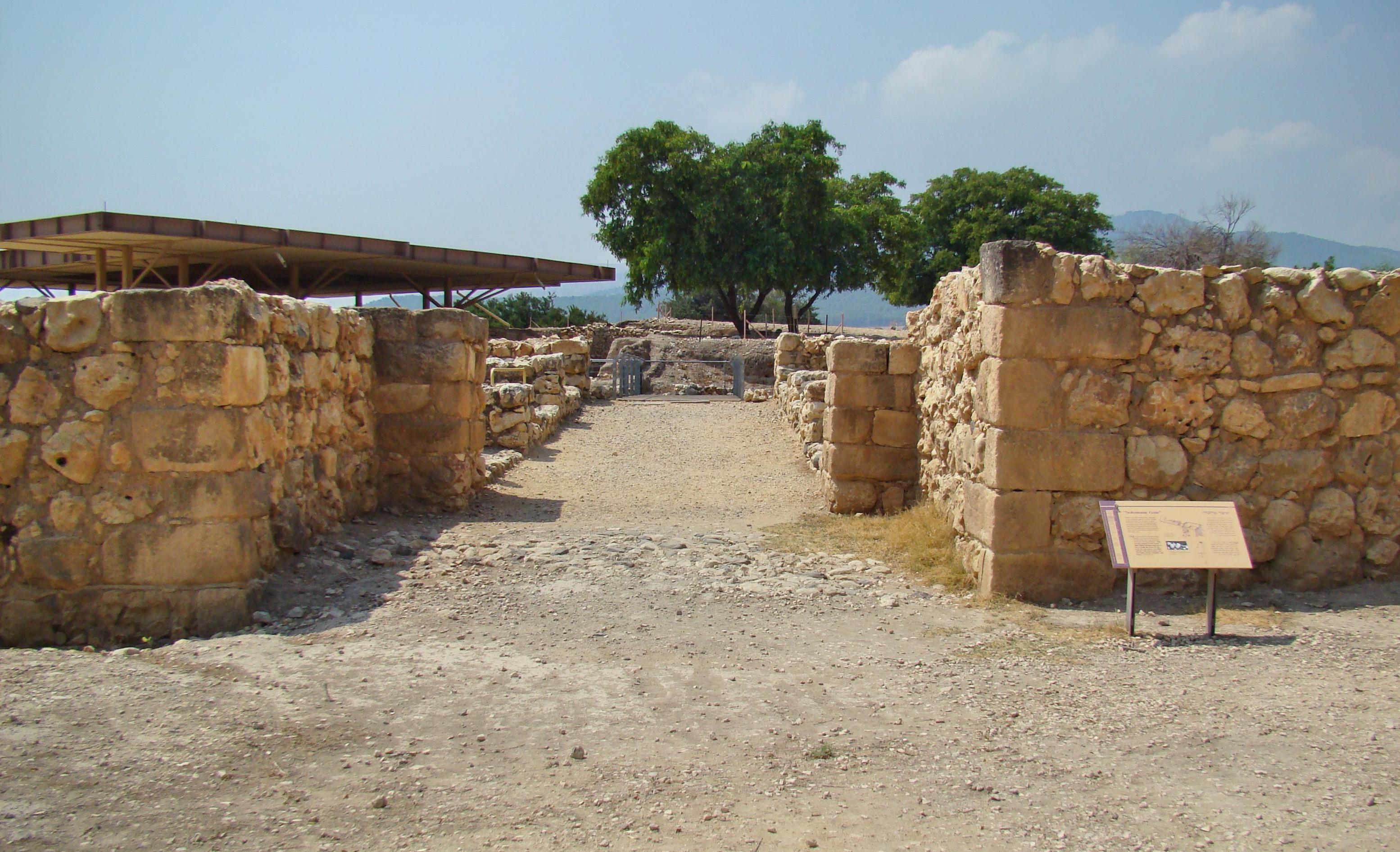
Solomonic City Gate at Hazor. Photo by Leon Mauldin.

All of these cities of this text were fortress cities. Solomon used the same “blueprint” for the gates: the six chambered gate.

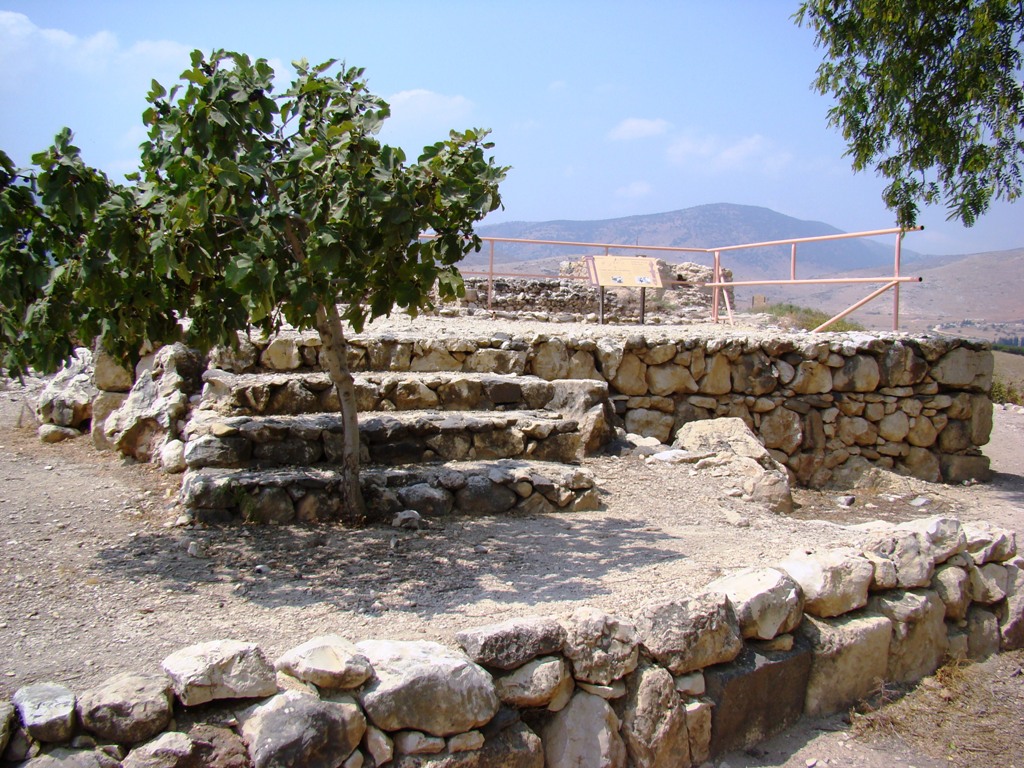
Unfortunately, in the process of time, Hazor became a center of cultic worship. Our photo shows the “high place” of Hazor.

High Place at Hazor. Sacrifice to pagan gods occurred here. Photo by Leon Mauldin.

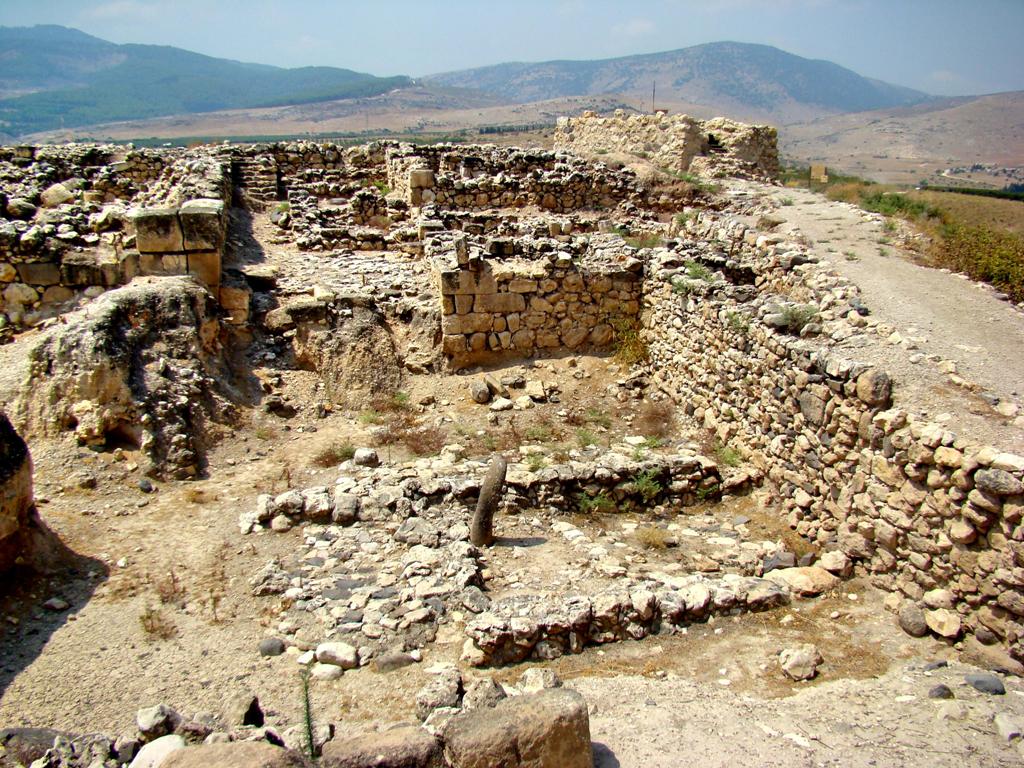
Our photo below further shows an area where pagan worship occurred.

Site of pagan worship at Hazor. Photo by Leon Mauldin.

The forbidden massebah (sacred pillar) can be seen in foreground of photo. On the right hand corner of the tel you can see what was the base of the watchtower of Hazor.

Remember to click on photos for higher resolution.
*************
On a personal note I regret to report the death of a close personal friend, Sandra Waldron, wife of Bob Waldron. She died Sun. PM as the result of a massive heart attack, following some months of illness. The Waldrons have had a tremendous impact on my life, and I mourn this loss.

Jeroboam’s New Religion

August 24, 2011

The wisest man in all the earth fell flat on his face because he failed to give heed to God’s word.  The sad story of Solomon’s apostasy is narrated in 1 Kings 11:1-13.  As punishment God would “tear the kingdom” away from Solomon, and give it to Jeroboam (v.11). This took place when Solomon’s son’s effort to make a show of strength backfired, and all the northern tribes pulled away under Jeroboam, and made him king (1 Kings 12:1-24), leaving Rehoboam as king of Judah.

God had promised Jeroboam He would establish his rule in Israel, conditioned on obedience (1 Kings 11:29-38).  But the temple was in Jerusalem (Judah’s territory); people throughout Israel would be making regular trips there to worship.  Jeroboam thought that if he did not take matters into his own hands, Israel’s loyalty would shift to Judah. Therefore, he “devised in his own heart” four unauthorized changes in the divine pattern (1 Kings 12:25-33):

Object of worship. Jeroboam made two calves of gold and said, “It is too much for you to go up to Jerusalem.  Here are your gods, O Israel, which brought you up from the land of Egypt! (1 Kings 12:28).

Place of worship. God had established Jerusalem as the place to worship. The king set up those golden calves in Dan (north) and Bethel (south) (v.29). Shrines were established on the high places for their worship at both sites (v.31).

Persons who officiated in worship. God had selected the tribe of Levi, and within it the family of Aaron, to be priests.  Jeroboam “made priests from every class of people, who were not of the sons of Levi” (v.31).

Time of worship. God had designated the Feast of Tabernacles to be observed the 15th day of the 7th month; Jeroboam changed it to 15th day of the 8th month (v.32).

God was greatly displeased (1 Kings 14:9). Jeroboam sinned, and “made Israel sin” (v.14). Who would have thought that with those unauthorized changes Jeroboam was blazing a trail that would be followed by succeeding kings for 200 years? There were nineteen kings of Israel from Jeroboam to Hoshea; each of them “continued in the sins of Jeroboam.”

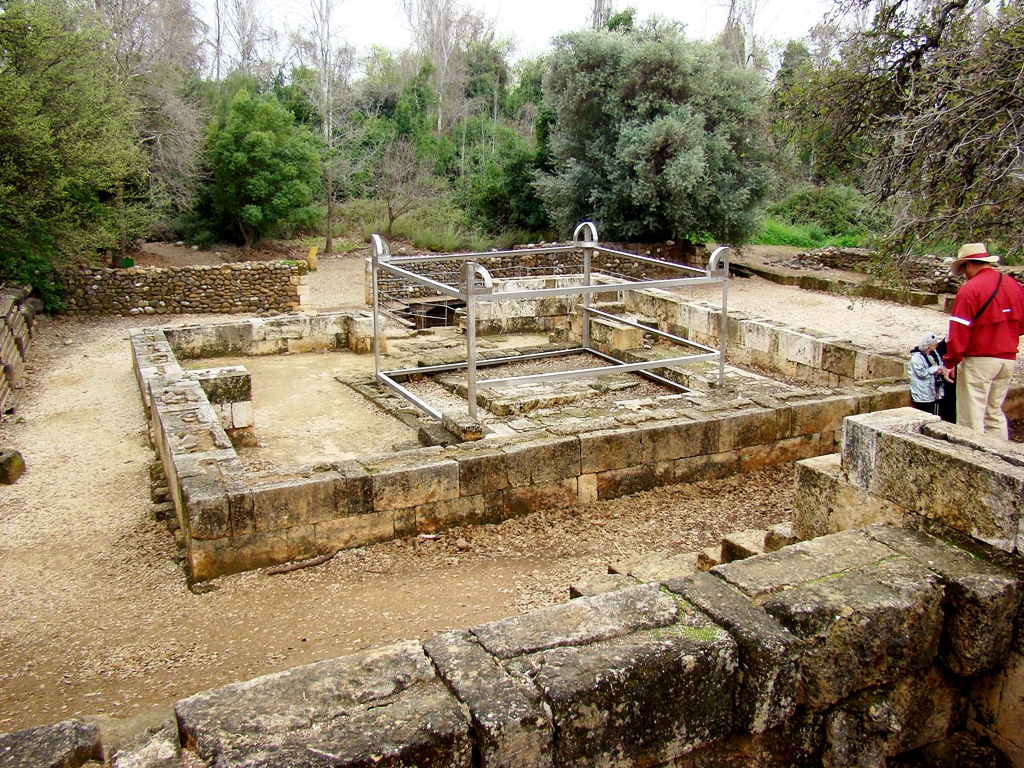
Our photo shows the high place at Dan where sacrifices were made to the golden calf Jeroboam installed.  The people give a sense of scale.

Jeroboam's High Place at Dan. Photo by Leon Mauldin.

The square metal framework in center indicates the location and size of the altar. The shrine for the golden calf would have been in the area we are standing to shoot the photo.

Click on image for higher resolution.