Traveling in Israel: Gibeon and More!

April 7, 2016

Today was a delightful day in Israel. We were able to see biblical sites from Jerusalem westward all the way to the coastal Philistine city of Gath.

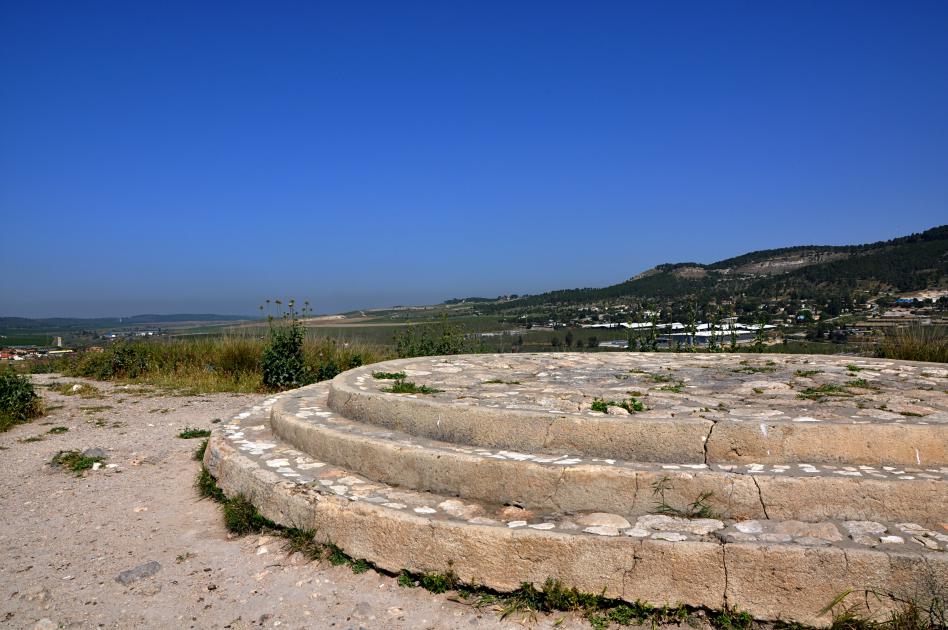
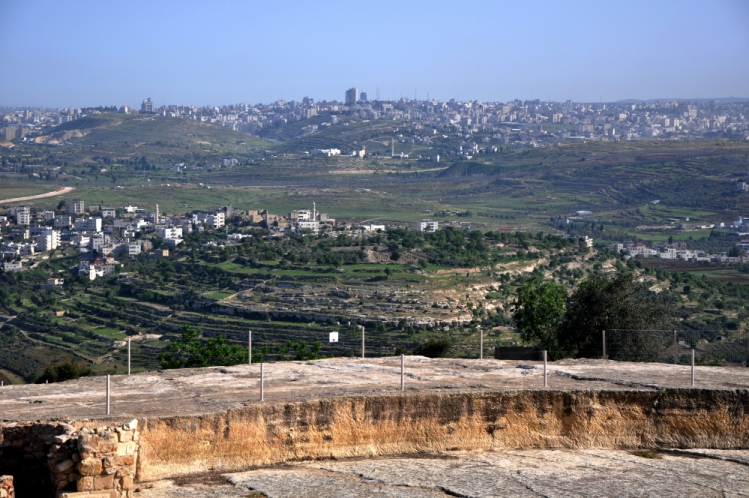
Just north of Jerusalem (OT territory of Benjamin) is Gibeon, (Arabic El-Jib). This was formerly the Canaanite city that deceived Joshua and the men of Israel by pretending to be from a great distance, and thus entered into a covenant with Israel during the days of the Conquest (Joshua 9). There are subsequently several biblical references to this site.

Gibeon. Many OT texts refer to this site. Photo by Leon Mauldin.

Gibeon at center of photo. Many OT texts refer to this site. Photo by Leon Mauldin.

We have previously posted on Gibeon here and here.

Today we also saw Kiriath-Jeariam and  numerous sites in the Shephalah, including the valley of Elah, where David killed Goliath, Lachish, Beth-Shemesh, and the Philistine city of Gath, plus others. More on these later!


Odeion at Troy

April 1, 2016

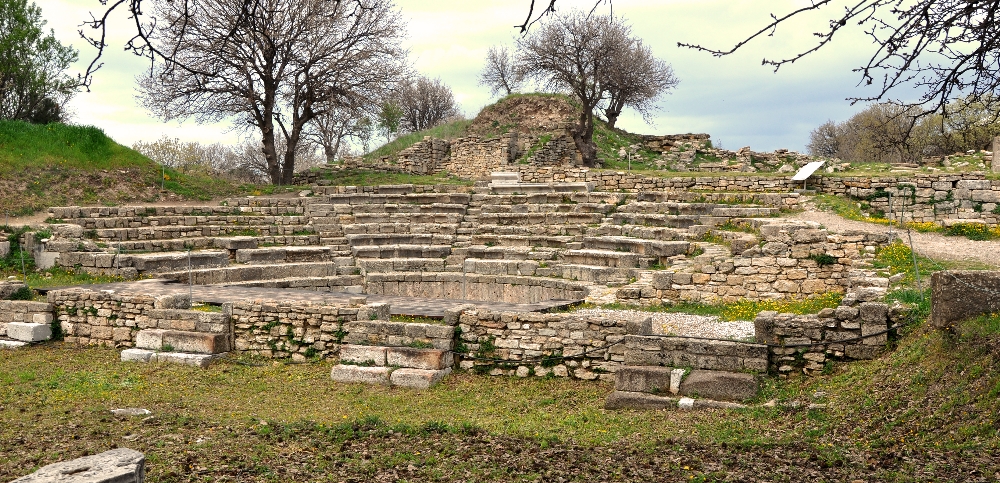
Ancient Troy has been made famous by Homer’s Iliad. Troy is located within the province of Çanakkale, located in extreme western Turkey. Troy’s extensive remains are the most significant and substantial evidence of the first contact between the civilizations of Anatolia and the Mediterranean world. This past Spring, 2015, we were able to visit Troy. Among the fascinating ruins there was the Roman Odeion, a small theater where concerts, lectures and other events took place.

Roman Odeion at Troy, Turkey. Photo by Leon Mauldin.

Roman Odeion at Troy, Turkey. Photo by Leon Mauldin.

The skene, stage building included a larger-than-life statue of the Emperor Hadrian (AD 117-138). Also, a sculpted head of Augustus was found at the odeion, causing some to surmise that this may have been erected in honor of his visit here in 20 BC. Beyond the odeion at the back you can see a portion of the fortification wall of Troia VI.

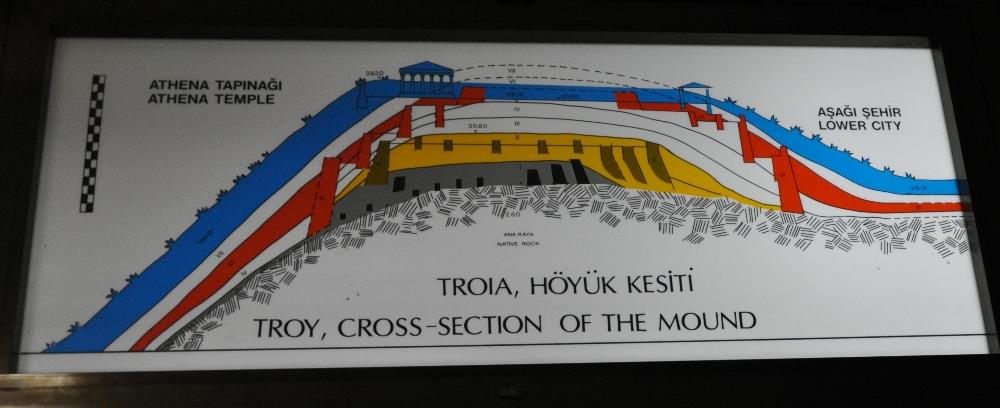
The Roman odeion is in Troy’s Level IX. Over the centuries there were nine levels of occupation.

Cross-section of Troy, showing 9 occupation levels. Istanbul Museum. Photo by Leon Mauldin.

Cross-section of Troy, showing 9 occupation levels. Istanbul Museum. Photo by Leon Mauldin. 

Wikipedia has this helpful chart:

Troy I 3000–2600 BC (Western Anatolian EB 1)
Troy II 2600–2250 BC (Western Anatolian EB 2)
Troy III 2250–2100 BC (Western Anatolian EB 3 [early])
Troy IV 2100–1950 BC (Western Anatolian EB 3 [middle])
Troy V: 20th–18th centuries BC (Western Anatolian EB 3 [late])
Troy VI: 17th–15th centuries BC
Troy VIh: late Bronze Age, 14th century BC
Troy VIIa: c. 1300–1190 BC, most likely setting for Homer’s story
Troy VIIb1: 12th century BC
Troy VIIb2: 11th century BC
Troy VIIb3: until c. 950 BC
Troy VIII: c. 700–85 BC
Troy IX: 85 BC–c. AD 500

Biblical significance: It was here at Troy (Ilium) at the temple of Athena that Xerxes (Ahasuerus) of the book of Esther sacrificed 1,000 head of cattle en route on his march through the Hellespontine region towards Greece. This was 480 BC.

We have previously posted on Troy here.


Syracuse, Mt. Etna, and Taromina, Sicily

March 13, 2016

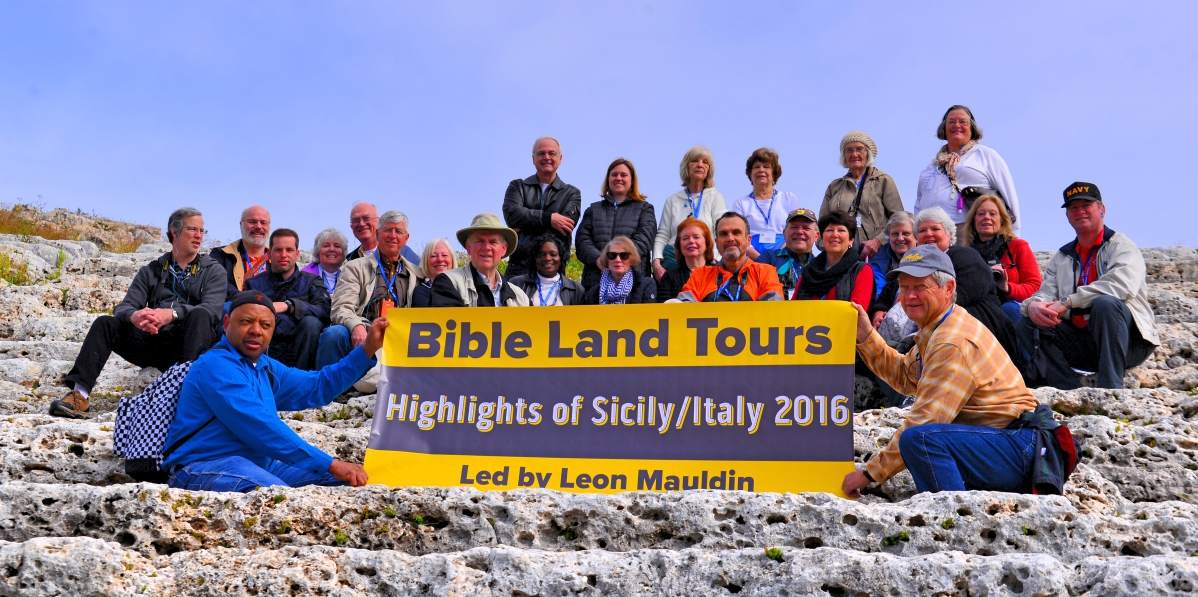
Yesterday (Saturday) we visited the archaeological sites Syracuse, Sicily, and from there went on to Mt. Etna (Europe’s most active volcano), and then to Taromina. While at the Greek theater at Syracuse we took this group photo.

Group photo at Greek Theater at Syracuse, Sicily. Photo by David Deason.

Group photo at Greek Theater at Syracuse, Sicily. Photo by David Deason.

This theater was built in the 5th century BC.

The city of Syracuse was founded in 733 BC by Greek settlers from Corinth. Some names associated with Syracuse include Aeschylus, considered the father of the Greek tragedy. The philosopher Plato was in Syracuse. Syracuse was the birthplace of Archimedes, the famous mathematician and most influential scientist of the ancient world.

But actually none of those names brought us to this ancient site; rather it was its biblical mention in connection with Paul’s journey (as a prisoner) to Rome. Of that point in the journey Luke writes, “And landing at Syracuse, we stayed three days” (Acts 28:12).


Selinunte and Agrigento, Sicily

March 10, 2016

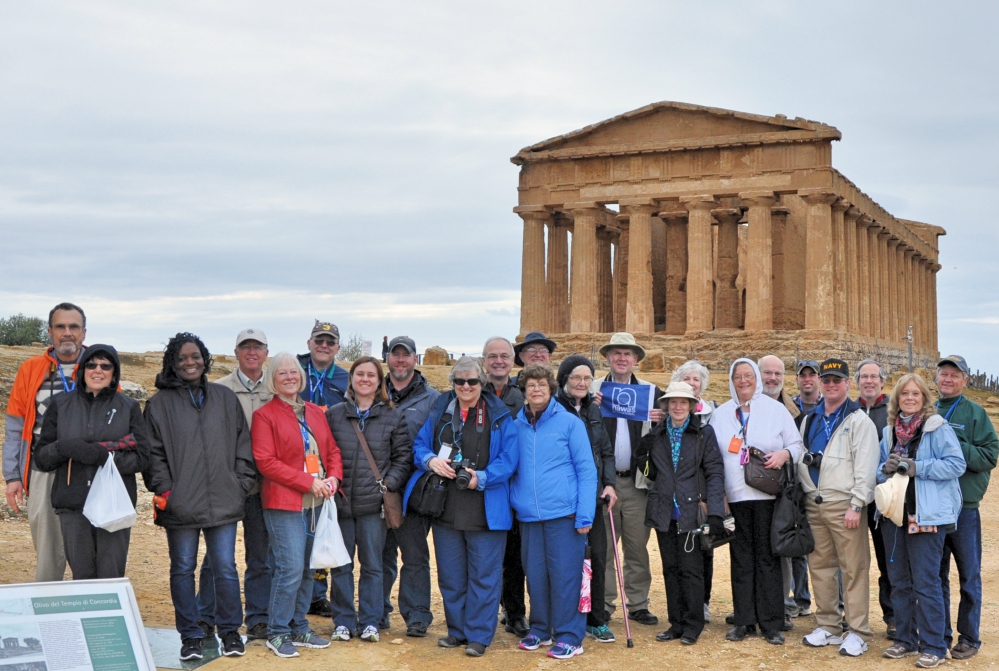
Tonight we are in Agrigento, on the southern coast of Sicily. One of my group, Dr. Eric Awwad, is wearing a pedometer and today logged 5.8 miles of walking in our visiting archaeological sites today. Our local guide took this group photo (minus 2 or 3 of our folks) at the Temple of Concordia in the Valley of the Temples in ancient Agrigento.

Mauldin Group photo at Temple of Concordia at Agrigento.

Mauldin Group photo at Temple of Concordia at Agrigento.

This is the most famous structure of the Valley of the Temples, and is one of the best preserved Doric temples in the world. It dates back to the 5th century BC.

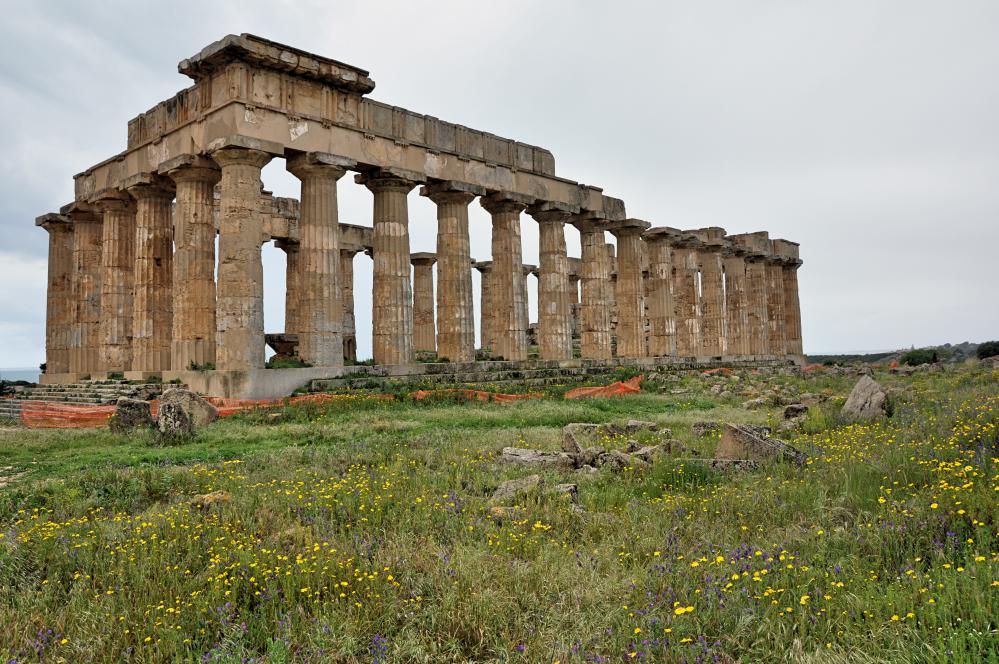
Earlier we were at Selinunte, where among other fascinating ruins we saw the Temple of Hera (also known as “Temple E”).

Temple of Hera at Selinunte. Photo by Leon Mauldin.

Temple of Hera at Selinunte. Photo by Leon Mauldin.

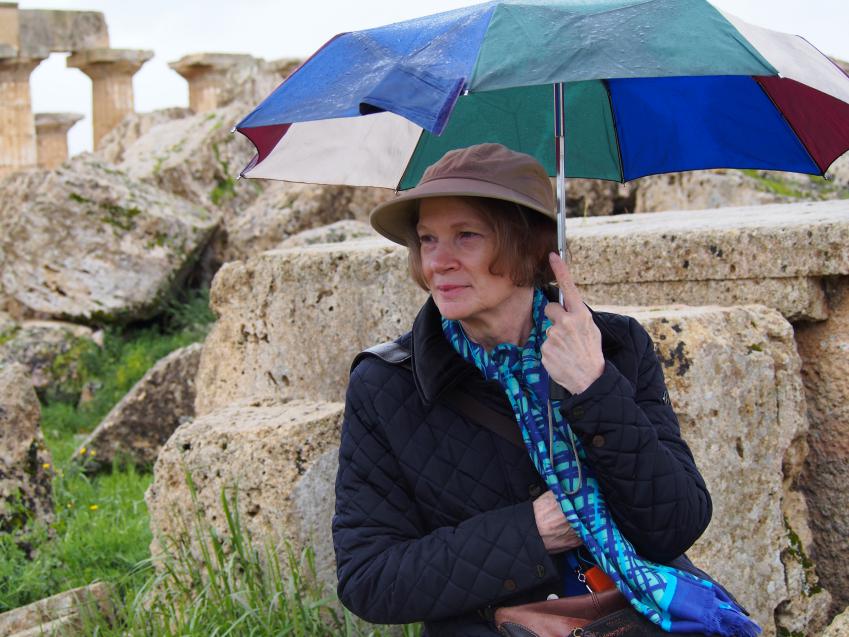
I’m glad my wife Linda is with us on this trip.

OLYMPUS DIGITAL CAMERA

Linda at Selinunte, Sicily. Photo by Sonja Winburn.

Yes, we had a little rain today. Tomorrow we are to visit the Roman villa of Casale and from there make our way to biblical Siracusa.


Sde Amudim in Lower Galilee

January 6, 2016

Jesus’ second miracle recorded by John (4:46-54) was that of His healing a royal official’s son. The official came to Jesus at Cana of Galilee, asking Jesus to go to his home Capernaum to heal his son who was “at the point of death” (v.47). Jesus’ response: “Go your way; your son lives: (v.50). When the official returned home the next day (distance from Cana to Capernaum is ca. 20 miles), he learned that his son had recovered the exact hour on the previous day when Jesus spoke the word.

Such miracles show who Jesus is (see John 20:30-31). Because He is God, Jesus did not have to be physically at Capernaum to heal the sick boy. He has power not only over sickness, but over distance!

In New Testament times (and somewhat previously), an important road connected the coastal city of Ptolemais with Cana, which then passed through Sde Amudim (Khirbet Umm el-Amud), then on to Magdala and f to Capernaum. It is likely that the royal official of our text would have traveled this route, passing through the area pictured here.

Sde Amudim in lower Galilee looking toward Capernaum. Photo by Leon Mauldin.

Sde Amudim in lower Galilee looking east toward Capernaum. Photo by Leon Mauldin.


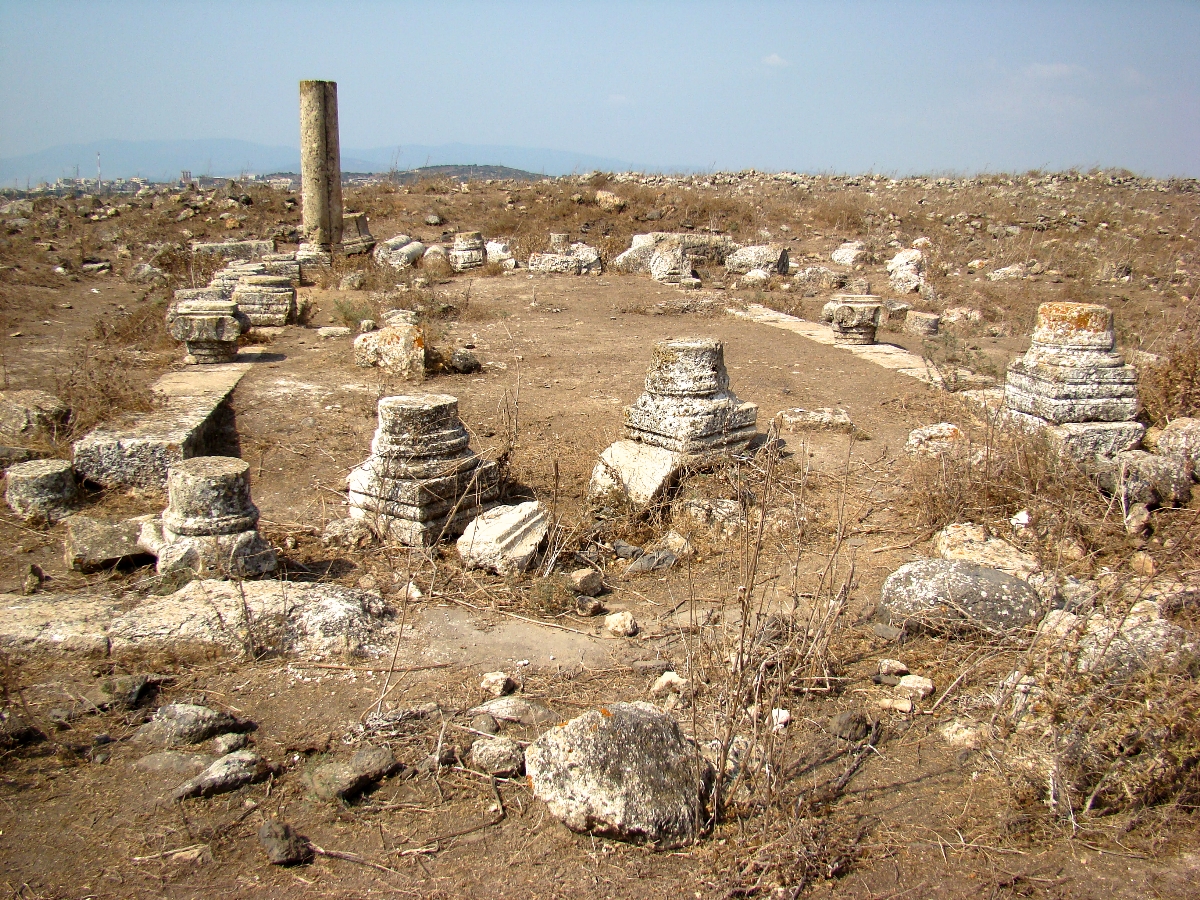
Here at this site are the remains of a synagogue (dates to AD 3rd century).

Synagogue at Sde Amudim. Photo by Leon Mauldin.

Synagogue at Sde Amudim. Photo by Leon Mauldin.

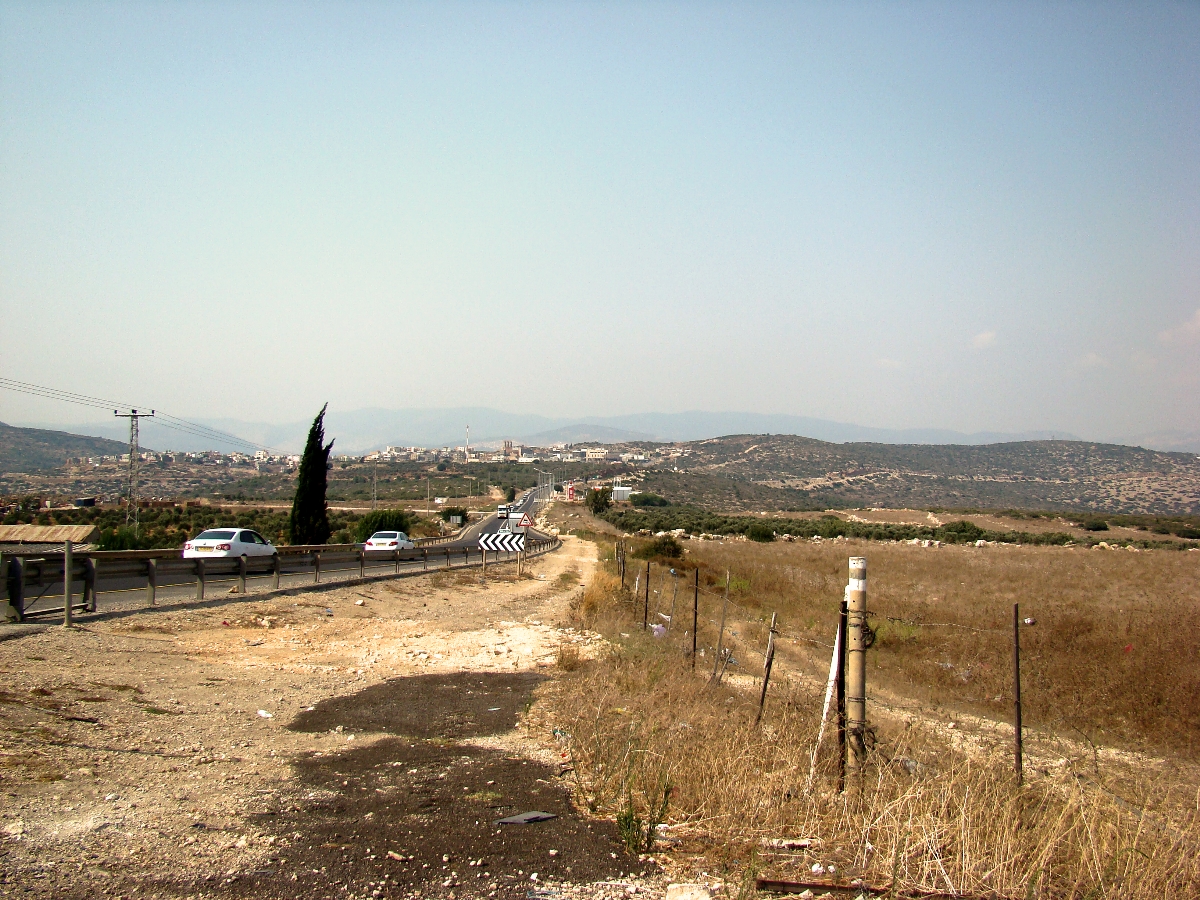
Interestingly, this location serves as a watershed.  In this photo we look north. The Bet Netofa Valley drains to the west (to your left); the drainage to your right is east going down to the Sea of Galilee at Magdala.

Watershed at Sde Amudim. Photo by Leon Mauldin.

Watershed at Sde Amudim. Photo by Leon Mauldin.

Click images for larger view.


Gezer, Ongoing Excavations

November 17, 2015


In ATL, attending meetings of the Near East Archaeological Society. Two of the eight sessions I attended today were on biblical Gezer. A great deal of archaeological work has been done here for the past several seasons, including the ancient tunnel/water system, with more yet scheduled.

There are several Old Testament references to this site. It was one of the cities King Solomon fortified:

Now this is the account of the forced labor which King Solomon levied to build the house of the LORD, his own house, the Millo, the wall of Jerusalem, Hazor, Megiddo, and Gezer. 16 For Pharaoh king of Egypt had gone up and captured Gezer and burned it with fire, and killed the Canaanites who lived in the city, and had given it as a dowry to his daughter, Solomon’s wife. 17 So Solomon rebuilt Gezer and the lower Beth-horon 18 and Baalath and Tamar in the wilderness, in the land of Judah, 19 and all the storage cities which Solomon had, even the cities for his chariots and the cities for his horsemen, and all that it pleased Solomon to build in Jerusalem, in Lebanon, and in all the land under his rule. (1 Kings 9:15-19).

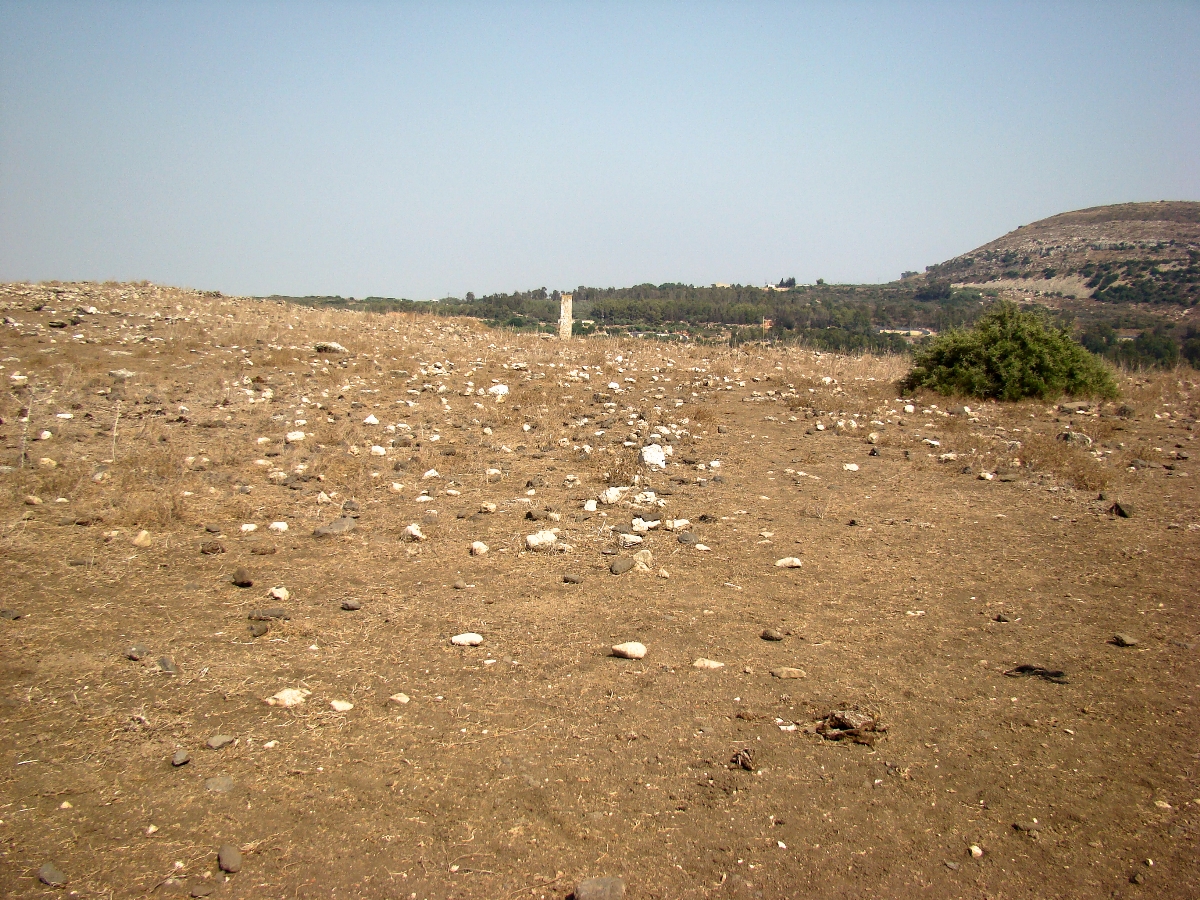
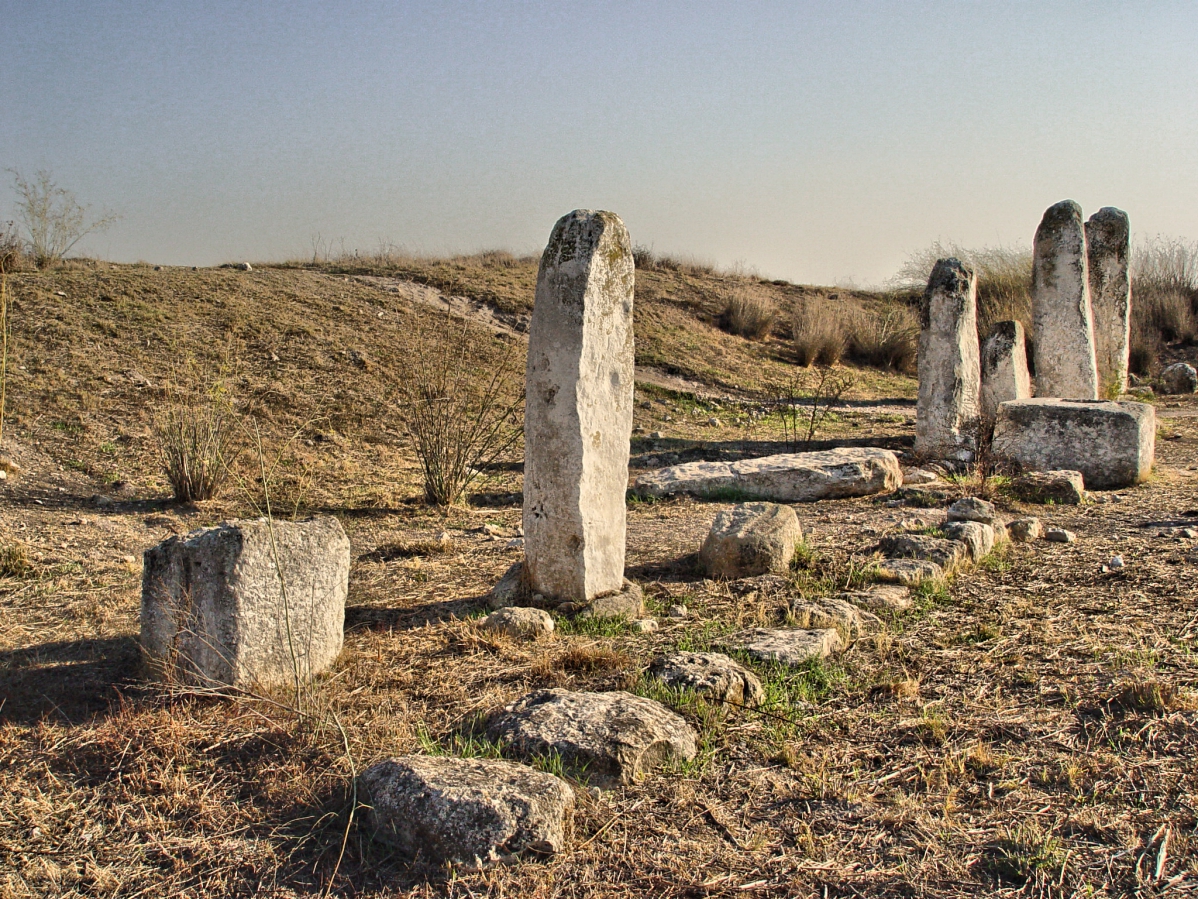
Our photo here shows the standing stones at the high place at Gezer.

Standing Stones at Gezer. Photo by Leon Mauldin.

Standing Stones at Gezer. Photo by Leon Mauldin.

Gezer guarded the entrance into the Shephelah region. It is located approximately thirty kilometers northwest of Jerusalem. Gezer was strategically situated at the junction of the Via Maris, the international coastal highway, and the highway connecting it with Jerusalem through the valley of Ajalon.

I have several previous posts with photos & info here, here, here, here, and here.

Hint: pronounce Gezer with “short” e, not GEEzer (def.: old man).


Damascus Gate in Jerusalem

November 10, 2015

It is fascinating to view the gates of Old Jerusalem!

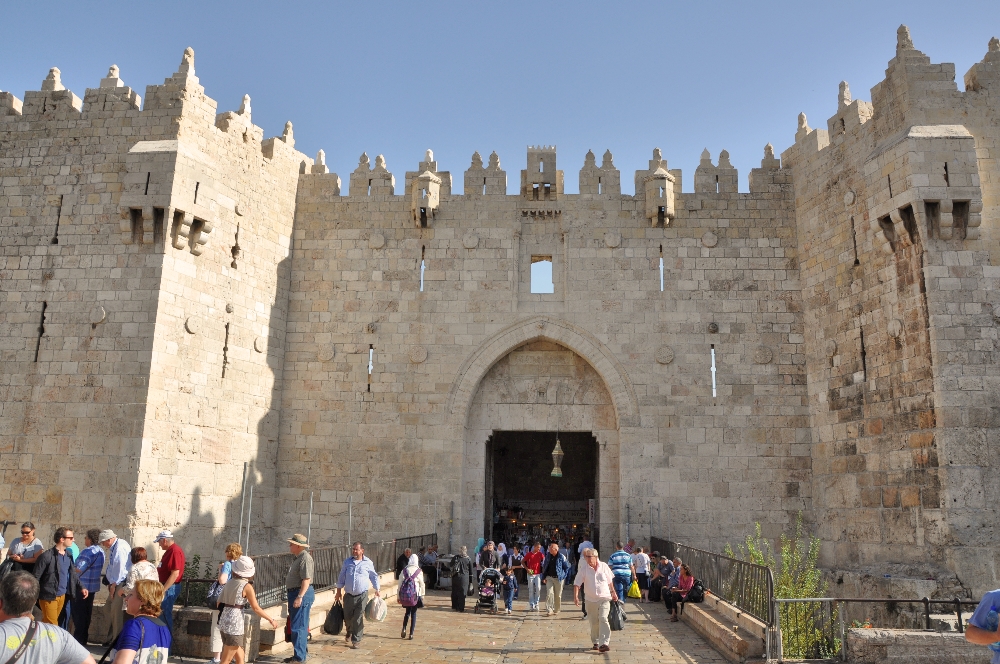
The Damascus Gate is located on the north side of Jerusalem, so named because this would be the direction going out of Jerusalem to Damascus, ca. 150 miles NNW. The Jews call this gate the Shechem Gate, and the Arabs call it Bab el-Amud.

Damascus Gate Jerusalem. North entrance. Photo by Leon Mauldin.

Damascus Gate Jerusalem. North entrance. Photo by Leon Mauldin.

This entrance gate

along the present north wall dramatically accents the spot that has been the main north entrance to Jerusalem for almost two millennia. R. W. Hamilton’s sounding here in 1937 and Basil Hennessey’s excavations in the 1960s; have revealed, below the modern entrance, layer upon layer of earlier gateways, reaching back through Arab, Crusader and Byzantine constructions to Roman Age foundations. The earliest certain construction here dates to Aelia Capitolina, the second to fourth-century C.E. city of Hadrian, but both Hamilton and Hennessey felt they found evidence that Hadrian’s gateway was built on foundations that went back to the Second Temple period. BAS Biblical World in Pictures. (2003).

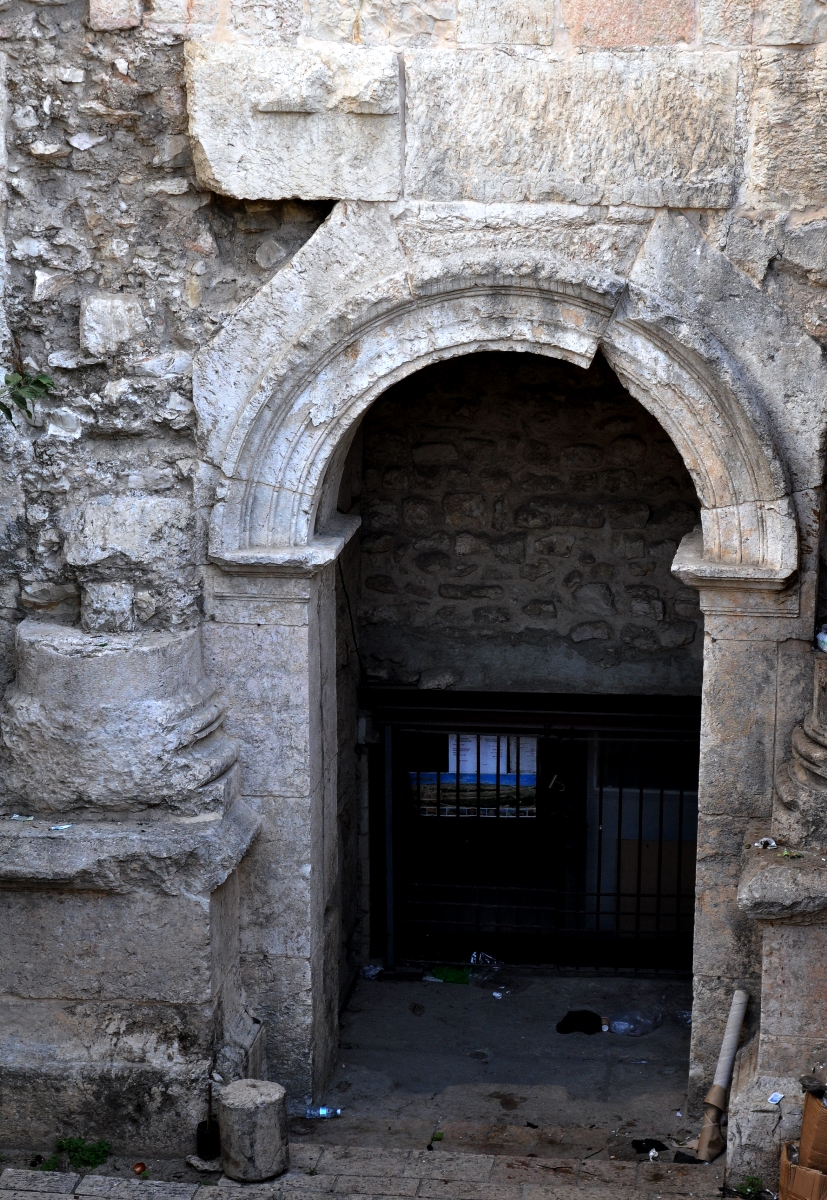
Hadrian had built a triple-arched gateway to serve as entrance here. The eastern arch is well-preserved.

Hadrian Gate, eastern arch. ca. AD 135. North wall, Jerusalem. Photo by Leon Mauldin.

Hadrian Gate, eastern arch. ca. AD 135. North wall, Jerusalem. Photo by Leon Mauldin.

The Latin inscription above the keystone of the arch says, “…according to the decurians [the city council] of Col[onia] Ael[ia] Cap[itolina],” Hadrian’s designation for Jerusalem.

Click images for larger view.


Aqueduct at Beit Hananya

September 25, 2015

In perusing some homeschooling curriculum on the Roman Empire there was a heading entitled “Amazing Architects.”

The Romans were among the best builders in history. They built things that served practical purposes, such as canals, bridges, sewers, harbors, and roads. But it was perhaps in constructing aqueducts that their engineering skills were most impressive.

Aqueducts were developed by the Romans. They are channels for carrying water that were mostly dug into the earth, following the contours of hills. Where this was not possible, the Romans build arches made of concrete and stone. It took great skill to build an aqueduct. The water channels had to slop at exactly the right angle all the way along its length to give a steady flow of water. (Peter Chrisp, Ancient Rome, p.46).

Many sections of the ancient Roman aqueducts still survive in various parts of the former Roman Empire. The aqueduct that emptied into Caesarea on Israel’s coast is a prime example. Caesarea was the capital of Judea during the ministry of Jesus. See our post here.

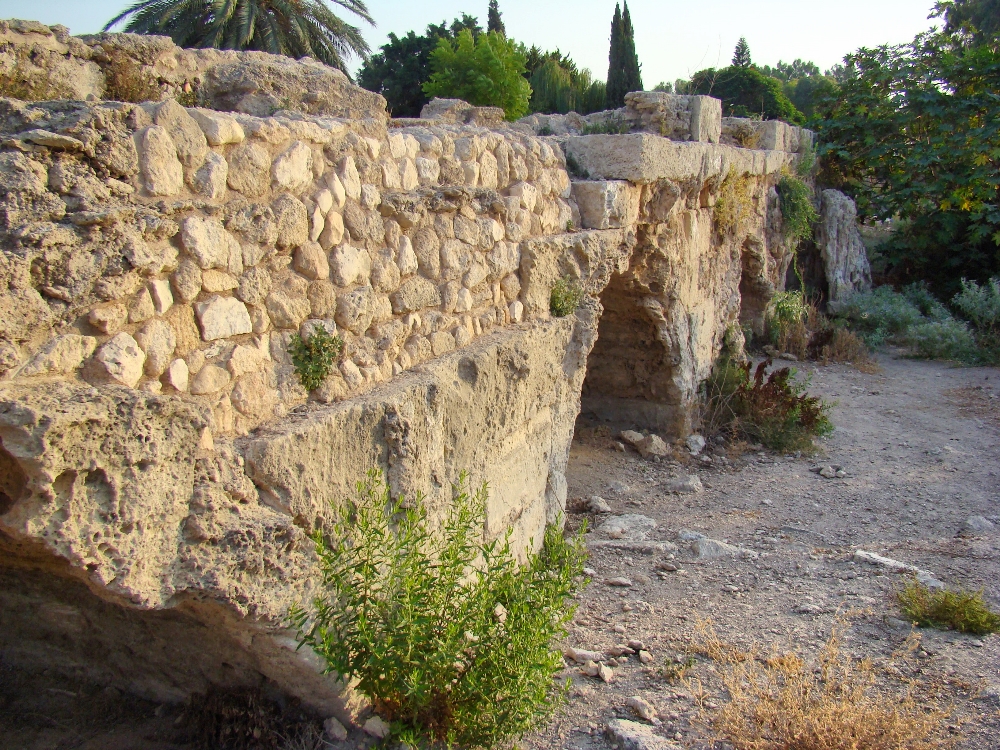
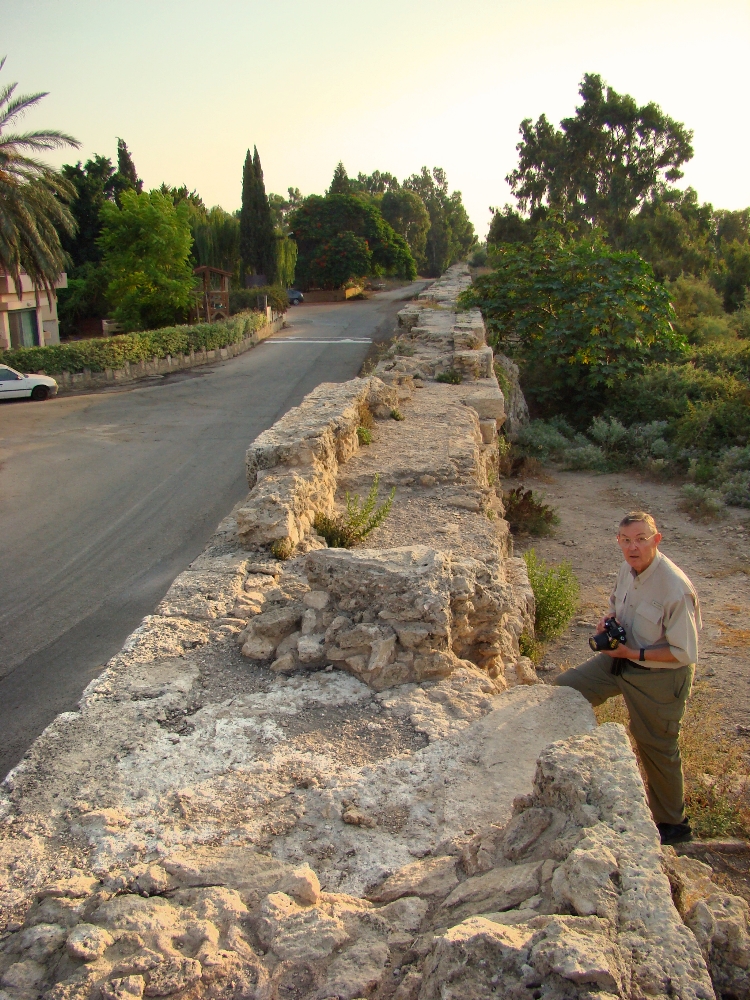
In Sept. 2011, Ferrell Jenkins & I made a personal study trip to Israel that included a stop at Beit Hananya, in the biblical “Plain of Sharon,” where a portion of the aqueduct can still be seen. This is north of Caesarea by a few miles. (Fresh water was channeled to Caesarea  from a distance of 8.5 miles).

Roman Aqueduct at Beit Hananya, north of Caesarea. Photo by Leon Mauldin.

Roman Aqueduct at Beit Hananya, north of Caesarea. Photo by Leon Mauldin.

Beit Hananya Aqueduct as seen from top. Photo by Leon Mauldin.

Beit Hananya Aqueduct as seen from top. Photo by Leon Mauldin.

The water was channeled to course down the top of the aqueduct.

Click photos for larger view.


The Greek Goddess Hera

August 25, 2015

While taking a group to Italy (2012) I had the occasion to visit the Vatican Museum in Rome, where among other many artifacts, I photographed a statue of the Greek goddess Hera.

Hera, Vatican Museum. Photo by Leon Mauldin.

Hera, Vatican Museum. Photo by Leon Mauldin.

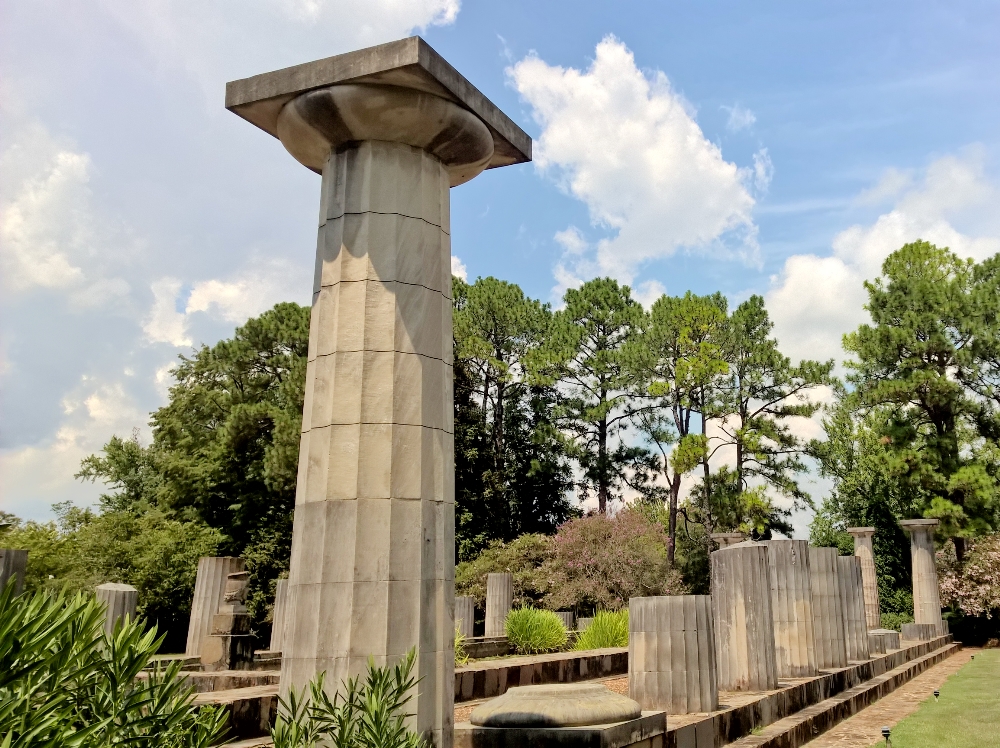
There is a replica of the temple of Hera in central Alabama:

Hera Temple at Wetumpka, AL. Photo by Leon Mauldin.

Hera Temple at Wetumpka, AL. Photo by Leon Mauldin.

Jasmine hill gardens and outdoor museum, “Alabama’s little corner of Greece,” now features over 20 acres of year-round floral beauty and classical sculpture, including new statuary honoring Olympic heroes.

The Olympian center welcomes visitors with a video presentation of jasmine hill’s history and a display of Olympic memorabilia from the games of past years. a tour of jasmine hill, now completely accessible to visitors with disabilities, offers spectacular and ever-changing views, including our full-scale replica of the temple of Hera ruins as found in Olympia, Greece, the birthplace of the Olympic flame. http://www.jasminehill.org/

Wikipedia:

Hera is the wife and one of three sisters of Zeus in the Olympian pantheon of Greek mythology and religion. Her chief function was as the goddess of women and marriage. Her counterpart in the religion of ancient Rome was Juno. The cow, lion and the peacock were considered sacred to her. Hera’s mother is Rhea and her father Cronus.

Portrayed as majestic and solemn, often enthroned, and crowned with the polos (a high cylindrical crown worn by several of the Great Goddesses), Hera may bear a pomegranate in her hand, emblem of fertile blood and death and a substitute for the narcotic capsule of the opium poppy. Scholar of Greek mythology Walter Burkert writes in Greek Religion, “Nevertheless, there are memories of an earlier aniconic representation, as a pillar in Argos and as a plank in Samos.” Hera was known for her jealous and vengeful nature against Zeus’s lovers and offspring, but also against mortals who crossed her, such as Pelias. Paris also earned Hera’s hatred by choosing Aphrodite as the most beautiful goddess.

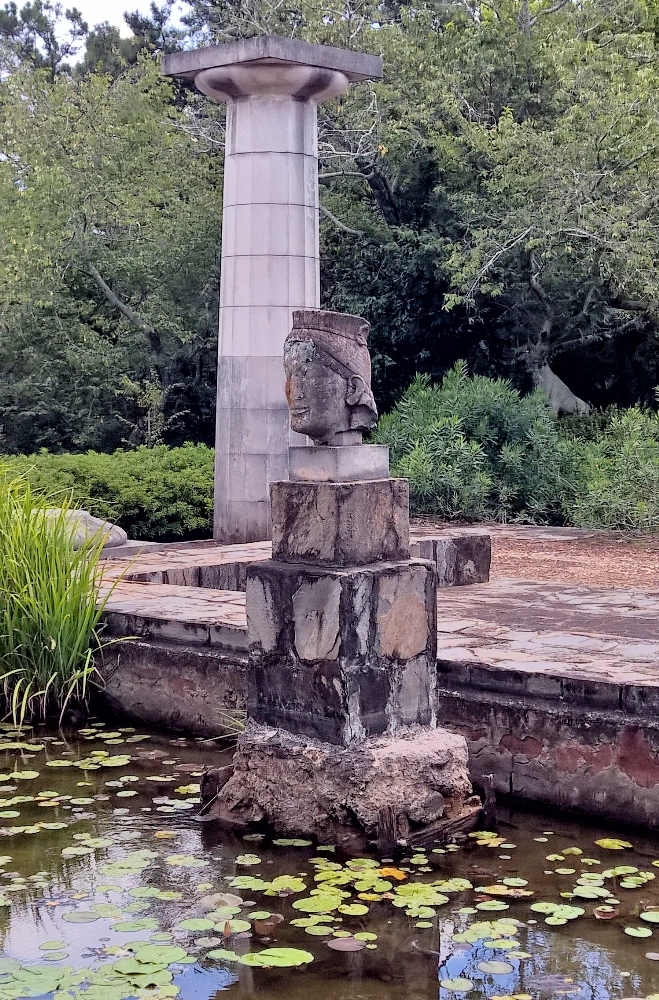
Bust of the Greek goddess Hera at temple site. Photo by Leon Mauldin.

Bust of the Greek goddess Hera at temple site. Photo by Leon Mauldin.

SA′MIA (Σαμία), a daughter of the river-god Maeander, and wife of Ancaeus, by whom she became the mother of Samos. (Paus. vii. 4. § 2.) Samia also occurs as a surname of Hera, which is derived from her temple and worship in the island of Samos. (Herod. iii. 60; Paus. vii. 4. § 4; Tacit. Ann. iv. 14; comp. HERA.) There was also a tradition that Hera was born or at least brought up in Samos. (Paus. l. c.; Schol. ad Apollon. Rhod. i. 187.) (Dictionary of Greek and Roman Biography and Mythology, Vol. 3, p. 702).

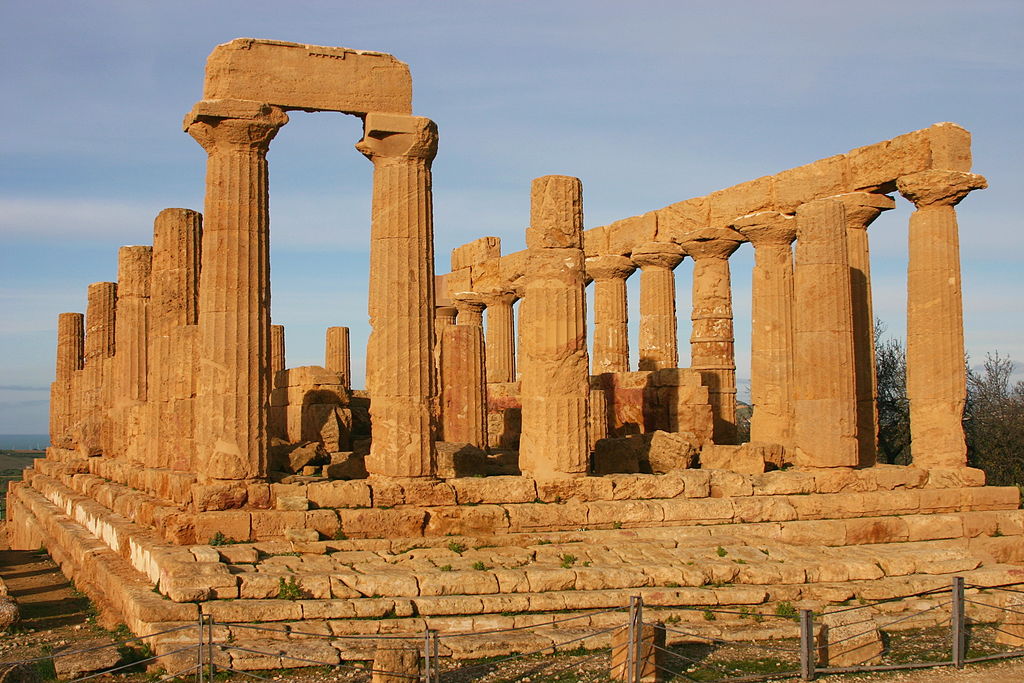
There are the ancient remains of a temple devoted to Hera at Agrigento, a city on the southern coast of Sicily. (That location is included in my planned itinerary for Sicily/Italy March 2016.)

Temple of Hera, Agrigento, Sicily. Photo by Jose Luiz.

Temple of Hera, Agrigento, Sicily. Photo by Jose Luiz.

Personal note: We have not been posting much for the last several weeks due to some family sickness and deaths, and the priority which that rightly requires. We hope to be posting more regularly now in the near future. Thank you for your patience.


“Like a Cylinder Seal over Your Heart”

July 17, 2015

While running some biblical references yesterday I came across a text in Song of Solomon 8:6: “Set me like a cylinder seal over your heart, like a signet on your arm. For love is as strong as death, passion is as unrelenting as Sheol. Its flames burst forth, it is a blazing flame” (NET Bible).

The NET Bible with its translation notes has some very useful material on the significance of the similes cylinder seal and signet as used in this passage:

In the ancient Near East (khotam “seal”) was used to denote ownership and was thus very valuable (Jer 22:24; Hag 2:23; Eccl 17:22). Seals were used to make a stamp impression to identify the object as the property of the seal’s owner (HALOT 300). Seals were made of semi-precious stone upon which was engraved a unique design and an inscription, e.g., LMLK [PN] “belonging to king […].” The impression could be placed upon wet clay of a jar or on a writing tablet by rolling the seal across the clay. Because it was a valuable possession its owner would take careful precautions to not lose it and would keep it close to him at all times.

The Oriental Institute Museum of the University of Chicago has some helpful displays of ancient seals, how they were made, how worn, along with several examples of actual seals and their imprints.

How Seals Were Made. Oriental Museum Chicago. Photo by Leon Mauldin.

How Seals Were Made. Oriental Museum Chicago. Photo by Leon Mauldin.

Seals, How Worn.  Oriental Institute. Photo by Leon Mauldin.

Seals, How Worn. Oriental Institute. Photo by Leon Mauldin.

Note that this above display shows both the stamp seal as well as cylinder seal. The Hebrew word for seal, khotam or chothamoccurs twice in our text, characteristic of the parallelism of Hebrew poetry. The NET Bible renders the same word khotam as cylinder seal and then signet in the verse (Song of Solomon 8:6).

There were two kinds of cylinder seals in the ancient Near East, namely, those worn around one’s neck and those worn around one’s wrist. The typical Mesopotamian seal was mounted on a pin and hung on a string or necklace around one’s neck. The cylinder seal hung around one’s neck would, figuratively speaking, rest over the heart (metonymy of association). The Beloved wished to be to Solomon like a cylinder seal worn over his heart. She wanted to be as intimate with her lover as the seal worn by him (W. W. Hallo, “‘As the Seal Upon Thy Heart’: Glyptic Roles in the Biblical World,” BRev 2 [1985]: 26). (NET notes).

Seal on display, Oriental Institute. Photo by Leon Mauldin.

Seal on display, Oriental Institute. Photo by Leon Mauldin.

This cylinder above has a contest scene at top and what may be a childbirth scene at bottom.

Ancient seal Oriental Institute. Photo by Leon Mauldin.

Ancient seal Oriental Institute. Photo by Leon Mauldin.

This seal is dated at 2,900-2,750 BC according to its accompanying placard.

More on Khotam:

Literally “cylinder-seal” or “seal.” The term (khotam, “cylinder-seal”) is repeated in Sol 8:6 for emphasis. The translation above uses the terms “cylinder seal” and “signet” simply for the sake of poetic variation. The Beloved wanted to be as safe and secure as a cylinder seal worn on the arm or around the neck, hanging down over the heart. She also wanted to be placed on his heart (emotions), like the impression of a cylinder seal is written on a document. She wanted to be “written” on his heart like the impression of a cylinder seal, and kept secure in his love as a signet ring is worn around his arm/hand to keep it safe. (NET notes).

Finally re: the word rendered “arm,” (Song of Solomon 8:6) zeroa:

Alternately, “wrist.” In Palestine cylinder seals were often hung on a bracelet worn around one’s wrist. The cylinder seal was mounted on a pin hanging from a bracelet. The cylinder seal in view in Song 8:6 could be a stamp seal hung from a bracelet of a type known from excavations in Israel. (NET notes).

Click images for larger view.