A Tribute to My Friend, Raymond Harville

June 18, 2010

You perhaps have noticed that the subtitle of Leon’s Message Board is “Bible History and Geography and More.”  Today’s post is in the “More” category. It is in the “Personal” genre, but something I wish to share with those who would be interested.

Yesterday (June 17), Jackie Richardson and I conducted funeral services for our dear friend, Raymond Harville.  I thought I’d share a couple of photos, as well as my notes prepared for yesterday’s funeral sermon.

I remember bro. Homer Hailey, in class lectures in the Proverbs, making the observation that in life one may have many acquaintances, but will have very few intimate friends (of the nature referenced in Prov. 17:17; 18:24).

In this post I want to pay tribute to Raymond, one of my closest friends.
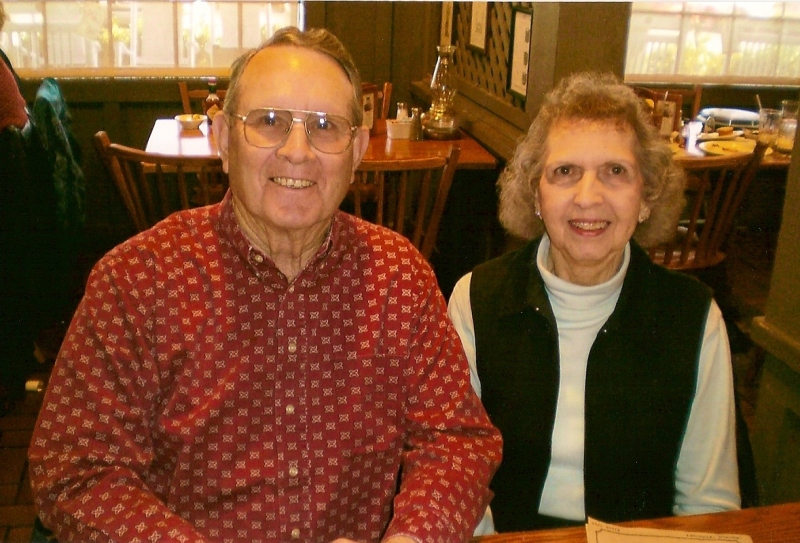
Raymond & Anne Harville. They were married 54 years. Photo by Leon Mauldin.

Funeral Sermon for Raymond Harville

by Leon Mauldin

When Abner died, 2Sa 3:38 states,”Then the king said to his servants, Do you not know that a prince and a great man has fallen this day in Israel?”

The world tracks its heroes: entertainment stars that don’t know the Lord, that call good evil and call evil good, that boldly have children out of wedlock, and flaunt God’s covenant of marriage.  But God knows who the real heroes are. I want my children and grandchildren to look up to men just like brother Harville.  He was one of my heroes.

We don’t have to look far to count our blessings. Prayers have not been in vain.  We prayed that he might be healed, but if that were not the case, that he would not continue to suffer, and we prayed that God’s will be done. It is a blessing that the Alzheimer’s nightmare is over.  No one would have wished for him a continuation of what he endured for the past years and especially the past several months.

Paul said in Phil. 1:27: “having a desire to depart and be with Christ, which is far better.” It is “very much better” (NASB).  “Better by far” (NIV).  That is always true for the faithful Christian, but especially when one’s work here is done, when one can no longer function with clarity of mind.

I first met bro. Harville more than 34 years ago. Nathan Hagood was preaching in Valdosta, Ga.; we were in Blackshear.  Raymond had called Nathan regarding a newly established congregation in Hohenwald, Tn.; Nathan did not want to move there, but he told Raymond about me.  When we talked by phone, and I told him a bit about my background, etc., I mentioned I had studied under Bob Waldron, Irvin Lee’s son-in-law.  I learned later that Raymond made one call to Irvin Lee.  Then he told the folks at Hohenwald, “I’ve got you a preacher.”

During those years when we were in Hohenwald and the Harville’s in Mt. Pleasant, Tn., our lives became intertwined in so many ways. During those years a friendship was forged like that described in Prov. 18:24: “But there is a friend who sticks closer than a brother.”  Proverbs 17:17 “A friend loves at all times, And a brother is born for adversity.” That friendship was manifested in many ways.

Brother Harville was an encouragement to me in the preaching of the Gospel. In radio Q&A work; in the local works in TN and AL; in Gospel meeting work.  “Blest be the tie that binds Our hearts in Christian love; The fellowship of kindred minds Is like to that above.”  In Raymond I found a kindred mind, my kindred spirit.

When the Harville’s moved to Midway in Lauderdale Co., Al, and we moved to Lexington, Al., we were only 10 miles apart.  Typically on Tuesdays we would meet for breakfast or lunch.  Often our Bibles would be spread on the table as we studied.  From there we would often make hospital calls or other visits together.  During those days is was rare for a day to go by without contact of some kind.

My lessons became punctuated with illustrations from Raymond. If I were teaching on some subject which was not a present pressing issue, I would say, Raymond says to preach on modesty in the cold of December.  I.e., you teach and prepare before some topic becomes an emotionally charged issue. On the simplicity of the Gospel: I was present when a “Jehovah’s Witness” after talking a while, and perceiving she was dealing with someone who knew the Bible, defensively said, “I’m not trying to force this on you; why, you couldn’t become a Jehovah’s Witness tonight if you wanted to.”  Raymond immediately replied, “I know that, but if you were teaching people how to become New Testament Christians, they could do that the same hour of the night.”

In 1992, there were four of us who together made our “maiden voyage” for overseas’ evangelism, Raymond, Johnny Felker, Bob Waldron and myself.  That trip was to Czechoslovakia. I’ve said several times there were no three  men on earth I’d rather have taken that trip with.

What has brought us here today is truth. That’s what brought Raymond and me together. Like John and the elect lady (2 John), and John and Gaius (3 John).  Sometime read those short epistles and see how much emphasis is placed on the truth.  Note 2 John 2: “because of the truth which abides in us, and will be with us forever.”  Death ends our relationship on earth, but if we have the truth in common, we have something that we will possess together forever!

As I sum up my personal reflections there are especially three lessons I learned from Raymond. I am happy to say that I shared this with him years ago.

  1. Do right by your family.
  2. The purpose of study is people.
  3. Pay attention to people that might otherwise go unnoticed.

Prov. 10:7 says, “The memory of the righteous is blessed, But the name of the wicked will rot.”

I’ll remember Raymond’s sense of humor. Once while standing in the back with him to greet folks entering the building at Southern Boulevard in Sheffield, a lady asked Raymond, “Is this your brother?” With a straight face he answered, “No ma’am, he’s my son.”  To which she replied, “I could tell there was a strong resemblance.”

Raymond loved the Lord, and loved the church of the Lord. Not a “big shot.”  He was all about souls; about pleasing God. His one purpose in life was pleasing God.

I’ll remember his work ethic. “Do it right, do it fast, and get on to the next job.”

I’ll remember His love for his family.

I’m thankful for the hope we have, Titus 1:2. The promises of God: Remission of sins as one obeys the Gospel.  Jesus’ promise of the resurrection in John 11:25,26.

Jesus cares, Heb. 4:14-16. Promised to be with us Heb. 13:5,6.  In life and in death! 2 Cor. 5:8— We are confident, yes, well pleased rather to be absent from the body and to be present with the Lord.

Before our Father’s throne We pour our ardent prayers; Our fears, our hopes, our aims are one, Our comforts and our cares.  We share our mutual woes, Our mutual burdens bear; And often for each other flows The sympathizing tear.  When we asunder part, It gives us inward pain; But we shall still be joined in heart, And hope to meet again.

I am thankful that Raymond lived in the Lord; that when he died, died in faith. That he died in the Lord. That he died in hope. May God help each one present today, to partake of the salvation which is in Jesus Christ.

(The two photos used in our post were taken Jan/Feb 2008.  Remember to click on image for higher resolution and larger view.)
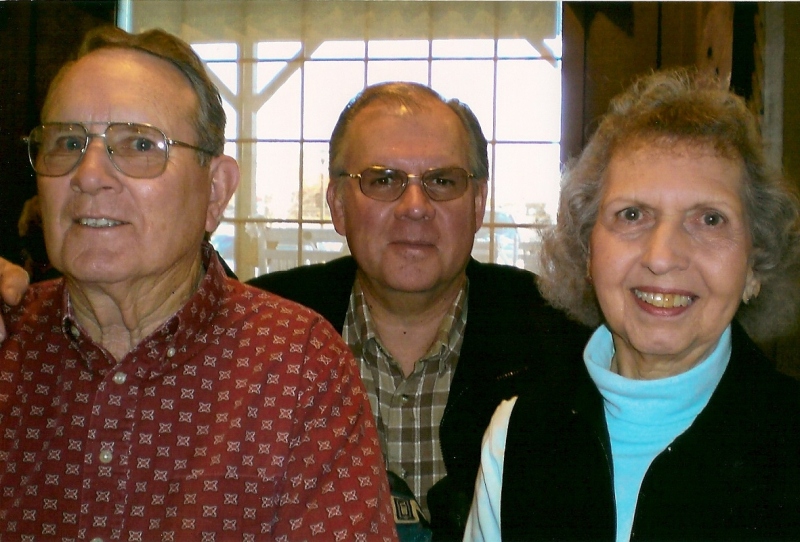
Raymond, Leon & Anne. Early 2008. Photo by Linda Mauldin.


Philadelphia, its Environs, cont’d

June 15, 2010

We continue in today’s post to explore biblical Philadelphia, the sixth of the seven cities with churches addressed in Rev. 2-3.

Nelson’s New Illustrated Bible Dictionary gives this info regarding Philadelphia:

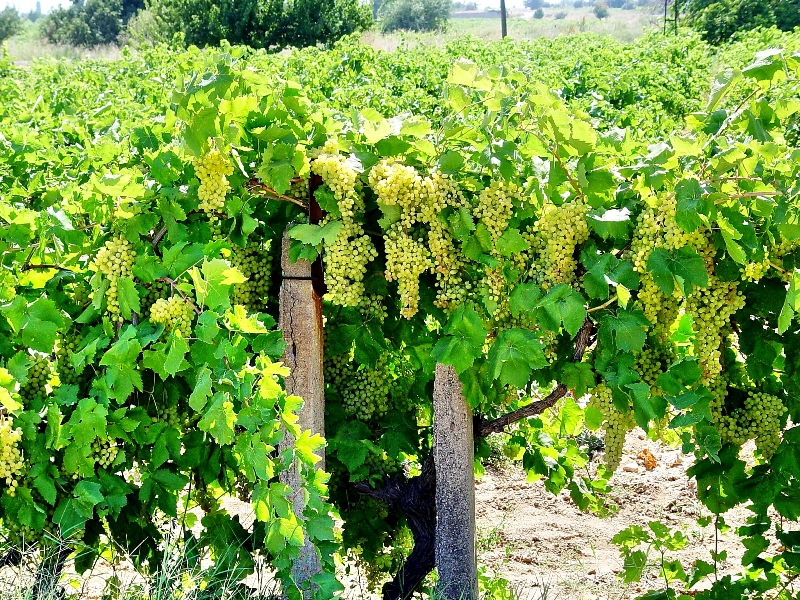
Philadelphia was situated on the Cogamus River, a tributary of the Hermus (modern Gediz) and was about 45 kilometers (28 miles) southeast of Sardis. It was founded by Attalus II (Philadelphus), who reigned as king of Pergamos from 159 B.C. until 138 B.C. Philadelphia was a center of the wine industry. Its chief deity was Dionysus, in Greek mythology the god of wine (the Roman Bacchus).

Volcanic activity has contributed to the fertility of the soil.  In ancient times as well as the present, Philadelphia is well suited for vineyards.  See our photo below.

Vineyards at Philadelphia. Photo ©Leon Mauldin.

Philadelphia and its environs were prone to earthquake.  Bible and Spade (1976, vol. 5) quotes the Greek geographer Stabo:

…the city Philadelphia [is] ever subject to earthquakes. Incessantly the walls of the houses are cracked, different parts of the city being thus affected at different times. For this reason but few people live in the city, and most of them spend their lives as farmers in the country, since they have a fertile soil. Yet one may be surprised at the few, that they are so fond of the place when their dwellings are so insecure; and one might marvel still more at those who founded the city. (Strabo 13.4.10; trans. Jones)

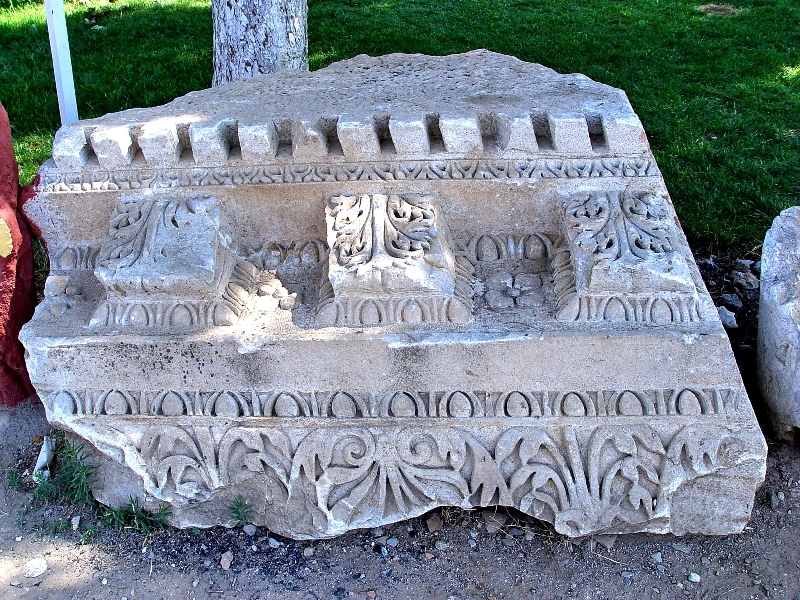
At the acropolis one may see a few artifacts of interest, such as this architrave fragment.

Architrave Fragment at Philadelphia. Photo ©Leon Mauldin.

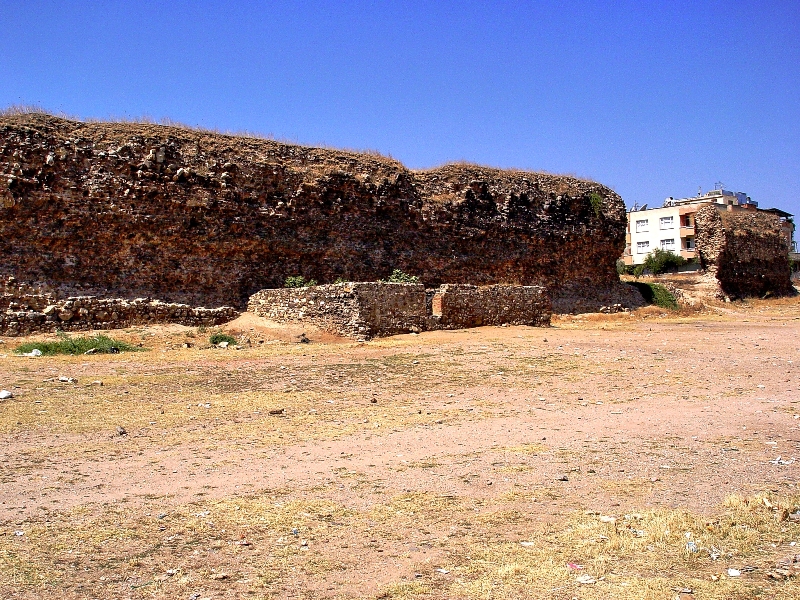
One may also view an ancient wall, as seen in our photo.

Ancient Wall in Philadelphia. Photo ©Leon Mauldin.

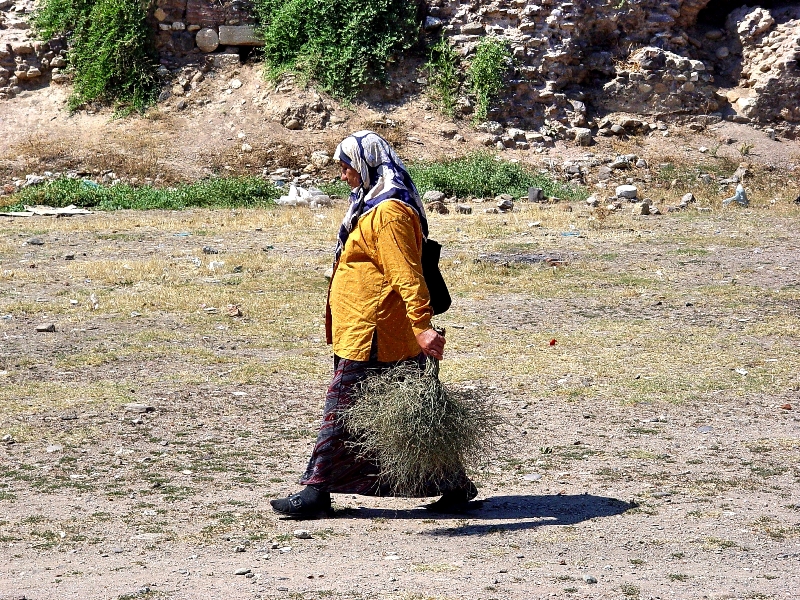
A woman walked by in front of that wall.  Apparently she was gathering material for a broom.

Woman with broom materials at Philadelphia. Photo ©Leon Mauldin.

Every ancient city of significance had a theater.  The one at Philadelphia has not been excavated, but its slope and semi-circular form can easily be detected.

Unexcavated Theater at Philadelphia. Photo ©Leon Mauldin.


Philadelphia, the Church with an Open Door

June 14, 2010

We continue to give attention to the cities of the Seven Churches addressed in Rev. 2-3, looking now at Philadelphia, modern Alasehir.  The churches at Philadelphia and Smyrna were both commended by the Lord; there were no charges of wrong doing against either congregation.

Further, Jesus said, “Look! I have put in front of you an open door that no one can shut” (Rev.3:8).  Many biblical students believe that the “open door” refers to Philadelphia’s location, on the great trade-route from Smyrna to the highlands of Phrygia.  Their faithfulness would be rewarded by further opportunities to proclaim the gospel to the many merchants and other travelers passing through this strategic site.

Our photo below shows view from the lower city, looking between Byzantine columns (Church of St. John), looking up to the acropolis.

Philadelphia. View from lower city facing acropolis. Photo by Leon Mauldin.

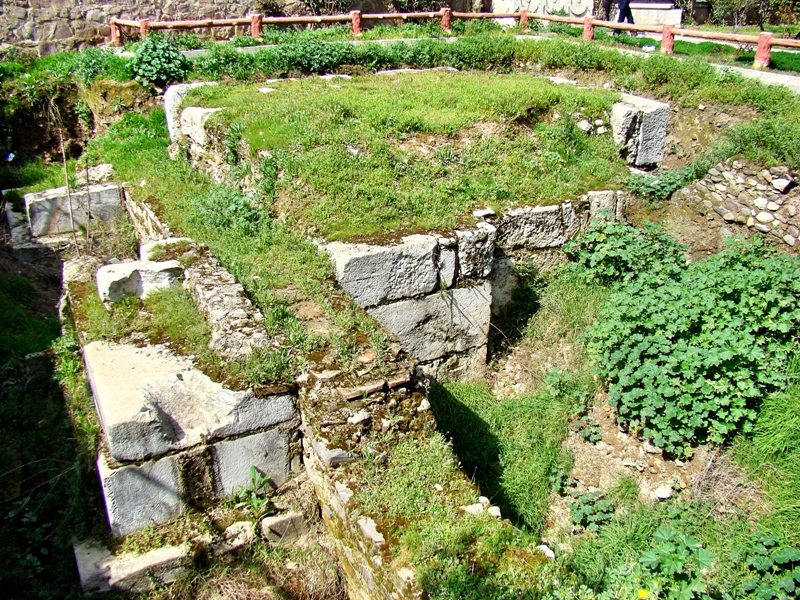
Very little excavation has been done in Philadelphia.  In photo below you can see some of the excavated area.

Limited excavations at Philidelphia. Photo by Leon Mauldin.

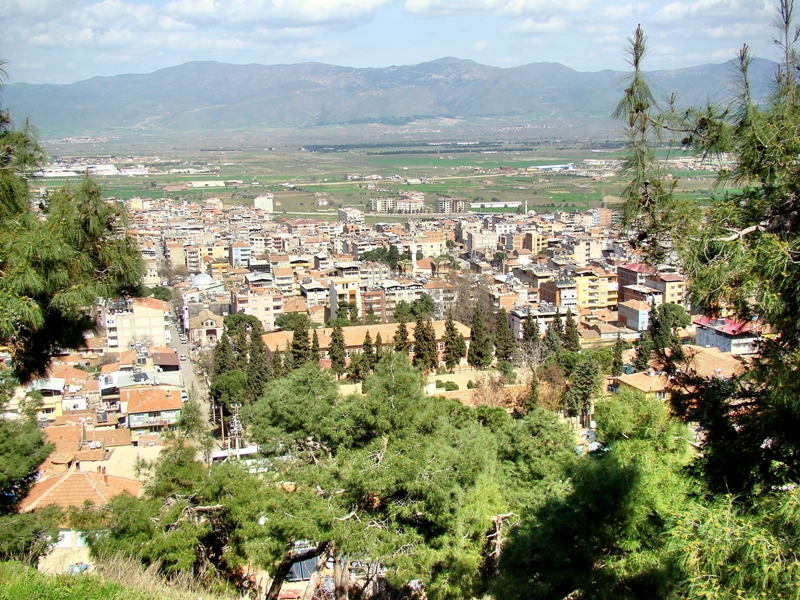
From the acropolis looking down one has a good view of Philadelphia.

Philadelphia modern Alasehir. View from acropolis. Photo by Leon Mauldin.

Click on image for larger view.  More to come on Philadelphia.


Sardis: Baptistry, Gymnasium, Sheep

June 9, 2010

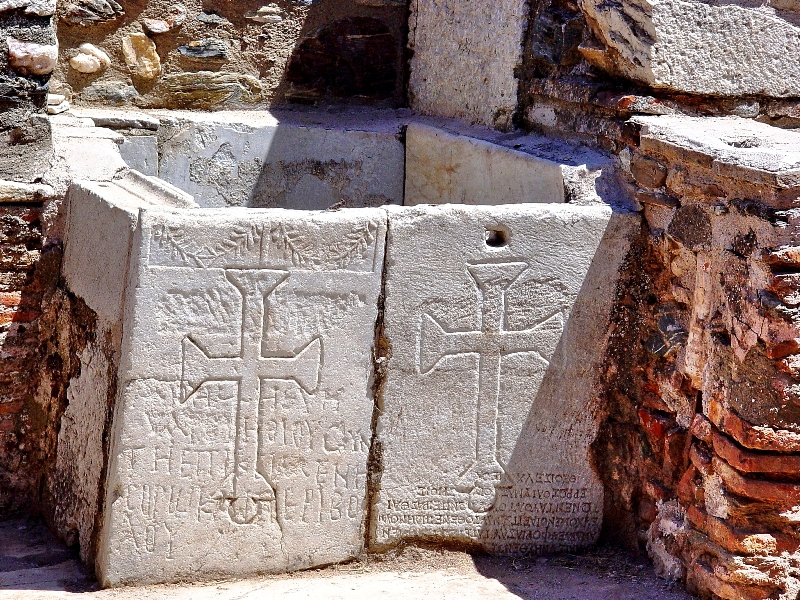
The concept of recycling is ancient; when visiting biblical sites it is common to see evidence of secondary usage of materials.  In our photo below, Fatih Cimok explains that this marble object is made of  “reused material from the Byzantine shops situated next to the synagogue in Sardis.”  This is believed to have been a baptistry.

Sardis Baptistry. Photo ©Leon Mauldin.

Cimok goes on to say, “The crosses were superimposed over pagan inscriptions and decorations” (A Guide to the Seven Churches, p.76).

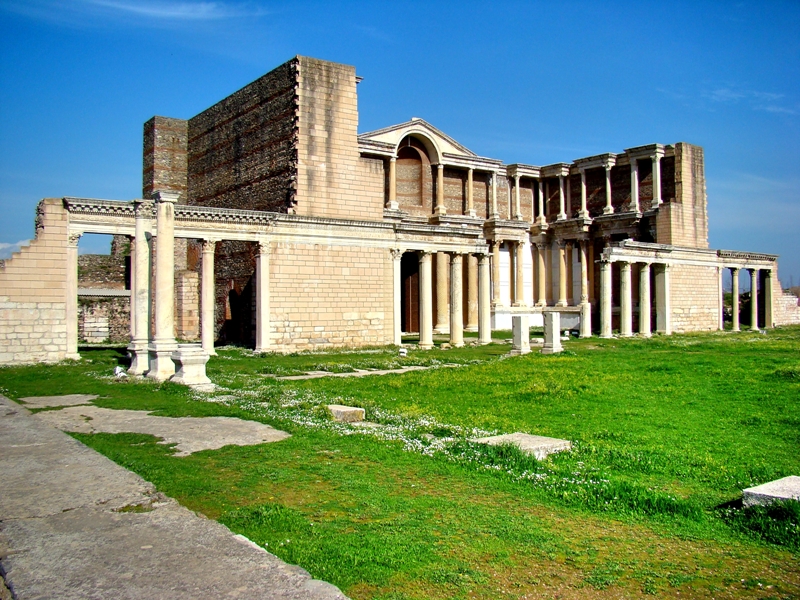
Sardis also had an impressive gymnasium and bath complex that comprised about five acres.

Sardis Gymnasium. Photo ©Leon Mauldin.

The open courtyard in front was for exercise; the bathhouse was directly behind the gymnasium. This complex is dated as 2nd century A.D.

Another interesting topic while we are featuring Sardis is the matter of its wool-dyeing. In his Pictorial Library of Bible Lands, Todd Bolen writes,

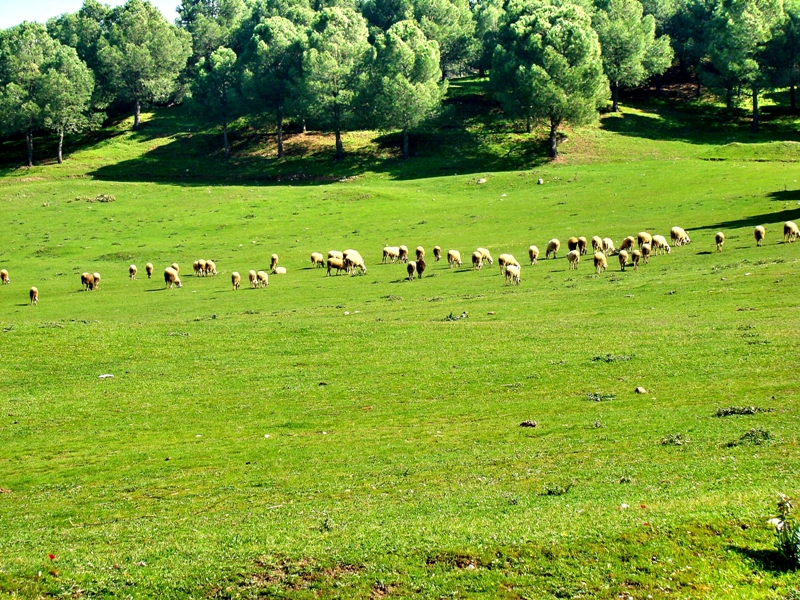
Sardis was known for the invention of wool-dyeing.  Even today sheep are a commonplace appearance at the ruins of Sardis, a city once known for its luxury textile and clothing trade.  John’s reference to soiled garments and the white raiments of Christ in Revelation 3:4 would have been significant to the church at Sardis in light of the city’s trade: “Thou hast a few names even in Sardis which have not defiled their garments; and they shall walk with me in white: for they are worthy” (KJV).

Our photo below, taken in March 2010, shows sheep grazing at Sardis, a view essentially unchanged over thousands of years.

Sheep at Sardis. Photo ©Leon Mauldin.

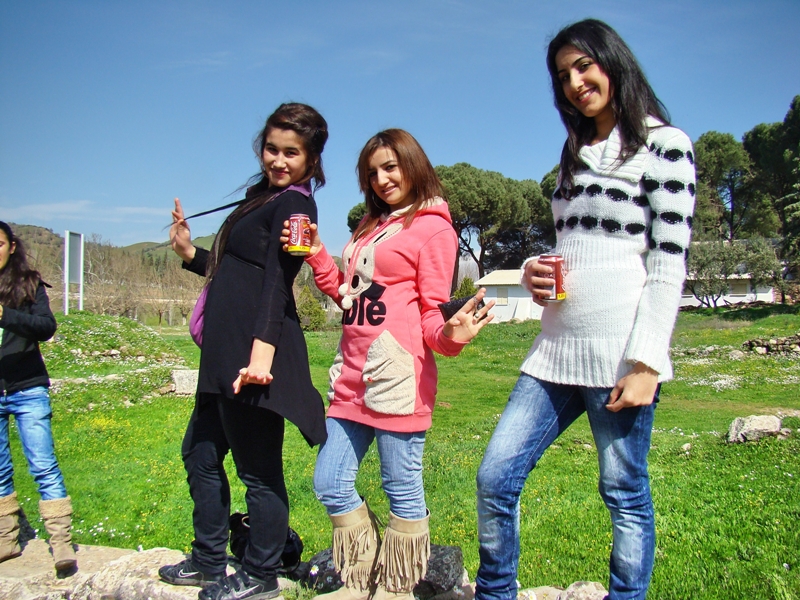
A frequent question that arises is, “What are the people like over there?” For the most part, people are quite friendly.  When our group was at Sardis there was apparently a school outing that was taking place there.  Some of the students wanted me to take their photo.

School Outing at Sardis. Photo ©Leon Mauldin.

Remember to click on photo for larger image.


Sardis Synagogue

June 3, 2010

There is evidence that each of the Seven Churches address in Rev. 2-3 were in cities which included Jewish populations. The synagogue at Sardis has been excavated. Fatih Cimok, in A Guide to the Seven Churches, writes:

The synagogue in Sardis is the largest of its type known to date.  Excavations show that the building was originally a civic basilica which was built between the main street and the gymnasium and converted into a synagogue sometime between 150-350 C.E.  Its unusually large dimensions and rich decoration, as well as the titles of the Jews mentioned in the inscriptions here, show the high status that the Jewish community in Sardis held.

In its final form the synagogue which is thought to date from about 320-40 CE consisted of a colonnaded entrance court and a long assembly hall (p.81).

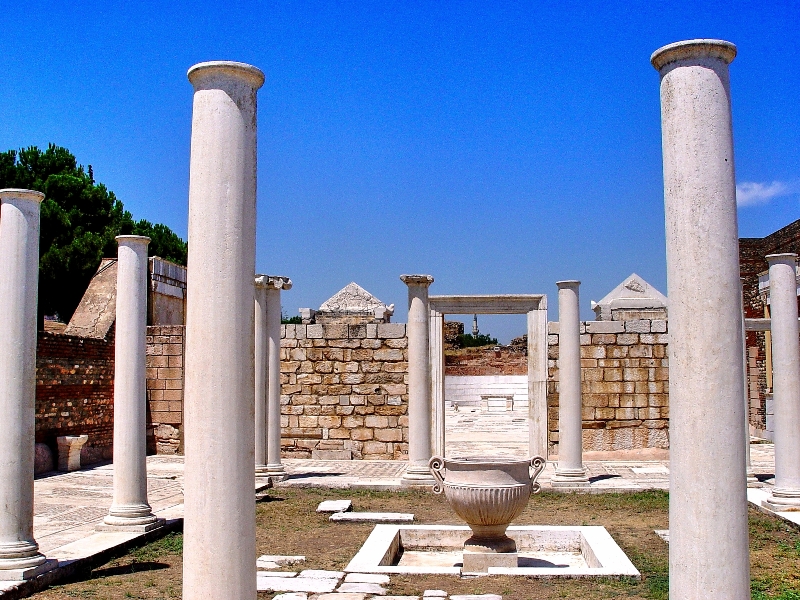
Pictured below is the Sardis synagogue:

Sardis Synagogue. Photo ©Leon Mauldin.

Click on photo for larger view. In our photo you can see the forecourt fountain.  In the distance you can see the main hall with table.  Cimok gives the seating capacity of the main hall as one thousand occupants.

More to come.


Sardis, a Dead Church with a Name

May 31, 2010

As we continue to make posts of the cities of the seven churches of Asia (Rev. 2-3), we now come to the city of Sardis. The city of Sardis was located on the river Pactolus, at the foot of mount Tmolus. The modern name is Sart.

Sardis was formerly the capital of the ancient Lydian Kingdom and was one of the greatest cities of the ancient world. It was here at Sardis that coined money was invented.

Twice in the city’s history it had fallen into the hands of its enemies because the people of Sardis failed to “watch” (once to the Persians, 546 B.C., and later to the Selucids (215 B.C.).   The church at Sardis addressed in Rev. 3 had failed to be as watchful as they should.  Jesus said, “You have a reputation that you are alive, but in reality you are dead” (Rev.3:1, NET).  They had a good name, but their true character did not match their reputation.  They needed to change that.

The city of Sardis was a center for the worship of the goddess Artemis.  The ruins of the temple were excavated by Howard C. Butler in the years 1910-1914. In our photo below you can see the ruins of the temple, and in the distance the city’s acropolis, on the edge of the Tmolus range.

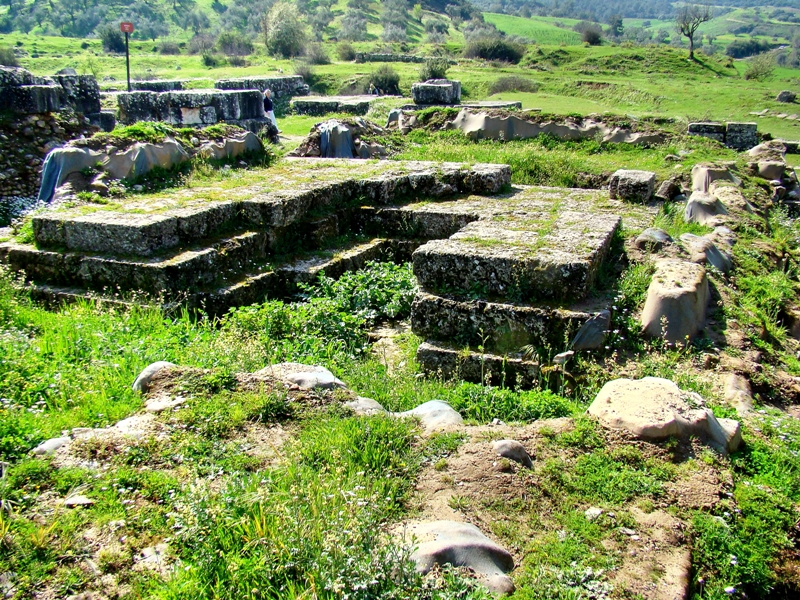
The history of this temple goes back to the 5th century B.C.  Over time, additions were made to the site.  On the lower portion of the grounds you can see the ruins of the Roman altar.  See our photo below.

Sardis. Roman Altar at temple of Artemis. Photo ©Leon Mauldin.

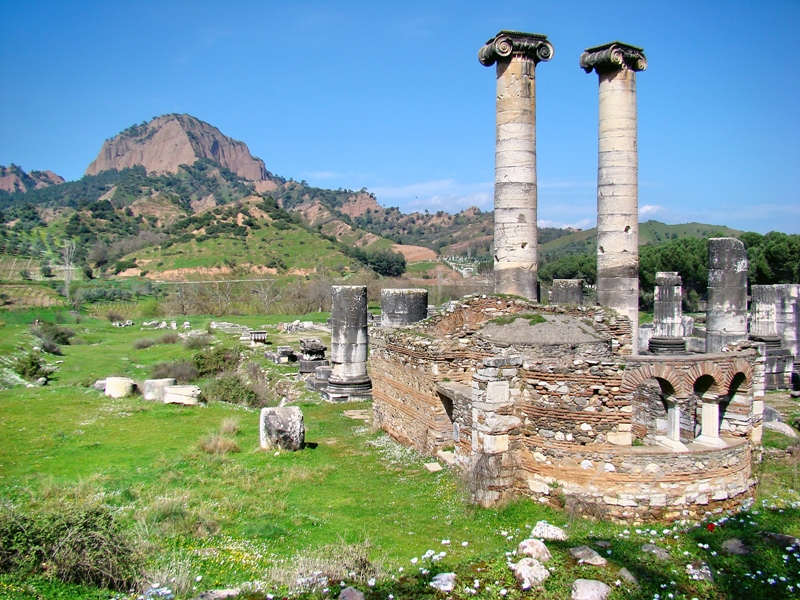
Our photo below shows the site with Tmolus to our back. The brown brick building at right foreground is a church building constructed about the 5th century A.D.

Sardis. Artemis Temple and 5th century A.D. Church. Photo ©Leon Mauldin.

Remember to click on images for higher resolution.  More to come on Sardis!


Thyatira, a church that welcomed Jezebel

May 27, 2010

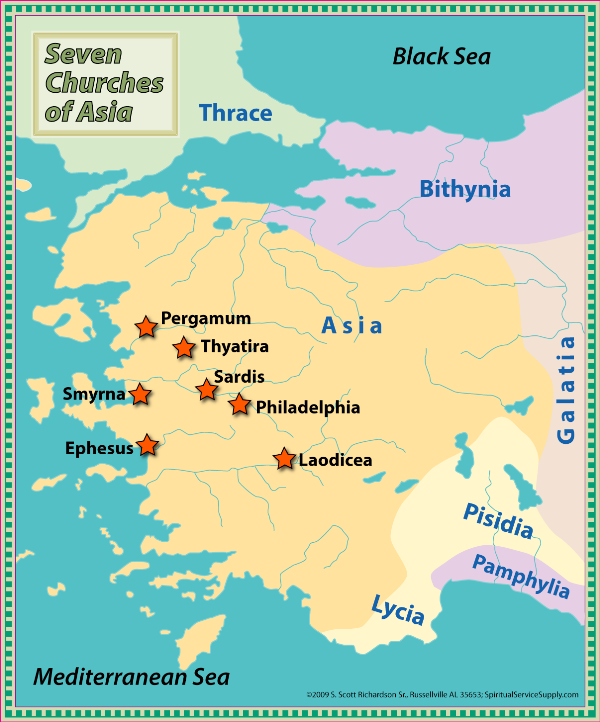
The city of Thyatira was another of the cities mentioned in Rev. 2-3, where the “seven churches which are in Asia” were addressed by the Apostle John.  Map below, by Scott Richardson, shows the location of Thyatira as well as the other cities.

Map Seven Churches of Asia. By Scott Richardson.

The modern name of Thyatira is Akhisar.  The New Bible Dictionary states:

It occupied an important position in a low-lying ‘corridor’ connecting the Hermus and Caicus valleys. It was a frontier garrison, first on the W frontier of the territory of Seleucus I of Syria, and later, after changing hands, on the E frontier of the kingdom of Pergamum. With that kingdom, it passed under Roman rule in 133 bc. But it remained an important point in the Roman road-system, for it lay on the road from Pergamum to Laodicea, and thence to the E provinces. It was also an important centre of manufacture; dyeing, garment-making, pottery and brass-working are among the trades known to have existed there.

You will remember that Lydia, the first convert in Philppi, was a seller of purple from Thyatira (Acts 17:14). For our previous post see https://bleon1.wordpress.com/2010/03/20/thyatira-home-of-lydia/

Nelson’s New Illustrated Bible Dictionary observes,

Archaeologists have uncovered evidence of many trade guilds and unions here. Membership in these trade guilds, necessary for financial and social success, often involved pagan customs and practices such as superstitious worship, union feasts using food sacrificed to pagan gods, and loose sexual morality.

This evidently explains the reference to Jezebel in the letter.  In the OT, Jezebel was the wicked woman from Phonecia that Israel’s king Ahab married.  She brought with her Baal worship, with all of its immorality.  Within the church at Thyatira there was a modern Jezebel, the counterpart of the one in the Old Testament. She was calling herself a prophetess, and deceptively teaching church members there that it was permissible for them to commit sexual immorality and to eat things sacrificed to idols (Rev. 2:20).  To make matters worse, she had been given opportunity to repent, but did not want to repent (v.21).

She was wrong to teach this, and the church was wrong to put up with her!

Thyatira. Modern Akhisar. Photo ©Leon Mauldin.

There is not a great deal to see of ancient Thyatira, because as is so often the case, a modern city has been built on the biblical site.  But a limited amount of excavation has been done.  Some Roman ruins of arches and other fragments can be seen in the photo below.

Thyatira. Roman Ruins. Photo ©Leon Mauldin.

Photo below shows Roman columns which have been uncovered.

Thyatira. Roman Columns. Photo ©Leon Mauldin.

More to come!


At Pergamum, the god Asclepius

May 25, 2010

We have been looking at the biblical city of Pergamum, the city where one of the seven churches of Asia (Rev. 2-3) was located.  Our last post featured photos from the Asklepieion, where the god of healing, Asclepius, was worshiped. There were other famous temples dedicated to this medicine god at Epidaurus in north-eastern Peloponnese, also on the island of Kos, as well as Trikala, and Gortys.

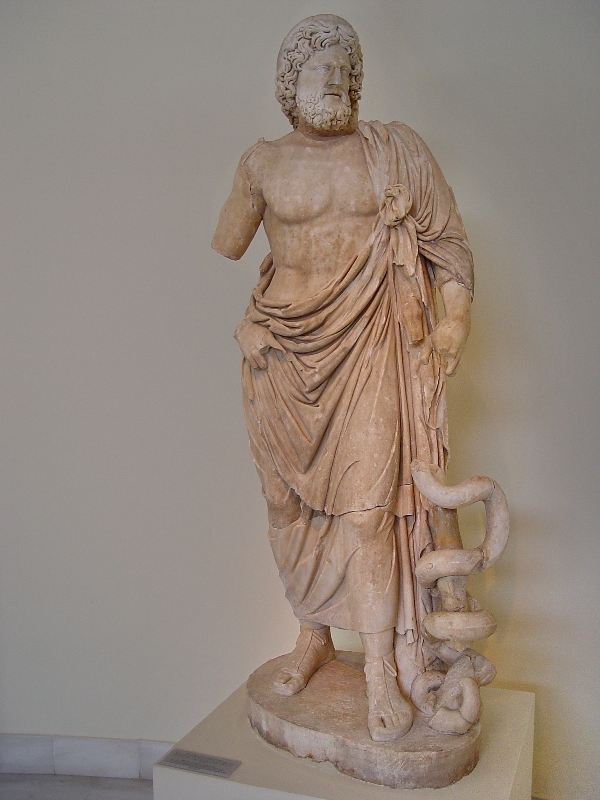
This photo is a statue of  Asclepius on display at the Athens Museum.  Notice the serpent intertwined on his staff.

Asclepius. Athens Museum. Photo ©Leon Mauldin.

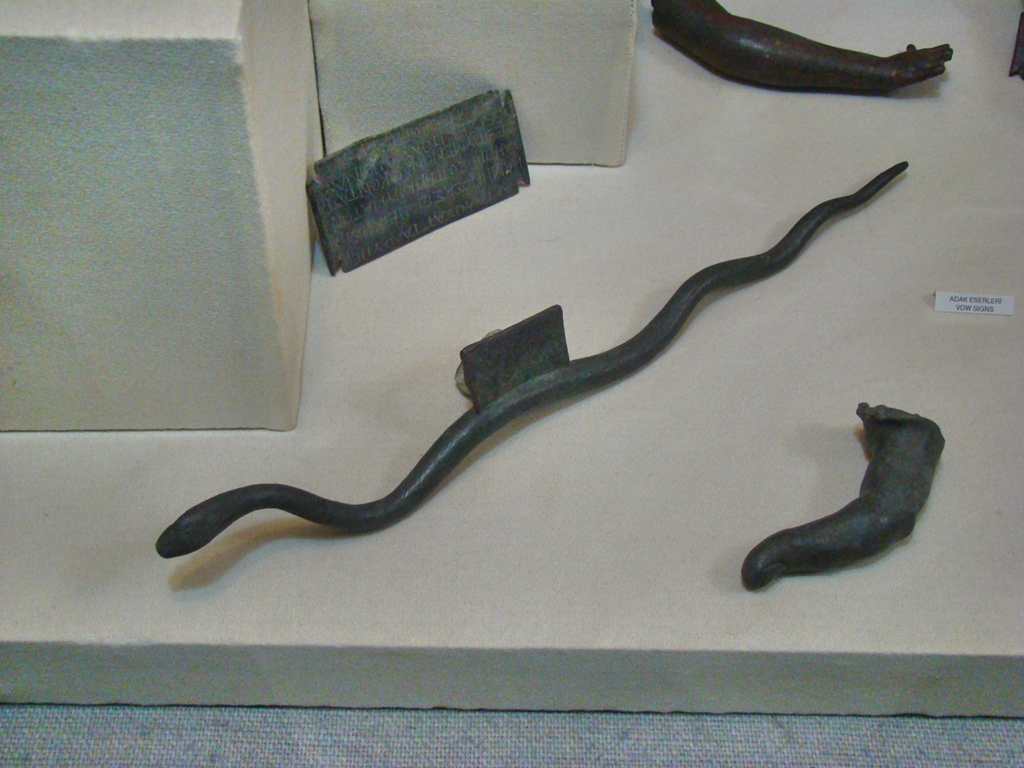
The museum at Pergamum, modern Bergama, displays a serpent, symbol of Asclepius, along with votive offerings left by those who traveled there for healing.

Serpent, symbol of Asclepius. Photo ©Leon Mauldin.

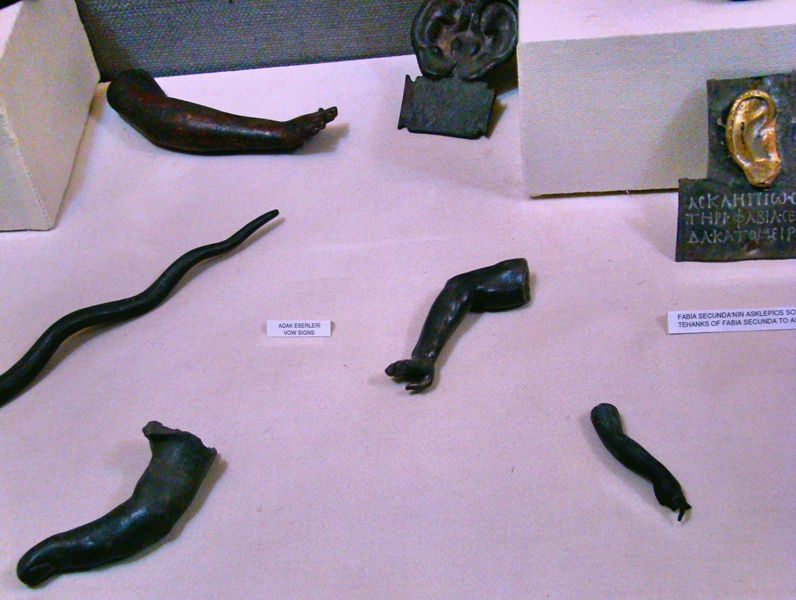
Here is a shot of body parts, left as votive offerings to the god Asclepius.

Body Parts, as Votive Offerings for Asclepius. Photo ©Leon Mauldin.

Temples devoted to Asclepius served a dual purpose, as not only a place of worship for the god, but also a luxury health spa of sorts, i.e., supposedly a healing center.

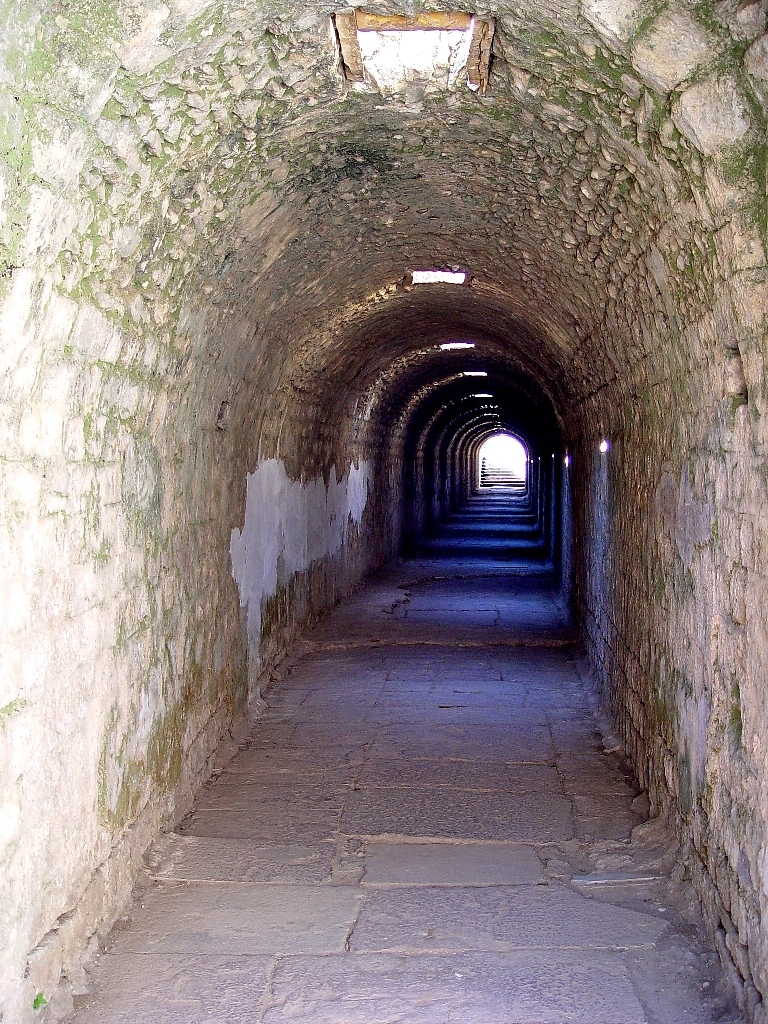
The patients would travel through the sacred passageway, seen in photo below.

Sacred Passageway. Photo ©Leon Mauldin.

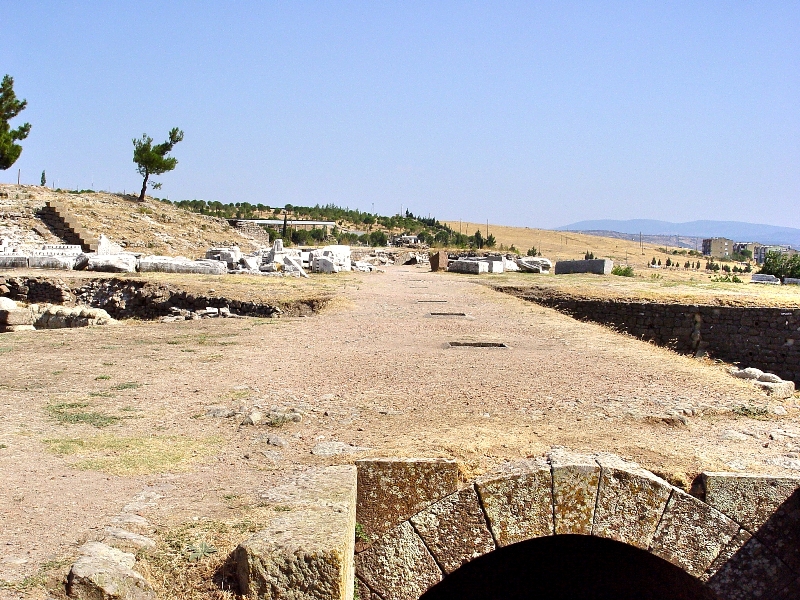
You see the openings which let in light.  Also it is suggested that “physicians” may have spoken down to the patients as they moved through the passageway, speaking encouragement with their incantations, etc.

Asklepieion Sacred Passageway, top. Photo ©Leon Mauldin.

When Jesus wrote the church at Pergamum, He described the Christians there as dwelling “where Satan’s throne is” (Rev. 2:13).  Some see in that a specific reference to Asclepius, with his serpent symbol. Satan appeared in the Garden of Eden in the form of a serpent.  He is called “that serpent of old, the Devil and Satan, who deceived the whole world” (Rev. 12:8; cf. 2 Cor. 11:3).  Others suggest that Jesus is referring to the prominent worship of Zeus there at Pergamum. Still others would say that it is Pergamum’s position as a center for imperial worship that is under consideration.  Not to mention Bacchus, the wine god!  It is possible that Jesus had in mind specifically  one of these false systems, but it may well be that it is a combination of all of the above that gave rise to His description.

It is instructive to consider what Jesus does NOT tell the church to do.  He doesn’t tell them to pack their bags and move to some other location where it would be easier to live the Christian life.  He expected them to be faithful where they were, to be lights in that world of darkness, to do what was right, even when they lived next door to Satan!

Asclepius

At Pergamum, the Asklepieion

May 21, 2010

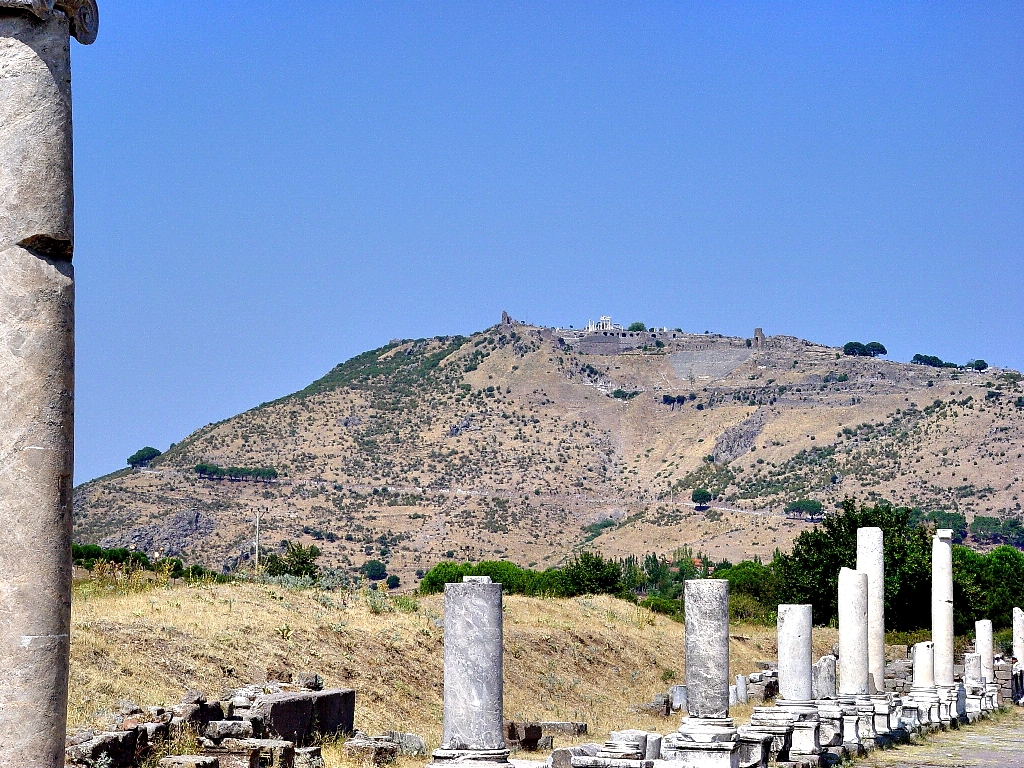
Pergamum was the principle seat of the worship of the god Asklepios, the Roman god of medicine and healing.  An elaborate complex devoted to healing was constructed downhill from the upper city. Our photo below was taken from the Asklepieion looking up to the acropolis of Pergamum.

Asklepieion with view toward Pergamum acropolis. Photo by Leon Mauldin.

Look at the center of the upper city.  The white ruins are those of the temple of Trajan, featured in an earlier post.

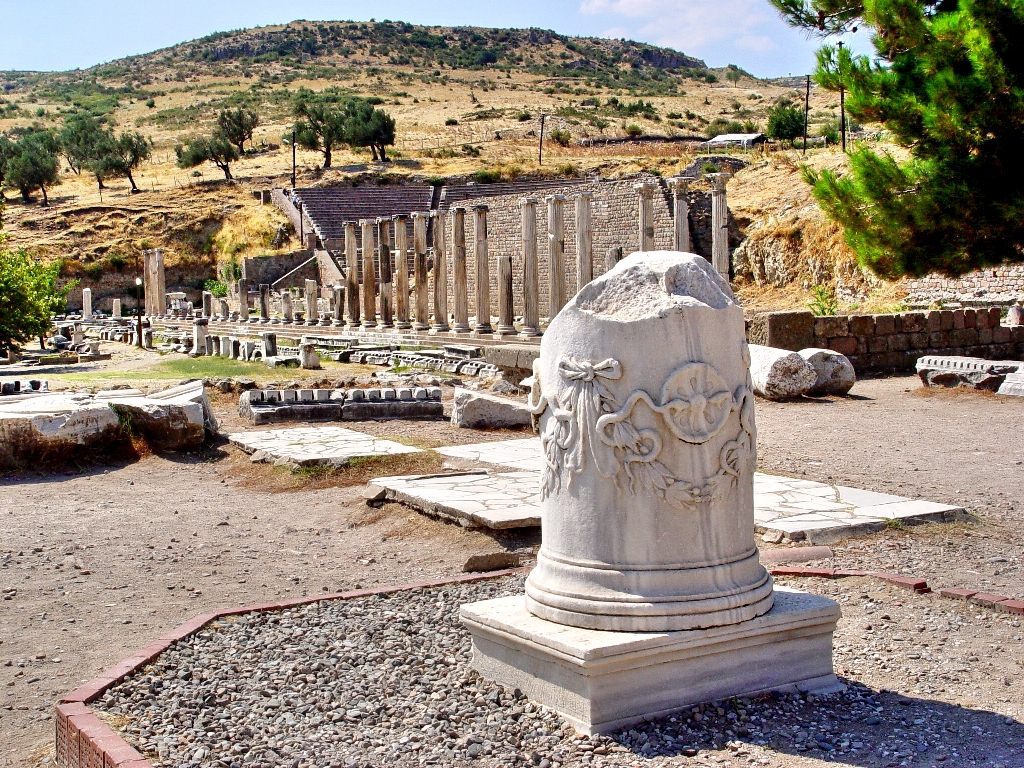
So many people came from so many places to the Asklepieion, that a library and theater were provided.  Included in that number were Roman emperors Marcus Aurelius and Caracalla, both of whom traveled here to be healed. The photo below shows the site of the library and the theater. The theater would seat 3,500.

Asklepieion Library and Theater. Photo by Leon Mauldin.

In the foreground of our photo you see the the column features serpents, the symbol of Asklepios.

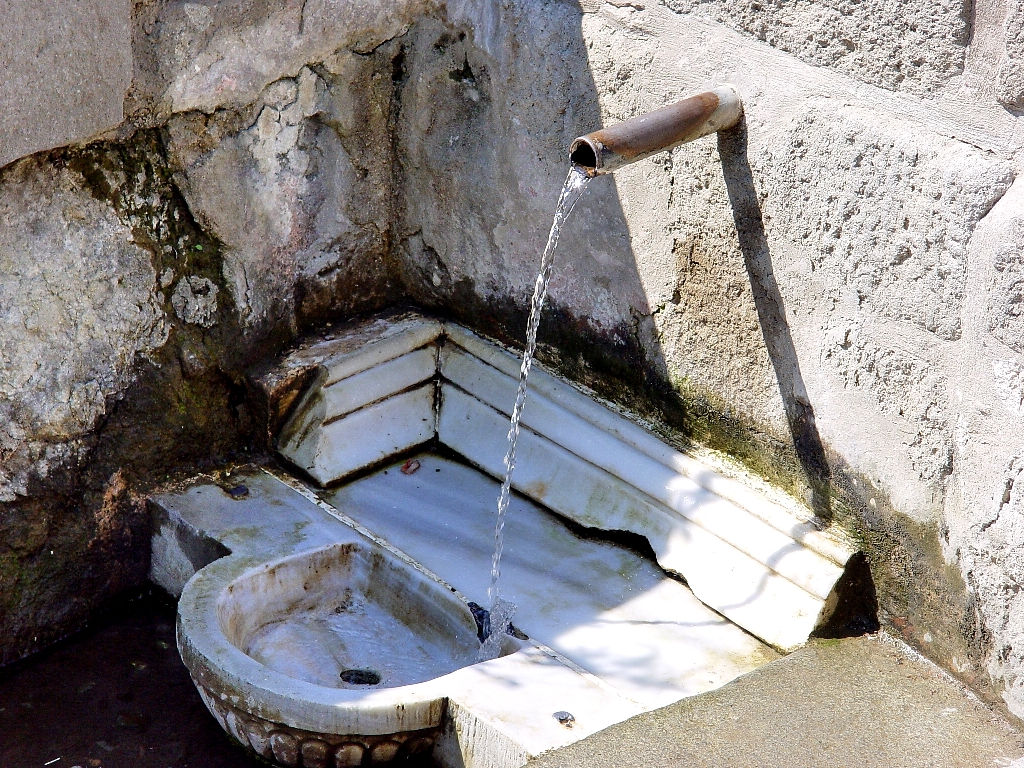
At the Asklepieion there were fountains and pools, where patients could bathe, as well as drink what was thought to be sacred water.

Asklepieion Sacred Fountain. Photo by Leon Mauldin.

Remember to click on photos for higher resolution.

I plan to follow-up with another post on the Asklepieion, so stay tuned.

On a personal note, I have just concluded a 6-day series of lessons on the History and Geography of the Bible with the church of Christ at Clayton, N.C. William Dickinson is the preacher here.  It has been a good week.


At Pergamum, the Red Hall

May 18, 2010

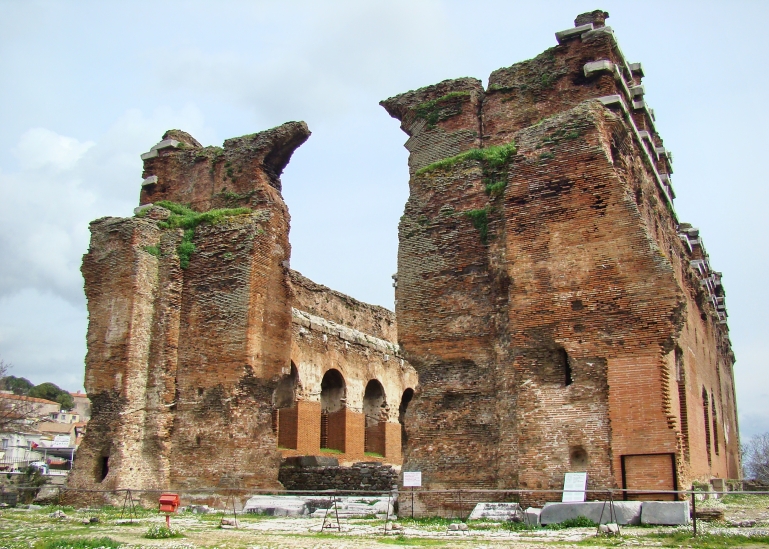
Among the many sites in Pergamum devoted to idolatrous worship was the Red Hall.  The Egyptian religion reached out into many areas in the Roman world. The complex in our photo below is the Red Hall, devoted to the worship of the Egyptian god Serapis.

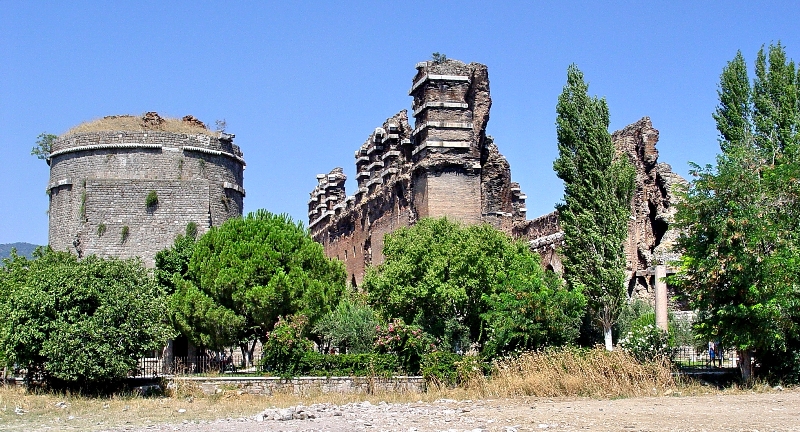
Red Hall, Pergamum. Photo by Leon Mauldin.

It is known as the “Red Hall” because of its red brick walls.  Here is a view of the temple of Serapis, looking east.

Red Hall, Pergamum. Photo by Leon Mauldin.

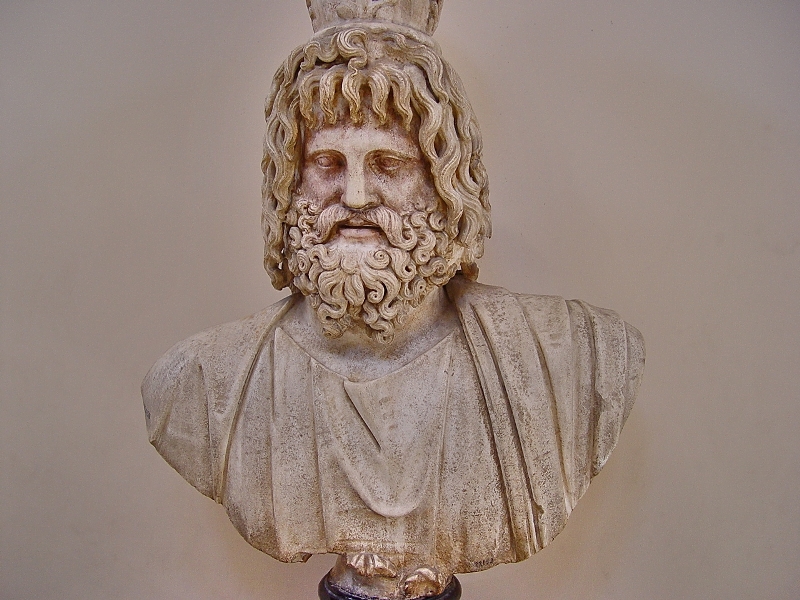
Alexandria, Egypt has a nice museum, featuring a bust of Serapis.

Egyptian god Serapis, Alexandria. Photo by Leon Mauldin.

The Holman Illustrated Bible Dictionary notes,

…this Egyptian-Greek sun deity was worshiped first at Memphis along with the bull-god, Apis. Serapis was introduced to Egypt by the Greeks and was worshiped originally as a god of the underworld. The temple to him at Alexandria was the largest and best known among several. Serapis came to be revered also as a god of healing and fertility, and his worship spread throughout the Roman Empire via the trade routes.

More to come.