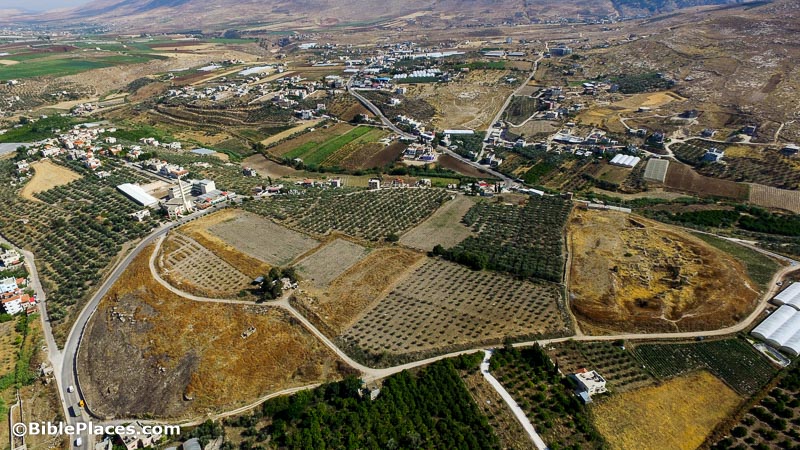
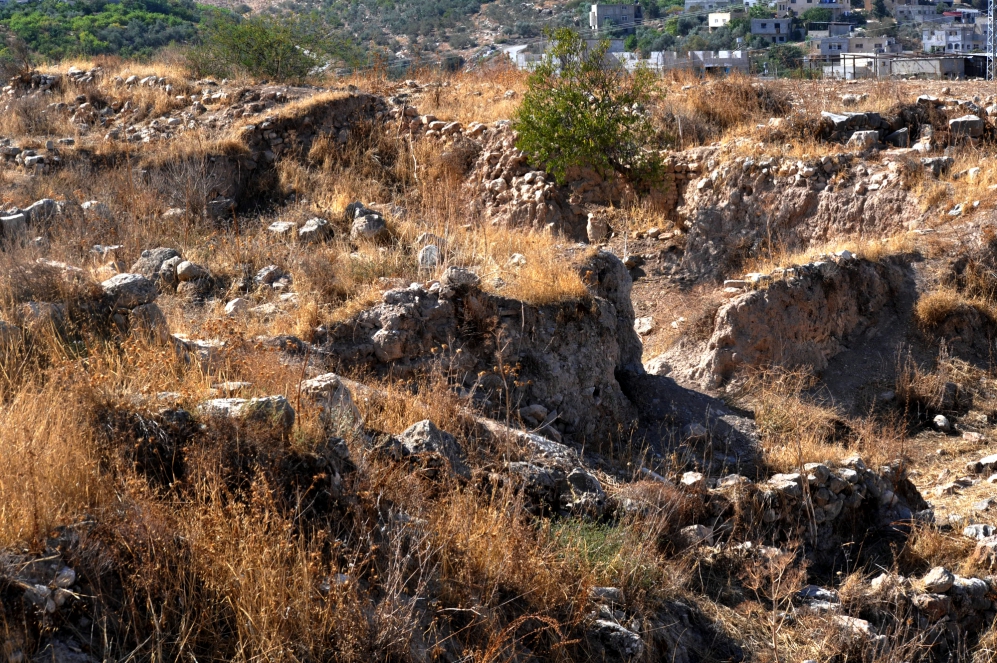
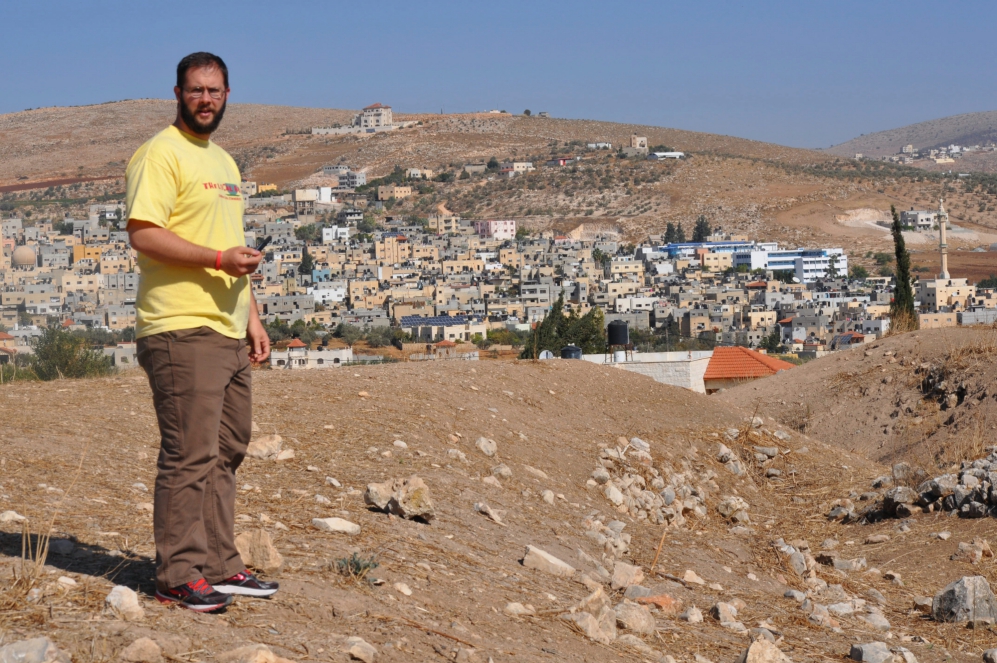
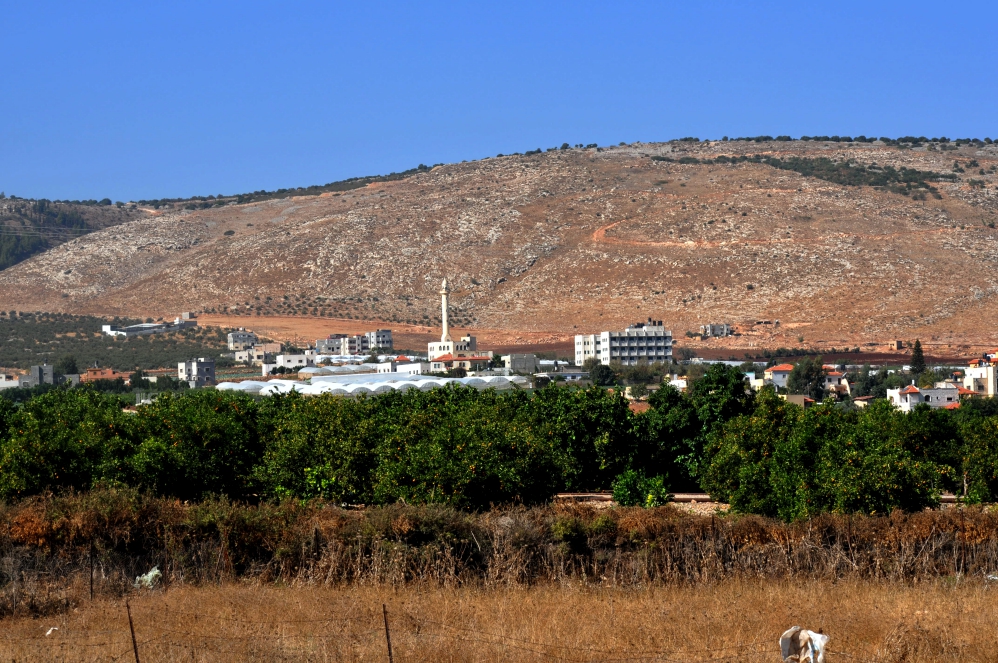
Pool of Gibeon (el-Jib, West Bank)

April 25, 2025

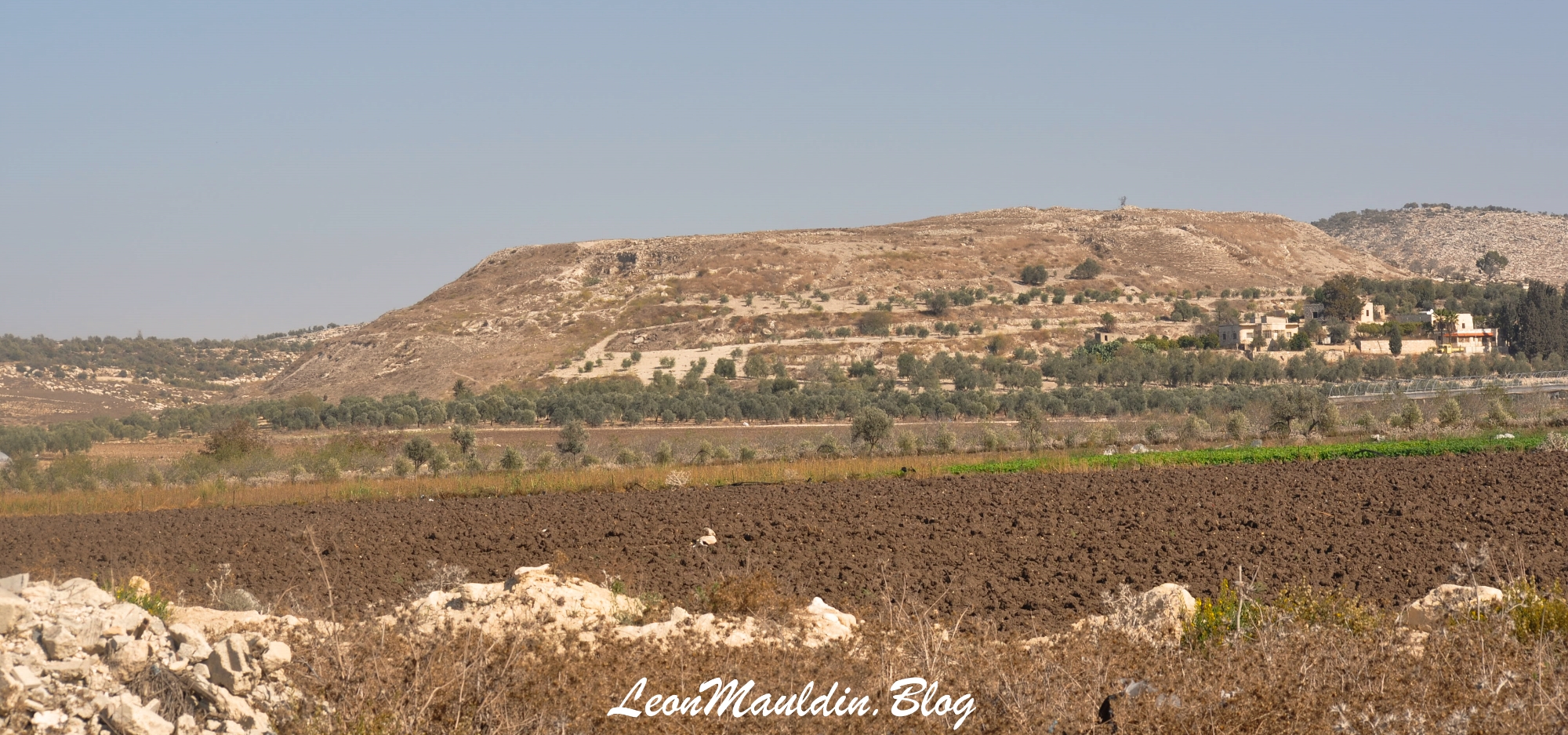
2 Samuel narrates an event early in the reign of King David, when initially he was king of Judah, prior to his reign over all Israel. When Ishbosheth, Saul’s son, was the rival king of Israel to the north, and Abner was his commander, there was a meeting at the pool of Gibeon, with Abner and his forces, and Joab, David’s commander, and his men. The text reads,

And Joab the son of Zeruiah, and the servants of David, went out and met them by the pool of Gibeon. So they sat down, one on one side of the pool and the other on the other side of the pool. Then Abner said to Joab, “Let the young men now arise and compete before us.” And Joab said, “Let them arise.” So they arose and went over by number, twelve from Benjamin, followers of Ishbosheth the son of Saul, and twelve from the servants of David. And each one grasped his opponent by the head and thrust his sword in his opponent’s side; so they fell down together. Therefore that place was called the Field of Sharp Swords, which is in Gibeon. So there was a very fierce battle that day, and Abner and the men of Israel were beaten before the servants of David (2 Sam. 2:13-17).

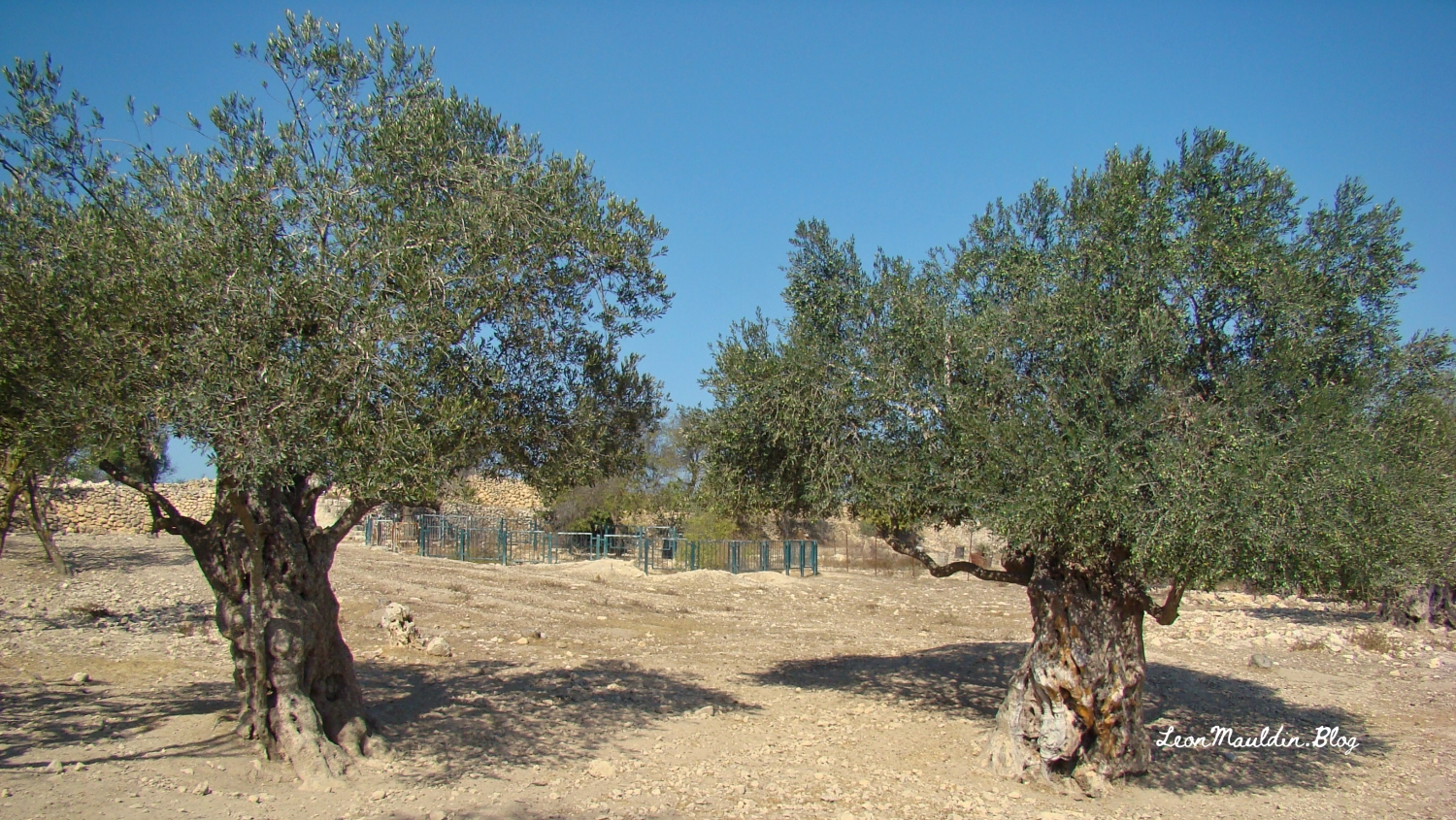
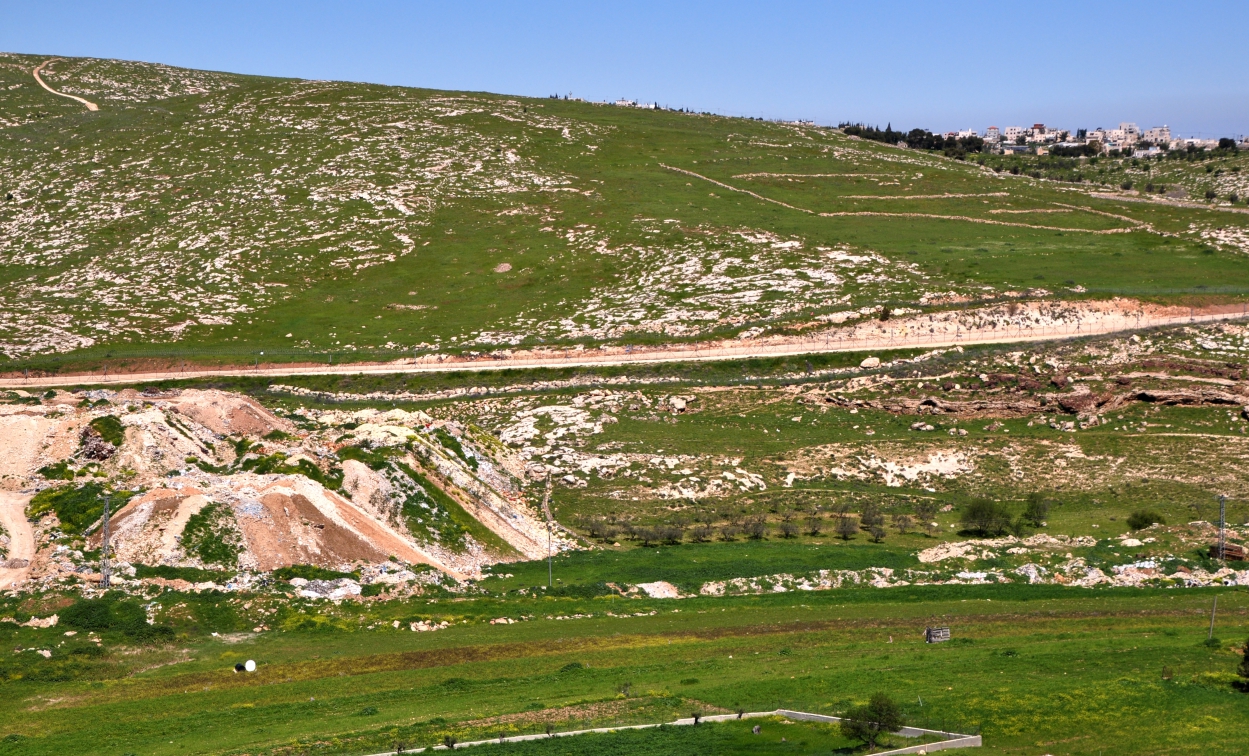
Pool of Gibeon is at distant center, enclosed by fencing. Photo ©Leon Mauldin.

Abner and his forces were soundly defeated, suffering 360 casualties, while David’s men led by his commander Joab had a total of 20 losses (v. 25-31). It was a sad and unnecessary chapter in Israel’s history. Gibeon was located within the tribal territory of Benjamin. Today it is in the West Bank.

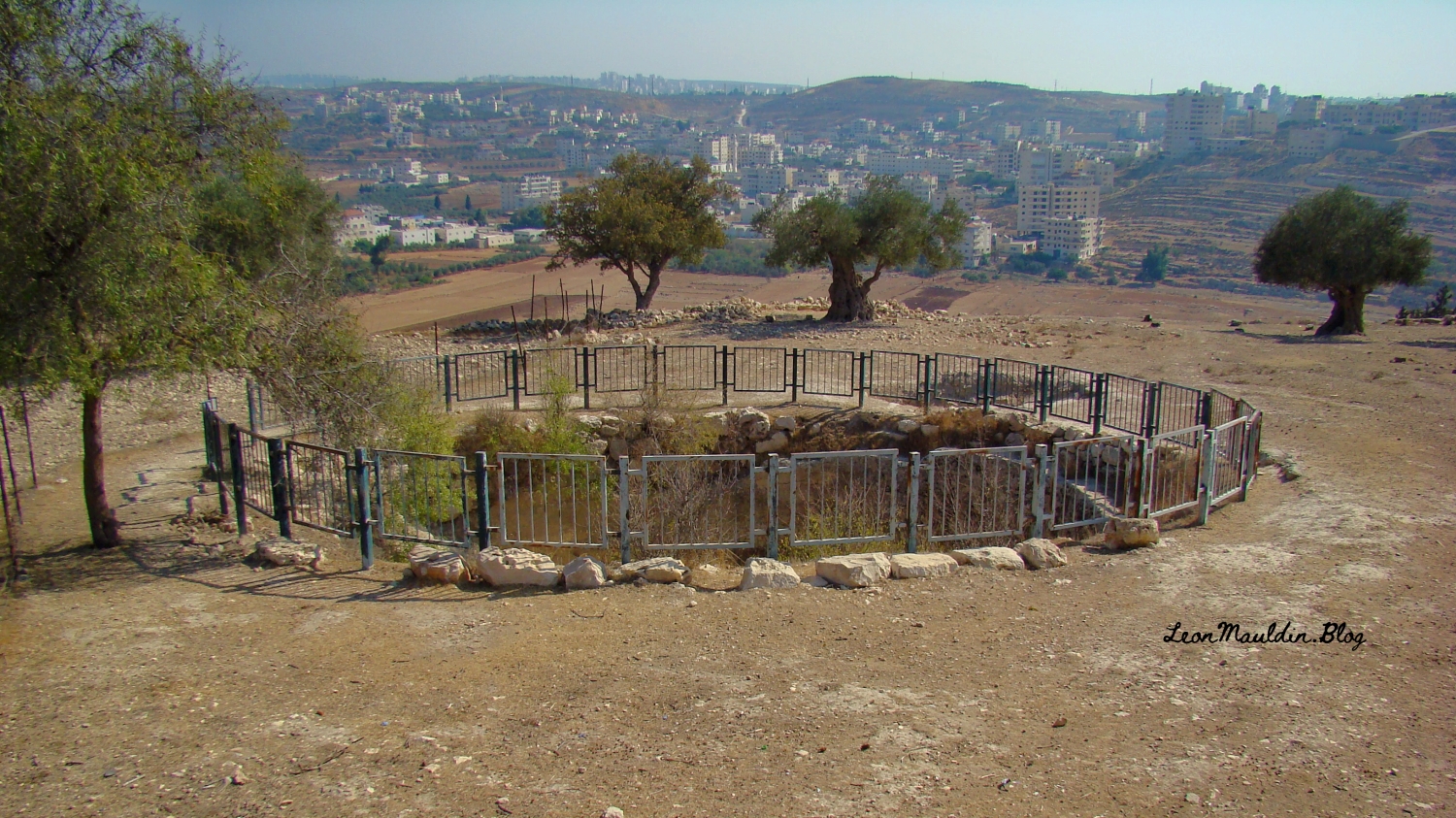
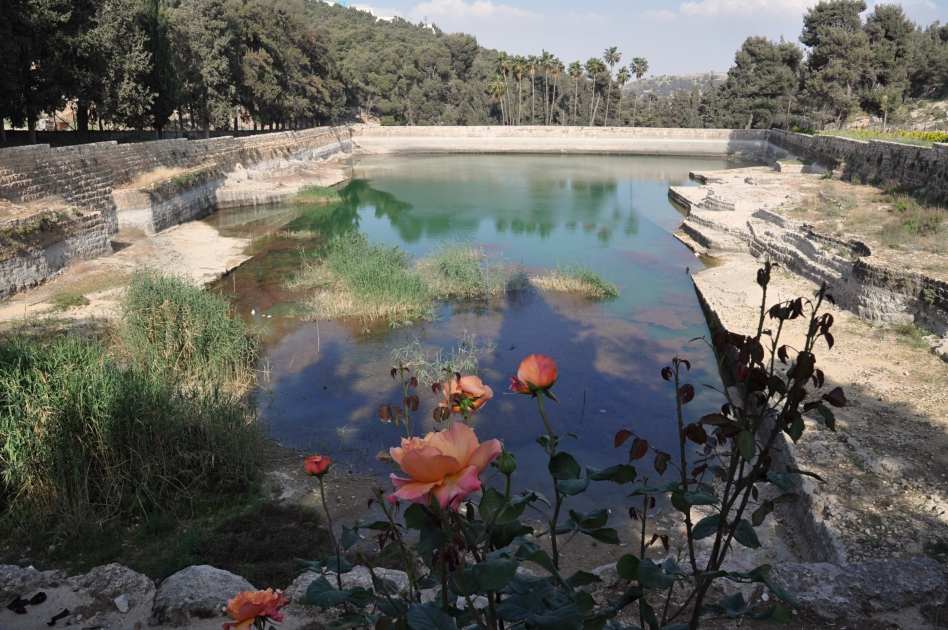
Here is a closer view of the pool mentioned in our text:

Pool of Gibeon at center. Photo ©Leon Mauldin.

The Baker Encyclopedia of the Bible has the following entry, dealing with the pool, as well as more info regarding the site of Gibeon:

The Great Pool. This is referred to several times in the Bible and can now be identified. It was 37 feet in diameter and 82 feet deep, cylindrical in shape with perpendicular sides cut into bed-rock. There was a spiral stairway of 79 steps which gave access to fresh water 80 feet below street level. The pool lay inside the city walls.

The Stepped Tunnel. There was a second plan for obtaining water in time of siege. An underground sloping tunnel which descended by a series of 93 steps led to an underground reservoir fed by a spring originating in the rock mass below the city. This spring had been traced and a feeder tunnel enabled its water to flow more readily to the reservoir. Any overflow found its way via a conduit to the village below. This was a remarkable engineering achievement. The stepped tunnel reached down to a depth of 80 feet and was 167 feet long. In its walls were niches to hold oil lamps. Probably it was here that the “drawers of water” (Jos 9:27) obtained their supplies.

Inscriptions and Royal Stamp Seals. Sixty-one jar handles have been found on which inscriptions were cut in the archaic Hebrew script. On 31 of these is the word for Gibeon in whole or in part. Another 80 jar handles carry the letters lmlk, “belonging to the king.” Several well-known OT names such as Azariah, Amariah, Hananiah, and Neriah and a number of place-names such as Hebron, Socoh, and Ziph appear on these inscriptions.

Industrial Area. A remarkable industrial area came to light in the excavations, located both north and south of the pool. Here there were numerous winepresses, fermenting basins, and 63 underground cellars for cooling large wine jars. The whole area covered over 1100 square yards with cellars sunk into the limestone, some of these being over seven feet deep and equipped with stone covers. It is estimated that up to 25,000 gallons of wine could be stored in the jars. Some of the cellars were used as tombs in Roman times, but in Byzantine and modern times their use as wine cellars continued. In detail the cellars were bottle-shaped and averaged 7.2 feet in depth and 6.6 feet across at the bottom. The opening to the cellars averaged 2.2 feet in diameter at the top. The jars in which the wine was stored had a capacity of 9.75 gallons. It is clear that the manufacture of wine was an important element in the economy of Gibeon in OT times.

Fortifications. Gibeon was a walled city. Two impressive stone walls which encircled the city at different periods have been exposed. No traces of walls were found that could be dated to the Early, Middle, or Late Bronze periods although the remains of house walls, pottery, and tombs demonstrate that the city was occupied then. The excavator concluded that the construction of the earlier wall dates to the 12th century BC. and the later wall was built in the 10th century BC. and continued in use to the end of the 7th century BC. The average thickness of the wall was about 13 feet. The circumference of the fortification was 3125 feet.

The Necropolis. The burial place of Gibeon was situated to the west of the city halfway down the rock scarp. Many of the graves contained skeletal remains, pottery, scarabs, and other artifacts. The size of the tombs varied considerably, but most consisted of a vertical cylindrical shaft about 3.7 feet in diameter, the depths varying from 3.3 feet to 13 feet. The tombs were sealed by either one large stone or several smaller ones at the foot of the vertical shaft where the burial chamber opened to one side.
JOHN A. THOMPSON Vol. 1, p. 864).

I have previously posted on Gibeon here, here and here.

Click image for larger view.


Rehoboam Went to Shechem

November 1, 2023

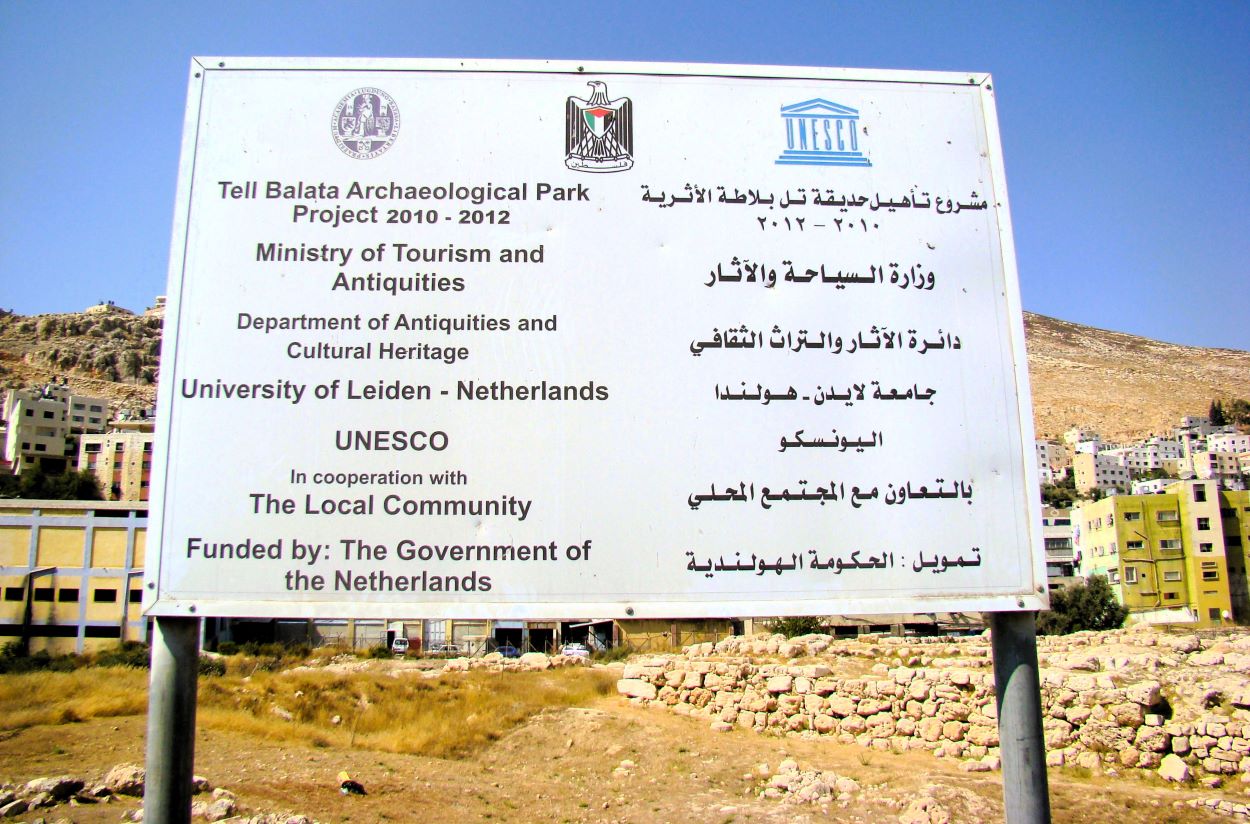
“Rehoboam went to Shechem, for all Israel had come to Shechem to make him king” (2 Chron. 10:1, ESV). Biblical Shechem is modern Tell Balata, near Nablus, in today’s West Bank. Though our text does not specify why Rehoboam went to Shechem, it was a city of great historical significance to God’s people, especially prior to the monarchy. We will briefly summarize what happened to Rehoboam at Shechem, but first let’s consider some of the biblical events that transpired at this location.

Shechem, at Israel’s geographical center. Map courtesy of biblemapper.com.

Having first entered the land of Canaan, Abraham was standing here at Shechem, with Mt. Ebal and Mt. Gerizim looming on either side, when God gave him the land promise (Gen. 12:6-7). Sadly, it was also here that Jacob’s daughter Dinah was defiled, and where Levi and Simeon savagely destroyed much of the populace in retaliation (Gen. 34).

In Joshua 8:30-35, in the early days of the Conquest of Canaan, all Israel assembled at Shechem, with six tribes on Mt. Gerizim (mount of “blessing”) and six tribes on Mt. Ebal (mount of “cursing”). At that time Joshua “read all the words of the law, the blessing and the cursings, according to all that is written in the Book of the Law” (v.34, NKJV). This was in obedience to prior instructions given by Moses in his final days (Deut. 27:11-26). In our Joshua text, that great nation who had descended from that childless couple (at the time of the promise), Abraham and Sarah, was there to lay claim to the promise. But they weren’t just there to receive the land; their reception of Canaan was grounded upon their pledge to keep the covenant of Yahweh.

Then later as Joshua’s death approached, Shechem was the location for Joshua’s last words and for Israel’s covenant renewal (Josh. 24:1-28). Shechem was also where Joseph was buried (Josh. 24:32).

In addition to its great historical significance, the site of Shechem was also a central location and thus a logical meeting place for the matter at hand, Rehoboam’s coronation. On the other hand, Maier suggests that perhaps Rehoboam sensed a bit of discontent among the northern tribes. “One clue was that they did not come to Jerusalem but wanted the meeting at another place, in Shechem, on their own turf, so to speak” (A Theological Exposition of Sacred Scripture, pub. Concordia, 1K12-22, p. 1052).

The outcome of the meeting at Shechem: The northern tribes rejected Rehoboam, with the result that the kingdom divided into Israel (north) and Judah (south). This was punitive, as a result of Solomon’s apostasy, and foretold by the prophet Ahijah (1 Kings 11; 2 Chron. 10:15; 11:1-5). The dynasty would change several times in Israel to the north, but the southern kingdom of Judah would be ruled by the Davidic dynasty, from Rehoboam (Solomon’s son) down through Zedekiah. This covers the years 931-586 BC.

Entrance to Shechem (Tell Balata) in the West Bank. Photo ©Leon Mauldin.

It was at Shechem that Israel met with Solomon’s son Rehoboam to make him king. Shechem is located between Mount Gerizim (left) and Mount Ebal (right).

Shechem is at the center. Mt. Gerizim, left, and Mt. Ebal, right. Photo ©Leon Mauldin.

Some of the impressive fortress wall of Shechem can be seen.

Fortress wall at Shechem. Dates to Canaanite period, predating Israel’s Conquest. Photo ©Leon Mauldin.


Biblical Hebron

September 25, 2020

Hebron is mentioned more than sixty times in the Bible, the first of which is in Genesis 13:18: “Then Abram moved his tent, and went and dwelt by the terebinth trees of Mamre, which are in Hebron, and built an altar there to the LORD.” Remains have been excavated at Hebron which pre-date the patriarch Abraham.

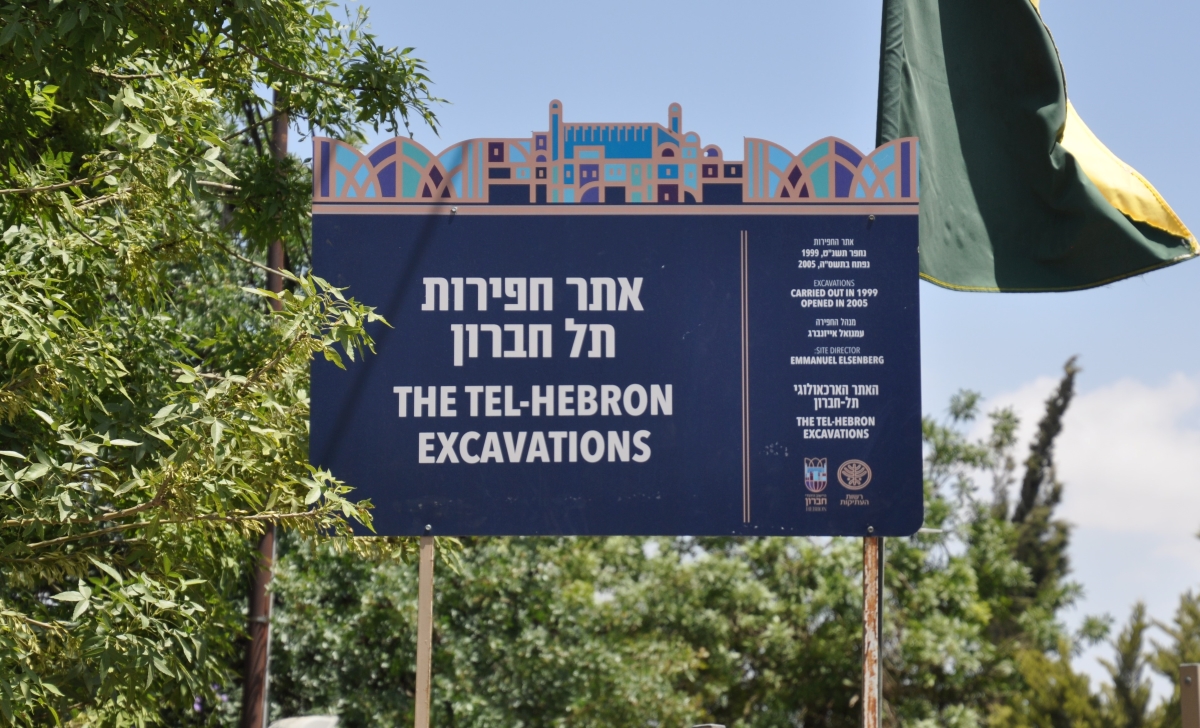
Hebron Excavations Sign. Photo ©Leon Mauldin.

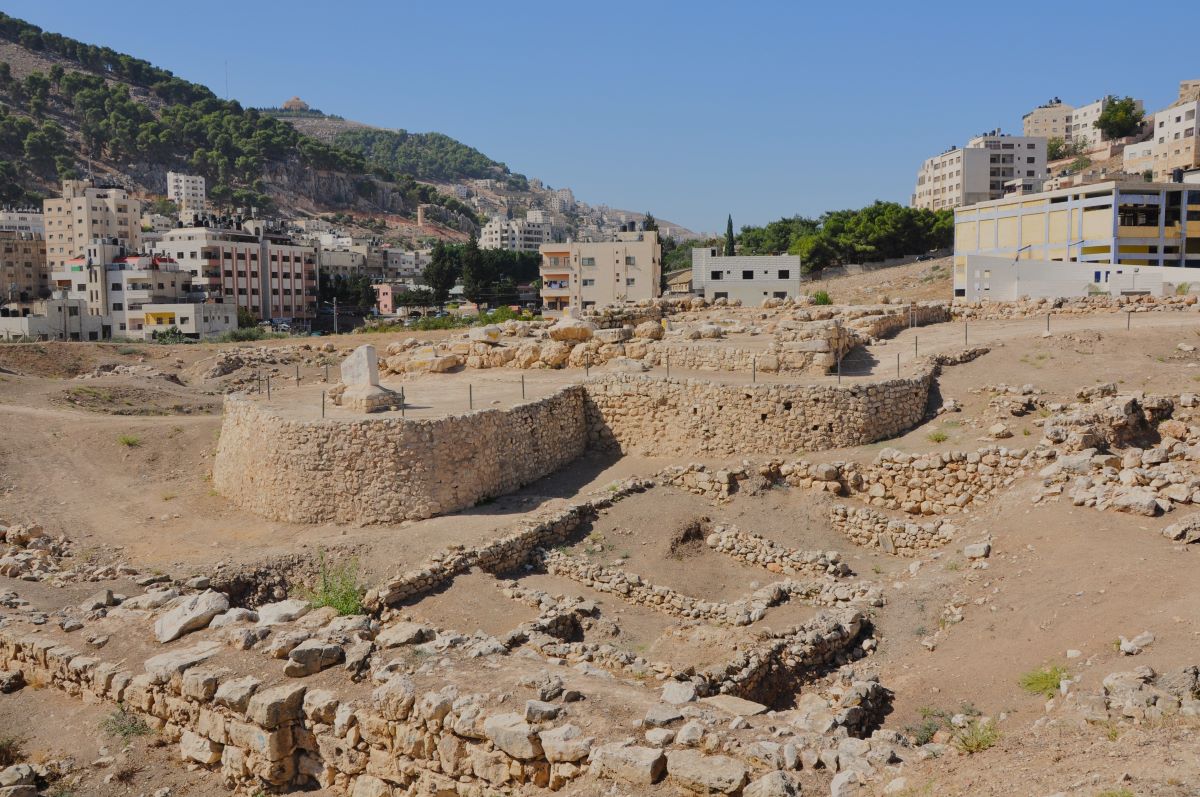
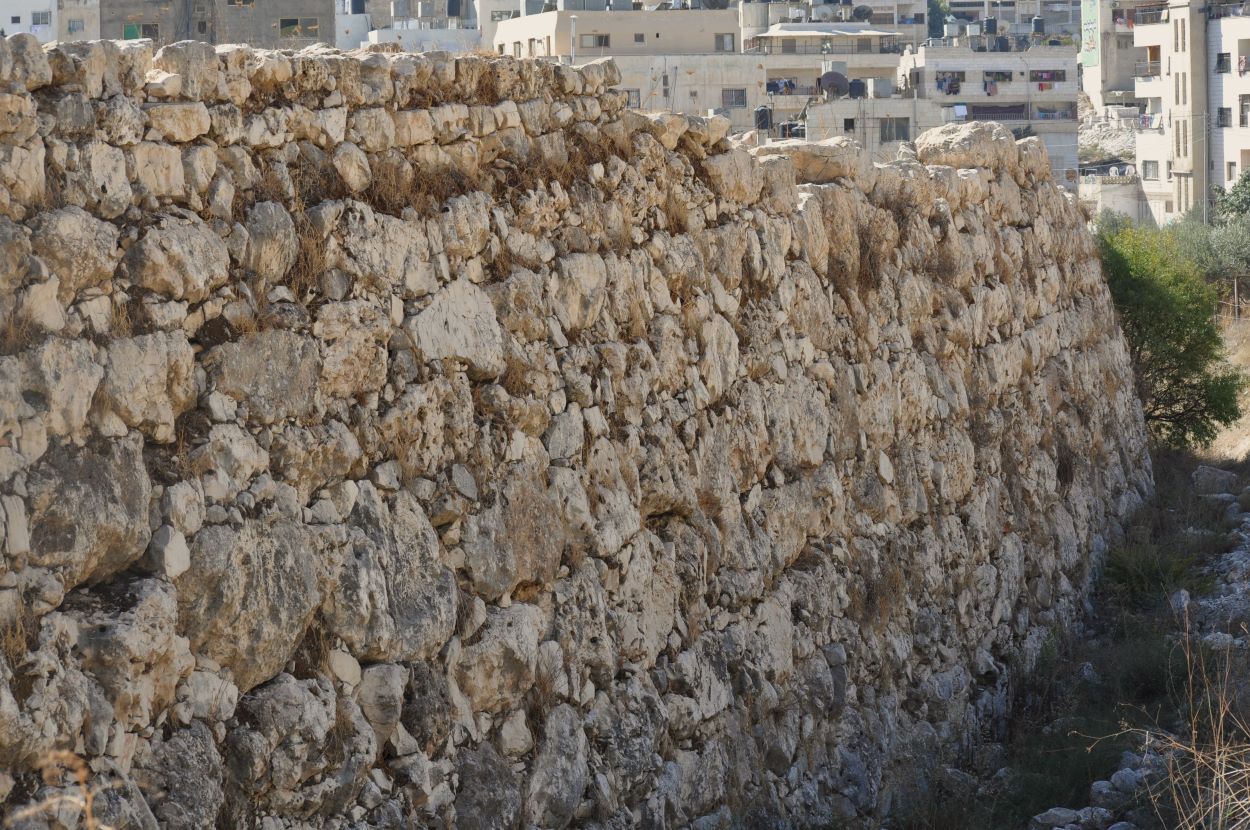
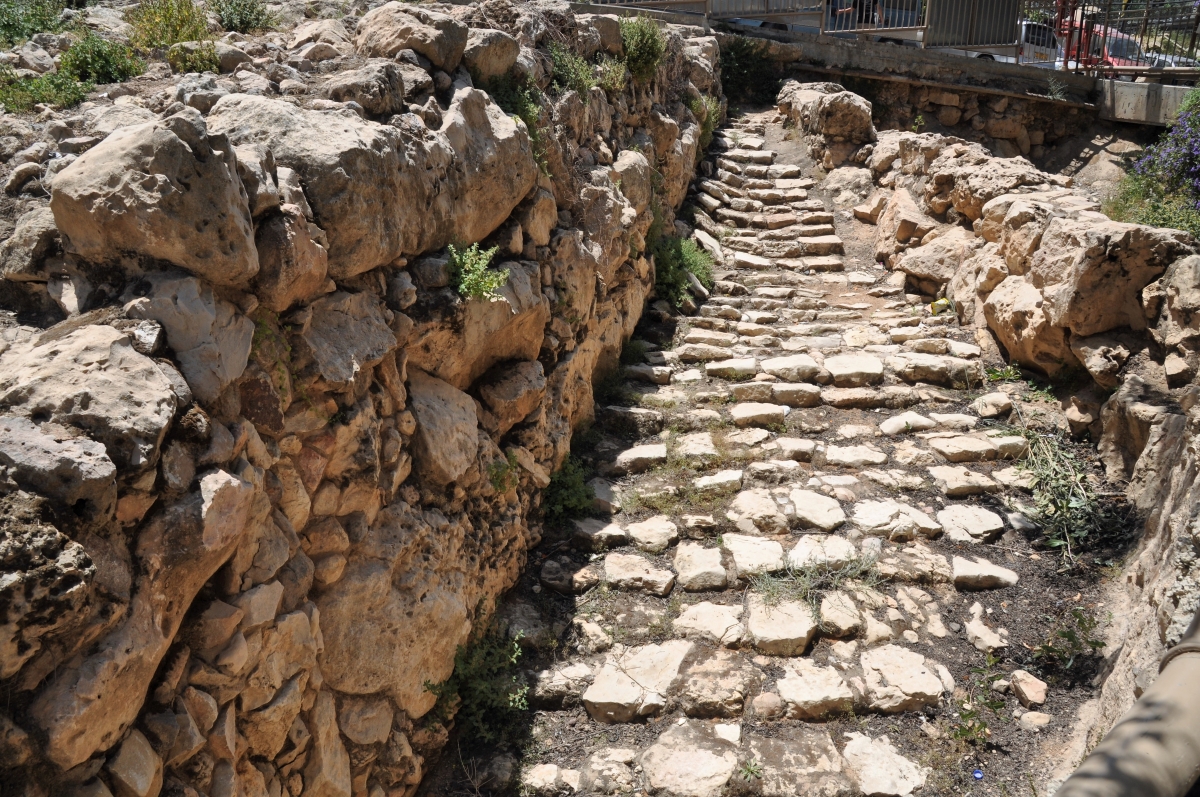
Tel-Hebron consists of approximately twelve acres. It is located about twenty miles south of Jerusalem. Excavations have uncovered a stretch of wall that is dated to the Early Bronze Age, as seen at left in photo here. The well-preserved staircase is made of natural stone slabs, well worn by the city’s ancient inhabitants. Scholars suggest the path likely led to one of Hebron’s city gates. At right is an additional wall constructed at a later date than that on your left.

Hebron Walls and staircase. Photo ©Leon Mauldin.

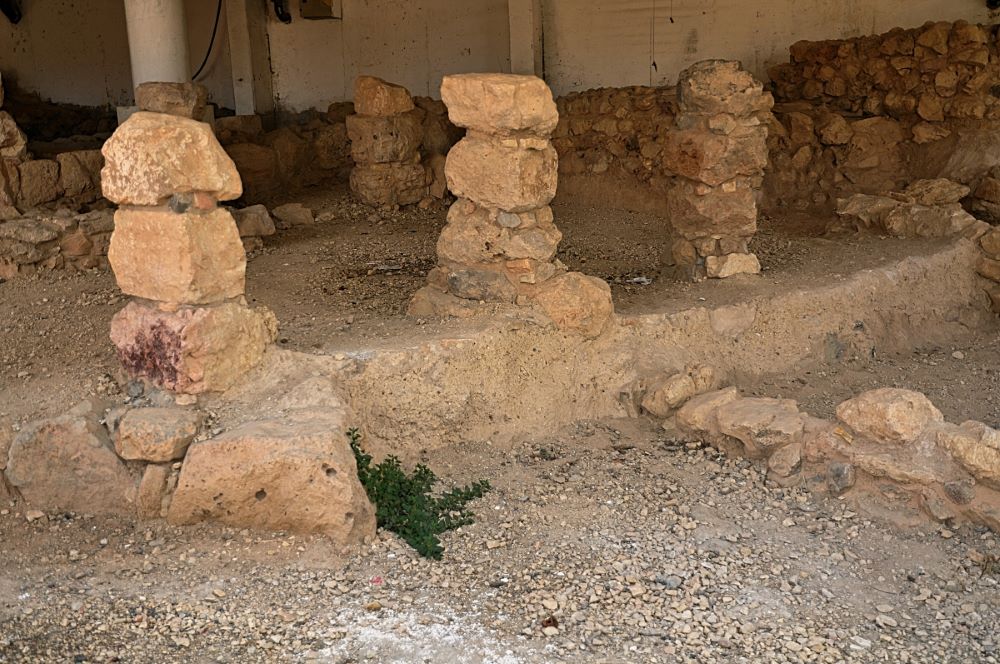
Another important discovery at Hebron is that of an 8th century BC four room house. Some scholars date the house to the time of Judah’s King Hezekiah (r. 715-686).

Four-room house at Hebron. 8th century BC. Photo ©Leon Mauldin.

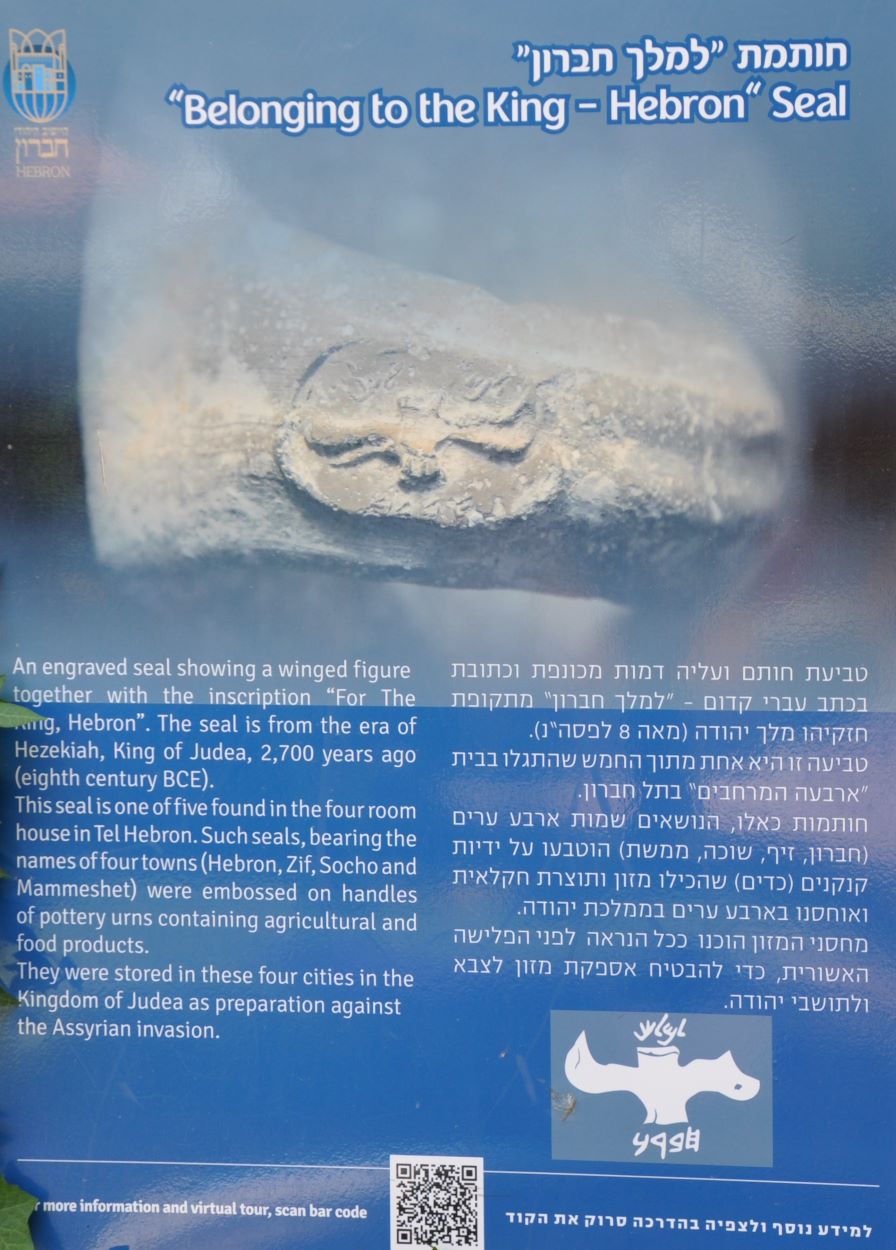
Yet another interesting discovery was several l’melech (“belonging to the king”) seals from pottery urns, which are also dated to Hezekiah’s reign.

Info Sign describing the LMLK (belonging to the king) stamps discovered at Hebron. ©Leon Mauldin.

Jeffery Chadwick notes that Hebron

seems to have settled into the role of regional center. This is demonstrated by the phenomenon of l’melekh handles. The term means “(belonging) to the king” or “property of the king.” The four-letter Hebrew designation (LMLK) was stamped into the wet clay of the handle of a certain type of storage jar at the end of the eighth century B.C.E. The jars were probably produced during the reign of King Hezekiah in preparation for the attack on Judah by Sennacherib’s Assyrian army, which occurred in 701 B.C.E.

L’melekh handles display either a two-winged sun disk or a four-winged scarab, but, more importantly for our purposes, they also include the name of one of four cities of Judah. One of these four cities was Hebron. (BAR 31:5, Sept/Oct 2005).

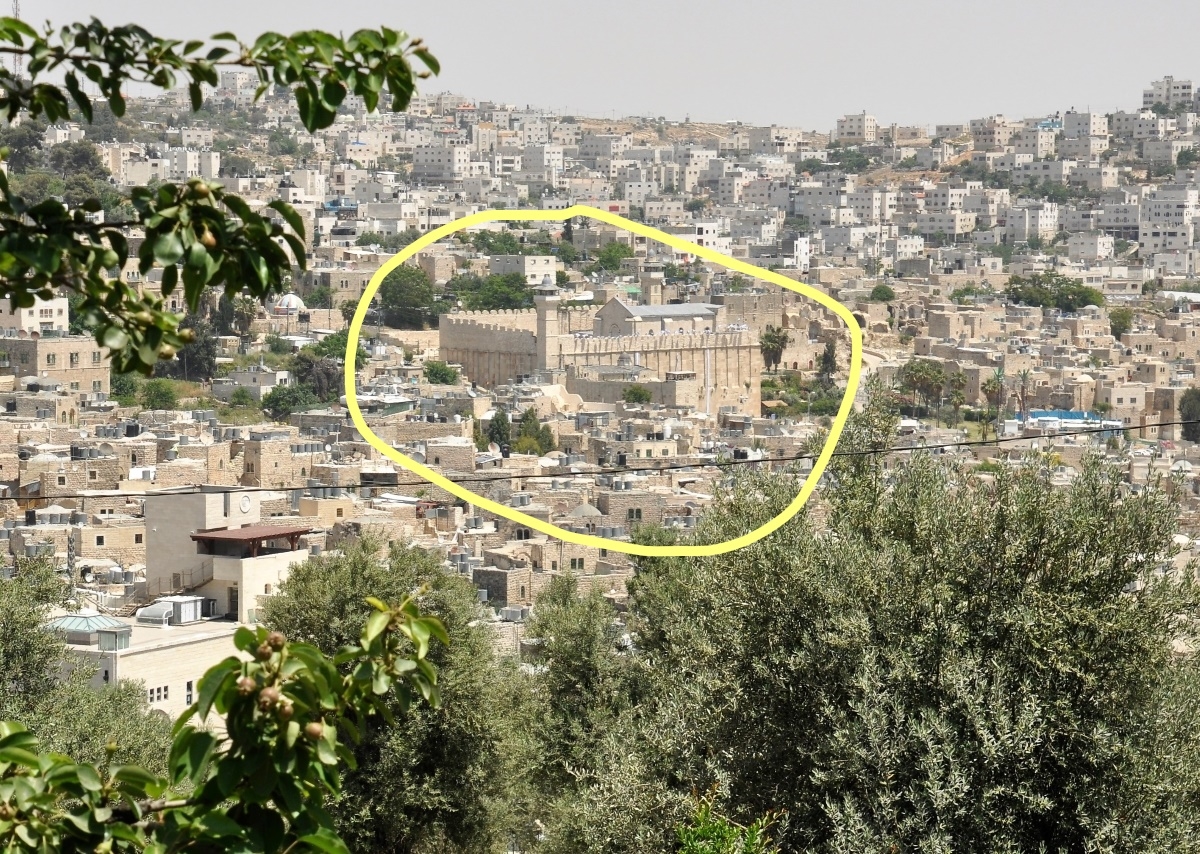
From Tel-Hebron one can see the Cave of Machpelah which Abraham purchased as a burial site. Herod the Great built the edifice which now covers the cave.

Cave of Machpelah as seen from Tel-Hebron. Photo ©Leon Mauldin.

I have previous posts on Hebron including here, here and here

Click on photos for larger view.


Shepherds’ Field in Bethlehem

September 13, 2019

Luke 2 narrates the night of the Savior’s birth, when the good news was first announced to Bethlehem-area shepherds:

Now there were in the same country shepherds living out in the fields, keeping watch over their flock by night. 9 And behold, an angel of the Lord stood before them, and the glory of the Lord shone around them, and they were greatly afraid. 10 Then the angel said to them, “Do not be afraid, for behold, I bring you good tidings of great joy which will be to all people. 11 “For there is born to you this day in the city of David a Savior, who is Christ the Lord. 12 “And this will be the sign to you: You will find a Babe wrapped in swaddling cloths, lying in a manger.” 13 And suddenly there was with the angel a multitude of the heavenly host praising God and saying: 14 “Glory to God in the highest, And on earth peace, goodwill toward men!” 15 So it was, when the angels had gone away from them into heaven, that the shepherds said to one another, “Let us now go to Bethlehem and see this thing that has come to pass, which the Lord has made known to us.” 16 And they came with haste and found Mary and Joseph, and the Babe lying in a manger. 17 Now when they had seen Him, they made widely known the saying which was told them concerning this Child. 18 And all those who heard it marveled at those things which were told them by the shepherds. (Luke 2:8-18, NKJV).

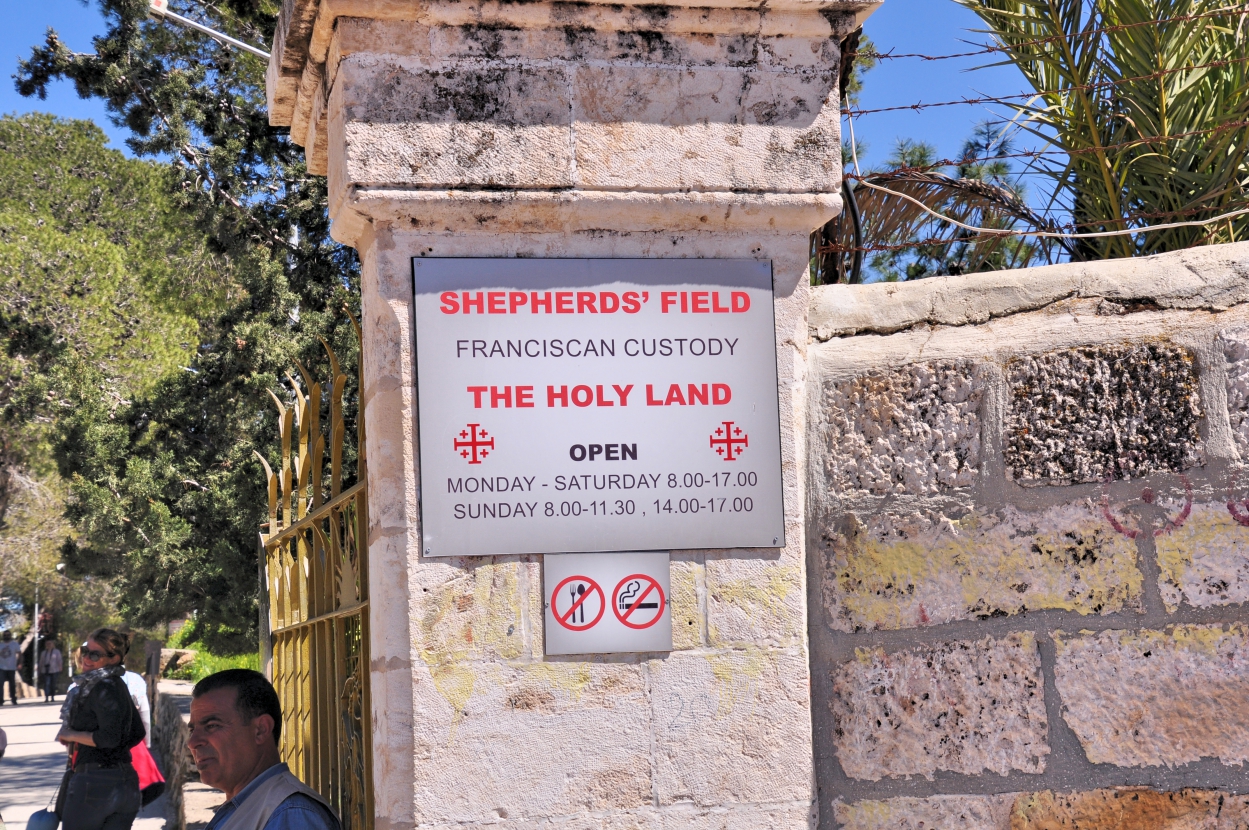
Sign indicating location of Shepherd’s Field east side of Bethlehem. Photo by Leon Mauldin.

When one visits Bethlehem there is the opportunity to see the area designated as “Shepherd’s Field,” the Franciscan site located  on the east side of Bethlehem. This helps us to visualize where the shepherds would have been that night when the angel informed them of Jesus’ birth in our text above.

Shepherds’ Fields, Bethlehem. Photo by Leon Mauldin.

On most other occasions when I’ve been here the fields were brown and dry. This past March 2019 they were green.

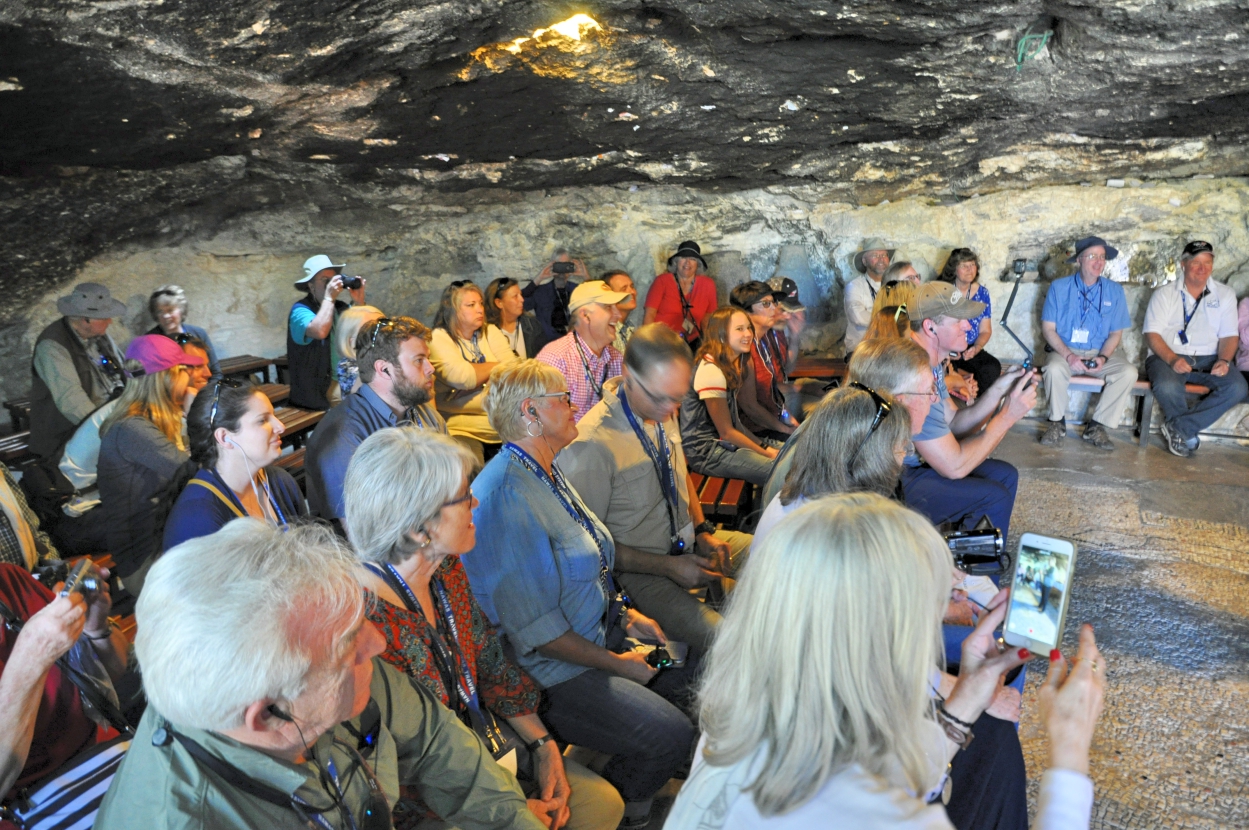
Our group gathered in a nearby cave.

Cave at Shepherds’ Field. Mauldin Group, 2019. Photo by Leon Mauldin.

Here we discussed the occasion of Jesus’ birth, and also took advantage of the natural acoustics to sing. Visiting Bethlehem gave us the opportunity to contemplate the wonderful plan of God, that Eternal Deity, the Eternal Word, became man! “And the Word became flesh and dwelt among us, and we beheld His glory, the glory as of the only begotten of the Father, full of grace and truth” (John 1:14).

I’ve previously posted on Bethlehem: click here, here and here. Ferrell Jenkins provides a listing of articles he has written on Bethlehem. Click here 

Click on images for larger view.


Solomon’s Pools

August 16, 2017

On the day of Pentecost (Acts 2), for the first time conditions of salvation were proclaimed under the New Covenant. Three thousand responded!

“Therefore let all the house of Israel know for certain that God has made Him both Lord and Christ– this Jesus whom you crucified.” 37 Now when they heard this, they were pierced to the heart, and said to Peter and the rest of the apostles, “Brethren, what shall we do?” 38 Peter said to them, “Repent, and each of you be baptized in the name of Jesus Christ for the forgiveness of your sins; and you will receive the gift of the Holy Spirit. 39 “For the promise is for you and your children and for all who are far off, as many as the Lord our God will call to Himself.” 40 And with many other words he solemnly testified and kept on exhorting them, saying, “Be saved from this perverse generation!” 41 So then, those who had received his word were baptized; and that day there were added about three thousand souls. (vv. 36-41, NASB).

There were many pools right there in Jerusalem which would have been suitable for the baptism of so many, including the Pool of Siloam, the Pool(s) of Bethesda, etc. I am also mindful of “Solomon’s Pools,” south of Jerusalem, located between Bethlehem and Hebron, which were water sources for Jerusalem in the days of Jesus.

“Solomon’s Pool.” The middle of three. Photo by Leon Mauldin.

These three pools, the middle of which is in our photo here, were not built by Solomon, but by  Herod the Great, or possibly by the Hasmoneans (intertestamental period). Pilate later made repairs to the pools.

Today the pools are located in the Palestinian Authority’s West Bank.

Click photo for larger image.


Dothan, Where Joseph Was Sold by His Brothers

March 11, 2017

The rivalry and jealousy that existed between Jacob’s wives (four) and sons (twelve) provides proof that polygamy was something God tolerated during the Old Testament period. It does not reflect His will as seen in the Garden of Eden (Gen. 2:24; Matt. 19:1-6). But God overruled for good to accomplish His will, and through Jacob’s wives and children the 12 tribes of Israel originated, as set forth in Genesis.

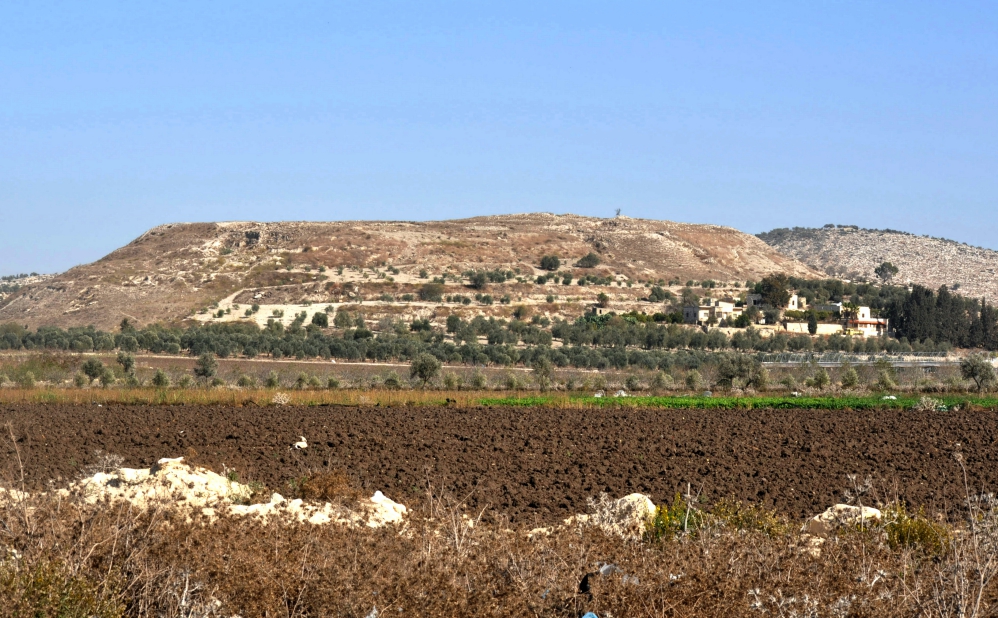
The book of Genesis does not fabricate a narrative that portrays the patriarch in an idealistic light. Rather their sins and foibles are included. Genesis 37 relates how Joseph’s envious brothers sold him to a traders in a caravan who were en route to Egypt, where they sold Joseph into slavery. The location where that occurred was Dothan in Canaan, on the international trade route which connected Mesopotamia to Egypt. We had the occasion to see Dothan in November ’16.

Tel Dothan, where Joseph was sold by his brothers. Photo by Leon Mauldin.

Here is the account in Genesis:

13 And Israel [Jacob] said to Joseph, “Are not your brothers pasturing the flock at Shechem? Come, I will send you to them.” And he said to him, “Here I am.” 14 So he said to him, “Go now, see if it is well with your brothers and with the flock, and bring me word.” So he sent him from the Valley of Hebron, and he came to Shechem. 15 And a man found him wandering in the fields. And the man asked him, “What are you seeking?” 16 “I am seeking my brothers,” he said. “Tell me, please, where they are pasturing the flock.” 17 And the man said, “They have gone away, for I heard them say, ‘Let us go to Dothan.'” So Joseph went after his brothers and found them at Dothan. 18 They saw him from afar, and before he came near to them they conspired against him to kill him. 19 They said to one another, “Here comes this dreamer. 20 Come now, let us kill him and throw him into one of the pits. Then we will say that a fierce animal has devoured him, and we will see what will become of his dreams.” 21 But when Reuben heard it, he rescued him out of their hands, saying, “Let us not take his life.” 22 And Reuben said to them, “Shed no blood; cast him into this pit here in the wilderness, but do not lay a hand on him”- that he might rescue him out of their hand to restore him to his father. 23 So when Joseph came to his brothers, they stripped him of his robe, the robe of many colors that he wore. 24 And they took him and cast him into a pit. The pit was empty; there was no water in it. 25 Then they sat down to eat. And looking up they saw a caravan of Ishmaelites coming from Gilead, with their camels bearing gum, balm, and myrrh, on their way to carry it down to Egypt. 26 Then Judah said to his brothers, “What profit is it if we kill our brother and conceal his blood? 27 Come, let us sell him to the Ishmaelites, and let not our hand be upon him, for he is our brother, our own flesh.” And his brothers listened to him. 28 Then Midianite traders passed by. And they drew Joseph up and lifted him out of the pit, and sold him to the Ishmaelites for twenty shekels of silver. They took Joseph to Egypt. 29 When Reuben returned to the pit and saw that Joseph was not in the pit, he tore his clothes 30 and returned to his brothers and said, “The boy is gone, and I, where shall I go?” 31 Then they took Joseph’s robe and slaughtered a goat and dipped the robe in the blood. 32 And they sent the robe of many colors and brought it to their father and said, “This we have found; please identify whether it is your son’s robe or not.” 33 And he identified it and said, “It is my son’s robe. A fierce animal has devoured him. Joseph is without doubt torn to pieces.” 34 Then Jacob tore his garments and put sackcloth on his loins and mourned for his son many days. 35 All his sons and all his daughters rose up to comfort him, but he refused to be comforted and said, “No, I shall go down to Sheol to my son, mourning.” Thus his father wept for him. 36 Meanwhile the Midianites had sold him in Egypt to Potiphar, an officer of Pharaoh, the captain of the guard.

Truly envy is as rottenness of the bones (Prov. 14:30).

Click photo for larger view.


Tirzah (Tell el-Far’ah), Israel’s Ancient Capital

November 30, 2016

On our recent trip to Israel we included one day in the West Bank. On our itinerary among other sites for that day I included Tirzah, Israel’s capital prior to Samaria, during the earlier years of the Divided Kingdom period.

Todd Bolen, of BiblePlaces.com makes this interesting observation:

In my experience, the most important area of the biblical land that people know the least about is the hill country of Samaria. Its importance is reflected in the fact that it is easier for me to list biblical people who were not in this area than it is to name those who were.

Why is this region generally less known? Most tour groups avoid it. Yes, it is possible to come to Israel and not see Shechem, Samaria, Shiloh, and Ai. In fact, I would estimate that 95% of tourists never see these major sites. (April 28, 2014, in BiblePlaces Blog).

What Todd says here would also (and especially) be true of Tirzah! We did not visit Ai, but saw each of the other sites mentioned: Shiloh, Shechem (Tel Balata, and also Jacob’s Well at Nablus), Samaria and also Dothan.

This aerial photo is the view of Tirzah from the north, used by permission of Todd Bolen.

Tirzah, aerial from north. Photo ©Todd Bolen.

Tirzah, aerial from north. Photo ©Todd Bolen.

It is ironic that this important Old Testament city is today an unmarked tel. Not even a sign. Many decades have passed since the excavations here.

Excavations at Tirzah. Photo ©Leon Mauldin.

Excavations at Tirzah. Photo ©Leon Mauldin.

My son Seth at Tirzah. Photo ©Leon Mauldin.

My son Seth at Tirzah. Photo ©Leon Mauldin.

View from Tirzah. Photo ©Leon Mauldin.

View from Tirzah. Photo ©Leon Mauldin.

Biblical references to this Tirzah include:

1 Kings 14:17 Then Jeroboam‘s wife arose and departed, and came to Tirzah. When she came to the threshold of the house, the child died. Jeroboam was the first king of the Divided Kingdom following the death of Solomon.

1 Kings 15:21 Now it happened, when Baasha heard it, that he stopped building Ramah, and remained in Tirzah. Baasha was the king who destroyed all the family of the King Jeroboam.

1 Kings 15:33 In the third year of Asa king of Judah, Baasha the son of Ahijah became king over all Israel in Tirzah, and reigned twenty-four years. 

1 Kings 16:6 So Baasha rested with his fathers and was buried in Tirzah. Then Elah his son reigned in his place. 

1 Kings 16:9 Now his [Elah’s] servant Zimri, commander of half his chariots, conspired against him as he was in Tirzah drinking himself drunk in the house of Arza, steward of his house in Tirzah.

1 Kings 16:15 In the twenty-seventh year of Asa king of Judah, Zimri had reigned in Tirzah seven days. And the people were encamped against Gibbethon, which belonged to the Philistines.

1 Kings 16:17 Then Omri and all Israel with him went up from Gibbethon, and they besieged Tirzah.

1 Kings 16:23 In the thirty-first year of Asa king of Judah, Omri became king over Israel, and reigned twelve years. Six years he reigned in Tirzah.

Tirzah is located seven miles NE of Shechem; it is situated near the source of the Wadi Far’ah, which drains down to the Jordan. It was W.F. Albright who identified the site with biblical Tirzah.

Roland de Vaux gives a good summary of Tirzah’s identification and history in The New Encyclopedia of Archaeological Excavations in the Holy Land.

The stratum attributed to the Late Bronze Age shows signs of destruction, which can be regarded as the result of the Israelite conquest [of Canaan]. Tirzah, as the capital of the kingdom of Israel, corresponds to stratum III at Tell el-Far’ah. This level was devastated during the Omrid capture of the town, subsequent to Zimri’s seizure of power (c.885 BCE). The fortress in the northwestern corner may be the king’s castle mentioned in 1 Kings 16:15-18, which Zimri himself set on fire and in which he met his death. Omri was able to rebuild Tirzah and to set up his residence there only at the end of a four-year struggle with his rival, Tibni. The foundations sunk into level III probably belong to his structures. However, after two years, Omri transferred the capital to Samaria (cf. 1 Kg. 16:23-24). This explains why there are buildings in the area that were never completed. The royal household and military and state officials left Tirzah, undoubtedly followed by the artisans and merchants. It is quite possible that the town was completely abandoned for some time. This would explain the paucity of the interim stratum, apparently constructed after a short period of settlement. As the Northern Kingdom flourished under Joash and Jeroboam II, Tirzah, too, enjoyed a measure of prosperity. It is from this town that Menahem launched his attack on Samaria (2 Kg. 15:14). Stratum II represents this era with its magnificent structures and administrative headquarters. As some have suggested, these may have served Menahem, if indeed he held sway at Tirzah. During the Assyrian invasion of the Northern Kingdom (c. 732 BCE), the town was captured. The destruction in stratum II dates from that time.

The École Biblique et Archéologique Française in Jerusalem conducted nine seasons of excavations at the site, between 1946 and 1960, under the direction of R. de Vaux (Vol.2,p.433).

J.F. Drinkard Jr. notes:

Omri began his reign in Tirzah (1 Kings 16: 23), the capital of the northern kingdom during Baasha’s reign, and then built a new capital, Samaria. At Tirzah, identified as Tell el-Farah north along Wadi Farah about six miles northeast of Shechem, excavators have discovered that the Iron Age strata have a break and gap that match the point when Omri built his new capital. Apparently, he had begun new construction in Tirzah and abruptly stopped. Perhaps Omri began to rebuild Tirzah as his capital during the time of the conflict with Tibni. Once that conflict was resolved, Omri was free to establish his own new capital (IVP Dictionary of the Old Testament: Historical Books).

Click on photos for larger view.


The Conquest: Crossing Jordan

February 17, 2014

Joshua 3 records Israel’s crossing Jordan from the eastern side, to set up camp temporarily at Gilgal, and from there to take the city of Jericho. See our map in previous post.

The timing at this point was just prior to Passover (Josh. 5:10), meaning this was the early harvest season.  When Israel was crossing the notation is made, “Now the Jordan overflows its banks throughout the harvest season” (Josh. 3:15, CSB). The text records divine intervention: the priests were carrying the ark, and when their feet touched the Jordan,

. . . the water flowing downstream stood still, rising up in a mass that extended as far as Adam, a city next to Zarethan. The water flowing downstream into the Sea of the Arabah (the Dead Sea) was completely cut off, and the people crossed opposite Jericho. The priests carrying the ark of the LORD’s covenant stood firmly on dry ground in the middle of the Jordan, while all Israel crossed on dry ground until the entire nation had finished crossing the Jordan (Josh. 3:16-17, CSB).

The study note in the Holman Christian Standard Bible states:

At spring flood, after the winter rains and during the barley harvest, the Jordan River could reach a width in excess of 100 feet and a depth of 10 feet. The priests as the leaders of the people were the first to step down into the water. Doing so was a risky activity with the river at flood stage. Carrying the ark could easily have caused them to be swept away by the current unless the promised miracle took place.

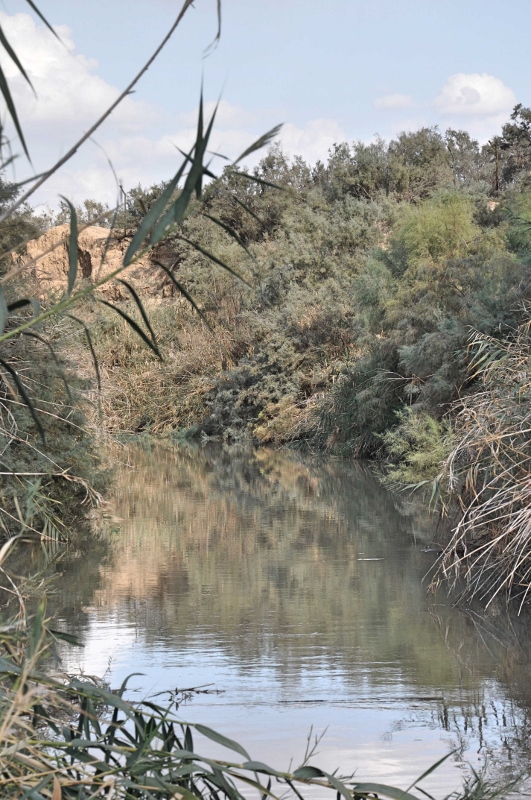
Note that the people crossed “opposite Jericho.” Our photo below is at the Jordan at Qasr el-Yahud, opposite and a little south of Jericho. It would be somewhere near here that the crossing of Joshua 3 took place. Our photo looks to the north.

Jordan River at  Qasr el-Yahud. Photo by Leon Mauldin.

Jordan River at Qasr el-Yahud. Photo by Leon Mauldin.

In their introduction to the book of Joshua, the HCSB Study Bible has an interesting note about the change in volume of the flow of the Jordan:

The Jordan River was at flood stage when God commanded Joshua to lead the people across. Just as when God opened the Red Sea, He provided a dry path through the Jordan when the priests, bearing the ark of the covenant, touched the edge of the river. . . Up until the 1950’s, more than 3 billion cubic feet flowed through the southern Jordan annually. with construction of a number of dams on the Jordan north of the Sea of Galilee and on rivers that feed the Jordan, that volume of water has been reduced to 300 million cubic feet a year (p.338).

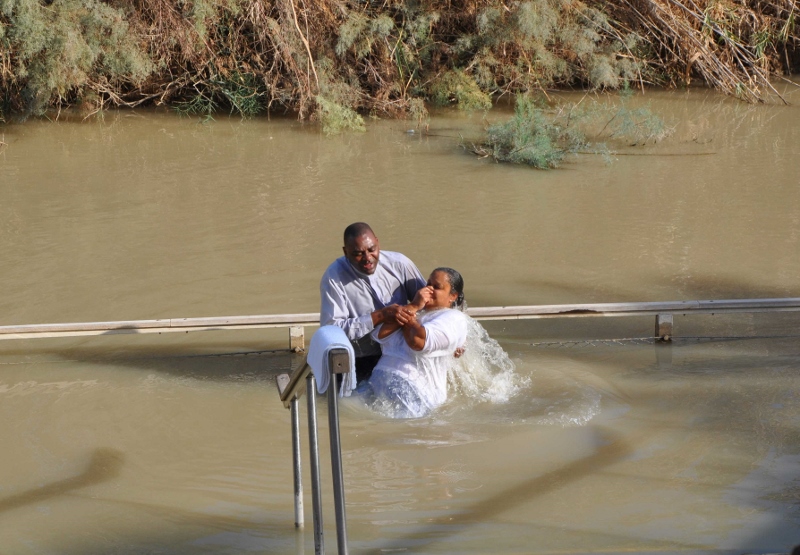
Qasr el-Yahud is a site on the Jordan thought by some to be across from the Bethany referenced in John 1:28, where John the Baptist did some of his baptizing. We had the opportunity to visit here in October.

Baptism in the Jordan River. Photo by Leon Mauldin.

Baptism in the Jordan River. Photo by Leon Mauldin.

Click images for larger view.


Gleanings for the Poor

December 20, 2013

Mosaic legislation provided for meeting the needs of the poor among Israel:

19 “When you reap your harvest in your field and forget a sheaf in the field, you shall not go back to get it. It shall be for the sojourner, the fatherless, and the widow, that the LORD your God may bless you in all the work of your hands. 20 When you beat your olive trees, you shall not go over them again. It shall be for the sojourner, the fatherless, and the widow. 21 When you gather the grapes of your vineyard, you shall not strip it afterward. It shall be for the sojourner, the fatherless, and the widow. 22 You shall remember that you were a slave in the land of Egypt; therefore I command you to do this (Deuteronomy 24:19-22, ESV).

One instance of the application of these provisions of gleaning after the harvest being left for the poor is found in the book of Ruth (see esp. ch. 2). This text also forms the backdrop for the rhetorical question of Obadiah 1:5 (context: complete destruction of Edom; no “gleaning” to be left.”

I’m also interest in the inclusion of the olive tree in the Deuteronomy text. Olives were a staple in biblical times. Olive trees are plentiful in Israel today, requiring little water, and can be grown on almost any terrain (including land too steep for farming). Again, the Deuteronomy legislation required that the owners left whatever remained after harvest for the poor of the land.

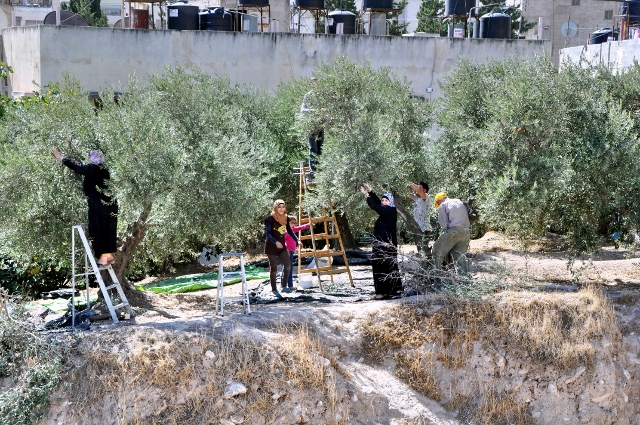
On a recent trip to Israel we spent one day visiting sites in the West Bank (PA), including Shechem. While there we saw some folks (a family?) gathering olives. The work is largely done by hand.

Gathering  Olives at Shechem. Photo by Leon Mauldin.

Gathering Olives at Shechem. Photo by Leon Mauldin.

Behind these folks, but out of sight, is Mt. Gerizim.

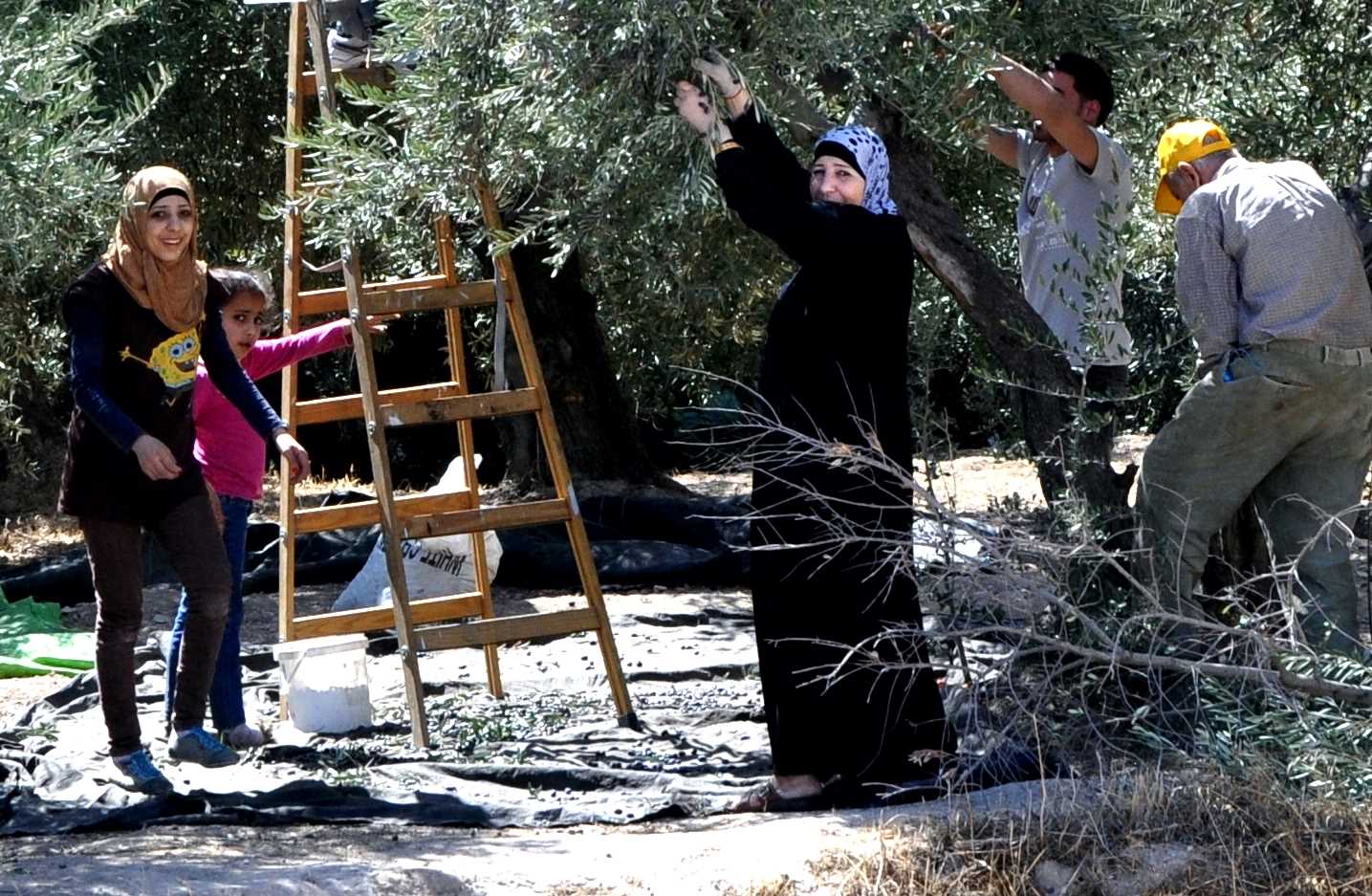
Here is a close-up. It looks like they have a tarp of some kind to catch the olives.

Gathering Olives at Shechem, close-up. Photo by Leon Mauldin.

Gathering Olives at Shechem, close-up. Photo by Leon Mauldin.

I think they were looking to see who that was taking their photo, you think?

Click on images for larger view.