Dietary Restrictions in Leviticus

January 2, 2012

We recently referenced the book of Leviticus and its theme of holiness here. Chapter 11 lists the dietary restrictions which Israel was to follow. The basic rule of thumb was this: an animal must have a divided hoof and chew the cud; both were required.

3 Whatever parts the hoof and is cloven-footed and chews the cud, among the animals, you may eat. 4 Nevertheless, among those that chew the cud or part the hoof, you shall not eat these: The camel, because it chews the cud but does not part the hoof, is unclean to you. 5 And the rock badger, because it chews the cud but does not part the hoof, is unclean to you (ESV).

Two examples of animals which met one requirement, but not both, were the camel and the rock badger.

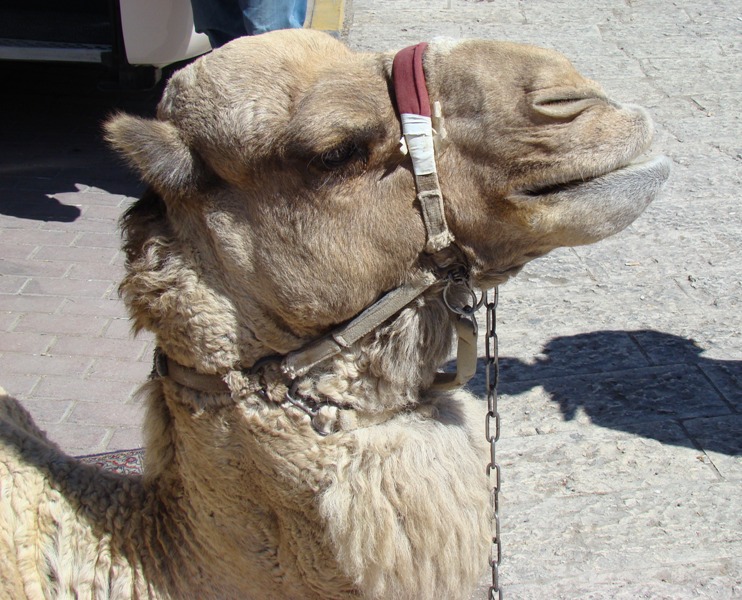
Camel, forbidden in Israel's diet. Photo by Leon Mauldin.

This camel which I photographed in Bethany earlier this year would have been forbidden as food under Mosaic law because though it chews the cud it does not have a divided hoof.

The rock badger was also forbidden.

Rock Badgers at Ein Gedi. Photo by Leon Mauldin.

These rock badgers were at Ein Gedi, where such are commonly seen. Again, such was forbidden in ancient Israel’s diet. Like the camel, it chews the cud, but does not have a parted hoof.

On the other hand, the pig has the parted hoof, but does not chew the cud, so it was unclean also (Lev. 11:7). It occurs to me that I have not photographed any pigs in Israel.

Two observations:

1. God employed such means as these dietary restrictions to mold and shape a special people for His own possession. Such were not the end but the means to an end.

2. In the New Testament such distinctions have been removed.  Jesus said,

Do you not see that whatever goes into a person from outside cannot defile him, since it enters not his heart but his stomach, and is expelled?” ( Thus he declared all foods clean.) (Mark 7:18-19, ESV).

Click on images for larger view.


A Workable Bible Reading Schedule

January 1, 2012

I’ve tried different Bible reading schedules, but the last 2 or 3 years I’ve used the one by Mark Roberts. I’ve found it to be the most practical, and I like the arrangement Mark has worked out. He made this post earlier:

As we come to the close of 2011 many will be making plans to read the Bible regularly in 2012. I hope you will consider using the Five Day Bible Reading Schedule to help you reach your goal. The Five Day Schedule allows you to read through the entire Bible or the NT in one year by reading only five days a week. This allows time for you to catch up if you get behind, or do other reading for Bible class etc.

Many Christians have successfully read the Bible with the Five Day Schedule and you can too.

The Five Day Schedule is a FREE download and is available absolutely free for individuals and churches to use and to make copies.

Get yours here:

Note: we have a Kindle edition available from Amazon.com this year but it is not free (as Amazon charges to process materials). Search “Five Day Reading Schedule” or use the links at BibleClassMaterial.com to get this Schedule on your Kindle!

A schedule of this nature disciplines the reader. You will read passages that you might otherwise neglect. I recommend this good resource.


2011 in Review–Thank You to our Readers

January 1, 2012

The WordPress.com stats helper monkeys prepared a 2011 annual report for this blog.

Here’s an excerpt:

The concert hall at the Syndey Opera House holds 2,700 people. This blog was viewed about 49,000 times in 2011. If it were a concert at Sydney Opera House, it would take about 18 sold-out performances for that many people to see it.

Click here to see the complete report.


Lessons from Leviticus?

December 30, 2011

In his preface to his commentary on Leviticus in the New International Commentary on the Old Testament, Gordon Wenham wrote,

Leviticus used to be the first book that Jewish children studied in the synagogue.  In the modern Church it tends to be the last part of the Bible anyone looks at seriously (vii).

The first time I read that statement I did a double-take. Studying Leviticus first in synagogue? What did they see back then that might be overlooked today?

In my lecture at Florida College (entitled “Trusting in gods that Cannot Save,” 2010) I made reference to the above quote and then observed,

The real heart of Leviticus is contained in verses such as 20:26: “Thus you are to be holy to Me, for I the LORD am holy; and I have set you apart from the peoples to be Mine.” Everything about how to approach God in worship, what to eat, wear, plant, along with all the other laws, had to do with that one principle: by all of these things God was teaching them that they were different from the world; they were His special people; they were to partake of His holiness.  Do you agree that this is not a bad idea, to teach a child from infancy that he is special to the Lord; that we are different from the world; that our concern is to be seeking and doing God’s will? (p.76).

The book of Leviticus was not just for the priests. In the opening verses, God said,

Speak to the sons of Israel and say to them, ‘When any man of you brings an offering to the LORD, you shall bring your offering of animals from the herd or the flock (Lev. 1:2, NASB).

The instructions are to the sons of Israel. Re: “Any man of you” the NET notes,

It is the Heb “a man, human being” (‘adam), which in this case refers to any person among “mankind,” male or female, since women could also bring such offerings.

So here is a book that was for everyone during that dispensation, whether priests or other Israelites, men or women.

We are not contending that we are under the specific legislation of that time, but Romans 15:4 teaches,

For whatever was written in former days was written for our instruction, that through endurance and through the encouragement of the Scriptures we might have hope (ESV).

Perhaps you would like a brief outline and chapter content for the book of Leviticus:

Leviticus Outline and Chapter Content

I.          LAWS OF SACRIFICE 1-7

II.        HISTORICAL 8-10

III.       LAWS OF PURITY 11-15

IV.       ANNUAL DAY OF ATONEMENT

V.        HOLINESS OF PEOPLE 17-20

VI.       HOLINESS OF PRIESTS & LAWS RE: SACRIFICES 21-22

VII.     LAWS CONCERNING FEASTS 23-25

VIII.    PROMISES & WARNINGS 26

IX.       LAWS CONCERNING VOWS 27

1. Burnt offering

2. Meal offering

3. Peace offering

4. Sin offering

5. Trespass offering

6-7 Laws of Sacrifice given to priests

8. Consecration of priests

9. Priests begin to serve

10. Death of Nadab & Abihu

11. Clean & unclean foods

12. Purification after childbirth

13-14. Laws concerning Leprosy

15. Laws concerning normal & abnormal issues

16. Day of Atonement

17. Eating of blood forbidden

18. Laws of moral purity

19. Miscellaneous laws

20. Punishment for disobedience

21-22. Laws of holiness for priests; laws re: sacrifices

23. Sabbath, 3 annual feasts, day of atonement

24. Lamps, showbread; punishment for blasphemy

25. Year of Jubilee

26. Blessings of obedience; consequences of disobedience

27. Laws concerning vows


Shechem, Tel Balata, East Gate

November 17, 2011

In September we had the opportunity to revisit Shechem, Tel Balata. The site had seen further excavation and cleanup since our last visit there (Dec. 2009).

Shechem is located on the West Bank, situated 2.5 km SE of city center of Nablus. The Park brochure states,

In the past urban development and lack of appropriate management threatened the archaeological site of Tell Balata and the main goal of the Tell Balata Archaeological Park project is to safeguard it. It is a potential World Heritage Site as a part of ‘Old Town Nablus and its environs’ and is listed ont he Inventory of Cultural and Natural Sites of Potential outstanding Universal Value in Palestine.

The project aims to make a sustainable heritage management plan for the site and to make it accessible to visitors.

We previously posted on Shechem here. Review this to see somewhat of the biblical significance of this site.

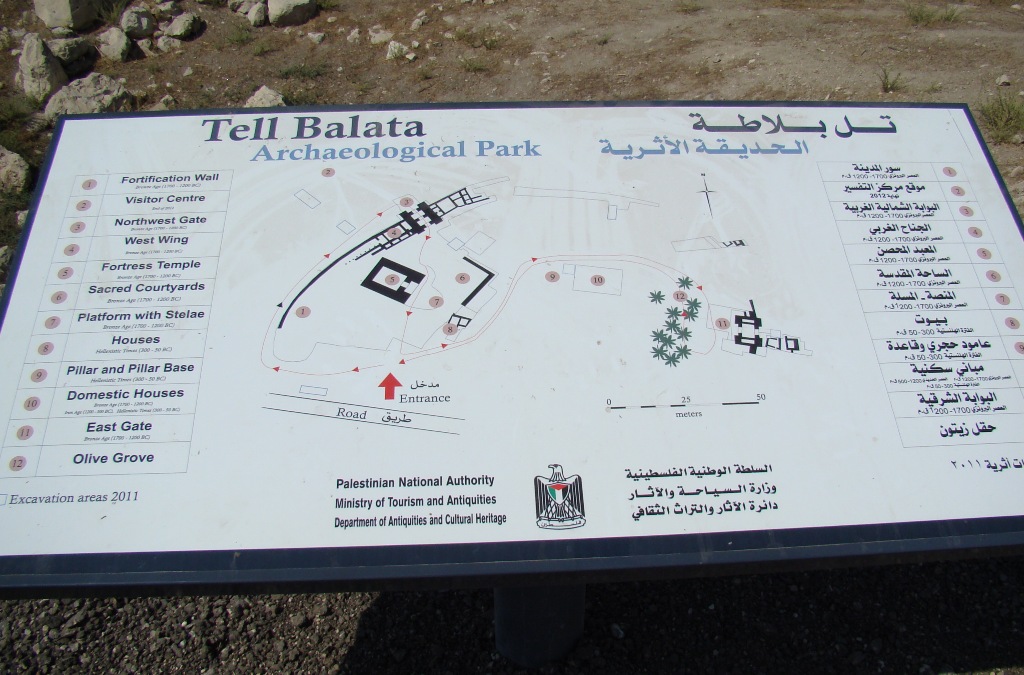
There is a helpful sign as you enter Shechem.

Shechem, Sign at Entrance. Photo by Leon Mauldin. Click for larger view.

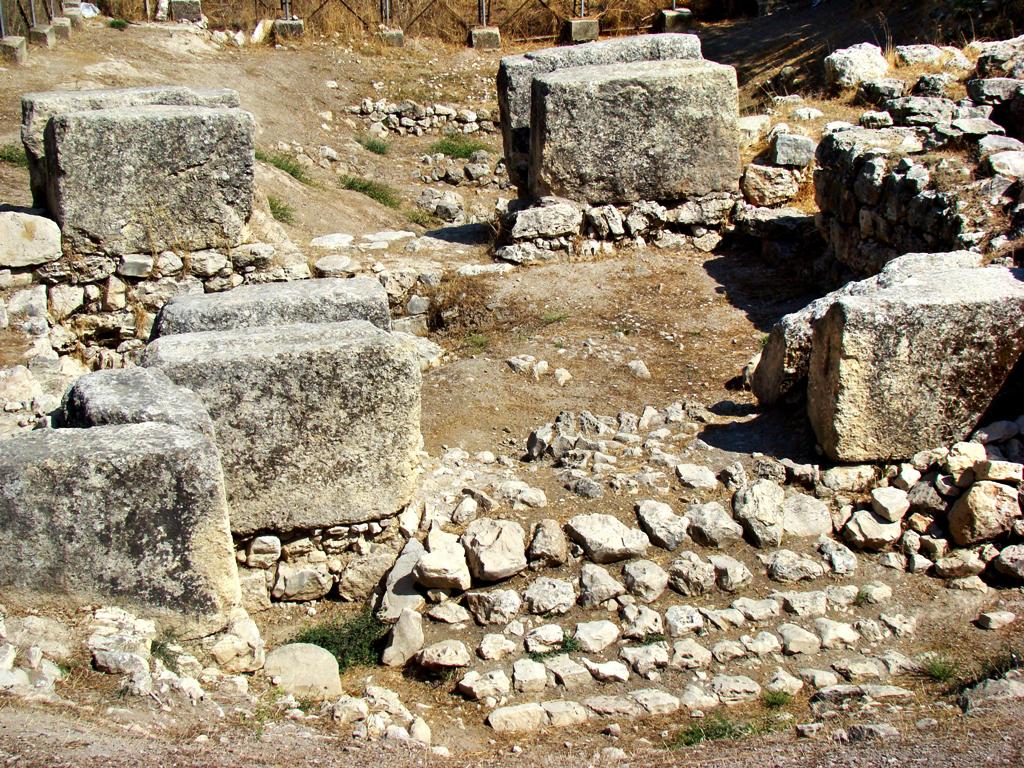
Ferrell Jenkins and I wanted to see the old Canaanite gate at the east side of the site.

Shechem, Canaanite Gate on East Side of city. Photo by Leon Mauldin.

Dr. Rasmussen observes, “The gate, like the associated Cyclopean Wall, dates to the end of the Middle Bronze Age (ca. 1650-1550 BC) and continued in use during the Late Bronze Age.”


DVD of Sandra Waldron’s Memorial Service

October 16, 2011

I previously posted a tribute to Sandra Waldron, wife of evangelist Bob Waldron, on Leon’s Message Board which you may see here.

Bob and Sandra Waldron

I have recently received a DVD of the memorial service for Sandra, conducted by Bob Waldron and myself, in Athens, AL, on Tues., Sept. 13, 2011.

Bob requested that I make this available for those who would be interested. When I converted the DVD for uploading, it was rendered into three parts, which are here below in consecutive order:


Error
This video doesn’t exist
Error
This video doesn’t exist
Error
This video doesn’t exist


Things To Do At Age 100

October 11, 2011

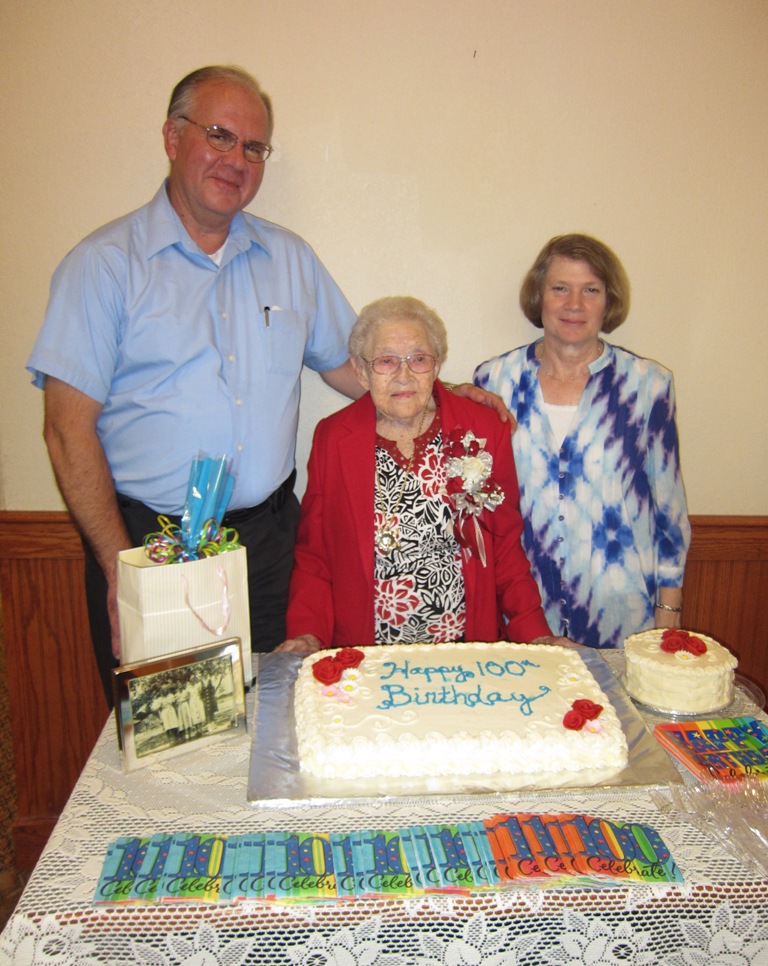
One of our church members, Mrs. Elma Bradford, celebrated her 100th birthday today with a large gathering of family and friends from church.

Mrs. Bradford is a resident of the Nursing Home in Hanceville, AL. Her mind is as sharp as a tack.

Leon Mauldin, Elma Bradford, Linda Mauldin. Photo by Nancy Picogna.

Before we ate, I made a brief tribute to this sweet lady. In summary, I said:

Tribute to whom tribute, honor to whom honor. We are here to honor Mrs. Bradford on her 100th birthday. Here are some things you can do when you are 100.

1. Set a good example. Mrs. Bradford has done and continues to do that.

2. Maintain a sense of humor. Once while visiting her at the nursing home, I began a sentence, ‘Well . . .’ She immediately said, ‘Where ya gonna dig it?’ That’s rather typical for her.

3. Read your Bible. On many occasions when I have gone to her room, and she could have no idea I would be coming, I would find her reading her Bible. She loves the Lord. She loves the Lord’s people. Her hope is set on heaven.

So in case you’re wondering, these are some things you can do at age 100.

BTW, none of the above happen accidentally; people who do these things choose to do so.


San Jacinto Monument

October 7, 2011

While here in Texas for our series of lessons we want to smell the roses, or see the monuments, as the case may be.

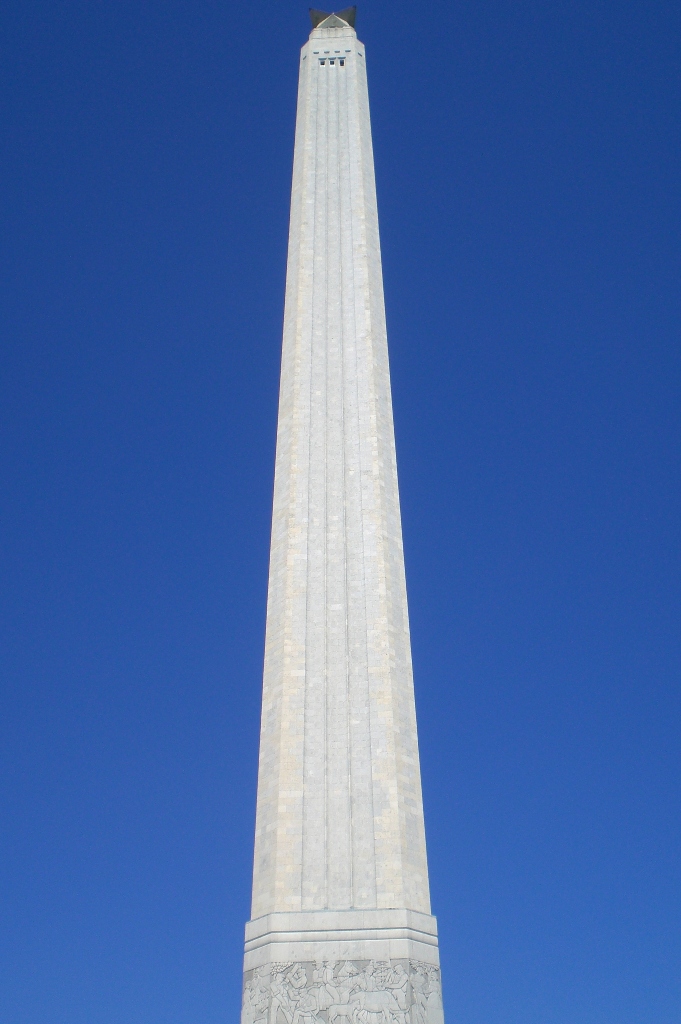
San Jacinto Monument. Click for larger view. Photo by Leon Mauldin.

From Wikipedia:

The San Jacinto Monument is a 567.31-foot (172.92 m) high column located on the Houston Ship Channel in Harris County, Texas near the city of La Porte. The monument is topped with a 220-ton star that commemorates the site of the Battle of San Jacinto, the decisive battle of the Texas Revolution. The monument, constructed between 1936 and 1939 and dedicated on April 21, 1939, is the world’s tallest monumental column and is part of the San Jacinto Battleground State Historic Site. By comparison, the Washington Monument is 555.427 feet (169.294 m) tall. The column is an octagonal shaft faced with Texas Cordova shellstone, topped with a 34-foot (10 m) Lone Star—the symbol of Texas. Visitors can take an elevator to the monument’s observation deck for a view of Houston and the USS Texas.

The San Jacinto Museum of History is located inside the base of the monument, and focuses on the history of the Battle of San Jacinto and Texas culture and heritage.

The San Jacinto Battlefield, of which the monument is a part, was designated a National Historic Landmark on December 19, 1960, and is therefore also automatically listed on the National Register of Historic Places. It was designated an Historic Civil Engineering Landmark in 1992.

I had always heard that everything is bigger in Texas.

San Jacinto Monument. Closer View. Photo by Leon Mauldin.

Tonight will conclude our series of lessons at Southside in Pasadena, a suburb of Houston. We have really enjoyed being with the folks here.


Jonah Was From Gath hepher

October 5, 2011

During the days of the Divided Kingdom of Israel’s history, the northern kingdom of Israel had shrunk down to nearly nothing, as noted in 2 Kings 10:32: “In those days [Jehu’s reign] the LORD began to reduce the size of Israel’s territory.” Here’s what it looked like:

Tiny Israel as Jehoahaz ascends throne. Map by Scott Richardson.

This would change in the days of Jeroboam II. 2 Kings 14:25 reads:

He restored the border of Israel from Lebo Hamath in the north to the sea of the Arabah in the south, in accordance with the word of the LORD God of Israel announced through his servant Jonah son of Amittai, the prophet from Gath Hepher (NET).

At this time with the borders restored, it looked like this:

Israel during Jeroboam II. Map by Scott Richardson.

Note that this restoration of Israel’s territory was foretold by Jonah the prophet. We usually think of Jonah in regard to his reluctant mission to Nineveh, as seen in the book of Jonah. But we learn from the 2 Kings 14:25 reference that God also used the prophet to address the situation with His people Israel. Jonah was from Gath hepher, which was in the Galilee.

Gath hepher. Map by BibleAtlas.org.

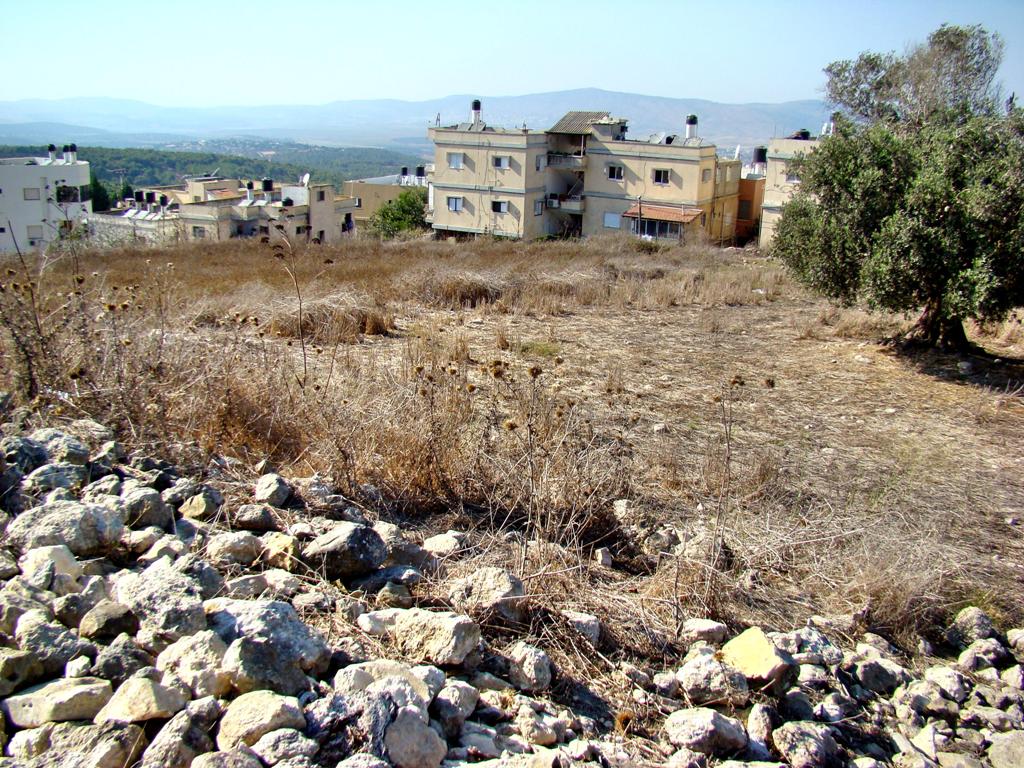
I recently had opportunity to visit Jonah’s hometown.

Gath hepher. Home of the prophet Jonah. Photo by Leon Mauldin.

Our Visualized Survey of the Bible is going well here at Pasadena. It is good to be with Dee & Norma Bowman, and all the folks here.

Dee & Norma Bowman, and Leon & Linda Mauldin at Galveston, TX.

Click on images for higher resolution.


Made in China, Repaired in Israel

September 29, 2011

I think there’s something to be said for taking seriously matters of import, while one doesn’t take himself too seriously. That being said, Ferrell Jenkins and I seriously wanted to see the tel of Adullam, as well as the cave (he posted on that earlier this month here).

The biblical narrative of 2 Sam. 23:13-17 has impressed me with the concept of loyalty and devotion. At the cave of Adullam (which David was using as his stronghold) three of David’s men heard him verbalize how he would like a drink of water from the well of his home town Bethlehem. The problem was that the Philistines had a garrison posted there. That did not matter. Those three left the cave and “broke through the camp of the Philistines, drew water from the well . . . and took it and brought it to David” (v.16). David was so overcome with emotion and gratitude that he could not drink it, but instead poured it out as an offering to YHVH (vv.16-17).

These men loved David so much that they were willing to risk everything, including their lives, to do what they perceived that David wanted.  I’ve often said that if we loved the Lord just about half as much as they loved David, we’d be well on our way in the right direction.

Those concepts I take seriously. But back to the part about not taking yourself too seriously. Of course I wanted to go inside the cave, which we did. I had on a brand new pair of pants. In the process of bending around and getting in position to take photos from inside the cave I heard an unmistakable ripping sound. It wasn’t a neat rip. It wasn’t even in the seam. It was say from the knee all the way up to the zipper. What do you do in a situation like that? By the way, Adullam was to be our first stop of the day.

Another question, what are the odds of finding a sewing machine at Adullam or nearby?

Emergency Pants Repair at Adullam. "Made in China, Repaired in Israel." Photo by Ferrell Jenkins.

Our driver/guide we had secured for this excursion which required 4-wheel drive, Daphna (see above reference in Jenkin’s post), helped secure my dignity. Among the equipment possessed by Haelah Desert Tours was indeed a sewing machine, and there was also a very helpful worker who knew how to use it. As I waited inside the (thankfully unoccupied) office, Mr. Jenkins recorded the moment with the above photo.

Things like that give you something to smile about (after it’s over), and also to remember about your visit. I could never forget Adullam, especially not now.

Another BTW, Mr. Jenkins said that for me to be a good steward it would be essential to take those pants back for a refund. I complied. Actually my wife did, but she got a full refund for the pants that were made in China and repaired in Israel.

************

On a personal note, I’m glad and thankful to God to be making this post tonight. I’ve had a  two-day hospitalization, due to what turned out to be a very low potassium level and a med that needed changing, but all seems well and progressing at present.

I’m looking forward, the Lord willing, to being with the Southside church of Christ in Pasadena, TX, for a 5-day meeting, Mon-Fri. This will be my Visualized Survey of the Bible, which emphasizes the theme of the Bible, and narrates the record in survey form from Genesis to Revelation. I am thankful for such opportunities. In such lessons we make use of numerous photos of the Bible lands, showing the geographical context for the events of Scripture.