The Garden of Gethsemane

February 1, 2017

“When Jesus had spoken these words [Farewell Discourse/Prayer, John 14-18], He went forth with His disciples over the ravine of the Kidron, where there was a garden, in which He entered with His disciples” (John 18:1, NASB). Matthew’s record states, “Then Jesus came with them to a place called Gethsemane, and said to His disciples, ‘Sit here while I go over there and pray.'”

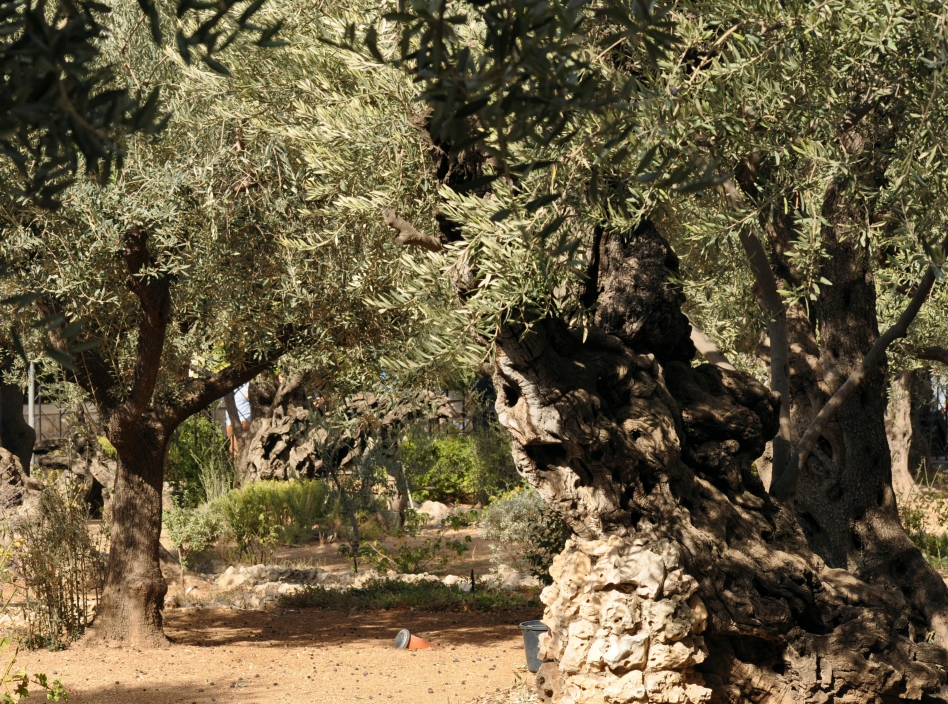
Ancient olive trees on the Mt. of Olives. The Garden of Gethsemane was in this area. Photo by Leon Mauldin.

Ancient olive trees on the Mt. of Olives. The Garden of Gethsemane was in this area. Photo by Leon Mauldin.

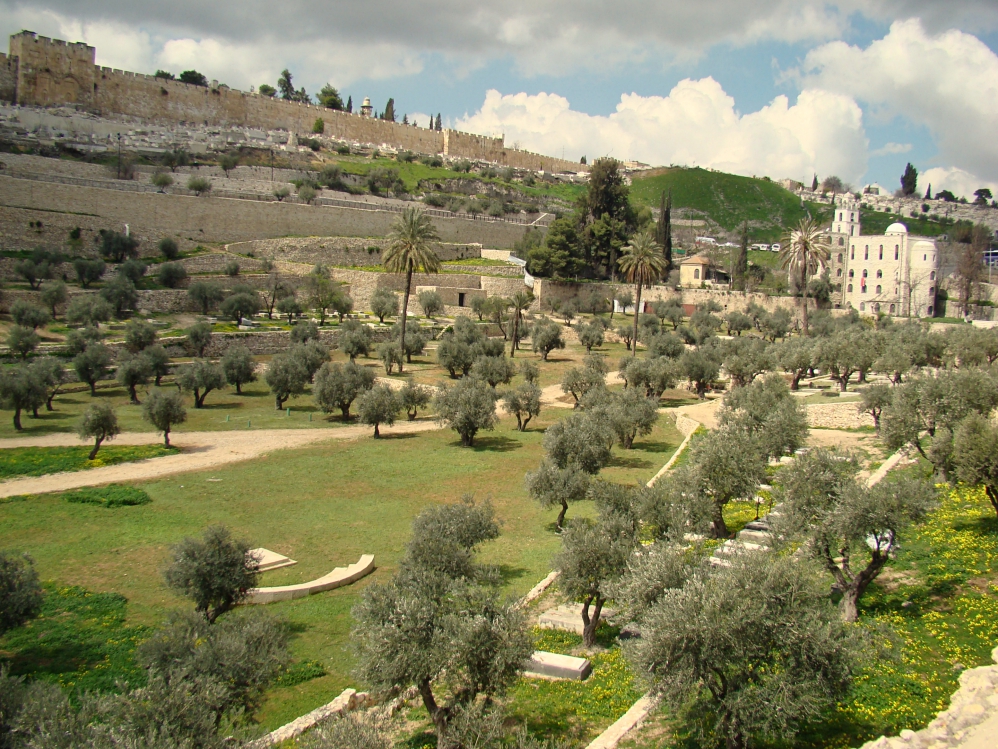
The meaning of Gethsemane is “olive press,” and therefore not a “garden” in the ordinary sense of the word, but rather an olive grove that contained an olive press. Though we cannot know the exact spot where Jesus went for prayer that awful night before His crucifixion, it would be situated on the Mount of Olives just east of Jerusalem and across the Kidron Valley.

It would be here that Jesus went with His disciples (minus Judas; see John 13:30) to pray. “They came to a place named Gethsemane; and He said to His disciples, ‘Sit here until I have prayed.'” (Mark 14:32, NASB). We get somewhat of a glimpse of the horrible terror of that night as Luke writes, “And being in agony He was praying very fervently; and His sweat became like drops of blood, falling down upon the ground” (22:44, NASB). He submitted willingly to the Father’s will, because there was no other way that God could be both Just and our Justifier (Romans 3:21-26).

So it was then at the site of Gethsemane that Jesus was betrayed by His disciple Judas, was arrested and from there led away to a series of trials before the Jews and the Romans, and then crucified. But then on the third day “was declared the Son of God with power by the resurrection from the dead, according to the Spirit of holiness, Jesus Christ our Lord” (Rom. 1:4, NASB). Hallelujah, What a Savior!


Palm Branches in Jerusalem

January 31, 2017

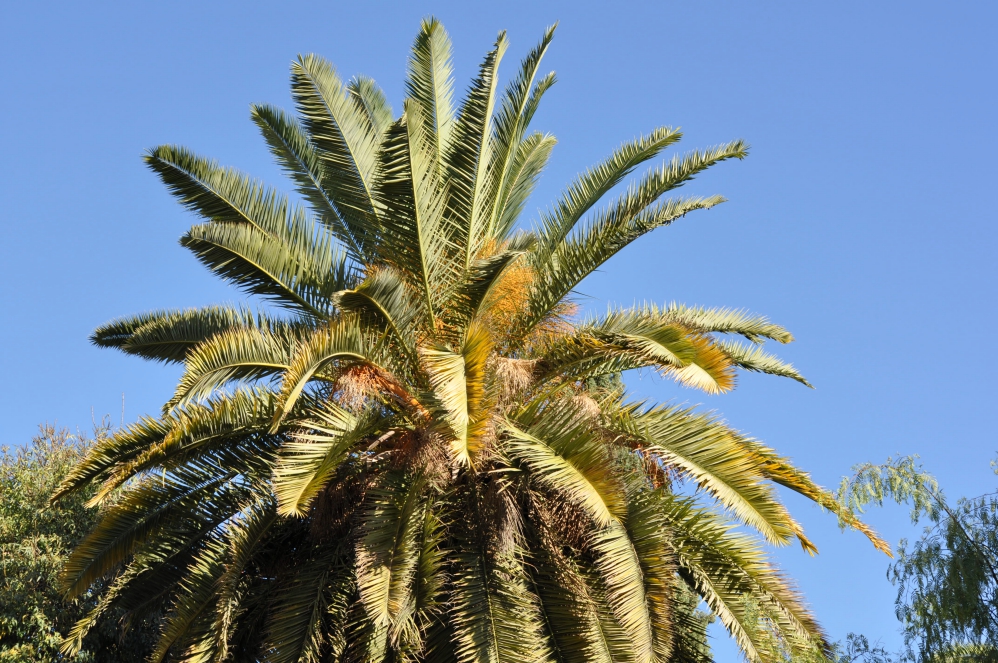
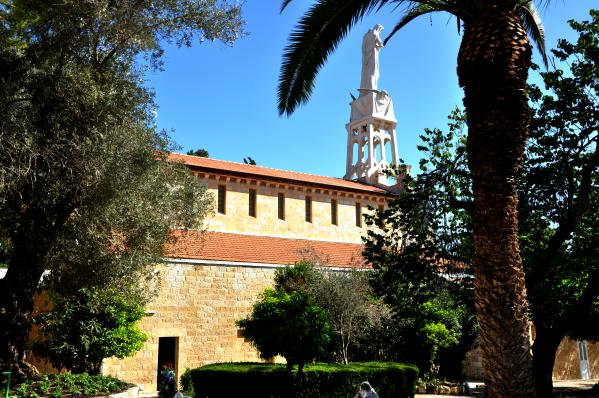
When Jesus began the Final Week of His ministry, He rode on a donkey (fulfilling Zechariah 9:9) from the Mount of Olives to the city of Jerusalem. It was on a Sunday. The text reads, “Most of the crowd spread their coats in the road, and others were cutting branches from the trees and spreading them in the road” (Matt. 21:8, NASB). John’s record tells us the large crowd “took the branches of the palm trees and went out to meet Him, and began to shout, “Hosanna! BLESSED IS HE WHO COMES IN THE NAME OF THE LORD, even the King of Israel” (John 12:13, NASB). While in Jerusalem in November (2016) I made this photograph.

Palm tree in Jerusalem. Photo©Leon Mauldin.

Palm tree in Jerusalem. Photo©Leon Mauldin.

This is why that Sunday prior to Jesus’ crucifixion is today commonly known as “Palm Sunday.”

Click image for larger view.


Temples in Pompeii, Italy

January 27, 2017

The Roman city of Pompeii, as was generally the case in the world of the 1st century, was a city of many gods.

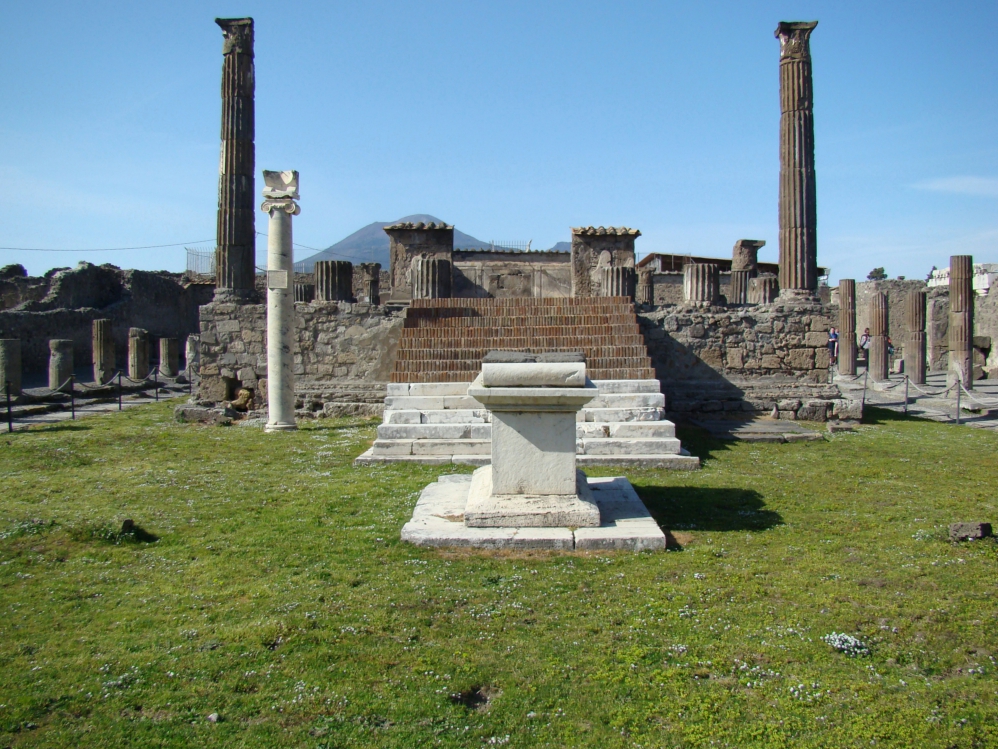
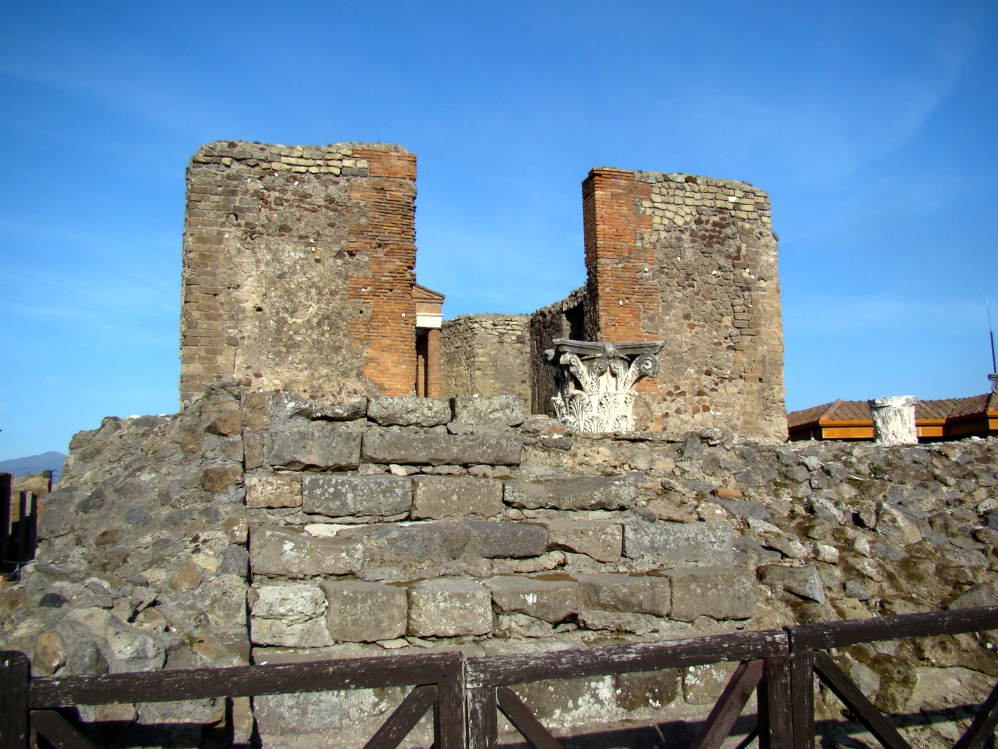
Pompeii–as you might expect, given its many gods–had many temples, though by no means one for every god or goddess who might intervene in the lives of its inhabitants. They came in all sizes, in varying degrees of prominence and with very different histories. Some stretched back to the earliest years of the city. The temple of Apollo next to  the Forum was established by the sixth century BCE at the latest. (The Fires of Vesuvius.281-282).

Temple of Apollo, Pompeii, Italy. Photo by Leon Mauldin. Mt. Vesuvius may been seen the the background.

Temple of Apollo, Pompeii, Italy. Photo by Leon Mauldin. Mt. Vesuvius may been seen the the background.

Most of the rest [of the temples] date to the second century BCE or later. The Small Temple of Fortuna Augusta was dedicated to an almost untranslatable combination of the goddess of Good Fortune or Success (Fortuna) and the power of the emperor (the adjective Augusta can confusingly, or conveniently, refer either to the first emperor Augustus himself, or to imperial power more generally–for subsequent emperors used “Augustus” as part of  their titles too)  (Ibid.)

Temple of Fortuna Augusta, Pompeii. Photo by Leon Mauldin.

Temple of Fortuna Augusta, Pompeii. Photo by Leon Mauldin.

Pompeii is a city “frozen” in time by the eruption of Mt. Vesuvius, AD 79. Though this is not a “biblical city” it preserves scenes from a Roman city in the AD 1st century, and thus has tremendous value to us. Thus it helps us to see the setting for the biblical world in the early New Testament era.

When contemplating the widespread idolatry of the biblical world, I often think of Paul’s statement to the Corinthians, many of whom had themselves formerly been idolaters:

we know that “an idol is nothing in the world,” and that “there is no God but one.” For even if there are so-called gods, whether in heaven or on earth– as there are many “gods” and many “lords”– yet for us there is one God, the Father, from whom are all things, and we for Him; and one Lord, Jesus Christ, through whom are all things, and we through Him. However, not everyone has this knowledge. (1 Cor. 6:4-7, HCSB).

Click images for larger view.


The Threshing Sledge

January 24, 2017

I am currently enjoying teaching 1 Chronicles in our Bible class in our local congregation. The record of David’s ill-advised census and its terrible consequences is found in 1 Chron. 21. An angel and a prophet were used by God to instruct David: “Now the angel of the LORD had commanded Gad to say to David that David should go up and raise an altar to the LORD on the threshing floor of Ornan the Jebusite” (v.18, ESV). David purchased the threshing floor at the “full price” from Ornan, “And David built there an altar to the LORD and presented burnt offerings and peace offerings and called on the LORD, and the LORD answered him with fire from heaven upon the altar of burnt offering” (v.26, ESV).

Ornan had made this offer: “See, I give the oxen for burnt offerings and the threshing sledges for the wood and the wheat for a grain offering; I give it all,” but David insisted that he pay “the full price” (v.24); David would not offer to the Lord “that which costs me nothing.”

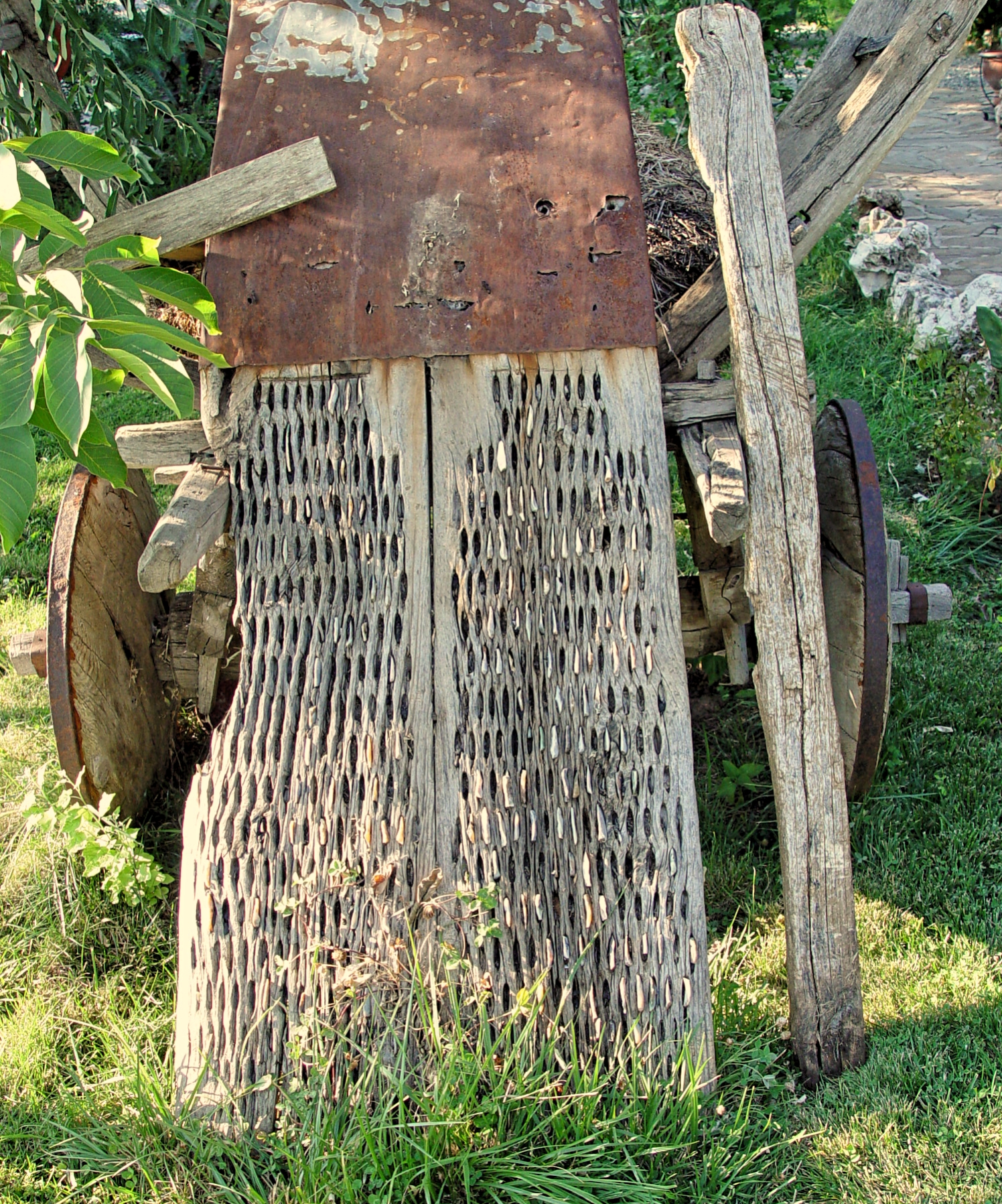
Note that reference is made to the “threshing sledges for the wood.” The threshing sledge was pulled across the grain to separate the kernel from the chaff. In Aphrodisias, Turkey, I had the opportunity to photograph several threshing sledges.  This helps us to visualize what David used for wood for the burnt offerings in our Chronicles text.

Threshing Sledge at Aphrodisias, Turkey. Photo by Leon Mauldin.

Threshing Sledge at Aphrodisias, Turkey. Photo by Leon Mauldin.

Though the text is challenging, it seems that its placement in Chronicles is to show the usage God made of the event. The property David purchased for offering for atonement for sin would become the site for Solomon’s building the temple! “Then David said, ‘Here shall be the house of the LORD God and here the altar of burnt offering for Israel'” (22:1).

Click photo for larger view.


Tirzah (Tell el-Far’ah), Israel’s Ancient Capital

November 30, 2016

On our recent trip to Israel we included one day in the West Bank. On our itinerary among other sites for that day I included Tirzah, Israel’s capital prior to Samaria, during the earlier years of the Divided Kingdom period.

Todd Bolen, of BiblePlaces.com makes this interesting observation:

In my experience, the most important area of the biblical land that people know the least about is the hill country of Samaria. Its importance is reflected in the fact that it is easier for me to list biblical people who were not in this area than it is to name those who were.

Why is this region generally less known? Most tour groups avoid it. Yes, it is possible to come to Israel and not see Shechem, Samaria, Shiloh, and Ai. In fact, I would estimate that 95% of tourists never see these major sites. (April 28, 2014, in BiblePlaces Blog).

What Todd says here would also (and especially) be true of Tirzah! We did not visit Ai, but saw each of the other sites mentioned: Shiloh, Shechem (Tel Balata, and also Jacob’s Well at Nablus), Samaria and also Dothan.

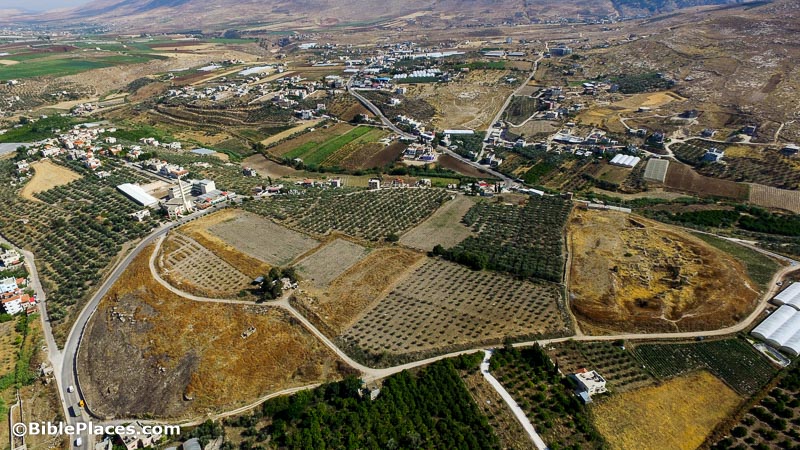
This aerial photo is the view of Tirzah from the north, used by permission of Todd Bolen.

Tirzah, aerial from north. Photo ©Todd Bolen.

Tirzah, aerial from north. Photo ©Todd Bolen.

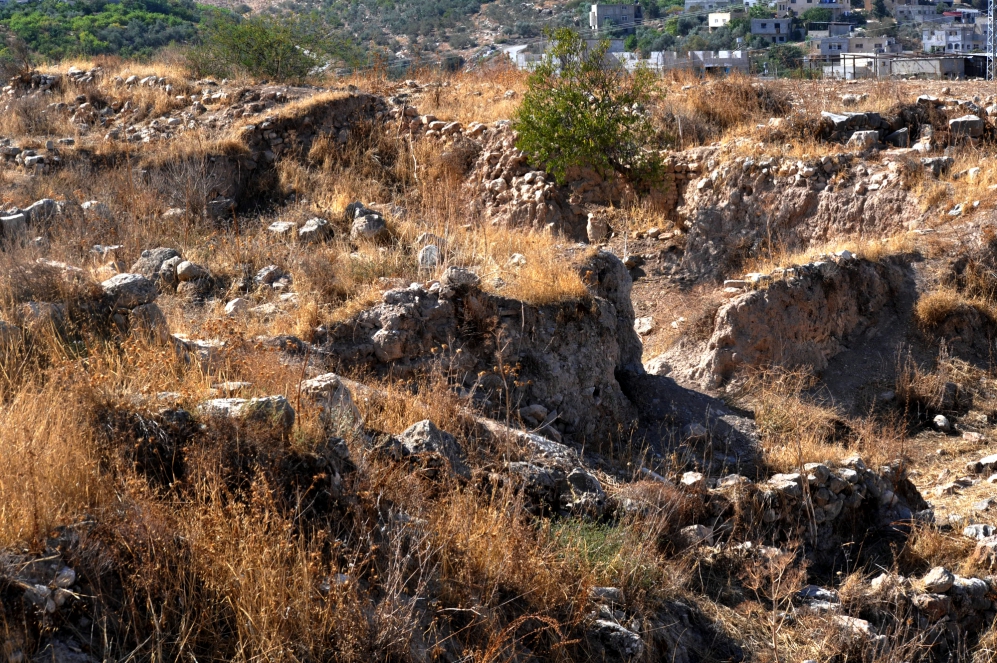
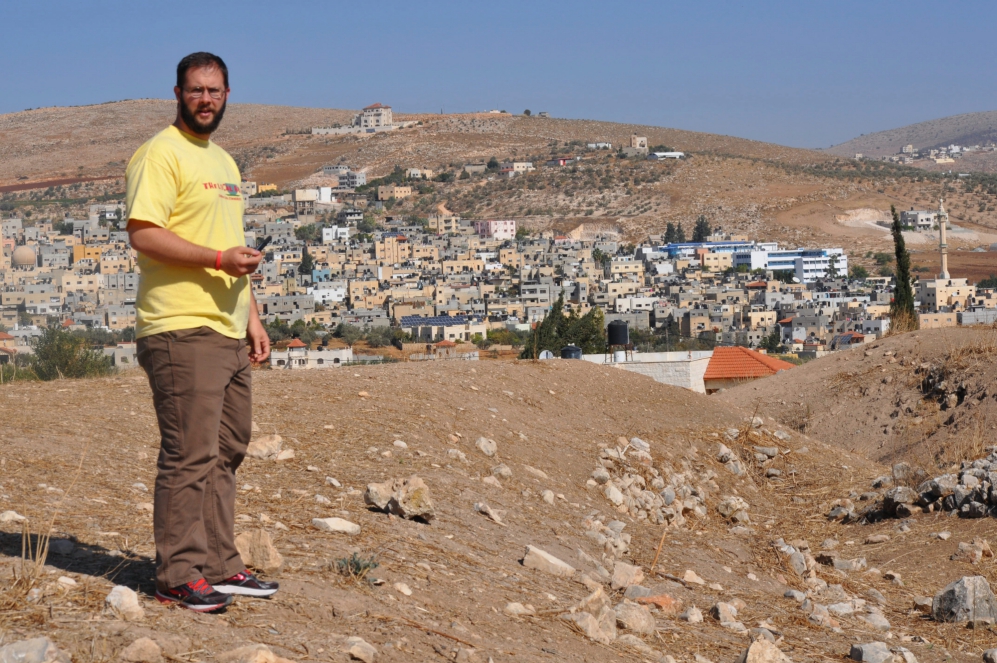
It is ironic that this important Old Testament city is today an unmarked tel. Not even a sign. Many decades have passed since the excavations here.

Excavations at Tirzah. Photo ©Leon Mauldin.

Excavations at Tirzah. Photo ©Leon Mauldin.

My son Seth at Tirzah. Photo ©Leon Mauldin.

My son Seth at Tirzah. Photo ©Leon Mauldin.

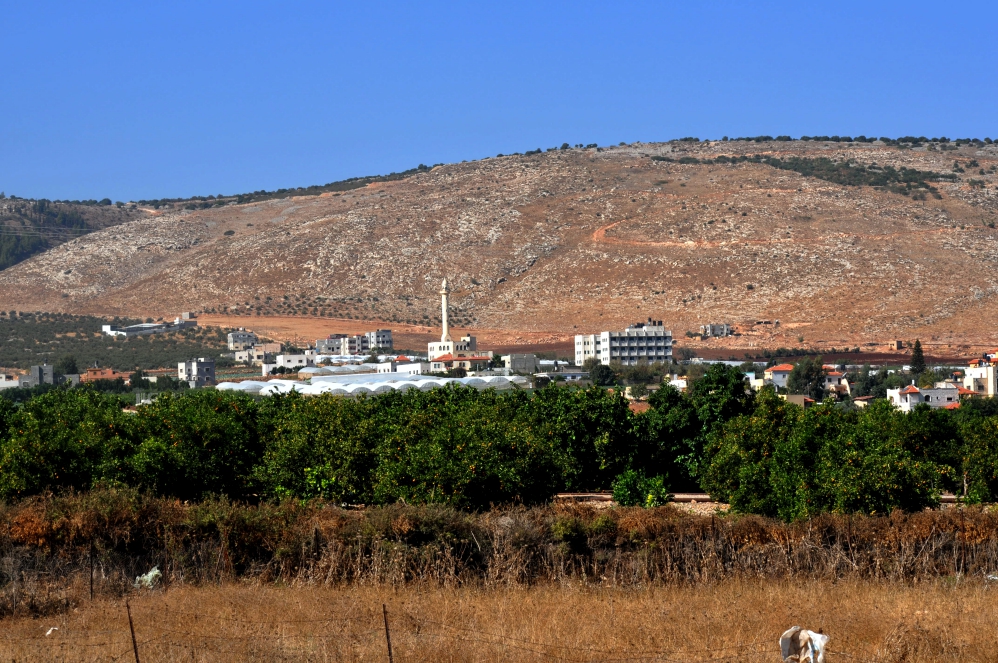
View from Tirzah. Photo ©Leon Mauldin.

View from Tirzah. Photo ©Leon Mauldin.

Biblical references to this Tirzah include:

1 Kings 14:17 Then Jeroboam‘s wife arose and departed, and came to Tirzah. When she came to the threshold of the house, the child died. Jeroboam was the first king of the Divided Kingdom following the death of Solomon.

1 Kings 15:21 Now it happened, when Baasha heard it, that he stopped building Ramah, and remained in Tirzah. Baasha was the king who destroyed all the family of the King Jeroboam.

1 Kings 15:33 In the third year of Asa king of Judah, Baasha the son of Ahijah became king over all Israel in Tirzah, and reigned twenty-four years. 

1 Kings 16:6 So Baasha rested with his fathers and was buried in Tirzah. Then Elah his son reigned in his place. 

1 Kings 16:9 Now his [Elah’s] servant Zimri, commander of half his chariots, conspired against him as he was in Tirzah drinking himself drunk in the house of Arza, steward of his house in Tirzah.

1 Kings 16:15 In the twenty-seventh year of Asa king of Judah, Zimri had reigned in Tirzah seven days. And the people were encamped against Gibbethon, which belonged to the Philistines.

1 Kings 16:17 Then Omri and all Israel with him went up from Gibbethon, and they besieged Tirzah.

1 Kings 16:23 In the thirty-first year of Asa king of Judah, Omri became king over Israel, and reigned twelve years. Six years he reigned in Tirzah.

Tirzah is located seven miles NE of Shechem; it is situated near the source of the Wadi Far’ah, which drains down to the Jordan. It was W.F. Albright who identified the site with biblical Tirzah.

Roland de Vaux gives a good summary of Tirzah’s identification and history in The New Encyclopedia of Archaeological Excavations in the Holy Land.

The stratum attributed to the Late Bronze Age shows signs of destruction, which can be regarded as the result of the Israelite conquest [of Canaan]. Tirzah, as the capital of the kingdom of Israel, corresponds to stratum III at Tell el-Far’ah. This level was devastated during the Omrid capture of the town, subsequent to Zimri’s seizure of power (c.885 BCE). The fortress in the northwestern corner may be the king’s castle mentioned in 1 Kings 16:15-18, which Zimri himself set on fire and in which he met his death. Omri was able to rebuild Tirzah and to set up his residence there only at the end of a four-year struggle with his rival, Tibni. The foundations sunk into level III probably belong to his structures. However, after two years, Omri transferred the capital to Samaria (cf. 1 Kg. 16:23-24). This explains why there are buildings in the area that were never completed. The royal household and military and state officials left Tirzah, undoubtedly followed by the artisans and merchants. It is quite possible that the town was completely abandoned for some time. This would explain the paucity of the interim stratum, apparently constructed after a short period of settlement. As the Northern Kingdom flourished under Joash and Jeroboam II, Tirzah, too, enjoyed a measure of prosperity. It is from this town that Menahem launched his attack on Samaria (2 Kg. 15:14). Stratum II represents this era with its magnificent structures and administrative headquarters. As some have suggested, these may have served Menahem, if indeed he held sway at Tirzah. During the Assyrian invasion of the Northern Kingdom (c. 732 BCE), the town was captured. The destruction in stratum II dates from that time.

The École Biblique et Archéologique Française in Jerusalem conducted nine seasons of excavations at the site, between 1946 and 1960, under the direction of R. de Vaux (Vol.2,p.433).

J.F. Drinkard Jr. notes:

Omri began his reign in Tirzah (1 Kings 16: 23), the capital of the northern kingdom during Baasha’s reign, and then built a new capital, Samaria. At Tirzah, identified as Tell el-Farah north along Wadi Farah about six miles northeast of Shechem, excavators have discovered that the Iron Age strata have a break and gap that match the point when Omri built his new capital. Apparently, he had begun new construction in Tirzah and abruptly stopped. Perhaps Omri began to rebuild Tirzah as his capital during the time of the conflict with Tibni. Once that conflict was resolved, Omri was free to establish his own new capital (IVP Dictionary of the Old Testament: Historical Books).

Click on photos for larger view.


Kiriath-jearim and Beth-shemesh in Israel

April 8, 2016

Today Ferrell Jenkins and I visited sites in Jerusalem, but for our post for now I wanted to note a couple of biblical sites we visited yesterday.

One was Kiriath-jearim. This location is of importance because the Ark of the Covenant was there from the days of Samuel (after Eli’s death and the Philistine destruction of Shiloh 1 Sam. 4-5). We read in 1 Samuel 6:21, “So they sent messengers to the inhabitants of Kiriath-jearim, saying, ‘The Philistines have brought back the ark of the LORD; come down and take it up to you.'”

At Kiriath-jearim. Our Lay of the Ark of the Covenant. Photo by Leon Mauldin.

At Kiriath-jearim. Our Lay of the Ark of the Covenant. Photo by Leon Mauldin.

Once the ark was returned to Israel by the Philistine enemies, ca. 1100 BC, it would remain there until King David made Jerusalem his capital, ca. 1003 BC, i.e. for 100 years. But first the ark came to Beth-shemesh. The biblical narrative explains how the hand of God was involved as two milk cows, with their calves kept behind, pulled a cart carrying the ark straight from Ekron of the Philistines to the border town of Beth-shemesh of Israel (1 Sam. 6).

Beth Shemesh, where the ark was returned from the Philistines. Photo by Leon Mauldin.

Beth-shemesh, where the ark was returned from the Philistines. Photo by Leon Mauldin.

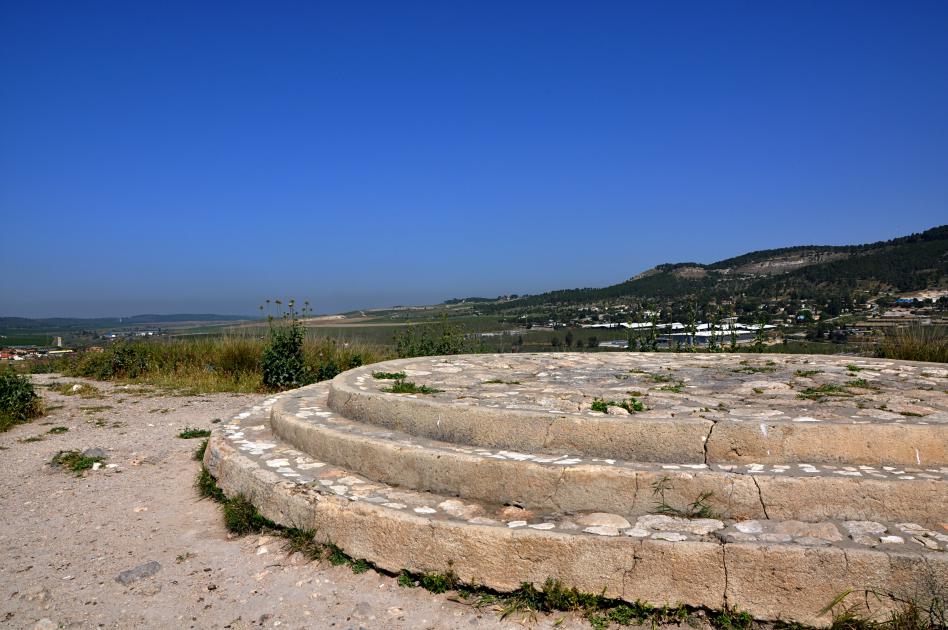
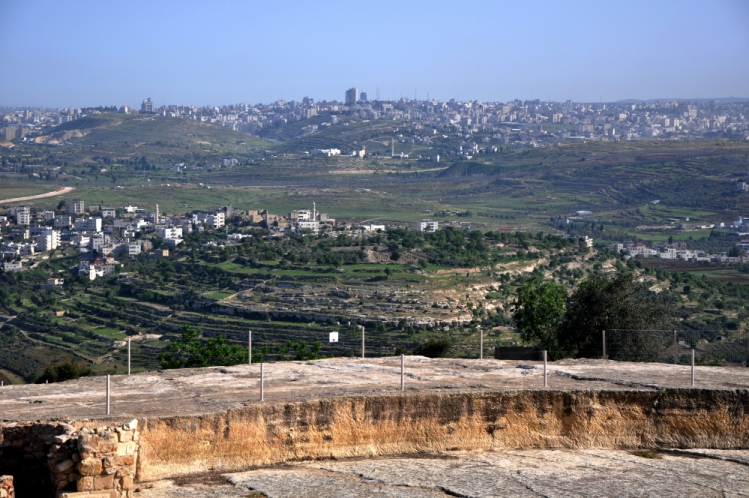
Our photo shows the suggested site in Beth-shemesh (in foreground) where the cows pulling the ark were slain as sacrifices. Our view looks toward Philistia in the distance (left from center), the direction from which the ark would have come. As stated above (1 Sam. 6:21), from Beth-shemesh the ark was taken to Kiriath-jearim, where it remained until the days of King David.

We have previously posted here on Kiriath-jearim and here on Beth-shemesh, with aerial photo.


Traveling in Israel: Gibeon and More!

April 7, 2016

Today was a delightful day in Israel. We were able to see biblical sites from Jerusalem westward all the way to the coastal Philistine city of Gath.

Just north of Jerusalem (OT territory of Benjamin) is Gibeon, (Arabic El-Jib). This was formerly the Canaanite city that deceived Joshua and the men of Israel by pretending to be from a great distance, and thus entered into a covenant with Israel during the days of the Conquest (Joshua 9). There are subsequently several biblical references to this site.

Gibeon. Many OT texts refer to this site. Photo by Leon Mauldin.

Gibeon at center of photo. Many OT texts refer to this site. Photo by Leon Mauldin.

We have previously posted on Gibeon here and here.

Today we also saw Kiriath-Jeariam and  numerous sites in the Shephalah, including the valley of Elah, where David killed Goliath, Lachish, Beth-Shemesh, and the Philistine city of Gath, plus others. More on these later!


Sorrento/Pompeii

March 15, 2016

Yesterday morning we crossed the Straits of Messina, leaving Sicily and arriving at the toe of the “boot” of Italy. From there we went south to biblical Rhegium (Acts 28:12-13), then going north to Sorrento, where today we are to visit Pompeii and then make our way to Rome, making some stops along the way.

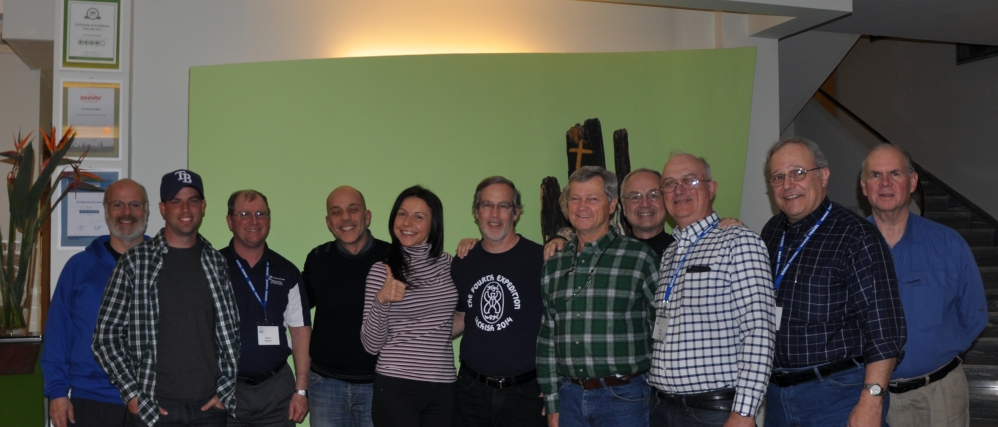
Last night we had opportunity to see Eliodoro Ruggiero(4th from left) and his bride Rosaria. Eliodoro preaches at nearby Poggiomarino.

Eliodoro and Rosaria Ruggiero

Eliodoro and Rosaria Ruggiero


Syracuse, Mt. Etna, and Taromina, Sicily

March 13, 2016

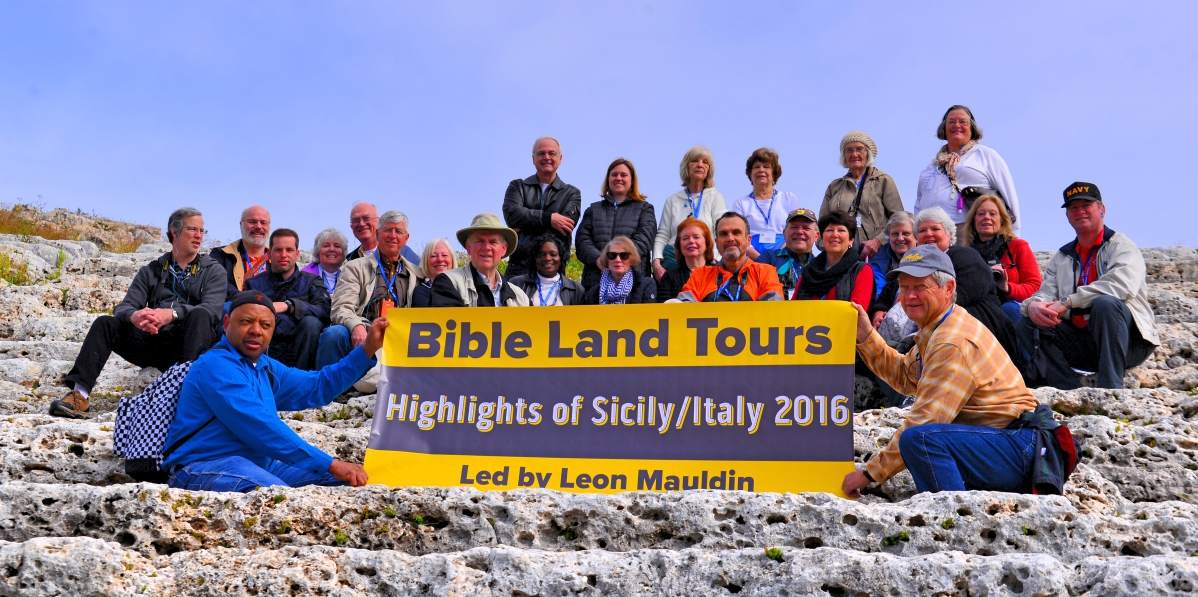
Yesterday (Saturday) we visited the archaeological sites Syracuse, Sicily, and from there went on to Mt. Etna (Europe’s most active volcano), and then to Taromina. While at the Greek theater at Syracuse we took this group photo.

Group photo at Greek Theater at Syracuse, Sicily. Photo by David Deason.

Group photo at Greek Theater at Syracuse, Sicily. Photo by David Deason.

This theater was built in the 5th century BC.

The city of Syracuse was founded in 733 BC by Greek settlers from Corinth. Some names associated with Syracuse include Aeschylus, considered the father of the Greek tragedy. The philosopher Plato was in Syracuse. Syracuse was the birthplace of Archimedes, the famous mathematician and most influential scientist of the ancient world.

But actually none of those names brought us to this ancient site; rather it was its biblical mention in connection with Paul’s journey (as a prisoner) to Rome. Of that point in the journey Luke writes, “And landing at Syracuse, we stayed three days” (Acts 28:12).


2014 in review

December 30, 2014

The WordPress.com stats helper monkeys prepared a 2014 annual report for this blog.

Here’s an excerpt:

The concert hall at the Sydney Opera House holds 2,700 people. This blog was viewed about 49,000 times in 2014. If it were a concert at Sydney Opera House, it would take about 18 sold-out performances for that many people to see it.

Click here to see the complete report.