Bethany

February 23, 2011

Bethany is designated as the home of Jesus’ good friends Mary, Martha and Lazarus (John 11:1). When Lazarus was sick Jesus deliberately waited until his death, that he might raise Lazarus from the dead, thus demonstrating that He is the “Resurrection and the Life” (John 11:25). Modern Bethany can be seen in our photo:
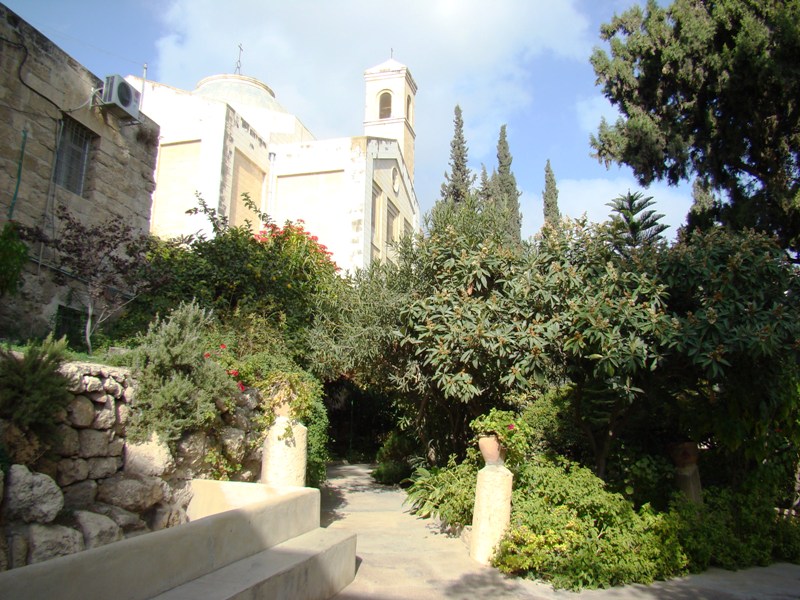
Bethany, home of Jesus' friends Mary, Martha and Lazarus. Photo by Leon Mauldin.

There is a tomb shown at Bethany which is said to be Lazarus’ tomb. To me the value of such is for illustration purposes, and not to identify this as the actual tomb of Lazarus.
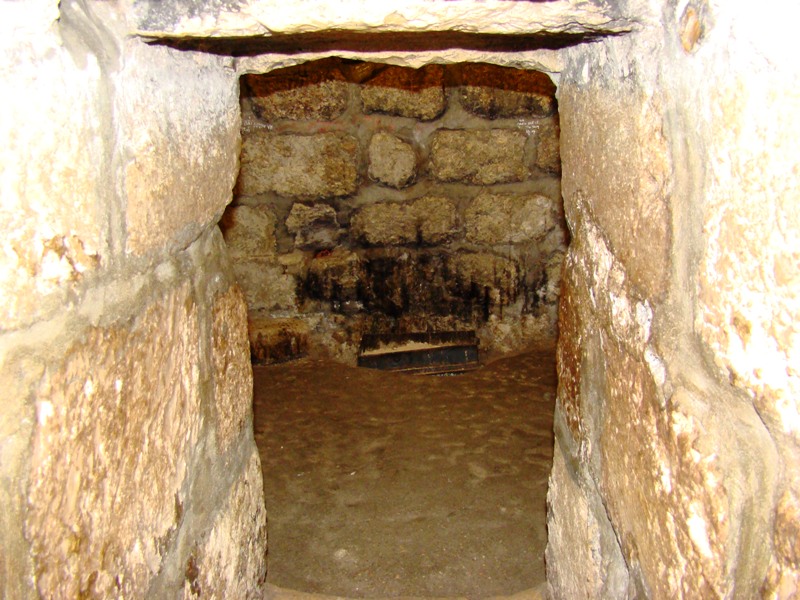
"Lazarus' Tomb." Photo by Leon Mauldin.

It was from Bethany and nearby Bethphage that Jesus entered Jerusalem, riding on a donkey in what is knows at the Triumphal Entry, fulfilling the prophecy of Zechariah 9:9.

Bethany was the scene of Jesus’ being anointed with the precious ointment in anticipation of His death, Matt. 26:6ff. We learn from the parallel in John 12 that the woman was Mary, sister of Martha and Lazarus.
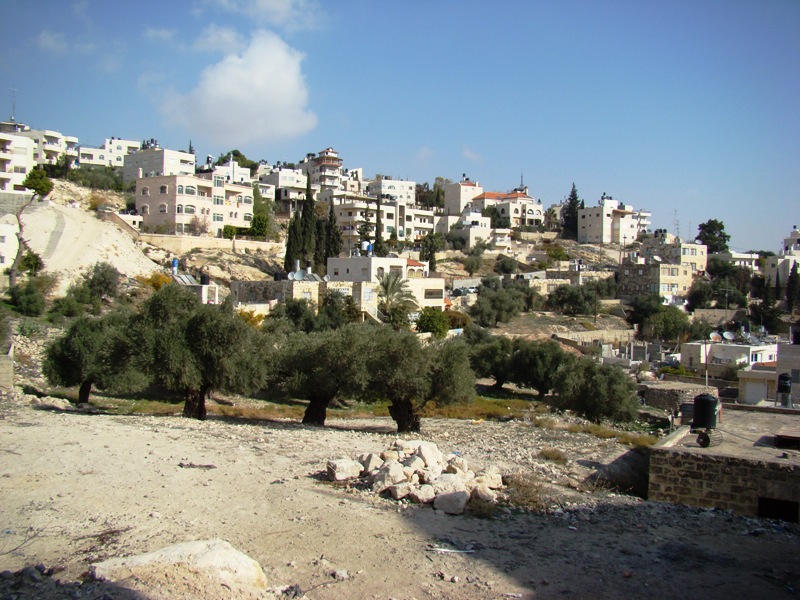
 

Bethany. Photo by Leon Mauldin.

It was also from Bethany, which is on the slope of the Mount of Olives, that Jesus ascended back into heaven: And He led them out as far as Bethany, and He lifted up His hands and blessed them. Now it came to pass, while He blessed them, that He was parted from them and carried up into heaven. And they worshiped Him, and returned to Jerusalem with great joy, and were continually in the temple praising and blessing God. Amen (Lk. 24:50-53).
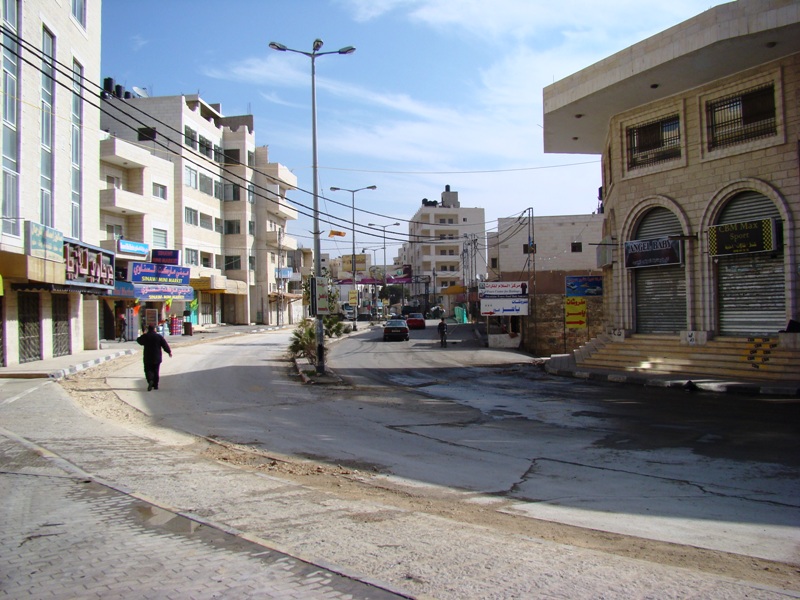
Street in Bethany. Photo by Leon Mauldin.

Click on images for higher resolution.


Beersheba, cont’d.

February 16, 2011

Beersheba was to become the chief city of the Negev. Unfortunately it would also become a center for idolatrous activity. When the 8th century BC prophet Amos cried out against idolatrous cities he warned, “But do not seek Bethel, nor enter Gilgal, nor pass over to Beersheba, for Gilgal shall surely go into captivity, and Bethel shall come to nothing” (Amos 5:5). Instead, “Seek the LORD and live” (v.6).

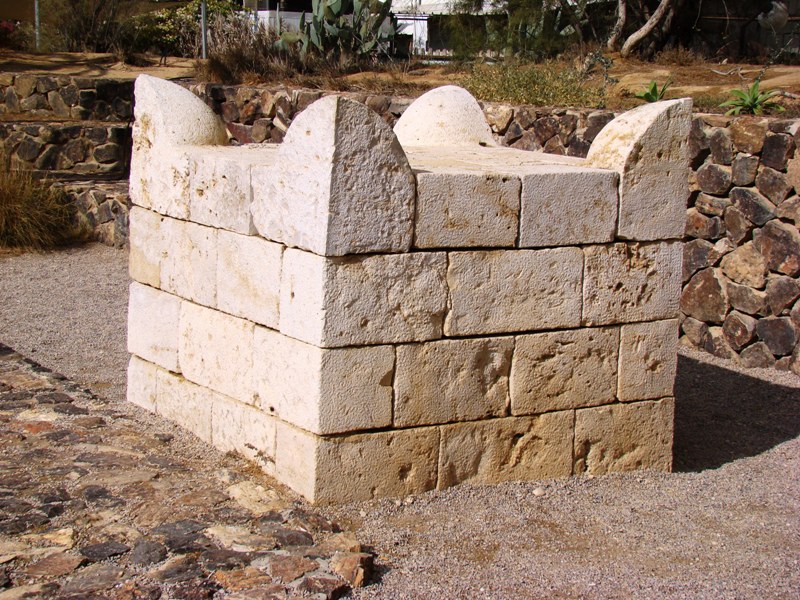
Altar at Beersheba. Photo by Leon Mauldin

Our photo shows a replica of an altar discovered in Beersheba; the original was broken in pieces. Many believe the destruction of the altar here may have been during the reformation by good king Hezekiah.

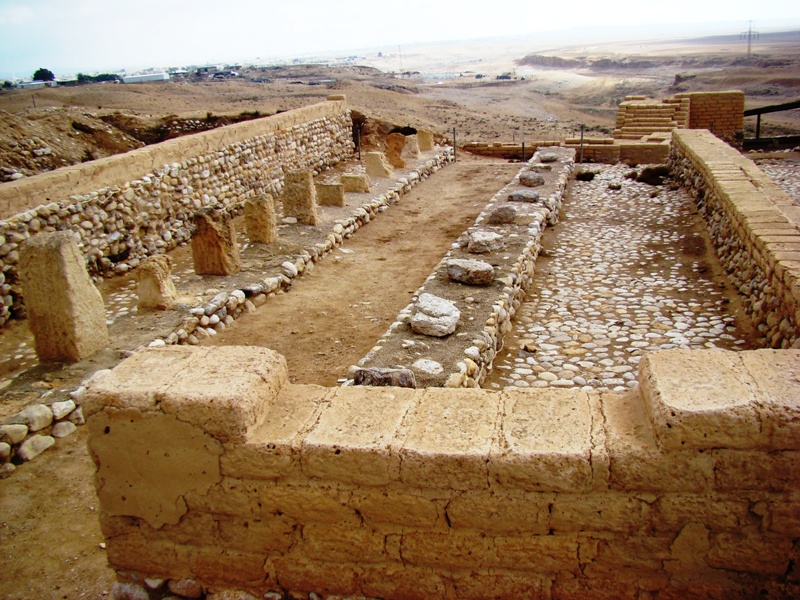
Beersheba is a small tel, comprising only about three acres. A good deal of excavation has been done. Our photo below shows what many believe to be storage room; others believe this to have been stables.

Storage rooms or possibly stables at Beersheba. Photo by Leon Mauldin.

View is to the southeast. Remember to click on photos for higher resolution.


Temple of Zeus, Athens

February 1, 2011

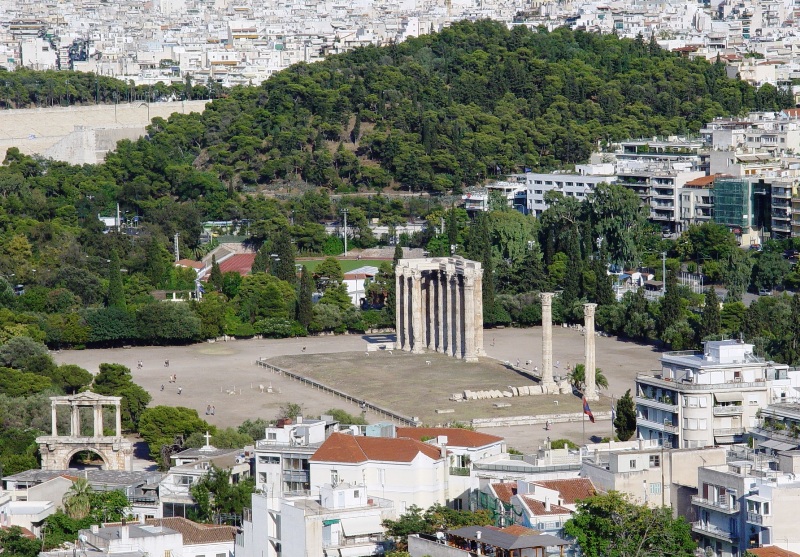
The Temple of Zeus in Athens is located southeast of the Acropolis.

Temple of Zeus in Athens. Photo by Leon Mauldin

Wikipedia has the following general info:

The temple of Olympian Zeus . . . is a colossal ruined temple in the centre of the Greek capital Athens that was dedicated to Zeus, king of the Olympian gods. Construction began in the 6th century BC during the rule of the Athenian tyrants, who envisaged building the greatest temple in the ancient world, but it was not completed until the reign of the Roman Emperor Hadrian in the 2nd century AD some 638 years after the project had begun. During the Roman periods it was renowned as the largest temple in Greece and housed one of the largest cult statues in the ancient world.

Originally there were 104 Corinthian columns. Today 15 of those remain standing. A 16th column can be seen lying on the ground.

In the early 1800s a stylite made his dwelling on the top of one of the columns. The Greek word for column is stylos; the stylites were ascetics who spent long periods (sometimes years) on the tops of columns.

In the NT book of Acts, when Paul was preaching at Lystra, he healed a lame man. The pagan residents thought the gods had come down in human form. “They began to call Barnabas Zeus and Paul Hermes, because he was the chief speaker. The priest of the temple of Zeus, located just outside the city, brought bulls and garlands to the city gates; he and the crowds wanted to offer sacrifices to them” (Acts 14:12-13). Paul and Barnabas were just barely able to persuade them not to do so.

Right after that, Jews came from Pisidian Antioch, and persuaded those same residents of Lystra to stone Paul and drag him out of the city! (Acts 14:19).

Click on image for higher resolution.


At Athens, Gate of Athena Archegetis

January 25, 2011

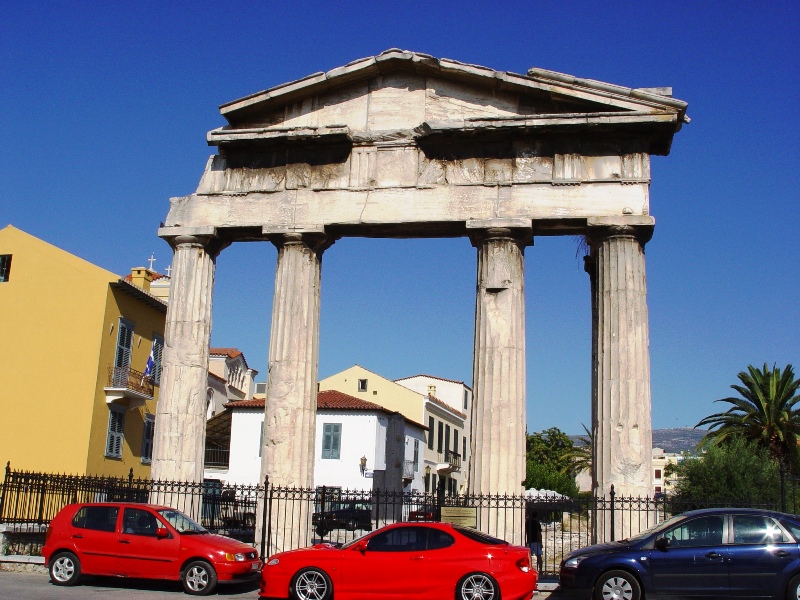
Situated on the west side of the agora in Athens is the Roman forum Gate of Athena. It was constructed in 11 BC. It has four Doric columns, with a base of Pentelic marble. According to the inscription on the architrave, the gate was dedicated by the Athenians to their patroness Athena Archegetis with funding by Julius Caesar and later Augustus.

Gate of Athena Archegetis in Athens. Photo by Leon Mauldin.

It is amazing to see ancient ruins surrounded by modern buildings, not to mention the vehicles!


Stoa of Attalus at Athens

January 20, 2011

Paul sent word for his traveling companions Silas and Timothy at Beroea to join him “as soon as possible” at Athens (Acts 17:15). Meanwhile, as Paul waited for them, he made effective use of the time. Acts 17:16,17 states,

Now while Paul was waiting for them at Athens, his spirit was being provoked within him as he was observing the city full of idols. So he was reasoning in the synagogue with the Jews and the God-fearing Gentiles, and in the market place every day with those who happened to be present.

Note that Paul reasoned in the market place those who happened to be present. The market place, or agora, was the civil center of Athens. This would have included the Stoa (porch), a colonnaded structure on the east side of the market place.  Social, political, legal meetings and religious and philosophical discussions took place there. Paul made use of this setting as an opportunity to teach and reason about the true God, and His will for all men.

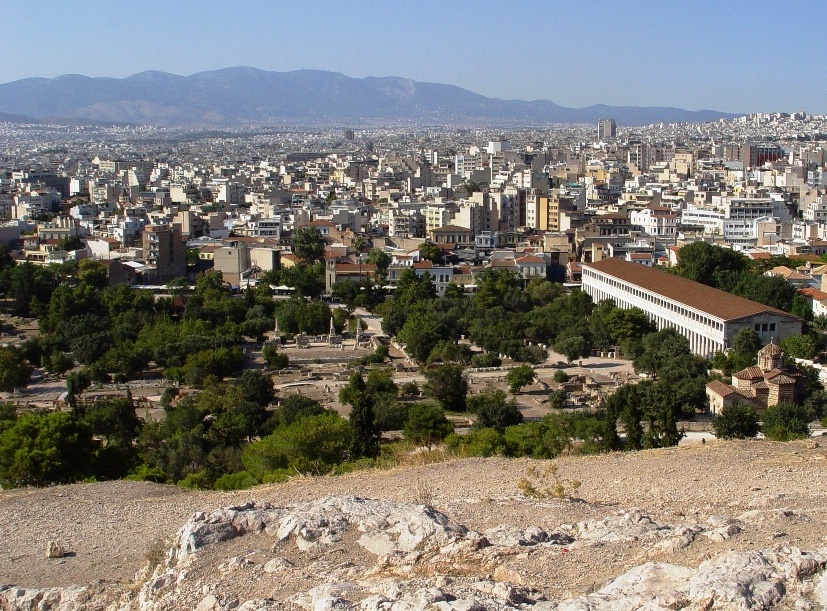
Stoa of Attalos and Market Place (Agora) from the Areopagus. Photo by Leon Mauldin.

In our photo, taken from the Areopagos (Mars Hill) you can see the Stoa of Attalos at right center.  The ancient agora sprawled to your left. This gives the geographical context to Paul’s discussions in the Athenian marketplace, with “those who happened to be present.”

Attalos II was king of Pergamum 159-138 BC. It was he who first built the Stoa.

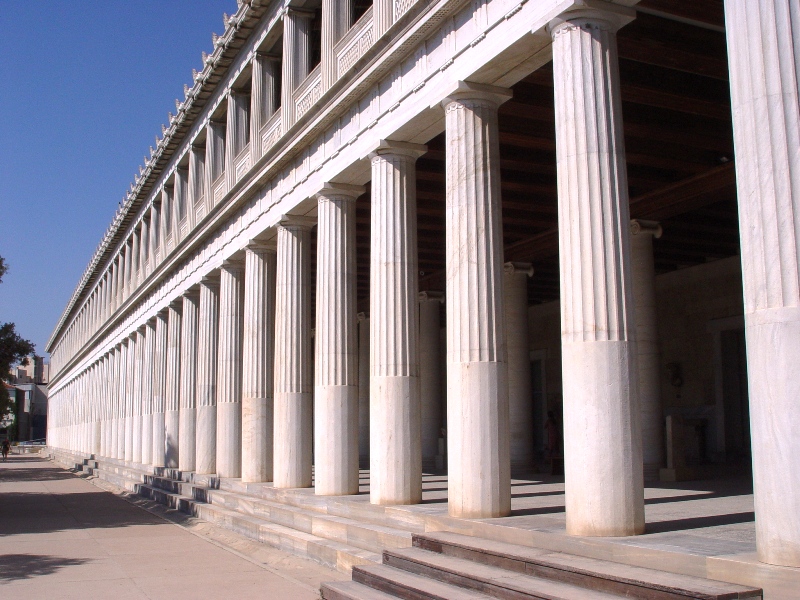
Stoa of Attalos. Consisted of two stories. Photo Leon Mauldin.


The Stoa was 385 feet in length and consisted of two stories. It housed 21 shops on each floor. Again, this would have been the site for Athenians to meet, walk, and to do business.

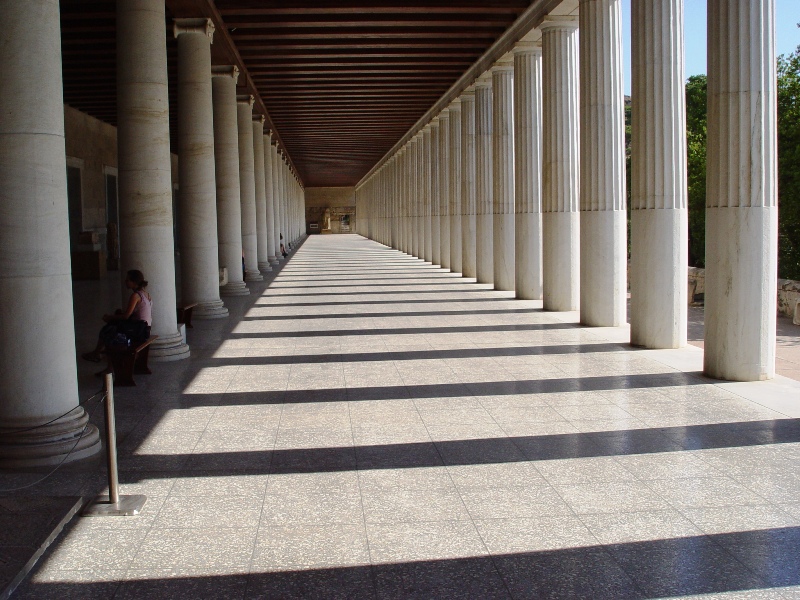
Stoa of Attalos at Athens. Photo by Leon Mauldin.

Here is a view of the Stoa showing first floor level. Restoration of the Stoa was carried out in 1953-1956 by the American school of Classical Studies with the financial support of John D. Rockefeller, Jr.

Click on images for higher resolution.


The Erechtheion in Athens

January 18, 2011

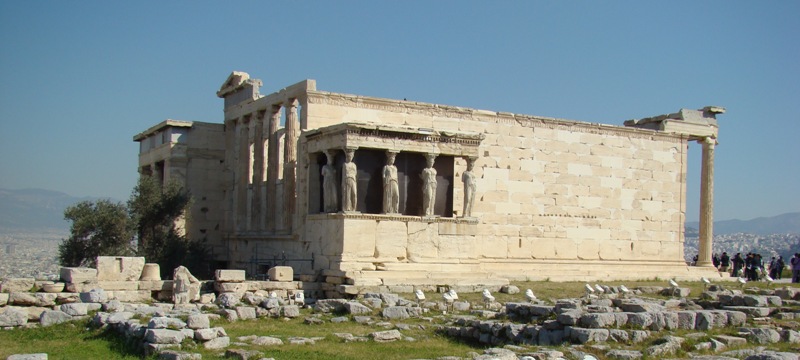
Among the important ruins situated upon the acropolis in Athens is the Erechtheion, a unique sanctuary dedicated to Athena Polias; Poseidon and Erechtheus were worshiped here.

Erechtheion at Athens. Photo by Leon Mauldin.

This view shows the Porch of the Kayatids, which used female figures as architectural supports as columns. These figures are a representation of the “Maidens of Karyai,” an ancient town of Peloponnese. The structure dates to the 5th century BC.

Below is a close up view:

Close-up of Porch of the Maidens. Photo by Leon Mauldin.

These maidens are actually replicas. The originals are encased in glass in the museum.

More to come.  Click on image for higher resolution.


The Parthenon in Athens

January 17, 2011

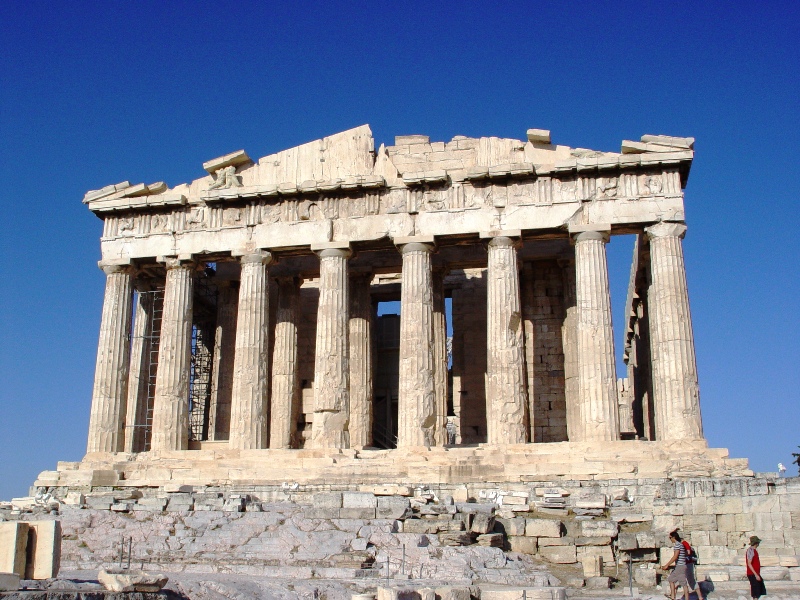
Our previous post referenced the Apostle Paul’s preaching in Athens as recorded in Acts 17:16-34. Up from the Areopagus was the Parthenon. The Parthenon was the temple devoted to the virgin Greek goddess Athena, of Greek mythology, goddess of wisdom and the arts.

The Parthenon in Athens. Photo by Leon Mauldin.


This temple was constructed with eight Doric columns in front and rear, and seventeen along each side. Within the Parthenon stood a thirty-four feet high statue of Athena, built by the sculptor Pheidias. It was made of wood with ivory additions and a plating of gold.

The city of Athens was said to be “full of idols,” (Acts 17:16), but it may well be that Paul had in mind especially the nearby Parthenon when he proclaimed,

The God who made the world and everything in it is the Lord of heaven and earth and does not live in temples built by hands. Nor is He worshiped with men’s hands, as though He needed anything, since He gives to all life, breath, and all things.

He went on to say in v. 29,

Therefore, since we are the offspring of God, we ought not to think that the Divine Nature is like gold or silver or stone, something shaped by art and man’s devising.

We plan to continue with more of the sites in Athens.

My friend & fellow-worker Ferrell Jenkins is currently directing a tour in Egypt. To keep up with their travels, and see the photos to be posted, see Ferrell’s Travel Blog. Link is provided to your right under Blogroll.

Remember to click on image for higher resolution.


The Areopagus in Athens

January 14, 2011

On Paul’s 2nd Missionary Journey, he taught the Gospel at Athens, reasoning with those in the synagogues as well as in the market place. Acts 18:18-20 tells us of another teaching opportunity that arose:

Then certain Epicurean and Stoic philosophers encountered him. And some said, “What does this babbler want to say?” Others said, “He seems to be a proclaimer of foreign gods,” because he preached to them Jesus and the resurrection.  And they took him and brought him to the Areopagus, saying, “May we know what this new doctrine is of which you speak?  “For you are bringing some strange things to our ears. Therefore we want to know what these things mean.”

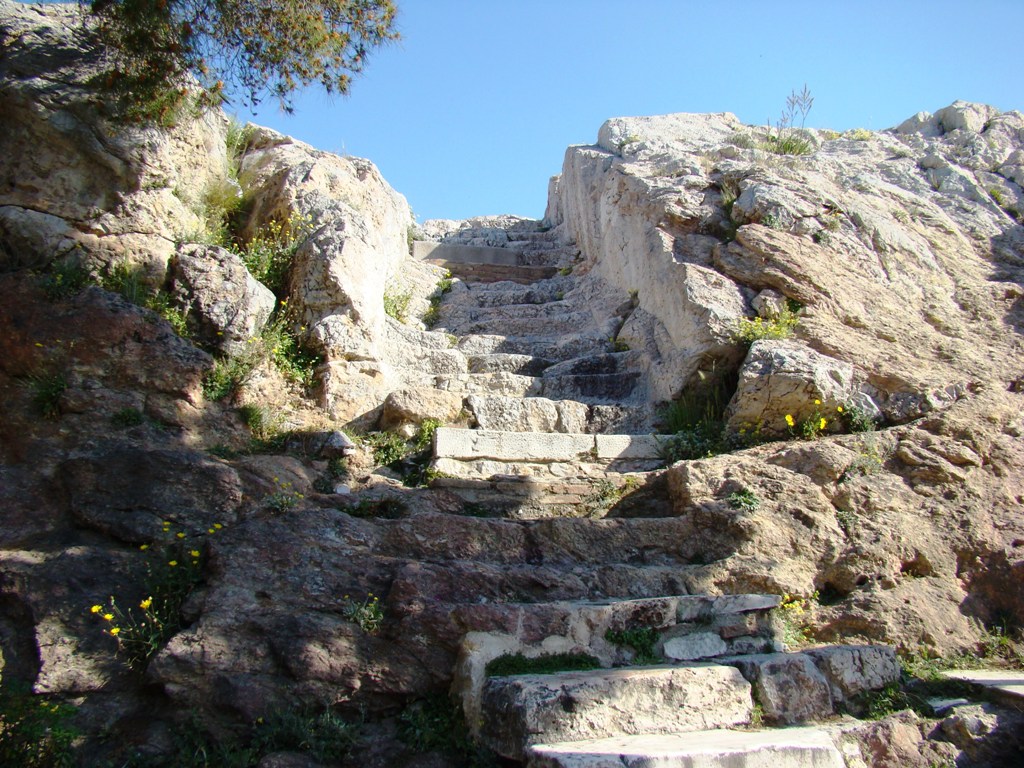
The word Areopagus means “Rock of Ares.” Ares is the the Greek god of war. Pagos is “rock.” The word Areopagus is used both with reference to the ruling council of Athens, as well as the place where the council met. Our photo shows the steps leading up to the Areopagus.

Steps leading up the the Areopagus in Athens. Photo by Leon Mauldin.

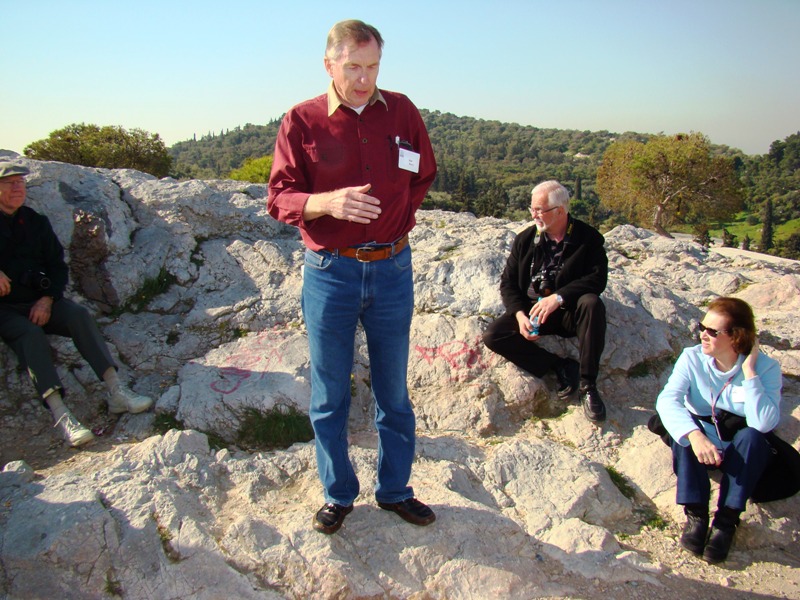
The Areopagus is also called “Mars Hill.” Mars was the Roman god of war. Photo below shows a few of my group on the top of the Areopagus. Bob Berry, center, quoted Paul’s sermon preached here (Acts 17).

Areopagus. A few of our 2010 tour group. Photo by Leon Mauldin.

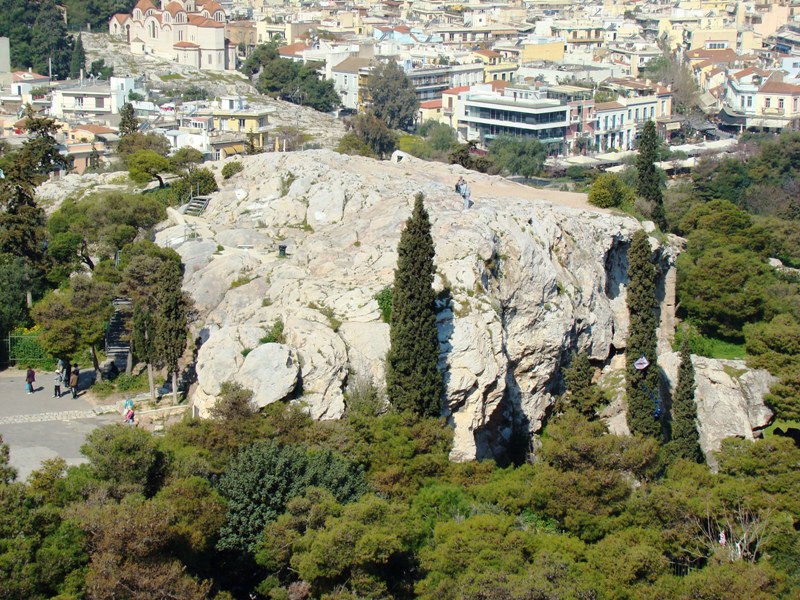
The Areopagus is composed of marble.  It is worn quite slick in places, so be careful of your footing if you have the occasion to visit.

Areopagus in Athens. Photo by Leon Mauldin.

The shot above was taken from near the Parthenon.

Click on images for higher resolution.


Thutmose III City Lists

January 11, 2011

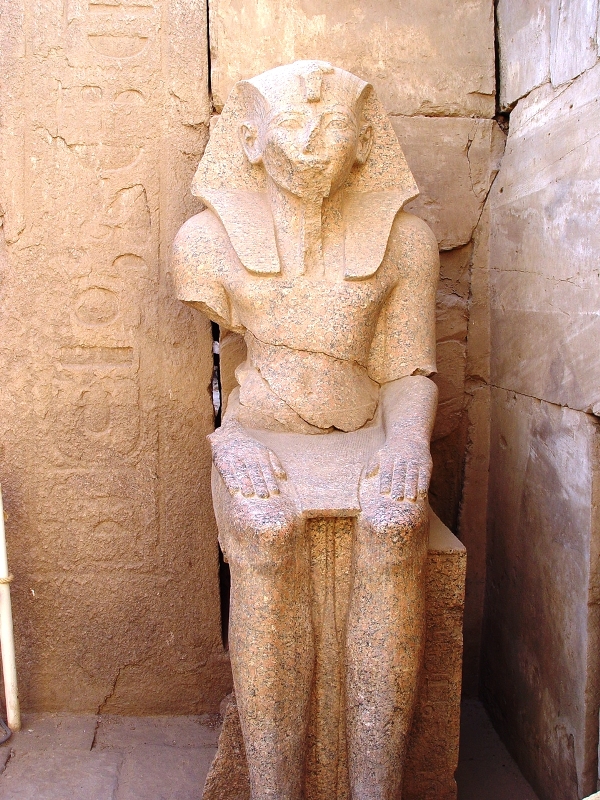
Thutmose III (ca. 1504-1450 BC) was a Pharaoh of the 18 dynasty. He was a powerful ruler who received tribute from as far away as Mesopotamia.

Thutmose III, seated by city list in Karnak. Photo by Leon Mauldin.

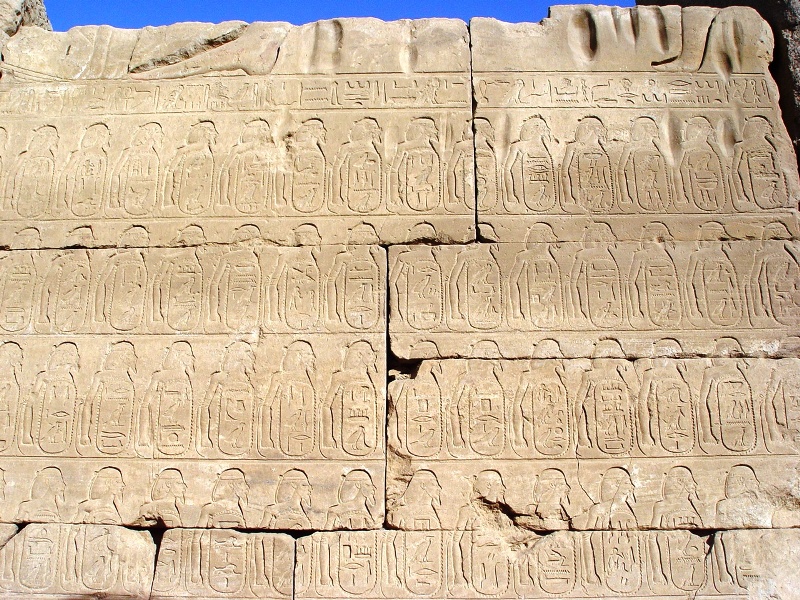
At Karnak in Egypt, Thutmose III left his listing of cities that he conquered in the Levant. Egyptian hieroglyphics list 119 place names in Canaan, Transjordan, Lebanon and Syria. Princes are depicted with hands tied behind their backs.  The rulers shown were trapped in Megiddo; when Thutmose III took the city after a seven month siege, he said it was the “capture of a thousand cities.”

Thutmose III City List. Canaanite princes were captured. Photo by Leon Mauldin.

Click on images for higher resolution.


Corinth, cont’d.

January 6, 2011

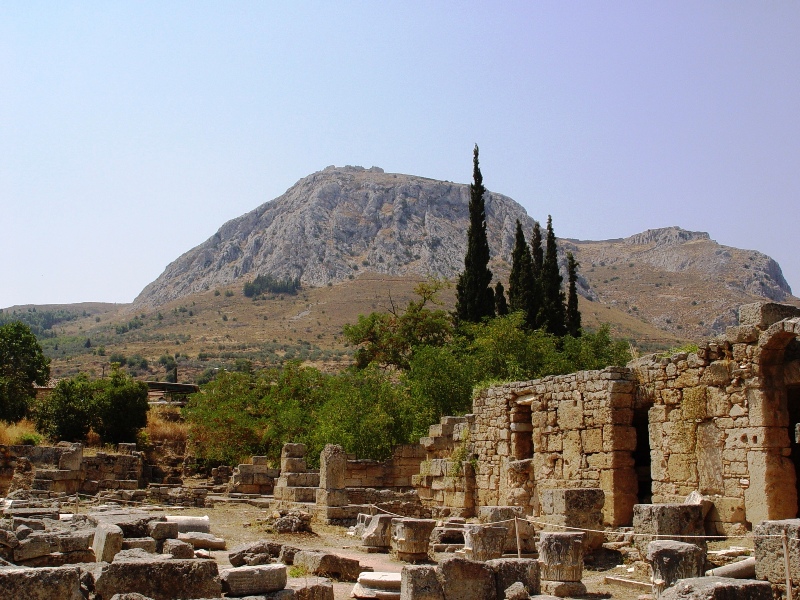
Acts 18:11 informs us that Paul remained in Corinth for a year and six months; in v. 18 we are informed that “Paul still remained a good while.” This was during Paul’s 2nd Missionary Journey. Paul was a tent maker, as were his fellow-workers, Aquila and Priscilla, that great husband-wife team (Acts 18:3). Our photo below features the ruins of some of the many shops that were in ancient Corinth.  It is not difficult to imagine these biblical characters working in one of these locations.

Shops at Corinth. Acrocorinth in background. Photo by Leon Mauldin.

The Acrocorinth is in the background. We have referenced this in some of the previous posts.

Of course during Paul’s stay at Corinth here his purpose was that of preaching the Gospel (Acts 18:11).  But he worked at his trade to help with the necessary financial support. Incidentally, these structures shown in our photo were the west shops of the city.

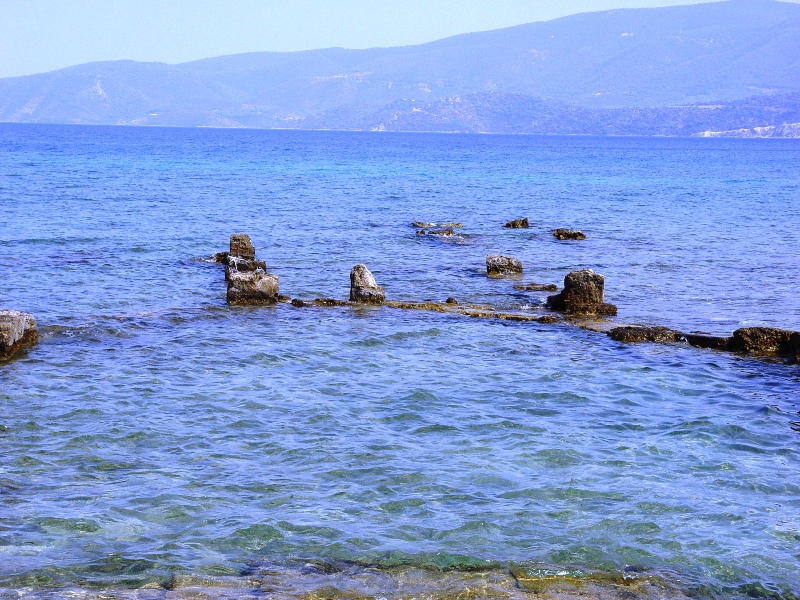
When Paul left Corinth, Aquila and Priscilla traveled with him, accompanying him as far as Ephesus, while Paul journeyed on to Jerusalem. We learn in Acts 18:18 that in their departure from Corinth they used the port of Cenchrea, shown in our photo below.

Cenchrea, Corinth's seaport. Photo by Leon Mauldin.

We learn from Romans 16:1 that there was a congregation of Christians there, as Paul makes special mention and recommendation of Phoebe, “a servant of the church in Cenchrea.” It was at this time during Paul’s 3rd Missionary Journey that he wrote the Christians at Rome from Corinth.  As Phoebe was traveling there to Rome, Paul asked, “that you may receive her in the Lord in a manner worthy of the saints, and assist her in whatever business she has need of you; for indeed she has been a helper of many and of myself also” (Romans 16:2).

The landscape in our Cenchrea photo would be what Christians such as Phoebe would have seen, as well as Paul and his companions.