Sardis is the fifth of the seven churches addressed by Jesus through the Apostle John, while John was on the Island of Patmos. In summary, Jesus’ assessment of the church there was, “I know your works, that you have a name that you are alive, but you are dead” (Rev. 3:2).
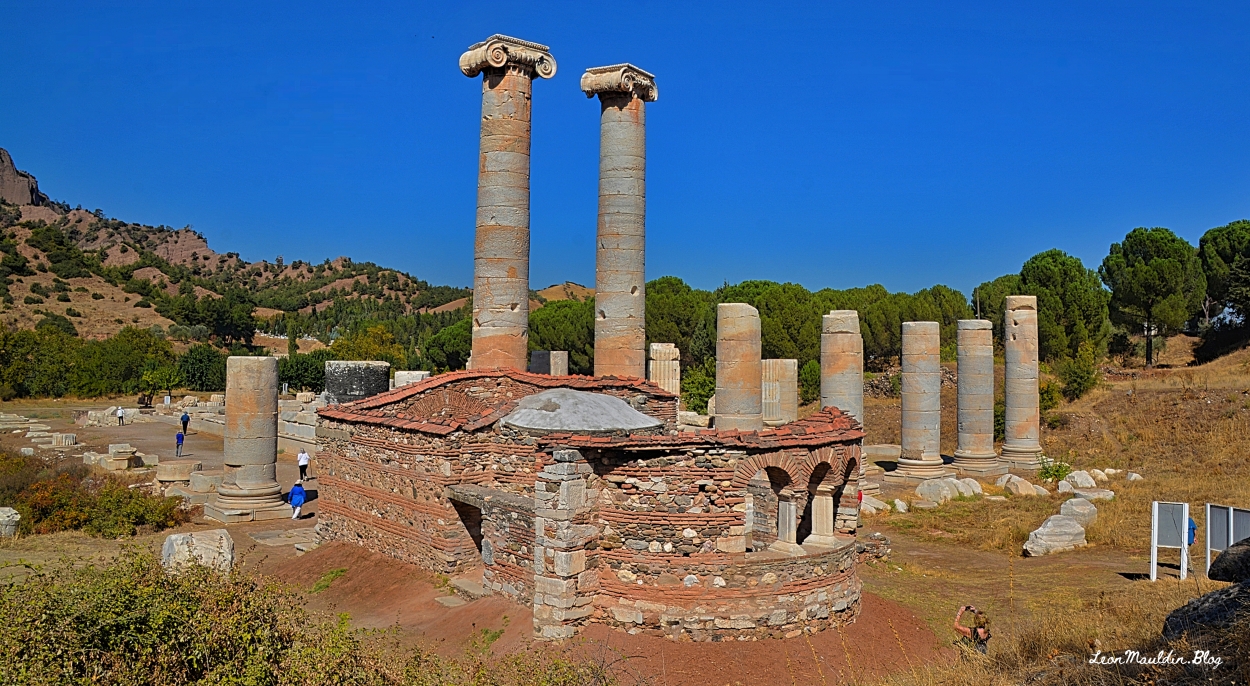
Archaeologists have uncovered and identified many structures and other items of interest at Sardis, including a Byzantine chapel in the southeast corner of the temple of Artemis.
Dr. Mark Wilson writes, “The inner western chapel dates to the 4C [4th century AD] and is one of the earliest preserved churches in western Asia Minor; the larger, outer apse dates to the 6C” (Biblical Turkey, A Guide to the cJewish and Christain sites of Asia Minor, p. 291).
The temple of Artemis, whose partial ruins are in view here, would have been in use when those Christians of the 1st century AD at Sardis received the letter (Rev. 3:1-6). It’s hard to overemphasize how pervasive idolatry was in the biblical world!
We have previously posted several articles on Sardis: click hereherehere and here.
Our preaching theme for January in our local congregation is a study of the Seven Churches of Asia (Rev. 2-3). I’m looking forward to this study. Ephesus is the first of the cities addressed (Rev. 2:1-7).
It is helpful to understand somewhat of the local conditions in which these 1st Century Christians lived. Ephesus was the city which featured the temple to the goddess Artemis (Diana), which at that time was one of the Seven Wonders of the World.
Here is a model of the temple which is housed in the museum at Ephesus:
Our special interest in our recent trip to Malta was the biblical record of Paul’s shipwreck there. (Paul was a prisoner on his way to Rome for trial). They wintered on the island (there were 276 passengers on the ship) and then from there went on to Rome (Acts 28). See our previous post here, “Saint Paul’s Bay at Malta.”
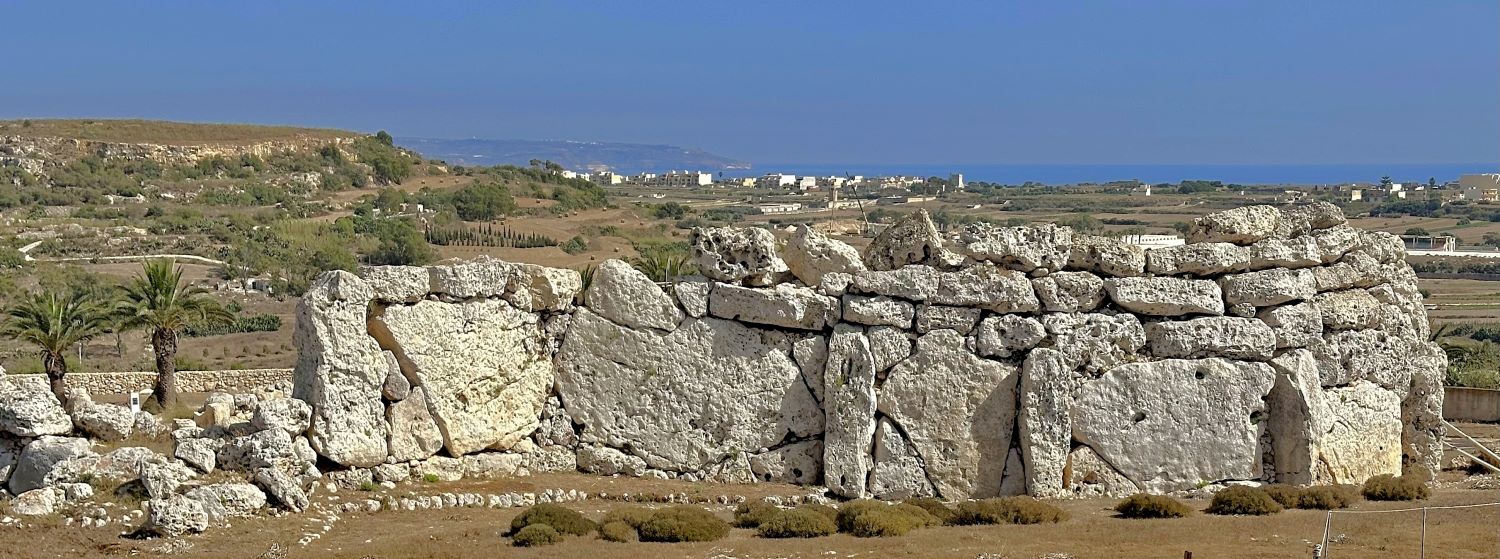
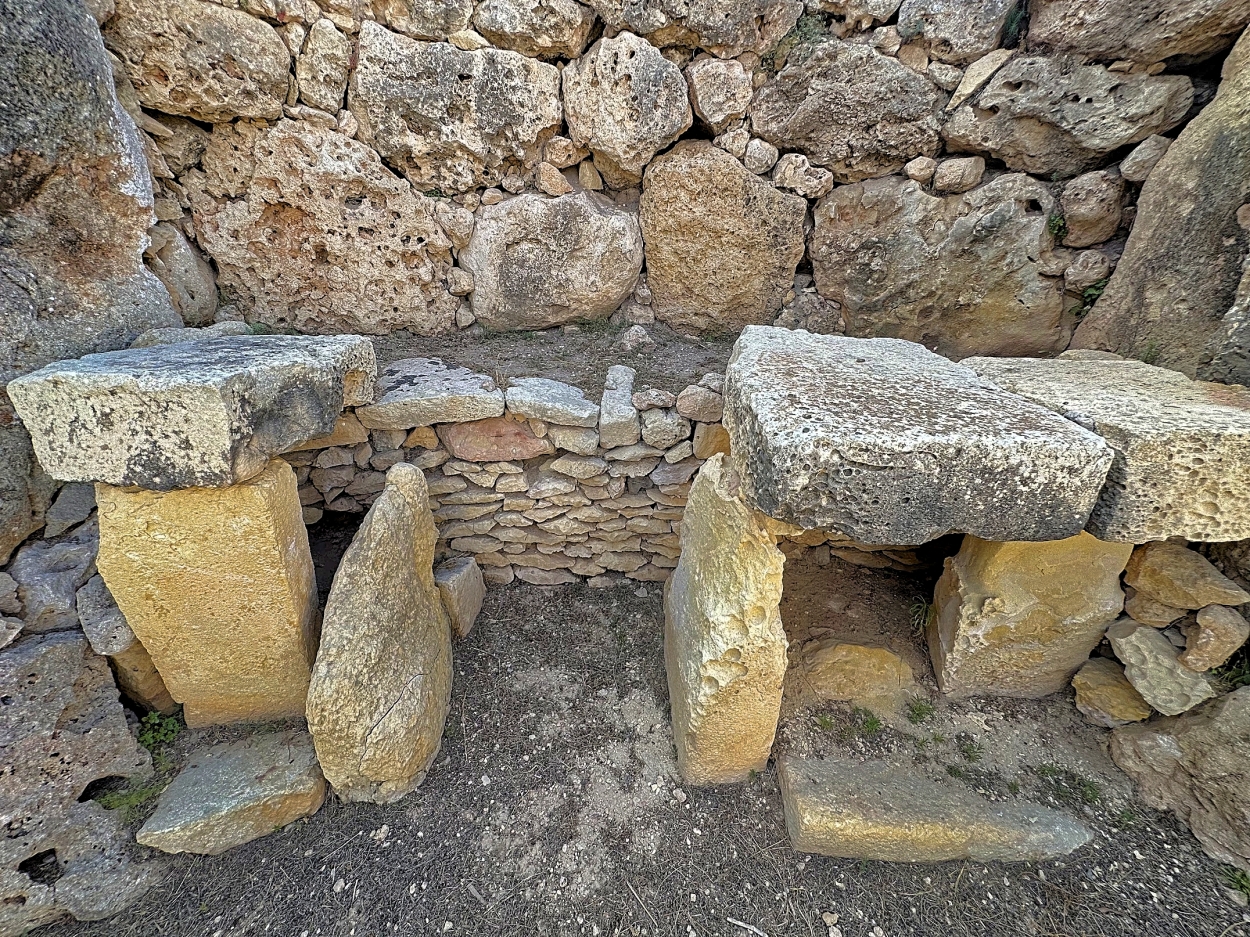
There are many other historical and archaeological sites to visit at Malta (which consists of three islands: Malta, the largest, Comino, and Gozo). At Gozo we visited the Ġgantija temples, two temples enclosed within one boundary wall. One is composed of five apses (the southern temple), the other has four. Here is the view as one approaches (note the Mediterranean Sea in the distance):
The Ġgantija temples, as well as other Maltese temples, date back to the Bronze Age (with some scholars dating the older building phase at c. 3500 BC). They are considered to be the oldest free-standing stone buildings in the world, predating the pyramids!
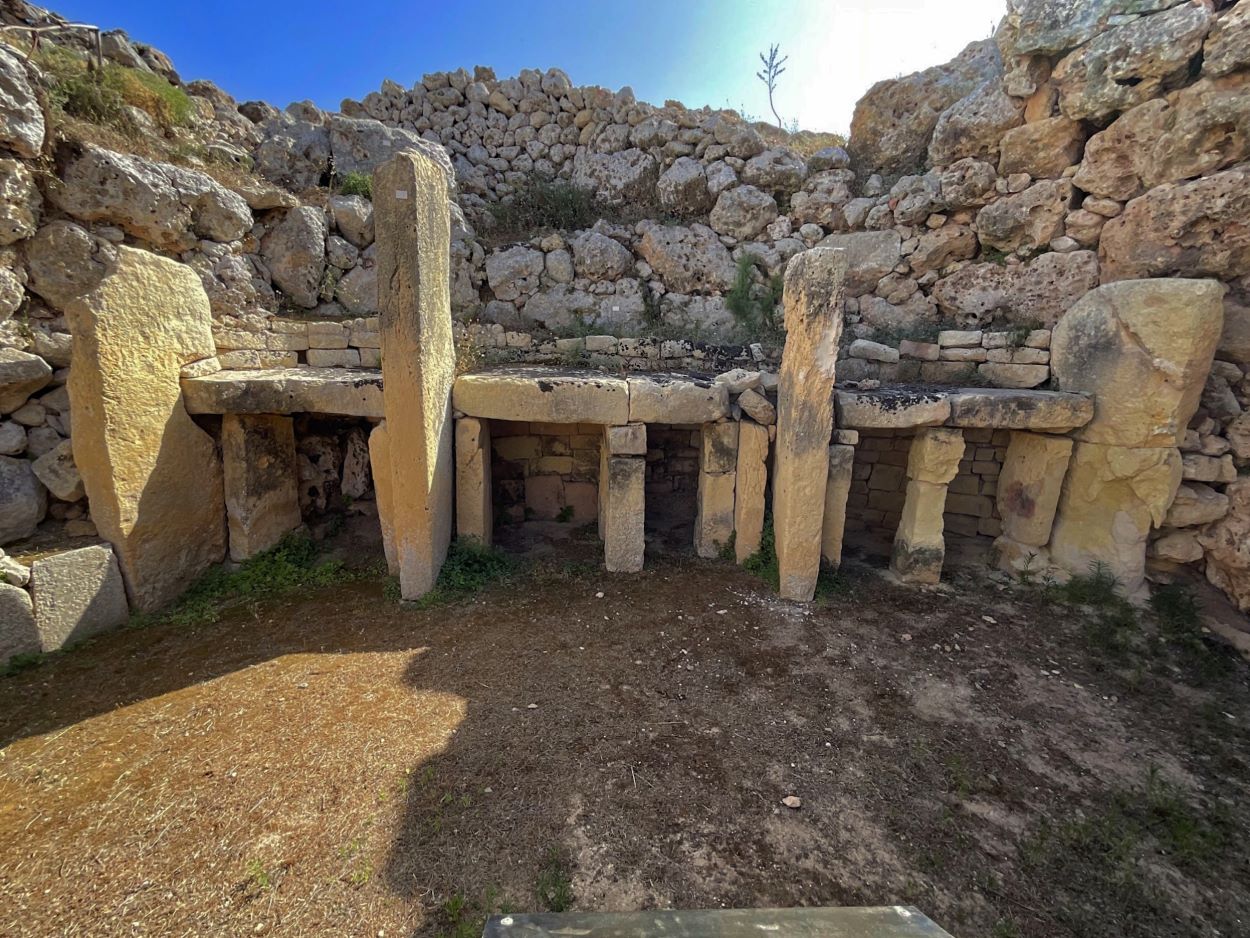
There is the inner left apse of the south temple. It has one of the most complex altars, consisting of three trilithons between four uprights.
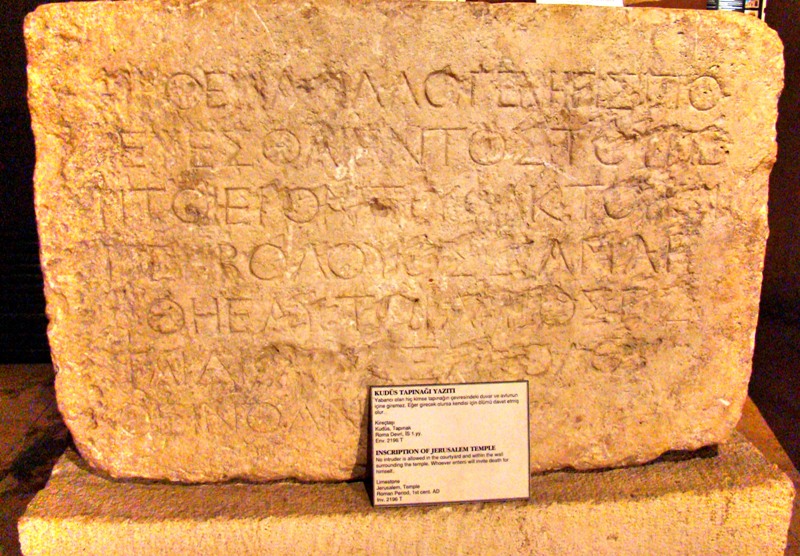
Some biblical texts are especially illuminated by archaeological finds. For example, Acts 21:28 records the false charge against Paul, “He also brought Greeks into the temple and has defiled this holy place” (v.28). The next verse shows this they “supposed” (NET “assumed). Ephesians 2:14 speaks of Jesus’ death breaking down “the middle wall of separation” between Jews and Gentiles.
Temple Inscription Fragment. Israel Museum. Photo by Leon Mauldin.
Our photo shows one of the warnings posted marking the boundary within the temple complex beyond which no Gentile could proceed. The inscription read, “NO FOREIGNER IS TO GO BEYOND THE BALUSTRADE AND THE PLAZA OF THE TEMPLE ZONE. WHOEVER IS CAUGHT DOING SO WILL HAVE HIMSELF TO BLAME FOR HIS DEATH WHICH WILL FOLLOW.” I took this photo earlier this month in the Israel Museum.
A complete tablet is housed in the Istanbul Museum, as seen in our photo here:
Complete Temple Inscription. Istanbul Archaeology Museum. Photo by Leon Mauldin.
So the Acts 21 text means that Paul was charged with taking a Gentile beyond the balustrade marked off by signs just like thsee.
The Ephesians 2 text shows that with Jesus’ death on the cross, reconciliation is made possible between men (Jew and Gentile) and God, and those reconciled unto God are reconciled to each other. The reconciled are in one body (the church, Eph. 1:22-23). That distinction epitomized by the wall of separation, and reflected by these warning signs, has been removed!
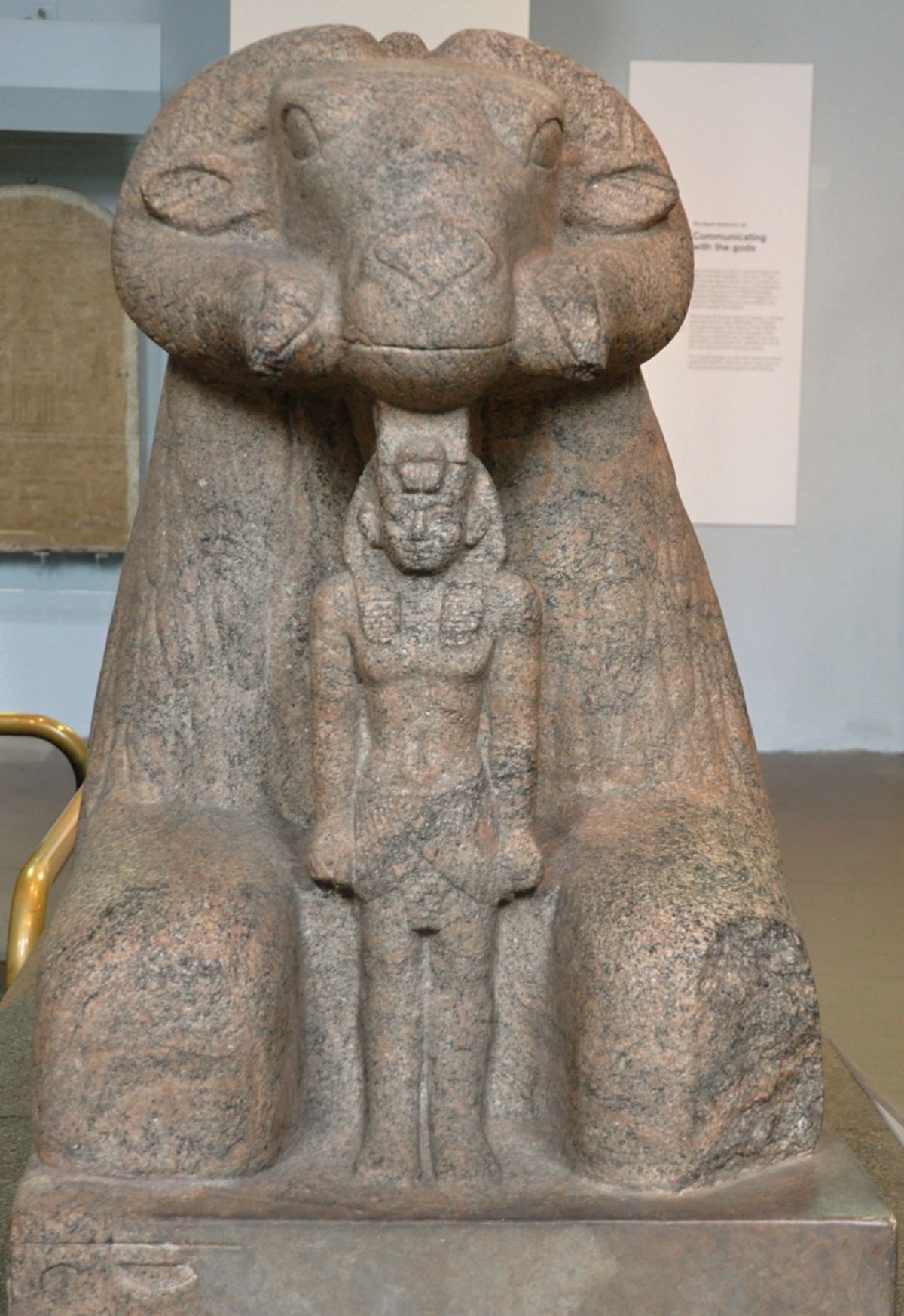
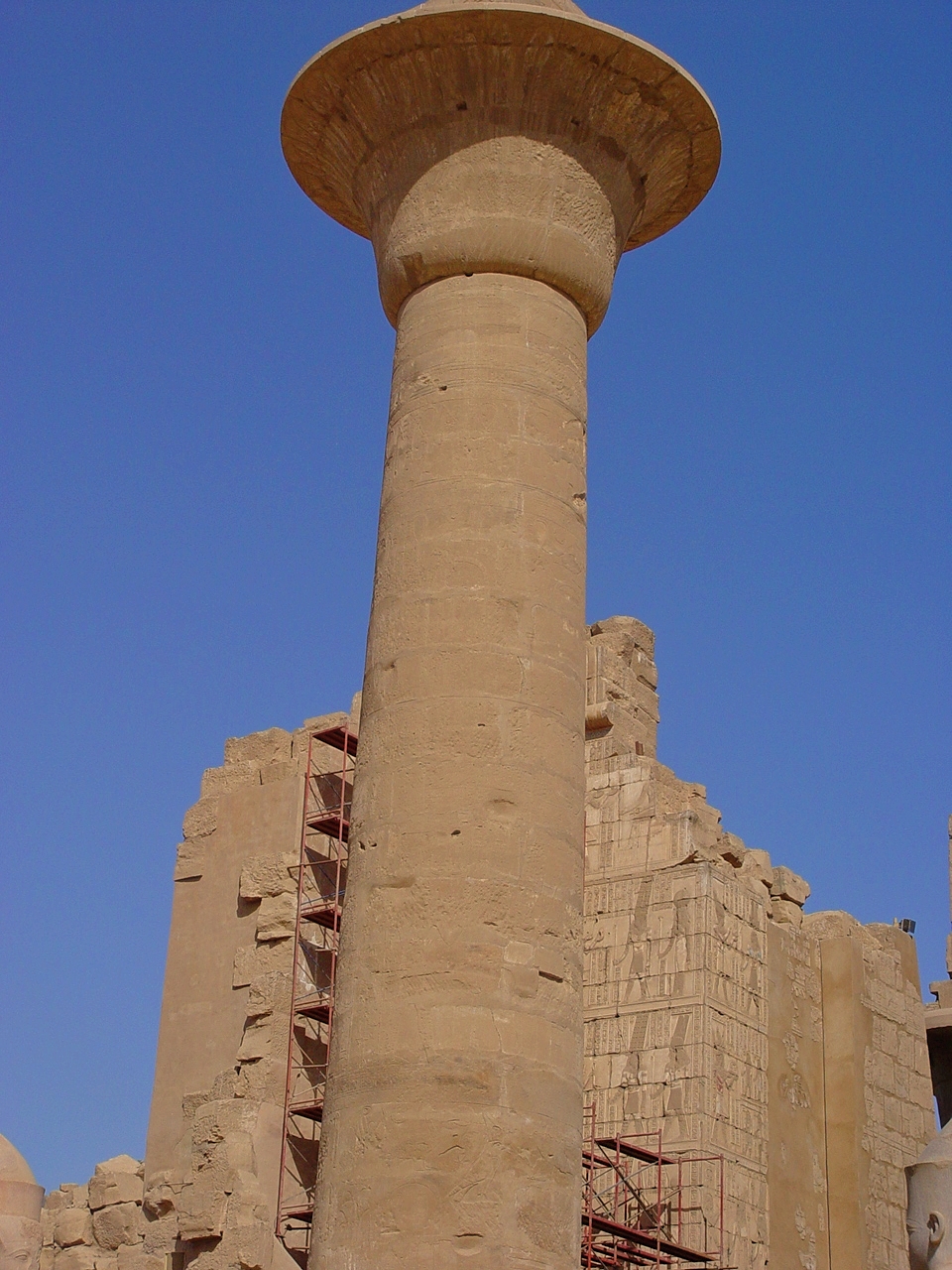
Tirhakah (Taharqa/Taharka) is mentioned in the context of the mighty Assyrian King Sennacherib’s attempt to take Judah’s capitol city of Jerusalem, 701 BC, during good King Hezekiah’s reign. The biblical text reads, “Now the king heard concerning Tirhakah king of Cush, ‘Behold, he has set out to fight against you.’ So he sent messengers again to Hezekiah, saying,” (2 Kings 19:9; cf. the parallel in Isa. 37:9).
The background is that Sennacherib (r. 705-681 BC) had already taken “all the fortified cities of Judah” (2 Kings 18:13). In fact, Assyrian records state that he had taken 46 fortified cities, besides unwalled towns and villages. In the context of our passage above that mentions Tirhakah, the fortress city of Lachish had been taken (cf. the displays in Lachish Room in the British Museum), and Assyrian was fighting against Libnah (2 Kings 19:8). It was at that point that Sennacherib “heard concerning Tirhakah.”
In some translations (i.e., NKJV) Tirhakah is said to be king of Ethiopia. “Ethiopia” here refers to southern Egypt, and is rendered Cush in CSB, ESV, NASB (Hebrew is כּוּשׁ, transliterated kûš). At the time of the battle (701 BC), Tirhakah was the commander of the Egyptian forces. He would later become Pharaoh (25th dynasty; r. 690-664 BC). Note: “Ancient Oriental writers, as well as modern, frequently referred to persons by titles acquired later than the period being described (K. A. Kitchen, Ancient Orient and Old Testament, Chicago: Inter-Varsity, 1966, pp. 82–84).” (Source: C. F. Pfeiffer, H. F. Vos, & J. Rea (Eds.), The Wycliffe Bible Encyclopedia. Moody Press.).
Todd Bolen states,
Tirhakah meets the Assyrians in battle at Eltekeh, possibly modern Tell esh-Shallaf, 28 miles (45 kilometers) west of Jerusalem. It is not clear if Judah had sent tribute to Egypt in order to gain assistance or if the Egyptians saw an opportunity in attacking the Assyrian army when numerous battles had weakened it and it was far from home. Isaiah had warned Judah of the futility of trusting Egypt (Isa 31:1-5). (NIV Zondervan Study Bible, p. 696).
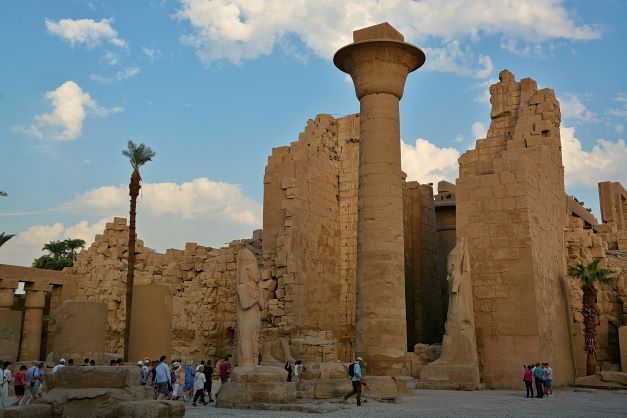
Taharqa was the fourth king of the Twenty-fifth Dynasty and also king of his native Kush; located in Northern Sudan. The remains of this huge kiosk, built by 25th Dynasty pharaoh Taharqa (690-664 B.C.) originally consisted of ten twenty-one meter high papyrus columns linked by a low screening wall. Today there is only one great column still standing. It is believed that it was a barque chapel (or Station) although some Egyptologists think it may have been used in ritual activities to join with the sun.
Back to the text of 2 Kings 19:9, the Assyrians were only temporally diverted by the Egyptians, though it would be a bit later when Assyrian completed the task of conquering Egypt. The greater point by far as the text continues, is YHWH’s miraculous deliverance of the city of Jerusalem. Sennacherib returned to Assyria after his mighty army was devastated.
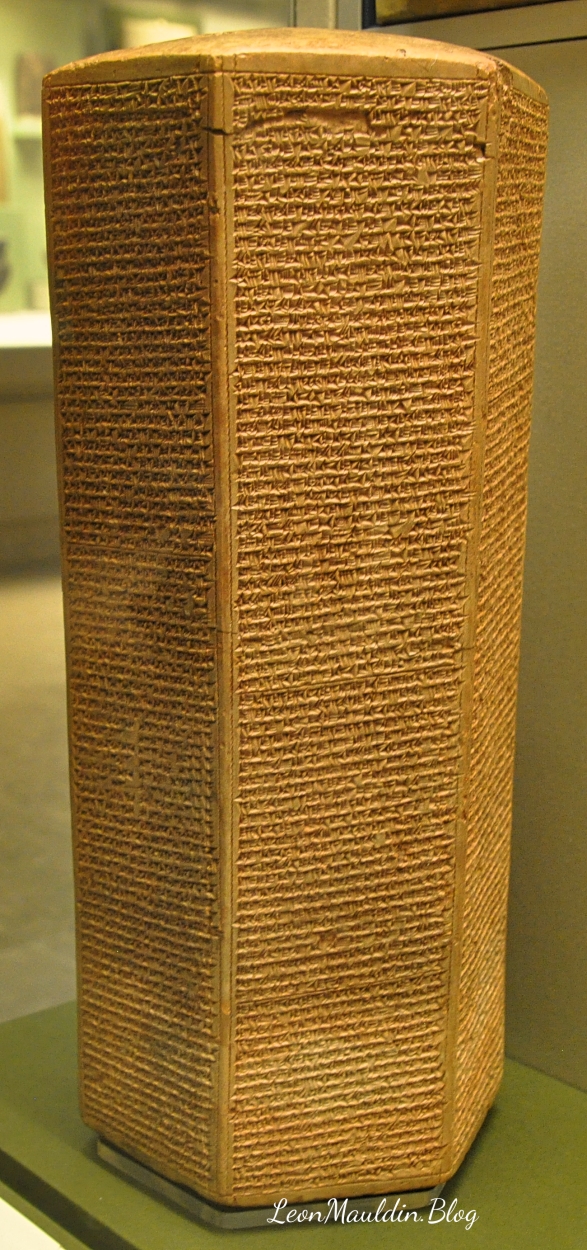
The text is in Akkadian Cuneiform, the international language of the time. The reference to Hezekiah reads:
As for Hezekiah, the Judean, I besieged forty-six of his fortified walled cities and surrounding smaller towns, which were without number. Using packed-down ramps and applying battering rams, infantry attacks by mines, breeches, and siege machines, I conquered (them). I took out 200,150 people, young and old, male and female, horses, mules, donkeys, camels, cattle, and sheep, without number, and counted them as spoil. He himself, I locked up within Jerusalem, his royal city, like a bird in a cage.
(Hallo, W. W., & Younger, K. L. (2000). Context of Scripture: Monumental Inscriptions from the Biblical World (p. 303). Leiden; Boston: Brill).
More to come re: Tirhakah. Click photos for larger view.
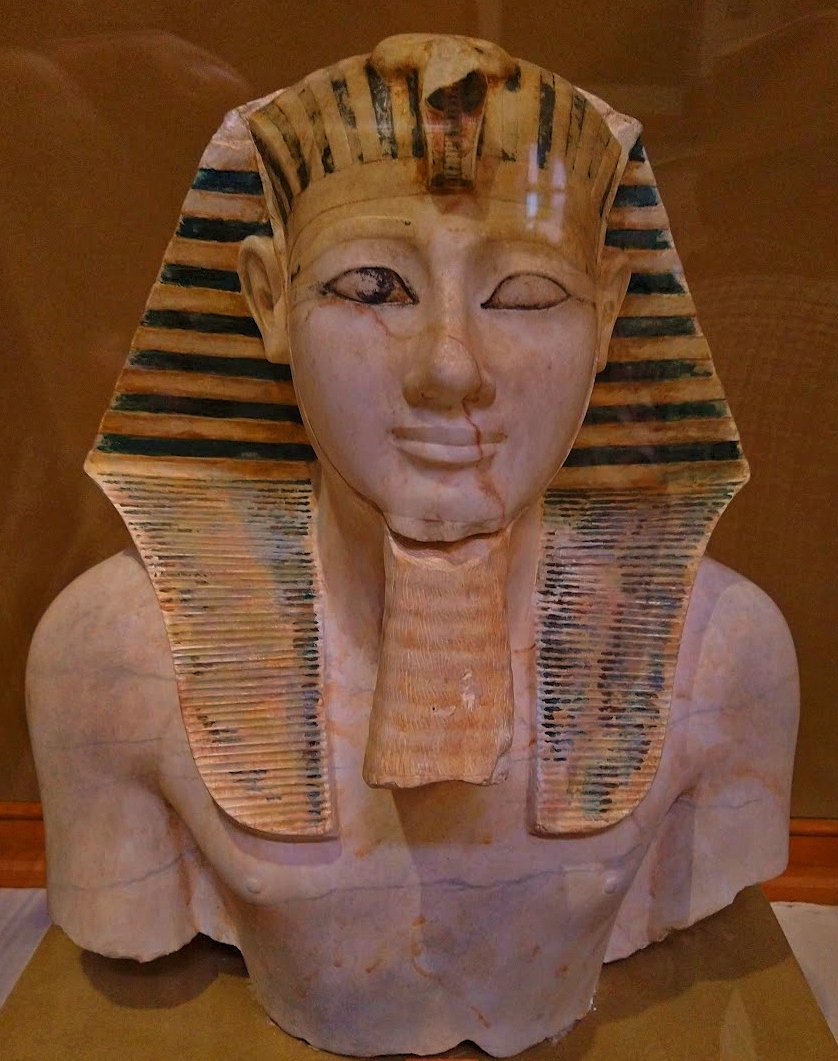
Thutmose III had a co-regency with Hatshepsut. When she died about 1483 BC he began his independent reign (of an additional 32 years). “At the end of some seventeen years of military campaigns, Thutmose III had successfully established Egyptian dominance over Palestine and had made strong inroads into southern Syria. His own reputation was assured, and the proceeds were extravagantly expended on behalf of the temples of Amun and other gods, as well as on those men who followed the king on his quests” (Betsy M. Bryan, The Oxford History of Ancient Egypt, ed. Ian Shaw, p. 243).
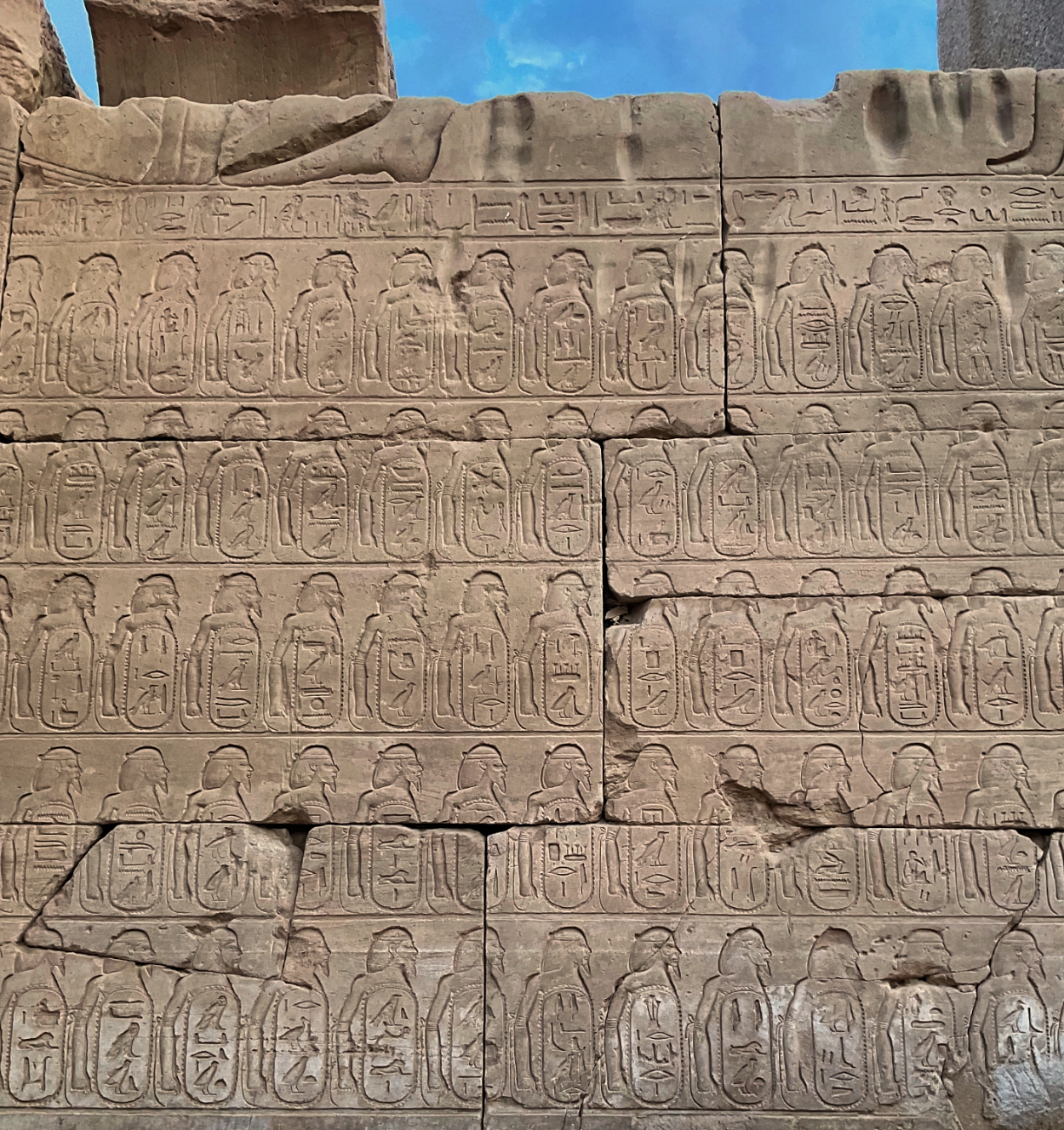
Thutmose III recorded a detailed account of his Near Eastern campaign on the inside walls of the central hallway after the hypostyle hall at the Karnak Temple. These inscriptions describe specific episodes of the warfare and booty lists.
. . . comes from the annals of the 18th Dynasty Pharaoh Thutmose III (r. 1479–1425 BC) inscribed on the walls of the Karnak temple complex in Luxor (ancient Thebes). Thutmose III campaigned into Canaan to quell a rebellion headed by an alliance of Canaanite leaders in the vicinity of Megiddo (appearing in the text as Ma-k-ta). The account indicates that Megiddo was strategically located near the opening of the Wadi Ara, referred to in the annals of Thutmose III as the Aruna pass. The pharaoh defeated the Canaanites, who then fled into the fortified city of Megiddo. Thutmose laid siege to the city and proclaimed that the taking of Megiddo is “the capture of a thousand towns”—a reference to the city’s strategic location (Lichtheim, Ancient Egyptian Literature, 33). Thutmose III’s campaign marked the beginning of Egyptian hegemony over Canaan, characterized by the establishment of numerous Egyptian strongholds in the southern Levant (see Rainey, The Sacred Bridge, 65–69; compare Aharoni, Avi-Yonah, Rainey, and Safrai, The Carta Bible Atlas, 31–33). Megiddo became an Egyptian administrative center and military garrison. Megiddo also appears in Thutmose III’s list of conquered cities (also at the Karnak temple complex; Rainey, The Sacred Bridge, 72–73), and in a list of Canaanite emissaries attributed to Thutmose III (found in Papyrus Leningrad 1116-A).
Kelley, J. L. (2016). Megiddo. The Lexham Bible Dictionary. Lexham Press.
I’ve previously posted on Thutmose III here and here and here.
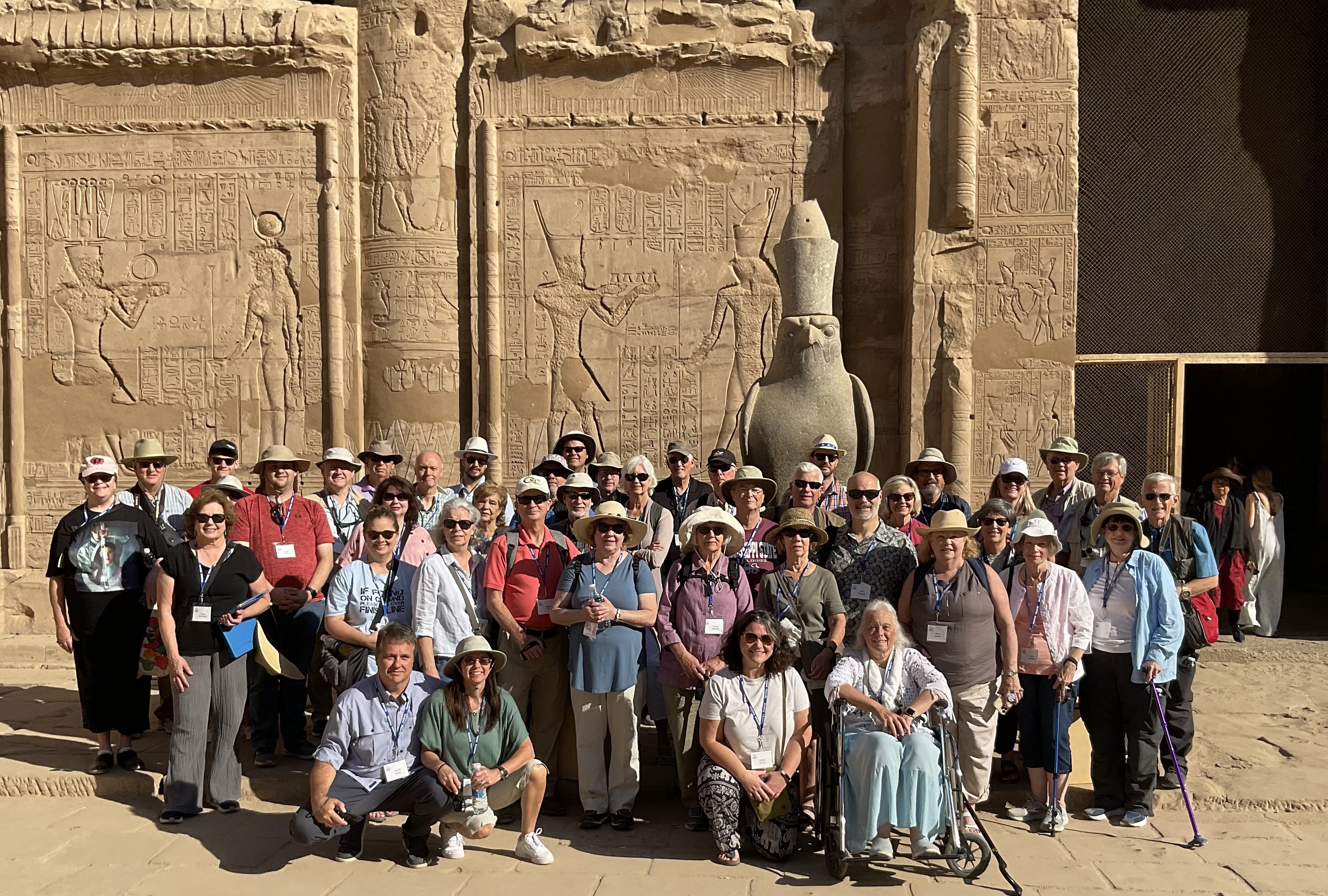
This is a photo of our group at the well-preserved Ptolemaic Temple of Horus at Edfu. In Egyptian mythology, Horus, the Falcon-headed god, was the son of Osiris and Isis. 
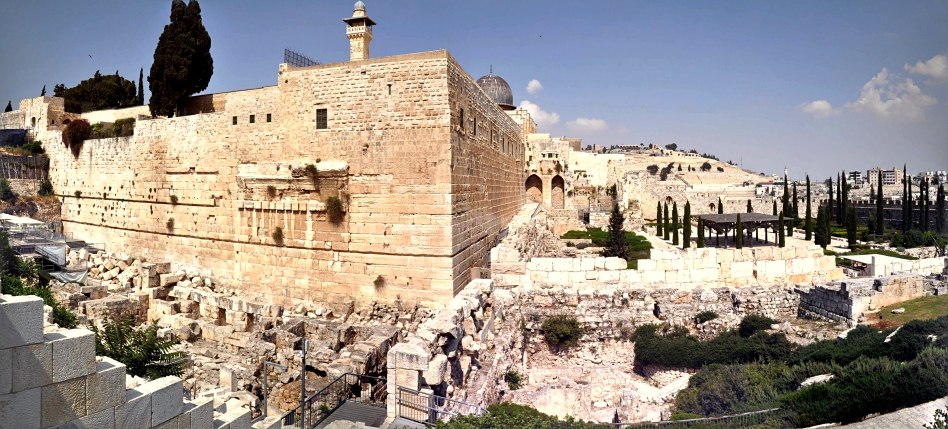
A panoramic view looking toward the SW corner of the Temple Mount in Jerusalem.
Panorama of Jerusalem, SW corner of Temple Mount. Photo by Leon Mauldin.
At the base of the ancient wall on your left (western side) you can see stones lying in place. These were from the Herodian Temple of Jesus day, falling down to their present position in the 70 AD Roman destruction of Jerusalem. Though seemingly small in our photo, some of these broken stones weight tons.
The view straight across shows southern side of temple mount. The distant view at right center is the Mount of Olives, across from the Kidron Valley (which cannot be seen from this view.
The events narrated in Esther take place during the reign of the Persian King Xerxes. “The Hebrew word used throughout the book is ʾaḥašwērôš (“Ahasuerus”) which is considered a variant of Xerxes’ name. Xerxes is the Greek form of the Persian Khshayârsha” (Huey, F. B., Jr., The Expositor’s Bible Commentary, Vol. 4, p. 797).
The book of Esther begins by telling of a great banquet in Susa, the capital, in the 3rd year of his reign (483 BC): “in the third year of his reign he gave a banquet for all his princes and attendants, the army officers of Persia and Media, the nobles and the princes of his provinces being in his presence” (Esther 1:3). The biblical author’s intent was not to give the details as to the why of this banquet, but historical sources are helpful. Xerxes was on a mission to gather strength and support for his invasion [ill-fated] into Greece. This is the setting for the opening verses of Esther.
In the year 480 BC Xerxes marched westward to invade and attempt to conquer Greece. En route he passed through ancient Troy, where the historian Herodotus states, “he sacrificed a thousand heifers to Athene of Ilion” (Herodotus 7:43). Ilion is the Greek name for ancient Troy.
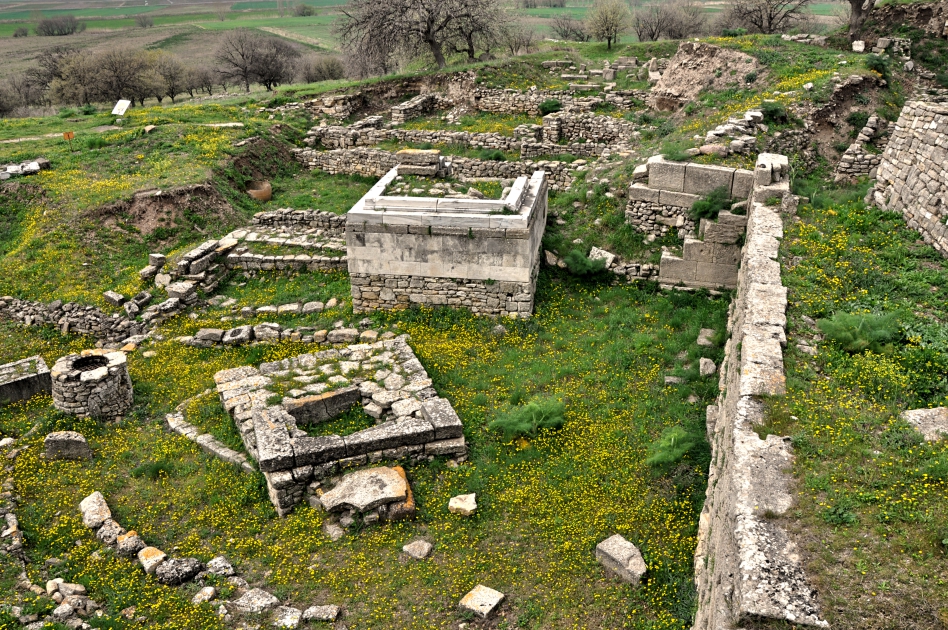
Our photo shows the Troy sanctuary area, Stratum VIII (dated ca. 700-85 BC).
Xerxes’ invasion of Greece was a failure. It was after his return from his disappointing catastrophe that the Jewish maiden Esther became his queen, in the “seventh year of his reign” (Esther 2:17), which would be 479 BC.
Regarding the site in our photo above, Manfred O. Korfmann writes, “The earliest structures representing a sanctuary at the nearly deserted site are those established by the Aeolian Greeks sometime after 700 BCE, thus apparently existing within the lifetime of Homer! Votive offerings confirm the existence of much earlier sacred precincts as well” (TROİA/WIL̇USA p.62).
Of the city of Troy itself Korfmann continues, “Illion became the religious and political capital of a federation of municipalities, and to the south and east of the acropolis a lower city (on a grid-plan) arose – overtop and partially dug into remains from Trois VI/VII” (ibid.63).
The ancient city Troy consists of 46 occupational levels which date back to a total of nine different cities!
Our map shows Troy, which is a site on the Unesco World Heritage List.
Map of Troy in today’s Turkey, in relation to Greece.
It is good to be reminded that the events of the Bible did not take place in a vacuum. The covenant people of God interacted with the people of their day, sometimes including the world powers as was the case in the Persian period, the setting for Esther.
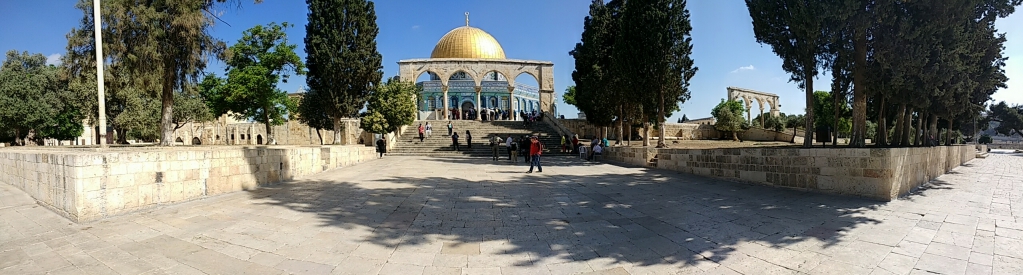
Today we had opportunity to visit the temple mount in Jerusalem. This is a wide-angle shot I made this morning:
Temple Mount in Jerusalem. Photo by Leon Mauldin.
The very recognizable Dome of the Rock at center approximates the site of Solomon’s temple, as well as the 2nd temple, built after the return from Babylonian Captivity and vastly renovated by Herod the Great.
This area is known as Mt. Moriah. This was the location where Abraham took Isaac in obedience to God’s command to offer him as a sacrifice, though He stopped Abraham prior to the actual event (Gen. 22:1-13). Years later, when Solomon built the temple, the Bible says, “Then Solomon began to build the house of the LORD in Jerusalem on Mount Moriah . . .” (2 Chron. 3:1, ESV).
The temple mount consists of about 36 acres. When the New Testament speaks of Jesus teaching in the temple, or of the early church meeting in the temple, those texts are not referring to the naos (holy place/most holy place) into which only the priests/Levites could enter; the most holy place only the high priest could enter, and that only once per year on the Day of Atonement. Rather, reference is made to the hieron, the greater temple area, consisting of its many courts and colonnades, etc.


 Posted by Leon Mauldin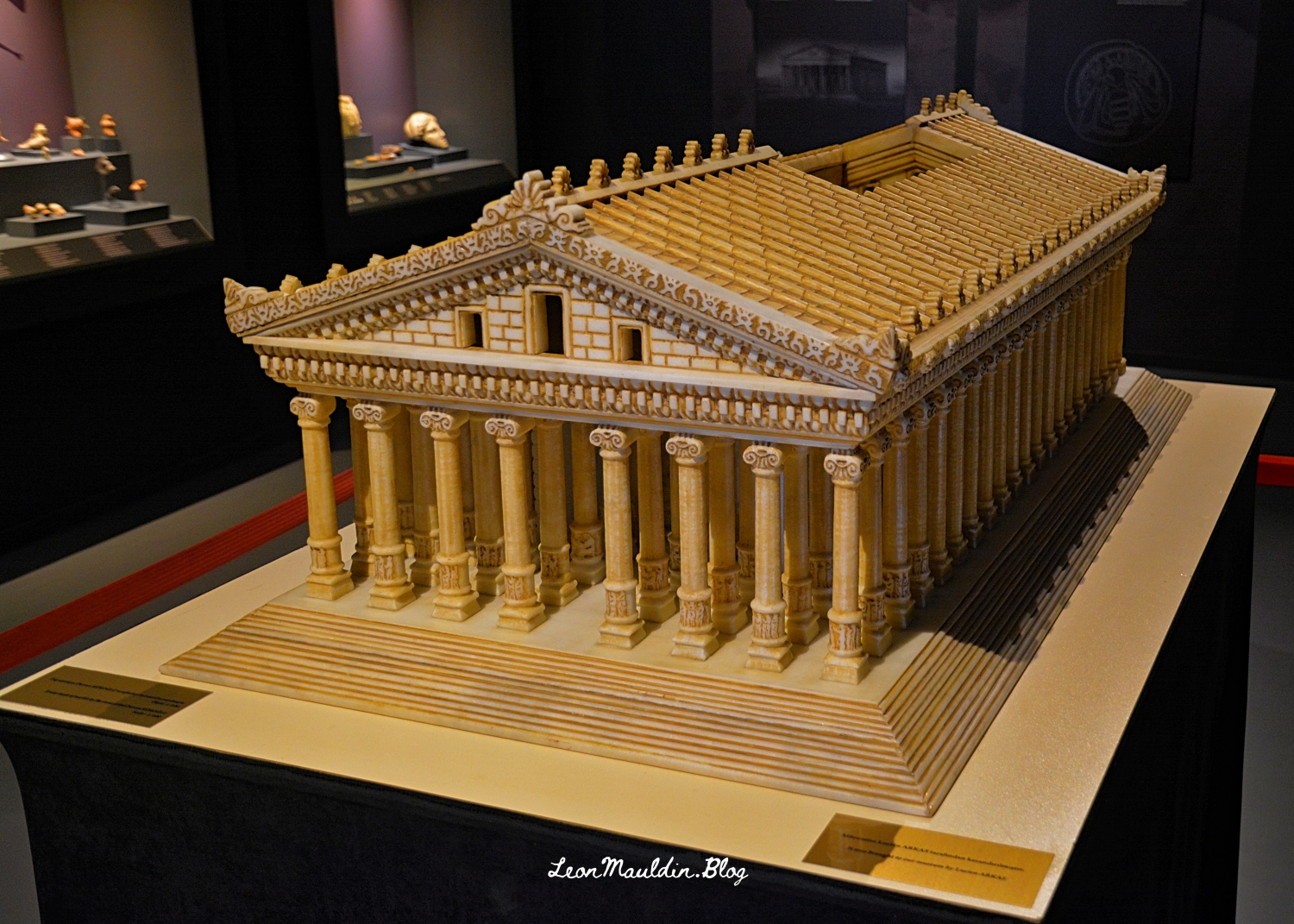




 leonmauldin.blog