Dothan, Where Joseph Was Sold by His Brothers

March 11, 2017

The rivalry and jealousy that existed between Jacob’s wives (four) and sons (twelve) provides proof that polygamy was something God tolerated during the Old Testament period. It does not reflect His will as seen in the Garden of Eden (Gen. 2:24; Matt. 19:1-6). But God overruled for good to accomplish His will, and through Jacob’s wives and children the 12 tribes of Israel originated, as set forth in Genesis.

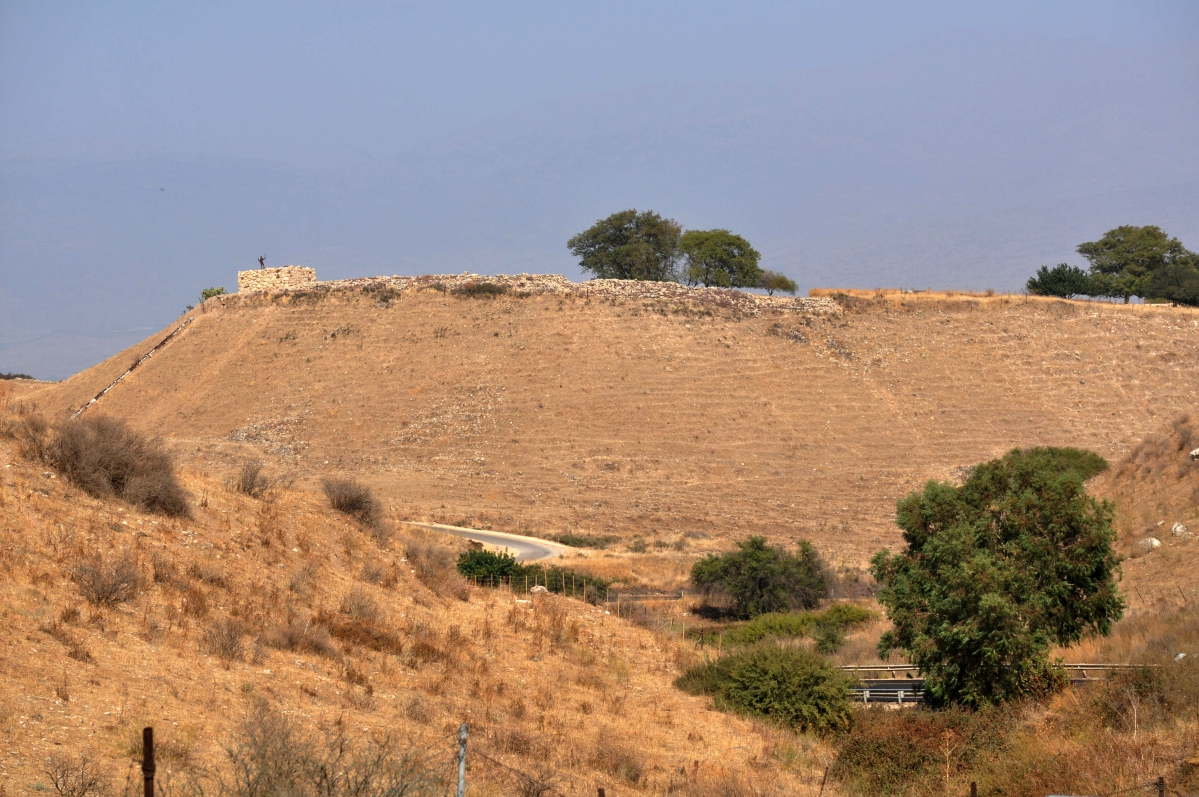
The book of Genesis does not fabricate a narrative that portrays the patriarch in an idealistic light. Rather their sins and foibles are included. Genesis 37 relates how Joseph’s envious brothers sold him to a traders in a caravan who were en route to Egypt, where they sold Joseph into slavery. The location where that occurred was Dothan in Canaan, on the international trade route which connected Mesopotamia to Egypt. We had the occasion to see Dothan in November ’16.
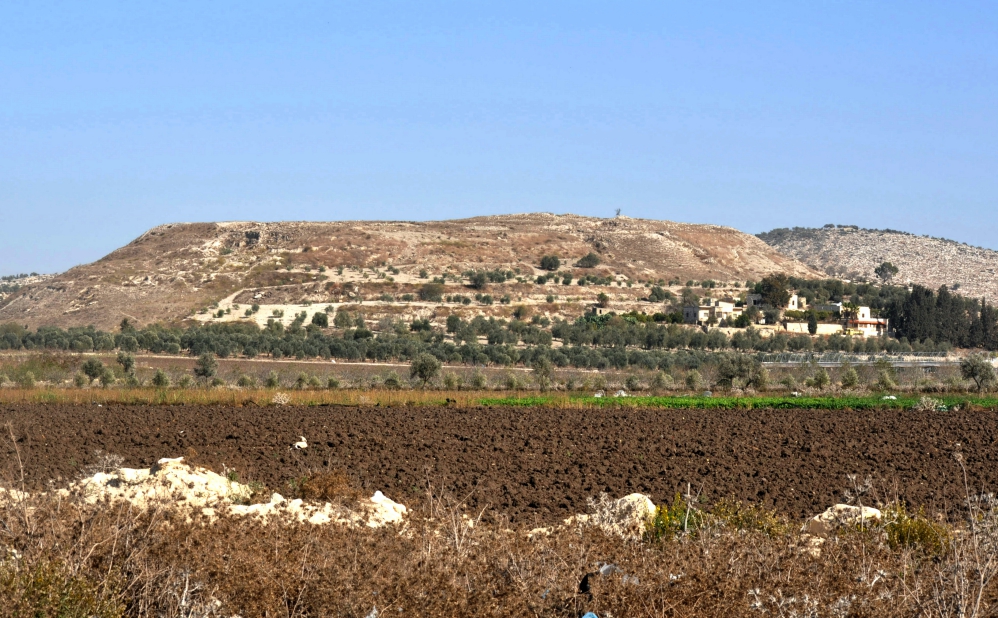
Tel Dothan, where Joseph was sold by his brothers. Photo by Leon Mauldin.

Here is the account in Genesis:

13 And Israel [Jacob] said to Joseph, “Are not your brothers pasturing the flock at Shechem? Come, I will send you to them.” And he said to him, “Here I am.” 14 So he said to him, “Go now, see if it is well with your brothers and with the flock, and bring me word.” So he sent him from the Valley of Hebron, and he came to Shechem. 15 And a man found him wandering in the fields. And the man asked him, “What are you seeking?” 16 “I am seeking my brothers,” he said. “Tell me, please, where they are pasturing the flock.” 17 And the man said, “They have gone away, for I heard them say, ‘Let us go to Dothan.'” So Joseph went after his brothers and found them at Dothan. 18 They saw him from afar, and before he came near to them they conspired against him to kill him. 19 They said to one another, “Here comes this dreamer. 20 Come now, let us kill him and throw him into one of the pits. Then we will say that a fierce animal has devoured him, and we will see what will become of his dreams.” 21 But when Reuben heard it, he rescued him out of their hands, saying, “Let us not take his life.” 22 And Reuben said to them, “Shed no blood; cast him into this pit here in the wilderness, but do not lay a hand on him”- that he might rescue him out of their hand to restore him to his father. 23 So when Joseph came to his brothers, they stripped him of his robe, the robe of many colors that he wore. 24 And they took him and cast him into a pit. The pit was empty; there was no water in it. 25 Then they sat down to eat. And looking up they saw a caravan of Ishmaelites coming from Gilead, with their camels bearing gum, balm, and myrrh, on their way to carry it down to Egypt. 26 Then Judah said to his brothers, “What profit is it if we kill our brother and conceal his blood? 27 Come, let us sell him to the Ishmaelites, and let not our hand be upon him, for he is our brother, our own flesh.” And his brothers listened to him. 28 Then Midianite traders passed by. And they drew Joseph up and lifted him out of the pit, and sold him to the Ishmaelites for twenty shekels of silver. They took Joseph to Egypt. 29 When Reuben returned to the pit and saw that Joseph was not in the pit, he tore his clothes 30 and returned to his brothers and said, “The boy is gone, and I, where shall I go?” 31 Then they took Joseph’s robe and slaughtered a goat and dipped the robe in the blood. 32 And they sent the robe of many colors and brought it to their father and said, “This we have found; please identify whether it is your son’s robe or not.” 33 And he identified it and said, “It is my son’s robe. A fierce animal has devoured him. Joseph is without doubt torn to pieces.” 34 Then Jacob tore his garments and put sackcloth on his loins and mourned for his son many days. 35 All his sons and all his daughters rose up to comfort him, but he refused to be comforted and said, “No, I shall go down to Sheol to my son, mourning.” Thus his father wept for him. 36 Meanwhile the Midianites had sold him in Egypt to Potiphar, an officer of Pharaoh, the captain of the guard.

Truly envy is as rottenness of the bones (Prov. 14:30).

Click photo for larger view.


The Threshing Sledge

January 24, 2017

I am currently enjoying teaching 1 Chronicles in our Bible class in our local congregation. The record of David’s ill-advised census and its terrible consequences is found in 1 Chron. 21. An angel and a prophet were used by God to instruct David: “Now the angel of the LORD had commanded Gad to say to David that David should go up and raise an altar to the LORD on the threshing floor of Ornan the Jebusite” (v.18, ESV). David purchased the threshing floor at the “full price” from Ornan, “And David built there an altar to the LORD and presented burnt offerings and peace offerings and called on the LORD, and the LORD answered him with fire from heaven upon the altar of burnt offering” (v.26, ESV).

Ornan had made this offer: “See, I give the oxen for burnt offerings and the threshing sledges for the wood and the wheat for a grain offering; I give it all,” but David insisted that he pay “the full price” (v.24); David would not offer to the Lord “that which costs me nothing.”

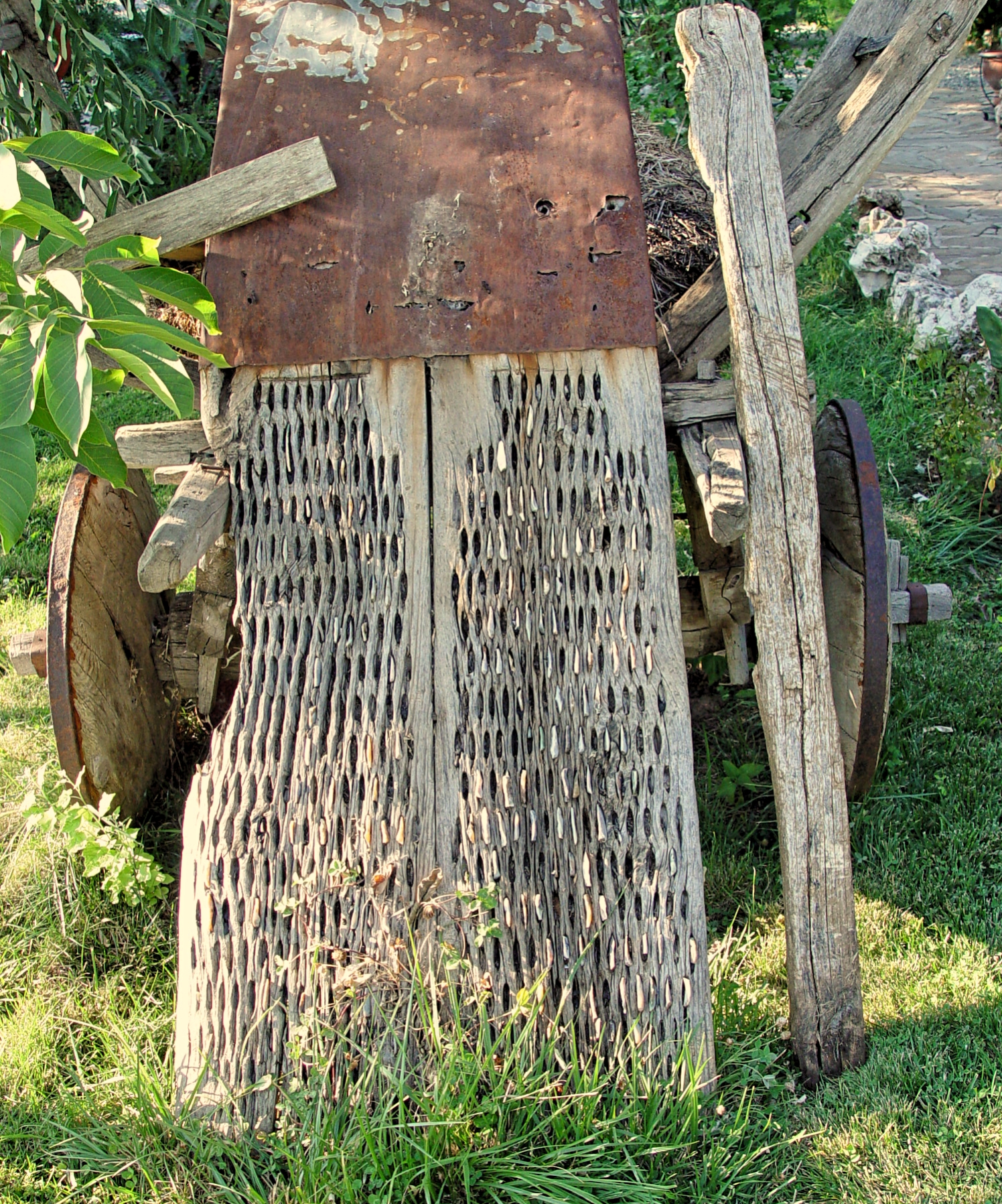
Note that reference is made to the “threshing sledges for the wood.” The threshing sledge was pulled across the grain to separate the kernel from the chaff. In Aphrodisias, Turkey, I had the opportunity to photograph several threshing sledges.  This helps us to visualize what David used for wood for the burnt offerings in our Chronicles text.

Threshing Sledge at Aphrodisias, Turkey. Photo by Leon Mauldin.

Threshing Sledge at Aphrodisias, Turkey. Photo by Leon Mauldin.

Though the text is challenging, it seems that its placement in Chronicles is to show the usage God made of the event. The property David purchased for offering for atonement for sin would become the site for Solomon’s building the temple! “Then David said, ‘Here shall be the house of the LORD God and here the altar of burnt offering for Israel'” (22:1).

Click photo for larger view.


OT Baal-hermon, Site of Banias/Caesarea Philippi?

December 23, 2016

1 Chronicles 5 gives a summary of the settlement of the eastern tribes of Israel: Reuben, Gad and Manasseh. Verse 23 states, “Now the sons of the half-tribe of Manasseh lived in the land; from Bashan to Baal-hermon and Senir and Mount Hermon they were numerous.”

The ISBE has an interesting suggestion: “The Baal-hermon of 1 Ch 5:23 lay somewhere E. of the Jordan, near to Mount Hermon. It may possibly be identical with Bāniās.”¹

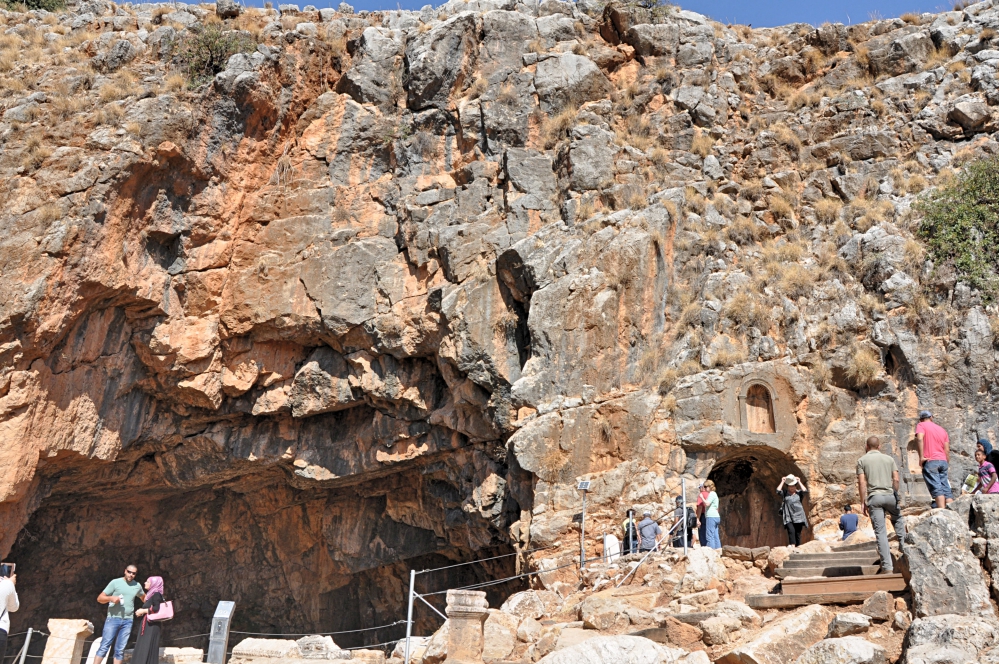
Caesarea Philippi/Banias. Some scholars identify this with Old Testament Baal-hermon. Photo by Leon Mauldin.

Caesarea Philippi/Banias. Some scholars identify this site with Old Testament Baal-hermon. Photo ©Leon Mauldin.

Our photo features Banias, better known to most Bible students as Caesarea Philippi, because it was in this region that Peter made his great confession of faith in Jesus as Messiah, the Divine Son of God, and Jesus promised to build His church (Matt. 16:13-20). On the lower left you can see the grotto of the god Pan, where idolatrous sacrifices were offered. To the right you can see niches carved into the face of the rock; these formerly contained idols. Banias/Caesarea Philippi is located at the foot of Mt. Hermon.

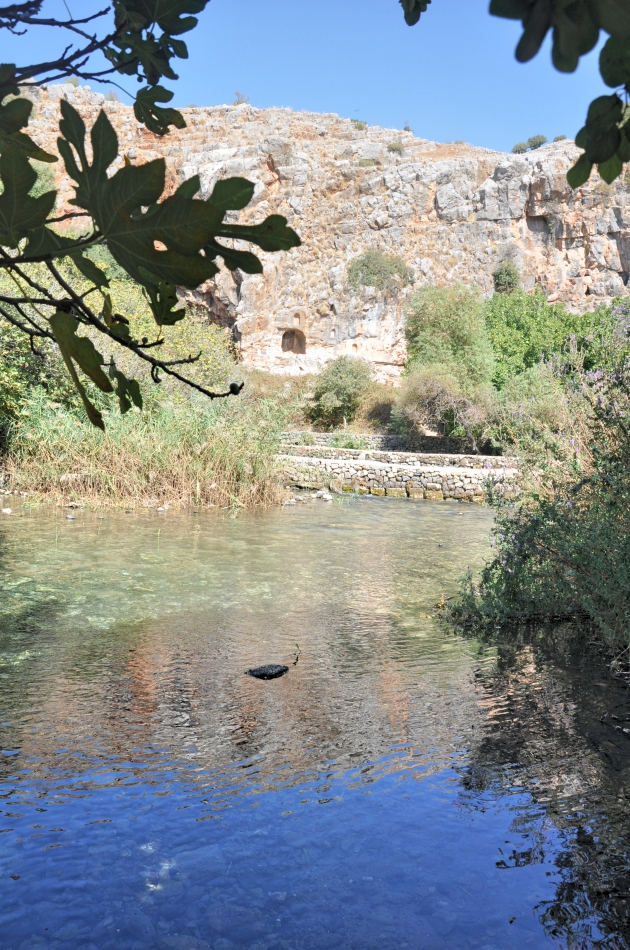
From here flows the Banias River, which merges with other sources to our south (about-face from perspective in photo).

Banias River, a major source of the Jordan. Photo ©Leon Mauldin.

Banias River, a major source of the Jordan. Photo ©Leon Mauldin.

We know that Banias/Caesarea Philippi was a site for pagan worship in the AD 1st century. There is evidence that this had been a center of idolatrous worship for centuries prior to Jesus’ ministry, reaching centuries back to Old Testament times.

Here are some further sources which suggest identification of Old Testament Baal-hermon with Banias/Caesarea Philippi (use of bold type for emphasis mine, LM):

“Baal-hermon . . . probably the present Bânjas, at the foot of Hermon.”²

“Baal-Gad—lord of fortune, or troop of Baal, a Canaanite city in the valley of Lebanon at the foot of Hermon, hence called Baal-hermon (Judge. 3:3; 1 Chr. 5:23), near the source of the Jordan (Josh. 13:5; 11:17; 12:7). It was the most northern point to which Joshua’s conquests extended. It probably derived its name from the worship of Baal. Its modern representative is Banias.³

Caesarea Philippi—a city on the northeast of the marshy plain of el-Huleh, 120 miles north of Jerusalem, and 20 miles north of the Sea of Galilee, at the “upper source” of the Jordan, and near the base of Mount Hermon. It is mentioned in Matt. 16:13 and Mark 8:27 as the northern limit of our Lord’s public ministry. According to some its original name was Baal-Gad (Josh. 11:17), or Baal-Hermon (Judg. 3:3; 1 Chr. 5:23), when it was a Canaanite sanctuary of Baal. It was afterwards called Panium or Paneas, from a deep cavern full of water near the town. This name was given to the cavern by the Greeks of the Macedonian kingdom of Antioch because of its likeness to the grottos of Greece, which were always associated with the worship of their god Pan. Its modern name is Banias. Here Herod built a temple, which he dedicated to Augustus Caesar. This town was afterwards enlarged and embellished by Herod Philip, the tetrarch of Trachonitis, of whose territory it formed a part, and was called by him Caesarea Philippi, partly after his own name, and partly after that of the emperor Tiberius Caesar.4


Click on photos for larger view.

¹Orr, J., Nuelsen, J. L., Mullins, E. Y., & Evans, M. O. (Eds.). (1915). Baal-Hermon. In The International Standard Bible Encyclopaedia (Vol. 1–5, p. 347). Chicago: The Howard-Severance Company.

2 Keil, C. F., & Delitzsch, F. (1996). Commentary on the Old Testament (Vol. 3, p. 442). Peabody, MA: Hendrickson.

³Easton’s Bible Dictionary. New York: Harper & Brothers.

4 Ibid.


Qumran Caves, where the Dead Sea Scrolls Were Discovered

December 21, 2016

“The Dead Sea Scrolls are undoubtedly the most important discovery found in Israel in the field of the Bible and history of Judaism and Christianity.”¹ Fragments of about 900 scrolls from the 2nd Temple period (some dating as early as 3rd century BC) were found in the Qumran caves (NW shore of Dead Sea), between 1947 and 1956. Every book of the Old Testament (except Esther) were represented in the finds, including one complete copy of Isaiah.

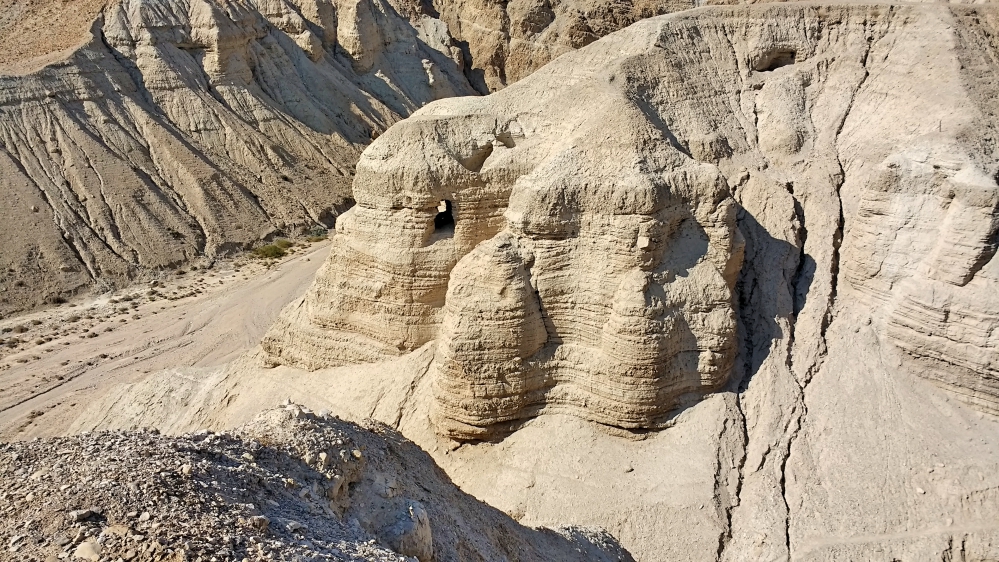
I had opportunity along with my group to visit this important archaeological site last month and photograph the caves.

Qumran Caves, on western side of the Dead Sea. Photo by Leon Mauldin.

Qumran Caves, on western side of the Dead Sea. Photo by Leon Mauldin.

I remember when studying archaeology under the late Dr. James Hodges that he said the main value of the Dead Sea Scrolls was in the discipline of apologetics. The scrolls were about 1,000 years older (!) than the previously available manuscripts with which translators had to work. The huge find of fragments provided abundant samples with which to compare our Hebrew manuscripts. The result was:

it may now be more confidently asserted than ever before that the modern Hebrew text faithfully represents the Hebrew text as originally written by the authors of the Old Testament. Dead Sea discoveries have enabled us to answer this question with much greater assurance than was possible before 1948.²

Dr. Hodges pointed out that no new translations had to be made as a result of the discovery of the scrolls; they confirmed the accuracy of transmission of what we already have.

Another contribution:

“As a result of Dead Sea Scroll discoveries, it is no longer possible to date portions or entire Old Testament books as late as some scholars used to do. It is impossible to date any biblical work or any extensive part of one later than the early second century B.C. Fragments of the Pentateuch and the prophets date from the second century B.C. Ecclesiastes, sometimes believed to have been composed in the second or first century B.C., appears in a Cave 4 manuscript dating from 175 to 150 B.C. A second-century B.C. Copy of the Psalms indicates that the collection of Psalms was fixed by Maccabean times. A manuscript of Daniel dating about 120 B.C. brings into question the alleged Maccabean date of its composition. Moreover, the Dead Sea Scrolls do not support the existence of a deutero- or trito-Isaiah, at least during the second century B.C. The complete Isaiah and the long fragment of Isaiah from Cave 1 (second century B.C.) treat the book as a unit.”³

Click photo for larger view.

(This post makes use of previous material I wrote for this blog last Dec. 2015).

Sources Quoted:

1 Yigael Yadin quoted by Hanan Eshel in Qumran: Scrolls∙Caves∙History (p.7)

2 See F. B. Bruce, Second Thoughts on the Dead Sea Scrolls (pp.61-69)

3 Bible and Spade (1978), 7(1), pp.12–14.


Tirzah (Tell el-Far’ah), Israel’s Ancient Capital

November 30, 2016

On our recent trip to Israel we included one day in the West Bank. On our itinerary among other sites for that day I included Tirzah, Israel’s capital prior to Samaria, during the earlier years of the Divided Kingdom period.

Todd Bolen, of BiblePlaces.com makes this interesting observation:

In my experience, the most important area of the biblical land that people know the least about is the hill country of Samaria. Its importance is reflected in the fact that it is easier for me to list biblical people who were not in this area than it is to name those who were.

Why is this region generally less known? Most tour groups avoid it. Yes, it is possible to come to Israel and not see Shechem, Samaria, Shiloh, and Ai. In fact, I would estimate that 95% of tourists never see these major sites. (April 28, 2014, in BiblePlaces Blog).

What Todd says here would also (and especially) be true of Tirzah! We did not visit Ai, but saw each of the other sites mentioned: Shiloh, Shechem (Tel Balata, and also Jacob’s Well at Nablus), Samaria and also Dothan.

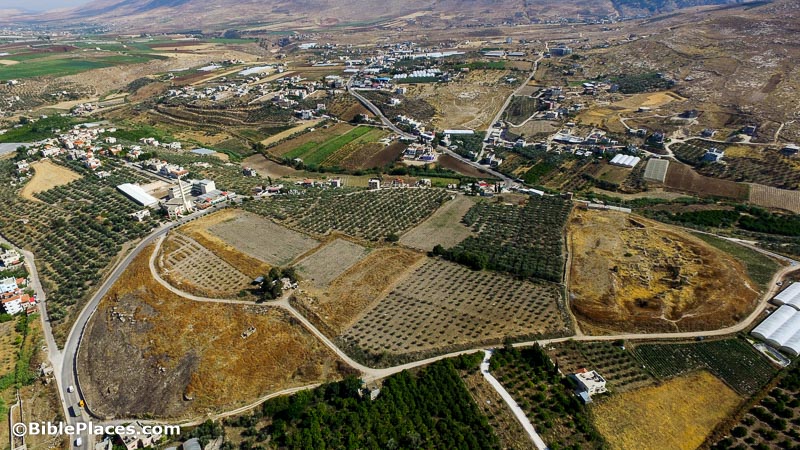
This aerial photo is the view of Tirzah from the north, used by permission of Todd Bolen.

Tirzah, aerial from north. Photo ©Todd Bolen.

Tirzah, aerial from north. Photo ©Todd Bolen.

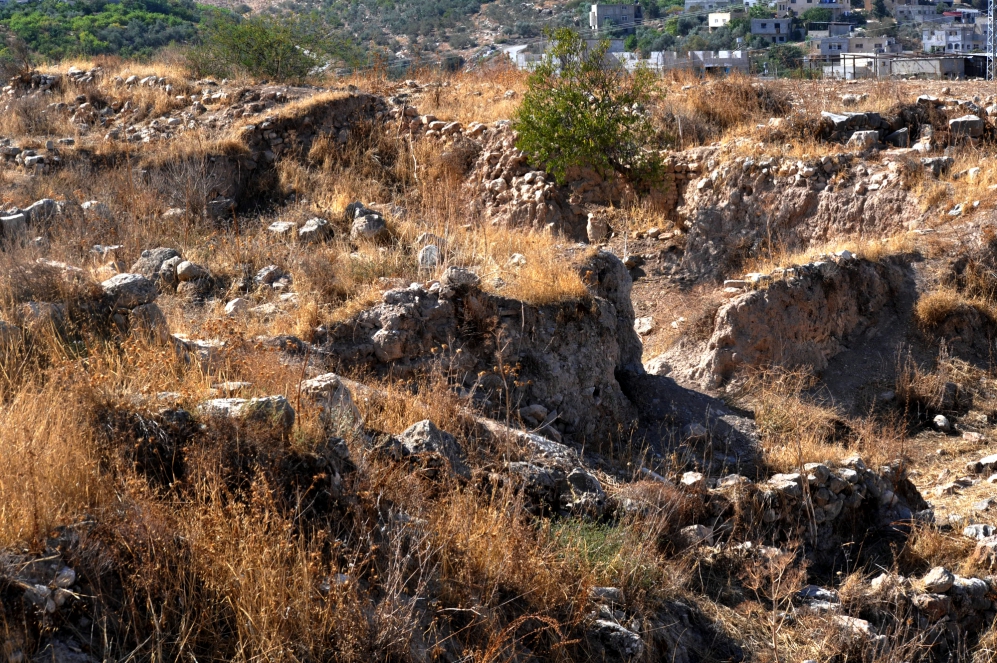
It is ironic that this important Old Testament city is today an unmarked tel. Not even a sign. Many decades have passed since the excavations here.

Excavations at Tirzah. Photo ©Leon Mauldin.

Excavations at Tirzah. Photo ©Leon Mauldin.

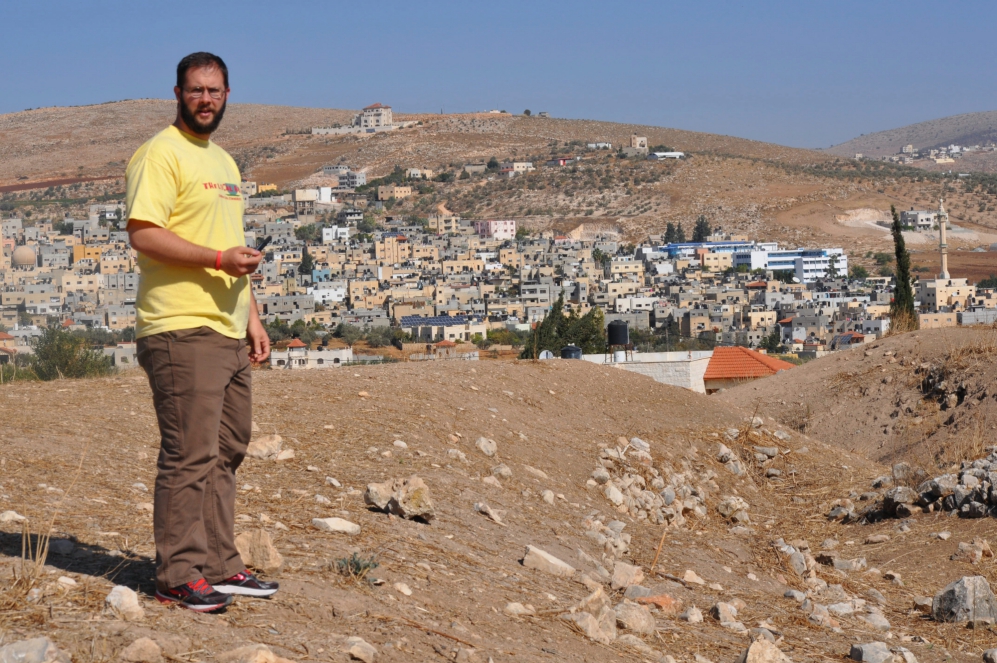
My son Seth at Tirzah. Photo ©Leon Mauldin.

My son Seth at Tirzah. Photo ©Leon Mauldin.

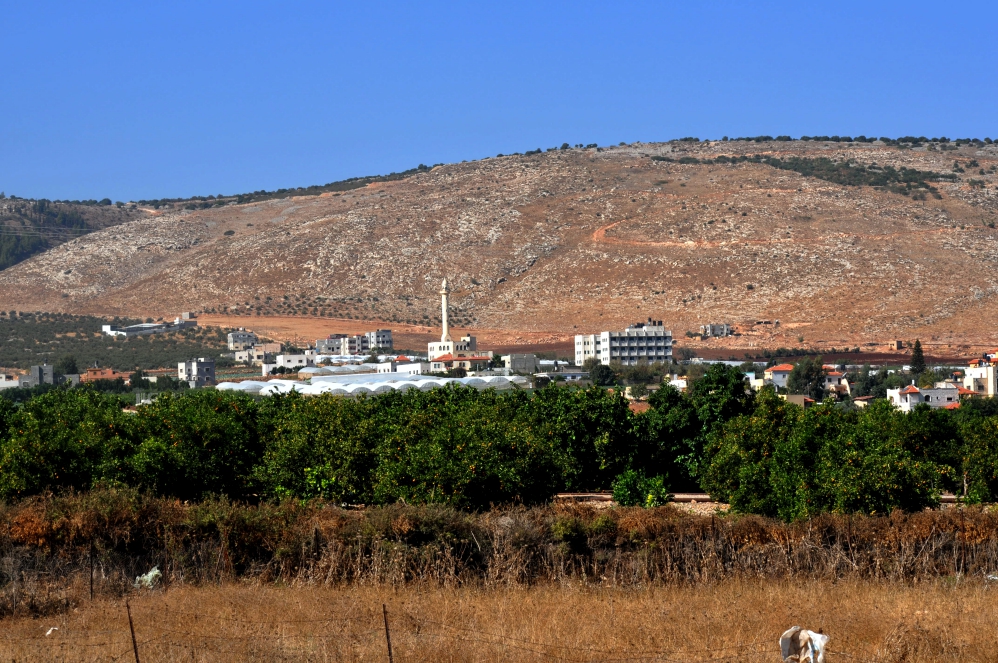
View from Tirzah. Photo ©Leon Mauldin.

View from Tirzah. Photo ©Leon Mauldin.

Biblical references to this Tirzah include:

1 Kings 14:17 Then Jeroboam‘s wife arose and departed, and came to Tirzah. When she came to the threshold of the house, the child died. Jeroboam was the first king of the Divided Kingdom following the death of Solomon.

1 Kings 15:21 Now it happened, when Baasha heard it, that he stopped building Ramah, and remained in Tirzah. Baasha was the king who destroyed all the family of the King Jeroboam.

1 Kings 15:33 In the third year of Asa king of Judah, Baasha the son of Ahijah became king over all Israel in Tirzah, and reigned twenty-four years. 

1 Kings 16:6 So Baasha rested with his fathers and was buried in Tirzah. Then Elah his son reigned in his place. 

1 Kings 16:9 Now his [Elah’s] servant Zimri, commander of half his chariots, conspired against him as he was in Tirzah drinking himself drunk in the house of Arza, steward of his house in Tirzah.

1 Kings 16:15 In the twenty-seventh year of Asa king of Judah, Zimri had reigned in Tirzah seven days. And the people were encamped against Gibbethon, which belonged to the Philistines.

1 Kings 16:17 Then Omri and all Israel with him went up from Gibbethon, and they besieged Tirzah.

1 Kings 16:23 In the thirty-first year of Asa king of Judah, Omri became king over Israel, and reigned twelve years. Six years he reigned in Tirzah.

Tirzah is located seven miles NE of Shechem; it is situated near the source of the Wadi Far’ah, which drains down to the Jordan. It was W.F. Albright who identified the site with biblical Tirzah.

Roland de Vaux gives a good summary of Tirzah’s identification and history in The New Encyclopedia of Archaeological Excavations in the Holy Land.

The stratum attributed to the Late Bronze Age shows signs of destruction, which can be regarded as the result of the Israelite conquest [of Canaan]. Tirzah, as the capital of the kingdom of Israel, corresponds to stratum III at Tell el-Far’ah. This level was devastated during the Omrid capture of the town, subsequent to Zimri’s seizure of power (c.885 BCE). The fortress in the northwestern corner may be the king’s castle mentioned in 1 Kings 16:15-18, which Zimri himself set on fire and in which he met his death. Omri was able to rebuild Tirzah and to set up his residence there only at the end of a four-year struggle with his rival, Tibni. The foundations sunk into level III probably belong to his structures. However, after two years, Omri transferred the capital to Samaria (cf. 1 Kg. 16:23-24). This explains why there are buildings in the area that were never completed. The royal household and military and state officials left Tirzah, undoubtedly followed by the artisans and merchants. It is quite possible that the town was completely abandoned for some time. This would explain the paucity of the interim stratum, apparently constructed after a short period of settlement. As the Northern Kingdom flourished under Joash and Jeroboam II, Tirzah, too, enjoyed a measure of prosperity. It is from this town that Menahem launched his attack on Samaria (2 Kg. 15:14). Stratum II represents this era with its magnificent structures and administrative headquarters. As some have suggested, these may have served Menahem, if indeed he held sway at Tirzah. During the Assyrian invasion of the Northern Kingdom (c. 732 BCE), the town was captured. The destruction in stratum II dates from that time.

The École Biblique et Archéologique Française in Jerusalem conducted nine seasons of excavations at the site, between 1946 and 1960, under the direction of R. de Vaux (Vol.2,p.433).

J.F. Drinkard Jr. notes:

Omri began his reign in Tirzah (1 Kings 16: 23), the capital of the northern kingdom during Baasha’s reign, and then built a new capital, Samaria. At Tirzah, identified as Tell el-Farah north along Wadi Farah about six miles northeast of Shechem, excavators have discovered that the Iron Age strata have a break and gap that match the point when Omri built his new capital. Apparently, he had begun new construction in Tirzah and abruptly stopped. Perhaps Omri began to rebuild Tirzah as his capital during the time of the conflict with Tibni. Once that conflict was resolved, Omri was free to establish his own new capital (IVP Dictionary of the Old Testament: Historical Books).

Click on photos for larger view.


Tel Hazor in Israel

November 18, 2016

Hazor is first mentioned in the Bible in Josh. 11 in the days of the conquest under Joshua. Having conquered the central and then southern regions of Canaan, the victory of Hazor established Israel’s “toehold” in the north, for as Josh. 11:10 explains, “Joshua turned back at that time and took Hazor, and struck its king with the sword; for Hazor was formerly the head of all those kingdoms.” Or, as the NET renders the text, “for Hazor was at that time the leader of all these kingdoms.” As such, it was the head of a confederation of several Canaanite cities in the battle against Joshua & Israel’s forces at the waters of Merom. Nelson’s NIBD says, “Hazor was one of the most important fortresses in the land (Josh. 11:10). This was due to its enormous size, its large population, and its strategic location of the main road between Egypt and Mesopotamia” (p.546).

It is recorded in the next verse, Josh. 11:11, that Joshua burned Hazor down, but not the surrounding cities. Verse 13 continues: “But as for the cities that stood on their mounds, Israel burned none of them, except Hazor only, which Joshua burned.” The standard procedure during the conquest was not to burn down the cities—God was giving them to Israel as their inheritance in which to live. Therefore it should not surprise us when the “critic” says there is not a lot of evidence of destruction, etc., to date Joshua’s conquest of Israel. There is a big difference between destruction and conquest. I.e., cities such as Jericho, Ai, and Hazor were the exceptions and not the rule.

Biblical Hazor. "Formerly the head of all those kingdoms" (Josh. 11:10). Photo by Leon Mauldin.

Biblical Hazor. “Formerly the head of all those kingdoms” (Josh. 11:10). Note the watchtower at upper left. Photo by Leon Mauldin.

Between the time of the Conquest and the time of the Judges, Hazor had rallied and was again a very serious threat, as God allowed the armies of Hazor to oppress the Israelites because of Israel’s sinfulness (Judges 4:1-3). These were the days in which God raised up Deborah to be judge and prophetess; Israel’s army was led by Barak (Judges 4-5).

Solomon made Hazor one of his fortified cities, which functioned as a military outpost (1 Kings 9:15). It continued to be an important city until its destruction by Tiglath-Pileser in 732 B.C. (2 Kings 15:29). The Solomonic gates, like those at Megiddo and Gezer, were an important feature of the city.

The city of Hazor occupied some 200 acres, making it the largest city in ancient Israel. Hazor is now the largest archaeological site in Israel. Remains show not only evidence of Israel’s occupation, but also prior Canaanite structures as well.

Extra-biblical references to Hazor: Hazor is previously mentioned in the Egyptian Execration texts from the 19th or 18th century B.C. It is listed in the Mari documents of the 18th century B.C. as one of the major commercial centers in the Fertile Crescent. Hazor is also mentioned in the Egyptian documents of the New Kingdom, such as the city lists of Tutmoses III, as well as Amenhotep II and Seti I.

I’ve previously posted on Hazor here and here.


Visiting the Dead Sea in Israel

November 15, 2016

A few days ago our group was able to see the Dead Sea, among other sites to the south of Jerusalem. The Dead Sea is:

a large lake in southern Israel at the lowest point on earth. In the Old Testament it is called the Salt Sea (Gen. 14:3; Josh. 3:16); the Sea of the Arabah (Deut. 3:17); and the Eastern Sea (Ezek. 47:18; Joel 2:20). Josephus, the Jewish historian, referred to this buoyant body as Lake Asphaltitis. The Arabic name is Bahr Lut, meaning, “Sea of Lot.” But from the second Christian century onward, Dead Sea has been the most common name for this unusual body of water.

The topography of the Middle East is dominated by a geologic fault that extends from Syria south through Palestine, all the way to Nyasa Lake in east-central Africa. The Dead Sea is located at the southern end of the Jordan valley at the deepest depression of this geologic fault. With a water level approximately 390 meters (1,300 feet) below sea level, the surface of the Dead Sea is the lowest point on earth. At the deepest point of the sea, on the northeast corner at the foot of the Moab mountains, the bottom is 390 meters (1,300 feet) deeper still. (Nelson’s New Illustrated Bible Dictionary).

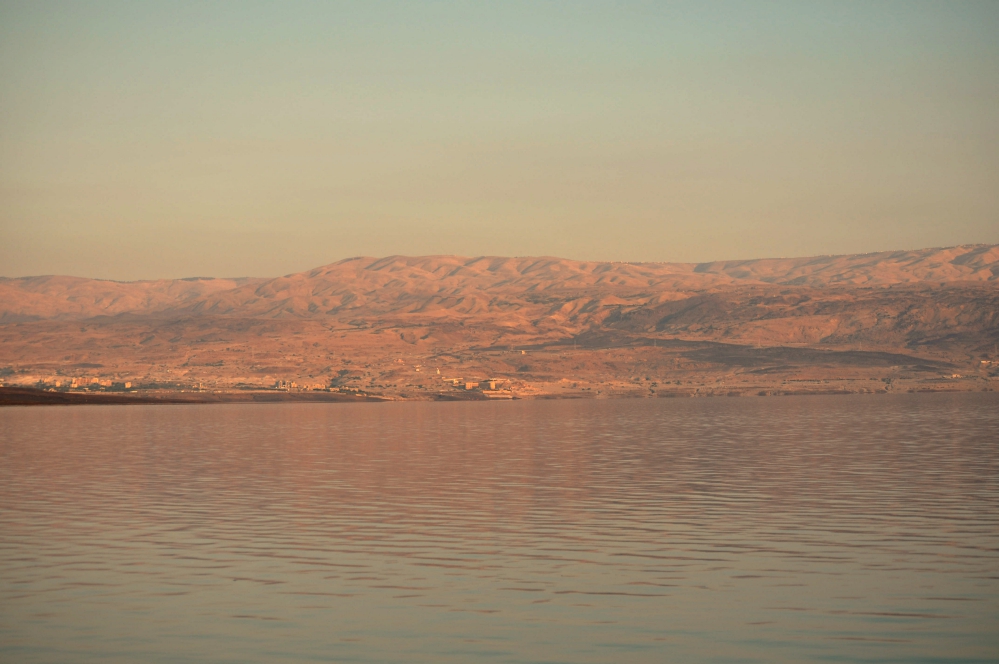
Dead Sea at Sunset. Looking east to the mountains of Moab. Photo by Leon Mauldin.

Dead Sea at Sunset. Looking east to the mountains of Moab. Photo by Leon Mauldin.


The Dead Sea is actually a lake into which the river Jordan flows, but once entering the Sea there is no outlet. Because of its high mineral content (25 percent), and the fact that the water is ten times saltier than the ocean, the Dead Sea does not support marine life. These unusual geographical facts became the basis of a thought-provoking song by Lula Zahn (words are now public domain) that makes spiritual application. It has been my experience that this is not the easiest song (musically speaking) for congregational use, but it’s worth the effort to try!

“There is a Sea”

by Lula Klingman Zahn

There is a sea which day by day
Receives the rippling rills
And streams that spring from wells of God
Or fall from cedared hills
But what it thus receives it gives
With glad unsparing hand
A stream more wide, with deeper tide
Flows on to lower land

There is a sea which day by day
Receives a fuller tide
But all its store it keeps, nor gives
To shore nor sea beside
It’s Jordan stream, now turned to brine
Lies heavy as molten lead
It’s dreadful name doth e’er proclaim
That sea is waste and dead

Which shall it be for you and me
Who God’s good gifts obtain?
Shall we accept for self alone
Or take to give again?
For He who once was rich indeed
Laid all His glory down
That by His grace, our ransomed race
Should share His wealth and crown

Click on image for larger view.


Fauna, etc., in Israel

November 6, 2016

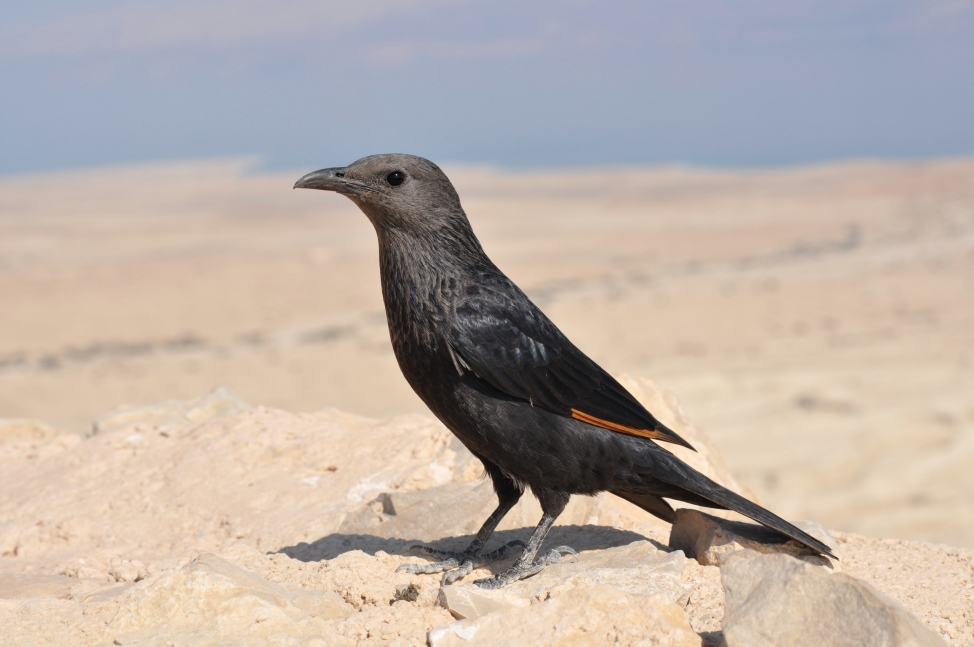
Today we made a trip to Masada, the site of the Jewish zealots last stand (AD 73) after the AD 70 destruction of Jerusalem. Tristram’s Starling, also called Tristram’s Grackle, were in abundance.

Tristram's Starling at Masada. Photo ©Leon Mauldin.

Tristram’s Starling at Masada. Photo ©Leon Mauldin.

This species is named after Henry Baker Tristram.

The males have glossy iridescent black plumage with orange patches on the outer wing, which are particularly noticeable in flight. The bill and legs are black. Females and young birds are similar but duller and with a greyish head, lacking the plumage gloss.
It is gregarious and noisy, with a call that resembles a wolf whistle. They are omnivorous, feeding on fruit and invertebrates, and can also be observed grooming Nubian ibex and domestic livestock for parasites. (Wikipedia)

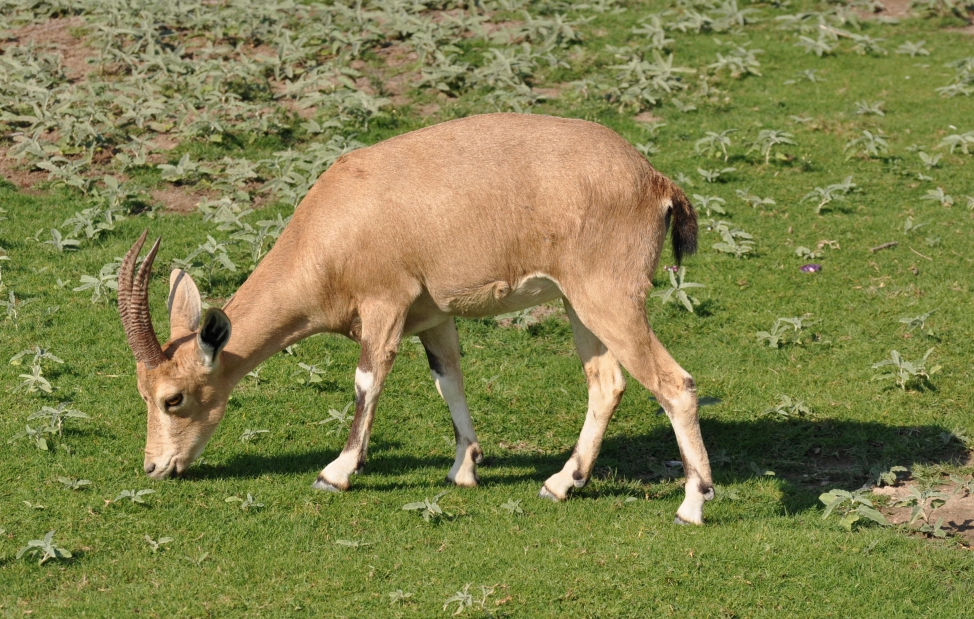
We also saw En Gedi, the site where David hid from King Saul, who was pursuing David with the intention of killing him (1 Sam. 23:29ff.). Here we photographed an ibex, the biblical “wild goat”of Psa. 104:18: “The high hills are for the wild goats; The cliffs are a refuge for the rock badgers.”

Ibex at En Gedi. Photo ©Leon Mauldin.

Ibex at En Gedi. Photo ©Leon Mauldin.

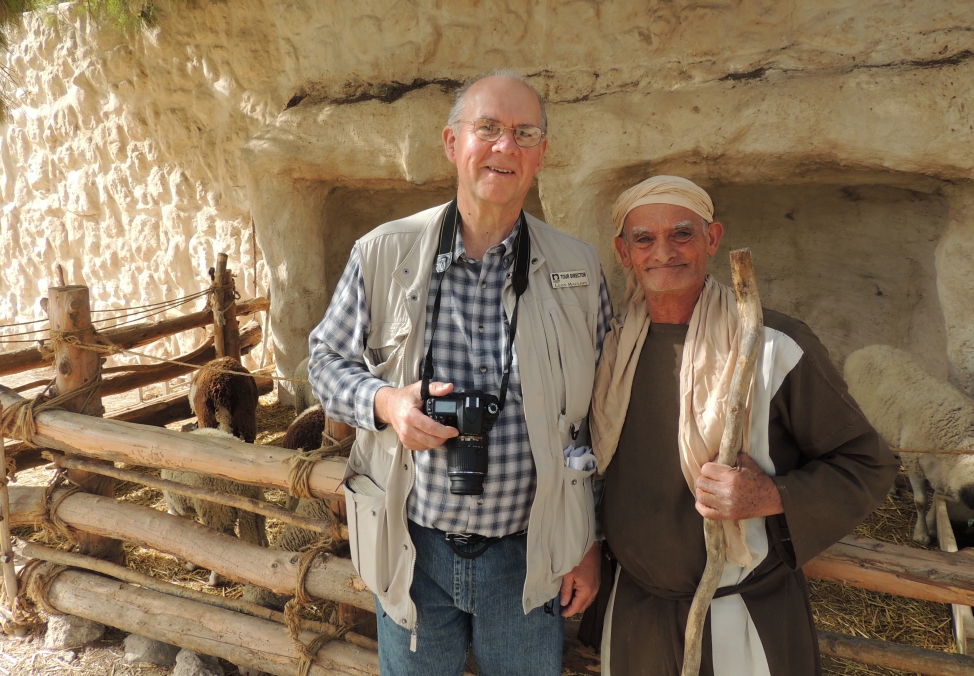
Tour member Mike Eison shared this photo he took this past Friday at Nazareth, at the Nazareth Village. The shepherd, his sheep in the fold behind.

Shepherd at Nazareth Village. Photo by Mike Eison.

Shepherd at Nazareth Village. Photo by Mike Eison.

Thanks for following our travels. Tomorrow is a walking tour in Jerusalem.


Down the Jordan Valley

November 4, 2016

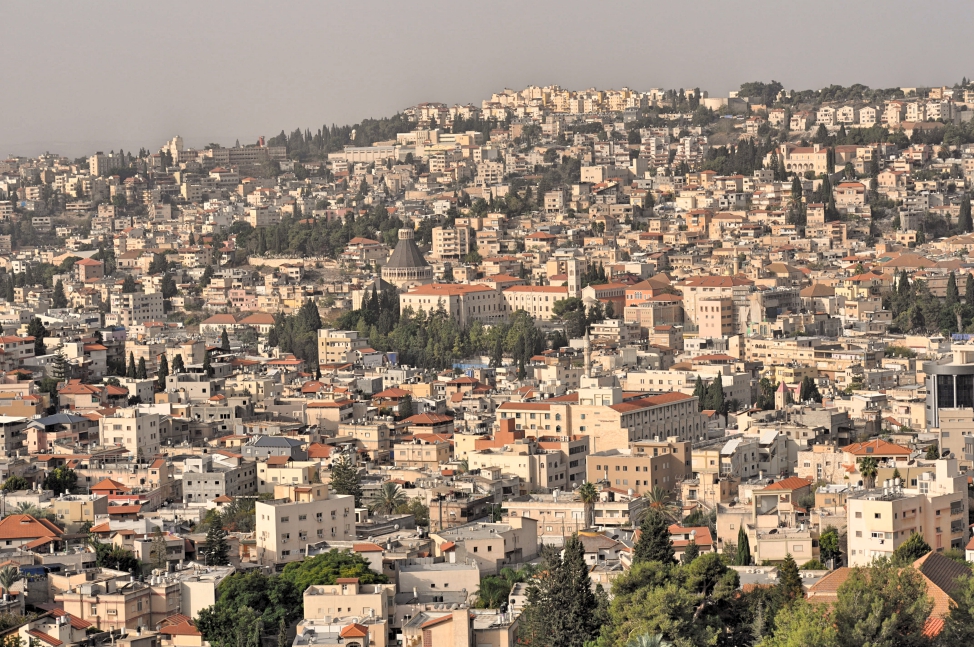
We said “Good-bye” to Tiberias on the Sea of Galilee this morning and made our way down (biblically “up” in altitude) to Jerusalem. We made a stop at Nazareth, Jesus’ hometown.

Nazareth in Galilee, Jesus' hometown. Photo ©Leon Mauldin.

Nazareth in Galilee, Jesus’ hometown. Photo ©Leon Mauldin.

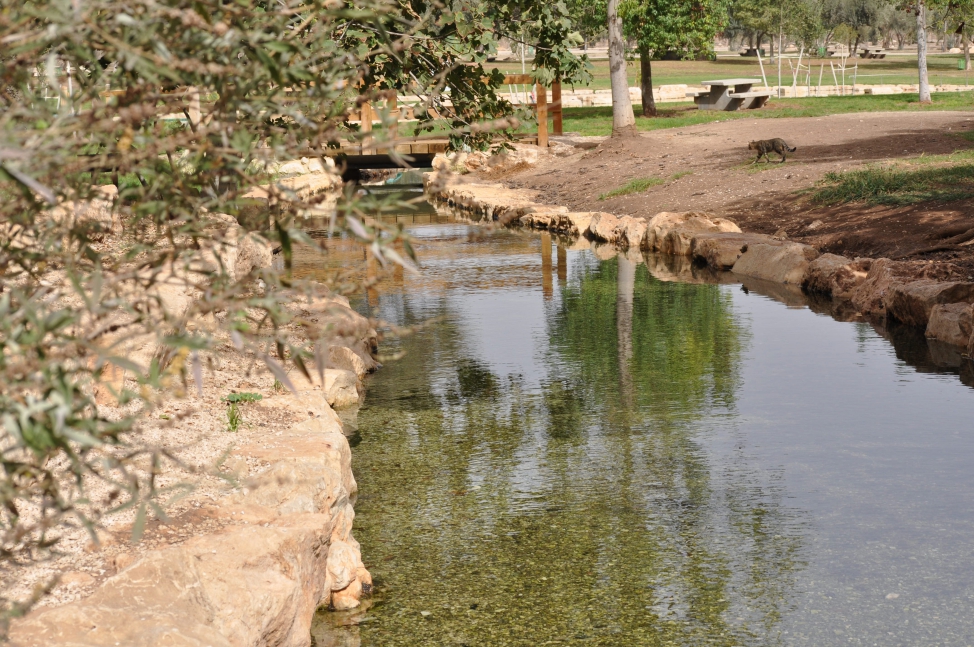
We also made a stop at the Spring of Harod,where Gideon’s army was reduced to 300 men, by which God gave Israel victory over the Midianites (Judges 7-8).

Spring of Harod. Photo ©Leon Mauldin.

Spring of Harod. Photo ©Leon Mauldin.

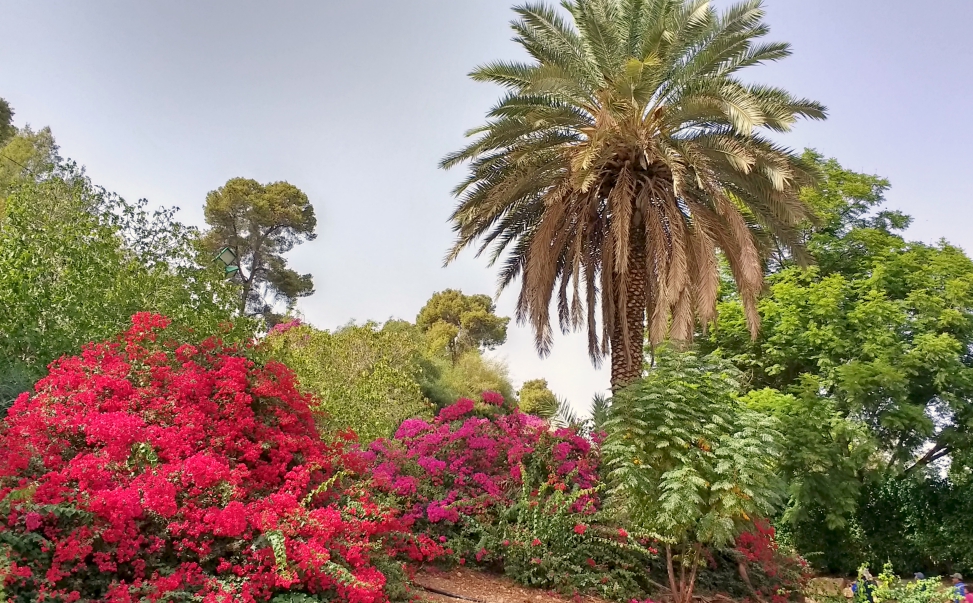
Colorful flora at the site:

Flora at the Spring of Harod. Photo ©Leon Mauldin.

Flora at the Spring of Harod. Photo ©Leon Mauldin.

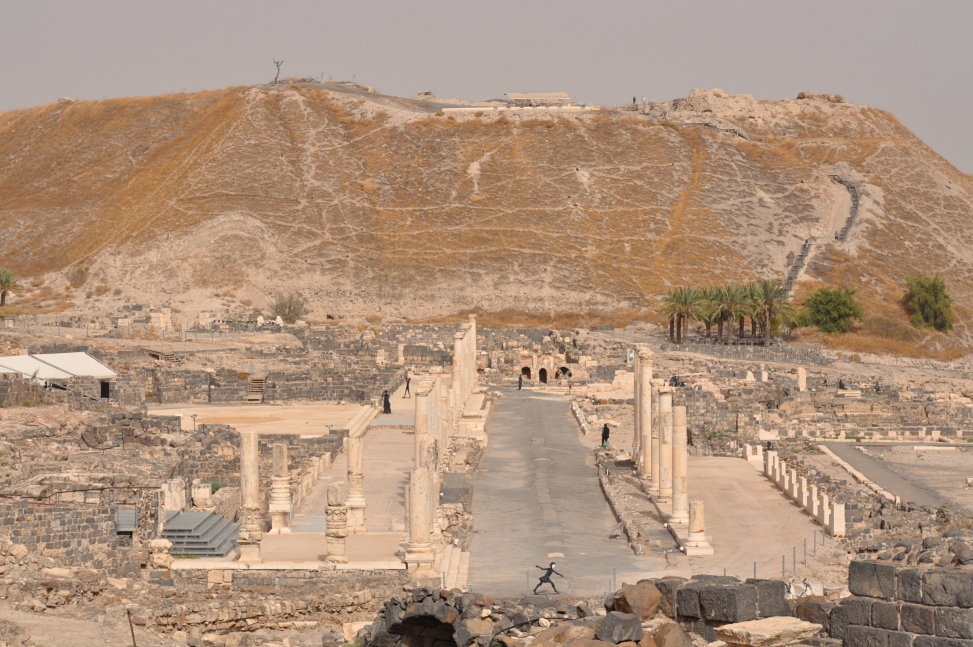
We also saw Beth-Shean, mentioned in 1 Sam. 31 as the site where the victorious Philistines took the bodies of King Saul and his three sons, fastening them to the walls of the city. This was Scythopolis in New Testament times, one of the cities of the Decapolis.

Beth-shean. OT tel in background; Roman ruins in foreground. Photo ©Leon Mauldin.

Beth-shean. OT tel in background; Roman ruins in foreground. Photo ©Leon Mauldin.

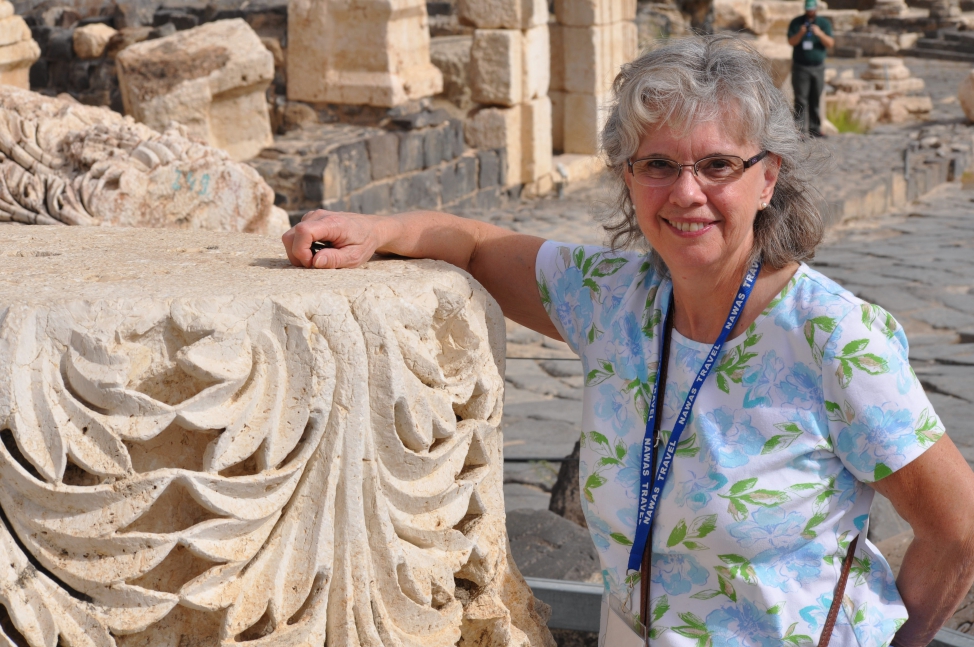
Good friend and tour member Lynn Clayton.

Lynn at Beth-shean. Photo ©Leon Mauldin.

Lynn at Beth-shean. Photo ©Leon Mauldin.

Click photos for larger image. Thanks for following our travels in the Bible lands.


Caesarea, and on to Galilee

November 2, 2016

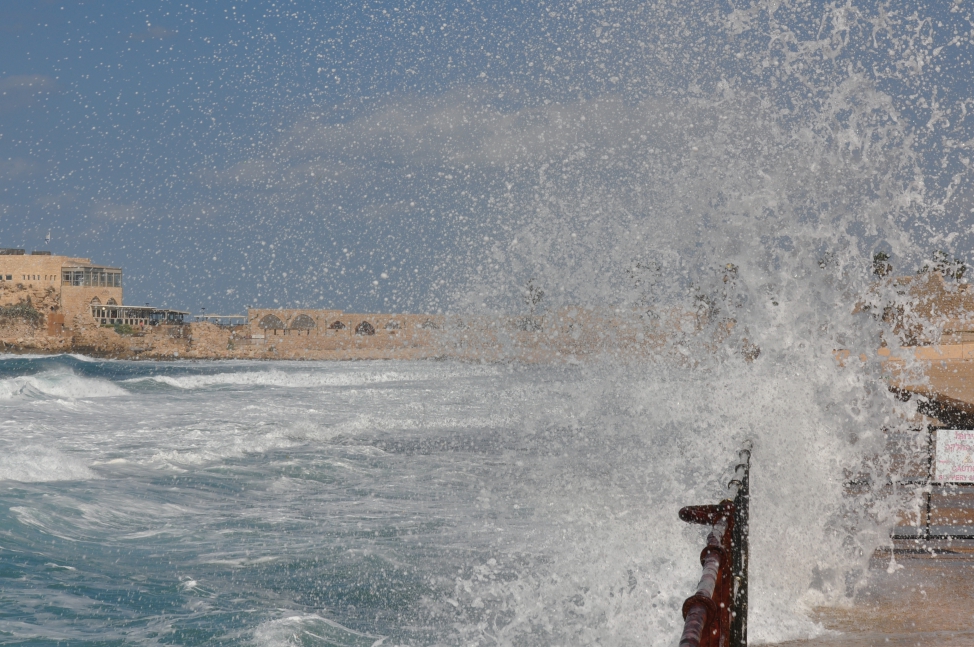
This morning upon leaving Natana with its beautiful view of the Mediterranean, we first visited Caesarea, the Roman capitol of Israel during Jesus’ Ministry. We saw lots of wave action.

Waves at Caesarea. Photo by Leon Mauldin.

Waves at Caesarea. Photo by Leon Mauldin.

Caesarea is mentioned numerous times in the New Testament. This became the home of Philip the evangelist (Acts 8:40; 21:8). Cornelius, the first Gentile convert, resided here (Acts 10-11). Paul used the port when leaving for Tarsus (Acts 9:30), and when returning from 2nd and 3rd journeys (Acts 18:22; 21:8). Later Paul was imprisoned here for two years (Acts 24:27), during which time he stood before Felix and Drusilla (Acts 24), Festus (Acts 25) and Herod Agrippa II (Acts 26). Paul left for Rome still as a prisoner from here (Acts 27).

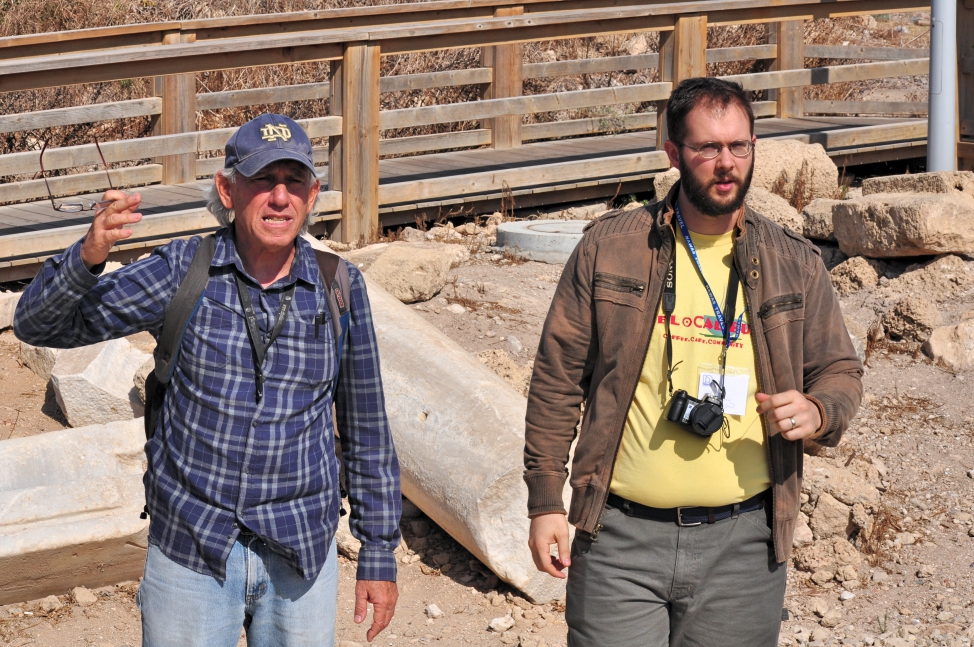
Our Israeli guide, Zack, and my son, Seth. Photo by Leon Mauldin.

Our Israeli guide, Zack (left), and my son, Seth, at Caesarea. Photo by Leon Mauldin.

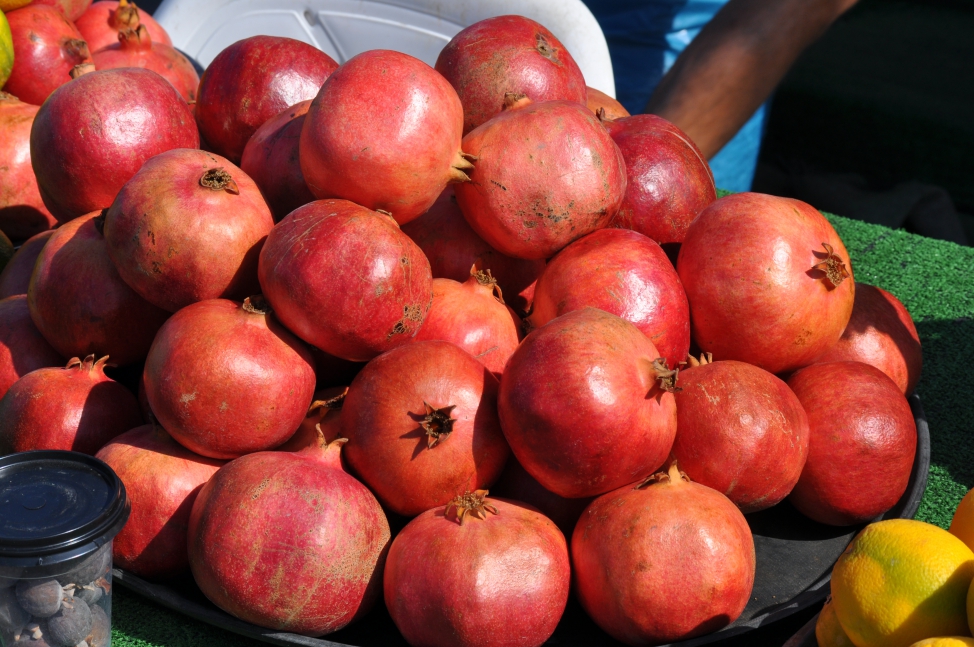
As we were leaving Caesarea I noticed some pomegranates. I was compelled to drink a glass of a couple of these, freshly squeezed.

Pomegranates at Caesarea. Photo by Leon Mauldin.

Pomegranates at Caesarea. Photo by Leon Mauldin.

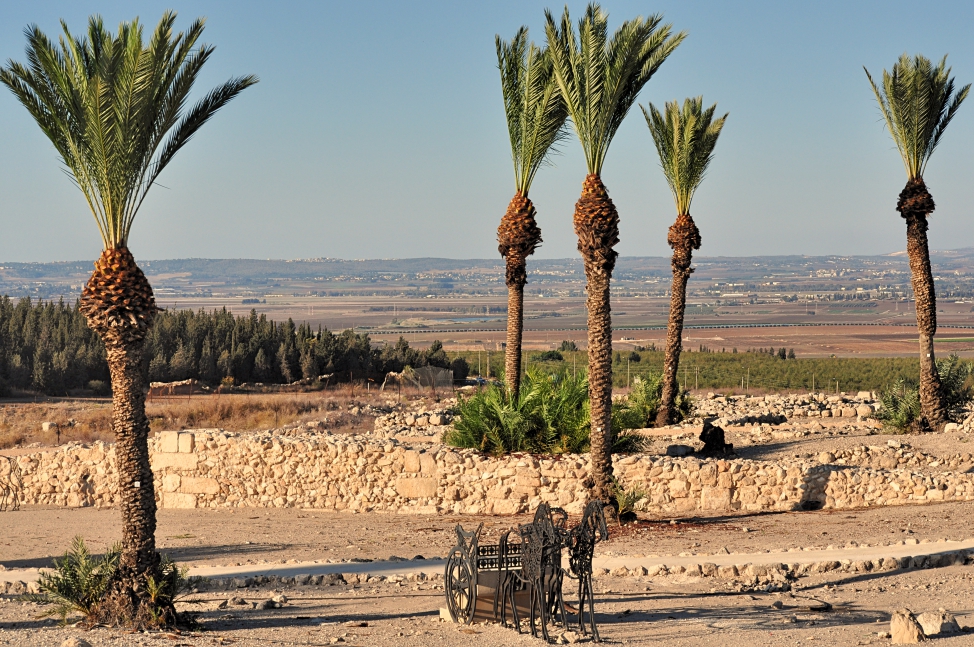
Later at the strategic city of Megiddo we saw several points of interest, including Solomon’s stables.

Solomon's Stables at Megiddo. Photo by Leon Mauldin.

Solomon’s Stables at Megiddo. Photo by Leon Mauldin.

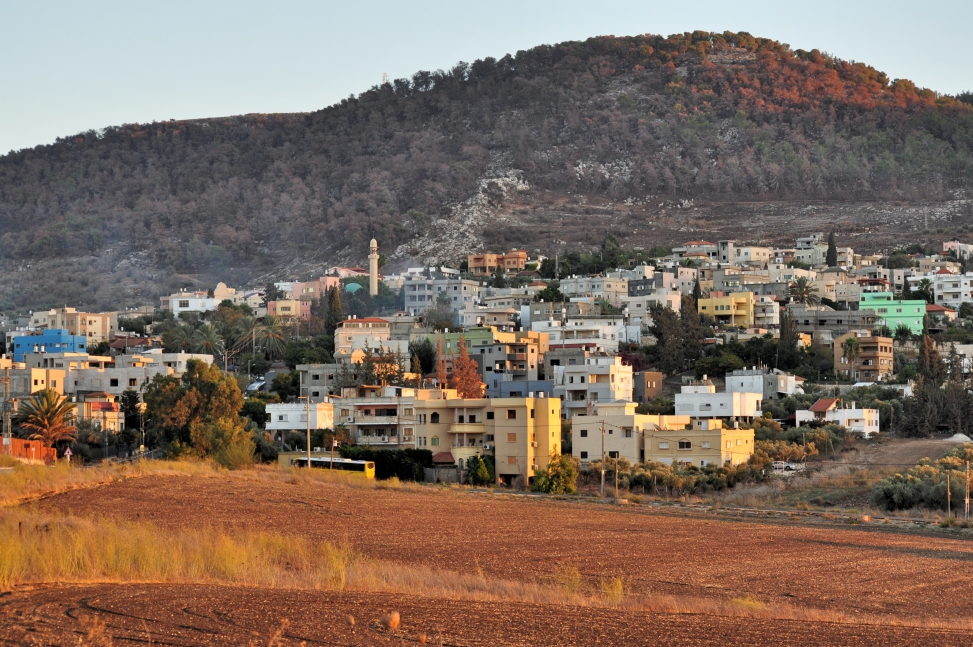
As we headed on the way to Tiberias we stopped briefly for a photo of Nain of Galilee, the village where Jesus raised from the dead a young man, the only son of a widow (Luke 7:11-17).

Nain, of Galilee, where Jesus raised a young man from the dead. Photo by Leon Mauldin.

Nain, of Galilee, where Jesus raised a young man from the dead. Photo by Leon Mauldin.

Thanks for following our travels. I’m writing this from Tiberias, on the Sea of Galilee. More to come!