The Garden of Gethsemane

February 1, 2017

“When Jesus had spoken these words [Farewell Discourse/Prayer, John 14-18], He went forth with His disciples over the ravine of the Kidron, where there was a garden, in which He entered with His disciples” (John 18:1, NASB). Matthew’s record states, “Then Jesus came with them to a place called Gethsemane, and said to His disciples, ‘Sit here while I go over there and pray.'”
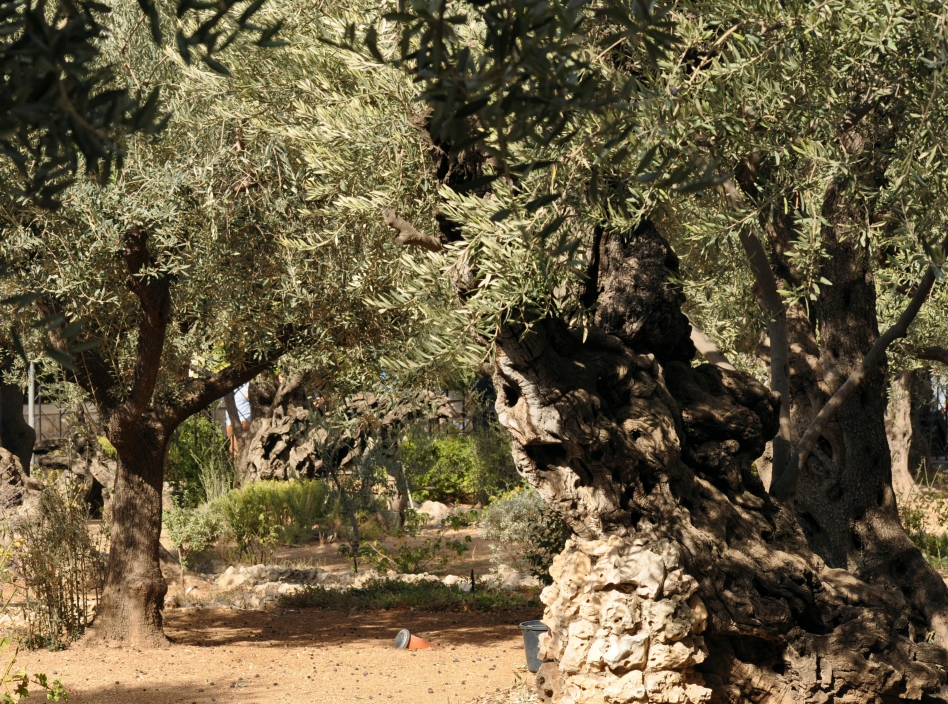
Ancient olive trees on the Mt. of Olives. The Garden of Gethsemane was in this area. Photo by Leon Mauldin.

Ancient olive trees on the Mt. of Olives. The Garden of Gethsemane was in this area. Photo by Leon Mauldin.

The meaning of Gethsemane is “olive press,” and therefore not a “garden” in the ordinary sense of the word, but rather an olive grove that contained an olive press. Though we cannot know the exact spot where Jesus went for prayer that awful night before His crucifixion, it would be situated on the Mount of Olives just east of Jerusalem and across the Kidron Valley.

It would be here that Jesus went with His disciples (minus Judas; see John 13:30) to pray. “They came to a place named Gethsemane; and He said to His disciples, ‘Sit here until I have prayed.'” (Mark 14:32, NASB). We get somewhat of a glimpse of the horrible terror of that night as Luke writes, “And being in agony He was praying very fervently; and His sweat became like drops of blood, falling down upon the ground” (22:44, NASB). He submitted willingly to the Father’s will, because there was no other way that God could be both Just and our Justifier (Romans 3:21-26).

So it was then at the site of Gethsemane that Jesus was betrayed by His disciple Judas, was arrested and from there led away to a series of trials before the Jews and the Romans, and then crucified. But then on the third day “was declared the Son of God with power by the resurrection from the dead, according to the Spirit of holiness, Jesus Christ our Lord” (Rom. 1:4, NASB). Hallelujah, What a Savior!


Palm Branches in Jerusalem

January 31, 2017

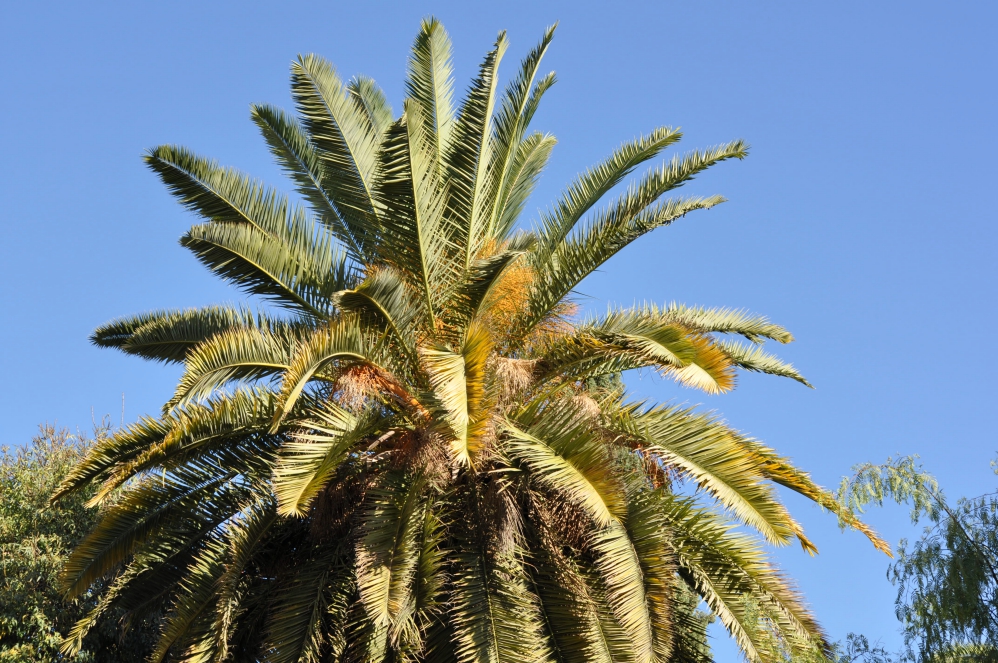
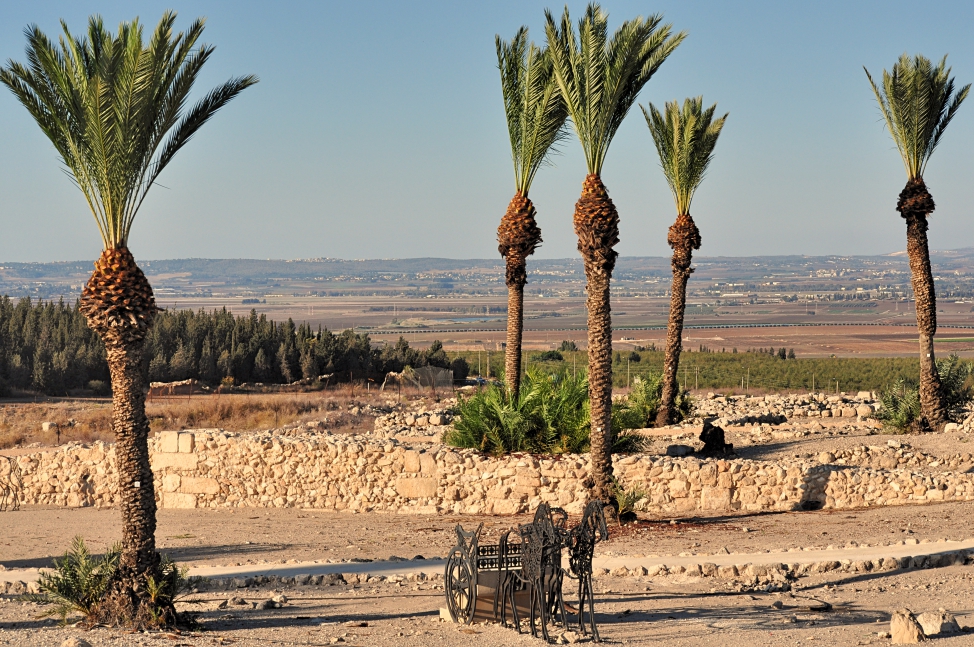
When Jesus began the Final Week of His ministry, He rode on a donkey (fulfilling Zechariah 9:9) from the Mount of Olives to the city of Jerusalem. It was on a Sunday. The text reads, “Most of the crowd spread their coats in the road, and others were cutting branches from the trees and spreading them in the road” (Matt. 21:8, NASB). John’s record tells us the large crowd “took the branches of the palm trees and went out to meet Him, and began to shout, “Hosanna! BLESSED IS HE WHO COMES IN THE NAME OF THE LORD, even the King of Israel” (John 12:13, NASB). While in Jerusalem in November (2016) I made this photograph.

Palm tree in Jerusalem. Photo©Leon Mauldin.

Palm tree in Jerusalem. Photo©Leon Mauldin.

This is why that Sunday prior to Jesus’ crucifixion is today commonly known as “Palm Sunday.”

Click image for larger view.


Temples in Pompeii, Italy

January 27, 2017

The Roman city of Pompeii, as was generally the case in the world of the 1st century, was a city of many gods.

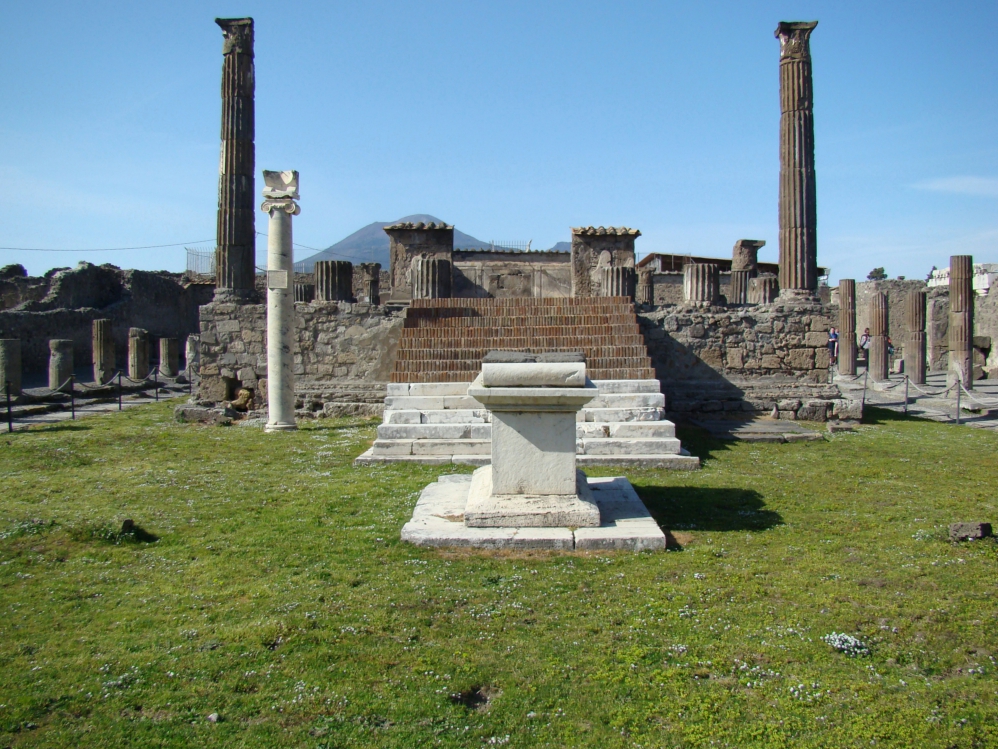
Pompeii–as you might expect, given its many gods–had many temples, though by no means one for every god or goddess who might intervene in the lives of its inhabitants. They came in all sizes, in varying degrees of prominence and with very different histories. Some stretched back to the earliest years of the city. The temple of Apollo next to  the Forum was established by the sixth century BCE at the latest. (The Fires of Vesuvius.281-282).

Temple of Apollo, Pompeii, Italy. Photo by Leon Mauldin. Mt. Vesuvius may been seen the the background.

Temple of Apollo, Pompeii, Italy. Photo by Leon Mauldin. Mt. Vesuvius may been seen the the background.

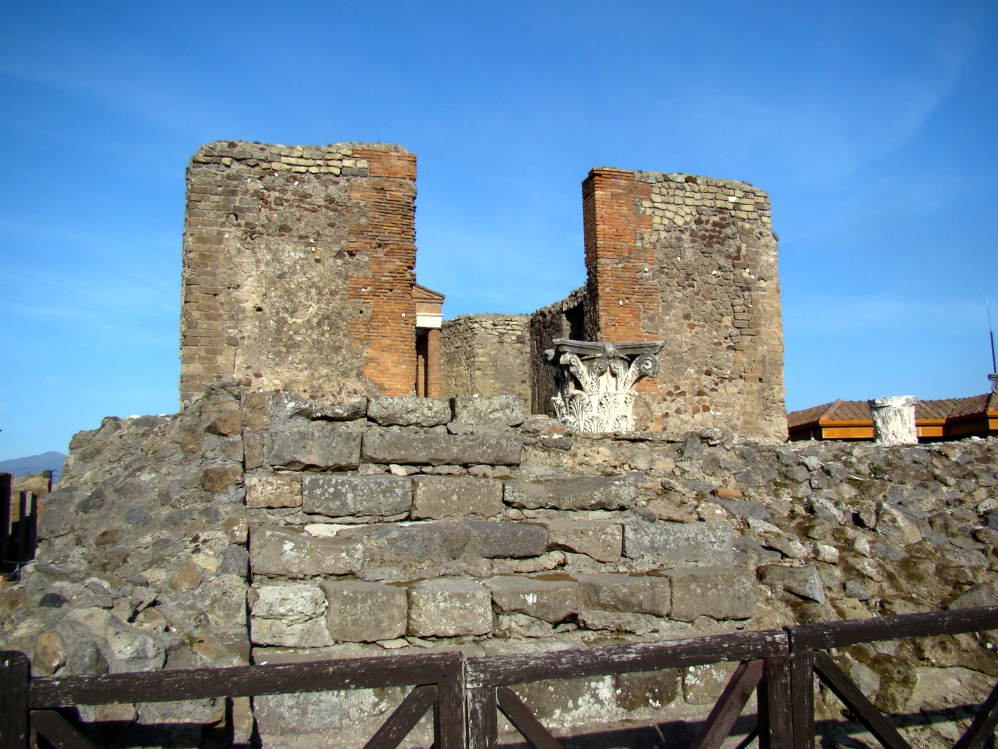
Most of the rest [of the temples] date to the second century BCE or later. The Small Temple of Fortuna Augusta was dedicated to an almost untranslatable combination of the goddess of Good Fortune or Success (Fortuna) and the power of the emperor (the adjective Augusta can confusingly, or conveniently, refer either to the first emperor Augustus himself, or to imperial power more generally–for subsequent emperors used “Augustus” as part of  their titles too)  (Ibid.)

Temple of Fortuna Augusta, Pompeii. Photo by Leon Mauldin.

Temple of Fortuna Augusta, Pompeii. Photo by Leon Mauldin.

Pompeii is a city “frozen” in time by the eruption of Mt. Vesuvius, AD 79. Though this is not a “biblical city” it preserves scenes from a Roman city in the AD 1st century, and thus has tremendous value to us. Thus it helps us to see the setting for the biblical world in the early New Testament era.

When contemplating the widespread idolatry of the biblical world, I often think of Paul’s statement to the Corinthians, many of whom had themselves formerly been idolaters:

we know that “an idol is nothing in the world,” and that “there is no God but one.” For even if there are so-called gods, whether in heaven or on earth– as there are many “gods” and many “lords”– yet for us there is one God, the Father, from whom are all things, and we for Him; and one Lord, Jesus Christ, through whom are all things, and we through Him. However, not everyone has this knowledge. (1 Cor. 6:4-7, HCSB).

Click images for larger view.


OT Baal-hermon, Site of Banias/Caesarea Philippi?

December 23, 2016

1 Chronicles 5 gives a summary of the settlement of the eastern tribes of Israel: Reuben, Gad and Manasseh. Verse 23 states, “Now the sons of the half-tribe of Manasseh lived in the land; from Bashan to Baal-hermon and Senir and Mount Hermon they were numerous.”

The ISBE has an interesting suggestion: “The Baal-hermon of 1 Ch 5:23 lay somewhere E. of the Jordan, near to Mount Hermon. It may possibly be identical with Bāniās.”¹

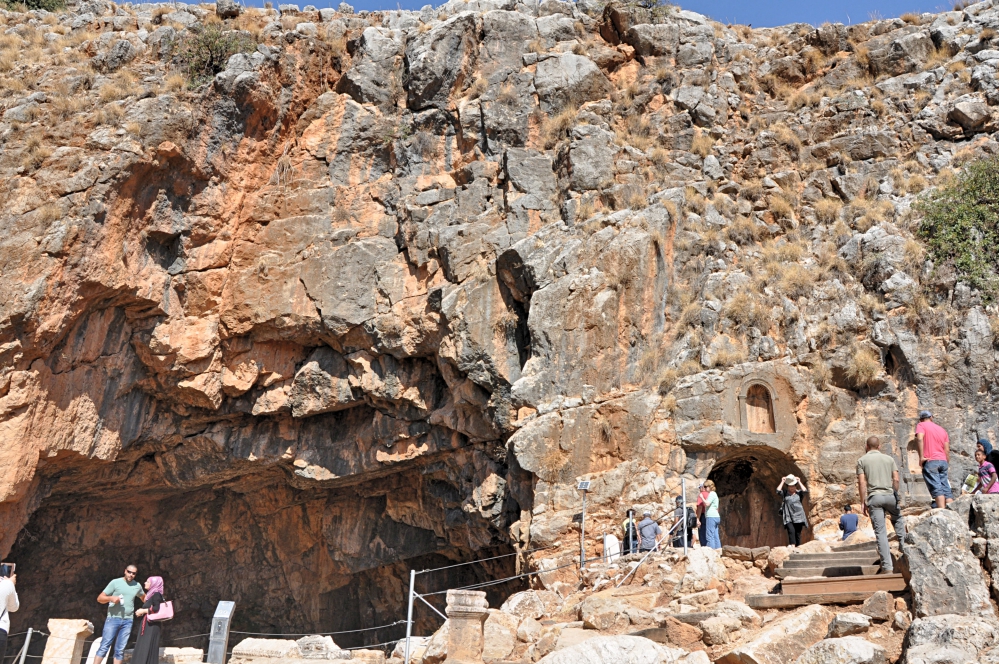
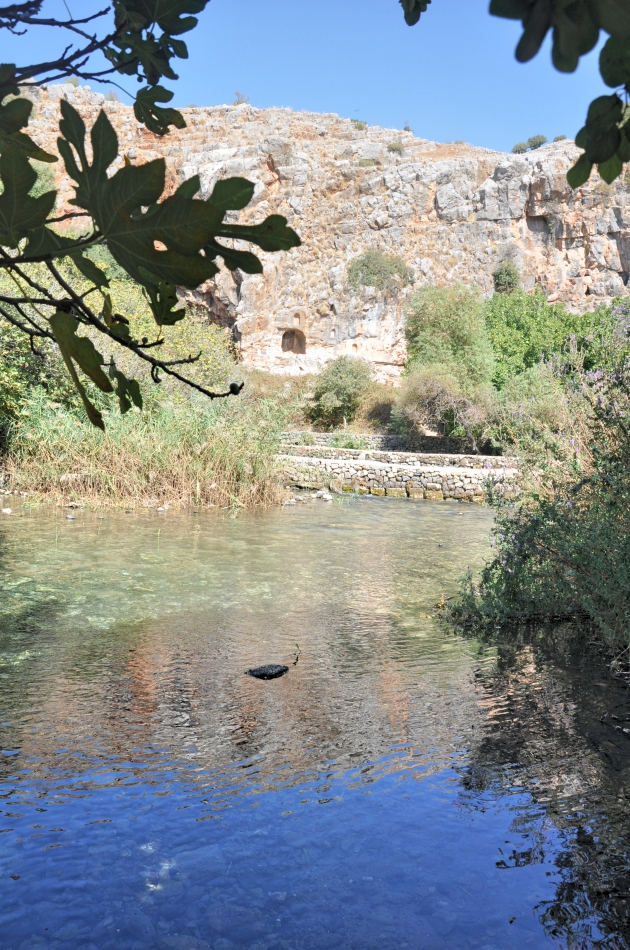
Caesarea Philippi/Banias. Some scholars identify this with Old Testament Baal-hermon. Photo by Leon Mauldin.

Caesarea Philippi/Banias. Some scholars identify this site with Old Testament Baal-hermon. Photo ©Leon Mauldin.

Our photo features Banias, better known to most Bible students as Caesarea Philippi, because it was in this region that Peter made his great confession of faith in Jesus as Messiah, the Divine Son of God, and Jesus promised to build His church (Matt. 16:13-20). On the lower left you can see the grotto of the god Pan, where idolatrous sacrifices were offered. To the right you can see niches carved into the face of the rock; these formerly contained idols. Banias/Caesarea Philippi is located at the foot of Mt. Hermon.

From here flows the Banias River, which merges with other sources to our south (about-face from perspective in photo).

Banias River, a major source of the Jordan. Photo ©Leon Mauldin.

Banias River, a major source of the Jordan. Photo ©Leon Mauldin.

We know that Banias/Caesarea Philippi was a site for pagan worship in the AD 1st century. There is evidence that this had been a center of idolatrous worship for centuries prior to Jesus’ ministry, reaching centuries back to Old Testament times.

Here are some further sources which suggest identification of Old Testament Baal-hermon with Banias/Caesarea Philippi (use of bold type for emphasis mine, LM):

Baal-hermon . . . probably the present Bânjas, at the foot of Hermon.”²

“Baal-Gad—lord of fortune, or troop of Baal, a Canaanite city in the valley of Lebanon at the foot of Hermon, hence called Baal-hermon (Judge. 3:3; 1 Chr. 5:23), near the source of the Jordan (Josh. 13:5; 11:17; 12:7). It was the most northern point to which Joshua’s conquests extended. It probably derived its name from the worship of Baal. Its modern representative is Banias

Caesarea Philippi—a city on the northeast of the marshy plain of el-Huleh, 120 miles north of Jerusalem, and 20 miles north of the Sea of Galilee, at the “upper source” of the Jordan, and near the base of Mount Hermon. It is mentioned in Matt. 16:13 and Mark 8:27 as the northern limit of our Lord’s public ministry. According to some its original name was Baal-Gad (Josh. 11:17), or Baal-Hermon (Judg. 3:3; 1 Chr. 5:23), when it was a Canaanite sanctuary of Baal. It was afterwards called Panium or Paneas, from a deep cavern full of water near the town. This name was given to the cavern by the Greeks of the Macedonian kingdom of Antioch because of its likeness to the grottos of Greece, which were always associated with the worship of their god Pan. Its modern name is Banias. Here Herod built a temple, which he dedicated to Augustus Caesar. This town was afterwards enlarged and embellished by Herod Philip, the tetrarch of Trachonitis, of whose territory it formed a part, and was called by him Caesarea Philippi, partly after his own name, and partly after that of the emperor Tiberius Caesar.4


Click on photos for larger view.

¹Orr, J., Nuelsen, J. L., Mullins, E. Y., & Evans, M. O. (Eds.). (1915). Baal-Hermon. In The International Standard Bible Encyclopaedia (Vol. 1–5, p. 347). Chicago: The Howard-Severance Company.

2 Keil, C. F., & Delitzsch, F. (1996). Commentary on the Old Testament (Vol. 3, p. 442). Peabody, MA: Hendrickson.

³Easton’s Bible Dictionary. New York: Harper & Brothers.

4 Ibid.


Pools Around the Temple

November 17, 2016

On our recent trip to Israel, while we were in the area of the Antonia Fortress, our guide Zack showed us some artwork that I found to be a helpful illustration of the area north of the temple in Jerusalem.

Pools of Jerusalem. Shows area north of temple mount. Photo by Leon Mauldin.

Pools of Jerusalem. Shows area north of temple mount. Photo by Leon Mauldin.

This is useful for showing the location of the Antonia Fortress, which would have housed the Roman soldiers stationed in Jerusalem to keep peace (to the chagrin of the Jewish nation). While many believe that it would have been here that Jesus was put on trial before Pilate, it is more likely that Pilate would have been at Herod’s palace there in Jerusalem. For more on this, see the excellent post by Ferrell Jenkins here.

The Antonia Fortress would have been the location of the barracks where Paul was taken when some Jews in Jerusalem were enraged to the point of seeking to kill him: “the commanding officer ordered Paul to be brought back into the barracks. He told them to interrogate Paul by beating him with a lash so that he could find out the reason the crowd was shouting at Paul in this way (Acts 22:24, NET).

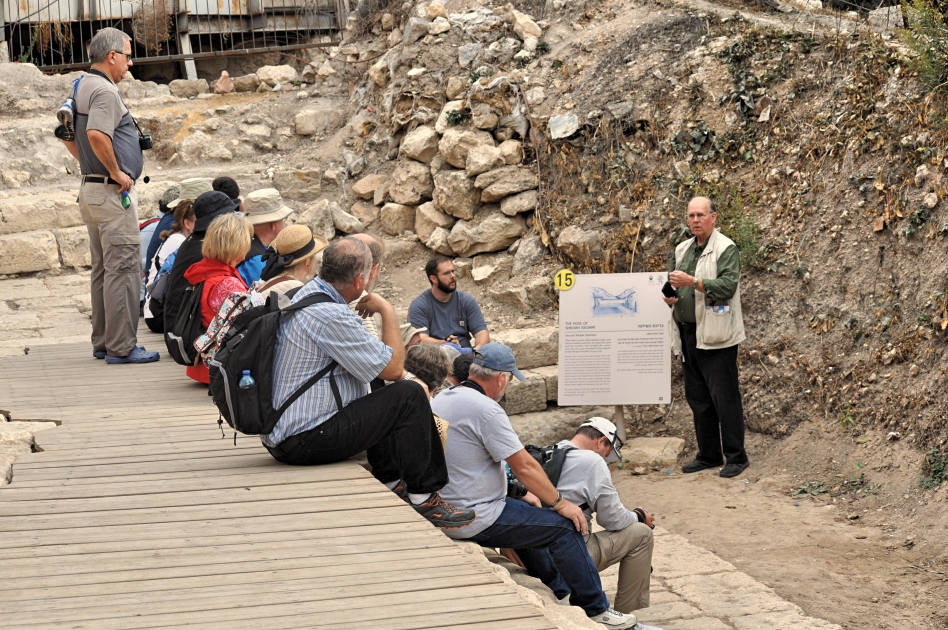
This illustration is also helpful in visualizing the setting of John 5, where Jesus healed the man who had been paralyzed thirty-eight years: “Now there is in Jerusalem by the Sheep Gate a pool, which is called in Hebrew, Bethesda, having five porches” (v.2). Here you can see the location of the sheep gate, as well as the twin pools of Bethesda.

Excavations at the Pool of Bethesda. Photo by Leon Mauldin.

Excavations at the Pool of Bethesda. Photo by Leon Mauldin.

My previous posts on Bethesda can be seen by clicking here, here, here and here.

When you study the Bible, you are studying real events, real places, real people!


Pool of Siloam in Jerusalem

November 7, 2016

Today was a walking tour of Jerusalem. One of my favorite sites (among others) is the pool of Siloam, referenced in John 9. This site was excavated in late 2004. Jesus anointed with clay the eyes of the man born blind, and told him to go to this pool to wash his eyes. He did so, and he went away seeing. This miracle was evidence to validate Jesus’ claim that He was the light of the world (John 9:5).

At the pool of Siloam, where the blind man received his sight (John 9). Photo by Zachary Shavin.

At the pool of Siloam, where the blind man received his sight (John 9). Photo by Zachary Shavin.

Note the text of John 9:1-7:

Now as Jesus passed by, He saw a man who was blind from birth. 2 And His disciples asked Him, saying, “Rabbi, who sinned, this man or his parents, that he was born blind?” 3 Jesus answered, “Neither this man nor his parents sinned, but that the works of God should be revealed in him. 4 “I must work the works of Him who sent Me while it is day; the night is coming when no one can work. 5 “As long as I am in the world, I am the light of the world.” 6 When He had said these things, He spat on the ground and made clay with the saliva; and He anointed the eyes of the blind man with the clay. 7 And He said to him, “Go, wash in the pool of Siloam” (which is translated, Sent). So he went and washed, and came back seeing.

This was one of seven miracles recorded in the Gospel of John. John’s stated purpose:

And truly Jesus did many other signs in the presence of His disciples, which are not written in this book; but these are written that you may believe that Jesus is the Christ, the Son of God, and that believing you may have life in His name. (John 20:30-31)

We have previously posted on Siloam here and here.

Click on image for larger view. Thanks for following our travels.


On the Mount of Olives

November 5, 2016

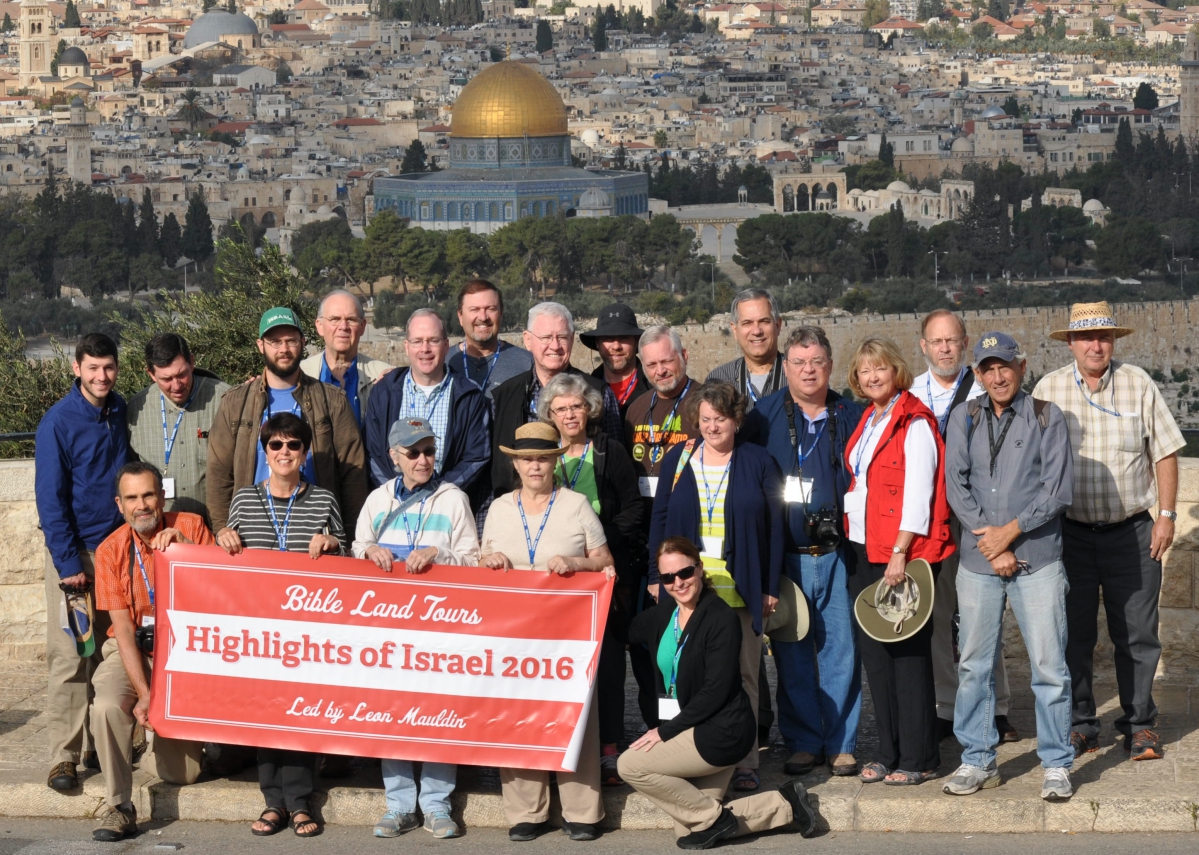
This morning we began the day with a visit to the Mount of Olives. We then saw Gethsemane where we reflected, read appropriate passages, and sang. We walked through Kidron to the southern end of the temple mount. We ended the day with a visit to Bethlehem.

Group Photo Mt. of Olives. Photo ©Leon Mauldin.

Group Photo Mt. of Olives. Photo ©Leon Mauldin.

We paused for a group shot while on the Mount of Olives.

It was on the Mount of Olives that Jesus gathered with His apostles and instructed them a final time before His ascension back into heaven:

4 And being assembled together with them, He commanded them not to depart from Jerusalem, but to wait for the Promise of the Father, “which,” He said, “you have heard from Me; 5 “for John truly baptized with water, but you shall be baptized with the Holy Spirit not many days from now.” 6 Therefore, when they had come together, they asked Him, saying, “Lord, will You at this time restore the kingdom to Israel?” 7 And He said to them, “It is not for you to know times or seasons which the Father has put in His own authority. 8 “But you shall receive power when the Holy Spirit has come upon you; and you shall be witnesses to Me in Jerusalem, and in all Judea and Samaria, and to the end of the earth.” 9 Now when He had spoken these things, while they watched, He was taken up, and a cloud received Him out of their sight. 10 And while they looked steadfastly toward heaven as He went up, behold, two men stood by them in white apparel, 11 who also said, “Men of Galilee, why do you stand gazing up into heaven? This same Jesus, who was taken up from you into heaven, will so come in like manner as you saw Him go into heaven.” 12 Then they returned to Jerusalem from the mount called Olivet, which is near Jerusalem, a Sabbath day’s journey. (Acts 1:4-12).

I’m thankful to say that all of our folks here continue to be well. Thanks for following our blog.


Down the Jordan Valley

November 4, 2016

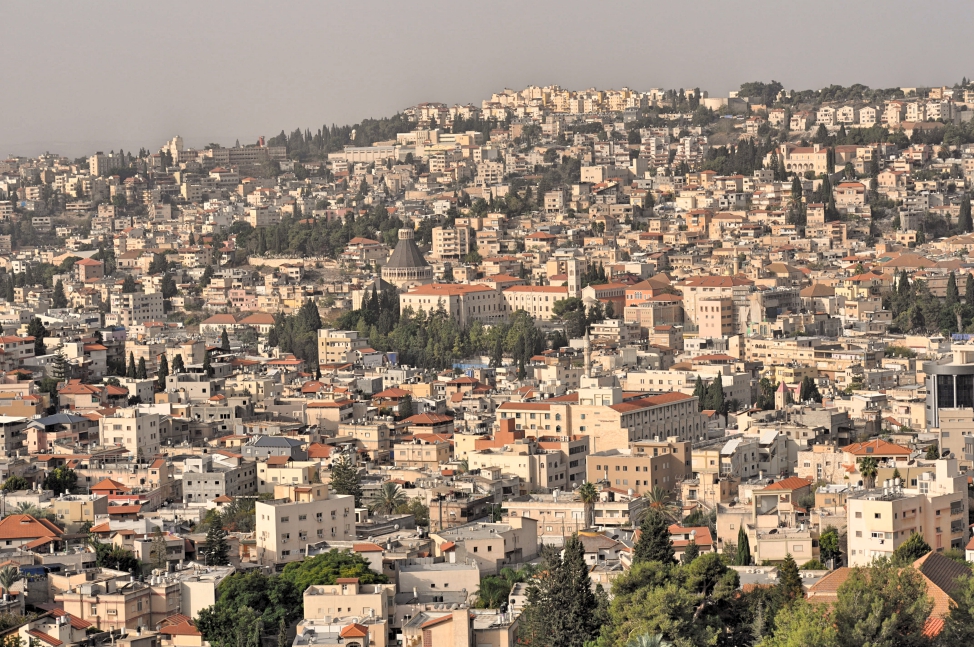
We said “Good-bye” to Tiberias on the Sea of Galilee this morning and made our way down (biblically “up” in altitude) to Jerusalem. We made a stop at Nazareth, Jesus’ hometown.

Nazareth in Galilee, Jesus' hometown. Photo ©Leon Mauldin.

Nazareth in Galilee, Jesus’ hometown. Photo ©Leon Mauldin.

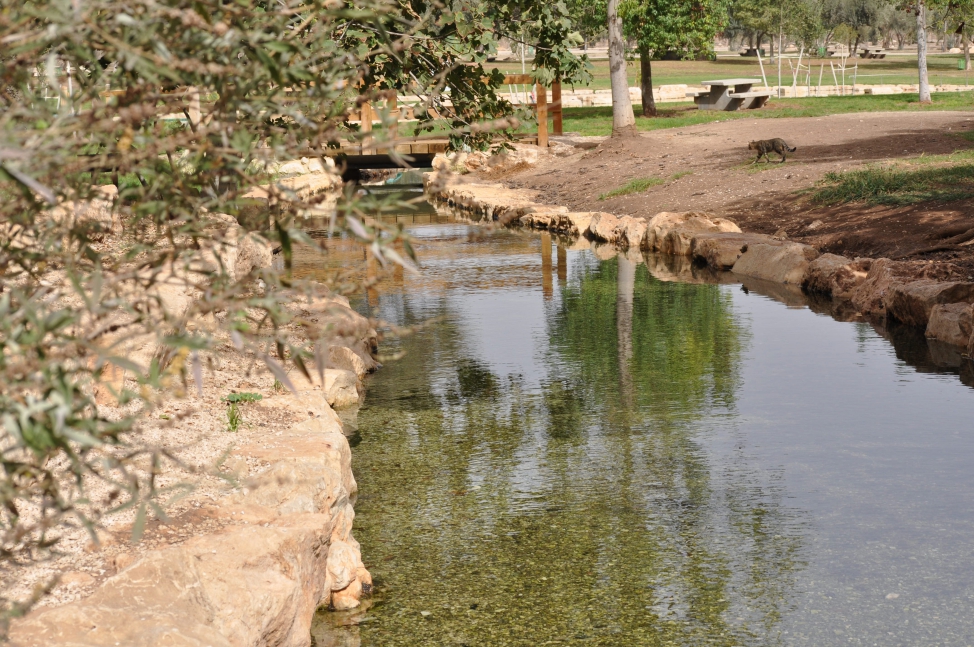
We also made a stop at the Spring of Harod,where Gideon’s army was reduced to 300 men, by which God gave Israel victory over the Midianites (Judges 7-8).

Spring of Harod. Photo ©Leon Mauldin.

Spring of Harod. Photo ©Leon Mauldin.

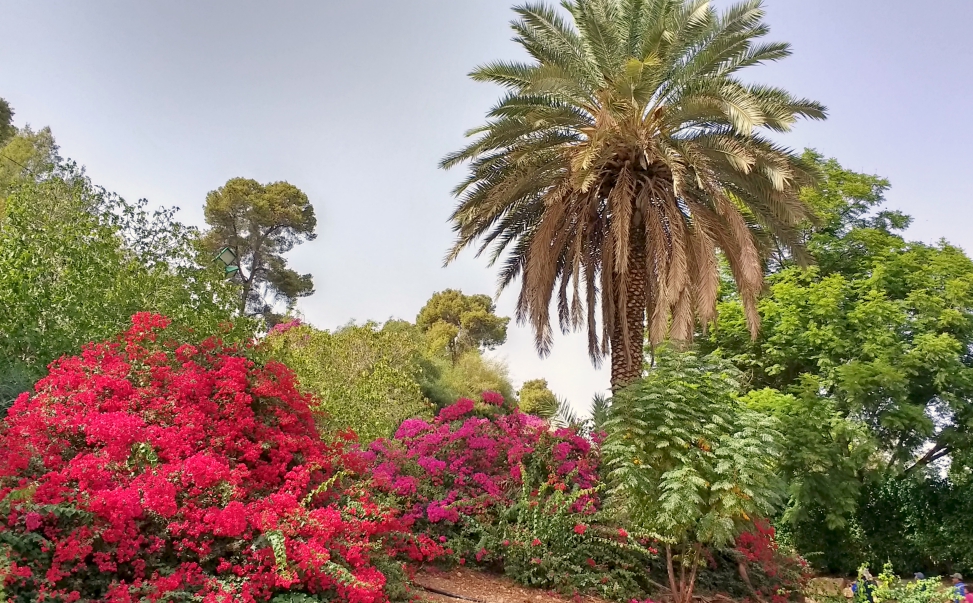
Colorful flora at the site:

Flora at the Spring of Harod. Photo ©Leon Mauldin.

Flora at the Spring of Harod. Photo ©Leon Mauldin.

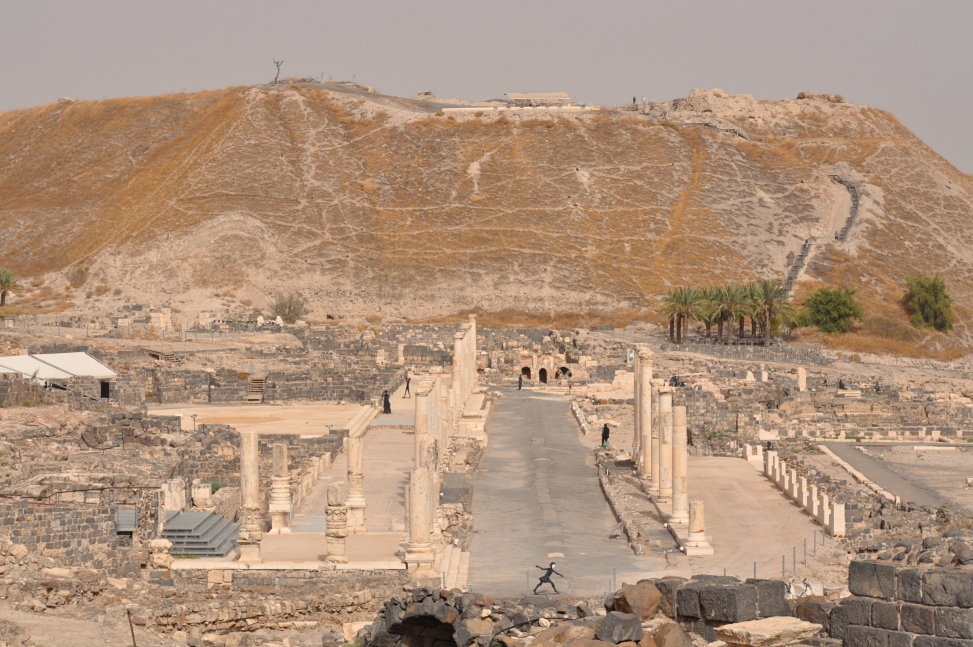
We also saw Beth-Shean, mentioned in 1 Sam. 31 as the site where the victorious Philistines took the bodies of King Saul and his three sons, fastening them to the walls of the city. This was Scythopolis in New Testament times, one of the cities of the Decapolis.

Beth-shean. OT tel in background; Roman ruins in foreground. Photo ©Leon Mauldin.

Beth-shean. OT tel in background; Roman ruins in foreground. Photo ©Leon Mauldin.

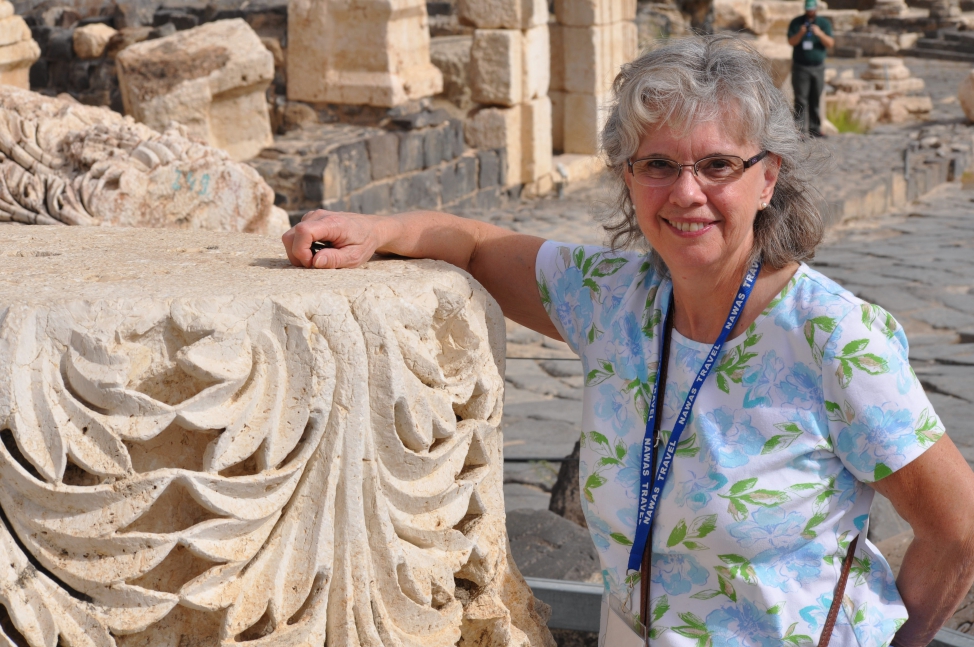
Good friend and tour member Lynn Clayton.

Lynn at Beth-shean. Photo ©Leon Mauldin.

Lynn at Beth-shean. Photo ©Leon Mauldin.

Click photos for larger image. Thanks for following our travels in the Bible lands.


In Galilee and Environs

November 3, 2016

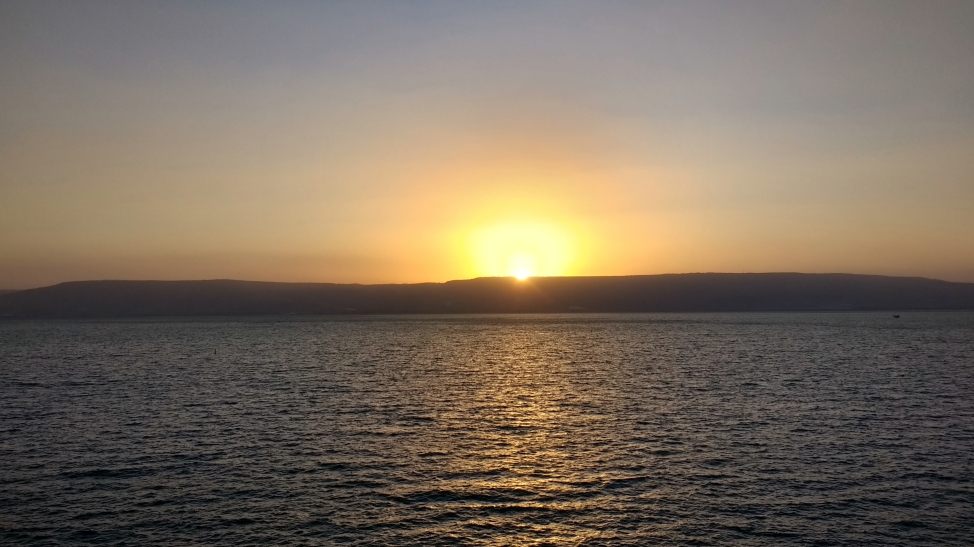
I never tire of seeing sunrise on the Sea of Galilee.

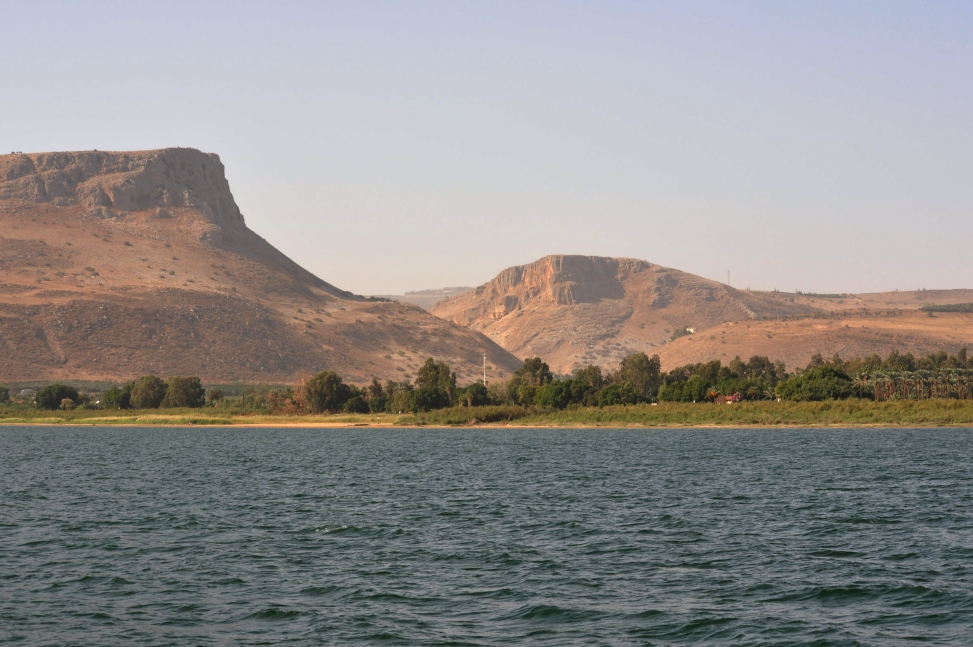
Via Maris at Arbel Pass. Photo by Leon Mauldin.

Sunrise, Sea of Galilee. Photo by Leon Mauldin.

From the Sea we had a view of Mt. Arbel, where the international highway, the Via Maris, passed.

Via Maris at Mt. Arbel. Photo by Leon Mauldin.

Via Maris at Mt. Arbel. Photo by Leon Mauldin.

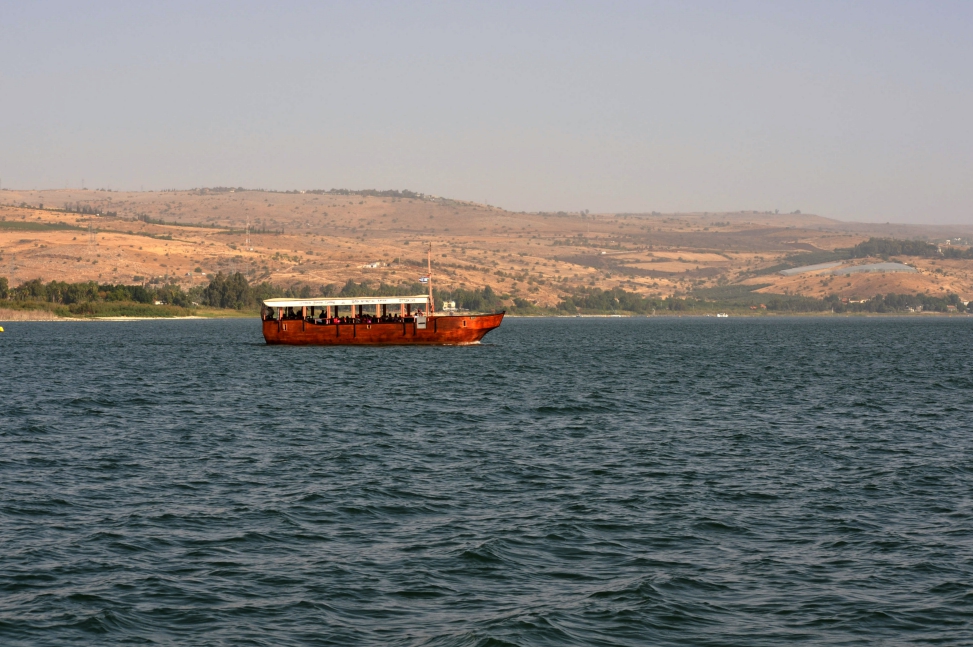
Boats such as these take passengers across the Sea of Galilee.

Photo by Leon Mauldin.

Photo by Leon Mauldin.

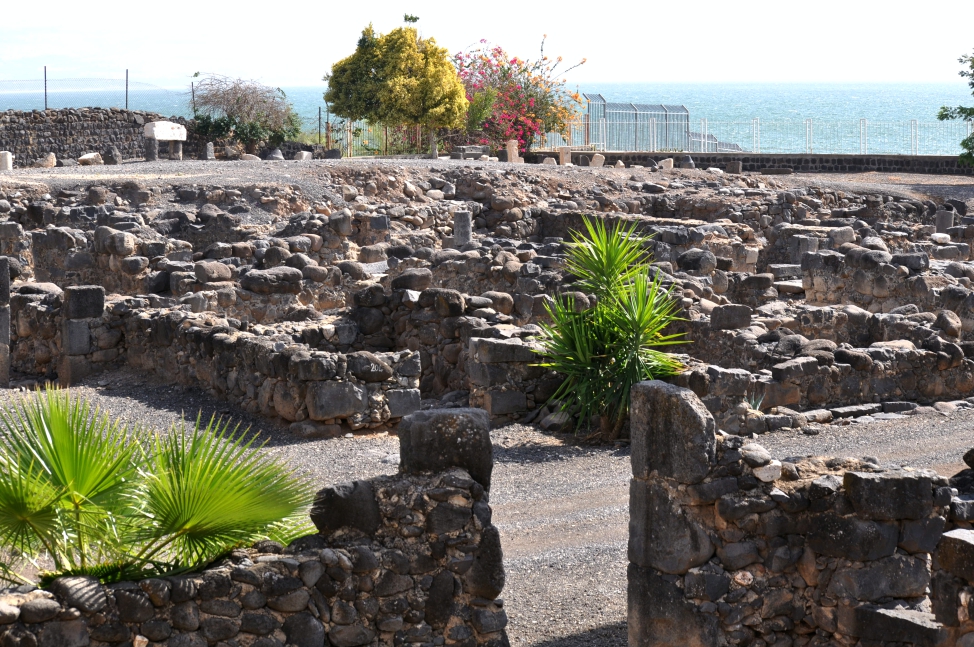
We visited Capernaum (“town of Nahum,” New Unger’s Bible Dictionary, p.209),  called “the most important city on the northern shore of the Sea of Galilee (Nelson’s New Illustrated Bible Dictionary, p. 245). Jesus’ home town was Nazareth, but Capernaum was where He lived during the Galilean ministry. Note the wording of the NET in Matt. 4:13: “While in Galilee, he moved from Nazareth to make his home in Capernaum by the sea, in the region of Zebulun and Naphtali.” To that compare Mark 2:1: “Now after some days, when he returned to Capernaum, the news spread that he was at home,” with its parallel in Mt. 9:1, which says Jesus came “to His own city.”

Here is a view of some of the excavations there.

Excavations at Capernaum, Jesus hometown. Photo by Leon Mauldin.

Excavations at Capernaum, Jesus hometown. Photo by Leon Mauldin.

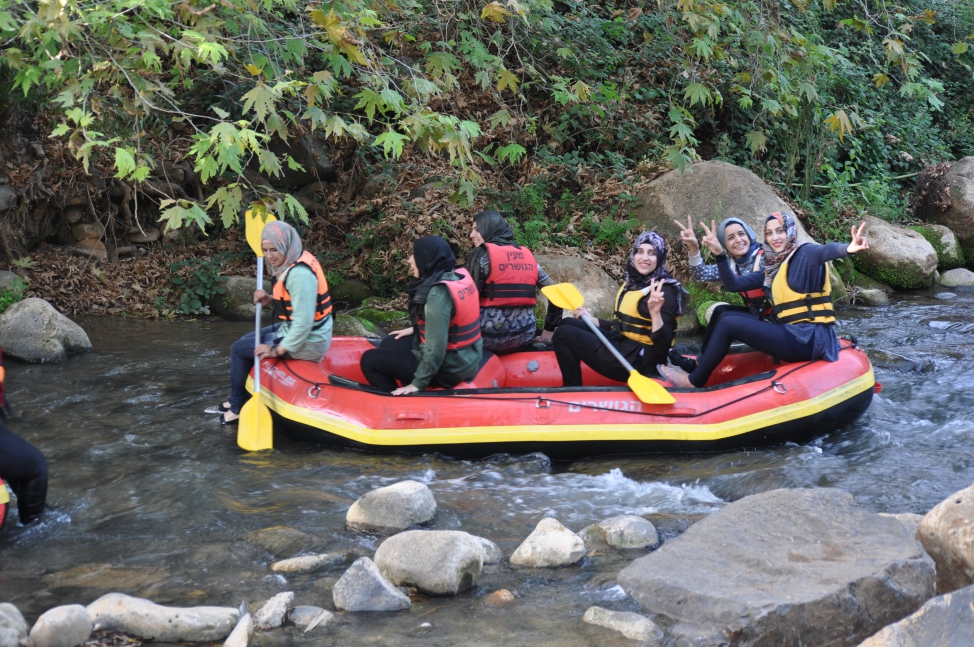
Moving north, we saw the Senir, one of the sources of the Jordan River. Some girls were rafting. Tomorrow we are to begin our journey south to Jerusalem. Thanks for following our travels.

Rafting in the Senir River. Photo by Leon Mauldin.

Rafting in the Senir River. Photo by Leon Mauldin. 


Caesarea, and on to Galilee

November 2, 2016

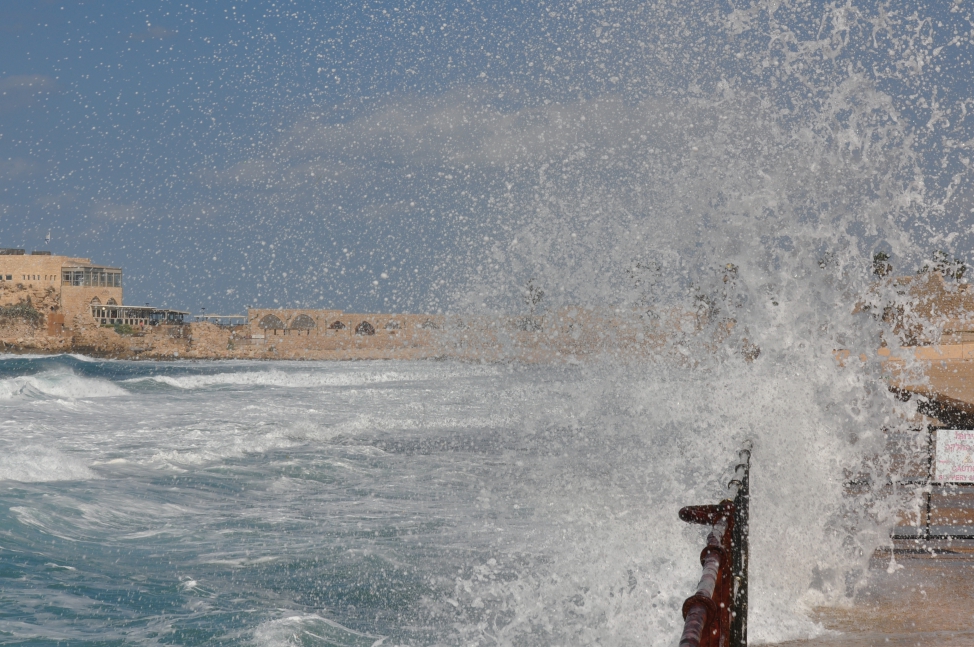
This morning upon leaving Natana with its beautiful view of the Mediterranean, we first visited Caesarea, the Roman capitol of Israel during Jesus’ Ministry. We saw lots of wave action.

Waves at Caesarea. Photo by Leon Mauldin.

Waves at Caesarea. Photo by Leon Mauldin.

Caesarea is mentioned numerous times in the New Testament. This became the home of Philip the evangelist (Acts 8:40; 21:8). Cornelius, the first Gentile convert, resided here (Acts 10-11). Paul used the port when leaving for Tarsus (Acts 9:30), and when returning from 2nd and 3rd journeys (Acts 18:22; 21:8). Later Paul was imprisoned here for two years (Acts 24:27), during which time he stood before Felix and Drusilla (Acts 24), Festus (Acts 25) and Herod Agrippa II (Acts 26). Paul left for Rome still as a prisoner from here (Acts 27).

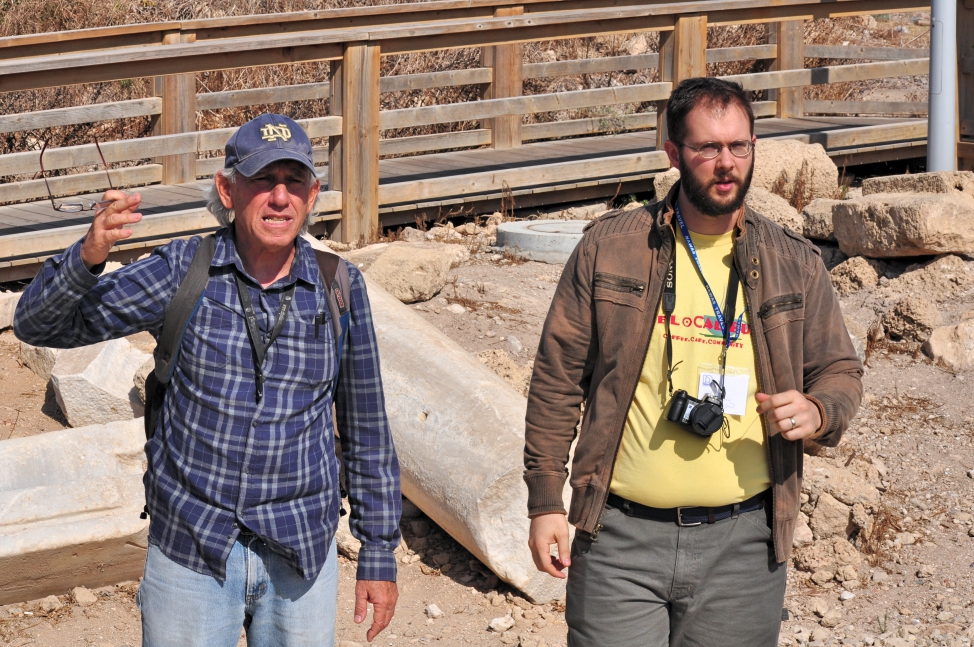
Our Israeli guide, Zack, and my son, Seth. Photo by Leon Mauldin.

Our Israeli guide, Zack (left), and my son, Seth, at Caesarea. Photo by Leon Mauldin.

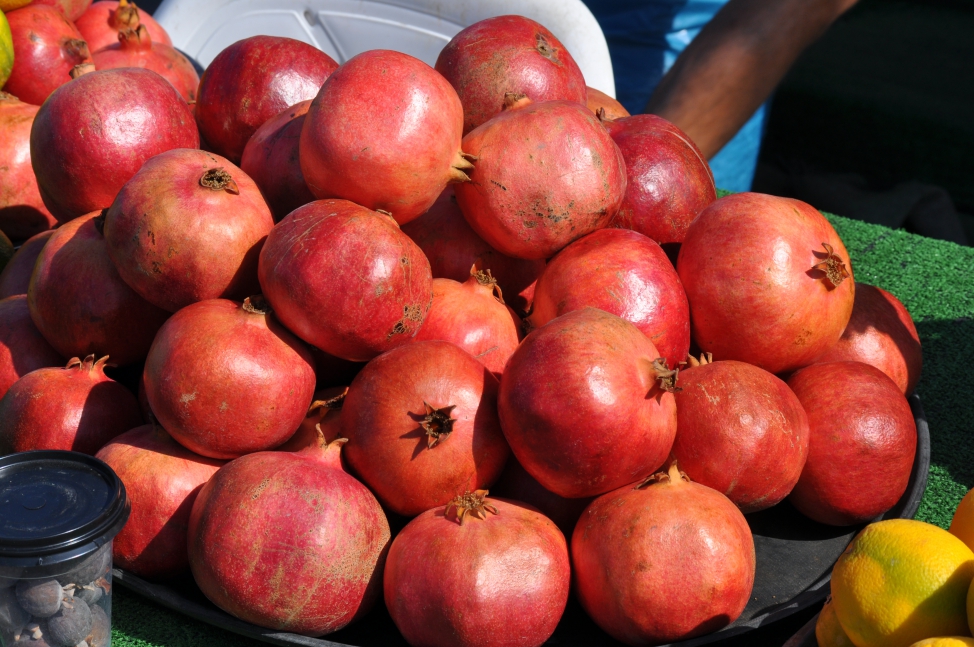
As we were leaving Caesarea I noticed some pomegranates. I was compelled to drink a glass of a couple of these, freshly squeezed.

Pomegranates at Caesarea. Photo by Leon Mauldin.

Pomegranates at Caesarea. Photo by Leon Mauldin.

Later at the strategic city of Megiddo we saw several points of interest, including Solomon’s stables.

Solomon's Stables at Megiddo. Photo by Leon Mauldin.

Solomon’s Stables at Megiddo. Photo by Leon Mauldin.

As we headed on the way to Tiberias we stopped briefly for a photo of Nain of Galilee, the village where Jesus raised from the dead a young man, the only son of a widow (Luke 7:11-17).

Nain, of Galilee, where Jesus raised a young man from the dead. Photo by Leon Mauldin.

Nain, of Galilee, where Jesus raised a young man from the dead. Photo by Leon Mauldin.

Thanks for following our travels. I’m writing this from Tiberias, on the Sea of Galilee. More to come!