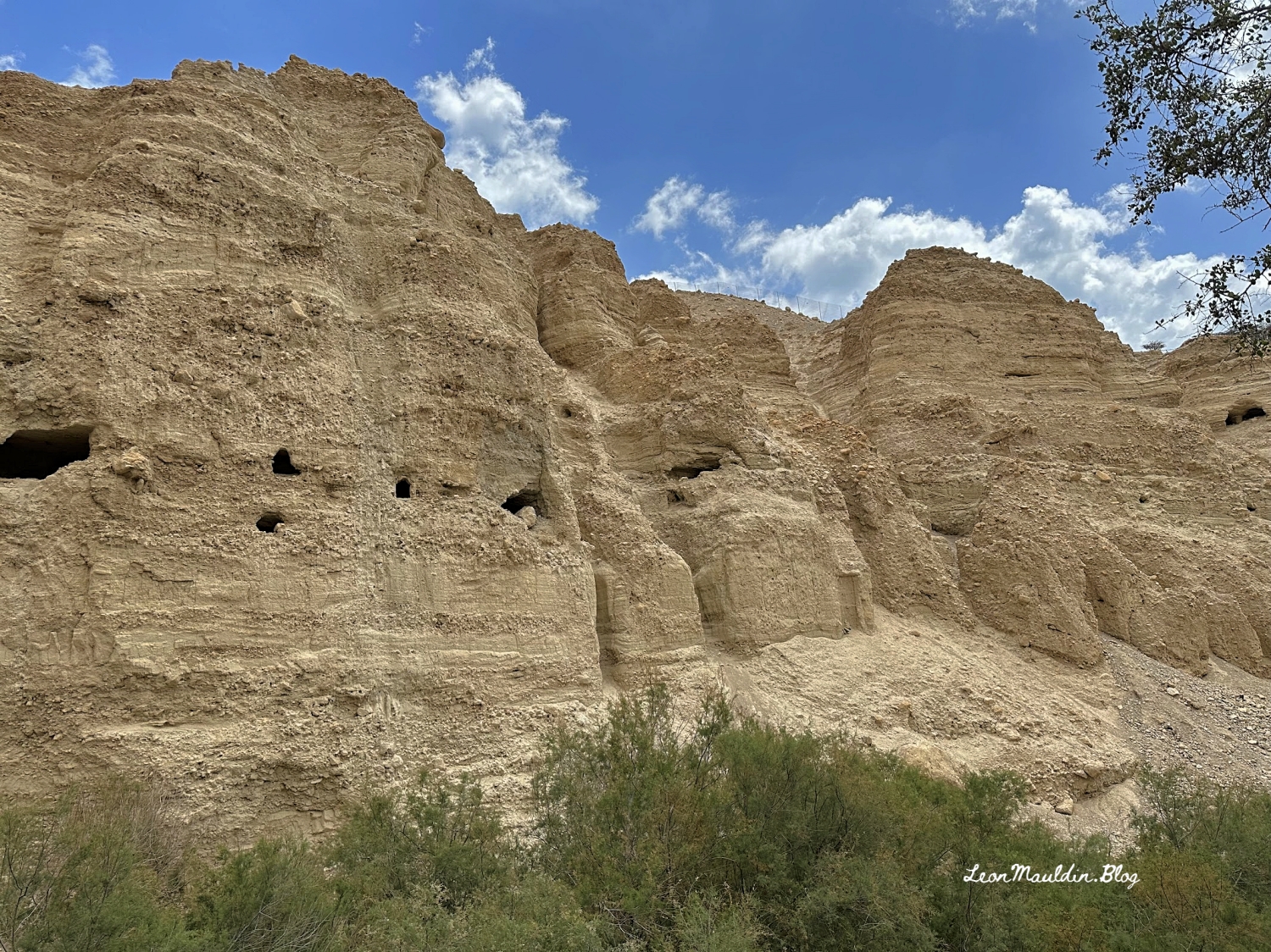
Judah’s King Jehoshaphat (r. 873-848) faced an invasion by a coalition of forces from Moab and Ammon and others (2 Chron. 20:1). The text states: “Messengers arrived and reported to Jehoshaphat, “A huge army is attacking you from the other side of the Dead Sea, from the direction of Edom. Look, they are in Hazezon Tamar (that is, En Gedi)” (v.2, NET). This location is on the western shore of the Dead Sea, so the enemy was already in Judah’s territory. The text will go on to narrate a great victory which YHWH granted because His people relied upon Him (see the remainder of 2 Chron. 20).
Hazazon Tamar, En Gedi in southern Israel. Photo by Leon Mauldin.
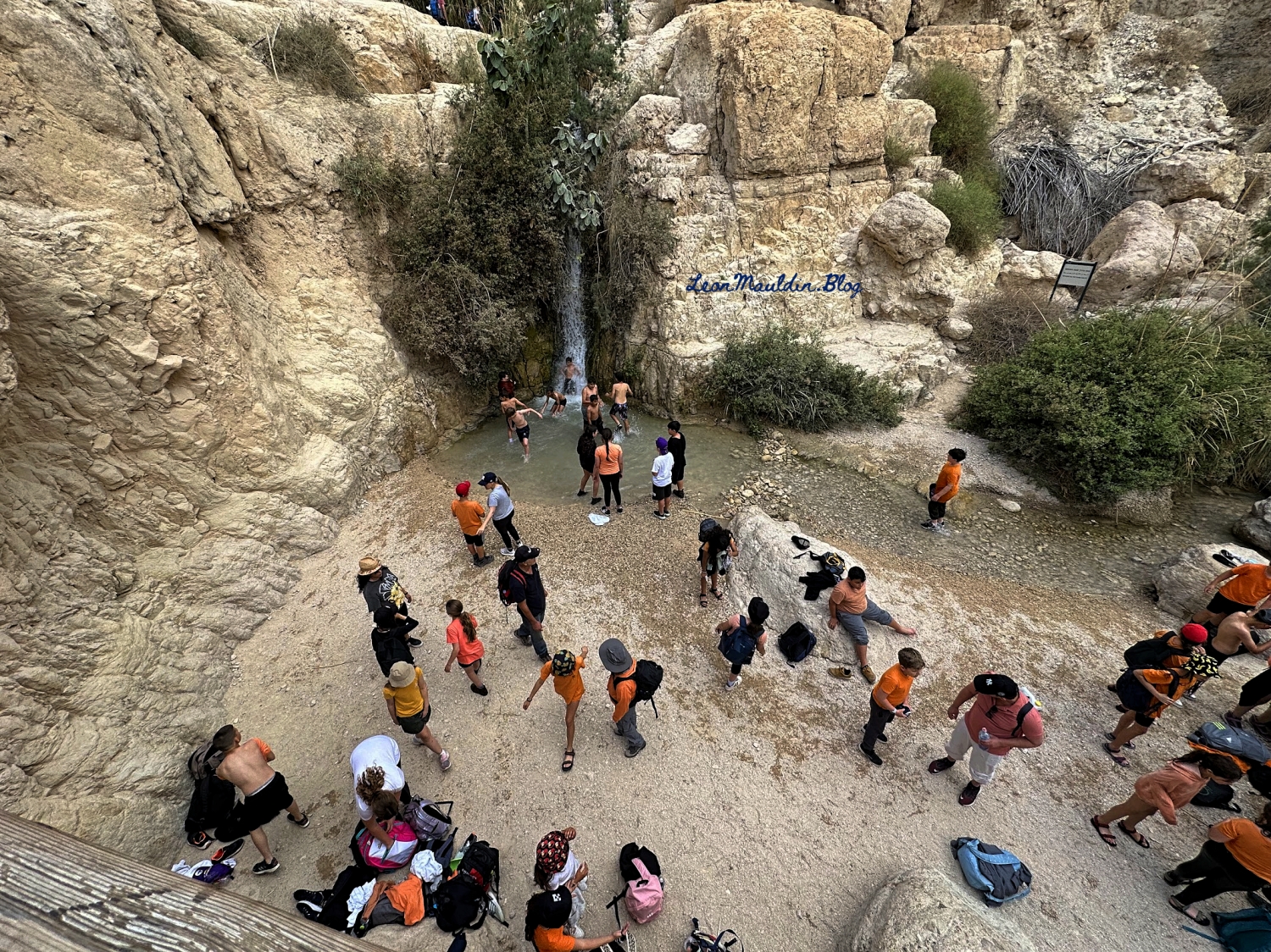
One of the fresh water falls at En Gedi. Photo by Leon Mauldin.
Photos like these help us to better visualize our text.
2 Samuel narrates an event early in the reign of King David, when initially he was king of Judah, prior to his reign over all Israel. When Ishbosheth, Saul’s son, was the rival king of Israel to the north, and Abner was his commander, there was a meeting at the pool of Gibeon, with Abner and his forces, and Joab, David’s commander, and his men. The text reads,
And Joab the son of Zeruiah, and the servants of David, went out and met them by the pool of Gibeon. So they sat down, one on one side of the pool and the other on the other side of the pool. Then Abner said to Joab, “Let the young men now arise and compete before us.” And Joab said, “Let them arise.” So they arose and went over by number, twelve from Benjamin, followers of Ishbosheth the son of Saul, and twelve from the servants of David. And each one grasped his opponent by the head and thrust his sword in his opponent’s side; so they fell down together. Therefore that place was called the Field of Sharp Swords, which is in Gibeon. So there was a very fierce battle that day, and Abner and the men of Israel were beaten before the servants of David (2 Sam. 2:13-17).
Abner and his forces were soundly defeated, suffering 360 casualties, while David’s men led by his commander Joab had a total of 20 losses (v. 25-31). It was a sad and unnecessary chapter in Israel’s history. Gibeon was located within the tribal territory of Benjamin. Today it is in the West Bank.
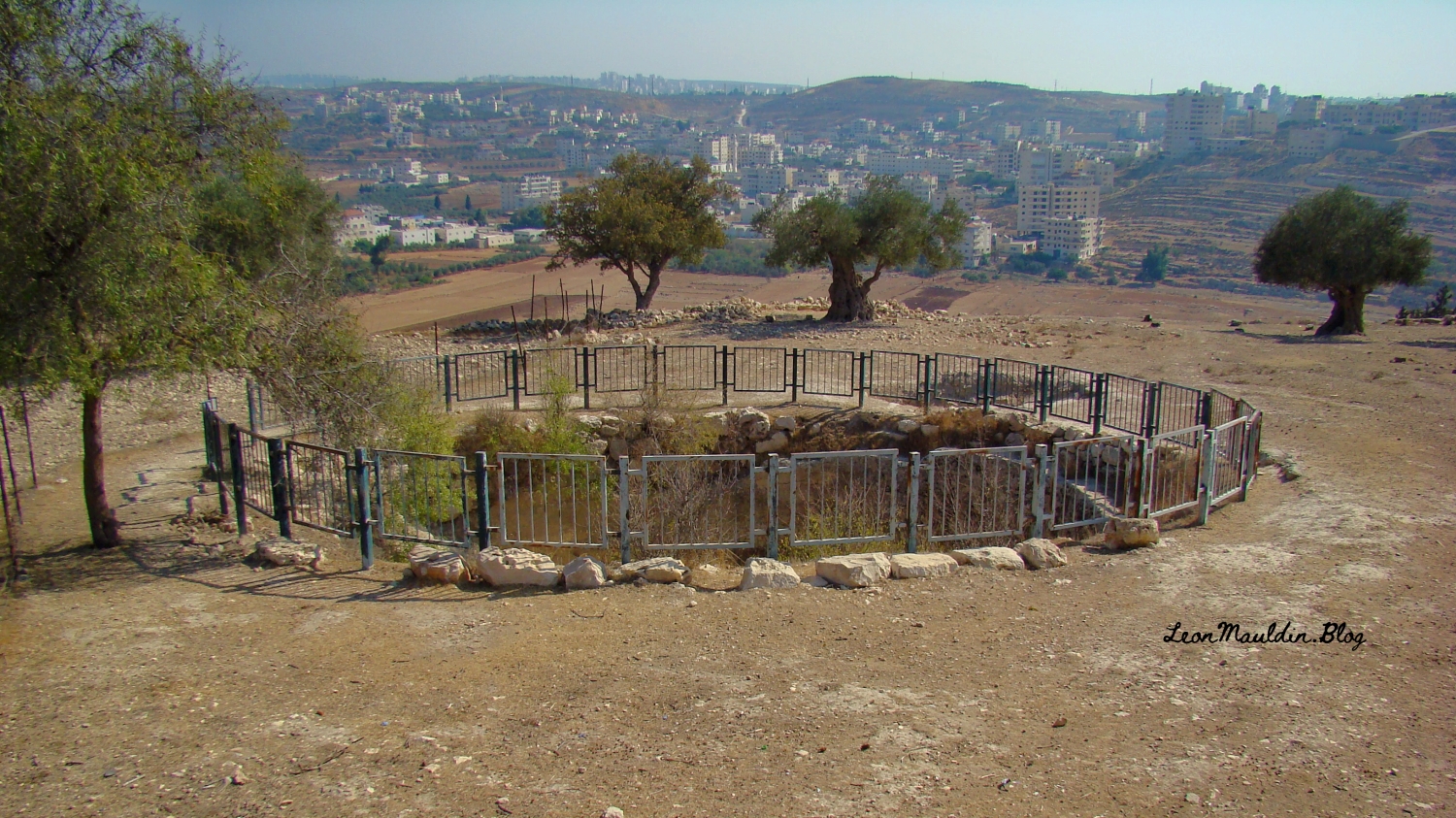
Here is a closer view of the pool mentioned in our text:
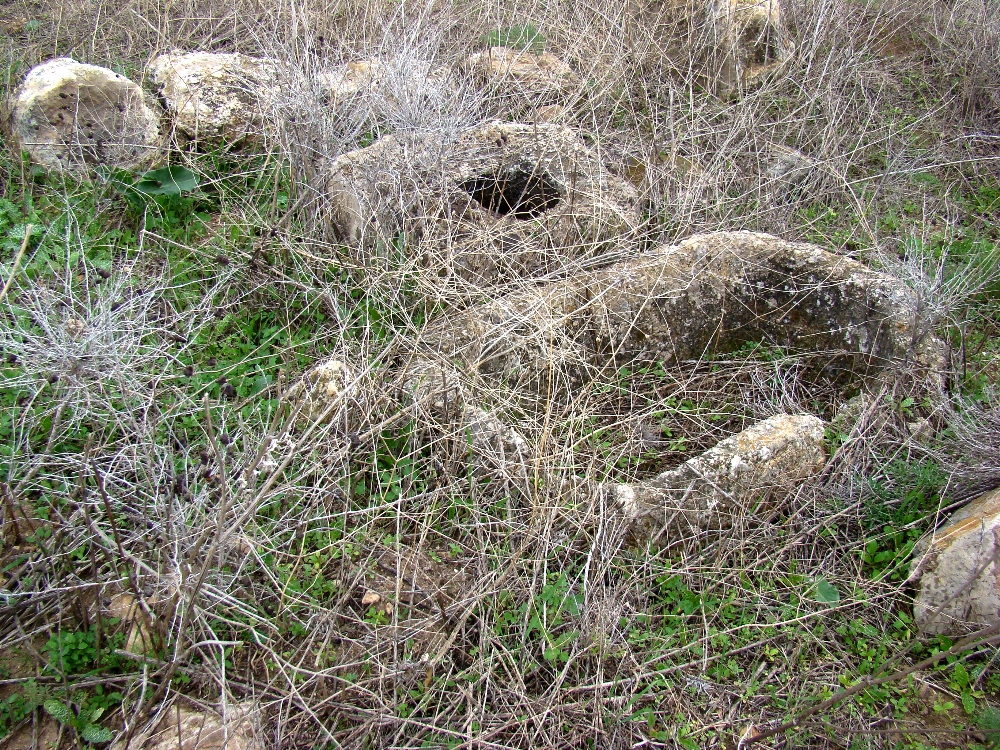
The Baker Encyclopedia of the Bible has the following entry, dealing with the pool, as well as more info regarding the site of Gibeon:
The Great Pool. This is referred to several times in the Bible and can now be identified. It was 37 feet in diameter and 82 feet deep, cylindrical in shape with perpendicular sides cut into bed-rock. There was a spiral stairway of 79 steps which gave access to fresh water 80 feet below street level. The pool lay inside the city walls.
The Stepped Tunnel. There was a second plan for obtaining water in time of siege. An underground sloping tunnel which descended by a series of 93 steps led to an underground reservoir fed by a spring originating in the rock mass below the city. This spring had been traced and a feeder tunnel enabled its water to flow more readily to the reservoir. Any overflow found its way via a conduit to the village below. This was a remarkable engineering achievement. The stepped tunnel reached down to a depth of 80 feet and was 167 feet long. In its walls were niches to hold oil lamps. Probably it was here that the “drawers of water” (Jos 9:27) obtained their supplies.
Inscriptions and Royal Stamp Seals. Sixty-one jar handles have been found on which inscriptions were cut in the archaic Hebrew script. On 31 of these is the word for Gibeon in whole or in part. Another 80 jar handles carry the letters lmlk, “belonging to the king.” Several well-known OT names such as Azariah, Amariah, Hananiah, and Neriah and a number of place-names such as Hebron, Socoh, and Ziph appear on these inscriptions.
Industrial Area. A remarkable industrial area came to light in the excavations, located both north and south of the pool. Here there were numerous winepresses, fermenting basins, and 63 underground cellars for cooling large wine jars. The whole area covered over 1100 square yards with cellars sunk into the limestone, some of these being over seven feet deep and equipped with stone covers. It is estimated that up to 25,000 gallons of wine could be stored in the jars. Some of the cellars were used as tombs in Roman times, but in Byzantine and modern times their use as wine cellars continued. In detail the cellars were bottle-shaped and averaged 7.2 feet in depth and 6.6 feet across at the bottom. The opening to the cellars averaged 2.2 feet in diameter at the top. The jars in which the wine was stored had a capacity of 9.75 gallons. It is clear that the manufacture of wine was an important element in the economy of Gibeon in OT times.
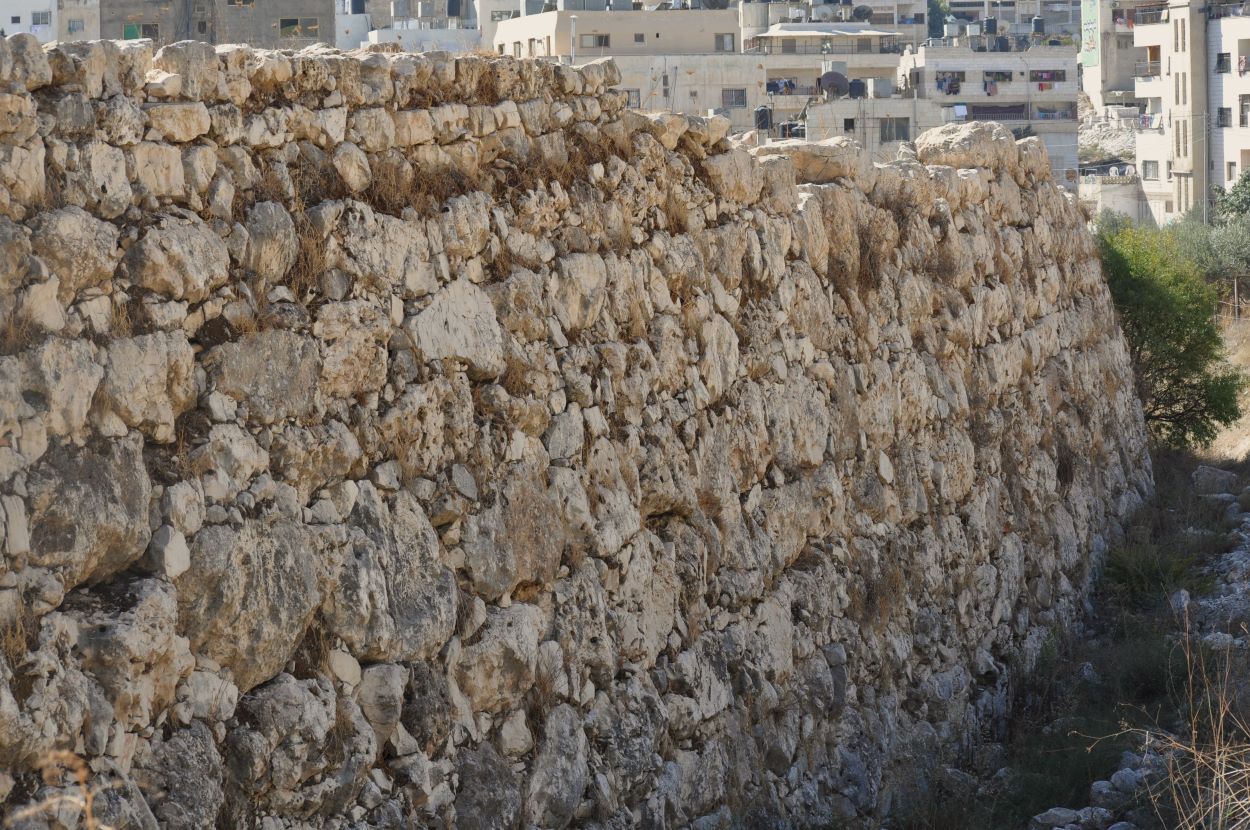
Fortifications. Gibeon was a walled city. Two impressive stone walls which encircled the city at different periods have been exposed. No traces of walls were found that could be dated to the Early, Middle, or Late Bronze periods although the remains of house walls, pottery, and tombs demonstrate that the city was occupied then. The excavator concluded that the construction of the earlier wall dates to the 12th century BC. and the later wall was built in the 10th century BC. and continued in use to the end of the 7th century BC. The average thickness of the wall was about 13 feet. The circumference of the fortification was 3125 feet.
The Necropolis. The burial place of Gibeon was situated to the west of the city halfway down the rock scarp. Many of the graves contained skeletal remains, pottery, scarabs, and other artifacts. The size of the tombs varied considerably, but most consisted of a vertical cylindrical shaft about 3.7 feet in diameter, the depths varying from 3.3 feet to 13 feet. The tombs were sealed by either one large stone or several smaller ones at the foot of the vertical shaft where the burial chamber opened to one side. JOHN A. THOMPSON Vol. 1, p. 864).
I have previously posted on Gibeon here, here and here.
The Philistines are mentioned numerous times in the Bible, in the days of the Judges and Kings, and as well as references in the prophets. For example, Zephaniah 2:4: “For Gaza shall be deserted, and Ashkelon shall become a desolation; Ashdod’s people shall be driven out at noon, and Ekron shall be uprooted” (ESV). This text mentions four of the five cities of the Philistine Pentapolis, the fifth being Gath (see 1 Sam. 6:16).
The context of Zephaniah’s prophecy is one of judgment, of the wrath of God, called “The great day of the LORD” (1:14). Though Zephaniah is addressing the Jews of Jerusalem/Judah, God is the God of all the nations. Here the prophet was warning of the destruction of the Philistines (2:5).
This post will deal briefly with Ekron, which today is known also as Tel Miqne.
Though originally in Israel’s territory at the time of the Conquest led by Joshua (Josh. 15:11, 45-56), Ekron was later in the hands of the Philistines by the time of the Judges. Much of the territory originally taken by the Israelites in the conquest was not retained in subsequent years, largely due to Israel’s lack of diligence and compromise with the surrounding nations.
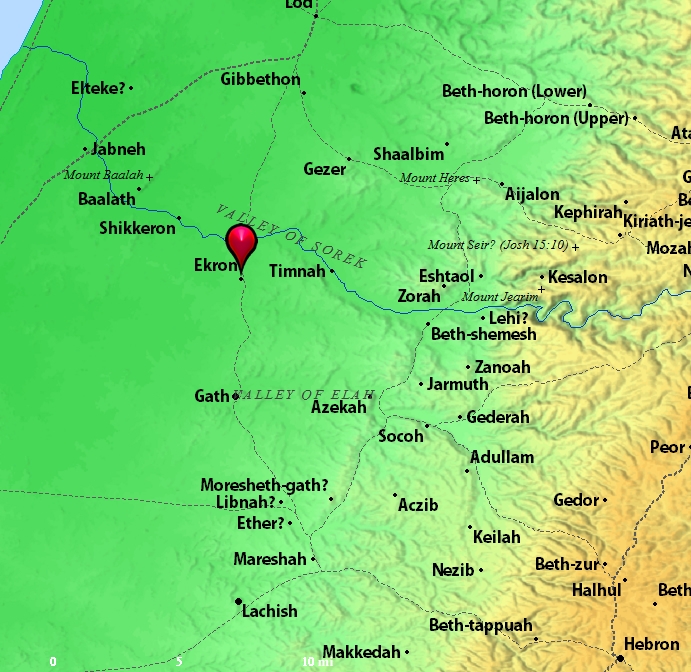
Location of Ekron. Map by BibleAtlas.Org.
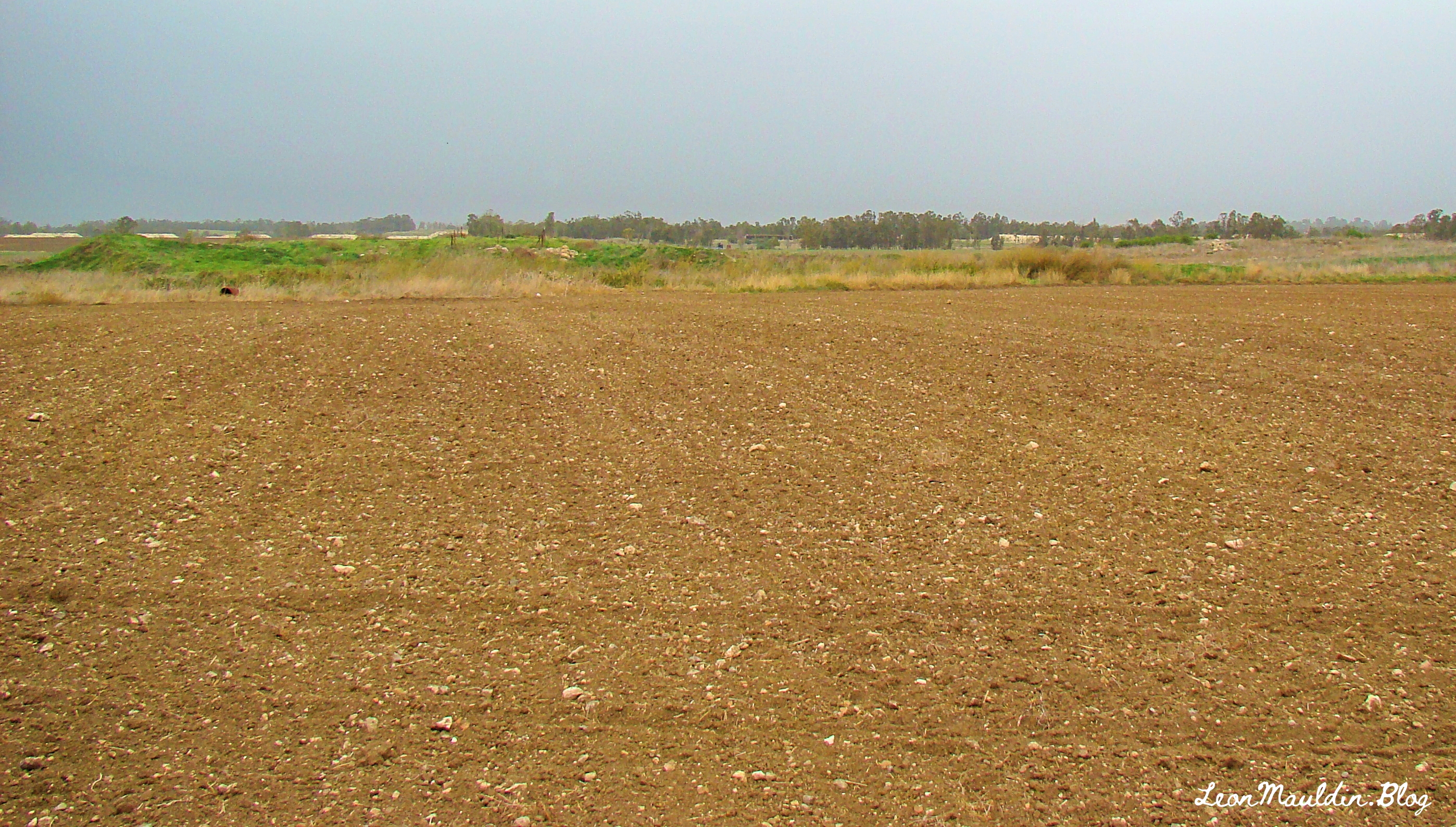
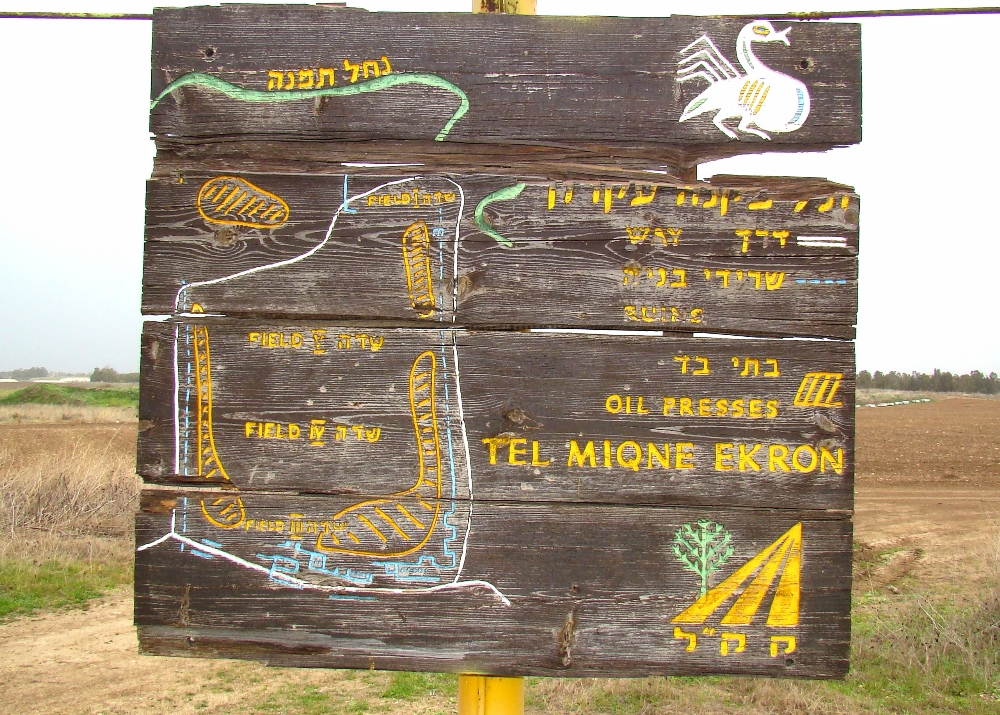
Ekron is a tel composed of about 50 acres. It was known for its olive oil industry.
Holman Illustrated Bible Dictionary has this information on Ekron:
Northernmost of the five major Philistine cities known as the Pentapolis. The site of ancient Ekron has been much debated but now is generally agreed to be modern Tell Miqne, about 14 miles inland from the Mediterranean Sea and 10 miles from Ashdod. The site is one of the largest in Palestine, covering some 50 acres. Ekron lies on the road leading from Ashdod into the Judean hill country and up to Jerusalem through the Sorek Valley.
Ekron was assigned to both Judah (Josh. 15:11, 45–46) and Dan (Josh. 19:43) in the tribal allotments. It probably lay on the border between the tribes. Judges 1:18 reports that Judah captured Ekron along with other parts of the Philistine coast, but Ekron was certainly in Philistine hands at the time the ark was captured (1 Sam. 5:10). It was also the place to which the Philistines retreated after David slew Goliath (1 Sam. 17:52). Ahaziah, the son of King Ahab of Israel, called on the god of Ekron, Baal-zebub, when he was sick (2 Kings 1:2–16).
Excavations at Tell Miqne have discovered much pottery that is typically Philistine. From the last period before Tell Miqne was destroyed by the Babylonians, the excavators found an important industrial complex near the city gate. A hoard of iron agricultural tools was found. Hundreds of whole pottery vessels were present. Perhaps most importantly, a well-preserved olive press was discovered. This press is the largest and best preserved known in Israel. A horned altar was also found during the excavations. (pp. 469–470).
I have previously posted on Ekron, Tel Miqne, here.
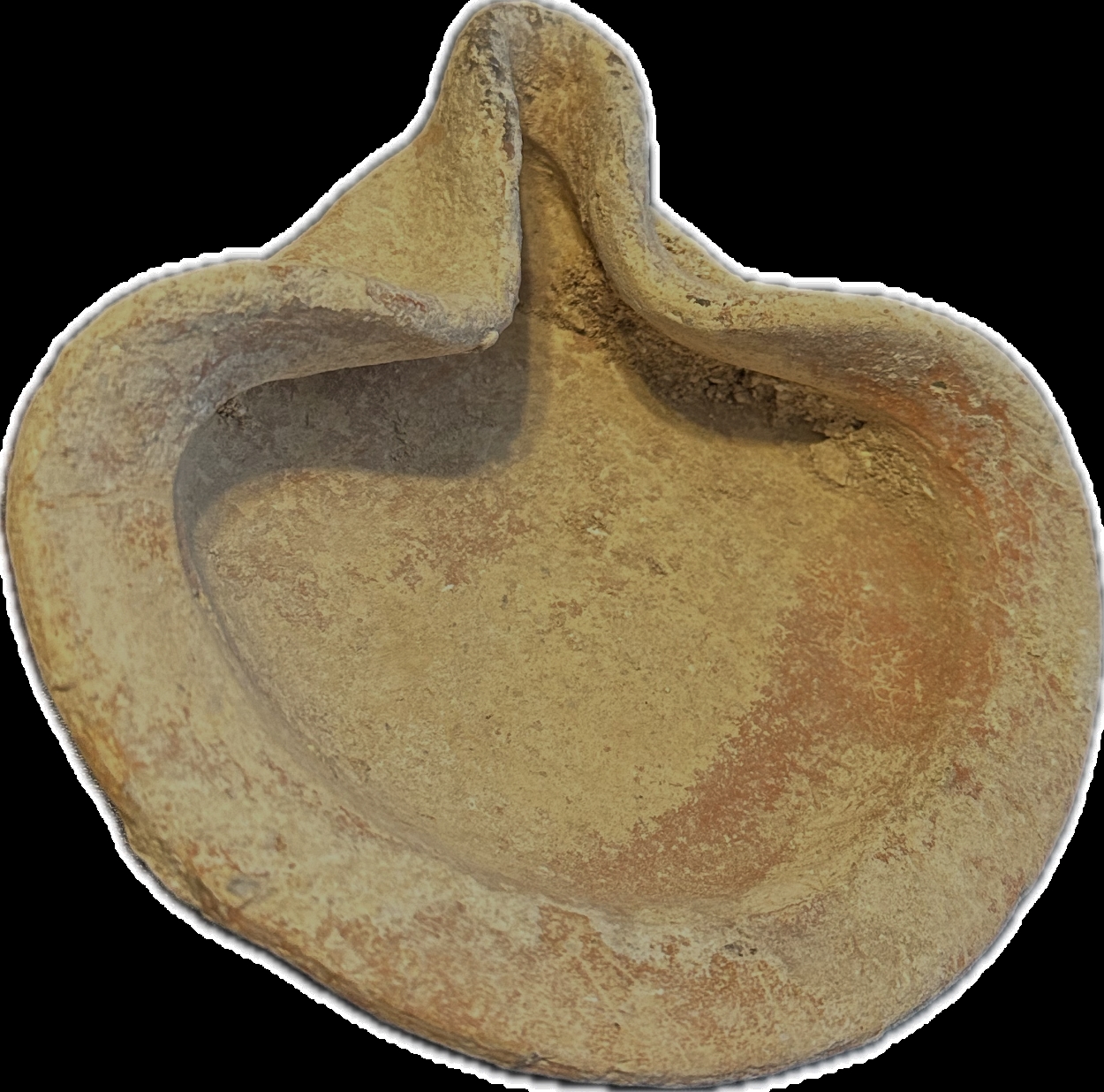
In 2 Chronicles in the context of the Divided Kingdom during the reign of Jehoram, king of Judah, the statement is made, “Yet the LORD was not willing to destroy the house of David because of the covenant which He had made with David, and since He had promised to give a lamp to him and his sons forever” (21:7). (The NET Bible reads, “But the LORD was unwilling to destroy David’s dynasty because of the promise he had made to give David a perpetual dynasty”).
To say that Jehoram was very wicked would be an understatement. His first act when his co-regency with his father Jehoshaphat (good king!) ended was to murder all six of his brothers! (21:4). Jehoram was married to Athaliah, the wicked daughter of Ahab and Jezebel, and greatly swayed by them. Though King of Judah, “he walked in the way of the kings of Israel, just as the house of Ahab had done” (21:6).
Lamp, dating to the time of the Divided Kingdom. Author’s personal collection. Photo by Leon Mauldin.
Our inspired historian is stating that although Jehoram deserved destruction, as had indeed been meted out to several dynasties in Israel, that Yahweh, the faithful God of the Covenant, would insure that the lineage of David would continue. The use of the word picture of a lamp which continues to burn, and is not extinguished, was a fitting metaphor. The Davidic lineage (here seen in the kings of Judah, both good and bad) would continue until the Messiah came to earth, God Incarnate. This fulfilled the promise made in 2 Samuel 7; cf. 1 Chron. 17, and etc.). Indeed, “the Scripture cannot be broken” (John 10:35).
I have earlier written about Judah’s King Jehoram here.
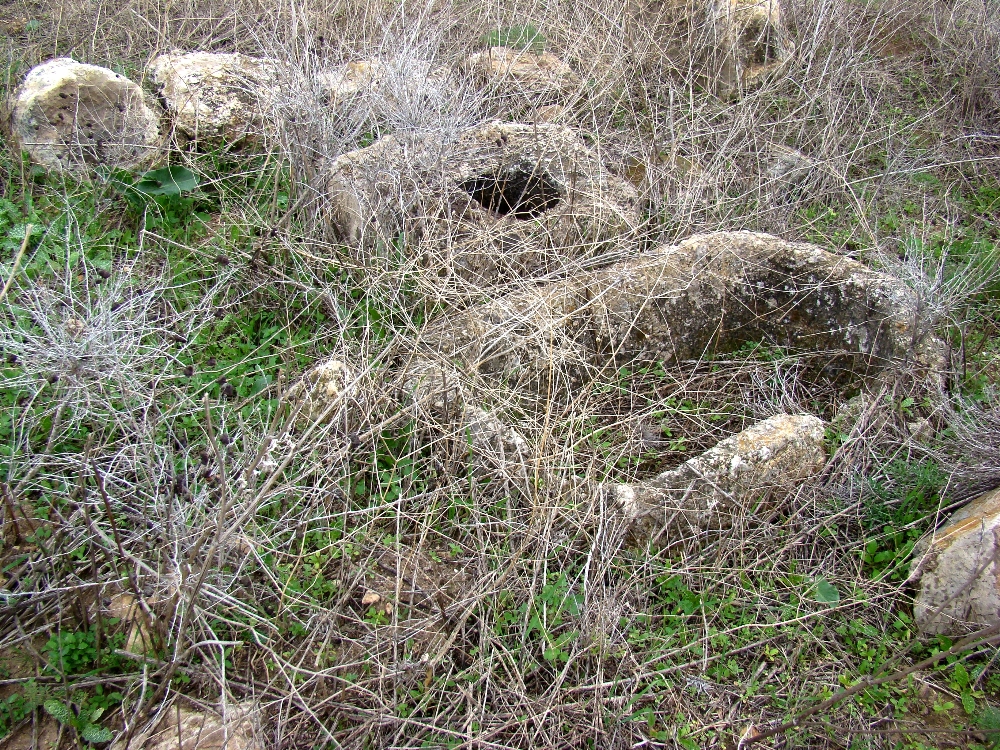
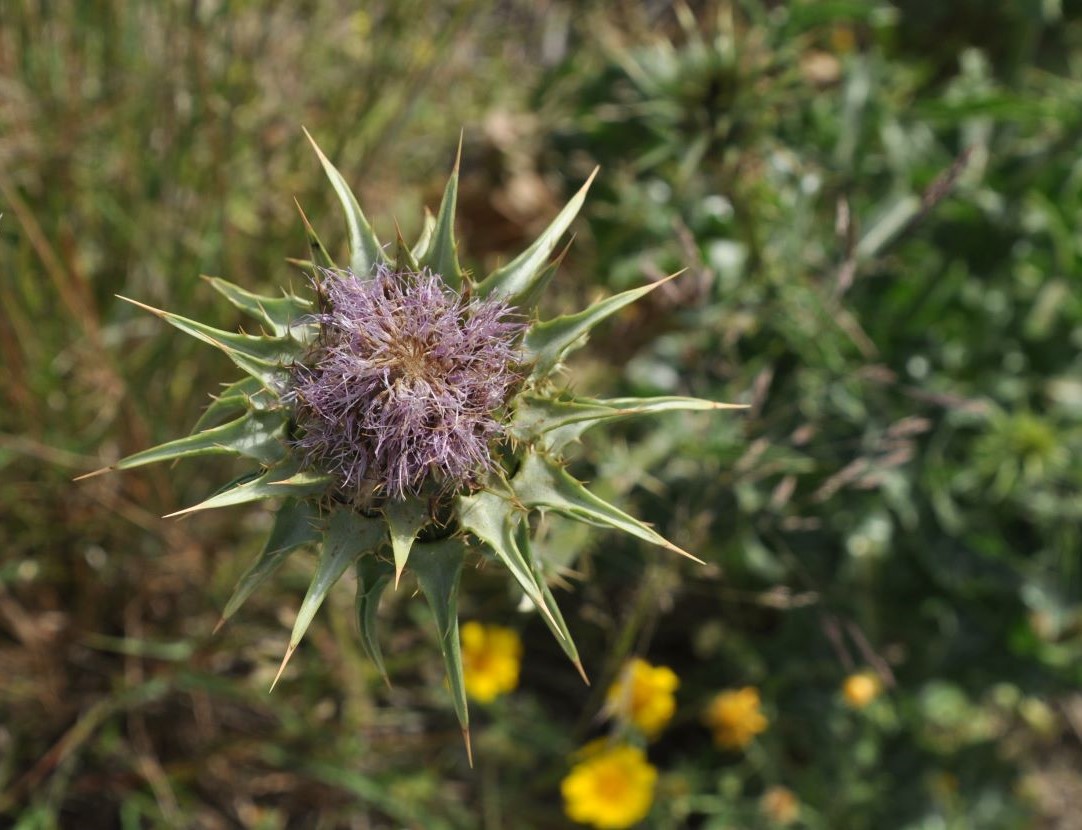
Some context: Mareshah in southern Israel was a city which Solomon’s son, King Rehoboam fortified (2 Chronicles 11:8). Later Judah’s King Asa met a military force of Cushites which greatly outnumbered Judah’s forces, but YAHWEH granted deliverance (2 Chronicles 14:9ff). Here is a photo of a Blessed Milkthistle I took while there a few years ago:
The wording of our titles comes from 2 Chronicles 12:2, “And it happened in the fifth year of King Rehoboam, that Shishak king of Egypt came up against Jerusalem, because they had transgressed against the LORD.” As most readers know, “Pharaoh” was not a personal name but a dynastic title designating the king of Egypt. The first biblical mention of a Pharaoh is Genesis 12:15, in the days of Abraham’s sojourn into Egypt. Other subsequent pharaohs are mentioned as time goes on, including the events in Joseph’s life, and later in the time of Moses and the Exodus. But the first Pharaoh mentioned by name is Shishak (cf. 1 Kings 11:40; 14:25-26). Shishak reigned during Egypt’s 22nd dynasty, which was a Libyan dynasty. His reigned 946-924 BC. He invaded Judah in his 19/20th year, which was 927/926 BC. This lines up with the 5th year of Rehoboam, 926/5 BC (2 Chron. 12:2), r. 931/930-913 BC.
In the days of Solomon’s adversary Jeroboam (who would become Israel’s first king when the kingdom divided into Israel and Judah after Solomon’s death, 931 BC), “Jeroboam arose and fled into Egypt, to Shishak king of Egypt, and was in Egypt until the death of Solomon” (1 Kings 11:40). Solomon was succeeded by his son Rehoboam (1st king of the southern kingdom of Judah), and Pharaoh Shishak was again mentioned in scripture: “It happened in the fifth year of King Rehoboam that Shishak king of Egypt came up against Jerusalem. And he took away the treasures of the house of the LORD and the treasures of the king’s house; he took away everything. He also took away all the gold shields which Solomon had made” (14:25-26). God allowed this invasion of Jerusalem because of Judah’s unfaithfulness (2 Chron. 12:2). The text explains, “Then Shemaiah the prophet came to Rehoboam and to the princes of Judah, who had gathered at Jerusalem because of Shishak, and said to them, “Thus says the LORD, ‘You abandoned me, so I have abandoned you to the hand of Shishak'” (2 Chron. 12:5).
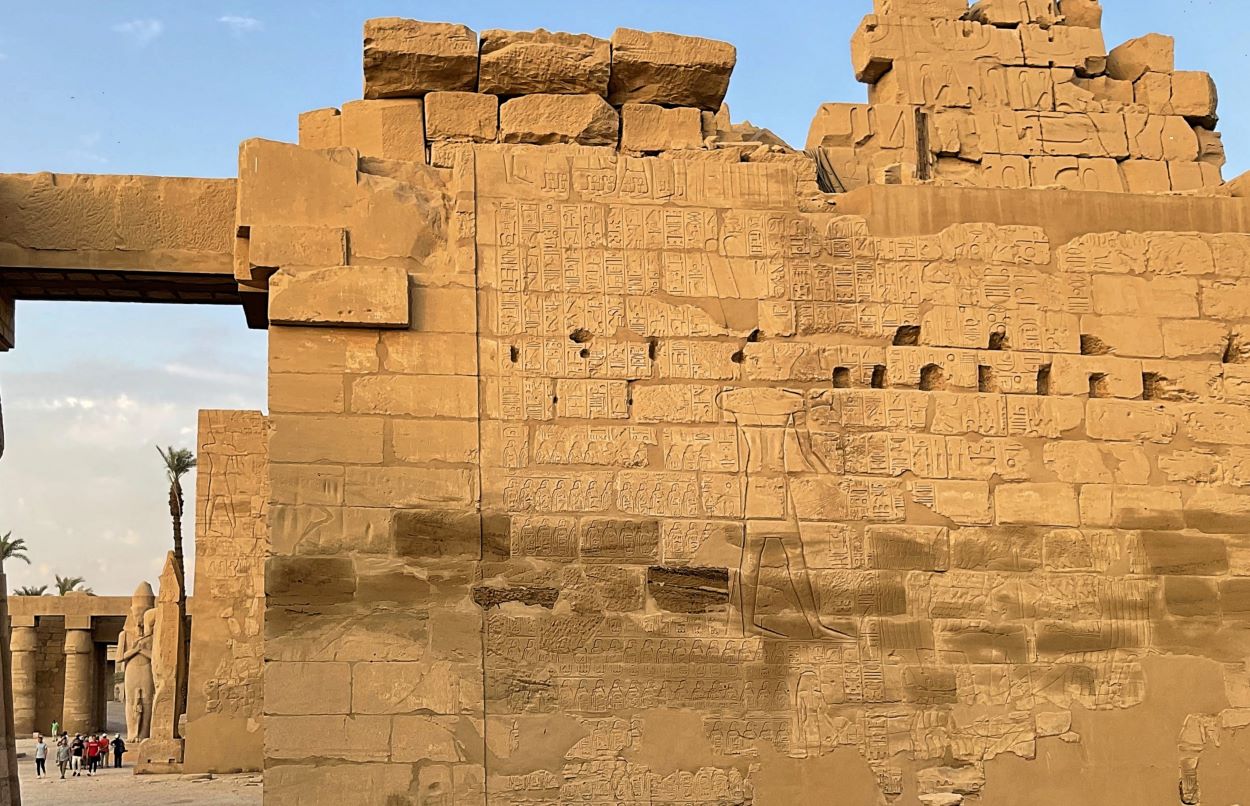
It was the 21st year of his reign when Shishak returned to the capital of Thebes (ESV, “No” in NKJV), at Karnak he recorded his victory, including the listing not only of cities of Judah, but of many Israelite cities as well. Our photo shows the Shishak Inscription. Here he lists conquests, including Yuda Melchi (kingdom of Judah). This hieroglyphic inscription contains the names of ca. 50-60 localities in Israel and about 100 in Judah which were captured on this expedition.
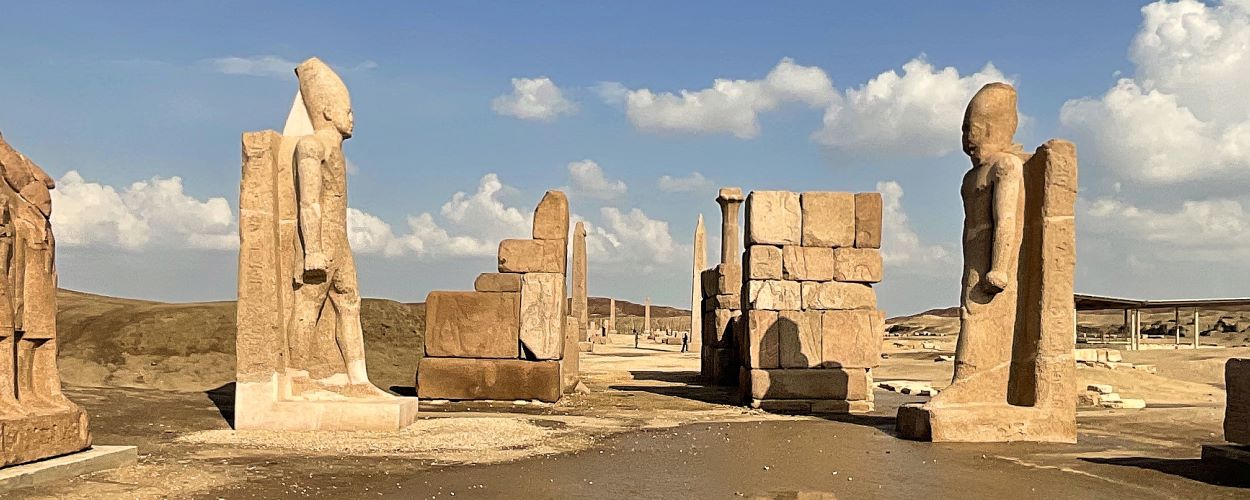
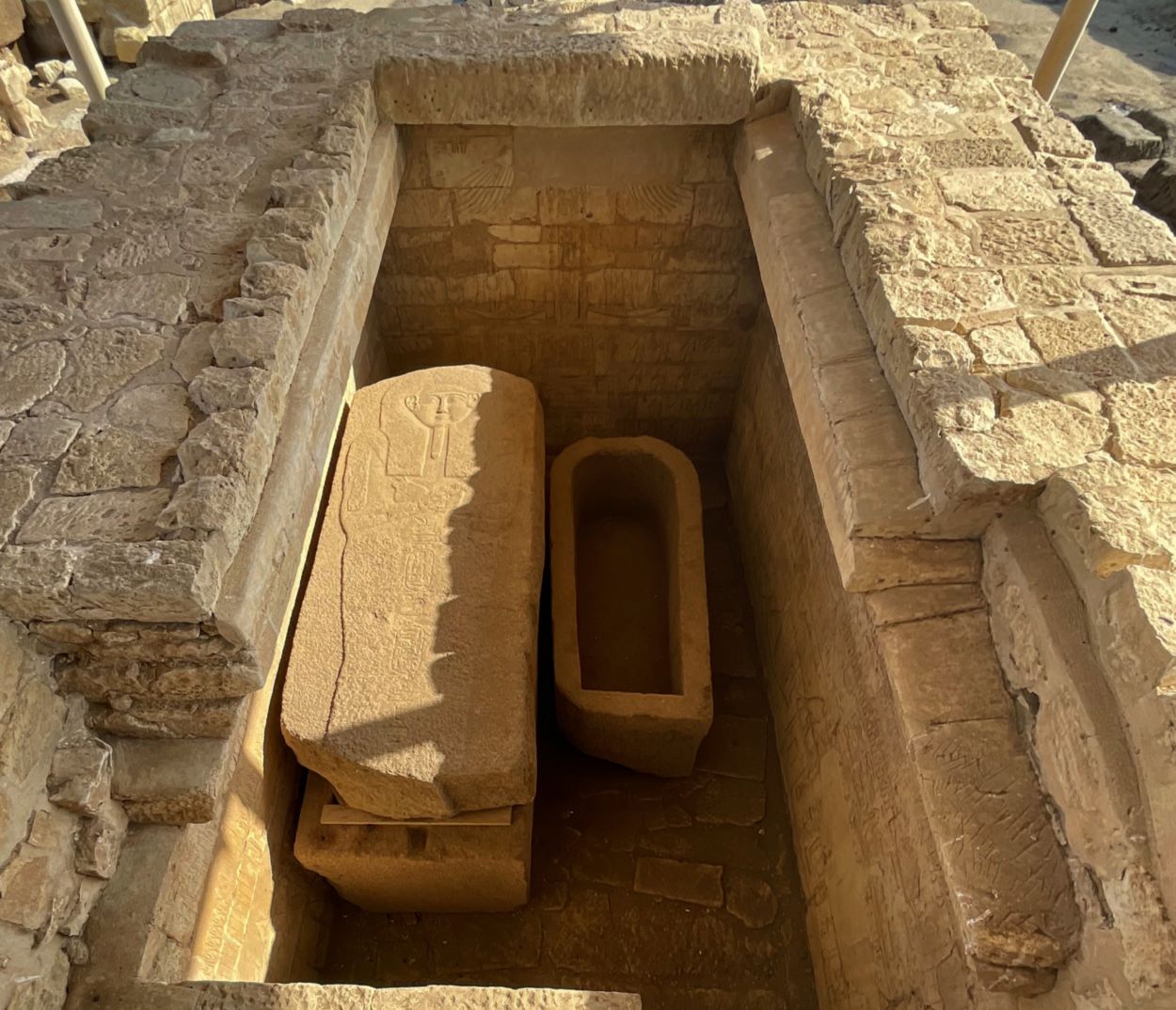
The site of Tanis/Zoan is to be associated within the area of Goshen where the Israelites had lived for some time and were living at the time of the Exodus. “Psalm 78:12 Marvelous things He did in the sight of their fathers, In the land of Egypt, in the field of Zoan” (Psa. 78:12). Tanis is the site where Shishak was entombed. Our photo here shows the entrance into Tanis:
This is a fascinating example of how archaeology can enhance our understanding of the biblical text, as well as underscore the fact that the Bible is factual. While we do not depend on archaeology to “prove” the Bible, as it stands on its own merit, this “intersection” of biblical history with secular records has an important place in the discipline of apologetics.
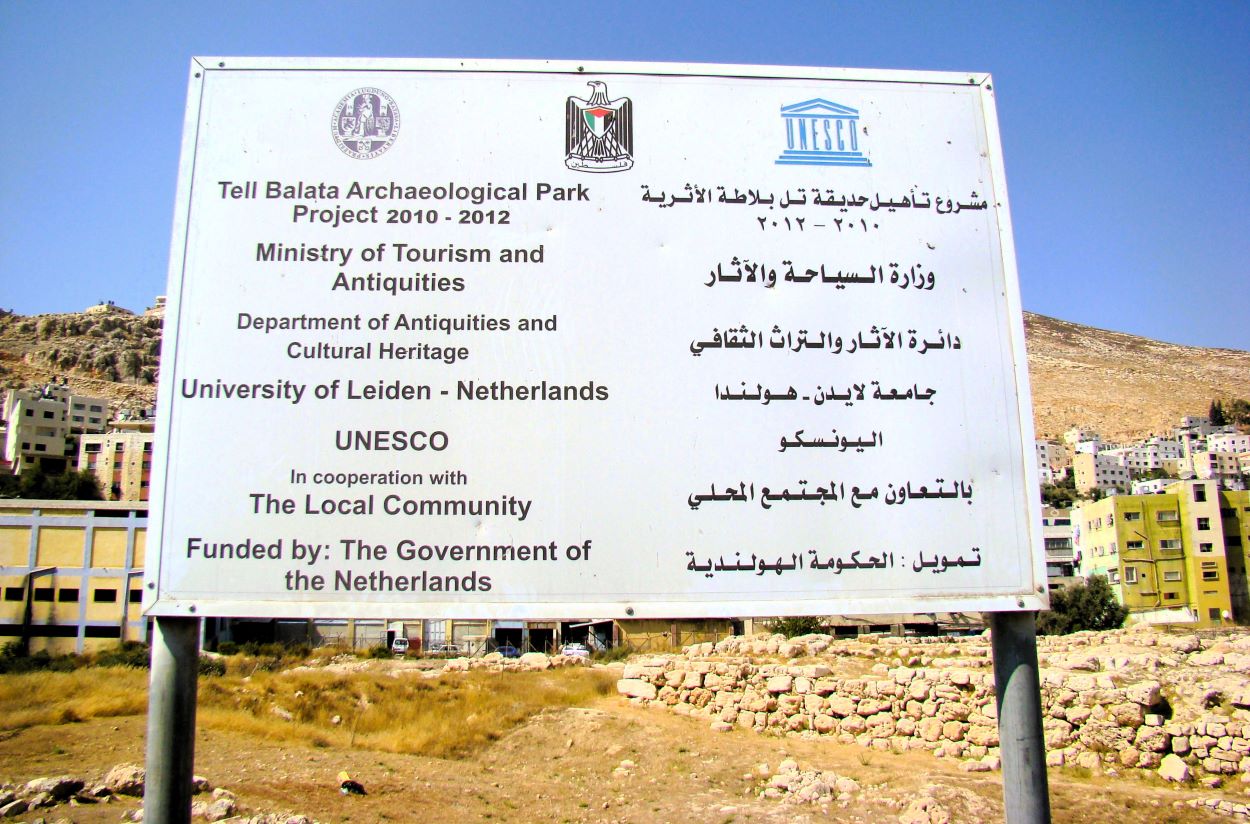
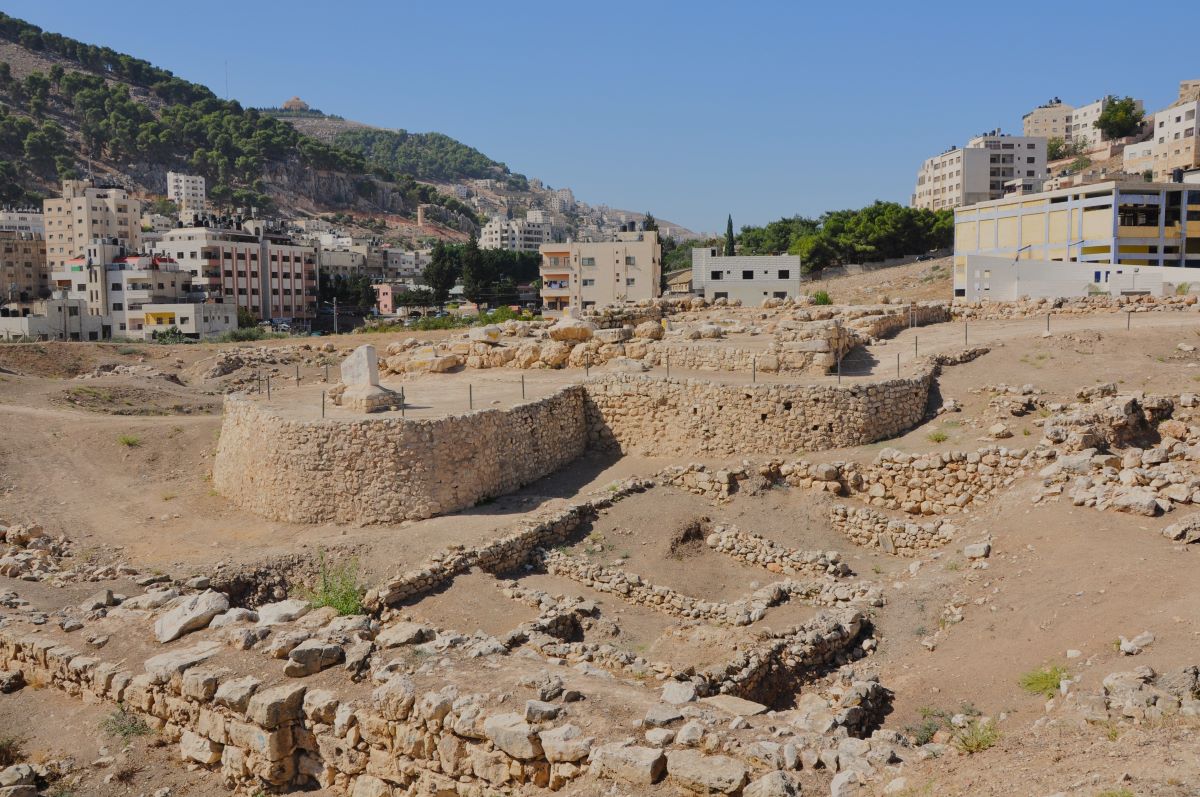
“Rehoboam went to Shechem, for all Israel had come to Shechem to make him king” (2 Chron. 10:1, ESV). Biblical Shechem is modern Tell Balata, near Nablus, in today’s West Bank. Though our text does not specify why Rehoboam went to Shechem, it was a city of great historical significance to God’s people, especially prior to the monarchy. We will briefly summarize what happened to Rehoboam at Shechem, but first let’s consider some of the biblical events that transpired at this location.
Shechem, at Israel’s geographical center. Map courtesy of biblemapper.com.
Having first entered the land of Canaan, Abraham was standing here at Shechem, with Mt. Ebal and Mt. Gerizim looming on either side, when God gave him the land promise (Gen. 12:6-7). Sadly, it was also here that Jacob’s daughter Dinah was defiled, and where Levi and Simeon savagely destroyed much of the populace in retaliation (Gen. 34).
In Joshua 8:30-35, in the early days of the Conquest of Canaan, all Israel assembled at Shechem, with six tribes on Mt. Gerizim (mount of “blessing”) and six tribes on Mt. Ebal (mount of “cursing”). At that time Joshua “read all the words of the law, the blessing and the cursings, according to all that is written in the Book of the Law” (v.34, NKJV). This was in obedience to prior instructions given by Moses in his final days (Deut. 27:11-26). In our Joshua text, that great nation who had descended from that childless couple (at the time of the promise), Abraham and Sarah, was there to lay claim to the promise. But they weren’t just there to receive the land; their reception of Canaan was grounded upon their pledge to keep the covenant of Yahweh.
Then later as Joshua’s death approached, Shechem was the location for Joshua’s last words and for Israel’s covenant renewal (Josh. 24:1-28). Shechem was also where Joseph was buried (Josh. 24:32).
In addition to its great historical significance, the site of Shechem was also a central location and thus a logical meeting place for the matter at hand, Rehoboam’s coronation. On the other hand, Maier suggests that perhaps Rehoboam sensed a bit of discontent among the northern tribes. “One clue was that they did not come to Jerusalem but wanted the meeting at another place, in Shechem, on their own turf, so to speak” (A Theological Exposition of Sacred Scripture, pub. Concordia, 1K12-22, p. 1052).
The outcome of the meeting at Shechem: The northern tribes rejected Rehoboam, with the result that the kingdom divided into Israel (north) and Judah (south). This was punitive, as a result of Solomon’s apostasy, and foretold by the prophet Ahijah (1 Kings 11; 2 Chron. 10:15; 11:1-5). The dynasty would change several times in Israel to the north, but the southern kingdom of Judah would be ruled by the Davidic dynasty, from Rehoboam (Solomon’s son) down through Zedekiah. This covers the years 931-586 BC.
It was at Shechem that Israel met with Solomon’s son Rehoboam to make him king. Shechem is located between Mount Gerizim (left) and Mount Ebal (right).


 Posted by Leon Mauldin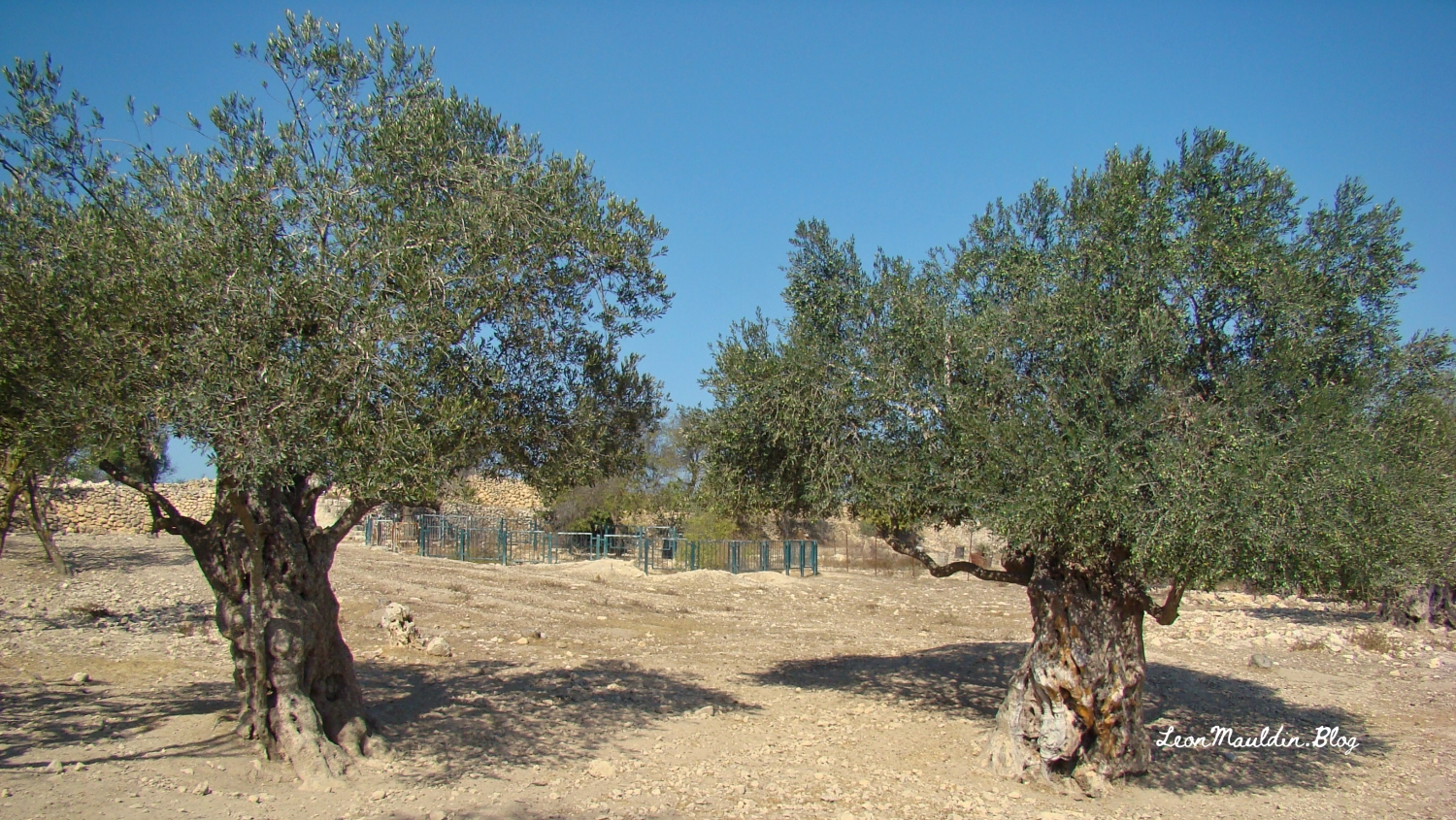


 leonmauldin.blog