Sennacherib: a Pagan King vs. יהוה

March 5, 2021

The record of the pagan Assyrian king Sennacherib, who challenged יהוה, the LORD God of Israel, is found in three biblical texts: 2 Kings 18-19, 2 Chronicles 32 and Isaiah 37. The year was 701 BC. Israel to the north had already fallen to the Assyrians (722 BC). Now (at the time referenced in the above texts) only tiny Judah remained, with its King Hezekiah. At this point Sennacherib had taken forty-six fortified cities of Judah, lastly Lachish, and then came to Jerusalem “with a great army” (Isa. 36:2).

Sennacherib sent the Rabshakeh with the message to Jerusalem, who shouted out in Hebrew, “Hear the word of the great king, the king of Assyria. Thus says the king, Do not let Hezekiah deceive you, for he will not be able to deliver you from my hand; nor let Hezekiah make you trust in the LORD, saying, The LORD will surely deliver us, and this city will not be given into the hand of the king of Assyria.” Then it got worse: “But do not listen to Hezekiah when he misleads you, saying, The LORD will deliver us. Has any one of the gods of the nations delivered his land from the hand of the king of Assyria? Where are the gods of Hamath and Arpad? Where are the gods of Sepharvaim, Hena and Ivvah? Have they delivered Samaria from my hand? Who among all the gods of the lands have delivered their land from my hand, that the LORD should deliver Jerusalem from my hand?” (2 Kings 18:28-30; 32-35).

Hezekiah went to the house of God. He sent for the prophet Isaiah with the request, “Lift up your prayer for the remnant that is left” (2 Kings 19:4). The Lord’s answer: “Whom have you reproached and blasphemed? And against whom have you raised your voice And haughtily lifted up your eyes? Against the Holy One of Israel!” (Isa. 37:23). Further: “Therefore, thus says the LORD concerning the king of Assyria, He will not come to this city or shoot an arrow there; and he will not come before it with a shield, or throw up a siege ramp against it. By the way that he came, by the same he will return, and he will not come to this city, declares the LORD. For I will defend this city to save it for My own sake and for My servant David’s sake. Then the angel of the LORD went out and struck 185,000 in the camp of the Assyrians; and when men arose early in the morning, behold, all of these were dead. So Sennacherib king of Assyria departed and returned home and lived at Nineveh” (vv. 33-37).

One of the fascinating artifacts housed in the British Museum is Sennacherib’s Prism, otherwise known as Taylor’s Prism, named after the one who discovered it. This is King Sennacherib’s account of his victories. He specifically mentions Hezekiah, and the Assyrian siege of Jerusalem.

Sennacherib’s Prism, British Museum. Photo by Leon Mauldin.

The text is in Akkadian Cuneiform, the international language of the time. The reference to Hezekiah reads, “

As for Hezekiah, the Judean, I besieged forty-six of his fortified walled cities and surrounding smaller towns, which were without number. Using packed-down ramps and applying battering rams, infantry attacks by mines, breeches, and siege machines, I conquered (them). I took out 200,150 people, young and old, male and female, horses, mules, donkeys, camels, cattle, and sheep, without number, and counted them as spoil. He himself, I locked up within Jerusalem, his royal city, like a bird in a cage.

(Hallo, W. W., & Younger, K. L. (2000). Context of Scripture: Monumental Inscriptions from the Biblical World (p. 303). Leiden; Boston: Brill).

Sennacherib fails to mention why he did not take Jerusalem. He fails to mentions that 185,000 of his Assyrian soldiers died in one night. Why would he say only that he had Hezekiah locked up “like a bird in a cage,” but then fail to go on to record Jerusalem’s capture and that of its king? There can be only one explanation; he failed to do so, just as the Bible says. It is a case when the silence of the Assyrian record speaks volumes. This is after all, the same king who at his palace in Nineveh memorialized his conquest of Lachish with numerous carved stone wall panels which include graphic portrayals of the ramp and siege machines, also housed in the British Museum. But the pagan king did not fare so well when he challenged the LORD, the God of Israel.


Hezekiah’s Broad Wall

February 27, 2021

Isaiah prophesied during the reign of good King Hezekiah of Judah (r. 715-686 BC). Isaiah states, “Then you counted the houses of Jerusalem, And you tore down houses to fortify the wall” (22:10). This was done in response to the very real threat of Sennacherib of Assyria (r. 705-681 BC). , as he advanced toward Jerusalem. More details are given in 2 Chronicles:

Now when Hezekiah saw that Sennacherib had come and that he intended to make war on Jerusalem, he decided with his officers and his warriors to cut off the supply of water from the springs which were outside the city, and they helped him. So many people assembled and stopped up all the springs and the stream which flowed through the region, saying, “Why should the kings of Assyria come and find abundant water?” And he took courage and rebuilt all the wall that had been broken down and erected towers on it, and built another outside wall and strengthened the Millo in the city of David, and made weapons and shields in great number. (2 Chron. 32:2-5, NASB).

A section of Hezekiah’s Wall in Jerusalem. Photo by Leon Mauldin.

This wall was excavated by Nahman Avigad in 1969. Biblical Archaeological Review has the following info:

This massive wall, which once probably stood 27 feet high, provides the key to dating Jerusalem’s spread from the eastern to the western hill.

Before unearthing a 130-foot section of the wall, Avigad had already discovered remains of houses in the same area containing pottery and other artifacts datable to the eighth and seventh centuries B.C.E. The wall itself stood partly on bedrock and partly on recently built houses. Avigad reasoned that only a king could have ordered the building of so major a structure, and the fact that new housing had to be destroyed in the process indicates that the wall was erected during a crisis. Two passages in the Bible helped Avigad pinpoint the date and purpose of the wall: King Hezekiah, in 701 B.C.E., “saw that [the Assyrian ruler] Sennacherib had come, intent on making war against Jerusalem.… He [Hezekiah] acted with vigor, rebuilding the whole breached wall, raising towers on it and building another wall outside it” recounts 2 Chronicles 32:2–5 and Isaiah 22:10 states that Hezekiah “pulled houses down to fortify the wall.” Hezekiah, thanks in part to this wall, successfully repulsed Sennacherib’s attack.

From the angle in the wall and from data revealed by other excavations, Avigad argued that the wall enclosed more of the western hill of Jerusalem than previously believed; archaeologist Magen Broshi estimated that 25,000 people had lived within the wall’s boundaries in the eighth century B.C.E.

BAR18:03MJ1992

The Holman Bible Atlas has this interesting information:

Recent archaeological excavations have confirmed a western expansion of Jerusalem dating from the reign of Hezekiah (715–687 B.C). Archaeologists speculate that a population influx, in part of Israelite refugees fleeing the Assyrian invasions, made the expansion necessary. Clear evidence indicates the southwestern hill was now incorporated into Jerusalem’s defenses. A segment of a “broad wall” sixty-five meters long and seven meters wide, south of the Transversal Valley, has been unearthed by Nahman Avigad. Avigad attributed the wall to Hezekiah, who “counted the houses of Jerusalem, and … broke down the houses to fortify the wall” (Isa. 22:10). Indeed, Hezekiah’s wall was built on top of the foundations of houses visible under the outer edge of Avigad’s wall. This massive wall, made to withstand Assyrian siege tactics, enclosed the western hill; its line apparently turned south above the Hinnom Valley and continued eastward, joining the City of David’s fortifications near the juncture of the Hinnom and Kidron Valleys.

The “broad wall” enclosed an additional ninety acres of land, making the total fortified area of Jerusalem approximately one hundred and fifty acres. The area taken in included the mishneh—“Second Quarter,” where the prophet Huldah lived (2 Kgs. 22:14)—and the maktesh (the Mortar), probably a reference to the depression between the western and eastern slope (Zech. 1:11). Population estimates for the city at this time range from fifteen to twenty-five thousand.

Brisco, T. V. (1998). Holman Bible atlas (p. 145).

This photo gives a more detailed look:

Hezekiah’s Wall, detailed view. Photo by Leon Mauldin.

Later in the days of Nehemiah, who returned from the captivity to rebuild the walls of Jerusalem, it is stated, “. . . and they restored Jerusalem as far as the Broad Wall” (Neh. 3:8; cf. 12:38). There is general consensus that the “broad wall” here is that built by Hezekiah.

It is fascinating to read of YHWH’s deliverance of Jerusalem against all odds (2 Kings 18-19; 2 Chron. 32; Isa. 37).

Click images for larger view.


Mary Visits Elizabeth–Traditional En Kerem

October 16, 2020

After the virgin Mary was informed by the angel Gabriel that by “the power of the Highest” she would conceive “and bring forth a Son, and shall call His name JESUS” (Luke 1:31,35), she then went to visit her relative Elizabeth, who was at that time the 6-months expectant mother of John the Baptist. “Now Mary arose in those days and went into the hill country with haste, to a city of Judah, and entered the house of Zacharias and greeted Elizabeth” (vv. 39-40).

To be clear, the text does not specify which city of Judah in which Zacharias (the priest) and his wife Elizabeth resided. It was a city in the “hill country” of Judah. However the traditional site is that of En Kerem (spelling varies), located about 5 miles west of Jerusalem.

R. Riesner, in his entry entitled, “The Birthplace of John the Baptist” states,

To visit Elizabeth, Mary went “into the hill country [oreinē], to a city of Judah” (Lk 1:39). The Greek word describes the district around Jerusalem (Pliny Nat. Hist. 5.14). A literary tradition that can be traced back to the sixth century identifies the birthplace with En-Kerem (Arabic Ain Karim), seven kilometers west of Jerusalem (ELS 44ff.). Remains of two fourth-century churches indicate, however, that the tradition stretches back to a still-earlier time (GBL II.776). (Archeology and Geography. In J. B. Green & S. McKnight (Eds.), Dictionary of Jesus and the Gospels (p. 34). Downers Grove, IL: InterVarsity Press).

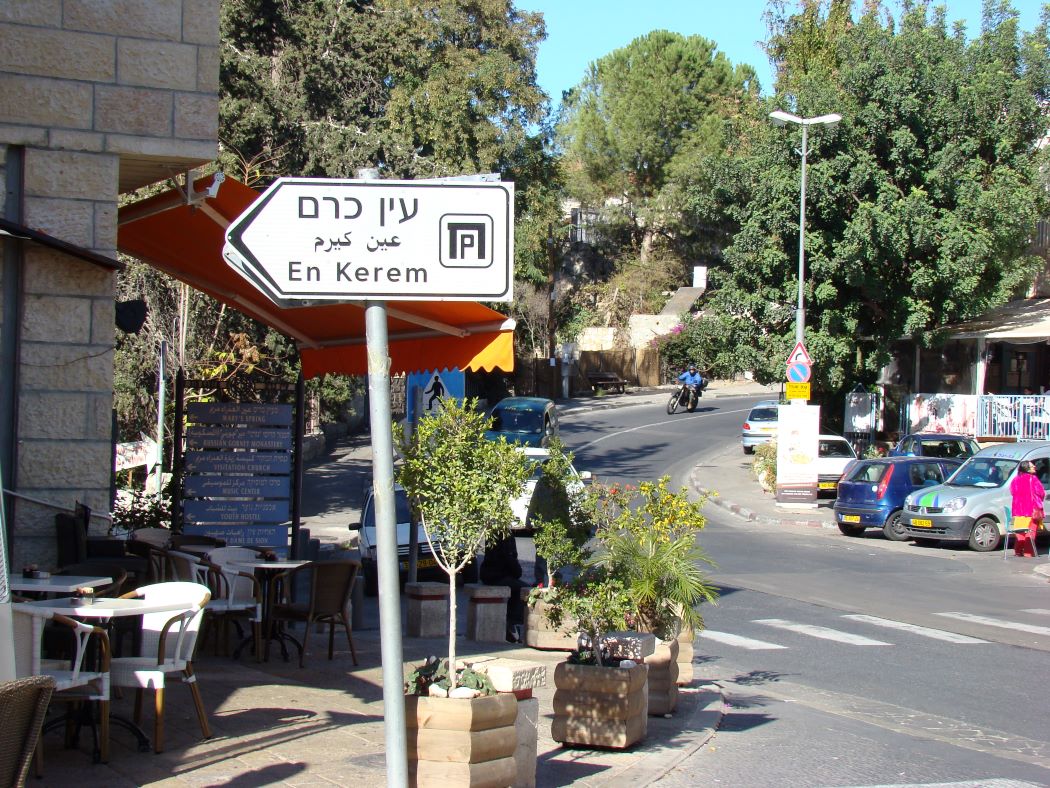
Sign indicating our entry into the city: 

En Kerem, Traditional Home of John the Baptism. Photo ©Leon Mauldin.

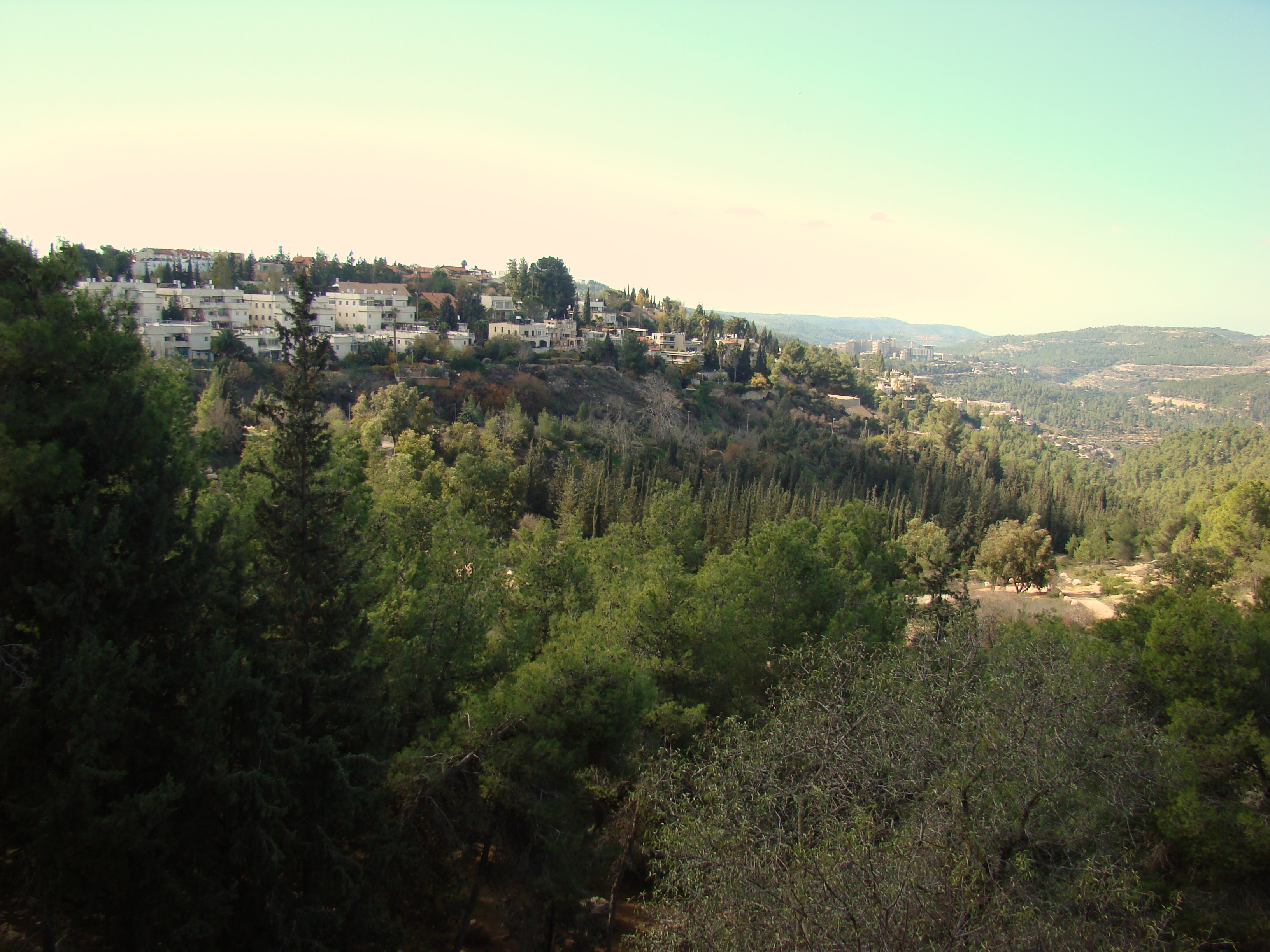
This photo gives you a feel of the surrounding countryside:

Hill country of Judah at En-Kerem. Photo ©Leon Mauldin

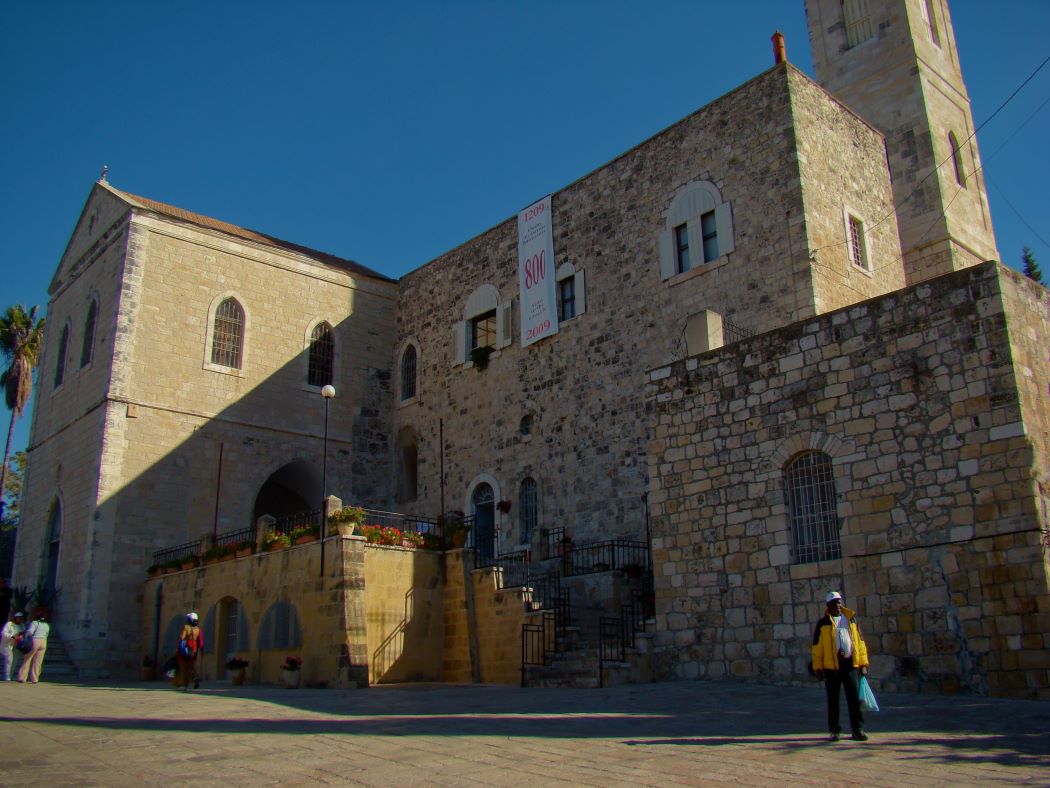
The Church of the Visitation commemorates Mary’s visit to Elizabeth.

Church of the Visitation at En-Kerem. Photo ©Leon Mauldin

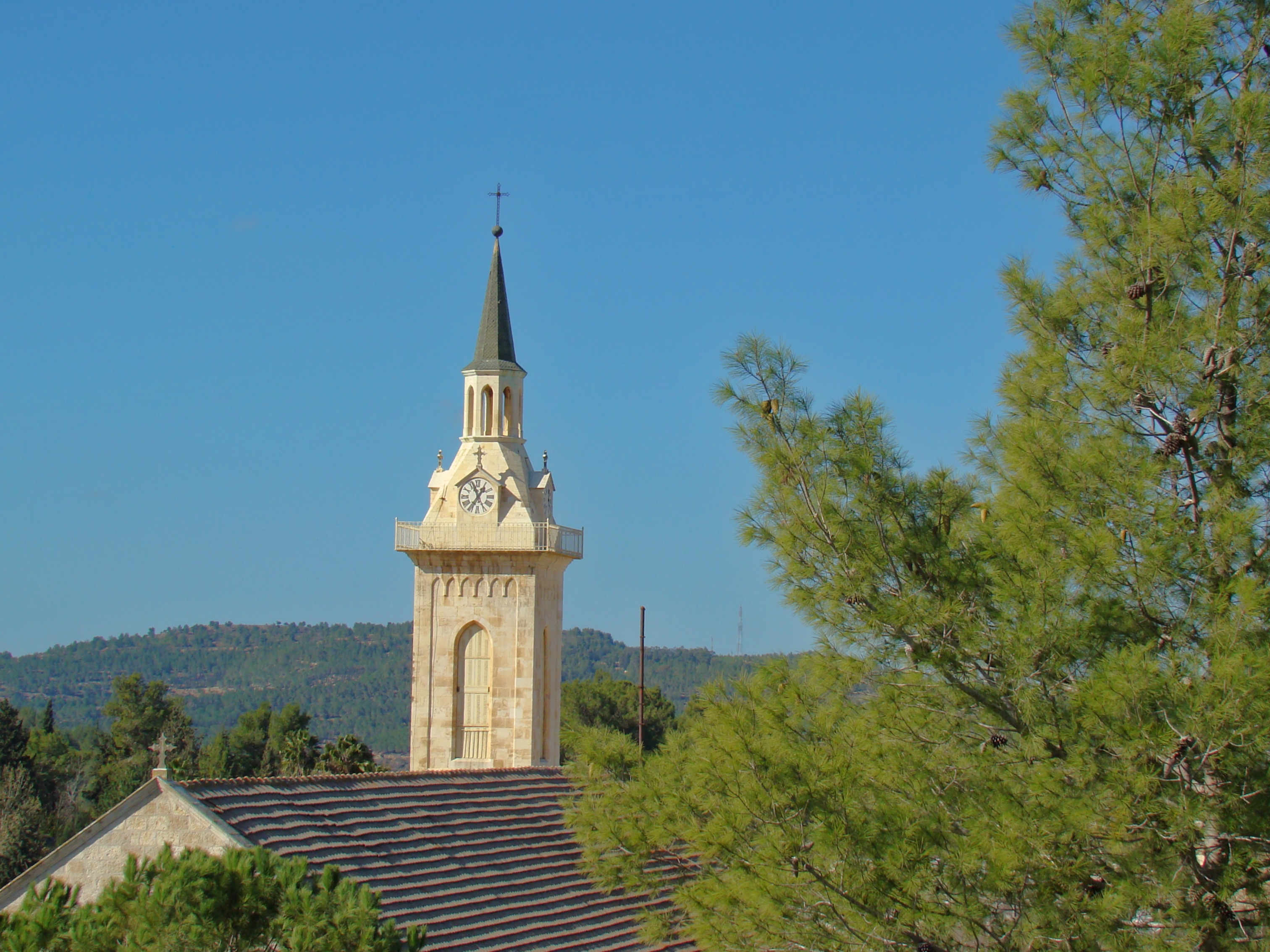
Here is a view of the top of the Church of the Visitation:

Steeple Tower of the Church of the Visitation. Photo ©Leon Mauldin.

Of course the point not to be lost is that when Mary heard the wonderful news that she would become the mother of the Messiah, she traveled from her home in Nazareth to visit Elizabeth, wife of Zacharias the priest, in a city in the hill country of Judea. There Elizabeth “was filled with the Holy Spirit,” and spoke, significantly, not about her own child (John) but about Mary, and the child she would have: “But why is this granted to me, that the mother of my Lord should come to me?

Hopefully some of our photos can help visualize the area in which this important visit took place.

Click images for larger view.


Biblical Hebron

September 25, 2020

Hebron is mentioned more than sixty times in the Bible, the first of which is in Genesis 13:18: “Then Abram moved his tent, and went and dwelt by the terebinth trees of Mamre, which are in Hebron, and built an altar there to the LORD.” Remains have been excavated at Hebron which pre-date the patriarch Abraham.

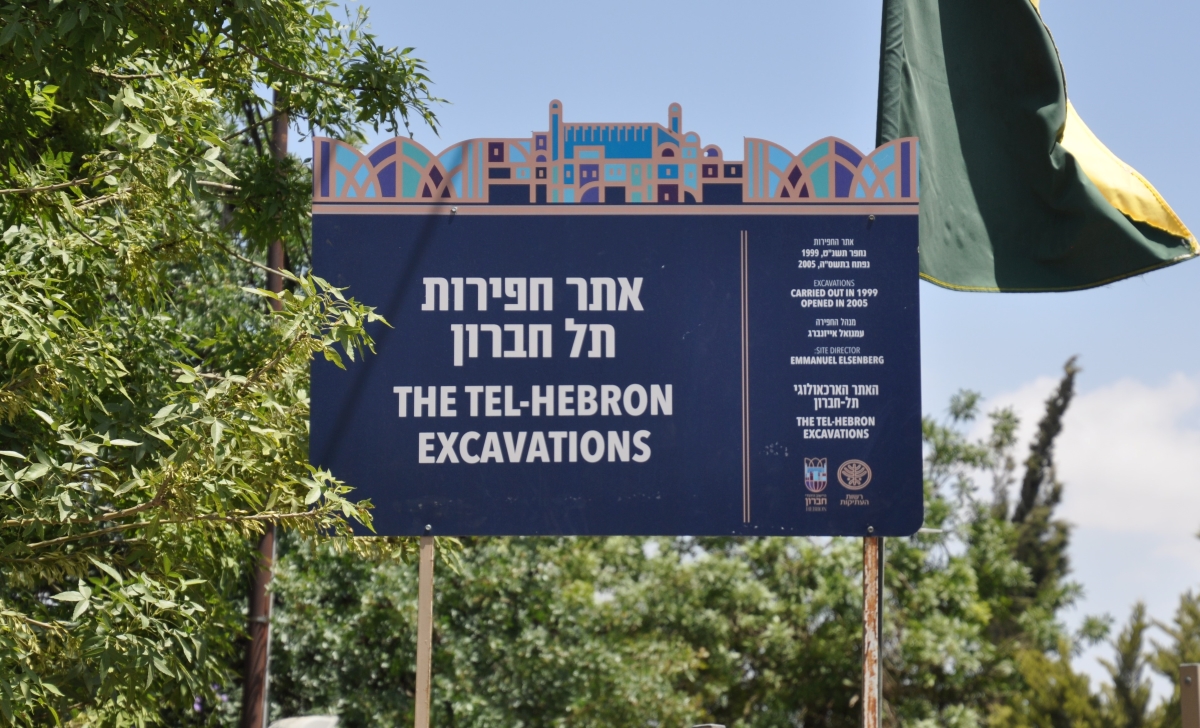
Hebron Excavations Sign. Photo ©Leon Mauldin.

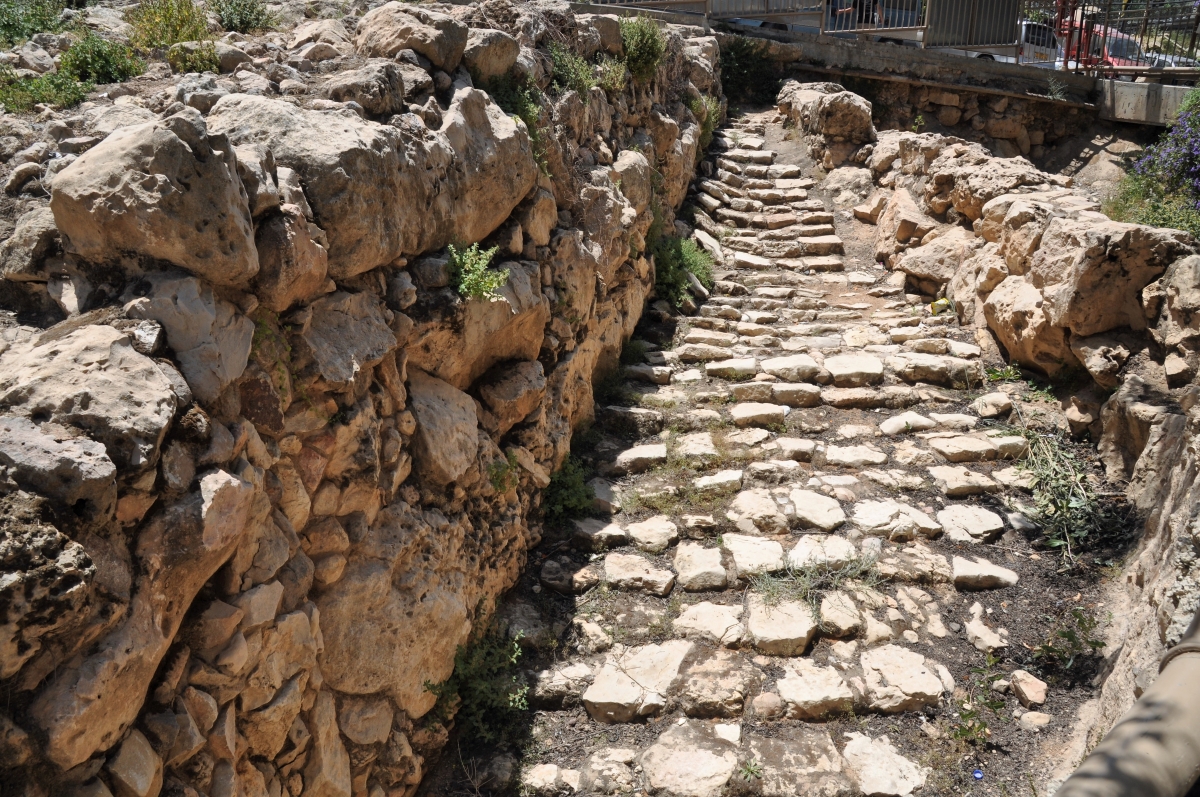
Tel-Hebron consists of approximately twelve acres. It is located about twenty miles south of Jerusalem. Excavations have uncovered a stretch of wall that is dated to the Early Bronze Age, as seen at left in photo here. The well-preserved staircase is made of natural stone slabs, well worn by the city’s ancient inhabitants. Scholars suggest the path likely led to one of Hebron’s city gates. At right is an additional wall constructed at a later date than that on your left.

Hebron Walls and staircase. Photo ©Leon Mauldin.

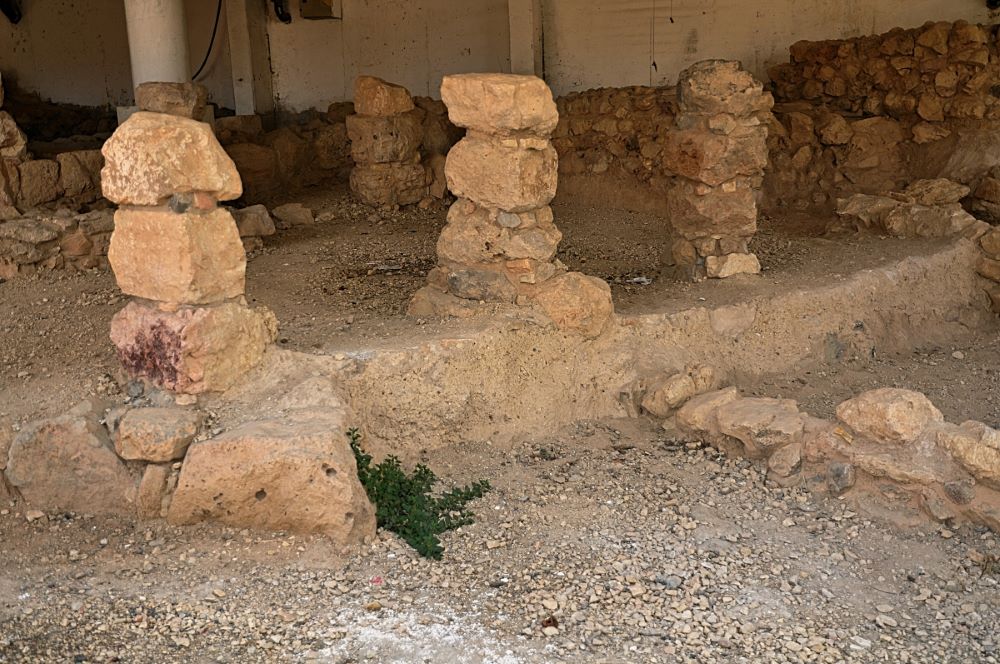
Another important discovery at Hebron is that of an 8th century BC four room house. Some scholars date the house to the time of Judah’s King Hezekiah (r. 715-686).

Four-room house at Hebron. 8th century BC. Photo ©Leon Mauldin.

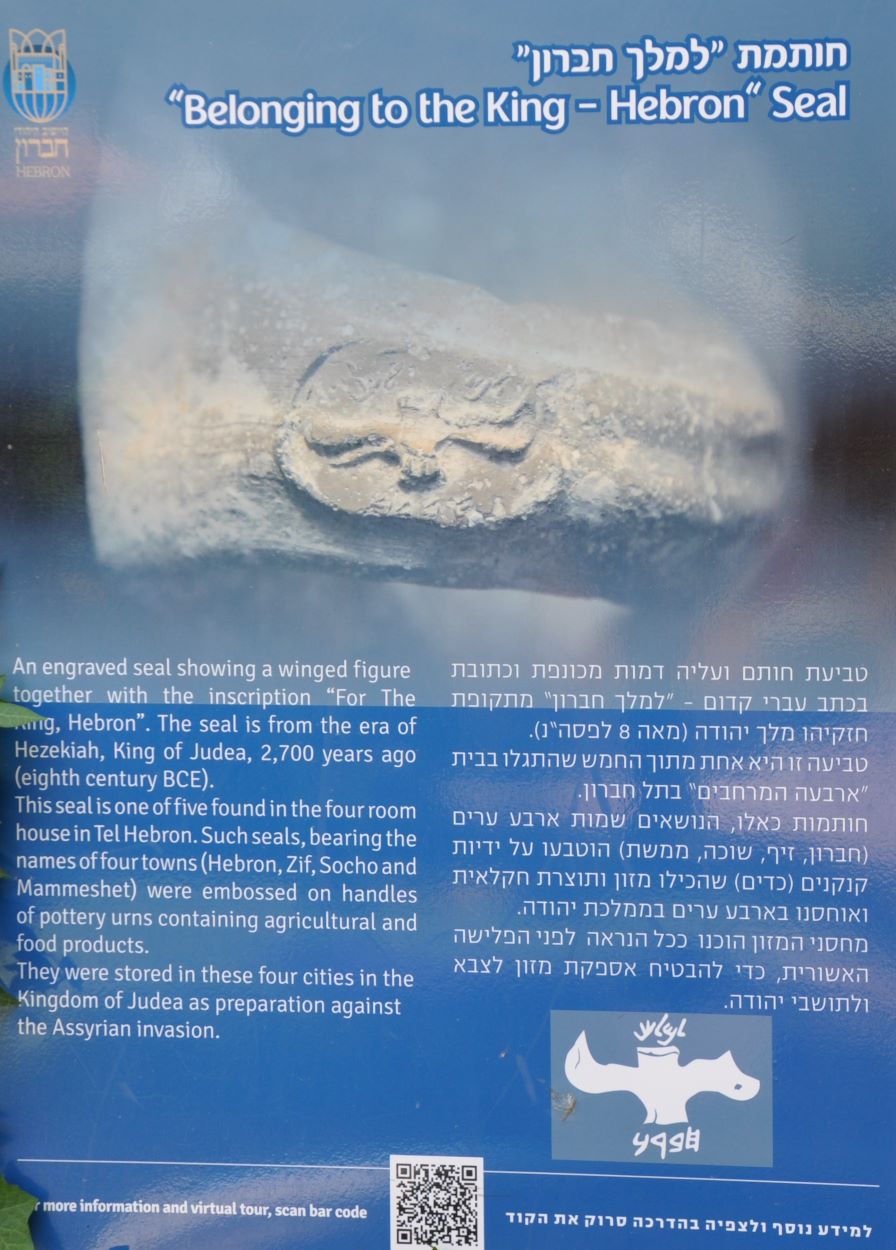
Yet another interesting discovery was several l’melech (“belonging to the king”) seals from pottery urns, which are also dated to Hezekiah’s reign.

Info Sign describing the LMLK (belonging to the king) stamps discovered at Hebron. ©Leon Mauldin.

Jeffery Chadwick notes that Hebron

seems to have settled into the role of regional center. This is demonstrated by the phenomenon of l’melekh handles. The term means “(belonging) to the king” or “property of the king.” The four-letter Hebrew designation (LMLK) was stamped into the wet clay of the handle of a certain type of storage jar at the end of the eighth century B.C.E. The jars were probably produced during the reign of King Hezekiah in preparation for the attack on Judah by Sennacherib’s Assyrian army, which occurred in 701 B.C.E.

L’melekh handles display either a two-winged sun disk or a four-winged scarab, but, more importantly for our purposes, they also include the name of one of four cities of Judah. One of these four cities was Hebron. (BAR 31:5, Sept/Oct 2005).

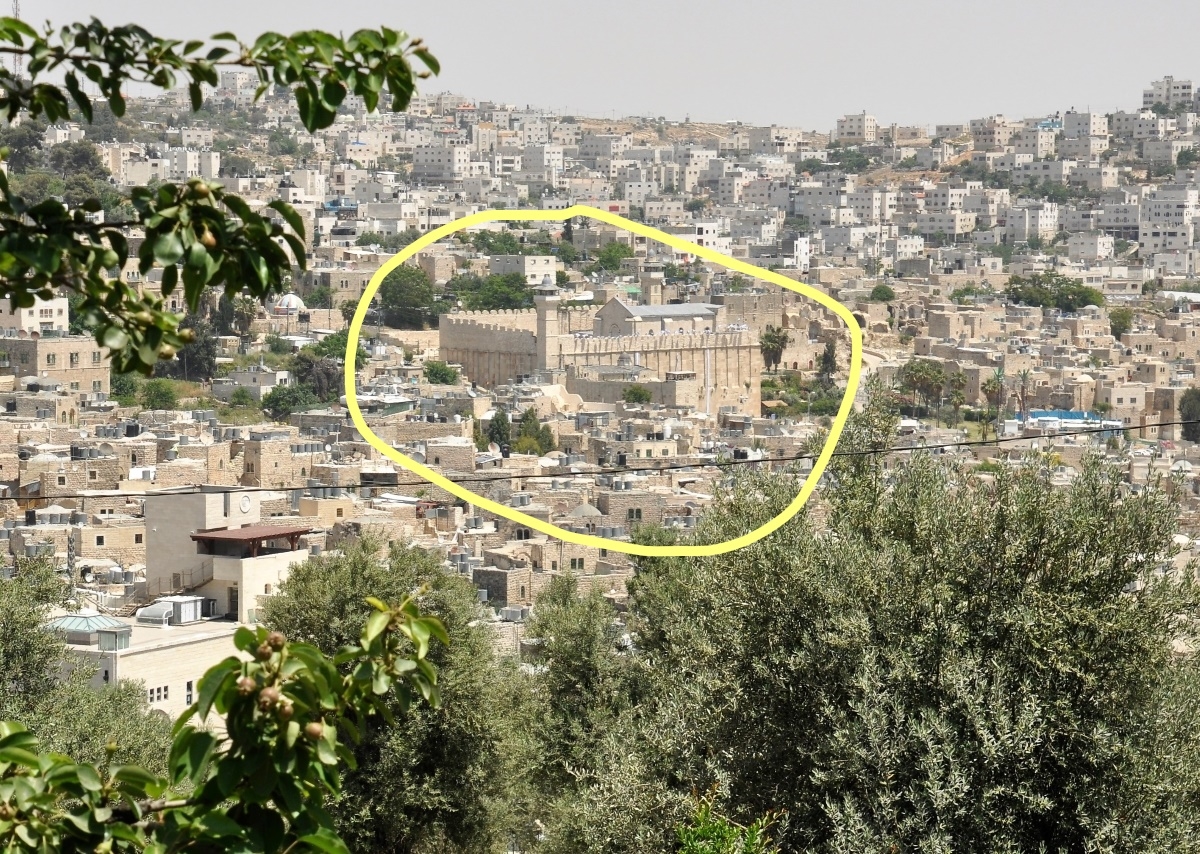
From Tel-Hebron one can see the Cave of Machpelah which Abraham purchased as a burial site. Herod the Great built the edifice which now covers the cave.

Cave of Machpelah as seen from Tel-Hebron. Photo ©Leon Mauldin.

I have previous posts on Hebron including here, here and here

Click on photos for larger view.


Abel-beth-maacah in Northern Israel

August 8, 2020

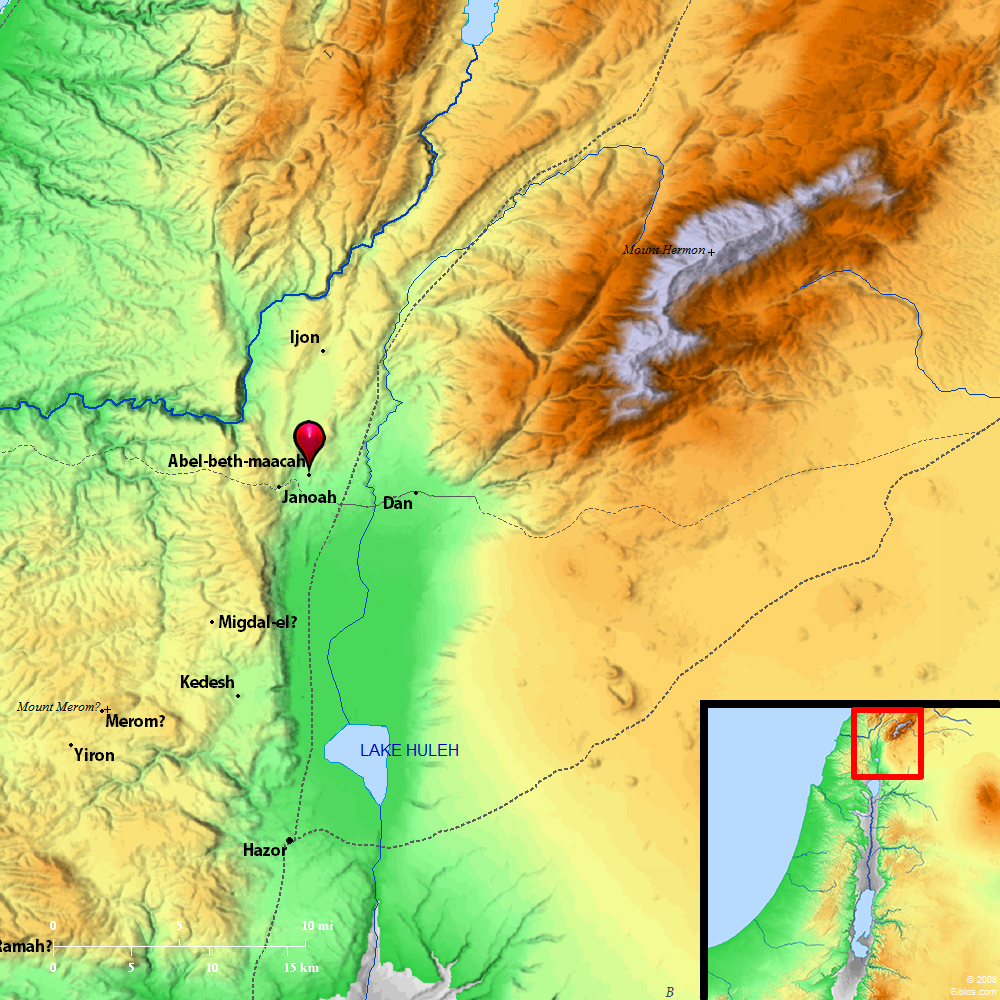
In the tumultuous days of the Divided Kingdom, King Baasha (Israel) fortified Ramah, a border city (on the Israel/Judah border) on the main north-south road, as well as a location which controlled the route westward to the sea. King Asa (Judah) retaliated. Here is the story:

And Baasha king of Israel came up against Judah, and built Ramah, that he might let none go out or come in to Asa king of Judah.  Then Asa took all the silver and gold that was left in the treasuries of the house of the LORD and the treasuries of the king’s house, and delivered them into the hand of his servants. And King Asa sent them to Ben-Hadad the son of Tabrimmon, the son of Hezion, king of Syria, who dwelt in Damascus, saying,  “Let there be a treaty between you and me, as there was between my father and your father. See, I have sent you a present of silver and gold. Come and break your treaty with Baasha king of Israel, so that he will withdraw from me.”  So Ben-Hadad heeded King Asa, and sent the captains of his armies against the cities of Israel. He attacked Ijon, Dan, Abel Beth Maachah, and all Chinneroth, with all the land of Naphtali (1 Kings 15:17-20).

Judah’s King Asa gave a “present” to Ben-Hadad, king of Syria (Aram), that he would attack Baasha. The word for “present is šōḥad, meaning, “Bribe, present, gift, reward, gratuity, inducement” (TWOT, #2359). Related passages would include Exodus 23:8, “You shall not take a bribe, for a bribe blinds the clear-sighted and subverts the cause of the just” (NASB). Isaiah denounced the leaders of Judah with the words, “Your princes are rebellious, And companions of thieves; Everyone loves bribes, And follows after rewards. They do not defend the fatherless, Nor does the cause of the widow come before them” (Isa. 1:23, NKJV). šōḥad is the word used to describe the bribe money that King Ahaz of Judah sent to Tiglath-pileser in a scheme like that of our present text, as he bribed the Assyrian king to attack Pekah (Israel) and Rezin (Aram/Syria) (2 Kings 16:8).

Syria’s king Ben-Hadad was very willing to take the money from Asa; he was being paid to do something he wanted to do! From his perspective he had everything to gain and nothing to lose. So as our text relates, “He attacked Ijon, Dan, Abel Beth Maachah, and all Chinneroth, with all the land of Naphtal” (1 Kings 15:20). This gave Syria a great advantage; this gave them a clear route to the Mediterranean Sea.

For Asa, from a military standpoint, his actions were successful; it was good military strategy for the short term. But from Chronicles we learn that God was displeased. He sent the prophet Hanani to Asa and rebuked him because you “have not relied on the LORD your God” (2 Chron. 16:7). The prophet went on to say, “For the eyes of the LORD run to and fro throughout the whole earth, to show Himself strong on behalf of those whose heart is loyal to Him. In this you have done foolishly; therefore from now on you shall have wars” (v.9).

Back to our opening text of 1 Kings 15, one of Israel’s northern cities successfully attacked by Ben-Hadad was Abel-beth-maacah.

Abel-beth-maacah, in northern Israel. Map by BibleAtlas.org.

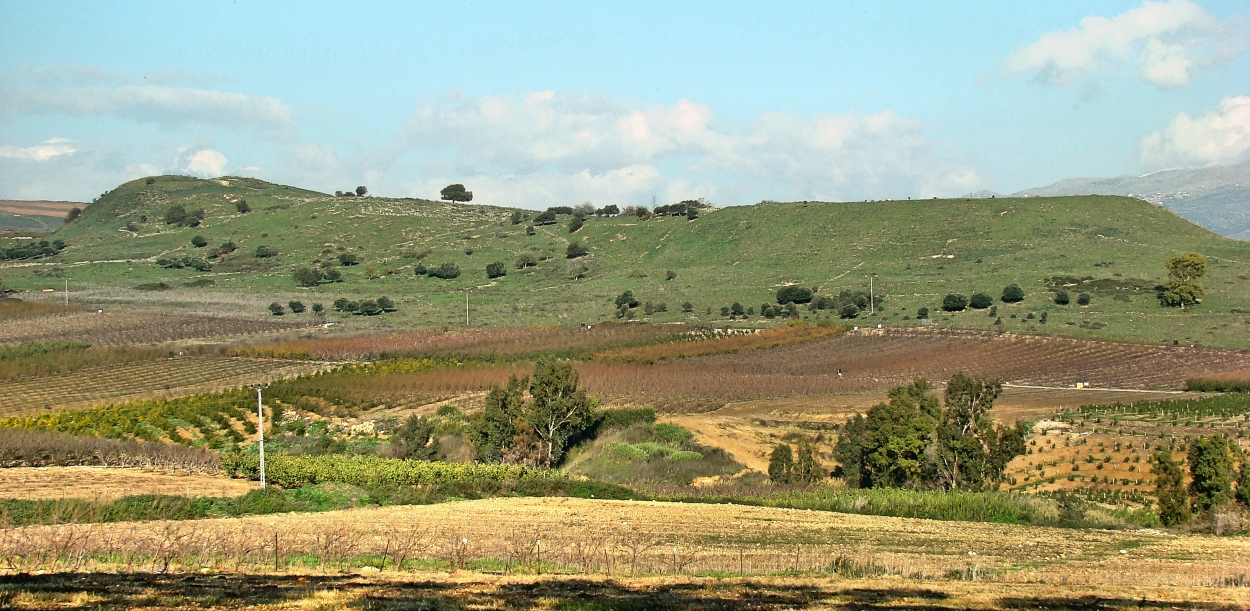
Here is a photo of Abel-beth-maacah. The large tel, at center.

Abel-beth-maacah. Photo ©Leon Mauldin.

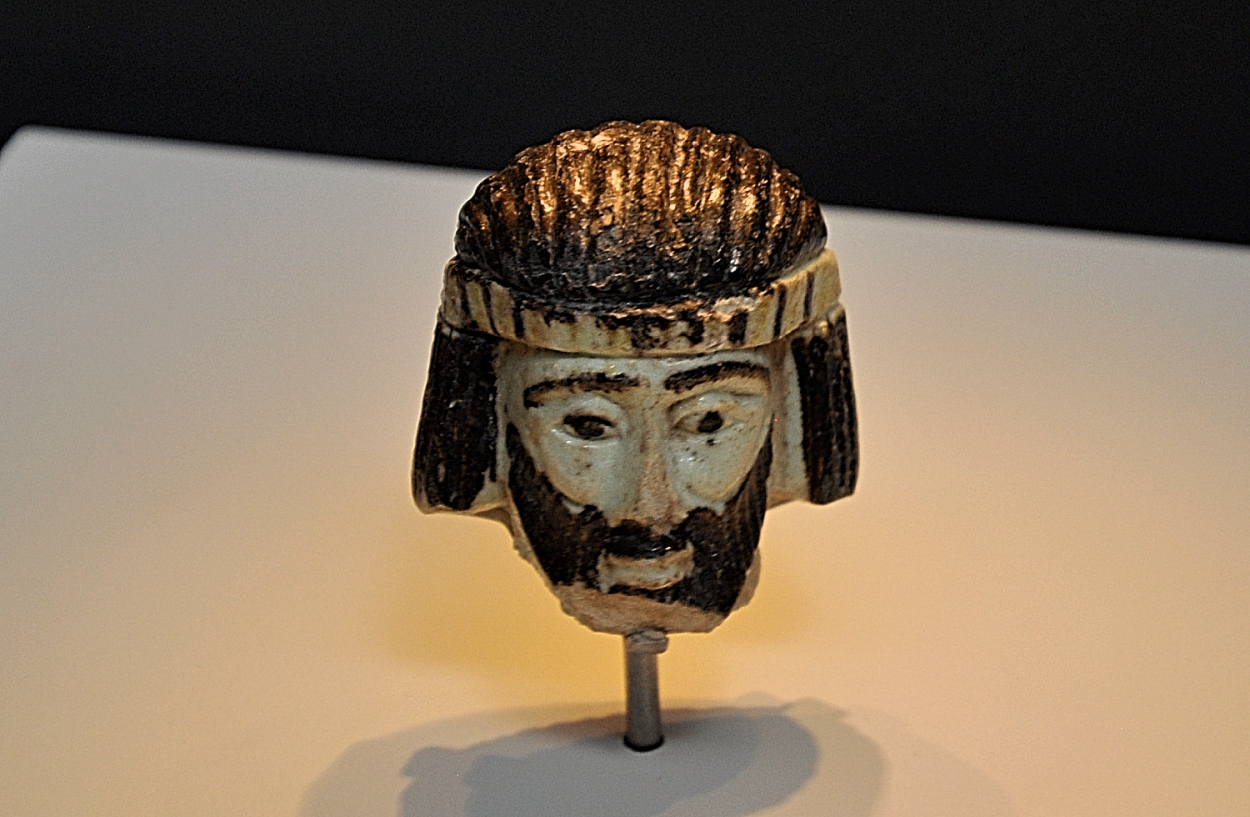
Recent excavations have been conducted at Abel-beth-maacah. An interesting artifact housed in the Israel Museum in Jerusalem is the head of a statue depicting a king, discovered in 2017 in a fortress at the summit of the tel. According to the museum info, this head is dated to the 9th century BCE, which would approximate the time of our 1 Kings 15 text (Asa r.911-870 BC; Baasha r.909-886 BC). (By their mention of King Ahab of Israel. r.874-853 BC, the IM is dating this artifact just slightly after the events of 1 Kings 15 re: Asa and Baasha).

Head of a stature depicting a king excavated at Abel-beth-maacah. Photo ©Leon Mauldin.

The placard states, “Its elegant style leaves no doubt that it portrays a distinguished personage, probably a king, but since it was found of the border of three different ancient kingdoms, we do not know whether it depicts King Ahab of Israel, King Hazael of Aram Damascus, or King Ithobaal of Tyre, rulers known from the Bible and other sources. Additional questions regarding the statues’s material and style only heighten the mystery.”

Click images for larger view.


Still Waters: Ein Avdat in Nahal Zin

July 6, 2020

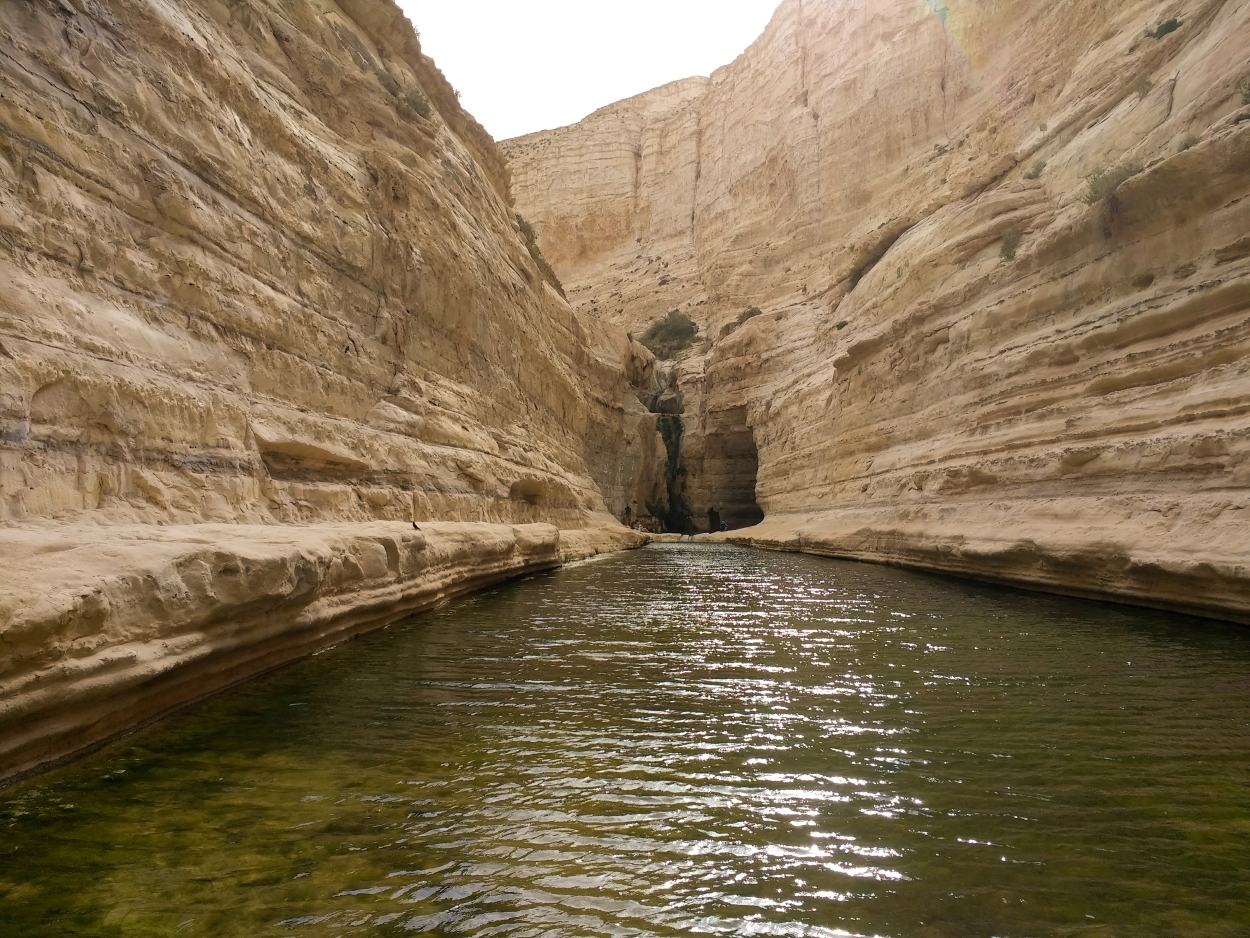
Nahal Zin was the southern border of Judah when the land was distributed to the twelve tribes of Israel, during the days of the Conquest under Joshua (Num. 34:3-4; Josh. 15:1-3). This wadi is 75 miles in length, cutting through many layers of mostly limestone. The Negev can be a dry and thirsty land, but there are also refreshing springs and pools of water.

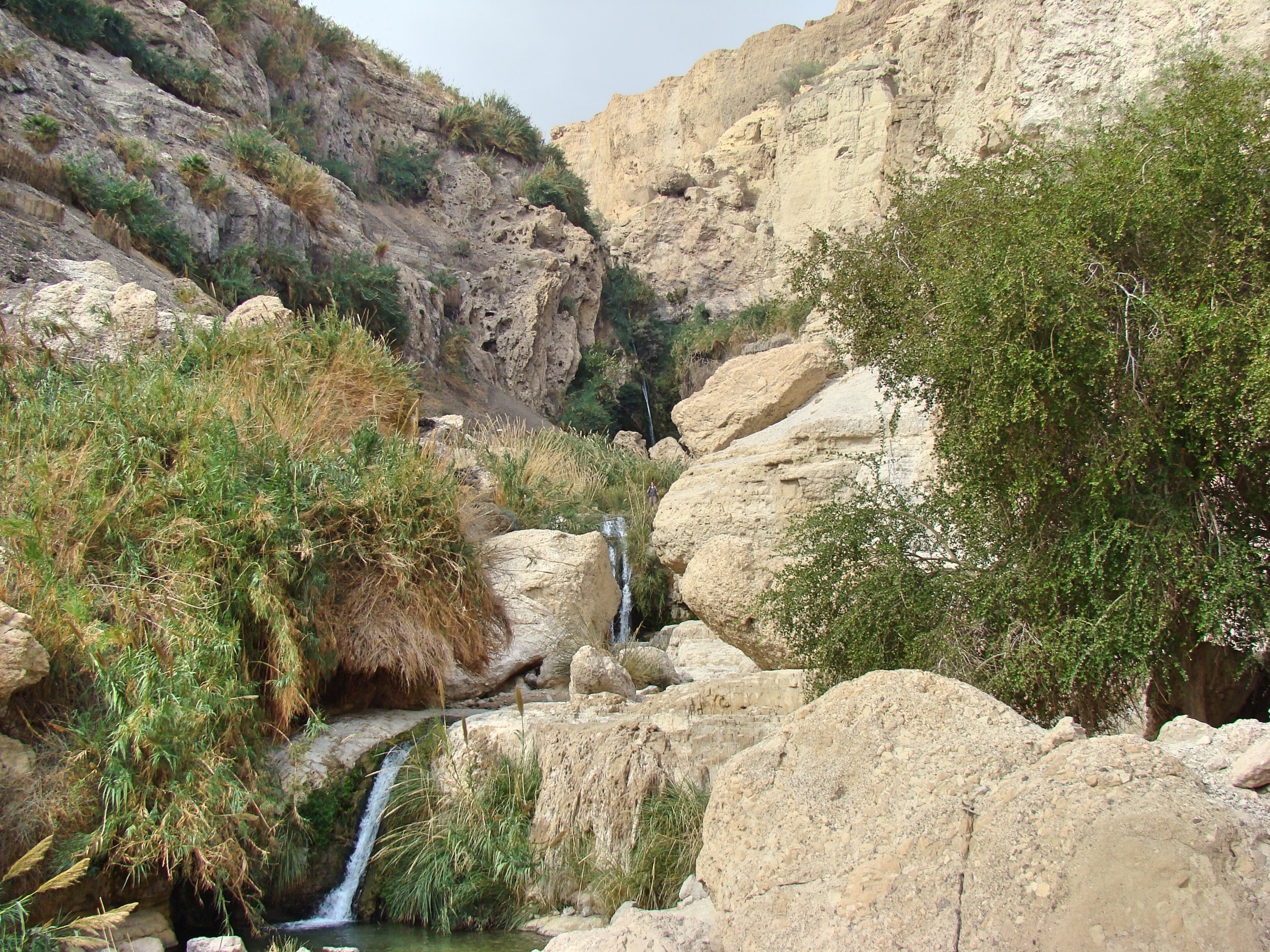
When David wrote, “He maketh me to lie down in green pastures: he leadeth me beside the still waters,” he may have had such scenes as this in mind. The spring, Ein Avdat, emerges at the base of the waterfall in the distant center.

Ein Avdat in Nahal Zin. Photo ©Leon Mauldin.

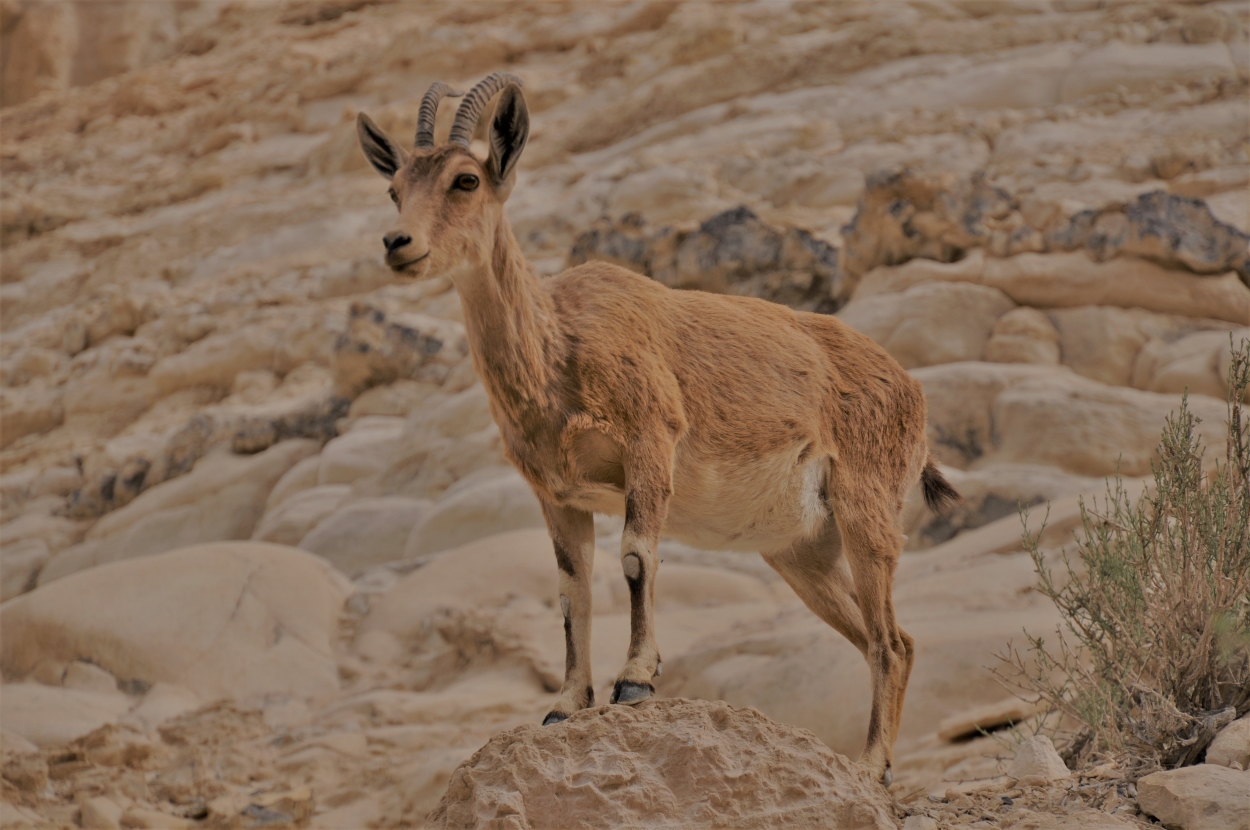
When Ferrell Jenkins and I visited here in March 2018 there were serveral ibexes in the area.

Ibex in Nahal Zin near Ein Avdat. Photo ©Leon Mauldin.

Click on photos for larger view.


The Empty Tomb

April 9, 2020

On Sunday, the 1st day of the week when Jesus was raised from the dead, the text says this about Peter and “the other disciple:”

So they both ran together, and the other disciple outran Peter and came to the tomb first. And he, stooping down and looking in, saw the linen cloths lying there; yet he did not go in. Then Simon Peter came, following him, and went into the tomb; and he saw the linen cloths lying there, and the handkerchief that had been around His head, not lying with the linen cloths, but folded together in a place by itself. Then the other disciple, who came to the tomb first, went in also; and he saw and believed. (John 20:4-8).

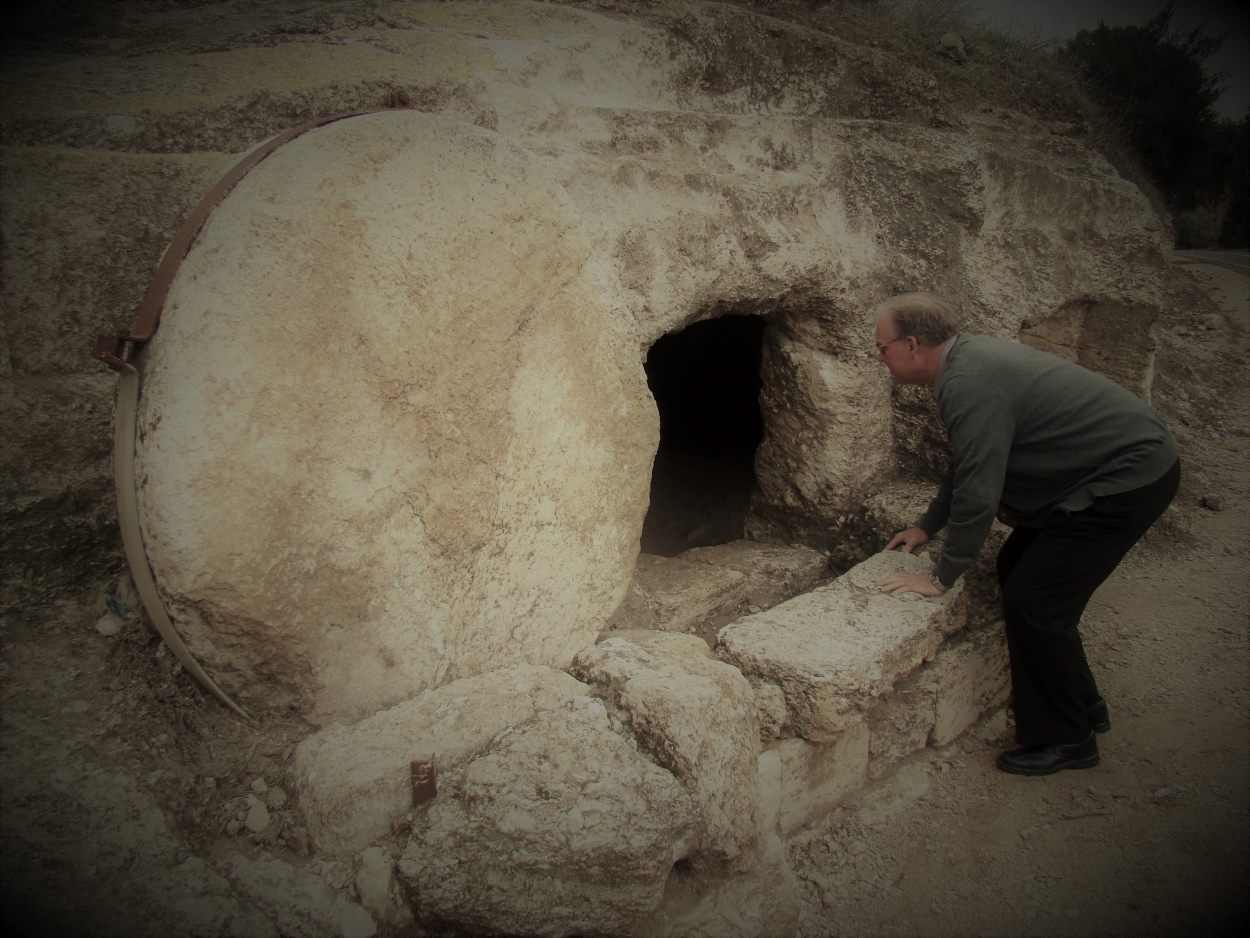
Note the record says the disciple stooped down to look in.  The tomb in our photo shows how this would of necessity be true.

Rolling stone Tomb. Stooping to look inside. Photo by Ferrell Jenkins.

This is the not tomb in which Jesus was buried; this tomb in our photo is located between Mt. Carmel and Megiddo in Israel, and dates back to the 1st century. It does however illustrate the type of tomb that would have been used. The Bible says that Joseph of Arimathea had a new tomb (one which had not been previously used, John 19:38-42).  Assisted by Nicodemus, Joseph wrapped Jesus’ body in a clean linen cloth, “and laid it in his new tomb which he had hewn out of the rock; and he rolled a large stone against the door of the tomb, and departed” (Mt. 27:59-60). The tomb in our photo was hewn out of the rock, and you can see the large stone positioned to the left of the opening.

For New Testament Christians, each first day of the week is significant.  Christians assemble in the name of Jesus Christ to partake of His memorial feast, the Lord’s Supper.  That Supper points back to His death, His body and His blood.  But we serve a risen Savior!  We proclaim His death till He comes (1 Cor. 11:26).


Baal Worship, a Perpetual Problem in Ancient Israel

February 7, 2020

A primary distinction between Israel and all the other nations was embodied in the first two commandments: “Thou shalt have no other gods before me.” “Thou shalt not make unto thee any graven image” (Ex. 20:3,4). Idolatry in its varied forms, with many gods, permeated the ancient world. Even though a nation or region might have its own “special” deity, the belief that there were many other gods was universal. The premise that there is but one true God, and all others are false, surely made Israel unique as a nation.

But unfortunately, the nation of Israel often looked to the nations round about them, and were thereby influenced in many ways instead of holding fast to their relationship with YHWH.

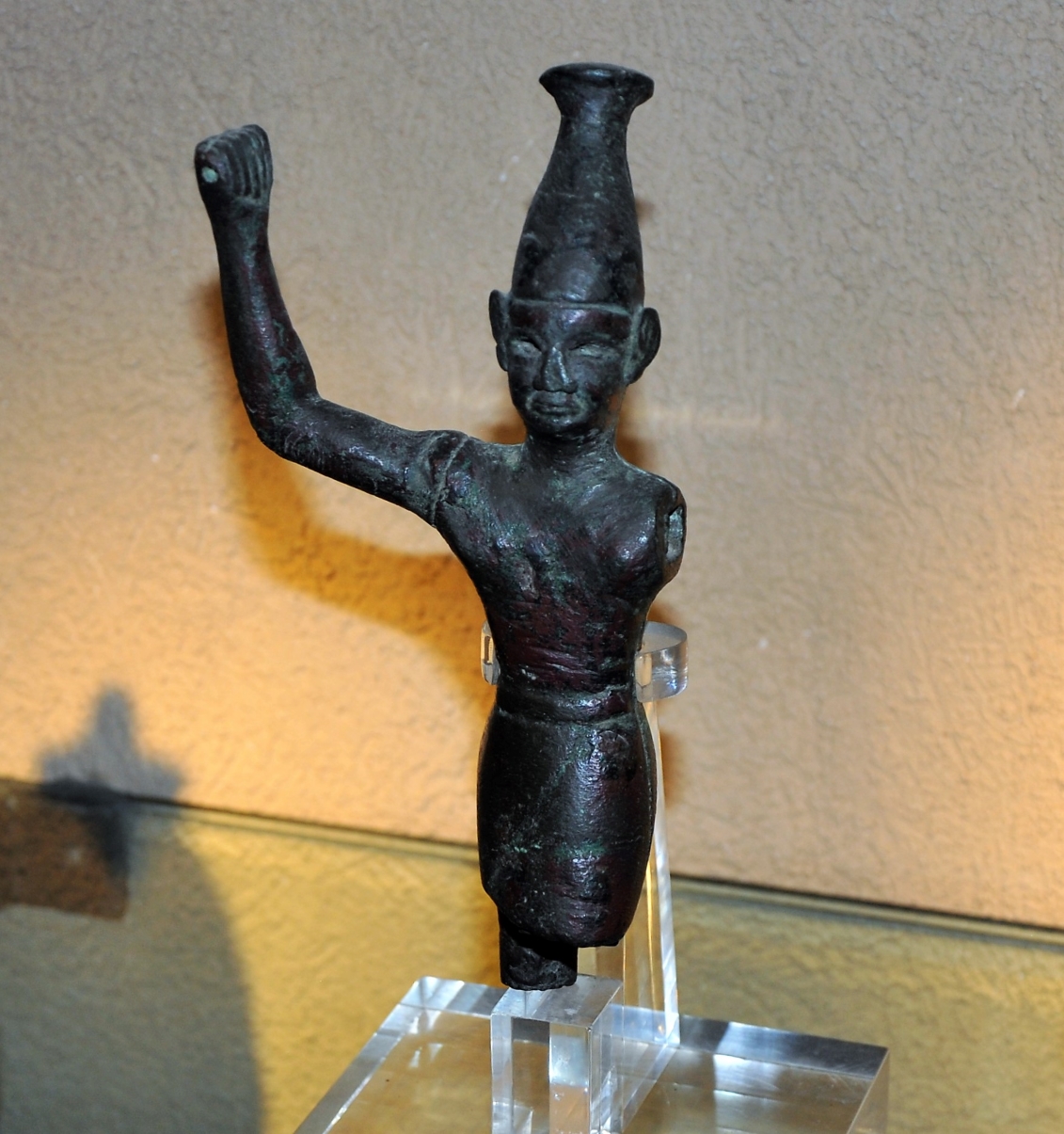
The god Baal. Hecht Museum. Photo ©Leon Mauldin.

In the biblical period of the Judges we read, “and they forsook the LORD God of their fathers, who had brought them out of the land of Egypt; and they followed other gods from among the gods of the people who were all around them, and they bowed down to them; and they provoked the LORD to anger. They forsook the LORD and served Baal and the Ashtoreths” (Judges 2:12-13). Our photo of Baal seen here was taken at the Hecht Museum at the University of Haifa, Israel (as well as the other photos included in this post).

You will notice that our biblical text also includes the “Ashtoreths” which would essentially be the female counterpart to Baal. The New Revised Standard renders, “They abandoned the LORD, and worshiped Baal and the Astartes.” This deity, Astarte, was also displayed at the Hecht Museum.

Astarte, Phoenician Fertility Goddess. Hecht Museum. Photo ©Leon Mauldin.

The Baal worship that was seen in the period of Judges repeated itself throughout the period known as the Divided Kingdom. In the chapter that tells of the fall of the northern kingdom of Israel, the Bible says, “They abandoned all the commandments of the LORD their God. They made for themselves molded images– even two calves– and an Asherah pole. They worshiped the whole heavenly host and served Baal” (2 Kings 17:16, CSB).

H. F. Vos has the following basic information about Baal:

Name of the most prominent Canaanite deity. As the god of fertility in the Canaanite pantheon (roster of gods), Baal’s sphere of influence included agriculture, animal husbandry, and human sexuality. The word Baal occurs in the OT in combination with other terms, such as place-names (Baal-peor, Hos 9:10; Baal-hermon, Jgs 3:3), or with other adjuncts as in Baal-berith (Baal of the covenant, Jgs 8:33). Use of the name in connection with a local place-name may indicate a local cult of Baal worship.

Baal worship became prominent in the northern Kingdom of Israel during the days of King Ahab (9th century BC) when he married Jezebel of Tyre, a city in Phoenicia (1 Kgs 16:29–33; 18:19–40). It later infiltrated the Kingdom of Judah when Athaliah, daughter of Ahab and Jezebel, married King Jehoram of Judah (2 Kgs 8:17, 18, 24–26). Places for worship of Baal were often high places in the hills consisting of an altar and a sacred tree, stone, or pillar (2 Kgs 23:5). The predominantly urban Phoenicians built temples to Baal; while Athaliah was queen of Judah, even Jerusalem had one (2 Chr 23:12–17) . . .

the Canaanites engaged in orgiastic worship that included human sacrifice as well as sexual rites (Jer 7:31; 19:4–6). Sacred prostitutes evidently participated in the autumnal religious ritual.  Baker Encyclopedia of the Bible (Vol. 1, p. 239).

I mentioned the fall of northern kingdom of Israel above in our 2 Kings text. Jeremiah was a prophet in the days of the next biblical period, Judah Alone. From his writings we see that unfortunately, many in Judah did not learn from the example of God’s displeasure of Israel’s worship of Baal. This false system was also perpetuated in Judah, even including the sacrifice of their children (as noted above by Vos): “They have built places here for worship of the god Baal so that they could sacrifice their children as burnt offerings to him in the fire. Such sacrifices are something I never commanded them to make! They are something I never told them to do! Indeed, such a thing never even entered my mind!” (Jer. 19:5, NET).

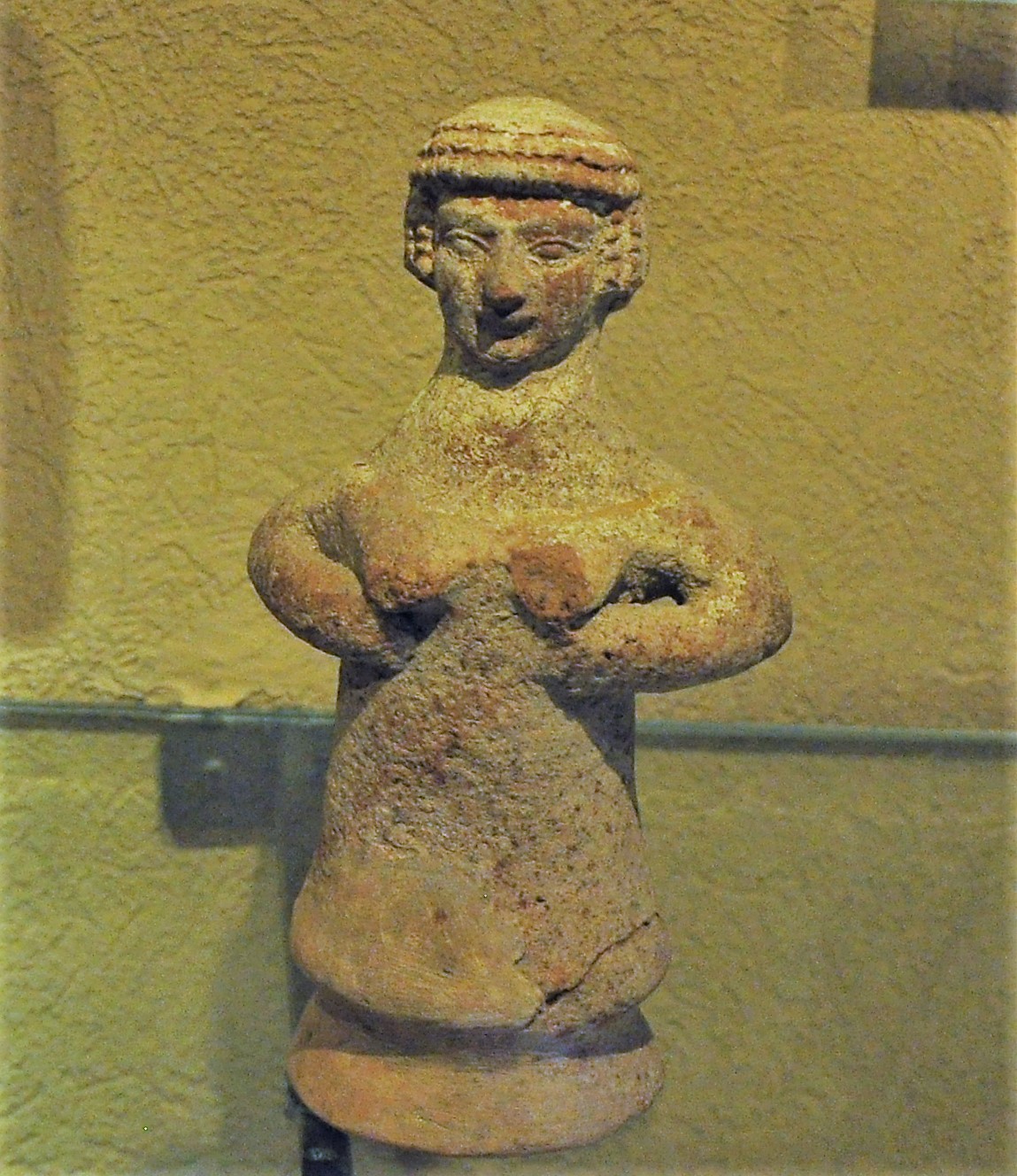
Not only were there the larger images that would be housed in temples or otherwise displayed for public worship, but smaller, “household” gods and goddesses were common.

Astarte, Household Fertility Goddess, 8th century BC. Hecht Museum. Photo ©Leon Mauldin.

We have previously posted on Baal worship here and here.

We close with the words of Jesus, “You shall worship the LORD your God, and Him only you shall serve” (Mt. 4:10).

(Click images for larger view).


Hadad, Name of a god and Syrian Kings

January 24, 2020

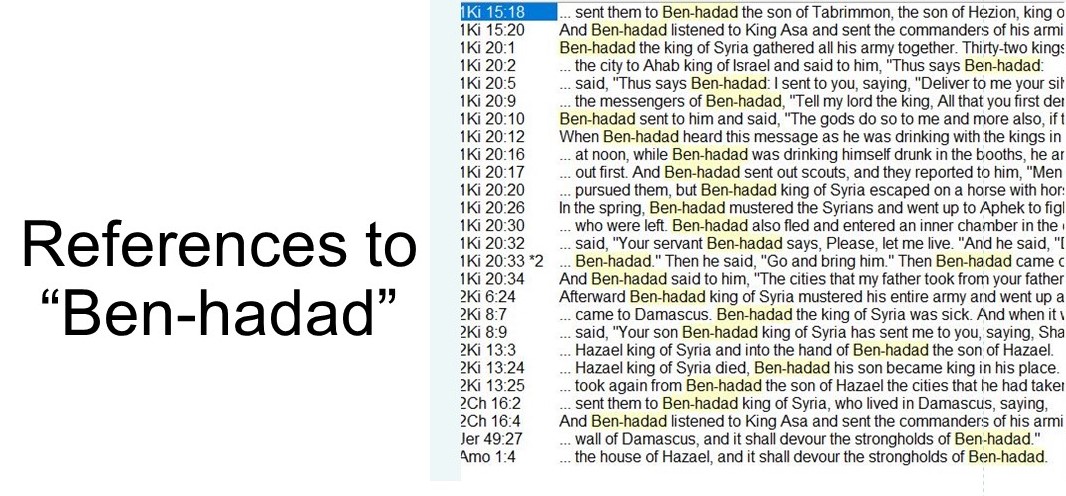
In the study of the Divided Kingdom there are many references to “Ben-hadad”, king of Syria. For example, I was just reading 2 Kings 6:24: “Afterward Ben-hadad king of Syria mustered his entire army and went up and besieged Samaria.”

Biblical references to Ben-hadad. ESV Bible, slide by Leon Mauldin.

The name “Ben-hadad” means “son of Hadad.” This is in reference to the god Hadad, god of Syria. In this mythology, he was the storm god, the god that provided rain.

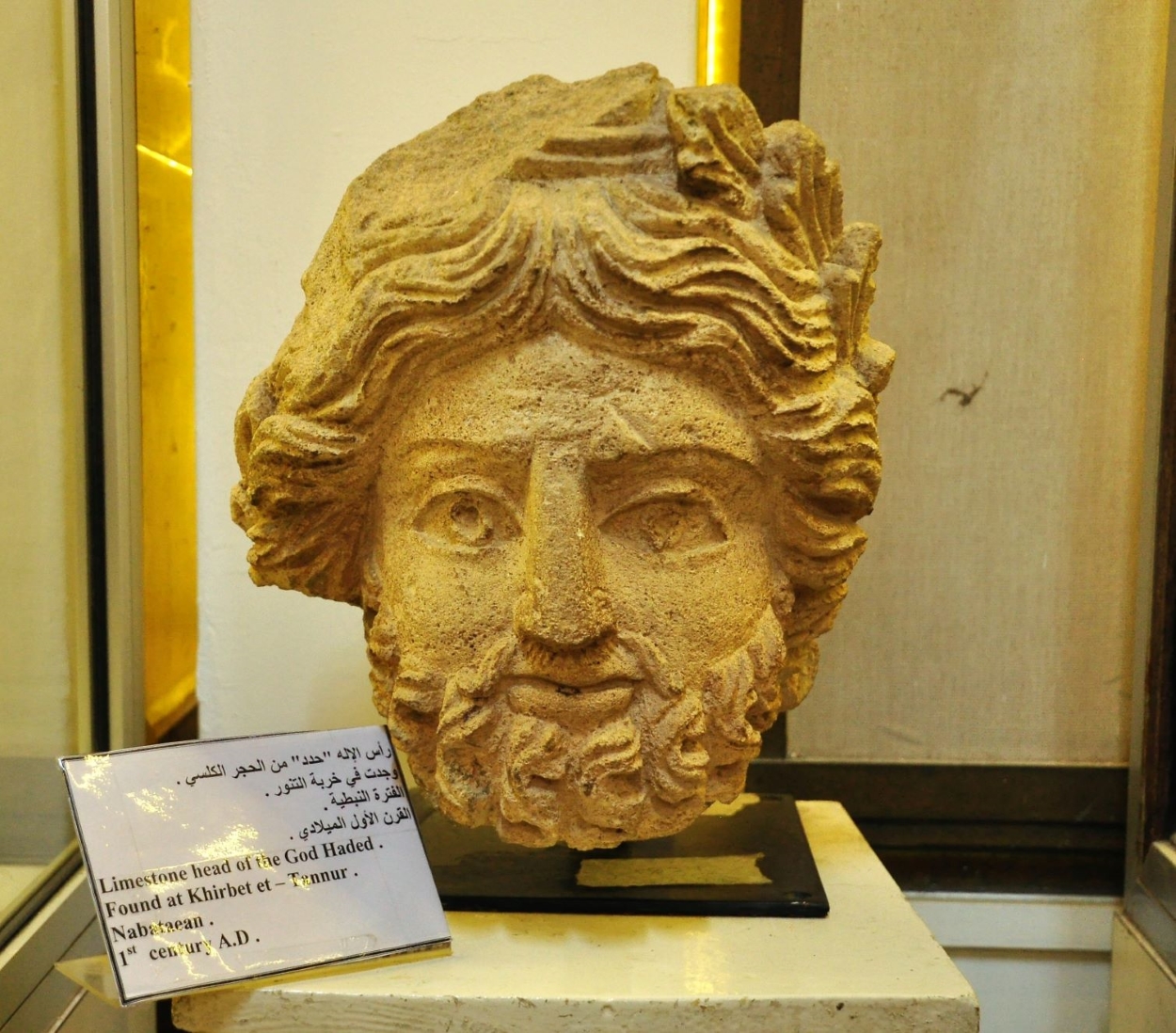
There is a bust of Hadad housed in the Jordan Museum in Amman.

The god Hadad. Jordan Museum. Photo ©Leon Mauldin.

“Ben-hadad” is a dynastic name. There are three kings in the Bible record (in the numerous passages above) called “Ben-hadad.” A. H. Sayce wrote:

BEN-HADAD (בֶּן־הֲדַד, υἱὸς Ἁδερ, Benadad).—Three kings of Damascus of this name are mentioned in the OT.

Ben-hadad I., the son of Tab-rimmon, the son of Hezion (? Rezon), was bribed by Asa of Judah, with the treasures of the temple and palace, to attack Baasha of Israel while the latter was building the fortress of Ramah, and thereby blocking the Jewish high-road to the north. Asa urged that there had been alliance between his father and Tab-rimmon; but his gold was doubtless more efficacious in inducing Ben-hadad to invade the northern part of Israel, and so oblige Baasha to desert Ramah. Thereupon Asa carried away the stone and timber of Ramah, and built with them Geba and Mizpah (1 K 15:18–22).

Ben-hadad II. was the son and successor of Ben-hadad I. We have an account of his war with Ahab, and unsuccessful siege of Samaria, in 1 K 20. Thirty-two kings are said to have been his vassals or allies. He was, however, signally defeated at Aphek, and compelled to restore the cities taken by his father (1 K 20:34), as well as to grant the Israelites a bazaar in Damascus. At a later period Ben-hadad again besieged Samaria; but a panic fell upon his army, and they fled, believing that the king of Israel had hired against them ‘the kings of the Hittites and the kings of the Egyptians’ (2 K 7:6, 7). Having fallen ill, Ben-hadad afterwards sent Hazael to the prophet Elisha, who had come to Damascus, to ask whether he should recover; but the result of the mission was, that on the following day Hazael smothered his master and seized the crown (2 K 8:7–15).

Ben-hadad III. was the son of Hazael, and lost the Israelitish conquests that his father had made. Thrice did Joash of Israel ‘smite him, and recovered the cities of Israel’ (2 K 13:25). Sayce, A. H. A Dictionary of the Bible: Dealing with Its Language, Literature, and Contents Including the Biblical Theology (Vol. 1, p. 271).

The Lexham Bible Dictionary gives the following helpful information on the god Hadad regarding the significance of the land of Syria:

Although Hadad was worshiped in Mesopotamia, Hadad likely originated in Syria. In a late Assyrian deity-list, Hadad (dAd-du) is called dIM.MARki, the “storm-god of the west” (Huffmon, Amorite Personal Names, 156; Conn. 25, 16:16). In Syria, Hadad was probably an important deity from earliest times. Here Hadad was the son of Dagon, the Mesopotamian and West Semitic storm deity, and the equivalent of the great Sumerian storm-god Enlil (Green, Storm-God, 63–72, 167–68). Tablets discovered at ancient Mari associate the storm-god dIM with Hadad, who was revered in Syria more as a warrior than as a beneficent bringer of fertility. In the second millennium BC Hadad’s cult was centralized in ancient Yamhad (modern Aleppo), in Syria (Abou-Assaf, “Die Ikonographie”). Kelley, J. L. (2016). The Lexham Bible Dictionary.

I hope this information will be helpful to any who are undertaking a study of that complex biblical period known as the Divided Kingdom. Click images for larger view.


Rock Badgers/Hyraxes at En-Gedi, Israel

November 27, 2019

Proverbs 30:26 states, “hyraxes are not a mighty people, yet they make their homes in the cliffs” (CSB). The NASB retains the Hebrew term, “The shephanim are not mighty people, Yet they make their houses in the rocks.” ESV renders, “the rock badgers.” KJV has “conies.”

It is not unusual to see these animals in En-Gedi.

Rock badgers at En-gedi. Photo ©Leon Mauldin.

Ferrell Jenkins and I photographed these as we were walking up the trail to see the falls at En-gedi, while doing a personal study trip in Israel in 2009.

Rock badger at En-gedi. Photo ©Leon Mauldin.

The NET Bible has this note:

This is the Syrian Hyrax, also known as the rock badger. KJV, ASV has “conies” (alternately spelled “coneys” by NIV), a term usually associated with the European rabbit (Oryctolagus cuniculus) but which can also refer to the pika or the hyrax. Scholars today generally agree that the Hebrew term used here refers to a type of hyrax, a small ungulate mammal of the family Procaviidae native to Africa and the Middle East which has a thick body, short legs and ears and a rudimentary tail. The simple “badger” (so NASB, NRSV, CEV) could lead to confusion with the badger, an entirely unrelated species of burrowing mammal related to weasels.

Further, “Modern scholars identify this creature with the rock badger (the Syrian hyrax), a small mammal that lives in the crevices of the rock. Its wisdom consists in its ingenuity to find a place of security” (NET Bible note).

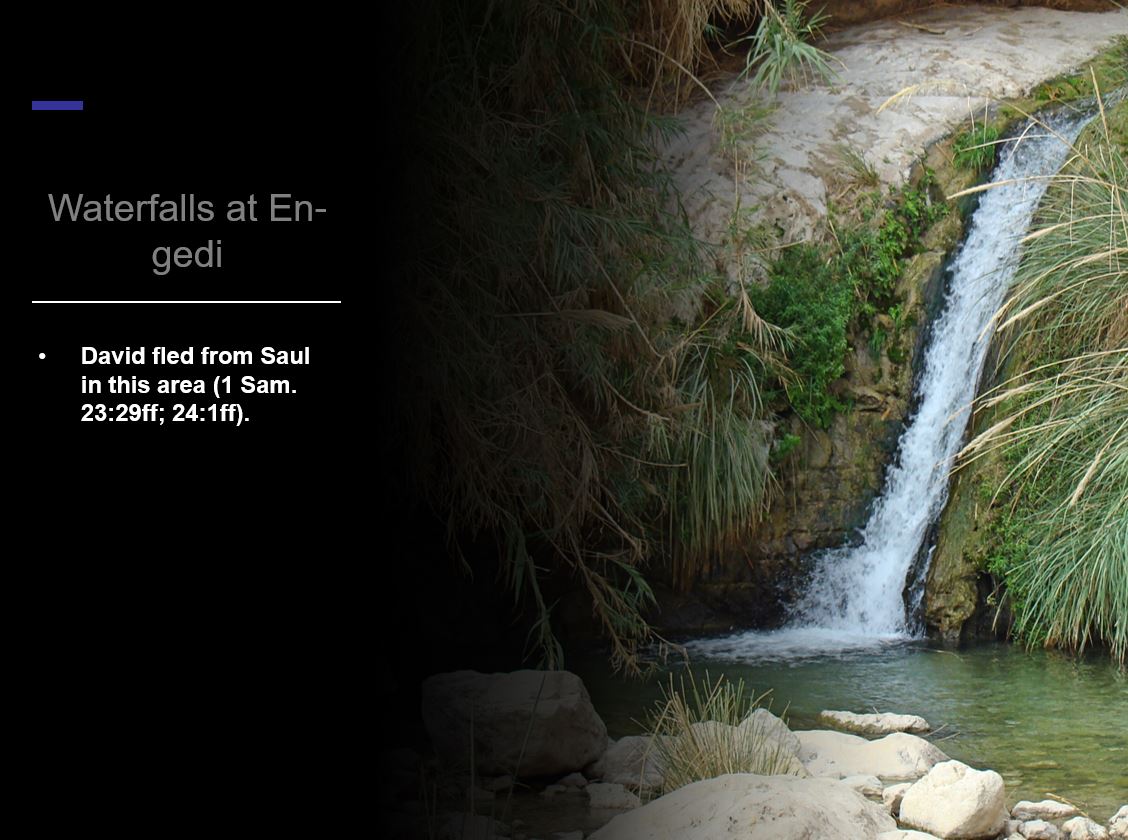
En-gedi is known for its beautiful falls.

Waterfalls at En-gedi. Photo ©Leon Mauldin.

En-gedi was an area where David and his men fled from King Saul.

Waterfall at En-gedi. Photo ©Leon Mauldin.

I previously posted on the rock badger on our blog here.

In our home congregation we are completing a study of the Proverbs, with ch. 30 scheduled for Sunday. I find that visuals such as these can be very helpful in our understanding of the biblical text.

Click on images for larger view.