More on Shiloh

September 23, 2011

At the battle of Aphek the Philistines defeated the Israelites in the days of Eli and Samuel (1 Sam. 4:1-11). Look at map to see Shiloh, where the tabernacle was, and Aphek. Both are in the tribal territory of Ephraim.

Location of Aphek relative to Shiloh, tribal territory of Ephraim. Map by Scott Richardson.

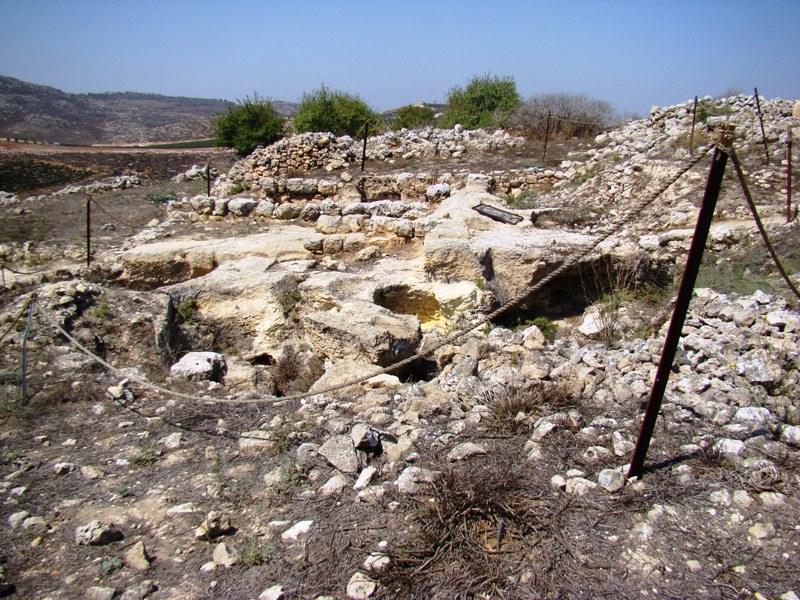
The best evidence is that it was then that the Philistines destroyed Shiloh. Ample traces of this destruction were found in the excavations. Israel Finkelstein wrote,

This complex of buildings [buildings in location designated area C] was destroyed by a violent conflagration whose traces were visible everywhere: charred floors and heaps of fallen bricks, sometimes more than one meter deep (some of the bricks were visibly baked by the fierce fire). Here and there parts of the fallen roof were identifiable. As suggested by Albright following the Danish expedition’s excavations, this may be attributable to the Philistine destruction of the site (mid-eleventh century BCE) (The New Encyclopedia of Archaeological Excavations in the Holy Land, IV.1368).

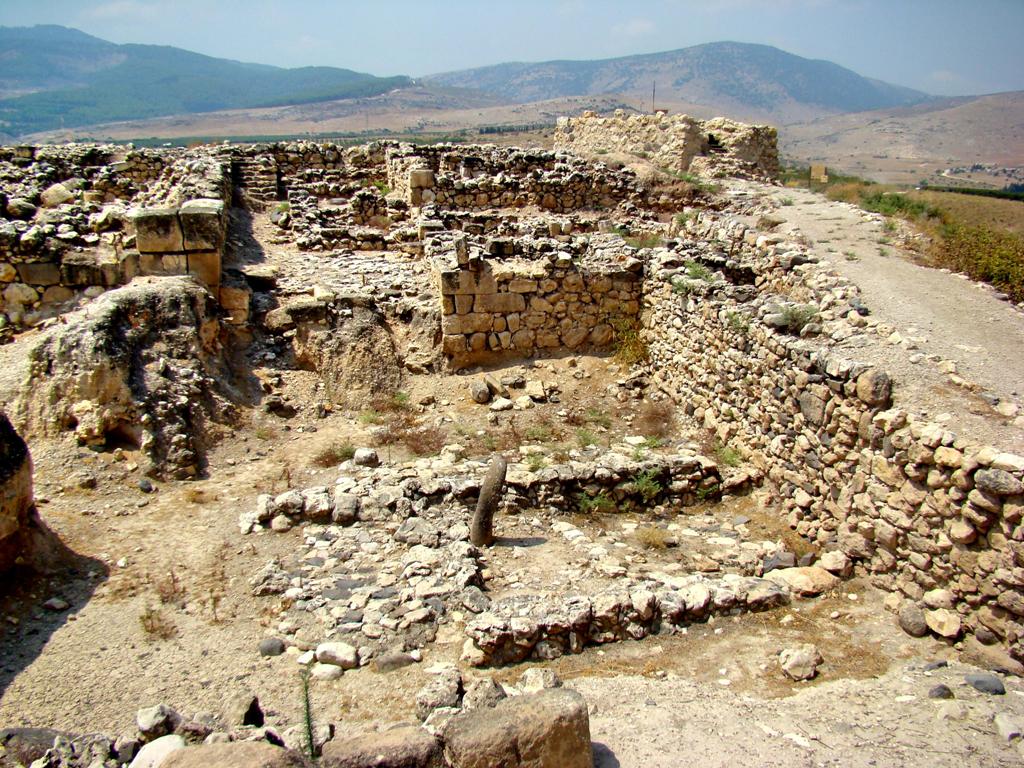
This photo shows some of the excavations at Shiloh.

Excavations at Shiloh. Photo by Leon Mauldin.

Following the destruction of Shiloh, the tabernacle was at Gibeon in the days of David and Solomon, until Solomon built the temple in Jerusalem. We plan to follow-up on that in subsequent posts.

Moving ahead to the Byzantine Period, churches have been found from the fifth and sixth centuries AD. A section of Mosaic floor may be seen in our photo.

Mosaic Floor at Shiloh. Byzantine Period. Photo by Leon Mauldin.

To see the remains of Bible places can be tremendous help in visualizing the biblical text, don’t you agree?

Shiloh Flag. Photo by Leon Mauldin.

Remember to click on images for higher resolution.


Shiloh, cont’d.

September 22, 2011

Using the early date of the Conquest (1407/6 BC) as the approximate time that the tabernacle would have been erected at Shiloh (Josh. 18:1), and accepting W.F. Albright’s dating of Shiloh’s destruction at 1050 BC, that would mean that the tabernacle stood at that site for about 350 years. As we saw in our previous post, the biblical text makes reference to Shiloh’s destruction as a well-known fact but does so without recording the event itself. Most likely it was the Philistines who followed through with the destruction of the sacred site after the capture of the ark as recorded in 1 Sam. 4.

Later the Psalmist would write,

55 He drove the nations out from before them; he assigned them their tribal allotments and allowed the tribes of Israel to settle down. 56 Yet they challenged and defied the sovereign God, and did not obey his commands. 57 They were unfaithful and acted as treacherously as their ancestors; they were as unreliable as a malfunctioning bow. 58 They made him angry with their pagan shrines, and made him jealous with their idols. 59 God heard and was angry; he completely rejected Israel. 60 He abandoned the sanctuary at Shiloh, the tent where he lived among men. 61 He allowed the symbol of his strong presence to be captured; he gave the symbol of his splendor into the hand of the enemy (Psalm 78:55-61, NET).

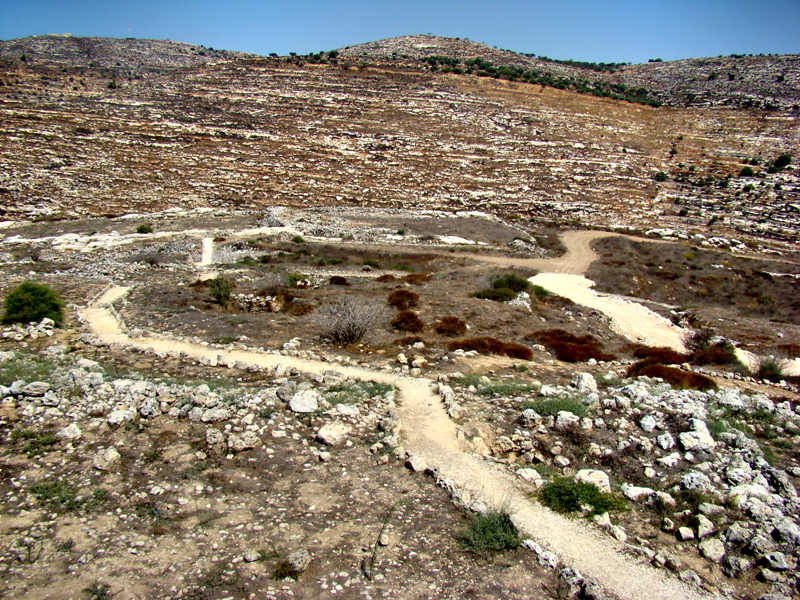
In our photo the proposed location of the tabernacle at Shiloh may be seen. Note the small rectangular area in upper center.

Shiloh. Possible location of tabernacle in upper center. Photo by Leon Mauldin.

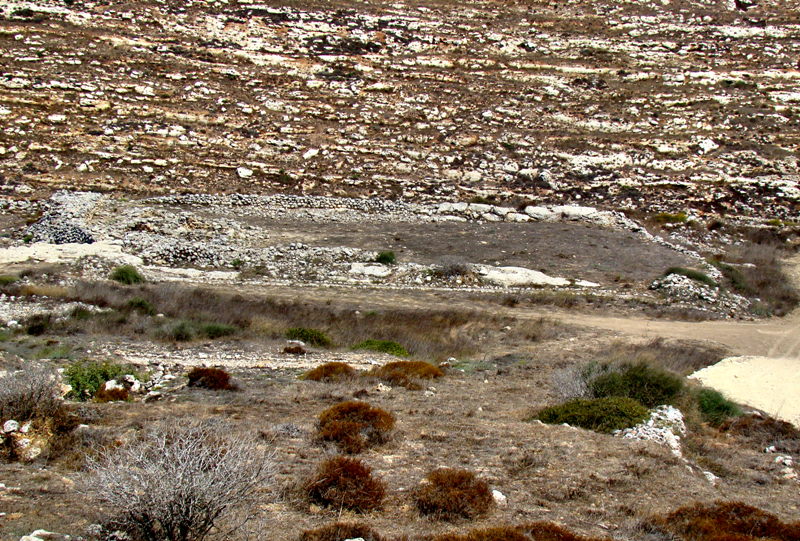
Here is a close up:

Shiloh. Area in shape of rectangle is proposed site of the tabernacle. Photo by Leon Mauldin.

Shiloh was central to the nation of Israel for several centuries.

Click on images for higher resolution.


“Go To Shiloh” (Jer. 7:12)

September 20, 2011

The professed people of God of Jeremiah’s day had a serious problem–they weren’t listening to God. They convinced themselves they could do as they pleased and claim allegiance to God, and everything would be OK; after all, they had the temple.

Jeremiah addressed this:

7 If you stop doing these things, I will allow you to continue to live in this land which I gave to your ancestors as a lasting possession. 8 But just look at you! You are putting your confidence in a false belief that will not deliver you. 9 You steal. You murder. You commit adultery. You lie when you swear on oath. You sacrifice to the god Baal. You pay allegiance to other gods whom you have not previously known. 10 Then you come and stand in my presence in this temple I have claimed as my own and say, “We are safe!” You think you are so safe that you go on doing all those hateful sins! 11 Do you think this temple I have claimed as my own is to be a hideout for robbers? You had better take note! I have seen for myself what you have done! says the LORD. 12 So, go to the place in Shiloh where I allowed myself to be worshiped in the early days. See what I did to it because of the wicked things my people Israel did. 13 You also have done all these things, says the LORD, and I have spoken to you over and over again. But you have not listened! You have refused to respond when I called you to repent! 14 So I will destroy this temple which I have claimed as my own, this temple that you are trusting to protect you. I will destroy this place that I gave to you and your ancestors, just like I destroyed Shiloh (Jer. 7:7-14, NET).

The tabernacle had previously been in Shiloh (Josh. 18; 1 Sam. 1-4, etc.), but God had allowed it to be destroyed because of Israel’s disobedience. Jeremiah warned that the same fate was awaiting the temple, for the same reason.
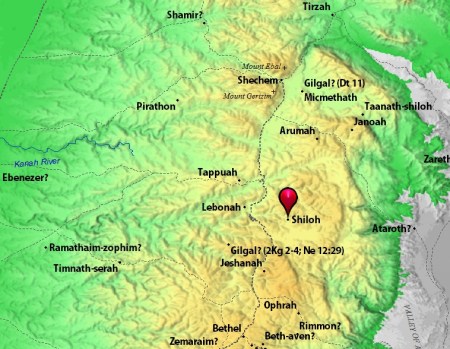
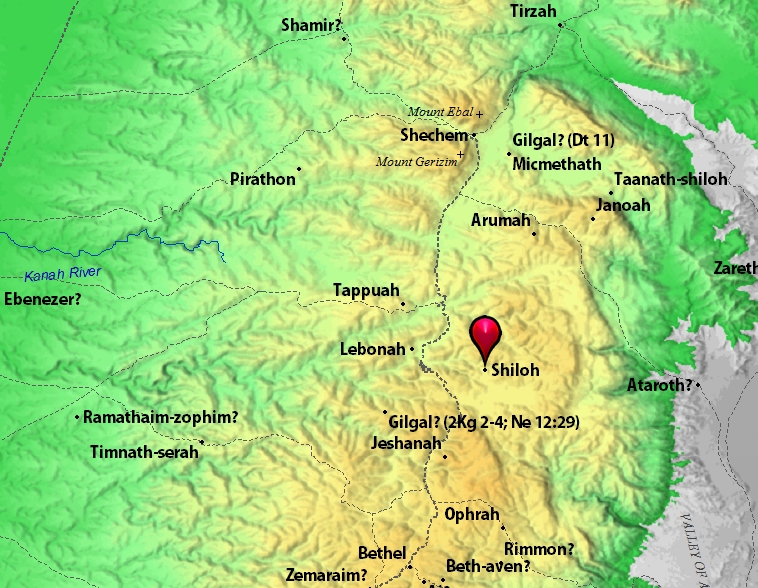
Location of Shiloh. Map courtesy of BibleAtlas.org

We recently had the opportunity to visit Shiloh. Some archaeological excavations were taking place at the time.
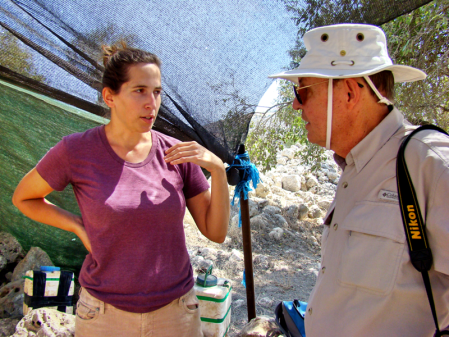
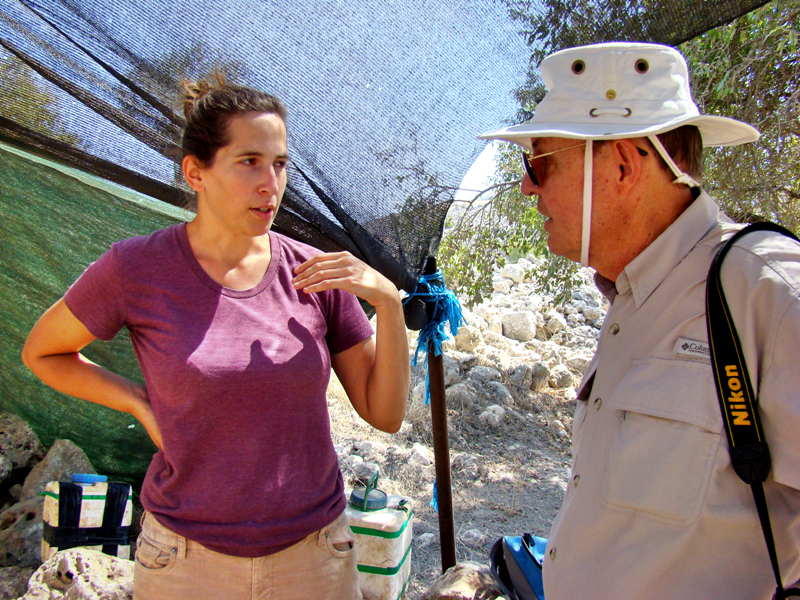
Michal Haber, IAA staff member, and Ferrell Jenkins. Photo by Leon Mauldin.

Mr. Jenkins mentioned to Michal Haber of the Israeli Antiquities Authority, who was supervising the excavation  that he and I are members of the Society of Biblical Literature, Near East Archaeological Society, etc., and had an interest in what they were doing there at Shiloh. She graciously showed us around. What was being uncovered at this level was Byzantine and Islamic. The older remains (what she called “the good stuff”) were higher up.

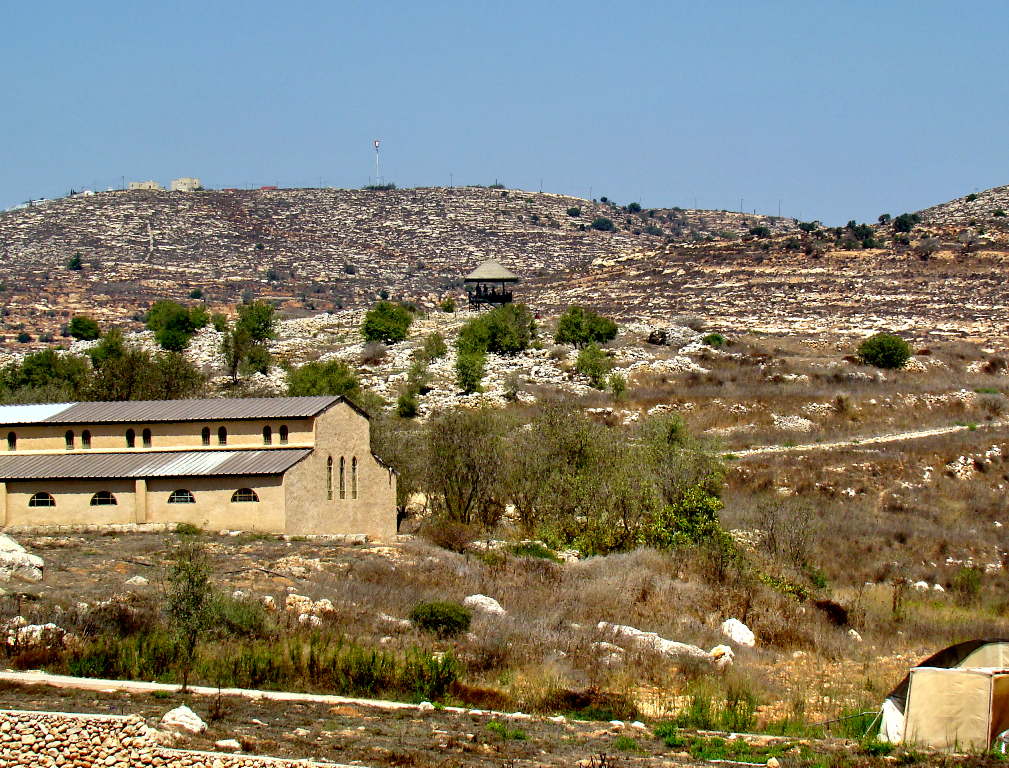
There is a covered platform conveniently situated that is helpful in giving a good view of the ruins of Shiloh. Note the upper center in photo below.
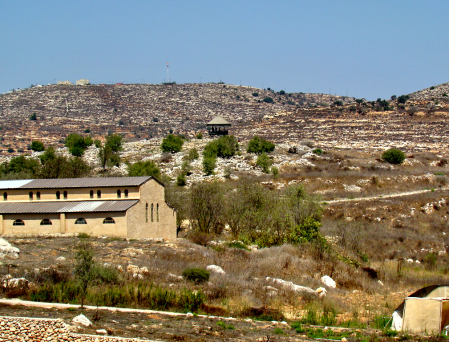
 

Ancient Shiloh. At center is a covered platform helpful in viewing the site. Photo by Leon Mauldin.

Several biblical texts flooded my mind while here. Early on during the Conquest of Canaan, the tabernacle was pitched here (Josh. 18:1ff). Then I thought of the days of the Judges, and of barren Hannah, praying here silently, when Eli the Judge and High Priest misjudged her to be drunken. She explained that she was praying that God would give her a son, and if He would do so, she would give him back to the Lord. That prayer was honored and Samuel was born (1 Sam. 1).

Then I thought of the day that the Israelites battled the Philistines and were defeated (1 Sam. 4). Word came back to Shiloh that the Philistines had killed both of Eli’s sons (wicked sons, but they were priests). That was bad news, but then when Eli was told that the Philistines had taken the ark of God, he fell off his seat, breaking his neck and dying.

It was at this point also that one of Eli’s daughters-in-law was in childbirth. When she heard that the ark of God was taken, as well as the news of her husband’s death and Eli’s death, with her dying words she said to name the boy Ichabod, which means “no glory.” Indeed, when God cannot dwell among His people because of sinfulness and stubborn rebellion, there is no glory.

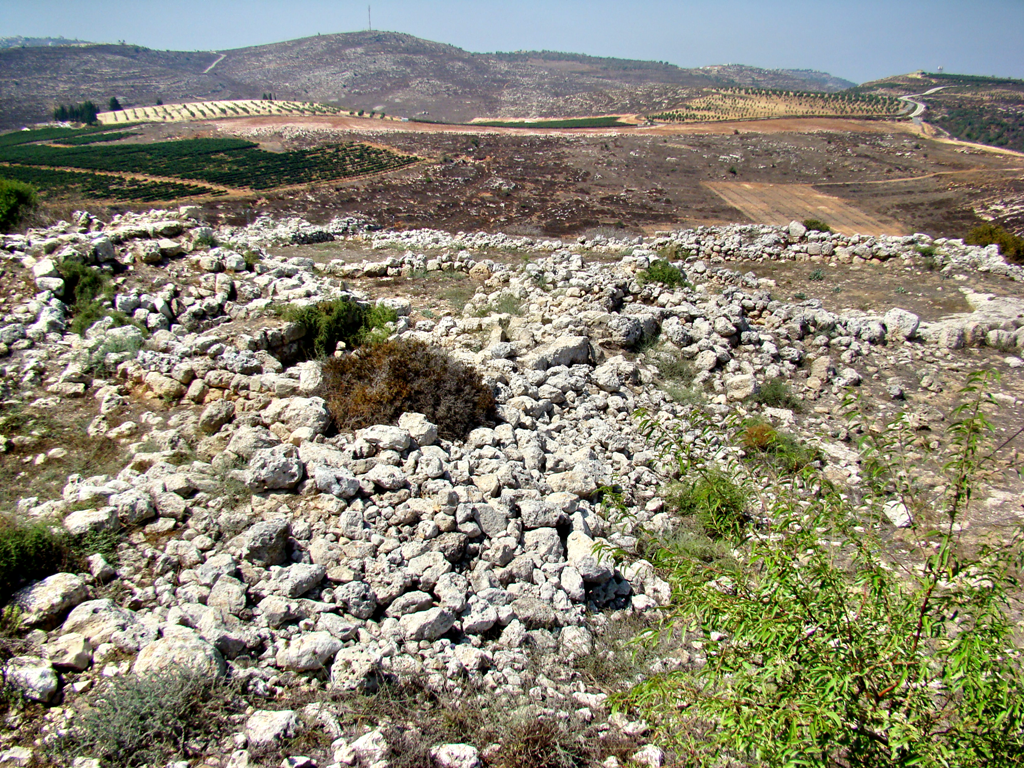
These and other texts come into play at this site. In our photo below you can see Shiloh in foreground, and then surroundings in the distance.
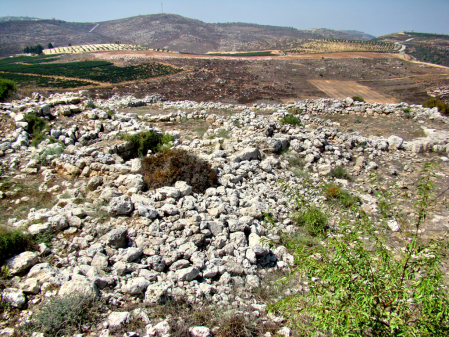
Ruins at Shiloh. Photo by Leon Mauldin.

Click on images for higher resolution.

Sabras, It’s What’s For Dinner

September 15, 2011

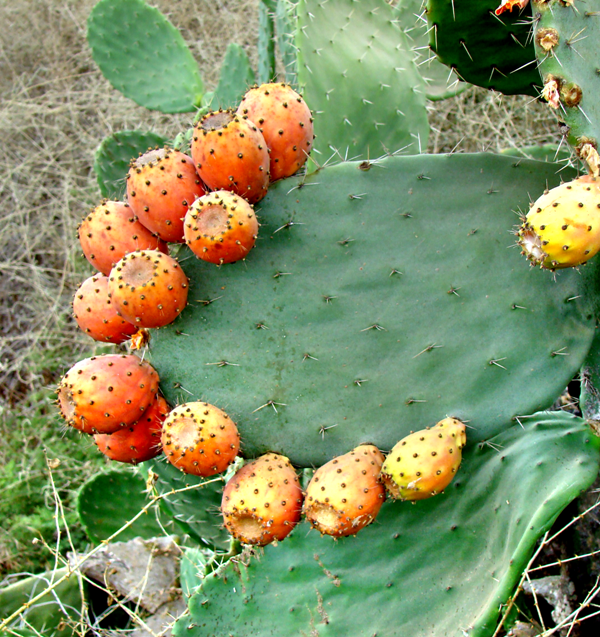
Sabras is the Hebrew word for the prickly pear cactus. It is commonly seen in Israel in the summer.

Sabras in the Shephelah. Photo by Leon Mauldin.

I found a site with some recipes for the Sabra for those who may be interested: http://kosherfood.about.com/od/kosherisraelifood/a/sabras.htm

The following tips are included:

  • Choose sabras with even color that give slightly to pressure.
  • Ripen sabras at room temperature until soft.
  • Store sabras in the refrigerator for up to a week.
  • Peel sabras carefully to remove the small spines on the outer skin.
  • Section sabras and remove seeds
  • Serve sabras cold.

In an article entitled, “Persimmon,  loquat,  fig,  pomegranate  and  prickly  pear in Israel,” A. Blumefeld of the Institute of Horticulture, A.R.O. Volcani Center, Bet Dagan, Israel, writes:

Prickly  pear  is widespread  in  Israel,  mainly  as  a fence  plant  in  Arab  villages  where it  separates  fields.  As such it  is an extensive  non-irrigated  crop.  The  fruit  which  begins to  mature  in early  July  is consumed  locally  and  until  recently,  only  very  small  amounts of fruit  reached  organized  markets.

The main extensively  grown  cultivar is a thorny,  orange  cultivar.  The propagation of  the prickly  pear is vegetative  and  most  of  the  plants are similar.  However,  other types  occur  among  the  plants  which  show  different  types  of  “leaves”  and  fruits.

Growers  have  selected  some  with  a different  appearance,  mainly  for  home  gardens, with  some  for  large-scale  cultivation.  One  of  the  selections  is  almost  thornless;  it has been  named  ‘Offer’  and forms  the  basis  for  modern  cultivation  of  the prickly  pear.

Orchards  of  this  cultivar  are  planted  in rows  4×5 m apart  and  irrigation  and  fertilizers are applied. The  fruit  is brushed  in  packing  houses  and  is sold in fruit  shops  like  any other fruit.

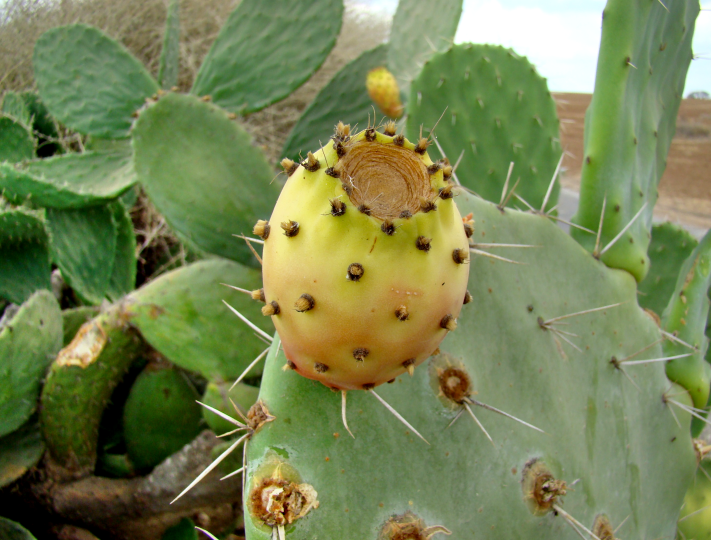
On our recent trip to Israel Ferrell Jenkins did not offer to peel me one of these sabras for a snack. I’m sure it was only because he was too busy taking photos 🙂

Sabra, close-up. Photo by Leon Mauldin.

Click on images for higher resolution.

Welcome to new subscribers. In the last couple of days several have subscribed to our blog. It is user-friendly to do so. Go to the box provided under the calendar on this page, type in your email address, and you will be notified via email of new posts to Leon’s Message Board. Thanks for reading!


Wilderness of Judea

September 12, 2011

Numerous passages make reference to the wilderness of Judea. John the baptizer, the herald who prepared the Jewish people for Jesus coming, preached in the Wilderness of Judah (Matt. 3:1, CSB; “the Desert of Judea,” NIV).

Jesus was led of the Spirit into the wilderness to be tempted by Satan (Mt. 4:1).

A frequent reaction when folks see for the first time photos of this area is to say, “That’s not at all what I had imagined it to be.”

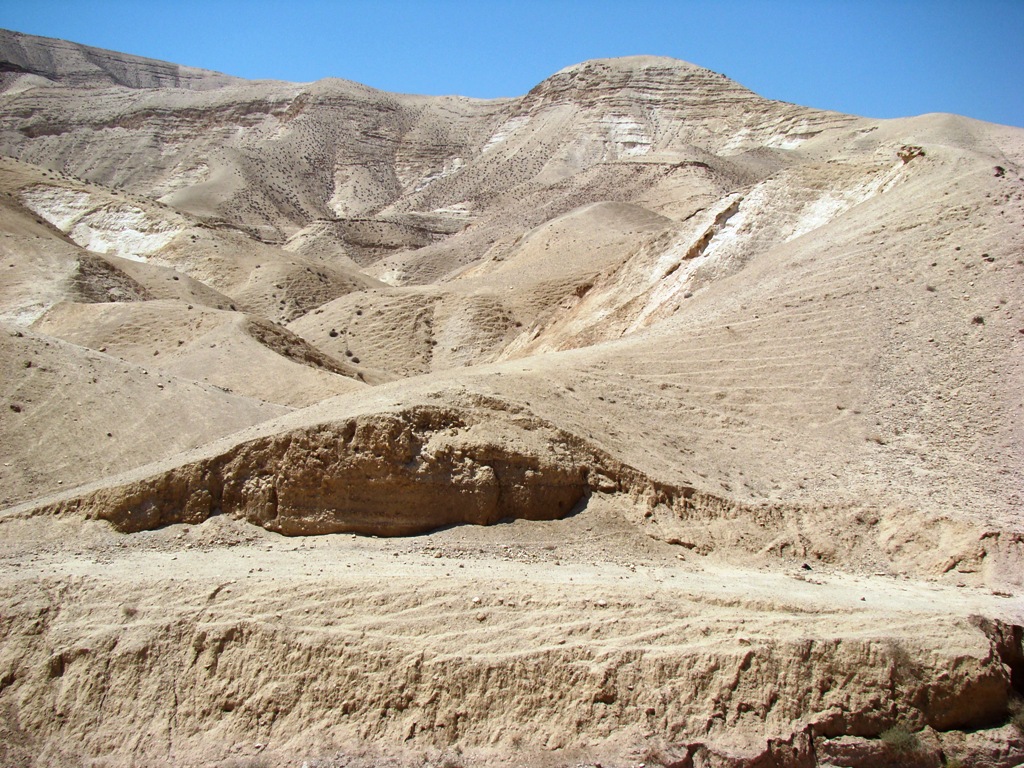
I never tire of seeing this portion of the Bible lands; it is fascinating to me. This photo, taken just days ago, shows the wilderness of Judea at sea level.

Wilderness of Judea at Sea Level. Photo by Leon Mauldin. Click image for higher resolution.


Tel Ptolemais/Acco/Acre

September 9, 2011

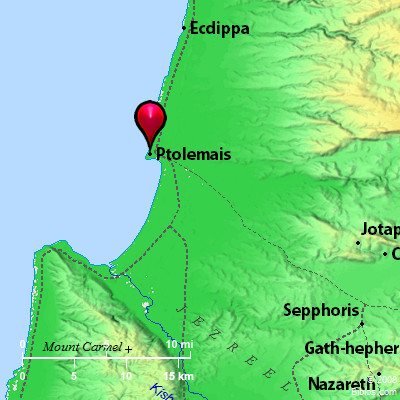
In our previous post we featured a photo of the waterfront of Ptolemais. Ptolemais (Acts 21:8) was mentioned in the Old Testament (designated Acco) among other cities which Israel failed either to capture or to retain after the conquest: “Nor did Asher drive out the inhabitants of Acco or the inhabitants of Sidon, or of Ahlab, Achzib, Helbah, Aphik, or Rehob” (Judges 1:31). Because Acco was a port city, it was a very significant loss to fail to possess this strategic location. Our map below, which shows NW Israel, helps orient us:

Ptolemais/Acco. Bibleatlas.org.

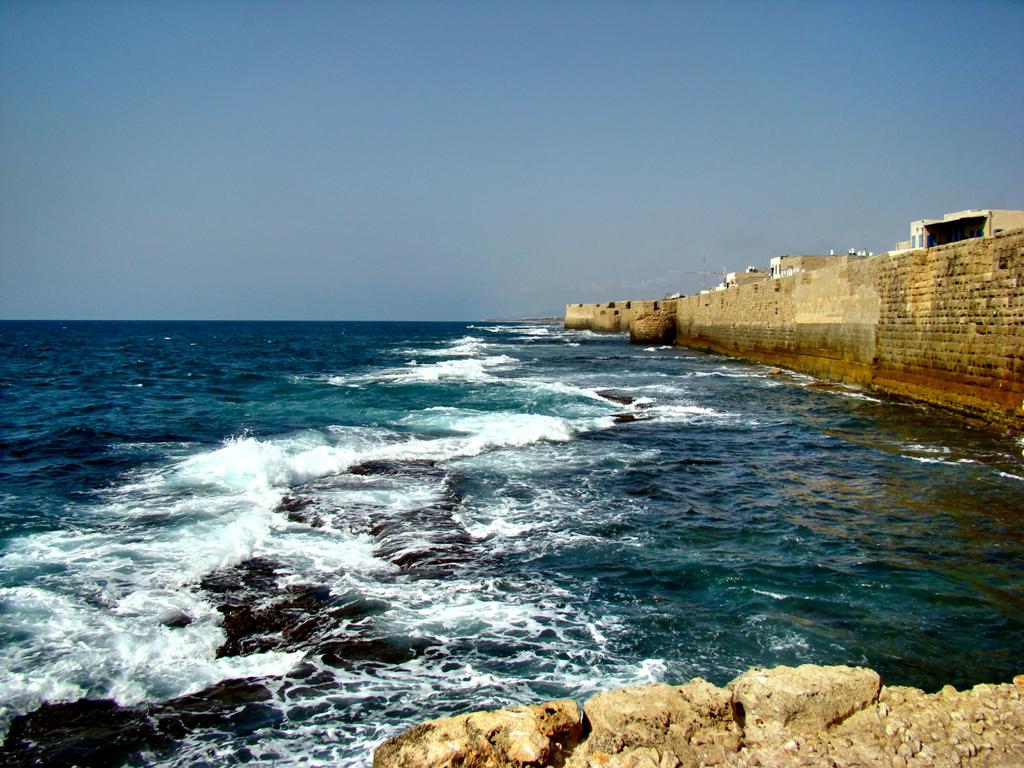
Acco was one of the oldest harbors in existence. In our present photo, we see the remains of the tel itself.

Tel Ptolemais. Photo by Leon Mauldin.


“We Came to Ptolemais”

September 9, 2011

Greetings, friends, now from Dade City, FL. I enjoyed and profited from the trip to Israel, as Ferrel Jenkins & I traveled to numerous biblical sites, many of which we had not seen before. I have held Mr. Jenkins in the highest esteem since my being a student at Florida College (’70-72) and am delighted that we have been able to make numerous trips to Israel and other biblical places. I have learned much from him.

I came back to the states a day earlier than planned in order to attend and participate in the funeral of dear friend & sister in Christ, Sandra Waldron, wife of Bob Waldron. That will be conducted Fri. 2:00 PM here in Dade City.

Our photo displayed in this post was taken at Ptolemais (Hellenistic and Roman times), known as Acco in OT times (Jud. 1:31), and today known as Acre. The ancient tel is Tel-el-Fukhar.

Coast of Ptolemais, mentioned in Acts 21:7. Photo by Leon Mauldin.

As Paul’s 3rd Missionary was concluding, en route to Jerusalem, Acts 21:8 reads, “And when we had finished our voyage from Tyre, we came to Ptolemais, greeted the brethren, and stayed with them one day.”

Click image for higher resolution.

More later. 2:30 AM at present!


Hazor, Head of All These Kingdoms

September 5, 2011

As we have mentioned, our purpose on this current trip to Israel is to visits sites we have not seen before, many of which would not be practical to visit with a tour group. We were successful again today in doing so.

One place Ferrell Jenkins and I have seen previously many times is Hazor, but we included that city because recent visits have been either during or immediately following rain. Today it was dry and sunny. It was hot but it was nice not to have to walk in mud.

The signifance of this city which was conquered during Israel’s conquest of Canaan led by Joshua is seen in Josh. 11:10:

Then Joshua turned back at that time, and captured Hazor and struck its king with the sword; for Hazor formerly was the head of all these kingdoms.

Later during the days of the United Monarchy of Israel, King Solomon fortified this city.

Now this is the account of the forced labor which King Solomon levied to build the house of the LORD, his own house, the Millo, the wall of Jerusalem, Hazor, Megiddo, and Gezer (1 Kings 9:15).

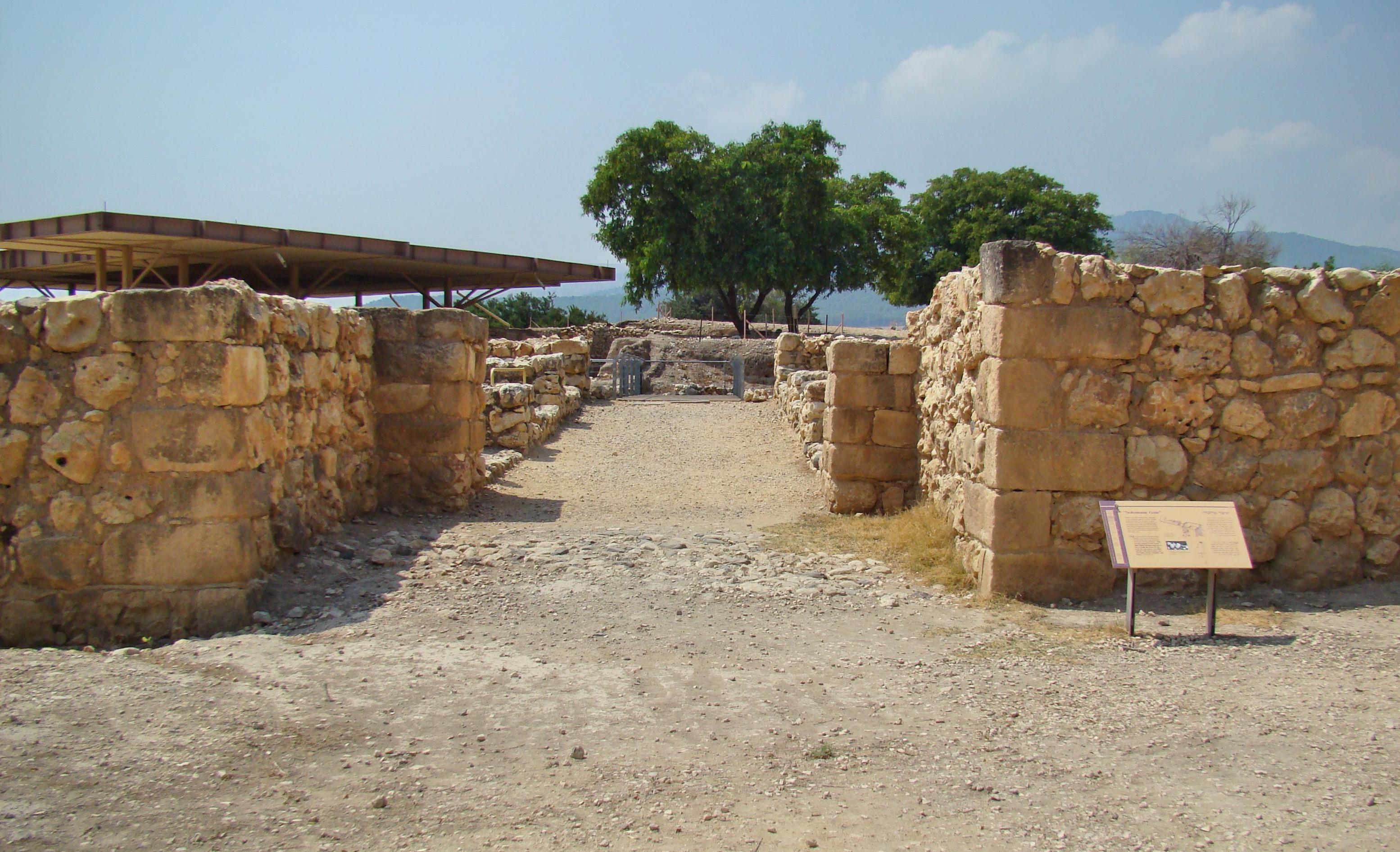
Solomonic City Gate at Hazor. Photo by Leon Mauldin.

All of these cities of this text were fortress cities. Solomon used the same “blueprint” for the gates: the six chambered gate.

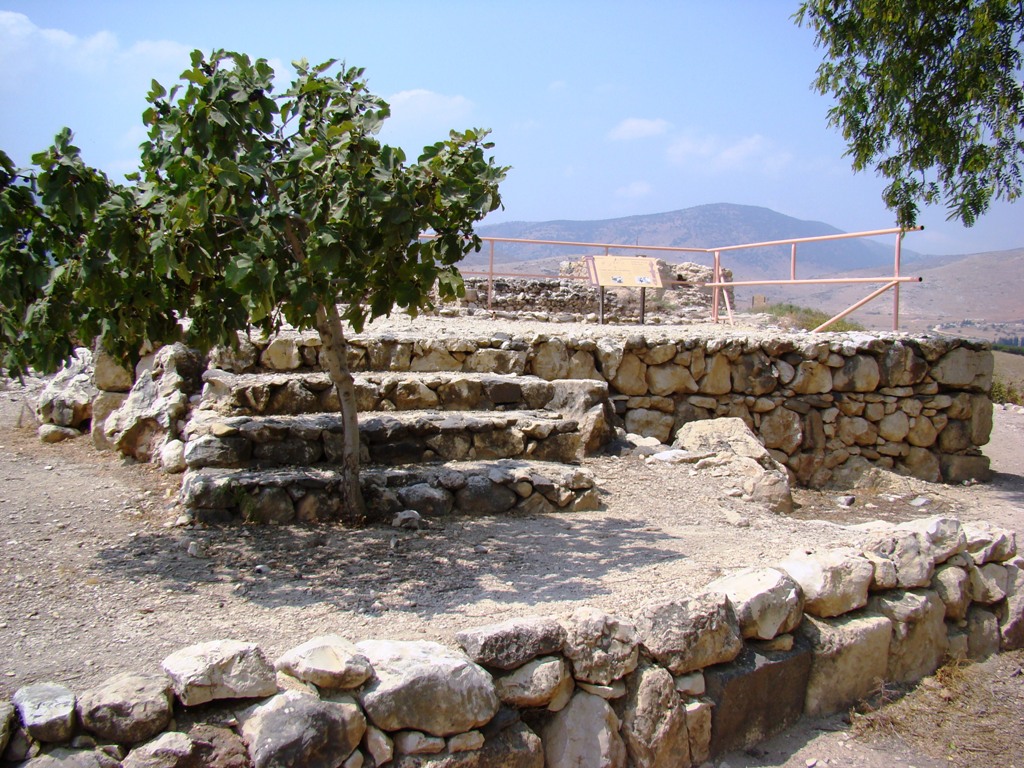
Unfortunately, in the process of time, Hazor became a center of cultic worship. Our photo shows the “high place” of Hazor.

High Place at Hazor. Sacrifice to pagan gods occurred here. Photo by Leon Mauldin.

Our photo below further shows an area where pagan worship occurred.

Site of pagan worship at Hazor. Photo by Leon Mauldin.

The forbidden massebah (sacred pillar) can be seen in foreground of photo. On the right hand corner of the tel you can see what was the base of the watchtower of Hazor.

Remember to click on photos for higher resolution.
*************
On a personal note I regret to report the death of a close personal friend, Sandra Waldron, wife of Bob Waldron. She died Sun. PM as the result of a massive heart attack, following some months of illness. The Waldrons have had a tremendous impact on my life, and I mourn this loss.

Some Fell Among the Thorns

September 4, 2011
When Jesus told the “Parable of the Sower” He told of four different kinds of “soils,” representing people, upon which the seed (the word of God) falls.

Among those soils was the thorny ground. Jesus said, “Other seed fell among thorns, which grew up with it and choked the plants” (Luke 8:7, NIV).  I thought of this parable today as we saw a portion of a Roman road in Galilee at the Golani Junction near Cana.

Thorns in Galilee. Photo by Leon Mauldin.

Jesus was asked by the disciples to explain the meaning of the parable. Regarding the thorny ground, He said, “”Now the ones that fell among thorns are those who, when they have heard, go out and are choked with cares, riches, and pleasures of life, and bring no fruit to maturity” (v.14, NKJV).

Thorns. A fitting word picture for things that choke out the word. Photo by Leon Mauldin

It occurs to me that not all cares or pleasures are wrong. Money is not wrong in and of itself. But when one fails to “seek first the kingdom of God and His righteousness” (Mt. 6:33), these things become thorns that choke out the word so that one brings no fruit to the honor of God.

Today our travels have taken us to Nazareth, the city that was Jesus’ home, and to Gath-hepher, home of the prophet Jonah. I am so thankful to God for these good opportunities.

Thanks for following this blog. Be sure to check Ferrell Jenkin’s Travel Blog also. He is on the “blog roll” above and to your right.

Click on images for higher resolution.


He Will Not Break A Bruised Reed

September 3, 2011

Today after leaving Jerusalem when had the opportunity to photograph Gibeah, the home of King Saul, and located in the tribal territory of Benjamin (1 Sam. 10:26).

We stopped at sea level en route to the Jordan, taking some photos of the Wilderness of Judea.

Then we went to Qasr al-Yahud, a recently opened baptismal site on the Jordan. This is likely very near the location where John baptized multitudes of people, including Jesus.

Jordan River at Qasr al-Yahud, newly opened baptismal site. Photo by Leon Mauldin.

There were many reeds along the Jordan at this point. I thought of Matthew 12:20, which quotes from Isaiah 42:3, a text which foretold of Jesus’ ministry and how He would go about His work:

He will not break a bruised reed or extinguish a smoldering wick, until he brings justice to victory (Mt. 12:20 NET Bible).

Bruised Reed at Qasr al-Yahud on Jordan's bank. Photo by Leon Mauldin.

If a reed is bent or bruised, like the one in this photo, it wouldn’t take much to snap it in two. Likewise if the wick is smoldering, that indicates that the oil is running low or the wick needs trimming. Either way, it wouldn’t take much to snuff it out.

But the text is really not talking about reeds or wicks; it is talking about people that are like bruised reeds or smoldering wicks. There is still some interest, there is a spark of life. Jesus would bind and strengthen the bruised reed, and He wants to fan the spark into a flame.

Of course Jesus could rebuke the false teacher or the hypocrite, as is the case in Matt. 23. But not everyone is in those categories; some people are bruised reeds; their strength is small, but someone who is truly a disciple of Christ can take start where they are and strengthen them and help them to get where they need to be.

Well we made other stops en route to Tiberias and are in our room on the shore of the Sea of Galilee.

Click images for larger view.