Reading From the Scroll

September 2, 2011

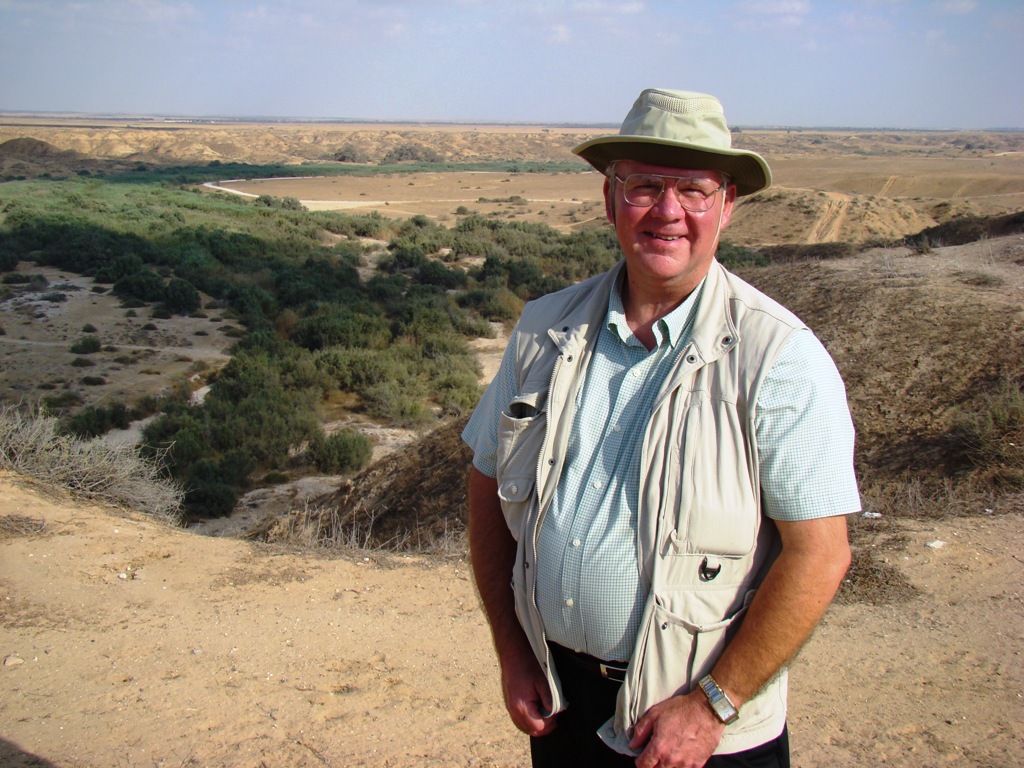
Today Ferrell Jenkins and I were able to visit a site we’ve both wanted to see for years, the tel and cave of Adullam. This site is mentioned in the biblical narrative of David’s life, specifically of a time in which he was being pursued by the Philistines (2 Sam. 23:13ff.). We were able to secure the services of a local guide with a 4-wheel drive jeep. A memorable day.

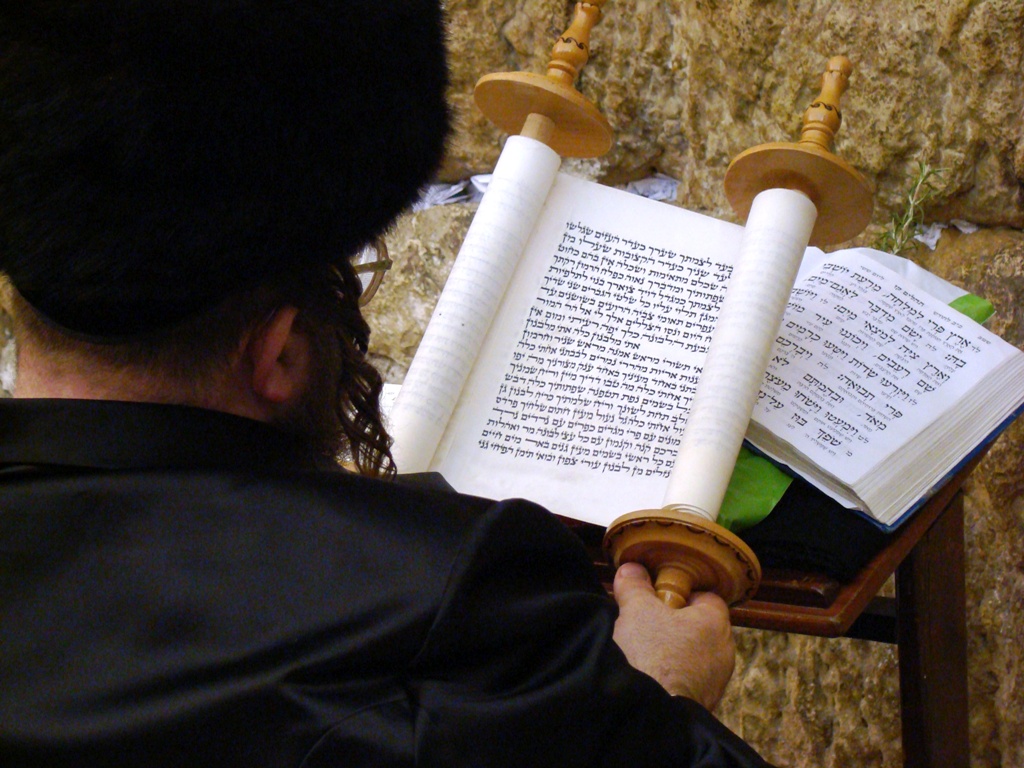
Late in the afternoon we were back in Jerusalem. We visited the Western Wall, and just north of the wall we entered Wilson’s Arch. This area is a reading room and prayer room. Today’s photo shows one of the Jews present reading from a scroll.

Reading a Scroll in Wilson's Arch. Photo by Leon Mauldin.

This can be used to illustrate the writing and reading of Scripture in both Old and New Testament times. For example, Luke records a moment Jesus’ Galilean ministry:

16 He came to Nazareth, where He had been brought up. As usual, He entered the synagogue on the Sabbath day and stood up to read. 17 The scroll of the prophet Isaiah was given to Him, and unrolling the scroll, He found the place where it was written: 18 The Spirit of the Lord is on Me, because He has anointed Me to preach good news to the poor. He has sent Me to proclaim freedom to the captives and recovery of sight to the blind, to set free the oppressed, 19 to proclaim the year of the Lord’s favor. 20 He then rolled up the scroll, gave it back to the attendant, and sat down. And the eyes of everyone in the synagogue were fixed on Him. 21 He began by saying to them, “Today as you listen, this Scripture has been fulfilled.” (Luke 4:16-21).

Click on image for higher resolution.


Another Good Day In Israel

September 1, 2011

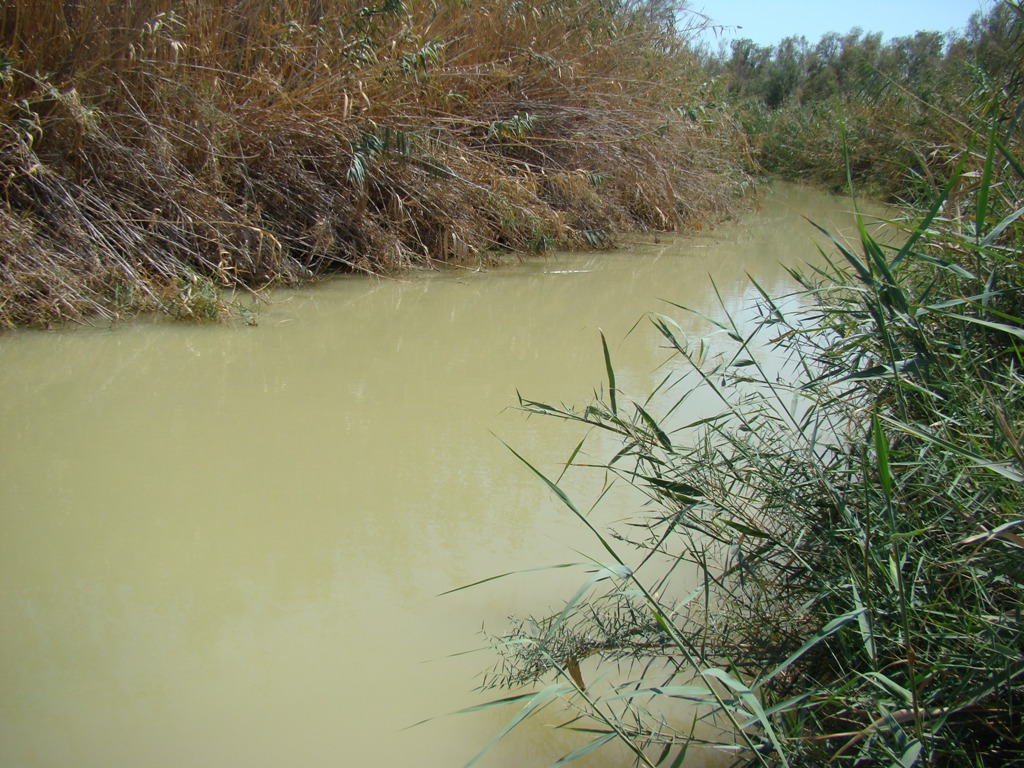
Today after a brief stop at Lachish we have visited sites in the Negev and in ancient Philistine territory. These sites to the south were “off the beaten path,” including Tel Eiton (proposed site of biblical Eglon, Tel Beit Mirsim, and the brook Besor and Tel Besor (mentioned in David’s activities in 1 Sam. 30:9ff).

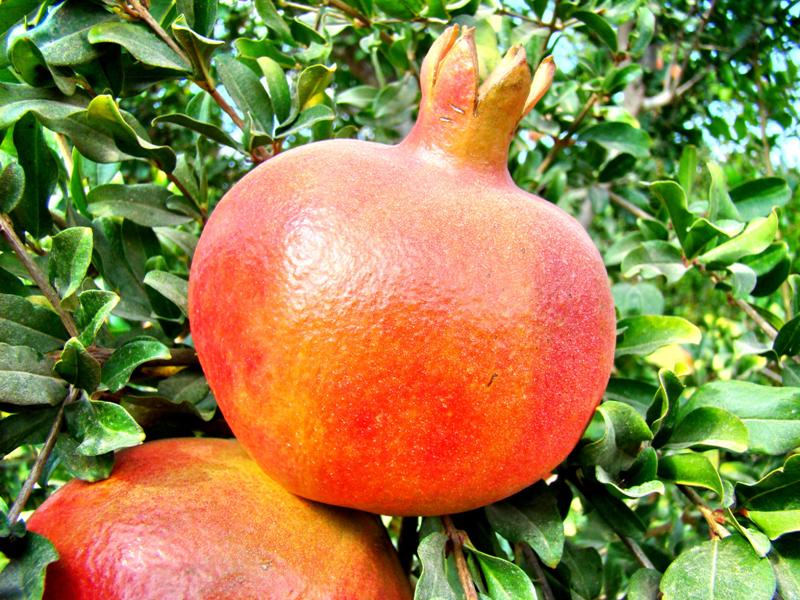
At Lachish we saw pomegranate orchards and vineyards. If you want to compliment your wife (or wife to be) you might try this: “Your temples are like a slice of a pomegranate behind your veil” (Song of Solomon 4:3).

Pomegranates at Lachish. Photo by Leon Mauldin.

At Tel Besor you can see the brook in background. 1 Sam. 30:9-10:

So David went, he and the six hundred men who were with him, and came to the Brook Besor, where those stayed who were left behind. But David pursued, he and four hundred men; for two hundred stayed behind, who were so weary that they could not cross the Brook Besor.

Leon at Besor. Brook in background. Photo by Ferrell Jenkins.

Click images for larger view.


Millstones at Capernaum

August 26, 2011

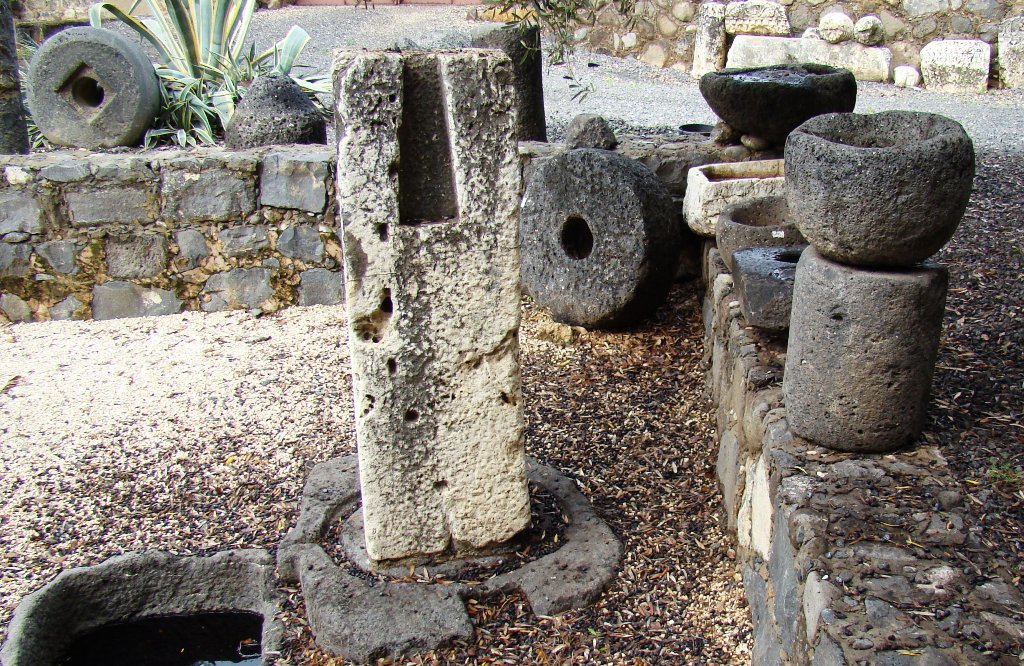
Millstones were manufactured at Capernaum from the volcanic basalt which is so common in the Galilee. The coarse texture was very suitable for grinding wheat.

Such millstones were not only used in Israel, but were exported from Capernaum to many other places. Capernaum was located on a major trade route, the Via Maris.

Millstones manufactured at Capernaum from volcanic basalt. Photo by Leon Mauldin.

On one occasion when Jesus was here at Capernaum with His disciples, He said,

But whoever causes the downfall of one of these little ones who believe in Me– it would be better for him if a heavy millstone were hung around his neck and he were thrown into the sea (Mark 10:42, CSB).

Capernaum was located on the shore of the Sea of Galilee. In this teachable moment Jesus was using word pictures the apostles could relate to: To have a millstone tied about one’s neck and then thrown into the sea to be dragged down by that heavy weight and die such a terrible death! But Jesus is saying that the worst kind of death would be preferable to one’s being the occasion of someone’s being lost eternally.

What a powerful lesson, taught by the Master Teacher.  All of us have influence, and for that influence we will give account unto God; make it good!


“Not one stone upon another”

August 22, 2011

During the final week of the Lord’s ministry, Jesus rebuked the Pharisees, the Jewish rulers, for their hypocrisy and for their basic rejection of truth. His last words before leaving the temple area were

 Jerusalem, Jerusalem, the one who kills the prophets and stones those who are sent to her! How often I wanted to gather your children together, as a hen gathers her chicks under her wings, but you were not willing! 38 See! Your house is left to you desolate; 39 for I say to you, you shall see Me no more till you say, ‘Blessed is He who comes in the name of the LORD!’ (vv. 37-38)

As Jesus and the disciples left, the disciples pointed out the temple buildings to Him. His response no doubt greatly startled them: “”Do you not see all these things? Assuredly, I say to you, not one stone shall be left here upon another, that shall not be thrown down” (Matt. 24:2).

Jesus crossed the Kidron Valley and came to the Mount of Olives and sat down. It was here that the “Olivet Discourse” occurred, in which the disciples asked Him to explain what He meant.

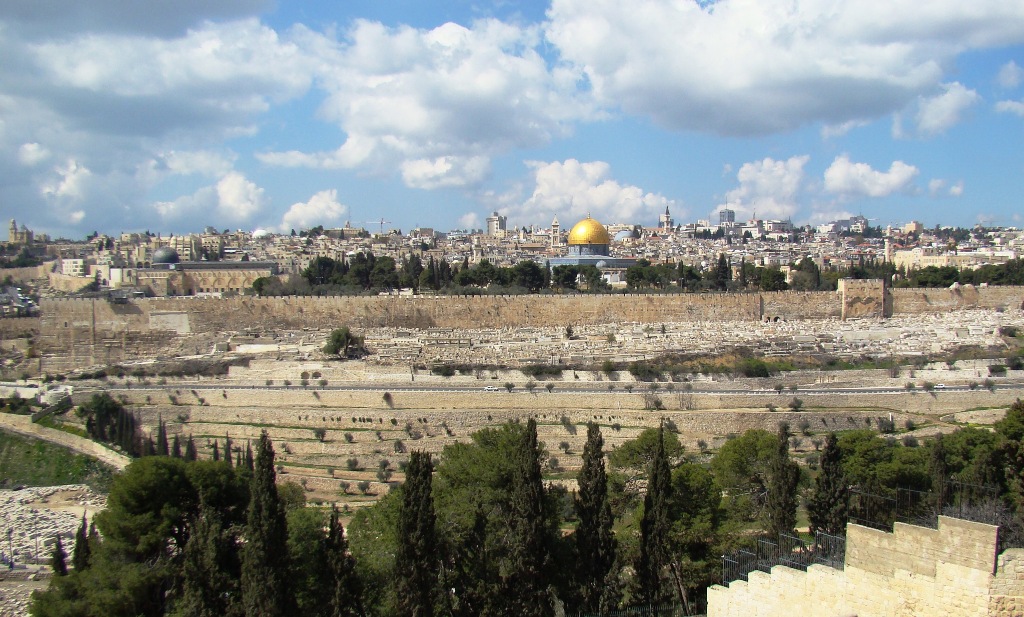
View of Temple Mount, Jerusalem from Mt. of Olives. Photo by Leon Mauldin.

From the Mount of Olives the disciples could have seen the temple area in Jerusalem as Jesus’ foretold its coming destruction.

Excavations which reached 1st century street level uncovered stones of the temple buildings hurled down from above. The destruction took place in AD 70, by Rome’s Tenth Legion.

Stones from temple buildings in Tyropoeon Valley in Jerusalem, from AD 70 destruction. Photo by Leon Mauldin.

Click on images for higher resolution.


“A Shack in a Cucumber Field”

August 17, 2011

The prophet Isaiah said, “Daughter Zion is abandoned like a shelter in a vineyard, like a shack in a cucumber field, like a besieged city” (Isaiah 1:8). What is meant by that statement?

Zion, the city of Jerusalem, became David’s capital city. It was there that Solomon built the temple of the Lord Yahweh. Jerusalem, Mount Zion was central to Israel’s worship, and to their identity as a people. During much of Isaiah’s lengthy career (740-690 BC) Jerusalem was prosperous. “Their land has also been filled with silver and gold and there is no end to their treasures; their land has also been filled with horses and there is no end to their chariots” (Isa. 2:7).

But in saying “The daughter of Zion is left as a booth in a vineyard,” Isaiah speaks of their future desolation as though it has already occurred. Isaiah makes use of the prophetic perfect (perfect meaning “completed action”), a grammatical form used “to present future events as if they have already happened . . . the use of the perfect form to express completeness and factuality is so prominent that it is even used for a future event” (A Biblical Hebrew Reference Grammar.364).

Our photo below illustrates the imagery of the Isaiah text, and was taken near biblical Sardis. Some workers, perhaps family members, have constructed a shelter in the field to have a place to rest and refresh themselves before getting back to work.

Booth in Vineyard Near Sardis. Illustrates Isa. 1:8. Photo ©Leon Mauldin.

Because of the idols which had filled the land of Israel (Isaiah 2:8), God was going to reduce the magnificent city of Zion, Jerusalem the fortress city, to a hut.

Click on image for larger view.


Shepherds in a Dry and Thirsty Land

August 11, 2011

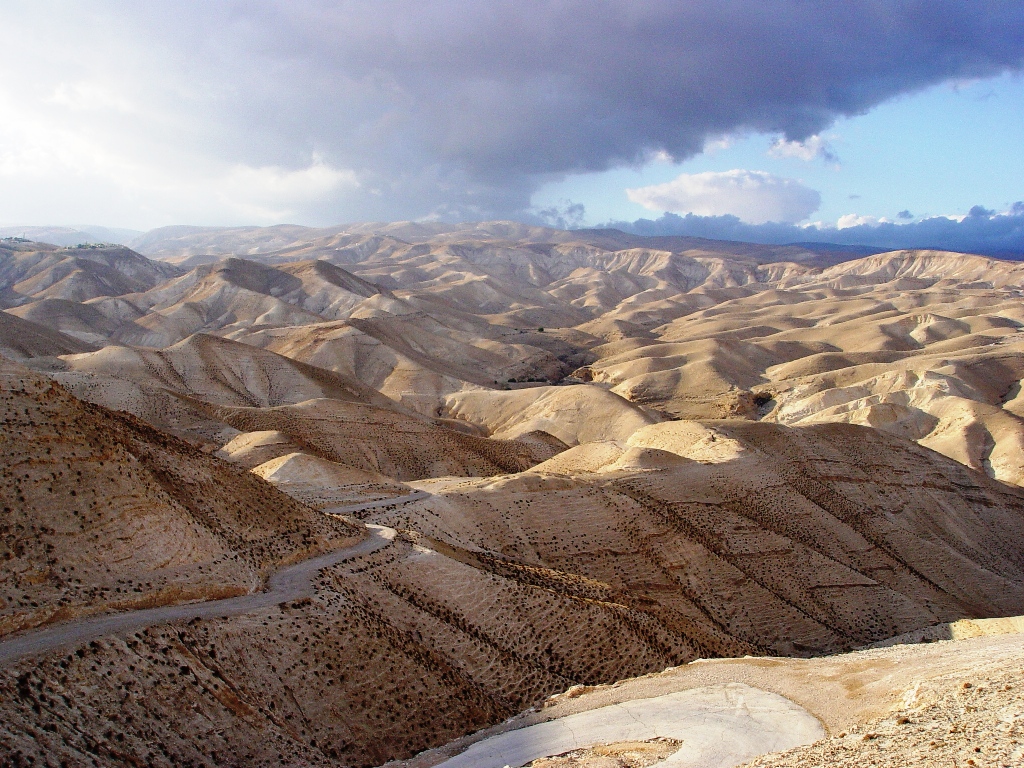
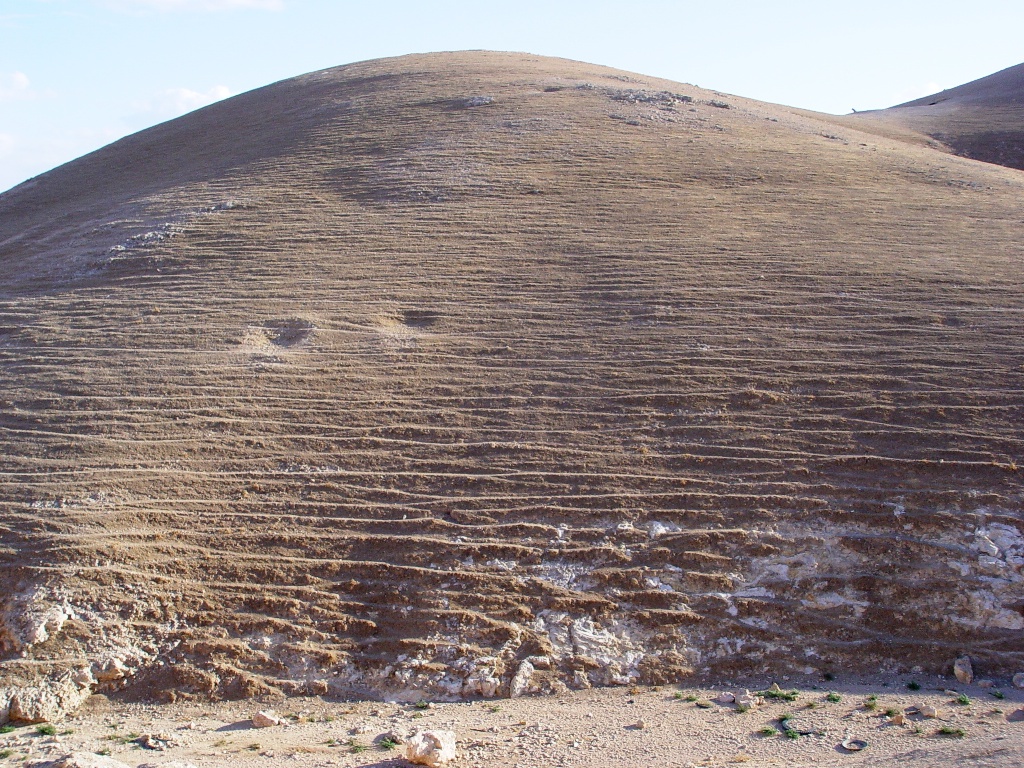
In our last post we mentioned the obvious fact that sheep need shepherds. When you consider the terrain and climate of the wilderness of Judea, it becomes even more clear that shepherds were/are needed to lead sheep to pasturage and water.

Judean Desert. Shepherds are needed to lead sheep to grazing and water. Photo ©Leon Mauldin.

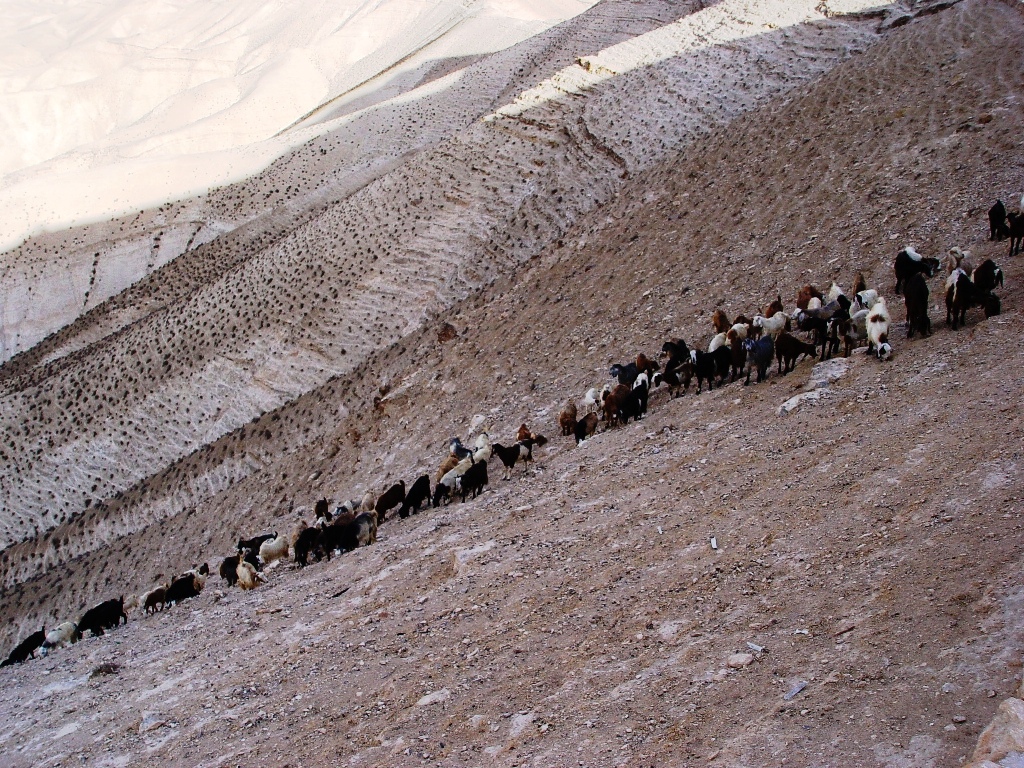
Over the years the sheep as well as goats carve out paths in the rugged terrain.

Trails worn by sheep & goat in Judean Desert. Photo ©Leon Mauldin.

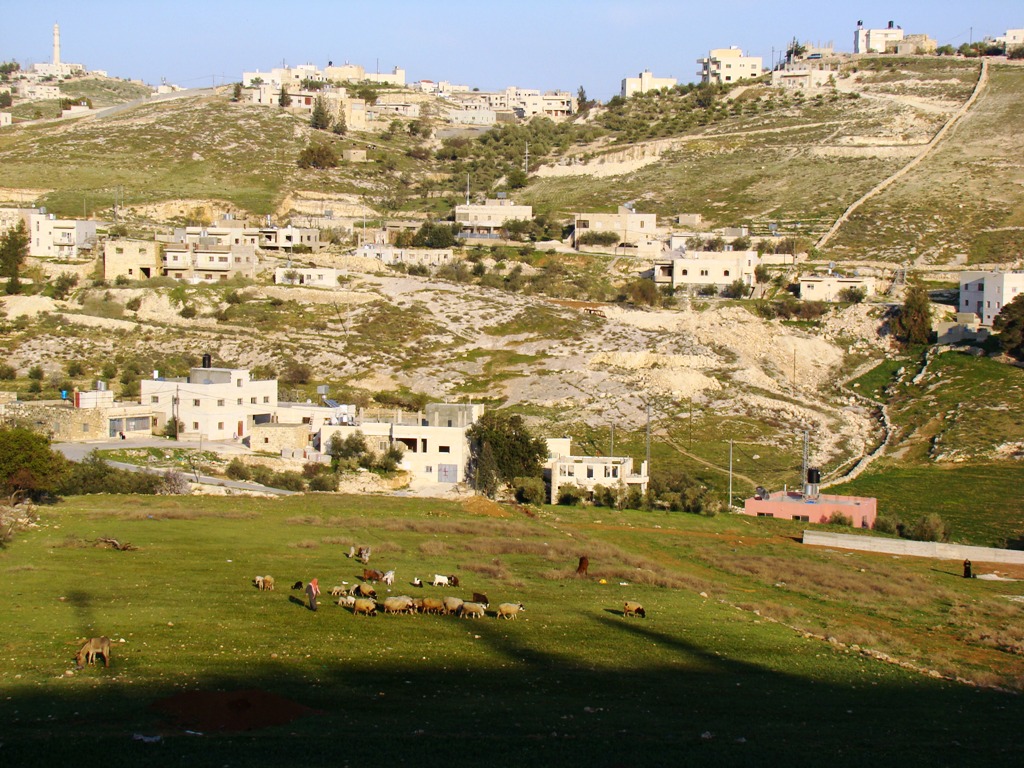
Scenes such as this below are basically unchanged from the days of the patriarchs thousands of years ago.

Such scenes illustrate life in biblical times. Photo ©Leon Mauldin.

Click on images for higher resolution.


Not a Prophet or a Prophet’s Son

August 3, 2011

In our last post we introduced the prophet Amos of Tekoa. God sent him from Judah to Israel to cry out against the idolatry there, centered in such locations as Judah. A false prophet named Amaziah tried to intimidate Amos, and told him to go back home to Judah, i.e., we don’t need your kind of preaching here! Amos’ response:

14 Then Amos answered, and said to Amaziah: “I was no prophet, Nor was I a son of a prophet, But I was a sheepbreeder And a tender of sycamore fruit. 15 Then the LORD took me as I followed the flock, And the LORD said to me, ‘Go, prophesy to My people Israel.’ 16 Now therefore, hear the word of the LORD: You say, ‘Do not prophesy against Israel, And do not spout against the house of Isaac.’ 17 “Therefore thus says the LORD: ‘Your wife shall be a harlot in the city; Your sons and daughters shall fall by the sword; Your land shall be divided by survey line; You shall die in a defiled land; And Israel shall surely be led away captive From his own land.'” (Amos 7:14-17).

Our photo below was taken on the road between Tekoa and Bethlehem. You can see the sheep in the distance, which illustrate the kind of work Amos would have done in this general area before being called to the prophetic office.

Sheep near Tekoa. Amos was a sheepherder. Photo by Leon Mauldin.

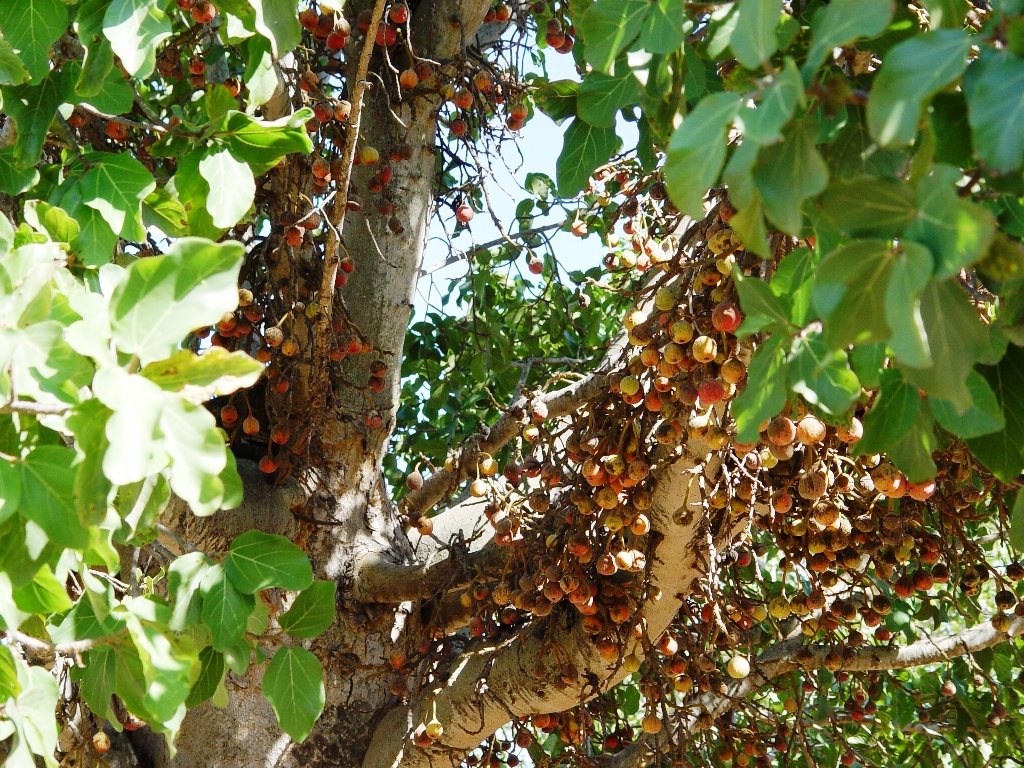
Note also that Amos said that he was a “tender of sycamore fruit” (NASB: “a grower of sycamore figs” and NET: “I was a herdsman who also took care of sycamore fig trees”). Below is a photo of the biblical sycamore tree.

Sycamore tree, which produces figs. Amos tended trees like this. Photo by Leon Mauldin.

Here is a close up of the fruit. The sycamore fig is inferior to the fig produced by the fig tree, and was eaten by the poorer people of the land.

Close-up of sycamore figs. Photo by Leon Mauldin.

*******

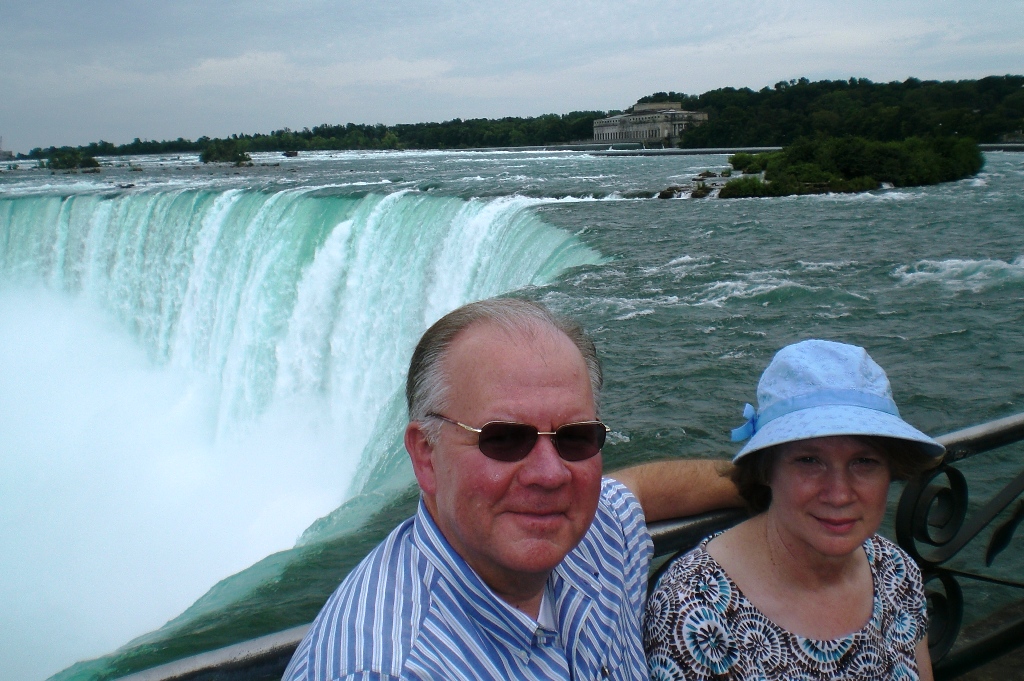
A pleasant surprise: our friends John and Lisa Hains of Jordan, Ontario, invited us to spend the night in their home (when our Sudbury meeting concluded) and then get us to the Toronto airport for our flight home (to “Sweet Home Alabama”). John met us when I turned in our rental car at Toronto, and en route to his home took Linda & me to see Niagara Falls, which was our first time to do so. The Falls are only about 20-25 minutes away from his house.  John took this photo.

Leon & Linda at Niagara Falls. Photo by John Hains.

 Click on images for higher resolution.


Jaffa Gate

July 21, 2011

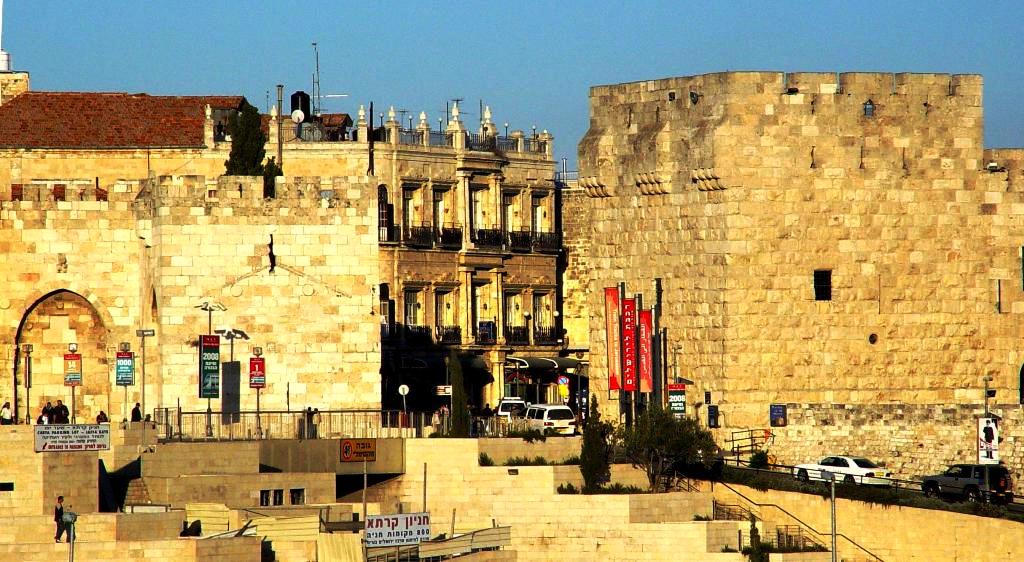
The Jaffa Gate is located on the western side of Jerusalem, thusly named because of its leading out to Joppa to the west.

Jaffa Gate, located on Jerusalem's Western Wall. Photo by Leon Mauldin.

The Jaffa Gate is located on your left in this photo. Crystallinks.com states

This gate is the principal entrance to the Old City. Its name in Arabic is Bab-el-Khalil, the gate of Hebron, as the main road to Hebron started here. It was also called Jaffa Gate because the road to the port city of Jaffa (Joppa) – the coast also started from it. This gate is the only one on the western side of the Old City. A low part of the city wall was torn down and the Crusader moat of the Citadel filled in 1898 for the visit of the German Kaiser Wilhelm II. This gate was also the famous scene of the English General Allenby’s entrance in 1917.

You can see some of our previous posts for a map showing Jerusalem’s gates to help with orientation.

Click on image for higher resolution.


Zion Gate in Jerusalem

July 12, 2011

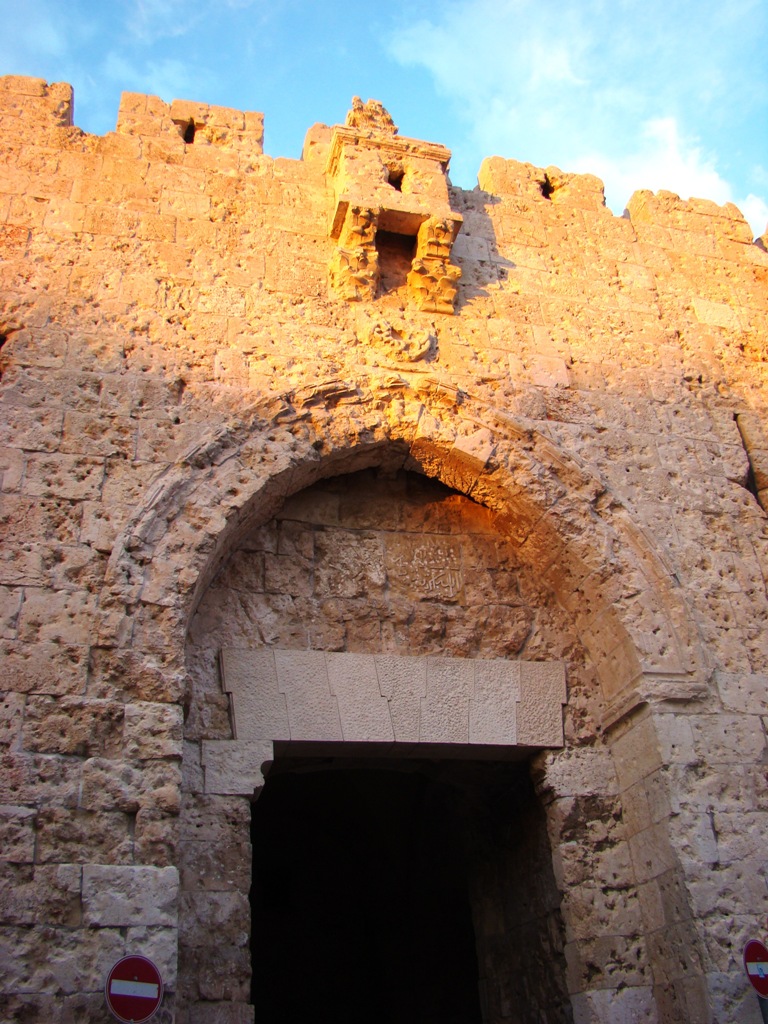
We continue to explore some of the gates of Jerusalem. The present walls of the city were constructed by in AD 1537-1540. The walls were built upon previous foundations, at times utilizing portions of the older walls. Average height is 34-38 feet.

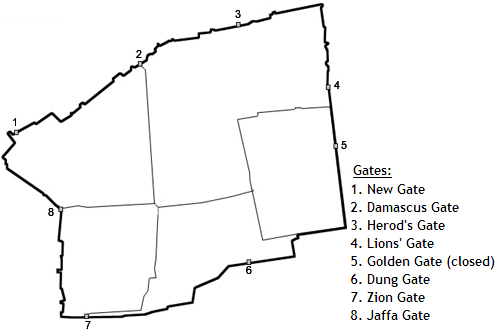
Zion Gate may be seen in our map below designated by number 7:

Old City Map. Wikimedia Commons.

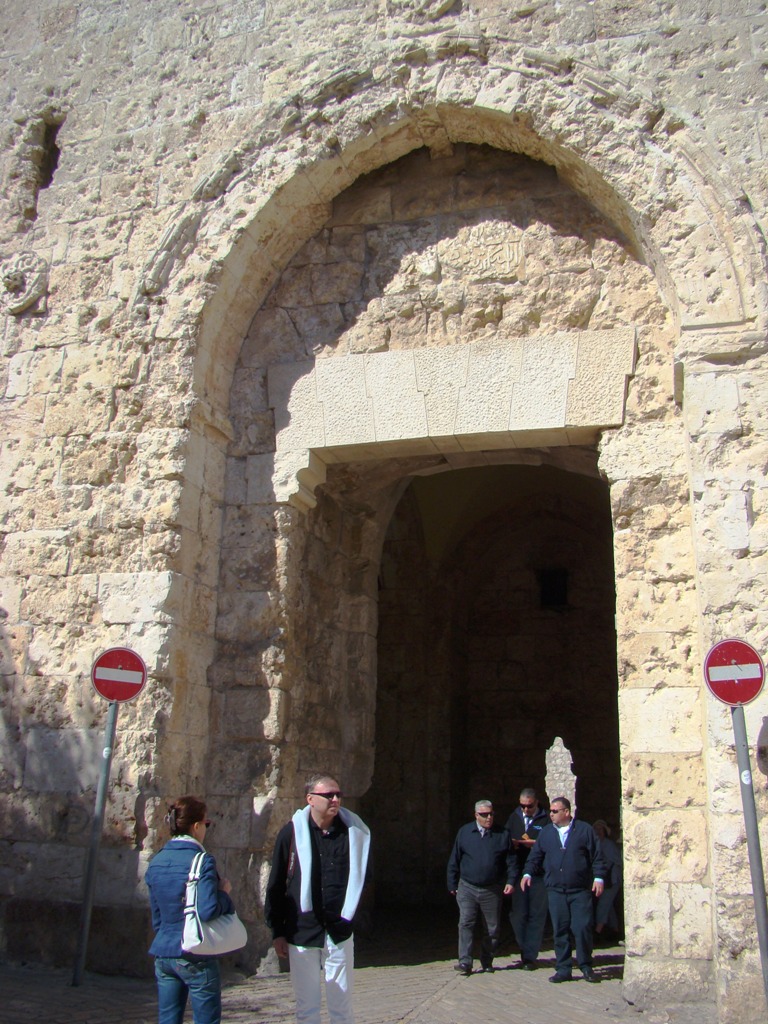
Our photo below shows the Zion Gate:

Zion Gate. Located on SW wall of Jerusalem. Photo ©Leon Mauldin.

The gate serves as entrance to the Armenian as well as Jewish Quarters. Below and to the east of the walls at this point is situated the ancient city of David, Mt. Zion. The gate is also called David’s Gate.

The hundreds of pock-marks were made by bullets in the 1948 Jewish War of Independence.

Zion's Gate. Bullet marks left from Jewish War of Independence 1948. Photo ©Leon Mauldin.

Click on images for higher resolution.


St. Stephen’s Gate/The Lion Gate

July 11, 2011

We continue to look at some of Jerusalem’s gates. Our two previous posts have featured the Golden Gate, and Herod’s Gate. On the eastern wall, just north of the Golden Gate, is St. Stephen’s Gate. It is so named because of the tradition that Stephen, the first martyr of the church (Acts 6-7), was stoned to death at this location just outside the city walls.

St. Stephen's Gate. Traditional location of Stephen's Martyrdom. Photo ©Leon Mauldin.

This gate is also called the Lion’s Gate because of the four lions, two on each side, that adorn the gate.

Closer view of lions adorning the gate. Photo ©Leon Mauldin.

This past March someone made the suggestion to take a group photo of the men in my tour group.

Men in March '11 Bibleland's Tour in front of gate. Photo ©Leon Mauldin.

Click on images for higher resolution.