Rosh HaNiqra, cont’d.

December 23, 2011

Our previous post was on Rosh HaNiqra, biblical Misrephoth Maim, which is only mentioned twice in scripture, Joshua 11:8; 13:6 (context: Israel’s Conquest of Canaan). It is always helpful to see a site’s location on a map.
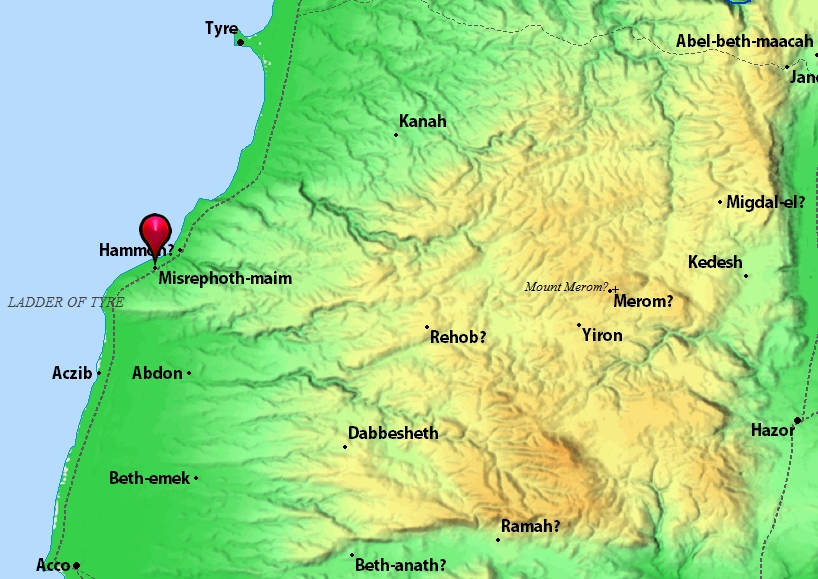
Misrephoth Maim, or Rosh HaNiqra. Map by BibleAtlas.org.

Notice on the map the term Ladder of Tyre which is a reference to this portion of the coastal area south of Tyre. Rosh HaNiqra means “head of the ladder.”

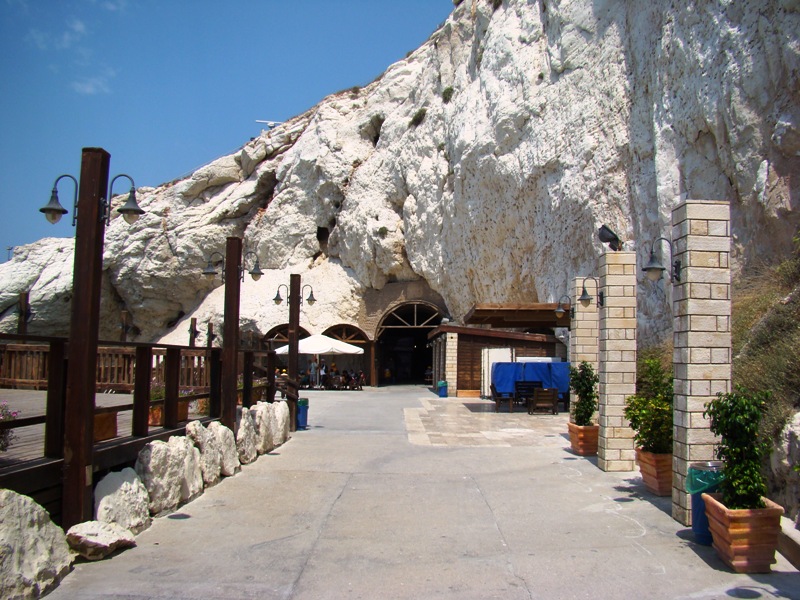
I was impressed with the area’s natural beauty, including the white chalk cliffs.
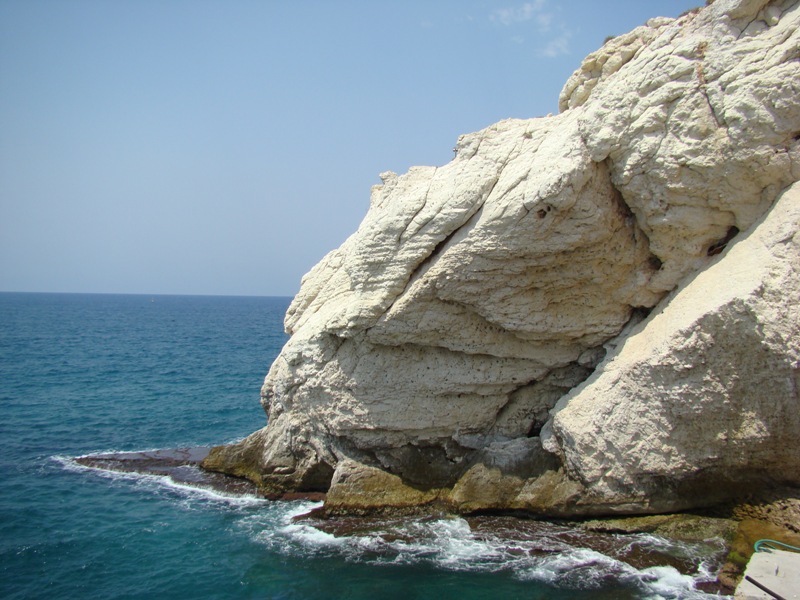
Rosh HaNiqra. Photo by Leon Mauldin.

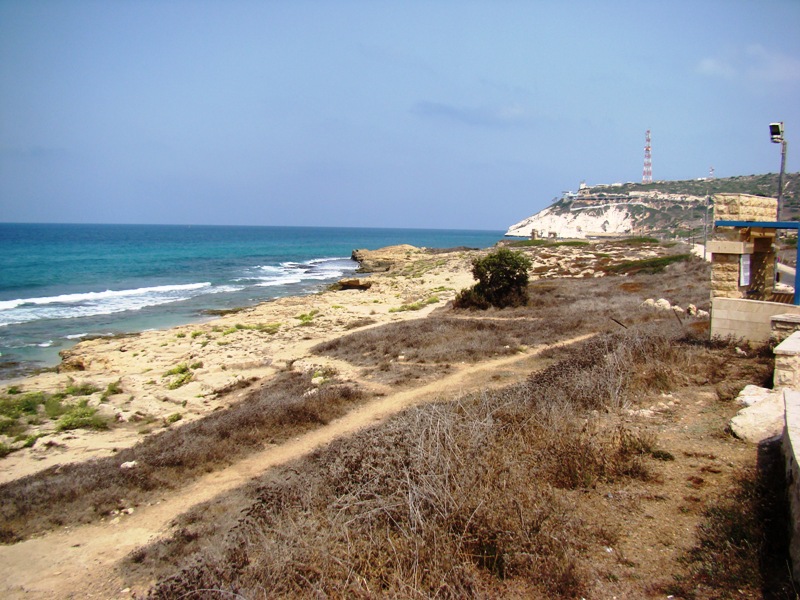
There is a good view of Israel’s northern coast looking southward from this location.
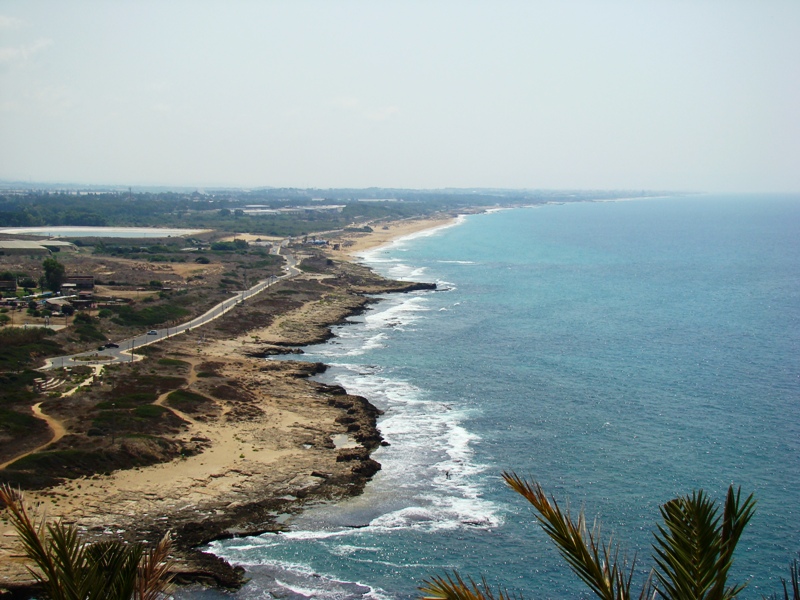
Israel's coast looking south from Rosh HaNiqra. Photo by Leon Mauldin.

In yesterday’s post I shared a view from the cable car. While at Rosh HaNiqra in Sept., I asked one of the workers if I could take her photo.
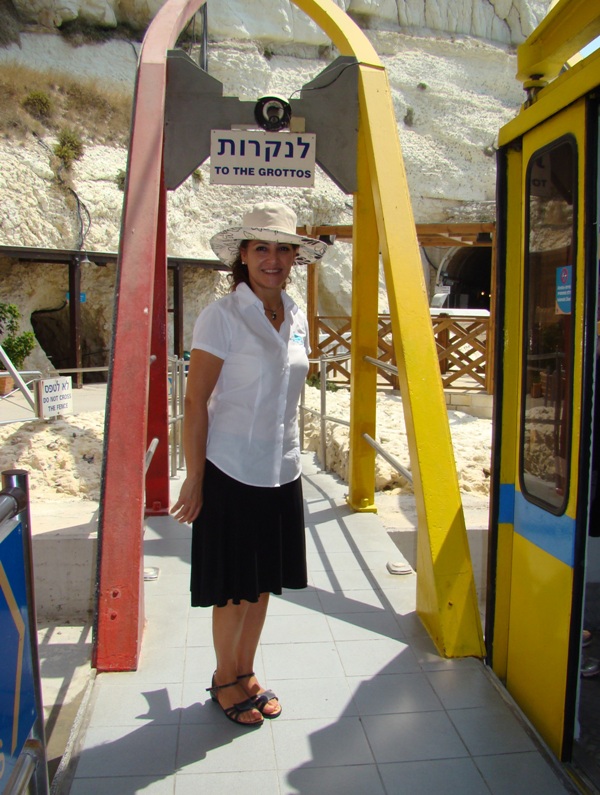
Worker at cable car at Rosh HaNiqra. Photo by Leon Mauldin.

I find it interesting and helpful to not only become familiar with the more well-known biblical sites, but also those Bible places mentioned fewer times, even just once. If it’s part of the biblical record, I have an interest in it!

Click on images for larger view.


Misrephoth Maim (Rosh-HaNiqra), Israel’s Northern Border

December 22, 2011

Misrephoth-maim is mentioned twice in the biblical text.The first occurrence is in Joshua 11:8, which records the third phase of the Conquest, that of the north, and specifically that of Hazor, which formerly was the head of all those kingdoms (v.10). The text records the flight of the defeated Canaanites,

The LORD handed them over to Israel and they struck them down and chased them all the way to Greater Sidon, Misrephoth Maim, and the Mizpah Valley to the east. They struck them down until no survivors remained (Josh 11:8, NET).

With the initial Conquest accomplished, the Lord told Joshua,

I will drive out before the Israelites all who live in the hill country from Lebanon to Misrephoth Maim, all the Sidonians; you be sure to parcel it out to Israel as I instructed you (Joshua 13:6, NET).

We had the opportunity in September to see this interesting biblical site. Misrephoth Maim is identified with Rosh-HaNiqra, and is situated just below Israel’s border with Lebanon on the coast.

Rosh HaNiqra. Looking north to Lebanon. Photo by Leon Mauldin.

Alexander the Great tunneled through the cliffs here to bring his army from Tyre down to Israel.

Rosh HaNiqra. Alexander the Great tunneled through the mountain here. Facing north. Photo by Leon Mauldin.

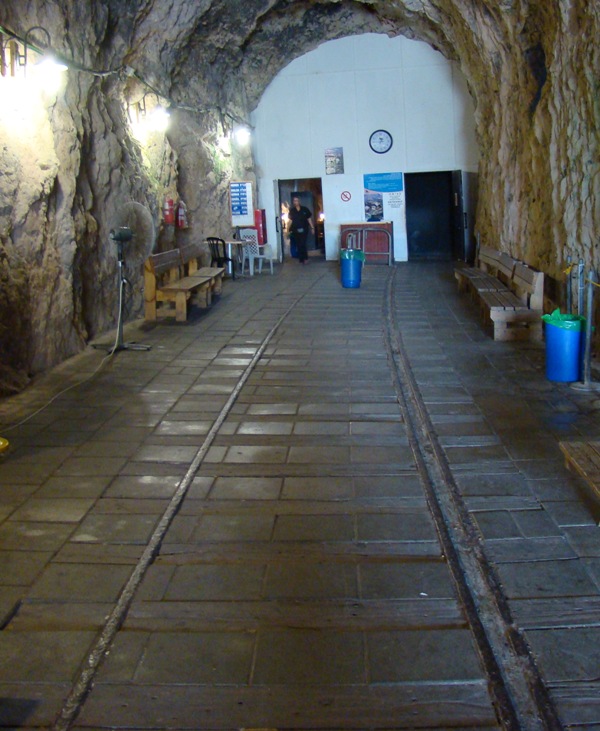
We had the occasion to go inside the tunnel.

Rosh HaNiqra inside tunnel. Photo by Leon Mauldin.

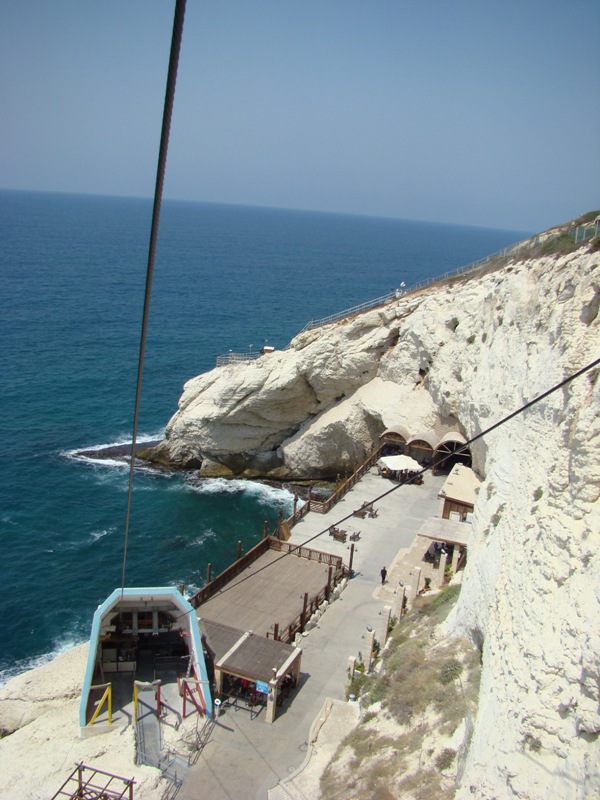
Here is a view from the cable car:

Rosh HaNiqra. View from Cable Car. Photo by Leon Mauldin.

Wikipedia has this info:

The Book of Joshua mentions ‘Misraphot Mayim’ as a place south of Rosh HaNikra that was the border of the Israelite tribes of the time (13:6). Jewish sages referred to the cliff as “The Ladder of Tyre’ (Hebrew: sullam Tzor‎).The site was later renamed A-Nawakir (“the grottos”) after an Arab conquest. The present name, Rosh HaNikra, is Hebrew for the later Arabic name ‘Ras-an-Nakura.’

Throughout human history, Rosh HaNikra served as a passage point for trade caravans and armies between Lebanon, Syria, Israel, Egypt, and Africa. The British blasted a railway tunnel through the nearby rocks for trains running along the Cairo-Istanbul line. A bridge was destroyed by Jewish underground fighters prior to 1948 during the operation Night of the bridges.

Rosh Hanikra was the site where Israeli and Lebanese officials negotiated and concluded an armistice in 1949 which ended the Lebanese-Israeli component of the 1948 War of Israeli Independence.

Click on images for larger view.


Traditional Site of Jesus’ Birth in Bethlehem

December 18, 2011

Justin Martyr (c.103-165 AD), wrote in Dialogue with the Jew Trypho:

But when the Child was born in Bethlehem, since Joseph could not find a lodging in that village, he took up his quarters in a certain cave near the village; and while they were there Mary brought forth the Christ and placed Him in a manger . . . (The Ante-Nicene Fathers Vol. I, p. 237).

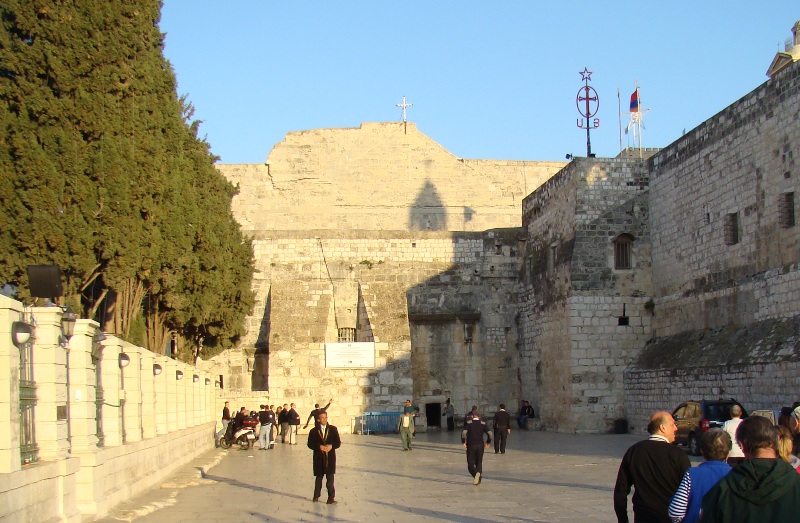
The Church of the Nativity was built by Helena, Constantine’s mother in 339 AD. It was built above the traditional cave which is associated with Jesus’ birth. This photo shows the approach to the church.

Church of the Nativity in Bethlehem. Photo by Leon Mauldin.

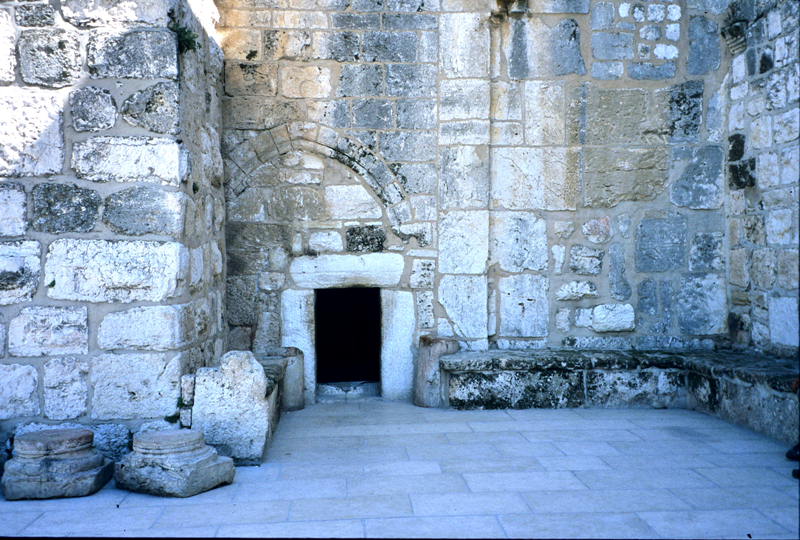
Here is a close-up of the entrance to the church.

Church of Nativity Entrance. Bethlehem. Photo by Leon Mauldin.

The above photo is a scanned slide I took in 1999.

Inside you can see the cave, the traditional place of Jesus’ birth.

Star Marking the Place of Jesus' Birth in Bethlehem. Photo by Leon Mauldin.

Other early evidence pointing to this spot as the location of Jesus’ birth includes that of Origen and Jerome.

For some thoughts on the useful purpose of shrines in this context, see Ferrell Jenkin’s post here.

Click on images for larger view.


Humble Birth: the Manger

December 17, 2011

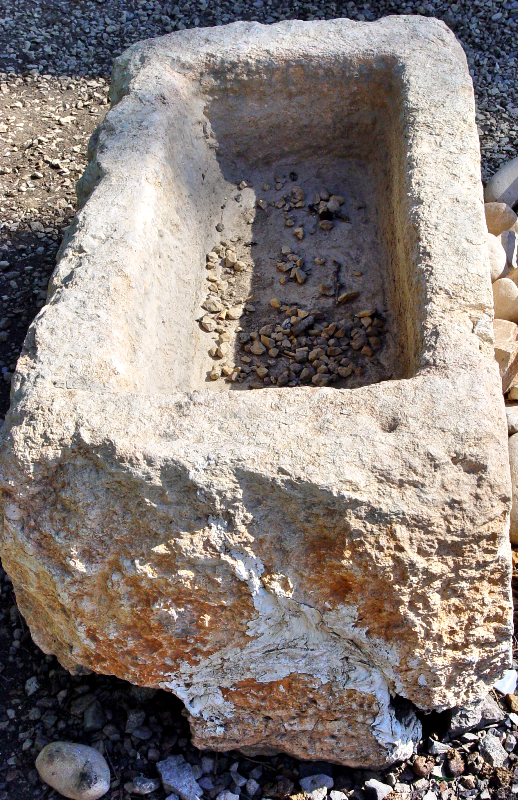
This time of year the word manger is at the top of the list of search words that brings folks to this site. Here is a manger we photographed in Jericho back in November, 2005. This was among other artifacts visitors could see; there was no info available as to where the manger was actually discovered, whether near Jericho or elsewhere.

Manger at Jericho. Photo by Leon Mauldin.

Other posts on Jesus’ becoming flesh and being placed in a manger may be seen here and here. I continue to stand amazed at the thought of our eternal Creator becoming flesh, and having a feeding trough as a bassinet! It thrills my soul to think of God becoming flesh!

Luke 2:7 And she gave birth to her firstborn son; and she wrapped Him in cloths, and laid Him in a manger, because there was no room for them in the inn. (NASB).

Note the rendering of the CSB: Then she gave birth to her firstborn Son, and she wrapped Him snugly in cloth and laid Him in a feeding trough– because there was no room for them at the inn.

John 1:14 And the Word became flesh, and dwelt among us, and we saw His glory, glory as of the only begotten from the Father, full of grace and truth. (NASB).

It was necessary in God’s Redemptive Plan that the Eternal Word should become flesh, that he might defeat Satan, and become the propitiation for our sins.

It is also helpful to remember that when the Apostle John saw the resurrected Christ, the Son of God in His present glory, he did not see a baby in a manger. At Patmos, John wrote, “When I saw Him, I fell at His feet like a dead man. And He placed His right hand on me, saying, ‘Do not be afraid; I am the first and the last, and the living One; and I was dead, and behold, I am alive forevermore, and I have the keys of death and of Hades'” (Rev. 1:17-18, NASB).

Likewise we would do well not to limit our thoughts of Jesus to a baby in a manger, but see Him also as the Lord of lords and King of kings, the One before Whom all shall give account on the last day.

Click on image for larger view.


Shechem, Tel Balata, East Gate

November 17, 2011

In September we had the opportunity to revisit Shechem, Tel Balata. The site had seen further excavation and cleanup since our last visit there (Dec. 2009).

Shechem is located on the West Bank, situated 2.5 km SE of city center of Nablus. The Park brochure states,

In the past urban development and lack of appropriate management threatened the archaeological site of Tell Balata and the main goal of the Tell Balata Archaeological Park project is to safeguard it. It is a potential World Heritage Site as a part of ‘Old Town Nablus and its environs’ and is listed ont he Inventory of Cultural and Natural Sites of Potential outstanding Universal Value in Palestine.

The project aims to make a sustainable heritage management plan for the site and to make it accessible to visitors.

We previously posted on Shechem here. Review this to see somewhat of the biblical significance of this site.

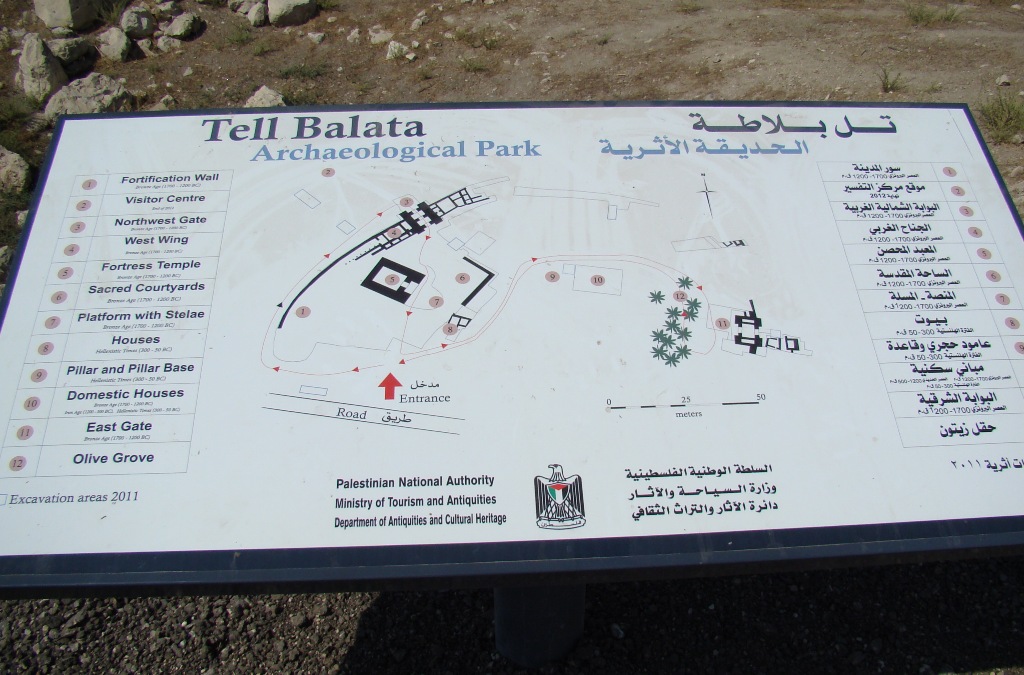
There is a helpful sign as you enter Shechem.

Shechem, Sign at Entrance. Photo by Leon Mauldin. Click for larger view.

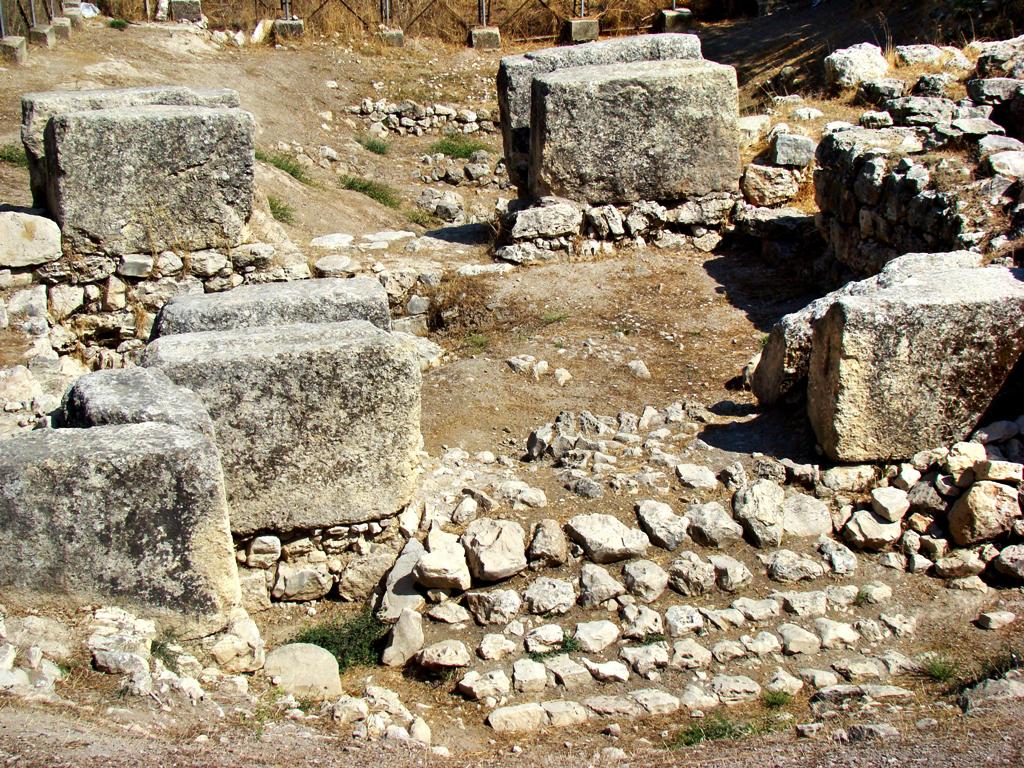
Ferrell Jenkins and I wanted to see the old Canaanite gate at the east side of the site.

Shechem, Canaanite Gate on East Side of city. Photo by Leon Mauldin.

Dr. Rasmussen observes, “The gate, like the associated Cyclopean Wall, dates to the end of the Middle Bronze Age (ca. 1650-1550 BC) and continued in use during the Late Bronze Age.”


Jesus’ Ministry, 3+ Years

November 11, 2011

There is general consensus that the earthly ministry of Jesus lasted about three years. How is that determined?

One primary source is the Gospel of John, with its inclusion of feasts.

Jesus' 3+ Yr. Ministry. Chart by Leon Mauldin.

You will note that the reference of John 5:1 just says “feast,” it does not specify. Beauford Bryant notes:

The word for feast (ἑορτή, heortē) was without the definite article in nearly all the earliest Greek manuscripts and versions. If the definite article had been read, then there would have been strong grounds for understanding this festival as a Passover, or possibly as Tabernacles, which was often referred to as “the Feast” (ההג, hahag) (College Press NIV Commentary).

********

This week I have enjoyed the opportunity to present 6 lessons in our local county (Cullman) at the Prospect church of Christ. Kent Persall is the evangelist there. 40+ years ago Kent, his wife Diane and I were students at Florida College.


Mt. Ebal from Jacob’s Well

October 28, 2011

In Deuteronomy 27:111-26, Moses commanded the people to arrange six tribes on Mount Gerizim (blessing), and six tribes on Mount Ebal (cursing). The blessings and the curses of the Law were to be read–blessing conditioned upon obedience, and curses consequential of disobedience. These instructions were given just before Israel entered Canaan, in anticipation of the Conquest under Joshua.

When they arrived in the land, after taking Jericho and Ai, they immediately went north to obey these instructions. The record is in Joshua 8:30-35.

 Afterwards, Joshua read aloud all the words of the law– the blessings as well as the curses– according to all that is written in the book of the law. There was not a word of all that Moses had commanded that Joshua did not read before the entire assembly of Israel, including the women, little children, and foreigners who were with them (Josh. 8:34-35, CSB).

Joshua also built an altar there (Josh. 8:30), made of whole stones (v.31), on which he wrote the law of Moses (v.32).

Today’s photo shows Mt. Ebal from Jacob’s well (well is to our right and out of sight).

Mt. Ebal from Jacob's Well. Photo by Leon Mauldin.

Jacob’s well is mentioned in the New Testament as the setting for the conversation between Jesus and the Samaritan woman (John 4).

*******

Our 6-day meeting presenting the Visualized Survey of the Bible here in Lincoln, NE., with the Eastside church of Christ concludes tonight. I’m always thankful to God for such opportunities. Our son Seth preaches here, along with Nathan Quinn. So a special treat was our getting to be with family, including our daughter and her four children who were also here (from AL.) through Thurs. morning.

Our schedule this week has not allowed for frequent posting. Thanks for your understanding, and thanks for reading our blog!


Cistern at Adullam

October 20, 2011

Last month we had the occasion to visit Adullam. Ferrell Jenkins posted on this here. Earlier I did a post dealing especially with the narrative of 2 Samuel 23:13-17, where David and some of his men were at the cave of Adullam, when he longed for water from the well by the gate at Bethlehem. See here for post, “David’s Mighty Men.”

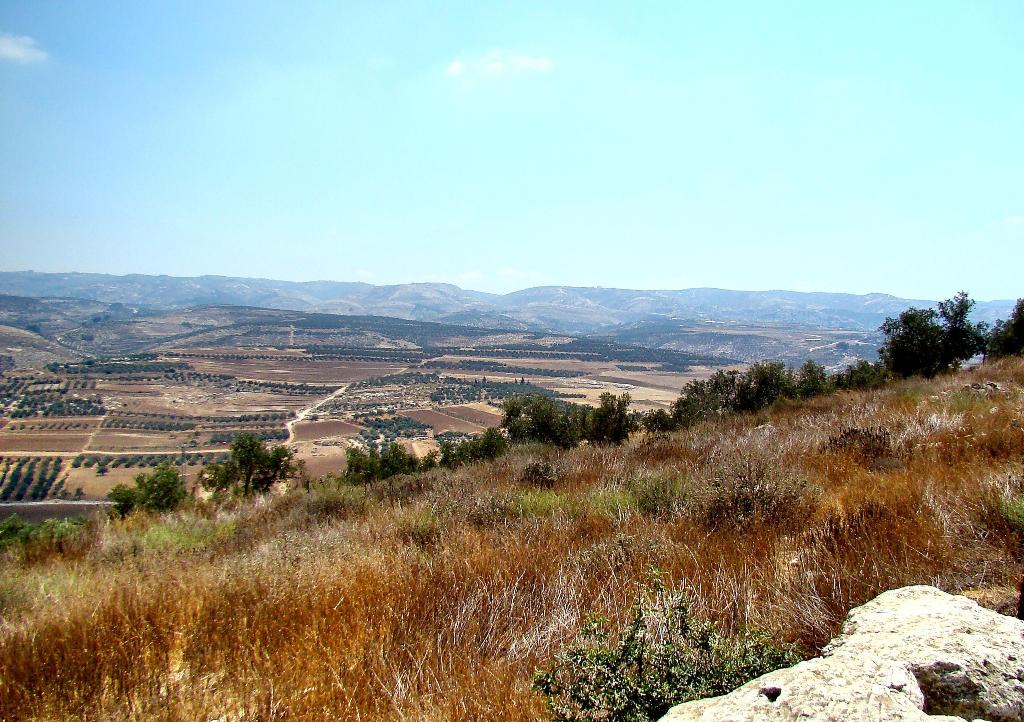
While seeing the biblical site of Adullam it became apparent why David would have longed for the water from Bethlehem. Adullam is on a hill.

Tell Adullam. Photo by Leon Mauldin.

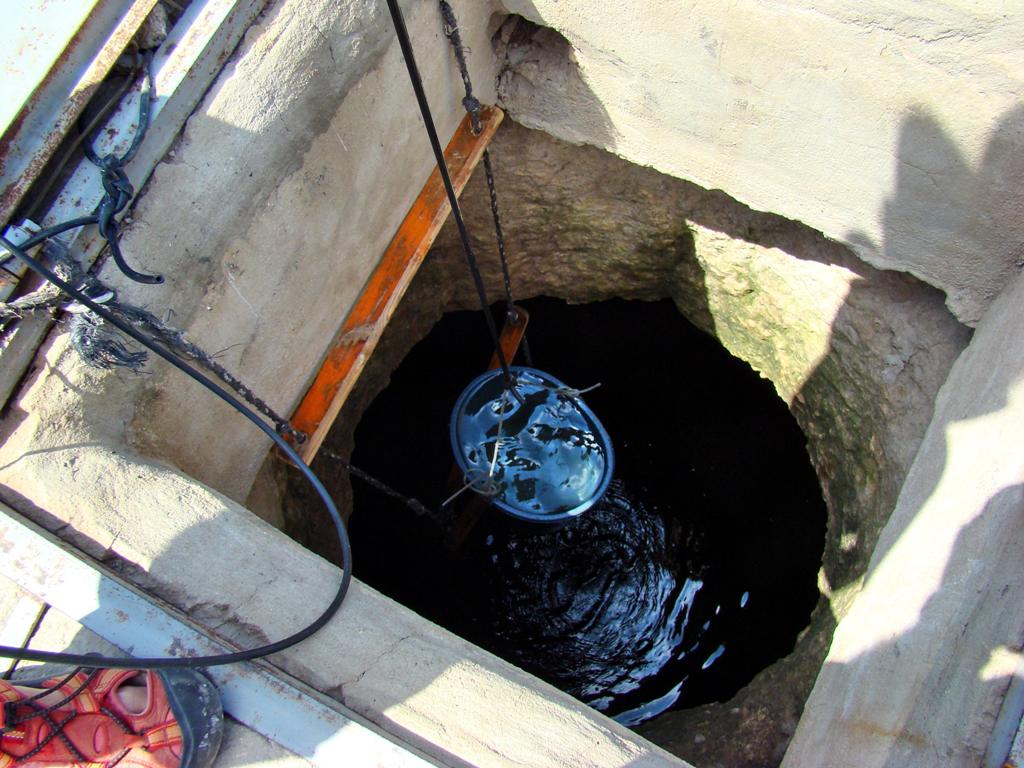
There was water at Adullam. Like so many sites in Israel, water was collected in cisterns.

Cistern at Adullam. Photo by Leon Mauldin.

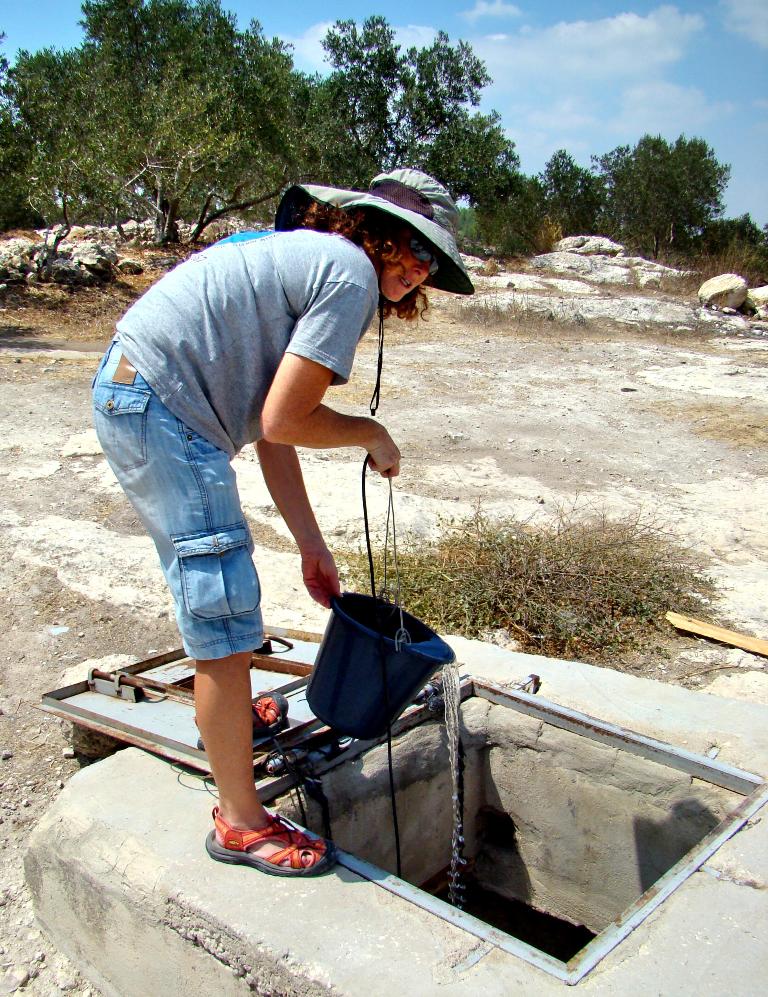
Our driver and guide Daphna drew some water from the cistern and then poured it back. We did not take a drink so I cannot vouch for its taste.

Daphna draws water and pours it back into the cistern at Adullam. Photo by Leon Mauldin.

David’s three men traveled 13 miles to the east to get to Bethlehem from Adullam.

Bethlehem would be to our far right, 13 miles distant from Adullam. Photo by Leon Mauldin.

David knew the difference between water that was living and fresh, like that at Bethlehem, and water collected in a cistern.

This distinction is helpful in understanding the Lord’s admonition to Judah through Jeremiah the prophet:

For My people have committed two evils: They have forsaken Me, The fountain of living waters, To hew for themselves cisterns, Broken cisterns That can hold no water (Jeremiah 2:13).

Click images for higher resolution.


Timnah and the Samson Narrative

October 14, 2011

Nelson’s New Illustrate Bible Dictionary tells us,

Timnah was allotted to the tribe of Dan (Josh. 19:43; Thimnathah, KJV). Some scholars identify it with Tell el-Batashi, about six kilometers (four miles) northwest of Beth Shemesh. At Timnah Samson married a Philistine woman and later told her his riddle of the lion and the honey (Judges 14).

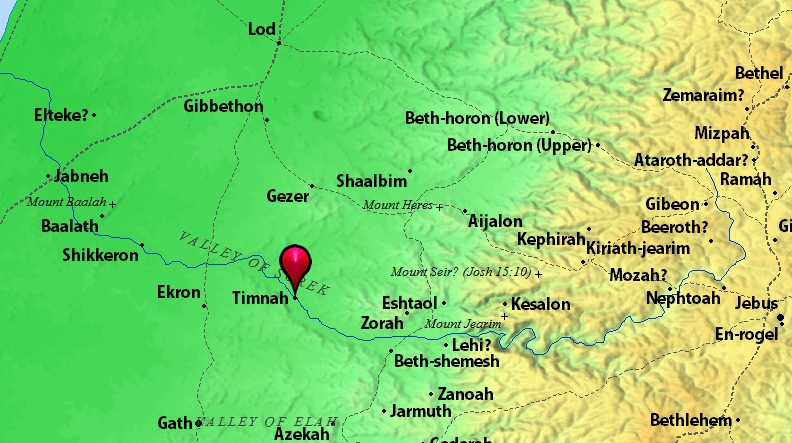
See map for location.

Timnah. Map by BibleAtlas.org

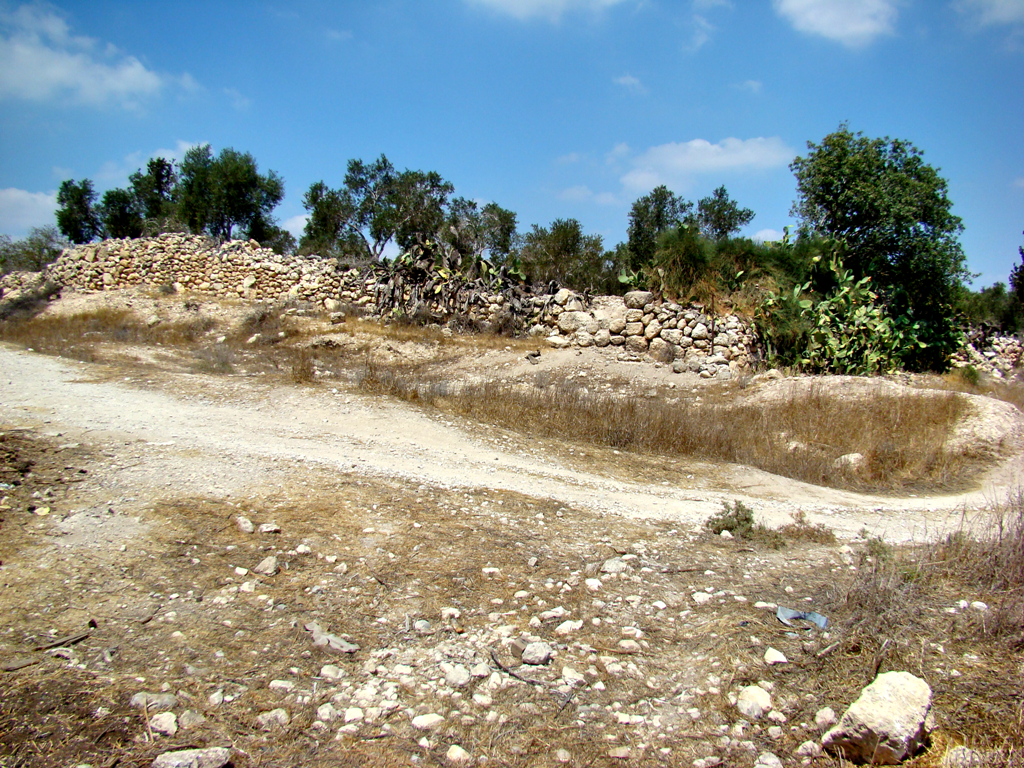
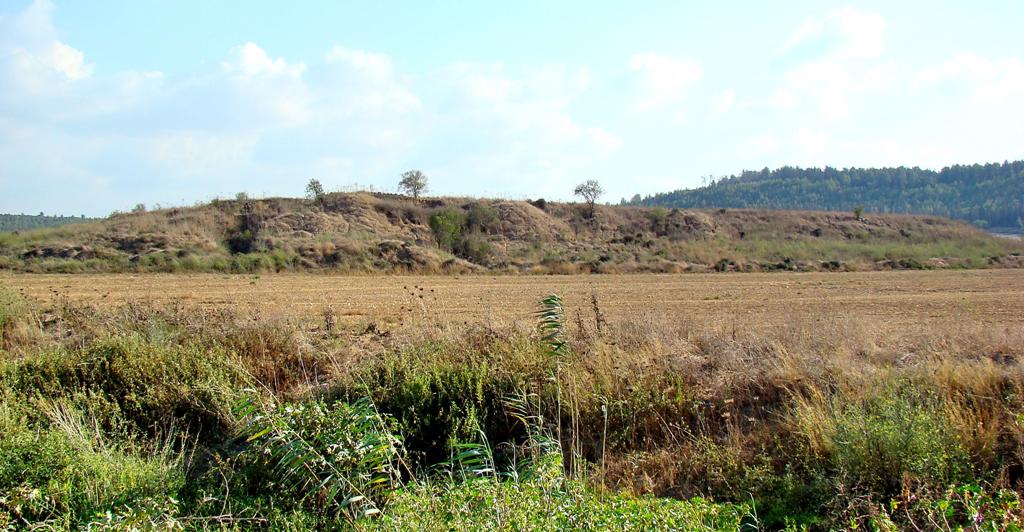
We had the opportunity while in Israel last month to see Timnah. You can see the tel in center of photo.

Timnah. Tel is in center. Photo by Leon Mauldin.

Samson was one of Israel’s judges in the biblical period usually designated “judges,” which preceded Israel’s having a king. Some of the other judges led an army to deliver Israel; Samson WAS the army.

But regarding Timnah, the text reads,

Samson went down to Timnah, where a Philistine girl caught his eye. 2 When he got home, he told his father and mother, “A Philistine girl in Timnah has caught my eye. Now get her for my wife.” 3 But his father and mother said to him, “Certainly you can find a wife among your relatives or among all our people! You should not have to go and get a wife from the uncircumcised Philistines.” But Samson said to his father, “Get her for me, because she is the right one for me” (Judges 14:1-3, NET).

It was here at Timnah (at the vineyards) that a young lion roared against Samson, and he killed it with his bare hands (vv. 5-6).  The verses that follow tell of bees making honey in the carcass of the lion which Samson ate and shared with his parents. He omitted to tell them the source of the honey.

Samson told a riddle which would require the wedding guests (30) at Timnah to each give him a set of clothing. The men could not figure out his riddle,  “Out of the one who eats came something to eat; out of the strong one came something sweet” (v.14). They threatened Samson’s wife who finally got the answer from Samson (the lion).  Samson was angry with his wife, and went home to his parents.  Meanwhile his father-in-law gave Samson’s wife to his “best man” (v. 20 ESV, NET).

Not knowing what had happened Samson went back to Timnah to “make up” with his wife. Upon learning of this new set of circumstances,

4 Samson went and captured three hundred jackals and got some torches. He tied the jackals in pairs by their tails and then tied a torch to each pair. 5 He lit the torches and set the jackals loose in the Philistines’ standing grain. He burned up the grain heaps and the standing grain, as well as the vineyards and olive groves. (Judges 15:4-5, NET).

The biblical narrative continues, with subsequent retaliation both on the part of the Philistines as well as Samson.

We are glad to see such Bible places as Timnah, as such sites provide the geographical setting for the events of Scripture.

Click image for higher resolution.


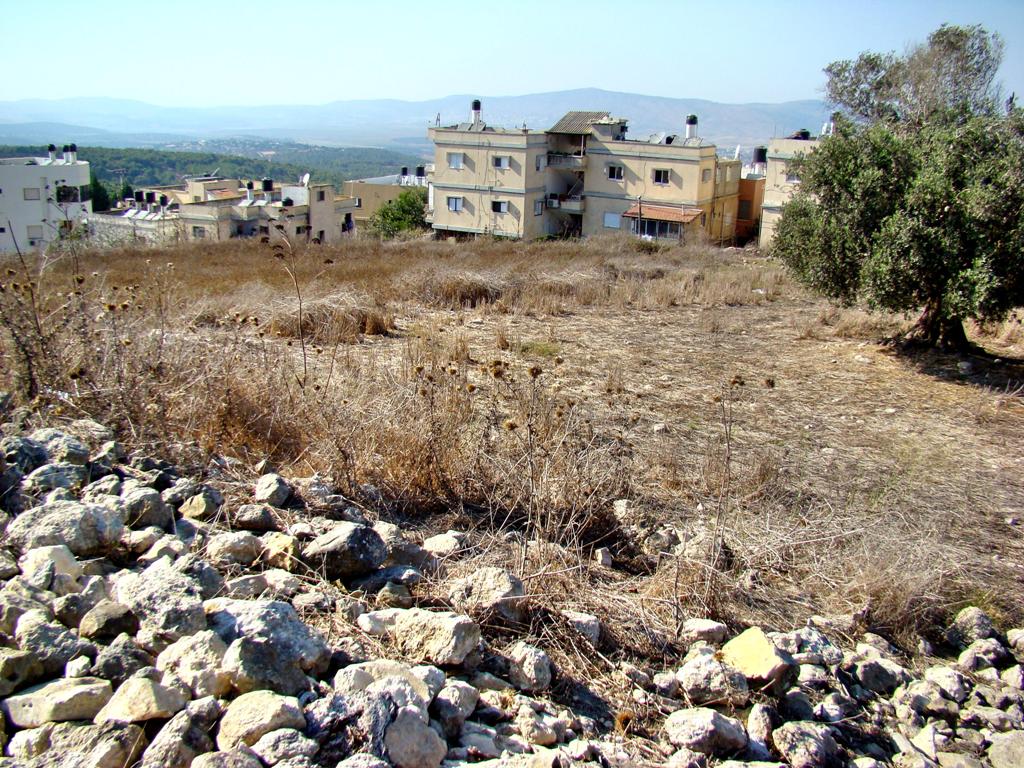
Jonah Was From Gath hepher

October 5, 2011

During the days of the Divided Kingdom of Israel’s history, the northern kingdom of Israel had shrunk down to nearly nothing, as noted in 2 Kings 10:32: “In those days [Jehu’s reign] the LORD began to reduce the size of Israel’s territory.” Here’s what it looked like:

Tiny Israel as Jehoahaz ascends throne. Map by Scott Richardson.

This would change in the days of Jeroboam II. 2 Kings 14:25 reads:

He restored the border of Israel from Lebo Hamath in the north to the sea of the Arabah in the south, in accordance with the word of the LORD God of Israel announced through his servant Jonah son of Amittai, the prophet from Gath Hepher (NET).

At this time with the borders restored, it looked like this:

Israel during Jeroboam II. Map by Scott Richardson.

Note that this restoration of Israel’s territory was foretold by Jonah the prophet. We usually think of Jonah in regard to his reluctant mission to Nineveh, as seen in the book of Jonah. But we learn from the 2 Kings 14:25 reference that God also used the prophet to address the situation with His people Israel. Jonah was from Gath hepher, which was in the Galilee.

Gath hepher. Map by BibleAtlas.org.

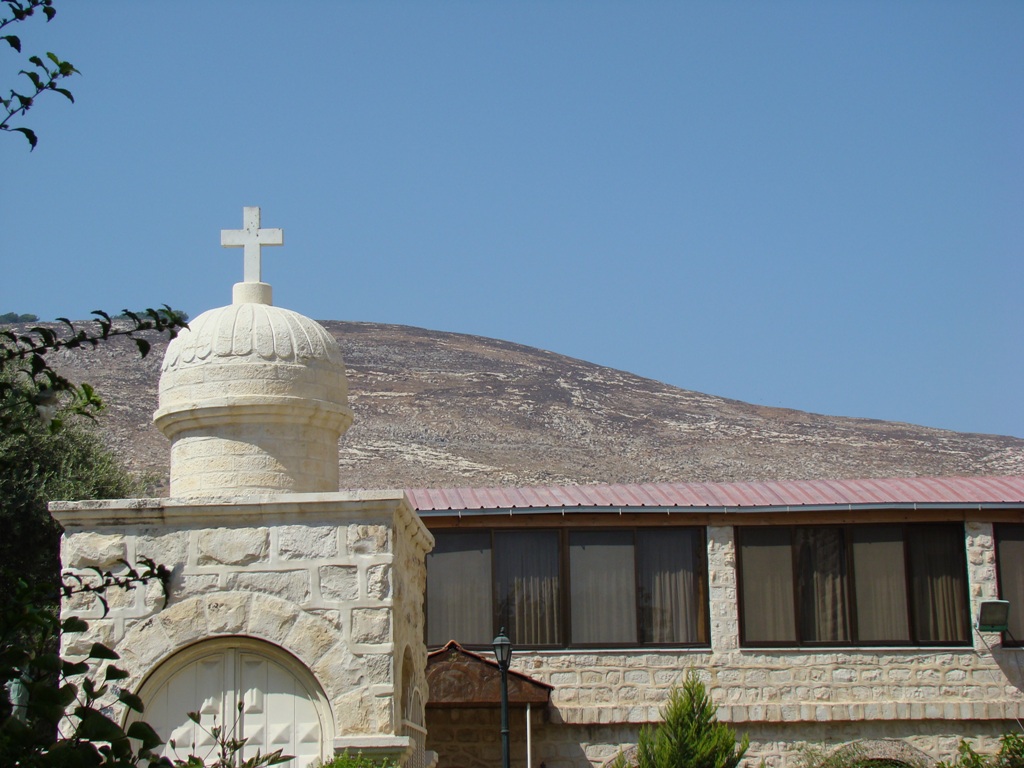
I recently had opportunity to visit Jonah’s hometown.

Gath hepher. Home of the prophet Jonah. Photo by Leon Mauldin.

Our Visualized Survey of the Bible is going well here at Pasadena. It is good to be with Dee & Norma Bowman, and all the folks here.

Dee & Norma Bowman, and Leon & Linda Mauldin at Galveston, TX.

Click on images for higher resolution.