October 26, 2012
In Mark 12:1-11, in the final week of Jesus’ ministry, He told the Parable of the Wicked Vinedressers (Mark 12:1-11). The vineyard Owner sent a servant to His vineyard for fruit at the proper season. He did not receive fruit; instead, the vinedressers took the servant, beat him, and sent him away empty. Then He sent another servant, at whom they threw stones, wounded him in the head, and sent him away shamefully. Again, He sent another and him they killed. The same treatment happened to other servants sent to the vineyard.
The Owner had one Son. His Beloved Son. The Owner sent Him also. They killed Him and cast Him out of the vineyard!
What vineyard owner would do this? None! But what no one else would do is what God did! He sent His servants, the prophets, again and again to His people. They were treated shamefully; some were killed. Last of all He sent His Son! They killed the Son also, without knowing that His death was the means of our salvation from our sins.
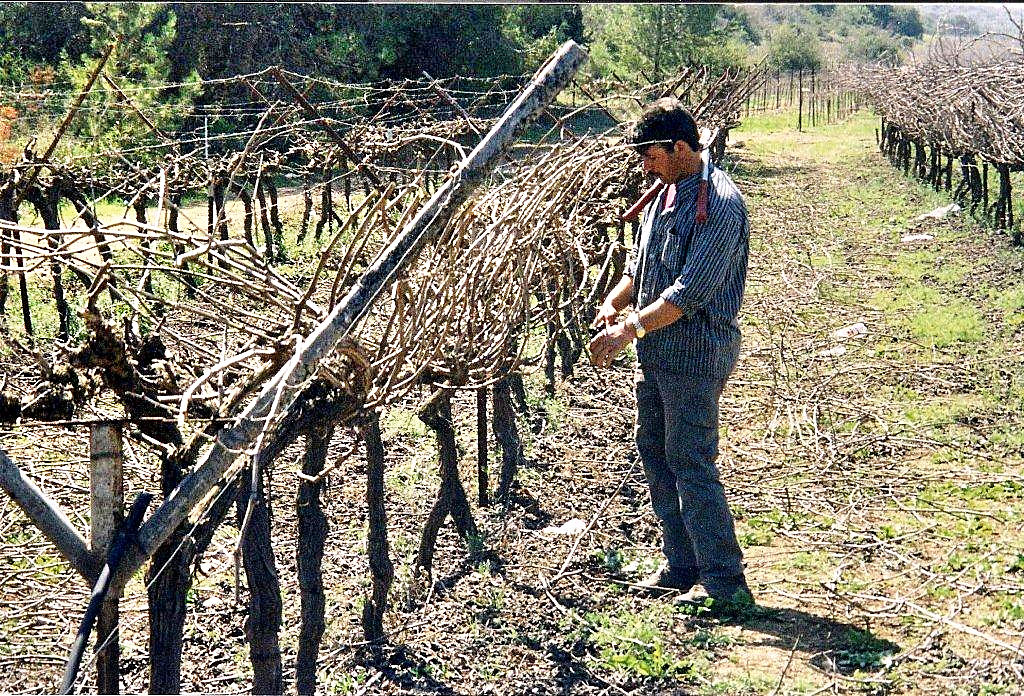
Our photo shows a vineyard at Lachish, with a vinedresser pruning and trimming the vines. This gives the setting for the parable of the text.
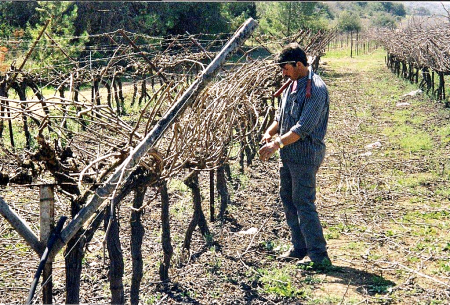
Vinedresser working in vineyard at Lachish in Israel. Photo by Leon Mauldin.
This photo was originally a 35 mm slide taken in 1999.
********
We have had a wonderful 6-day meeting at Trilacoochee, Fl., near Dade City, presenting a series of 9 biblical lessons. My good friend Bob Waldron is the local evangelist who works with the congregation here.
 1 Comment |
  Bible History and Geography, Bible Study, Biblical Interpretation, Israel, New Testament, photography, Travel, Uncategorized | Tagged: Lachish, Parables |
  Permalink
 Posted by Leon Mauldin
October 24, 2012
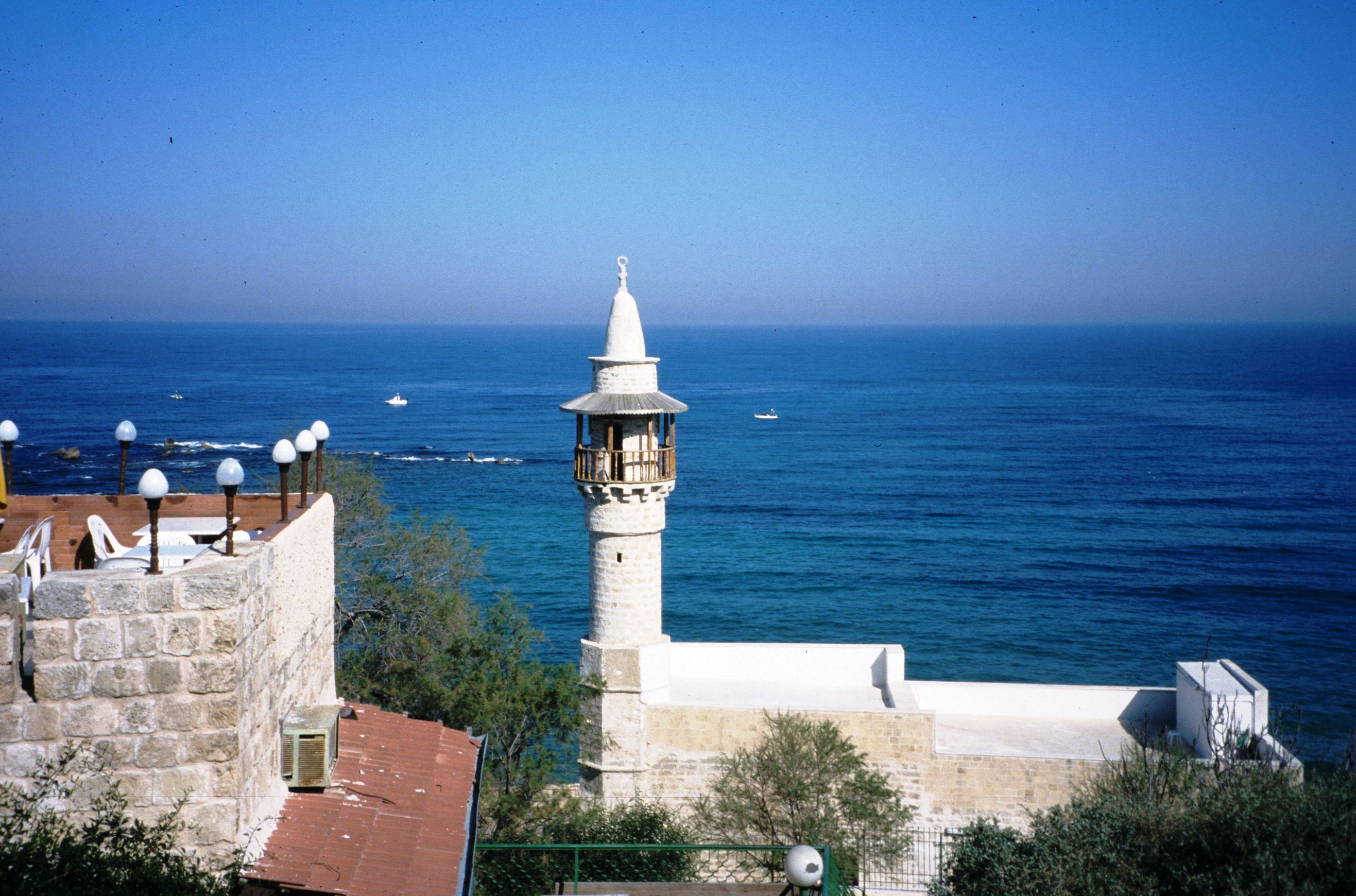
Joppa, an ancient Mediterranean harbor of Canaan, was the geographical setting for several events in biblical history.
When Solomon was to construct the temple, the king of Tyre offered, “We will get all the timber you need from Lebanon and bring it in raft-like bundles by sea to Joppa. You can then haul it on up to Jerusalem.” (2 Chron. 2:16, NET).
Joppa was again used in this same manner when the second temple was rebuilt (Ezra 3:7). It’s about 35 miles from Joppa to Jerusalem.
Joppa figures in with the narrative of Jonah, who, when God told him to preach to Nineveh, “Instead, Jonah immediately headed off to Tarshish to escape from the commission of the LORD. He traveled to Joppa and found a merchant ship heading to Tarshish. So he paid the fare and went aboard it to go with them to Tarshish far away from the LORD” (Jonah 1:3, NET).
In NT times, there were disciples of Christ at Joppa. It was here that Peter raised Tabitha from the dead (Acts 9:36-43). Peter remained at Joppa for “many days” (Acts 9:43) and was there when the Gentile Cornelius, a Roman centurion stationed at Caesarea, sent for him, that he could hear the Gospel message of salvation (Acts 10; 11:1-18; see esp. 11:14).
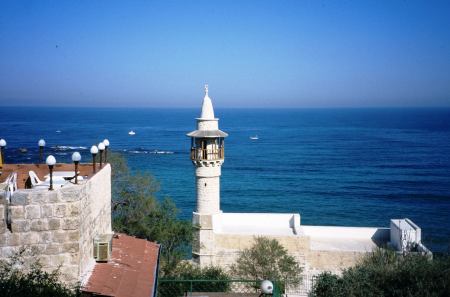
Joppa, ancient harbor on Israel’s coast. Photo by Leon Mauldin.
This photo of Joppa was taken in 1999, a 35mm slide which I had digitalized.
I posted an aerial photo of Joppa here.
Leave a Comment » | Bible History and Geography, Bible Study, Israel, New Testament, Old Testament, photography, Travel | Tagged: Joppa | Permalink
Posted by Leon Mauldin
October 9, 2012
We read in Joshua 10:29,30:
29 Then Joshua and all Israel with him passed on from Makkedah to Libnah, and fought against Libnah. 30 The LORD gave it also with its king into the hands of Israel, and he struck it and every person who was in it with the edge of the sword. He left no survivor in it. Thus he did to its king just as he had done to the king of Jericho.
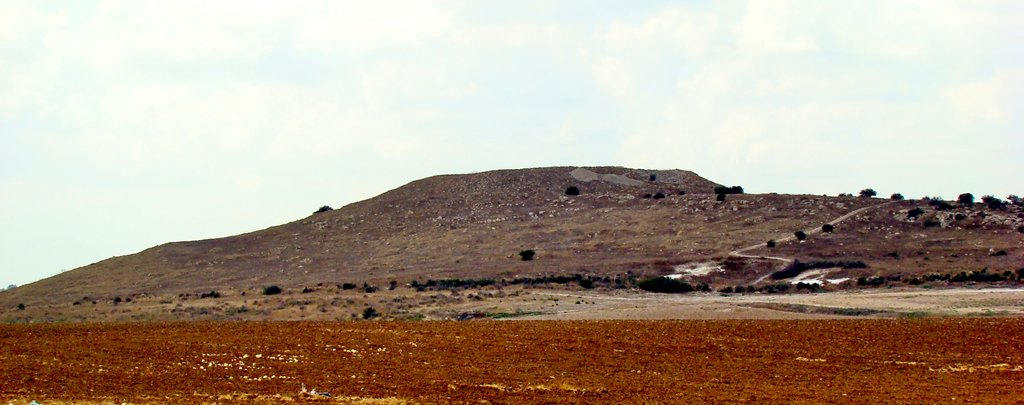
We had the occasion last year to visit Tel Burna, in Israel’s Shephelah, a location which many believe to be biblical Libnah.
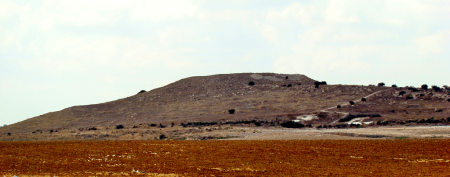
Tel Burna, believed to be biblical Libnah. Photo by Leon Mauldin.
The Tel Burna Excavation Project is devoted to this site and may be viewed here.
Another biblical reference to Libnah is found in 2 Kgs. 19:8, contextually speaking of the Assyrian invasion of Judah, 701 BC: “Then Rabshakeh returned and found the king of Assyria fighting against Libnah, for he had heard that the king had left Lachish.”
Leave a Comment » | Archaeology, Bible History and Geography, Bible Study, Israel, Old Testament, photography, Travel | Tagged: Libnah, Tel Burna | Permalink
Posted by Leon Mauldin
October 4, 2012
I never tire of reading John 4, which narrates Jesus’ stop at Jacob’s well as He left Judea and was en route to Galilee. This was early in Jesus’ ministry, prior to the Galilean ministry. On this occasion He skillfully led an unnamed woman from the mundane task of coming to draw water, to a point of faith in Him as the Messiah. Additionally, it turned out that there were many in the area that became believers in him.
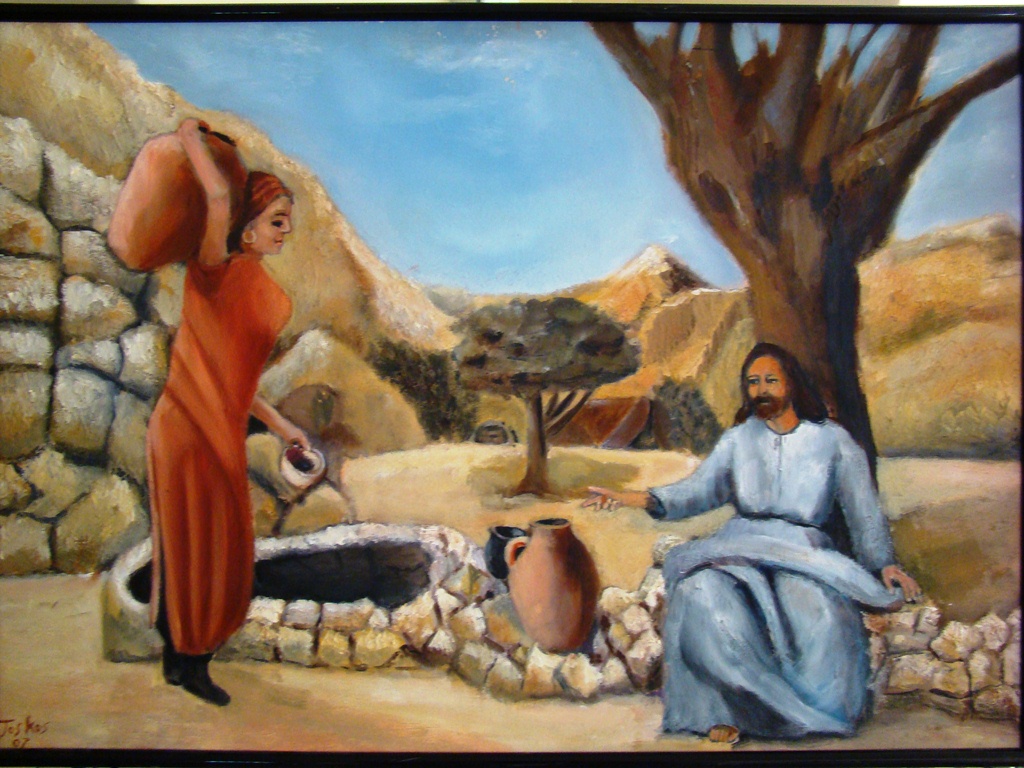
At nearby Mt. Gerizim, the mountain referenced by the woman as the place where the Samaritans worshiped (v.20), there is today the Samaritan Museum. There one can see a painting that points back to that day recorded in John’s Gospel.
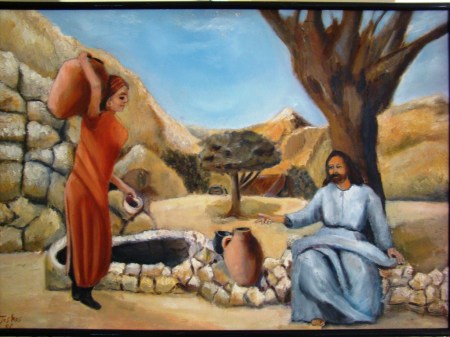
Painting depicting Jesus and the Samaritan Woman of John 4. Photo by Leon Mauldin.
We are currently in Canada, speaking in a 6-day meeting at Jordan, Ontario.
4 Comments | Bible History and Geography, Bible Study, Israel, New Testament, photography, Shechem, Travel | Permalink
Posted by Leon Mauldin
September 22, 2012
A resource I own and would recommend is Dr. Carl G. Rasmussen’s Zondervan Atlas of the Bible. It is currently on sale for the bargain price of 19.99 at Christianbook.com. Click here to read more. Click here to order.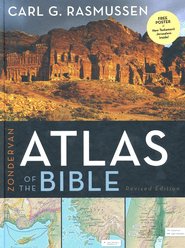 A good resource for a great price!
Publisher’s Description:
Zondervan Atlas of the Bible … a thoroughly revised edition of the most comprehensive Bible atlas ever designed for * Students * Bible Study Groups * Adult Learners * Travelers/Pilgrims to the Lands of the Bible * Pastors * Teachers * All Lovers of the Bible This major revision of the Gold Medallion Award-winning Zondervan NIV Atlas of the Bible is a visual feast that will help you experience the geography and history of Scripture with unprecedented clarity. The first section of the Atlas introduces the ‘playing board’ of biblical history–using three–dimensional maps and photographic images to help the lands of the Bible come alive. The next section, arranged historically, begins with Eden and traces the historical progression of the Old and New Testaments. It provides an engaging, accurate, and faithful companion to God’s Word–illuminating the text with over one hundred full-color, multidimensional maps created with the help of Digital Elevation Modeling data. It concludes with chapters on the history of Jerusalem, the disciplines of historical geography, and the most complete and accurate listing and discussion of place-names found in any atlas. Throughout the Atlas, innovative graphics, chronological charts, and over one hundred specially selected images help illuminate the geographical and historical context of biblical events. The Zondervan Atlas of the Bible is destined to become a favorite guide to biblical geography for students of the Bible. This accessible and complete resource will assist you as you enter into the world of the Bible as never before.
Leave a Comment » | Bible History and Geography, Bible Study, Israel, New Testament, Old Testament, photography, Resources, Travel, Uncategorized | Permalink
Posted by Leon Mauldin
September 21, 2012
In November 2005 Ferrell Jenkins and I made a personal study trip to Israel. One factor that made that trip significant was the fact that this was Mr. Jenkin’s (who has directed scores of tours to Israel) first visit to Israel since the events of 9/11/2001. So the purpose in part was exploratory, to see what had changed and new developments/excavations, etc. He made posts of photos and comments every day. You can still access that Nov. ’05 Israel trip info here. I thought some of our readers might enjoy the photos and info. This was before the widely read Ferrell’s Travel Blog.
I can tell you, that was a great trip. There is nothing quite like on-site Bible study! I think we each took around 2,500-3,000 photos.
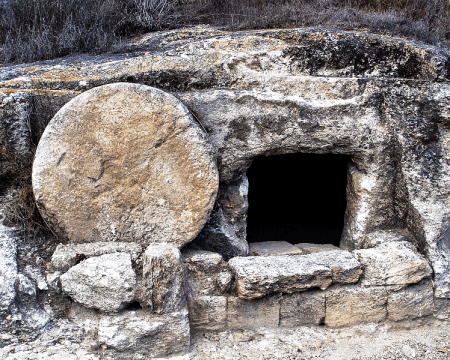
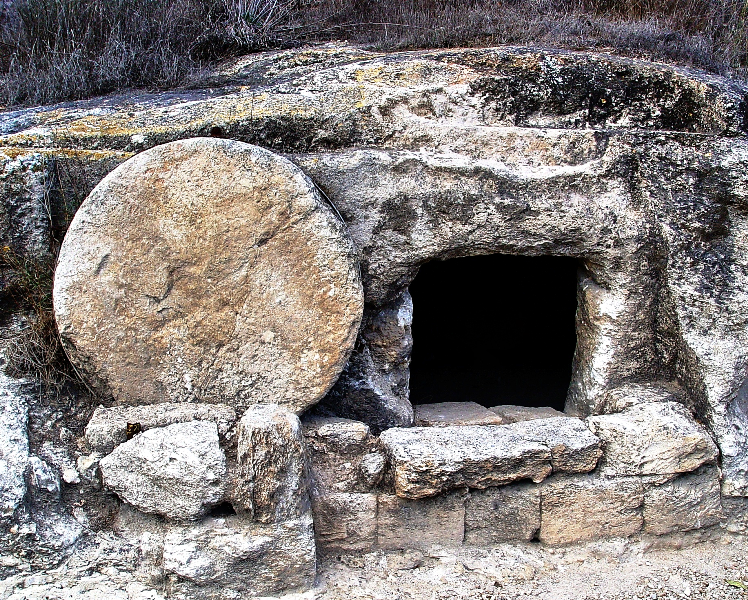
Rolling Stone Tomb in Northern Israel, Nov. 2005. Photo by Leon Mauldin.
This is one of my favorite shots from that trip. You can see there is no green grass, as it was dead and dry in Nov. It is good to be able to see the land at different times of the year if possible.
This Roman tomb is not far from Megiddo. Its use dates back to the time of Jesus, and well illustrates the kind of tomb in which Jesus was buried. Unfortunately it is not possible to get this same photo today as there is a safety railing in front of the tomb.
Click on photo for larger view.
2 Comments | Bible History and Geography, Bible Places, Israel, New Testament, Old Testament, photography, Travel | Permalink
Posted by Leon Mauldin
September 19, 2012
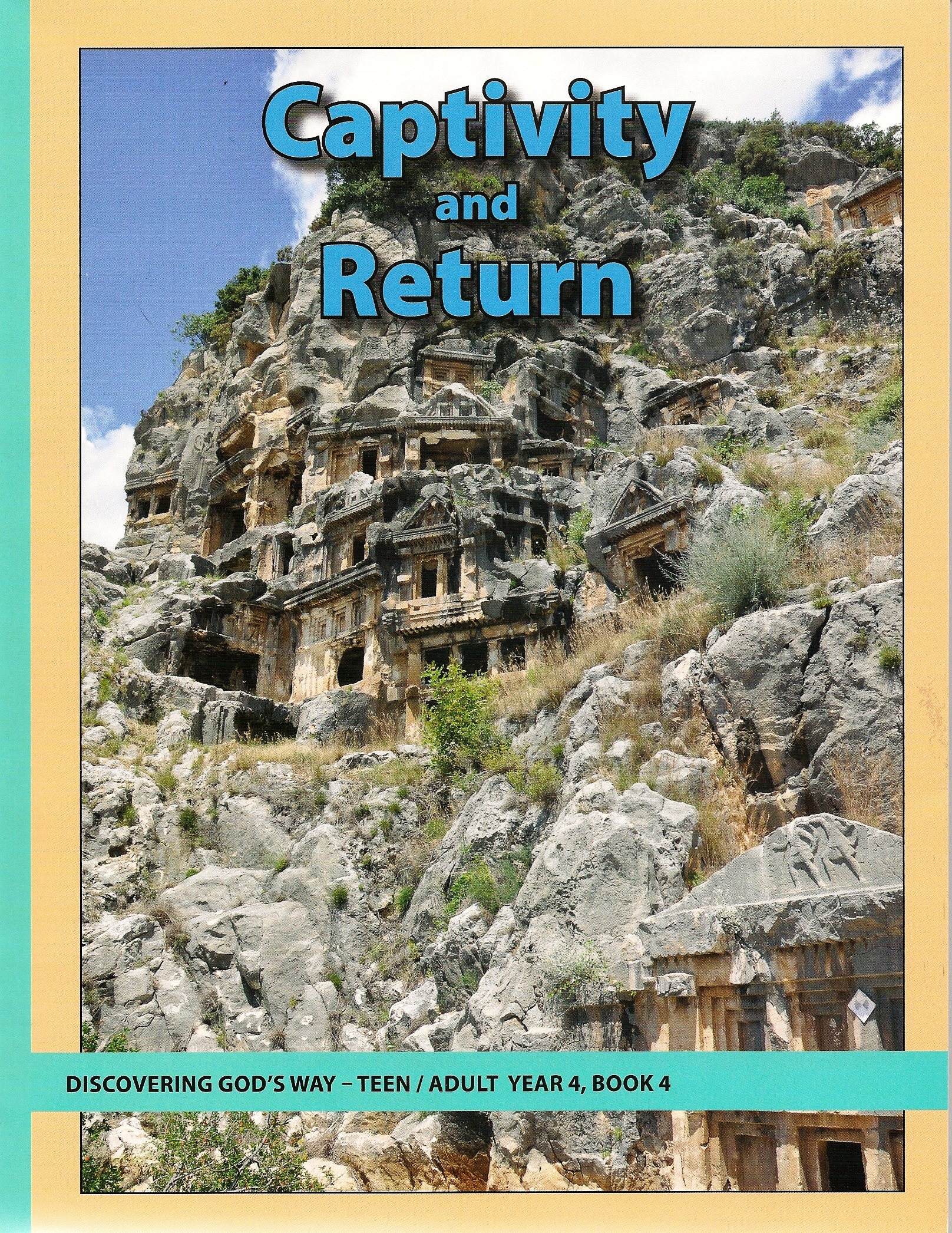
Discovering God’s Way is a Bible class curriculum for ages nursery through adult, edited by Robert Harkrider, and published by Religious Supply Center of Louisville, KY. I have written two books for the teen/adult level, Divided Kingdom, and Captivity and Return, the latter of which has just now been printed. Here is the cover:
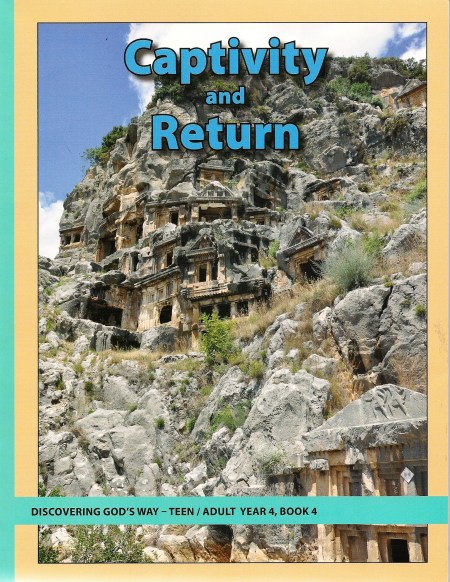
Cover, Captivity and Return, authored by Leon Mauldin.
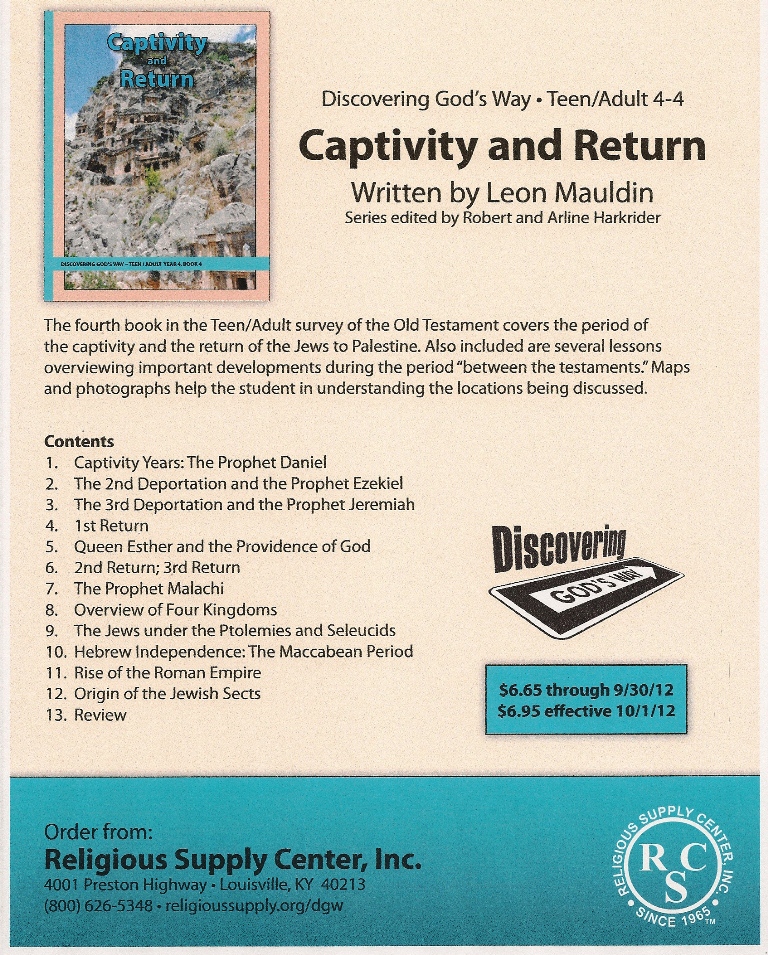
The book is 118 pages, and has 13 lessons. It is illustrated with maps, as well as color photos of biblical places and artifacts relating to the places and periods studied. Here is the table of contents:
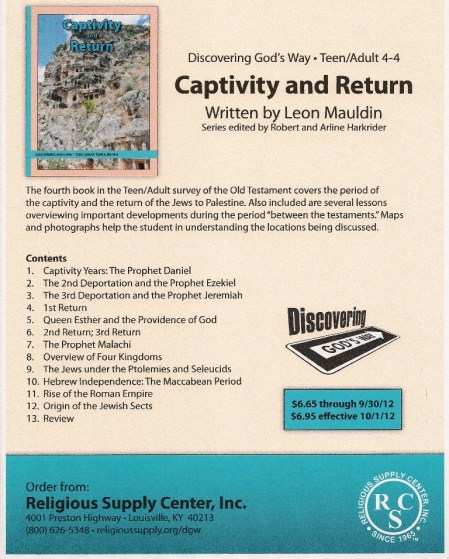
Table of Contents for Captivity and Return, by Leon Mauldin.
The captivity and return can be a challenging period of biblical history. It is hoped that this book will help contribute to a better understanding of these times, as well as provide some background for New Testament studies.
Toll free number for orders is 1-800-626-5348. It is $6.65 through 9/30/2012, and then $6.95. Price does not include shipping.
1 Comment | Bible History and Geography, Bible Study, Biblical Interpretation, Israel, Old Testament, photography, Resources, Uncategorized | Tagged: class curriculum | Permalink
Posted by Leon Mauldin
September 13, 2012
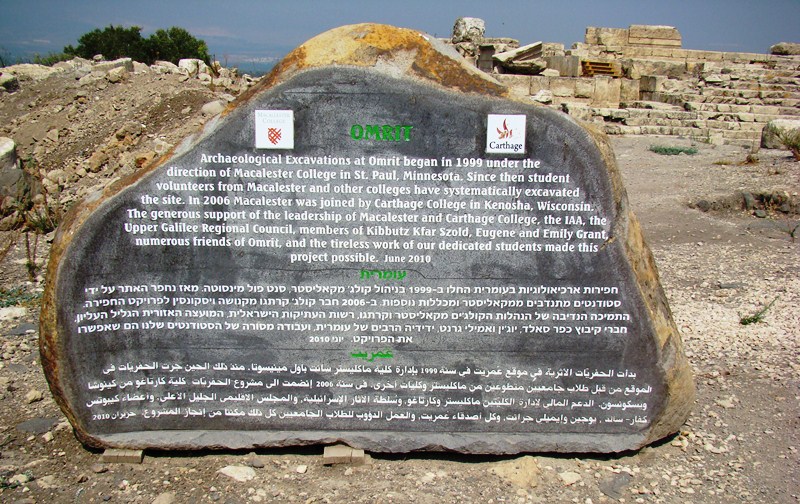
Archaeologists have determined there were three building phases at Omrit: first, the temple built by Herod the Great, second, the temple built probably by Trajan (AD 98-117), and third, an industrial complex to the north constructed in the Byzantine period.

Entrance to Omrit. Photo by Leon Mauldin.
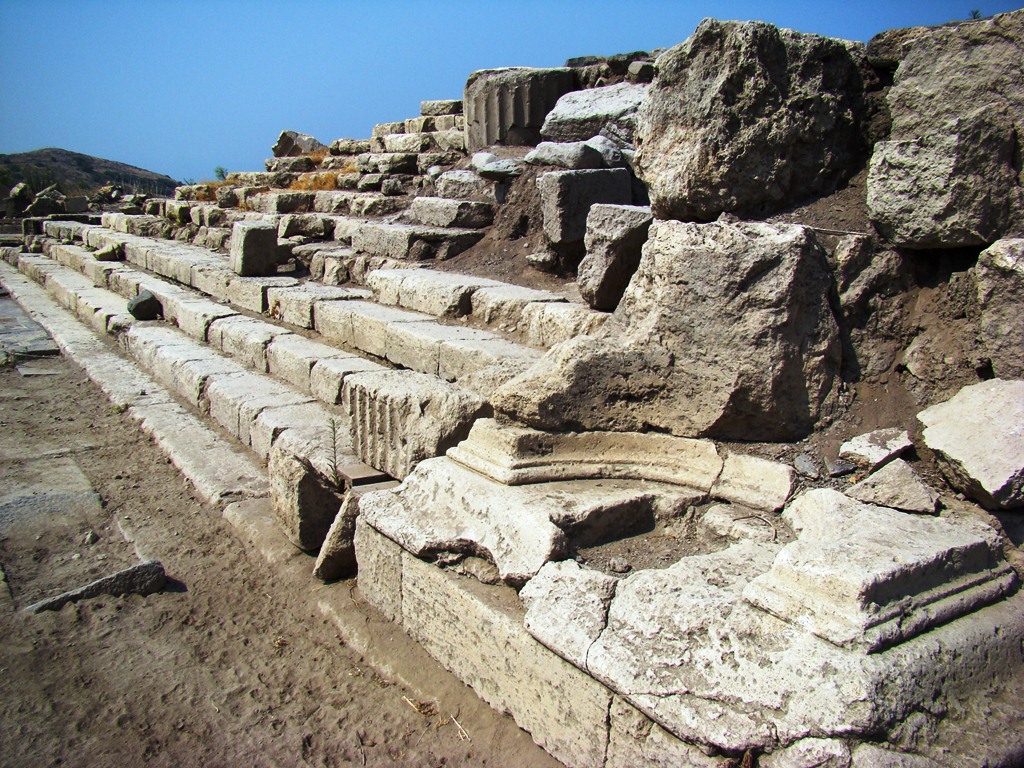
Here you can see the steps leading up to the temple. This site has been identified as a location for Imperial Cult Worship.

Steps to Imperial Temple at Omrit. Photo by Leon Mauldin.
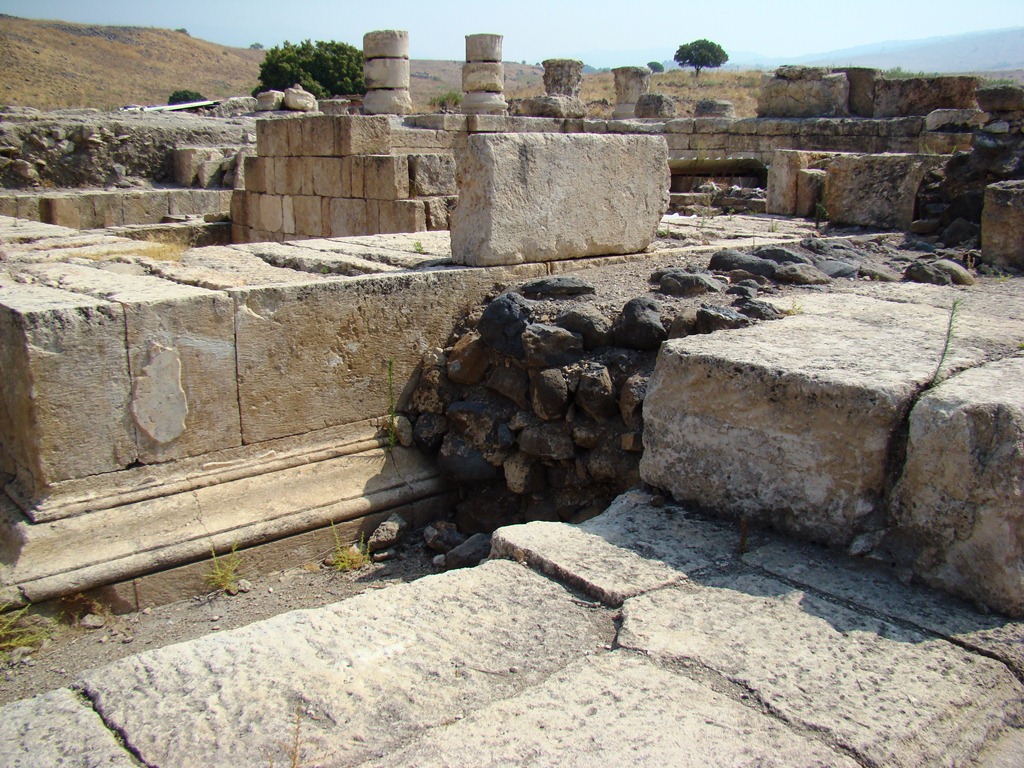
This photo shows the southwest corner of the temple. The large stones horizontally placed at center have been identified as Herodian. Herod was a politician and he overtly courted the favor of the Emperor Augustus.

Section of Herodian stones in Omrit Temple. Photo by Leon Mauldin.
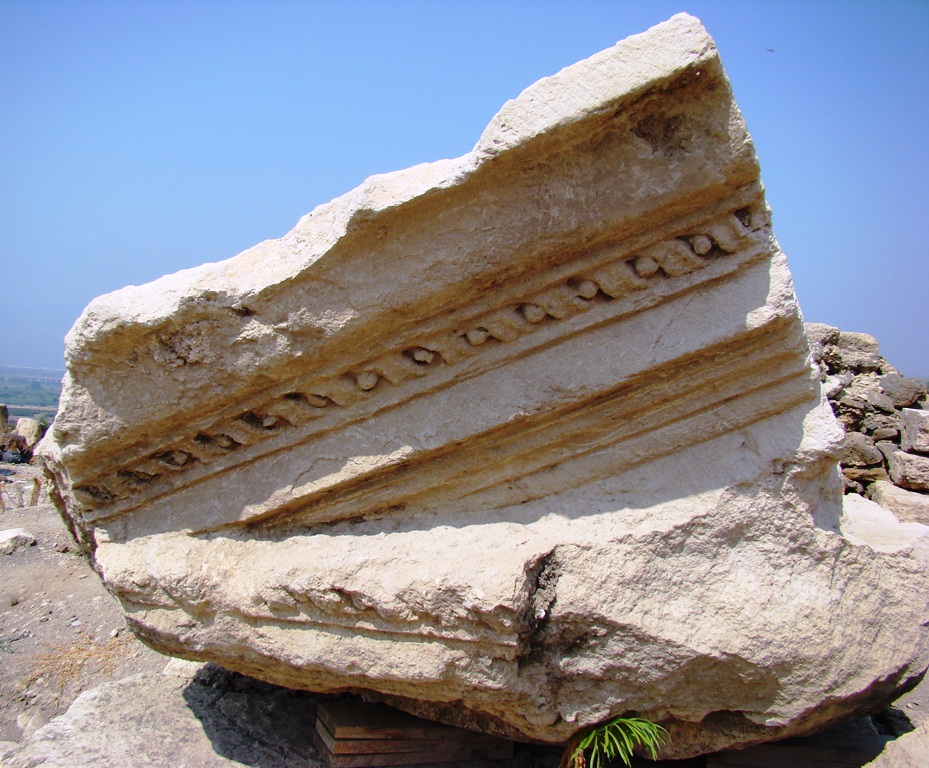
The site abounds with interesting architectural fragments.
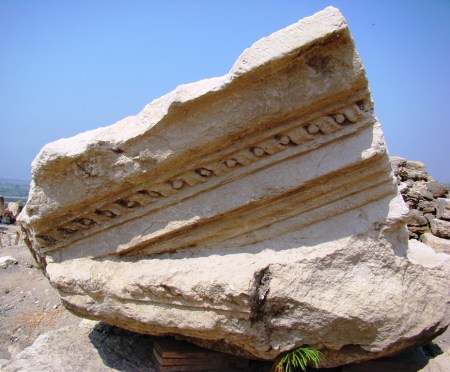
Architectural fragment at Omrit. Photo by Leon Mauldin.
Click on images for larger view.
1 Comment | Archaeology, Bible History and Geography, Bible Study, Israel, New Testament, photography, Roman Empire, Travel | Tagged: Omrit | Permalink
Posted by Leon Mauldin
September 11, 2012
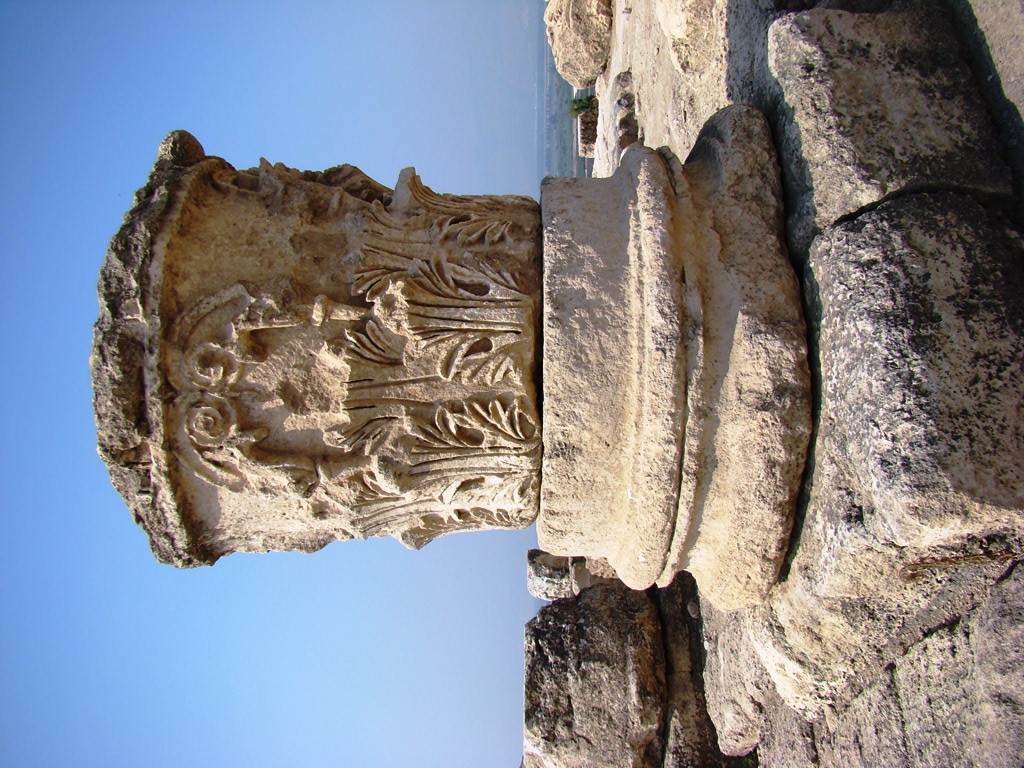
Among the interesting ruins at Omrit are several composite capitals. These are a combination of Corinthians and Ionic orders.
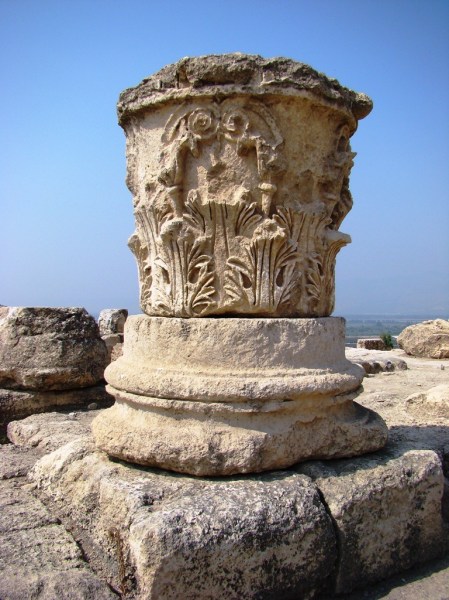
Composite Capital at Omrit. Photo by Leon Mauldin.
Note the beautiful acanthus leaves.
Omrit was destroyed by earthquakes in the 4th and 8th centuries AD.
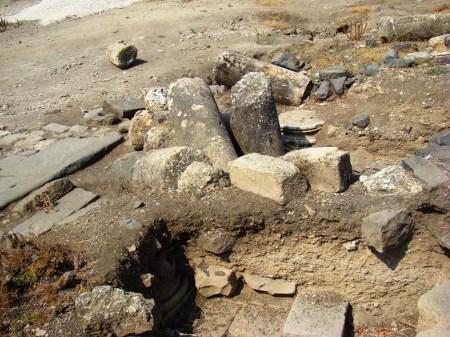
Evidence of Earthquake at Omrit. Photo by Leon Mauldin.
Click on images for larger view.
1 Comment | Archaeology, Bible History and Geography, Bible Study, Israel, New Testament, photography, Roman Empire, Travel | Tagged: Omrit | Permalink
Posted by Leon Mauldin
September 10, 2012
Omrit is located at the foothills of the Hermon Range, and is 2.5 miles from Caesarea Philippi (Banias). It was strategically situated near the crossroads of the Tyre-Damascus and Scythopolis (Beth-shean)-Damascus roads. Impressive remains of a temple devoted to Emperor worship may be seen here.

Herodian Imperial Cult Temple at Omrit. Excavators believe this temple was built by Herod to honor Caesar Augustus. Photo by Leon Mauldin.
I have enjoyed Dr. Carl Rasmussen’s recent posts re: Omrit. He said this was his “favorite site in Israel” (a statement I found very interesting) and just today posted another article on the site, dealing with Emperor worship that took place here in the Bible land. There are interesting implication of Peter’s confession that Jesus was the Christ, the Son of the living God so near a site where the Roman Emperor was worshiped as a “son of god.”
I was glad to visit this site this past September 2011, along with Ferrell Jenkins when he and I made a personal study trip at that time. BTW, Mr. Jenkins is currently directing a tour in Israel. You can follow their journeys here.
Leave a Comment » | Archaeology, Bible History and Geography, Bible Study, Israel, New Testament, photography, Roman Empire, Travel | Tagged: Omrit | Permalink
Posted by Leon Mauldin