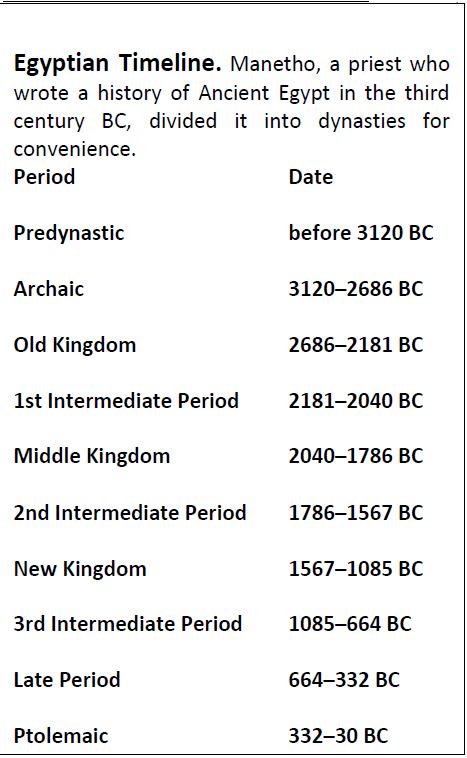
In this post we will give consideration to the first of the pyramid Builders, in the context of Egypt’s Old Kingdom (2686-2181 BC). For your convenience we share the following chart (keep in mind that dates are approximate and may vary):
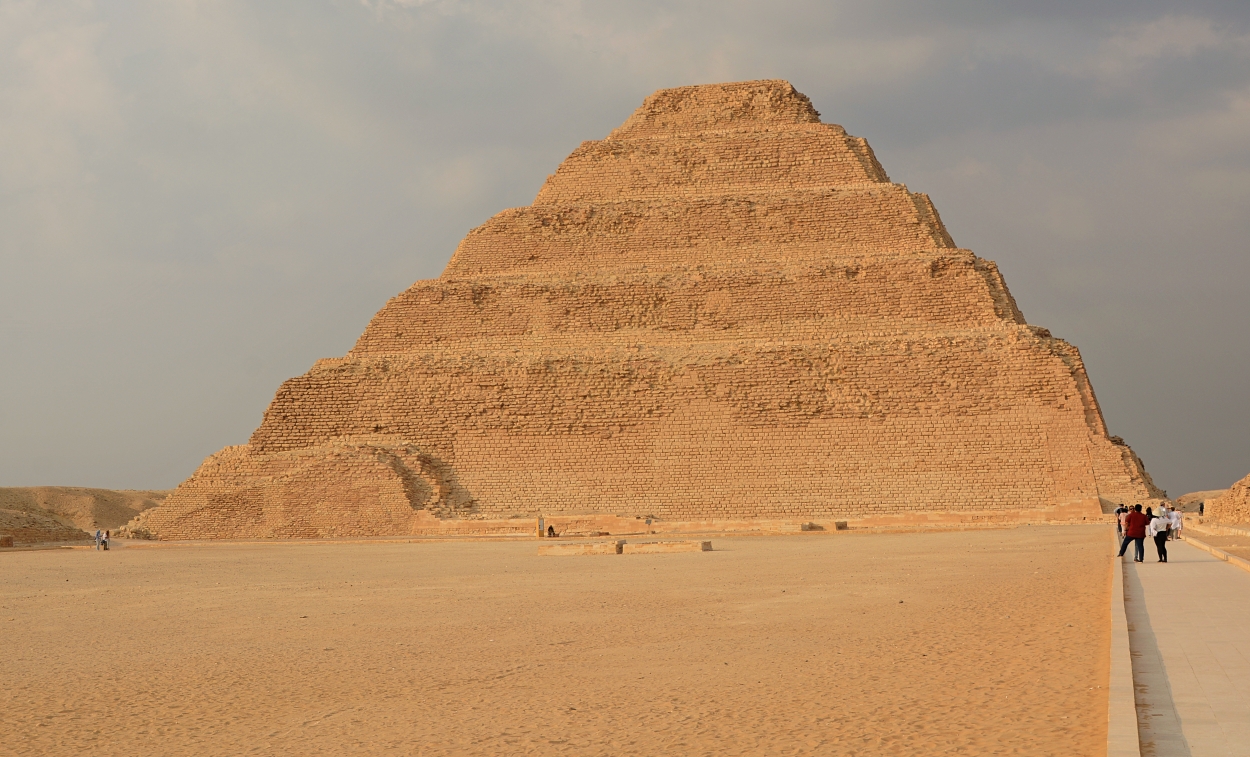
“Djoser’s pyramid and its surrounding mortuary complex is recognized as the first stone building in the world” (Chronicles of the Pharaoh’s, by Peter Clayton, p. 33), built by his vizier, Imhotep. Though begun “as a simple tomb, the structure was enlarged in height and breadth on five occasions, eventually rising to its present 197 feet. Unlike Egypt’s other pyramids, the Step Pyramid was built with comparatively small limestone blocks” (BAR Nov/Dec 1990, Richard Nowitz).
The pyramid, known as the Step Pyramid, began as a mastaba (an ancient Egyptian tomb rectangular in shape with sloping sides and a flat roof) “but was subsequently subject to several major enlargements, adding one mastaba upon another, until it consisted of six unequal steps rising t to 204 ft 962 m). Its base area is 358 X 411 ft (109 X 125 m)” (Clayton, p. 34).
The statue was found in a small chapel on the north face of the pyramid.
We should note that many have the mistaken notion that the Israelites were used as slave labor to build the pyramids. The pyramids were built some centuries before Israel came into being. They were built prior to the time of Abraham!
Having just returned from a 12-day tour of Egypt, I want to share some of our photos in upcoming posts, beginning with some from the Egyptian Museum in Cairo.
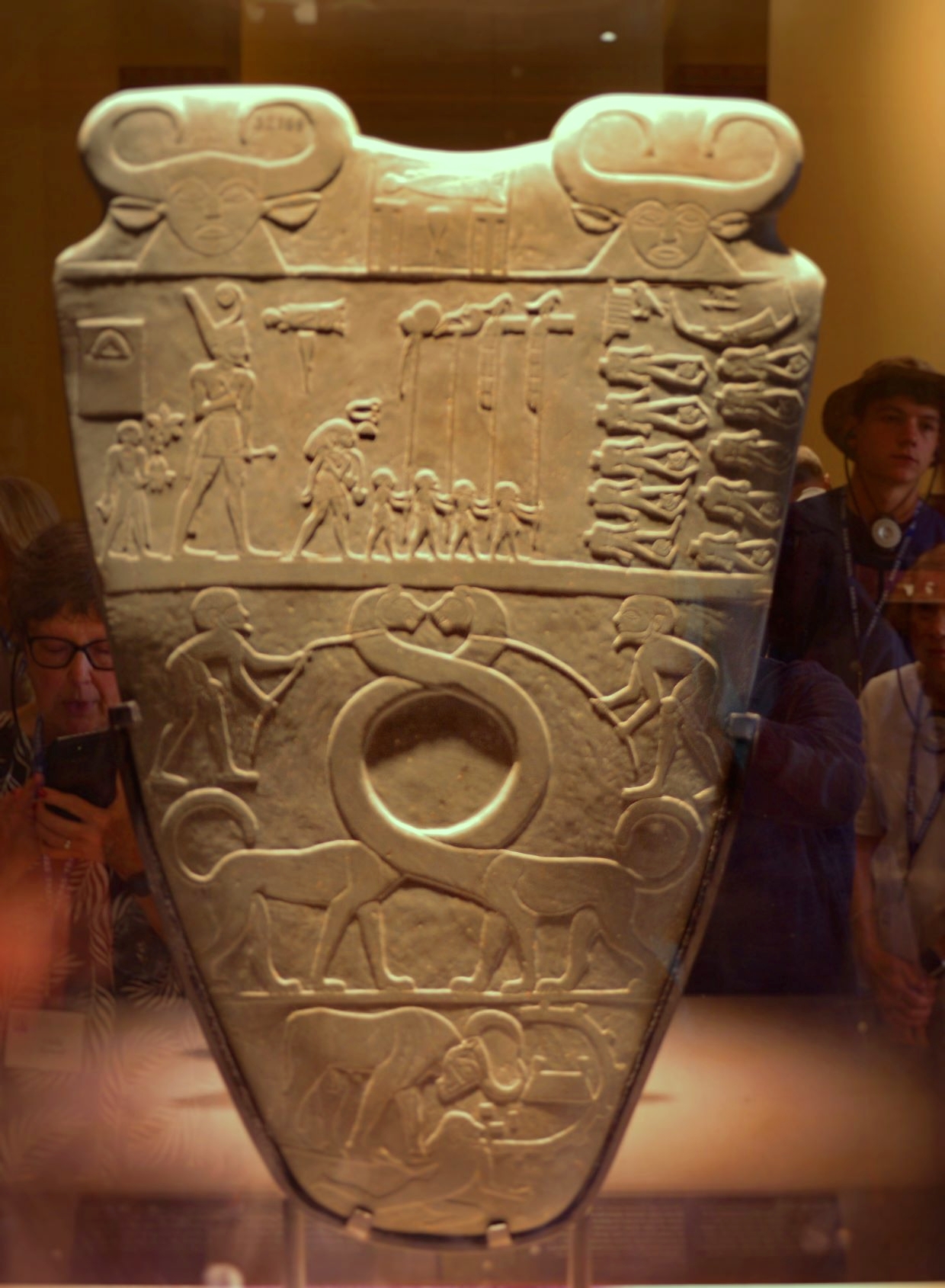
One of the very significant displays considered to be “of major artistic and historical importance” (Illustrated Guide to the Egyptian Museum, eds. Bongioanni and Croce, p. 28, discussed in “Protodynastic and Predynastic Periods”) is the Narmer Palette. This votive tablet “is the earliest record from Egypt (Chronicle of the Pharaohs, Clayton, p.18).
Gary Byers wrote:
More than 100 years ago, archaeologists excavated an ancient Egyptian temple in the Upper Egyptian city of Hierakonpolis. Here they discovered a stone palette used to grind cosmetics, with carving on both sides. One side had the picture of a man wearing the crown of Upper Egypt, and the other side had a man wearing the crown of Lower Egypt. Scholars decided the picture on each side was the same man, and his name was Narmer. This was the earliest representation of anyone wearing the crowns of both Upper and Lower Egypt. It suggests that this was the first king of a united Egypt.
Byers, G. A. (2003). The Scorpion King. Bible and Spade, 15(3), 28.
The hieroglyphs of the royal name are a mud fish depicted horizontally above a vertical chisel, read as the name of Narmer (Chronicles, 18). He is shown in as wearing the White Crown of Upper Egypt (the hedjet) and the Red Crown of Lower Egypt (dishret), indicating that he is now king of both lands, i.e., the unification of the country is commemorated. Narmer is presented as a victorious king, smiting a prisoner with his mace. This became an icon of majesty from ancient Egyptian history down to Roman times.
At the top are facing heads of the cow-faced goddess Hathor. The Horus falcon is depicted in front of Narmer.
On the obverse of the Palette the king is escorted by officials towards two rows of decapitated corpses.
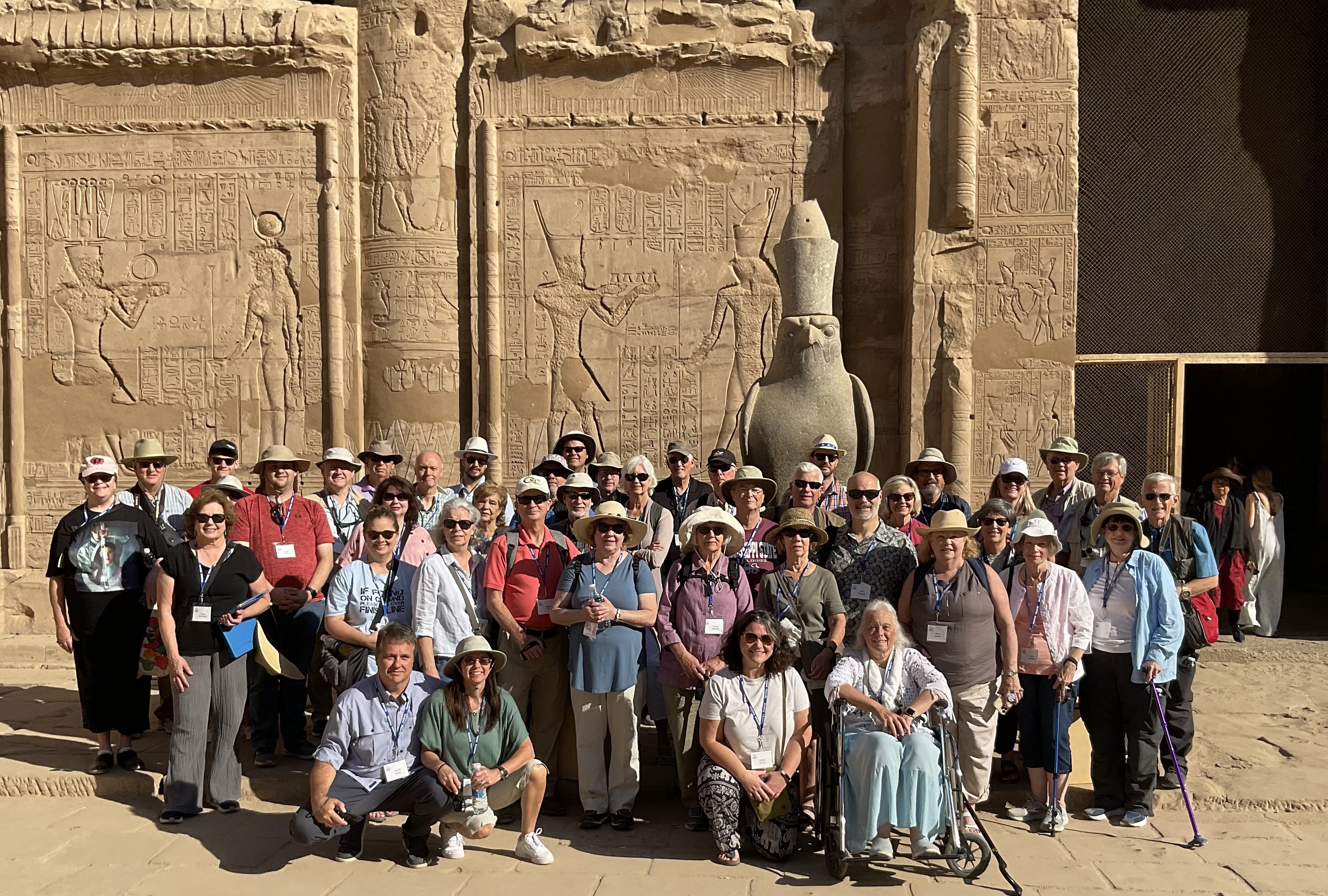
This is a photo of our group at the well-preserved Ptolemaic Temple of Horus at Edfu. In Egyptian mythology, Horus, the Falcon-headed god, was the son of Osiris and Isis. 
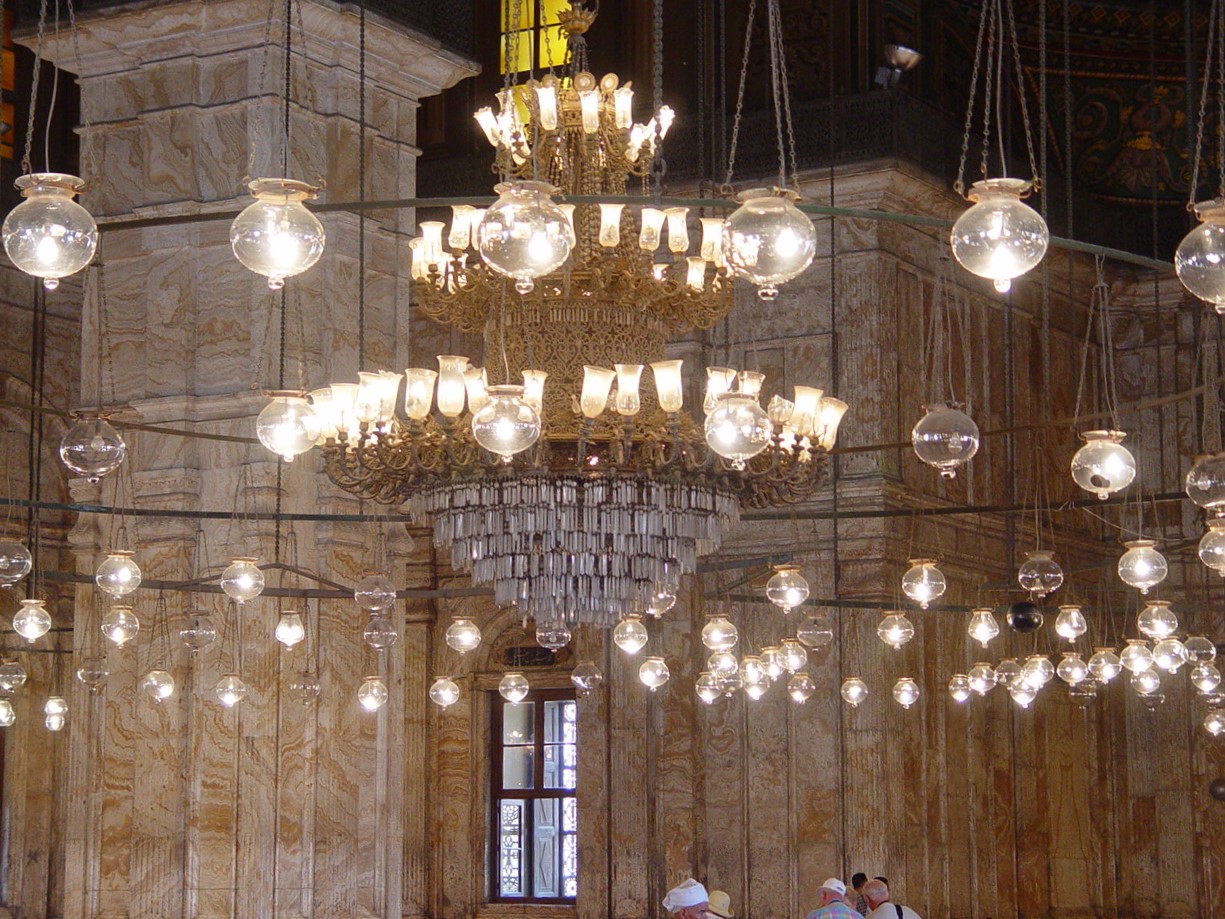
One of the most visible mosques in Cairo is the Mosque of Muhammad Ali Pasha, located in the Citadel. Muhammad Ali, who reigned in Egypt 1805-1849, built the mosque. At the height of his power, he controlled Egypt, Sudan, Hejaz and the Levant. He permanently ended the Mamluk hold over Egypt.
The mosque is located inside the Citadel of Saladin. This mosque is also called the “Alabaster Mosque” due to its marble paneling on both its interior and exterior walls. It is built on the Turkish style, specifically the architectural style of the Ottomans, and consists of an open court and prayer hall. The main building material is limestone, likely “recycled” from the Great Pyramids of Giza.
Our photo here shows the interior courtyard and the fountain for washing:
Yesterday (September 14, 2022) marked the 200th anniversary of the date that Jean-François Champollion (1790–1832) cracked the code of the Egyptian hieroglyphic script. The granodiorite stela, which dates to 196 BC, is written in Egyptian hieroglyphic, demotic (cursive Egyptian) and Greek, and is displayed in the British Museum. Previously I posted an article here.
The Biblical Archaeology Society made an informative post yesterday — click here.
Fant and Reddish have the following information:
The Rosetta Stone is the most visited object in the enormous British Museum, viewed by millions of visitors since it was first displayed to the public in 1802. It has been called “the most famous piece of rock in the world.” Unlike many famous ancient artifacts, such as the King Tut treasures, the fame of the Rosetta Stone does not derive from its intrinsic value or beauty, nor from the message of its inscription, as is the case, for example, with the Code of Hammurabi. Yet this inscription has yielded incalculable value for an understanding of ancient history, as it provided the key to unlocking the mystery of Egyptian hieroglyphics. As a result, scholars have been able to decipher the meaning of countless historical writings previously lost to civilization. The inscription itself is unremarkable, a flattering decree issued by the priests of Memphis that granted a royal cult to the young King Ptolemy V, only thirteen years old at the time, in exchange for certain favors. It was written in three languages, representing the languages used by the powerful and literate groups of Egypt at that time: hieroglyphics, understood stood and used only by the priestly class; demotic, the cursive script used by the literate population at that time; and Greek, the language of the ruling government. Since ancient Greek was a language understood by modern scholars, the discovery of the Rosetta Stone enabled them to compare the Greek letters against the hieroglyphic signs and therefore solve the mystery of hieroglyphics.
(Clyde E. Fant; Mitchell G. Reddish. Lost Treasures of the Bible: Understanding the Bible through Archaeological Artifacts in World Museums. Kindle Locations 587-592).
The Lexham Bible Dictionary makes the following observations:
In addition to renewing interest toward Egypt, Napoleon’s expedition to Egypt resulted in the recovery of the Rosetta Stone, which would prove to be of immense importance to the future of Egyptology (Pope, Decipherment, 60). The Rosetta Stone was commissioned by Ptolemy V in 196 BC, and featured a message written in Egyptian hieroglyphs, Demotic (a cursive form of Egyptian), and Greek (Pope, Story, 62). The triscript monument would provide the key to deciphering the previously unintelligible Egyptian language.
Prior to the discovery of the Rosetta Stone, linguists had hypothesized that Coptic (which could be read) was a late form of Egyptian, some hieroglyphs were consonantal, and cartouches demarcated royal names. Several scholars used this information and the Rosetta Stone to decipher Egyptian language. English linguist T. Young made great strides toward deciphering Egyptian, but he was impeded by his belief that hieroglyphs were mostly symbolic rather than phonetic (Bard, Introduction, 33). French philologist J. Champollion proved most successful. His identification of the name Ptolemy in the hieroglyphic portion of the inscription enabled him to begin compiling a list of consonantal hieroglyphic signs. Soon he successfully detected the name Cleopatra on an obelisk from Philae as well as the name Xerxes on a Persian vase inscribed with both hieroglyphs and Persian cuneiform (Pope, Decipherment, 70–75). He published his findings in Precis du systeme hieroglyphique in 1824 (Pope, Story, 76). Subsequent linguists expanded on Champollion’s work, and by the end of the 19th century, scholars were producing translations of entire Egyptian texts.
The decipherment of hieroglyphs was a vital element in the progress of Egyptian archaeology. Egyptian tombs, temples, and public monuments were usually inscribed with a record of who built them and why (see Chavalas and Hostetter, “Epigraphic Light,” 53–58). Funerary texts were written both on the walls of tombs and on scrolls placed within them. Excavators were no longer dealing with just stones, statues, and pots, but with intelligible texts.
Harmon, J. A. (2016). Egypt, Archaeology of. In J. D. Barry, D. Bomar, D. R. Brown, R. Klippenstein, D. Mangum, C. Sinclair Wolcott, L. Wentz, E. Ritzema, & W. Widder (Eds.), The Lexham Bible Dictionary. Lexham Press.
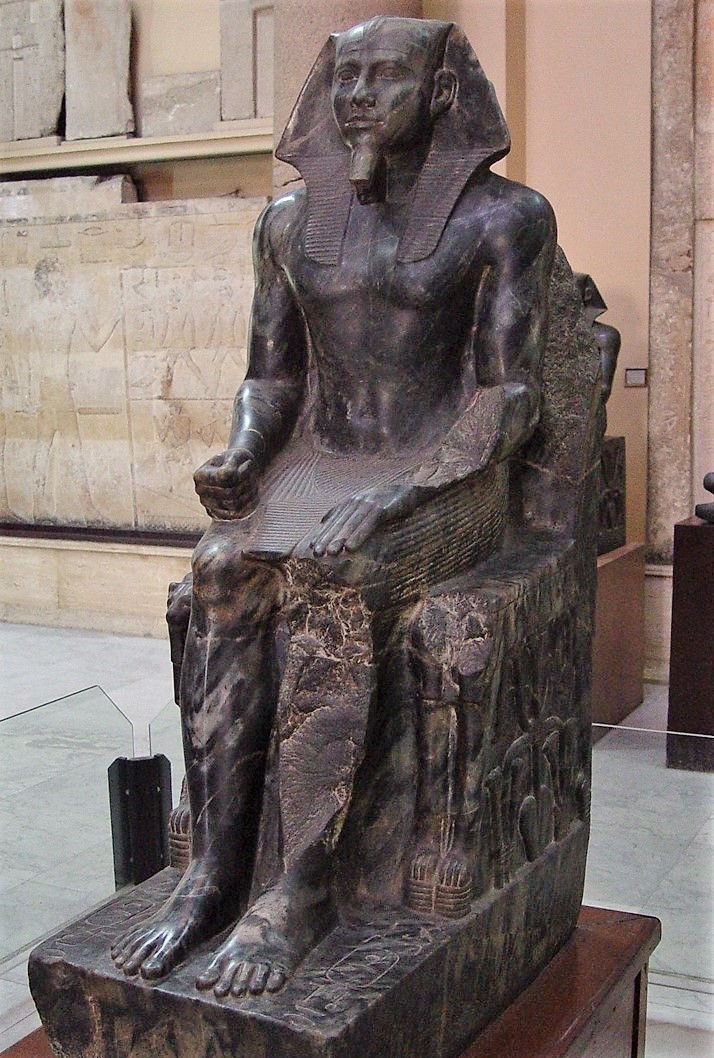
Chephren was pharaoh during Egypt’s 4th dynasty, reigning ca. 2520-2494 BC. He was the son of Cheops (builder of the Great Pyramid), and builder of the second pyramid at Giza. He is also the creator of the Great Sphinx.
This life-sized statue is housed in the Egyptian Museum in Cairo, having been discovered by Auguste Mariette in 1860, in Chephren’s valley temple at Giza. It is made of diorite, a high quality stone. On the stature throne are carved symbols of royalty, the lion paws on the front, and on the sides are displayed the symbol of the sema-tauy, representing the uniting of Upper and Lower Egypt.
Chephren’s feet are bordered by his cartouche. On the back of the royal headdress is the falcon god Horus, god of dynastic divinity in Egyptian mythology. It was believed that Pharaoh was the representative of Horus on earth, while the god manifested himself in the person of the Pharaoh, the living Horus.
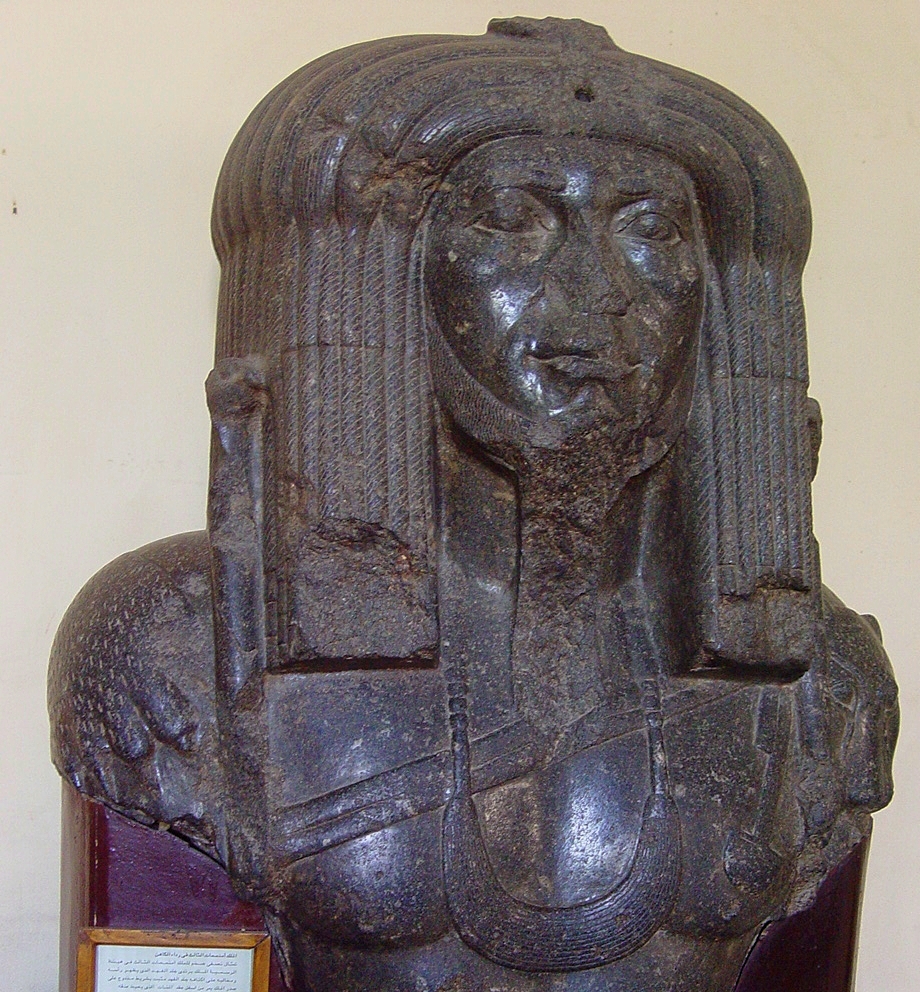
In our previous post we featured the Sphinx of Amenemhat III (ca. 1859-1813), who ruled during the time of the biblical patriarchs. This unique colossal bust of Amenemhat III was found on the site of the ancient capital of The Fayum, Shedet (the Crocodilopolis of the Greeks). The Pharaoh is dressed in a panther skin, with its head and paws lying on the king’s shoulders. A double band across his chest passes under the menat collar worn about his neck. The upper portion of two scepters terminating in falcon heads are visible on each side of his head.
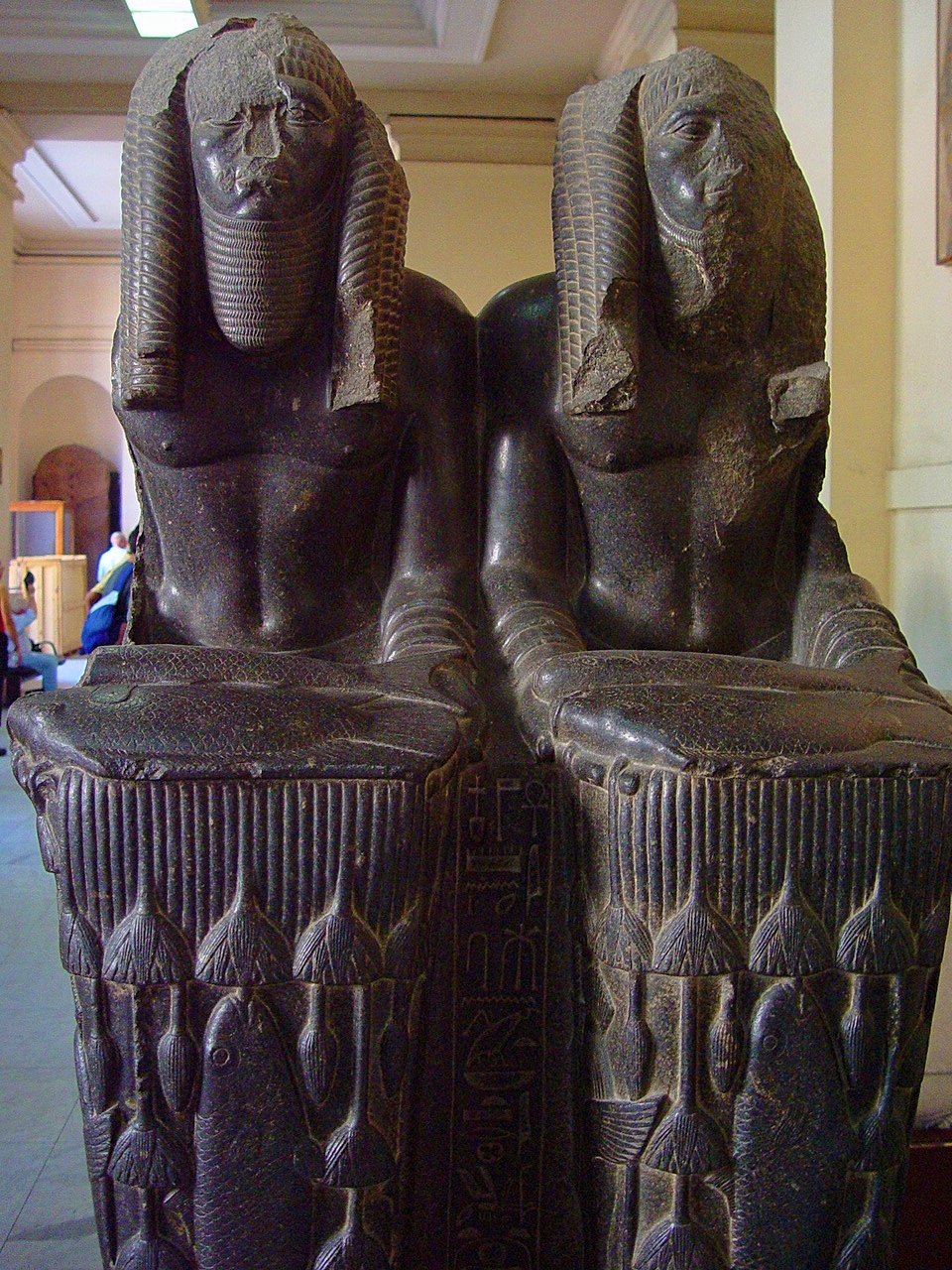
In this double statue, Amenemhat III is represented as the Nile god bearing all the nourishment indispensable to life. One explanation of the doubling of the king is that the two figures represent him as ruler of both Upper and Lower Egypt. Others suggest that one image depicts the reigning king and the other his deified counterpart.
During his long reign, Amenemhet III had almost continual turquoise mining expeditions in the Sinai. More than fifty rock inscriptions have been found there referencing this. He was the last great ruler of the Middle Kingdom.
The Egyptian Museum in Cairo displays the sphinx of King Amenemhet III, who ruled in the Middle Kingdom, 12th dynasty. This is one of seven sphinxes of Amenemhat III that were found in Tanis in the eastern Delta.
The sphinx has the head of the king and the body of a lion, symbolizing the vitality and power of the pharaoh.
Amenemhet III reigned for 45 years (ca. 1859-1813 BC), which included a long coregency with his father Sesostris III. Dr. Douglas Petrovich states:
The major project of his reign was the reclamation of more arable land in the Fayyum by manipulating the water level of Lake Moeris, which led to his veneration in the Fayyum. His long and peaceful reign is viewed as the time when the MK [Middle Kingdom] reached its cultural peak. He also strengthened the border at Semna and enlarged some of the fortresses, in addition to constructing a large temple to Sobek at the site of Crocodilopolis, in the Fayyum.
(Origins of the Hebrews, p. 13).
Petrovich identifies Sesostris III (ca. 1878-1840 BC) as the pharaoh of the famine at the time Joseph (Ibid., 29). The patriarch Jacob’s death is dated as 1859 BC (Ibid., cf. Andrew E. Steinmann, From Abraham to Paul, p. 74). “Amenemhet III ascended the throne as coregent with his father in ca. 1860/59 BC, which took place either just before so soon after Jacob’s death” (Petrovich, 29).
This statue of Rahotep and Nofret was found in a mastaba (early Egyptian tomb, rectangular in shape) near the pyramid of Meidum, Egypt (south of Cairo), and is dated to Egypt’s early 4th Dynasty (ca. 2680-2544 BC). Cemeteries consisting of large brick-built mastabas (about a dozen) are located to the north and east of the pyramid. The pyramid was probably begun by Huni, the last ruler of the 3rd Dynasty, but it believed to have been completed by Snofru (Sneferu).
The Sept/Oct 1989 issue of Biblical Archaeology Review (15:5) has this information:
Eerily lifelike, the superbly preserved, painted limestone statues of Rahotep and Nofret (see photograph) illustrate a pitfall in the use of artworks to assess racial characteristics. Rahotep’s reddish brown skin and Nofret’s yellowish white color, rather than being realistic portrayals, reflect artistic conventions of the Old Kingdom period (c. 2755–2230 B.C.E.). At that time, these were the usual colors used respectively for representations of men and women. Despite their skin colors, Rahotep and Nofret’s features are typically Egyptian.
Found in a private tomb near the pyramid of Pharaoh Sneferu (c. 2680–2640 B.C.E.), the sculptures depict a couple of the king’s courtiers. Prince Rahotep, probably a son of Sneferu, wears a wig and sports a thin moustache; his name and titles—High Priest of Re at Heliopolis, Director of Expeditions and Chief of Construction—appear in the painted hieroglyphs. Rahotep’s wife, Nofret, also wears a wig, and the hieroglyphs on her statue call her “one known to the king.”
I have several posts on Egypt. Go to search box on upper right and enter “Egypt.”


 Posted by Leon Mauldin








 leonmauldin.blog