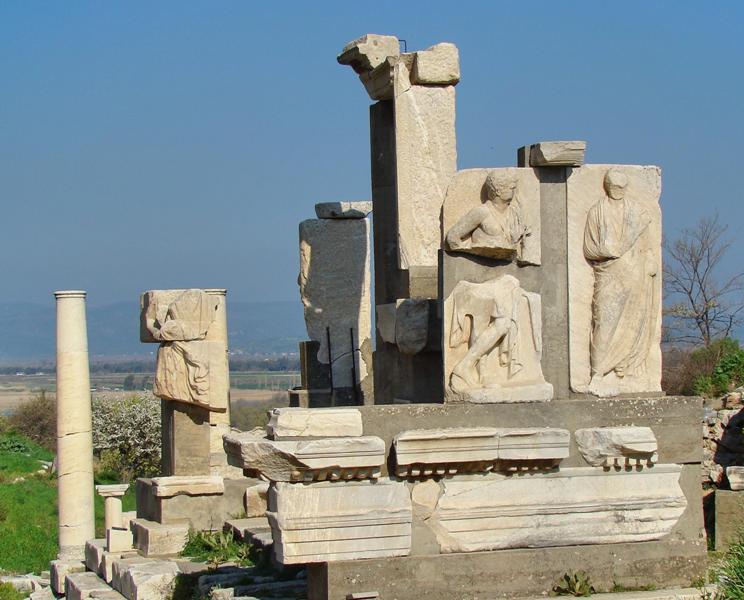
Biblical Ephesus: Harbor Street and Artemis Temple

April 16, 2010

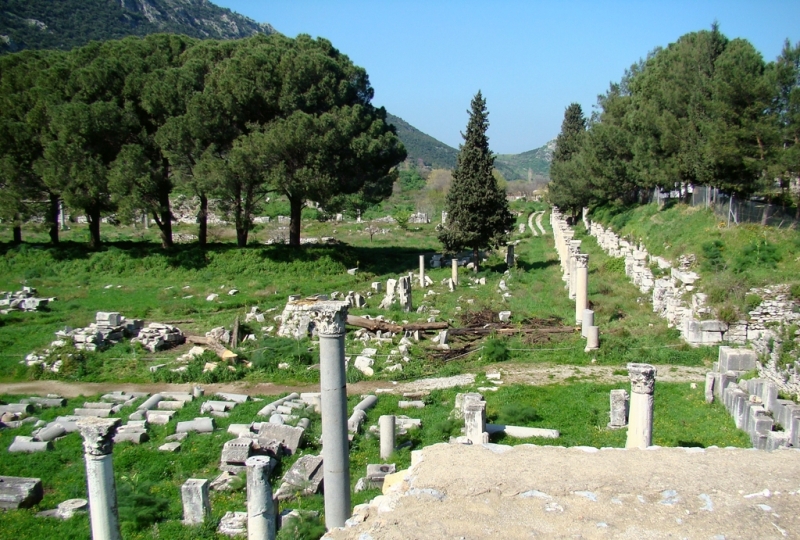
The main street providing access from Ephesus’ harbor to the city is known as the Harbor Street, also the Arcadian Way, after Emperor Flavius Arcadius (reigned A.D. 395-408).  When Paul boarded a ship from Ephesus, or landed at Ephesus and then went into the city, this is the street he would have used.

Harbor Street Ephesus. Photo by Leon Mauldin.

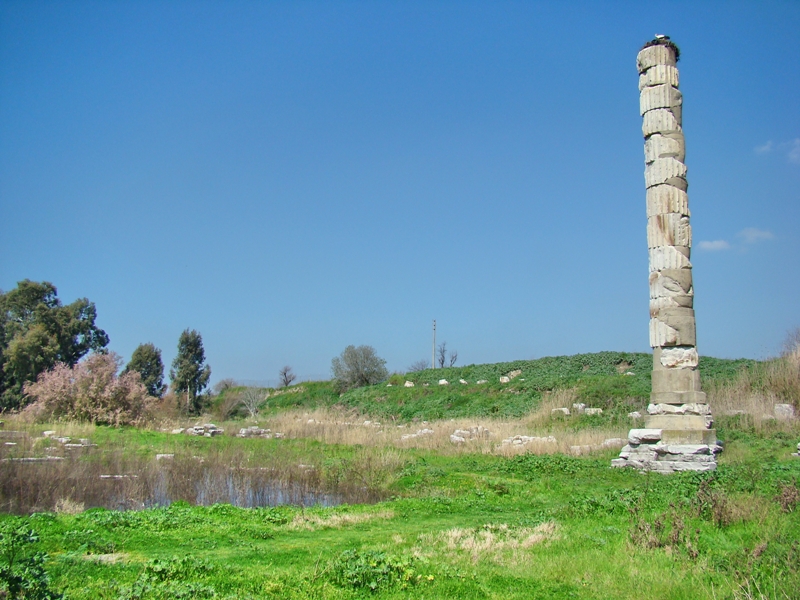
Not much is left of the temple of Artemis, what was at one time one of the Seven Wonders of the World.  A lone column remains, with a stork’s nest on the top.  You can see somewhat of the basic rectangular outline of the temple in our photo.

Artemis Temple. Photo by Leon Mauldin.

In the Ephesus Museum one may see some of the Artemis’ statues, such as the one in this photo:

Artemis Statue. Ephesus Museum. Photo by Leon Mauldin.


Ephesus: Library and Agora

April 15, 2010

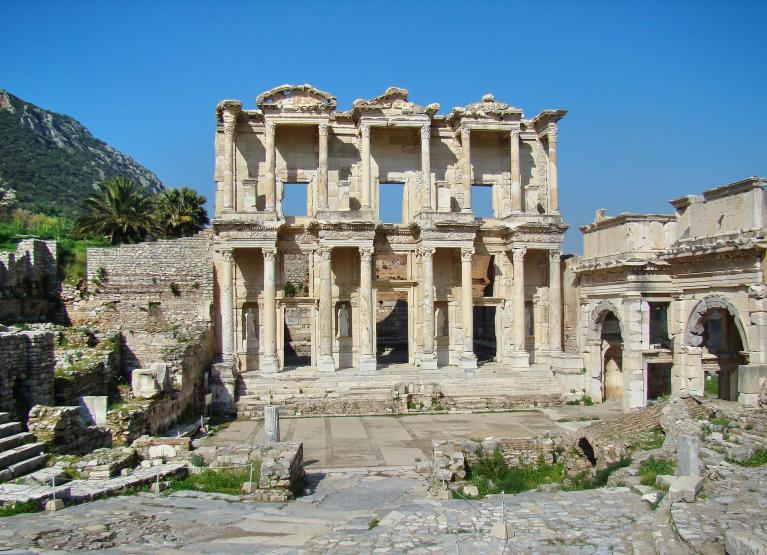
One of the more impressive sites at Ephesus is the Celsus Library.  It was originally built in A.D. 110, by Consul Gaius Julius Aquila, in honor of his father, Gaius Julius Celsu Polemaeanus, governor of Asia A.D. 105-107.

Some suggest that the school of Tynannus may have been located to your left (Acts 19:9).
Next we look at the commercial agora (market place), where the craftsmen, including silversmiths and others, would have had their shops.
Apparently it would have been in this area, for example, where Demitrius the silversmith worked.  Luke tells what happened in Acts 19:
24 For a man named Demetrius, a silversmith who made silver shrines of Artemis, brought a great deal of business to the craftsmen. 25 He gathered these together, along with the workmen in similar trades, and said, “Men, you know that our prosperity comes from this business. 26 And you see and hear that this Paul has persuaded and turned away a large crowd, not only in Ephesus but in practically all of the province of Asia, by saying that gods made by hands are not gods at all. 27 There is danger not only that this business of ours will come into disrepute, but also that the temple of the great goddess Artemis will be regarded as nothing, and she whom all the province of Asia and the world worship will suffer the loss of her greatness.” (NET)
One lesson which continues to be reinforced as we visit biblical sites is the reliability of the scriptures.  Always remember that the Bible deals with real people, real places, and real events.  The Bible is fact, not fiction!

Scenes from Ephesus

April 14, 2010

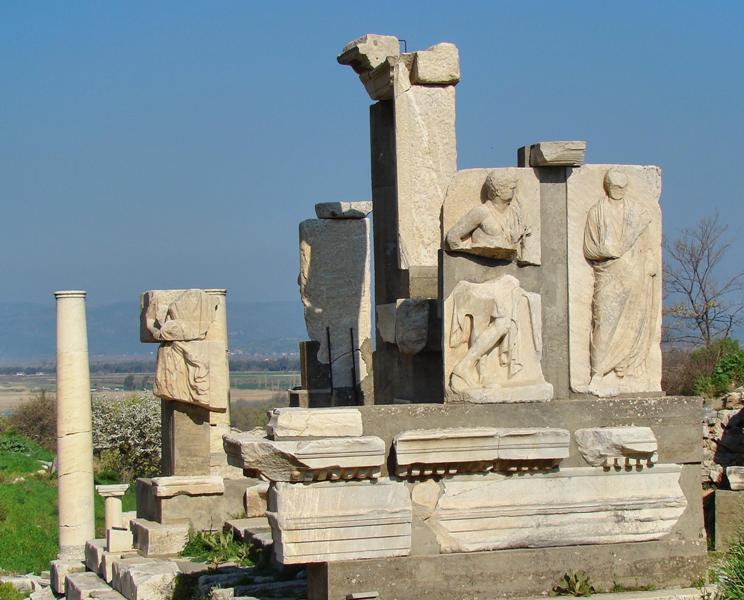
As you continue further on Curetes Street, across from the Domitian Square, you see the Memmius Monument. This four sided victory arch was erected by Gaius Memmius, son of Caius and grandson of Sulla, as a memorial of Sulla’s military victory over Mithridates. Mithridates, king of Pontus, had 90,000 troops, while Sulla’s forces numbered only 30,000. The Battle of Chaeronea (in Greece) took place in 86 B.C.  We include this info not because it is directly related to the Bible, but to remind us that numerous struggles and upheavals were occurring as God was working out the unfolding of His plan, as the “fullness of time” for Jesus to come was approaching (Gal. 4:4).

Memmius Monument. Photo by Leon Mauldin.

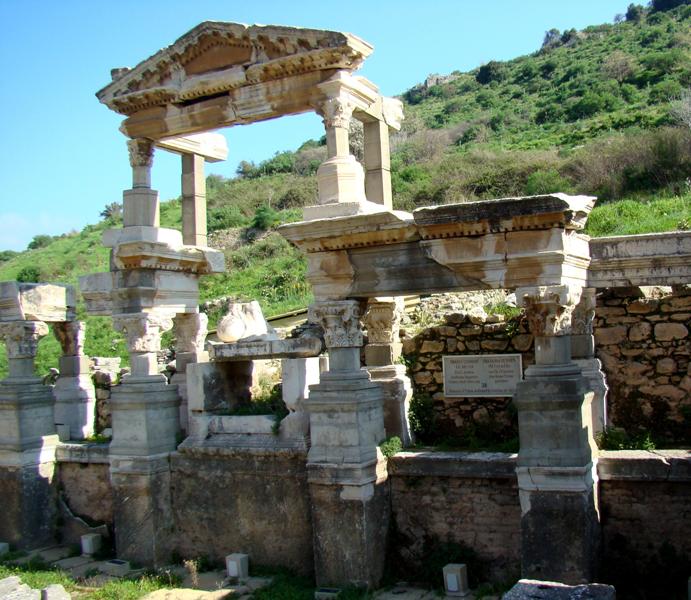
Another structure of interest is the Trajan Fountain, dedicated to the emperor Trajan (reigned A.D. 98-117).  The fountain was built  A.D. 102-104. For what it’s worth, Michael Grant writes, “Trajan was a tall and well-built man, with an air of serious dignity enhanced by early greyness” (The Roman Emperors, p.75).

Trajan Fountain. Photo by Leon Mauldin.

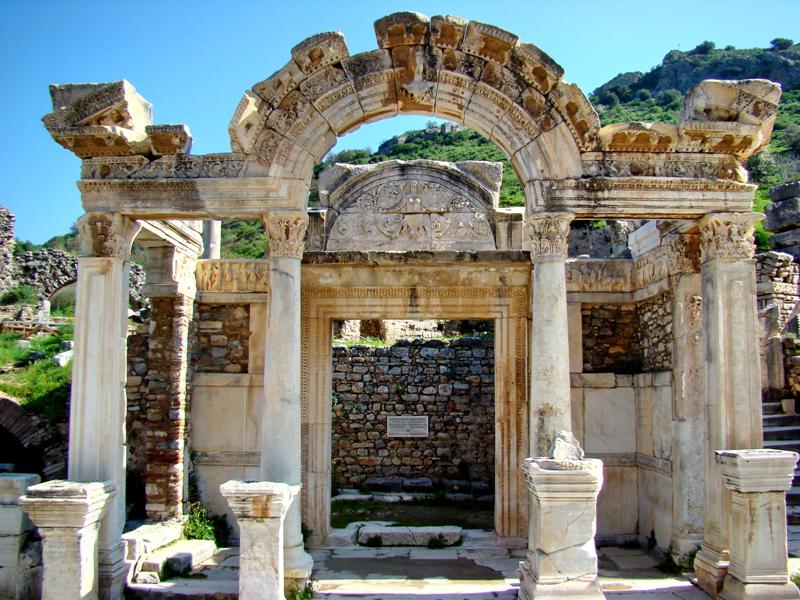
One more Ephesus photo for today is the Hadrian Temple. Emperor Hadrian reigned A.D. 117-138.

Hadrian Temple. Photo by Leon Mauldin.

The “Second Revolt” (A.D. 132) of the Jews took place during Hadrian’s reign.  Michael Grant observes,

For Hadrian, whose cosmopolitan outlook was unsympathetic to Jewish separatism, had established a Roman colony and temple in Jerusalem, now renamed Aelia Capitolina after his own Aelian family; and this foundation caused great anger among the Jews, who in 132 broke into open insurrection under an inspiring leader, Simeon Bar Kosiba (nicknamed Bar Kochba, ‘son of a star’).  The rebels took Jerusalem and issued their own coinage, and it took three years to overcome their uprising.  During this period the emperor visited Judaea, once if not twice, and he is likely to have been present when Jerusalem finally fell in 134.  The surviving militants were rounded up at Bethar the following year, and severe measures of reprisal included a total prohibition of circumcision. (ibid.79).


Ephesus Curetes Street

April 11, 2010

We continue to share some photos from the biblical city of Ephesus, the focal point of Paul’s 3rd journey, and one of the seven churches of Asia addressed by the Lord through the Apostle John in the book of Revelation.

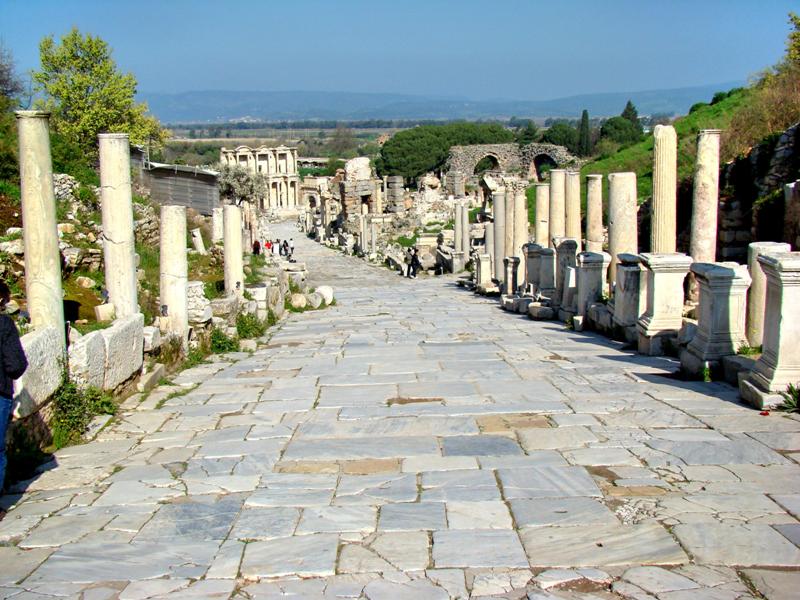
When you travel to Turkey in March as my group just did, you take some risk of rain and cold, and we had some of both the first portion of our trip.  On the other hand, usually the sites are not as crowded.  Ephesus is one of the most frequented sites in Turkey, and can be very crowded at times.  Our photo of Curetes Street gives you a good view without throngs of people.

Ephesus Curetes Street. Photo by Leon Mauldin.

Curetes Street received its name for the inscriptions  naming the curetes, that is, the priests, of Artemis.  Fountains, monuments, statues and shops would have lined the street.  The street itself measured 11 meters wide.  In the distance in our photo you can see the Celsus Library.

In yesterday’s post we mentioned how Ephesus was named as the Neokoros, the temple keeper.  Ephesus was a center of the Imperial Cult, Caesar worship.  Note the inscription below.

Ephesus Neokoros Inscription. Photo by Leon Mauldin.

In the center of this Grecian inscription in the 3rd line down are the words “Neokoroi” and “Ephesion” (Left click on image for larger view).  Sometimes people think if they could have lived back when Jesus was on earth, or in the days of the apostles, it would have been easier then to be faithful to the Lord.  The reality is that those who lived in the first century and the years immediately following had some very difficult and challenging times, including the pressure to cave in to the worship of the Imperial Cult.

I mentioned previously there is so much to see at Ephesus.  More photos to come!


Domitian’s Temple in Ephesus

April 10, 2010

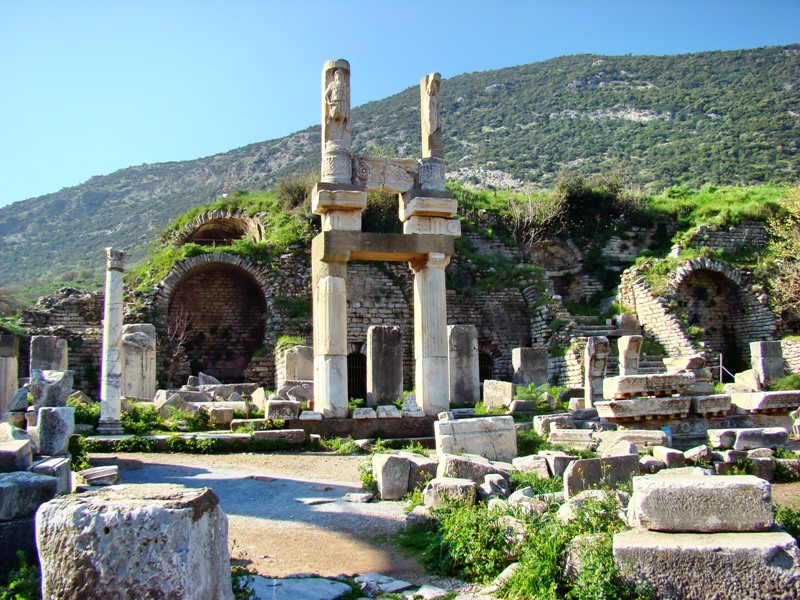
Today’s photo features the emperor Domitian’s temple in Ephesus.  It was considered a high honor for a city to be designated as the neokoros, the temple warden, and Domitian, Roman emperor A.D. 81-96, granted Ephesus that great “privilege.”

Domitian Temple and Square in Ephesus. Photo by Leon Mauldin.

M. Bredin writes, “The imperial cult in Ephesus became particularly prominent in Domitian’s reign.” (Jesus, Revolutionary of Peace: A Nonviolent Christology in the Book of Revelation p.122). I hope to write more in the future regarding the imperial cult and its implications for early Christians.

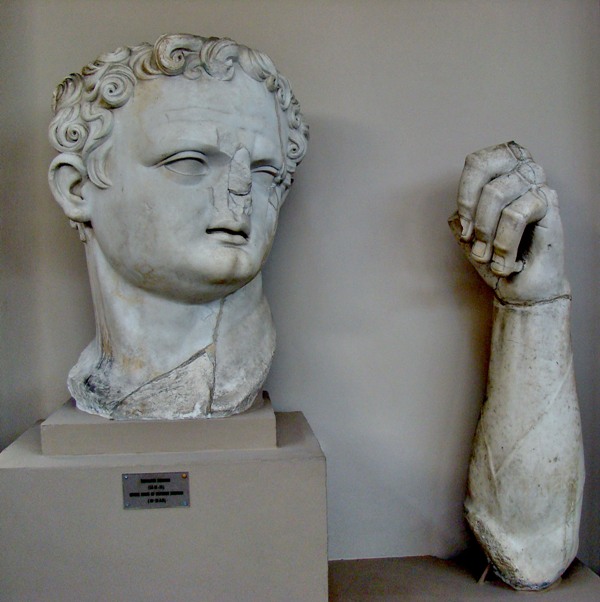
To show their gratitude for being designated as the Temple Warden, the Ephesians built a statue of Domitian which stood five meters tall, portions of which may be seen at the Ephesus Museum.

Domitian Statue. Ephesus Museum. Photo by Leon Mauldin

The time of writing of the book of Revelation seems to be during the latter part of the reign of Domitian.  Christians were severely persecuted during his regime.  Each of the seven churches were promised great blessings, if they would “overcome.”


Scenes from Ephesus

April 8, 2010

Ephesus was the most important city of the Roman province of Asia.  The Apostle Paul preached here longer than any other city, working here three years during the Third Missionary Journey (Acts 20:31).  The message of the gospel radiated out from this principle city: “…so that all who lived in the province of Asia, both Jews and Greeks, heard the word of the Lord” (Acts 19:10).

The church in Ephesus was one of seven churches specified in Revelation 2-3 as recipients of letters from the Lord.  It is sobering to realize that a church that had such a promising beginning, and continued to have such good traits, had in fact left its first love (Rev. 2:4).

Ephesus today is a remarkable site; so much excavation has been done, and there is so much to see. We want to share some photos in today’s post, as well as others to follow, from last month’s visit to Ephesus.

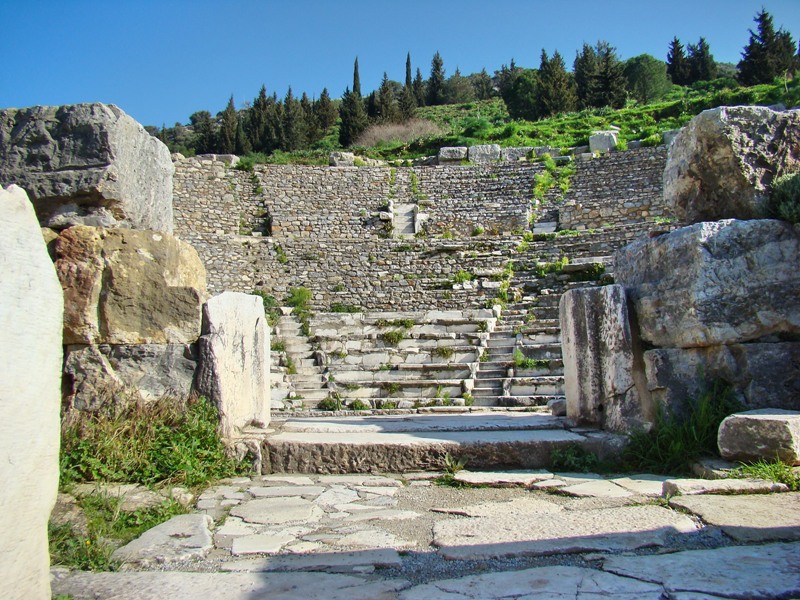
Ephesus Odeion. Photo by Leon Mauldin

The seating of this small theater, the odeion, is 1400-1500. It was built by Publius Vedius Antoninus ca. A.D. 150.  It was used for concerts, and as a meeting place for the city council meetings.

Next we make our way to the prytaneion.

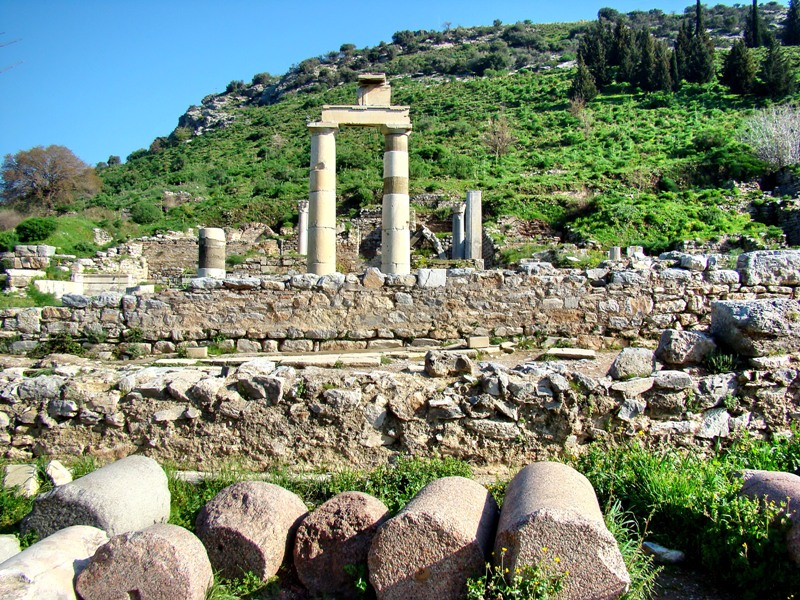
Ephesus Prytaneion_Town Hall. Photo by Leon Mauldin.

The prytaneion was the government agora, the town hall.  There was a courtyard in front of the building. There is evidence of a former temple of the Egyptian god Isis on the western side. Lance Jenott, University of Washington, says further of this site, “This Agora (usually translated as “market place” but in this case more of a “town square”) was built in the first century CE under the Flavian Emperors as the site of the Roman state cult. In the middle of the State Agora sat the temple of Divius Julius (Divine Julius Caesar) and Dea Roma (the divine personification of the Roman Empire).”

More to come!


Roman Emperors During the Gospels and Acts

April 7, 2010

The book of Daniel foretold of four successive world powers.  Beginning with Babylon, which would be succeeded by Medo-Perisa, there would then be the Grecian Empire, and fourthly the Roman Empire, during which time the Messiah and His kingdom rule would be ushered in (Dan. 2,7).

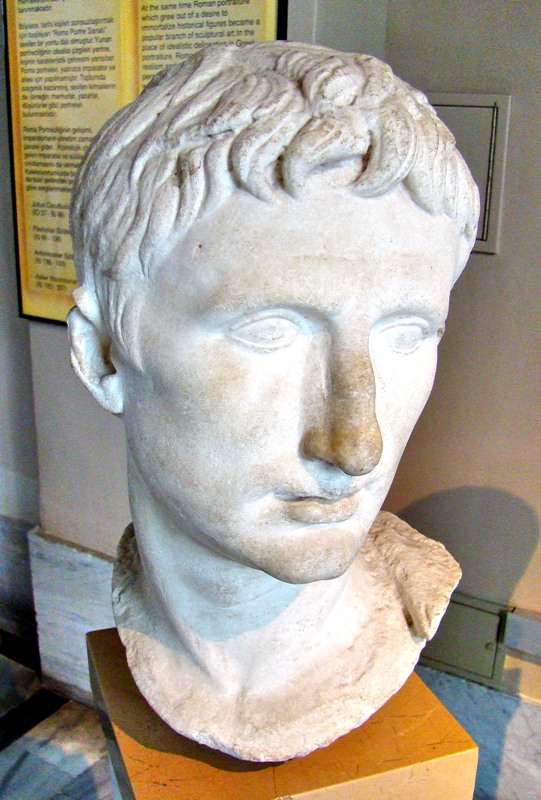
Accordingly, when the New Testment record begins, Luke informs us, “And it came to pass in those days that a decree went out from Caesar Augustus that all the world should be registered” (Luke 2:1).  It turns out that this is how it happened that though Mary and Joseph were residents of Nazareth in Galilee, that Jesus was born in Bethlehem of Judea.  Everyone was to be registered in “his own city” (Luke 2:3), that is, in ones ancestral town, which for Mary and Joseph, of the family of David, meant Bethlehem.  Caesar Augustus had no idea he was helping to fulfill the eighth century B.C. prophecy of Micah, who foretold the birthplace of Jesus (Micah 5:2). Augustus reigned 31 B.C. – A.D 14.
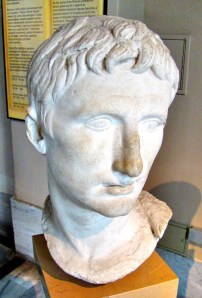
Caesar Augustus.  Istanbul Archaeology Museum.  Photo by Leon Mauldin

Caesar Augustus. Istanbul Archaeology Museum. Photo by Leon Mauldin.

Later, the political and religious setting of the biblical world when Jesus began His ministry is recorded in Luke 3:1:

In the fifteenth year of the reign of Tiberius Caesar, when Pontius Pilate was governor of Judea, and Herod was tetrarch of Galilee, and his brother Philip was tetrarch of the region of Iturea and Trachonitis, and Lysanias was tetrarch of Abilene…

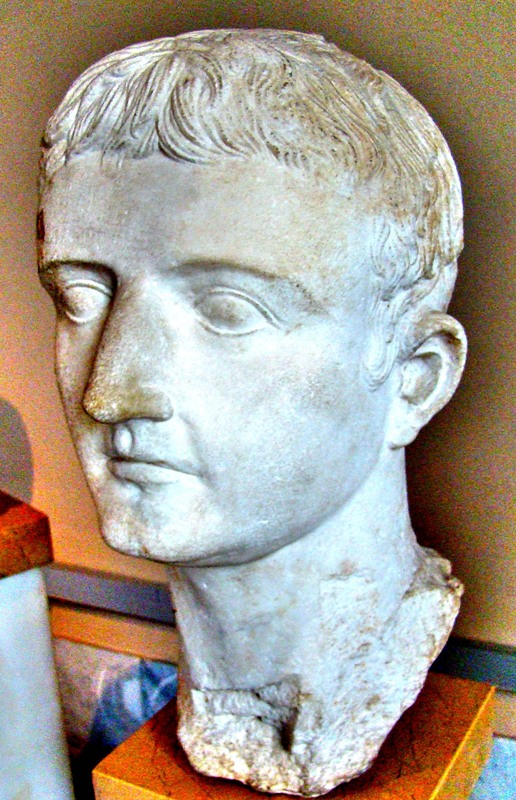
Here is a bust of Tiberius Caesar, who reigned A.D. 14-37.  He would have been the emperor in power when Jesus said, “Render therefore to Caesar the things that are Caesar’s, and to God the things that are God’s” (Matt. 22:21). He would have still been in power when the events of Pentecost transpired (Acts 2), and the church was established and began to spread.
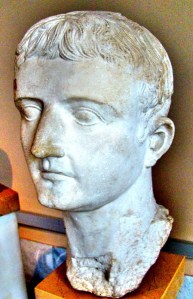
Tiberius Caesar. Istanbul Archaeology Museum. Photo by Leon Mauldin.

We learn in Acts 18 that when Paul arrived at Corinth, he stayed with Aquilla and Priscilla and worked with them.  Luke explains why this couple was in Corinth:

And he found a certain Jew named Aquila, born in Pontus, who had recently come from Italy with his wife Priscilla (because Claudius had commanded all the Jews to depart from Rome); and he came to them.

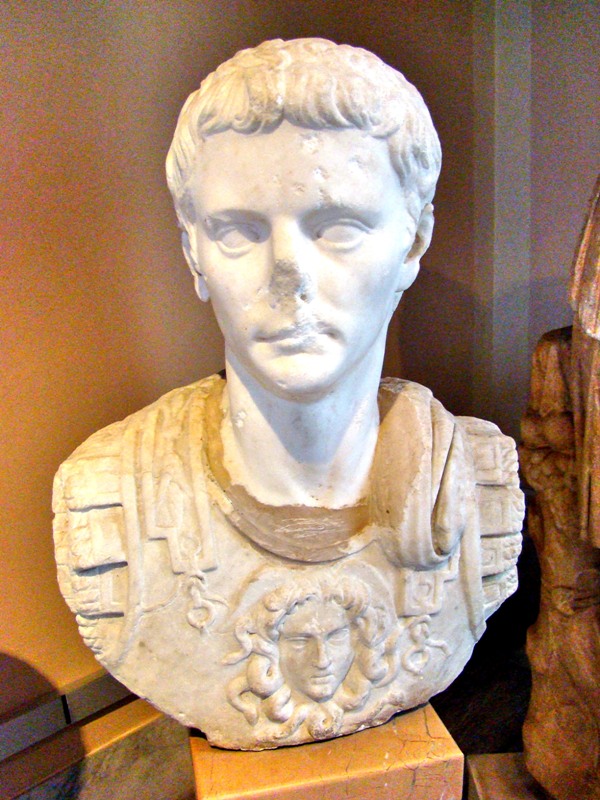
Claudius reigned A.D. 41-54.
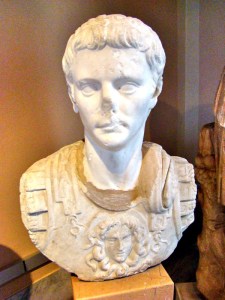
Caesar Claudius. Istanbul Archaeology Museum. Photo by Leon Mauldin.

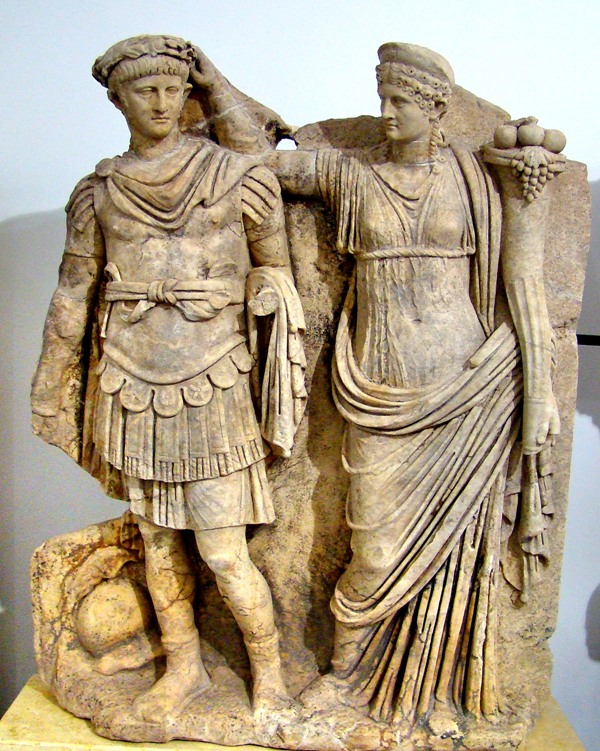
As the book of Acts continues, we come to the reign of Nero (reigned A.D. 54-68). He would have been in power when at Caesarea Paul appealed unto Caesar (Acts 25:11). Nero would have been the emperor when later Paul was executed (as anticipated in his 2 Timothy letter). In our photo below we see Nero and his mother Agrippina (wife of Claudius).
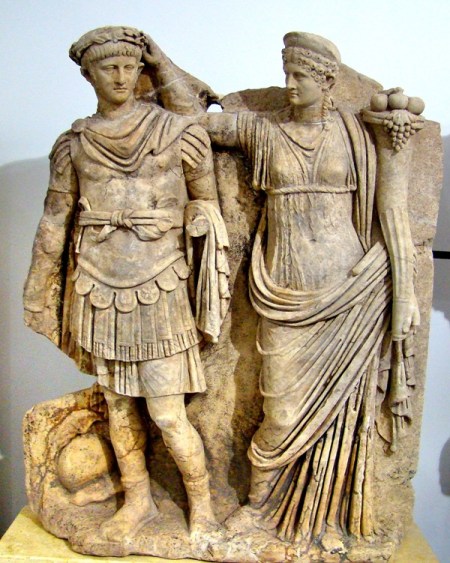
Caesar Nero and Agrippina. Aphrodisias Museum. Photo by Leon Mauldin.

The info provided with this relief states:

Agrippina crowns her young son Nero with a laurel wreath. She carries a cornucopia, symbol of Fortune and Plenty, and he wears the armour and cloak of a Roman commander, with a helmet on the ground at his feet. The scene refers to Nero’s accession as emperor in AD 54, and belongs before AD 59  when Nero had Agrippina murdered.

The Egyptian god Bes

April 5, 2010

Many of our recent posts have featured biblically related artifacts which are housed in Istanbul’s Archaeology Museum.

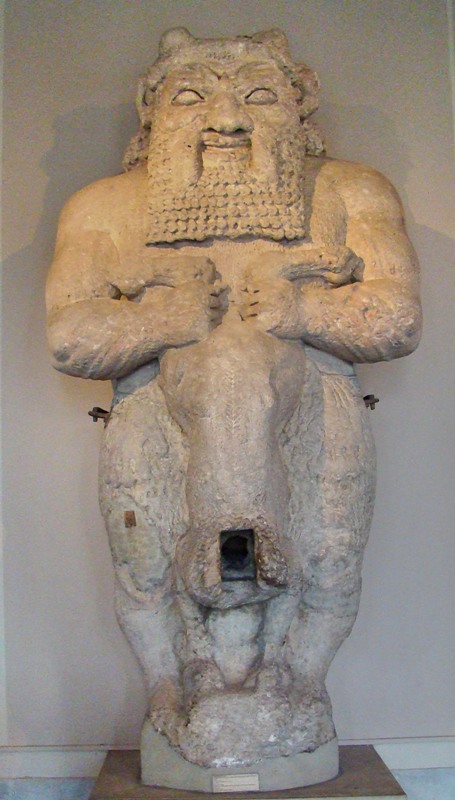
As you enter the main entrance of the museum, you are “greeted” by a 3.5 meter statue of the Egyptian god Bes, depicted as holding a lion by its hind legs.

Image of Bes. Istanbul Archaeology Museum. Photo by Leon Mauldin.

It was believed that Bes protected the individual from evil. BAR editor Hershal Shanks writes, “An Egyptian god adopted into the Canaanite-Phoenician pantheon, Bes served as the ordinary person’s chief talisman against evil. He had already assumed a prominent role by the ninth century B.C.” (15:04 July/August 1989).  It was especially thought that Bes was the protector of pregnant women.

The Biblical World in Pictures notes, “Bes was a household Egyptian deity responsible for the welfare of pregnant women, happiness in the home and prevention of disease. Like many other Egyptian motifs, he was adopted in the Levant, especially in Phoenicia.”

travellinkturkey.com states that the statue of Bes in the Istanbul Archaeology Museum was brought from the island of Cyprus.

Belief in a god such as Bes was only the proverbial “drop in a bucket” of the pervasive idolatry of the ancient world.  In giving the Ten Commandments God called His people to leave all forms of idolatry and be devoted exclusively to Him:

I am the LORD your God who brought you out of the land of Egypt, out of the house of slavery. You shall have no other gods before Me. You shall not make for yourself an idol, or any likeness of what is in heaven above or on the earth beneath or in the water under the earth. You shall not worship them or serve them; for I, the LORD your God, am a jealous God. (Deut. 5:5-9).

The world of the 1st century in which the church was established was permeated by idolatry.  The call of the Gospel is summarized by Paul in 2 Cor. 6:16-2 Cor 7:1:

And what agreement has the temple of God with idols? For you are the temple of the living God. As God has said: “I will dwell in them And walk among them. I will be their God, And they shall be My people.” Therefore “Come out from among them And be separate, says the Lord. Do not touch what is unclean, And I will receive you.” “I will be a Father to you, And you shall be My sons and daughters, Says the LORD Almighty.” Therefore, having these promises, beloved, let us cleanse ourselves from all filthiness of the flesh and spirit, perfecting holiness in the fear of God.


An Empty Tomb

April 4, 2010

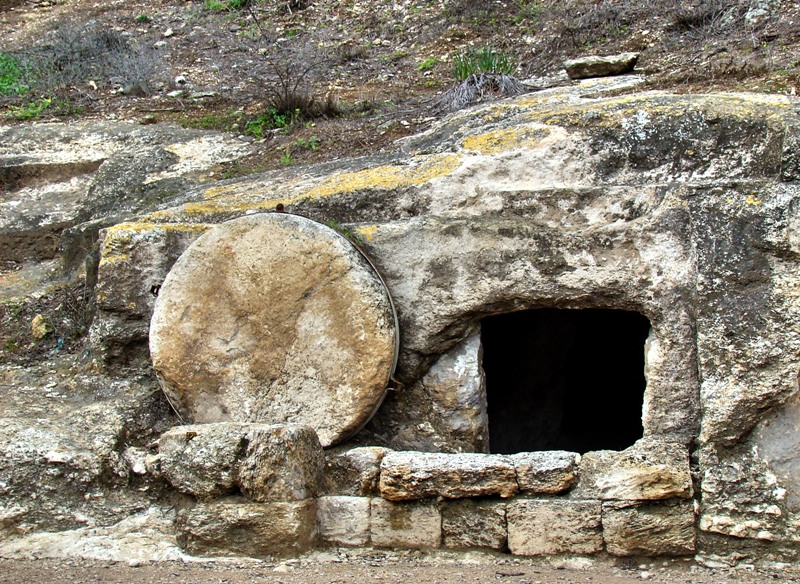
As one descends Mt. Carmel going toward Megiddo, there is a rolling stone tomb whose usage dates back to the first century.

Rolling Stone Tomb Near Carmel. Photo by Leon Mauldin.

This tomb was discovered during road construction.  It so well illustrates the biblical texts that narrate the burial of Jesus.  Joseph of Arimathea had a new tomb (one which had not been previously used, John 19:38-42).  Assisted by Nicodemus, Joseph wrapped Jesus’ body in a clean linen cloth, “and laid it in his new tomb which he had hewn out of the rock; and he rolled a large stone against the door of the tomb, and departed” (Mt. 27:59-60). The tomb in our photo was hewn out of the rock, and you can see the large stone positioned to the left of the opening.

On Sunday, the 1st day of the week when Jesus was raised from the dead, the text says this about Peter and “the other disciple:”

So they both ran together, and the other disciple outran Peter and came to the tomb first. And he, stooping down and looking in, saw the linen cloths lying there; yet he did not go in. Then Simon Peter came, following him, and went into the tomb; and he saw the linen cloths lying there, and the handkerchief that had been around His head, not lying with the linen cloths, but folded together in a place by itself. Then the other disciple, who came to the tomb first, went in also; and he saw and believed. (John 20:4-8).

Note the record says the disciple stooped down to look in.  The tomb in our photo shows how this would of necessity be true.

Rolling Stone Tomb. Stooping to Look Inside. Photo by Ferrell Jenkins.

Note that we are not suggesting that this is the tomb in which Jesus was buried; it does however illustrate the type of tomb that would have been used.

For New Testament Christians, each first day of the week is significant.  Christians assemble in the name of Jesus Christ to partake of His memorial feast, the Lord’s Supper.  That Supper points back to His death, His body and His blood.  But we serve a risen Savior!  We proclaim His death till He comes (1 Cor. 11:26).


The Siloam Inscription

April 2, 2010

Another treasure in the Istanbul Archaeology Museum is the Siloam Inscription. Here is its history:

The Old Testament records the Assyrian threat to Judah in the days of good King Hezekiah (715-686 B.C.).  The Assyrians had already taken much of Judah’s territory (the Sennacherib Prism states Assyrian had taken forty-six fortified cities) and were advancing upon Jerusalem (701 B.C).  But Hezekiah had made wise preparation in anticipation of this fearsome foe. Hezekiah had two teams of tunnelers working from opposite directions; one starting from outside the city wall at the Gihon Spring, the other starting from inside the city, chiseling through 1750 feet of solid rock.  As a result, the “gently flowing waters of Shiloah” (Isa. 8:6) were channeled inside the city (2 Kings 20:20-21; 2 Chron. 32:30).

Thus Jerusalem had water inside the city walls, whereas Hezekiah “blocked the outlet of the water of the Upper Gihon” (2 Chron. 32:20, CSB). I.e., they would have water inside the city, but the enemy would not have ready access to water outside the city.

We hope the following photos will help illustrate the text for you:

Siloam Inscription. Istanbul Archaeology Museum. Photo by Leon Mauldin.

The inscription tells the story of when the two groups of workers met. The inscription reads:

“This is the story of the boring through. While [the tunnelers lifted] the pick-axe each toward his fellow and while 3 cubits [remained yet] to be bored [through, there was heard] the voice of a man calling his fellow—for there was a split [or overlap] in the rock on the right hand and on [the left hand]. When the tunnel was driven through, the tunnelers hewed the rock, each man toward his fellow, pick-axe against pick-axe. And the water flowed from the spring toward the reservoir for 1200 cubits. The height of the rock above the head of the tunnelers was a hundred cubits.”

Of course, more was involved than Hezekiah’s engineering feat of constructing the tunnel.  There was divine intervention as God delivered Jerusalem from the Assyrians: 2 Kings 19:35 records, “And it came to pass on a certain night that the angel of the LORD went out, and killed in the camp of the Assyrians one hundred and eighty-five thousand; and when people arose early in the morning, there were the corpses — all dead.”

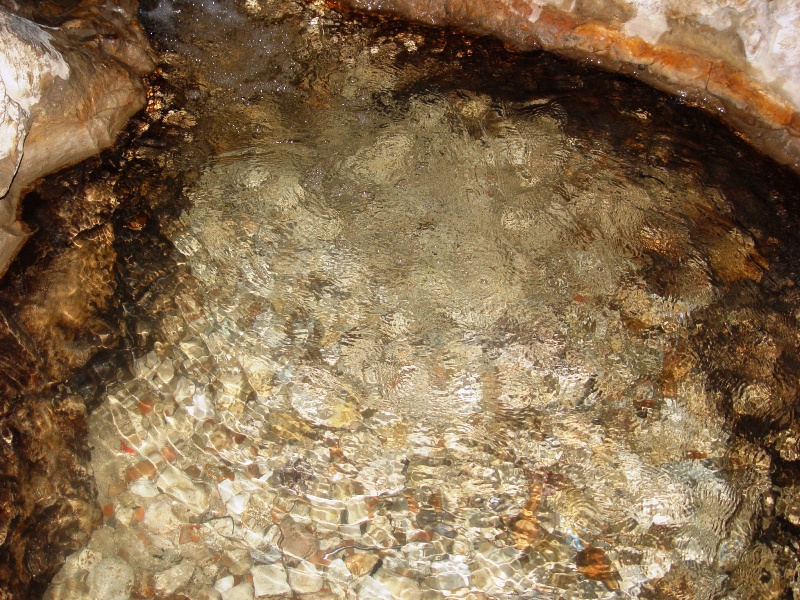
This photo shows the Gihon Spring, the source of the water supply.

Gihon Spring. Jerusalem. Photo by Leon Mauldin.

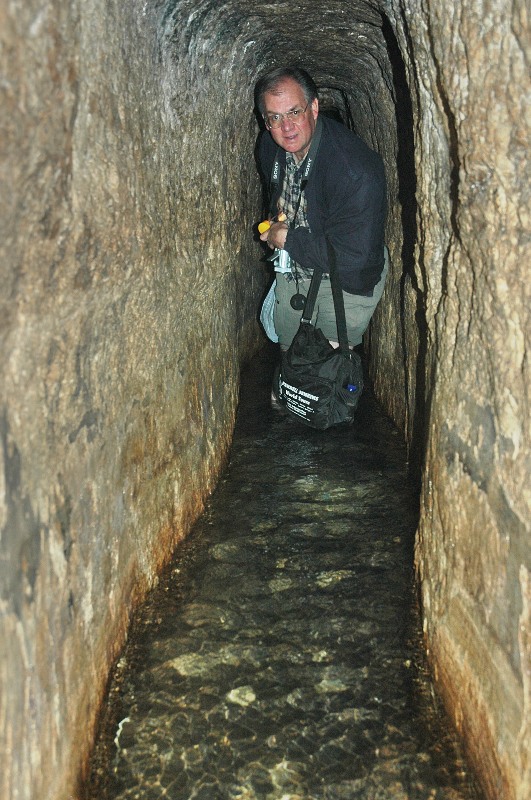
The water still flows inside the tunnel.

Inside Hezekiah's Tunnel. Photo by Leon Mauldin.

It’s a tight squeeze in places:

Leon Mauldin inside Hezekiah's tunnel. Photo by Ferrell Jenkins.

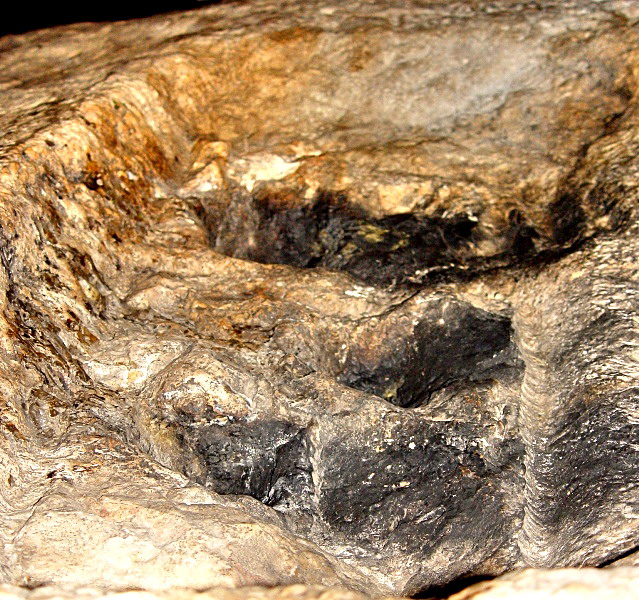
Finally, here is a photo of the location where the Siloam Inscription was chiselled out:

Siloam Inscription Location Inside Tunnel. Photo by Leon Mauldin.