The Philistines are mentioned numerous times in the Bible, in the days of the Judges and Kings, and as well as references in the prophets. For example, Zephaniah 2:4: “For Gaza shall be deserted, and Ashkelon shall become a desolation; Ashdod’s people shall be driven out at noon, and Ekron shall be uprooted” (ESV). This text mentions four of the five cities of the Philistine Pentapolis, the fifth being Gath (see 1 Sam. 6:16).
The context of Zephaniah’s prophecy is one of judgment, of the wrath of God, called “The great day of the LORD” (1:14). Though Zephaniah is addressing the Jews of Jerusalem/Judah, God is the God of all the nations. Here the prophet was warning of the destruction of the Philistines (2:5).
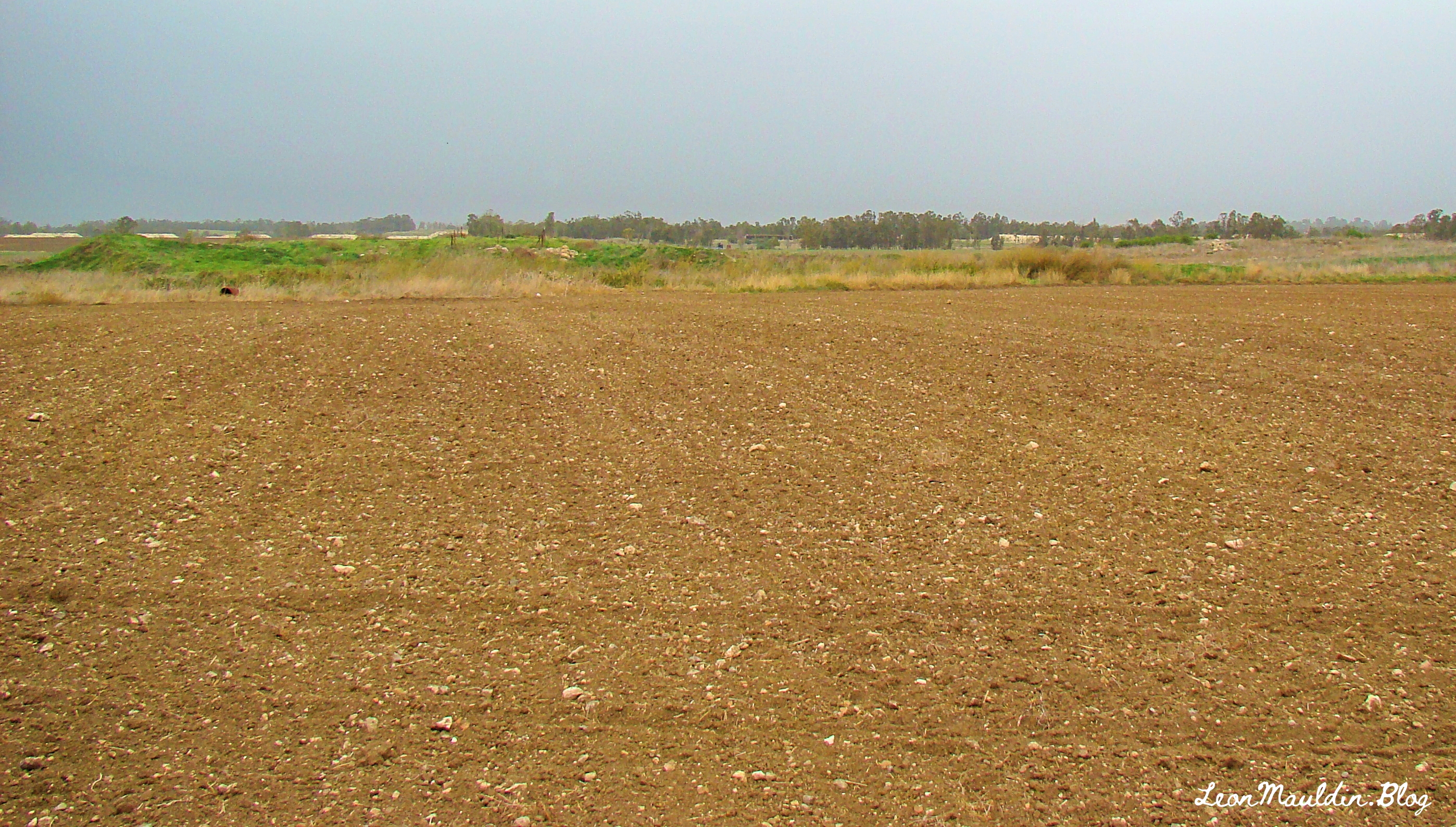
This post will deal briefly with Ekron, which today is known also as Tel Miqne.
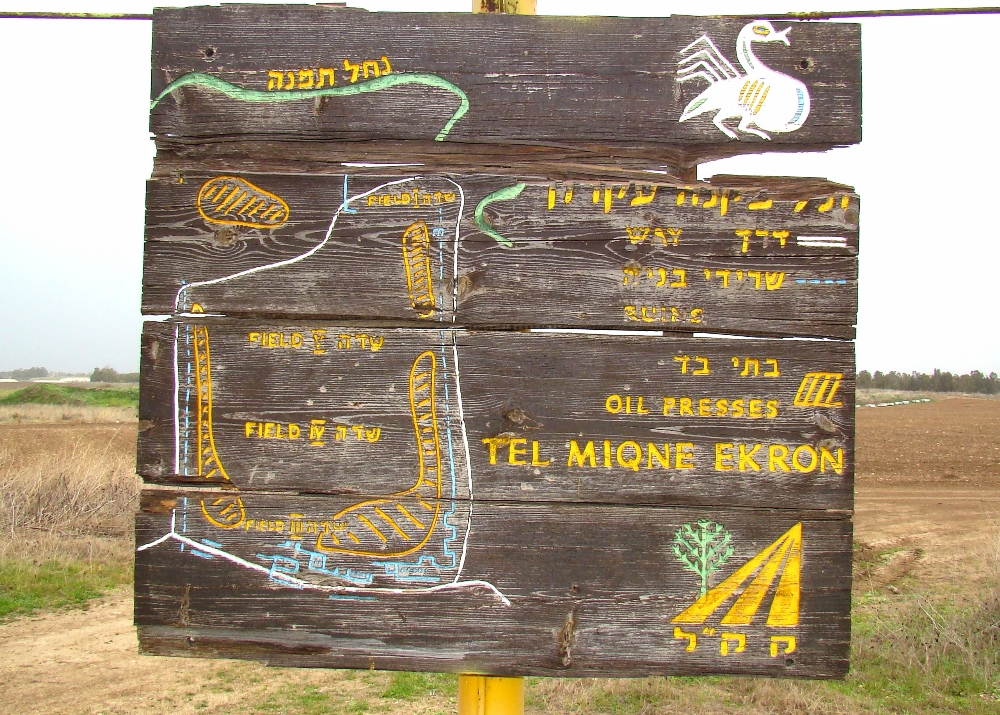
Here is a sign at the site:
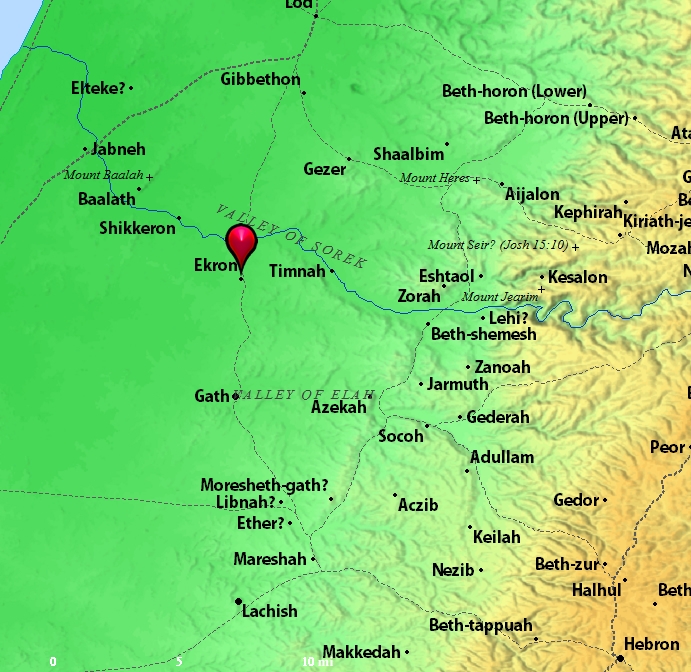
Though originally in Israel’s territory at the time of the Conquest led by Joshua (Josh. 15:11, 45-56), Ekron was later in the hands of the Philistines by the time of the Judges. Much of the territory originally taken by the Israelites in the conquest was not retained in subsequent years, largely due to Israel’s lack of diligence and compromise with the surrounding nations.
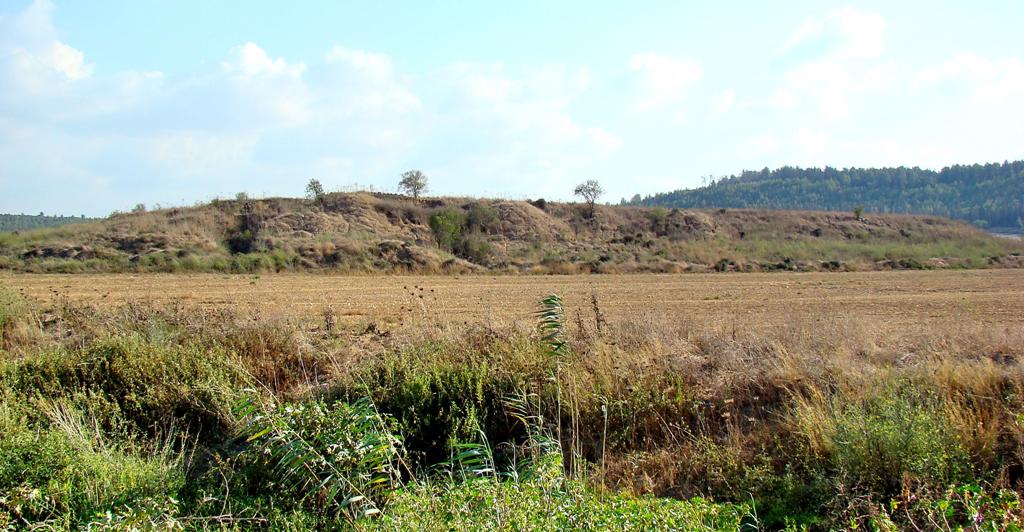
Ekron is a tel composed of about 50 acres. It was known for its olive oil industry.
Holman Illustrated Bible Dictionary has this information on Ekron:
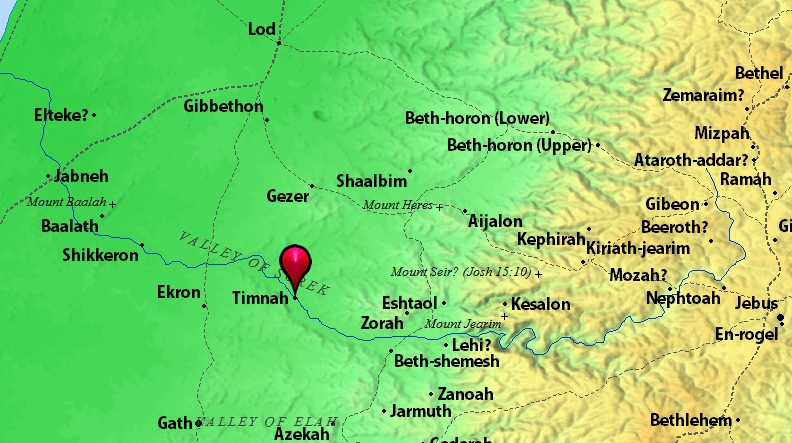
Northernmost of the five major Philistine cities known as the Pentapolis. The site of ancient Ekron has been much debated but now is generally agreed to be modern Tell Miqne, about 14 miles inland from the Mediterranean Sea and 10 miles from Ashdod. The site is one of the largest in Palestine, covering some 50 acres. Ekron lies on the road leading from Ashdod into the Judean hill country and up to Jerusalem through the Sorek Valley.
Ekron was assigned to both Judah (Josh. 15:11, 45–46) and Dan (Josh. 19:43) in the tribal allotments. It probably lay on the border between the tribes. Judges 1:18 reports that Judah captured Ekron along with other parts of the Philistine coast, but Ekron was certainly in Philistine hands at the time the ark was captured (1 Sam. 5:10). It was also the place to which the Philistines retreated after David slew Goliath (1 Sam. 17:52). Ahaziah, the son of King Ahab of Israel, called on the god of Ekron, Baal-zebub, when he was sick (2 Kings 1:2–16).
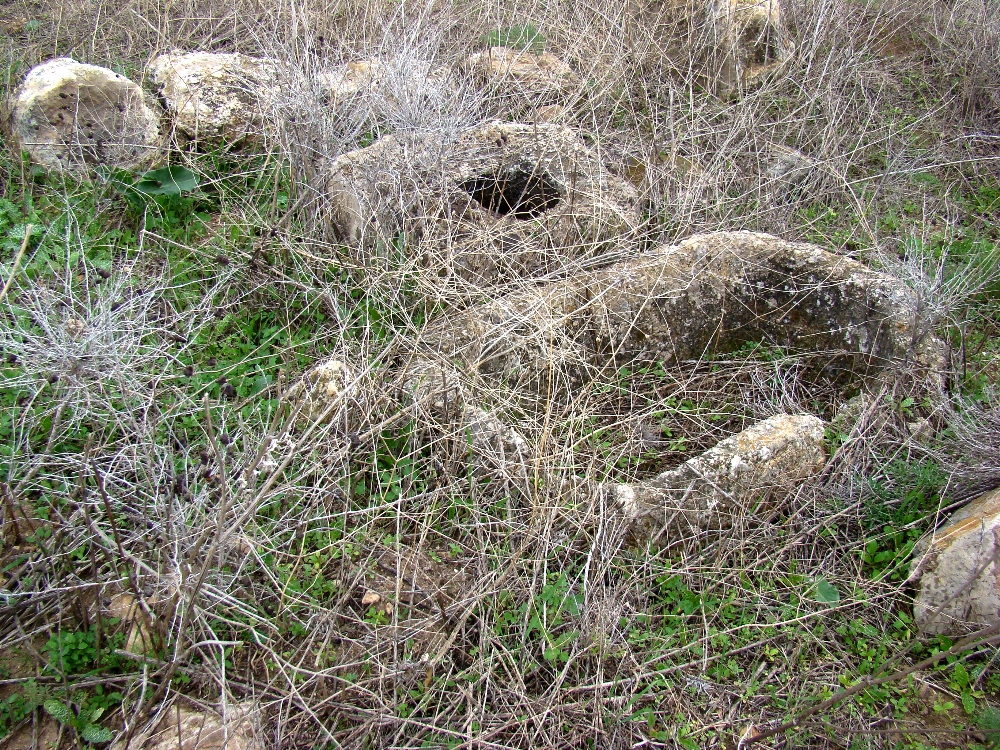
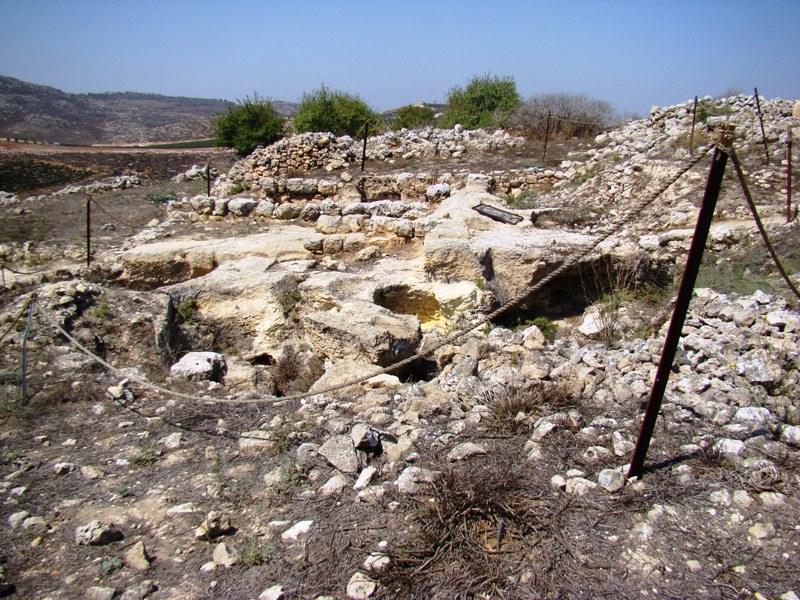
Excavations at Tell Miqne have discovered much pottery that is typically Philistine. From the last period before Tell Miqne was destroyed by the Babylonians, the excavators found an important industrial complex near the city gate. A hoard of iron agricultural tools was found. Hundreds of whole pottery vessels were present. Perhaps most importantly, a well-preserved olive press was discovered. This press is the largest and best preserved known in Israel. A horned altar was also found during the excavations. (pp. 469–470).
I have previously posted on Ekron, Tel Miqne, here.
Click photos for larger view.


 Posted by Leon Mauldin





 leonmauldin.blog