At Pergamum: Temple of Dionysus, the Wine god

May 16, 2010

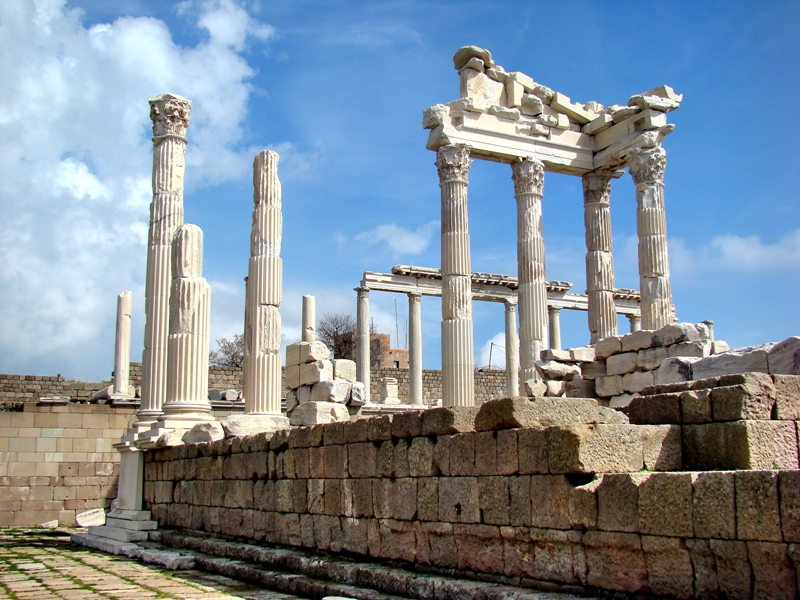
In Greek mythology, Dionysus, a son of Zeus, was the wine god.  He was also known as Bacchus, his Roman designation.  As we continue to post photos of Pergamum, today we include the temple of Dionysus. The photo below shows the remains of the temple in the center, to the right of the theater.
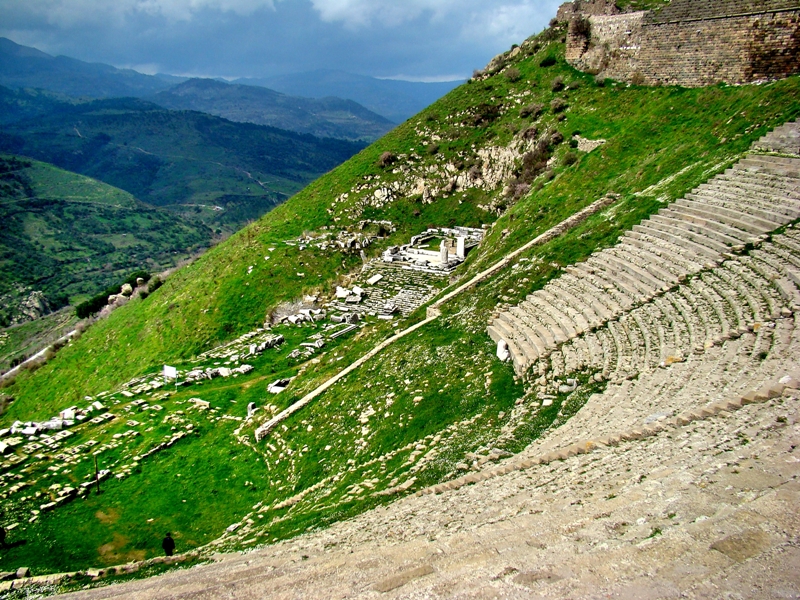
Temple of Dionysus at Pergamum. Photo by Leon Mauldin.

The placement of the temple in relation to the theater was not accidental. Dionysus was the patron deity of the theater (as well as agriculture). There was an intimate association of Dionysus with drama and public celebrations.  Here is a closer view:
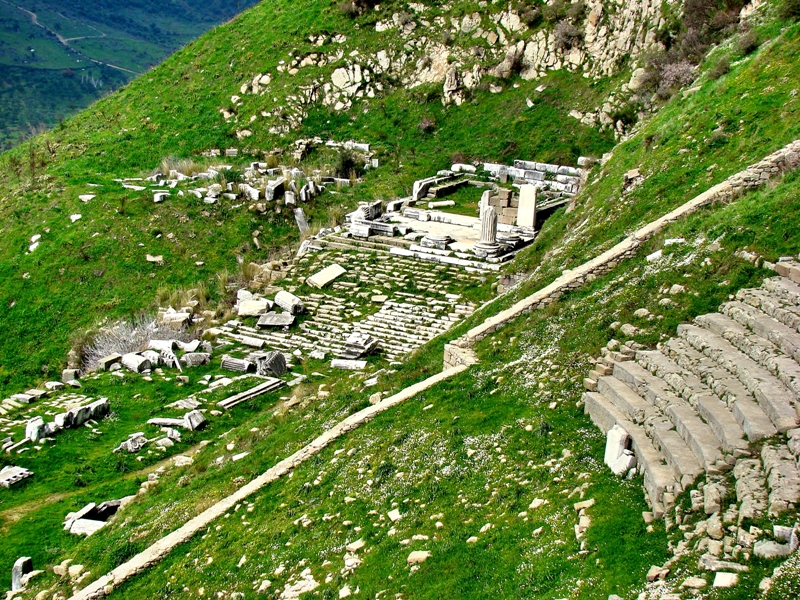
Temple of Dionysus at Pergamum, closer view. Photo by Leon Mauldin.

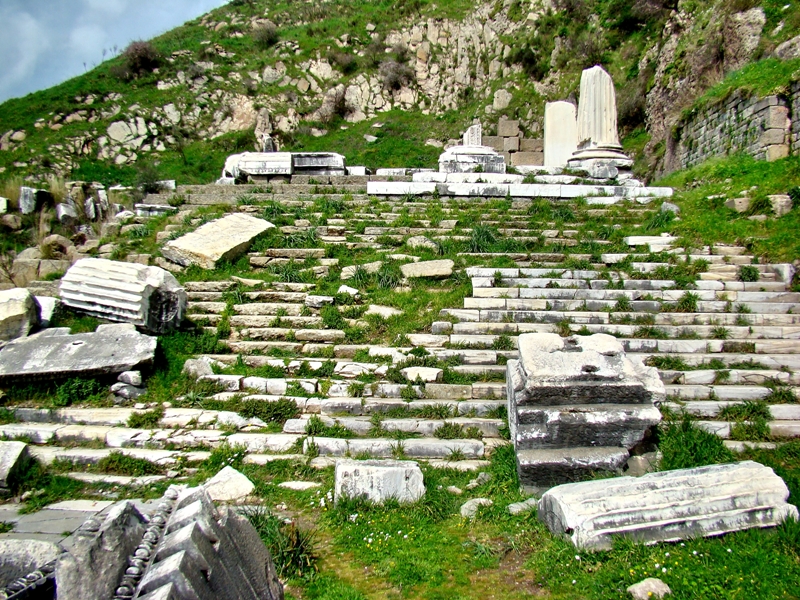
Worship of this deity predictably included wild drinking and drunkenness. Below is a view showing the approach to the temple.  Twenty five steps led up to the porch.
During the intertestamental period, Antiochus IV severely persecuted the Jews in his effort to Grecianize his subjects and destroy Judaism, with its distinctive features.  Among his atrocities was to force the Jews in Jerusalem to take part in festivities designed to honor the god Dionysus.  We read in 2 Maccabees 6:7:

On the monthly celebration of the king’s birthday, the Jews were taken, under bitter constraint, to partake of the sacrifices; and when a festival of Dionysus was celebrated, they were compelled to wear wreaths of ivy and to walk in the procession in honor of Dionysus.

Sometimes people say that the Bible was fine for the culture of the 1st century, but not for the 21st century. In reality, the Bible did not conform to the culture of the 1st century at all. God’s word then and now calls for people to be His own special people, not conformed to the world, but transformed (Rom. 12:1-2).

Dionysus/Bacchus, the wine god. Izmir Museum. Photo by Leon Mauldin.

It is sad that so many today in reality worship the wine god in their abuse of alcohol! (cf. Gal. 5:19-21; 1 Cor. 6:9-11)


At Pergamum: The Library

May 15, 2010

During the reign of Eumenes, Pergamum and Alexandria were competing for the biggest and best library in the world.  Egypt controlled the paper industry, made from the papyrus plant.  Bible and Spade quotes Pliny the Elder:

…when owing to the rivalry between King Ptolemy and King Eumenes about their libraries Ptolemy suppressed the export of paper, parchment was invented at Pergamum; and afterwards the employment of the material on which the immortality of human beings depends spread indiscriminately. (Vol. 5, Num. 2, p.51).

Parchment was made from the skins of goats and sheep.  It is much more durable than papyrus.  Biblical manuscripts were written on both parchment and papyrus, but the parchment tends to fair better with the passing of time.

The Latin pergamena means “paper of Pergamum.”  Paul wrote Timothy, “When you come, bring with you the cloak I left in Troas with Carpas and the scrolls, especially the parchments” (2 Tim. 4:13, NET).

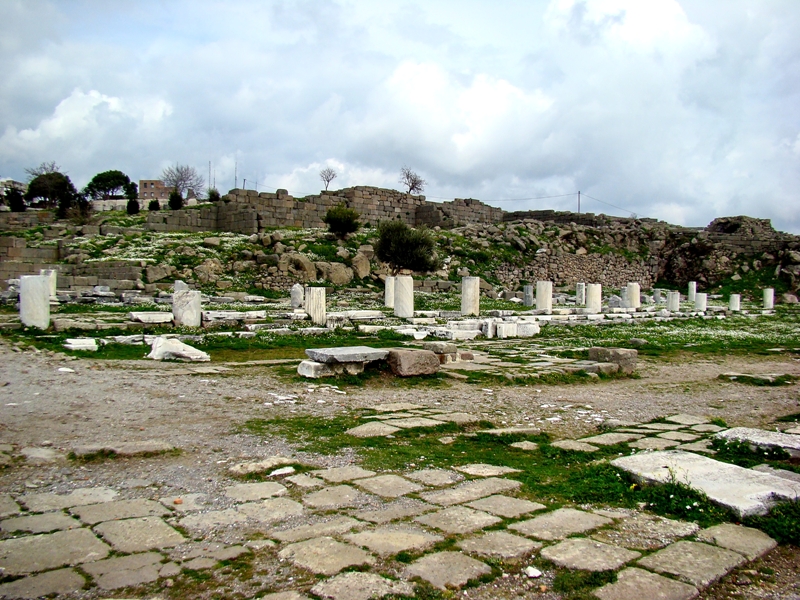
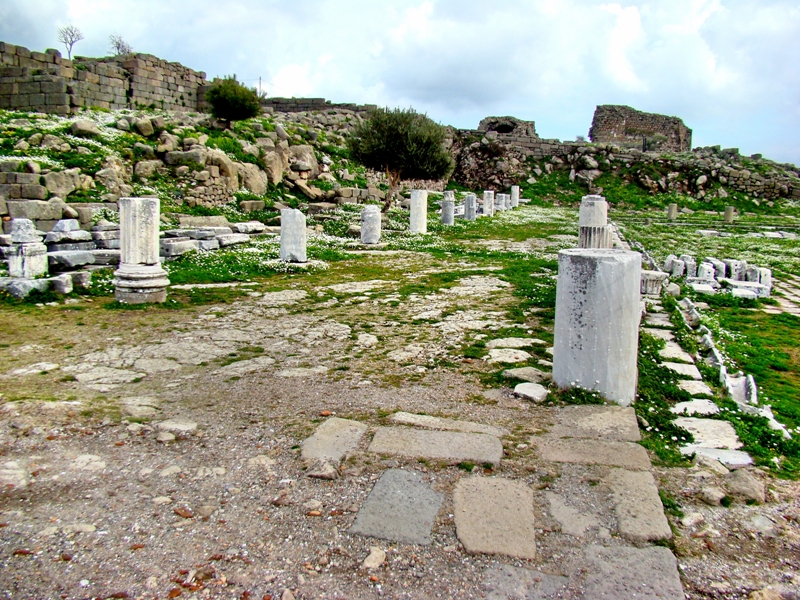
Today’s posts features two photos of the site of the famous library of Pergamum.  In this first photo we are standing with the sanctuary of the temple of Athena at our back; the foreground captures part of the court of the temple.

Pergamum Library. Photo by Leon Mauldin

The legend is that Mark Antony gave the 200,000 volumes housed in this library to Cleopatra in 41 B.C.

Pergamum Library close up. Photo by Leon Mauldin.

Click on image for higher resolution.


At Pergamum: The Heroon

May 14, 2010

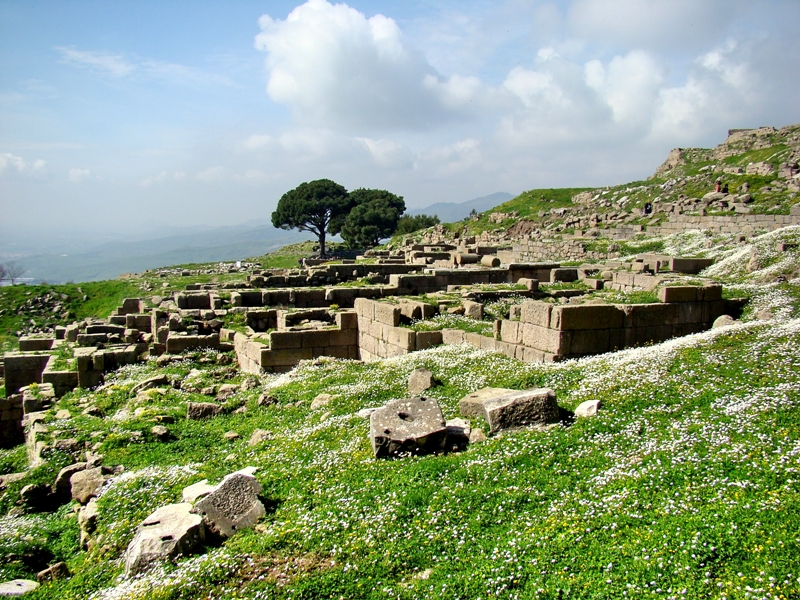
As we continue to view the ruins at biblical Pergamum, today we look at the Heroon. Fatih Cimok, whom we referenced in our previous post, explains that the heroon was “a shrine dedicated to a deified or semideified dead person” (Pergamum, p.7). The heroon at Pergamum was built to honor the Pergamene kings, including Attalus I (241-197 B.C.) and Eumenes II (197-159 B.C.).

Heroon at Pergamum. Photo by Leon Mauldin.

The Heroon pictured above is on your left as you walk up from the parking area, making your way to the acropolis.  In the distance of our photo where the trees are located (top, center) you are seeing the site of the altar of Zeus.

If you lived in Pergamum in the first century, you would have some choices to make.  Could you burn incense to the emperor at the imperial temple, and say “Caesar is Lord,” or would you say that there is one Lord, the Lord Jesus Christ?  Would you worship these deified kings at the Heroon, or would you take the stand that Jesus did: “You shall worship the Lord your God, and Him only you shall serve” (Matt. 4:10)?  Neutrality then, as now, was and is impossible (Matt. 12:30).

More to come!


At Pergamum, Trajan’s Temple

May 11, 2010

As we continue to look at biblical sites, especially in Turkey, we want to call attention to some points of interest in Pergamum, located at modern Bergama.  Fatih Cimok writes, “The word Pergamum is thought to have been from a pre-Hellenistic tongue and meant ‘citadel’ or ‘stronghold'” (Pergamum, 2009 ed., p.7).

Pergamum has an interesting history.  In ancient times, it wasn’t just the city of Pergamum, it was actually the kingdom of Permamum, which extended from Bythinia to Cappodoccia.

Pergamum came under Roman rule in 133 B.C., when King Attlos II died. He had bequeathed Pergamum to Rome in his will. It was during Roman times that a temple was built and dedicated to Emperor Trajan and his adopted son Hadrian. Todd Bolen observes, “The Trajan temple was the jewel of Pergamum.”

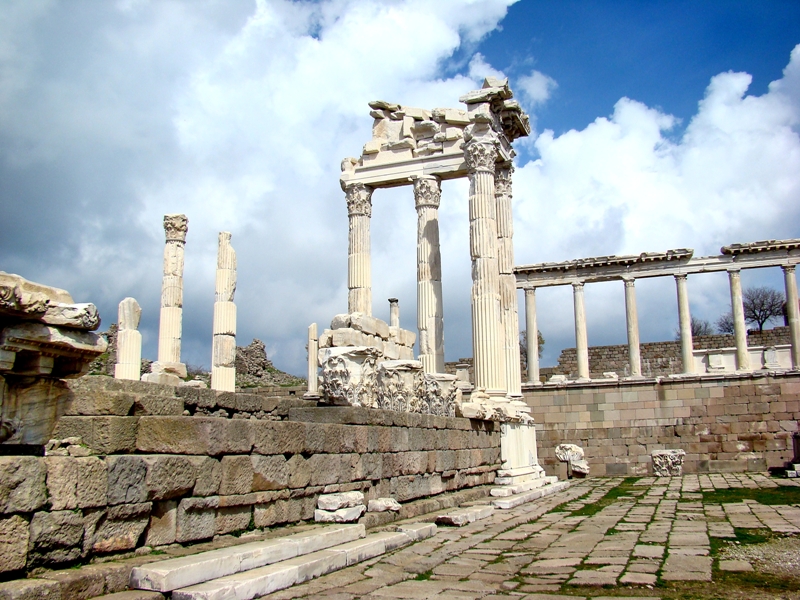
Today’s photos depict some of the ruins of the Trajan temple. Restoration has been done by the German Archaeological Institute.  Click on images for higher resolution.

Tragan Temple in Pergamum. Photo by Leon Mauldin.

Trajan reigned A.D. 98-117, and Hadrian reigned A.D. 117-138.

Tragan Temple in Pergamum. Photo by Leon Mauldin.

Pergamum became a center for the Imperial Cult, for emperor worship. Cimok writes:

Having an imperial temple would also bring many visitors to a city like Pergamum during the festivals held for the imperial cult, and consequently economic benefits; thus the cities on Roman soil (including Pergamum and Ephesus) competed over building imperial temples. (Ibid.17).

More to come on Pergamum. See also our previous posts on Emperor Worship at Ephesus April 10,11, and 14.


Haran, of Aram Naharaim (Mesopotamia)

May 7, 2010

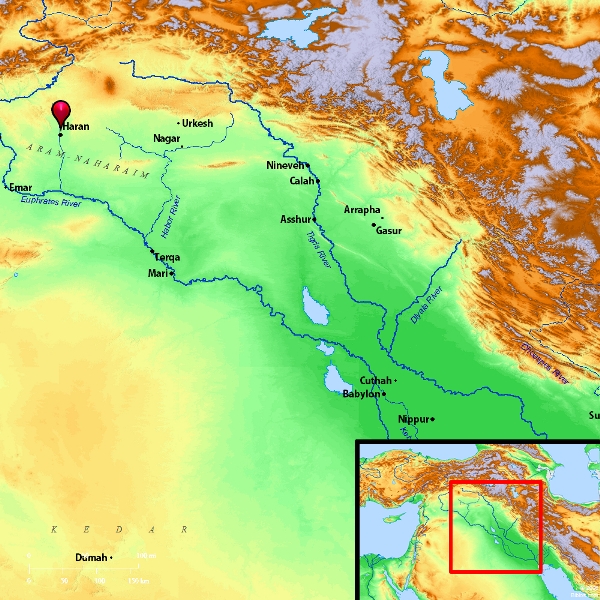
Our previous post pertained to the patriarchal home of Beersheba, located in the South (Negev) in OT Canaan. We saw that Jacob fled from Beersheba and traveled to Haran, “between the rivers;” hence, Mesopotamia (Greek) or Aram Naharaim (Hebrew).  The rivers, of course, are the Tigris and Euphrates. See map below:

Map, Haran. Courtesy http://bibleatlas.org

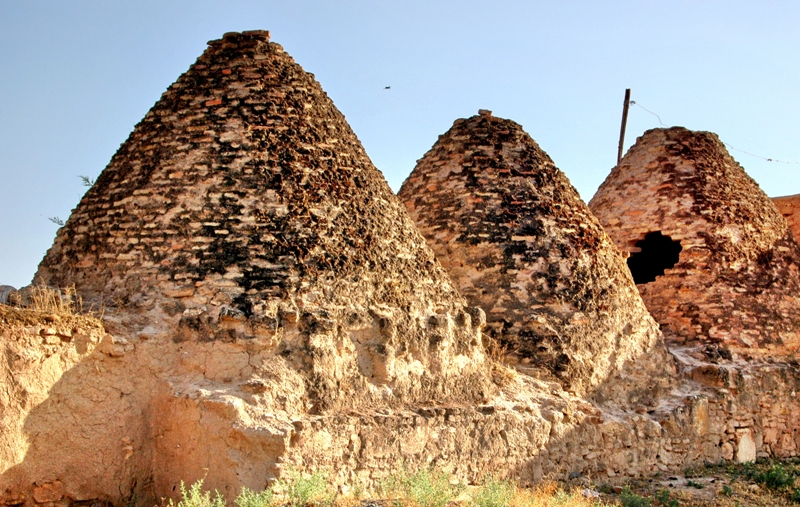
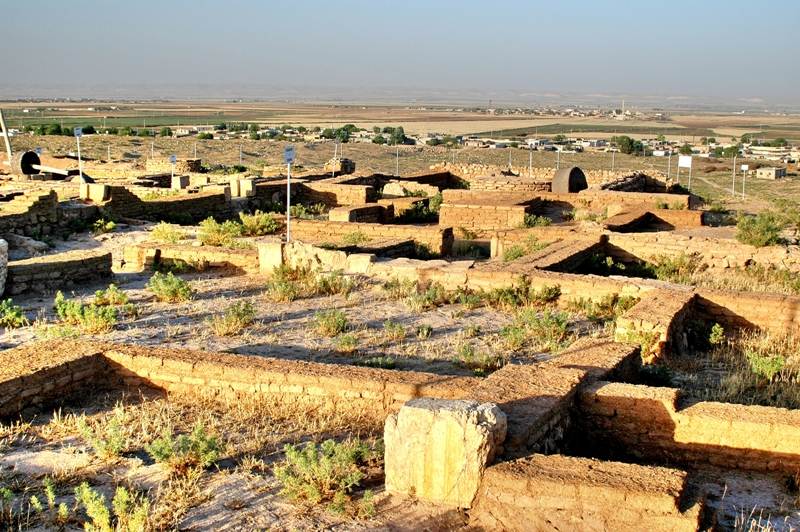
At Haran one can see “bee-hive” shaped houses that are 200 or so years old, which are said to be built along the same style of Patriarchal times.  If that is so, Jacob (and before him Abraham) would have seen houses like these below during his stay there.

Haran, Bee-hive shaped houses. Photo by Leon Mauldin.

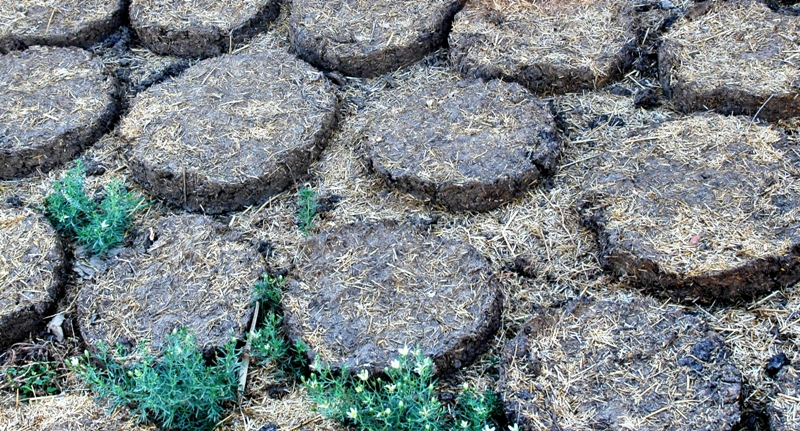
Dung mixed with straw is shaped into “cakes” and allowed to dry.  This is commonly used as fuel for cooking in what is today eastern Turkey.

Haran, Dung Cakes for Fuel. Photo by Leon Mauldin.

In the photo below we show some of the excavations that have taken place at Haran.  Remember this area would have been home to Jacob for 20 years, as he worked 7 years for Leah, and 7 more for Rachel, whom he wanted in the first place, plus 6 more years for wages, thus 7+7+6=20 years.

Haran, Excavations. Photo by Leon Mauldin


Beersheba, Home of the Patriarchs

May 6, 2010

In our previous post we mentioned how Jacob fled from his home in Beersheba to Haran, of Mesopotamia.  For the short term he was running for his life; for the long term he married (four wives as it turned out) and had children, including twelve sons who would become the heads of the twelve tribes of Israel.

See map below to locate Beersheba.

Beersheba in Southern Israel. Courtesy of http://bibleatlas.org/

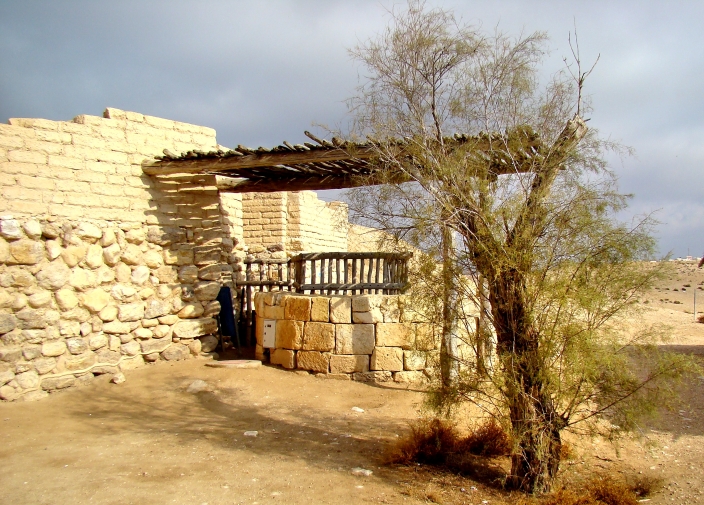
Beersheba was the home of the patriarch Abraham as well as at times that of Isaac, and later Jacob as we have indicated.  There was a well there which Abraham dug.  The Philistine king Abimelech received seven ewe lambs from Abraham as confirming that the well was indeed Abraham’s (Gen. 21:22-30).  “Therefore he called that place Beersheba, because the two of them swore an oath there” (v.31).  The text goes on to say, “Then Abraham planted a tamarisk tree in Beersheba, and there called on the name of the LORD, the everlasting God” (v.33).

Our photo of Beersheba depicts both a well as well as a tamarisk tree.

Beersheba, with well and tamarisk tree. Photo by Leon Mauldin.

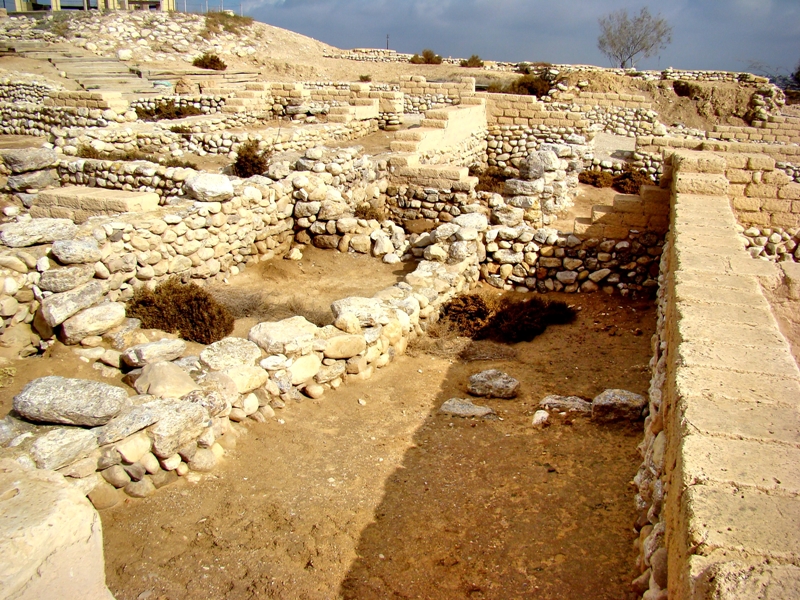
A good deal of excavation has been done at Beersheba.  See photo below.

Excavations at Beersheba. Photo by Leon Mauldin.

Click on image for higher resolution.


Mah Zzot?!? (What is this?)

May 4, 2010

“What is this you have done to me?” This was Jacob’s question to Laban, when he discovered in shock and disbelief, not to mention panic, that he had married Leah, Rachel’s sister, instead of Rachel, with whom he was in love, and for whom he had worked for seven years for her father Laban. The deceiver was himself deceived.

Jacob left Beersheba to journey to Haran to obtain a wife; that’s the reason his mother Rebekah presented to his father Isaac (Gen. 27:46). The more pressing reason for the trip was really so that Esau his brother would not kill him. Esau was bitterly angry because Jacob had deceived Isaac, who was blind at the time, into blessing Jacob who pretended to be his older brother Esau.  Jacob was acting in compliance with his mother’s instructions; she wanted her “favorite” to receive the patriarchal blessing.

When Rebekah learned of Esau’s intention to kill Jacob, she sent Jacob away some 400+miles north to Haran, where they had relatives.  She instructed Jacob to stay with her brother Laban “a few days, until your brother’s fury turns away” (Gen. 27:45). It turned out that “a few days” became twenty years!  As far as the record indicates, Jacob never saw his mother Rebekah again.

When he met Rachel he immediately fell in love with her.  He reached an agreement with her father Laban that he would work seven years for her.  The time passed quickly for Jacob because of his great love for Rachel. Then came the much-anticipated wedding night.  But Laban himself was less than honest. Everyone gathered for the wedding feast. “Now it came to pass in the evening, that he took Leah his daughter and brought her to Jacob; and he went in to her” (Gen. 29:23).  Leah was Rachel’s older sister.  “So it came to pass in the morning, that behold, it was Leah.  And he said to Laban, “What is this you have done to me?  Was it not for Rachel that I served you?  Why then have you deceived me?” (Gen. 29:25).

The NET Bible translates, “What in the world have you done to me! Didn’t I work for you in exchange for Rachel? Why have you tricked me?”  The NET translator note on this text reads, The use of the pronoun “this” is enclitic, adding emphasis to the question: “What in the world have you done to me?”

Laban’s answer was essentially this: “Oh I forgot to tell you one small detail; around here it is not customary for the younger daughter to marry before the older; go ahead and let Leah have her wedding celebration (lasted one week) then you can marry Rachel and work seven more years for her.”  Dave Ramsay would never have approved of this “installment plan,” but Jacob consented.

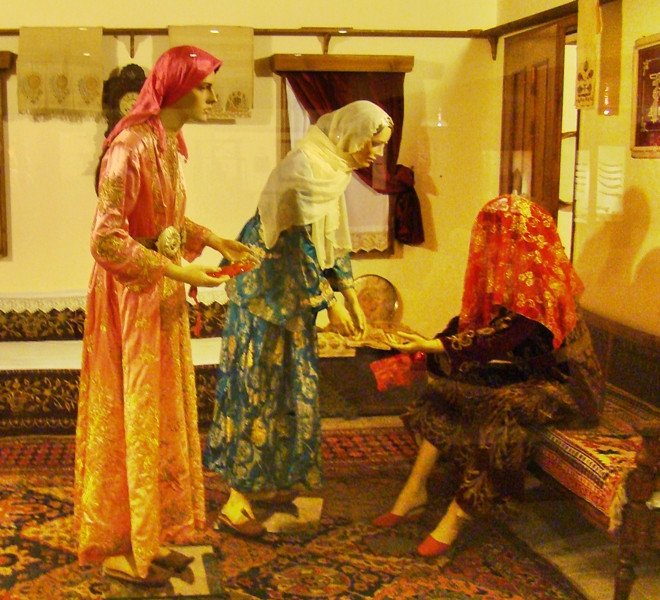
Wedding Night_Turkish Wedding. Bergama Museum (Pergamum). Photo by Leon Mauldin.

Our photo depicts the wedding night for a Turkish wedding.  These figures are posed in the Bergama Museum.  The veiled bride is seated while her attendants help.  This scene may help us to understand why Jacob did not recognize Leah. Truly the deceiver was deceived.

We have photos of Beersheba as well as Haran which we plan to share in future posts.

PostScript. On a personal note, last week I had a very enjoyable meeting with the Perry Hill congregation in Montgomery, AL., speaking on the theme, “Becoming More Like Jesus.”  On Mon-Fri we had morning services and in those lessons I covered the Letters to the Seven Churches (Rev. 2-3), using photos from our recent trip to Turkey, as well as photos from previous trips. The lessons were well received, and it was great to be at Perry Hill again. This was my third meeting with the folks there.

That schedule made me a bit behind on posting to the blog, but we hope to be back on schedule now.  Thanks for checking in.  Remember to click on photo for higher resolution.


Smyrna, the Poor, Rich Church

April 27, 2010

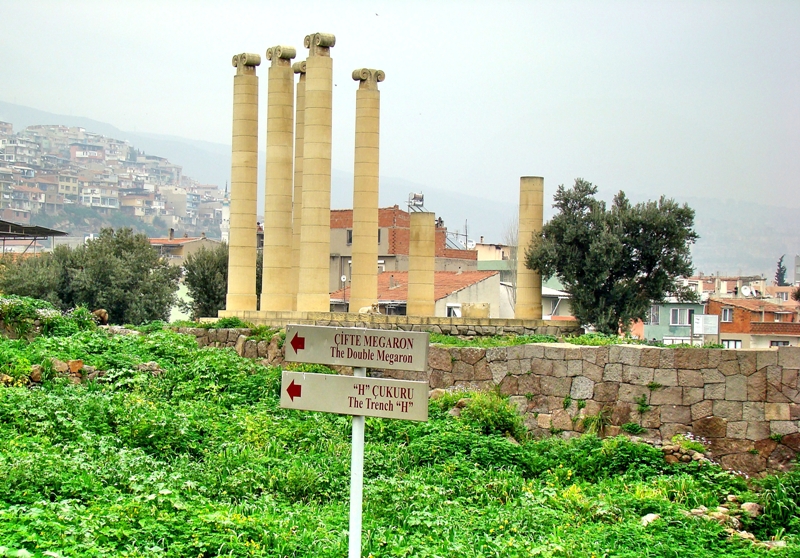
In Rev. 2 we have the letter to the church at Smyrna (modern Izmir).  This church received the shortest of the seven letters (Rev. 2:8-11), and it consists only of commendations.  Smyrna was one of the wealthiest cities of the Roman province of Asia, but the Christians there were poor; Jesus wrote, “I know your works, tribulation, and poverty (but you are rich)” (Rev. 2:9).   Their poverty may have been in large measure due to their unwillingness to compromise their convictions.  Christians who were exclusively loyal to Jesus Christ could not worship other gods, nor could they take part in emperor worship.  It may be difficult for us to imagine how pervasive idolatry was in the first century.  When the New Testament church came into existence, the residents of Smyrna had for centuries been worshiping the goddess Athena.  The ruins of her temple are pictured here:

Athena Temple in Smyrna. Photo by Leon Mauldin.

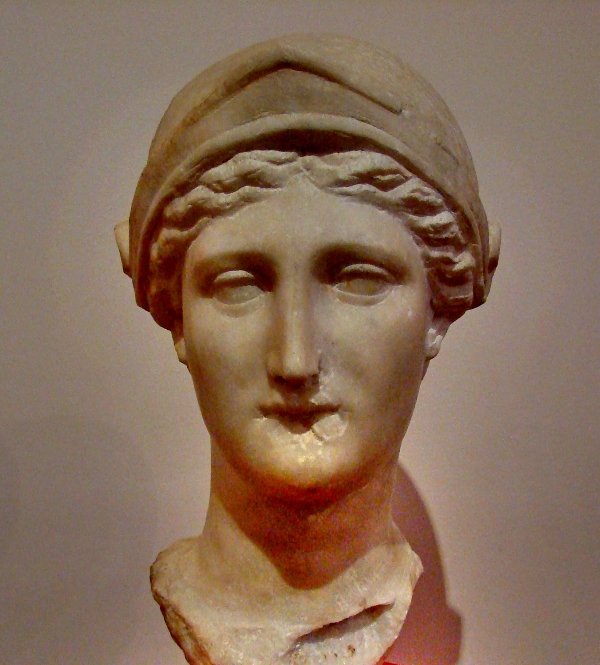
The goddess Athena was in fact widely worshiped. Her image below is in the Izmir Museum:

Image of goddess Athena. Izmir Museum. Photo by Leon Mauldin.

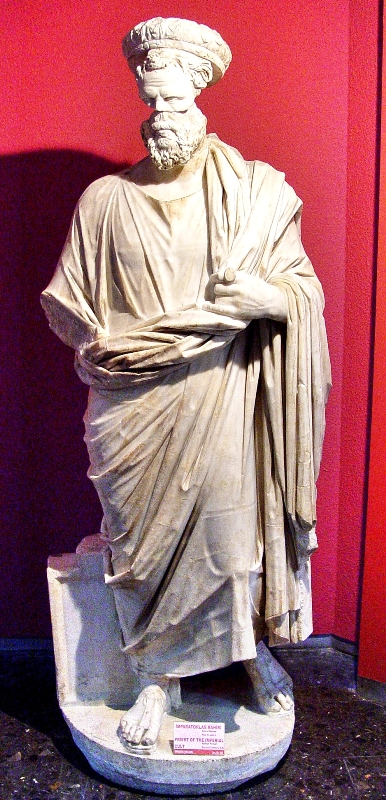
Imperial worship was deeply entrenched at Smyrna, the practice of burning incense to Caesar and saying that “Caesar is Lord.”   Here is an image of one of the priests of the Imperial Cult, representative of the men who served in such temples and expedited emperor worship.

Priest of Imperial Cult. Izmir Museum. Photo by Leon Mauldin.

Those who made up the church at Smyrna were told, “Be faithful until death, and I will give you the crown of life” (Rev. 2:10). We learn that the faith that pleases God is based not on convenience, but on deep and abiding conviction.  What Jesus required in the 1st century He requires in the 21st century.


Jewish Inscription at Miletus Theater

April 22, 2010

Our last couple of posts have been on the biblical city of Miletus.  Remember it was here that Paul met with the Ephesian elders as he was finishing up the 3rd missionary journey and en route to Jerusalem (Acts 20:17ff.).

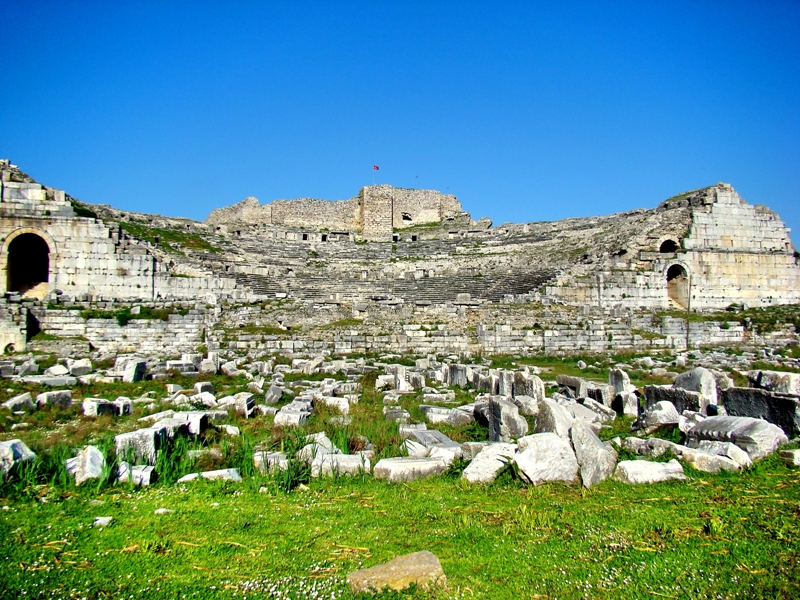
Any city of significance of biblical times had a theater.  Here is the theater of Miletus:

Miletus Theater. Photo by Leon Mauldin

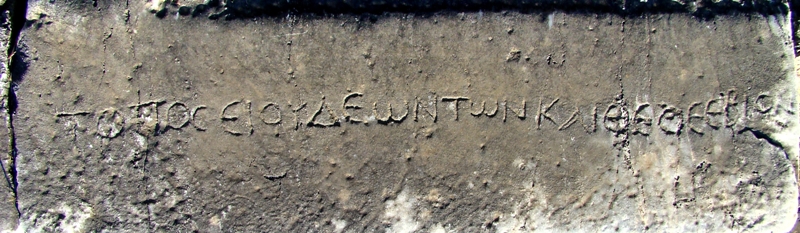
One interesting discovery in the theater is an inscription which indicated the seating section for the Jews.  It is in the 5th row from below, and in the second section from the west.  The inscription is four feet long, with letters measuring 1 1/4 to 2 1/2 inches in height.

Jewish Inscription. Miletus Theater. Photo by Leon Mauldin

The inscription is written in Greek.  Transliterated it reads: “topos eioudeon ton kai theosebion.” Translation: “Place of the Jews, who are also called God-fearing” (Light from the Ancient East, by Adolf Deissmann, p. 451). In the book of Acts, “those who fear God”  are typically Gentiles (cf. Acts 13:26).  On this text in Acts, the NET Bibles notes,

“and those among you who fear God,” but this is practically a technical term for the category called God-fearers, Gentiles who worshiped the God of Israel and in many cases kept the Mosaic law, but did not take the final step of circumcision necessary to become a proselyte to Judaism. See further K. G. Kuhn, TDNT 6:732–34.

However the term as found in the inscription at Miletus does not seem to mean Jews and God-fearing Gentiles, but rather uses “God-fearing” to describe the Jews.  Adolf Deissmann writes,

As I read the actual inscription there at Miletus I wondered that it did not run “Place of the Jews and of those who are called God-fearing.” But there can be no doubt that “God-fearing” is here an appellation of the Jews (Ibid.452).

The inscription does not seem to imply segregation, but rather indicates “reserved seating.”  It further gives proof that there was a Jewish community there in Miletus in Roman times.

Topos Eioudewn twn kai Qheosebion


Miletus Agora, Two Views

April 22, 2010

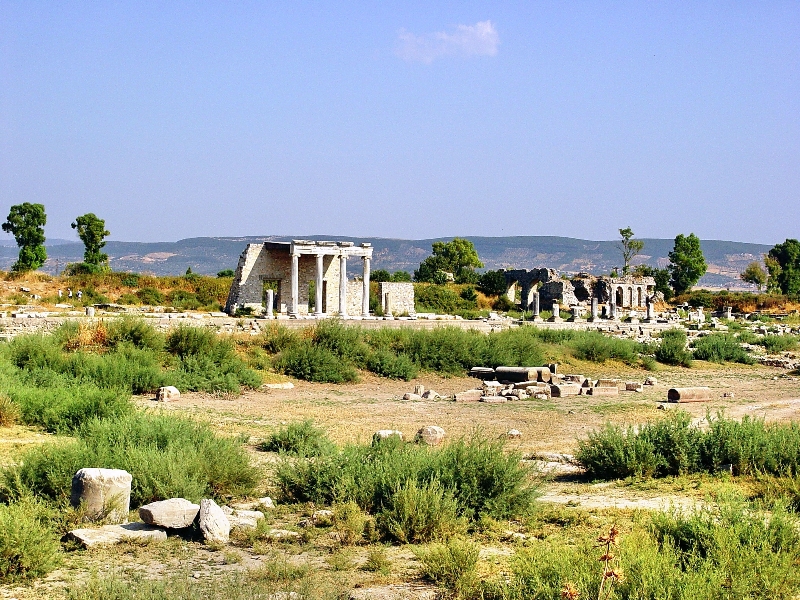
At the biblical site of Miletus one can view the agora (market place). Looking across you can see the ionic stoa, a public building; to the right you can see the ruins of the Roman Nymphaeum (fountain).

Miletus Agora and Public Building. Photo by Leon Mauldin.

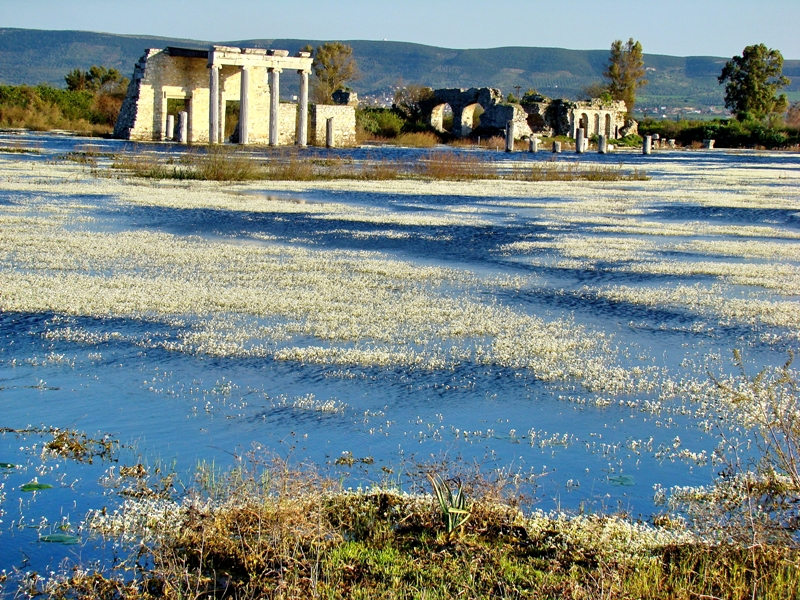
The photo above was taken in summer 2006.  Our photo below (March 2010) shows the same area with the agora under water.

Miletus Agora Under Water. Photo by Leon Mauldin.

More to come on Miletus.