Cave of Machpelah, Tomb of the Patriarchs

May 3, 2011

This morning my wife and I safely arrived in Genk, Belgium, where I am to conduct a biblical lectureship focusing on Acts through Revelation. This is an opportunity to make use of photos of Bible lands in which the events of Scripture transpired as we survey this exciting portion of the New Testament.

This past March we were able to go to Hebron and take a few photos there, including the site of the Cave of Machpelah, featured in this photo:
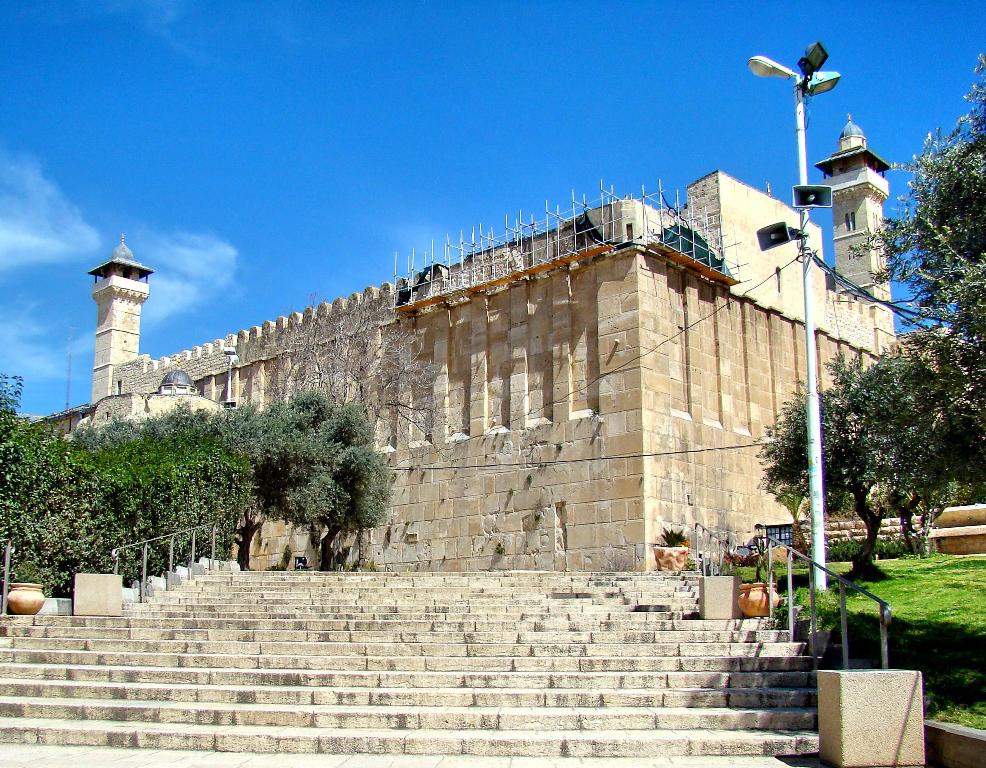
Site of Cave of Machpelah in Hebron. Photo by Leon Mauldin.

When Sarah died, the inspired narrator (Moses) tells us that “Abraham went in to mourn for Sarah and to weep for her” (Gen. 23:2). This was at Hebron. Abraham had to procure a burial place for his beloved wife. The Promise Land was to be possessed by his descendants, but Abraham owned no land in Canaan. Therefore he purchased the cave of Machpelah with its field from Ephron the Hittite. This transaction was duly made “before all who went in at the gate of his city” (Gen. 23:3-19).

“After this, Abraham buried Sarah his wife in the cave of the field at Machpelah facing Mamre (that is, Hebron) in the land of Canaan” (Gen. 23:19). Later, Abraham himself was buried here by his sons Isaac and Ishmael (Gen. 25:9). In Egypt, when Jacob was near death he called his twelve sons to hear his last words (Gen. 49:1). He commanded (ESV, Gen. 49:29) that he be buried at Machpelah also (v.30), and stated, “There they buried Abraham and his wife Sarah, there they buried Isaac and his wife Rebekah, and there I buried Leah” (v.31).

Herod the Great was a politician. To gain the favor of the Jews he lavishly renovated the temple in Jerusalem. Likewise, he built an impressive edifice around the cave of Machpelah, the tomb of the Patriarchs, using the same architectural style as that of Jerusalem’s Temple Mount, with similar sized stones, masonry and pilasters (engaged columns). In March we were able to visit Hebron and see the traditional burial site of the Patriarchs, featured in our photo.

Regarding these Patriarchs, centuries after their deaths, God said, “I am the God of Abraham, the God of Isaac, and the God of Jacob” (Matthew 22:31-32). Jesus said, “God is not the God of the dead, but of the living,”—these men, though dead and buried, were still very much alive, and God was/is still their God! The soul lives on after death; on the last day all will be raised from the dead (John 5:28-29; 1 Cor. 15:57).


You Ought To Say, “If the Lord wills…”.

May 1, 2011

To say that our schedule has been altered since this past Wed. would be a bit of an understatement. We are among the thousands w/o electrical power since Wed. AM. We are thankful to have been spared personally from injury as well as property damage. The area of Hanceville and Cullman Alabama looks like a war zone. In Cullman, entire blocks in the downtown area were destroyed and in some cases leveled. You’ve heard of the hundreds of fatalities in AL & our border states.

This morning in a short while we are to have worship services where I preach here in Hanceville. We are fortunate and blessed to be able to do so.

This event has put me in mind of James 4. I frequently use the expression, “the Lord willing,” or something similar, but these events have reinforced and deepened the impression of that text:

13 Come now, you who say, “Today or tomorrow we will go to such and such a city, spend a year there, buy and sell, and make a profit”; 14 whereas you do not know what will happen tomorrow. For what is your life? It is even a vapor that appears for a little time and then vanishes away. 15 Instead you ought to say, “If the Lord wills, we shall live and do this or that.” 16 But now you boast in your arrogance. All such boasting is evil. 17 Therefore, to him who knows to do good and does not do it, to him it is sin (vv. 13-16).

Thanks for following our blog. We hope to be back on schedule soon.

My friend Ferrell Jenkins is currently directing a tour in Israel. See his Travel Blog–you can click on our blog roll to your right on this page.


Egypt: Plague upon the Cattle

April 26, 2011

Exodus 9:1-7 says:

Then the LORD said to Moses, “Go to Pharaoh and tell him, ‘Thus says the LORD, the God of the Hebrews, “Release my people that they may serve me! 2 For if you refuse to release them and continue holding them, 3 then the hand of the LORD will surely bring a very terrible plague on your livestock in the field, on the horses, the donkeys, the camels, the herds, and the flocks. 4 But the Lord will distinguish between the livestock of Israel and the livestock of Egypt, and nothing will die of all that the Israelites have.”‘” 5 The LORD set an appointed time, saying, “Tomorrow the LORD will do this in the land.” 6 And the LORD did this on the next day; all the livestock of the Egyptians died, but of the Israelites’ livestock not one died. 7 Pharaoh sent representatives to investigate, and indeed, not even one of the livestock of Israel had died. But Pharaoh’s heart remained hard, and he did not release the people (NET).

In our previous post we showed how the plagues were said to be judgments against the gods of Egypt. Regarding the plague upon the cattle, Dr. David Livingston said:

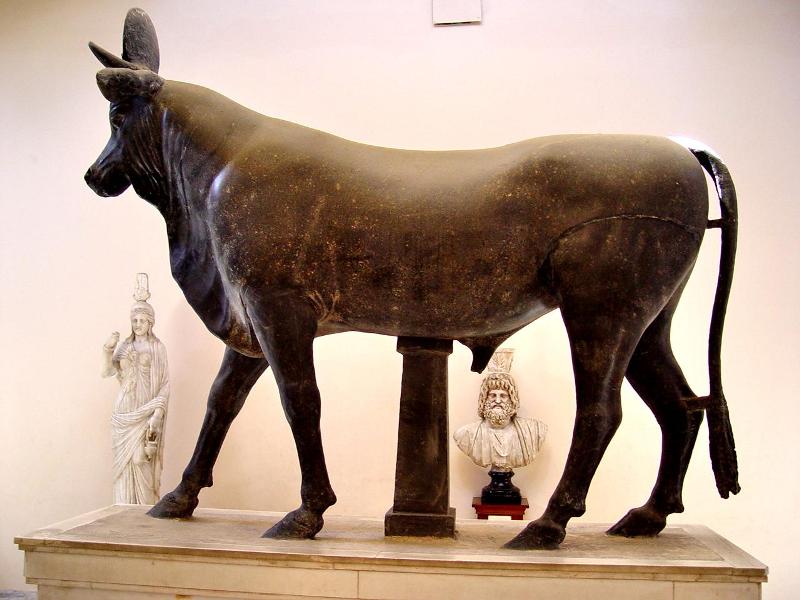
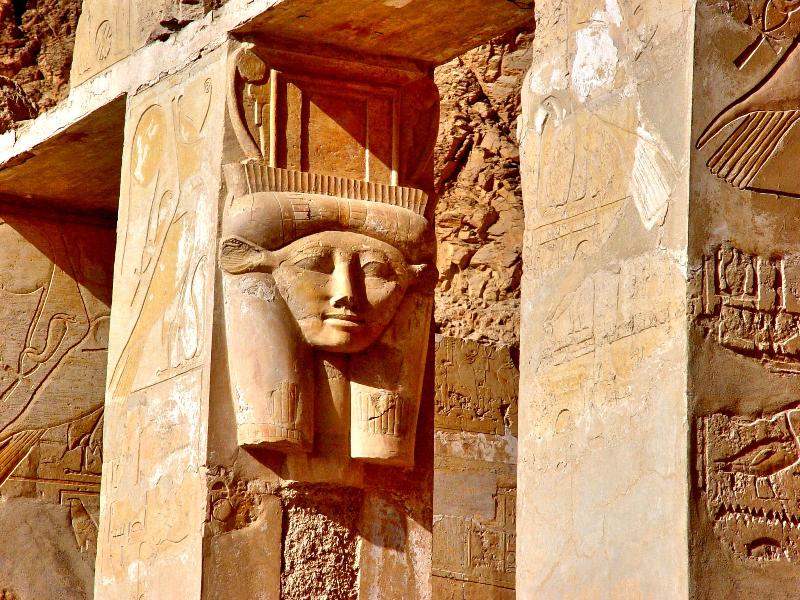
This judgment was against the bull god (revered as early as the Archaic Period (35), and the sacred cattle of Hathor, the cow-headed love goddess. It was a special reproach to pharaoh who worshipped Hathor. Hathor, whose name means “house of Horus,” was sacred as early as the Old Kingdom (41, 58). Other gods associated with cattle were Ptah and Amon.
Great cemeteries of embalmed cattle have been excavated. The symbol of the bull was the symbol of pharaoh himself (Bible and Spade, Vol. 4, Num. 1, p. 10).

The museum at Alexandria, Egypt, has a display of a sacred bull.

Sacred Bull at Alexandria, Egypt. Photo by Leon Mauldin.

The cow-goddess Hathor was widely worship in Egypt. This image is from Hatshepsut’s three-tiered funerary palace at Deir el-Bahari.

Goddess Hathor at Hatshepsut's funerary temple. Photo by Leon Mauldin.

The best evidence is that these events transpired during Egypt’s Eighteen’s Dynasty, when the nation was at the peak of its power.


Egypt: the Nile Turned to Blood

April 23, 2011

God referred to 10 plagues as “great acts of judgment” (Exodus 6:6). Prior to the 10th plague, the death of the firstborn, God warned, “For I will go through the land of Egypt on that night, and will strike down all the firstborn in the land of Egypt, both man and beast; and against all the gods of Egypt I will execute judgments– I am the LORD” (Ex. 12:12). In reality, all of the plagues showed that YHWH (the LORD) was the true God; all of the plagues were judgments against the gods of Egypt.

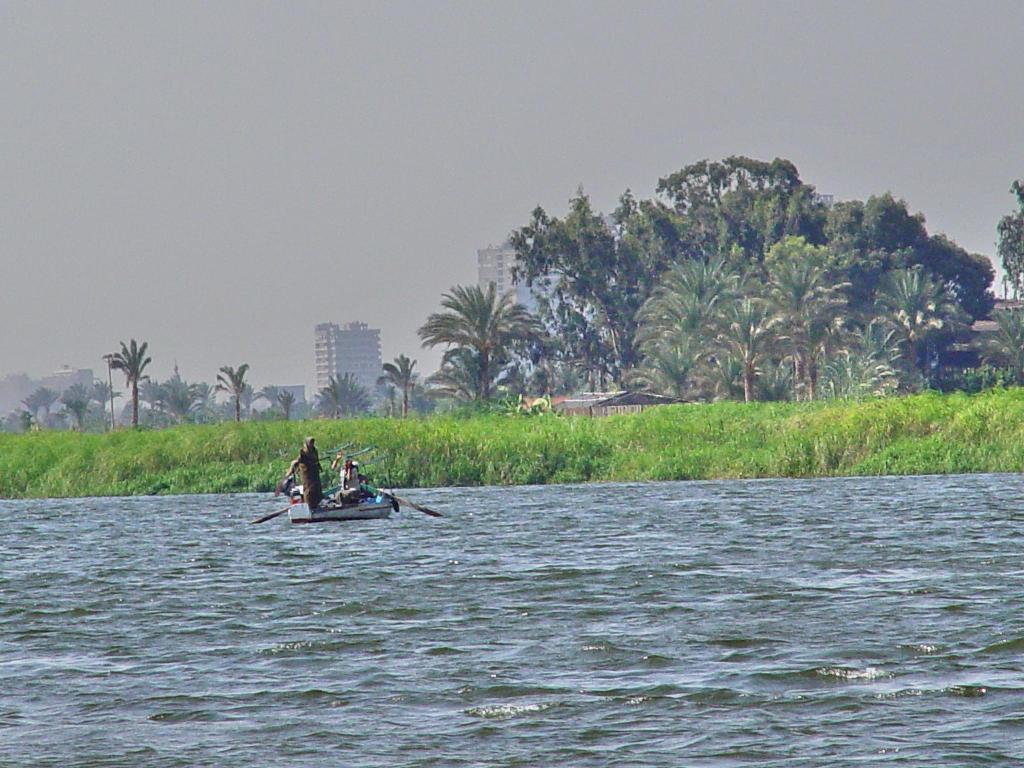
The first plague turned the water of the Nile into blood.

Nile River. Photo by Leon Mauldin.

In an article entitled, “The Plagues and the Exodus,” David Livingston wrote:

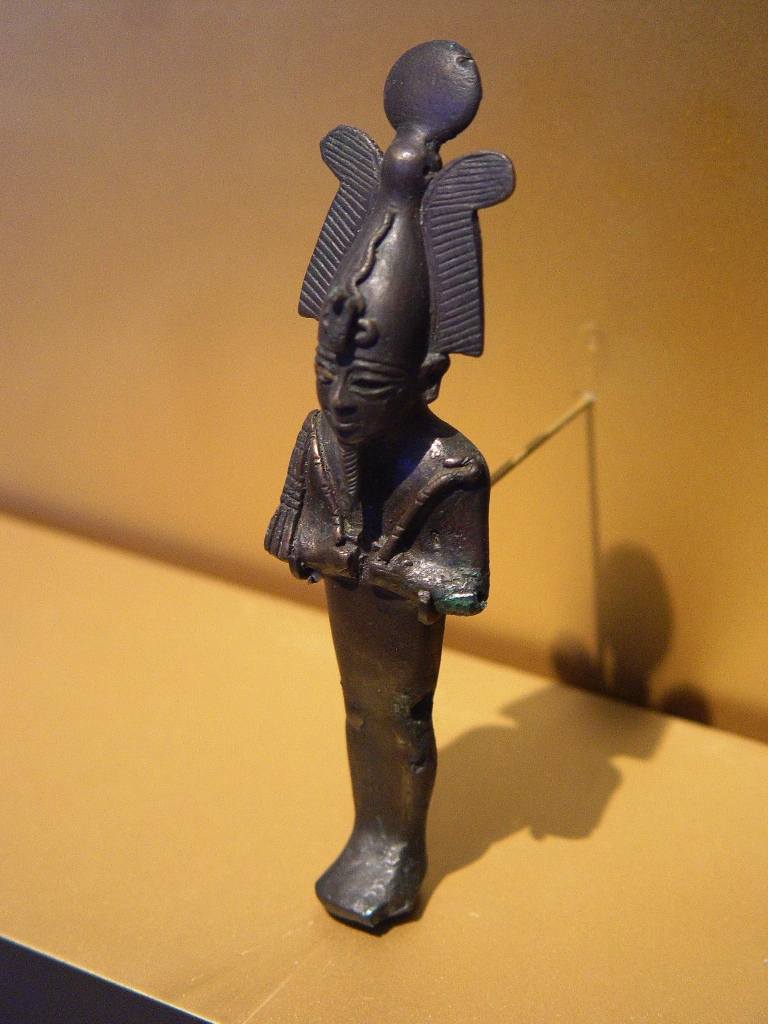
This plague was against the god Hapi, spirit of the Nile in flood and “giver of life to all men.” The annual innundation was called “the arrival of Hapi” (57). He was especially worshipped at Gebel Silsileh and Elephantine. The Nile water was the transformed life-blood of Osiris. The fact that the Nile turned to blood, which was abominable to Egyptians, was a direct affront to one of their chief gods. Although the fish-goddess was Hatmeyt, all the fish in the Nile River died! (Bible and Spade Vol. 4, No. 1, P. 4).

Osiris was believed to be the goddess of the afterlife.

The Goddess Osiris. Brooklyn Museum. Photo by Leon Mauldin.

By the way, I recently added the email subscription feature to this site. If you like, just enter your email address in the box provided, and you will receive notice when new posts are added to this site.


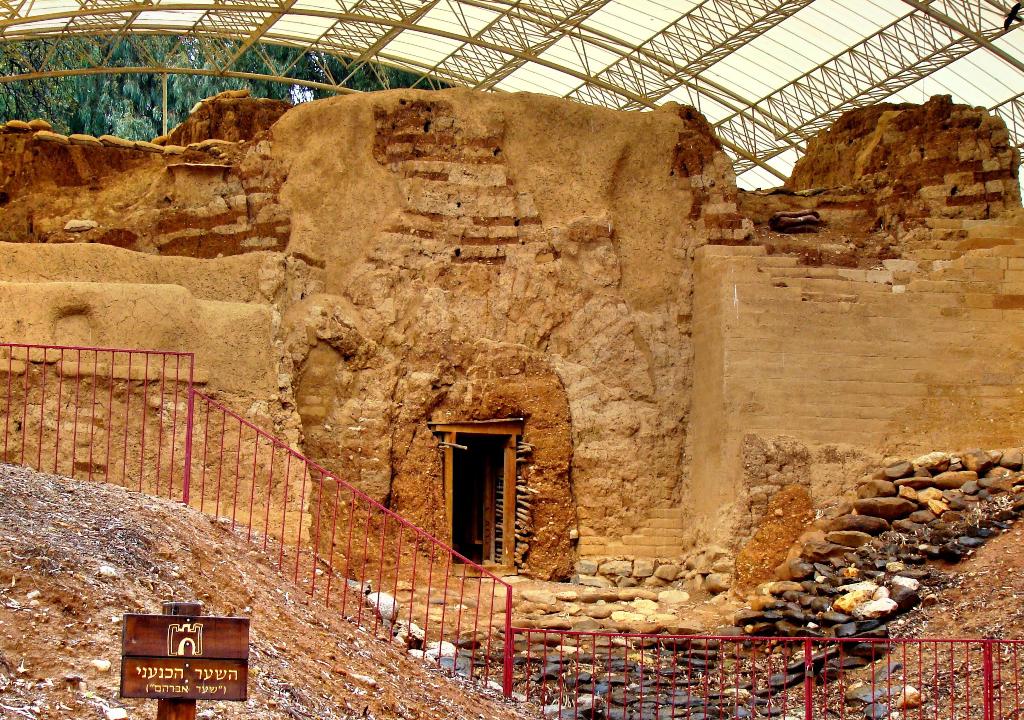
Canaanite Gate at Dan

April 21, 2011

Biblical Dan was a city of about 50 acres. It is located at the foothills of Mt. Hermon in northern Israel. It was situated on the main route from Galilee to Damascus.

One of the very exciting discoveries at Dan (1979)  is the mud-brick Canaanite Gate. Todd Bolen writes:

Built about 1800 B.C., this mudbrick gate was in use approximately 50 years before it was covered (and thus preserved) by an earthen rampart.

The style of the gate is typical for this period; it is a “Syrian gate” with three pairs of piers and four chambers, like those found at Megiddo, Shechem and Gezer.

Mud-brick Canaanite Gate at Dan. Photo by Leon Mauldin.

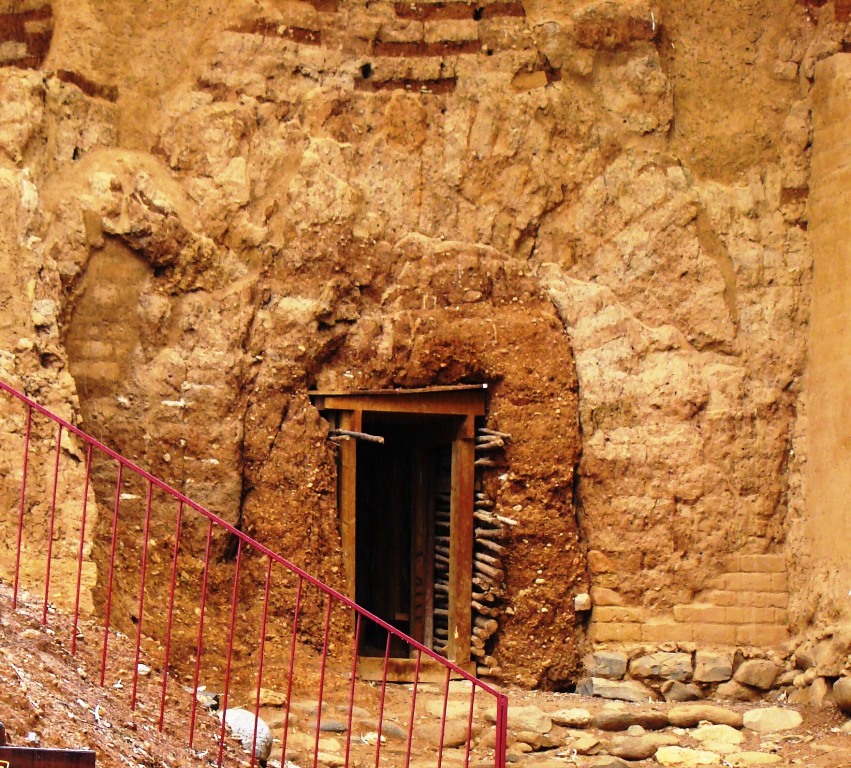
This is said to be the oldest known intact archway–nearly 4,000 years old. It is now under a great canopy for protection from the elements. Here is a closer view:

Close up of Canaanite Gate at Dan. Photo by Leon Mauldin.


Nazareth, Jesus’ Hometown

April 19, 2011

With the exception of the birth and very early childhood of Jesus (which was in Bethlehem and Egypt), Jesus lived in Nazareth until He was about the age of 30 (Luke 3:23).

On one occasion early in His Great Galilean Ministry, Jesus preached in His home town of Nazareth. Unfortunately, it was not well received, concluding with an attempt to push Jesus down to His death:

16 Now Jesus came to Nazareth, where he had been brought up, and went into the synagogue on the Sabbath day, as was his custom. He stood up to read, 17 and the scroll of the prophet Isaiah was given to him. He unrolled the scroll and found the place where it was written, 18 “The Spirit of the Lord is upon me, because he has anointed me to proclaim good news to the poor. He has sent me to proclaim release to the captives and the regaining of sight to the blind, to set free those who are oppressed, 19 to proclaim the year of the Lord’s favor.” 20 Then he rolled up the scroll, gave it back to the attendant, and sat down. The eyes of everyone in the synagogue were fixed on him. 21 Then he began to tell them, “Today this scripture has been fulfilled even as you heard it being read.” 22 All were speaking well of him, and were amazed at the gracious words coming out of his mouth. They said, “Isn’t this Joseph’s son?” 23 Jesus said to them, “No doubt you will quote to me the proverb, ‘Physician, heal yourself!’ and say, ‘What we have heard that you did in Capernaum, do here in your hometown too.'” 24 And he added, “I tell you the truth, no prophet is acceptable in his hometown. 25 But in truth I tell you, there were many widows in Israel in Elijah’s days, when the sky was shut up three and a half years, and there was a great famine over all the land. 26 Yet Elijah was sent to none of them, but only to a woman who was a widow at Zarephath in Sidon. 27 And there were many lepers in Israel in the time of the prophet Elisha, yet none of them was cleansed except Naaman the Syrian.” 28 When they heard this, all the people in the synagogue were filled with rage. 29 They got up, forced him out of the town, and brought him to the brow of the hill on which their town was built, so that they could throw him down the cliff. 30 But he passed through the crowd and went on his way (Luke 4:16-30).

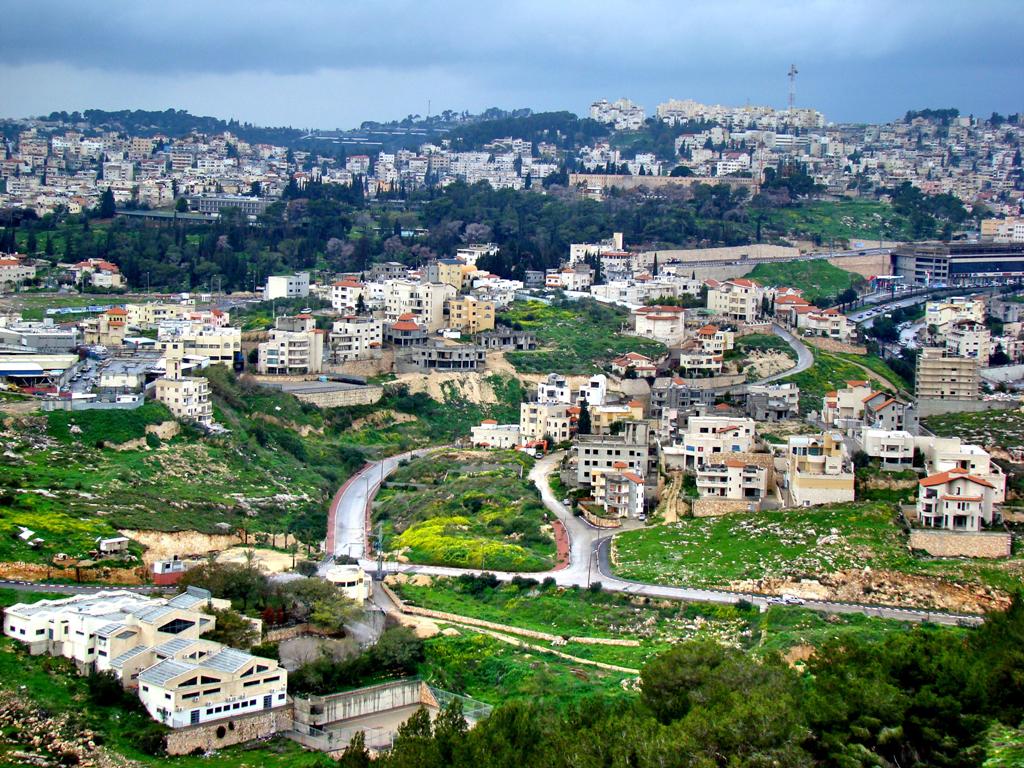
The traditional location of hill from which the residents of Nazareth attempted to push Jesus is known as the Mount of Precipice. It is 397 meters above sea level, and overlooks the Jezreel Valley.

Nazareth. View from Mt. Precipice. Photo by Leon Mauldin.

From here one has a good view of Nazareth.

Nazareth from Mt. Precipice. Photo by Leon Mauldin.

Buildings come and go, but the hills and valleys remain the same (as a rule). I.e., the landscape here pictured is what Jesus and his family would have seen.

Here at Nazareth is the Church of the Annunciation, which commemorates the angelic announcement to Mary of God’s choice of her to be the mother of Jesus (Lk. 1: 26-38).

Nazareth. Church of the Annunciation. Photo by Leon Mauldin.

Inside the church can be seen the spring which was the city’s water supply.

Click on images for higher resolution.


Megiddo Stables

April 17, 2011

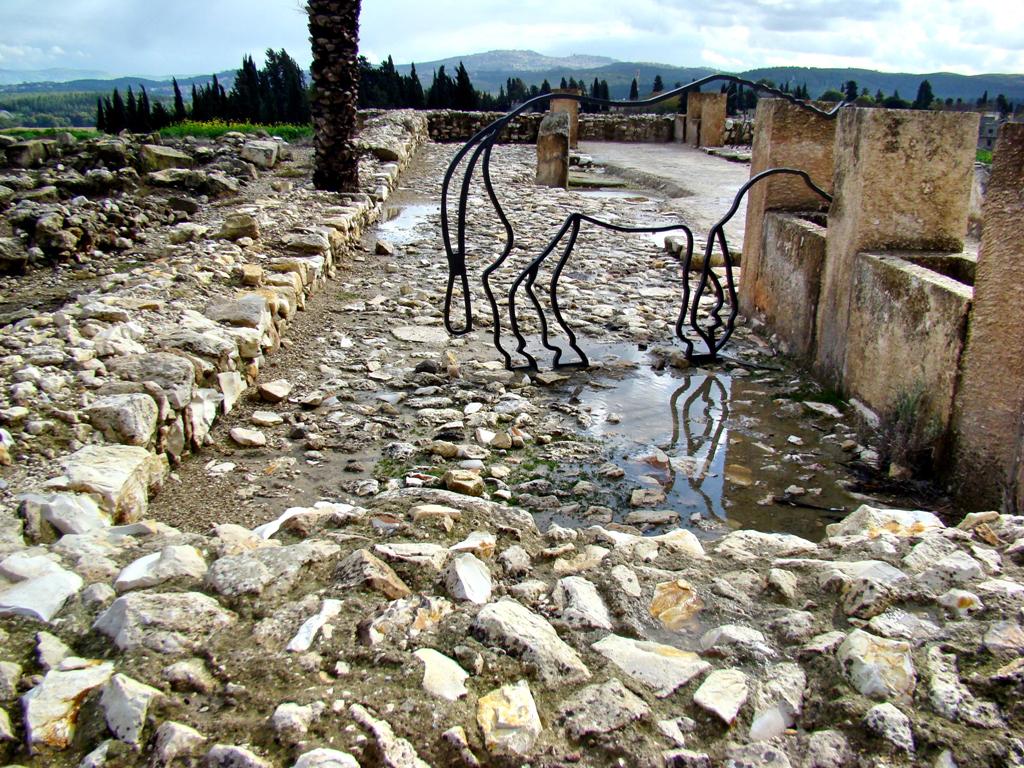
Another interesting discovery at Megiddo is the area which many believe were used for horse stables. The area seen in this photo is sometimes called “Solomon’s stables,” though many believe this should be dated a bit later to the time of King Ahab.

Stables at Megiddo. Photo by Leon Mauldin.

You can see the metal outline of a horse in our photo. Some suggest this site may have been used for barracks, market places, storage facilities, or other usages.

Click on photo for higher resolution.


Megiddo Water System

April 16, 2011

It would be hard to overemphasize the importance of the city of Megiddo. We have referenced the strategic location in our two previous posts. Crucial battles were fought here.

Excavations conducted at Megiddo have been “large and extensive,” and include the efforts of the German Society for Oriental Research (1903-1905), the Oriental Institute of Chicago (1925-1939). Excavations were interrupted with the outbreak of WWII, but were renewed by the Institute of Archaeology at the Hebrew University of Jerusalem (1960, 1961, 1966, 1967, and 1971) under the leadership of Y. Yadin (The New Encyclopedia of Archaeological Excavations in the Holy Land, Vol. 3, pp. 1005-1005).

More recent excavations have been undertaken by Tel Aviv University, with Pennsylvania State University as the senior American partner (ibid. Vol. 5, pp. 1944ff.).

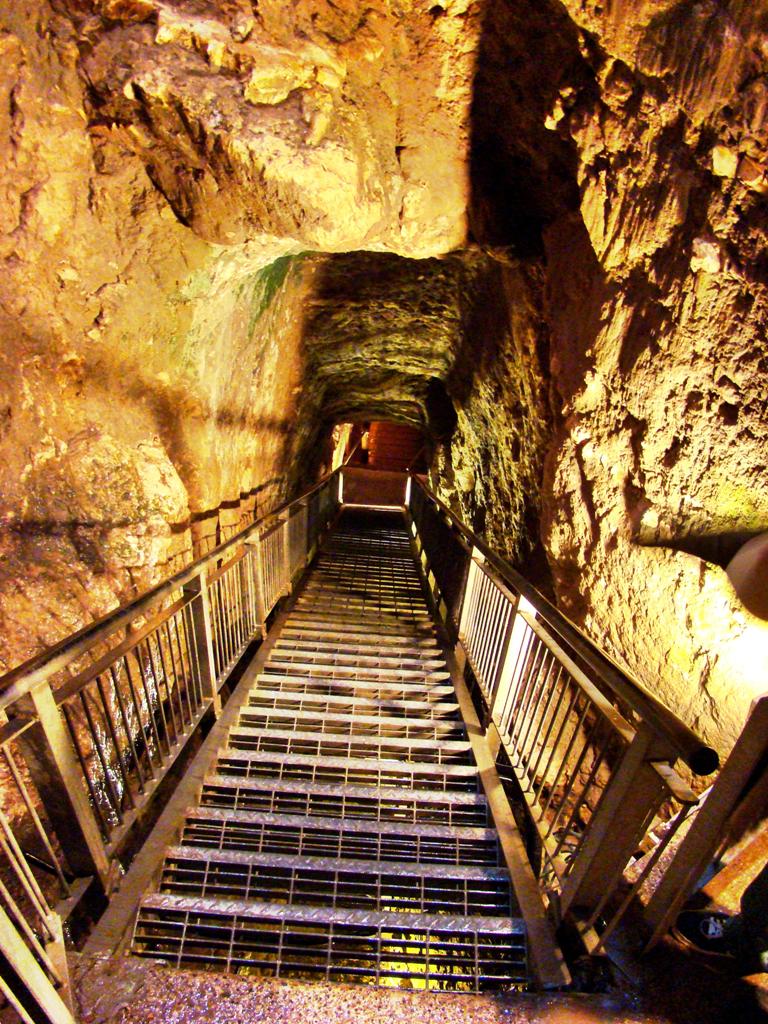
Among the more interesting discoveries is Megiddo’s water system. A 70 meter tunnel hewn through rock led down to the spring.

Megiddo. Tunnel to city spring. Photo by Leon Mauldin.

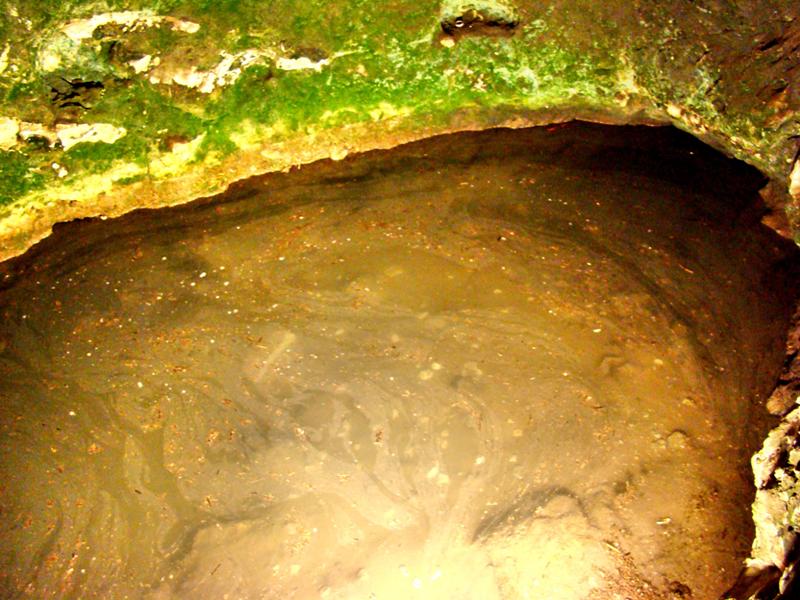
This dates back to the time of Israel’s king Ahab (874-853 BC). Prior to this engineering feat, it was necessary to go outside the city walls to access the spring.

Megiddo Spring. Citys water supply. Photo by Leon Mauldin.

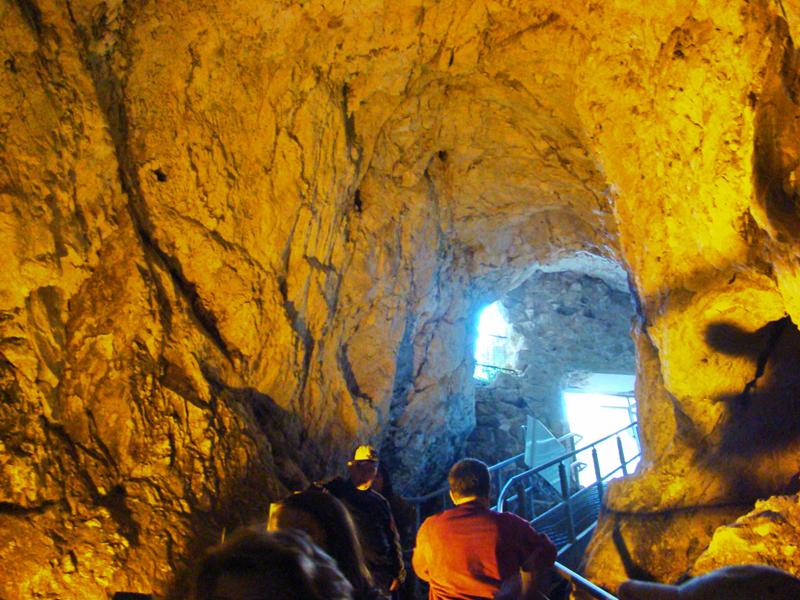
Here is a view from going up from the spring as you exit:

Megiddo. Exit from spring. Photo by Leon Mauldin.

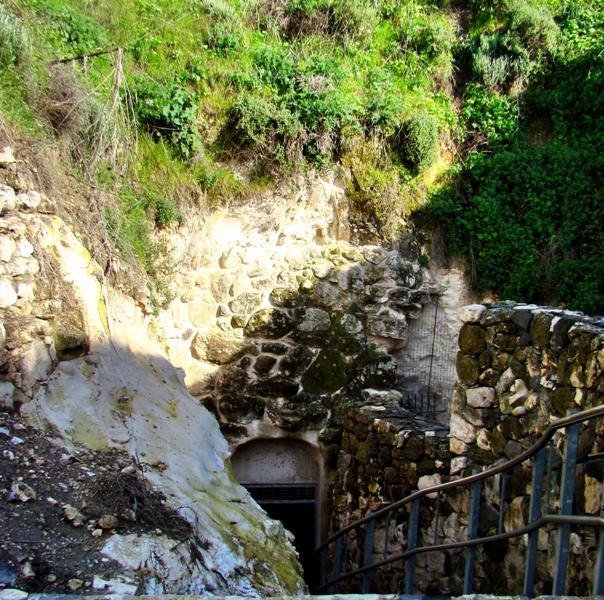
And finally, a view back to the exit of the spring.

Megiddo. Outside Water System Exit. Photo by Leon Mauldin.

In our next post we plan to feature the stables of Megiddo.


Canaanite Altar at Megiddo

April 13, 2011

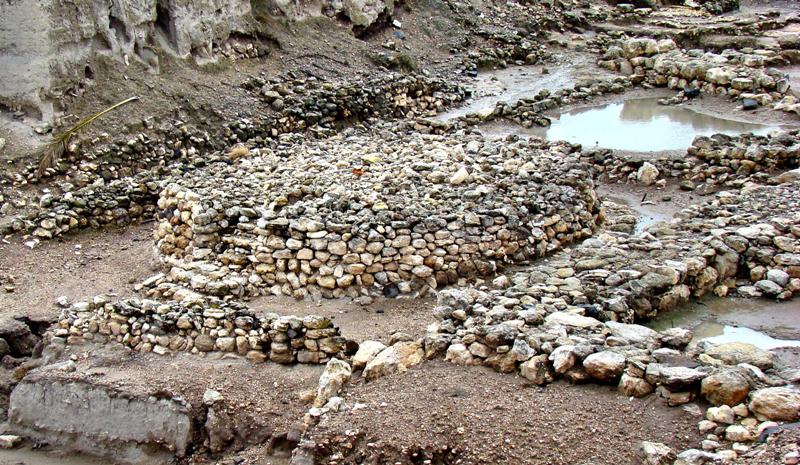
Archaeologists have discovered more than 20 layers of occupation at the ancient city of Megiddo.The city was strategically situated on the route that came to be known as the Via Maris, the ancient trade route that connected Egypt with Syria and Mesopotamia.

One of the more interesting finds is the circular Canaanite altar. It is nearly 26 feet in diameter and about five feet in height. This would have been used by the Canaanites in their pagan worship, and very likely was the site of human sacrifice. You can see the altar in the center of our photo.

Canaanite Altar at Megiddo. Photo by Leon Mauldin.

This illustrates the kind of thing God had in mind when He commanded Moses, “. . . you are to tear down their altars and smash their sacred pillars and cut down their Asherim” (Ex. 34:13). Likewise, in Deut. 12:3, “You shall tear down their altars and smash their sacred pillars and burn their Asherim with fire, and you shall cut down the engraved images of their gods and obliterate their name from that place.”

In the foreground of the photo and also to the right of the altar you can see the outline of the Canaanite temple.


Megiddo

April 6, 2011

Megiddo is first mentioned in Scripture in Joshua 12:21 as one of the cities captured under the leadership of Joshua and assigned to the tribe of Manasseh (17:11). Nelson’s NIBD speaks of the importance of this site:

Megiddo was situated on the main road that linked Egypt and Syria. Overlooking the Valley of Jezreel (Plain of Esdraelon), Megiddo was one of the most strategic cities in Palestine. All major traffic through northern Palestine traveled past Megiddo, making it a strategic military strong-hold.

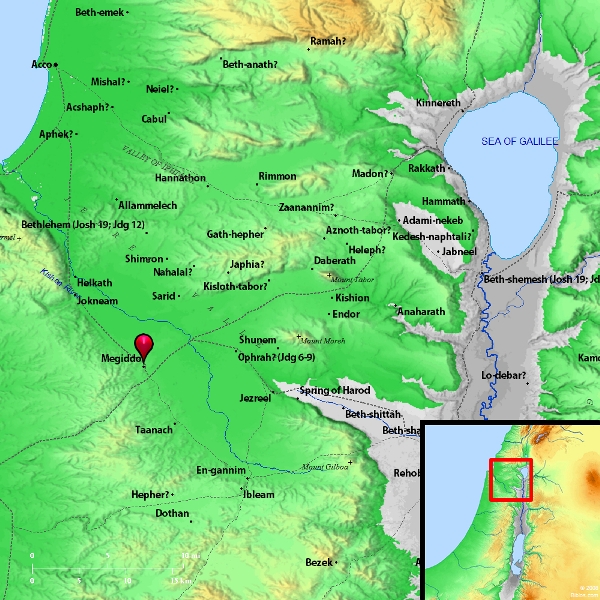
Therefore it was a great loss when Israel subsequently did not retain this city (Judges 1:27), whose location can be seen in the map below:

Megiddo. Map courtesy of BibleAtlas.org

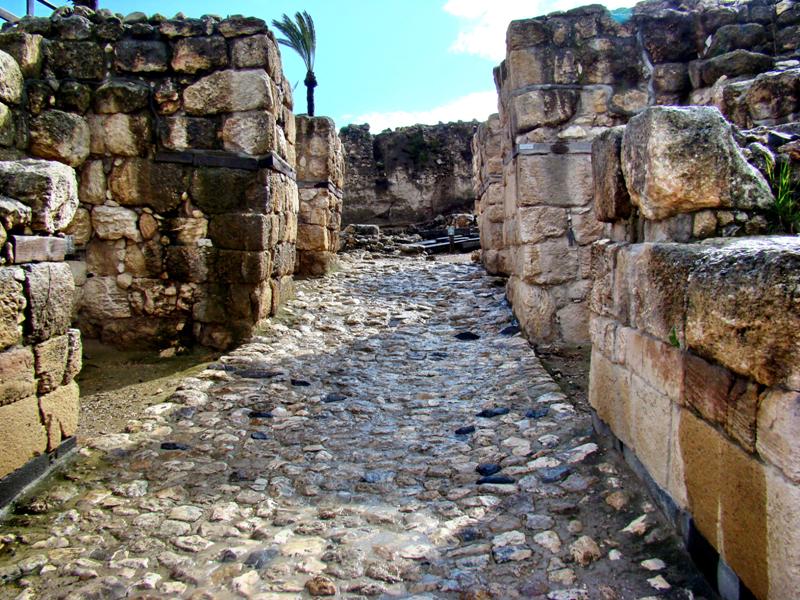
Megiddo was a city of great antiquity. The impressive Canaanite gate can be seen here in our photo:

Canaanite Gate at Megiddo. Photo by Leon Mauldin.

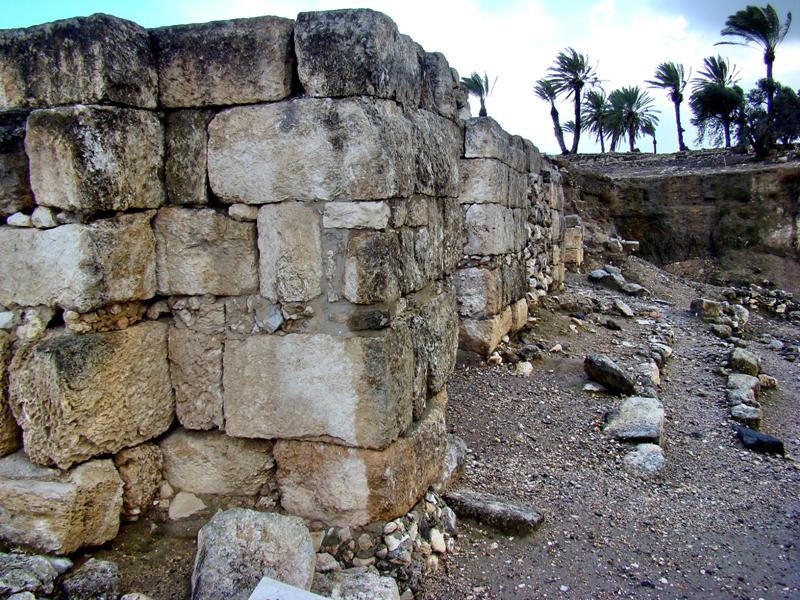
This was one of the cities later fortified by King Solomon (1 Kings 9:15) during the United Kingdom period (Iron Age). The Solomonic gate was here:

Solomonic Gate at Megiddo, a fortress city. Photo by Leon Mauldin.

Crucial battles were fought here or near here.

1.During the time of the Judges, Barak’s forces (Deborah was the Judge and Prophetess) defeated the Canaanite enemy near here (Judges 4-5). From Megiddo one can easily see Mt. Tabor, mentioned in the account (4:14) ; Judges 5:19 refers to the “waters of Megiddo.”

2. In 2 Kings 9:27, Judah’s king Ahaziah died here by the hand of Jehu; the year was 841 BC.

3. Good King Josiah (also of Judah) was killed here by Pharaoh Necho of Egypt; the year was 609 BC.

4. The word Armageddon (Rev. 16:16) is rendered Har-Magedon by the NASB and means The Mount of Magedon, i.e., Mt. Megiddo.

Click on images for higher resolution.