“We Remember the Fish” (in good ole Egypt)

August 5, 2012

Memory is an amazing thing. I view it as a gift from God. One of the saddest events imaginable is for one to lose his memory, his ability to remember and recall life’s experiences, what one has learned, etc.

The ability to learn God’s word and apply it to life’s circumstances is a blessing. For that reason I encourage especially young people to spend much time in memorization of God’s word.

If one does not incline his heart Godward, memory can be amazingly quirky. When the nation of Israel was yet in Egypt, all they could think about was their harsh treatment meted out by cruel taskmasters. In their affliction they cried out to God.

God brought them out of Egypt after a mighty display of His power with the 10 plagues, referenced by God Himself as judgments against the gods of Egypt (Exodus 6:6; 12:12). They crossed the Red Sea, and made their way to Sinai, where they encamped for 11 months. During this time they received the Ten Commandments (along with its other laws), built the tabernacle, and consecrated the Aaronic priesthood (Ex. 19-Num. 10).

God was mindful of His covenant with Abraham; at that point it was time to grant Israel possession of the promised land of Canaan. At His command and direction Israel began to march (Num. 10:11ff). But immediately they lost sight of God’s lofty purpose with them and began to murmur (Num. 11:1).

One such instance of murmuring is related:

Now the mixed multitude who were among them yielded to intense craving; so the children of Israel also wept again and said: “Who will give us meat to eat? 5 “We remember the fish which we ate freely in Egypt, the cucumbers, the melons, the leeks, the onions, and the garlic; 6 “but now our whole being is dried up; there is nothing at all except this manna before our eyes!”

Talk about selective memory! Talk about rewriting history! The New Testament identified the problem as a lack of faith (Heb. 3-4). Stephen showed that the heart of the problem was a problem of the heart: “in their hearts they turned back to Egypt” (Acts 7:39).
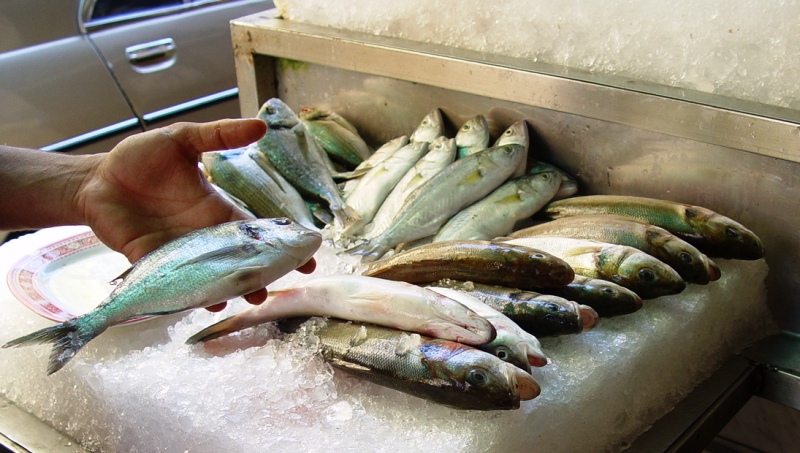
Fish in Alexandria, Egypt. Photo by Leon Mauldin.

I photographed these fresh fish at a local restaurant in Alexandria. My daughter and I dined there.

Israel remembered the fish, but forgot God’s purpose for them. Photo by Leon Mauldin.

Click images for larger view.


Court of Amenhotep III at Thebes

July 6, 2012

In the oracle against Egypt, God said, “I will make Pathros desolate, Set a fire in Zoan and execute judgments on Thebes” (Ezekiel 30:14). “The phenomenal city [Thebes]was the center of Upper Egypt, and the seat of government during most of the time of Egyptian world power” (Bible and Spade, Vol. 7, p. 33).

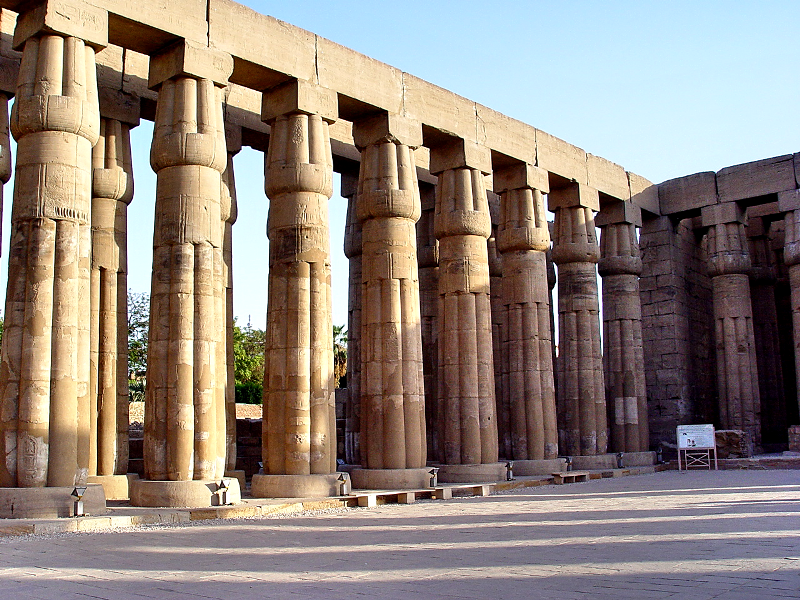
This shot of the Luxor temple at Thebes shows the court of Amenhotep III (reigned 1390-1352 BC), with its double rows of massive columns.

Court of Amenhotep III, at Luxor, biblical Thebes. Photo by Leon Mauldin.

An article in Biblical Archaeological Review entitled “Egyptian Finds Uncovered in Jaffa,” by Judith Sudilovsky contained an interesting reference to Amenhotep III. The mention of Jaffa (biblical Joppa) in this excavation report illustrates the fact that Egyptian rule/influence often included the land of Canaan (and far beyond):

. . . The team also found a 3.5-inch Egyptian scarab, dating to the reign of Pharaoh Amenhotep III (1390–1352 B.C.). The eight lines, engraved in hieroglyphs, enumerate the pharaoh’s achievements, proclaiming his prowess as a hunter and declaring that he had killed 102 lions during the first ten years of his reign. According to the team’s Egyptologist, Deborah Sweeney, such seals were typically sent to the edges of the Egyptian kingdom to praise and glorify the king (BAR 26:02 March/April 2000).

Click image for larger view.


Daniel’s Babylon

July 5, 2012

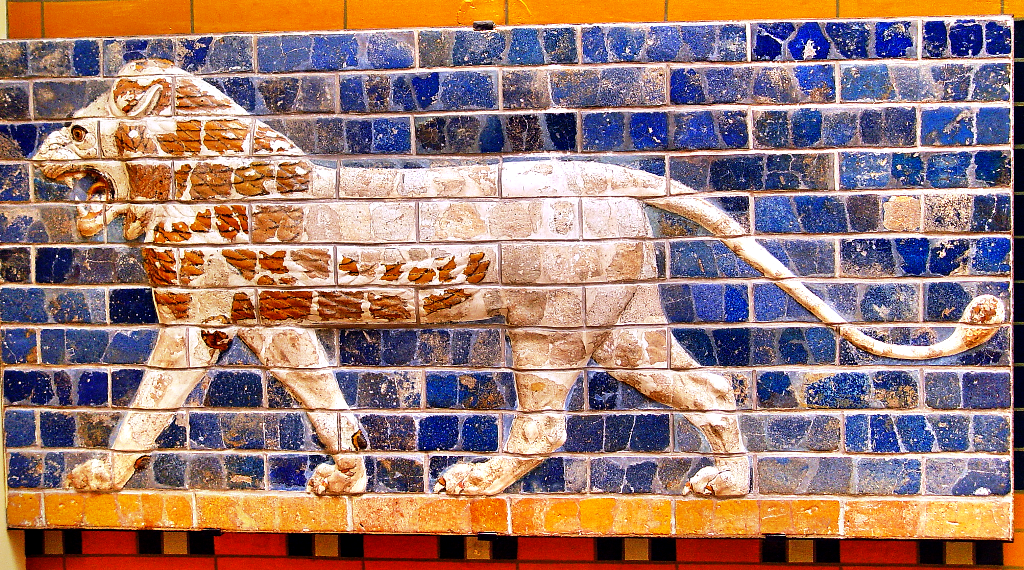
This lion in glazed brick from the Processional Way, Babylon, dates back to Nebuchadnezzar, king of Babylon 605-562 BC. This lion (among other animals) is now in the Archaeology museum in Istanbul. Perhaps this can help us visualize the challenge to Daniel’s faith as he was cast into a den of lions by the Medo-Persian king, Darius.

Lion from Processional Way, Babylon. Photo by Leon Mauldin.

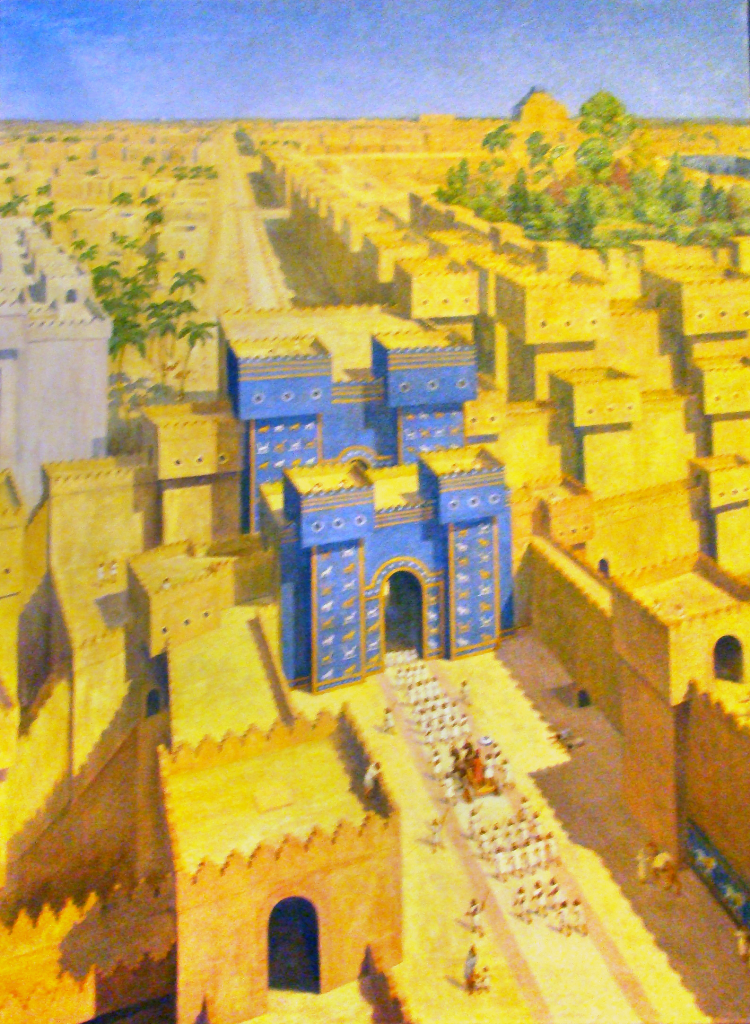
A beautiful painting of ancient Babylon, built by Nebuchadnezzar, is displayed in the Oriental Institute Museum in Chicago.

Artist conception of ancient Babylon. Photo by Leon Mauldin.


Stele of Nabonidus

June 29, 2012

The king reigning at the time of Daniel 5 is Belshazzar. Actually he had a co-regency with his father, Nabonidus (556–539 B.C.). In the context of Daniel 5, the 70 years of captivity which began in 605 B.C. are almost complete. Daniel, who was a youth as the book begins in ch. 1, now would have been an old man. When Belshazzar made a drinking feast for a thousand of his nobles, they were drinking wine out of the gold vessels taken from the Solomonic temple in Jerusalem (at the 586 B.C. destruction by Nebuchadnezzar). This is when the fingers of a man’s hand emerged, writing on the plaster of the wall of the king’s palace. The terrorized king, at the suggestion of the queen, called for Daniel to interpret the writing on the wall. He offered Daniel clothing of purple, a chain of gold and third place in the kingdom, if Daniel would give the interpretation.

This stele of Nabonidus, was discovered in Haran. He holds the scepter, while worshipping three deities, represented by the moon, the sun, and Venus. The deities represented are Sin, Shamash, and Ishtar. Nabonidus spent much of his time outside of Babylon and was out of touch with his administrative duties.

Nabonidus Stele. Discovered at Haran. Photo by Leon Mauldin.


Colossi of Memnon

June 13, 2012

Jesuit Claude Sicard (1677-1726) was commissioned by the French regent Philippe d’Orléans to investigate and identify ancient monuments in Egypt. Sicard visited Upper Egypt four times and was the first in modern times to identify the site of Thebes as well as the colossi of Memnon and the Valley of the Kings.

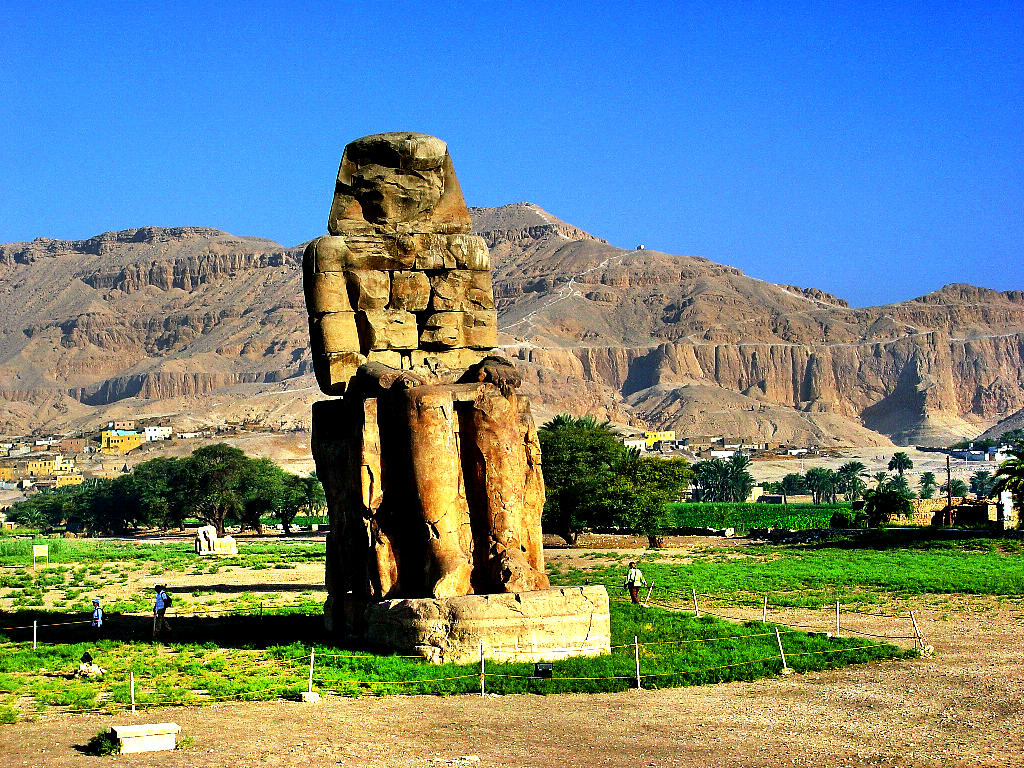
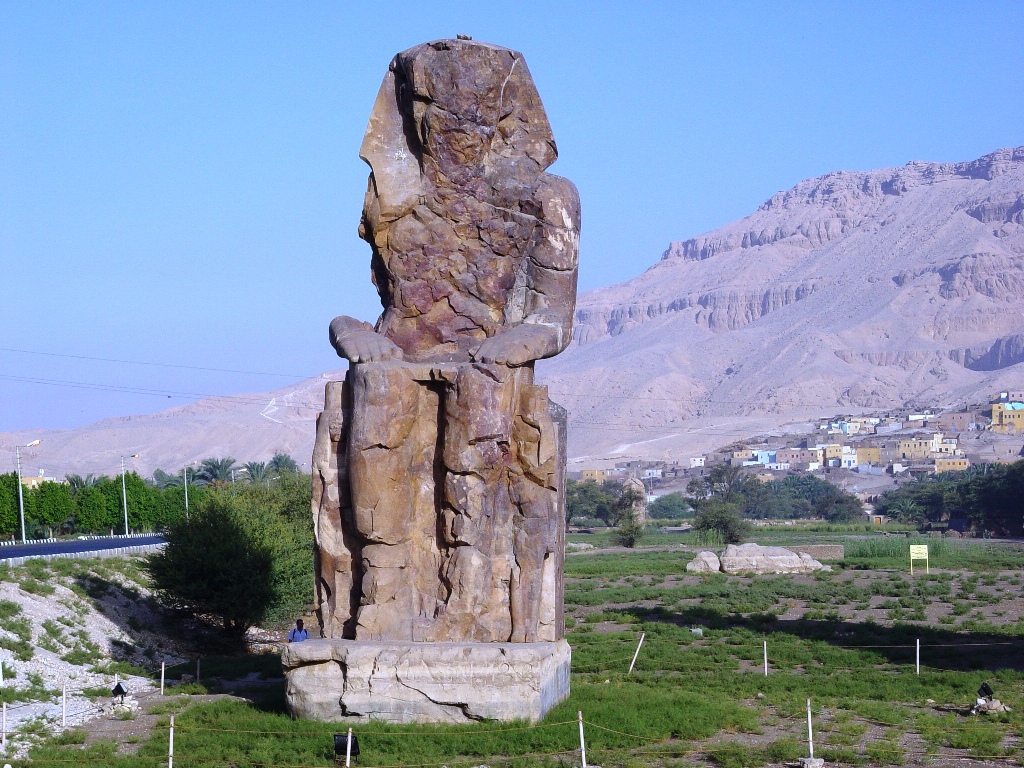
The Memnon Colossi mark the site of the temple of Pharaoh Amenophis III (reigned 1391-1353 BC, Baines & Malek, p. 36). These two massive stone statues depict the Pharaoh, and are positioned in the Theban necropolis, on the west side of the Nile across from Luxor.

Colossi of Memnon. Photo by Leon Mauldin.

This statue is 55 feet tall, on a base of about 5 feet in height. See people on ground for scale. Nebuchadnezzar’s image (Daniel 3) towered 30 feet higher than this!

Colossi of Memnon. Photo by Leon Mauldin.

In his commentary on Daniel, Albert Barnes makes an interesting point regarding the great image Nebuchadnezzar made (Daniel 3) and the possible relation of that to the colossi of Memnon:

It is not impossible that Nebuchadnezzar was led, as the editor of Calmet’s Dictionary has remarked (Taylor, vol. iii. p. 194), to the construction of this image by what he had seen in Egypt. He had conquered and ravaged Egypt but a few years before this, and had doubtless been struck with the wonders of art which he had seen there. Colossal statues in honour of the gods abounded, and nothing would be more natural than that Nebuchadnezzar should wish to make his capital rival everything which he had seen in Thebes. Nor is it improbable that, while he sought to make his image more magnificent and costly than even those in Egypt were, the views of sculpture would be about the same, and the figure of the statue might be borrowed from what had been seen in Egypt.

It is not impossible that Nebuchadnezzar was led, as the editor of Calmet’s Dictionary has remarked (Taylor, vol. iii. p. 194), to the construction of this image by what he had seen in Egypt. He had conquered and ravaged Egypt but a few years before this, and had doubtless been struck with the wonders of art which he had seen there. Colossal statues in honour of the gods abounded, and nothing would be more natural than that Nebuchadnezzar should wish to make his capital rival everything which he had seen in Thebes. Nor is it improbable that, while he sought to make his image more magnificent and costly than even those in Egypt were, the views of sculpture would be about the same, and the figure of the statue might be borrowed from what had been seen in Egypt. An illustration of the subject before us is furnished by the preceding engraving, from a photograph, of the two celebrated colossal figures of Amunoph III. standing in the plains of Goorneh, Thebes, one of which is known as the Vocal Memnon. (Barnes, A.,  Notes on the Old Testament: Daniel, Volume 1, p.204).

Regarding the meaning of the word Memnon,

Memnon was a hero of the Trojan War, a King of Ethiopia who led his armies from Africa into Asia Minor to help defend the beleaguered city but was ultimately slain by Achilles. The name Memnon means “Ruler of the Dawn”, and was probably applied to the colossi because of the reported cry at dawn of one of the statues. Eventually, the entire Theban Necropolis became generally referred to as the Memnonium (Wikipedia).

Click images for larger view.


Monastery of St. Barnabas at Salamis

May 25, 2012

BAS has this information re: the island of Cyprus:

Cyprus served as a stepping stone on the trade routes that crossed the eastern Mediterranean. Archaeological remains from as early as the Early Bronze Age (3rd millennium B.C.E.) show it to have been a cultural meeting ground and “melting pot” for the successive cultures that flourished on all sides of it.

Salamis was the main port and principal city of the island in the Roman age. Located about five miles north of modern Famagusta, on its great bay, the city has yielded extensive Roman remains, including a theater, gymnasium, baths and a forum (BAS Biblical World in Pictures).

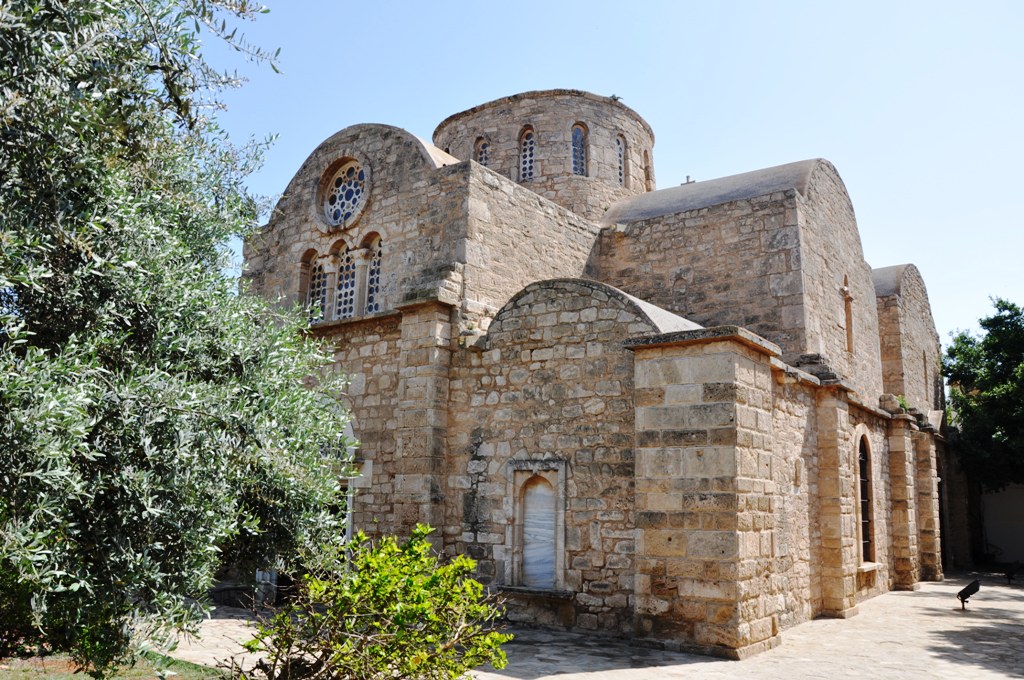
Our photo features the Monastery of St. Barnabas at Salamis.

Monastery of St. Barnabas at Salamis, Cyprus. Photo by Leon Mauldin.

We are introduced to Barnabas as a “Levite of Cyprian birth” (Acts 4:36). He, along with Paul, preached at Cyprus on the 1st Missionary Journey (Acts 13:1-5). Then when it was time for the 2nd Journey, Paul traveled with Silas, revisiting Galatia and going onward to Macedonia and Greece, and Barnabas took John Mark back to Cyprus (Acts 15:39).

The earliest buildings of the monastery  date to AD 477.


Attalia, Modern Antalya, Setting for Acts 14

May 23, 2012

Narrating the return portion of Paul’s 1st Missionary Journey, Luke writes, “Now when they had preached the word in Perga, they went down to Attalia” (Acts 14:25). There is no record of preaching at Attalia, but it was there that Paul and Barnabas boarded a ship: “From there they sailed to Antioch, where they had been commended to the grace of God for the work which they had completed” (v.26).

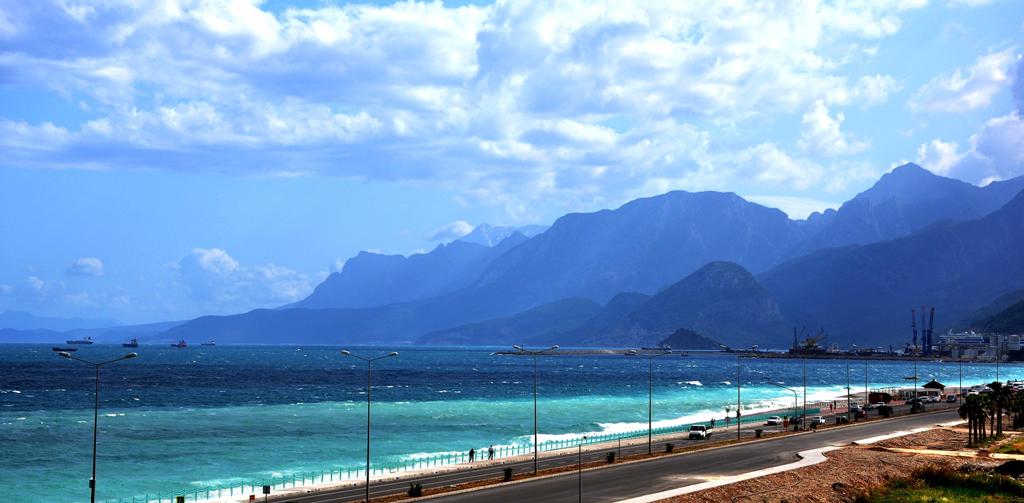
Biblical Attalia is now Antalya, and

is a city on the Mediterranean coast of southwestern Turkey. It was the world’s third most visited city by number of international arrivals in 2011, displacing New York, and had a population of 1,001,318.[1] Antalya is the eighth most populous city in Turkey and country’s biggest international sea resort. (Wikipedia)

Our interest of course is in the relation of the places to the biblical text as this site provides the setting for Acts 14:25-26. At Antalya you have a view of the Lycian Mountains, which is a portion of the Taurus range.

At Biblical Attalia. View of Mediterranean Sea and Lycian Mountains. Photo by Leon Mauldin.

Click image for larger view.


Theater at Salamis, Cyprus

May 17, 2012

It was an exciting time in the early church as Luke narrates his inspired history in Acts 13:

Now in the church that was at Antioch there were certain prophets and teachers: Barnabas, Simeon who was called Niger, Lucius of Cyrene, Manaen who had been brought up with Herod the tetrarch, and Saul. 2 As they ministered to the Lord and fasted, the Holy Spirit said, “Now separate to Me Barnabas and Saul for the work to which I have called them.” 3 Then, having fasted and prayed, and laid hands on them, they sent them away. 4 So, being sent out by the Holy Spirit, they went down to Seleucia, and from there they sailed to Cyprus. 5 And when they arrived in Salamis, they preached the word of God in the synagogues of the Jews. They also had John as their assistant.

Ferrell Jenkins and I had opportunity to visit Salamis today. Fant and Reddish observe that “more than 4 miles of walking are required to cover the entire site” (A Guide to Biblical Sites in Greece and Turkey, p. 542). It is a large site, and does not have the features of your typical tel.

The apostle Paul’s pattern upon entering a city, as seen here in our text of Acts 13, was to begin his preaching in the synagogue. Though Luke almost always describes the results of the preaching, whether favorable or not, he does not do so here.

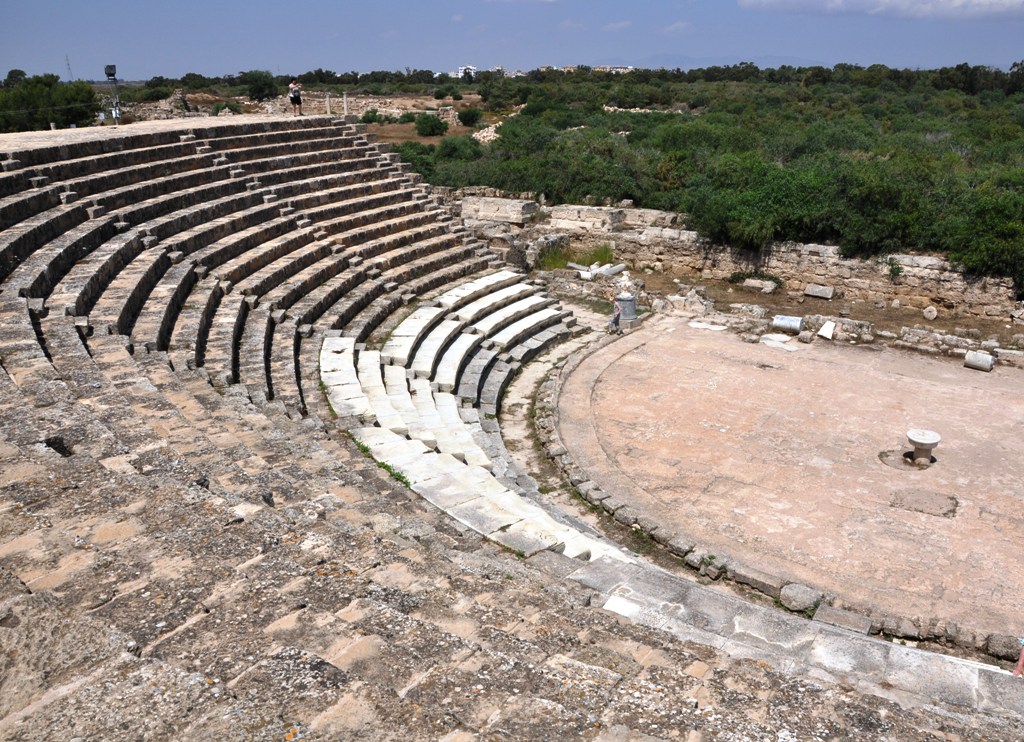
Roman cities of significance typically had a theater. Our photo shows the theater at Salamis.

Salamis Theater. Photo by Leon Mauldin.

This theater would have once seated 15,000 spectators (ibid), making it the largest on the island of Cyprus.

Click image for larger view.


The Tabularium

May 15, 2012

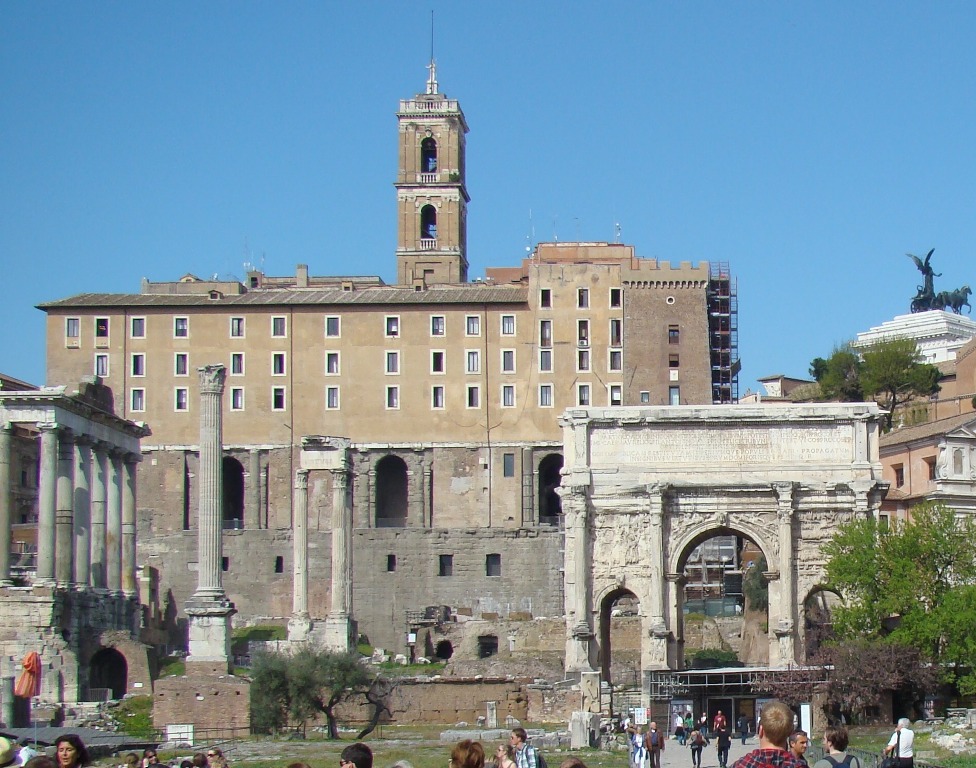
We continue to explore the Roman Forum. In our photo below we see the Tabularium, the large building in the back.

Tabularium in Roman Forum. Photo by Leon Mauldin.

“Tabularium” is a term for a record building. A number of other tabularia were scattered around Rome and other ancient Roman cities, but this article is about the prototype example.

The Tabularium was the official records office of ancient Rome, and also housed the offices of many city officials. Situated within the Roman Forum, it was on the front slope of the Capitoline Hill, below the Temple of Jupiter Optimus Maximus, to the southeast of the Arx and Tarpeian Rock.

Within the building were the remains of the temple of Veiovis. In front of it were the Temples of Vespasian & Concord, as well as the Rostra and the rest of the forum. Presently the Tabularium is only accessible from within the Capitoline Museum, although it still affords an excellent panoramic view over the Forum.

The Tabularium was first constructed around 78 BC, by order of M. Aemilius Lepidus and Q. Lutatius Catulus. It was later restored and renovated during the reign of the Emperor Claudius, about 46 AD. (Wikipedia).

The lower level, the gray portion, is the Roman period; upper level was built later.

In a entry entitled “Obtaining Citizenship,” (Roman citizenship) F.F. Bruce is referenced as stating

that legislation at the turn of the first century A.D. called for a legitimately born child of Roman citizens to be registered within thirty days of birth. Children born in the provinces would be legally acknowledged (professio) before the Roman provincial authority at the public record office (tabularium publicum). The professio was then entered in the register (album professionum). We do not know if Paul’s birth was before or after this legislation, but some such formal procedure had to have been in effect earlier. At regular intervals a citizen’s name, age, status and property holdings would thereafter be recorded by census. (Dictionary of New Testament Background: A Compendium of Contemporary Biblical Scholarship.)

At right in the photo you can see the Arch of Septimius Severus, dedicated in AD 203.

*******

At present I am en route to Cyprus to join Ferrell Jenkins for a few days of photographing biblical sites, and biblically related sites, in Cyprus and Turkey.

Click on image for larger view.


Temple of Vespasian and Titus

May 4, 2012

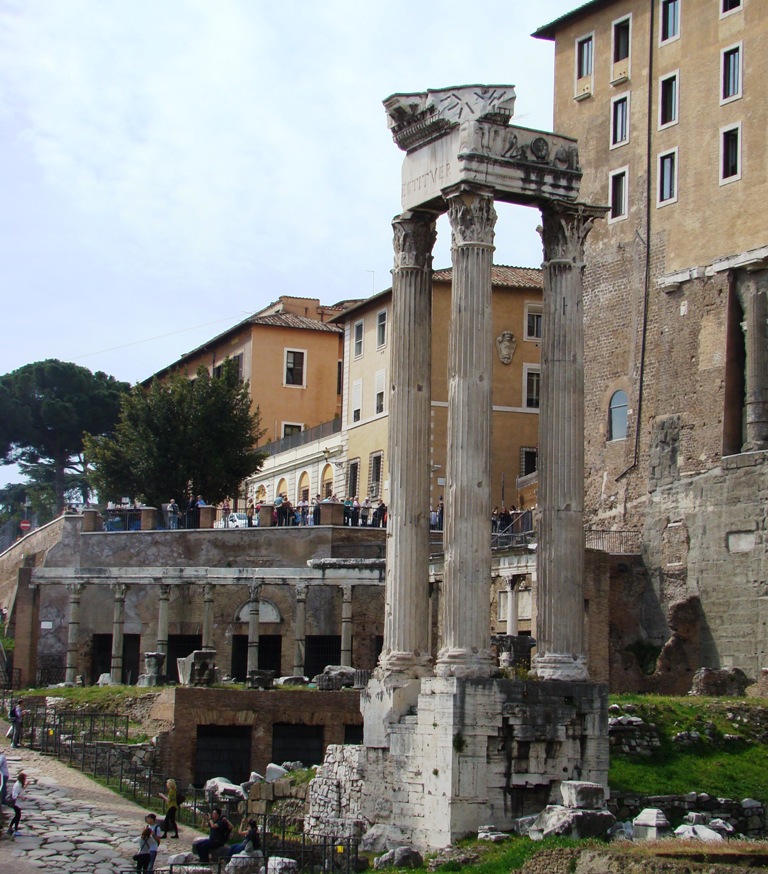
In our post today we continue to share some photos of sites of signifance in the Roman Forum. Today’s photo features the Temple of Vespasian and Titus.

Temple of Vespasian and Titus in Roman Forum. Photo by Leon Mauldin.

Wikipedia has some helpful generic info:

The Temple of Vespasian and Titus (Latin: Templum divi Vespasiani, Italian: Tempio di Vespasiano) is located in Rome at the western end of the Roman Forum between the Temple of Concordia and the Temple of Saturn. It is dedicated to the deified Vespasian and his son, the deified Titus. It was begun by Titus in AD 79 after Vespasian’s death and Titus’s succession. Titus’ brother, Domitian, completed and dedicated the temple to Titus and Vespasian in approximately AD 87.

Throughout Roman history, there was an emphasis on increasing the fame and glory of a family name, often through monuments commemorating the deceased. Therefore, the temple was constructed to honor the Flavian Dynasty, which comprised the emperors Vespasian (69-79), Titus (79-81), and Domitian (81-96). Historians question whether or not Titus and Domitian had a good relationship; however, Domitian ensured the deification of his brother into the imperial cult in order to exalt the prominence of the Flavian name. Titus and Vespasian were each deified through the ceremony of apotheosis. In doing so, tradition guaranteed that Roman citizens and subjects would honor Vespasian and Titus (or at least honor their genius) as Roman deities. This imperial cult worship was as much a sign of allegiance to the emperor of Rome, or as a political and diplomatic gesture, as it was a formal religion.

Structure. The Temple of Vespasian was in the Corinthian order, hexastyle (i.e., with a portico six columns wide), and prostyle (i.e., with free standing columns that are widely spaced apart in a row).[4] It was particularly narrow due to the limited space, measuring 33 meters long and 22 wide. In a constricted space between the temple and the Concord, a small, two story vaulted room made of brick and concrete, and lined with marble, was built against the wall of the Tabularium, and apparently was dedicated to Titus.

Construction and Renovation. Titus began construction and presumably finished the foundations, made of tufa concrete, and the core of the podium, made of white marble. Domitian, however, completed the interior work after Titus’ death. The cella (inner) walls were in travertine, lined with marbles imported at great expense from the eastern provinces. The interior is highly ornate and the frieze depicts sacred objects that would have been used as the symbols, or badges, of the various priestly collegia in Rome. Around 200 to 205, Emperors Septimius Severus and his son, Caracalla, conducted renovations on the temple.

Click on image for larger view.