June 5, 2018
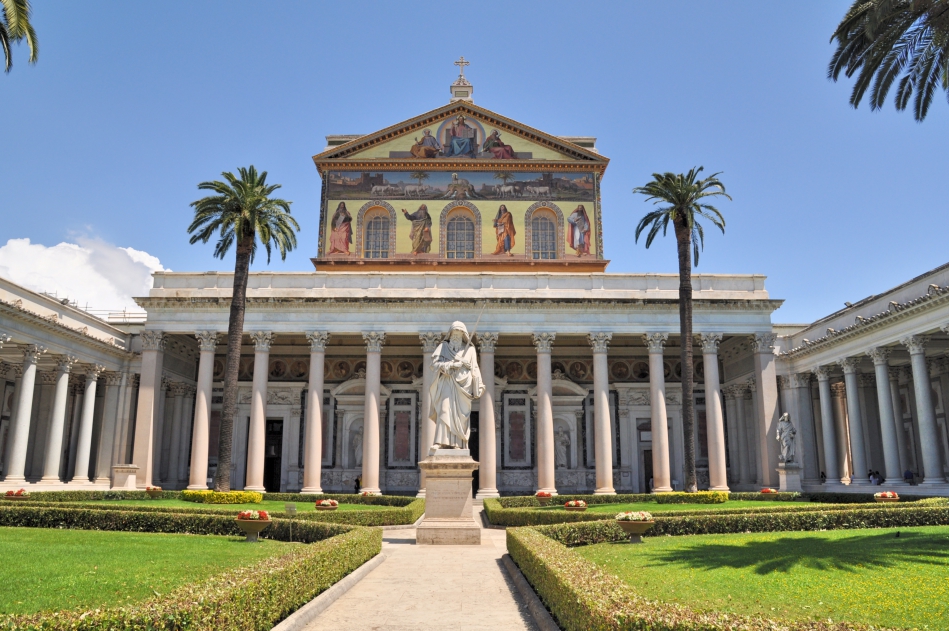
My group arrived safely Tuesday morning in Rome. We visited the Papal Basilica of St. Paul outside the Walls, as well as other stops, including the catacombs, as time permitted before dinner. This building was constructed to honor the martyrdom of Paul.
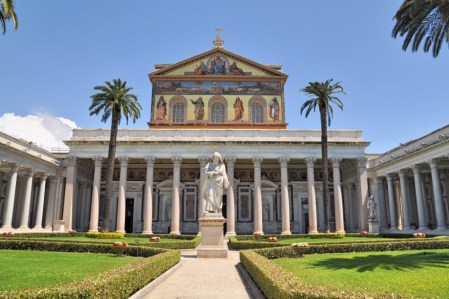
The facade at the quadriportico at the Basilica of st. Paul outside the Walls. Photo by Leon Mauldin.
As a result of the Edict of Milan in the year 313 AD, the official persecution of Christians cease. The Emperor Constantine had a basilica built over the tomb venerated as that of the Apostle Paul.
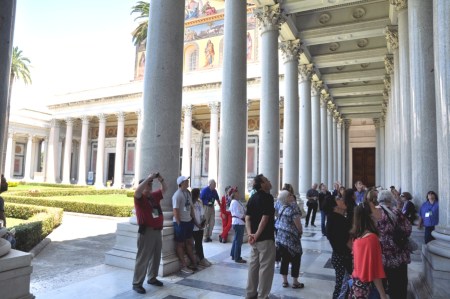
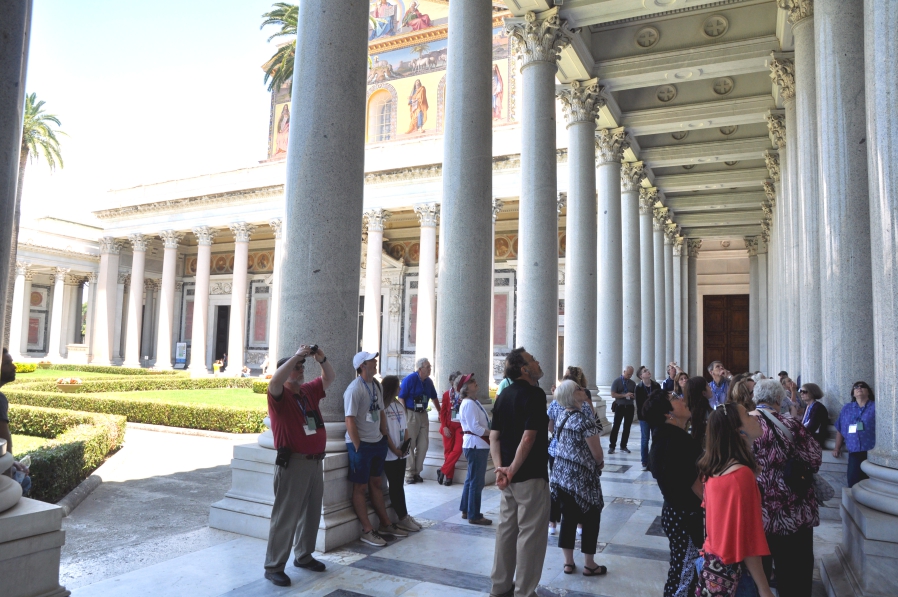
Group shot at the basilica. Photo by Leon Mauldin.
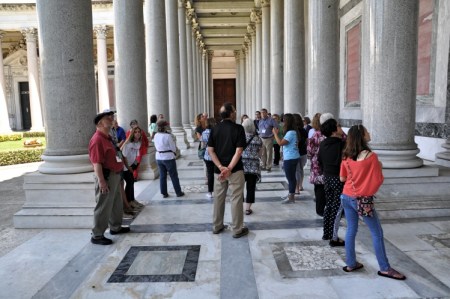
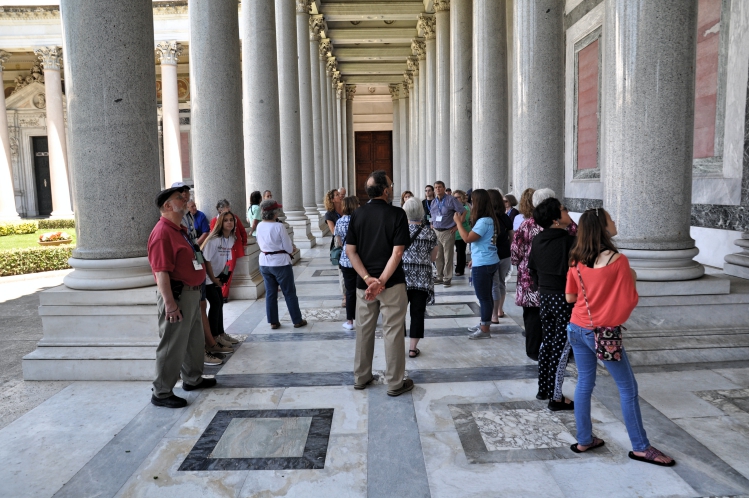
Group shot at colonnade at basilica. Photo by Leon Mauldin.
All of our group is well. More to come!
 3 Comments |
  City Walls, Italy, photography, Roman Empire, Rome, Travel, Uncategorized | Tagged: St..Paul Outside the Walls |
  Permalink
 Posted by Leon Mauldin
April 7, 2018
In the concluding chapters of the book of Job, God asks a series of rhetorical questions to help Job see the incomprehensible greatness of God. Many of these questions have to do with God’s creative power.
5 “Who sent out the wild donkey free? And who loosed the bonds of the swift donkey, 6 To whom I gave the wilderness for a home And the salt land for his dwelling place? 7 “He scorns the tumult of the city, The shoutings of the driver he does not hear. 8 “He explores the mountains for his pasture And searches after every green thing. (Job 39:5-8, NASB).
Note the translation of the NKJV: “Who set the wild donkey free? Who loosed the bonds of the onager” (Job 39:5).
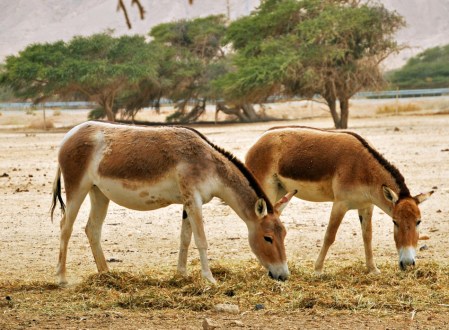
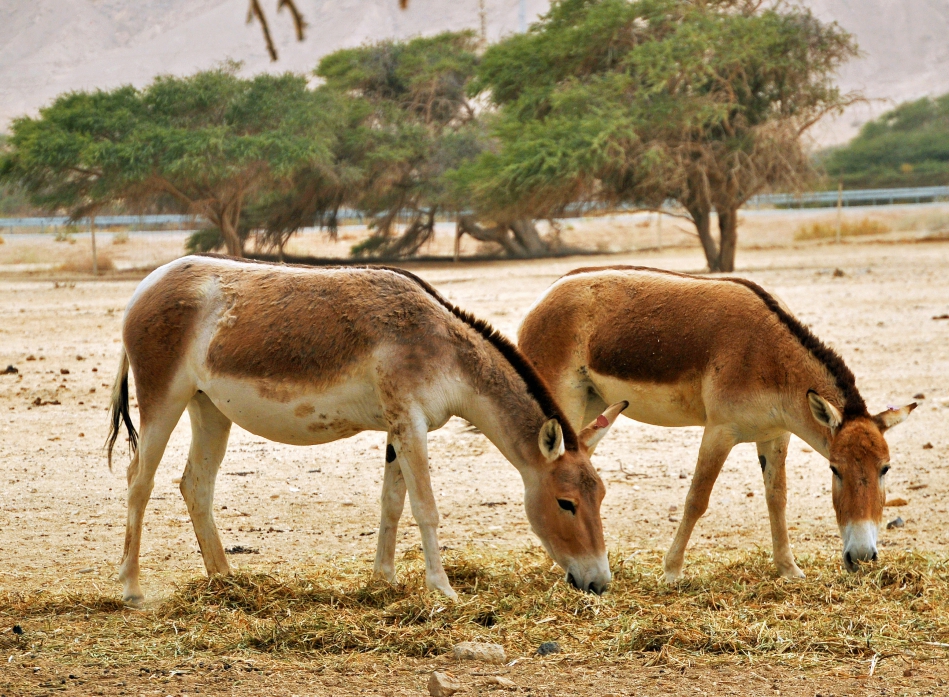
The onager, the wild donkey referenced in Job 39:5. Photo ©Leon Mauldin.
I had the opportunity this past week in Israel to visit the Yotvata Hai-Bar Nature Reserve, situated in the Southern Arabah, and photograph animals that are native to the Bible lands. This photo helps us visualize the animal (the onager) God was mentioning to Job in our above text.
The Baker Encyclopedia of the Bible has the following info in its entry on “animals”:
The onager or Syrian wild ass (Equus hemionus hemihippus) is an intermediate between the true horse and the true ass. Its ears are longer than those of a horse but shorter than those of an ass. The front hooves are narrow; there are chestnuts (callouslike spots on the inside of the knees) on the front legs only, and the tail is short-haired for a long distance from its root so that it appears to be tufted.
The Sumerians (ancient Mesopotamians) were able to domesticate the onager, which was eventually replaced by the horse. It was used to draw chariots in Ur; a number of onagers were buried with their vehicles in a royal grave that dates from about 2500 BC. Later the wild onager was a favorite hunter’s prize for Babylonian and Assyrian kings.
The onager was very common in the steppe lands near Israel where it was described as a freedom-loving desert animal (Jb 24:5; 39:5–8; Ps 104:11; Is 32:14; Jer 2:24; Hos 8:9). Ishmael was described as “a wild ass of a man” (Gn 16:12), one who could not adjust to domestic life. Nebuchadnezzar lived among the wild asses when he was mentally ill (Dn 5:21). Drought seems to have been responsible for the population decline of the onager in biblical times (Jer 14:6). The modern onager (Equus hemionus onager) is slightly larger than the Syrian wild ass which is extinct. (Vol. 1, p. 94).
As Job learned more of the greatness of the awesome God he faithfully served, his faith and trust grew in the most difficult of circumstances.
Click on image for larger view.
2 Comments | Arabah, Bible History and Geography, Bible Study, Fauna, Israel, Old Testament, photography, Travel, Uncategorized | Tagged: Bible animals, Onager, wild donkey | Permalink
Posted by Leon Mauldin
March 22, 2018
This morning we left the Dead Sea, made our way to the border crossing at the King Hussein Bridge into Israel, and arrived after dark at Tiberias on the Sea of Galilee, with brief stops at Jerusalem and Caesarea on the way. We plan as time permits to share more photos/info from this past week in Jordan, as well as more to come in Israel.
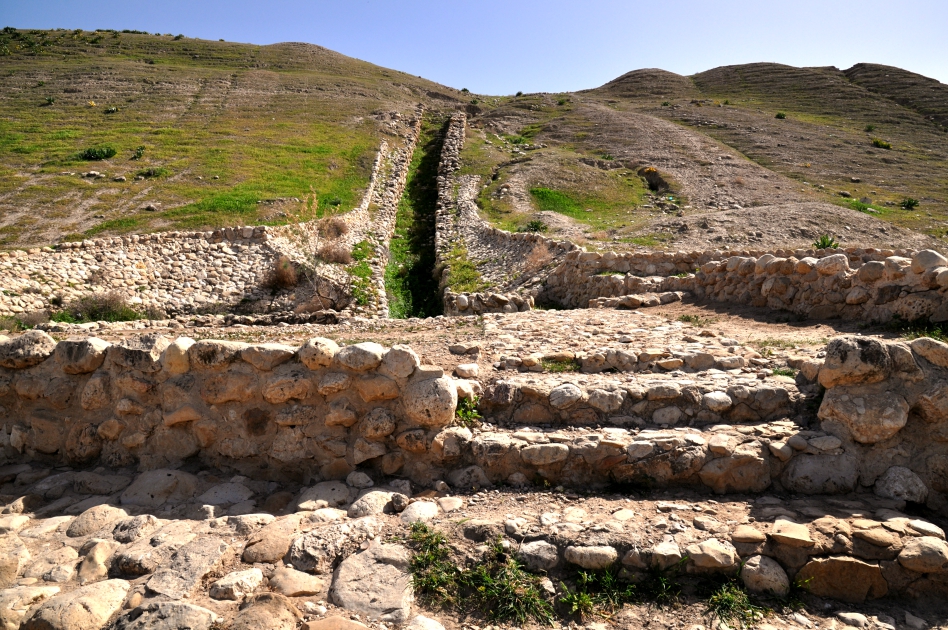
For tonight I wanted to mention Zarethan in the Jordan Valley, of biblical significance in the Old Testament. When Solomon was building the temple and its vessels, some of the metal casting (bronze) was done in the area of Zarethan.
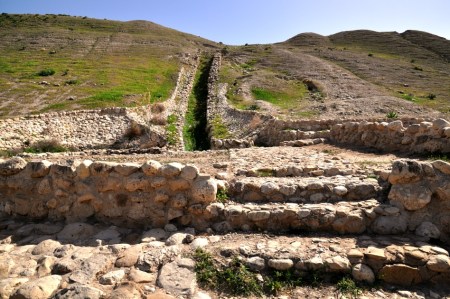
Zarephan, mentioned in connection with casting bronze for use in Solomon’s temple. Photo by Leon Mauldin.
1 Kings 7:
40 Now Hiram made the basins and the shovels and the bowls. So Hiram finished doing all the work which he performed for King Solomon in the house of the LORD: 41 the two pillars and the two bowls of the capitals which were on the top of the two pillars, and the two networks to cover the two bowls of the capitals which were on the top of the pillars; 42 and the four hundred pomegranates for the two networks, two rows of pomegranates for each network to cover the two bowls of the capitals which were on the tops of the pillars; 43 and the ten stands with the ten basins on the stands; 44 and the one sea and the twelve oxen under the sea; 45 and the pails and the shovels and the bowls; even all these utensils which Hiram made for King Solomon in the house of the LORD were of polished bronze. 46 In the plain of the Jordan the king cast them, in the clay ground between Succoth and Zarethan. (verses 40-46)
The British Museum website has some interesting info:
Tell es Sa’idiyeh, identified as the biblical city of Zarethan, lies at the heart of the central Jordan Valley. The huge, double occupation mound occupies a key strategic position, commanding the crossroads of two major trade routes, and dominating some of the richest and most fertile agricultural land east of the River Jordan.
Excavations undertaken since 1985, by a British Museum expedition under the direction of Jonathan N. Tubb, have revealed the great antiquity of the site’s occupational history, with settlement phases extending from the Early Islamic period of the seventh century AD, as far back at least as the Early Bronze Age of the third millennium BC. Excavations have shown that by about 2900 BC, Tell es-Sa’idiyeh was a large and prosperous city, with well constructed architecture and evidence for highly developed municipal planning. The most significant finding in this Early Bronze Age phase has been of a large palace complex on the lower tell, with areas set aside for olive oil production and storage, wine-making and textile preparation. All three of these activities were conducted on an industrial scale, clearly designed for international commerce. The pottery and other artifacts recovered from this early city display a level of refinement and sophistication unparalleled elsewhere in the Levant.
Equally remarkable discoveries relate to the city of the twelfth century BC, where excavations have uncovered evidence to suggest that Tell es-Sa’idiyeh, like Beth Shan or Gaza on the other side of the Jordan River, was a major centre for the Egyptian control of Canaan during the final years of its New Kingdom empire. Substantial architecture, including an elaborate water system and Egyptian-style public buildings have been found on the upper mound, and the same strong Egyptian component is also found in the contemporary cemetery which was cut into the long-abandoned and eroded ruins of the Early Bronze Age city on the lower mound. The expedition has excavated, to date, some 450 graves, many of which show unusual Egyptian features, both in terms of the grave-goods and burial customs. (http://www.britishmuseum.org/research/research_projects/tell_es-sa%E2%80%98idiyeh_excavations.aspx).
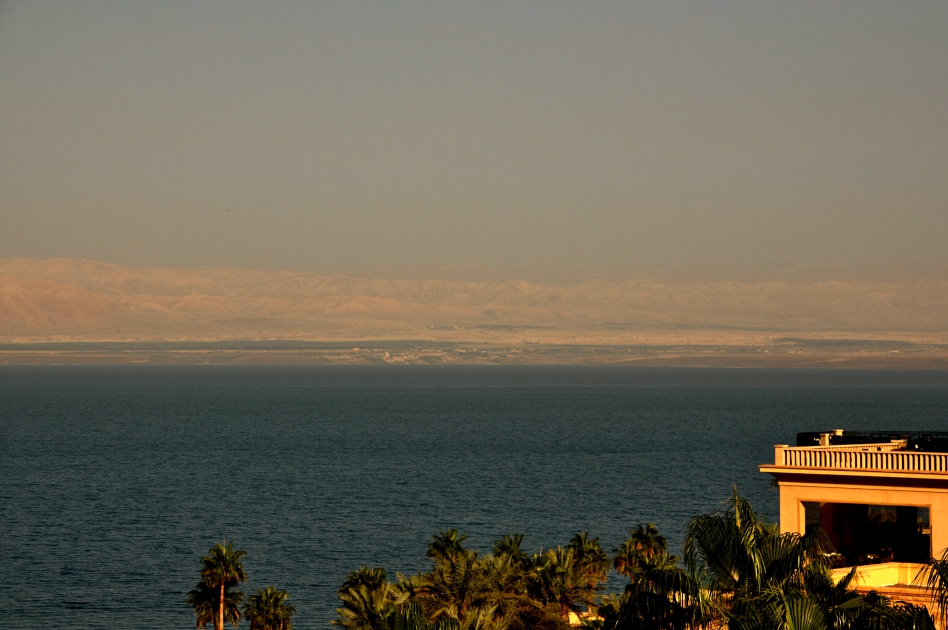
A couple of days ago I posted a sunset view of the Dead Sea; here is our view of the Dead Sea from the Jordan side looking across to Israel this morning.
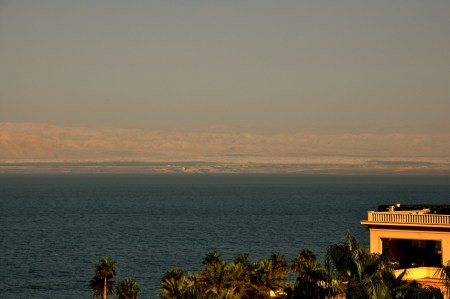
Morning view of Dead Sea looking west. Photo by Leon Mauldin.
Click images for larger view.
Leave a Comment » | Bible History and Geography, Bible Places, Jordan, Jordan Valley, Old Testament, photography, Travel, Uncategorized | Tagged: bronze casting, Solomon's temple, Zarethan | Permalink
Posted by Leon Mauldin
January 15, 2018
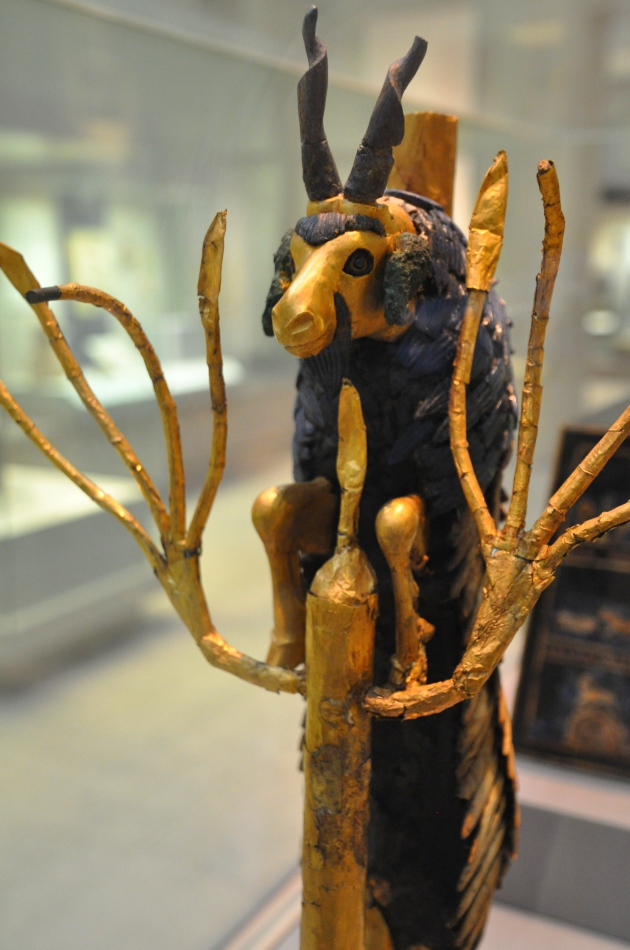
In 1927 the archaeologist Leonard Woolley uncovered spectacular finds in southern Mesopotamia, in the ancient city he had identified as Ur, home of Abraham. The treasury of his finds included this figure, known as “The Ram in the Thicket.”
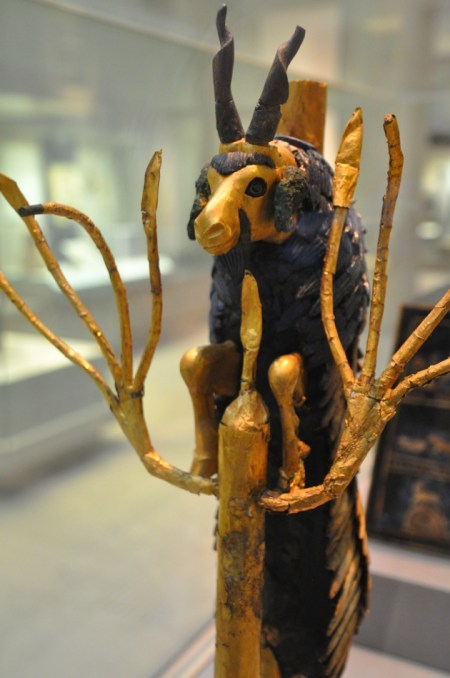
Ram in the Thicket. British Museum. Photo by Leon Mauldin.
This statuette is composed of gold, silver, copper, lapis, shell and coral. Two of these were in what is called “the Great Death Pit.” The other is housed in the University of Pennsylvania Museum of Archaeology and Anthropology.
This figure is illustrative of the ram which Abraham offered at Moriah, in the stead of Isaac his son (Gen. 22:13). This figure here is actually a male goat.
Interestingly, this artifact predates Abraham by a few centuries.
Fant and Reddish suggest that
. . . the discoveries at Ur are a significant indication of an amazing level of cultural sophistication in an early period in the locale identified as the birthplace of the father of the Hebrews. If Abraham and his family came from Ur, a city of such considerable cultural advancement, to the tents of the land of Canaan, it further dramatizes the biblical story of his sacrificial following lowing of the promises of an unknown God. (Clyde E. Fant; Mitchell G. Reddish. Lost Treasures of the Bible: Understanding the Bible through Archaeological Artifacts in World Museums, Kindle Locations 580-581. Kindle Edition.)
1 Comment | Archaeology, Bible History and Geography, Bible Places, British Museum, Old Testament, photography, Travel, Uncategorized | Tagged: Abraham, Ram in the Thicket, Ur, Wooley | Permalink
Posted by Leon Mauldin
January 9, 2018
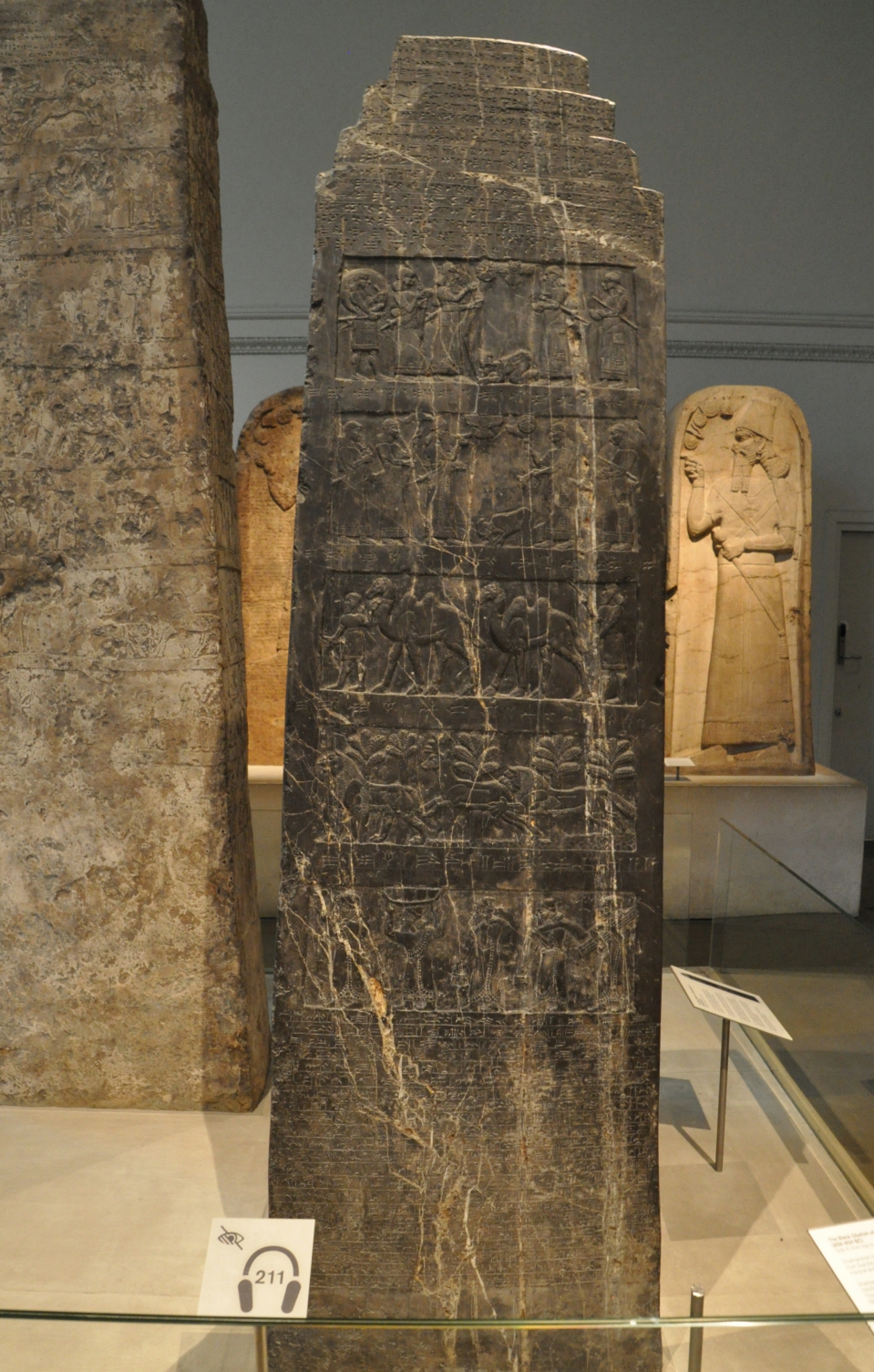
Among the many artifacts we photographed today was the Black Obelisk of Shalmaneser III (r. 858-824 BC). This Assyrian king forced Jehu, King of Israel (r. 841-814 BC) to pay tribute. This is one of those many exciting finds where the Bible and other historical records intersect! The Black Obelisk includes a pictograph/cuneiform record of this very important historical event. The reads:
The inscription reads: I received the tribute of Jehu of the House of Omri silver, gold, a golden bowl, a golden goblet, golden cups, golden buckets, tin, a staff of the king’s hand, (and) javelins (7).” All 14 of the Israelites pictured are bearded, with long hair and pointed caps. Each wears a belted tunic with fringe at the bottom. In addition, each of the 13 porters wears a mantle or cloak over the tunic, which extends over the shoulders and is fringed or tasseled down the front on both sides. Jehu is not wearing the outer garment, possibly as a sign of humiliation before Shalmaneser. (NIV Arch. Bible).
This is detailed on one of the four sides, second panel down:
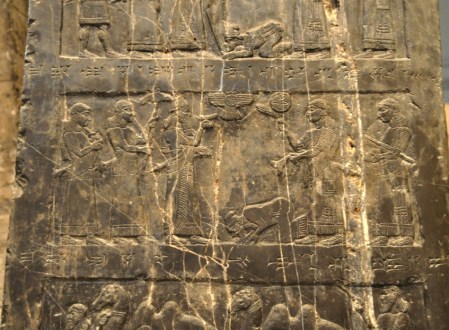
Shalmaneser’s Black Obelisk. This panel shows King Jehu paying tribute to the Assyrian King. The year was 841 BC. Photo by Leon Mauldin.
Here is a photo of the 4-sided stone in its entirety, with our facing the side that mentions Jehu:
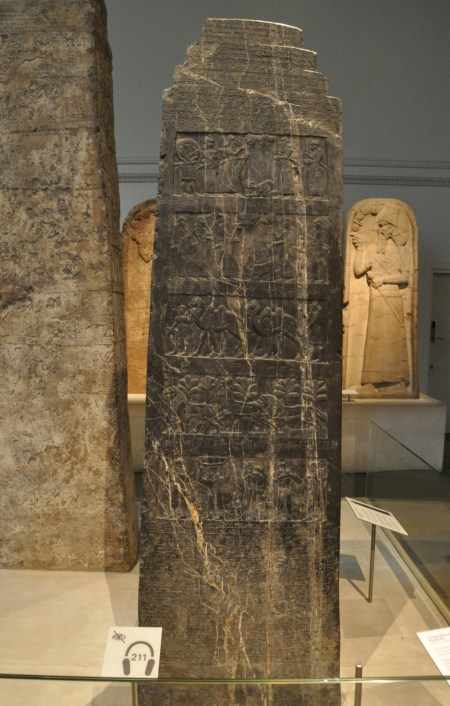
Shalmaneser’s Prism. The Black Obelisk. British Museum. Photo by Leon Mauldin.
Todd Bolen has an article on the Obelisk here.
You can read of Jehu in the Bible in 2 Kings 9-10.
Click images for larger view.
1 Comment | Bible History and Geography, Bible Study, Israel, Old Testament, photography, Travel, Uncategorized | Tagged: Assyria, Black Obelisk, British Museum, Inscriptions, Jehu, Shalmaneser III | Permalink
Posted by Leon Mauldin
January 3, 2018
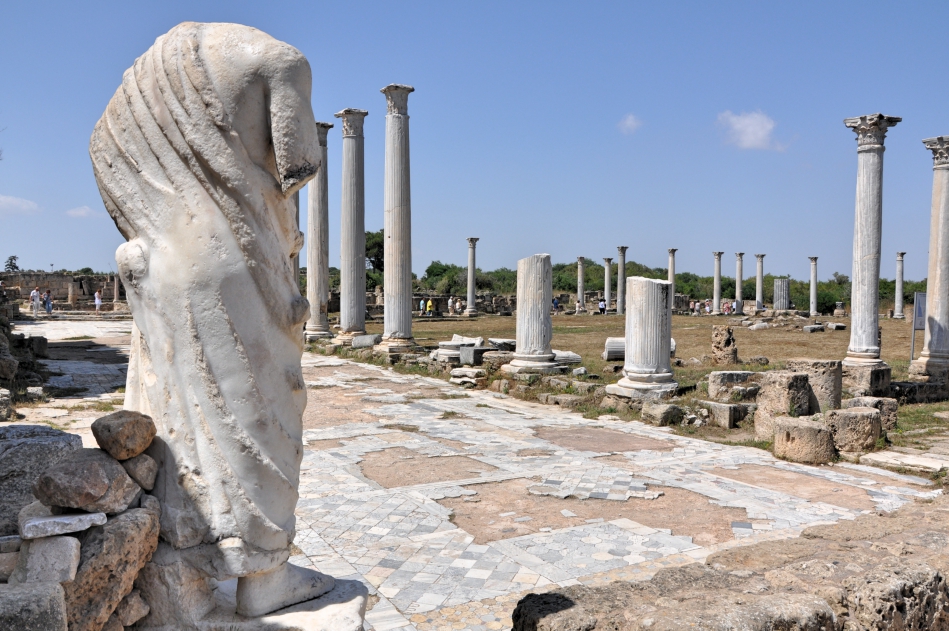
“. . . they sailed to Cyprus. When they reached Salamis, they began to proclaim the word of God in the synagogues of the Jews” (Acts 13:4,5). The preaching here at Salamis in Cyprus was the beginning of what is usually called Paul’s “First Missionary Journey” (Acts 13-14).
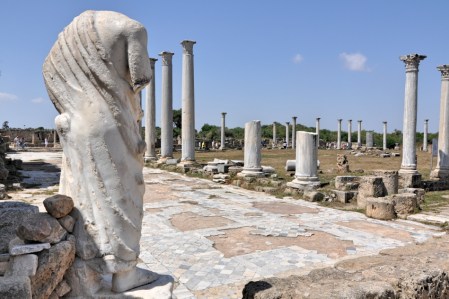
Salamis on the Island of Cyprus. Pictured here is area of the gymnasium. Photo by Leon Mauldin.
Luke, the author of Acts, is very brief in his account of the preaching that took place here, without recording any results from the proclamation of the Gospel in the synagogues, quickly moving on in his narrative SE to Paphos, and continuing on from there. Our photo here shows the area of the gymnasium at Salamis.
It is interesting to note that Barnabas, Paul’s traveling companion and fellow-preacher, was from Cyprus (Acts 4:36).
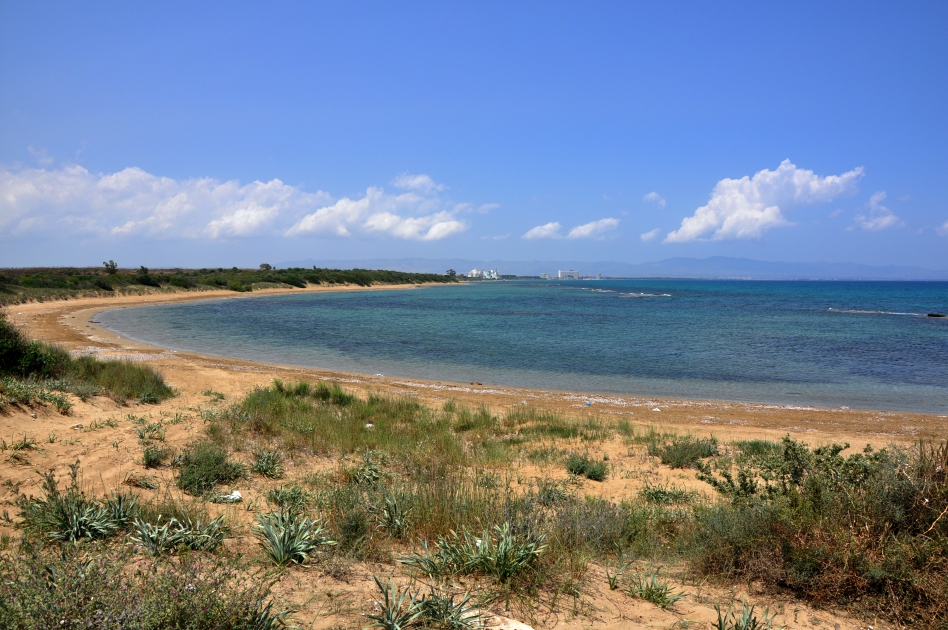
Here is the harbor into which their ship would have sailed for their arrival at Salamis.
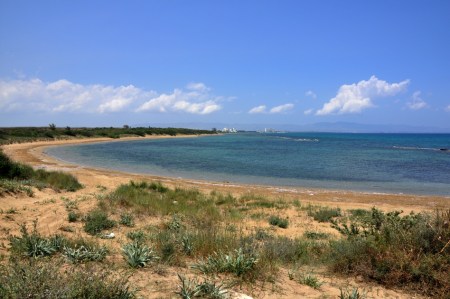
Harbor at Salamis, Cyprus. Photo by Leon Mauldin.
We have previously posted on Salamis here here and here.
2 Comments | Bible History and Geography, Bible Places, Cyprus, New Testament, photography, Salamis, Travel, Uncategorized | Tagged: Acts, gymnasium, harbor, Paul's Preaching | Permalink
Posted by Leon Mauldin
December 15, 2017
Beth Guvrin in Israel was a Roman city on the outskirts of biblical Maresha (see Josh. 15:44; Micah 1:15).
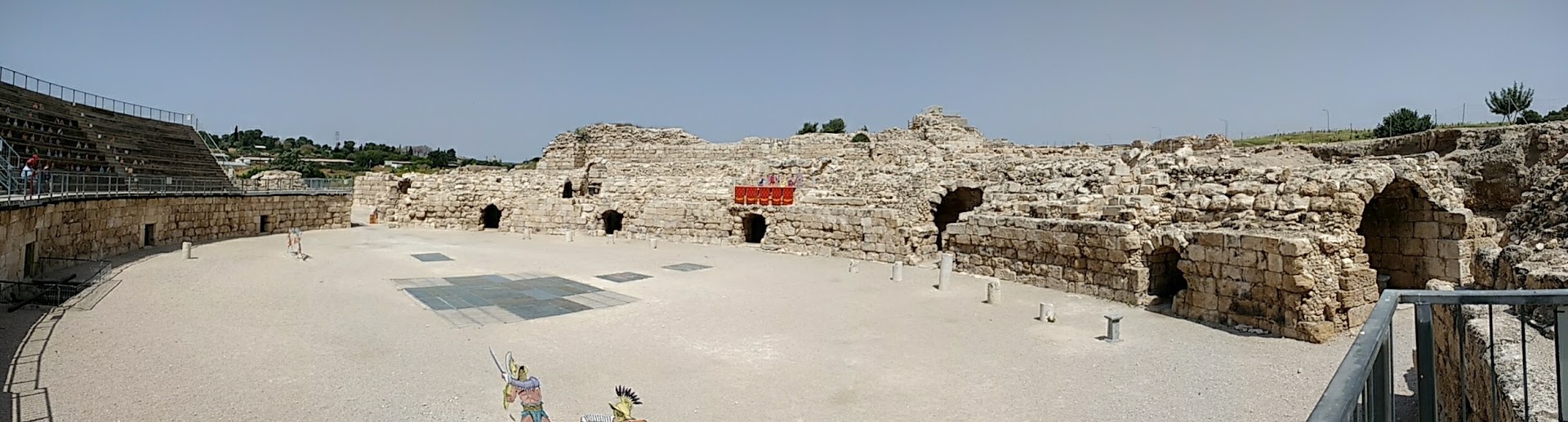
Emperor Septimus Severus turned Beth Guvrin into a major administrative center (ca. 200 AD). I took this photo of the amphitheater on April 27, 2017.
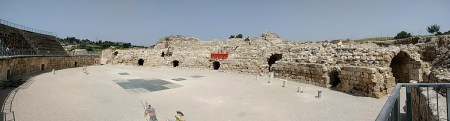
Panorama of amphitheater at Beth Guvrin. Photo by Leon Mauldin.
This amphitheater would have been used for animal and gladiator fights.
BTW: Often folks refer to theaters as “amphitheaters.” There is a difference: the amphitheater makes an oval shape while a theater only makes a half circle.
Click image for larger view.
2 Comments | Bible History and Geography, Bible Places, Israel, New Testament, Old Testament, photography, Roman Empire, Theater, Travel, Uncategorized | Tagged: Amphitheater, Beth Guvrin, Mareshah | Permalink
Posted by Leon Mauldin
December 13, 2017
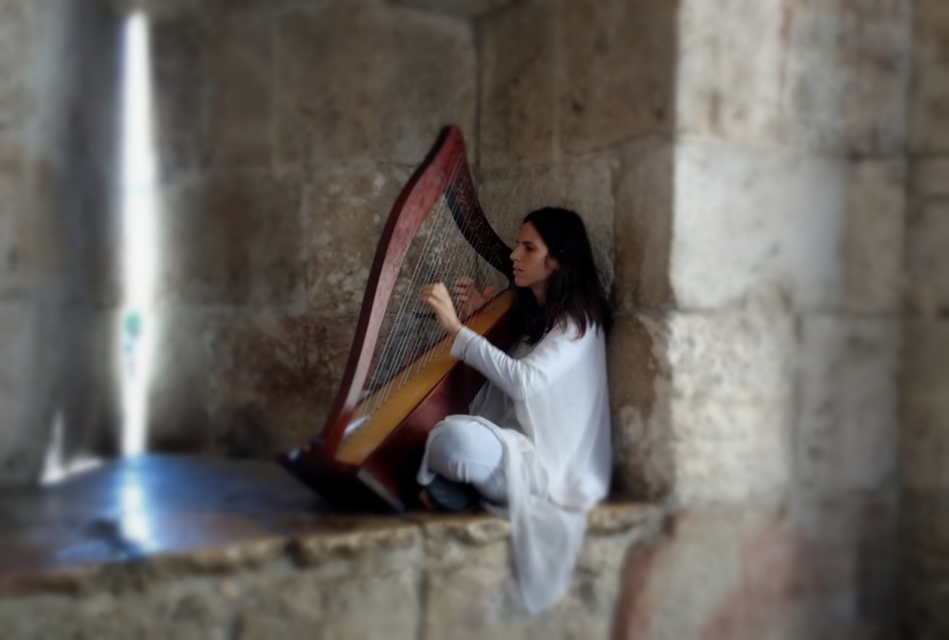
The Apostle John wrote, “And I heard a voice from heaven, like the voice of many waters, and like the voice of loud thunder. And I heard the sound of harpists playing their harps” (Revelation 14:2). I heard this harpist playing her harp in Jerusalem, at the Damascus gate this past April.
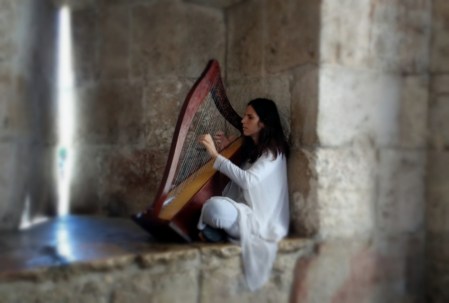
Harpist in Jerusalem, Joppa Gate. Photo ©Leon Mauldin.
The context of Revelation 14 is that of the Lamb standing victoriously on Mount Zion with His people, those “having His Father’s name written on their foreheads” (v.1). What joy belongs to those described in the text! — “These are the ones who follow the Lamb wherever He goes. These were redeemed from among men, being firstfruits to God and to the Lamb” (v.4).
Click image for larger view.
Leave a Comment » | Bible History and Geography, Biblical Interpretation, Gates, Israel, Jerusalem, New Testament, photography, Travel, Uncategorized | Tagged: Harp, harpist | Permalink
Posted by Leon Mauldin
December 8, 2017
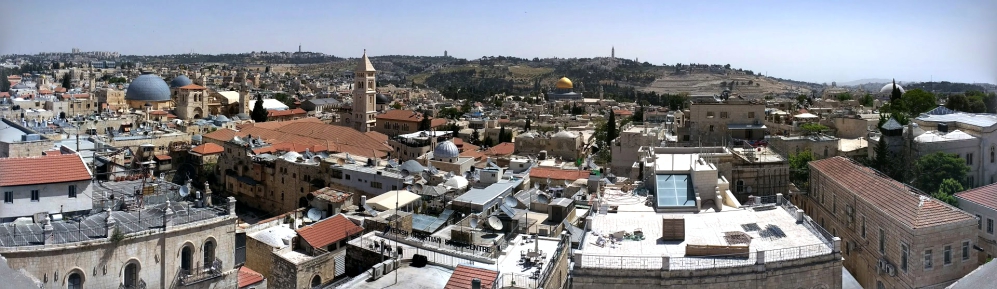
In this panoramic shot of Jerusalem you can see several landmarks, including the Church of the Holy Sepulcher at left, the Dome of the Rock, right center, and the Mount of Olives in the Distance.
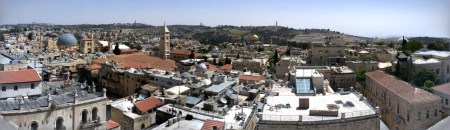
Panorama of Jerusalem. Photo by Leon Mauldin.
It would be difficult to overestimate or overstate the importance of this city in both Old and New Testament studies!
I have numerous posts on Jerusalem, including here, here and here. Use the search box for more.
I took this photo this past April, 2017, on a personal study/photography trip with Ferrell Jenkins.
Leave a Comment » | Bible History and Geography, Israel, Jerusalem, New Testament, Old Testament, photography, Travel, Uncategorized | Tagged: Jerusalem | Permalink
Posted by Leon Mauldin
December 6, 2017
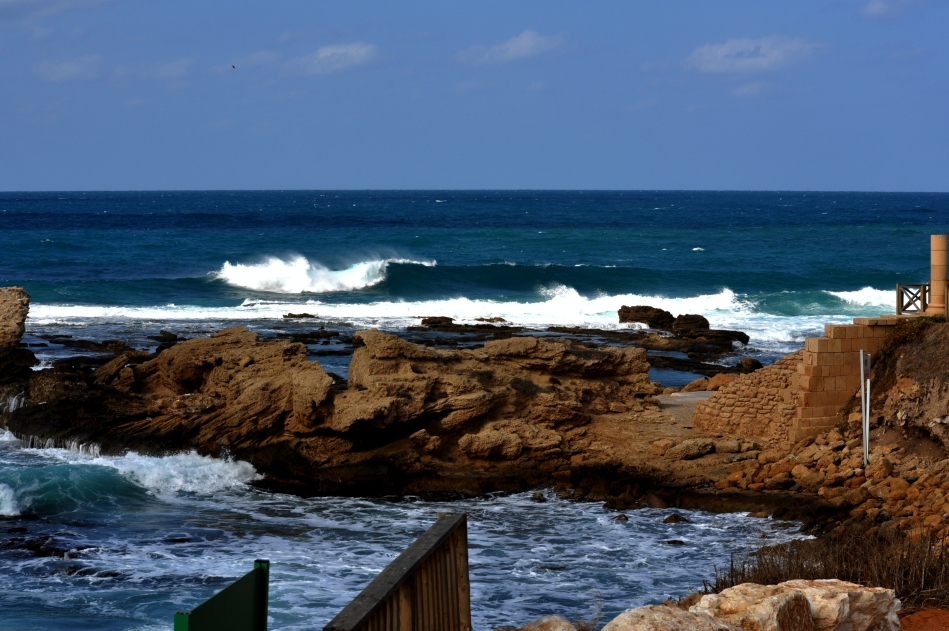
Acts 10 narrates the exciting history of how the door of faith was opened to the Gentiles. The Apostle Peter was directed to leave Joppa and go up the coast to Caesarea where he would find a man with an honest and good heart, Cornelius the Roman Centurion, as well as his relatives and close friends.
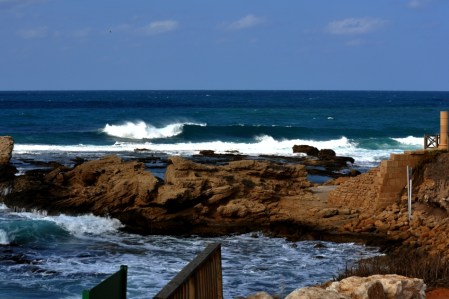
Wave action at Caesarea, on the south side of the Herodian Palace. Photo ©Leon Mauldin.
Peter, who had the “keys of the kingdom of heaven,” had preached to the Jews first on the Day of Pentecost (Acts 2), and was then privileged to preach to the Gentiles in Acts 10. Peter began by saying, “Opening his mouth, Peter said: “I most certainly understand now that God is not one to show partiality, but in every nation the man who fears Him and does what is right is welcome to Him” (Acts 10:34-35, NASB). Cornelius and those present heard “words by which you and all your household will be saved” (Acts 11:14, CSB). They were receptive to and obedient to the faith!
From this new beginning the gospel would go on to include Gentiles in Antioch (Acts 11), and on to the uttermost part of the earth (Acts 1:8; cf. Acts 13-28, etc.).
We have several posts on Caesarea, including here, here, and here.
Leave a Comment » | Bible History and Geography, Bible Study, Caesarea Maritima, Israel, New Testament, photography, Travel, Uncategorized | Tagged: Acts, Gentiles | Permalink
Posted by Leon Mauldin