At Nicaea of Bithynia

May 21, 2014

I am thankful for safe arrival yesterday at Istanbul, meeting up with Ferrell Jenkins who had just concluded a tour in Turkey. Today we crossed the Sea of Marmara by ferry to save driving time on our way to Nicaea, called Iznik today. Nicaea was one of the important cities in New Testament times in the Roman Province of Bithynia. Peter addressed Christians over a widely scattered area (covering much of what is the country of Turkey today): “Peter, an apostle of Jesus Christ, To the pilgrims of the Dispersion in Pontus, Galatia, Cappadocia, Asia, and Bithynia” (1 Pet. 1:1). Dr. Mark Wilson writes that Nicaea “vied with Nicomedia for the distinction of being the principle city of Bithynia” (Biblical Turkey: A Guide to the Jewish and Christian Sites of Asia Minor,  p.369).

It was a great opportunity to be in Nicaea today. The weather was very pleasant, and the lighting was excellent for most of the photos we made. Plus it’s just great to be in what was biblical Bithynia. The gospel made inroads there, as evidenced from 1 Peter (most conservative scholars believe that Peter’s second letter was written to the same audience). That means it was highly likely that the messenger with Peter’s letter would have contacted brethren there. Dr. Wilson says it a bit more emphatically, “. . . the messenger caring 1 Peter would certainly have visited Nicaea” p.370).

Nicaea is characterized by an ancient city plan which makes use of the decumanus maximus running east and west and the cardo maximus north and south. Nicaea was a walled city with four gates. Wilson says of the walls and gates that they are the most unique in western Turkey” (v.371). The Roman walls were built on Hellenistic walls, but the Roman walls then were reconstructed by the Goths after the Goths destroyed them (AD 268-270).

In AD 325 the first of the Ecumenical Councils (as well as the seventh) were held in Nicaea. It has been long-standing to date church history as pre-Nicaean and post-Nicaean.

Nicaea is situated on the east side of a beautiful lake which had commercial importance. We drove along side of it at times en route to Nicaea. This city was established under the Greek rule during the intertestamental period, 316 BC).

So Bithyna for sure and Nicaea almost certainly was important to the church in the first century, and Nicaea became very important in church history for time to come. Tonight we share a photo of Nicaea’s east gate.

Nicea East Gate. Photo  ©Leon Mauldin.

Nicaea East Gate. Photo ©Leon Mauldin.

Neither Mr. Jenkins nor I had been to Nicaea before today. We agreed it was really a good day. We got to the ferry with 5 minutes to spare.

Tomorrow we are to fly east to Gaziantep and see such sites as Zeugma and Haran. Haran, today spelled Harran, was Abraham’s home for a time, at of family that are prominent in the biblical Narrative.


Imperial Cult Worship

April 11, 2014

A book I have found helpful in understanding the background of Revelation is Imperial Cults and the Apocalypse of John: Reading Revelation in the Ruins, by Steven J. Friesen (pub Oxford). Friesen states:

The signal development, first manifest in the dedications of the Temple of the Sebastoi but reflecting broader trends in society was the use of neokoros as a technical title for a city with a provincial temple of the emperors. The power of this innovation was explosive. In a matter of years it changed the public rhetoric of empire in Asia. Within a century it had transformed the discourse of Roman imperialism in the eastern Mediterranean. From the late first century onward, the most prestigious self-designation that could be employed by a city in Asia was neokoros, indicating the presence of a provincial temple where the emperors and their relatives were worshipped (p.150).

Neokoros literally means one who sweeps and cleans a temple; one who has charge of a temple, to keep and adorn it. It came to designate a city which maintained a temple for imperial worship. It is a historical fact that cities competed for this “honor.”

G. K. Beale observes, “Revelation presupposes that Christians were being required to participate to some degree in the imperial cult (e.g., 13:4-8,15-17; 14:9-11; 15:2; 16:2; 19:20; 20:4). . . in the Apocalypse persecution arises because of refusal to worship the ungodly king” (NIGTC Revelation, p.5).

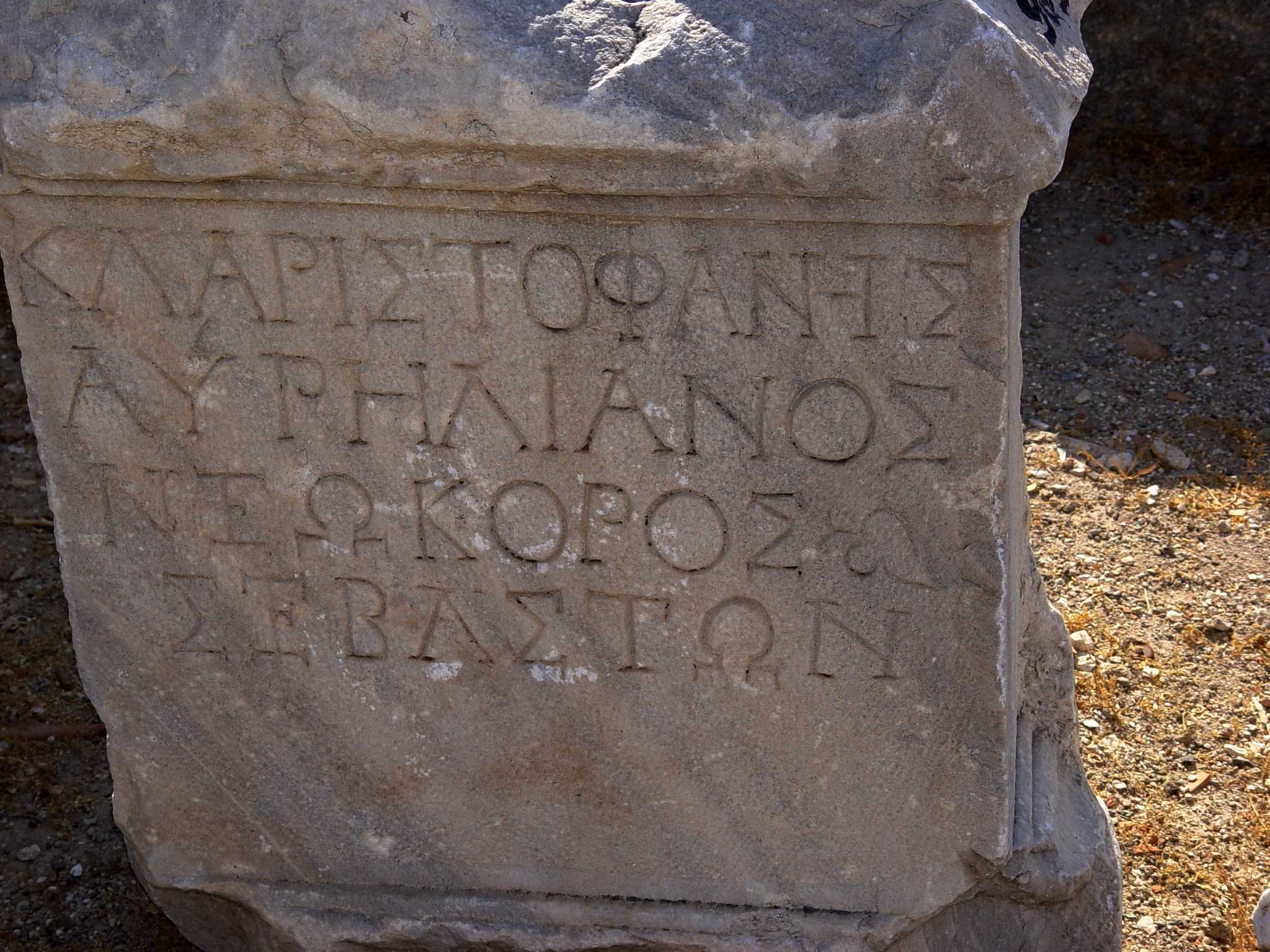
Smyrna Inscription, designating it neokoros. Photo by Leon Mauldin.

Smyrna Inscription, designating it neokoros. Photo by Leon Mauldin.

This inscription found in biblical Smyrna (see Revelation 2:8-11; Smyrna was one of the seven churches of the Roman province of Asia addressed in Rev. 2-3), in lines 3 and 4 designates Smyrna as neokoros of Sebaston [Greek equivalent to Latin Augusti]. Dr. David McClister says, “This inscription is known in the scholarly literature as Smyrna 162. It is an honorary inscription for Cl(audius) Aristophanes Aurelianus,  dated AD 193/235” [lines 1 and 2), and further, “It appears to me to have been a statue base honoring this individual for his leadership in the emperor cult.”


Out of the Wilderness and into Canaan

February 28, 2014

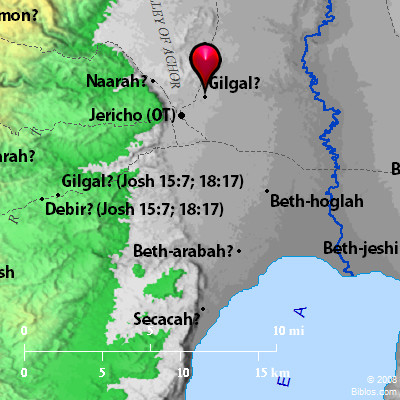
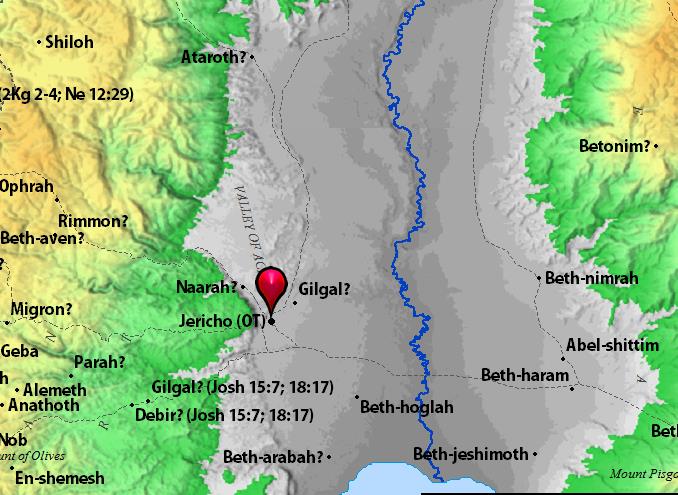
The book of Joshua transitions the reader from Israel’s wilderness wandering to their entrance into Canaan, the Promised Land. Upon their crossing the Jordan, and before taking the city of Jericho, they encamped at Gilgal.

Israel's encampment at Gilgal. BibleAtlas.org

Israel’s encampment at Gilgal. BibleAtlas.org

At Gilgal all the men were circumcised who during the 40 years of wilderness wandering had neglected (i.e., their parents had neglected) this special covenant token.

So Joshua made flint knives and circumcised the Israelite men at Gibeath-haaraloth.  This is the reason Joshua circumcised them: All the people who came out of Egypt who were males– all the men of war– had died in the wilderness along the way after they had come out of Egypt.  Though all the people who came out were circumcised, none of the people born in the wilderness along the way were circumcised after they had come out of Egypt.  For the Israelites wandered in the wilderness 40 years until all the nation’s men of war who came out of Egypt had died off because they did not obey the LORD. So the LORD vowed never to let them see the land He had sworn to their fathers to give us, a land flowing with milk and honey.  Joshua raised up their sons in their place; it was these he circumcised. They were still uncircumcised, since they had not been circumcised along the way.  After the entire nation had been circumcised, they stayed where they were in the camp until they recovered.  The LORD then said to Joshua, “Today I have rolled away the disgrace of Egypt from you.” Therefore, that place has been called Gilgal to this day (Josh. 5:3-9).

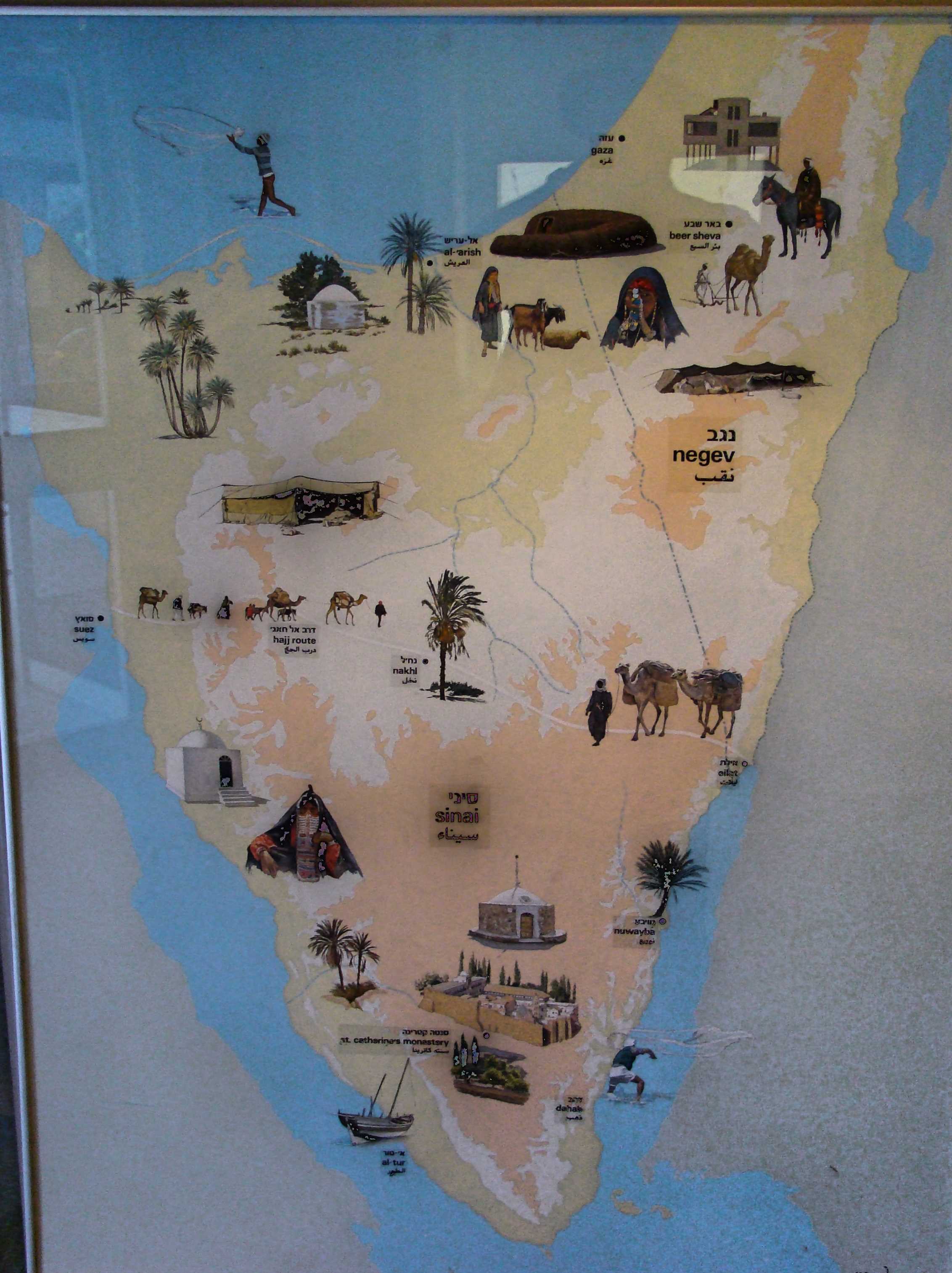
The Peninsula of Sinai was Israel’s home for that period referenced in this text.

Area of Wilderness Wandering.  Museum of Bedouin Culture. Photo ©Leon Mauldin.

Area of Wilderness Wandering. Museum of Bedouin Culture. Photo ©Leon Mauldin.

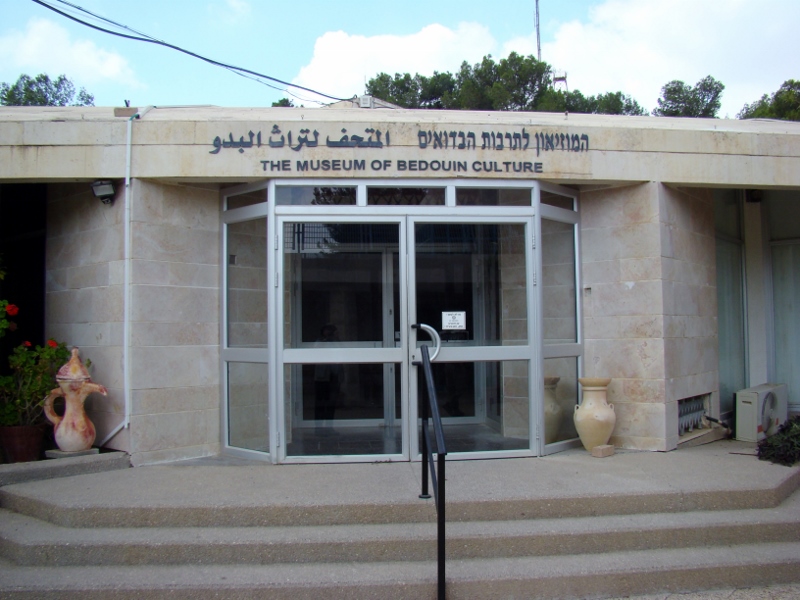
The photo of this artwork was taken in the Museum of Bedouin Culture at Kibbutz Lahav in the Israel’s Negev.

Museum of Bedouin Culture at Kibbutz Lahav. Photo ©Leon Mauldin.

Museum of Bedouin Culture at Kibbutz Lahav. Photo ©Leon Mauldin.

It was also at Gilgal that Israel observed the Passover at the appointed time, the 1st month, 14th day. It was at this time that the manna stopped, and Israel began to eat the produce of the land. This was at harvest season. The 40 years of wandering were over; a new era had dawned!

Click on images for larger view.


All the Land of the Hittites

February 26, 2014

Following the death and 30-day period of mourning for Moses (Deut. 34), Yahweh spoke words of encouragement to his successor, Joshua:

After the death of Moses the LORD’s servant, the LORD spoke to Joshua son of Nun, who had served Moses: “Moses My servant is dead. Now you and all the people prepare to cross over the Jordan to the land I am giving the Israelites. I have given you every place where the sole of your foot treads, just as I promised Moses.  Your territory will be from the wilderness and Lebanon to the great Euphrates River– all the land of the Hittites— and west to the Mediterranean Sea” (Joshua 1:1-4, CSB).

Holman’s Christian Standard Bible (Study Bible) has the following notation regarding the expression, “land of the Hittites”:

The land of the Hittites seems not to refer to the Hittite Empire of modern Turkey but the Egyptian and later Assyrian usage of this term to describe the region controlled by the Hittites in the western part of modern Syria. These lands and boundaries identify Canaan as it was known both to the Bible (Gn 10:19; Nm 13:17,21-22; 34:3-12) and to Egyptian writers of the second millennium B.C.

In numerous passages the Hittites are mentioned as one of several groups populating the land of Canaan. For example, Joshua told the Israelites, “You will know that the living God is among you and that He will certainly dispossess before you the Canaanites, Hittites, Hivites, Perizzites, Girgashites, Amorites, and Jebusites” (Joshua 1:10; cf. Gen. 15:20; Deut. 7:1, and etc.).

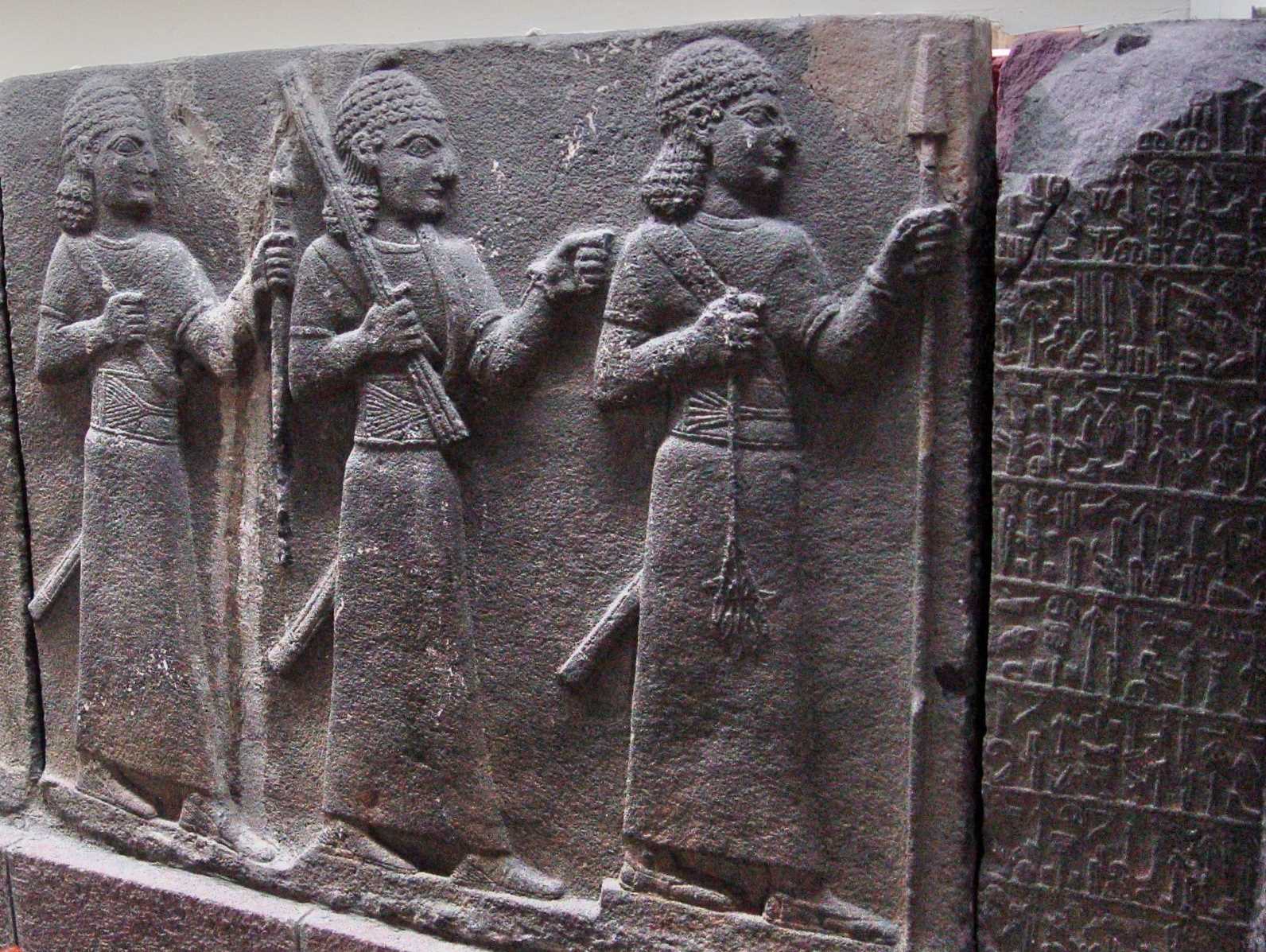
The Ankara (Capitol of modern Turkey) Museum is of international renown for its collection of Hittite artifacts. The relief below shows three Hittite warriors.

Hittite Warriors. Ankara Museum. Photo ©Leon Mauldin.

Hittite Warriors. Ankara Museum. Photo ©Leon Mauldin.

The accompanying placard entitled The Warriors  says, “Three figures with curly hair, and dressed in long tunics with wide belts. The figure at the front holds a spear, which is broken at one end, in his left hand and a leafed tree branch in the right. The figure in the middle clenches his left fist and holds up a tool at head level in his right hand. They are followed by a figure that carries a staff in the left hand. All three wear long swords at the waist.”

The Bible is not a book of fiction. When it mentions people, they were real people, living in real places, participating in real events as recorded in Scripture.


Jericho, First City of the Conquest of Canaan

February 15, 2014

The book of Joshua has one dominant theme: God was fulfilling His promise to the patriarchs Abraham, Isaac and Jacob, that He would give unto their descendants the land of Canaan (Gen. 12:6-7). As Joshua begins, Israel had recently conquered the transjordan territories of Sihon and Og, which would become the possession of Reuben, Gad, and half the tribe of Manasseh (Num. 21:21-35). Though the eastern territory was given to Israel by God, the land of Canaan proper did not include the transjordan, but rather was the land west of the Jordan River. (See discussion on this by Todd Bolen here

The book of Joshua is named after its prominent character, Joshua, the successor of Moses. Following Moses’ death (Deut. 34) and a 30-day period of mourning (v.8), Joshua sent out two spies across the Jordan. They were told “Go, view the land, especially Jericho” (Josh. 2:1).

Conquest of Canaan. Map by Marc Hinds.

Conquest of Canaan. Map by Marc Hinds.

One can see that from their location in Shittim (Acacia Grove, NKJV, CSB) that the first city that must be taken in the Conquest was Jericho, believed to be the world’s most ancient city. It was a fortress city and guarded entrance into Canaan from the east. Located in the Jordan Valley, it is 670 feet below sea level, and was one the first cities in Israel to be excavated. The record of Jericho’s destruction by Israel is found in Joshua 6.

From the standpoint of military strategy, Israel would first conquer the central territory (Josh. 7-8), then the southern (Josh. 10), and finally the northern territory (Josh. 11).

Jericho. Map by BibleAtlas.org.

Jericho. Map by BibleAtlas.org.

I always enjoy seeing Jericho. This past October Jericho was included on our itinerary for my group, though it was later in the day than what is ideal for photos.

Excavations at Jericho. Photo by Leon Mauldin

Excavations at Jericho. Photo by Leon Mauldin.

Recommended reading: see Biblical Archaeology Review, “Did the Israelites Conquer Jericho? A New Look at the Archaeological Evidence,” by Dr. Bryant G. Wood (16:02, March/April 1990).

Click images for larger view.


William Ramsay on the Halys River and North Galatia

January 17, 2014

Sir William M. Ramsay (1851-1939), archaeologist, scholar, and author, was a champion of the South Galatia position (i.e., the N.T. letter to the Galatians was addressed to Antioch of Pisidia, Iconium, Lystra and Derbe) at a time when the North Galatia theory had been accepted for centuries. In his book, A Historical Commentary on St. Paul’s Epistles to the Galatians, he deals with the geography of north Galatia, giving evidence to eliminate that as the area intended in the book of Galatians. He was seeking to understand the geography of Galatia especially and specifically in the mid 1st century AD.

In that portion of his historical introduction, Ramsay mentions the Halys River and how it divided Galatia into two parts.

The country afterwards called Galatia was in primitive time divided ethnographically and politically into two parts, eastern and western: the division was made by the river Halys, which in this part of its course runs in a northerly direction towards the Black Sea. Galatia east of the Halys seems to have been originally reckoned to Cappadocia, though part of it was probably sometimes described as included in Paphlagonia; but the bounds of those countries were so indeterminate, and the ancient writers themselves were so ignorant of the geography of those lands, that it is quite impossible to say anything positive and certain on the subject. . .

Eastern Galatia lies mostly in the basin of the Halys (Kizil-Irmak, the “Red River”). The Halys itself has very few and quite insignificant tributaries. In Eastern Galatia the Delije-Irmak (whose ancient name is unknown) is the only tributary of any consequence; and most of the country lies in its basin; but the river, though it looks large on the map, carries very little water except in flood, when it becomes a broad and raging torrent, exactly as its name indicates, the “Mad River”. . .

Galatia west of the Halys, which was much larger than the eastern country, was the most important and the most typical part of the country; most of our scanty information relates to it; and in general, when any statement is made about North Galatia, the writer has the western part of it in his mind. This western region was originally part of the vast land called Phrygia; and, clearly, the population of the country in the early part of the fourth century were known to the Greeks as Phrygians (Φρύγες). (Ramsay, W. M. (1900). A Historical Commentary on St. Paul’s Epistle to the Galatians (pp. 15–17).

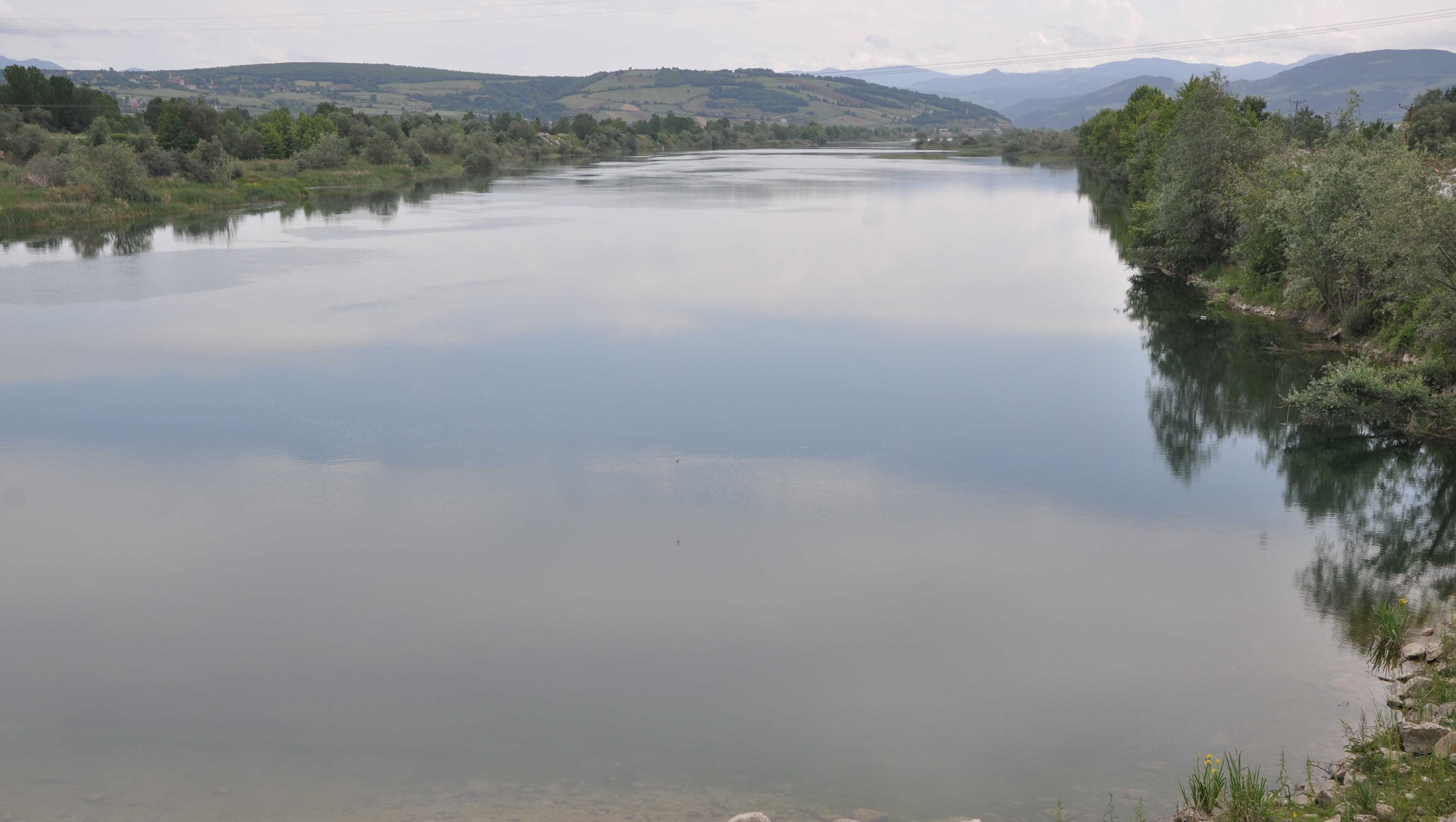
Halys River near the Black Sea. Photo by Leon Mauldin.

Halys River near the Black Sea. Photo by Leon Mauldin.

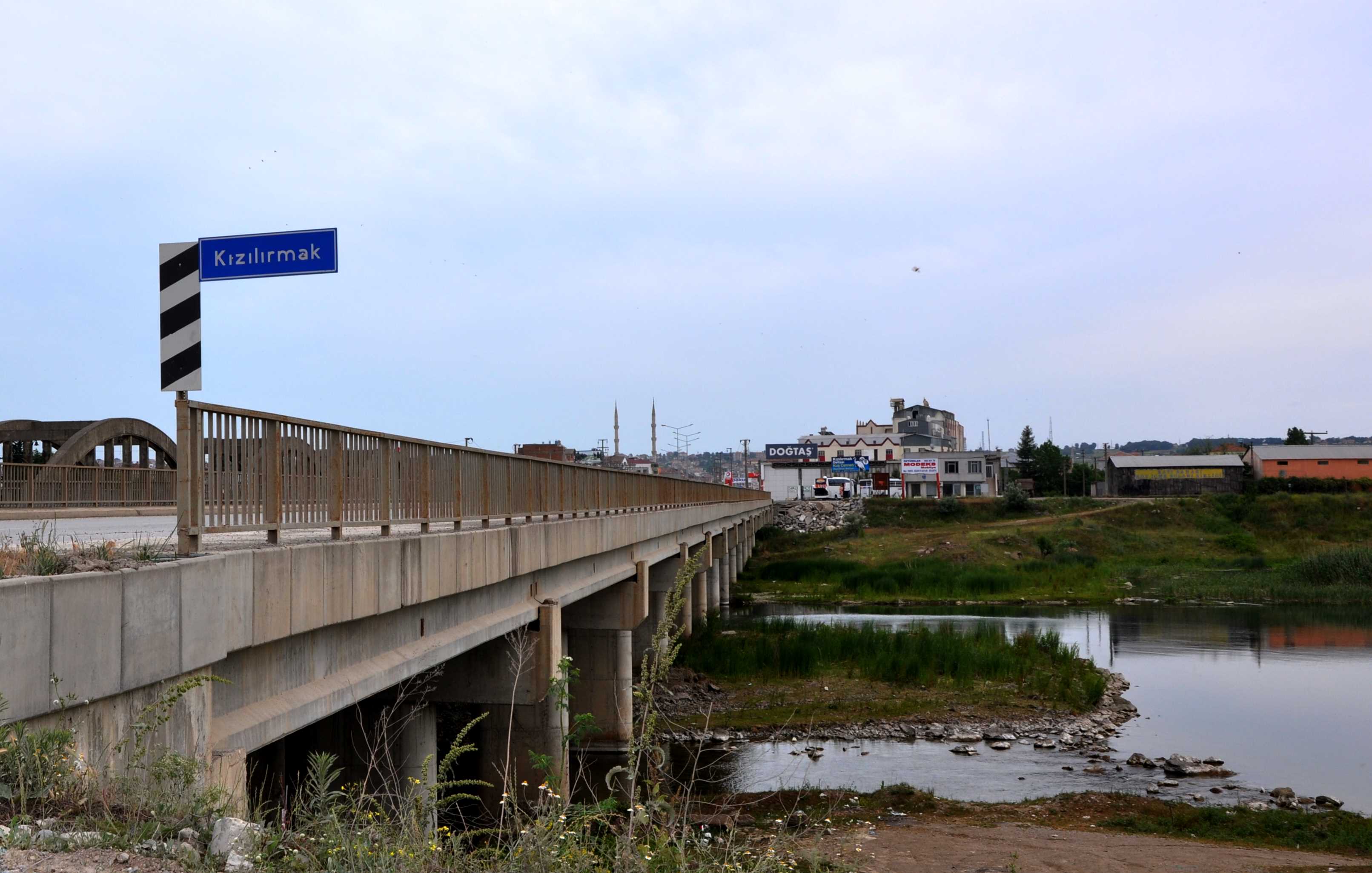
Sir Ramsay referenced the Halys as the Kizil-Irmak. Note the sign here at the bridge crossing the river.

Halys River/Kizil-Irmak. Photo by Leon Mauldin.

Halys River/Kizil-Irmak. Photo by Leon Mauldin.

Click images for larger view.


The Five Day Bible Reading Schedule

January 1, 2014

A Bible reading schedule which we have used and highly recommend is the one arranged by Mark Roberts. It is free. It takes the reader through the Bible in one year. Mark writes:

Are you looking for a reading plan for 2014? Consider the Five Day Bible Reading Schedule. It makes it much easier to complete the Bible in one year because you only have to read five days a week, not seven. This gives you time to catch up if you fall behind. Many Christians have successfully read the Bible with this plan and you can too!
With the Five Day Schedule you can read the entire Bible in 2014 or just the New Testament reading five days a week.
Best of all, it’s FREE. You can download your copy here:
www.BibleClassMaterial.com
May the Lord bless us all to know Him better through His Word.

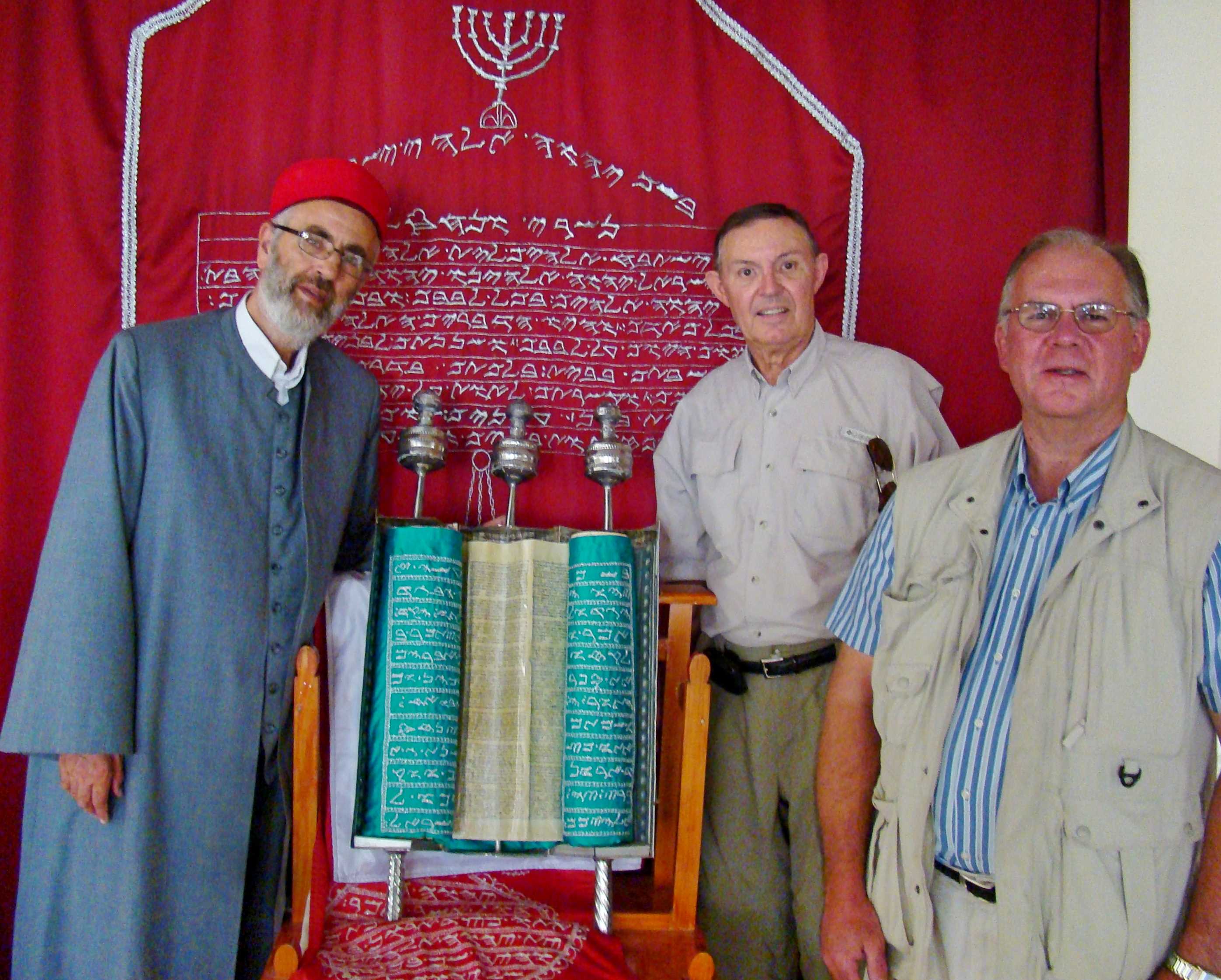
Samaritan Pentateuch at Mt. Gerizim. Photo by Leon Mauldin.

Samaritan Pentateuch at Mt. Gerizim. 

Photo shows Husney W. Cohen, a Samaritan priest and director of the Samaritan Museum, with Samaritan scroll, along with Ferrell Jenkins (center) and Leon Mauldin (right). The Samaritans accept only the first five books of the Old Testament.

I am so thankful for the easy access to the scriptures, and to the proliferation of good translations!


Shechem, a City of Refuge

November 6, 2013

See our yesterday’s post for a map showing all 6 cities of Refuge.

Another city of refuge was Shechem, a West Bank site known as Tel Balata.

This Old Testament city had an important history. It was here that Abraham (Abram) stood as a childless man (age 75), when God told him he would give to him (his descendants) the land of Canaan (Gen. 12:6-7).

It was here that Joshua assembled Israel with his farewell speech and uttered the famous works, “As for me and my house we will serve the Lord” (Josh. 24:15).

It was very near here that Jesus sat down weary by Jacob’s well, and skillfully led a Samaritan from a point where her only interest was drawing up the water, to a point of faith in Him as Messiah (John 4).

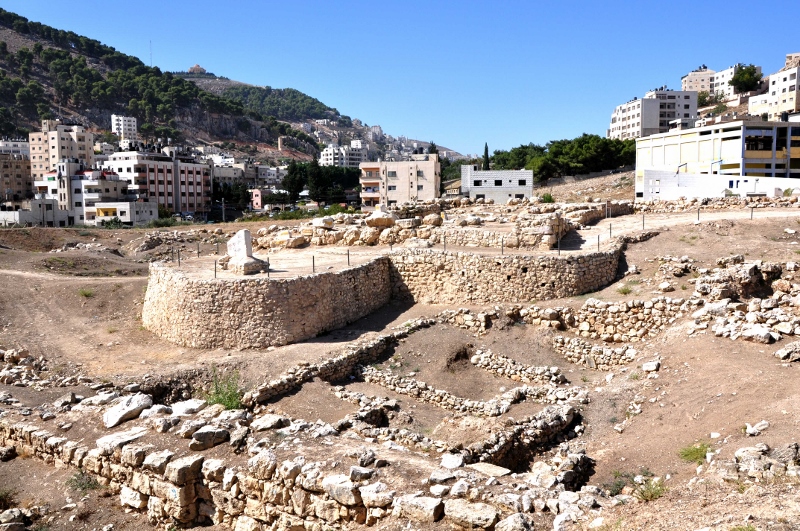
Shechem, a City of Refuge. Photo by Leon Mauldin.

Shechem, a City of Refuge. Photo by Leon Mauldin.

You can see the excavated ruins of the city. At center was the Temple of Baal-berith. At right you see a portion of Mt. Ebal, and at left is Mt. Gerizim. I took our group here Oct. 22, not only for them to see Shechem but also to have a good vantage point to take photos of the mount of cursing (Ebal) and Gerizim (blessing). See further on this in Josh. 8. Again, when cities of refuge were appointed in the days of the conquest, Shechem was the one for the central residents of the land west of the Jordan River.

For a previous post on Shechem see here and several other entries. Use search box and it will bring them all up.

Click on image for larger view.


You can see the excavated ruins of Shechem. At


A Dead Man Raised at Nain

October 26, 2013

The next day after Jesus healed a centurion’s servant in Capernaum, Luke narrates how Jesus went to the Galilean city of Nain.

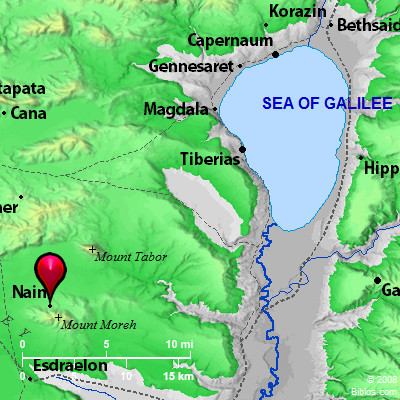
Location of Nain in Galilee. BibleAtlas.org.

Location of Nain in Galilee. BibleAtlas.org.

Luke narrates as follows:

Now it happened, the day after, that He went into a city called Nain; and many of His disciples went with Him, and a large crowd. 12 And when He came near the gate of the city, behold, a dead man was being carried out, the only son of his mother; and she was a widow. And a large crowd from the city was with her. 13 When the Lord saw her, He had compassion on her and said to her, “Do not weep.” 14 Then He came and touched the open coffin, and those who carried him stood still. And He said, “Young man, I say to you, arise.” 15 So he who was dead sat up and began to speak. And He presented him to his mother. 16 Then fear came upon all, and they glorified God, saying, “A great prophet has risen up among us”; and, “God has visited His people.”  (Lk. 7:11-16).

The purpose of Jesus’ miracles was to show who He was/is. The limited occasions recorded when He raised the dead give proof that He is Life, He is the source of Life. He is the resurrection and the life (John 11:25). And yet such occasions show the very real compassion of Jesus as well. The compassion He had during His ministry on earth He continues to have at this present time.

We had the opportunity to make a quick stop at Nain on the first day of our tour to Israel last week.

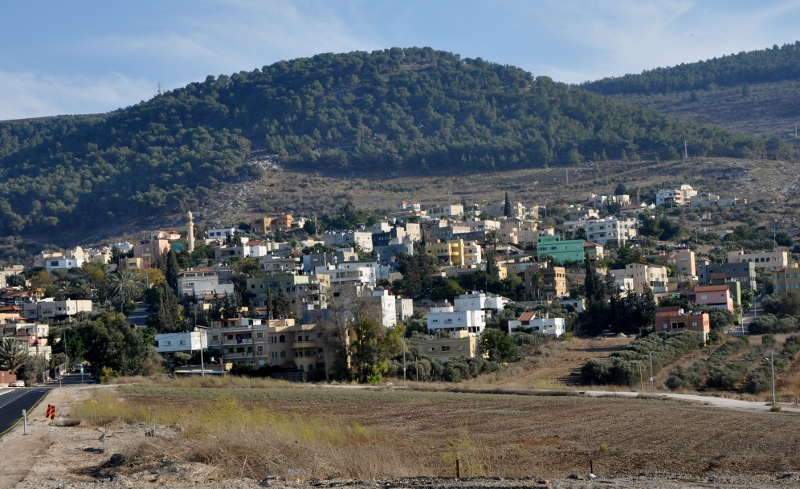
Nain in Galilee where Jesus raised the widow's son. Photo by Leon Mauldin.

Nain in Galilee where Jesus raised the widow’s son. Photo by Leon Mauldin.

The mountain in the background is the Hill of Moreh, mentioned in connection with the account of Gideon and his 300 men (Judges 7).


The Egyptian God Serapis

September 14, 2013

I continue to be amazed at how far-flung was the influence and reach of various gods in biblical times. For example, the god Serapis, the Egyptian god of healing, was widely worshiped, and far beyond the territory of Egypt. 

Egyptian god Serapis. Alexandria Museum, Alexandria, Egypt. Photo by Leon Mauldin.

Egyptian god Serapis. Alexandria Museum, Alexandria, Egypt. Photo by Leon Mauldin.

Serapis was worshiped at Pergamum in biblical Asia Minor, where the ruins of his impressive temple can be seen. See our post here.

In an entry, “Idols, Meats Offered to” in the New Bible Dictionary R. P. Martin gives this info under “The Background,” and note his specific reference to Serapis (the Serapeum mentioned is a temple devoted to the worship of Serapis):

Evidence for the practice of a meal in the temple is found in the following well-known Oxyrhynchus papyrus which Lietzmann regards as ‘a striking parallel’ to the reference in 1 Cor. 10:27: ‘Chaeremon invites you to dinner at the table of the lord Serapis (the name of the deity) in the Serapeum tomorrow the 15th at the 9th hour’ (= 3 p.m.) (quoted and discussed in Chan-Hie Kim’s essay, ‘The Papyrus Invitation’, JBL 94, 1975, pp. 391–402). An invitation to a meal of this character, whether in the temple or in a private house, would be commonplace in the social life of the city of Corinth, and would pose a thorny question for the believer who was so invited. Other aspects of life in such a cosmopolitan centre would be affected by the Christian’s attitude to idol-meats. Attendance at the public festivals, which opened with pagan adoration and sacrifice, would have to be considered. Membership of a trade guild, and therefore one’s commercial standing, and public-spiritedness were also involved, as such membership would entail sitting ‘at table in an idol’s temple’ (1 Cor. 8:10). Even daily shopping in the market would present a problem to the thoughtful Christian in Corinth. As much of the meat would be passed on from the temple-officials to the meat-dealers and by them exposed for sale, the question arose: was the Christian housewife at liberty to purchase this meat which, coming from sacrificial animals which had to be free from blemish, might well be the best meat in the market? Moreover, there were gratuitous banquets in the temple precincts which were a real boon to the poor. If 1 Cor. 1:26 means that some of the Corinthian church members belonged to the poorer classes, the question of whether they were free or not to avail themselves of such meals would have been a practical issue.

This information can help clarify some of the concerns expressed in the letter of 1 Corinthians.

Consider also the situation at Thessalonica, where evidence of Serapis worship (as well as other gods) has been discovered. This would illuminate 1 Thess. 1:9 which states, “For they themselves declare concerning us what manner of entry we had to you, and how you turned to God from idols to serve the living and true God.”

The 1939 discovery of a Serapeum offers an indication of the religious life in Thessalonica (Donfried, Paul, Thessalonica and Early Christianity, 22–23). Typically, a Serapeum functions as a temple dedicated to the worship of Serapis. The discovery of Egyptian idols, including Serapis, at the site has led to its generic designation as a Serapeum. Nearly seventy inscriptions related to the worship of Egyptian gods have been discovered in the city (Witt, “The Egyptian Cults,” 324–33)—35 of which come from the Serapeum. Other finds at the location include fragmentary statues of Serapis and Isis and Roman statues of Aphrodite, Isis, and Harpocrates (Hendrix, “Thessalonica,” 523; Vickers, “Hellenistic Thessaloniki,” 164–65).
The relatively diminutive size of the Serapeum (11 meters x 8 meters), coupled with the large number of artifacts related to Egyptian deities, indicates that this building could not have been the primary temple for Serapis in Thessalonica. Two inscriptions from the site to Serapis and Osiris indicate it probably functioned as a healing shrine (Koester, “Egyptian Religion,” 134–38). The early church’s emphasis on divine healing (and exclusivity) would have conflicted with the Serapis religious groups and numerous other such groups in the city. .

The mixture of deities at the Serapeum and throughout the city illustrates the syncretic tendencies of Hellenistic Thessalonica. These tendencies did not wane with the shift to Roman rulership, and accentuate the severity of Paul’s encouragement that the Thessalonian Christians “turned to God from idols to serve the living and true God” (1 Thess. 1:9) (The Lexham Bible Dictionary).

Click on image for larger view.