In a class studying Hebrews in our local congregation, we are impressed with the many references to the Tabernacle (9X, NKJV). The Old Testament and its priesthood “serve the copy and shadow of the heavenly things” (Heb. 8:5), and are among the things “having a shadow of the good things to come, and not the very image of the things” (Heb. 10:1). It is a matter of typology: the OT tabernacle, its priests, its sacrifices, point forward to the High Priest Jesus, with His sacrifice (His blood), and the “true tabernacle” (Heb. 8:2) with its “holy place” which is “heaven itself” (Heb. 9:24).
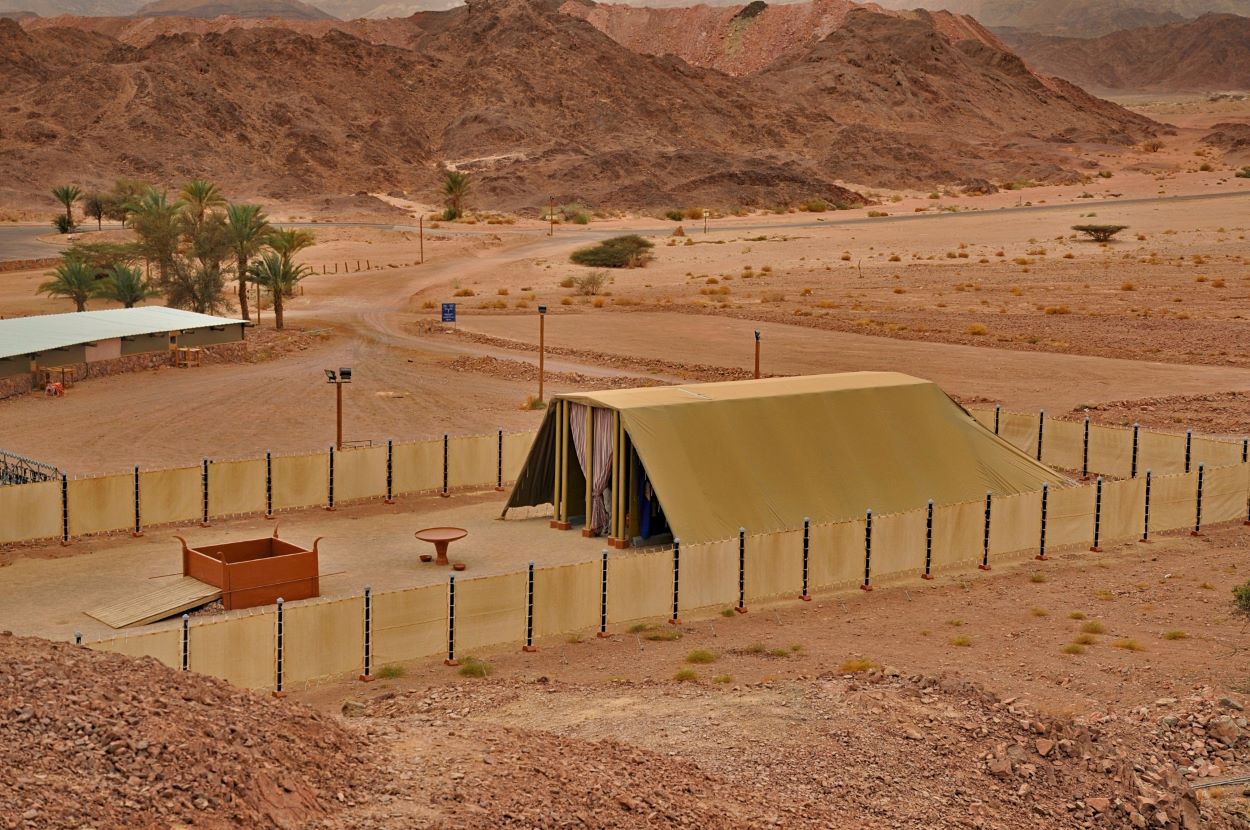
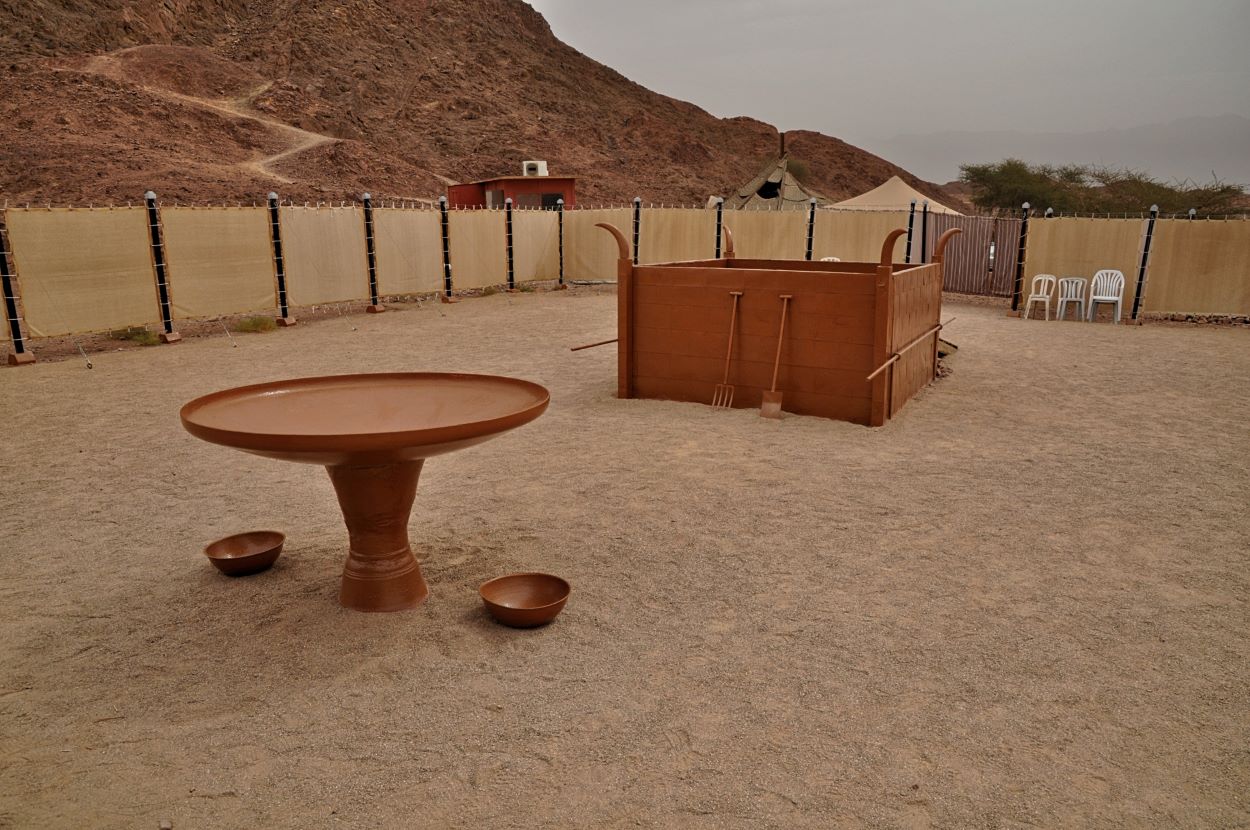
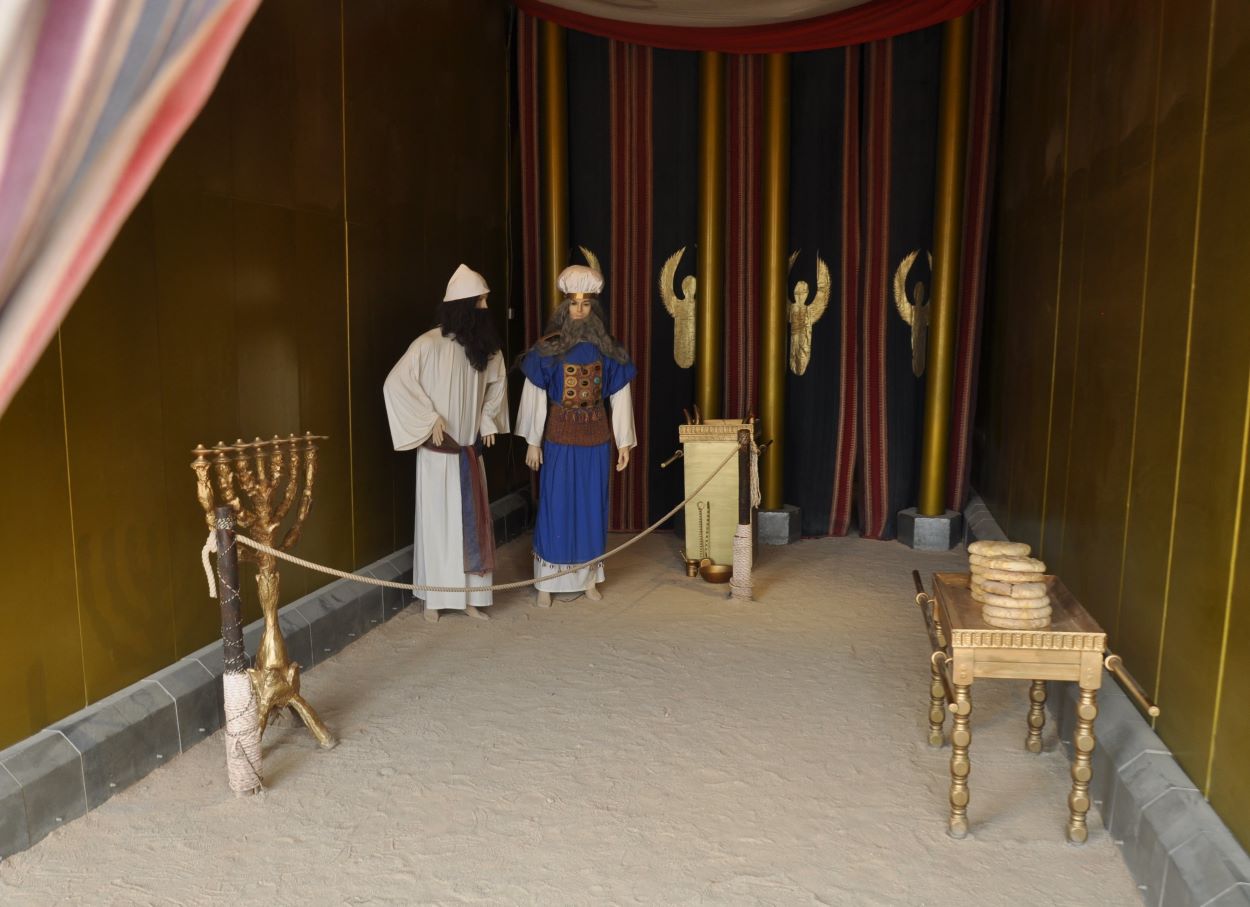
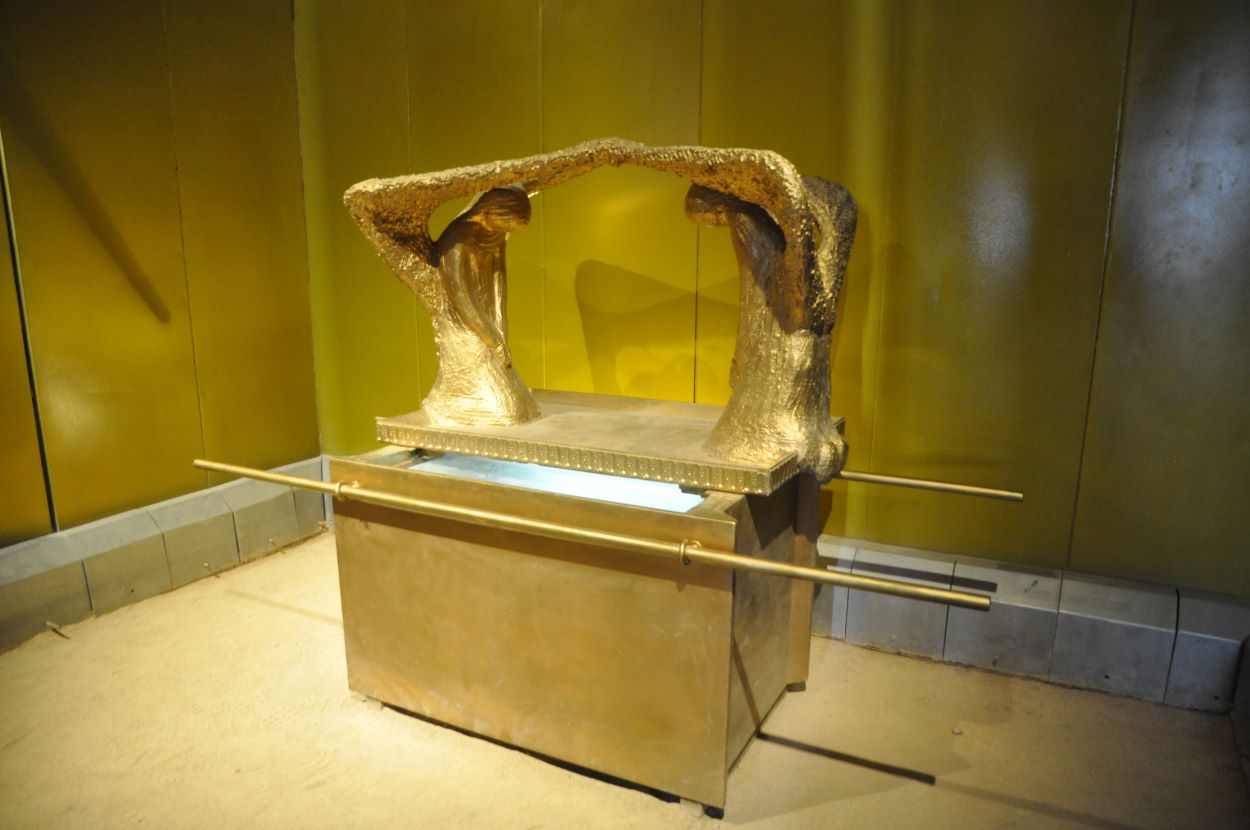
In this post we will share some visuals of the life-size model of the tabernacle in Timna, southern Israel.
Here is a view inside the tabernacle, where you see the lampstand on your left, the table of showbread on your right, and the altar of incense at back just in front of the veil. Also you can see models of the priest, and High Priest.
“Then Solomon went to Ezion Geber and Elath on the coast of Edom. And Hiram sent him ships commanded by his own officers, men who knew the sea. These, with Solomon’s men, sailed to Ophir and brought back four hundred and fifty talents of gold, which they delivered to King Solomon (2 Chronicles 8:17,18).
Let’s first get the geographical setting of Elath (also spelled Eloth, Eilat):
Map courtesy of biblemapper.com
The location of Elath was at the southern tip of the Arabah, and the north eastern tip of the Red Sea, at the Gulf of Aqaba. This allowed Solomon’s fleet of ships access to the Red Sea and of course, south from there into the Indian Ocean. It would seem that through this means of commerce the Queen of Sheba (see map inset) learned of Solomon, and made the journey to see for herself the incredible reports she had heard (related in the next chapter, 2 Chron. 9:1-12).
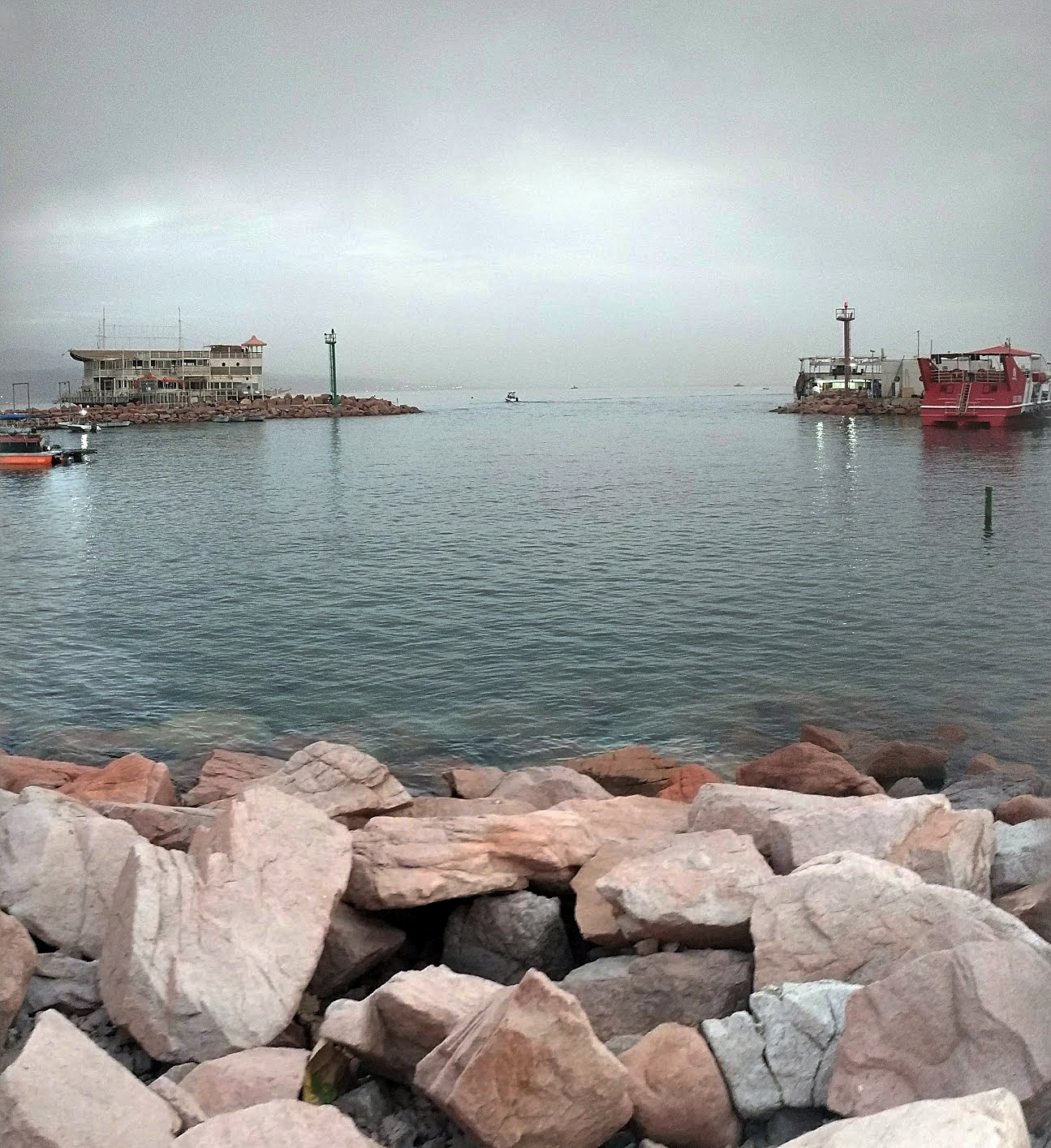
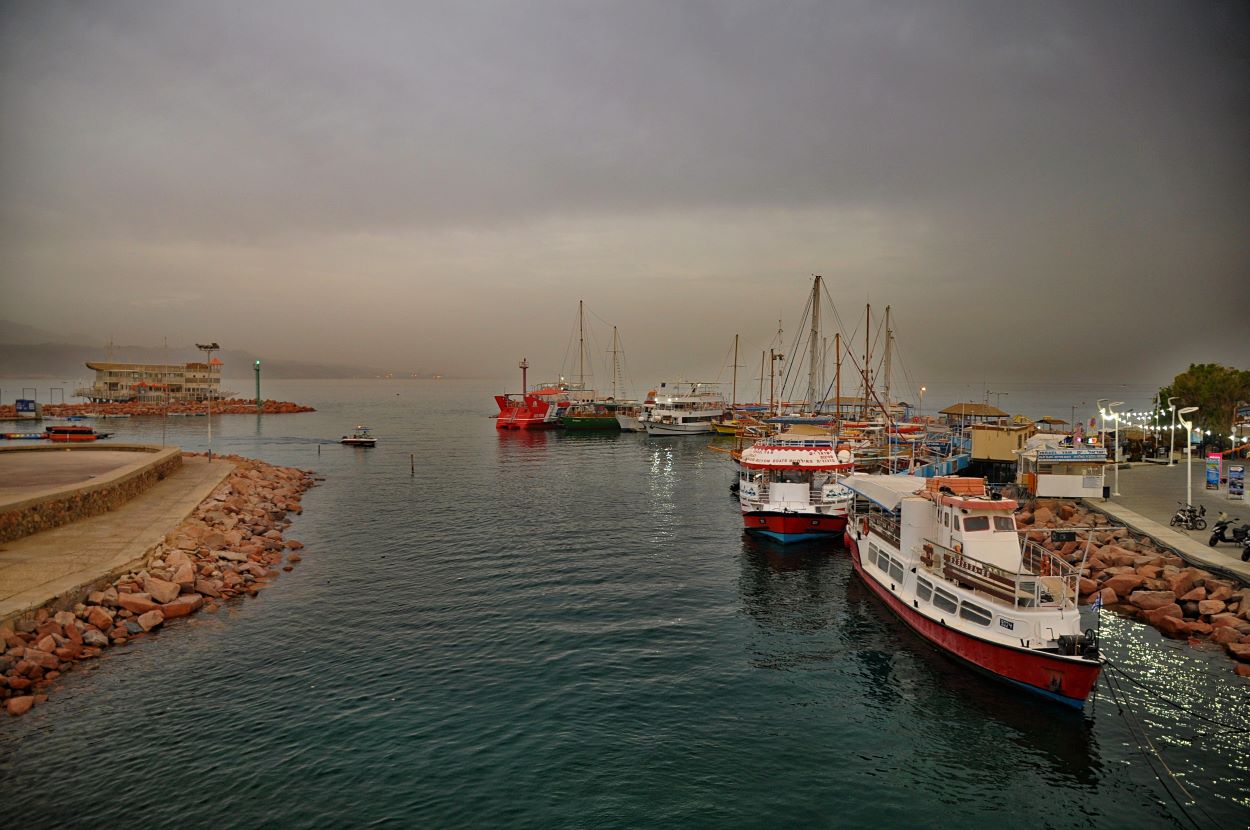
In March 2018, Ferrell Jenkins and I made a personal study trip which included this area. In this photo I am at Elath looking south.
B. S. Hummel has the following information regarding Elath:
A city and harbor at the head of the Gulf of Aqabah. Elath’s strategic position made it an important gateway for caravan and naval commerce with Arabia and eastern Africa. In the OT Elath is frequently placed in close proximity to Ezion-geber. Some scholars consider Tell el-Kheleifeh (147884), which lies between modern Elath and Aqabah, as Elath, others as Ezion-geber, and still others as the site for both Elath and Ezion-geber. The site was also known as El-paran (Gen. 14:6). The Ptolemies changed its name to Bernice. Elath was originally Edomite, possibly taking its name from the Edomite chief Elah (Gen. 36:41 = 1 Chr. 1:52; Eloth). Toward the end of the Exodus, the Israelites passed through Elath before turning north toward Edom and Moab (Deut. 2:8). David probably captured it during his campaign against the Edomites (2 Sam. 8:13–14). Solomon then established a navy of ships in Ezion-geber near Elath (1 Kgs. 9:26 = 2 Chr. 8:17). Apparently the Edomites had regained control, but Uzziah (Azariah, 2 Kgs. 14:22; 2 Chr. 26:2) recaptured and restored it (ca. 780 B.C.). However, under Aramean (Syrian) pressure during the Syro-Ephraimite War (ca. 735), Ahaz lost it to the Edomites permanently (2 Kgs. 16:6).
Hummel, B. S. (2000). Elath. In D. N. Freedman, A. C. Myers, & A. B. Beck (Eds.), Eerdmans Dictionary of the Bible (p. 388). W.B. Eerdmans.
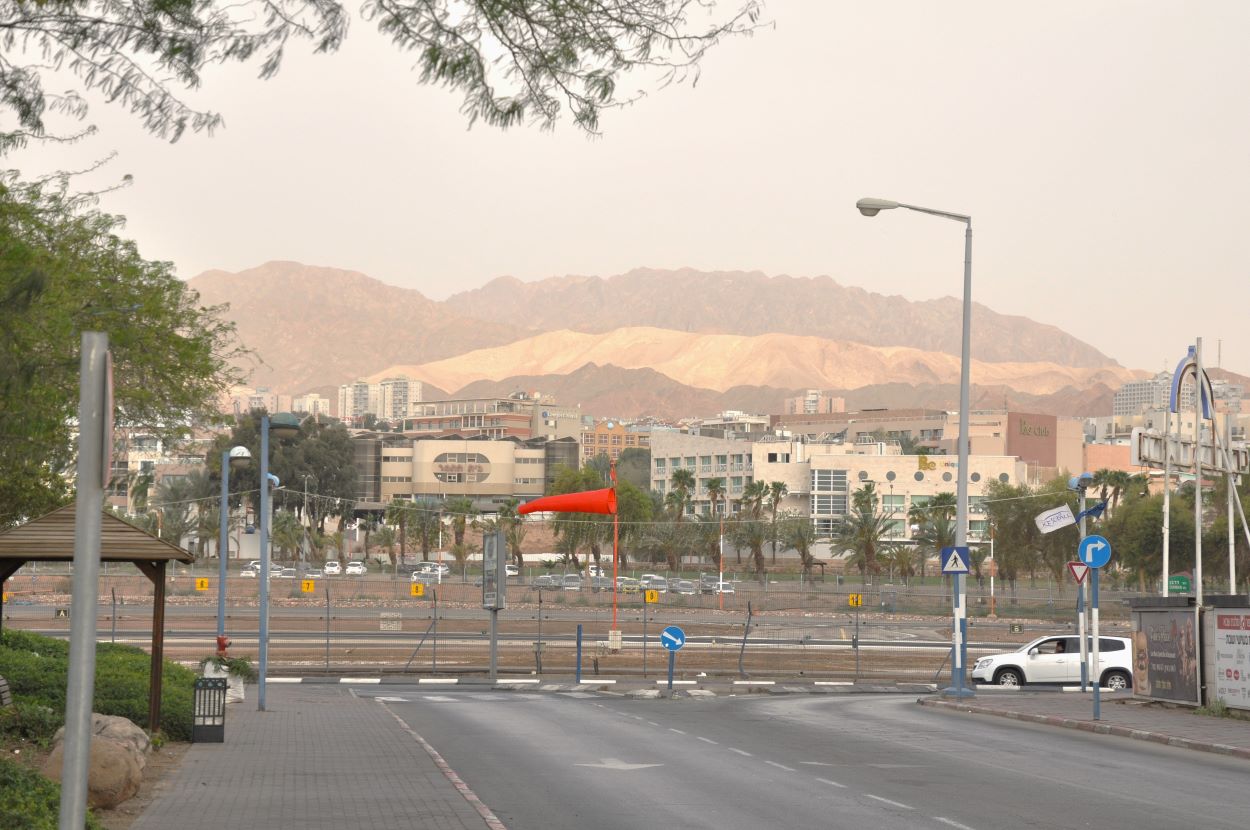
At Elath, looking east. We are of course in the Great Rift Valley here.
When Moses was still atop Mt. Sinai, receiving the Ten Commandments, the nation of Israel grew impatient and said to Aaron, “Come, make us a god who will go before us; as for this Moses, the man who brought us up from the land of Egypt, we do not know what has become of him” (Ex. 32:1). Accordingly, Aaron fashioned a golden molten calf; and they said, “This is your god, O Israel, who brought you up from the land of Egypt” (Ex. 32:4). In the New Testament, Stephen would explain that in their hearts Israel turned back to Egypt (Acts 7:39).
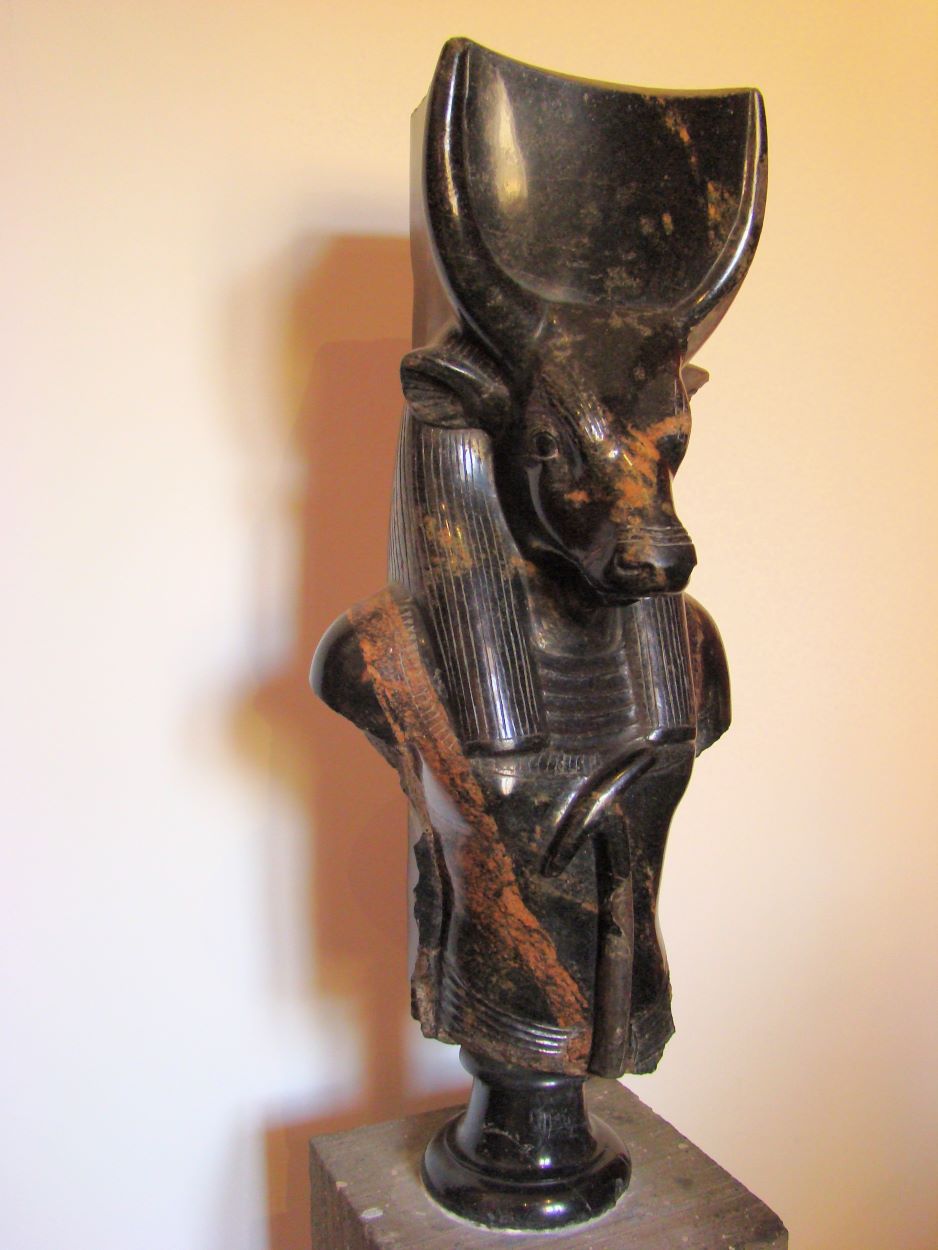
Egyptian mythology presents the Apis bull as the incarnation of the Egyptian creator god Ptah, or the son of Hathor, the primeval goddess. Cattle represented other significant Egyptian gods.
Here is an informative article by M. Froelich, from the Lexham Bible Dictionary:
APIS (חַף, chaph; Ἄπις, Apis). Egyptian bull god of agriculture and fertility. Apis came to be associated with Ptah, chief god of Memphis, and was embodied as a live, sacred bull in the temple there.
Biblical Relevance Although Apis does not appear in the Hebrew text of the Old Testament, the Septuagint text of Jeremiah includes him in a prophecy against Egypt. The text reflects the common understanding that cities and peoples were protected by patron gods, whose withdrawal or weakness could spell doom (e.g., Ezek 8–11; Matt 23:38–39; Homer, Iliad, 22.350–59). In this case, the king of Babylon is able to defeat Egypt because “Apis, your chosen calf,” has fled after being weakened by the Lord (Jer 26:13–15 LES). The Septuagint text does not offer specifics about the Apis cult, but it indicates that he was considered a patron or protector of Memphis, which is named in Jer 26:14 (LXX). The corresponding text in the Hebrew Bible (and in English translations) is Jer 46:13–15. Although this version mentions Memphis (Jer 46:14), it generally refers to “bulls” instead of naming Apis. Bull worship was common in the ancient world and appears in the Old Testament. Gods such as Baal, Zeus, El, and others appear with bull imagery in mythology and in worship. The incident of the golden calf in Exod 32 is an example of Semitic bull worship. Calf worship also is mentioned in 1 Kgs 12:25–33, in which Jeroboam returns from Egypt and sets up calf statues in the northern kingdom.
Mythology and History Apis is the bull god of the Egyptian pantheon. According to religious belief, Apis was the son of Ptah, who impregnated the mother cow via lightning bolts or moonbeams. In some myths, Apis was the son of Hathor, a heifer goddess often depicted with the sun disk between her horns; the same symbol often appears in visual representations of Apis (see Malaise, “Histoire et signification”). Apis’ most important temple was in Memphis and dates at least as far back as Egypt’s New Kingdom (16th–11th centuries BC), though the god himself goes back to the earliest periods of Egyptian history. Apis was broadly popular, and his worship lasted at least into the late Ptolemaic period; the latest bull found buried in his temple in Memphis dates to the late second or early first century BC. In Memphis and possibly elsewhere, the worship of Serapis seems to have taken over by the Graeco-Roman era. Like many important ancient deities, Apis was associated with the king and his powers. Because the most important of these powers was the fertility of the land, worship of Apis inspired festival traditions such as the trampling of a farm plot (Meeks and Favard-Meeks, Daily Life, 137). Plutarch states that the Egyptians revered the Apis bull “being the image of the soul of Osiris” (Plutarch, De Iside et Osire, 20). This association between Apis and Osiris was part of the process that eventually led to their assimilation in Serapis.
Cult and Worship One of the main features of the Apis cult was the worship of the bull at the Memphis temple. The bull was believed to be the god himself. He would be selected as a calf, whose distinctive markings had to include a white triangle on the forehead and a wing pattern across the back. During his journey to Memphis, young women would gather to lift their skirts before him in order to guarantee their fertility. The animal (and often its mother) lived in luxury at the temple. Some ancient sources claim that he had a harem of cows; others emphasize that Apis had no offspring and “that a cow was selected and presented to Apis once a year, and then put to death so that no offspring would come of the match” (Meeks and Favard-Meeks, Daily Life, 137). The bull’s death would bring elaborate funeral rites and preparation, including the mummification and burial of the animal in a nearby cemetery. Then the search for a new Apis would begin. A stele, possibly of the late Ptolemaic or early Roman period, depicts the Apis bull on a funeral vessel, being mourned by Isis and Nephthys. Although the piece was not found in situ, it most likely is from the nearby Saqqara Serapeum and represents the funeral procession for the Apis bull (Farag, “Two Serapeum Stelae,” 165–66).
Froelich, M. (2016). Apis. In J. D. Barry, D. Bomar, D. R. Brown, R. Klippenstein, D. Mangum, C. Sinclair Wolcott, L. Wentz, E. Ritzema, & W. Widder (Eds.), The Lexham Bible Dictionary. Lexham Press.
It would seem reasonable then, that when Israel worshipped the golden calf at Sinai, they rejected the true God in favor of the idols they knew. Later, when the kingdom divided, Jeroboam, first king of the northern kingdom of Israel, installed golden calves at Dan and Bethel, and called on Israel to worship. He said, “It is too much for you to go up to Jerusalem; behold your god, O Israel, that brought you up from the land of Egypt” (1 Kings 12:28).
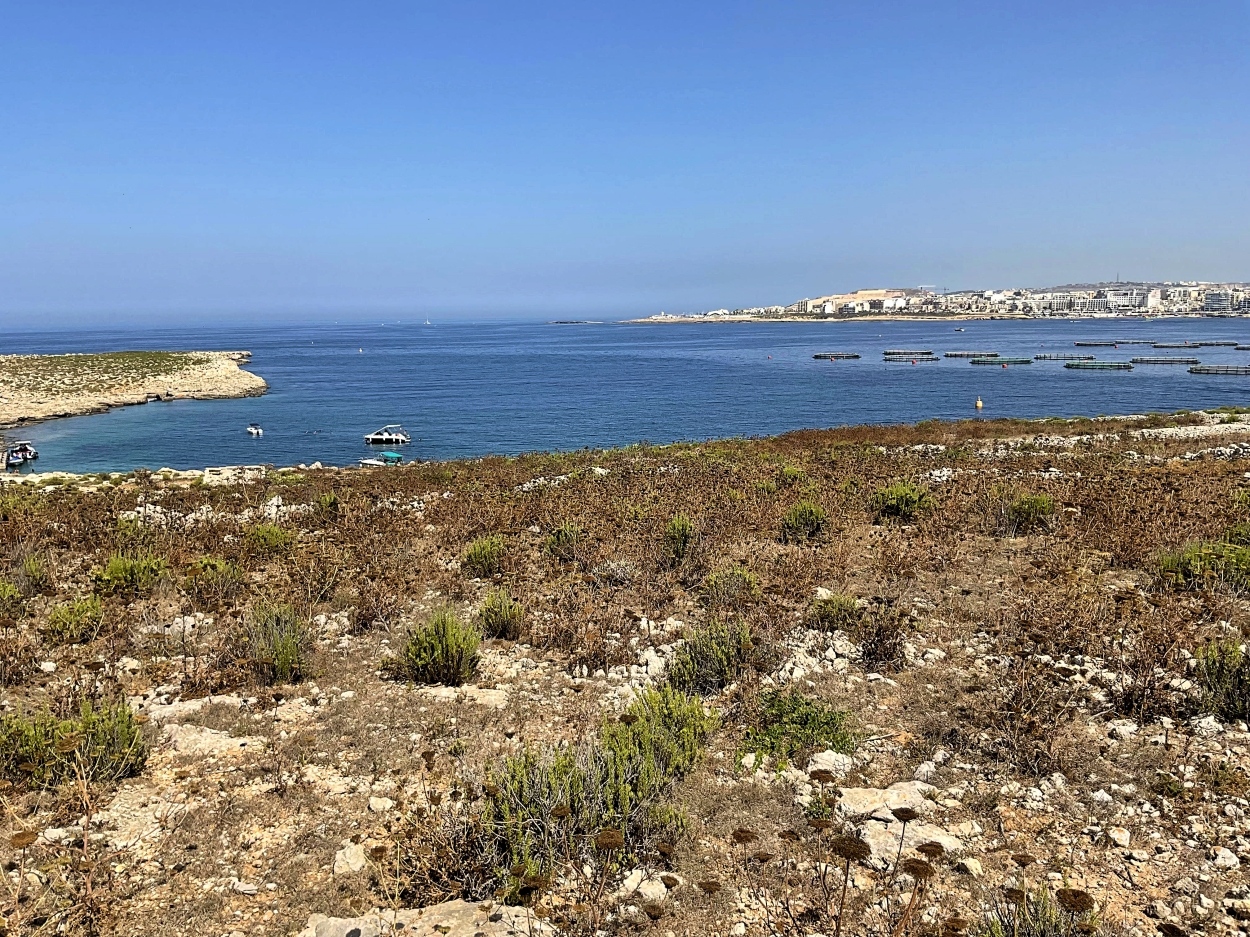
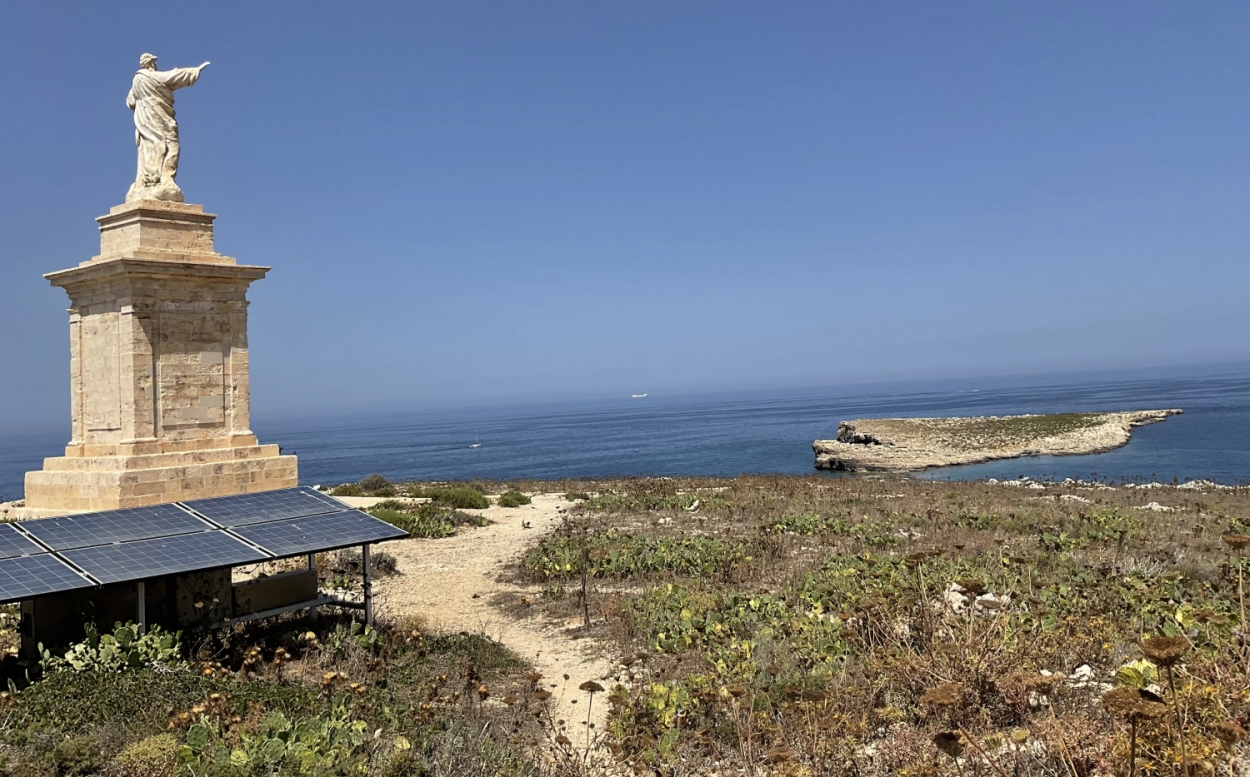
Our special interest in our recent trip to Malta was the biblical record of Paul’s shipwreck there. (Paul was a prisoner on his way to Rome for trial). They wintered on the island (there were 276 passengers on the ship) and then from there went on to Rome (Acts 28). See our previous post here, “Saint Paul’s Bay at Malta.”
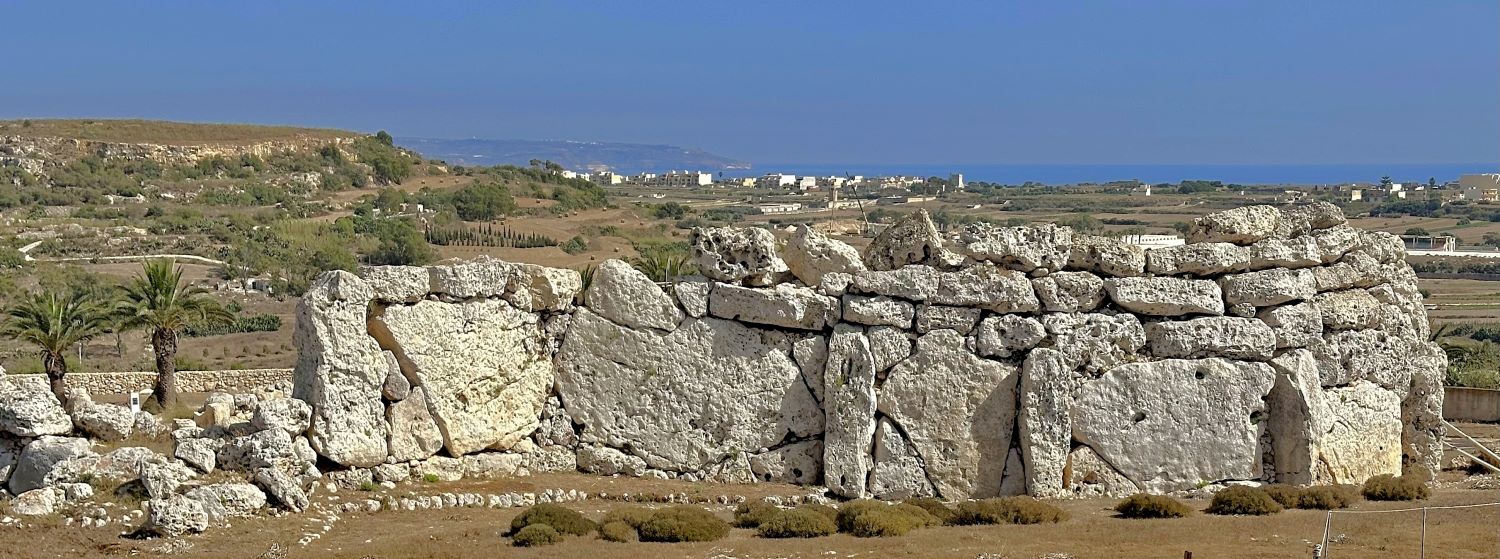
There are many other historical and archaeological sites to visit at Malta (which consists of three islands: Malta, the largest, Comino, and Gozo). At Gozo we visited the Ġgantija temples, two temples enclosed within one boundary wall. One is composed of five apses (the southern temple), the other has four. Here is the view as one approaches (note the Mediterranean Sea in the distance):
The Ġgantija temples, as well as other Maltese temples, date back to the Bronze Age (with some scholars dating the older building phase at c. 3500 BC). They are considered to be the oldest free-standing stone buildings in the world, predating the pyramids!
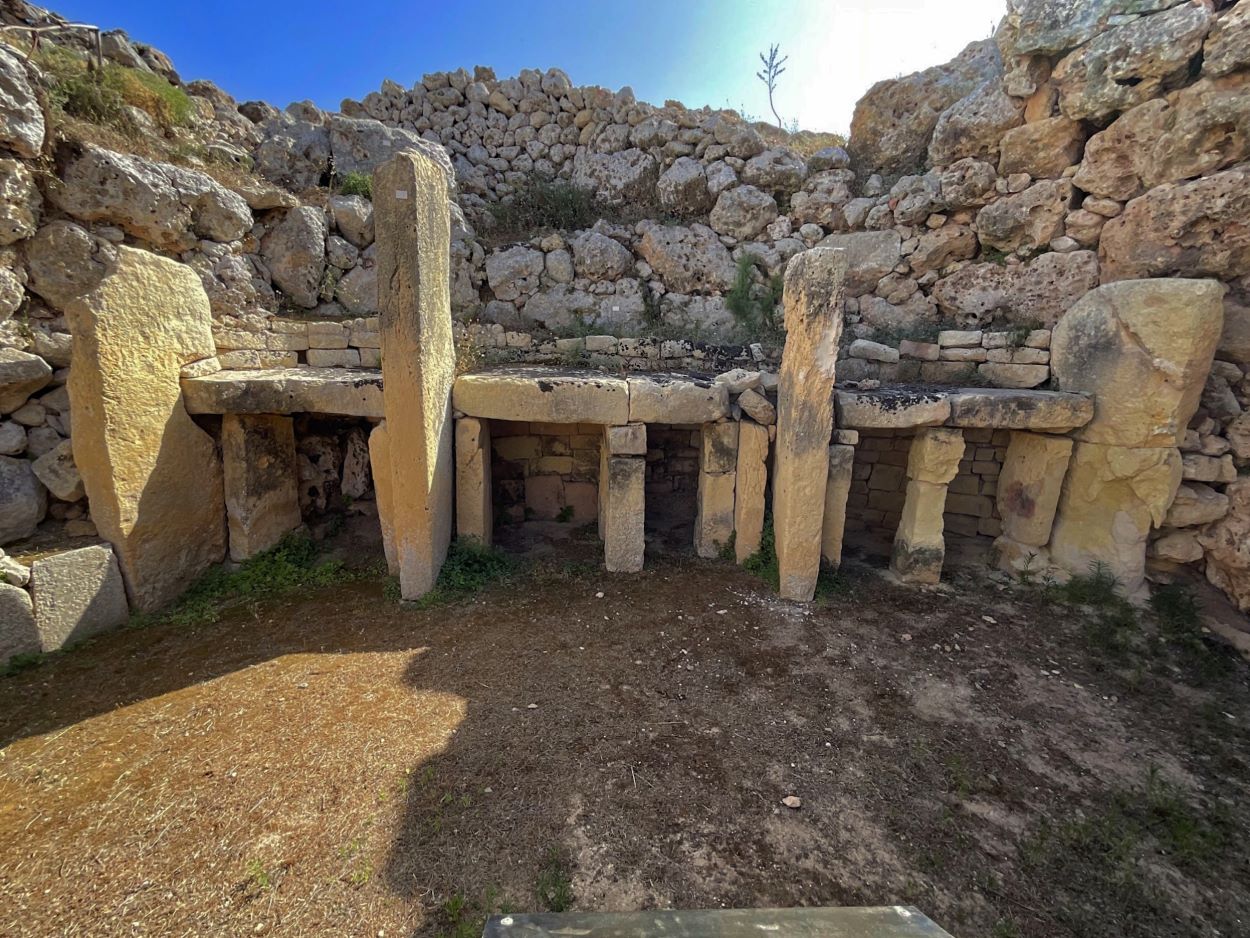
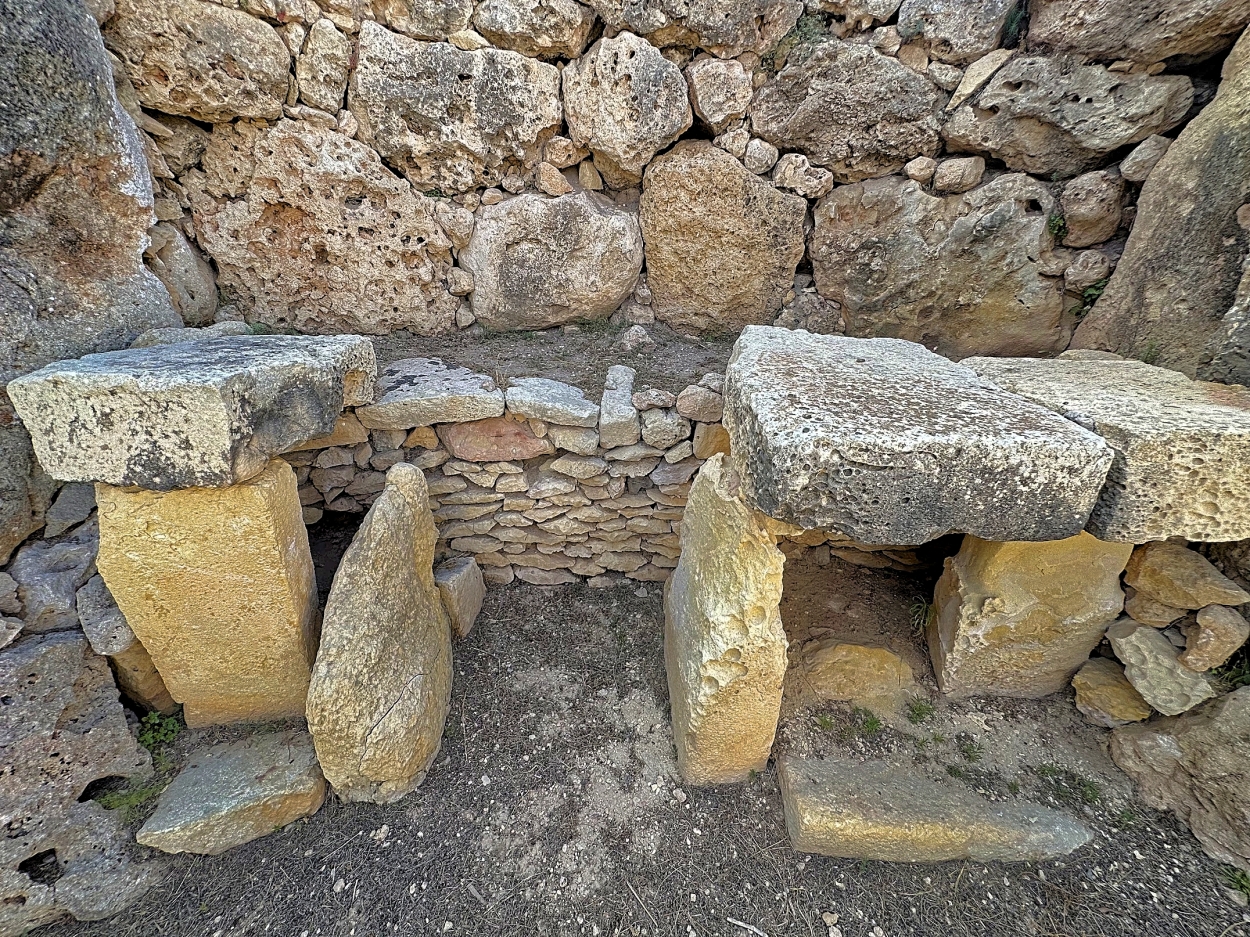
There is the inner left apse of the south temple. It has one of the most complex altars, consisting of three trilithons between four uprights.
Acts 27:39-Acts 28:1 describes the shipwreck on which the Apostle Paul was a prisoner en route to Rome:
When it was day, they did not recognize the land; but they observed a bay with a beach, onto which they planned to run the ship if possible. And they let go the anchors and left them in the sea, meanwhile loosing the rudder ropes; and they hoisted the mainsail to the wind and made for shore. But striking a place where two seas met, they ran the ship aground; and the prow stuck fast and remained immovable, but the stern was being broken up by the violence of the waves. And the soldiers’ plan was to kill the prisoners, lest any of them should swim away and escape. But the centurion, wanting to save Paul, kept them from their purpose, and commanded that those who could swim should jump overboard first and get to land, and the rest, some on boards and some on parts of the ship. And so it was that they all escaped safely to land. Now when they had escaped, they then found out that the island was called Malta.
Acts 27:39-Acts 28:1
Here is the site proposed by many scholars of that area, known as St. Paul’s Bay:
Having just returned from a personal study trip to Malta, I hope to share some of the sites and artifacts we were able to photograph in upcoming posts.
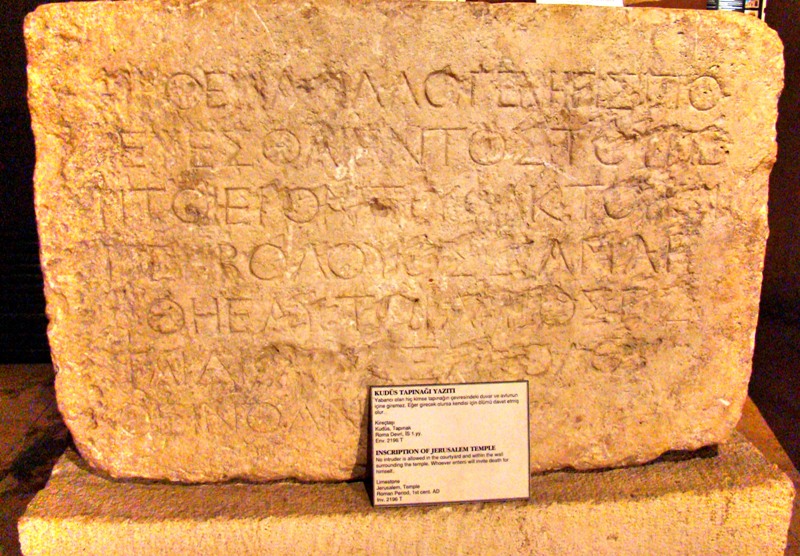
Some biblical texts are especially illuminated by archaeological finds. For example, Acts 21:28 records the false charge against Paul, “He also brought Greeks into the temple and has defiled this holy place” (v.28). The next verse shows this they “supposed” (NET “assumed). Ephesians 2:14 speaks of Jesus’ death breaking down “the middle wall of separation” between Jews and Gentiles.
Temple Inscription Fragment. Israel Museum. Photo by Leon Mauldin.
Our photo shows one of the warnings posted marking the boundary within the temple complex beyond which no Gentile could proceed. The inscription read, “NO FOREIGNER IS TO GO BEYOND THE BALUSTRADE AND THE PLAZA OF THE TEMPLE ZONE. WHOEVER IS CAUGHT DOING SO WILL HAVE HIMSELF TO BLAME FOR HIS DEATH WHICH WILL FOLLOW.” I took this photo earlier this month in the Israel Museum.
A complete tablet is housed in the Istanbul Museum, as seen in our photo here:
Complete Temple Inscription. Istanbul Archaeology Museum. Photo by Leon Mauldin.
So the Acts 21 text means that Paul was charged with taking a Gentile beyond the balustrade marked off by signs just like thsee.
The Ephesians 2 text shows that with Jesus’ death on the cross, reconciliation is made possible between men (Jew and Gentile) and God, and those reconciled unto God are reconciled to each other. The reconciled are in one body (the church, Eph. 1:22-23). That distinction epitomized by the wall of separation, and reflected by these warning signs, has been removed!
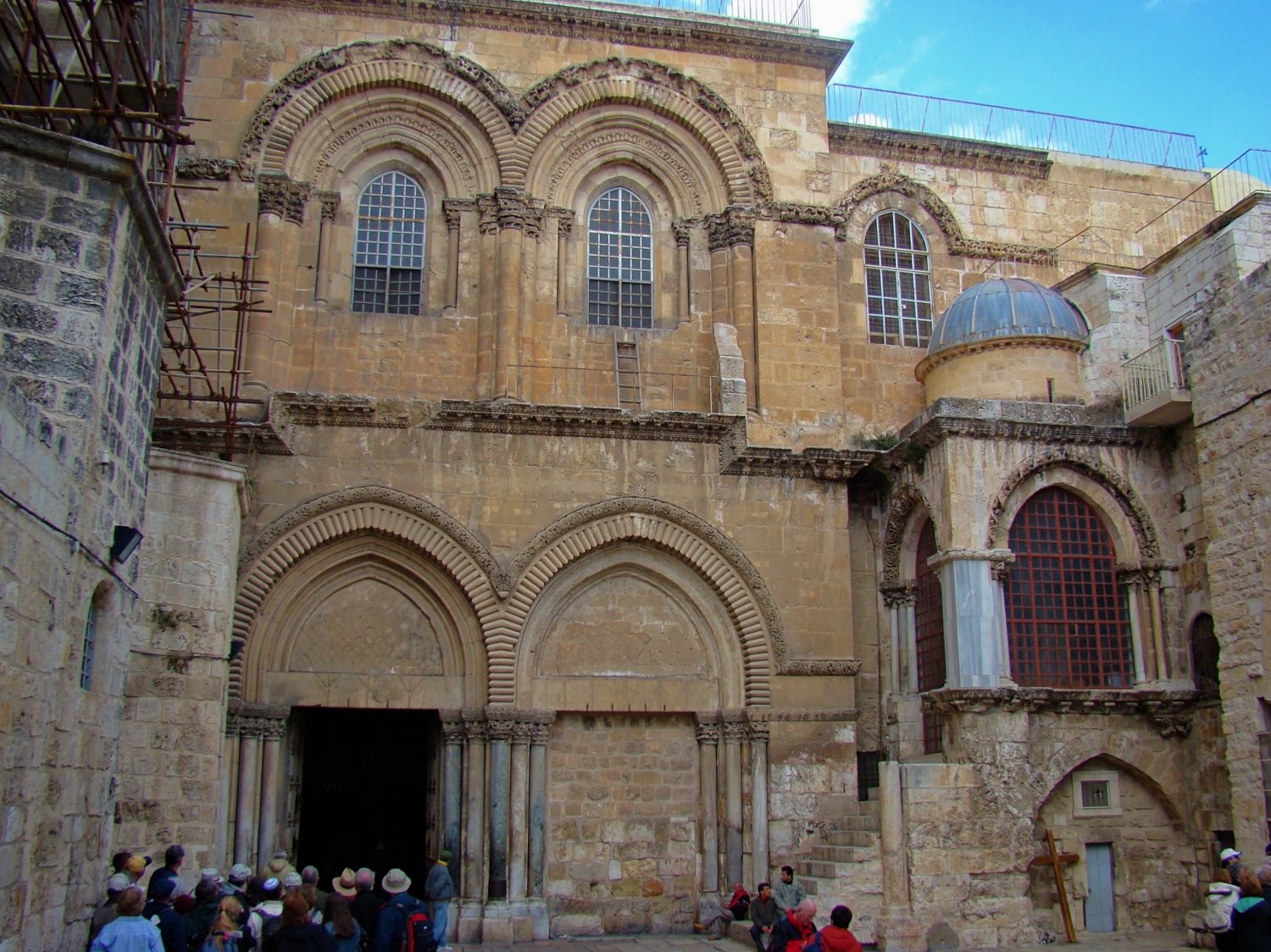
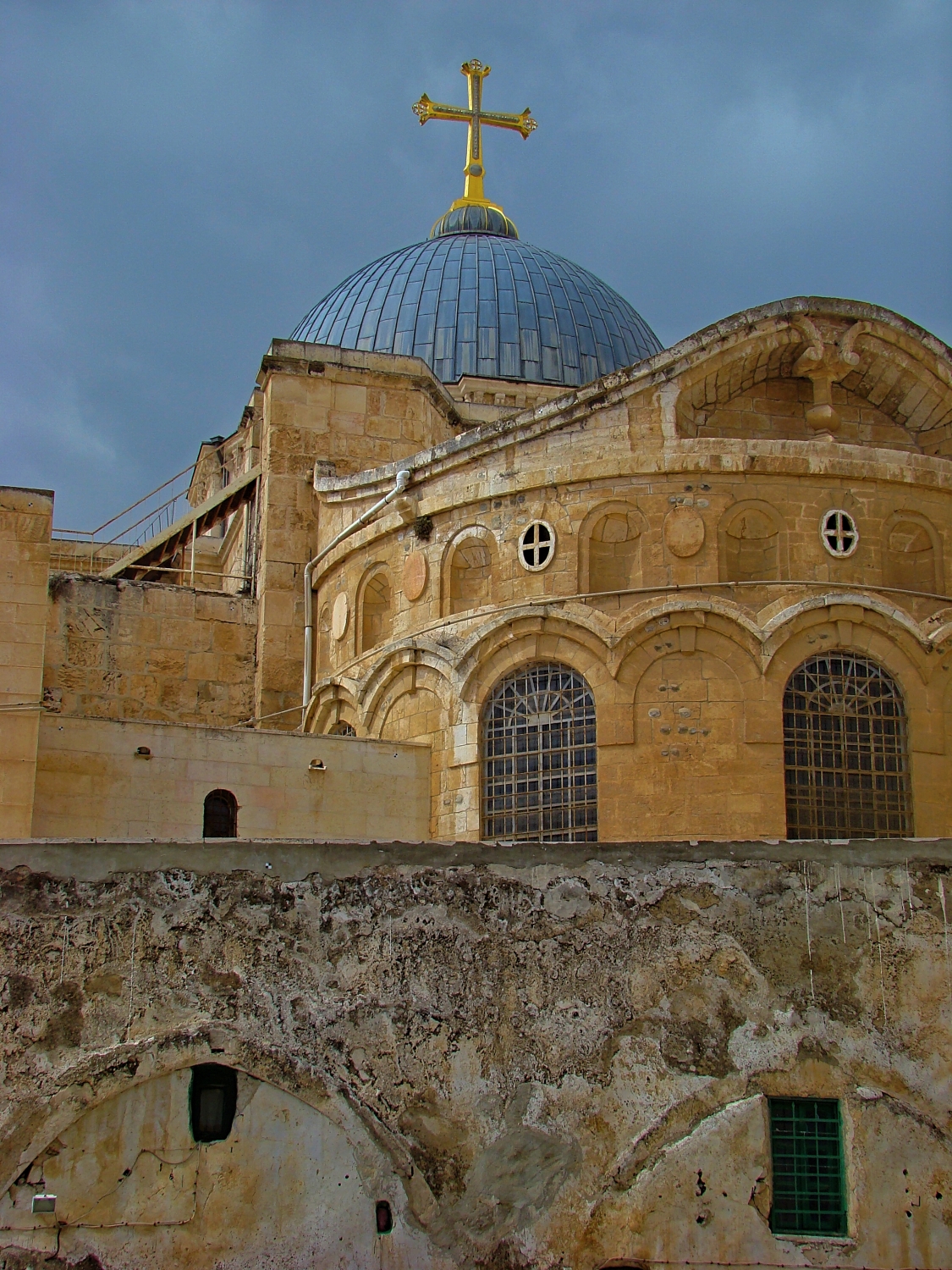
The Roman Emperor Hadrian (r. 117-138 AD) built a temple devoted to Jupiter over the site venerated as Jesus’ tomb. Later Constantine (r. 306-337 AD) ordered Hadrian’s temple to be destroyed and ordered that a church be built over Jesus’ tomb. Despite the years of destruction and rebuilding, enough remains from earlier structures to provide a plan of Constantine’s buildings.
The site of the crucifixion itself is thought to be very near the place of Jesus’ entombment. Previously Hadrian had erected a Venus statue over Golgotha, ironically marking the spot! Constantine constructed the Martyrium Church over the site of the crucifixion itself.
2 Kings 23 records the zealous reforms of good king Josiah (r. 640-609 BC), who had been the object of prophecy some 300 years earlier (1 Kings 13). Josiah destroyed/defiled the sites and objects of idolatry both in Jerusalem as well as throughout the land of Israel. This included the desecration of the site Solomon had constructed for the worship of foreign gods (which had resulted from the influence of the pagan wives he accumulated, cf. 1 Kings 11).
The text states: “Then the king defiled the high places that were east of Jerusalem, which were on the south of the Mount of Corruption, which Solomon king of Israel had built for Ashtoreth the abomination of the Sidonians, for Chemosh the abomination of the Moabites, and for Milcom the abomination of the people of Ammon” (2 Kings 23:13).
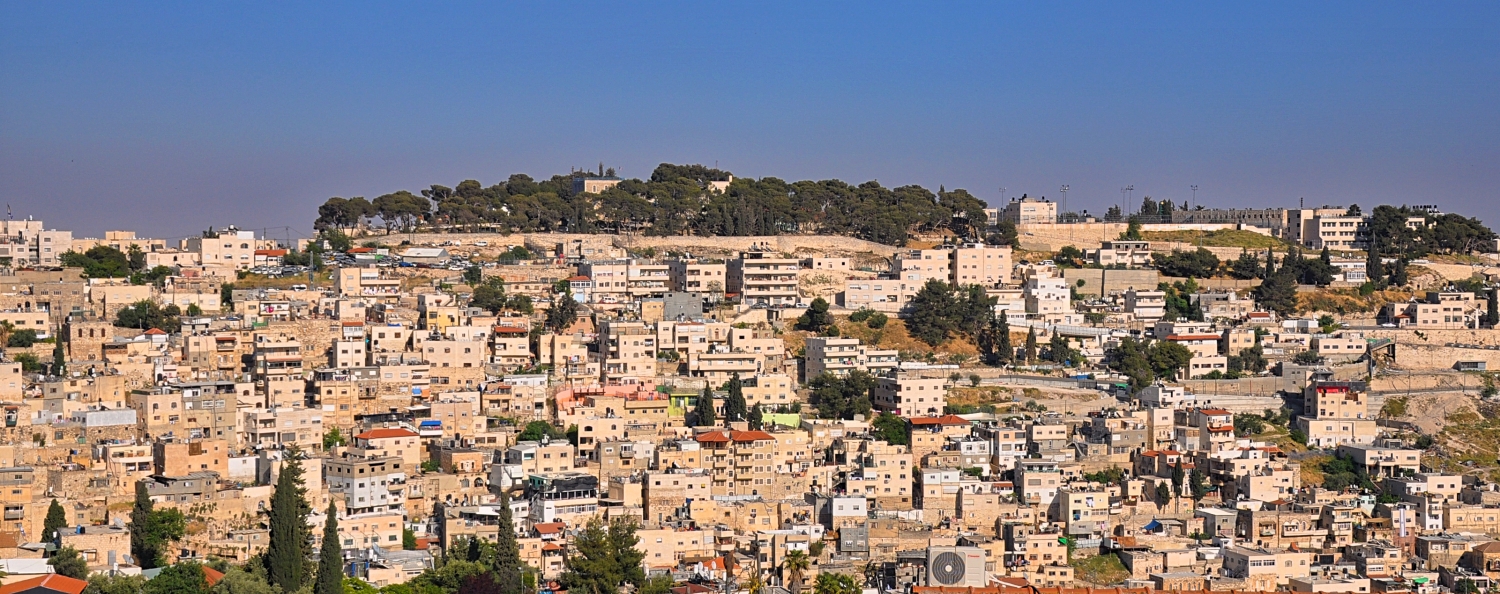
Here is the location of har hammašḥı̂t (הַר הַמַּשְׁחִית
The “Mount of Corruption” is a “derogatory name for the Mount of Olives, where Solomon had built shrines to Ashtoreth, Chemosh, and Molech. Josiah, king of Judah is described as defiling and destroying these temples in 2 Kgs 23:13” (The Lexham Bible Dictionary).
This site also came to be known as the “Mount of Offense” as well as the “Mount of Scandal.”
Our last couple of posts have dealt with Pharaoh Tirhakah, the Cushite (Ethiopian) king of Egypt’s 25th dynasty, and mentioned by name in 2 Kings 19:9, in correction with Judah’s good King Hezekiah, and the Assyrian King Sennacherib. We noted, “In some translations (i.e., NKJV) Tirhakah is said to be king of Ethiopia. “Ethiopia” here refers to southern Egypt, and is rendered Cush in CSB, ESV, NASB (Hebrew is כּוּשׁ, transliterated kûš).” Cush is also called the land of Nubia, with Nubia being the more modern name.
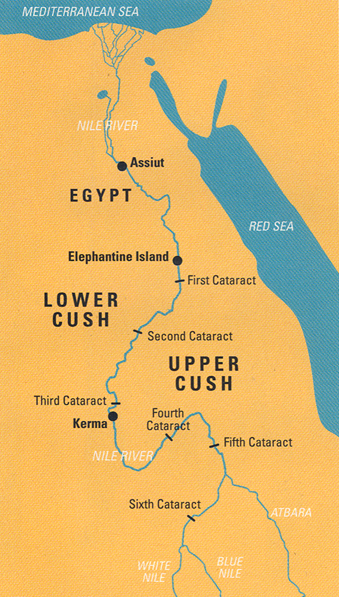
On our recent tour of Egypt (Oct. ’22) we had the opportunity to go south of Aswan (positioned “First Cataract” here on map below), where the ancient border separated Egypt from Cush.
Map of Egypt and Cush. Cush, to the south of Egypt, is biblical Ethiopia.
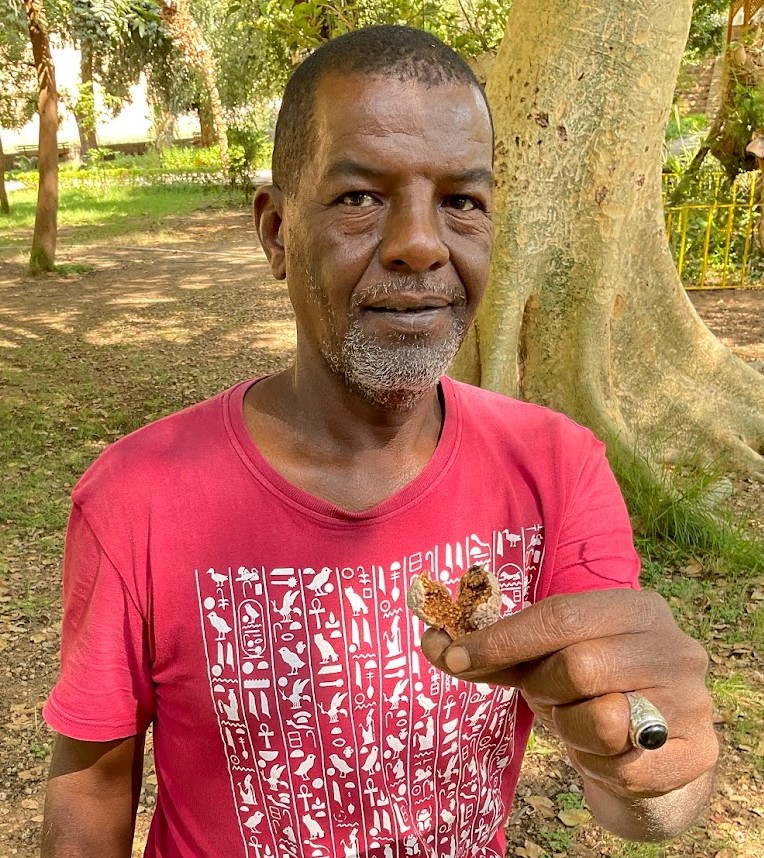
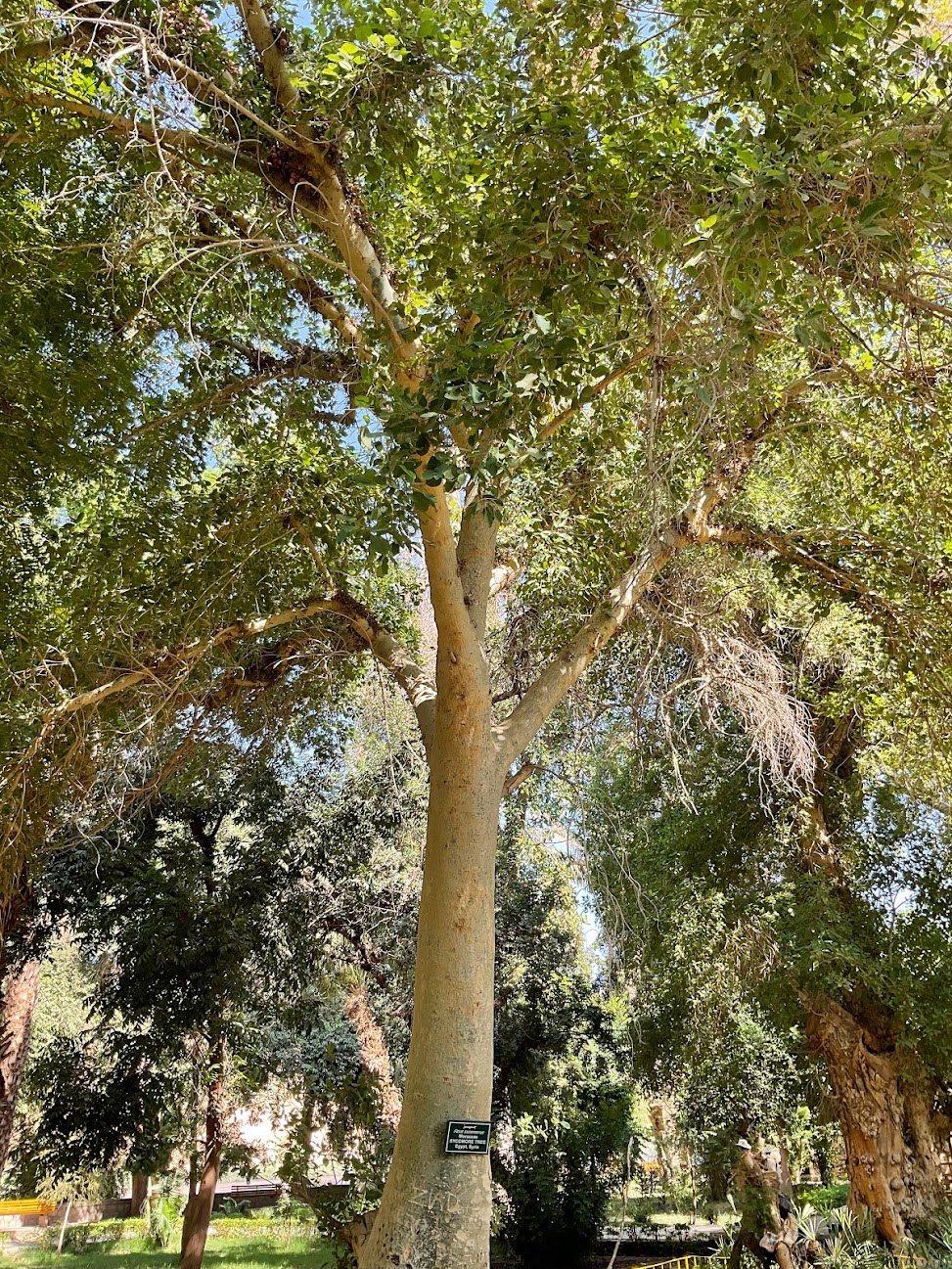
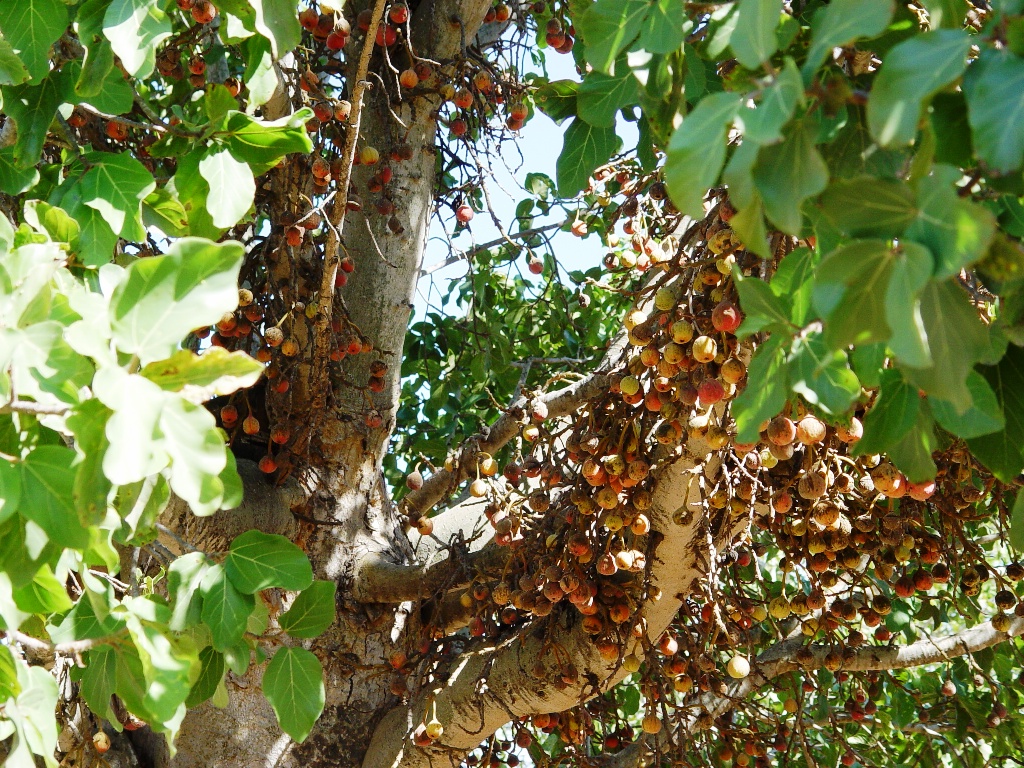
Earlier when our group stopped for a visit at Kitchener Island in the Nile, we saw trees and plants from many locations. It is used as a research station called the Botanical Research Institute. While there we saw a sycamore tree, which is referenced many times in the scripture. Unlike the sycamore tree of my home in Alabama, the biblical sycamore produced figs (see Amos 7:14-17). I was explaining to some of our group nearby as to the significance of the tree, when a gentleman who also was listening (apparently an employee) approached. He picked up a fig, broke it open, to let our folks better see. This was very helpful. He also very emphatically said, “I am Nubian.”
Here is a sycamore tree in Israel at Neot Kedumim, the Biblical Landscape Reserve in Israel. (Located near Modi’in, midway between Jerusalem and Tel Aviv, Israel).
In our present post we further consider Tirhakah, the Cushite (Ethiopian) Pharaoh mentioned in 2 Kings 19:9: “Now Sennacherib received a report that Tirhakah, the Cushite king of Egypt, was marching out to fight against him.
It is fascinating (and illuminating) when there are other historical records, inscriptions, and artifacts which coincide with biblical persons and events. The battle between the Assyrians and Egyptians mentioned in our text above was of no great or decisive consequence. The biblical text shows that Assyria’s King Sennacherib was primarily interested in conquering Judah, and Tirhakah lived to fight another day. As was seen in yesterday’s post, Sennacherib conquered many Judean cities, but Yahweh delivered Jerusalem from his hands (701 BC), and Sennacherib fled back to Nineveh.
But there would be further conflict and fighting between Egypt and Assyria. Sennacherib was succeeded by his son Esarhaddon (2 Kings 19:37). The Lexham Bible Dictionary has the following info which references additional contact/conflict with Assyria and Egypt’s Pharaoh Tirhakah:
In 677 BC, Esarhaddon invaded Egypt after settling a revolt in Ashkelon, but was held back and retreated. In 671 BC he invaded again, this time capturing and sacking Memphis. He also took several members of the royal family captive, including Tirhakah’s son, Ushankhuru. Tirhakah fled to the south while Esarhaddon established Necho I as king of Sais. After Esarhaddon left, Tirhakah attempted to destabilize Necho I. On his way back to deal with the trouble Tirhakah was causing, Esarhaddon died. His son Ashurbanipal defeated Tirhakah, causing him to flee to Thebes, where he died in 664 BC.
Nettelhorst, R. P. (2016). Tirhakah. In J. D. Barry, D. Bomar, D. R. Brown, R. Klippenstein, D. Mangum, C. Sinclair Wolcott, L. Wentz, E. Ritzema, & W. Widder (Eds.), The Lexham Bible Dictionary. Lexham Press.
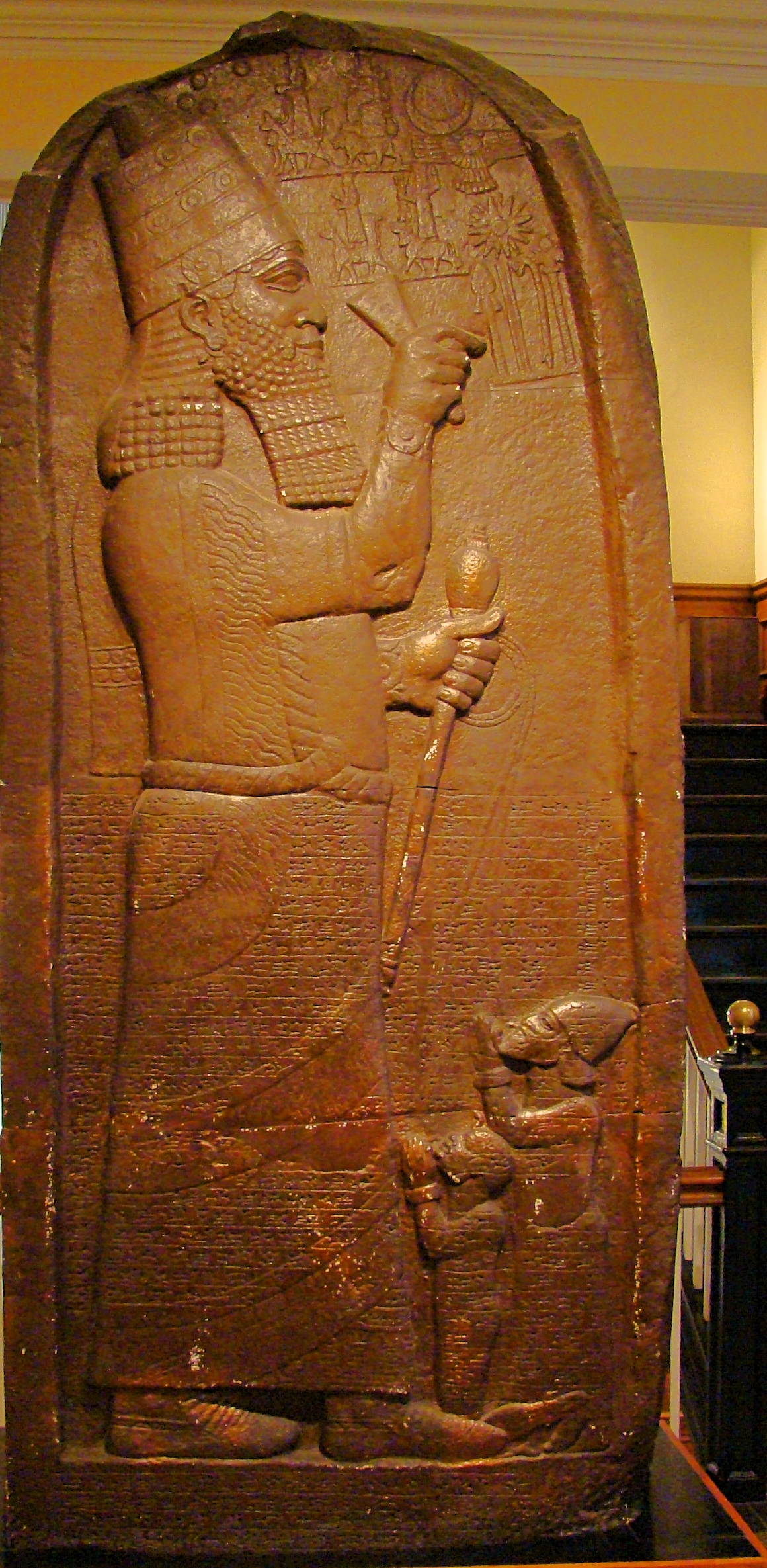
The Victory stele of Esarhaddon commemorated his 671 BC victory over Pharaoh Tirhakah (Taharqa/Taharka). Esarhaddon holds a mace club in his left hand, with a rope that passes through the lips of the two conquered kings, thought to be Pharaoh Tirharkah (lower left) and King Baal of Sidon (lower right). Esarhaddon’s right hand is addressing the gods. The script on the bottom half is in Akkadian Cuneiform.


 Posted by Leon Mauldin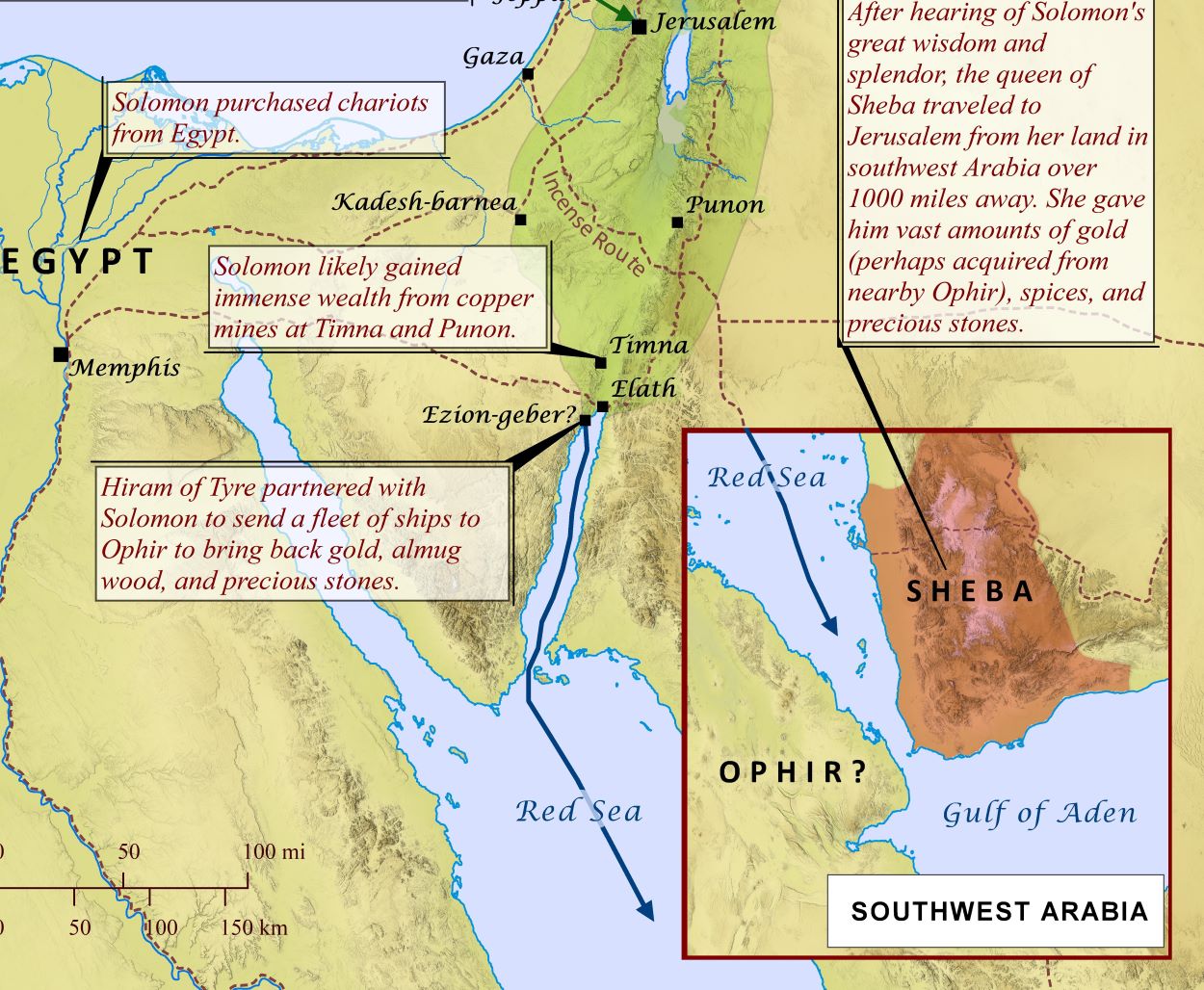




 leonmauldin.blog