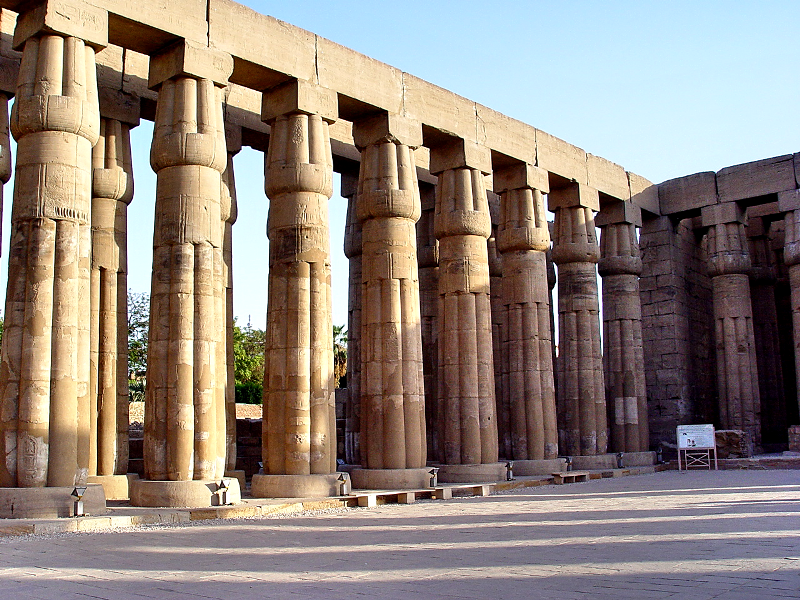
Court of Amenhotep III at Thebes

July 6, 2012

In the oracle against Egypt, God said, “I will make Pathros desolate, Set a fire in Zoan and execute judgments on Thebes” (Ezekiel 30:14). “The phenomenal city [Thebes]was the center of Upper Egypt, and the seat of government during most of the time of Egyptian world power” (Bible and Spade, Vol. 7, p. 33).

This shot of the Luxor temple at Thebes shows the court of Amenhotep III (reigned 1390-1352 BC), with its double rows of massive columns.

Court of Amenhotep III, at Luxor, biblical Thebes. Photo by Leon Mauldin.

An article in Biblical Archaeological Review entitled “Egyptian Finds Uncovered in Jaffa,” by Judith Sudilovsky contained an interesting reference to Amenhotep III. The mention of Jaffa (biblical Joppa) in this excavation report illustrates the fact that Egyptian rule/influence often included the land of Canaan (and far beyond):

. . . The team also found a 3.5-inch Egyptian scarab, dating to the reign of Pharaoh Amenhotep III (1390–1352 B.C.). The eight lines, engraved in hieroglyphs, enumerate the pharaoh’s achievements, proclaiming his prowess as a hunter and declaring that he had killed 102 lions during the first ten years of his reign. According to the team’s Egyptologist, Deborah Sweeney, such seals were typically sent to the edges of the Egyptian kingdom to praise and glorify the king (BAR 26:02 March/April 2000).

Click image for larger view.


Daniel’s Babylon

July 5, 2012

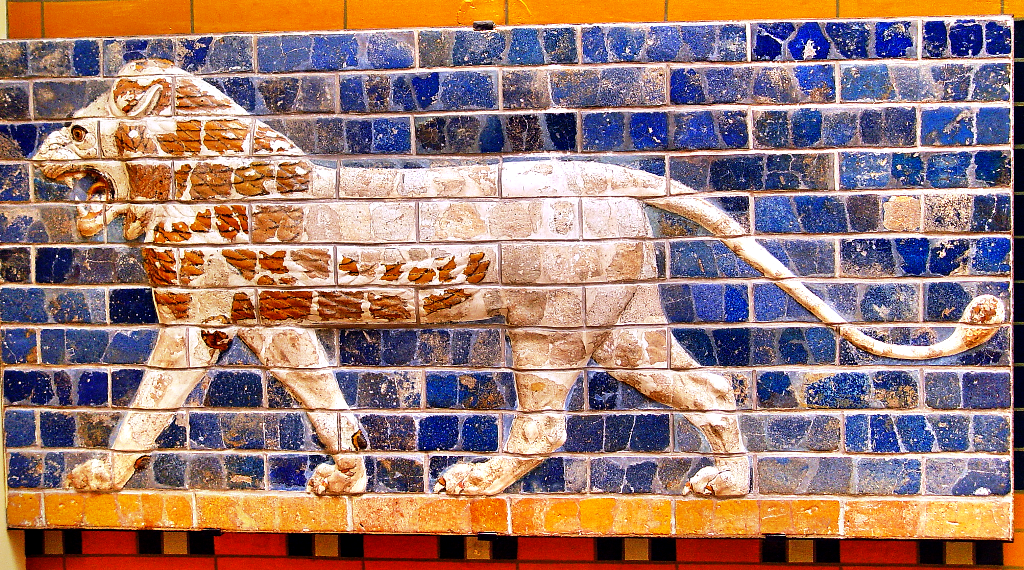
This lion in glazed brick from the Processional Way, Babylon, dates back to Nebuchadnezzar, king of Babylon 605-562 BC. This lion (among other animals) is now in the Archaeology museum in Istanbul. Perhaps this can help us visualize the challenge to Daniel’s faith as he was cast into a den of lions by the Medo-Persian king, Darius.

Lion from Processional Way, Babylon. Photo by Leon Mauldin.

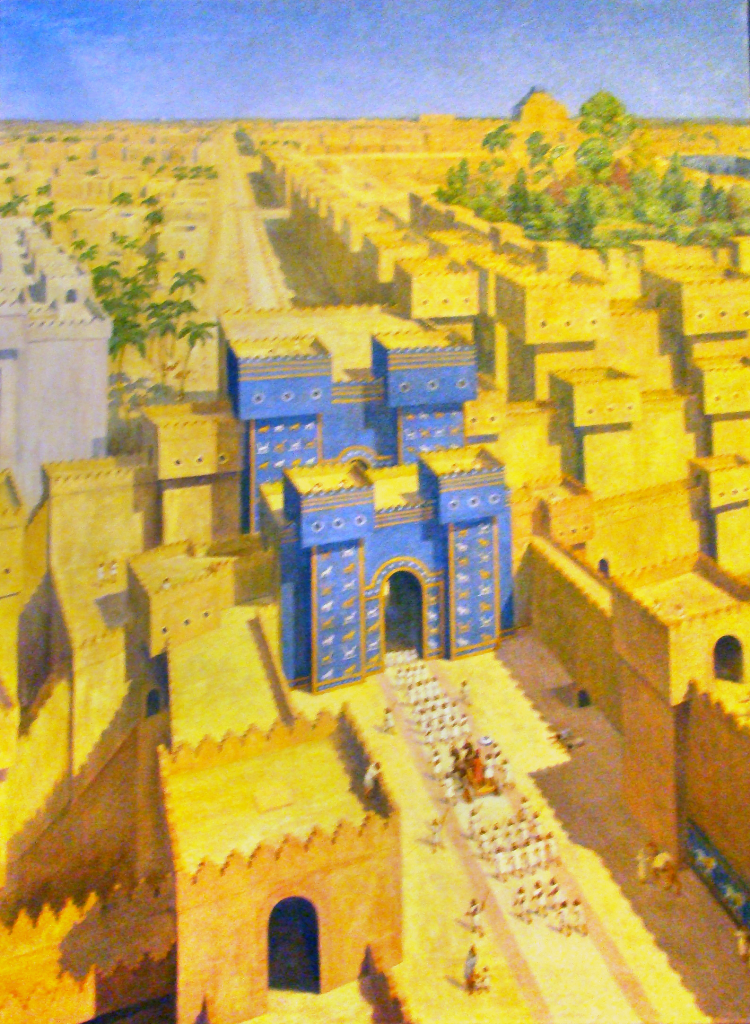
A beautiful painting of ancient Babylon, built by Nebuchadnezzar, is displayed in the Oriental Institute Museum in Chicago.

Artist conception of ancient Babylon. Photo by Leon Mauldin.


Stele of Nabonidus

June 29, 2012

The king reigning at the time of Daniel 5 is Belshazzar. Actually he had a co-regency with his father, Nabonidus (556–539 B.C.). In the context of Daniel 5, the 70 years of captivity which began in 605 B.C. are almost complete. Daniel, who was a youth as the book begins in ch. 1, now would have been an old man. When Belshazzar made a drinking feast for a thousand of his nobles, they were drinking wine out of the gold vessels taken from the Solomonic temple in Jerusalem (at the 586 B.C. destruction by Nebuchadnezzar). This is when the fingers of a man’s hand emerged, writing on the plaster of the wall of the king’s palace. The terrorized king, at the suggestion of the queen, called for Daniel to interpret the writing on the wall. He offered Daniel clothing of purple, a chain of gold and third place in the kingdom, if Daniel would give the interpretation.

This stele of Nabonidus, was discovered in Haran. He holds the scepter, while worshipping three deities, represented by the moon, the sun, and Venus. The deities represented are Sin, Shamash, and Ishtar. Nabonidus spent much of his time outside of Babylon and was out of touch with his administrative duties.

Nabonidus Stele. Discovered at Haran. Photo by Leon Mauldin.


Colossi of Memnon

June 13, 2012

Jesuit Claude Sicard (1677-1726) was commissioned by the French regent Philippe d’Orléans to investigate and identify ancient monuments in Egypt. Sicard visited Upper Egypt four times and was the first in modern times to identify the site of Thebes as well as the colossi of Memnon and the Valley of the Kings.

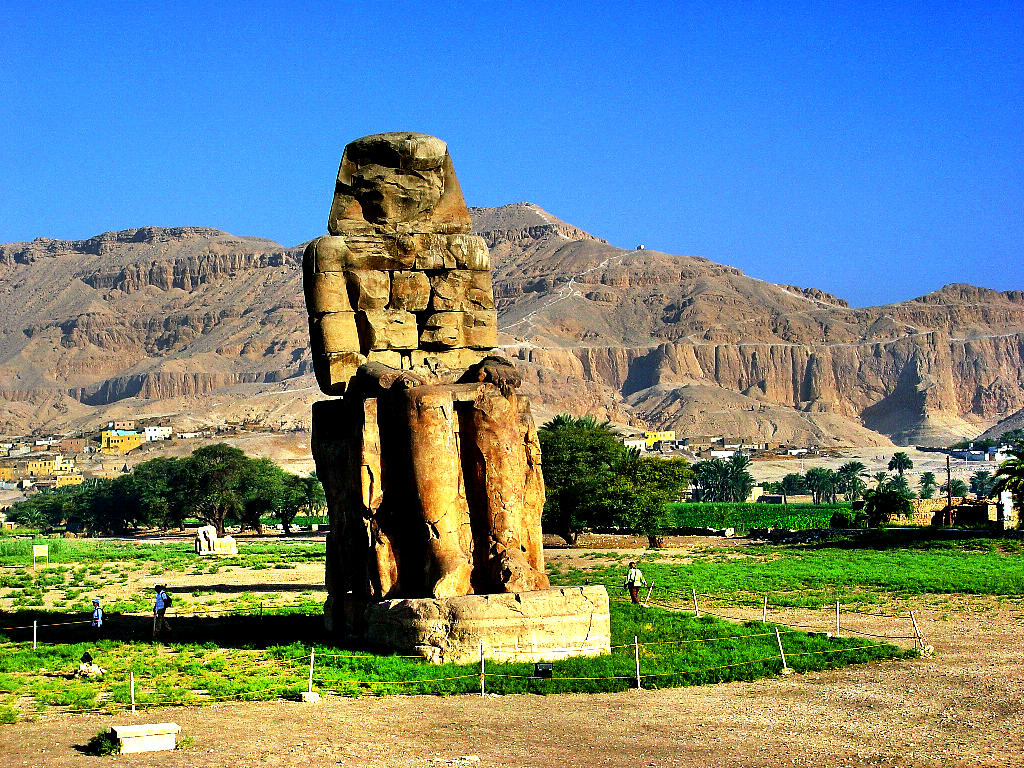
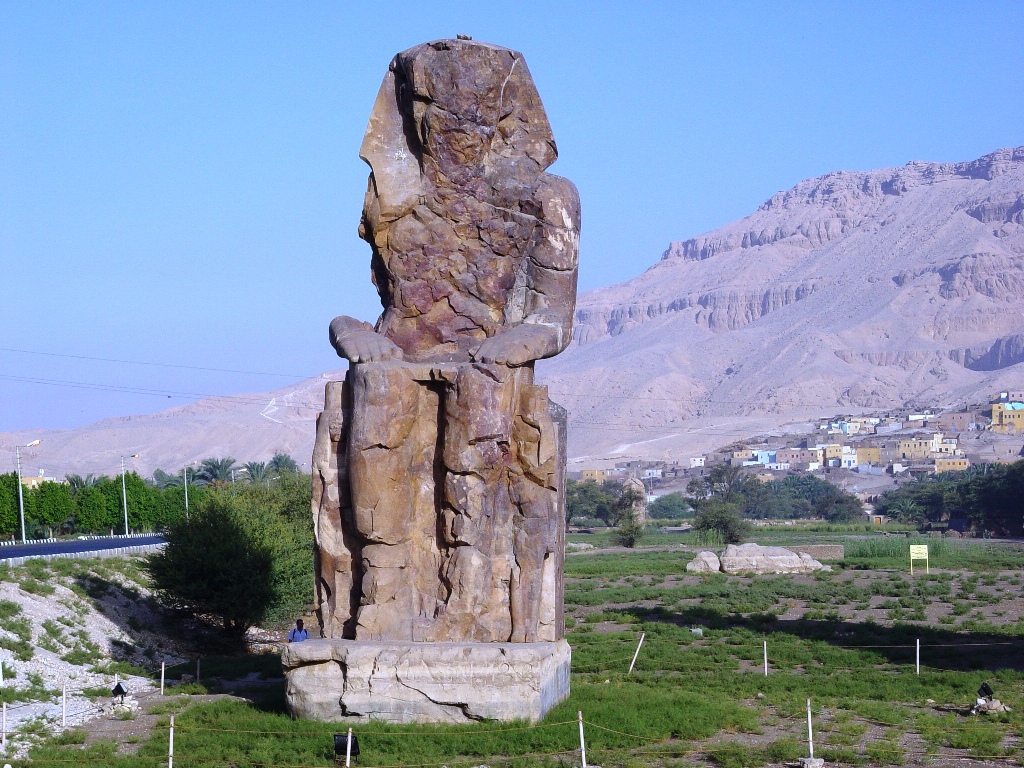
The Memnon Colossi mark the site of the temple of Pharaoh Amenophis III (reigned 1391-1353 BC, Baines & Malek, p. 36). These two massive stone statues depict the Pharaoh, and are positioned in the Theban necropolis, on the west side of the Nile across from Luxor.

Colossi of Memnon. Photo by Leon Mauldin.

This statue is 55 feet tall, on a base of about 5 feet in height. See people on ground for scale. Nebuchadnezzar’s image (Daniel 3) towered 30 feet higher than this!

Colossi of Memnon. Photo by Leon Mauldin.

In his commentary on Daniel, Albert Barnes makes an interesting point regarding the great image Nebuchadnezzar made (Daniel 3) and the possible relation of that to the colossi of Memnon:

It is not impossible that Nebuchadnezzar was led, as the editor of Calmet’s Dictionary has remarked (Taylor, vol. iii. p. 194), to the construction of this image by what he had seen in Egypt. He had conquered and ravaged Egypt but a few years before this, and had doubtless been struck with the wonders of art which he had seen there. Colossal statues in honour of the gods abounded, and nothing would be more natural than that Nebuchadnezzar should wish to make his capital rival everything which he had seen in Thebes. Nor is it improbable that, while he sought to make his image more magnificent and costly than even those in Egypt were, the views of sculpture would be about the same, and the figure of the statue might be borrowed from what had been seen in Egypt.

It is not impossible that Nebuchadnezzar was led, as the editor of Calmet’s Dictionary has remarked (Taylor, vol. iii. p. 194), to the construction of this image by what he had seen in Egypt. He had conquered and ravaged Egypt but a few years before this, and had doubtless been struck with the wonders of art which he had seen there. Colossal statues in honour of the gods abounded, and nothing would be more natural than that Nebuchadnezzar should wish to make his capital rival everything which he had seen in Thebes. Nor is it improbable that, while he sought to make his image more magnificent and costly than even those in Egypt were, the views of sculpture would be about the same, and the figure of the statue might be borrowed from what had been seen in Egypt. An illustration of the subject before us is furnished by the preceding engraving, from a photograph, of the two celebrated colossal figures of Amunoph III. standing in the plains of Goorneh, Thebes, one of which is known as the Vocal Memnon. (Barnes, A.,  Notes on the Old Testament: Daniel, Volume 1, p.204).

Regarding the meaning of the word Memnon,

Memnon was a hero of the Trojan War, a King of Ethiopia who led his armies from Africa into Asia Minor to help defend the beleaguered city but was ultimately slain by Achilles. The name Memnon means “Ruler of the Dawn”, and was probably applied to the colossi because of the reported cry at dawn of one of the statues. Eventually, the entire Theban Necropolis became generally referred to as the Memnonium (Wikipedia).

Click images for larger view.


Q&A re: Persian Chronology in Ezra 4

May 3, 2012

A friend writes to ask that I help with the following question:

In Ezra 4-5, we read of the opposition that the Jews faced in the rebuilding of the temple. We read of Cyrus, Darius, Ahasuerus and Artaxerxes as the kings in Persia.

When Ezra jumps from Darius to Ahasuerus, is he jumping forward in history to the Ahasuerus and Artaxerxes that reigned from about 486-424, or are those titles for the son of Cyrus, Cambyses, who reigned immediately following Cyrus? Clarke suggests that these were titles for Smerdis, who reigned between Cambyses and Darius.

Is there any way to figure it out conclusively?

Here is what I believe to be the best explanation to the text:

Ezra 4:5 states that the enemies “hired counselors against them to frustrate their counsel all the days of Cyrus king of Persia, even until the reign of Darius king of Persia.”  At that point the record goes on to mention Ahasuerus (v.6), who is to be identified as Xerxes (see NAS ft. nt.).  This is the Persian king who took Esther as queen (Xerxes reigned 486-464 B.C.).  The next verse, Ezra 4:7, then says, “And in the days of Artaxerxes..,” who is the Persian king in the days of Nehemiah, cupbearer to the king (reigned 464-423 B.C.).   Ezra 4:23 makes reference to a document of King Artaxerxes. So why are these kings who reigned after Darius (522-486 B.C., under whose reign the temple was rebuilt) mentioned here?  It seems the best answer is that the current opposition which stopped (for several years) the rebuilding of the temple furnished the occasion for the writer to list similar efforts made by enemies of God’s people to hurt and halt His work including the rebuilding of the walls of Jerusalem.  As Fensham noted, the author “is referring in this chapter in chronological order to the hindrances placed in the way of the Jews to rebuild the temple and the wall of Jerusalem.  When he discussed the problems of the building of the temple in 4:1-5, it reminded him of later similar troubles with the rebuilding of the wall of Jerusalem, and so 4:6-23 has been inserted, almost parenthetically, before the argument of the building of the temple has again been taken up in 4:24ff) (The New International Commentary on the Old Testament: The Books of Ezra and Nehemiah, p.70).  “…the author of this chapter enumerated the different hostile actions against the Jews…” (ibid.71).   This explanation was earlier given by Keil in the 19th century (Vol.4, p.46), who went on to say, “v.24, so far, then, as its [subject] matter is concerned, belongs to the following chapter, to which it forms an introduction (ibid.47).

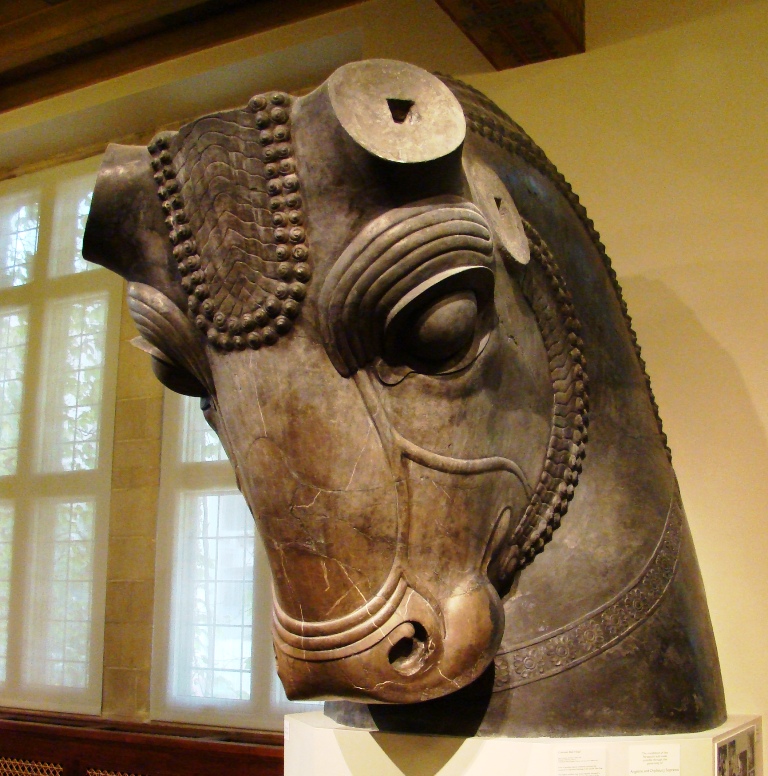
The Oriental Institute Museum has an impressive collection of Persian artifacts which relate to the biblical period.
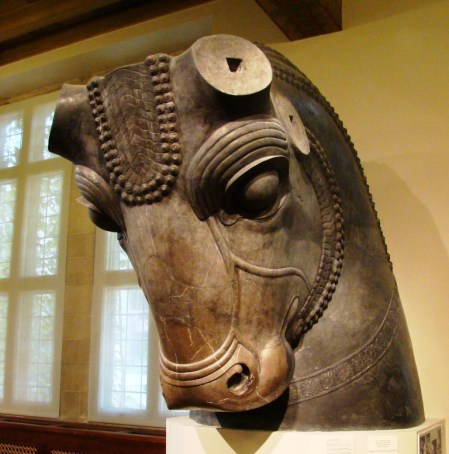
Bull from Palace at Persepolis. Dates to Persian Kings Xerxes and Artaxerxes I. Photo by Leon Mauldin.

The accompanying info sign dates this bull to the reigns of Xerxes and Artaxerxes (Xerxes married Esther and made her queen; Artaxerxes was king during the days of Nehemiah) and goes on to state:

Paris of guardian figures commonly protected the entrance to important buildings in the ancient Near East.

This highly polished stone head originally belonged to one of two guardian bulls flanking the portico of the hundred-column hall at Persepolis.

[This head] which weights approximately ten tons, was transported to Chicago and restored by Mr. Donato Bastiani, a member of the Oriental Institute Museum technical staff.

The two bulls were carved in the court style typical of the Achaemenid Empire. The ears and horns, which had been added separately, were not found.

Click image for larger view.

The Land of Geshur

April 14, 2012

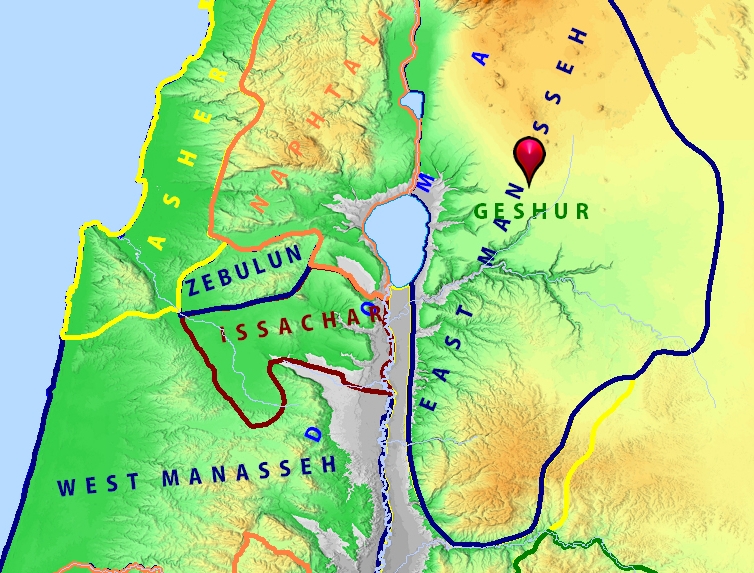
The area of Geshur figures into the biblical history of King David. David’s “third son was Absalom, the son of Maacah daughter of King Talmai of Geshur” (2 Sam. 3:3). When tragedy struck David’s family internally, as Absalom killed his half-brother Amnon, because Amnon raped Absalom’s sister Tamar, “Absalom fled and went to King Talmai son of Ammihud of Geshur” (2 Sam. 13:17). I.e., he sought and received refuge from Talmai who was his grandfather.

Note the location of Geshur here:

Old Testament Geshur. Map by BibleAtlas.Org.

Geshur is inclusive of the site usually identified as Bethsaida.

This area of Galilee was included among the sites taken by the Assyrians, about a decade before the fall of Samaria (722 BC).

During Pekah’s reign over Israel, King Tiglath-pileser of Assyria came and captured Ijon, Abel Beth Maacah, Janoah, Kedesh, Hazor, Gilead, and Galilee, including all the territory of Naphtali. He deported the people to Assyria (2 Kings 15:29).

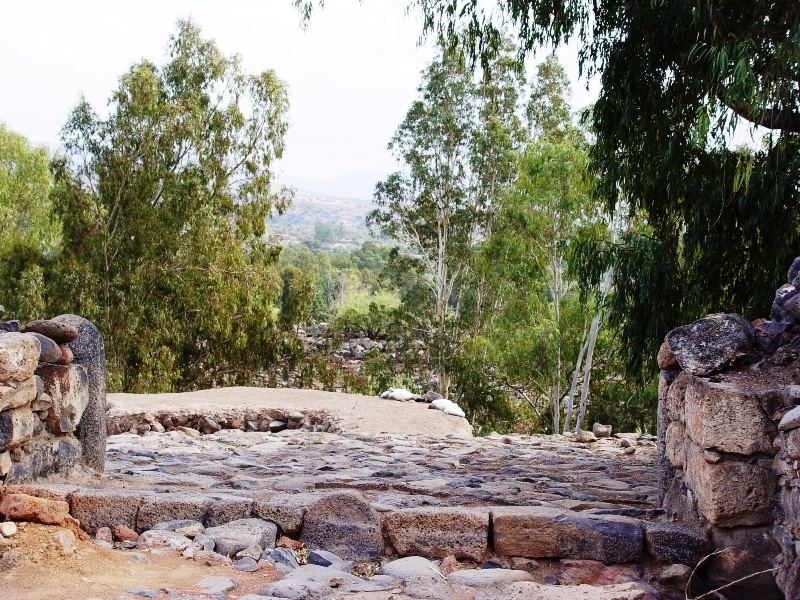
This invasion is dated at ca. 732 BC. Here is a view from inside the gate of Bethsaida, in the territory of Geshur. This Galilean site was included in the Assyrian attack in the above text. Occupants here would have seen the Assyrians setting fire to the gate.

City gate of Bethsaida. In territory of OT Geshur. Photo by Leon Mauldin.

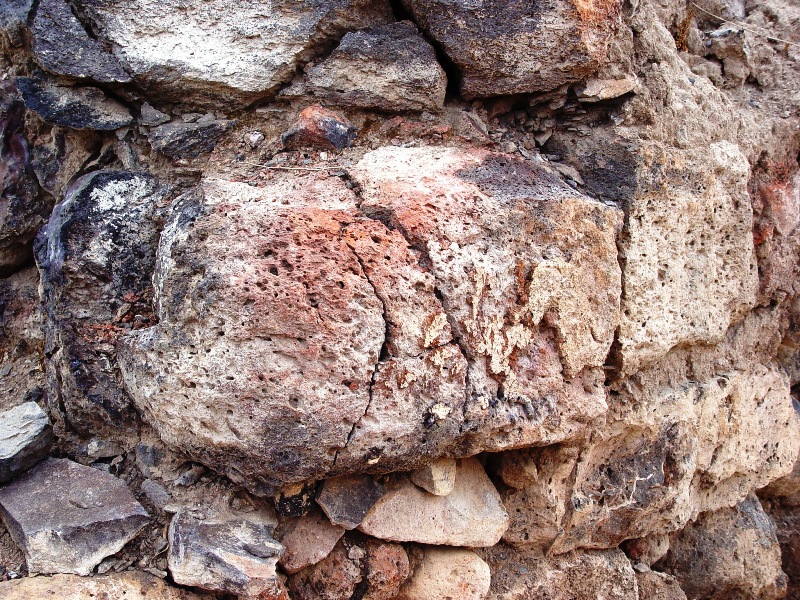
The heat intense fire caused the blocks in the gate area to burst. You can still see black carbon residue from the fire.

Blocks burst by intense fire during Assyrian invasion. Photo by Leon Mauldin.

Click images for larger view.


Beth Shean

February 20, 2012

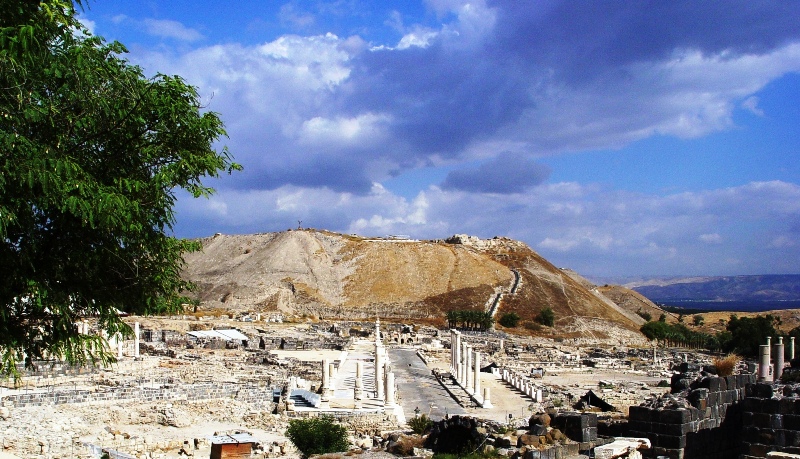
The current issue of BAR features an article entitled, “Was King Saul Impaled on the Wall of Beth Shean?” The author, Amihai Mazar, conducted nine excavation seasons in 1989-1996.

Beth Shean. Photo by Leon Mauldin.

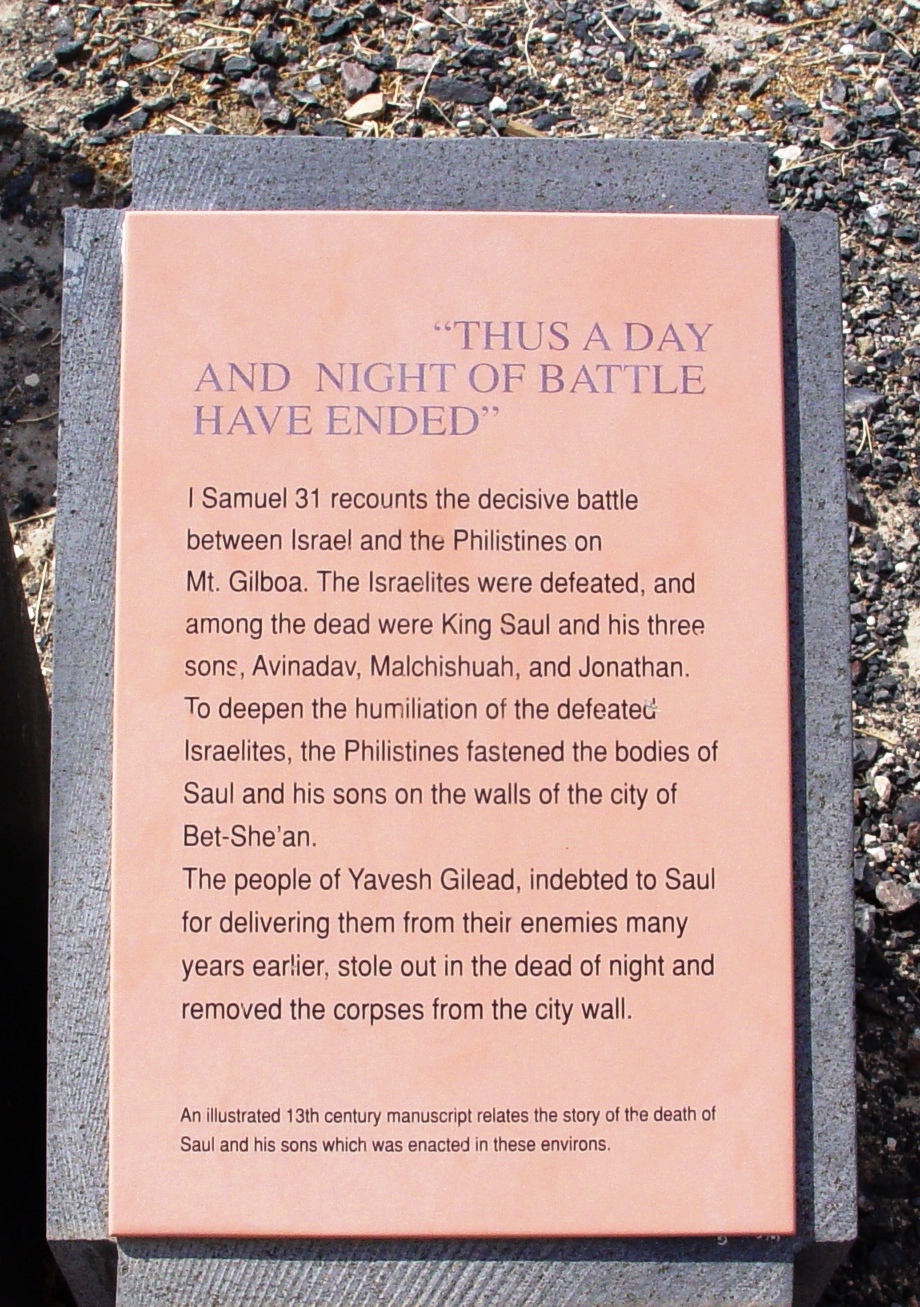
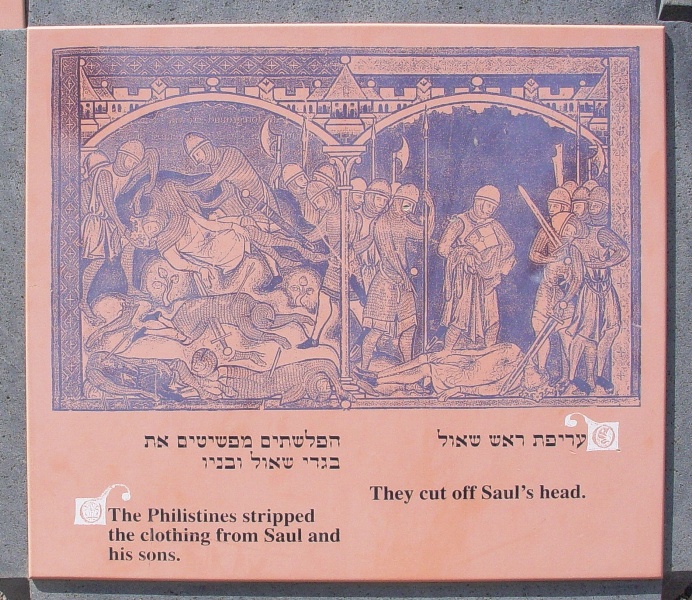
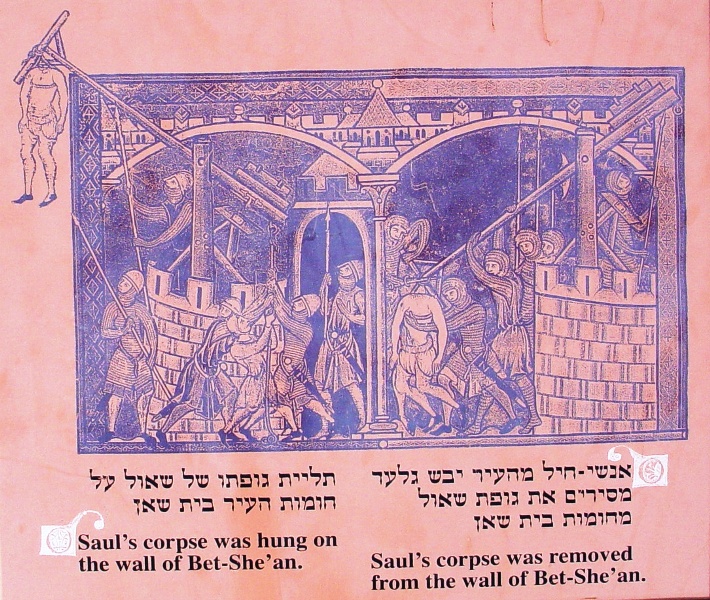
There were some interesting signs on the top of the tel that commemorate Saul’s death at nearby Mt. Gilboa, and the fastening of his body to the walls of Beth Shean (1 Sam. 31).

Info atop tel. Photo by Leon Mauldin.

Illustrations of humiliation to Saul's body. Photo by Leon Mauldin.

Biblical record is in 1 Sam. 31. Photo by Leon Mauldin.

The BAR article explains that excavations have revealed many layers of occupation, including Egyptian.

Statue of Ramesses III. Egyptians occupied Beth Shean prior to Saul's death. Photo by Leon Mauldin.

This statue of Ramesses III (replica) marked the Egyptian victory over the “sea peoples” who invaded the land in the 12 century BC. The statue was made locally, in Egyptian monumental style. Original is in the Israel Museum.

I have previously written on Beth Shean and its strategic significance here.

Click on images for larger view.


More on Azazel

February 18, 2012

Our previous entry was on Azazel, the Scapegoat. See here. I wanted to follow-up with a bit more information on the word Azazel from The Theological Wordbook of the Old Testament (Eds. Harris, Archer, and Waltke):

The actual use and meaning of this word in Lev 16 is at best uncertain. However, regardless of its precise meaning, the significant dimension is the removal of the sins of the nation by the imposition of them on the goat. In this passage sin seems to be hypostatized [to treat or represent as concrete reality] and therefore readily transferable to the goat. Indeed vss 21 and 22 state that this goat is to bear away the sin of the people. Such a ritual would illustrate vividly the physical removal of defilement from the camp to a solitary place where it would no longer infest the nation.

A parallel to the scapegoat can be seen in the ritual for a recovered leper. Two birds were selected. One was to be killed and both the leper and the living bird were to be touched with its blood. Then the living bird was released. This bird carried away the evil, the leprosy itself, into the open field and then the leper was pronounced clean (Lev 14:1–9). . .

This concept of the removal of guilt can be seen in Ps 103:12 where God “removes” our transgressions from us.

In the NT John the Baptist identified Jesus as the Lamb of God which takes away the sins of the world (Jn 1:29, 36). This language is sacrificial, yet nowhere in the Law is a lamb spoken of as a bearer of the people’s sins. The paschal lamb is not a sin offering. The description of the Savior as a lamb is unknown to late Judaism. Furthermore, the phrase “the lamb of God” is an unparalleled genitive combination. John may have had in mind that Christ as the paschal lamb bespeaks our great deliverance from the bondage of sin. However, what seems more likely is that he had a complex of ideas in mind. Some words of Isa 53 are discernible here: “as a sheep led to the slaughter, and a lamb dumb before his shearers … whose soul was made a guilt offering … and who bore the sin of many.” But also discernible here is an allusion to the scapegoat. This fact is clearly seen in the words “taketh away” (cf. I Jn 3:5). In Christ are consummated all the atonement concepts of the OT (pp.657-658).

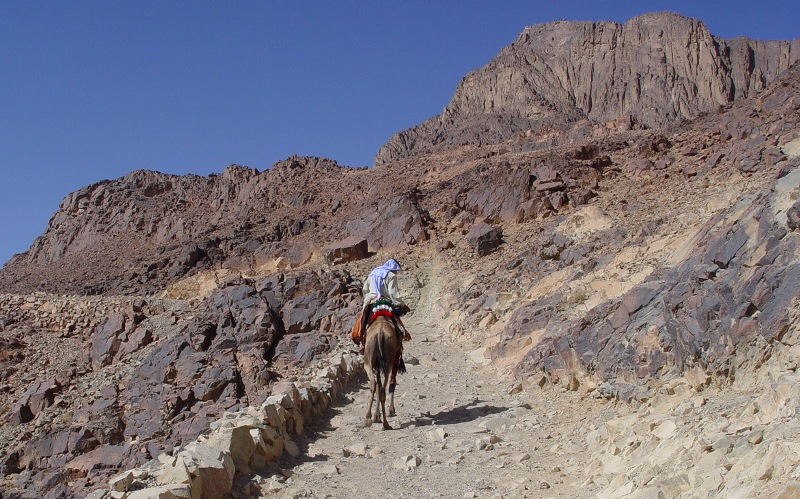
The instructions of Leviticus 16 were given while Israel was encamped at the foot of Mt. Sinai. In our photo here you can see traditional Mt. Sinai, Jebel Musa, as you look to upper right in photo.

Mt. Sinai, Jebel Musa, upper right of photo. Photo by Leon Mauldin.

Click on image for larger view.


Azazel, the Scapegoat

February 13, 2012

Leviticus 16 gives the instructions for the annual Day of Atonement. This was the one and only day during the year in which the High Priest would enter Most Holy Place in the Tabernacle, and later the temple. He would enter with sacrificial blood (a bull) first for himself and his family, and then next (a goat) on behalf of all the people of Israel.

Additionally, there was to be a second goat which was not killed; the High Priest would lay his hands on its head and confess over it all the sins of Israel (v.21). Then it would be released in the wilderness.

Lev. 16:10 states, ” But the goat chosen by lot as the scapegoat shall be presented alive before the LORD to be used for making atonement by sending it into the desert as a scapegoat” (NIV).

The NET Bible renders the Hebrew text with a transliteration: “but the goat which has been designated by lot for Azazel is to be stood alive before the LORD to make atonement on it by sending it away to Azazel into the wilderness.”

Strong defines the Hebrew word azazel as meaning “entire removal.” The NIV marginal note has “goat of removal.” “The English word scapegoat was apparently invented by William Tyndale as an attempt to translate what literally says ‘for Azazel'” (Dictionary of Biblical Imagery, p. 763).

This “visual aid” depicted God’s mercy and forgiveness as sin was removed from the camp and community of Israel. Of course this foreshadowed the vicarious suffering and death of Jesus, which made possible the remission of sins (Heb. 10:1-18; John 1:29; Eph. 1:7; 1 Pet. 2:24).

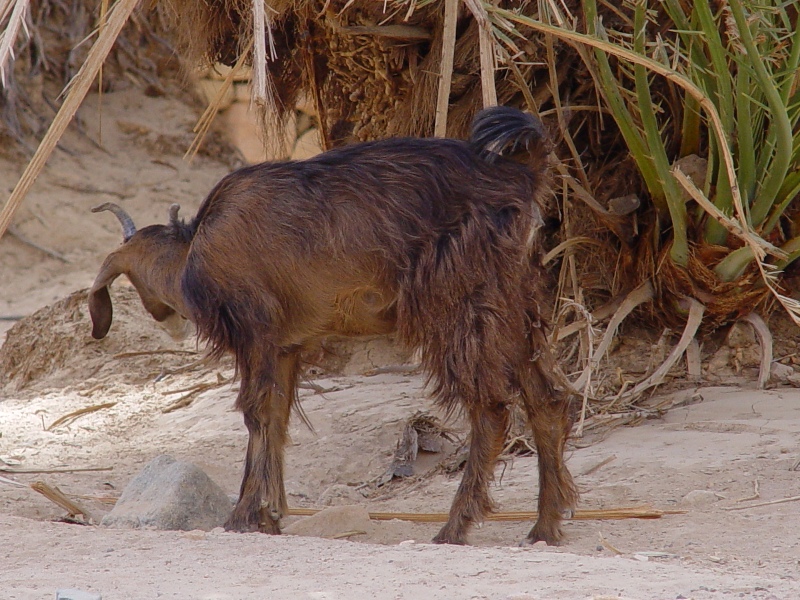
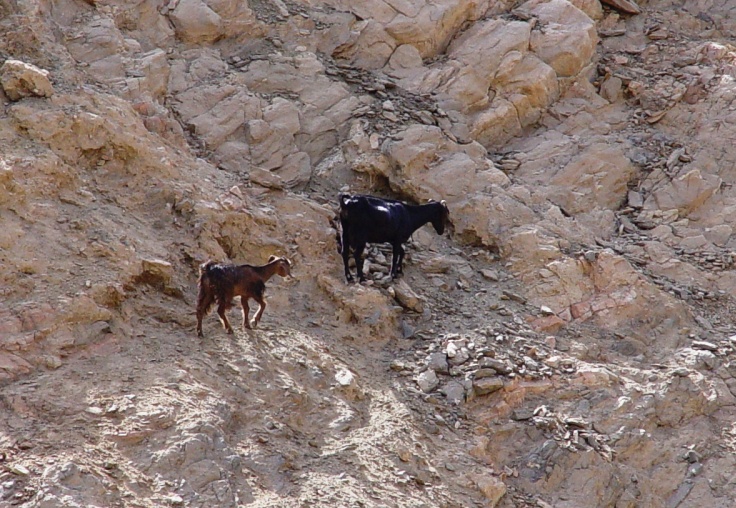
While in the Sinaitic Peninsula in 2003 I saw a couple of goats in the wilderness which help illustrate the text.

Goat in the Wilderness of Sinai. Photo by Leon Mauldin.

“As the goat goes into the wilderness, it will carry all the people’s sins upon itself into a desolate land” (v.22).

Goats in the Desert of Sinai. Photo by Leon Mauldin.

This photo below helps us to see some of the desolate country in which Israel traveled, and into which Azazel would have been released.

Wilderness of Sinai, in the south. Photo by Leon Mauldin.

Now you know the origin of the word “scapegoat,” which in modern usage denotes “a person who is blamed for the wrongdoings or mistakes of others” (Concise Oxford English Dictionary).

Click on images for larger view.


Dietary Restrictions in Leviticus: The Stork

January 11, 2012

In a previous post we looked at some dietary restrictions in Leviticus, observing that God’s purpose was to shape and mold a people (Israel) into His own special possession.

Leviticus 11 includes a list of birds that were unclean for food, including the stork:

and the stork, the heron in its kinds, and the hoopoe, and the bat (v.19, NASB).

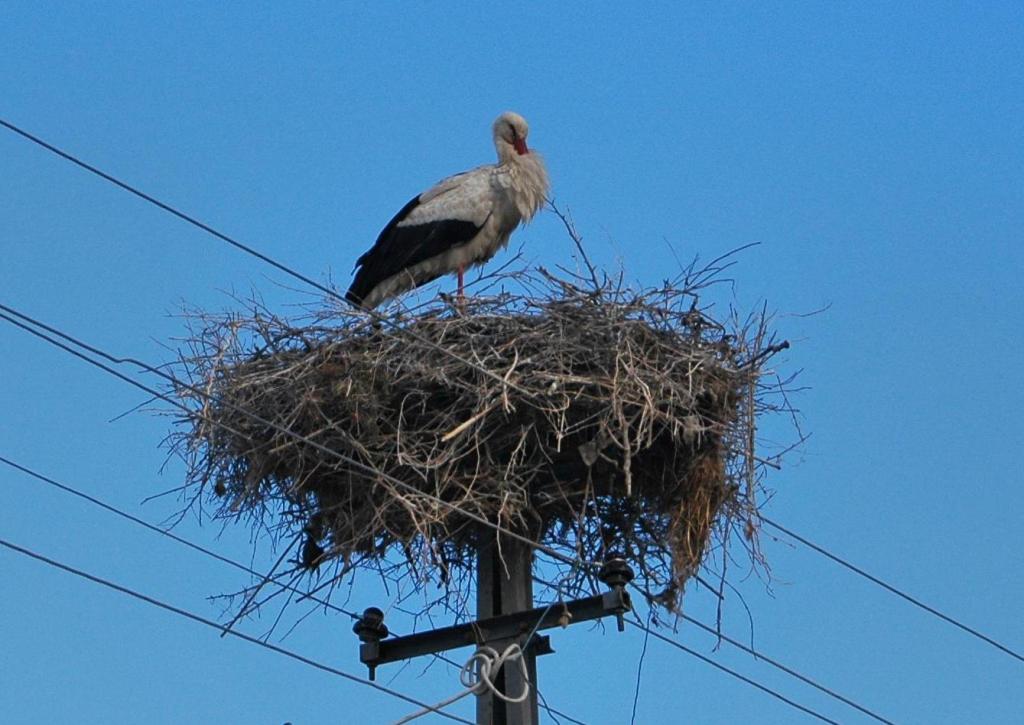
In Eastern Turkey near Mt. Ararat we photographed this stork.

Stork, listed among unclean animals in Leviticus 11. Photo by Leon Mauldin.

It is not uncommon for the stork to build its nest atop electrical poles.

The stork is mentioned in a few other biblical texts. The Lord sadly stated through the prophet Jeremiah,

Even the stork knows when it is time to move on. The turtledove, swallow, and crane recognize the normal times for their migration. But my people pay no attention to what I, the LORD, require of them (8:7, NET).

Migratory birds journey from Turkey to Africa taking the route of the “land bridge” of Israel. The Lord is saying that the birds (including the stork) obey Him, but His covenant people paid no attention.

Click on image for larger view.