Michmash, Site of Battle Israel vs Philistines

March 11, 2015

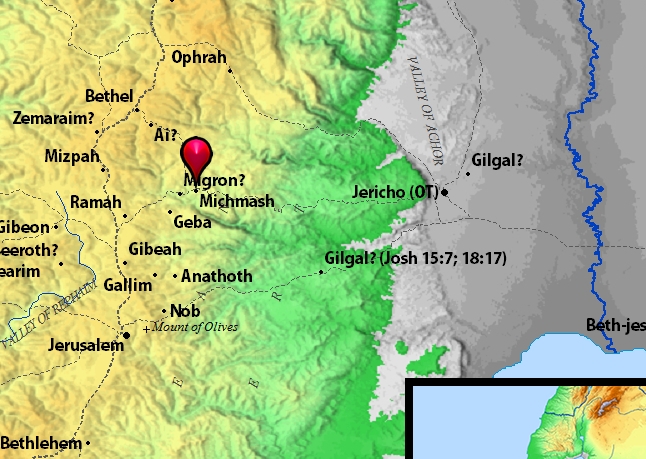
In the days of King Saul there was war between Israel and the Philistines. Whereas the Philistines’ territory was on the SW coast of Israel, at the time referenced in 1 Samuel 13-14 they were well advanced into Israel’s central territory and beyond. “Now a Philistine garrison took control of the pass at Michmash” (1 Sam. 13:23).

Philistines at Michmash. Map BibleAtlas.org.

Philistines at Michmash. Map BibleAtlas.org.

You have a great view of the territory from this high vantage point.

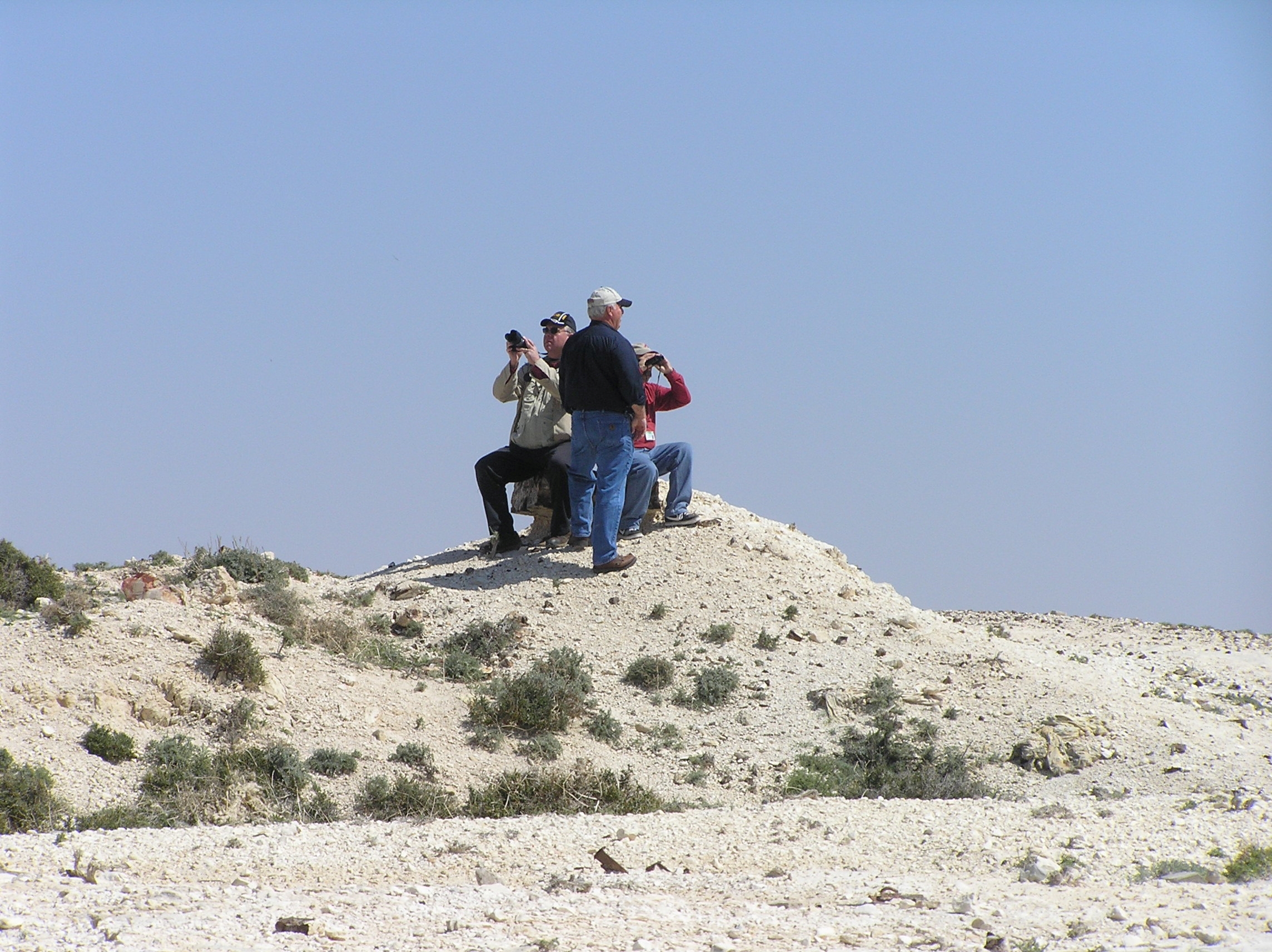
At Michmash. Leon Mauldin, left, Randy Parrish, center, Elie Ben Meir at right. Photo by Jenny Reed.

At Michmash. Leon Mauldin, left, Randy Parrish, center, Elie Ben Meir at right. Photo by Jenny Reed.

Saul’s son Jonathan and his armor-bearer took the initiative as they scaled up the steep bank and engaged the Philistines. They killed 20 men within a half-acre. Then the Philistines fled, pursued by Saul’s army.

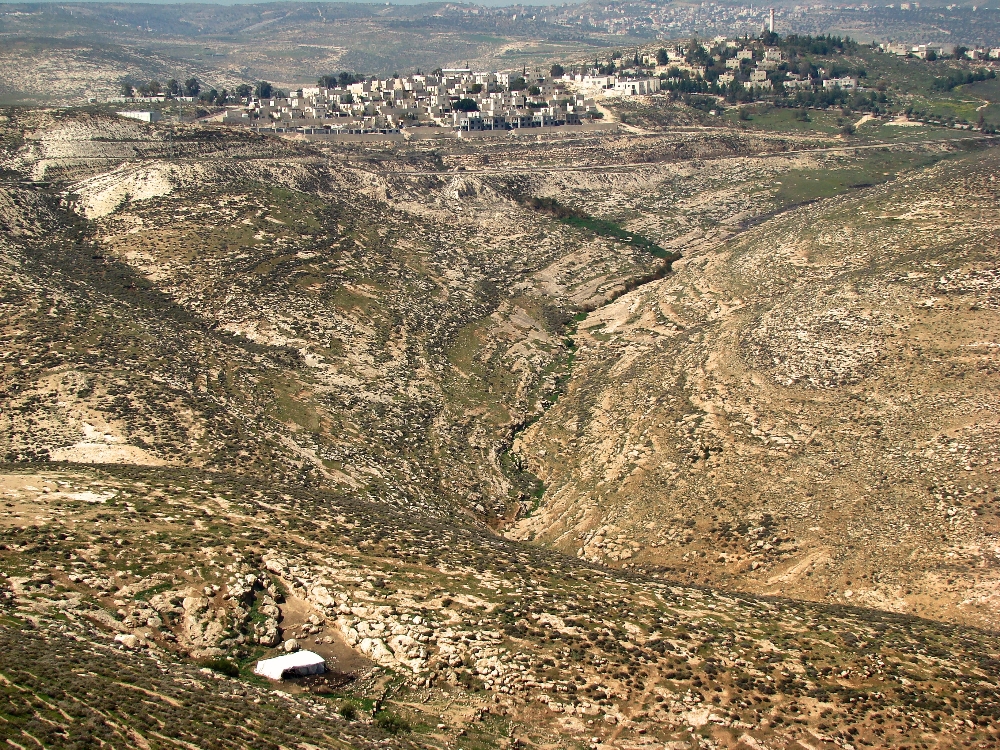
This photo shows the area where the battle began. The modern town of Michmash may be seen the background.

Michmash, area of battle between Israel and Philistia. Photo by Leon Mauldin.

Michmash, area of battle between Israel and Philistia. Photo by Leon Mauldin.

See my previous post on Michmash here.

Dr. Carl Rasmussen has a very helpful post on these events at Michmash here.

Click images for larger view.


View from Roman Forum in Athens Greece

February 10, 2015

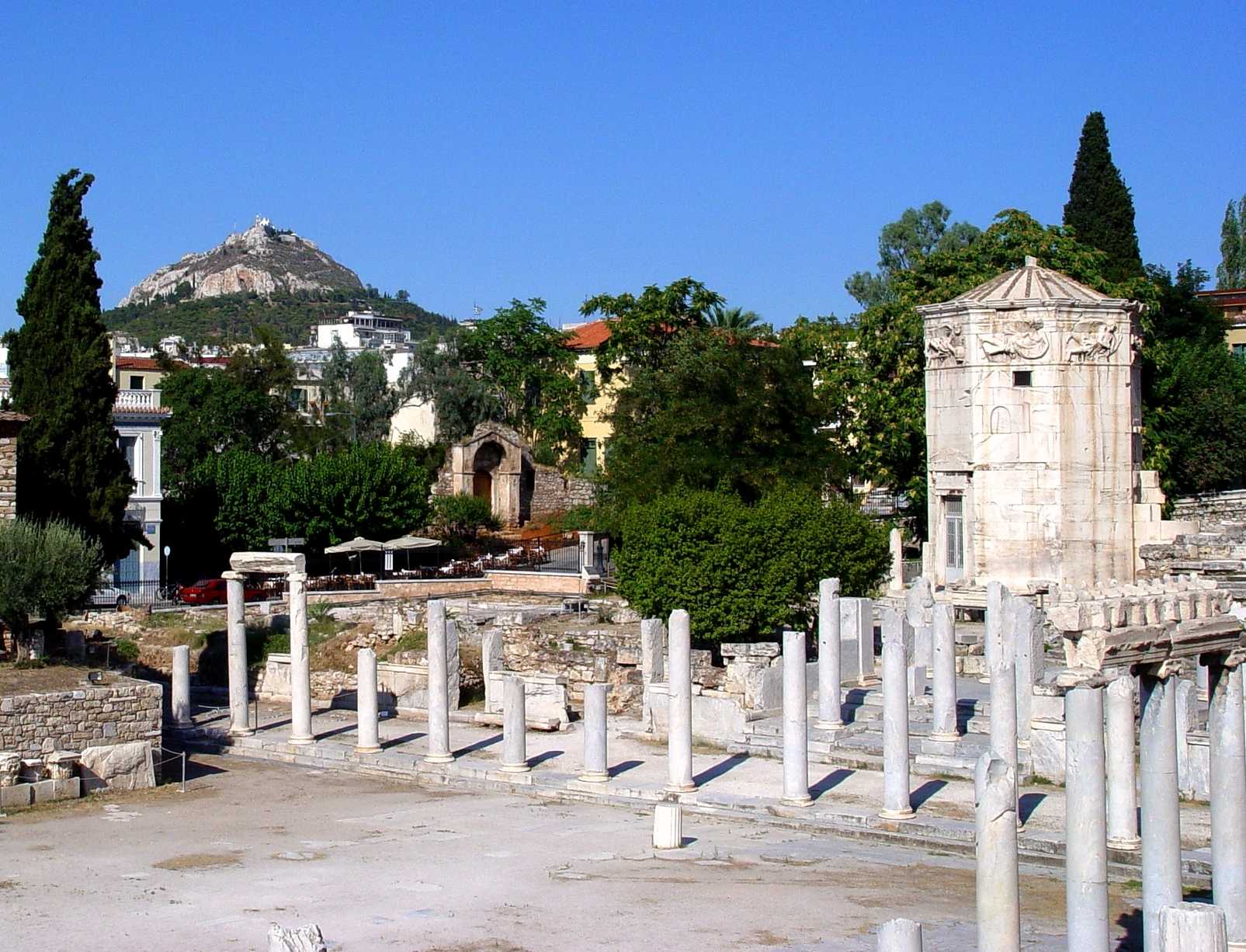
Yesterday we had another view down the south side of the acropolis in Athens, Greece. Now we move to the north side, down below the acropolis, to the Roman Forum. In our photo here you can see a portion of the forum, the Tower of the Winds (right), and to your distant left Mount Lykavittos.

Roman Forum, Tower, and Mt. Lykavittos in Athens, Greece. Photo by Leon Mauldin.

Roman Forum, Tower, and Mt. Lykavittos in Athens, Greece. Photo by Leon Mauldin.

The Tower of the Winds has an interesting history:

The Tower of the Winds stands in the Pláka below the north side of the Acropolis. In the planning of the modern city of Athens in the 19th century. Eólou Street, named after the wind god Ailos, was aligned directly on the tower, which forms a landmark at its southern end.

Built about 40 B.C., the tower is an octagonal structure 12m/40ft high, with sundials on the external walls; it originally housed a water-clock.

Around the top runs a frieze with reliefs representing the eight wind gods – the beardless Notos, pouring out rain from an urn (south); Lips, holding the stern ornament of a ship (southwest); Zephyros, a youth scattering flowers (west); Sykron the bringer of snow (northwest); the bearded Boreas, blowing into a shell (north); Kaikias, also bearded, the bringer of hail (northeast); Apeliotes, a young man bearing ears of corn and fruit (east); and Euros, wrapped in a cloak (southeast).

To the south of the tower is a building of the Roman period (first century A.D.) with the springing points of arches. Its function is uncertain (office of the market police, Caesareum?).

Adjoining the entrance to the excavated area is a marble latrine with seating for nearly 70.

The water-clock is located outside the western entrance to the Roman Market. It served as a form of meteorological station by combining a sundial, a waterclock and a weathervane showing the direction of the wind.

The clock is commonly known as “Aerides” (the winds) (Planetware.com).

A highly visible landmark, Lykavittos, also known as Lykabettos, stands 227 meters/909 feet in altitude. It was:

once well outside Athens but now surrounded by the city on all sides, is the dominant hill in the plain of Attica. It is a hill of cretaceous chalk, covered with various species of plant life, and is a popular place to go to escape from the hurly-burly of city life. At the top stands the chapel dedicated to St George, from where there are extensive views of the whole city (Planetware.com).

Click photo for larger view. Use search box at upper right for more posts on Athens, as well as other biblical sites.


Sanctuary of Asclepius at Athens

January 31, 2015

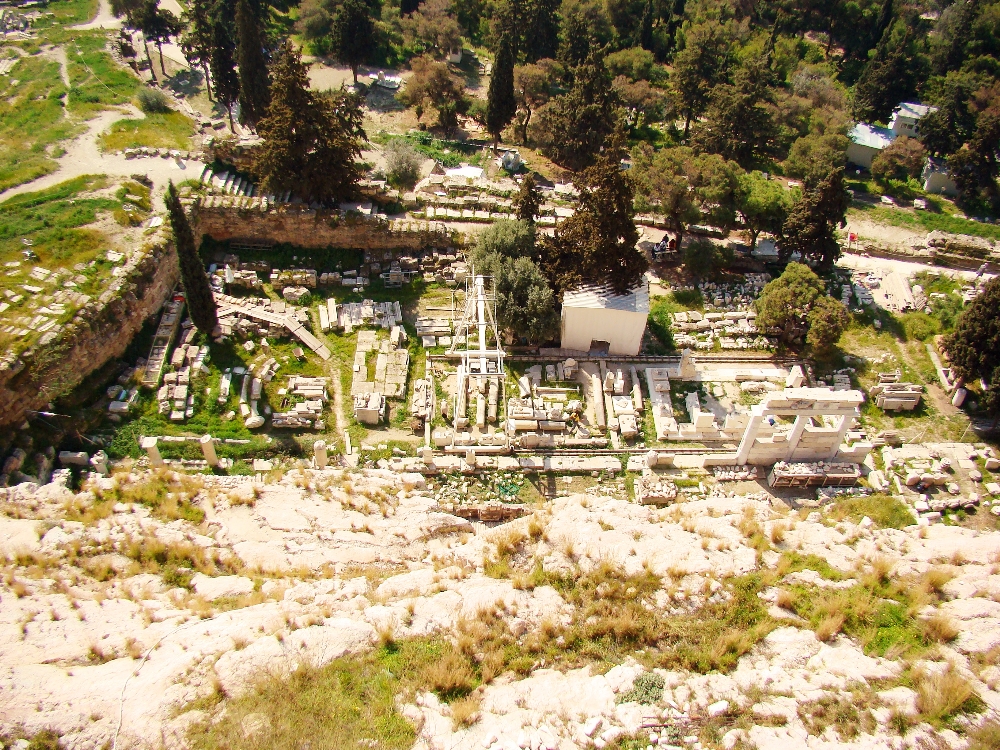
In biblical times, Asclepius was widely worshiped as the god of healing. As we continue our view down the southern slope of the Athenian acropolis, we can see the remains of the sanctuary of Asclepius.

Athen's Sanctuary of Asclepius, the god of healing. Photo by Leon Mauldin.

Sanctuary of Asclepius, the god of healing. Athens, Greece. Photo by Leon Mauldin.

Fant and Reddish observe, “Above the Stoa of Eumenes, and to the left (west) of the Theater of Dionysus, can be seen the scant remains of the Asclepeion, a center for healing run by the priests of Asclepius. The sacrificial altar remains, but it is difficult to discern amid the various stones currently being stored there” (A Guide to Biblical Sites in Greece and Turkey, p.26). (We should note that when they say “left” it is from the perspective of one who is down from the acropolis. When you’re on the acropolis looking down, the sanctuary would be to your right of the theater of Dionysus–LM). 

We have previous written on Asclepius here and here  regarding the famous healing center at Pergamum. Even in Israel there was a temple devoted to this god.

Planetware.com has this info:

On a narrow terrace above the Stoa of Eumenes, directly under the steep south face of the Acropolis, is the Asklepieion, the sanctuary of the healing god Asklepios, whose cult – initiated largely by Sophocles – was brought to Athens from Epidauros in 420 B.C. The sanctuary is centered on two sacred springs.

The earliest part of the sanctuary lay at the western end of the precinct, where there are the foundations of a stoa and a small temple. A number of herms have been brought together in the stoa. At the west end of the complex is a rectangular system with polygonal walls dating from the same period. To the south is a later cistern.

The buildings in the eastern part of the precinct were erected about 350 B.C. Immediately under the Acropolis rock, here hewn into a vertical face, is a stoa 50m/165ft long, originally two- storyed, designed to accommodate the sick who came here to seek a cure. Associated with it is the cave containing a spring which is still credited with healing powers; and accordingly the cave is now used as a chapel.

Parallel to this stoa, which was rebuilt in Roman times, another stoa was constructed, also in Roman times, on the southern edge of the precinct; of this second stoa some remains survive.
Both stoas faced towards the center of the precinct, in which stood the temple. This was oriented to the east and had four columns along the front (prostylos tetrastylos). The foundations of the temple and the altar which stood in front of it are still to be seen.
In early Christian times a basilica was built over the remains of the temple and the altar, and some architectural fragments from this can be seen lying about the site.

(http://www.planetware.com/athens/asklepieion-gr-ath-askle.htm)

Click on image for larger view.


Propylaea of Athens

January 23, 2015

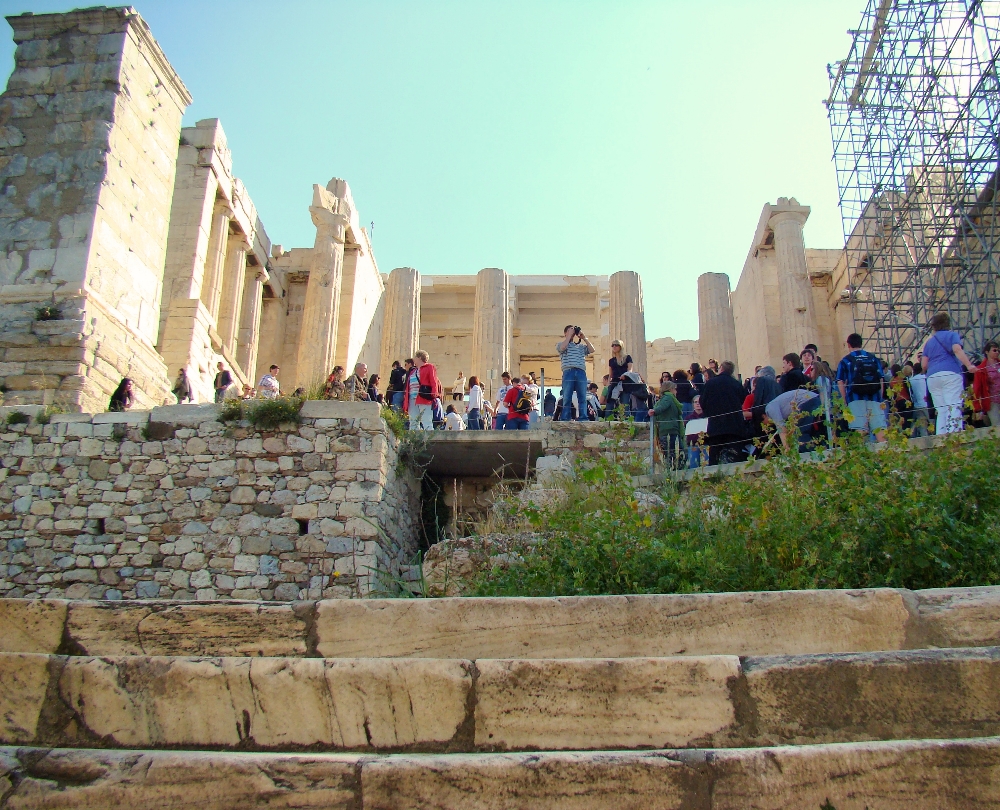
The Propylaea (entrance before the gate) still stands as the access to the Acropolis today. This monumental entrance gate was commissioned by the great statesman and builder of the Acropolis, Pericles. Construction was begun in 437 B.C.

Propylaea leading to Athens Acropolis. Photo by Leon Mauldin.

Propylaea leading to Athens Acropolis. Photo by Leon Mauldin.

Fant and Reddish have this information:

The Propylaea (“before the gate”) visible today is the fourth of such structures to be built at this site; earlier ones were destroyed in various wars. The road from the agora below, the Panathenaic Way, led up to this point. A flight of marble steps ascends to the hall of the Propylaea. One step is of gray Eleusinian marble; the others are of white Pentelic marble. The monumental pedestal (25 feet tall) on the left of the steps originally was designed for a statue with a chariot and four horses to honor King Eumenes II of Pergamum for his contribution of the Stoa of Eumenes. Later it was reinscribed with a dedication to Marcus Agrippa in honor of the odeion he contributed to the agora. Designed by the architect Mnesicles and begun upon the completion of the Parthenon (437 B.C.E.), the Propylaea consisted of a central section with five doorways, originally fitted with wooden doors, and projecting wings on either side. The wing on the left side, the north wing, was known as the Pinakotheke, or art gallery, because of the magnificent collection of paintings inside. In 150 C.E. Pausanius named a number of the paintings he could recognize, including some by Polygnatus of Homer (5th century B.C.E.). The room was used for official banquets by dignitaries who reclined on couches in the Greek fashion. The wing on the right side, the south wing, could not match the other in design because of the Temple of Athena Nike and other buildings that impinged upon it. This wing was never completed due to the start of the Peloponnesian War (431 B.C.E.). (A Guide to Biblical Sites in Greece and Turkey).

We are looking forward to seeing Athens again in a couple of months.

Click image for larger view.


Aphek, Setting of 1 Samuel 4

December 31, 2014

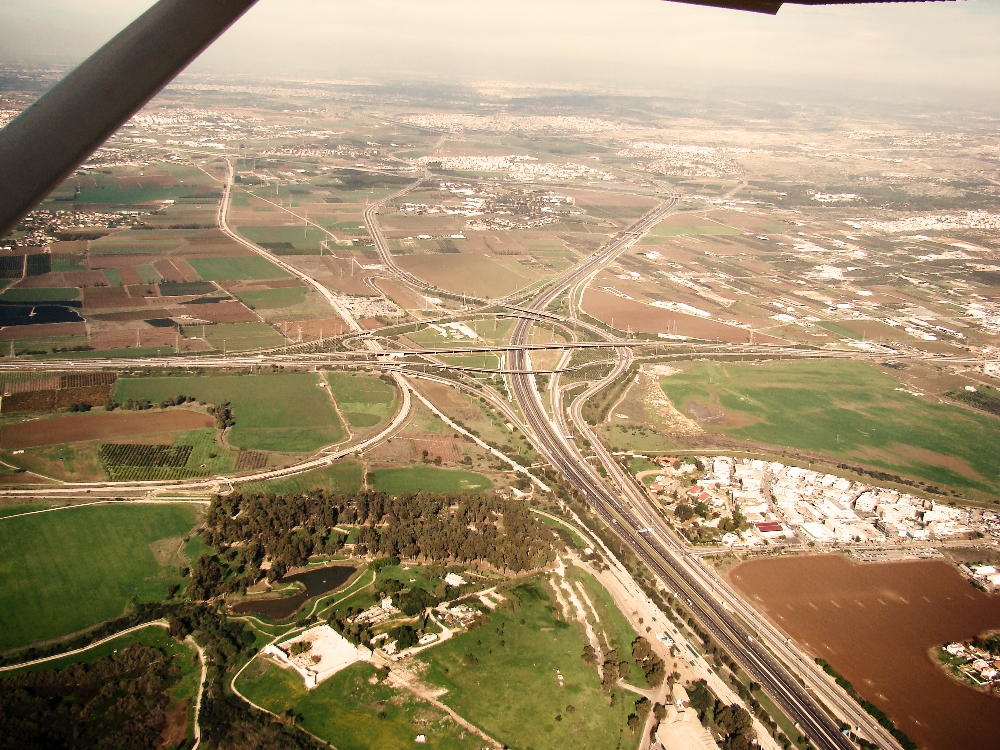
1 Sam. 4:1 mentions a Philistine encampment at Aphek, when the Philistines drew up in battle array to meet Israel. Apparently the site of the battle itself was between Ebenezer and Aphek. Israel was defeated soundly in two back-to-back battles there. Our photo shows Aphek at bottom and left; view is from the south. As you look to the north you are seeing the Sharon plain. The modern highway at this point is following the route of the ancient Via Maris.

Aphek at lower left. View from south. Photo by Leon Mauldin.

Aphek at lower left. View from south. Photo by Leon Mauldin.

I earlier posted on Aphek here. Aphek became Antipatris by NT times (Acts 23:31). See also Ferrell Jenkins’ post here.

In Todd Bolen’s Pictorial Library of Bible Lands (#2, Samaria and the Center), Todd summarizes the History of the excavations at Aphek in his PowerPoint notes on “Sharon Plain” (slide 15): (BTW, I highly recommend this set!)

Aphek: History of the Excavation

1.In 1923, Albright’s survey confirmed identification of the site as Aphek.

2.From 1935 to 1936, J. Ory, an employee of the British Department of Antiquities, dug two test pits in two areas on the north side of the site, in connection with the British pumping station.

3.The Palestine Department of Antiquities excavated in 1946.

4.In 1961, A. Eitan excavated for the Israel Department of Antiquities.

5.From 1972 to 1985, a major excavation was carried out by Moshe Kochavi of Tel Aviv University.

Aphek has a fascinating history. The Archaeological Encyclopedia of the Holy Land (3rd ed.) has this info on Aphek/Antipatris:

An important station on the ancient Via Maris, mentioned in the list of Pharaoh Tuthmosis III. The King of Aphek was one of the 31 rulers of Canaan vanquished by Joshua (Josh. 12:18). The Philistines gathered their armies there to go into battle against Israel (1 Sam. 4:1; 29:1). Scholars believe that in both cases Aphek in the Sharon is referred to. In a later period the place is mentioned in one of the inscriptions of Esarhaddon, and also in a letter written in Aramaic that was sent to Pharaoh before the Babylonian conquest of Palestine.

Early in the Hellenistic period a fort on the border between the districts of Samaria and the Sharon was built at this place, then known as Pegai. John Hyrcanus I conquered it in about 132 BC. At that period it was also known as Arethusa, both names implying that it was built near rich sources of water, as indeed it was. After the conquest by Pompey in 63 BC the town of Arethusa was rebuilt. When Herod the Great ascended to the throne he built a new city at Arethusa, renaming it Antipatris, after his father Antipater. This new city became the center of a district with many prosperous villages. In the later Roman period it was named Antipatris Antoniniana, probably after Elagabalus. The Mishna mentions it under the name of Mei Piga, the Waters of Piga.

Aphek-Antipatris is identified with Tell Ras el-Ain, which is rich in springs and vegetation. The sizeable mound is now occupied by a large Turkish citadel, built on the remains of a Crusader castle. Trial digs unearthed remains from the Bronze Age to the Roman period, including a large Roman mausoleum.

Extensive excavations were carried out on the site in the years 1974–84 by M. Kochavi on behalf of Tel Aviv University and American archaeological institutions. The earliest remains on the site are those of a city wall of the Early Bronze Age found in the northern part of the mound. On the acropolis on the western part of the mound were discovered a series of palaces. The earliest of these palaces belongs to the Middle Bronze Age IIA. Its walls are 4 feet thick, and are still standing to a height of 5 feet. The palace consists of a central hall with a roof supported by two columns. Numerous rooms are grouped around this spacious hall. It was destroyed by a fierce fire in the middle of the 16th century BC. Two city walls also belong to this period. Above this palace another, larger palace was built in the Late Bronze Age. This spacious building contained numerous rooms; a staircase tower gave access to the rooms on the upper story, where the princes of Aphek lived. North of the palace was a spacious court, and another service building east of it. Wine presses discovered nearby and numerous grape pips uncovered in the ruins of the palace attest to the existence of a wine industry. In the ruins of the palace were discovered Egyptian, Hittite and Accadian documents, among them a cuneiform bilingual, Sumerian-Accadian dictionary, and a fragment of a trilingual Sumerian-Accadian-Canaanite dictionary. This is the only known multilingual dictionary which includes the Canaanite language. Most of these documents date from the 14th–13th centuries BC. The acropolis was destroyed at the end of the 13th century BC. Scanty occupation remains are found from the end of the Late Bronze Age. A small faience plaque discovered in the Early Iron Age level bears the names of Pharaoh Rameses II written in ink and a dedication to the goddess Isis, indicating the possible existence of a temple dedicated to this goddess. In the 12th century BC Aphek was occupied by the Philistines. The new city consisted of various quarters each built according to a different plan and different standard of construction, and each apparently inhabited by a different class of citizens. The houses were almost square and consisted of a large front hall with smaller rooms in the rear. The poorer houses were oblong structures, set closely together, and built with thin walls. In this quarter were discovered fishing-net weights, copper fishing hooks and tortoise shells. Numerous storage bins from the 10th century BC, the Israelite period, testify to the conquest of the site by David. Two levels containing dwellings were found from the time of the United Kingdom. Above the ruins of the Middle Bronze Age II palace were discovered two Israelite houses of the four-room type, from the 10th and 8th centuries BC.

In the higher levels of the mound Ptolemaic, Seleucid, Hasmonean and Herodian levels were encountered. In the Herodian period the city was laid out along a new plan. At the junction of the main streets was the forum; it was rebuilt in the Late Roman period. One of the streets leading to the forum was lined with shops. In the time of Herod Agrippa I the street was repaved and workshops were built along it. The city declined after the fall of the Second Temple and was not rebuilt before the 2nd century AD. From the Roman period large sections of the cardo, the main street, were discovered. A theater stood at the southern end of the street. From this period a market and a quarter for the wealthier citizens were also found. In AD 363 the entire city was destroyed in an earthquake.

Click image for larger view. Happy New Year!

Ekron, a City of the Philistine Pentapolis

December 30, 2014

I love to study 1 Samuel, though there is much sadness in it. For example, in the days of the Judges when the Philistines defeated Israel at Aphek, God allowed the Philistines to take the Ark of the Covenant (1 Sam. 4:11). Contextually, God permitted this because of Israel’s apostasy.

Meanwhile the Philistines triumphantly took the Ark to the house of their god Dagon at Ashdod. The god was providentially broken, and the residents of Ashdod became sick, so they moved it to Gath, with the same results there; tumors broke out on them (1 Sam. 5:1-9). Next it was moved to Ekron: “So they sent the ark of God to Ekron. And as the ark of God came to Ekron the Ekronites cried out, saying, ‘They have brought the ark of the God of Israel around to us, to kill us and our people'” (v.10).

The next chapter (1 Sam. 6) narrates how the Philistines had kept the Ark to their full satisfaction (!), and thus returned it to Israel’s territory.

I had the opportunity (along with Ferrell Jenkins) to make a personal study trip to Israel in 2009 that included Ekron, Tel Miqne.

Ekron info sign at site. Photo by Leon Mauldin.

Ekron info sign at site. Photo by Leon Mauldin.

Though originally in Israel’s territory at the time of the Conquest led by Joshua (Josh. 15:11, 45-56), Ekron was later in the hands of the Philistines by the time of the Judges. Ekron was one of five cities of the Philistine Pentapolis: Ashdod, Gaza, Ashkelon, Gath and Ekron (1 Sam. 6:16).

Map here shows location of Ekron:

Ekron. Map by BibleAtlas.Org.

Ekron. Map by BibleAtlas.Org.

Ekron is a large tel, composed of about 50 acres. It was known for its olive oil industry.

Remnants of olive presses at Ekron. Photo by Leon Mauldin.

Remnants of olive oil industry at Ekron. Photo by Leon Mauldin.

Holman Illustrated Bible Dictionary has this information on Ekron:

Northernmost of the five major Philistine cities known as the Pentapolis. The site of ancient Ekron has been much debated but now is generally agreed to be modern Tell Miqne, about 14 miles inland from the Mediterranean Sea and 10 miles from Ashdod. The site is one of the largest in Palestine, covering some 50 acres. Ekron lies on the road leading from Ashdod into the Judean hill country and up to Jerusalem through the Sorek Valley.

Ekron was assigned to both Judah (Josh. 15:11, 45–46) and Dan (Josh. 19:43) in the tribal allotments. It probably lay on the border between the tribes. Judges 1:18 reports that Judah captured Ekron along with other parts of the Philistine coast, but Ekron was certainly in Philistine hands at the time the ark was captured (1 Sam. 5:10). It was also the place to which the Philistines retreated after David slew Goliath (1 Sam. 17:52). Ahaziah, the son of King Ahab of Israel, called on the god of Ekron, Baal-zebub, when he was sick (2 Kings 1:2–16).

Excavations at Tell Miqne have discovered much pottery that is typically Philistine. From the last period before Tell Miqne was destroyed by the Babylonians, the excavators found an important industrial complex near the city gate. A hoard of iron agricultural tools was found. Hundreds of whole pottery vessels were present. Perhaps most importantly, a well-preserved olive press was discovered. This press is the largest and best preserved known in Israel. A horned altar was also found during the excavations. (pp. 469–470).

Click on images for larger view. Happy New Year!


2014 in review

December 30, 2014

The WordPress.com stats helper monkeys prepared a 2014 annual report for this blog.

Here’s an excerpt:

The concert hall at the Sydney Opera House holds 2,700 people. This blog was viewed about 49,000 times in 2014. If it were a concert at Sydney Opera House, it would take about 18 sold-out performances for that many people to see it.

Click here to see the complete report.


Shepherd with His Sheep

December 22, 2014

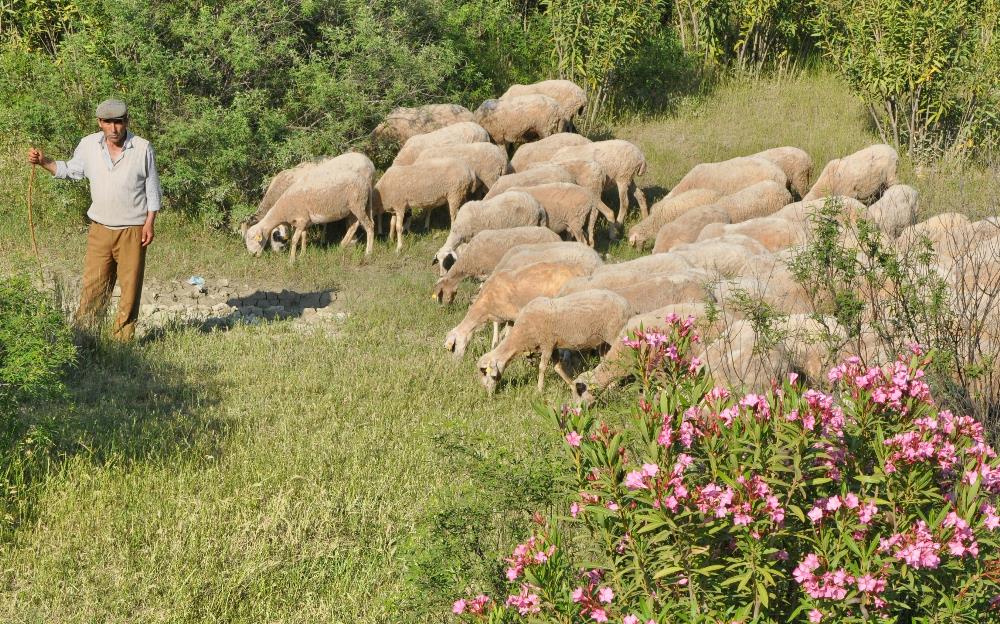
When visiting biblical sites I never tire of seeing sheep and their shepherds. I’m sure that is due in large measure to the frequent references in the Bible, not only to literal shepherds and sheep, but also the metaphorical usage.

Shepherd with sheep in biblical Pamphilia. Photo by Leon Mauldin.

Shepherd with sheep in biblical Pamphylia. Photo by Leon Mauldin.

Isaiah 53:6 All we like sheep have gone astray; We have turned, every one, to his own way; And the LORD has laid on Him the iniquity of us all.

Psalm 23:1 The LORD is my shepherd; I shall not want.

John 1:29 The next day John saw Jesus coming toward him, and said, “Behold! The Lamb of God who takes away the sin of the world!

John 10:27 My sheep hear My voice, and I know them, and they follow Me.

1 Peter 2:25 For you were like sheep going astray, but have now returned to the Shepherd and Overseer of your souls.

Elders of local churches are told: 1 Peter 5:2 Shepherd the flock of God which is among you, serving as overseers, not by compulsion but willingly, not for dishonest gain but eagerly.

Revelation 7:17 for the Lamb who is in the midst of the throne will shepherd them and lead them to living fountains of waters. And God will wipe away every tear from their eyes.


Valley of Sorek, Delilah’s Home

December 6, 2014

Judges 16:4 tells us about Samson’s attraction to the Philistine Delilah, the woman who would bring about his downfall: “After this it came about that he loved a woman in the valley of Sorek, whose name was Delilah.”

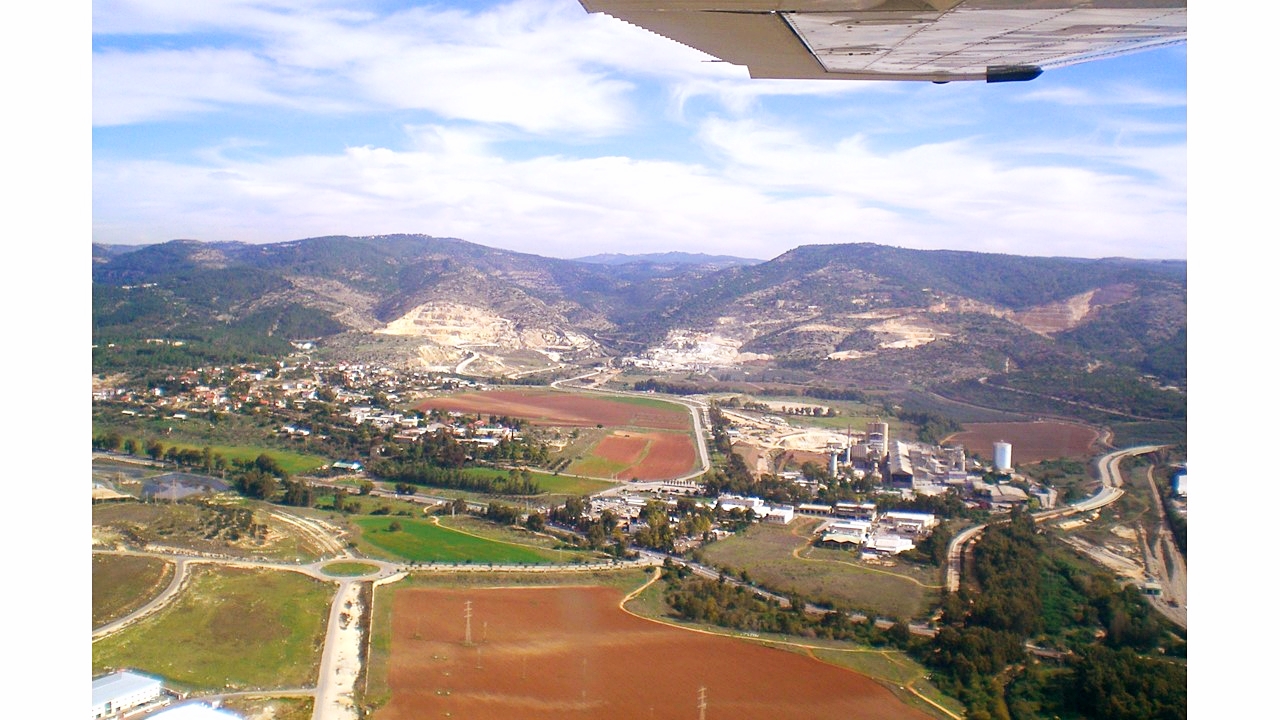
You can see the valley of Sorek at distant center  in our aerial photo here:

Valley of Sorek. Photo by Leon Mauldin.

Valley of Sorek. Photo by Leon Mauldin.

The Eerdmans Bible Dictionary has this brief info:

Sorek, Valley of [sôrˊĕk] (Heb. naḥal śōrēq “valley of a choice grape vine”). A valley to be identified with Wâdī eṣ-Ṣarâr, which runs in a northwesterly direction from the vicinity of Beth-shemesh (ca. 20 km. [13 mi.] west-southwest of Jerusalem) to the Mediterranean, meeting the sea about halfway between Ashdod and Tel Aviv. Delilah’s home was in the valley of Sorek, then under Philistine control (Judg. 16:4). (p. 964)


Mount Tabor

December 5, 2014

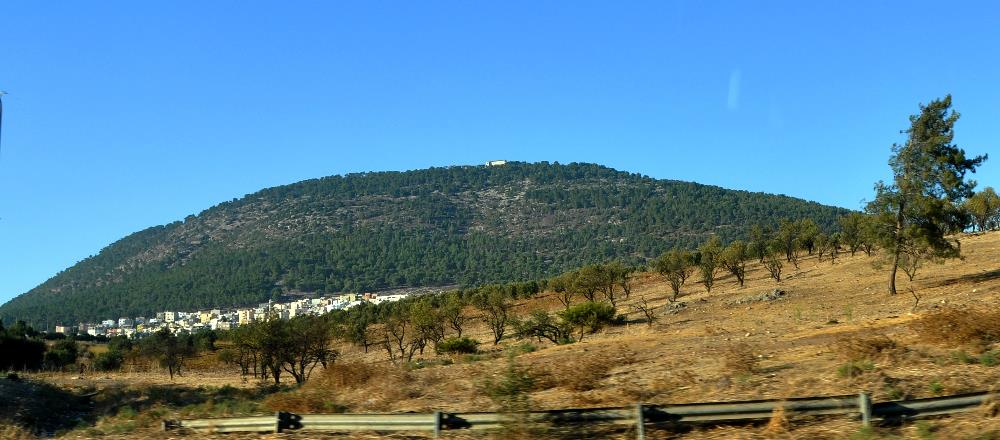
In the days when the judges ruled we read of Deborah, the only woman judge, whom God used to deliver Israel from the Canaanites headquartered at Hazor. Barak led Israel’s army. The ensuing battle took place in the vicinity of Mt. Tabor. The biblical text reads:

She used to sit under the palm tree of Deborah between Ramah and Bethel in the hill country of Ephraim; and the sons of Israel came up to her for judgment. Now she sent and summoned Barak the son of Abinoam from Kedesh-naphtali, and said to him, “Behold, the LORD, the God of Israel, has commanded, ‘Go and march to Mount Tabor, and take with you ten thousand men from the sons of Naphtali and from the sons of Zebulun'” (Judges 4:5-6).

Mt. Tabor in Israel. Photo by Leon Mauldin.

Mt. Tabor in Israel. Photo by Leon Mauldin.

Holman Illustrated Bible Dictionary has this info re: Mt. Tabor:

Mountain in the valley of Jezreel. About six miles east of Nazareth, it has played an important role in Israel’s history since the period of the conquest. It served as a boundary point for the tribes of Naphtali, Issachar, and Zebulun (Josh. 19:12, 22), where the tribes worshiped early (Deut. 33:18–19). Barak gathered an army at Tabor to defend against Sisera (Judg. 4:6). Apparently, it was the site of false worship (Hos. 5:1). Tradition holds that Tabor was the site of Jesus’ transfiguration (Mark 9:2), although no evidence exists to validate the claim.

Note the last statement in the above quotation, that no evidence exists that Mt. Tabor was the site of the transfiguration. Contextually the location of Mt. Hermon is to be preferred (Matt. 17:1), as it is situated in the vicinity of Caesarea Philippi where Jesus and the disciples were in Mt. 16.