Jerusalem, the Kidron, and Mt. of Olives

February 3, 2012

Yesterday’s post featured a photo of a hen with her chicks, imagery used by Jesus Himself in His lamentation over Jerusalem, as He wanted to gather the people unto Himself but they refused. Immediately he left the temple courts, crossed the Kidron with His disciples, and went to the Mount of Olives where He gave what has become known as the “Olivet Discourse” (Matthew 24).

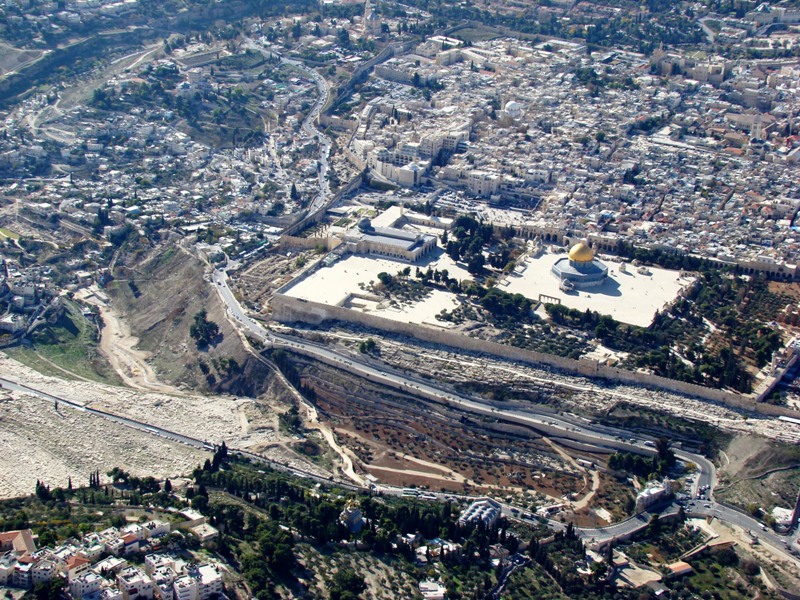
Our photo provides an overview of the setting for these events. You can easily recognize the temple mount. Below that is the Kidron Valley. Next, at bottom of photo is the Mt. of Olives.

Temple Mount in Jerusalem, Kidron, and Mt. of Olives. Photo by Leon Mauldin.

Click on image for larger view.


As a Hen Gathers Her Chicks

February 2, 2012

On the last day of Jesus’ public ministry, the Tuesday before He was betrayed on Thursday night, when Jesus left the temple courts He said,

O Jerusalem, Jerusalem, the one who kills the prophets and stones those who are sent to her! How often I wanted to gather your children together, as a hen gathers her chicks under her wings, but you were not willing! 38 See! Your house is left to you desolate; 39 for I say to you, you shall see Me no more till you say, “Blessed is He who comes in the name of the LORD!” (Matthew 23:37-39).

The imagery of a mother hen shielding her chicks may need explaining to those (city dwellers) who have not seen this display of instinctive protection. It is not “learned behavior;” it is God-given and natural. When danger is perceived, the chicks run to the hen for safety and security.

I could not help but think of the above passage when I saw this scene in Galilee.

Chicks going to the mother hen. Photo by Leon Mauldin.

When I initially approached to take the photo the chicks were a bit scattered. But as I advanced closer, they all went right to the mother hen.

Jesus wanted the inhabitants of Jerusalem to come to Him, for safety, security and for salvation. But sadly, they were not willing. Man is unique to creation. We don’t merely act instinctively. God has given us freedom of choice. He appeals to our heart, He beckons through the Gospel, but He will not force.

For a related post, “Not One Stone Upon Another,” see here.

Click on image for larger view.


Traditional Site of Jesus’ Birth in Bethlehem

December 18, 2011

Justin Martyr (c.103-165 AD), wrote in Dialogue with the Jew Trypho:

But when the Child was born in Bethlehem, since Joseph could not find a lodging in that village, he took up his quarters in a certain cave near the village; and while they were there Mary brought forth the Christ and placed Him in a manger . . . (The Ante-Nicene Fathers Vol. I, p. 237).

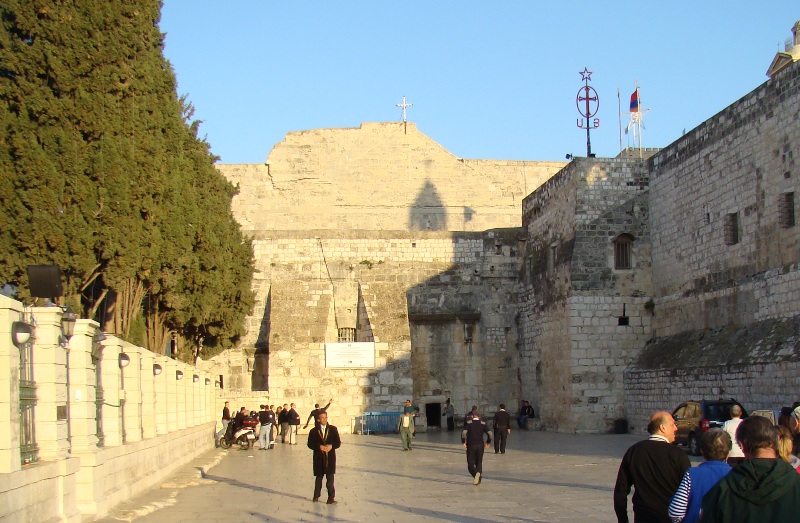
The Church of the Nativity was built by Helena, Constantine’s mother in 339 AD. It was built above the traditional cave which is associated with Jesus’ birth. This photo shows the approach to the church.

Church of the Nativity in Bethlehem. Photo by Leon Mauldin.

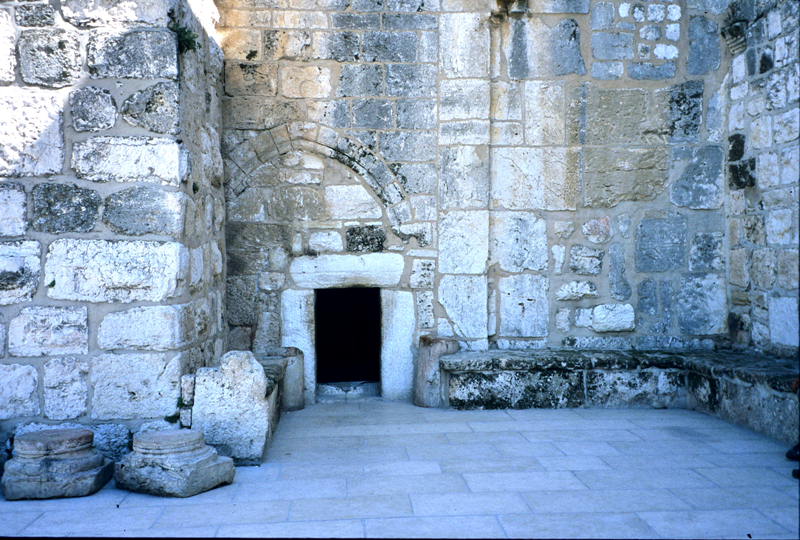
Here is a close-up of the entrance to the church.

Church of Nativity Entrance. Bethlehem. Photo by Leon Mauldin.

The above photo is a scanned slide I took in 1999.

Inside you can see the cave, the traditional place of Jesus’ birth.

Star Marking the Place of Jesus' Birth in Bethlehem. Photo by Leon Mauldin.

Other early evidence pointing to this spot as the location of Jesus’ birth includes that of Origen and Jerome.

For some thoughts on the useful purpose of shrines in this context, see Ferrell Jenkin’s post here.

Click on images for larger view.


Humble Birth: the Manger

December 17, 2011

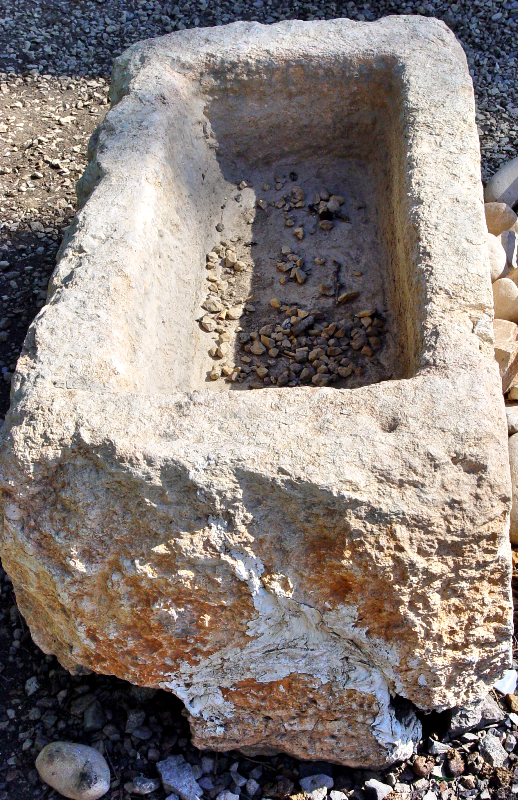
This time of year the word manger is at the top of the list of search words that brings folks to this site. Here is a manger we photographed in Jericho back in November, 2005. This was among other artifacts visitors could see; there was no info available as to where the manger was actually discovered, whether near Jericho or elsewhere.
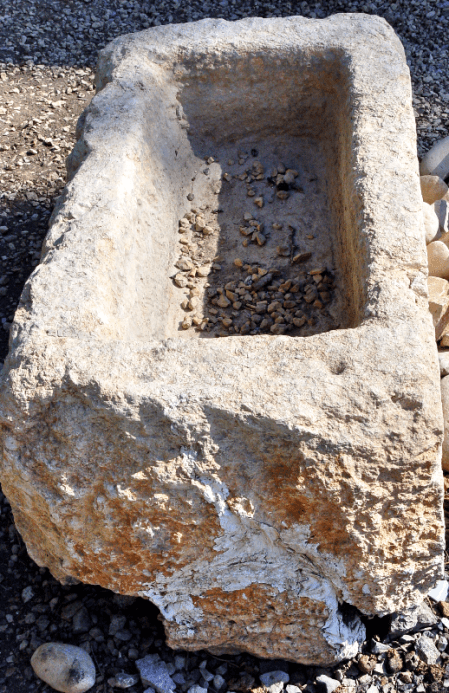
Manger at Jericho. Photo by Leon Mauldin.

Other posts on Jesus’ becoming flesh and being placed in a manger may be seen here and here. I continue to stand amazed at the thought of our eternal Creator becoming flesh, and having a feeding trough as a bassinet! It thrills my soul to think of God becoming flesh!

Luke 2:7 And she gave birth to her firstborn son; and she wrapped Him in cloths, and laid Him in a manger, because there was no room for them in the inn. (NASB).

Note the rendering of the CSB: Then she gave birth to her firstborn Son, and she wrapped Him snugly in cloth and laid Him in a feeding trough– because there was no room for them at the inn.

John 1:14 And the Word became flesh, and dwelt among us, and we saw His glory, glory as of the only begotten from the Father, full of grace and truth. (NASB).

It was necessary in God’s Redemptive Plan that the Eternal Word should become flesh, that he might defeat Satan, and become the propitiation for our sins.

It is also helpful to remember that when the Apostle John saw the resurrected Christ, the Son of God in His present glory, he did not see a baby in a manger. At Patmos, John wrote, “When I saw Him, I fell at His feet like a dead man. And He placed His right hand on me, saying, ‘Do not be afraid; I am the first and the last, and the living One; and I was dead, and behold, I am alive forevermore, and I have the keys of death and of Hades'” (Rev. 1:17-18, NASB).

Likewise we would do well not to limit our thoughts of Jesus to a baby in a manger, but see Him also as the Lord of lords and King of kings, the One before Whom all shall give account on the last day.

Click on image for larger view.

Ancient Street in Tarsus

December 16, 2011

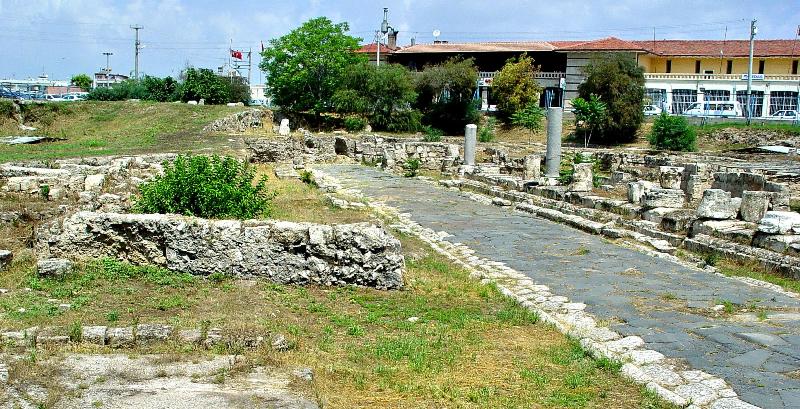
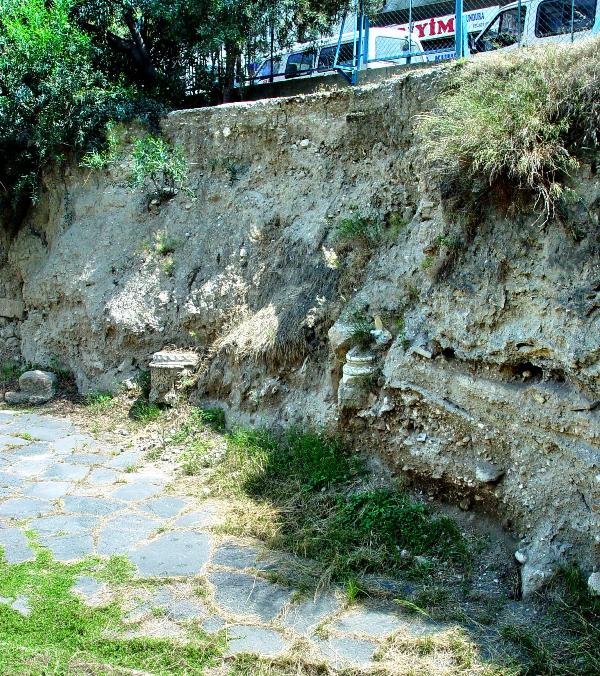
As we further explore what can be seen of ancient Tarsus, one important archaeological point of interest is a street built during the late Hellenistic period, thus predating the Apostle Paul.

Tarsus, Ancient Street. Dates back to the time of Paul. Photo by Leon Mauldin.

The discovery of this street, along with the ancient shops and houses that have been unearthed, is a story that has been often repeated. Work was being initiated for an underground parking deck when this discovery was made. So frequently it is the case that it is in connection with various construction projects that such discoveries are made (see here for “rolling stone tomb” in Israel).

Behind and to our right of our position in the above photo you can get a glimpse of how much silt has built up above street level: 23 feet at this point.

23 feet of silt accumulated above Tarsus Street of Paul's Day. Photo by Leon Mauldin.

This allows you to see the location of the modern city in relation to the ancient ruins below.

Click on image for larger view.


Cleopatra’s Gate in Tarsus

December 15, 2011

In our last post we mentioned that the Apostle Paul was in Tarsus from the point of Acts 9:30 until going to Antioch at the invitation of Barnabas in Acts 11:25.

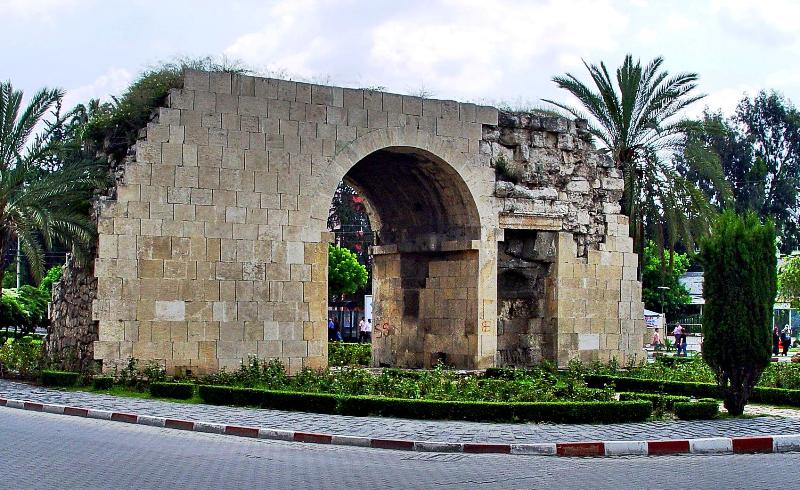
One attraction in Tarsus is “Cleopatra’s Gate,” also called the “Sea Gate,” as well as “St. Paul’s Gate.

Cleopatra's Gate in Tarsus. Photo by Leon Mauldin.

The Biblical Archaeological Society info re: this site included in The Biblical World in Pictures states:

This stone gateway is the only one of Tarsus’s three Roman city gates that has survived and is one of the few remnants of the city Paul knew that has not been destroyed or buried under the modern city of Turkish Tersous. Tarsus was connected by the Cydnus River to the Mediterranean; this was the gate that led into the city from the river. It is called Cleopatra’s Gate, commemorating a state visit that Queen Cleopatra made to Tarsus on her royal barge while Marc Antony was there in 38 B.C.E.

Others suggest that while the gate would mark the location of the Roman Gate, that the better evidence is that the structure that is visible is Byzantine.

Click image for larger view.


St. Paul’s Well

December 13, 2011

Paul is said to be a “man of Tarsus” in Acts 9:11, ASV). Tarsus was the capital of the Roman province of Cilicia, located on what is today the southern coast of Turkey. It was a cultural and intellectual center in the first century. Fant and Reddish quote Strabo’s description of Tarsus as having “surpassed Athens, Alexandria, or any other place that can be named where there have been schools and lectures of philosophers” (A Guide to Biblical Sites in Greece and Turkey, p. 324).

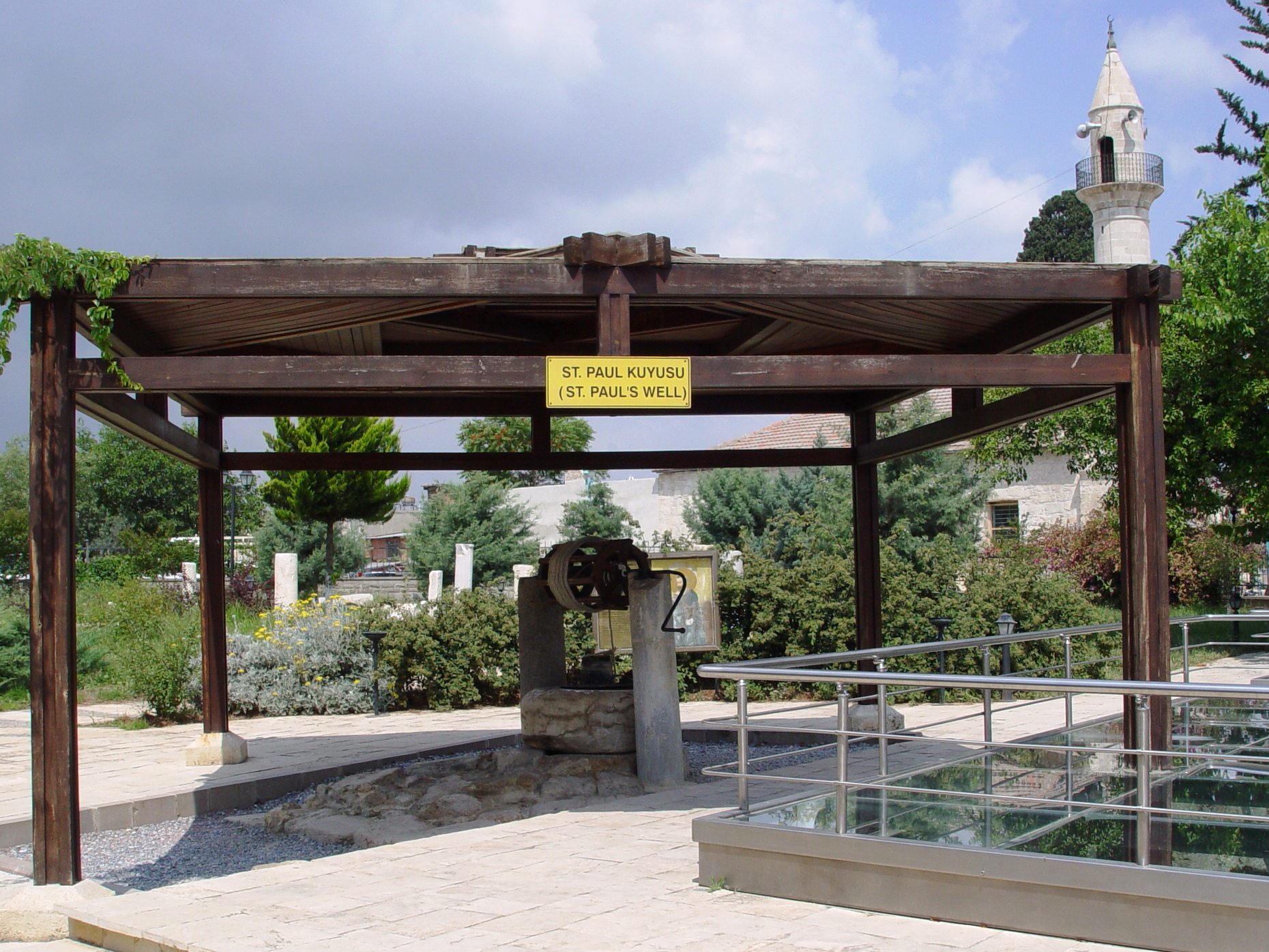
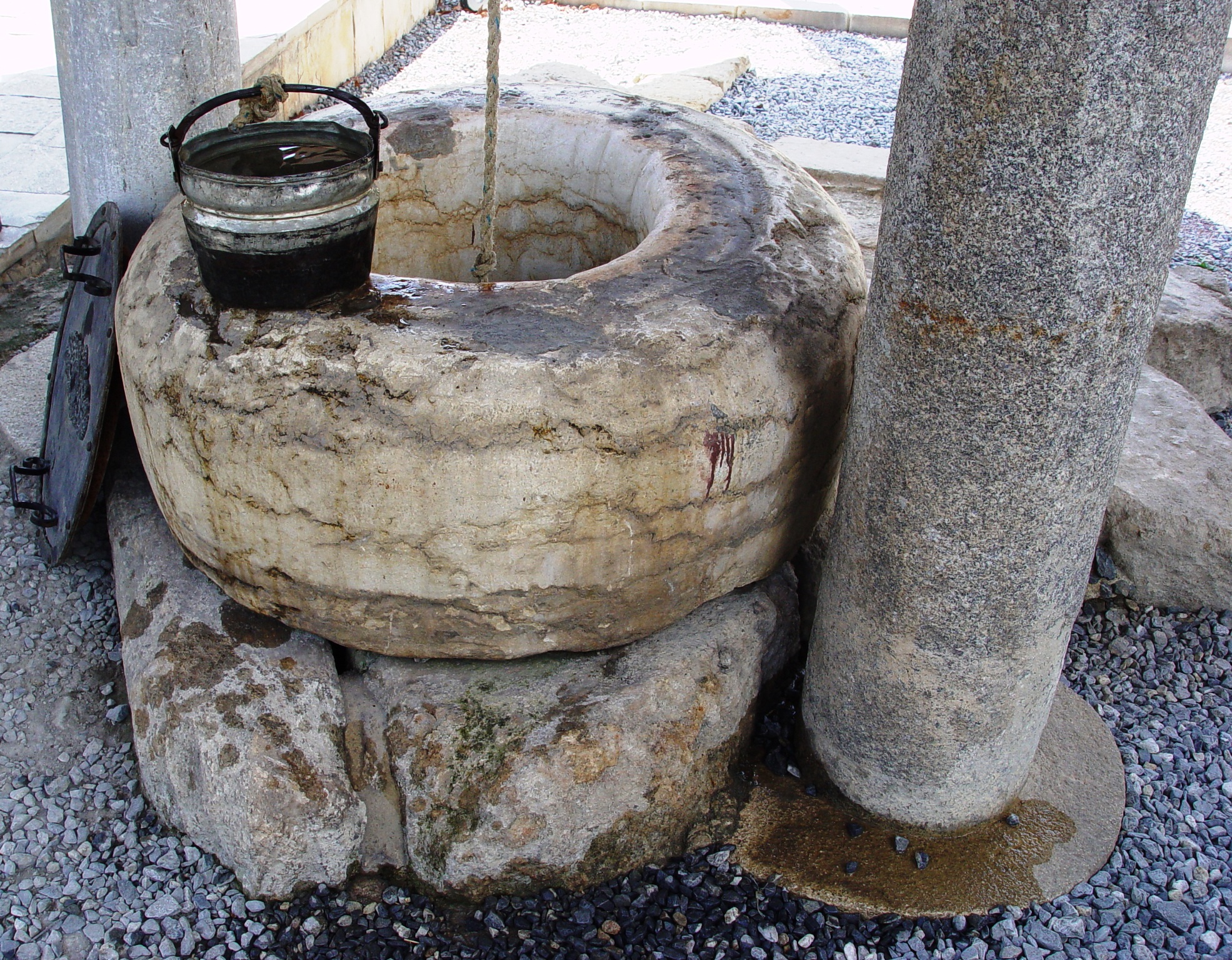
Not much can be seen of the Tarsus of Paul’s day, because the modern city with its population of 350,000+ is built on the ancient ruins. One exception to this is “St. Paul’s Well,” a well that dates back to Roman times.

"St. Paul's Well" at Tarsus. Photo by Leon Mauldin.

Visitors to this site are told that Paul certainly drank of this well, and therefore the waters are said to have curative properties. It would be more accurate to say that because the well certainly dates back to Roman times that Paul may have drunk from this well; the fact that it goes back to the time of Paul is what gives it special value to students of Scripture.

Well at Tarsus, Paul's home. Dates back to Roman Period. Photo by Leon Mauldin.

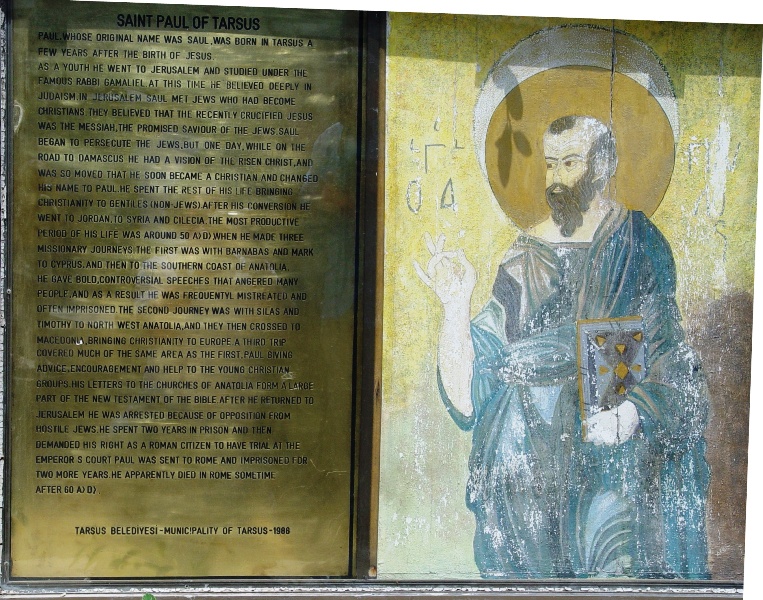
There is an info sign on the premises:

Info Sign on location near well. Photo by Leon Mauldin.

Though Tarsus was Paul’s home, as a youth he was “brought up in this city [Jerusalem], educated with strictness under Gamaliel according to the law of our ancestors” (Acts 22:3 NET). After his conversion there was a period where again Paul was in Tarsus (Acts 9:30), prior to his work in Antioch (Acts 11:25-26).

Click on images for larger view.


Resource: Trials from Classical Athens

December 5, 2011

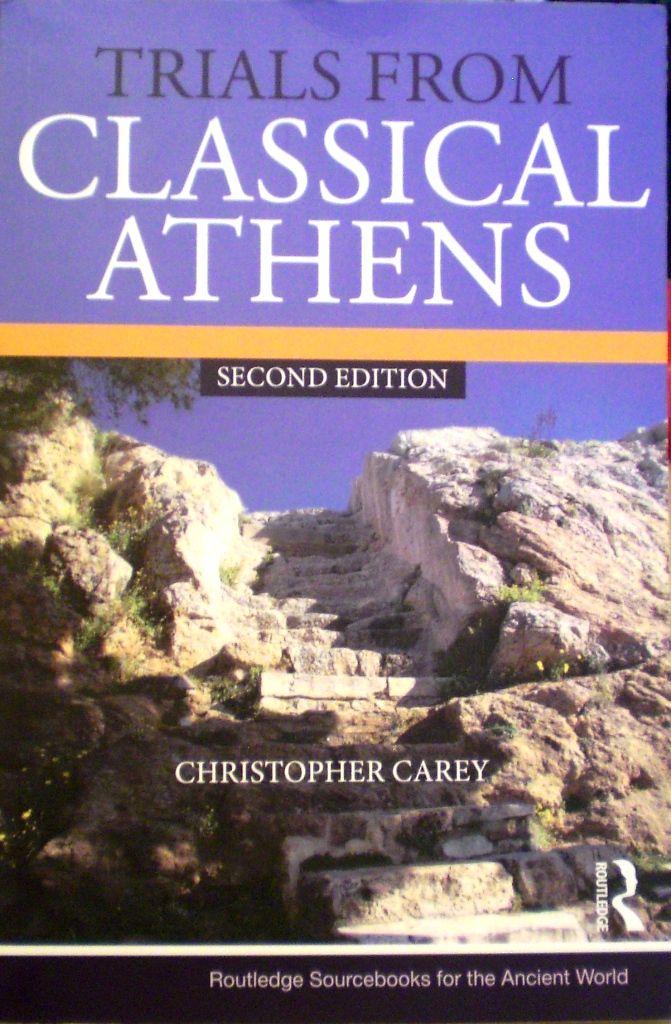
The Routledge Sourcebooks for the Ancient World includes Trials From Classical Athens. The 2nd edition is to be available as of Dec. 11, according to Amazon.

The setting for the trials in classical Athens is the Areopagus. The cases in this book came before the Athenian courts in the period of classical Athenian democracy, late fifth and fourth century BC.

Bible students know that the Areopagus is also mentioned in Acts 17 in connection with Paul’s opportunity to preach to  the Athenians, including the Epicurean and Stoic philosophers (Acts 17:22f.).

I’m looking forward to reading this resource, authored by Christopher Carey, professor of Greek at University College, London, UK.

Front cover, Trials from Classical Athens. Photo by Leon Mauldin.

From the back cover:

The ancient Athenian legal system is both excitingly familiar and disturbingly alien to the modern reader. It functions within a democracy which shares many of our core values but operates in a disconcertingly different way. Trials from Classical Athens assembles a number of surviving speeches written for trials in Athenian courts, dealing with themes which range from murder and assault, through slander and sexual misconduct to property and trade disputes and minor actions for damage. The texts illuminate key aspects both of Athenian social and political life and the functioning of the Athenian legal system.

This new and revised volume adds to the existing selection of key forensic speeches with three new translations accompanied by lucid explanatory notes. The introduction is augmented with a section on Athenian democracy to make the book more accessible to those unfamiliar with the Athenian political system. To aid accessibility further a new glossary is included as well as illustrations for the first time.

Providing a unique and guided introduction to the Athenian legal system and explaining how the system reveals the values and social life of Classical Athens, Trials from Classical Athens remains a fundamental resource for students of Ancient Greek history and anyone interested in the law, social history and oratory of the Ancient Greek world.

I granted permission to the publishers usage of my photo for the front cover. It depicts the steps up the Areopagus from the back side.

Leon’s Message Board has a post on the Areopagus here, which includes the above photo.

Ferrel Jenkins has a current post which shows the Areopagus from this same side but further back. See here.

I noticed on Amazon’s site that Dr. Carey’s book sells for $35.39 in paperback and $111.52 in hardback.

(Click on images for larger view).


Jesus’ Ministry, 3+ Years

November 11, 2011

There is general consensus that the earthly ministry of Jesus lasted about three years. How is that determined?

One primary source is the Gospel of John, with its inclusion of feasts.

Jesus' 3+ Yr. Ministry. Chart by Leon Mauldin.

You will note that the reference of John 5:1 just says “feast,” it does not specify. Beauford Bryant notes:

The word for feast (ἑορτή, heortē) was without the definite article in nearly all the earliest Greek manuscripts and versions. If the definite article had been read, then there would have been strong grounds for understanding this festival as a Passover, or possibly as Tabernacles, which was often referred to as “the Feast” (ההג, hahag) (College Press NIV Commentary).

********

This week I have enjoyed the opportunity to present 6 lessons in our local county (Cullman) at the Prospect church of Christ. Kent Persall is the evangelist there. 40+ years ago Kent, his wife Diane and I were students at Florida College.


“Be Not As the Hypocrites”

November 1, 2011

In Matthew 6:5 Jesus said,

And when you pray, you shall not be like the hypocrites. For they love to pray standing in the synagogues and on the corners of the streets, that they may be seen by men. Assuredly, I say to you, they have their reward.

To say, “they have their reward,” means that the only reward such will receive is the praise of men; they will not be rewarded by God. Regarding the words “hypocrite,” and “hypocrisy,” the ISBE states

‘Hypocrisy,’ ‘hypocrite’ are frequent in the New Testament, chiefly in Christ’s discourses in the Gospels. The word hupokrisis (primarily, “an answer,” “response”) meant generally, in classical Greek, stageplaying, acting, the histrionic art; hence, it came to mean acting a part in life, etc. . . but, in general, the meaning is acting a part, false, deceptive and deceived, formally and outwardly religious and good, but inwardly insincere and unrighteous; the hypocrite may come to deceive himself as well as others, but ‘the hypocrite’s hope shall perish’ (Job 8:13, KJV). On no class did our Lord pronounce such severe condemnation as on the hypocrites of His day.

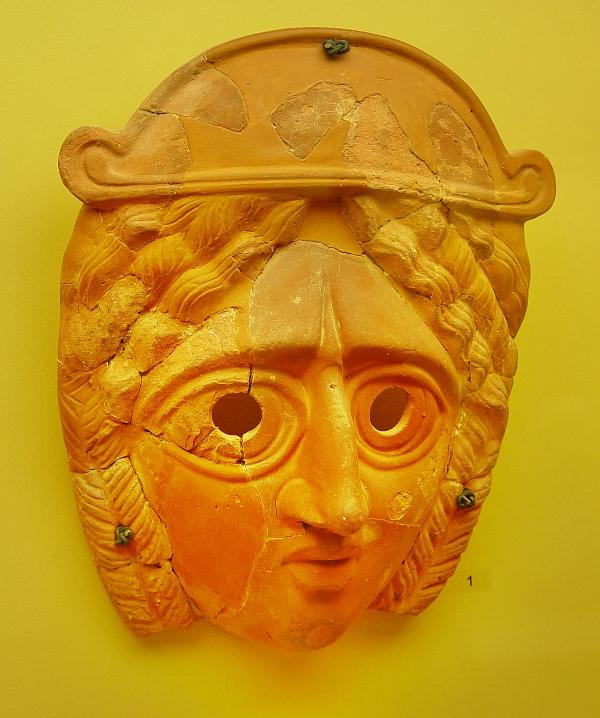
These actors’ masks in our photos below are displayed in Athens near the ancient agora. If the actor were a tragedian, he/she might have a mask like this:

Tragic Mask. Athens, Greece. Photo by Leon Mauldin.

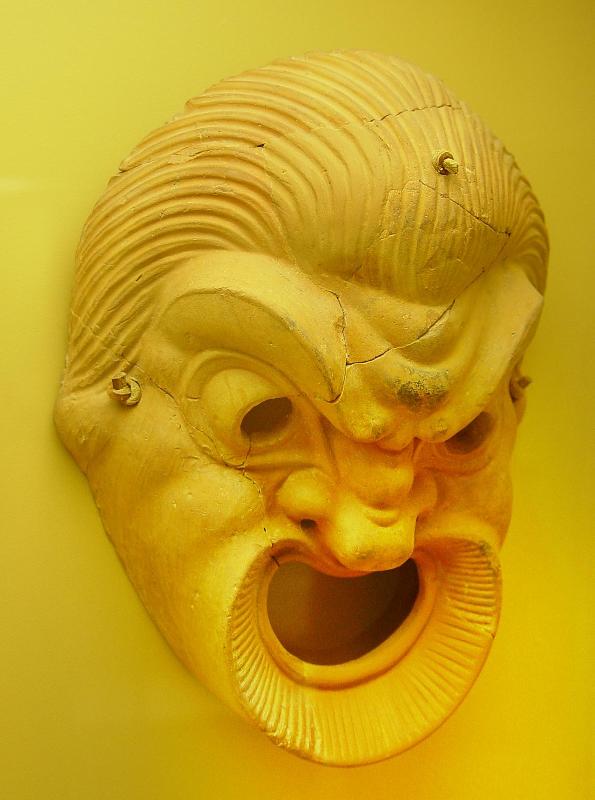
On the other hand, if he were a comic, the mask might look like this:

Comic mask. Athens, Greece. Photo by Leon Mauldin.

Jesus does not want His followers to be actors, playing a part, all the while playing a role that is not real. He requires total, genuine, sincere conversion and commitment to Him. “Be not as the hypocrites.”