Safely at Natana, Israel

March 9, 2011

Our group arrived safely at Ben Gurion Airport this afternoon, just an hr. and a half or so past schedule. It was dark and raining by the time we got our luggage and boarded our bus. We had a good meal here at the Blue Ray Hotel at Natana. The wind is howling outside my window at present. Natana has been known as the number one city in Israel for artisan diamond cutting.

It’s always a good start when all the passengers are well and accounted for, and there is no delayed luggage, so we’re thankful for that.

We’re 7 hours ahead of Sweet Home Alabama time.  Everyone is tired, but the good meal tonight and hopefully a good night’s rest will recharge everyone’s batteries.

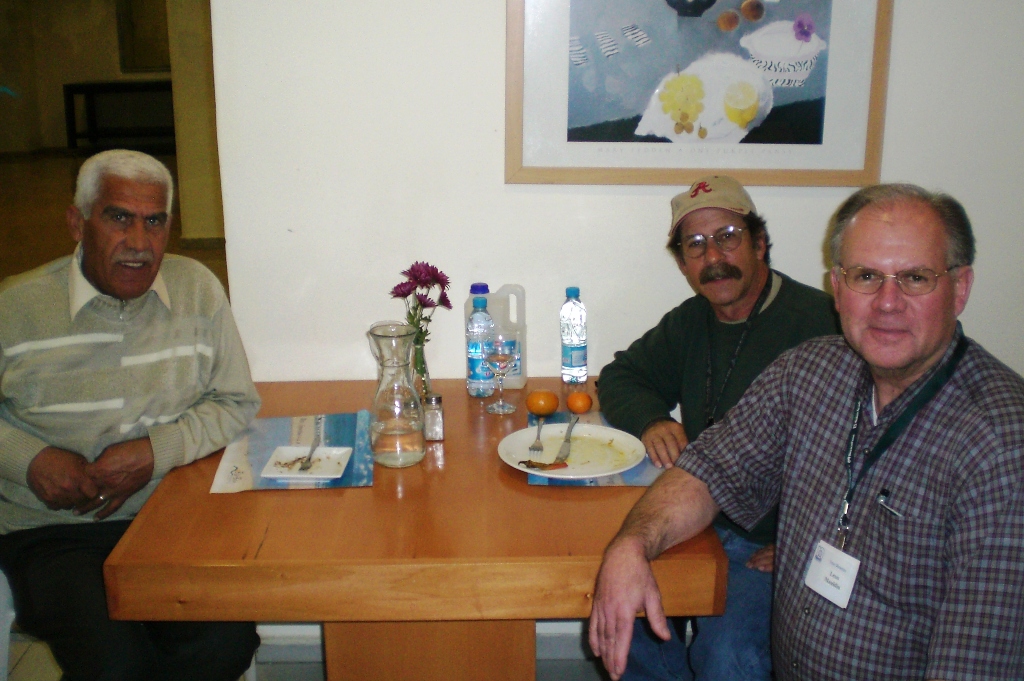
Fawzi, Elie and Leon at Natana. Dolye Stogdill, photo.

Some of you will recognize our guide and friend Elie, at right and behind me, and Fawzi, our driver. These men are professionals and a pleasure to work with.

Tomorrow we head up the coast and then across to Tiberius on the Sea of Galilee. Continue to check in and we’ll post as we can. Thanks to those of you who have written.


Bethany

February 23, 2011

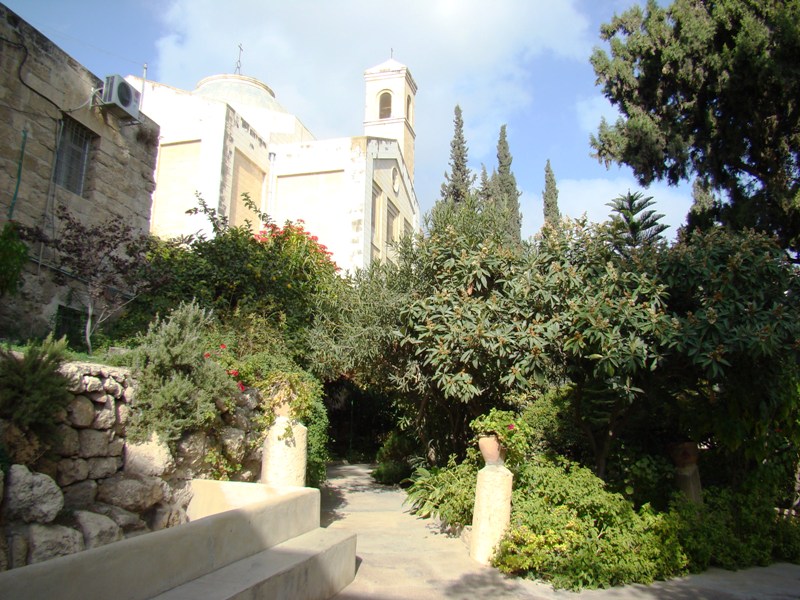
Bethany is designated as the home of Jesus’ good friends Mary, Martha and Lazarus (John 11:1). When Lazarus was sick Jesus deliberately waited until his death, that he might raise Lazarus from the dead, thus demonstrating that He is the “Resurrection and the Life” (John 11:25). Modern Bethany can be seen in our photo:

Bethany, home of Jesus' friends Mary, Martha and Lazarus. Photo by Leon Mauldin.

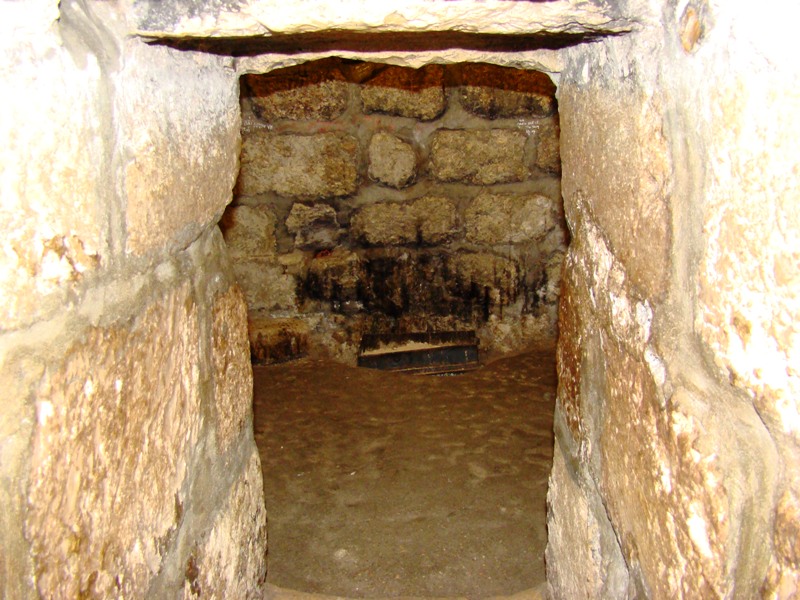
There is a tomb shown at Bethany which is said to be Lazarus’ tomb. To me the value of such is for illustration purposes, and not to identify this as the actual tomb of Lazarus.

"Lazarus' Tomb." Photo by Leon Mauldin.

It was from Bethany and nearby Bethphage that Jesus entered Jerusalem, riding on a donkey in what is knows at the Triumphal Entry, fulfilling the prophecy of Zechariah 9:9.

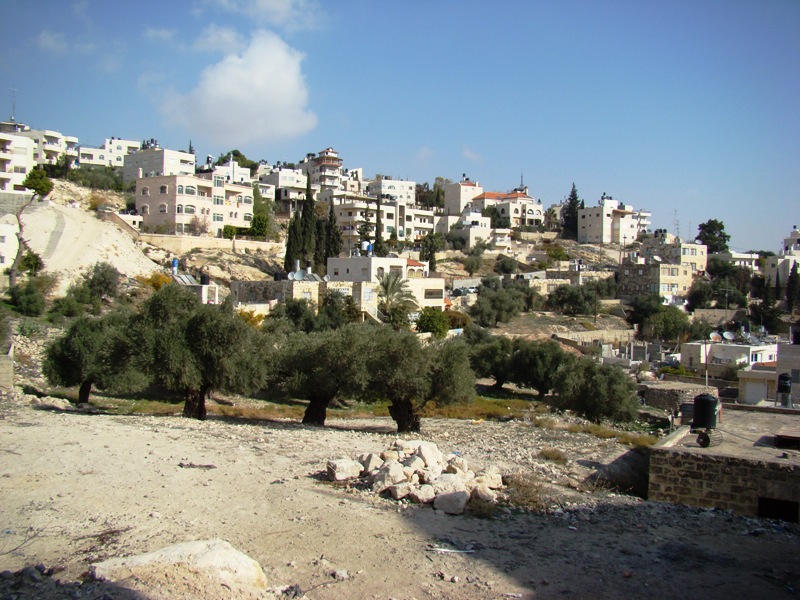
Bethany was the scene of Jesus’ being anointed with the precious ointment in anticipation of His death, Matt. 26:6ff. We learn from the parallel in John 12 that the woman was Mary, sister of Martha and Lazarus.


Bethany. Photo by Leon Mauldin.

It was also from Bethany, which is on the slope of the Mount of Olives, that Jesus ascended back into heaven: And He led them out as far as Bethany, and He lifted up His hands and blessed them. Now it came to pass, while He blessed them, that He was parted from them and carried up into heaven. And they worshiped Him, and returned to Jerusalem with great joy, and were continually in the temple praising and blessing God. Amen (Lk. 24:50-53).

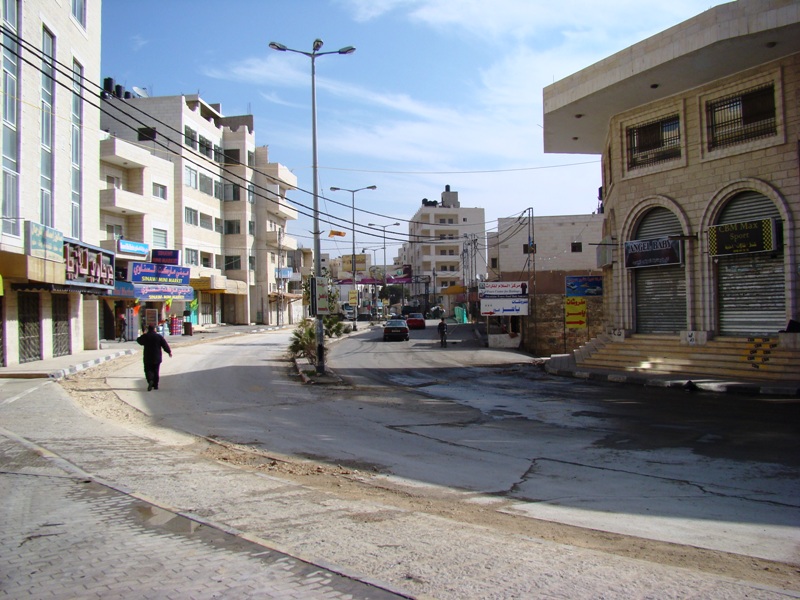
Street in Bethany. Photo by Leon Mauldin.

Click on images for higher resolution.


Arad in the Negev

February 21, 2011

Arad is first mentioned in Scripture in Numbers 21:1, “The king of Arad, the Canaanite, who dwelt in the South, heard that Israel was coming on the road to Atharim, then he fought against Israel and took some of them prisoners.” This was in the last year of the 40 years wilderness wandering.  Israel prayed for deliverance and the LORD gave them victory.

Map by Bibleatlas.org

BAR notes:

The Israelite fortress at Arad is unique in the Land of Israel. It’s the only site excavated with modern archaeological methods that contains a continuous archaeological record from the period of the Judges (c. 1200 B.C.) to the Babylonian destruction of the First Temple (580 B.C.). This distinction promises to make Arad the type-site for pottery chronology, especially in southern Israel, against which pottery from other sites can be confidently tested and dated. Not only is the pottery sequence continuous, but the timelines between the various strata during which the Israelite fortress was built and rebuilt are for the most part clear and can often be connected with well-known historical and datable events.

Arad is also special for other reasons. The Israelite fortress there was found to contain the only Israelite temple ever discovered in an archaeological excavation.

The excavation of the fortress also yielded a unique series of inscriptions. The inscriptions, written for the most part with ink on potsherds—called ostraca (singular, ostracon)—include political, administrative and sometimes even religious documents. Other sites have yielded ostraca collections—for example, the Lachish letters and the Samaria ostraca—but each of those collections belonged to only one major stratum and time period. At Arad the inscriptions span a period of 350 years and cover six different strata. In all, more than one hundred texts and fragments were recovered. (13:02 March/April 1987).

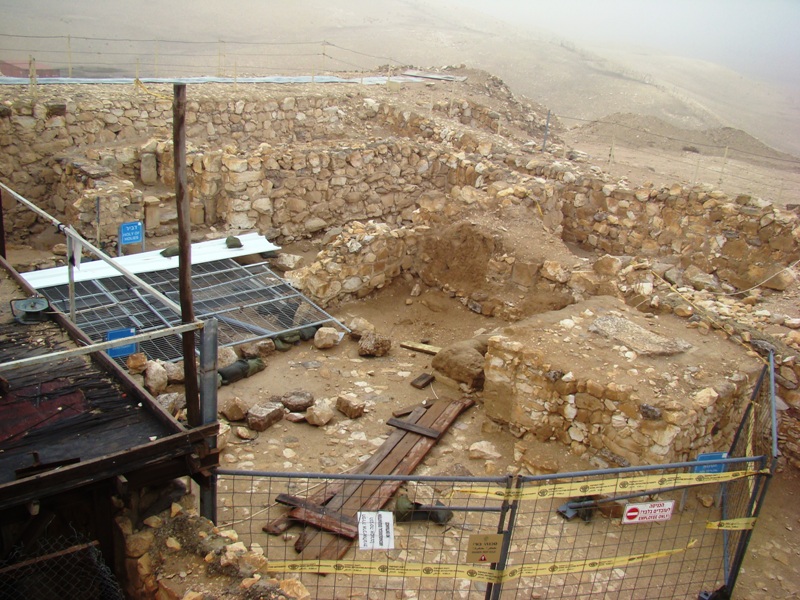
The 2nd paragraph in our quote above mentioned the Israelite temple which has been excavated at Arad. The ruins can be seen in our photo:

Israelite Temple at Arad. Photo by Leon Mauldin.

The raised square platform at right was the altar. This temple was destroyed either in the reforms of Judah’s good king Hezekiah or perhaps Josiah.

Click on images for higher resolution.


Beersheba, cont’d.

February 16, 2011

Beersheba was to become the chief city of the Negev. Unfortunately it would also become a center for idolatrous activity. When the 8th century BC prophet Amos cried out against idolatrous cities he warned, “But do not seek Bethel, nor enter Gilgal, nor pass over to Beersheba, for Gilgal shall surely go into captivity, and Bethel shall come to nothing” (Amos 5:5). Instead, “Seek the LORD and live” (v.6).

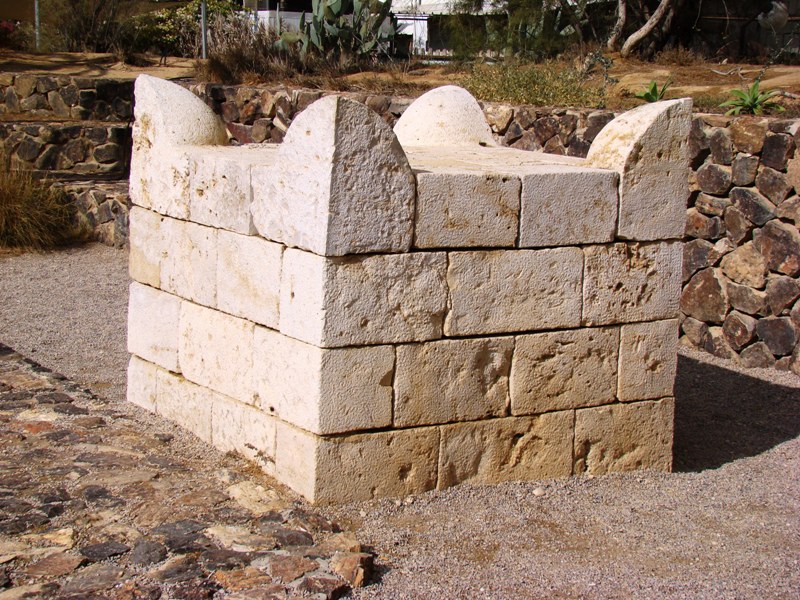
Altar at Beersheba. Photo by Leon Mauldin

Our photo shows a replica of an altar discovered in Beersheba; the original was broken in pieces. Many believe the destruction of the altar here may have been during the reformation by good king Hezekiah.

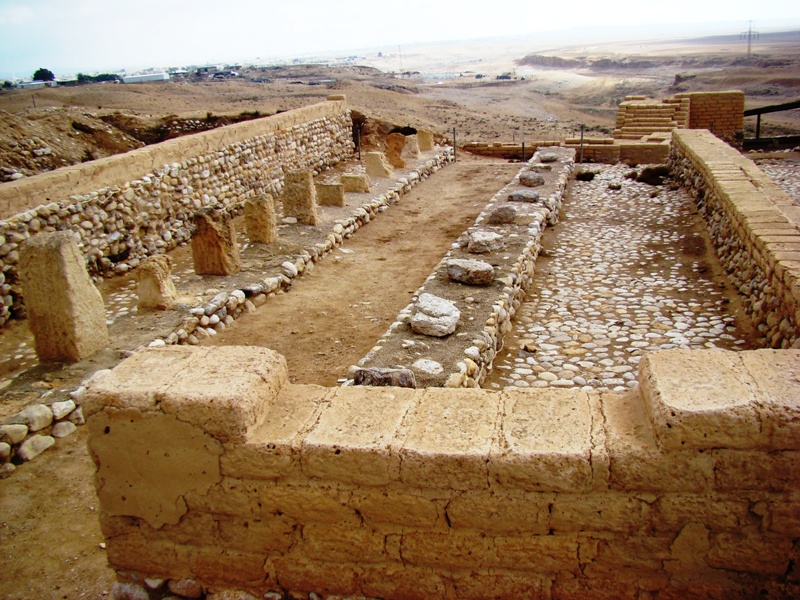
Beersheba is a small tel, comprising only about three acres. A good deal of excavation has been done. Our photo below shows what many believe to be storage room; others believe this to have been stables.

Storage rooms or possibly stables at Beersheba. Photo by Leon Mauldin.

View is to the southeast. Remember to click on photos for higher resolution.


Beersheba, Home of the Patriarchs

February 15, 2011

Beersheba received its name when Abraham made a covenant with the Philistine king Abimelech. Included in that covenant was the recognition of Abraham’s ownership of the well he dug at that site, which was confirmed by Abimelech’s reception of seven lambs from Abraham. “Therefore he called that place Beersheba, because the two of them swore an oath there” (Gen. 21:31). Beersheba means, Well of the Oath or Well of the Seven.

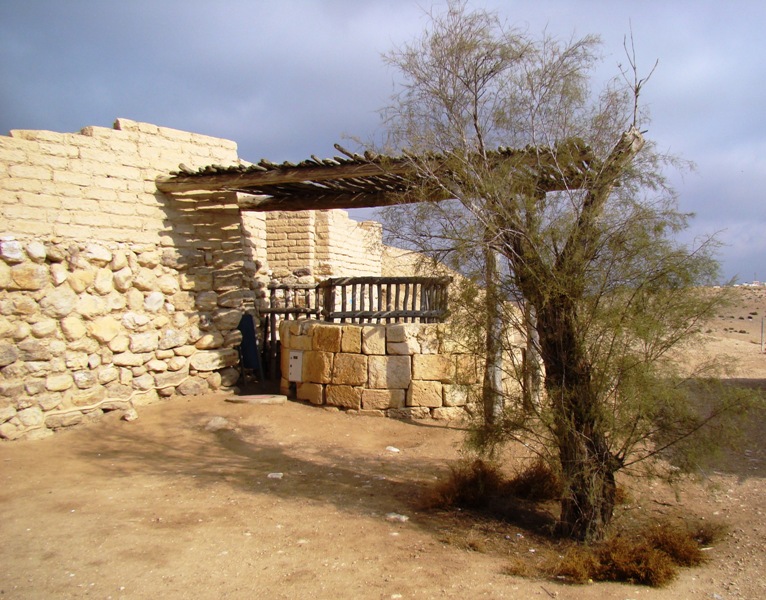
“Then Abraham planted a tamarisk tree in Beersheba, and there called on the name of the LORD, the Everlasting God” (Gen. 21:33). Our photo was taken outside the gate of Beersheba, and shows a well there, and also a tamarisk tree.

Beersheba in the Negev. Photo by Leon Mauldin.

Beersheba is mentioned several times in the days of the Patriarchs. Abraham continued to live there after returning from Moriah to “sacrifice” Isaac (Gen. 22:19; cf. CSB: “And Abraham settled in Beer-sheba” (emp. mine, LM). Years later, when Isaac moved there the text tells us that “the LORD appeared to him the same night” and repeated the Abrahamic promises. “So he built an altar there and called on the name of the LORD” (Gen. 26:23-25).

Later still, when Jacob moved his family to Egypt it was at Beersheba that God appeared to him and said, “I am God, the God of your father; do not fear to go down to Egypt, for I will make of you a great nation there” (Gen. 46:1-3). God had told Abraham, Isaac and Jacob that He would make of them a great nation. It is in this passage that we learn that He would not do so in Canaan, the Promised Land, but it would be in Egypt. It had amply been demonstrated that the Canaanites were very willing to intermarry with Jacob’s family, and that was reciprocated (Gen. 32,38). Had they remained there they would have been assimilated into Canaanite culture, and never would have become the separate people of God.


More on Corinth

December 18, 2010

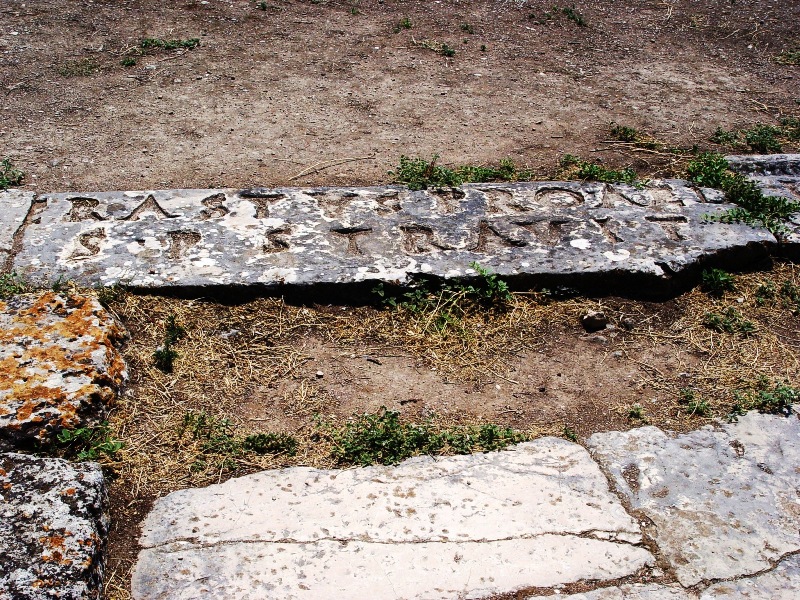
Our last post featured a photo of the Erastus inscription. We referenced the biblical text of Romans 16:23.  Additionally, Erastus is mentioned in two other passages.  In Acts 19:22 we read, “And having sent into Macedonia two of his helpers, Timothy and Erastus, he himself stayed in Asia for a while” (ESV).  Lastly in, 2 Tim. 4:20, Paul observes, “Erastus remained at Corinth, and I left Trophimus, who was ill, at Miletus” (ESV).

Here is a closer view of the inscription:

Closeup of Erastus Inscription at Corinth. Photo by Leon Mauldin.

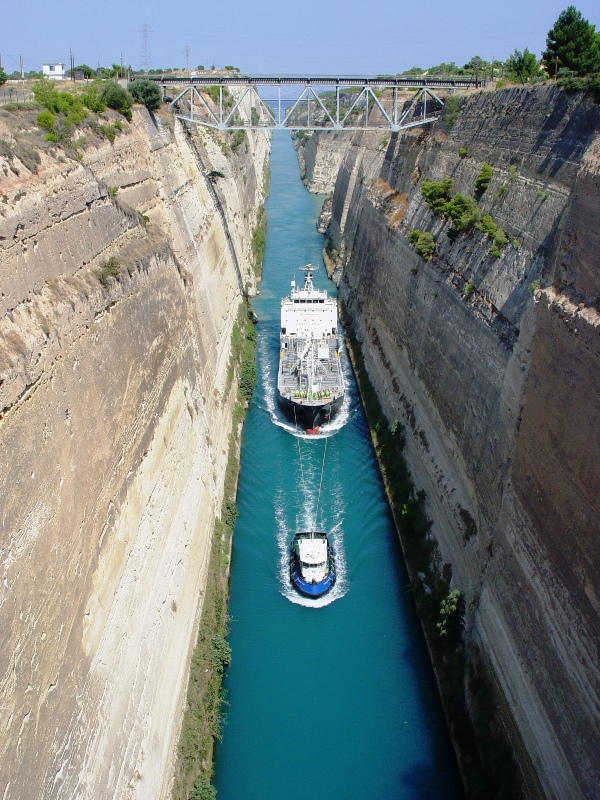
The narrowest point of the isthmus of Corinth is only 4 miles wide.  A canal was engineered and completed between 1882 and 1893.  Nero (A.D. 67) had the idea of building a canal at that exact route utilized by the modern engineers.  He planned to use 6,000 Jewish prisoners as his work force, but the idea was abandoned.

Canal at Corinth. Photo by Leon Mauldin.

The canal separates the Peloponnesian peninsula from the Greek mainland.  It connects the Gulf of Corinth with the Aegean Sea.

Click on images for higher resolution.  More to come on Corinth.


Herodium, another view

December 9, 2010

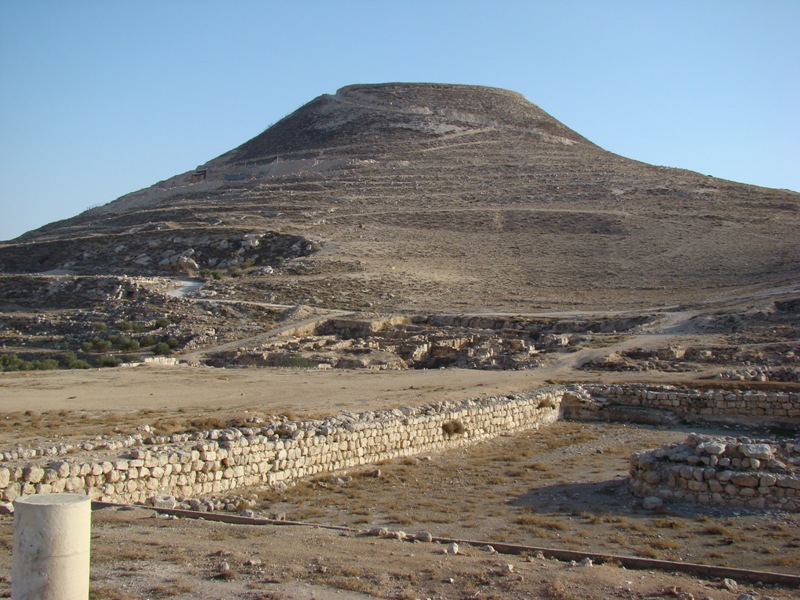
Our previous post showed an aerial view of Herod’s fortress, the Herodium.  Today’s photo offers a view from ground level.

Herodium. Photo by Leon Mauldin.

The Herodium can easily be seen from nearby Bethlehem.

Herod is known for his atrocity of killing the baby boys in Bethlehem from age two and under.  That is consistent with what is known of him from secular history.

Click on image for higher resolution.


Lachish

November 30, 2010

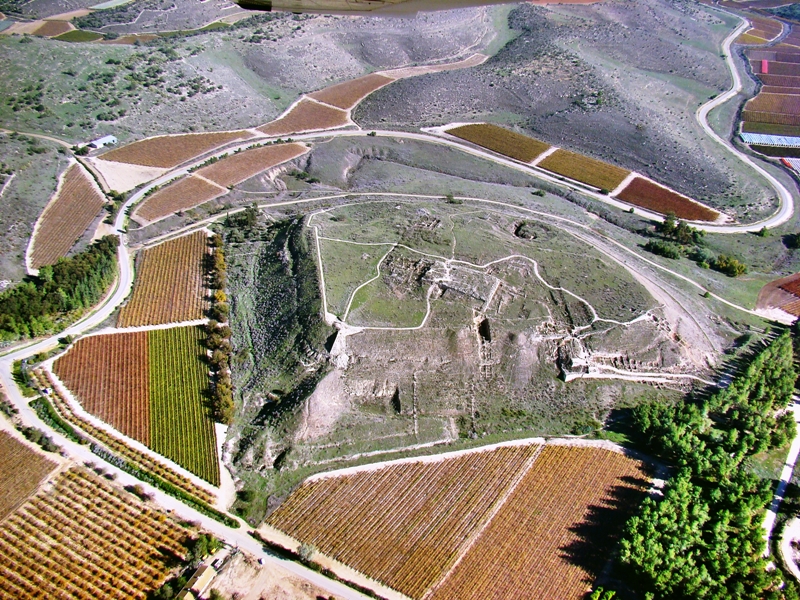
The city of Lachish (Tell ed-Duweir in Arabic) was located about 30 miles southwest of Jerusalem, nestled in the foothills, the Shephelah, of Judah.  The site covers about 18 acres. It was previously a principle Canaanite city and then after the conquest under Joshua, it was one of the most important Israelite cities.

Our photo gives an aerial view of biblical Lachish.

Aerial of Lachish, one of Judah's most important cities. Photo ©Leon Mauldin.

On the far right the siege mound built by the Assyrians under Sennacherib in 701 B.C. can still be seen. You can also see the ancient wall of the city and the gate complex.

Passages:

1. Rehoboam, Solomon’s son, rebuilt Lachish as a city for defense, a fortified city (2 Chron. 11:5-11).

2. Later, King Amaziah of Judah, following his apostasy from God (he began worshiping the gods of Edom), was killed while hiding in Lachish (2 Kgs. 14:19; 2 Chron. 25:27).

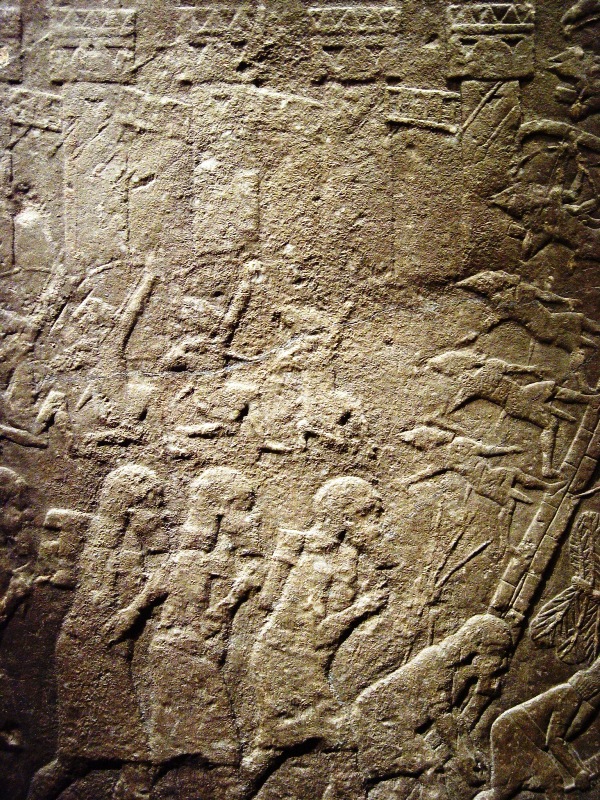
3. Sennacherib, king of Assyria, captured Lachish (2 Kgs.18:13-17; 2 Chron. 32:9).  He considered its capture to be of such significance that he depicted it in elaborate relief on the wall of his palace at Nineveh, as illustrated in our photo here below.  Note the Assyrian archers; others are scaling the wall by means of a ladder.

Lachish Relief. Metro Museum NY. Photo ©Leon Mauldin.

Additionally, Lachish is known for the “Lachish Letters,” twenty-one pottery sherds on which were written letters in clear Hebrew information regarding the attack on Lachish and Jerusalem by Babylon in 586 B.C. One of those letters says that the signal fires from Azekah could no longer be seen. Just prior to that, Jeremiah had observed that only Lachish and Azekah were left as fortified cities in Judah (Jer. 34:7).

Click on images for higher resolution.


Jacob & Family at Shechem

November 26, 2010

After Jacob and his family had a happy meeting/reunion with his brother Esau,  Jacob journeyed to Succoth and built a house there (Gen. 33:17).  The time is not specified, but it must have been some years.  Then Jacob made his way to Shechem (v.18).

Shechem was the very location where Abram was when God promised him the land of Canaan (Gen. 12:6,7). It would turn out that Shechem was the site for many significant biblical events.

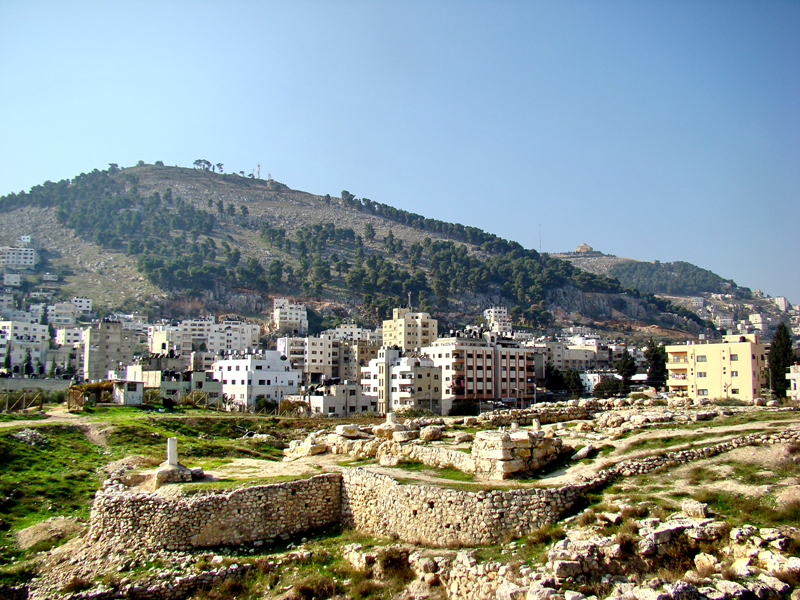
Shechem was the site for many impt biblical events. Photo ©Leon Mauldin.

Our photo shows the city of Shechem in the foreground.  In the distance you can see Mt. Gerizim, the mountain referenced by the woman of Samaria as she conversed with Jesus in John 4 (v.20).

Jacob bought a parcel of land at Shechem (Gen. 33:19); it was here to his sorrow that his daughter Dinah was violated (Gen. 34:2). Later when the family was residing to the south in Hebron, the sons of Jacob tended sheep at Shechem before moving their flocks on to Dothan where they sold Joseph into slavery (Gen. 37:12-28).

One of the more fascinating events at Shechem was the confirmation of the covenant during the Conquest of Canaan. Shechem is situated between Mt. Ebal and Mt. Gerizim.  Prior to the Conquest, Moses instructed the nation of Israel that when they crossed over the Jordan, they were to journey to this location.  Six tribes were to stand on Mt. Gerizim (for blessing), and the other six on Mt. Ebal (for cursing).  All of the words of the law, the blessings and the curses, were to be read.  All the people were to answer, “Amen.”  Immediately, after the conquest of Jericho and Ai (Josh.6-8), Joshua led the people north to these two mountains, where they obeyed God’s instructions (Deut. 27; Josh 8:30-35).  Think of it! At the very spot where childless Abram stood when God made the land promise, now were 701,730 men of war, plus women and children, there to stake their claim on the land!

Shechem would also be the gathering point for all of Israel for Joshua’s farewell address.  It was here that he challenged the people to fear the LORD and serve Him in sincerity and in truth, and to put away all the idols and false gods that were among them.  His own choice has been an encouragement to many down through the years: “but as for me and my house, we will serve the LORD” (Josh. 24:14,15). Their covenant with God was then renewed there at Shechem (Josh. 24:25). Later in that same chapter, notation is made that Joseph was buried in Shechem (Josh. 24:32).

Click image for higher resolution.


Jacob’s Sons

November 22, 2010

Some of our recent posts have dealt with Jacob’s twenty years stay in Haran, during which time eleven of his twelve sons were born.  Benjamin, the twelfth son, was born after their return to Canaan.

At the museum at Caesarea Maritima there is an open air display which honors “the five outstanding Statesmen whose brave and timely decisions led to the creation of the state of Israel.” These are Hertzl, Balfour, Truman, Weizmann, and Ben-Gurion. The exhibit also commemorates the twelve sons of Israel, displayed at the top of the semi-circular structure.


Commemoration of Statesmen at Caesarea Maritima. Photo ©Leon Mauldin.

After Jacob and his family left Laban at Mizpah, he made his way to Gilead.  It was there that the Messenger of the Lord told him, “Your name shall no longer be called Jacob, but Israel; for you have struggled with God and with men and have prevailed” (Gen. 32:28).  In our photo below, the plaque designating Israel is shown.


Israel. Photo ©Leon Mauldin.


Though Jacob had four wives, it was Rachel whom he had chosen, the one with whom he was truly in love. Rachel had two sons. Joseph was born in Haran.


Joseph, Rachel's son born in Haran. Photo ©Leon Mauldin.


Benjamin was born “when there was but a little distance to go to Ephrath” (Gen. 35:16).  Rachel died while giving birth to him. Benjamin’s plaque is featured below.


Benjamin. Rachel died while giving birth to him. Photo ©Leon Mauldin.

From the twelve sons of Jacob the twelve tribes of Israel would develop. As the biblical narrative unfolds, Jacob will adopt the two sons of Joseph, Ephraim and Manasseh, and Levi will become the priestly tribe.