Nazareth, Jesus’ Hometown

April 19, 2011

With the exception of the birth and very early childhood of Jesus (which was in Bethlehem and Egypt), Jesus lived in Nazareth until He was about the age of 30 (Luke 3:23).

On one occasion early in His Great Galilean Ministry, Jesus preached in His home town of Nazareth. Unfortunately, it was not well received, concluding with an attempt to push Jesus down to His death:

16 Now Jesus came to Nazareth, where he had been brought up, and went into the synagogue on the Sabbath day, as was his custom. He stood up to read, 17 and the scroll of the prophet Isaiah was given to him. He unrolled the scroll and found the place where it was written, 18 “The Spirit of the Lord is upon me, because he has anointed me to proclaim good news to the poor. He has sent me to proclaim release to the captives and the regaining of sight to the blind, to set free those who are oppressed, 19 to proclaim the year of the Lord’s favor.” 20 Then he rolled up the scroll, gave it back to the attendant, and sat down. The eyes of everyone in the synagogue were fixed on him. 21 Then he began to tell them, “Today this scripture has been fulfilled even as you heard it being read.” 22 All were speaking well of him, and were amazed at the gracious words coming out of his mouth. They said, “Isn’t this Joseph’s son?” 23 Jesus said to them, “No doubt you will quote to me the proverb, ‘Physician, heal yourself!’ and say, ‘What we have heard that you did in Capernaum, do here in your hometown too.'” 24 And he added, “I tell you the truth, no prophet is acceptable in his hometown. 25 But in truth I tell you, there were many widows in Israel in Elijah’s days, when the sky was shut up three and a half years, and there was a great famine over all the land. 26 Yet Elijah was sent to none of them, but only to a woman who was a widow at Zarephath in Sidon. 27 And there were many lepers in Israel in the time of the prophet Elisha, yet none of them was cleansed except Naaman the Syrian.” 28 When they heard this, all the people in the synagogue were filled with rage. 29 They got up, forced him out of the town, and brought him to the brow of the hill on which their town was built, so that they could throw him down the cliff. 30 But he passed through the crowd and went on his way (Luke 4:16-30).

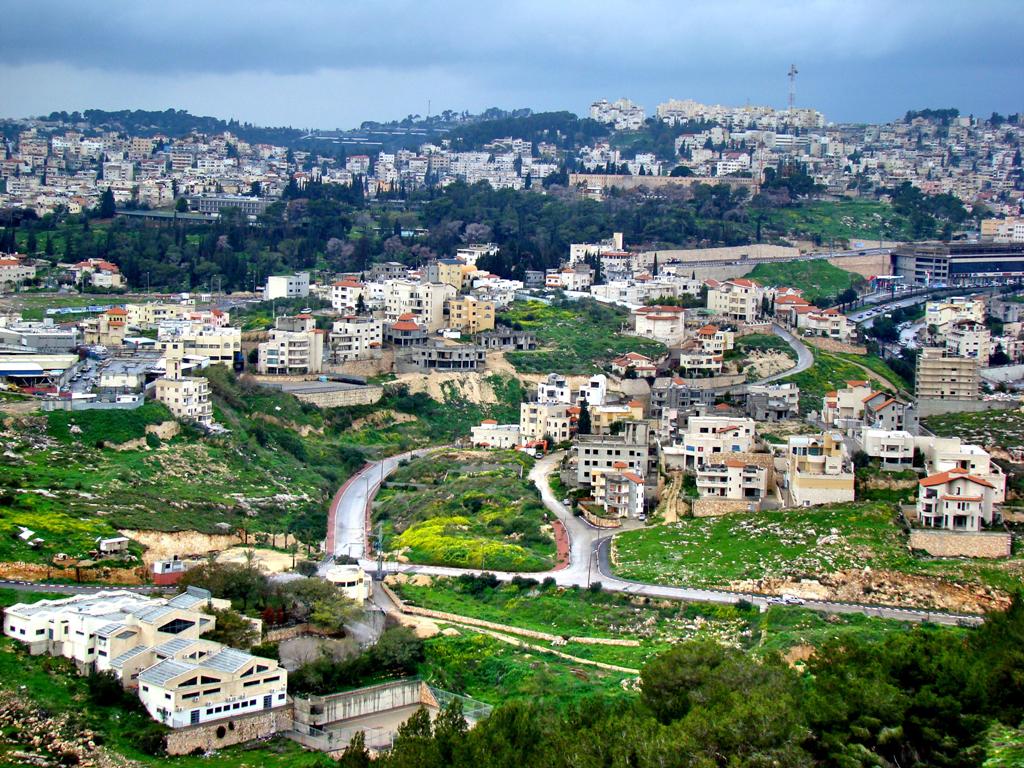
The traditional location of hill from which the residents of Nazareth attempted to push Jesus is known as the Mount of Precipice. It is 397 meters above sea level, and overlooks the Jezreel Valley.

Nazareth. View from Mt. Precipice. Photo by Leon Mauldin.

From here one has a good view of Nazareth.

Nazareth from Mt. Precipice. Photo by Leon Mauldin.

Buildings come and go, but the hills and valleys remain the same (as a rule). I.e., the landscape here pictured is what Jesus and his family would have seen.

Here at Nazareth is the Church of the Annunciation, which commemorates the angelic announcement to Mary of God’s choice of her to be the mother of Jesus (Lk. 1: 26-38).

Nazareth. Church of the Annunciation. Photo by Leon Mauldin.

Inside the church can be seen the spring which was the city’s water supply.

Click on images for higher resolution.


Megiddo Stables

April 17, 2011

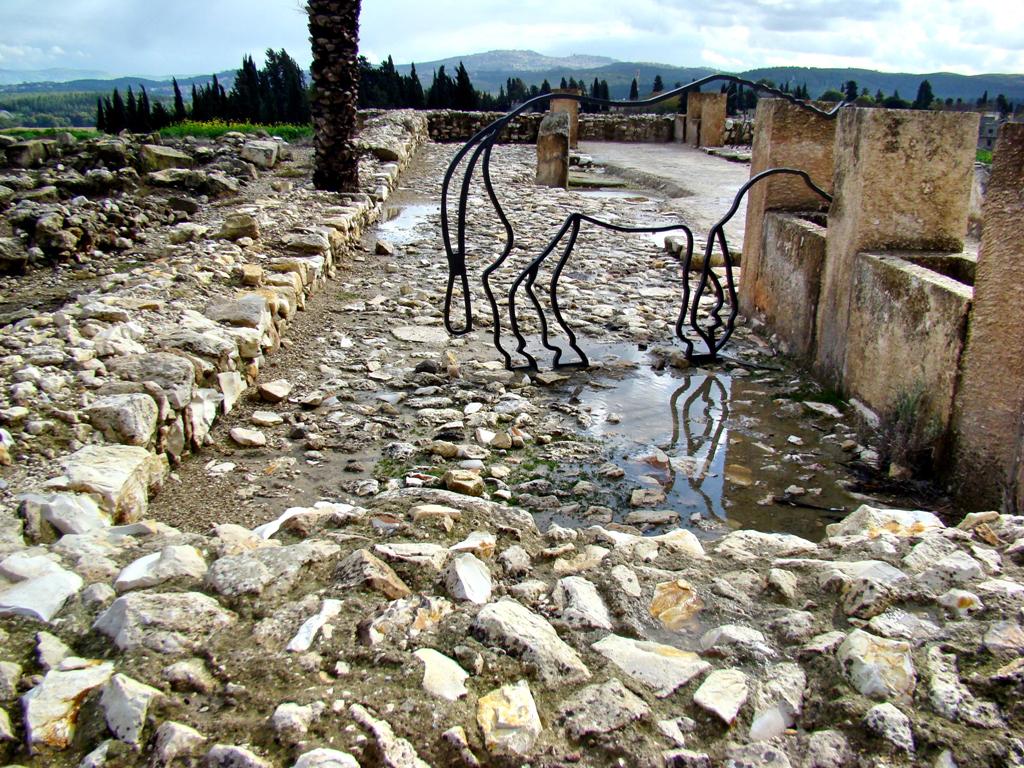
Another interesting discovery at Megiddo is the area which many believe were used for horse stables. The area seen in this photo is sometimes called “Solomon’s stables,” though many believe this should be dated a bit later to the time of King Ahab.

Stables at Megiddo. Photo by Leon Mauldin.

You can see the metal outline of a horse in our photo. Some suggest this site may have been used for barracks, market places, storage facilities, or other usages.

Click on photo for higher resolution.


Megiddo Water System

April 16, 2011

It would be hard to overemphasize the importance of the city of Megiddo. We have referenced the strategic location in our two previous posts. Crucial battles were fought here.

Excavations conducted at Megiddo have been “large and extensive,” and include the efforts of the German Society for Oriental Research (1903-1905), the Oriental Institute of Chicago (1925-1939). Excavations were interrupted with the outbreak of WWII, but were renewed by the Institute of Archaeology at the Hebrew University of Jerusalem (1960, 1961, 1966, 1967, and 1971) under the leadership of Y. Yadin (The New Encyclopedia of Archaeological Excavations in the Holy Land, Vol. 3, pp. 1005-1005).

More recent excavations have been undertaken by Tel Aviv University, with Pennsylvania State University as the senior American partner (ibid. Vol. 5, pp. 1944ff.).

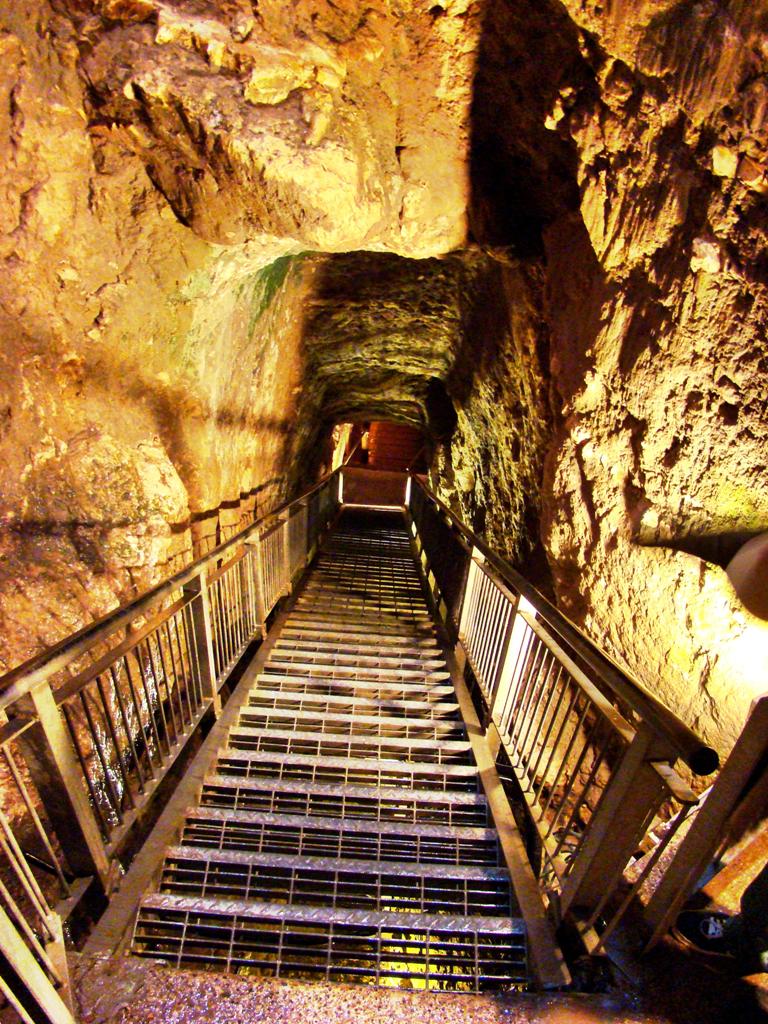
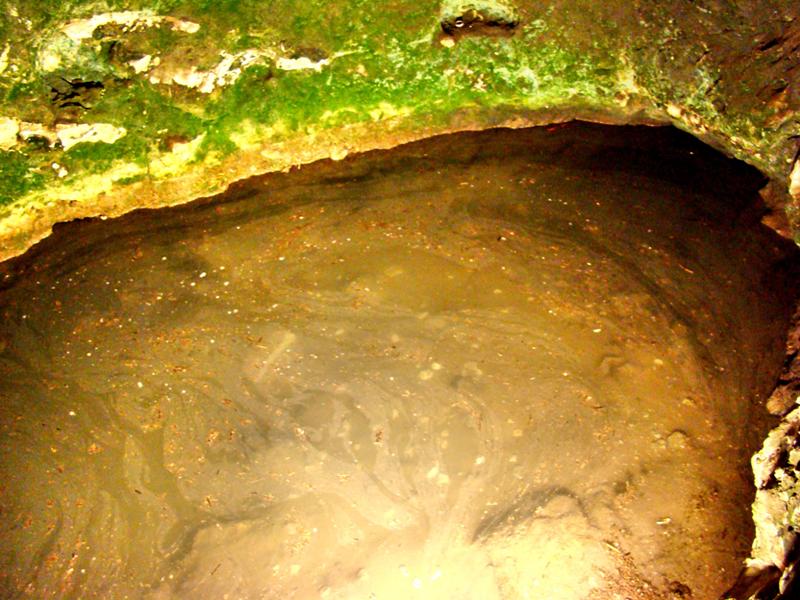
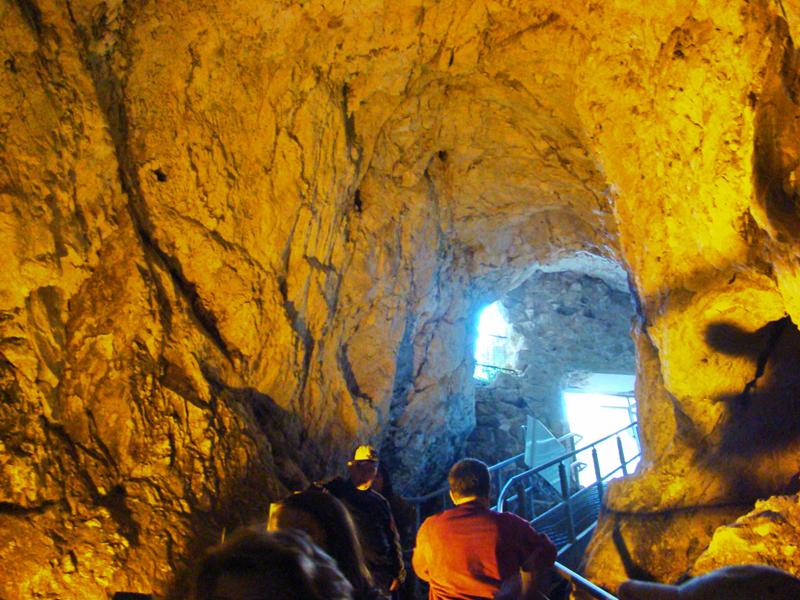
Among the more interesting discoveries is Megiddo’s water system. A 70 meter tunnel hewn through rock led down to the spring.

Megiddo. Tunnel to city spring. Photo by Leon Mauldin.

This dates back to the time of Israel’s king Ahab (874-853 BC). Prior to this engineering feat, it was necessary to go outside the city walls to access the spring.

Megiddo Spring. Citys water supply. Photo by Leon Mauldin.

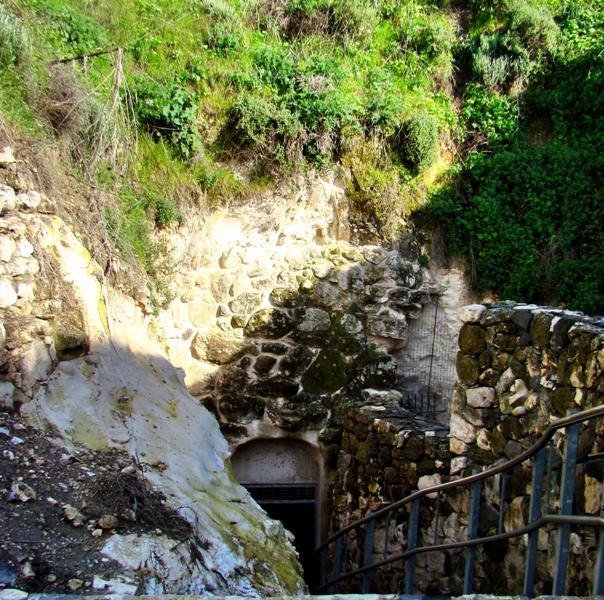
Here is a view from going up from the spring as you exit:

Megiddo. Exit from spring. Photo by Leon Mauldin.

And finally, a view back to the exit of the spring.

Megiddo. Outside Water System Exit. Photo by Leon Mauldin.

In our next post we plan to feature the stables of Megiddo.


Megiddo

April 6, 2011

Megiddo is first mentioned in Scripture in Joshua 12:21 as one of the cities captured under the leadership of Joshua and assigned to the tribe of Manasseh (17:11). Nelson’s NIBD speaks of the importance of this site:

Megiddo was situated on the main road that linked Egypt and Syria. Overlooking the Valley of Jezreel (Plain of Esdraelon), Megiddo was one of the most strategic cities in Palestine. All major traffic through northern Palestine traveled past Megiddo, making it a strategic military strong-hold.

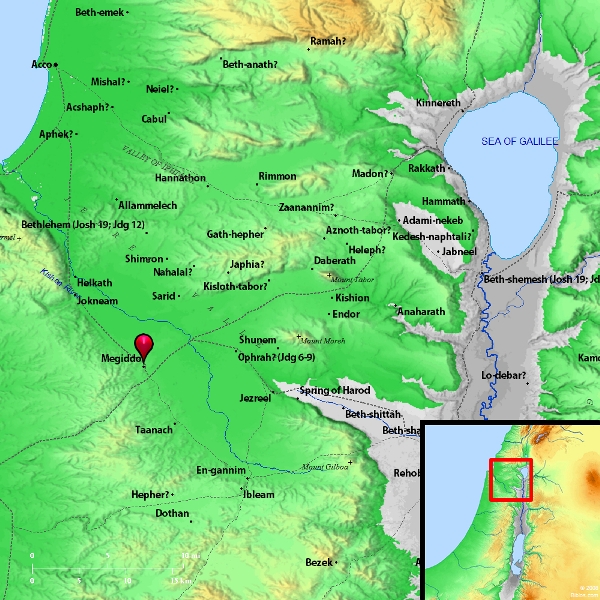
Therefore it was a great loss when Israel subsequently did not retain this city (Judges 1:27), whose location can be seen in the map below:

Megiddo. Map courtesy of BibleAtlas.org

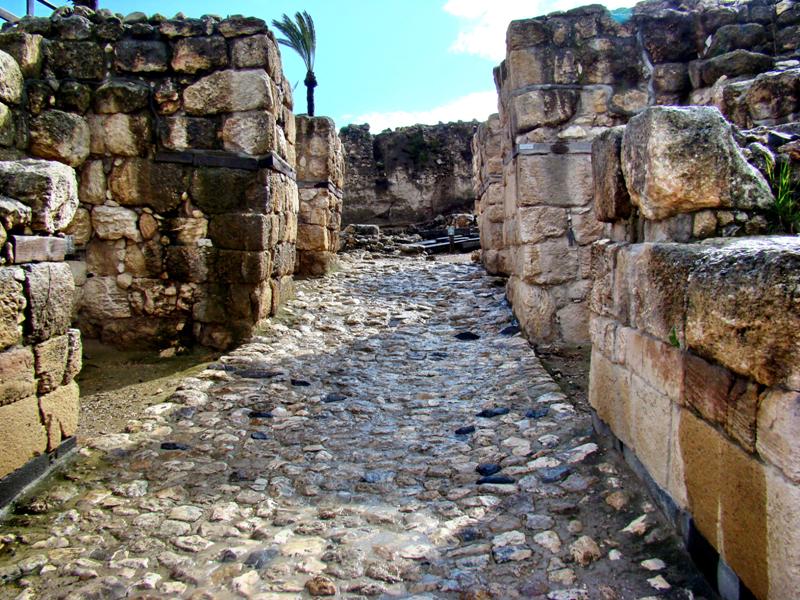
Megiddo was a city of great antiquity. The impressive Canaanite gate can be seen here in our photo:

Canaanite Gate at Megiddo. Photo by Leon Mauldin.

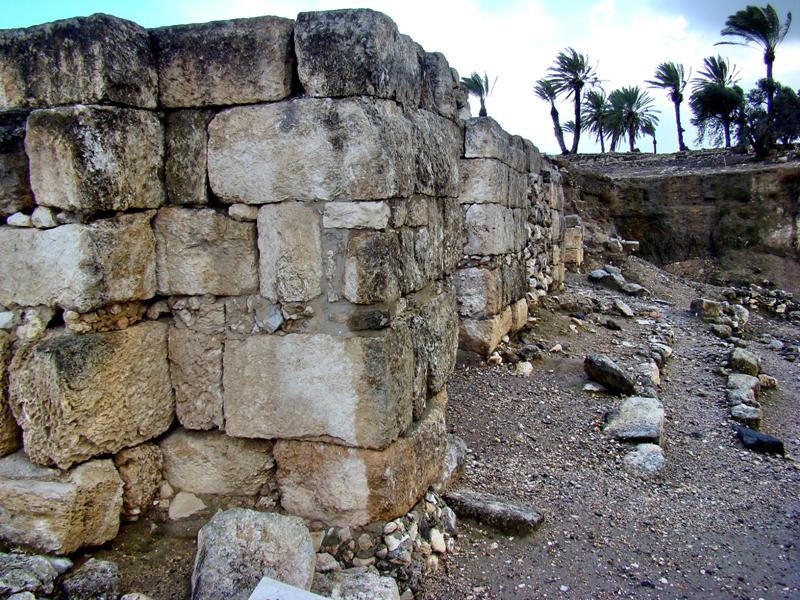
This was one of the cities later fortified by King Solomon (1 Kings 9:15) during the United Kingdom period (Iron Age). The Solomonic gate was here:

Solomonic Gate at Megiddo, a fortress city. Photo by Leon Mauldin.

Crucial battles were fought here or near here.

1.During the time of the Judges, Barak’s forces (Deborah was the Judge and Prophetess) defeated the Canaanite enemy near here (Judges 4-5). From Megiddo one can easily see Mt. Tabor, mentioned in the account (4:14) ; Judges 5:19 refers to the “waters of Megiddo.”

2. In 2 Kings 9:27, Judah’s king Ahaziah died here by the hand of Jehu; the year was 841 BC.

3. Good King Josiah (also of Judah) was killed here by Pharaoh Necho of Egypt; the year was 609 BC.

4. The word Armageddon (Rev. 16:16) is rendered Har-Magedon by the NASB and means The Mount of Magedon, i.e., Mt. Megiddo.

Click on images for higher resolution.


Paul Preached at Caesarea

April 2, 2011

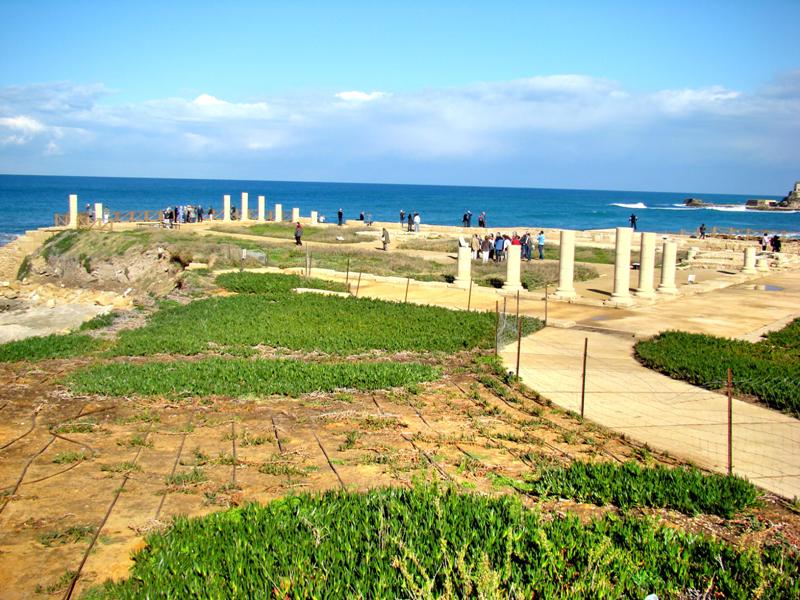
After the third missionary journey, Paul was taken by a military escort from Jerusalem to Caesarea (Acts 23:23ff.). He would be there at Caesarea as a prisoner for two years, although provisions were made for his friends to attend to his needs (Acts 24:23). It is believed that Paul would have been confined in the palace built by Herod the Great, the ruins of which can be seen in our photo.

Governor's Palace at Caesarea. Photo by Leon Mauldin.


BAR informs us,

This ancient building, which we now call the Promontory Palace, was first excavated in 1976 by Ehud Netzer of the Institute of Archaeology of the Hebrew University of Jerusalem. Netzer returned to the site in 1990 and brought in a new American team led by Kathryn Gleason and Barbara Burrell under the auspices of the University of Pennsylvania. Its members are mainly student volunteers, though in 1992 they were joined by a contingent of Israeli workers, most of them new immigrants from Russia (May/June 1993).

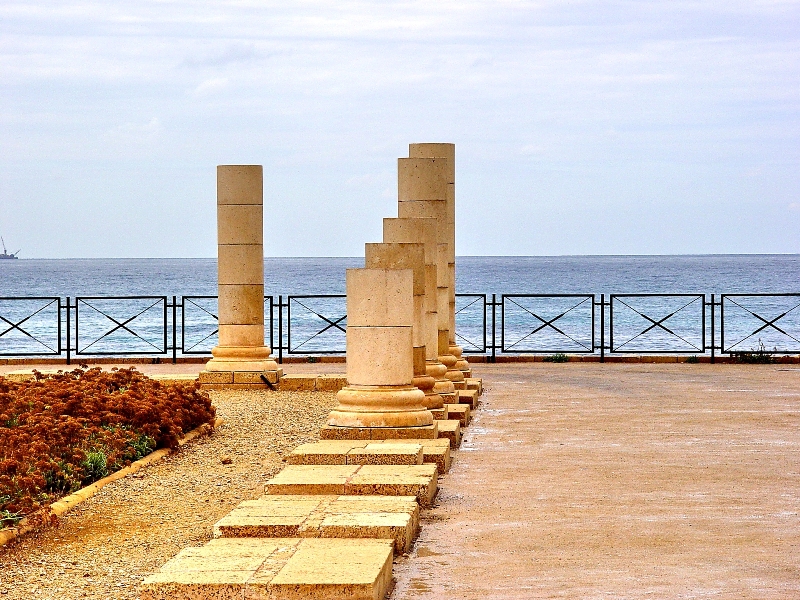
Our previous post featured photos of the swimming pool and mosaics. Below is a more detailed shot of some of the columns.

Palace at Caesarea. Photo by Leon Mauldin.

Paul would have the occasion here to preach before Felix (Acts 24) and his successor Festus (Acts 25) as well as Herod Agrippa II (Acts 26). The audience hall in our photo is likely the site where Paul would have given his defense of the Gospel before these dignitaries.

Audience Hall at Palace at Caesarea. Likely site of Paul's preaching. Photo by Leon Mauldin.


It was here that Paul exercised his right as a Roman citizen–“I appeal to Caesar” (Acts 25:11). Festus responded, “To Caesar you have appealed; to Caesar you shall go” (v.12, ESV).

Click on images for higher resolution.


Herod’s Pool at Caesarea

March 30, 2011

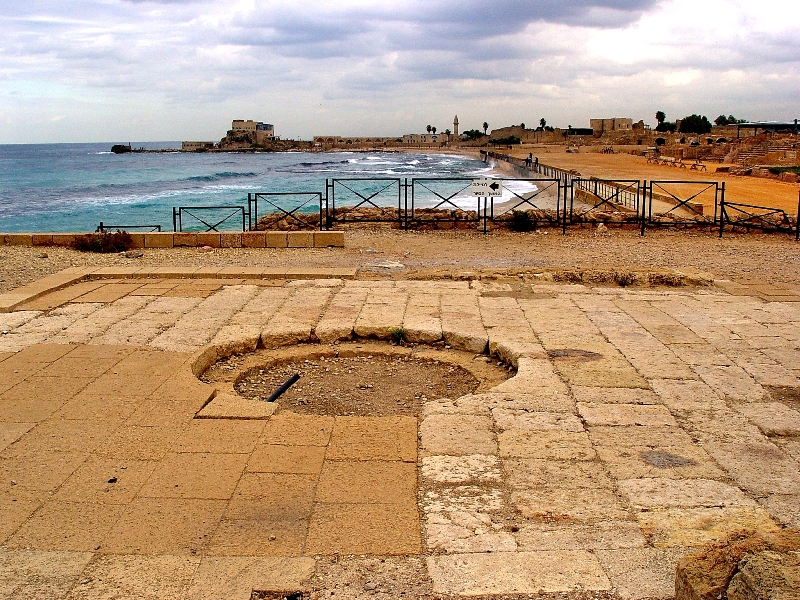
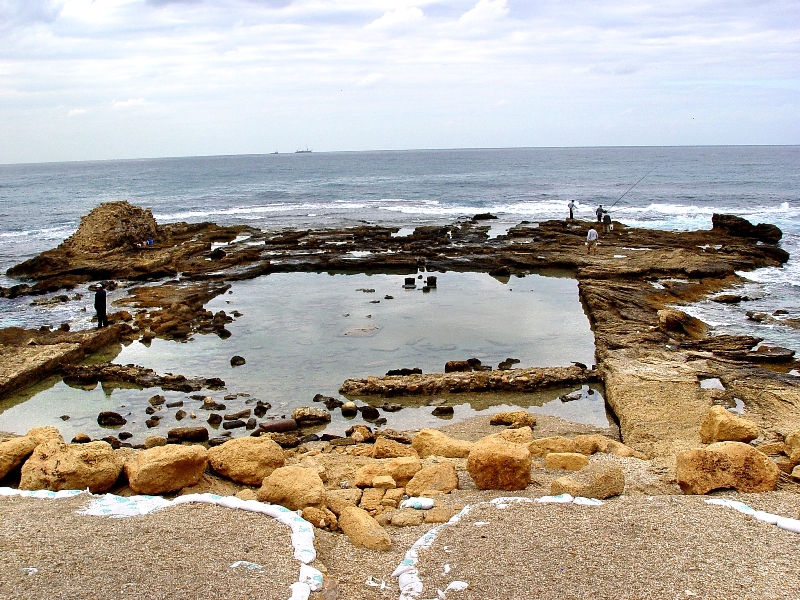
Herod the Great truly left his footprint all over the land of Israel. His palace at Caesarea has been excavated. On the south side of the palace was the swimming pool, as seen in our photo.

Herod's pool at Caesarea. Photo by Leon Mauldin.

BAR says the pool “. . .  was once the centerpiece of Herod’s palace, the nearly Olympic-sized swimming pool. The rectangular pool measures 115 feet long, 59 feet wide and at least 8 feet deep. Water channels leading into the pool from the shore have led excavators to surmise that the pool, though surrounded on three sides by the Mediterranean, had been filled by fresh water. If they are correct, the pool is further indication that Herod thrived on building in the face of natural obstacles” (BAR 19:03 May/June 1993).

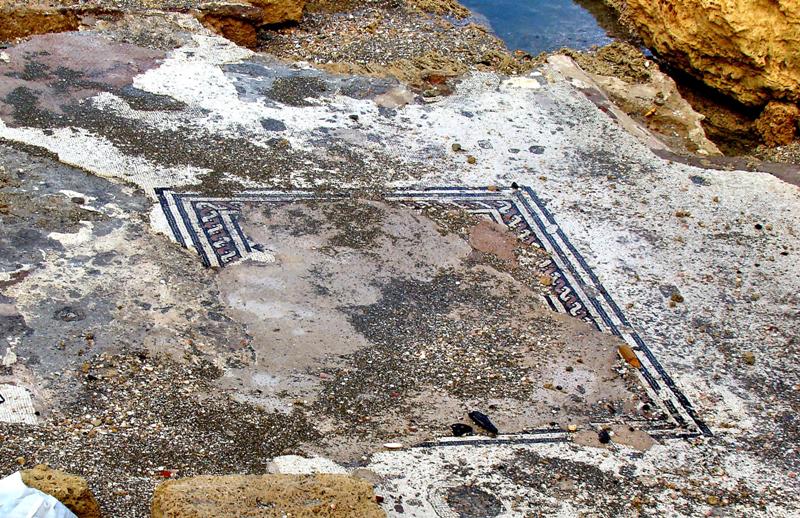
Earlier this month we were able to see some of the mosaics that adorned the pool.


Mosaics at Herod's Pool. Photo by Leon Mauldin.

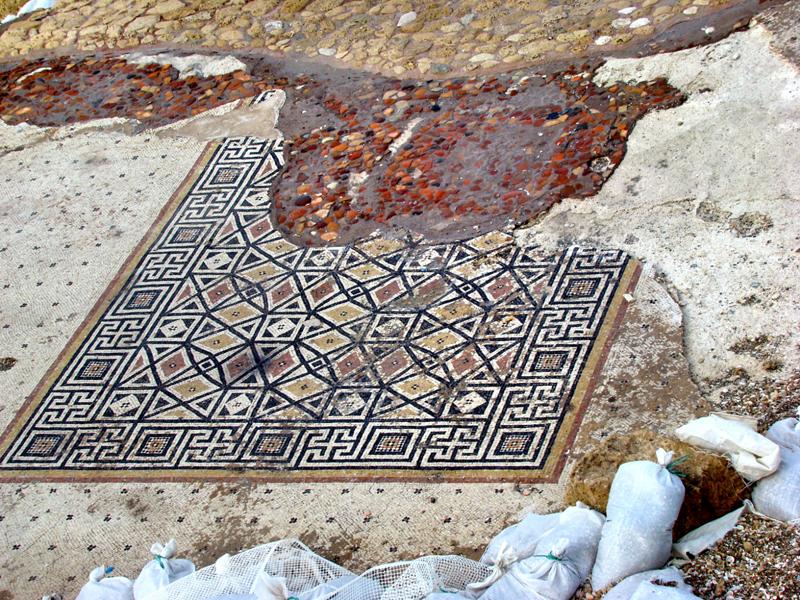
Until recently these mosaics were covered with tarp and gravel.

Mosaics at Herod's Pool. Photo by Leon Mauldin.


Away in a Manger

March 29, 2011

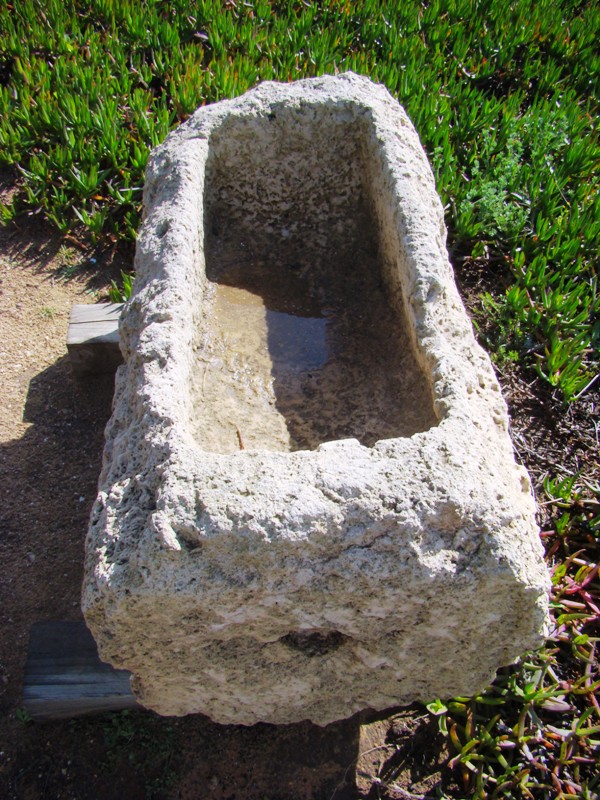
When you read of the baby Jesus wrapped in swaddling clothes and lying in a manger, what imagery comes to your mind? At different sites in Israel you can see still see mangers such as this one at Caesarea:

Manger at Caesarea. Photo by Leon Mauldin.


It is staggering to the imagination to think of the Creator who made the universe and all things in it, becoming flesh!  Eternal Deity became human! Born in Bethlehem to the virgin Mary, a feeding trough was His bassinet.

As Deity (only), the Eternal Word could not die. He had to become flesh in order to be a substitute offering for the sins of the world (John 1:29; Heb. 2:10-18).

It’s also interesting to consider who first heard the news that Jesus was born. It wasn’t Caesar Augustus, the ruler of the Roman world. Nor was it the High Priest, or the Sanhedrin. It wasn’t someone rich or famous. The first to hear were shepherds, unnamed shepherds, just common people (Luke 2:8-20). Aren’t you glad that God cares about common people?

It is impossible that we should praise Him too much for His love and provisions. The plan of the Father for Jesus to come into our world for His redemptive work is referred to by such terms as “eternal counsel and foreknowledge,” and “before the foundation of the world” (Acts 2:23; 1 Pet. 1:20; Eph. 3:11).

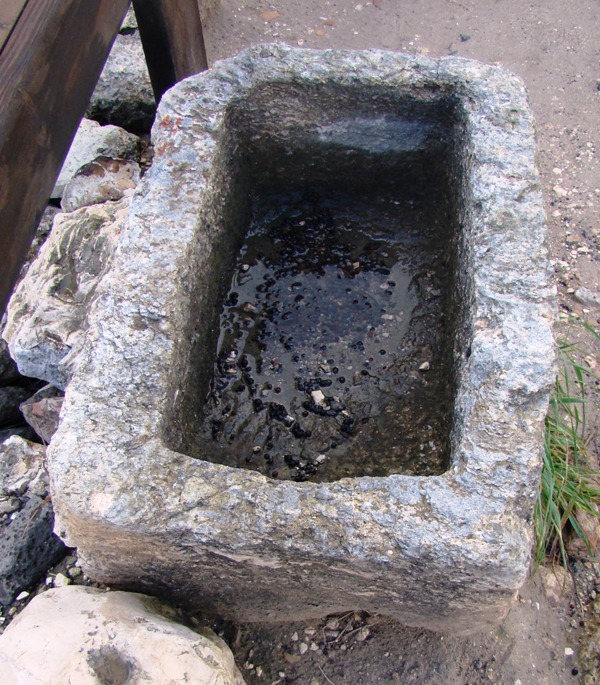
Here is a manger we photographed at Megiddo. Hopefully today’s photos will help you to visualize the kind of setting the shepherds saw on that night they would never forget. This photo was taken the same day as the photo above (Caesarea Maritima). You can tell it had been raining earlier.

Manger at Megiddo. Photo by Leon Mauldin.

On a personal note, we have a new grand-baby born Sun. PM, a boy, making a total of 6 grandchildren for my wife and me. We are thankful to God for His many blessings.


The Pilate Inscription at Caesarea

March 21, 2011

We arrived safely home Saturday from our Israel tour. It was a great trip and a wonderful opportunity for all of our group to learn more about the geographical setting of the events of Scripture. I agree with James Houston’s observation in his entry, “The Geographical Setting of the Bible”:

The geography of the Bible is relevant to biblical study because the acts of God with men are dealt with in a particular geographical setting and a specific historical context. (The Expositor’s Bible Commentary, Volume 1:, p. 83).

We plan to continue to post some photos from this trip. Today’s photo is that of the “Pilate Inscription,” discovered at Caesarea in 1961.

Pilate Inscription at Caesarea. Photo by Leon Mauldin.

One of the most sensational discoveries at Caesarea was this inscribed stone mentioning Pontius Pilate. Found in a step of the theater, it was originally part of a nearby temple honoring the emperor Tiberius. The stone was moved to the theater to repair a step after the temple fell into disuse. The Latin reads: “Pontius Pilate, the Prefect of Judea, has dedicated to the people of Caesarea a temple in honor of Tiberius” (BAR 08:03 May/June 1982).

John 18 records Pilate’s questioning of Jesus at his “trial:”

33 So Pilate entered his headquarters again and called Jesus and said to him, “Are you the King of the Jews?” 34 Jesus answered, “Do you say this of your own accord, or did others say it to you about me?” 35 Pilate answered, “Am I a Jew? Your own nation and the chief priests have delivered you over to me. What have you done?” 36 Jesus answered, “My kingdom is not of this world. If my kingdom were of this world, my servants would have been fighting, that I might not be delivered over to the Jews. But my kingdom is not from the world.” 37 Then Pilate said to him, “So you are a king?” Jesus answered, “You say that I am a king. For this purpose I was born and for this purpose I have come into the world- to bear witness to the truth. Everyone who is of the truth listens to my voice.” 38 Pilate said to him, “What is truth?” After he had said this, he went back outside to the Jews and told them, “I find no guilt in him.

Pilate really did not want to crucify Jesus. His purpose in scourging Jesus was to satisfy the Jewish leaders and thereby avoid putting Jesus to death (John 19:1-6), but he underestimated their determination. John 19 continues,

7 The Jews answered him, “We have a law, and according to that law he ought to die because he has made himself the Son of God.” 8 When Pilate heard this statement, he was even more afraid. 9 He entered his headquarters again and said to Jesus, “Where are you from?” But Jesus gave him no answer. 10 So Pilate said to him, “You will not speak to me? Do you not know that I have authority to release you and authority to crucify you?” 11 Jesus answered him, “You would have no authority over me at all unless it had been given you from above. Therefore he who delivered me over to you has the greater sin.”

The display in Caesarea is a replica. The original is in the Israel Museum. Click on image for higher resolution.


From Dan to Beersheba

March 17, 2011

Tonight as I write this we are in Beersheba, so we have traveled the biblical “from Dan to Beersheba” that is referenced so many times in Scripture (1 Sam. 3:20, etc.), having been to Dan earlier last week.

Last evening we spent the night at the Dead Sea at En Boqeq, but the internet was down when I was attempting to use it. Yesterday AM before leaving Jerusalem we visited the Wailing Wall. This wall was not part of the temple itself, but was the retaining wall for the temple and the structures on the temple mount.

Wailing Wall in Jerusalem. Photo by Leon Mauldin.

Jerusalem is defined by three valleys: the Kidron, Tyropean and Hinnom. In the above photo we are standing in the Tyropean Valley.

The first several courses of larger stones starting from bottom are Herodian. Jews come here to mourn the destruction of the temple, among other reasons.

Just south of the wailing wall, excavations have reached down to first century street level. There you can see the stones that have been uncovered that were part of the temple buildings, hurled down into the valley during the AD 70 destruction. This photo shows the fulfillment of Jesus’ promise that not 0ne stone would be left upon another, that would not be cast down (Matt. 24:2). He said that this would occur during that generation (v.34).

Temple Stones from AD 70 Destruction. Photo by Leon Mauldin.

After leaving Jerusalem, we went to see Anathoth. This was the site of the city which was home to Jeremiah.
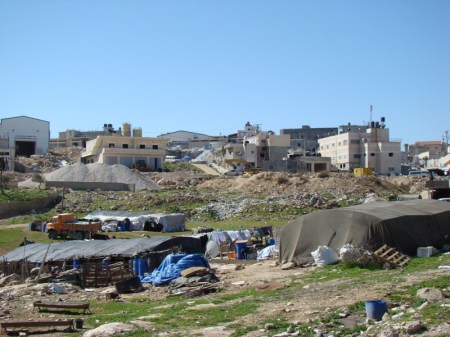
Anathoth, home of prophet Jeremiah. Photo by Leon Mauldin.

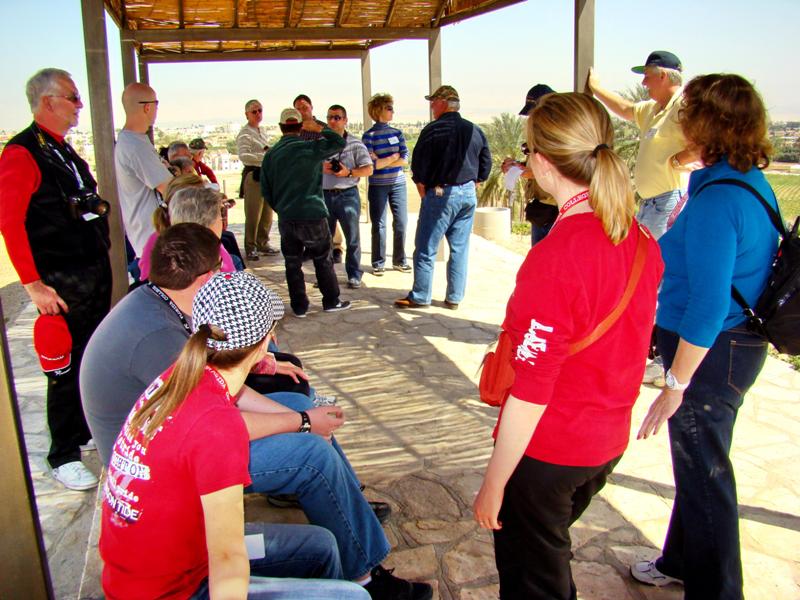
We also went to Old Testament Jericho. While there I took a group photo.
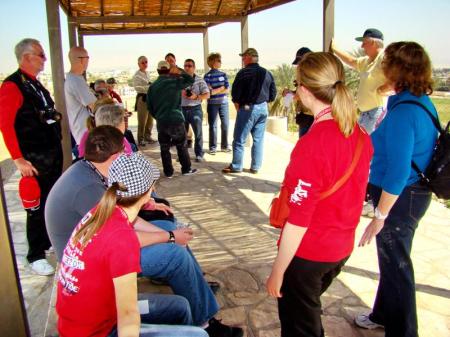
Group Photo at OT Jericho. Photo by Leon Mauldin.

We’ve learned a lot on this journey. We are truly blessed.

This morning upon leaving En Boqeq we went to Masada.
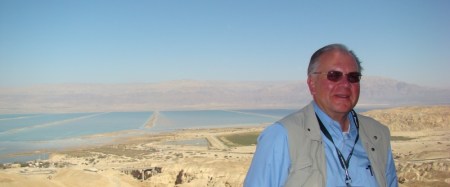
Leon Mauldin at Zoar.

En route to Masada we stopped at Zoar for the view. The brook drains down to the Dead Sea. It is not clear if there is any connection between  this location and the Zoar mentioned in Gen. 19:22ff., in connection with the narrative of lot and the destruction of Sodom and its surrounding cities. The mountains just south of this area are called the Mountains of Sodom.

Masada was a Herodian fortress. It was here that the Zealots fled after the Roman destruction of Jerusalem in AD 70. The Romans laid siege to Masada, and in AD 73 broke through the wall. They found the Jews inside chose death by their own hands rather than be captured by the Romans.

Tomorrow is a full schedule of sites from Tel Sheva (Beersheba) working our way up to Joppa, and from then to TLV for our departing flight home, the Lord willing.  Thanks again for following our travels, and for the many kind notes & prayers.

Click on photos for higher resolution.

Gordon’s Calvary

March 15, 2011

Today was a walking tour of Jerusalem, and beginning at Herod’s Gate included the sites of the Old City such as the Via Dolorosa, the Cardo, as well as the Temple Model, and finally Calvary.

Dr. W. Harold Mare discussed the merits of Calvary as the actual location of Jesus’ crucifixion in Bible and Spade:

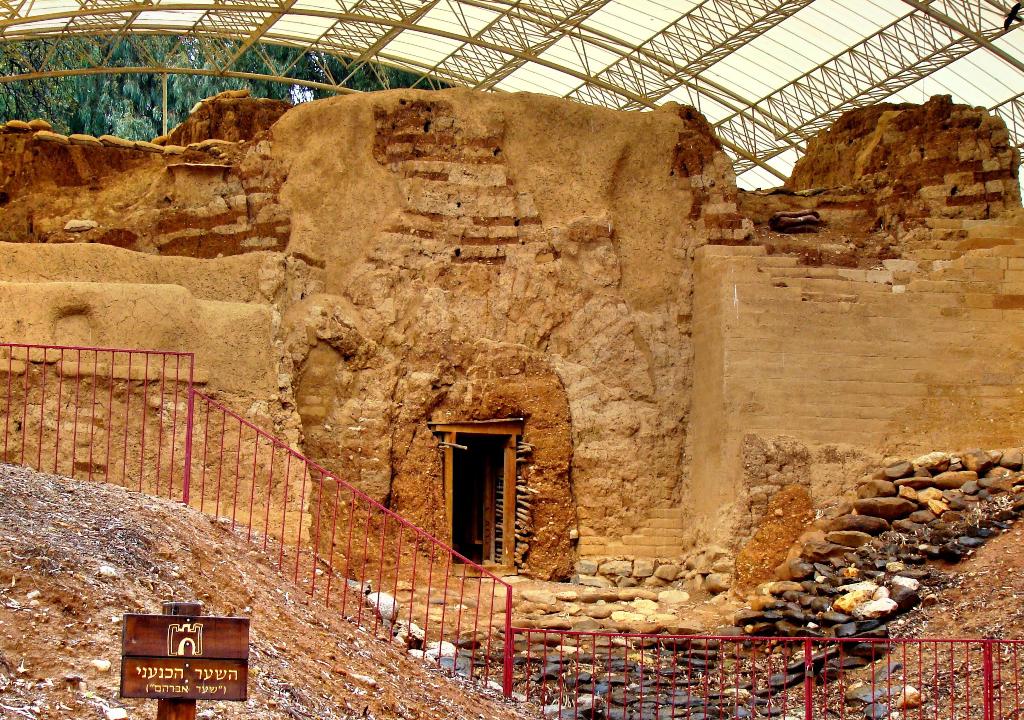
Gordon’s Calvary and the Garden Tomb are located a short distance north of the present Damascus Gate, just east of Nablus Road. In 1885 General Charles Gordon, following the proposal made by Otto Thenius of Dresden in 1842, argued that a rocky hill there, 250 yards northeast of the Damascus Gate, was Calvary. The identification was based on several arguments: It was presumed to be a Jewish place of stoning, it lay outside the city wall, and what looked like the face of a skull could be seen in the rocky hillside.
As to location, Gordon’s Calvary fits the biblical requirements of being outside the gate. Although the side of the hill looks like the face of a skull, this may be due to man-made cuttings in the hill. The biblical reference to Calvary as the place of a skull (Matthew 24:33, etc.), may mean that it was shaped like a skull, or simply that skulls of crucified criminals could be found there.

Gordon’s Calvary. Photo by Leon Mauldin.

The nearby rock-hewn Garden Tomb, though aesthetically satisfying, is not of the first century A.D. It contains a Byzantine (fourth to sixth centuries A.D.) trough-type burial place, and two Byzantine crosses were found painted on one wall (Vol.3, no. 2).

Garden Tomb at Calvary. Photo by Leon Mauldin.


Mare went on to say, “The Church of the Holy Sepulcher, besides being outside the walls of Jerusalem in Jesus’ time, has other supportive evidence” (ibid). We will plan to write more re: this on a future post.

I do like the truth engraved on the door of the garden tomb:

Thanks again for following our travels. Tomorrow we are to leave Jerusalem and visit sites southward to the Dead Sea.

Click on images for higher resolution.