Lachish

November 30, 2010

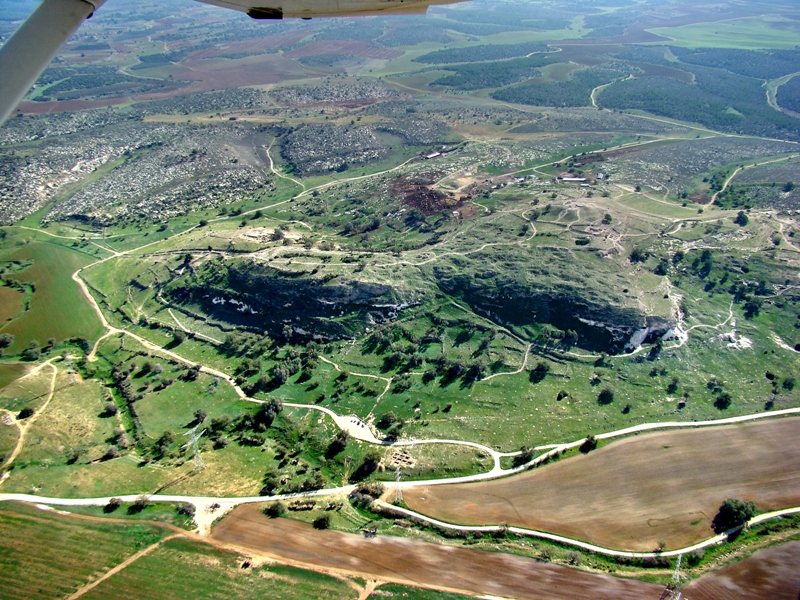
The city of Lachish (Tell ed-Duweir in Arabic) was located about 30 miles southwest of Jerusalem, nestled in the foothills, the Shephelah, of Judah.  The site covers about 18 acres. It was previously a principle Canaanite city and then after the conquest under Joshua, it was one of the most important Israelite cities.

Our photo gives an aerial view of biblical Lachish.
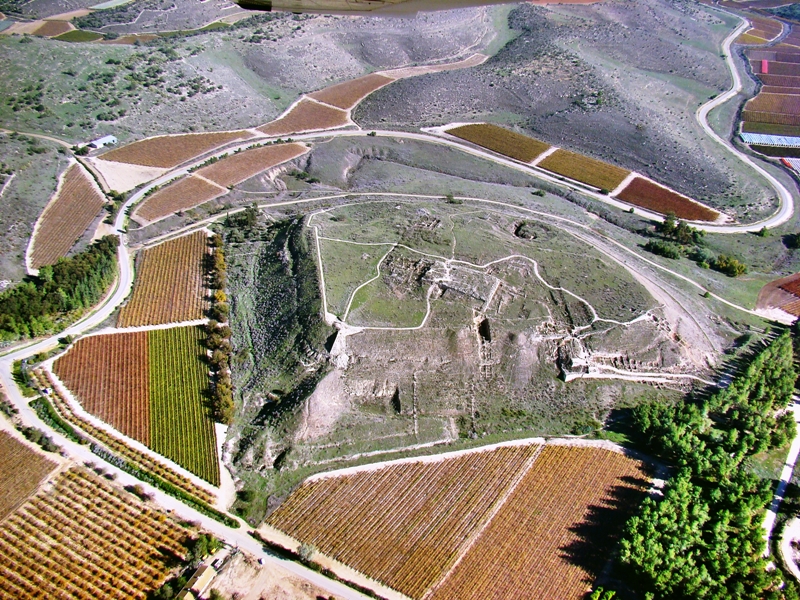
Aerial of Lachish, one of Judah's most important cities. Photo ©Leon Mauldin.

On the far right the siege mound built by the Assyrians under Sennacherib in 701 B.C. can still be seen. You can also see the ancient wall of the city and the gate complex.

Passages:

1. Rehoboam, Solomon’s son, rebuilt Lachish as a city for defense, a fortified city (2 Chron. 11:5-11).

2. Later, King Amaziah of Judah, following his apostasy from God (he began worshiping the gods of Edom), was killed while hiding in Lachish (2 Kgs. 14:19; 2 Chron. 25:27).

3. Sennacherib, king of Assyria, captured Lachish (2 Kgs.18:13-17; 2 Chron. 32:9).  He considered its capture to be of such significance that he depicted it in elaborate relief on the wall of his palace at Nineveh, as illustrated in our photo here below.  Note the Assyrian archers; others are scaling the wall by means of a ladder.
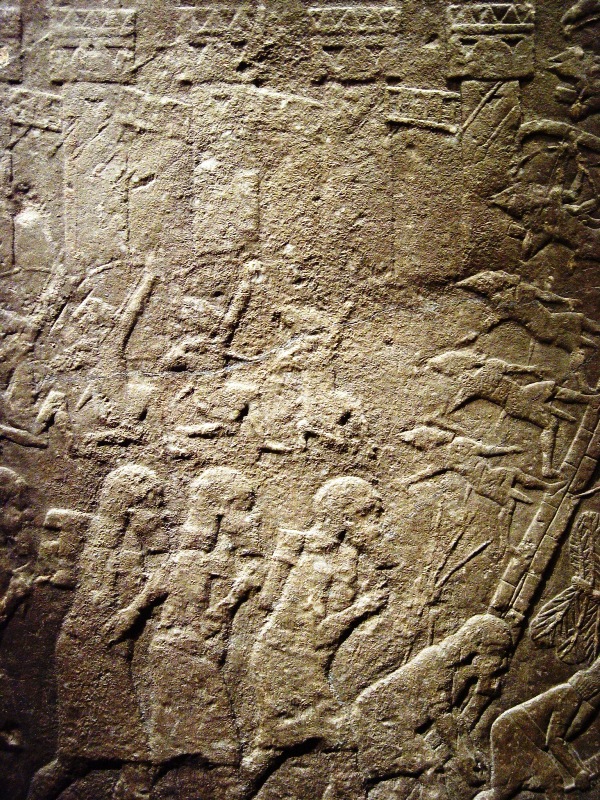
Lachish Relief. Metro Museum NY. Photo ©Leon Mauldin.

Additionally, Lachish is known for the “Lachish Letters,” twenty-one pottery sherds on which were written letters in clear Hebrew information regarding the attack on Lachish and Jerusalem by Babylon in 586 B.C. One of those letters says that the signal fires from Azekah could no longer be seen. Just prior to that, Jeremiah had observed that only Lachish and Azekah were left as fortified cities in Judah (Jer. 34:7).

Click on images for higher resolution.


Jacob & Family at Shechem

November 26, 2010

After Jacob and his family had a happy meeting/reunion with his brother Esau,  Jacob journeyed to Succoth and built a house there (Gen. 33:17).  The time is not specified, but it must have been some years.  Then Jacob made his way to Shechem (v.18).

Shechem was the very location where Abram was when God promised him the land of Canaan (Gen. 12:6,7). It would turn out that Shechem was the site for many significant biblical events.

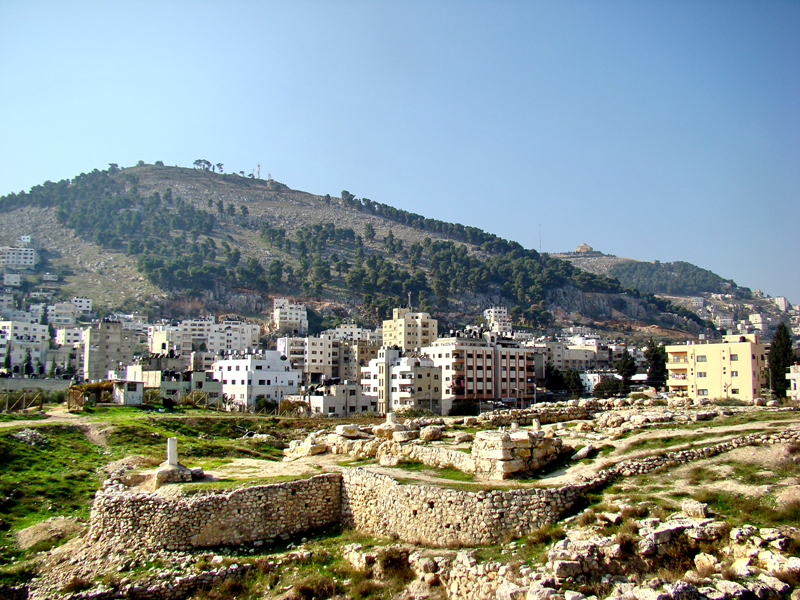
Shechem was the site for many impt biblical events. Photo ©Leon Mauldin.

Our photo shows the city of Shechem in the foreground.  In the distance you can see Mt. Gerizim, the mountain referenced by the woman of Samaria as she conversed with Jesus in John 4 (v.20).

Jacob bought a parcel of land at Shechem (Gen. 33:19); it was here to his sorrow that his daughter Dinah was violated (Gen. 34:2). Later when the family was residing to the south in Hebron, the sons of Jacob tended sheep at Shechem before moving their flocks on to Dothan where they sold Joseph into slavery (Gen. 37:12-28).

One of the more fascinating events at Shechem was the confirmation of the covenant during the Conquest of Canaan. Shechem is situated between Mt. Ebal and Mt. Gerizim.  Prior to the Conquest, Moses instructed the nation of Israel that when they crossed over the Jordan, they were to journey to this location.  Six tribes were to stand on Mt. Gerizim (for blessing), and the other six on Mt. Ebal (for cursing).  All of the words of the law, the blessings and the curses, were to be read.  All the people were to answer, “Amen.”  Immediately, after the conquest of Jericho and Ai (Josh.6-8), Joshua led the people north to these two mountains, where they obeyed God’s instructions (Deut. 27; Josh 8:30-35).  Think of it! At the very spot where childless Abram stood when God made the land promise, now were 701,730 men of war, plus women and children, there to stake their claim on the land!

Shechem would also be the gathering point for all of Israel for Joshua’s farewell address.  It was here that he challenged the people to fear the LORD and serve Him in sincerity and in truth, and to put away all the idols and false gods that were among them.  His own choice has been an encouragement to many down through the years: “but as for me and my house, we will serve the LORD” (Josh. 24:14,15). Their covenant with God was then renewed there at Shechem (Josh. 24:25). Later in that same chapter, notation is made that Joseph was buried in Shechem (Josh. 24:32).

Click image for higher resolution.


Jacob’s Sons

November 22, 2010

Some of our recent posts have dealt with Jacob’s twenty years stay in Haran, during which time eleven of his twelve sons were born.  Benjamin, the twelfth son, was born after their return to Canaan.

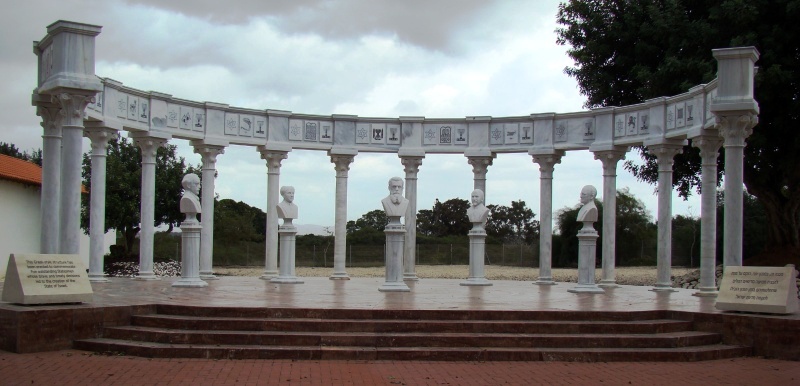
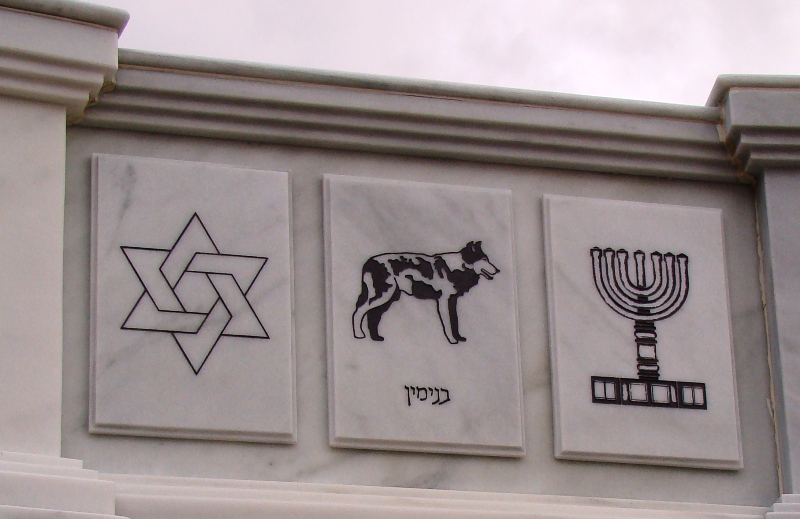
At the museum at Caesarea Maritima there is an open air display which honors “the five outstanding Statesmen whose brave and timely decisions led to the creation of the state of Israel.” These are Hertzl, Balfour, Truman, Weizmann, and Ben-Gurion. The exhibit also commemorates the twelve sons of Israel, displayed at the top of the semi-circular structure.


Commemoration of Statesmen at Caesarea Maritima. Photo ©Leon Mauldin.

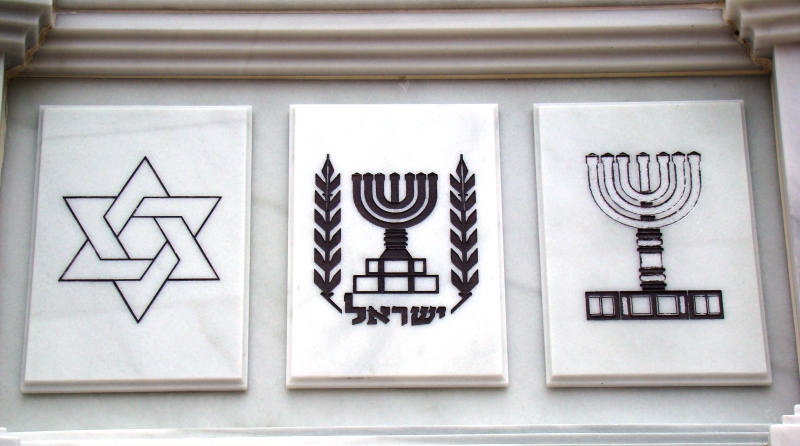
After Jacob and his family left Laban at Mizpah, he made his way to Gilead.  It was there that the Messenger of the Lord told him, “Your name shall no longer be called Jacob, but Israel; for you have struggled with God and with men and have prevailed” (Gen. 32:28).  In our photo below, the plaque designating Israel is shown.


Israel. Photo ©Leon Mauldin.


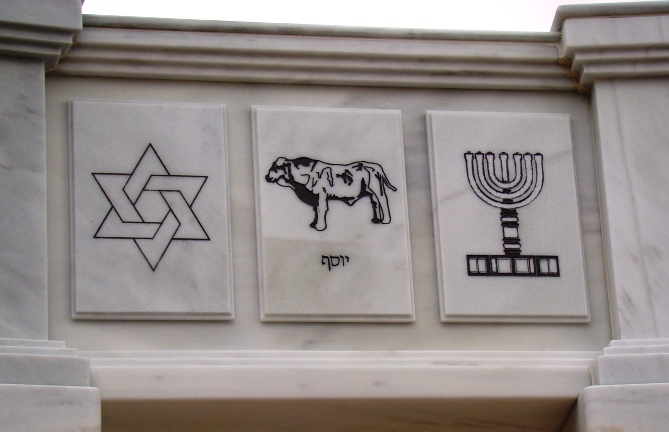
Though Jacob had four wives, it was Rachel whom he had chosen, the one with whom he was truly in love. Rachel had two sons. Joseph was born in Haran.


Joseph, Rachel's son born in Haran. Photo ©Leon Mauldin.


Benjamin was born “when there was but a little distance to go to Ephrath” (Gen. 35:16).  Rachel died while giving birth to him. Benjamin’s plaque is featured below.


Benjamin. Rachel died while giving birth to him. Photo ©Leon Mauldin.

From the twelve sons of Jacob the twelve tribes of Israel would develop. As the biblical narrative unfolds, Jacob will adopt the two sons of Joseph, Ephraim and Manasseh, and Levi will become the priestly tribe.


From Gilead to Shechem

November 15, 2010

After Jacob lived in Haran for a total of twenty years (see our previous couple of posts) he made his way back to Canaan.  Besides the fact that he was ready to leave Haran for personal reasons (Gen. 31:1-2), the Lord instructed him, “Return to the land of your fathers and to your kindred, and I will be with you” (Gen. 31:3). He left, along with his wives (four!) and eleven sons (plus Dinah), picking the opportune time when Laban was gone shearing his sheep (Gen. 31:19).

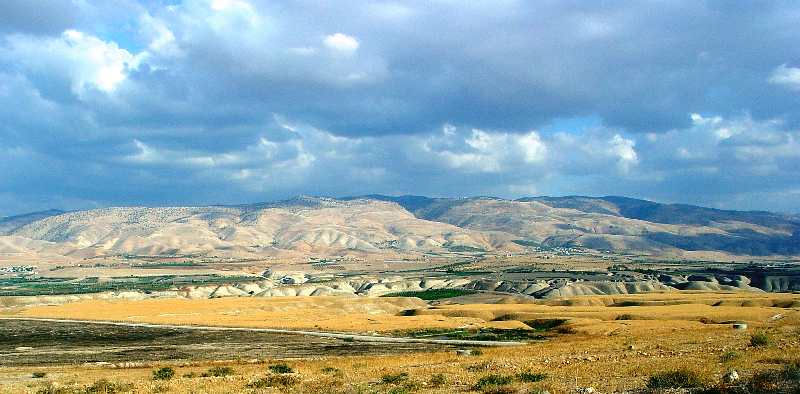
It was on the third day that his father-in-law Laban learned of these events. It took seven days’ travel to overtake Jacob. The text says, “and he overtook him in the mountains of Gilead” (Gen. 31:23). Our photo below shows a view of some of the mountains of Gilead, as viewed from the west side of the Jordan.


Mountains of Gilead. Photo ©Leon Mauldin.


After he and Laban came to an understanding, Laban returned home to Haran and Jacob continued his journey to Canaan. After what turned out to be a cordial meeting with his formerly estranged brother Esau, Jacob lived a while in Succoth, then made his way to Shechem.

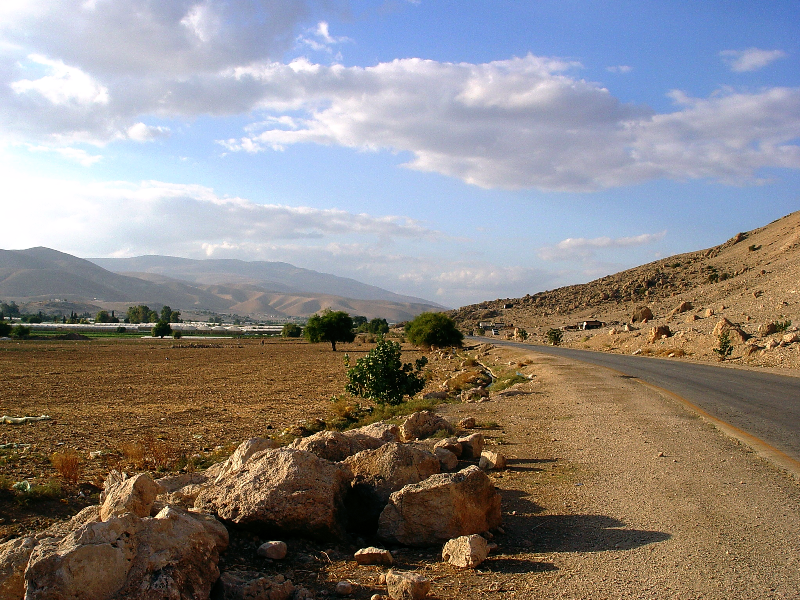
Our photo below shows the pass that leads from the area of Succoth (which would be to our backs) toward Shechem.  This is the route Jacob and his family and servants would have taken to Shechem.  On the right of the photo you can see the modern road which follows this ancient pass.


Pass to Shechem. Jacob would have taken this route. Photo ©Leon Mauldin.

Click on images for larger view.


Jacob Watered the Flock of Laban

November 8, 2010

Jacob left Canaan to go to Haran of Padan Aram, fleeing from the wrath of his brother Esau who had determined to kill him.  Beyond that urgency however, was the fact that Isaac and Rebekah did not want Jacob to marry a Canaanite woman, as Esau had done (Gen. 27:46; 28:1-2).  Those women “were a grief of mind to Isaac and Rebekah” (Gen. 26:35).

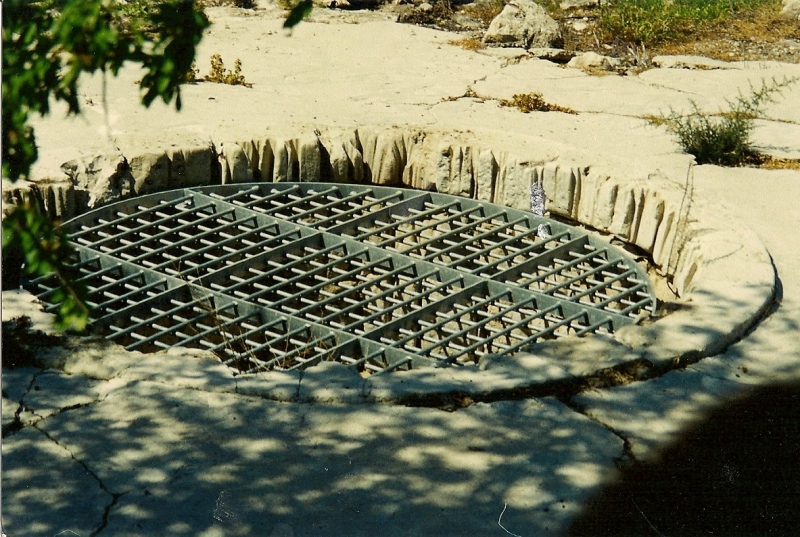
When Jacob arrived in the vicinity of Haran, he “saw a well in the field; and behold, there were three flocks of sheep lying by it; for out of that well they watered the flocks. A large stone was on the well’s mouth” (Gen. 29:2). Jacob found out from the men who were there that he was at the right place. They knew Abraham’s family.  They knew Laban, who was Rebekah’s brother.  At the very time they were speaking, Rachel, Laban’s daughter, arrived with their sheep.

Jacob removed the stone that covered the well and watered the flocks of Laban.  Our photo helps us to visualize that scene.


Ancient Well. Photo ©Leon Mauldin.


You can see the grooves worn into the stone by ropes hauling up the water. This well is in Israel, but we use it here to illustrate the Genesis text with the setting in Mesopotamia.

Click on image for larger view.


The Tabernacle

November 4, 2010

I am enjoying currently taking part in the lectures for Athens Bible School in Athens, AL. My assignment is “Shadows From An Ancient Priesthood”, showing how in many ways the OT priests foreshadow NT priests, i.e., Christians.  As Peter said, “you also, as living stones, are being built up a spiritual house, a holy priesthood, to offer up spiritual sacrifices acceptable to God through Jesus Christ” (1 Pet. 2:5).

This study reminded me of a tabernacle model situated south of Jericho in 2005.


Tabernacle Model in Wilderness S. of Jericho. Photo ©Leon Mauldin.


In the photo you can see the courtyard, altar for burnt offerings, the laver in which the priests would wash, and the tabernacle itself.

Behind the veil was the ark of the covenant.  Only the High Priest could enter here, and only on the annual day of atonement.


Ark of Covenant in Most Holy Place. Model. Photo ©Leon Mauldin.


Exodus 25:20 states: “And the cherubim shall stretch out their wings above, covering the mercy seat with their wings, and they shall face one another; the faces of the cherubim shall be toward the mercy seat.

I hope you find these photos useful in your own teaching. Click on image for larger view.


Gath of the Philistines

October 26, 2010

There were five Philistine cities; these are listed as Ashdod, Gaza, Ashkelon, Gath, and Ekron (1 Sam. 6:17). Today’s post features an aerial shot of the Philistine city of Gath.


Aerial of Gath of the Philistines. Photo ©Leon Mauldin.


There are numerous biblical references to Gath. Goliath the giant, the Philistine champion, was from Gath (1 Sam. 17:4).  David fled from King Saul, seeking asylum from Achish, king of Gath (1 Sam. 21: 10), but when he saw he was is danger there too, pretended to be insane.  However, David was later successful in finding refuge at Gath (1 Sam. 27:1ff), though subsequently the Philistines gave him his own city of Ziklag.

When Saul and his son Jonathan (David’s best friend) died at Mt. Gilboa, David wrote a song that included the words, “Tell it not in Gath, Proclaim it not in the streets of Ashkelon — Lest the daughters of the Philistines rejoice, Lest the daughters of the uncircumcised triumph” (2 Sam. 1:20).

“Later David defeated the Philistines and subdued them. He took Gath and its surrounding towns away from the Philistines” (1 Chron. 18:1, NET).

Also, bear in mind that when you see the word Gittite that reference is made to a resident of Gath.  One of David’s most loyal followers was Ittai the Gittite.  When David was forced to flee Jerusalem during his son Absalom’s rebellion, he told Ittai that he was not expected to accompany David. “But Ittai replied to the king, ‘as surely as the LORD lives, and as my lord the king lives, wherever my lord the king may be, whether it means life or death, there will your servant be'” (2 Sam. 15:21, NIV).

Remember to click on photo for higher resolution.

A couple of matters on a personal note:

I’m currently in a 4-day meeting in Lawrenceville, GA., presenting a series of lessons on “Becoming More Like Jesus.”  My friend Allen Shepherd is the local evangelist.  This is my second time to be with this congregation.  The meeting concludes tomorrow evening.

Also, my mother-in-law, Mrs. Ura May Creel, passed away this past Sat. after a long battle with Alzheimer’s.    My brother-in-law and I conducted the funeral service yesterday in Hanceville AL. Three of her grandsons led congregational singing.  I regarded her as a mother.   We sorrow, but not as those who have no hope (1 Thes. 4:13ff.).


Socoh, in the David & Goliath Narrative

October 21, 2010

Our recent posts have included aerial photos of Azekah and Khirbet-Qeiyaffa (Elah Fortress), both of which are in the Valley of Elah. (Some suggest that Khirbet-Qeiyaffa may turn out to be the biblical Ephes Dammim.)

Another site mentioned in the biblical record and featured in today’s post Socoh. 1 Sam. 17 includes this site as the geographical setting is provided for the battle between the Philistines and the Israelites, when David killed Goliath. The text reads:

Now the Philistines gathered their armies for battle; and they were gathered at Socoh which belongs to Judah, and they camped between Socoh and Azekah, in Ephes-dammim.  Saul and the men of Israel were gathered and camped in the valley of Elah, and drew up in battle array to encounter the Philistines.  The Philistines stood on the mountain on one side while Israel stood on the mountain on the other side, with the valley between them. (1 Sam. 17:1-3)

Our photo shows tel Socoh in center (look to the left and above the horizontal road that dissects the field in center).

Aerial of Socoh in Elah Valley. Scene of Philistine-Israel Battle of 1 Sam. 17. Photo ©Leon Mauldin.

If you note the tiny tree-line above tel Socoh, across the road, this is the brook from which David selected five smooth stones, one of which he used to slay Goliath.

In the distance (just right of wing brace at top) you can see tel Azekah. For 40 days this valley rang out with the threatening voice of loud-mouth Goliath, until the shepherd David rose to the challenge, prompted by this faith in the God of Israel.

Socoh (also spelled Sochoh and Soco) had earlier been assigned to the territory of Judah (Josh. 15:35). Later it was fortified by Solomons’ son King Rehoboam (2 Chron. 11:7).  Later still, in the days of King Kezekiah, Socoh was among the cities of the Shephelah listed in 2 Chron. 28:18 as raided and conquered by the Philistines.  Apparently Socho had been an administrative center during Hezekiah’s reign as indicated by the numerous stamped jar handles with the seal of Socoh.

Click on image for higher resolution.


Aphek/Antipatris

October 15, 2010

Aphek is mentioned in 1 Sam. 4:1 as the site of the Philistine camp as they prepared for battle against Israel.  This was in the last days of Eli’s tenure as High Priest and Judge of Israel.

Holman’s Bible Dictionary has this info on Aphek:

Place-name meaning “bed of brook or river” or “fortress.”  City whose king Joshua defeated (Josh. 12:18), where Philistine armies formed to face Israel in days of Samuel (1 Sam. 4:1) resulting in Philistine victory and capture of Israel’s ark of the covenant. Philistine armies including David and his men gathered in Aphek to fight Saul. The Philistine commanders forced Achish to send David back from battle (1 Sam. 29). Eventually the Philistines defeated Israel, bringing death to Saul and Jonathan. Aphek is located at modern Tell Ras elʹ Ain near the source of the Yarkon River in the Sharon plain northeast of Joppa. Egyptian execration texts from about 1900 B.C. apparently refer to Aphek.

Our photo below gives an aerial view of Aphek. Click on image for higher resolution.


Aerial of Aphek. This was NT Antipatris. Photo ©Leon Mauldin.


In the New Testament this location was known as Antipatris, and is mentioned in Acts 23.  When the Roman commander Claudius Lysias became aware of an assassination plot to kill the Apostle Paul in Jerusalem, he order a military escort of Paul to Caesarea.  This was for Paul’s own protection.  The commander was thorough: two centurions were commanded to prepare 200 soldiers, 200 spearmen, and 70 horsemen.  The Roman militia departed at 9:00 PM (Acts 23:23). On the way to Caesarea, the governor’s residence, they went through Antipatris: “Then the soldiers, as they were commanded, took Paul and brought him by night to Antipatris” (v.31). The next day the horsemen went on with Paul to his destination, whereas the soldiers returned to the barracks (v.32) at Jerusalem.

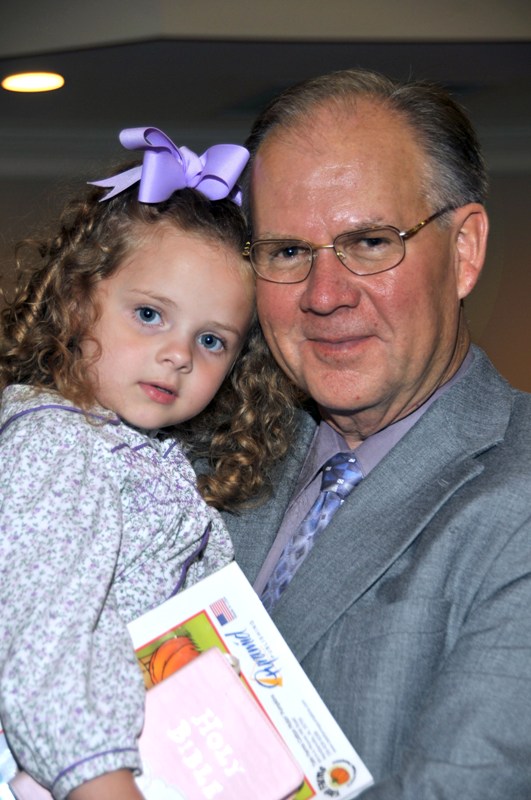
On another (personal) note, I mentioned in a previous post that we were currently conducting a meeting at Pine Lane, Birmingham, which concluded last night.  On Wed PM our granddaughter was with my wife and me. One of the members there took this photo:


Leon & Granddaughter.


Tel Azekah

October 12, 2010

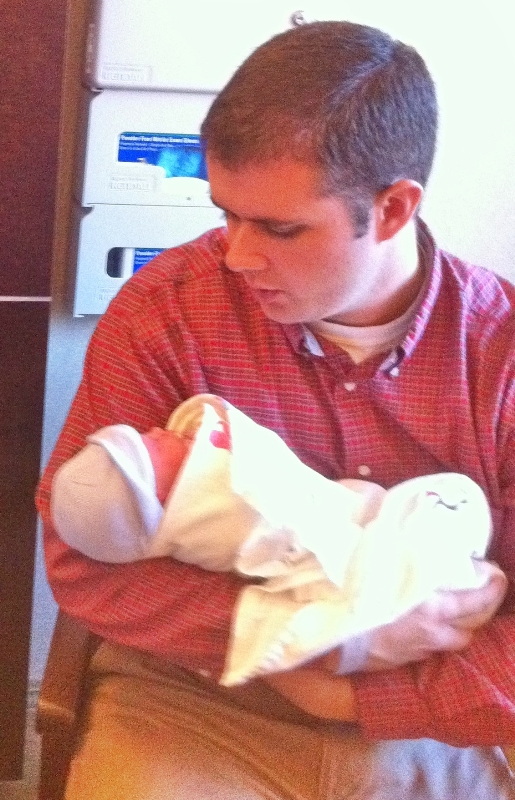
Well, a lot has happened since our last post of this past Friday!  Sunday morning, 10/10/2010, we were blessed with the birth of another grandchild. I just happen to have a photo:


Brand new granddaughter. My son Seth.


Then yesterday we began a 4-day meeting with the Pine Lane church of Christ, south Birmingham.  It is good to be with the church there again.  Terry Benton serves as evangelist.

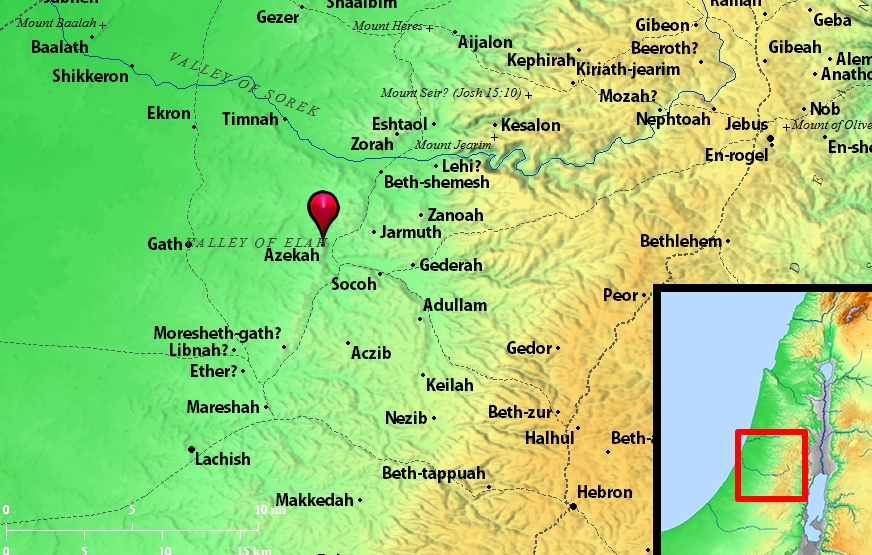
Our post today features an aerial photo of Azekah. First note the location of Azekah on the map below.


Azekah. Map by BibleAtlas.org


Azekah is mentioned in connection with the southern conquest of Canaan under Joshua:

And it happened, as they fled before Israel and were on the descent of Beth Horon, that the LORD cast down large hailstones from heaven on them as far as Azekah, and they died. There were more who died from the hailstones than the children of Israel killed with the sword. (Josh. 10:11).

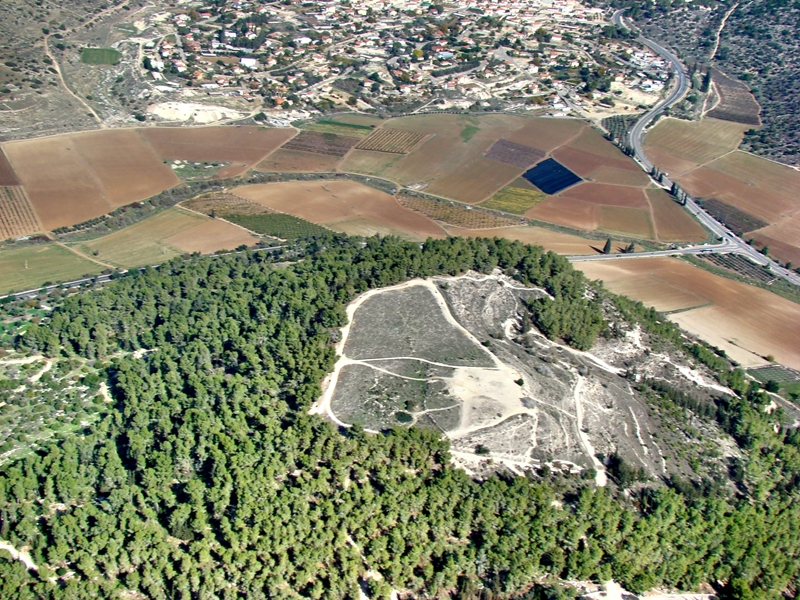
Our photo below shows Tel Azekah as it overlooks the Elah Valley.


Aerial of Tel Azekah. Photo ©Leon Mauldin.


Azekah is included in the geographical setting for the stand-off between the Philistines and the Israelite army under king Saul.

Now the Philistines gathered their armies together to battle, and were gathered together at Sochoh, which belongs to Judah; they encamped between Sochoh and Azekah, in Ephes Dammim. (1 Sam. 17:1).

It was on this occasion that David killed the giant from Gath, Goliath.

(Click on images for higher resolution).