The Pilate Inscription at Caesarea

March 21, 2011

We arrived safely home Saturday from our Israel tour. It was a great trip and a wonderful opportunity for all of our group to learn more about the geographical setting of the events of Scripture. I agree with James Houston’s observation in his entry, “The Geographical Setting of the Bible”:

The geography of the Bible is relevant to biblical study because the acts of God with men are dealt with in a particular geographical setting and a specific historical context. (The Expositor’s Bible Commentary, Volume 1:, p. 83).

We plan to continue to post some photos from this trip. Today’s photo is that of the “Pilate Inscription,” discovered at Caesarea in 1961.

Pilate Inscription at Caesarea. Photo by Leon Mauldin.

One of the most sensational discoveries at Caesarea was this inscribed stone mentioning Pontius Pilate. Found in a step of the theater, it was originally part of a nearby temple honoring the emperor Tiberius. The stone was moved to the theater to repair a step after the temple fell into disuse. The Latin reads: “Pontius Pilate, the Prefect of Judea, has dedicated to the people of Caesarea a temple in honor of Tiberius” (BAR 08:03 May/June 1982).

John 18 records Pilate’s questioning of Jesus at his “trial:”

33 So Pilate entered his headquarters again and called Jesus and said to him, “Are you the King of the Jews?” 34 Jesus answered, “Do you say this of your own accord, or did others say it to you about me?” 35 Pilate answered, “Am I a Jew? Your own nation and the chief priests have delivered you over to me. What have you done?” 36 Jesus answered, “My kingdom is not of this world. If my kingdom were of this world, my servants would have been fighting, that I might not be delivered over to the Jews. But my kingdom is not from the world.” 37 Then Pilate said to him, “So you are a king?” Jesus answered, “You say that I am a king. For this purpose I was born and for this purpose I have come into the world- to bear witness to the truth. Everyone who is of the truth listens to my voice.” 38 Pilate said to him, “What is truth?” After he had said this, he went back outside to the Jews and told them, “I find no guilt in him.

Pilate really did not want to crucify Jesus. His purpose in scourging Jesus was to satisfy the Jewish leaders and thereby avoid putting Jesus to death (John 19:1-6), but he underestimated their determination. John 19 continues,

7 The Jews answered him, “We have a law, and according to that law he ought to die because he has made himself the Son of God.” 8 When Pilate heard this statement, he was even more afraid. 9 He entered his headquarters again and said to Jesus, “Where are you from?” But Jesus gave him no answer. 10 So Pilate said to him, “You will not speak to me? Do you not know that I have authority to release you and authority to crucify you?” 11 Jesus answered him, “You would have no authority over me at all unless it had been given you from above. Therefore he who delivered me over to you has the greater sin.”

The display in Caesarea is a replica. The original is in the Israel Museum. Click on image for higher resolution.


From Dan to Beersheba

March 17, 2011

Tonight as I write this we are in Beersheba, so we have traveled the biblical “from Dan to Beersheba” that is referenced so many times in Scripture (1 Sam. 3:20, etc.), having been to Dan earlier last week.

Last evening we spent the night at the Dead Sea at En Boqeq, but the internet was down when I was attempting to use it. Yesterday AM before leaving Jerusalem we visited the Wailing Wall. This wall was not part of the temple itself, but was the retaining wall for the temple and the structures on the temple mount.

Wailing Wall in Jerusalem. Photo by Leon Mauldin.

Jerusalem is defined by three valleys: the Kidron, Tyropean and Hinnom. In the above photo we are standing in the Tyropean Valley.

The first several courses of larger stones starting from bottom are Herodian. Jews come here to mourn the destruction of the temple, among other reasons.

Just south of the wailing wall, excavations have reached down to first century street level. There you can see the stones that have been uncovered that were part of the temple buildings, hurled down into the valley during the AD 70 destruction. This photo shows the fulfillment of Jesus’ promise that not 0ne stone would be left upon another, that would not be cast down (Matt. 24:2). He said that this would occur during that generation (v.34).

Temple Stones from AD 70 Destruction. Photo by Leon Mauldin.

After leaving Jerusalem, we went to see Anathoth. This was the site of the city which was home to Jeremiah.

Anathoth, home of prophet Jeremiah. Photo by Leon Mauldin.

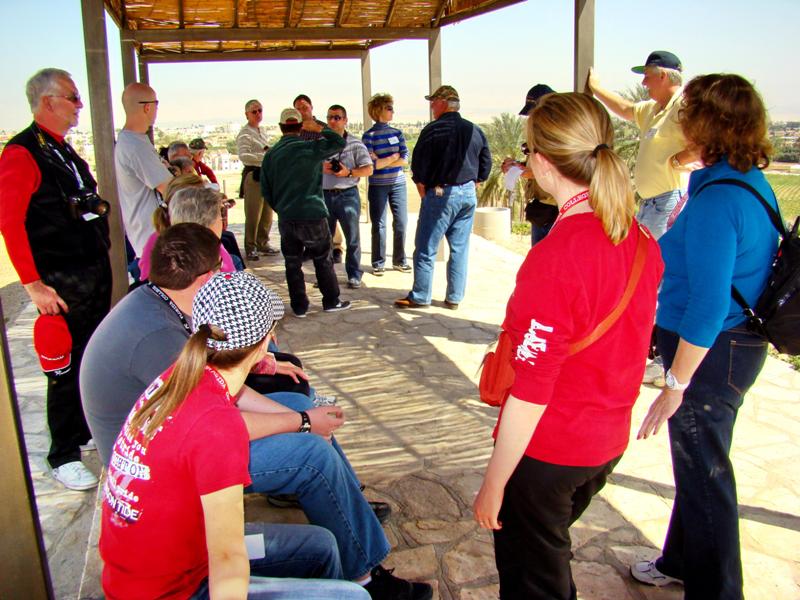
We also went to Old Testament Jericho. While there I took a group photo.

Group Photo at OT Jericho. Photo by Leon Mauldin.

We’ve learned a lot on this journey. We are truly blessed.

This morning upon leaving En Boqeq we went to Masada.

Leon Mauldin at Zoar.

En route to Masada we stopped at Zoar for the view. The brook drains down to the Dead Sea. It is not clear if there is any connection between  this location and the Zoar mentioned in Gen. 19:22ff., in connection with the narrative of lot and the destruction of Sodom and its surrounding cities. The mountains just south of this area are called the Mountains of Sodom.

Masada was a Herodian fortress. It was here that the Zealots fled after the Roman destruction of Jerusalem in AD 70. The Romans laid siege to Masada, and in AD 73 broke through the wall. They found the Jews inside chose death by their own hands rather than be captured by the Romans.

Tomorrow is a full schedule of sites from Tel Sheva (Beersheba) working our way up to Joppa, and from then to TLV for our departing flight home, the Lord willing.  Thanks again for following our travels, and for the many kind notes & prayers.

Click on photos for higher resolution.


Gordon’s Calvary

March 15, 2011

Today was a walking tour of Jerusalem, and beginning at Herod’s Gate included the sites of the Old City such as the Via Dolorosa, the Cardo, as well as the Temple Model, and finally Calvary.

Dr. W. Harold Mare discussed the merits of Calvary as the actual location of Jesus’ crucifixion in Bible and Spade:

Gordon’s Calvary and the Garden Tomb are located a short distance north of the present Damascus Gate, just east of Nablus Road. In 1885 General Charles Gordon, following the proposal made by Otto Thenius of Dresden in 1842, argued that a rocky hill there, 250 yards northeast of the Damascus Gate, was Calvary. The identification was based on several arguments: It was presumed to be a Jewish place of stoning, it lay outside the city wall, and what looked like the face of a skull could be seen in the rocky hillside.
As to location, Gordon’s Calvary fits the biblical requirements of being outside the gate. Although the side of the hill looks like the face of a skull, this may be due to man-made cuttings in the hill. The biblical reference to Calvary as the place of a skull (Matthew 24:33, etc.), may mean that it was shaped like a skull, or simply that skulls of crucified criminals could be found there.

Gordon’s Calvary. Photo by Leon Mauldin.

The nearby rock-hewn Garden Tomb, though aesthetically satisfying, is not of the first century A.D. It contains a Byzantine (fourth to sixth centuries A.D.) trough-type burial place, and two Byzantine crosses were found painted on one wall (Vol.3, no. 2).

Garden Tomb at Calvary. Photo by Leon Mauldin.


Mare went on to say, “The Church of the Holy Sepulcher, besides being outside the walls of Jerusalem in Jesus’ time, has other supportive evidence” (ibid). We will plan to write more re: this on a future post.

I do like the truth engraved on the door of the garden tomb:

Thanks again for following our travels. Tomorrow we are to leave Jerusalem and visit sites southward to the Dead Sea.

Click on images for higher resolution.


Safely at Natana, Israel

March 9, 2011

Our group arrived safely at Ben Gurion Airport this afternoon, just an hr. and a half or so past schedule. It was dark and raining by the time we got our luggage and boarded our bus. We had a good meal here at the Blue Ray Hotel at Natana. The wind is howling outside my window at present. Natana has been known as the number one city in Israel for artisan diamond cutting.

It’s always a good start when all the passengers are well and accounted for, and there is no delayed luggage, so we’re thankful for that.

We’re 7 hours ahead of Sweet Home Alabama time.  Everyone is tired, but the good meal tonight and hopefully a good night’s rest will recharge everyone’s batteries.

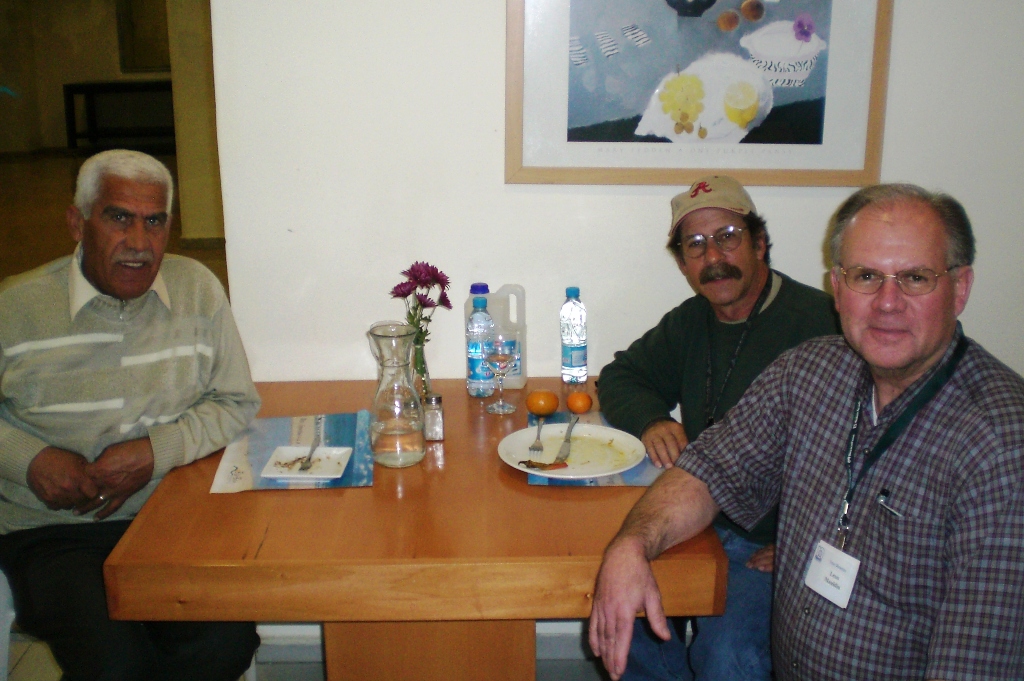
Fawzi, Elie and Leon at Natana. Dolye Stogdill, photo.

Some of you will recognize our guide and friend Elie, at right and behind me, and Fawzi, our driver. These men are professionals and a pleasure to work with.

Tomorrow we head up the coast and then across to Tiberius on the Sea of Galilee. Continue to check in and we’ll post as we can. Thanks to those of you who have written.


Bethany

February 23, 2011

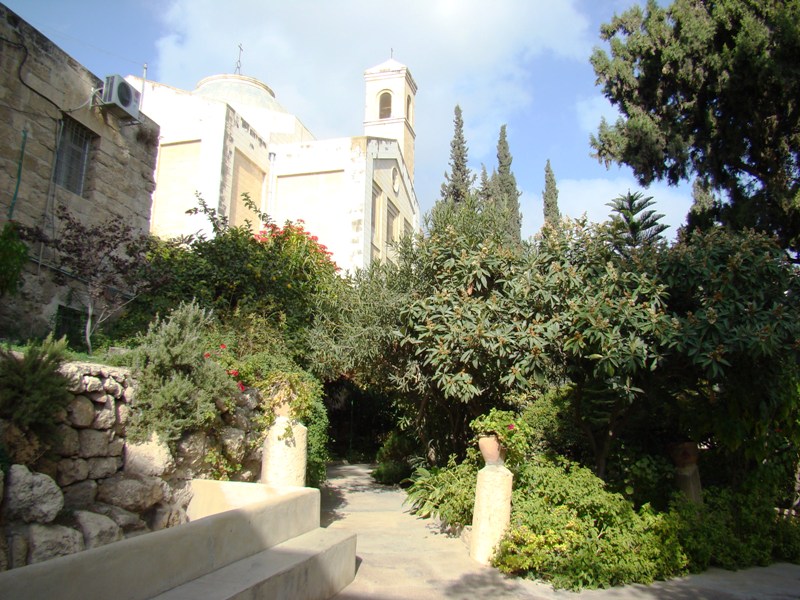
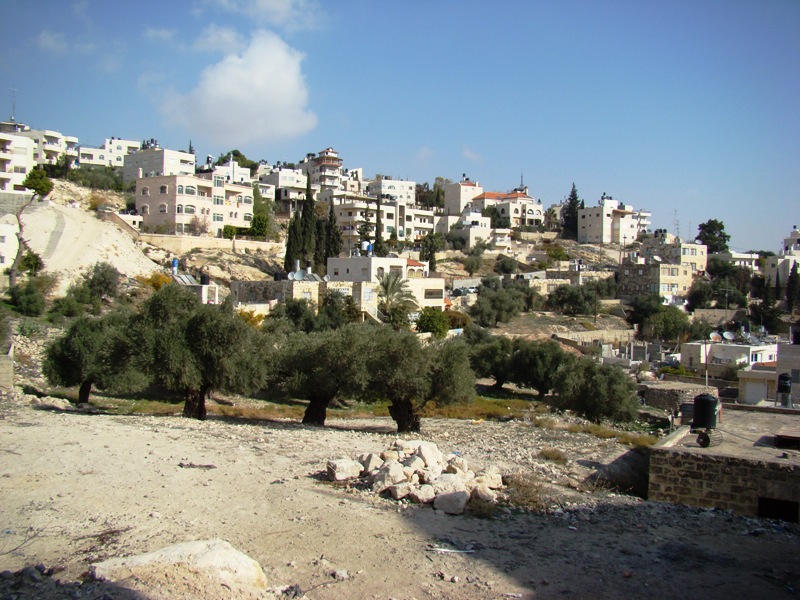
Bethany is designated as the home of Jesus’ good friends Mary, Martha and Lazarus (John 11:1). When Lazarus was sick Jesus deliberately waited until his death, that he might raise Lazarus from the dead, thus demonstrating that He is the “Resurrection and the Life” (John 11:25). Modern Bethany can be seen in our photo:

Bethany, home of Jesus' friends Mary, Martha and Lazarus. Photo by Leon Mauldin.

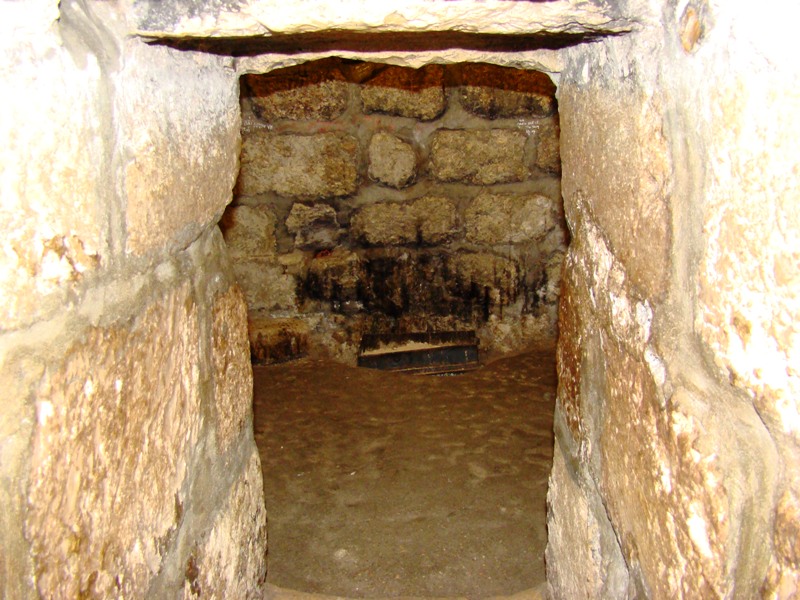
There is a tomb shown at Bethany which is said to be Lazarus’ tomb. To me the value of such is for illustration purposes, and not to identify this as the actual tomb of Lazarus.

"Lazarus' Tomb." Photo by Leon Mauldin.

It was from Bethany and nearby Bethphage that Jesus entered Jerusalem, riding on a donkey in what is knows at the Triumphal Entry, fulfilling the prophecy of Zechariah 9:9.

Bethany was the scene of Jesus’ being anointed with the precious ointment in anticipation of His death, Matt. 26:6ff. We learn from the parallel in John 12 that the woman was Mary, sister of Martha and Lazarus.


Bethany. Photo by Leon Mauldin.

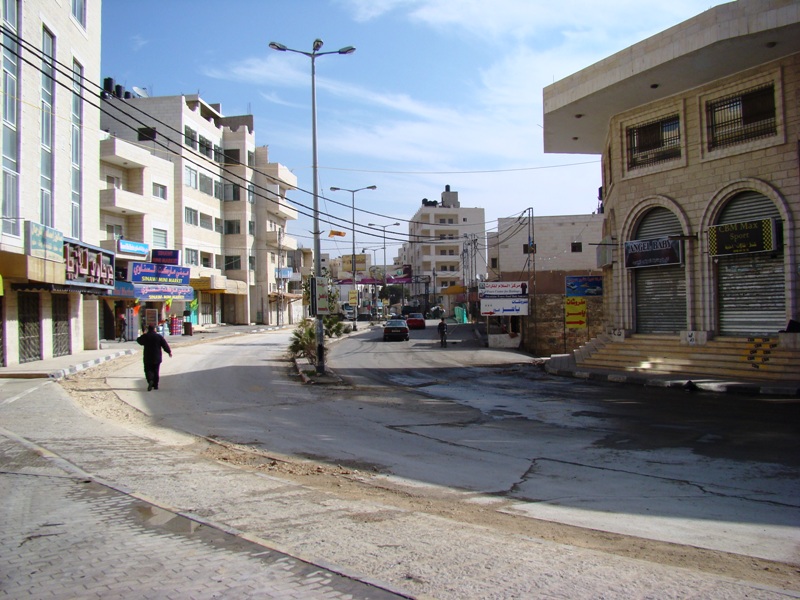
It was also from Bethany, which is on the slope of the Mount of Olives, that Jesus ascended back into heaven: And He led them out as far as Bethany, and He lifted up His hands and blessed them. Now it came to pass, while He blessed them, that He was parted from them and carried up into heaven. And they worshiped Him, and returned to Jerusalem with great joy, and were continually in the temple praising and blessing God. Amen (Lk. 24:50-53).

Street in Bethany. Photo by Leon Mauldin.

Click on images for higher resolution.


Arad in the Negev

February 21, 2011

Arad is first mentioned in Scripture in Numbers 21:1, “The king of Arad, the Canaanite, who dwelt in the South, heard that Israel was coming on the road to Atharim, then he fought against Israel and took some of them prisoners.” This was in the last year of the 40 years wilderness wandering.  Israel prayed for deliverance and the LORD gave them victory.

Map by Bibleatlas.org

BAR notes:

The Israelite fortress at Arad is unique in the Land of Israel. It’s the only site excavated with modern archaeological methods that contains a continuous archaeological record from the period of the Judges (c. 1200 B.C.) to the Babylonian destruction of the First Temple (580 B.C.). This distinction promises to make Arad the type-site for pottery chronology, especially in southern Israel, against which pottery from other sites can be confidently tested and dated. Not only is the pottery sequence continuous, but the timelines between the various strata during which the Israelite fortress was built and rebuilt are for the most part clear and can often be connected with well-known historical and datable events.

Arad is also special for other reasons. The Israelite fortress there was found to contain the only Israelite temple ever discovered in an archaeological excavation.

The excavation of the fortress also yielded a unique series of inscriptions. The inscriptions, written for the most part with ink on potsherds—called ostraca (singular, ostracon)—include political, administrative and sometimes even religious documents. Other sites have yielded ostraca collections—for example, the Lachish letters and the Samaria ostraca—but each of those collections belonged to only one major stratum and time period. At Arad the inscriptions span a period of 350 years and cover six different strata. In all, more than one hundred texts and fragments were recovered. (13:02 March/April 1987).

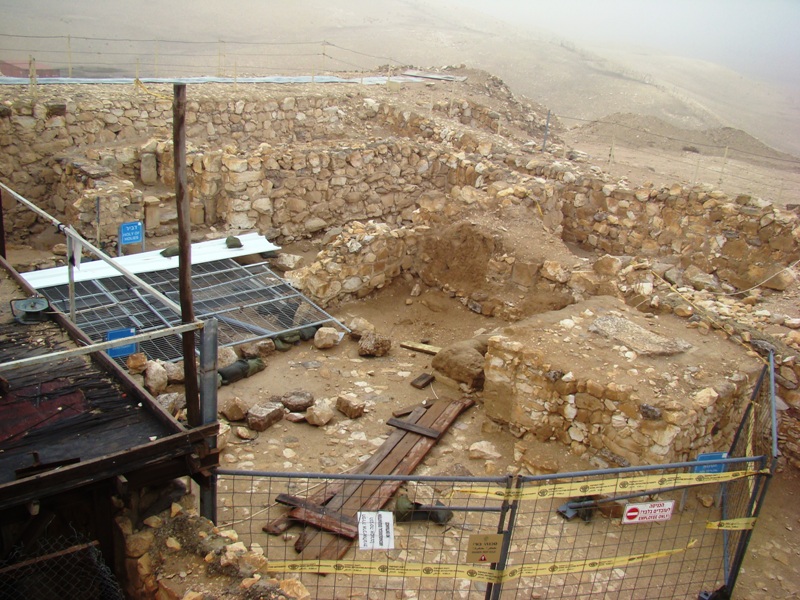
The 2nd paragraph in our quote above mentioned the Israelite temple which has been excavated at Arad. The ruins can be seen in our photo:

Israelite Temple at Arad. Photo by Leon Mauldin.

The raised square platform at right was the altar. This temple was destroyed either in the reforms of Judah’s good king Hezekiah or perhaps Josiah.

Click on images for higher resolution.


Beersheba, cont’d.

February 16, 2011

Beersheba was to become the chief city of the Negev. Unfortunately it would also become a center for idolatrous activity. When the 8th century BC prophet Amos cried out against idolatrous cities he warned, “But do not seek Bethel, nor enter Gilgal, nor pass over to Beersheba, for Gilgal shall surely go into captivity, and Bethel shall come to nothing” (Amos 5:5). Instead, “Seek the LORD and live” (v.6).

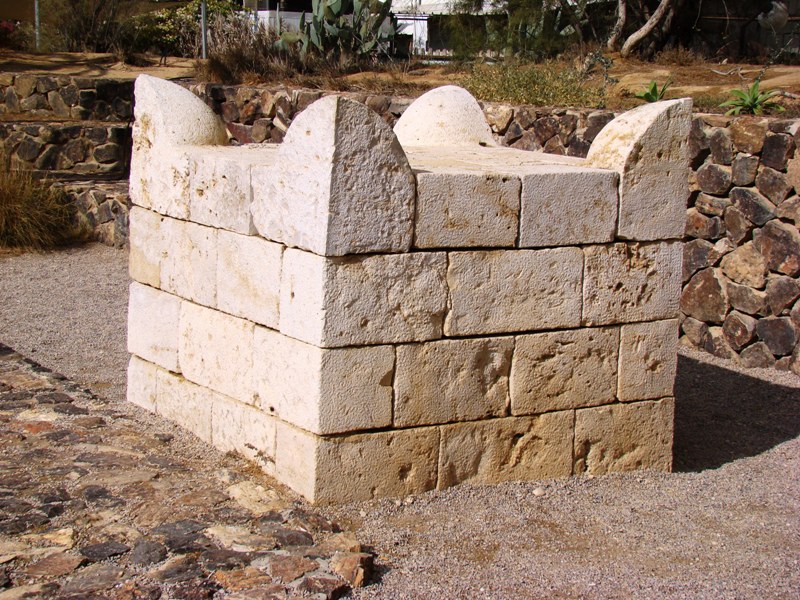
Altar at Beersheba. Photo by Leon Mauldin

Our photo shows a replica of an altar discovered in Beersheba; the original was broken in pieces. Many believe the destruction of the altar here may have been during the reformation by good king Hezekiah.

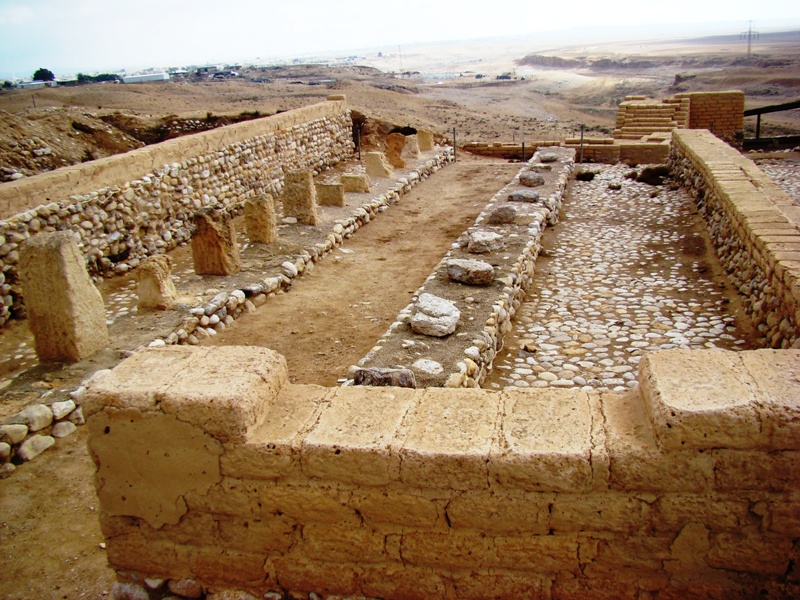
Beersheba is a small tel, comprising only about three acres. A good deal of excavation has been done. Our photo below shows what many believe to be storage room; others believe this to have been stables.

Storage rooms or possibly stables at Beersheba. Photo by Leon Mauldin.

View is to the southeast. Remember to click on photos for higher resolution.


Beersheba, Home of the Patriarchs

February 15, 2011

Beersheba received its name when Abraham made a covenant with the Philistine king Abimelech. Included in that covenant was the recognition of Abraham’s ownership of the well he dug at that site, which was confirmed by Abimelech’s reception of seven lambs from Abraham. “Therefore he called that place Beersheba, because the two of them swore an oath there” (Gen. 21:31). Beersheba means, Well of the Oath or Well of the Seven.

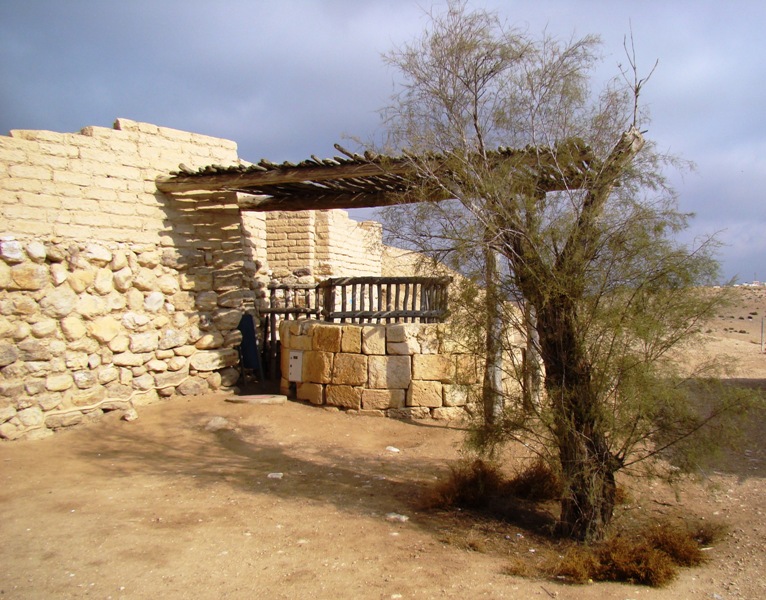
“Then Abraham planted a tamarisk tree in Beersheba, and there called on the name of the LORD, the Everlasting God” (Gen. 21:33). Our photo was taken outside the gate of Beersheba, and shows a well there, and also a tamarisk tree.

Beersheba in the Negev. Photo by Leon Mauldin.

Beersheba is mentioned several times in the days of the Patriarchs. Abraham continued to live there after returning from Moriah to “sacrifice” Isaac (Gen. 22:19; cf. CSB: “And Abraham settled in Beer-sheba” (emp. mine, LM). Years later, when Isaac moved there the text tells us that “the LORD appeared to him the same night” and repeated the Abrahamic promises. “So he built an altar there and called on the name of the LORD” (Gen. 26:23-25).

Later still, when Jacob moved his family to Egypt it was at Beersheba that God appeared to him and said, “I am God, the God of your father; do not fear to go down to Egypt, for I will make of you a great nation there” (Gen. 46:1-3). God had told Abraham, Isaac and Jacob that He would make of them a great nation. It is in this passage that we learn that He would not do so in Canaan, the Promised Land, but it would be in Egypt. It had amply been demonstrated that the Canaanites were very willing to intermarry with Jacob’s family, and that was reciprocated (Gen. 32,38). Had they remained there they would have been assimilated into Canaanite culture, and never would have become the separate people of God.


More on Corinth

December 18, 2010

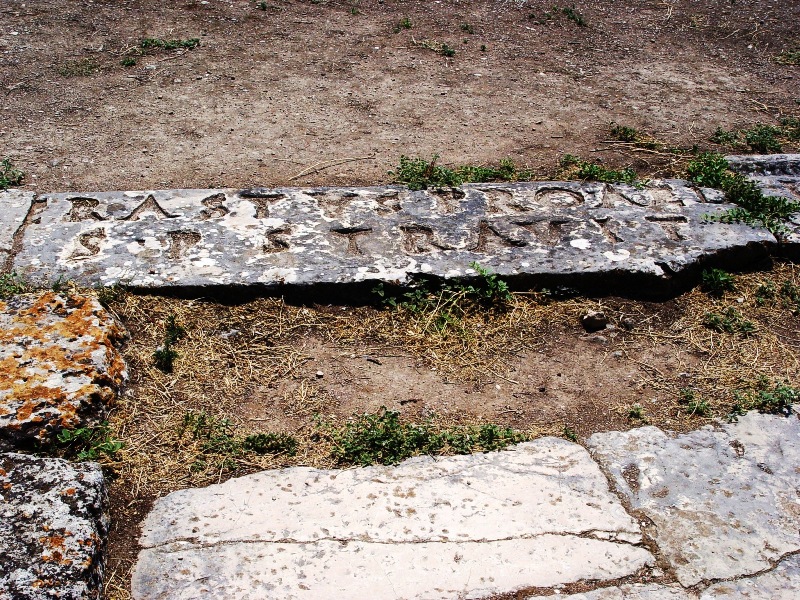
Our last post featured a photo of the Erastus inscription. We referenced the biblical text of Romans 16:23.  Additionally, Erastus is mentioned in two other passages.  In Acts 19:22 we read, “And having sent into Macedonia two of his helpers, Timothy and Erastus, he himself stayed in Asia for a while” (ESV).  Lastly in, 2 Tim. 4:20, Paul observes, “Erastus remained at Corinth, and I left Trophimus, who was ill, at Miletus” (ESV).

Here is a closer view of the inscription:

Closeup of Erastus Inscription at Corinth. Photo by Leon Mauldin.

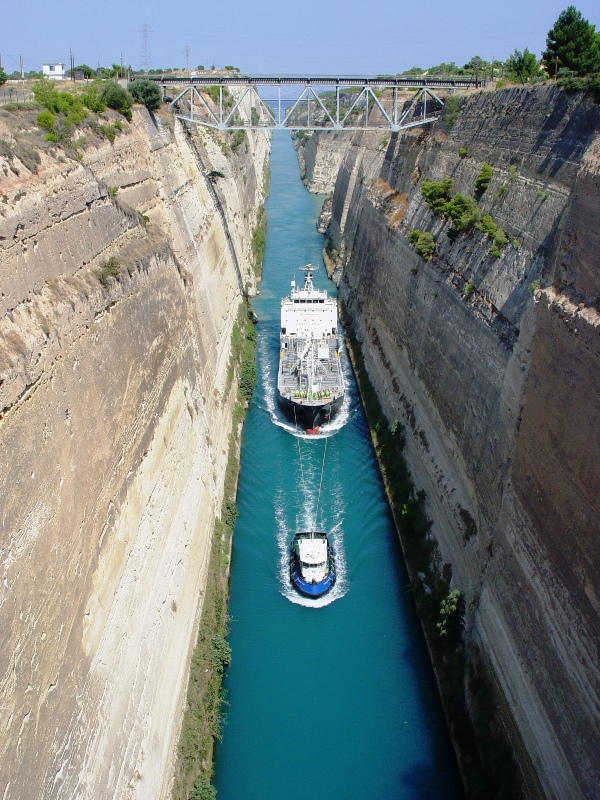
The narrowest point of the isthmus of Corinth is only 4 miles wide.  A canal was engineered and completed between 1882 and 1893.  Nero (A.D. 67) had the idea of building a canal at that exact route utilized by the modern engineers.  He planned to use 6,000 Jewish prisoners as his work force, but the idea was abandoned.

Canal at Corinth. Photo by Leon Mauldin.

The canal separates the Peloponnesian peninsula from the Greek mainland.  It connects the Gulf of Corinth with the Aegean Sea.

Click on images for higher resolution.  More to come on Corinth.


Herodium, another view

December 9, 2010

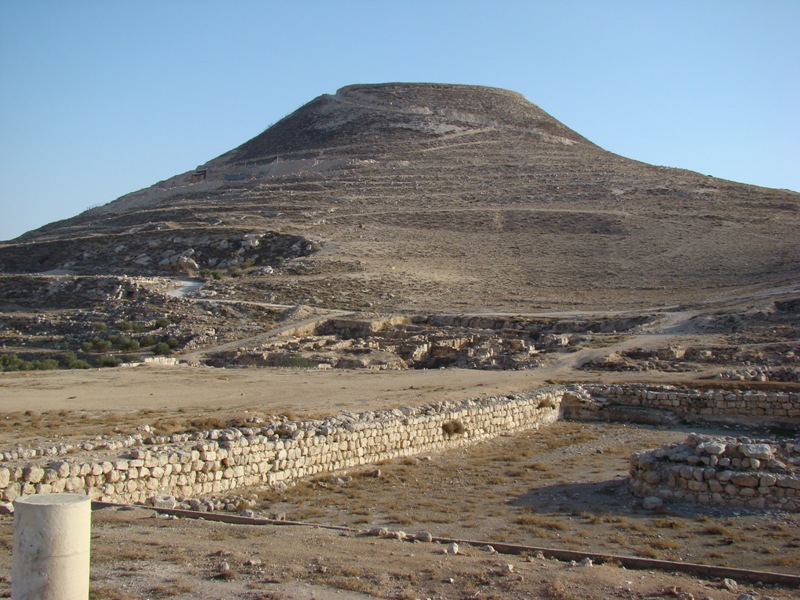
Our previous post showed an aerial view of Herod’s fortress, the Herodium.  Today’s photo offers a view from ground level.

Herodium. Photo by Leon Mauldin.

The Herodium can easily be seen from nearby Bethlehem.

Herod is known for his atrocity of killing the baby boys in Bethlehem from age two and under.  That is consistent with what is known of him from secular history.

Click on image for higher resolution.