Cities Israel Did Not Take or Retain: Gezer

May 19, 2011

Our previous post made reference to Israel’s conquest of Canaan, and specifically looked at Caleb’s inheritance of Hebron in Judah.

The book of Joshua not only tells of the cities Israel possessed and inhabited, but also of those cities they either did not take, or else initially captured but did not retain. Probably most readers pass over these texts, or else read them without seeing their significance. But some of the cities specified were especially strategic locations, and to not have them would be a tremendous loss, and really put Israel at a great disadvantage.

We want to consider just a few of these as mentioned in Joshua. In this post, we consider Gezer.

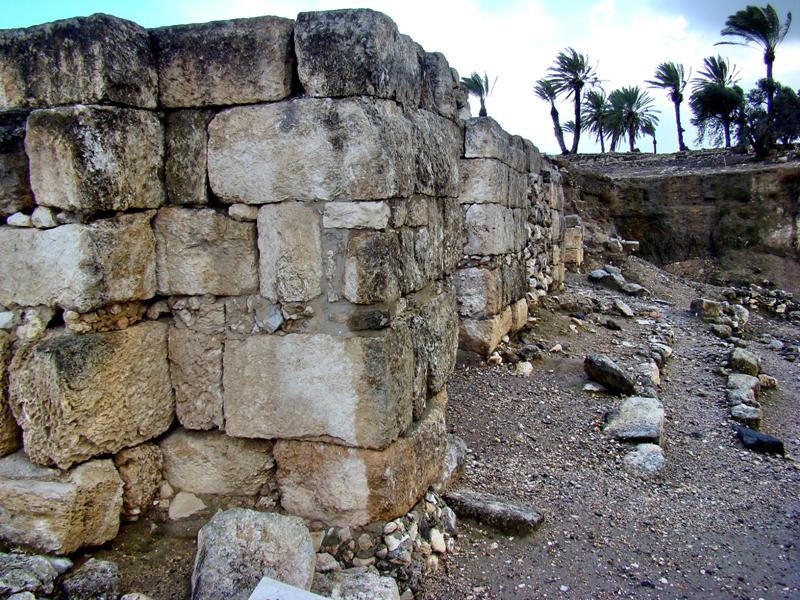
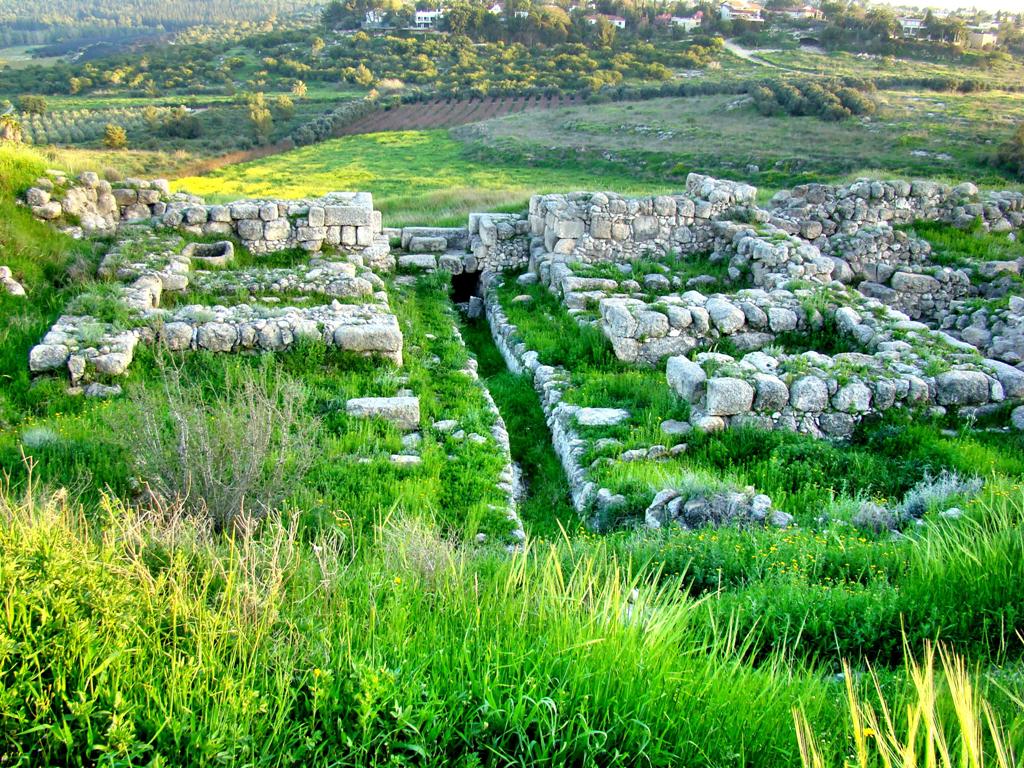
Joshua 16:10:  “The Ephraimites did not conquer the Canaanites living in Gezer. The Canaanites live among the Ephraimites to this very day and do hard labor as their servants” (NET).  Gezer was a large, important city in the Shephelah. Later Solomon made it one of his fortified cities. Our photo below was taken March, 2011.

Solomonic Gate at Gezer. A city not taken during the Conquest. Photo by Leon Mauldin.

The Bible Knowledge Commentary observes:

Gezer was strategically located on Ephraim’s southwest border at the entrance to the Aijalon Valley. It guarded the crossroads of the eastern branch of the coastal highway and the major west-to-east route through the Aijalon Valley to Jerusalem or Bethel.

This is one of many instances where some understanding of the geography will enhance one’s understanding of the text.  More to come. Click image for higher resolution.


Caleb Inherits Hebron

May 17, 2011

The book of Joshua details the fulfillment of the Land Promise God made to Israel (Josh. 21:43,45). The book consists of twenty-four chapters, and divides exactly in half regarding subject matter. The first twelve chapters record the conquest of Canaan, and the last twelve record the division of the land to each of the tribes of Israel.

Josh 14-15 deal with the inheritance of Judah. It is within that context that the inheritance of Caleb is discussed. Caleb and Joshua were the only two of the 603,550 men of war who were faithful to the Lord and stood their ground at Kadesh-Barnea (Num. 13). All of those men died in the wilderness because of their refusal to take possession of the land (Num. 14ff), except Joshua and Caleb. That was the period of 40 years of wandering in the wilderness of Sinai.

That period passed. At the point where Josh. 14 takes up is 45+ years later; now Caleb is age 85 (v.10). Israel had control of the land, but there was still much to be conquered and possessed.

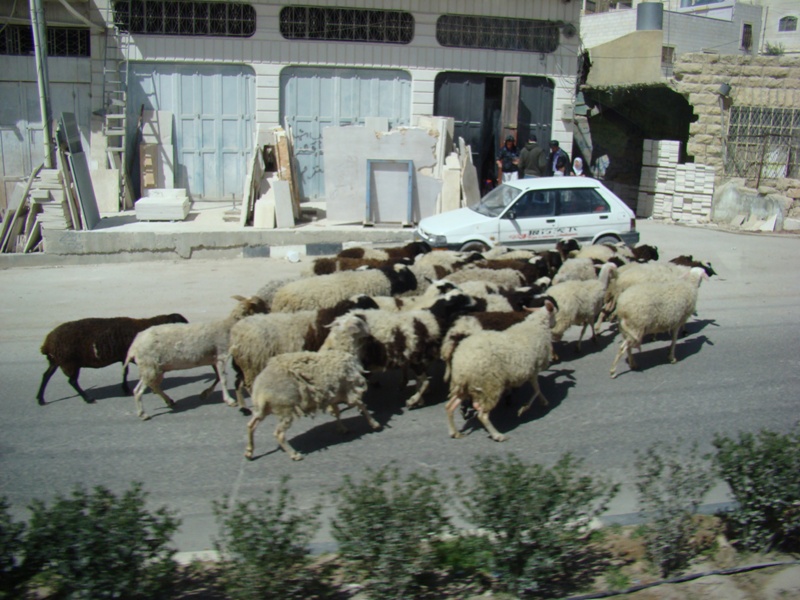
Sheep in street in Hebron. Photo by Leon Mauldin.

The biblical text of Josh. 14:6-13 records Caleb’s inheritance request as well as the background and context of that request:

And Caleb the son of Jephunneh the Kenizzite said to him, “You know what the LORD said to Moses the man of God in Kadesh-barnea concerning you and me. 7 I was forty years old when Moses the servant of the LORD sent me from Kadesh-barnea to spy out the land, and I brought him word again as it was in my heart. 8 But my brothers who went up with me made the heart of the people melt; yet I wholly followed the LORD my God. 9 And Moses swore on that day, saying, ‘Surely the land on which your foot has trodden shall be an inheritance for you and your children forever, because you have wholly followed the LORD my God.’ 10 And now, behold, the LORD has kept me alive, just as he said, these forty-five years since the time that the LORD spoke this word to Moses, while Israel walked in the wilderness. And now, behold, I am this day eighty-five years old. 11 I am still as strong today as I was in the day that Moses sent me; my strength now is as my strength was then, for war and for going and coming. 12 So now give me this hill country of which the LORD spoke on that day, for you heard on that day how the Anakim were there, with great fortified cities. It may be that the LORD will be with me, and I shall drive them out just as the LORD said.” 13 Then Joshua blessed him, and he gave Hebron to Caleb the son of Jephunneh for an inheritance (ESV).

Lessons:

  1. Caleb’s character. Characterized by wholehearted devotion to God (Josh. 14:8,9,14).
  2. Forty-five years earlier during the crisis at Kadesh-Barnea (Num. 13-14), Caleb discerned what was right and was faithful to it. He did not swerve from this principle.
  3. He was basing his request on the promise of God (v.9).
  4. Perhaps one of the greatest lessons is to notice what Caleb was asking for. There were still giants in the land (Anakim, v.12). There were still fortified cities. Caleb was not asking that land already conquered be given to him. He was asking for the opportunity to fight, to seek to defeat and drive out the Canaanite inhabitants, that the territory of Hebron would thus be his inheritance. At age 85, Caleb was not asking for an easy inheritance, but one full of danger. Yet he looked upon it as an opportunity.
  5. His source of strength in battle was the Lord. His victory was predicated upon the Lord’s being with him (v.12).

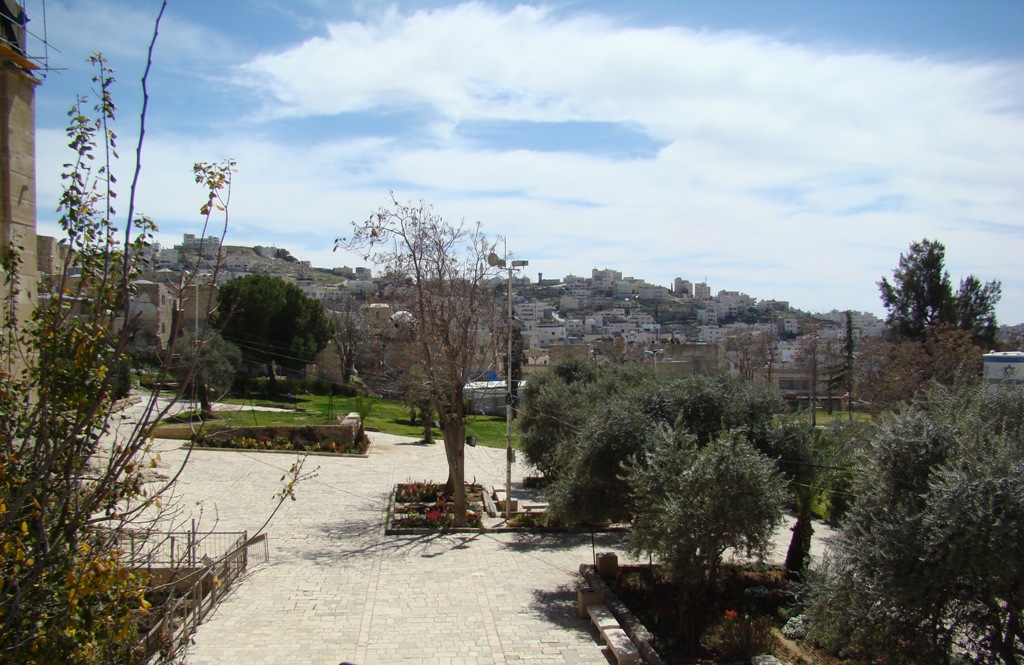
Our photo here shows a view of modern Hebron as we look out from the cave of Machpelah.

Hebron as seen from cave of Machpelah. Photo by Leon Mauldin.

The chapter concludes,

Therefore Hebron became the inheritance of Caleb the son of Jephunneh the Kenizzite to this day, because he wholly followed the LORD, the God of Israel. 15 Now the name of Hebron formerly was Kiriath-arba. (Arba was the greatest man among the Anakim.) And the land had rest from war (Josh. 14:14-15, ESV).

Remember to click on images for larger view.


Canaanite Gate at Dan

April 21, 2011

Biblical Dan was a city of about 50 acres. It is located at the foothills of Mt. Hermon in northern Israel. It was situated on the main route from Galilee to Damascus.

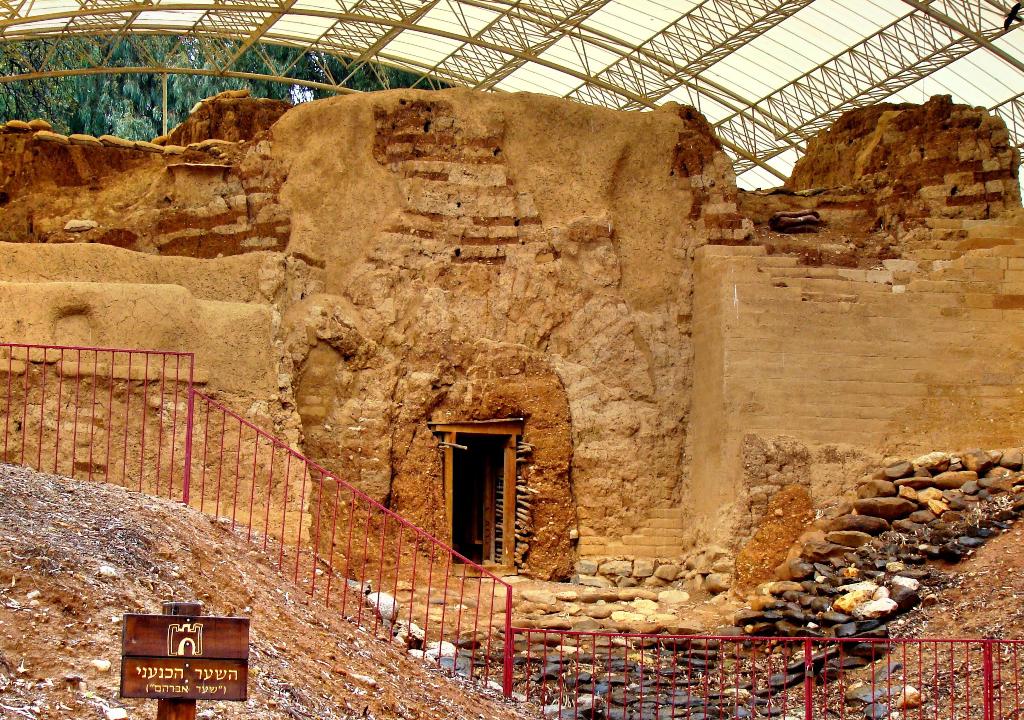
One of the very exciting discoveries at Dan (1979)  is the mud-brick Canaanite Gate. Todd Bolen writes:

Built about 1800 B.C., this mudbrick gate was in use approximately 50 years before it was covered (and thus preserved) by an earthen rampart.

The style of the gate is typical for this period; it is a “Syrian gate” with three pairs of piers and four chambers, like those found at Megiddo, Shechem and Gezer.

Mud-brick Canaanite Gate at Dan. Photo by Leon Mauldin.

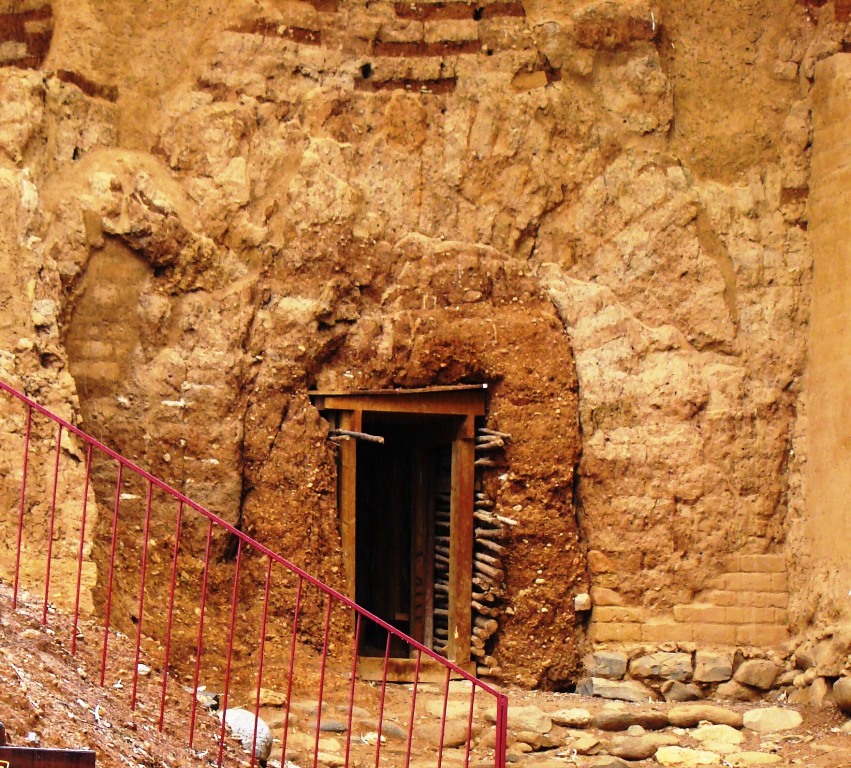
This is said to be the oldest known intact archway–nearly 4,000 years old. It is now under a great canopy for protection from the elements. Here is a closer view:

Close up of Canaanite Gate at Dan. Photo by Leon Mauldin.


Nazareth, Jesus’ Hometown

April 19, 2011

With the exception of the birth and very early childhood of Jesus (which was in Bethlehem and Egypt), Jesus lived in Nazareth until He was about the age of 30 (Luke 3:23).

On one occasion early in His Great Galilean Ministry, Jesus preached in His home town of Nazareth. Unfortunately, it was not well received, concluding with an attempt to push Jesus down to His death:

16 Now Jesus came to Nazareth, where he had been brought up, and went into the synagogue on the Sabbath day, as was his custom. He stood up to read, 17 and the scroll of the prophet Isaiah was given to him. He unrolled the scroll and found the place where it was written, 18 “The Spirit of the Lord is upon me, because he has anointed me to proclaim good news to the poor. He has sent me to proclaim release to the captives and the regaining of sight to the blind, to set free those who are oppressed, 19 to proclaim the year of the Lord’s favor.” 20 Then he rolled up the scroll, gave it back to the attendant, and sat down. The eyes of everyone in the synagogue were fixed on him. 21 Then he began to tell them, “Today this scripture has been fulfilled even as you heard it being read.” 22 All were speaking well of him, and were amazed at the gracious words coming out of his mouth. They said, “Isn’t this Joseph’s son?” 23 Jesus said to them, “No doubt you will quote to me the proverb, ‘Physician, heal yourself!’ and say, ‘What we have heard that you did in Capernaum, do here in your hometown too.'” 24 And he added, “I tell you the truth, no prophet is acceptable in his hometown. 25 But in truth I tell you, there were many widows in Israel in Elijah’s days, when the sky was shut up three and a half years, and there was a great famine over all the land. 26 Yet Elijah was sent to none of them, but only to a woman who was a widow at Zarephath in Sidon. 27 And there were many lepers in Israel in the time of the prophet Elisha, yet none of them was cleansed except Naaman the Syrian.” 28 When they heard this, all the people in the synagogue were filled with rage. 29 They got up, forced him out of the town, and brought him to the brow of the hill on which their town was built, so that they could throw him down the cliff. 30 But he passed through the crowd and went on his way (Luke 4:16-30).

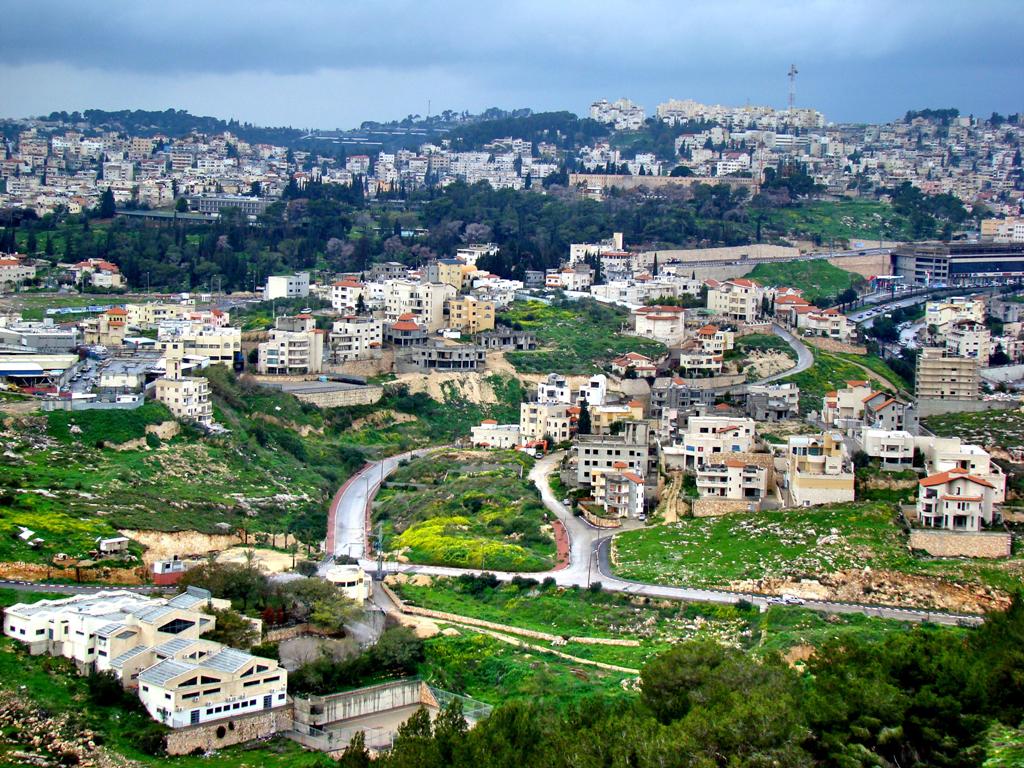
The traditional location of hill from which the residents of Nazareth attempted to push Jesus is known as the Mount of Precipice. It is 397 meters above sea level, and overlooks the Jezreel Valley.
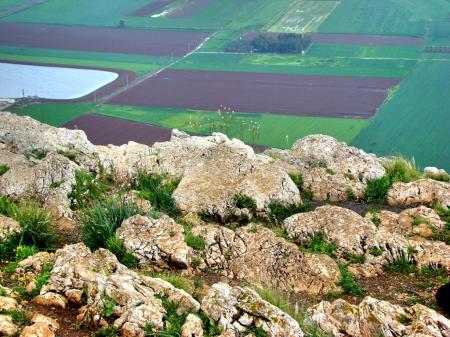
Nazareth. View from Mt. Precipice. Photo by Leon Mauldin.

From here one has a good view of Nazareth.
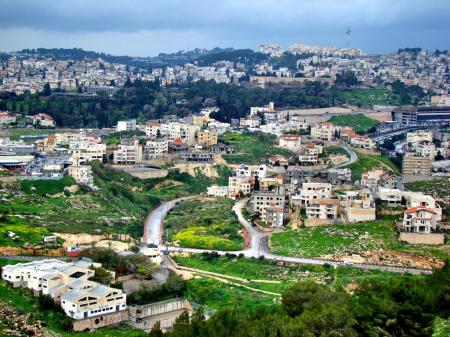
Nazareth from Mt. Precipice. Photo by Leon Mauldin.

Buildings come and go, but the hills and valleys remain the same (as a rule). I.e., the landscape here pictured is what Jesus and his family would have seen.

Here at Nazareth is the Church of the Annunciation, which commemorates the angelic announcement to Mary of God’s choice of her to be the mother of Jesus (Lk. 1: 26-38).
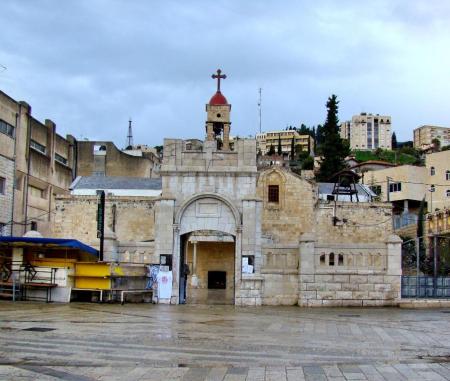
Nazareth. Church of the Annunciation. Photo by Leon Mauldin.

Inside the church can be seen the spring which was the city’s water supply.

Click on images for higher resolution.

Megiddo Stables

April 17, 2011

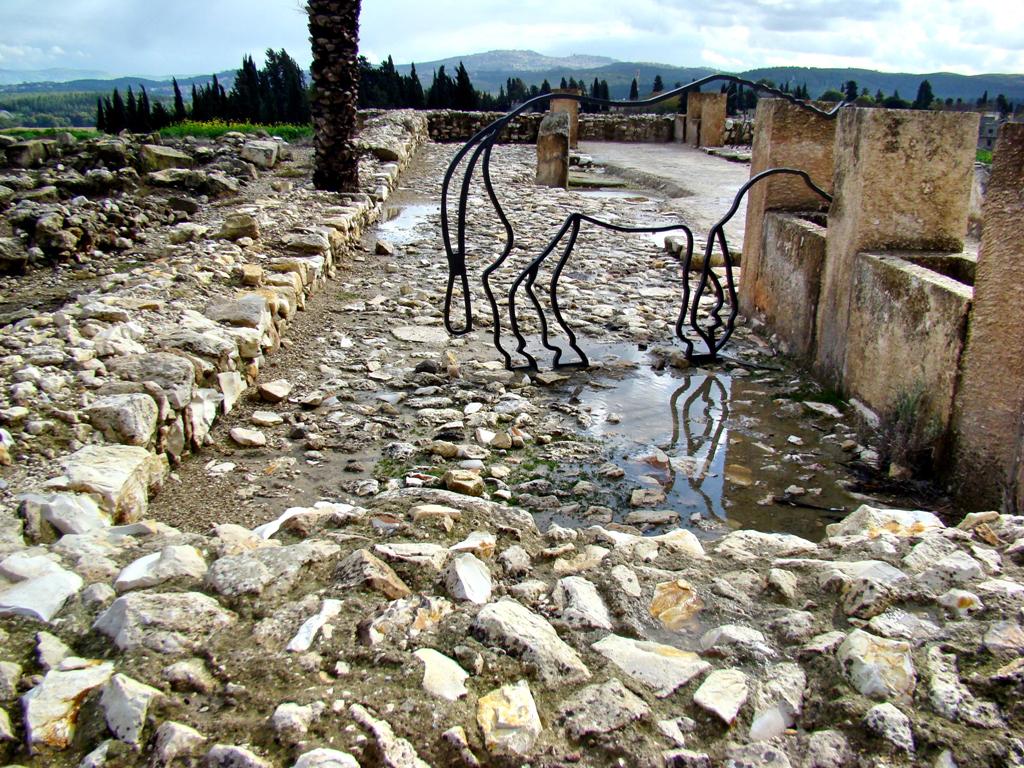
Another interesting discovery at Megiddo is the area which many believe were used for horse stables. The area seen in this photo is sometimes called “Solomon’s stables,” though many believe this should be dated a bit later to the time of King Ahab.

Stables at Megiddo. Photo by Leon Mauldin.

You can see the metal outline of a horse in our photo. Some suggest this site may have been used for barracks, market places, storage facilities, or other usages.

Click on photo for higher resolution.


Megiddo Water System

April 16, 2011

It would be hard to overemphasize the importance of the city of Megiddo. We have referenced the strategic location in our two previous posts. Crucial battles were fought here.

Excavations conducted at Megiddo have been “large and extensive,” and include the efforts of the German Society for Oriental Research (1903-1905), the Oriental Institute of Chicago (1925-1939). Excavations were interrupted with the outbreak of WWII, but were renewed by the Institute of Archaeology at the Hebrew University of Jerusalem (1960, 1961, 1966, 1967, and 1971) under the leadership of Y. Yadin (The New Encyclopedia of Archaeological Excavations in the Holy Land, Vol. 3, pp. 1005-1005).

More recent excavations have been undertaken by Tel Aviv University, with Pennsylvania State University as the senior American partner (ibid. Vol. 5, pp. 1944ff.).

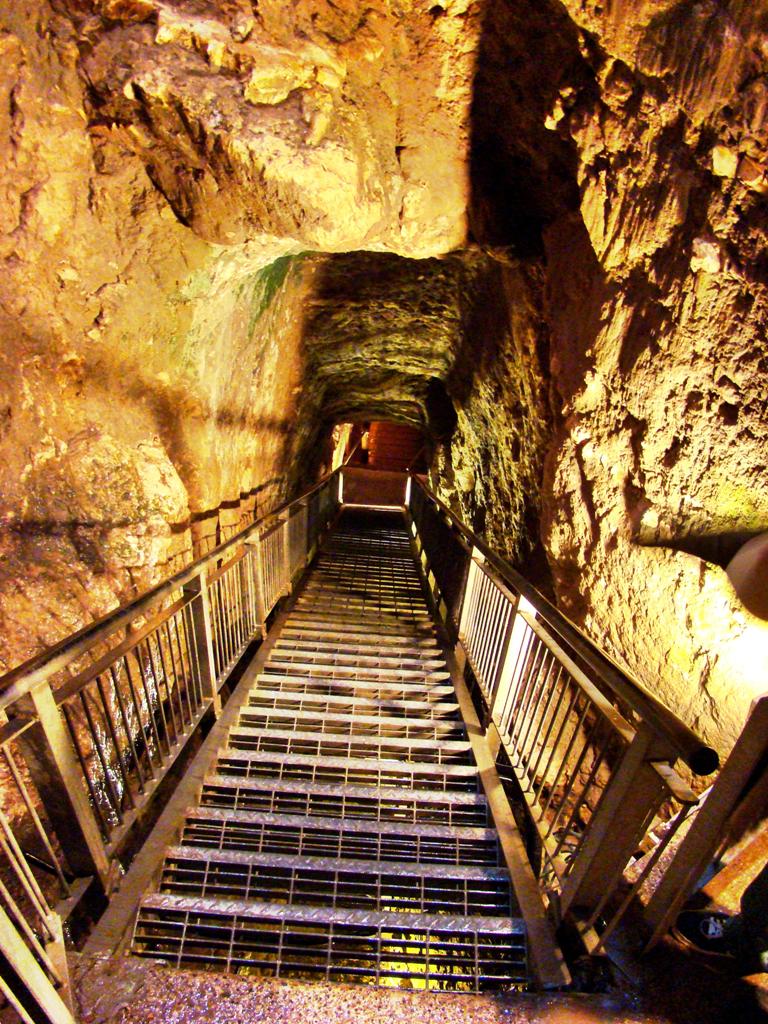
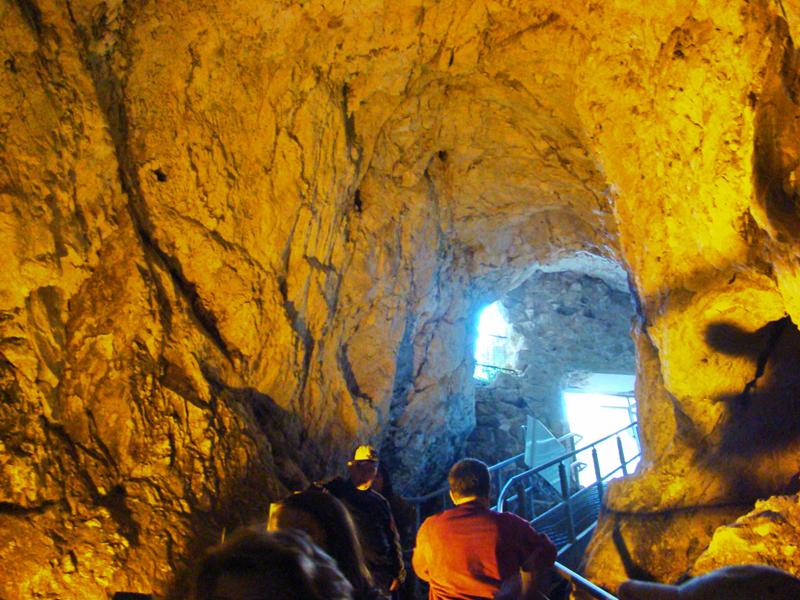
Among the more interesting discoveries is Megiddo’s water system. A 70 meter tunnel hewn through rock led down to the spring.

Megiddo. Tunnel to city spring. Photo by Leon Mauldin.

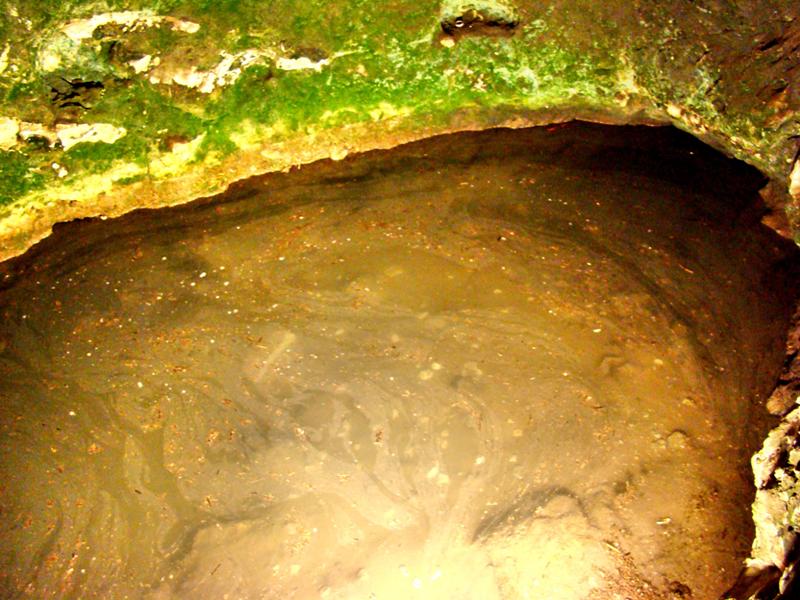
This dates back to the time of Israel’s king Ahab (874-853 BC). Prior to this engineering feat, it was necessary to go outside the city walls to access the spring.

Megiddo Spring. Citys water supply. Photo by Leon Mauldin.

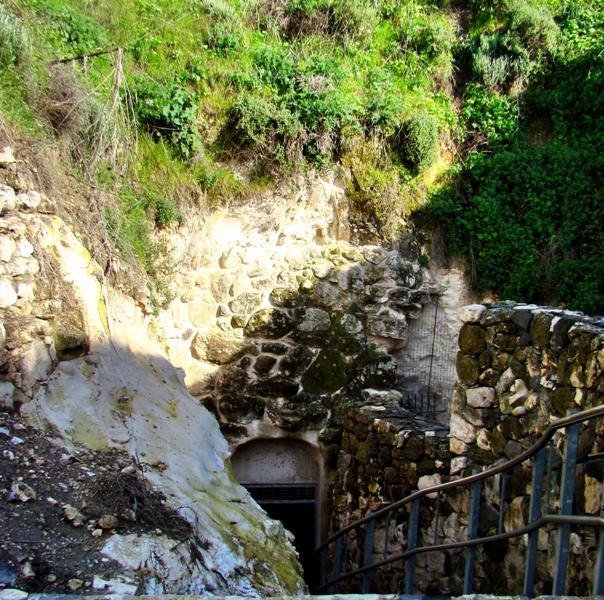
Here is a view from going up from the spring as you exit:

Megiddo. Exit from spring. Photo by Leon Mauldin.

And finally, a view back to the exit of the spring.

Megiddo. Outside Water System Exit. Photo by Leon Mauldin.

In our next post we plan to feature the stables of Megiddo.


Megiddo

April 6, 2011

Megiddo is first mentioned in Scripture in Joshua 12:21 as one of the cities captured under the leadership of Joshua and assigned to the tribe of Manasseh (17:11). Nelson’s NIBD speaks of the importance of this site:

Megiddo was situated on the main road that linked Egypt and Syria. Overlooking the Valley of Jezreel (Plain of Esdraelon), Megiddo was one of the most strategic cities in Palestine. All major traffic through northern Palestine traveled past Megiddo, making it a strategic military strong-hold.

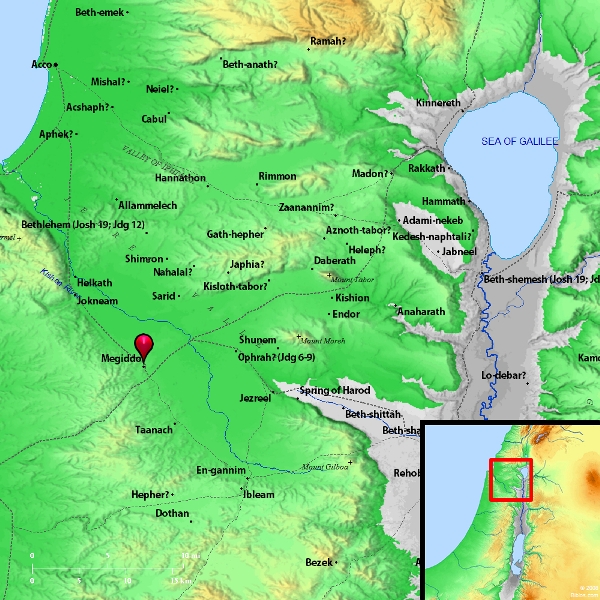
Therefore it was a great loss when Israel subsequently did not retain this city (Judges 1:27), whose location can be seen in the map below:

Megiddo. Map courtesy of BibleAtlas.org

Megiddo was a city of great antiquity. The impressive Canaanite gate can be seen here in our photo:

Canaanite Gate at Megiddo. Photo by Leon Mauldin.

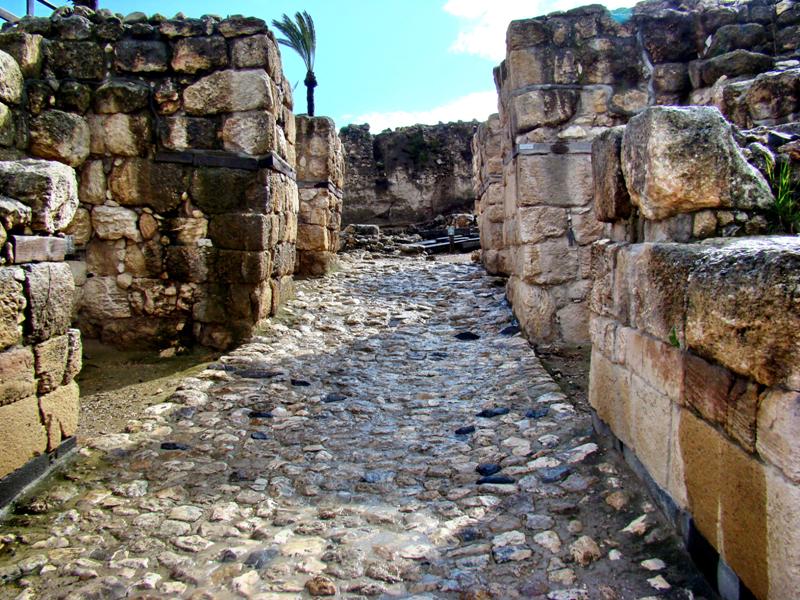
This was one of the cities later fortified by King Solomon (1 Kings 9:15) during the United Kingdom period (Iron Age). The Solomonic gate was here:

Solomonic Gate at Megiddo, a fortress city. Photo by Leon Mauldin.

Crucial battles were fought here or near here.

1.During the time of the Judges, Barak’s forces (Deborah was the Judge and Prophetess) defeated the Canaanite enemy near here (Judges 4-5). From Megiddo one can easily see Mt. Tabor, mentioned in the account (4:14) ; Judges 5:19 refers to the “waters of Megiddo.”

2. In 2 Kings 9:27, Judah’s king Ahaziah died here by the hand of Jehu; the year was 841 BC.

3. Good King Josiah (also of Judah) was killed here by Pharaoh Necho of Egypt; the year was 609 BC.

4. The word Armageddon (Rev. 16:16) is rendered Har-Magedon by the NASB and means The Mount of Magedon, i.e., Mt. Megiddo.

Click on images for higher resolution.


Paul Preached at Caesarea

April 2, 2011

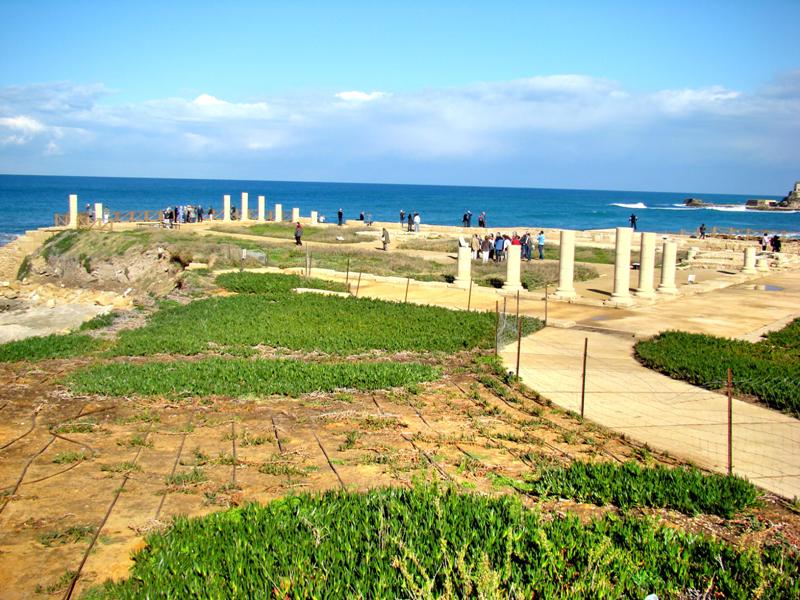
After the third missionary journey, Paul was taken by a military escort from Jerusalem to Caesarea (Acts 23:23ff.). He would be there at Caesarea as a prisoner for two years, although provisions were made for his friends to attend to his needs (Acts 24:23). It is believed that Paul would have been confined in the palace built by Herod the Great, the ruins of which can be seen in our photo.

Governor's Palace at Caesarea. Photo by Leon Mauldin.


BAR informs us,

This ancient building, which we now call the Promontory Palace, was first excavated in 1976 by Ehud Netzer of the Institute of Archaeology of the Hebrew University of Jerusalem. Netzer returned to the site in 1990 and brought in a new American team led by Kathryn Gleason and Barbara Burrell under the auspices of the University of Pennsylvania. Its members are mainly student volunteers, though in 1992 they were joined by a contingent of Israeli workers, most of them new immigrants from Russia (May/June 1993).

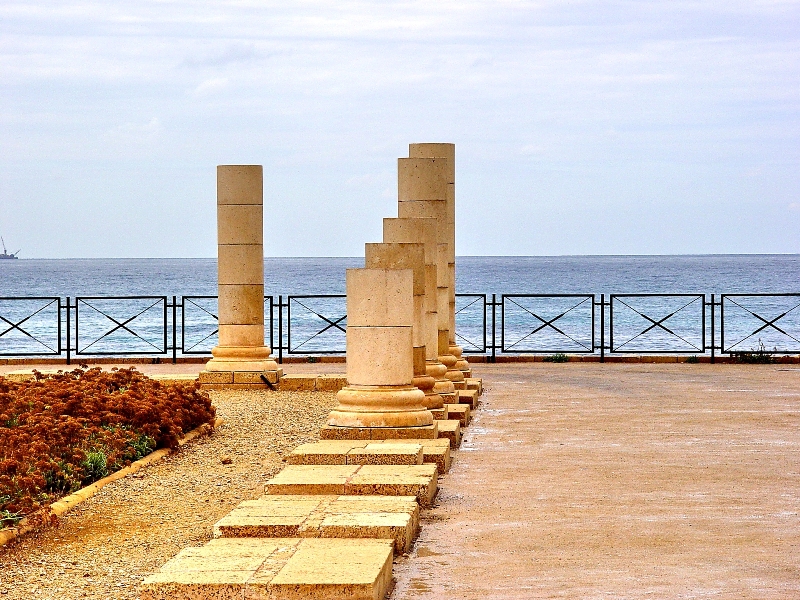
Our previous post featured photos of the swimming pool and mosaics. Below is a more detailed shot of some of the columns.

Palace at Caesarea. Photo by Leon Mauldin.

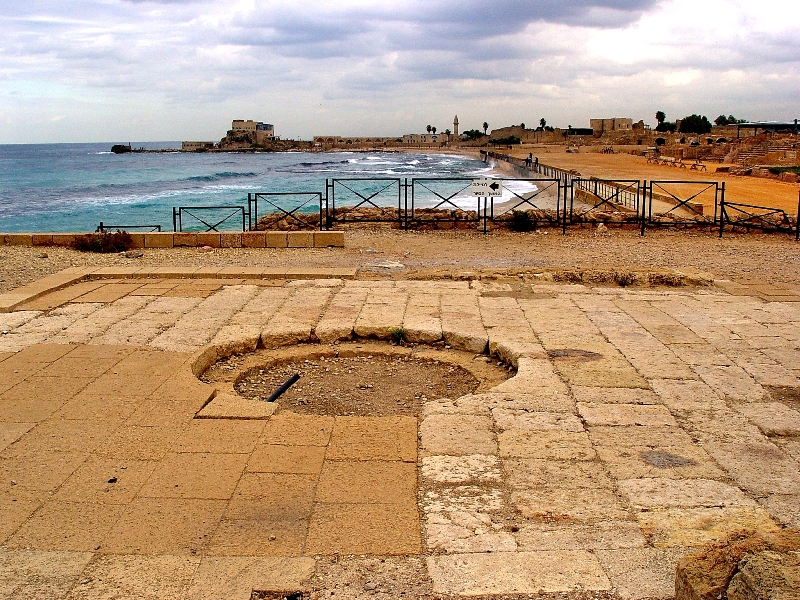
Paul would have the occasion here to preach before Felix (Acts 24) and his successor Festus (Acts 25) as well as Herod Agrippa II (Acts 26). The audience hall in our photo is likely the site where Paul would have given his defense of the Gospel before these dignitaries.

Audience Hall at Palace at Caesarea. Likely site of Paul's preaching. Photo by Leon Mauldin.


It was here that Paul exercised his right as a Roman citizen–“I appeal to Caesar” (Acts 25:11). Festus responded, “To Caesar you have appealed; to Caesar you shall go” (v.12, ESV).

Click on images for higher resolution.


Herod’s Pool at Caesarea

March 30, 2011

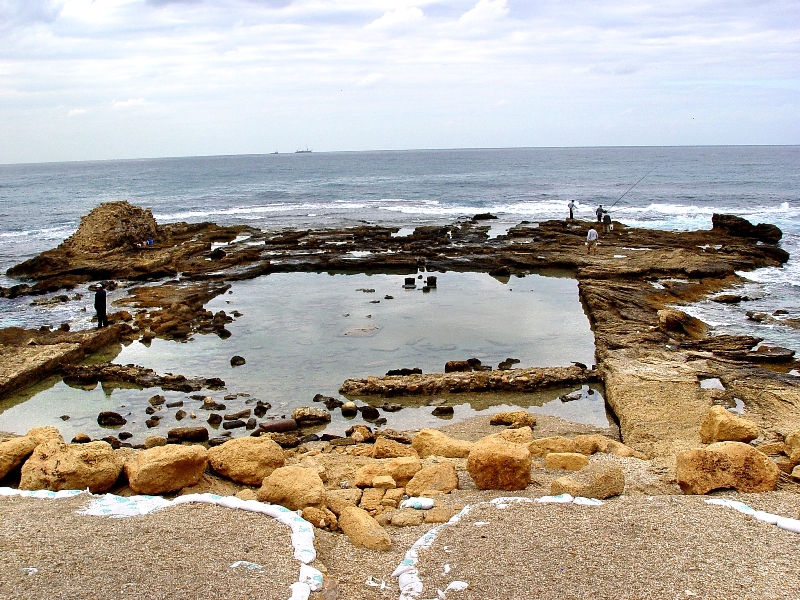
Herod the Great truly left his footprint all over the land of Israel. His palace at Caesarea has been excavated. On the south side of the palace was the swimming pool, as seen in our photo.

Herod's pool at Caesarea. Photo by Leon Mauldin.

BAR says the pool “. . .  was once the centerpiece of Herod’s palace, the nearly Olympic-sized swimming pool. The rectangular pool measures 115 feet long, 59 feet wide and at least 8 feet deep. Water channels leading into the pool from the shore have led excavators to surmise that the pool, though surrounded on three sides by the Mediterranean, had been filled by fresh water. If they are correct, the pool is further indication that Herod thrived on building in the face of natural obstacles” (BAR 19:03 May/June 1993).

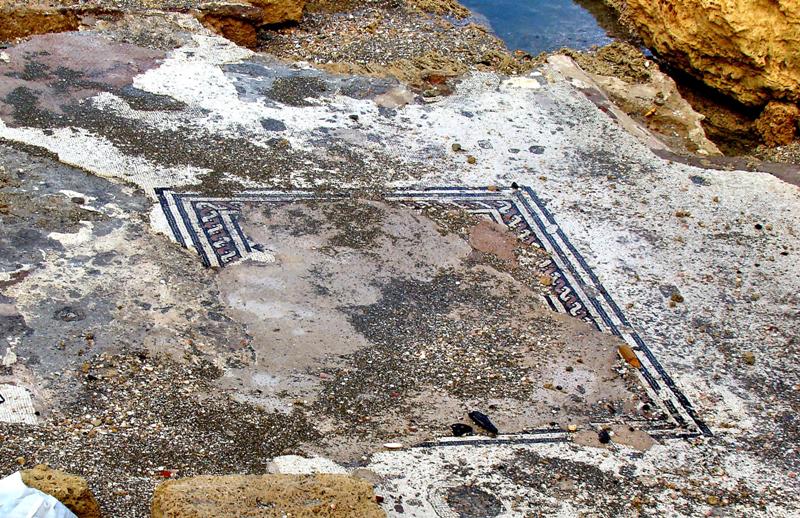
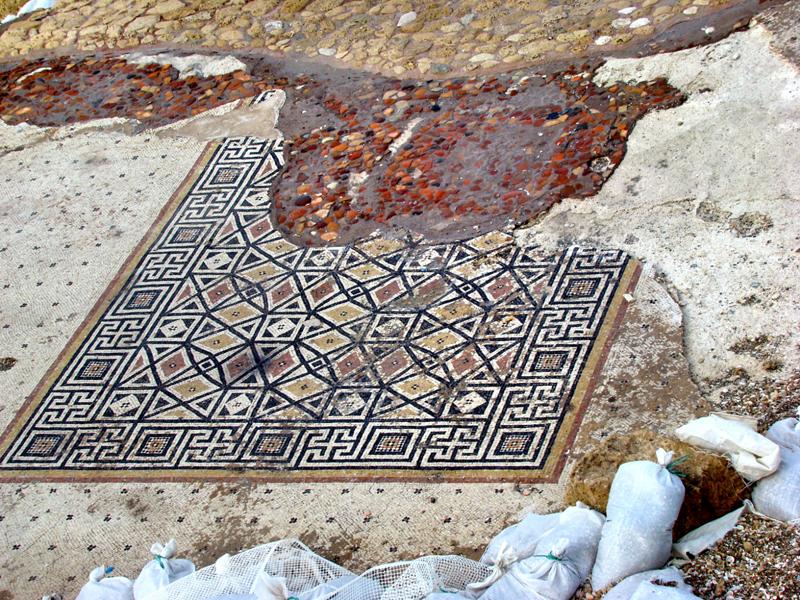
Earlier this month we were able to see some of the mosaics that adorned the pool.


Mosaics at Herod's Pool. Photo by Leon Mauldin.

Until recently these mosaics were covered with tarp and gravel.

Mosaics at Herod's Pool. Photo by Leon Mauldin.


Away in a Manger

March 29, 2011

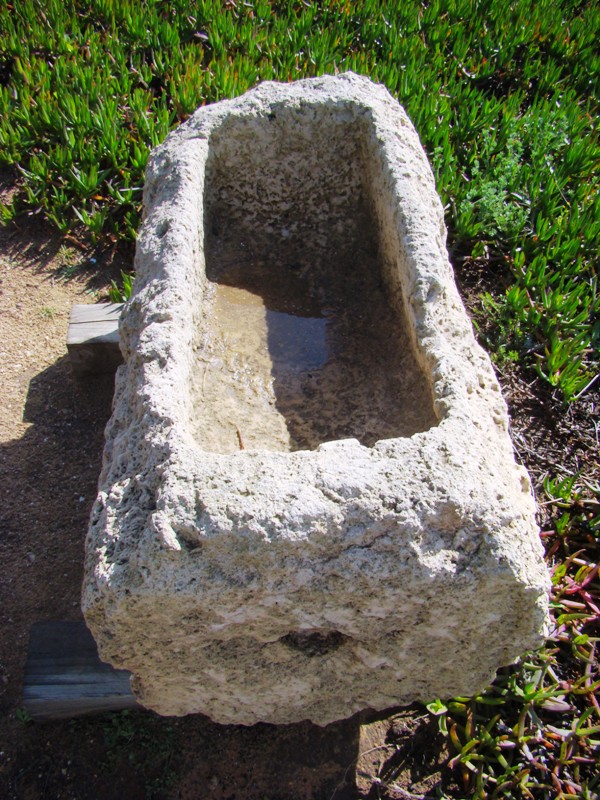
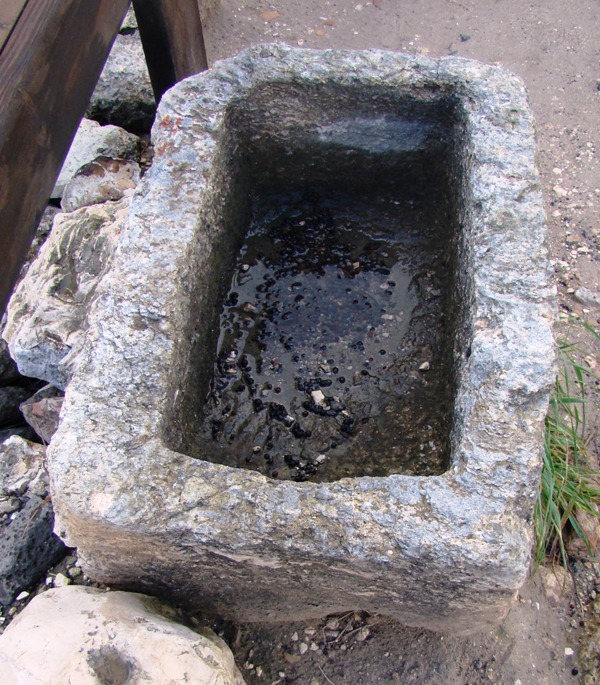
When you read of the baby Jesus wrapped in swaddling clothes and lying in a manger, what imagery comes to your mind? At different sites in Israel you can see still see mangers such as this one at Caesarea:

Manger at Caesarea. Photo by Leon Mauldin.


It is staggering to the imagination to think of the Creator who made the universe and all things in it, becoming flesh!  Eternal Deity became human! Born in Bethlehem to the virgin Mary, a feeding trough was His bassinet.

As Deity (only), the Eternal Word could not die. He had to become flesh in order to be a substitute offering for the sins of the world (John 1:29; Heb. 2:10-18).

It’s also interesting to consider who first heard the news that Jesus was born. It wasn’t Caesar Augustus, the ruler of the Roman world. Nor was it the High Priest, or the Sanhedrin. It wasn’t someone rich or famous. The first to hear were shepherds, unnamed shepherds, just common people (Luke 2:8-20). Aren’t you glad that God cares about common people?

It is impossible that we should praise Him too much for His love and provisions. The plan of the Father for Jesus to come into our world for His redemptive work is referred to by such terms as “eternal counsel and foreknowledge,” and “before the foundation of the world” (Acts 2:23; 1 Pet. 1:20; Eph. 3:11).

Here is a manger we photographed at Megiddo. Hopefully today’s photos will help you to visualize the kind of setting the shepherds saw on that night they would never forget. This photo was taken the same day as the photo above (Caesarea Maritima). You can tell it had been raining earlier.

Manger at Megiddo. Photo by Leon Mauldin.

On a personal note, we have a new grand-baby born Sun. PM, a boy, making a total of 6 grandchildren for my wife and me. We are thankful to God for His many blessings.