At various points in biblical history, we sometimes see that opposition to God’s purpose came from the outside, from those who are enemies of God’s revealed will. But on other occasions, the source of problems and discord is from within, from professed followers. This was the case in Nehemiah 5. Previously the inspired narrative had traced the opposition to rebuilding Jerusalem’s wall to men such as Sanballat the Horonite, Tobiah the Ammonite and Gehsem the Arab (2:10,19; 4:1,7), enemies from “without.” But in chapter 5 it is the “Jewish brethren” (v. 1), their “nobles and rulers” (v.7), who were taking advantage of the poor (Jews) for their own financial profit. The poor were having to borrow money, and even reduced to selling their children as slaves, to have something to eat. (Neh. 5:1-5). Hence their plea to Nehemiah: “Therefore let us get grain for them, that we may eat and live” (v.2).
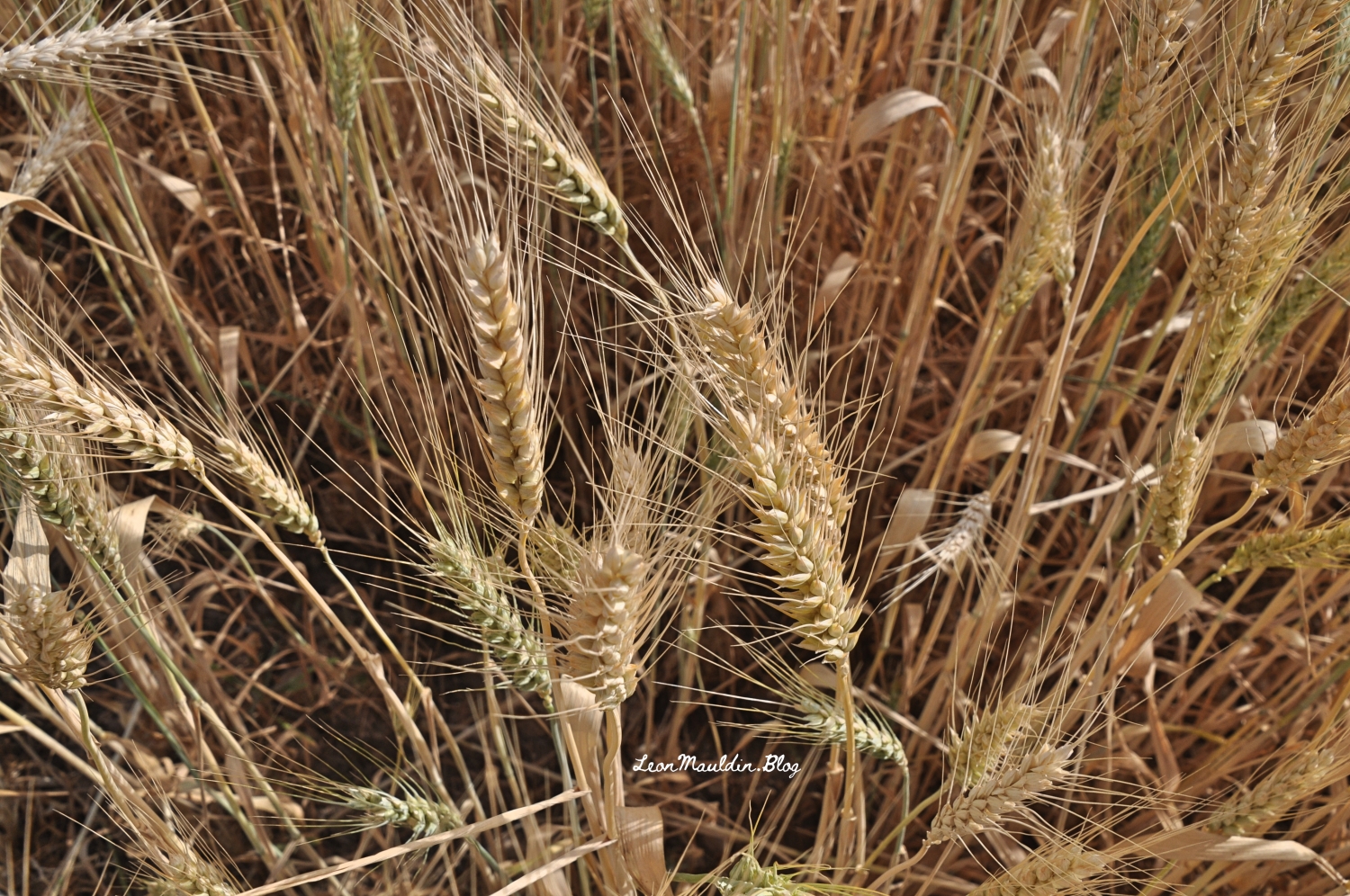
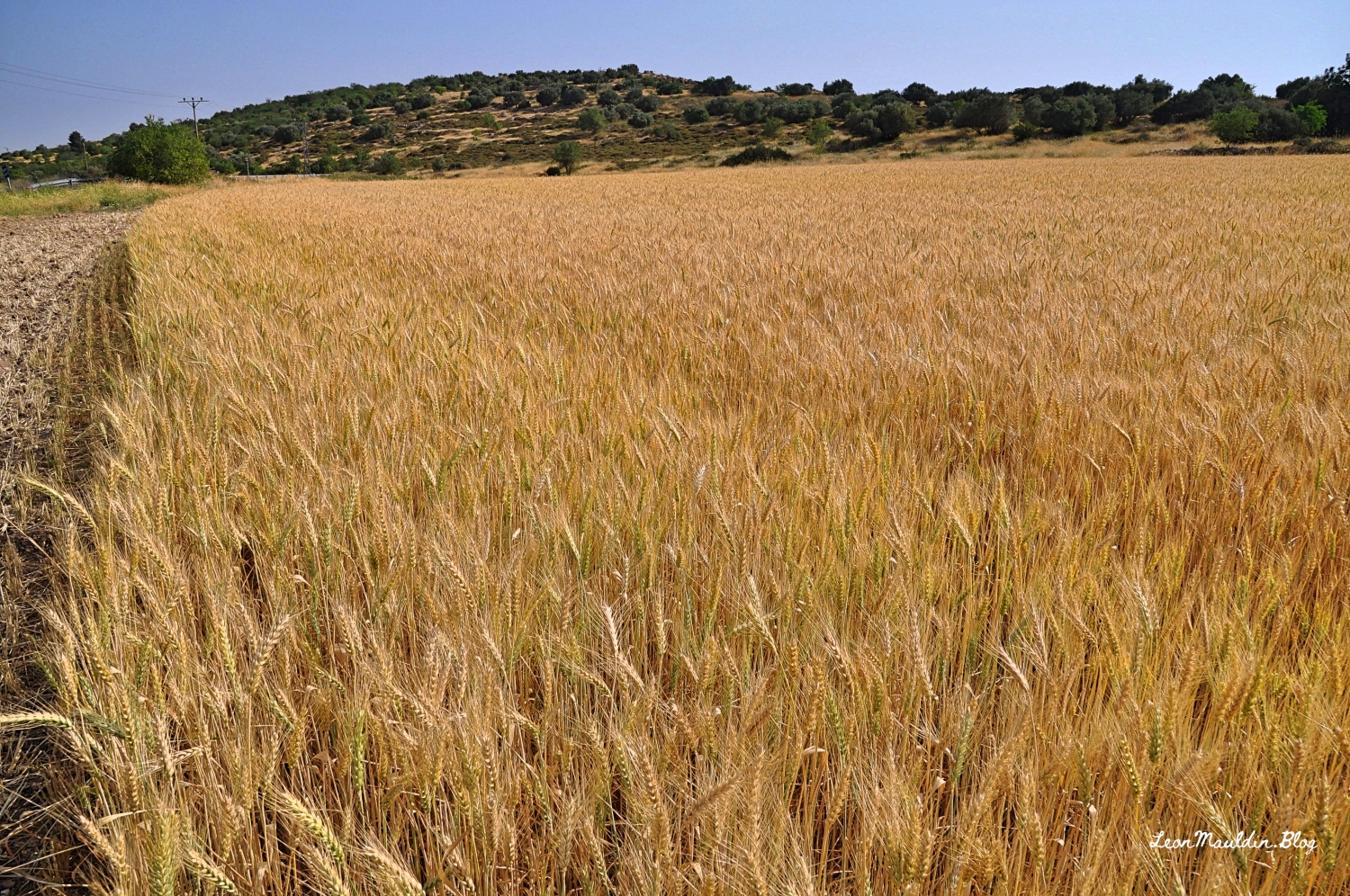
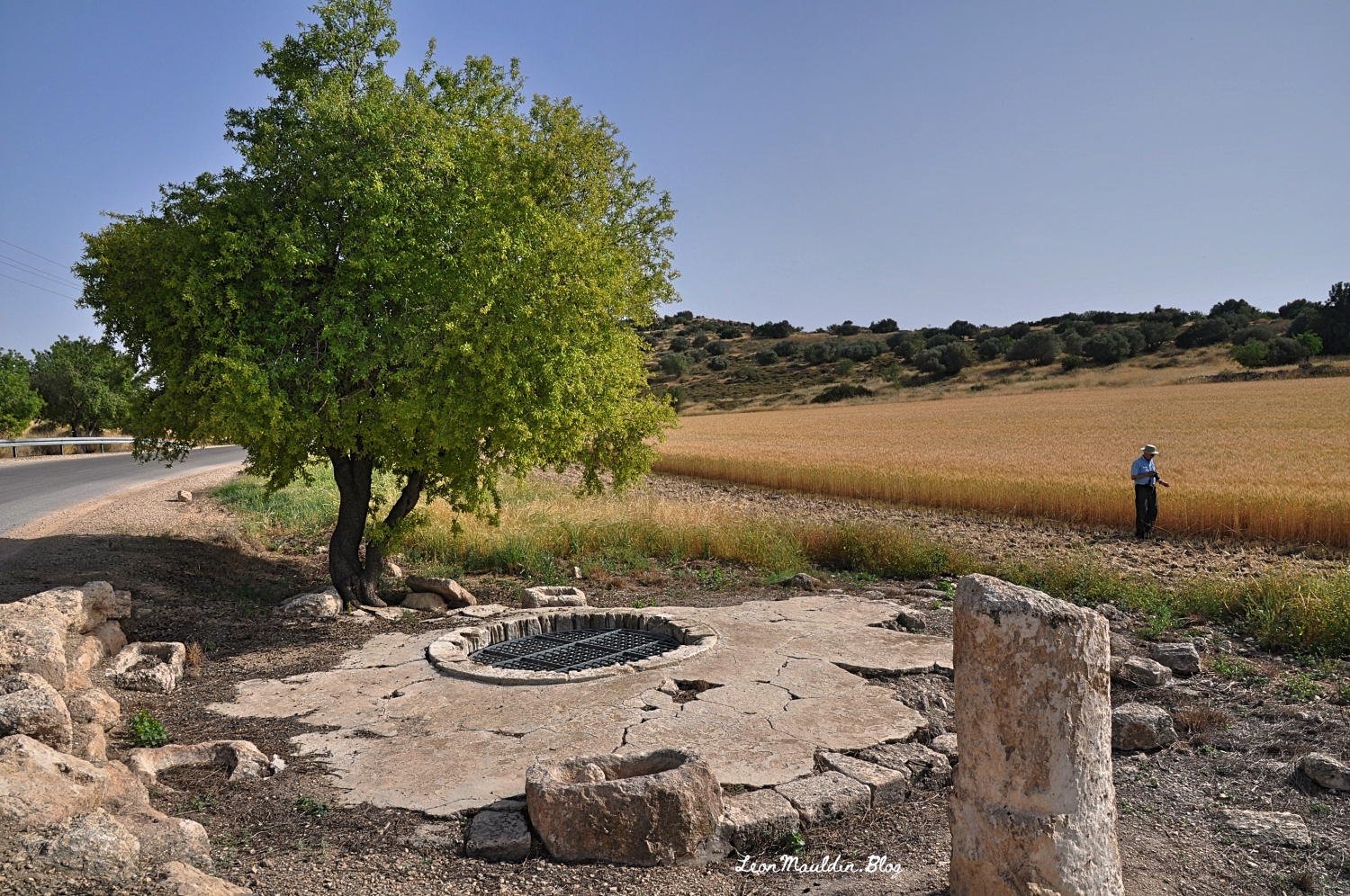
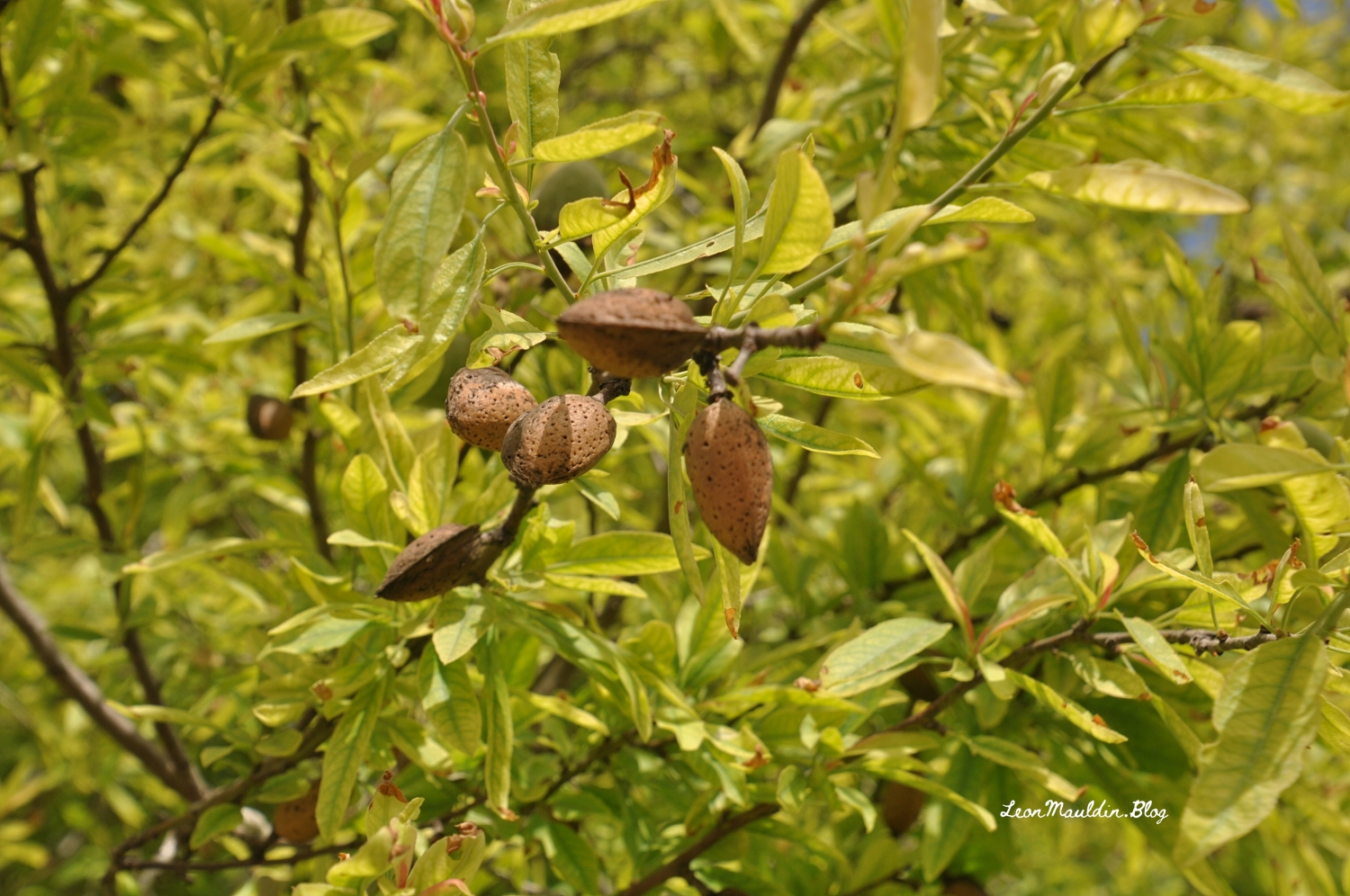
To illustrate, I want to share some photos from Maresha, near Beit Guvrin, Israel.
This photo shows a portion of the wheat field, plus an ancient well (note the rope marks), a manger, a milestone, an almond tree, and my good friend/brother Ferrell Jenkins. (He is “out standing” in his field). That’s a lot to get in one photo 🙂
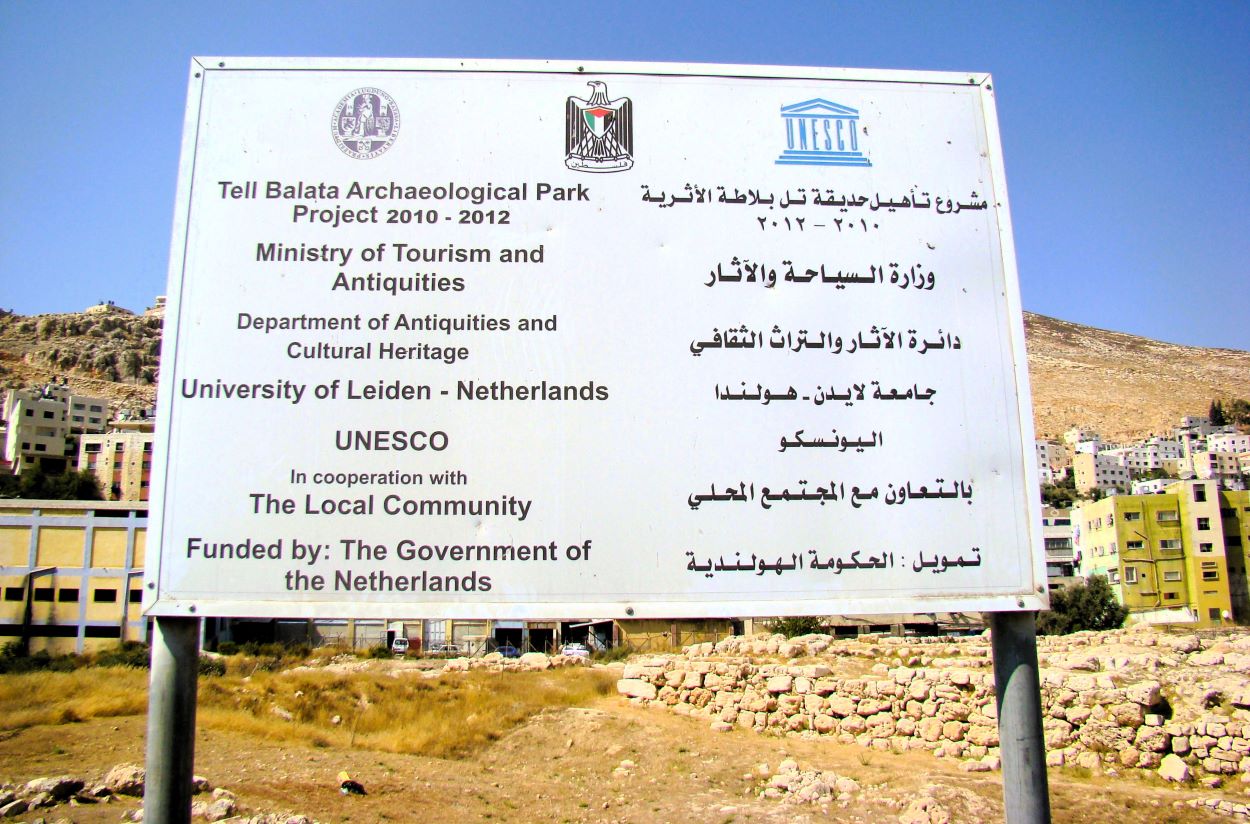
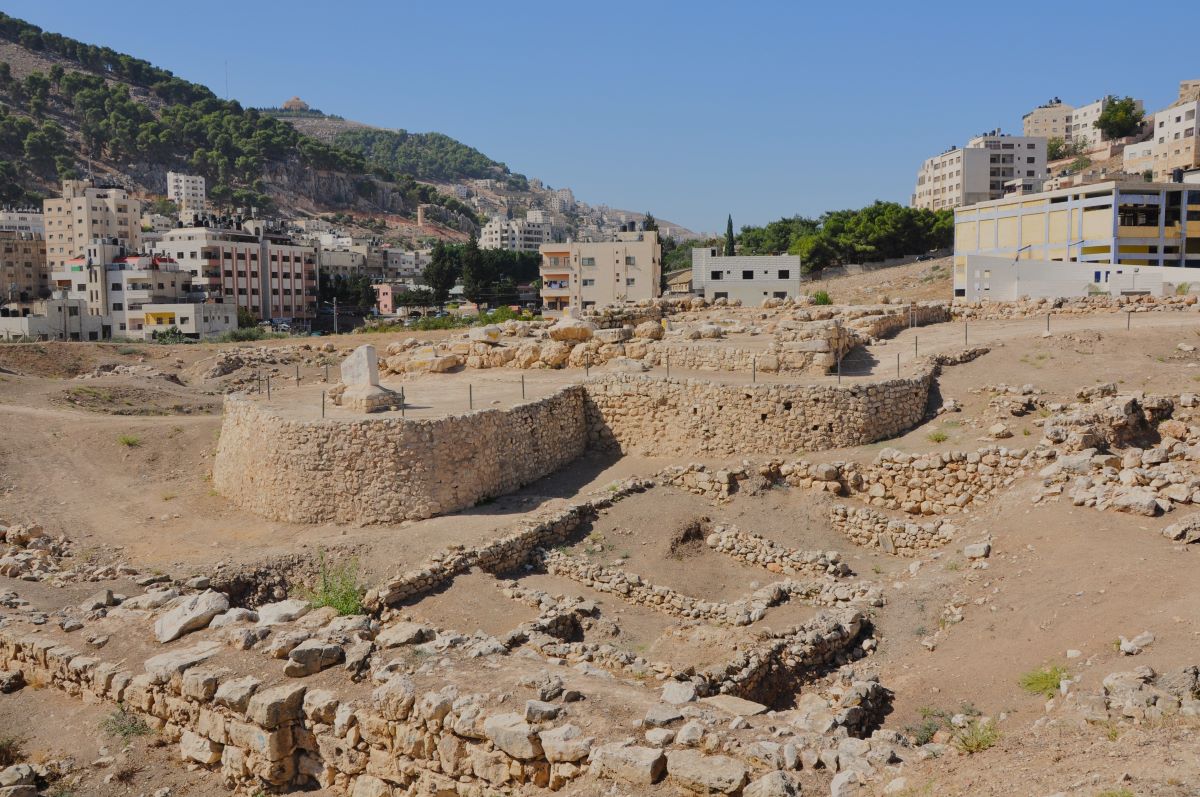
“Rehoboam went to Shechem, for all Israel had come to Shechem to make him king” (2 Chron. 10:1, ESV). Biblical Shechem is modern Tell Balata, near Nablus, in today’s West Bank. Though our text does not specify why Rehoboam went to Shechem, it was a city of great historical significance to God’s people, especially prior to the monarchy. We will briefly summarize what happened to Rehoboam at Shechem, but first let’s consider some of the biblical events that transpired at this location.
Shechem, at Israel’s geographical center. Map courtesy of biblemapper.com.
Having first entered the land of Canaan, Abraham was standing here at Shechem, with Mt. Ebal and Mt. Gerizim looming on either side, when God gave him the land promise (Gen. 12:6-7). Sadly, it was also here that Jacob’s daughter Dinah was defiled, and where Levi and Simeon savagely destroyed much of the populace in retaliation (Gen. 34).
In Joshua 8:30-35, in the early days of the Conquest of Canaan, all Israel assembled at Shechem, with six tribes on Mt. Gerizim (mount of “blessing”) and six tribes on Mt. Ebal (mount of “cursing”). At that time Joshua “read all the words of the law, the blessing and the cursings, according to all that is written in the Book of the Law” (v.34, NKJV). This was in obedience to prior instructions given by Moses in his final days (Deut. 27:11-26). In our Joshua text, that great nation who had descended from that childless couple (at the time of the promise), Abraham and Sarah, was there to lay claim to the promise. But they weren’t just there to receive the land; their reception of Canaan was grounded upon their pledge to keep the covenant of Yahweh.
Then later as Joshua’s death approached, Shechem was the location for Joshua’s last words and for Israel’s covenant renewal (Josh. 24:1-28). Shechem was also where Joseph was buried (Josh. 24:32).
In addition to its great historical significance, the site of Shechem was also a central location and thus a logical meeting place for the matter at hand, Rehoboam’s coronation. On the other hand, Maier suggests that perhaps Rehoboam sensed a bit of discontent among the northern tribes. “One clue was that they did not come to Jerusalem but wanted the meeting at another place, in Shechem, on their own turf, so to speak” (A Theological Exposition of Sacred Scripture, pub. Concordia, 1K12-22, p. 1052).
The outcome of the meeting at Shechem: The northern tribes rejected Rehoboam, with the result that the kingdom divided into Israel (north) and Judah (south). This was punitive, as a result of Solomon’s apostasy, and foretold by the prophet Ahijah (1 Kings 11; 2 Chron. 10:15; 11:1-5). The dynasty would change several times in Israel to the north, but the southern kingdom of Judah would be ruled by the Davidic dynasty, from Rehoboam (Solomon’s son) down through Zedekiah. This covers the years 931-586 BC.
It was at Shechem that Israel met with Solomon’s son Rehoboam to make him king. Shechem is located between Mount Gerizim (left) and Mount Ebal (right).
Hebron is mentioned more than sixty times in the Bible, the first of which is in Genesis 13:18: “Then Abram moved his tent, and went and dwelt by the terebinth trees of Mamre, which are in Hebron, and built an altar there to the LORD.” Remains have been excavated at Hebron which pre-date the patriarch Abraham.
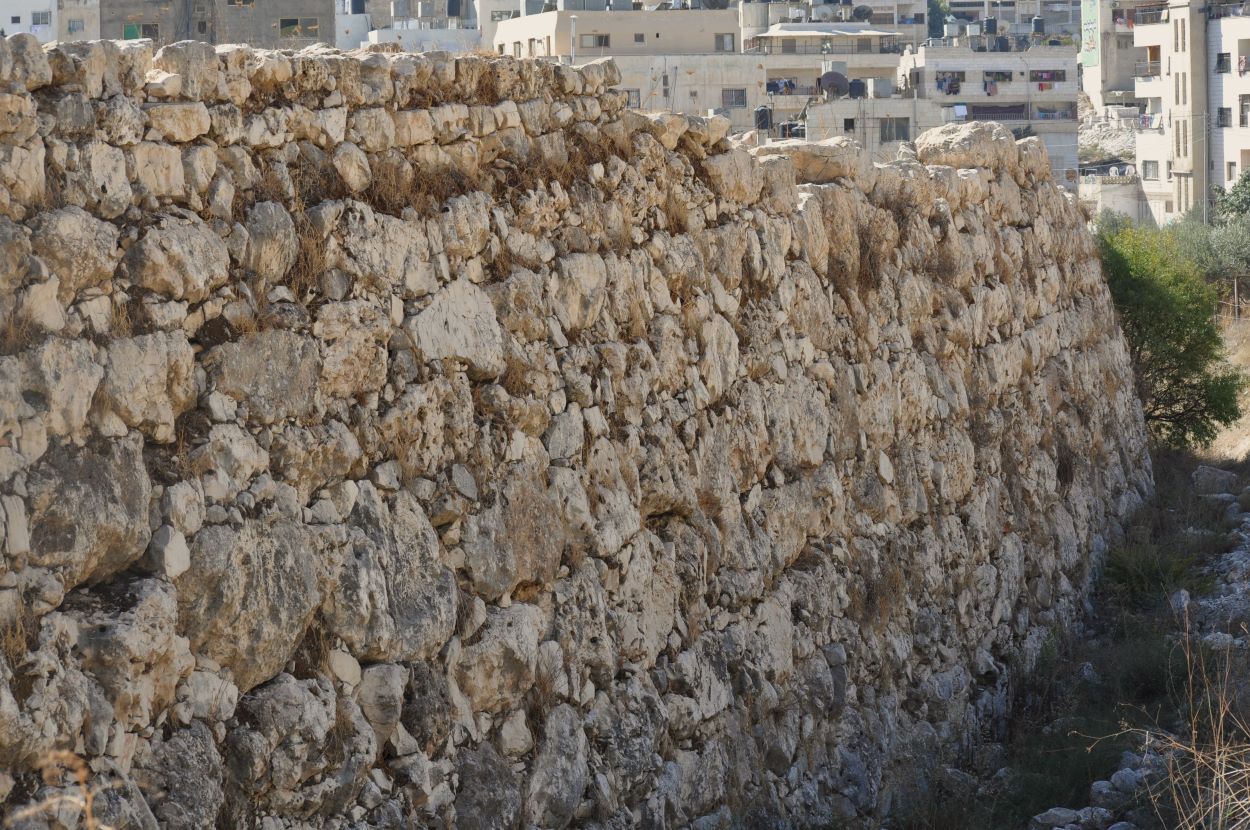
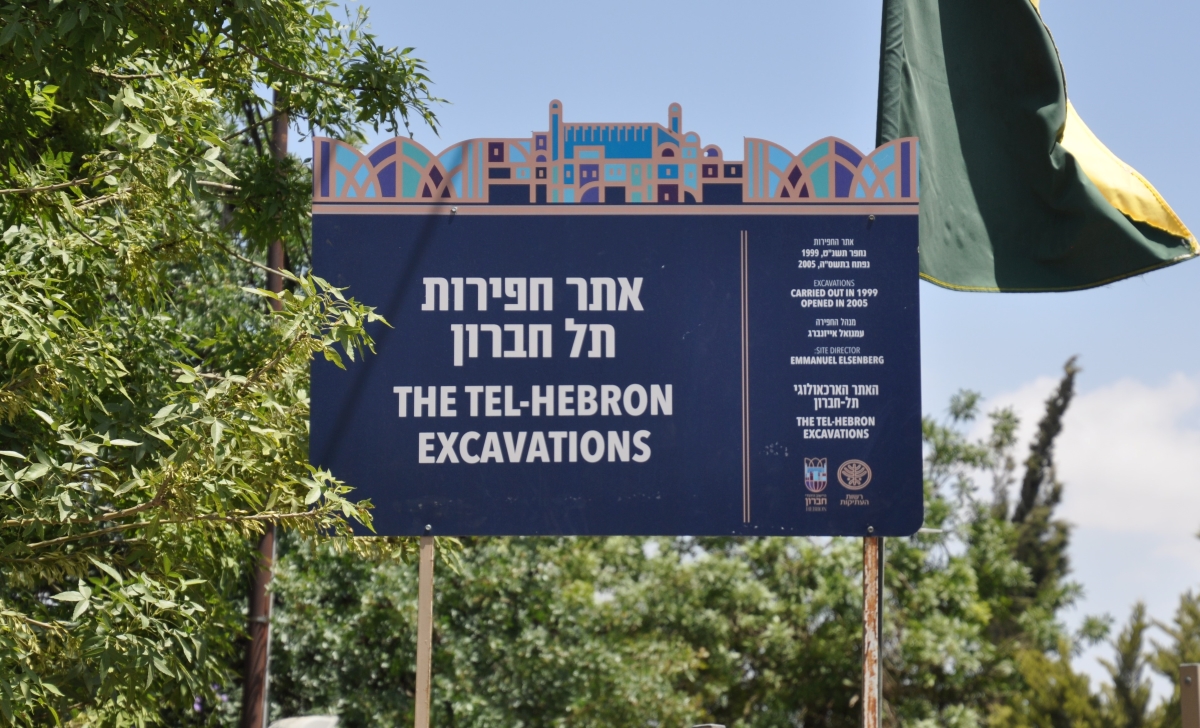
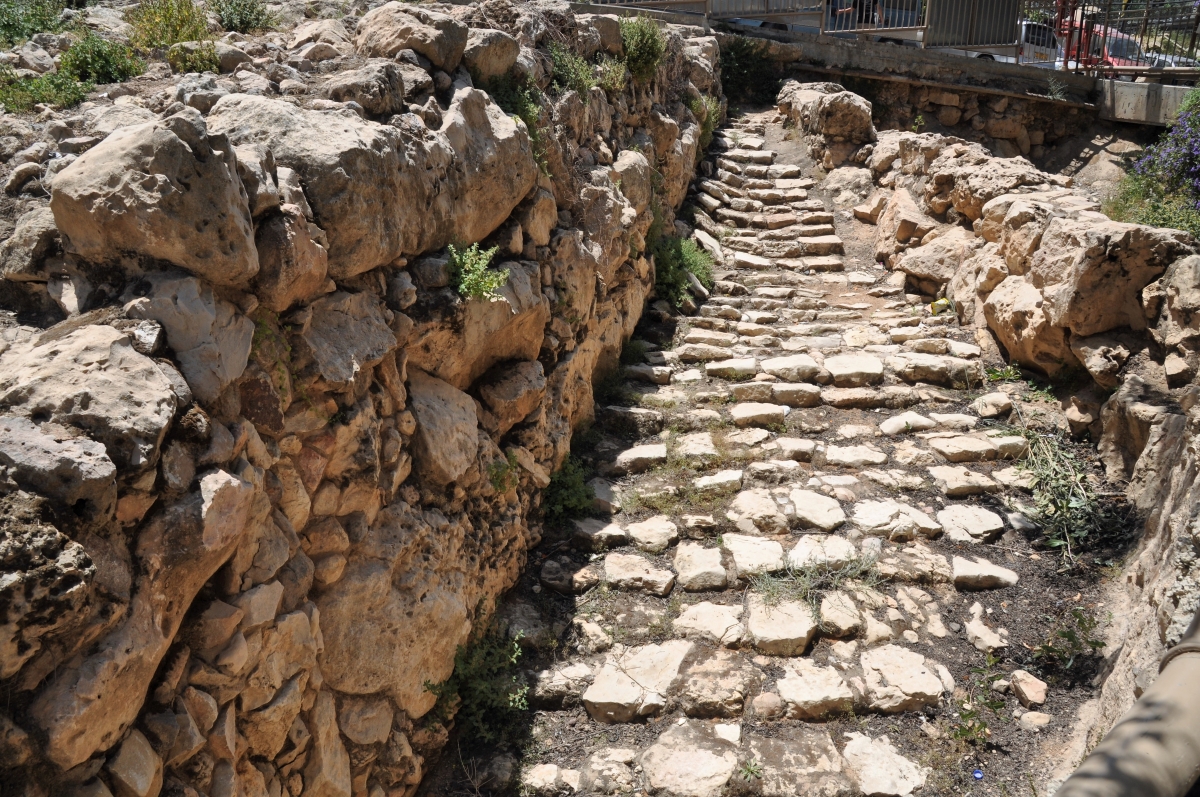
Tel-Hebron consists of approximately twelve acres. It is located about twenty miles south of Jerusalem. Excavations have uncovered a stretch of wall that is dated to the Early Bronze Age, as seen at left in photo here. The well-preserved staircase is made of natural stone slabs, well worn by the city’s ancient inhabitants. Scholars suggest the path likely led to one of Hebron’s city gates. At right is an additional wall constructed at a later date than that on your left.
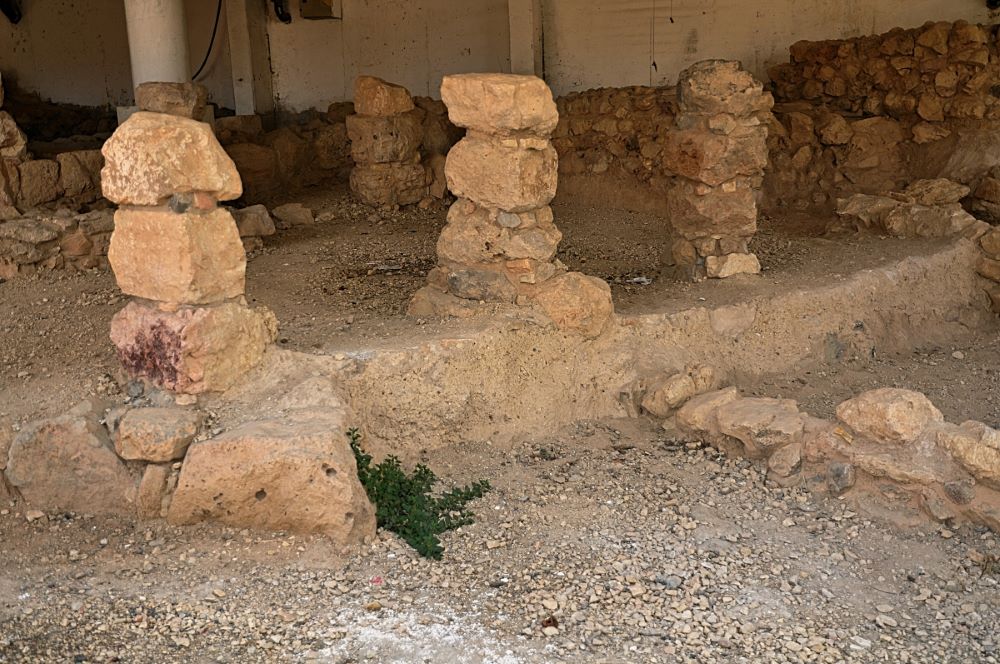
Another important discovery at Hebron is that of an 8th century BC four room house. Some scholars date the house to the time of Judah’s King Hezekiah (r. 715-686).
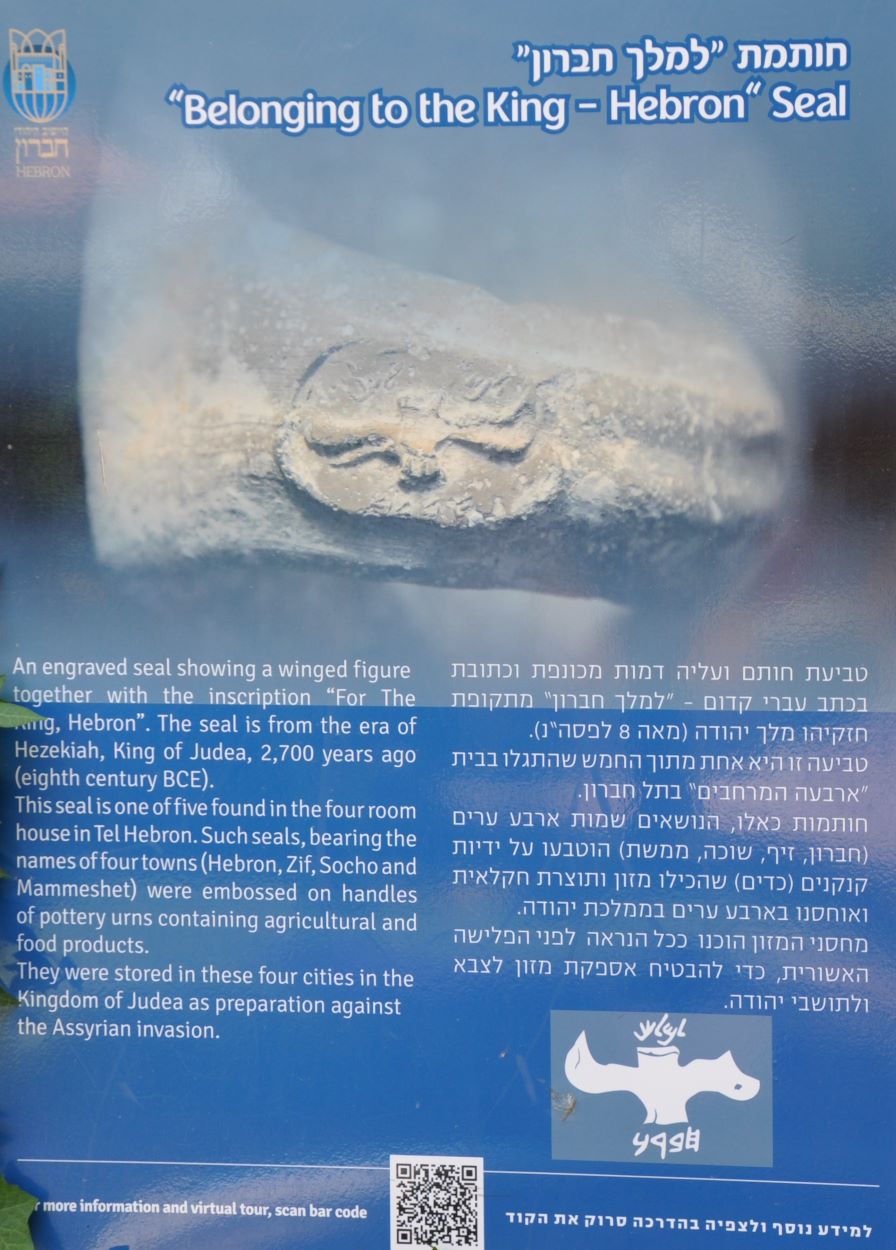
seems to have settled into the role of regional center. This is demonstrated by the phenomenon of l’melekh handles. The term means “(belonging) to the king” or “property of the king.” The four-letter Hebrew designation (LMLK) was stamped into the wet clay of the handle of a certain type of storage jar at the end of the eighth century B.C.E. The jars were probably produced during the reign of King Hezekiah in preparation for the attack on Judah by Sennacherib’s Assyrian army, which occurred in 701 B.C.E.
L’melekh handles display either a two-winged sun disk or a four-winged scarab, but, more importantly for our purposes, they also include the name of one of four cities of Judah. One of these four cities was Hebron. (BAR 31:5, Sept/Oct 2005).
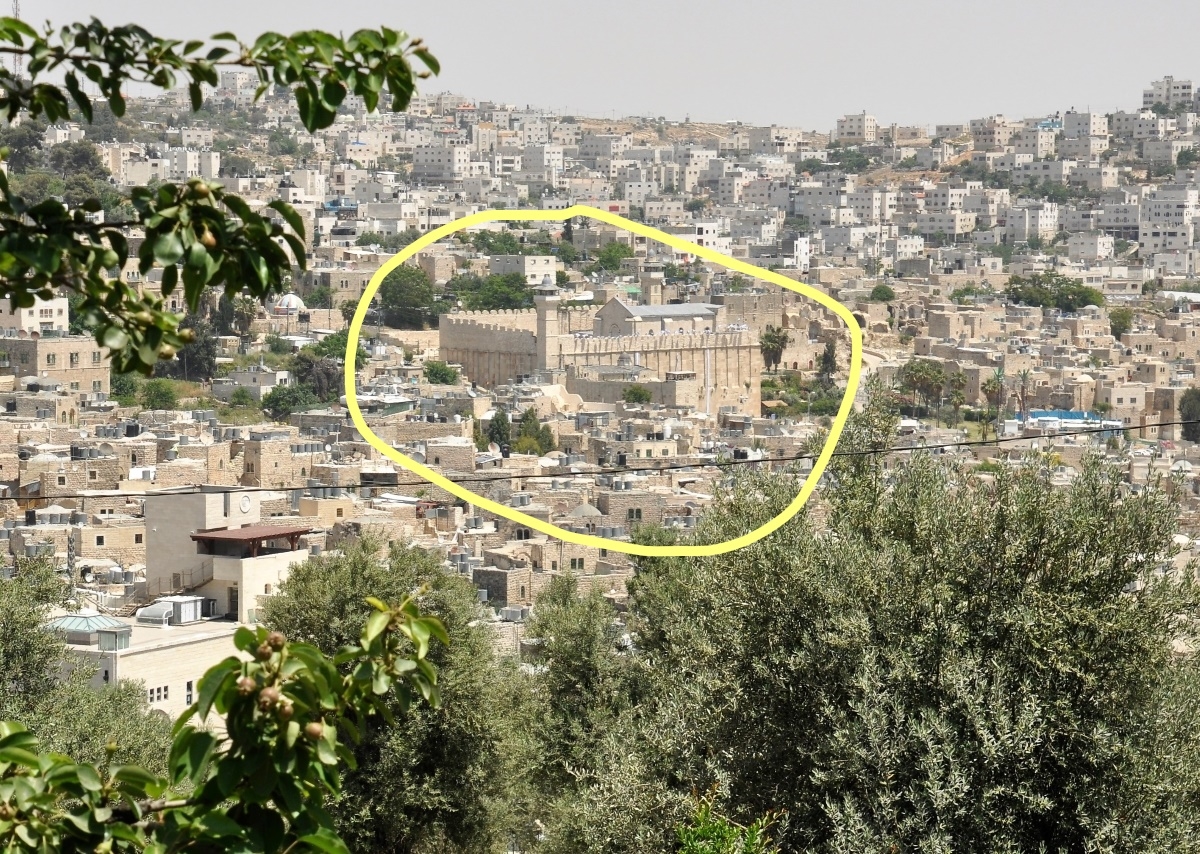
From Tel-Hebron one can see the Cave of Machpelah which Abraham purchased as a burial site. Herod the Great built the edifice which now covers the cave.
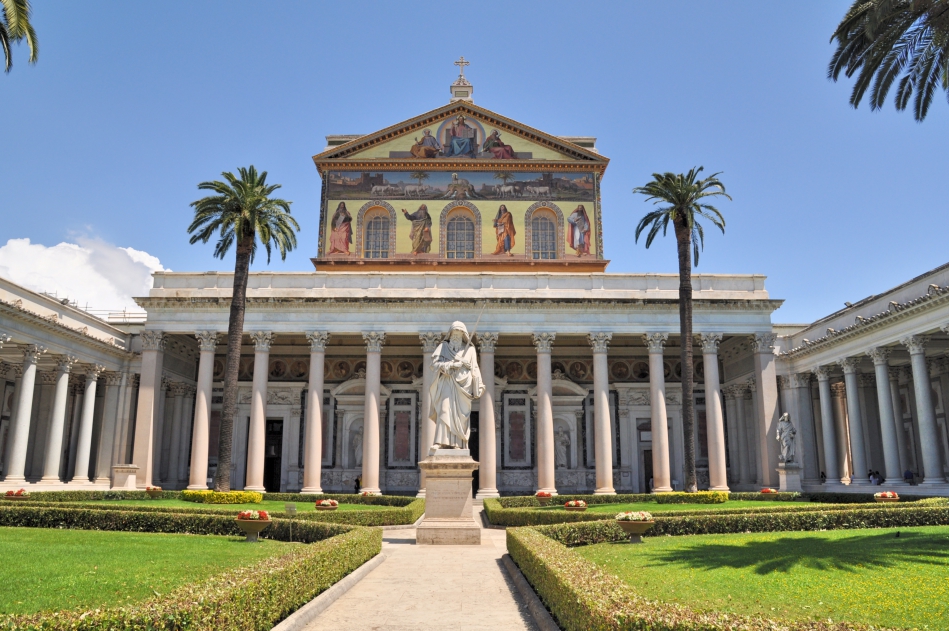
My group arrived safely Tuesday morning in Rome. We visited the Papal Basilica of St. Paul outside the Walls, as well as other stops, including the catacombs, as time permitted before dinner. This building was constructed to honor the martyrdom of Paul.
The facade at the quadriportico at the Basilica of st. Paul outside the Walls. Photo by Leon Mauldin.
As a result of the Edict of Milan in the year 313 AD, the official persecution of Christians cease. The Emperor Constantine had a basilica built over the tomb venerated as that of the Apostle Paul.
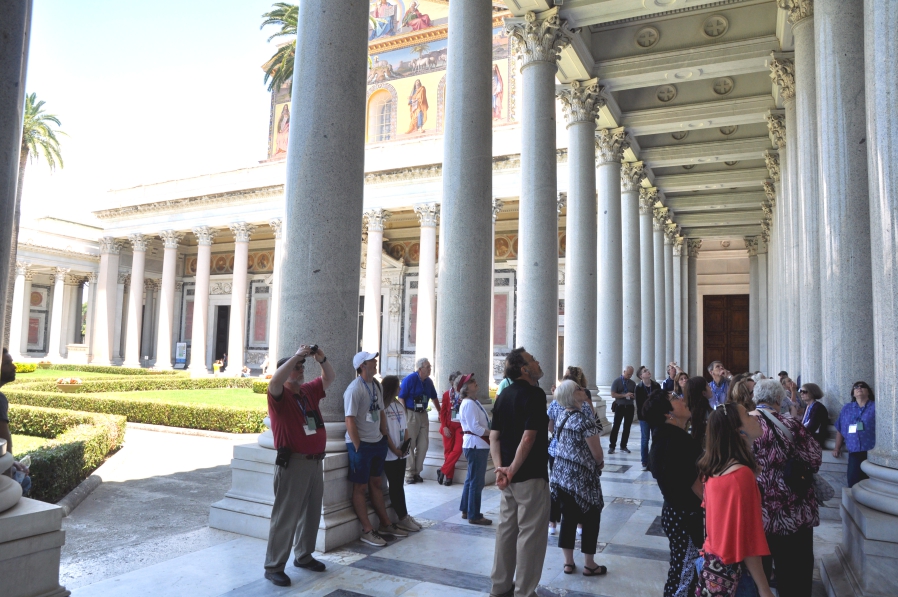
Group shot at the basilica. Photo by Leon Mauldin.
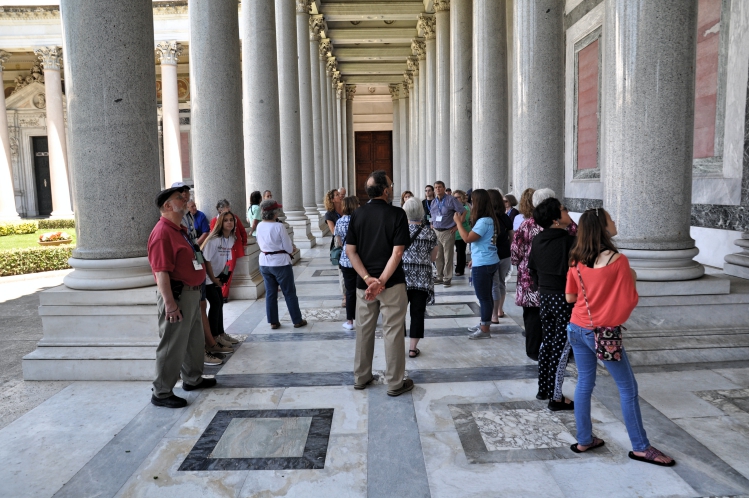
Group shot at colonnade at basilica. Photo by Leon Mauldin.
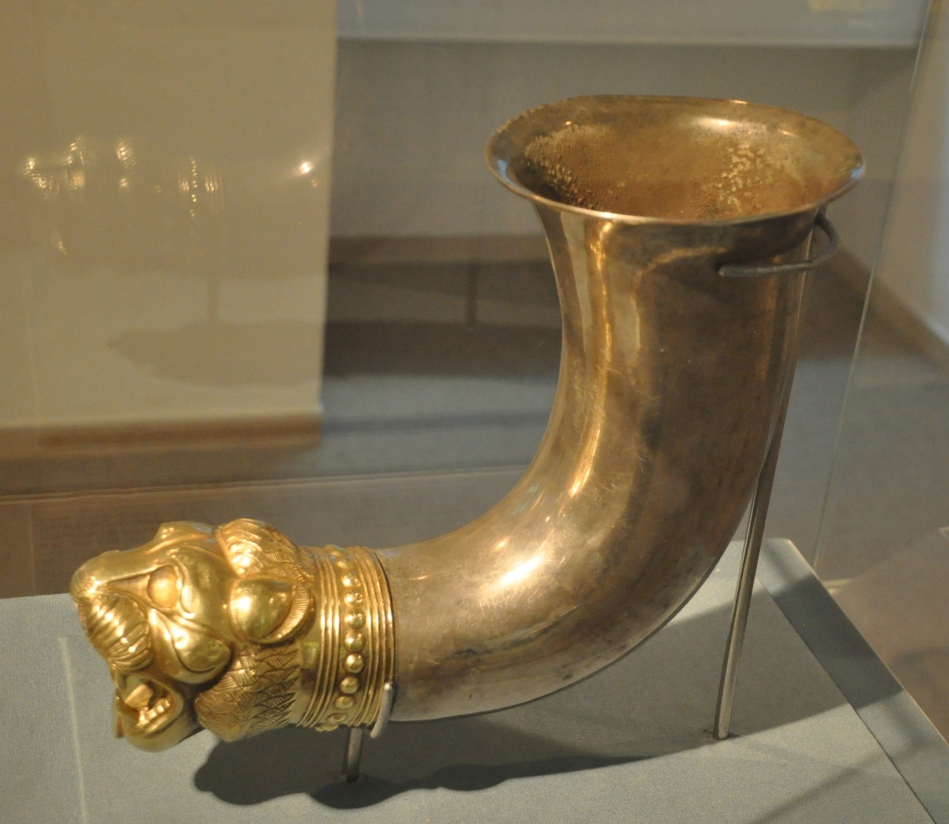
Nehemiah, whom God used to rebuild the walls of Jerusalem (444 BC), served during the administration of the Persian King Artaxerxes (464-423 BC). Nehemiah states, “For I was the king’s cupbearer” (Nehemiah 1:11).
Drinking Cup. Bible Lands Museum, Jerusalem. Photo by Leon Mauldin.
Professor Edwin Yamauchi has some helpful information on what it would have meant to be a “cupbearer”:
“Cupbearer” (mašqeh is a Hiphil participle of the verb šaqāh) literally means “one who gives (someone) something to drink.” It occurs twelve times in the OT in the sense of “cupbearer,” e.g., in 1 Kings 10:5 and 2 Chronicles 9:4 of Solomon’s attendants. In the Joseph story it occurs nine times (Gen 40:1–41:9), but its significance is obscured by the KJV and the RSV, which translate the word “butler.” That the cupbearer could have other responsibilities as well is indicated by Tobit 1:22: “Now Ahikar was cupbearer, keeper of the signet, and in charge of administration of the accounts, for Esarhaddon had appointed him second to himself.” For archaeological evidence of Persian wine services, see P.R.S. Moorey, “Metal Wine-Sets in the Ancient Near East,” Iranica Antiqua 15 (1980): 181ff.
Varied sources suggest something about Nehemiah as a royal cupbearer:
1. He would have been well-trained in court etiquette (cf. Dan 1:4–5).
2. He was probably a handsome individual (cf. Dan 1:4, 13, 15; Jos. Antiq. XVI, 230 [viii.1]).
3. He would certainly know how to select the wines to set before the king. A proverb in the Babylonian Talmud (Baba Qamma 92b) states: “The wine belongs to the master but credit for it is due to his cupbearer.”
4. He would have to be a convivial companion, willing to lend an ear at all times.
5. He would have great influence as one with the closest access to the king, able to determine who was able see his master.
6. Above all Nehemiah had to be one who enjoyed the unreserved confidence of the king. The great need for trustworthy court attendants is underscored by the intrigues endemic to the Achaemenid court. Xerxes, father of Artaxerxes I, was killed in his own bedchamber by Artabanus, a courtier (The Expositor’s Bible Commentary: 1 & 2 Kings, 1 & 2 Chronicles, Ezra, Nehemiah, Esther, Job. Vol. 4, p. 683).
H.G.M. Williamson notes:
Royal cupbearers in antiquity, in addition to their skill in selecting and serving wine and their duty in tasting it as proof against poison, were also expected to be convivial and tactful companions to the king. Being much in his confidence, they could thus wield considerable influence by way of informal counsel and discussion. Texts and pictures from many Ancient Near Eastern sources (including Achaemenid) supporting this statement have been helpfully collected by Yamauchi, ZAW 92 (1980) 132–42. The portrayal fits admirably with the sequel in chap. 2. It may be noted also that the office of cupbearer could be combined with other important offices. (Word Biblical Commentary, Ezra, Nehemiah. Vol. 16, p. 174).
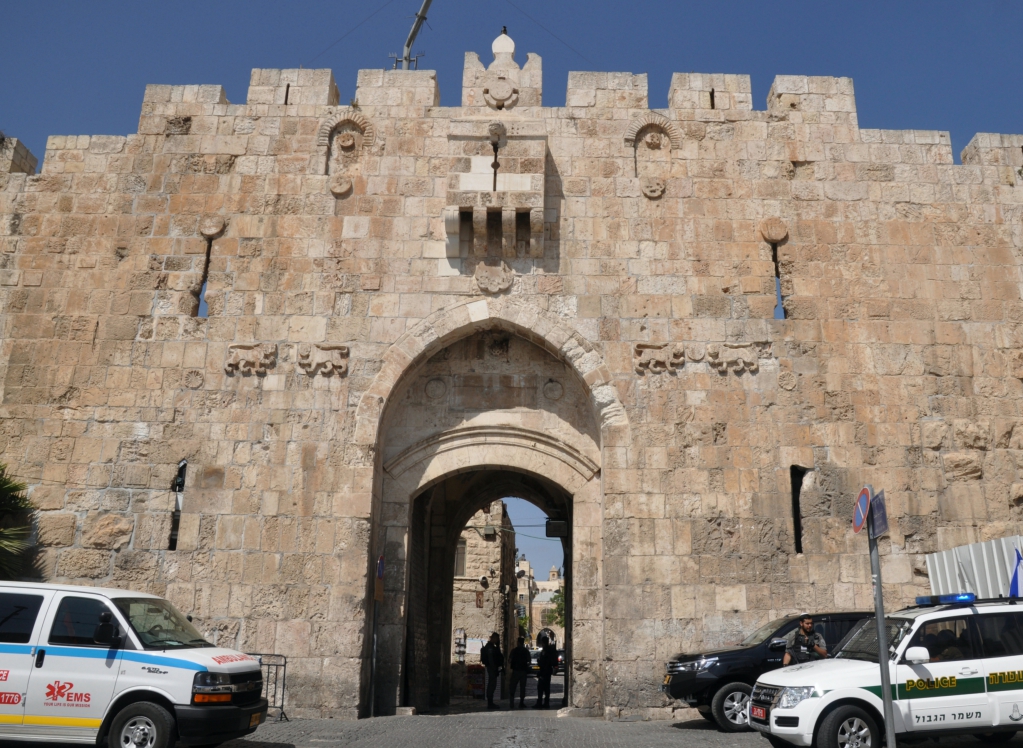
St. Stephen’s Gate, also known as the “Lion’s Gate,” is one of seven open Gates in Jerusalem’s Old City Walls. This gate is located on the Eastern Wall. It is It is called “St. Stephen’s Gate” because of the tradition that Stephen, the first martyr of the church (Acts 6-7), was stoned to death at this location just outside the city walls.
St. Stephen’s Gate, located on Jerusalem’s Eastern Wall. Photo by Leon Mauldin.
In Acts 7, Luke records Stephen’s sermon to the Sanhedrin (the ruling council overseen by the High Priest), as well as the response:
“You stiff-necked people, uncircumcised in heart and ears, you always resist the Holy Spirit. As your fathers did, so do you. Which of the prophets did not your fathers persecute? And they killed those who announced beforehand the coming of the Righteous One, whom you have now betrayed and murdered, . . . you who received the law as delivered by angels and did not keep it.” Now when they heard these things they were enraged, and they ground their teeth at him. But he, full of the Holy Spirit, gazed into heaven and saw the glory of God, and Jesus standing at the right hand of God. And he said, “Behold, I see the heavens opened, and the Son of Man standing at the right hand of God.” But they cried out with a loud voice and stopped their ears and rushed together at him.Then they cast him out of the city and stoned him. And the witnesses laid down their garments at the feet of a young man named Saul. And as they were stoning Stephen, he called out, “Lord Jesus, receive my spirit.” And falling to his knees he cried out with a loud voice, “Lord, do not hold this sin against them.” And when he had said this, he fell asleep (Acts 7:51-60).
Murphy-O’Connor notes, “The current Hebrew name, ‘Lions’ Gate’, is due to a mistake. The pairs of animals are in fact panthers, the heraldic emblem of the Mamluk sultan Baybars (1260–77), which Suliman’s architects set on either side of the gate to celebrate the Ottoman defeat of the Mamluks in 1517” (The Holy Land: An Oxford Archaeological Guide from Earliest Times to 1700 (Oxford Archaeological Guides, p.21).


 Posted by Leon Mauldin

 leonmauldin.blog