Bethlehem of Galilee

August 28, 2014

In studying the book of Judges, brief mention is made of Ibzan of Bethlehem. The text notes that he had 30 sons and 30 daughters, and states that he judged Israel for seven years (Jud. 12:8-10). Very likely this is the Bethlehem of Galilee, not the Bethlehem of Judah, the latter being remembered of course as the birthplace of Jesus (Micah 5:2; Matt. 2:1). There were two biblical cities named Bethlehem. This is why the Bible is very specific in clarifying that Jesus was born in Bethlehem of Judah in these texts.

Joshua 19 describes the inheritance of Zebulun (of Galilee) and Bethlehem is included in the list: “Included also were Kattah and Nahalal and Shimron and Idalah and Bethlehem; twelve cities with their villages” (v.15). Note the location of the map here:

Bethlehem of Galilee. Map by BibleAtlas.org.

Bethlehem of Galilee. Map by BibleAtlas.org.

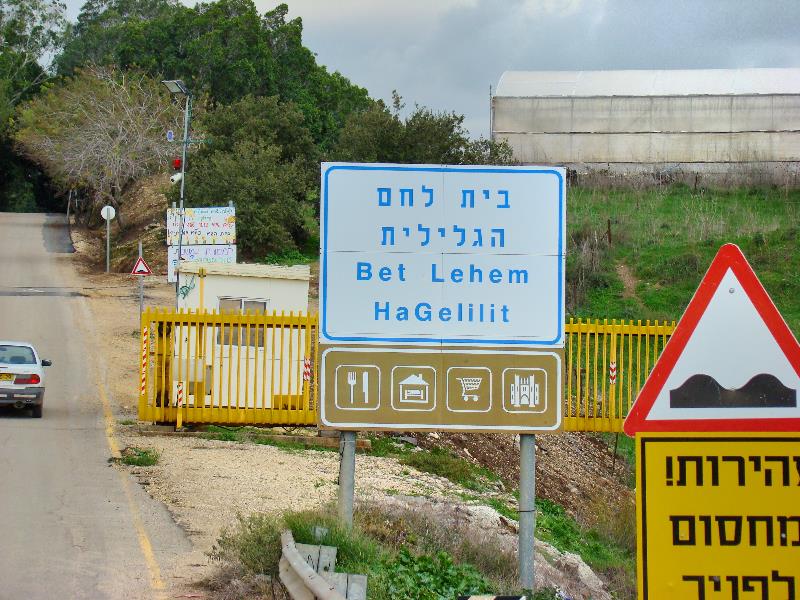
Here is a shot of the city sign upon entering from the south.

Bethlehem of the Galilee sign. Photo by Leon Mauldin.

Bethlehem of the Galilee sign. Photo by Leon Mauldin.

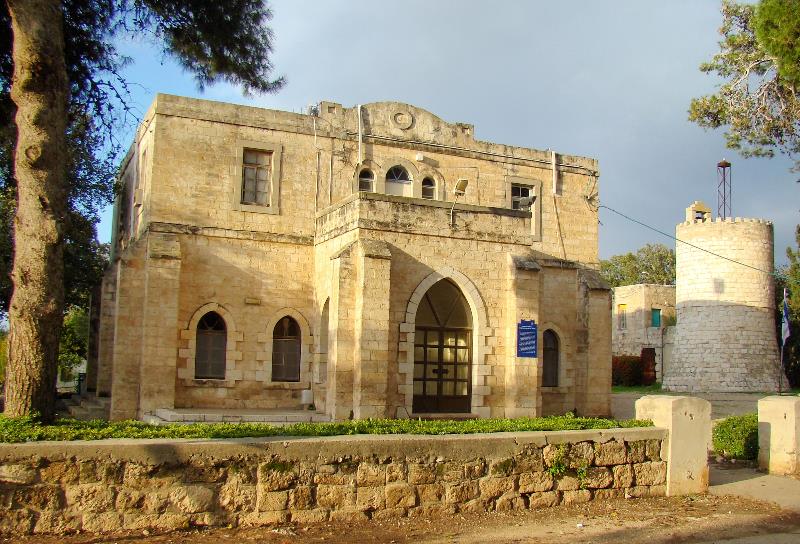
The earlier presence of the Templars may still be seen.

Bethlehem Templar Folk House. Photo by Leon Mauldin.

Bethlehem Templar Folk House. Photo by Leon Mauldin.

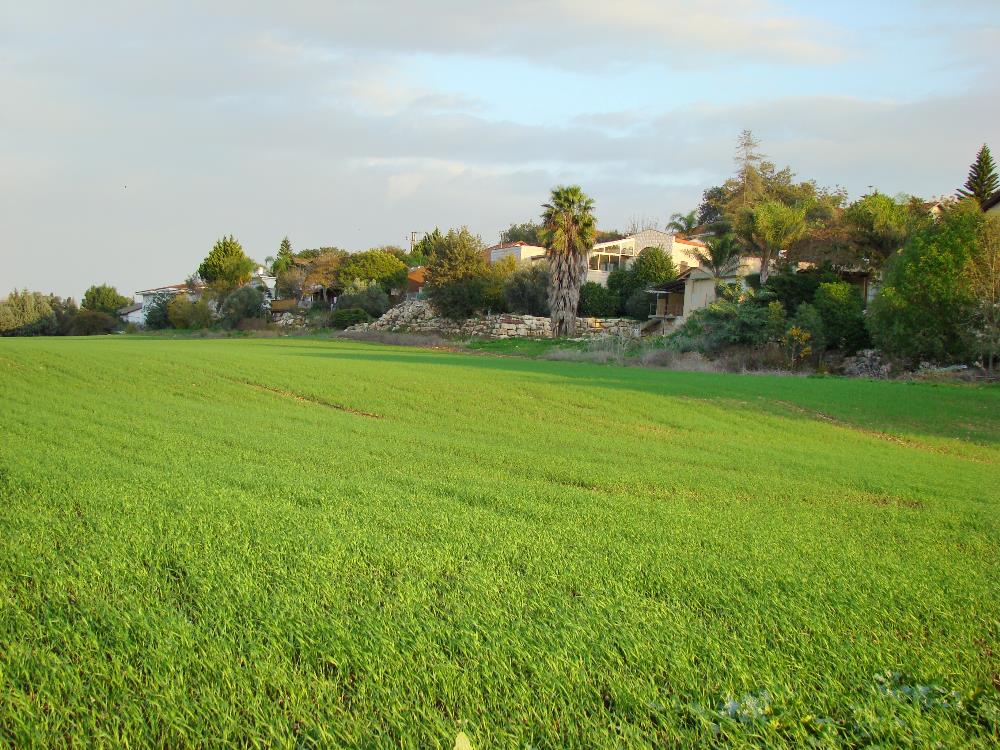
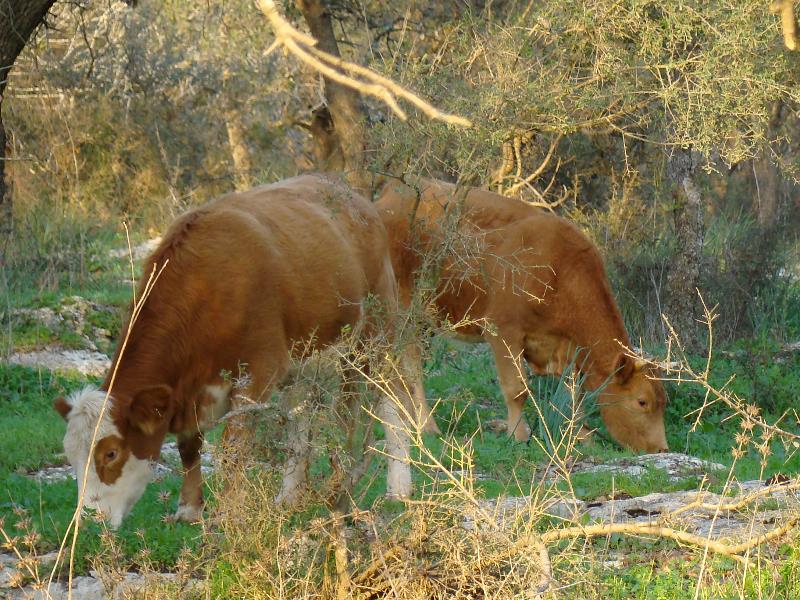
Today Bethlehem of the Galilee is a moshav, a cooperative agricultural community of individual farms.

Pasture in Bethlehem. Photo by Leon Mauldin.

Pasture in Bethlehem. Photo by Leon Mauldin.

Cattle at Bethlehem. Photo by Leon Mauldin.

Cattle at Bethlehem. Photo by Leon Mauldin.


Michelangelo’s Moses

August 22, 2014

One of the innumerable attractions in Rome is Michelangelo’s Moses, housed in the Church of San Pietro in Vincoli.

Church of San Pietro in Vincoli, Rome. Photo ©Leon Mauldin.

Church of San Pietro in Vincoli, Rome. Photo ©Leon Mauldin.

The main attraction inside is the statue of Moses, sculpted by Italian High Renaissance artist Michelangelo Buonarroti, creating this work in the years 1513-1515. This sculpture was originally commissioned in 1505 by Pope Julius II for his tomb.

Michelangelo's Moses, 1513-1515. In Rome. Photo ©Leon Mauldin.

Michelangelo’s Moses, 1513-1515. In Rome. Photo ©Leon Mauldin.

Moses is here depicted as seated, holding the two tablets of stone. Some suggest the intensity portrayed is meant to represent his holy anger when he cast down the stones upon being confronted with Israel’s idolatry.

Moses is seen here with horns on his head. This is based on a rendering in the Vulgate, the Latin translation of the Bible in use during Michelangelo’s time. The text of our English Standard Version renders Exodus 34:29, which speaks of Moses coming down from Mt. Sinai after talking with God, says, “When Moses came down from Mount Sinai, with the two tablets of the testimony in his hand as he came down from the mountain, Moses did not know that the skin of his face shone because he had been talking with God.” The Latin Vulgate renders the Hebrew word qaran, “to shine” as “horned.” Hence the horns on Michelangelo’s Moses.

The statue stands 8 feet, 4 inches and is made of solid marble.

Click on images for larger view.


Travel in Bible Times–Tomb of Merchant Flavius Zeuxis

June 26, 2014

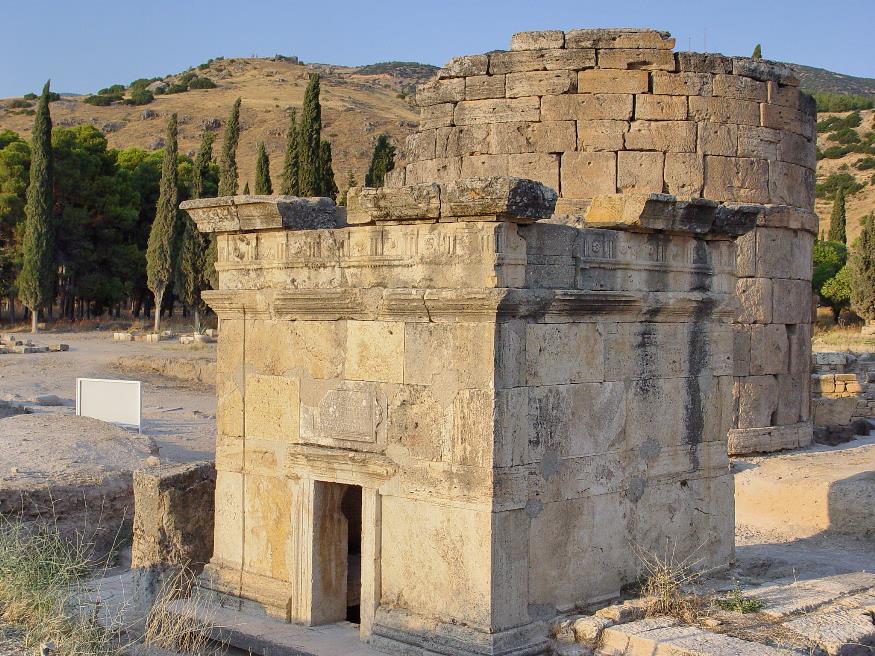
The necropolis of Hierapolis is one of  the largest ancient burial sites in Turkey. Tombs there date from 2nd century BC through 3rd century AD. One of the more interesting is that of T. Flavius Zeuxis and his sons (1st century AD).
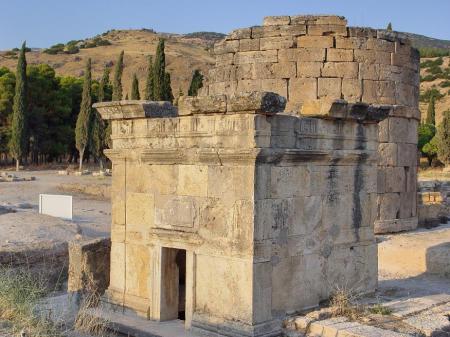
Tomb of Flavius Zeuxis, merchant of Hierapolis. Photo ©Leon Mauldin.

Tomb of Flavius Zeuxis, merchant of Hierapolis. Photo ©Leon Mauldin.

Dr. Carl Rasmussen observes: “Note the finely carved doorway with doorposts and lintel, the carved base, the slightly protruding stones of the corners (pilasters) of the tomb, the upper molding, and the Doric frieze composed of triglyphs and metopes filled with rosettes!” Click here.

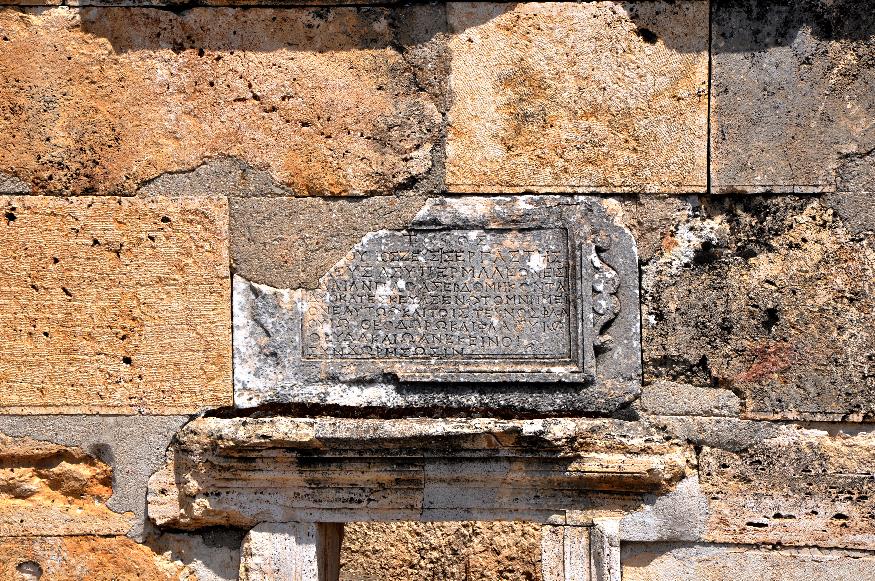
The inscription above the tomb entrance is translated, “Flavius Zeuxis, merchant, who sailed seventy-two trips around Cape Malea to Italy, built this.”
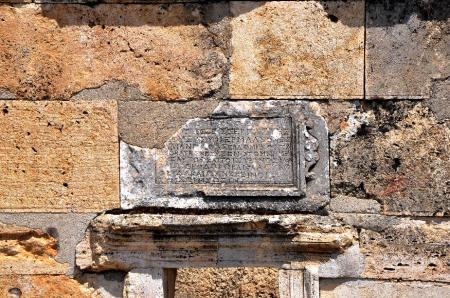
Tomb Inscription above door. Photo ©Leon Mauldin.

Tomb Inscription above door. Photo ©Leon Mauldin.

This inscription is helpful on several counts. Cape Malea is the southern tip of Greece’s Peloponnesus peninsula. It is famous for its treacherous weather and seas. William Barclay wrote:

It was a dangerous cape, and to round Cape Malea had in ancient days much the same sound and implications as to round Cape Horn had in later times. The Greeks had two sayings which showed what they thought of the voyage round Malea-“Let him who sails round Malea forget his home,” and, “Let him who sails round Malea first make his will.” (The Letters to the Corinthians, p.1).

Obviously it would have been considered quite an accomplishment to have made 72 trips around the Cape. This would mean a total of 36 round trips this merchant had made from Hierapolis of Asia Minor to Italy and back! Some have suggested that Zeuxis would have made two or three trips per year from Hierapolis to sell his goods in Italy.

This has implications for several biblical texts. For example, when Paul (as a prisoner under house arrest) was writing the NT letter of Colossians from Rome, Epaphras of Colossae was with him (Col. 1:7). Paul went on to referenced the tri-cities of Colossae, Hierapolis, and Laodicea as he spoke of Epaphras’ work among them:

Epaphras, who is one of you, a bondservant of Christ, greets you, always laboring fervently for you in prayers, that you may stand perfect and complete in all the will of God. For I bear him witness that he has a great zeal for you, and those who are in Laodicea, and those in Hierapolis. (Col. 2:12-13, NKJV).

The Zeuxis inscription shows it would not be unusual for residents of the Lycus River Valley, such as Epaphras, to make the voyage to Rome and back.

The travel of merchants such as Zeuxis also helps us relate to Paul’s journeys recorded in Acts, many of which were by sea. Further, it is not without significance that Paul mentioned the dangers he faced, including those on the sea:

 I have been on journeys many times, in dangers from rivers, in dangers from robbers, in dangers from my own countrymen, in dangers from Gentiles, in dangers in the city, in dangers in the wilderness, in dangers at sea, in dangers from false brothers (2 Cor. 11:26, NET).

But notwithstanding the potential dangers faced, travel by sea in the 1st century was common!

Also we might think of Rev. 18:11-13, with its extensive list of trade good that merchants (like our Flavius Zeuxis) from various locations in the Empire, brought to Rome. Contextually this passage speaks of the mourning that will come as a result of the fall of Rome:

And the merchants of the earth will weep and mourn over her, for no one buys their merchandise anymore: merchandise of gold and silver, precious stones and pearls, fine linen and purple, silk and scarlet, every kind of citron wood, every kind of object of ivory, every kind of object of most precious wood, bronze, iron, and marble; and cinnamon and incense, fragrant oil and frankincense, wine and oil, fine flour and wheat, cattle and sheep, horses and chariots, and bodies and souls of men.

Click on images for larger view.


Laodicea, a Wealthy City — a Poor Church

June 18, 2014

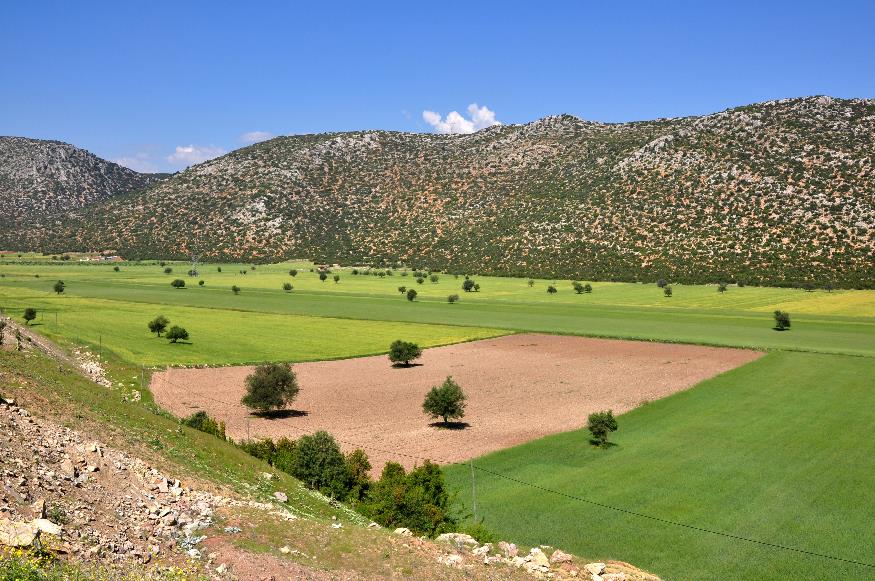
There is some beautiful scenery as you make the drive from the Mediterranean coast at Antalya (biblical Attalia) north and west to Laodicea.

En Route NW to Laodicea from Med. coast. Photo ©Leon Mauldin.

En Route NW to Laodicea from Med. coast. Photo ©Leon Mauldin.

Laodicea was known to be a wealthy city. It was a banking center, had a medical school specializing in ophthalmology, and manufactured clothing, especially known for its black wool market.

It is always a danger that God’s people become like the world around them. Jesus addressed the church at Laodicea (Revelation 3:14-21) and rebuked them for their self-satisfied, complacent attitude:

Because you say, “I am rich, and have become wealthy, and have need of nothing,” and you do not know that you are wretched and miserable and poor and blind and naked, I advise you to buy from Me gold refined by fire so that you may become rich, and white garments so that you may clothe yourself, and that the shame of your nakedness will not be revealed; and eye salve to anoint your eyes so that you may see (vv.16-18).

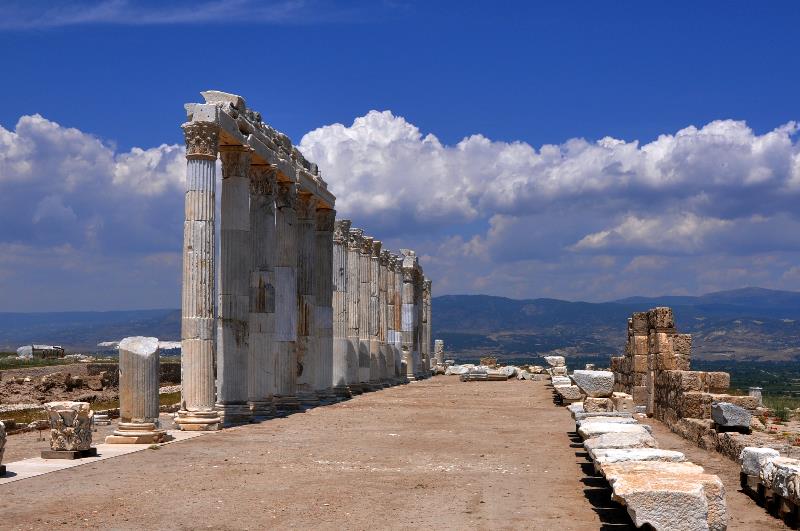
Excavations have shown numerous indications of Laodicea’s wealth.

Columns lining street in Laodicea. Photo ©Leon Mauldin.

Columns lining street in Laodicea. Photo ©Leon Mauldin.

W.M. Ramsay wrote:

It is characteristic of a city devoted to commercial interests and the material side of life, that the Church of Laodicea is entirely self-satisfied. It says, as the city said in A.D. 60, when it recovered its prosperity after the great earthquake without any of that help which the Imperial government was generally ready to bestow, and which the greatest cities of Asia had always been ready to accept, “I have grown rich, and have need of nothing.” It has never seen its real condition: it is poor and blind and naked (Letters to the Seven Churches, p.428).

Their complacency led to lukewarmness, and this nauseated the Lord (v.16). This is the only church of the seven addressed in Rev. 2-3 about which nothing good is said.

We have made several other posts on Laodicea. Use search box at upper right for more articles & photos.

Click on images for larger view.


Imperial Cult Worship

April 11, 2014

A book I have found helpful in understanding the background of Revelation is Imperial Cults and the Apocalypse of John: Reading Revelation in the Ruins, by Steven J. Friesen (pub Oxford). Friesen states:

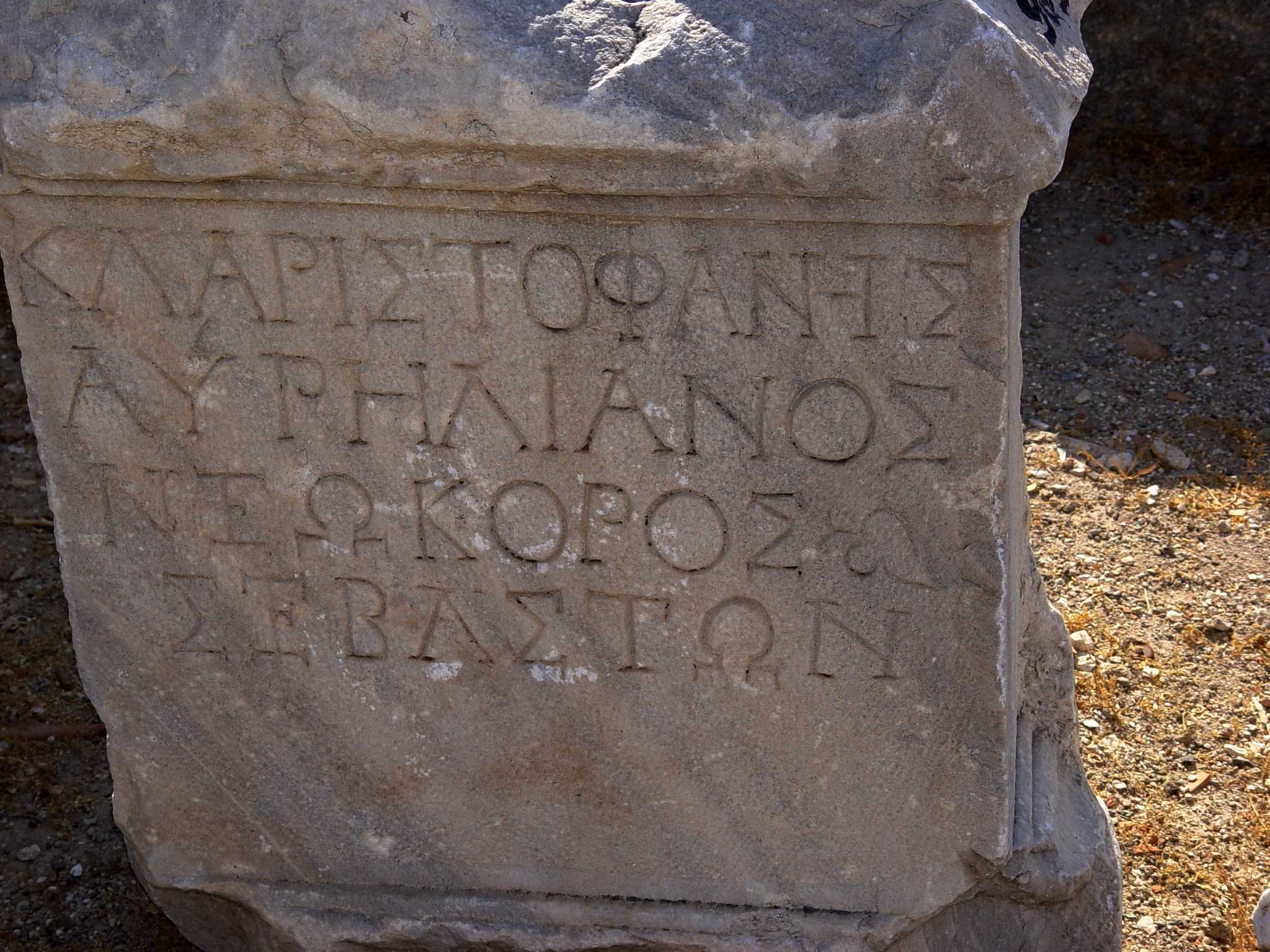
The signal development, first manifest in the dedications of the Temple of the Sebastoi but reflecting broader trends in society was the use of neokoros as a technical title for a city with a provincial temple of the emperors. The power of this innovation was explosive. In a matter of years it changed the public rhetoric of empire in Asia. Within a century it had transformed the discourse of Roman imperialism in the eastern Mediterranean. From the late first century onward, the most prestigious self-designation that could be employed by a city in Asia was neokoros, indicating the presence of a provincial temple where the emperors and their relatives were worshipped (p.150).

Neokoros literally means one who sweeps and cleans a temple; one who has charge of a temple, to keep and adorn it. It came to designate a city which maintained a temple for imperial worship. It is a historical fact that cities competed for this “honor.”

G. K. Beale observes, “Revelation presupposes that Christians were being required to participate to some degree in the imperial cult (e.g., 13:4-8,15-17; 14:9-11; 15:2; 16:2; 19:20; 20:4). . . in the Apocalypse persecution arises because of refusal to worship the ungodly king” (NIGTC Revelation, p.5).

Smyrna Inscription, designating it neokoros. Photo by Leon Mauldin.

Smyrna Inscription, designating it neokoros. Photo by Leon Mauldin.

This inscription found in biblical Smyrna (see Revelation 2:8-11; Smyrna was one of the seven churches of the Roman province of Asia addressed in Rev. 2-3), in lines 3 and 4 designates Smyrna as neokoros of Sebaston [Greek equivalent to Latin Augusti]. Dr. David McClister says, “This inscription is known in the scholarly literature as Smyrna 162. It is an honorary inscription for Cl(audius) Aristophanes Aurelianus,  dated AD 193/235” [lines 1 and 2), and further, “It appears to me to have been a statue base honoring this individual for his leadership in the emperor cult.”


Battle at Michmash (1 Samuel 13-14)

March 27, 2014

Last evening a grandson, along with my wife & me, were reading his daily Bible reading which was in 1 Samuel 13-15. Chapters 13-14 record a battle between Israel and the Philistines, which was initiated by the faith of King Saul’s son Jonathan. A site repeatedly mentioned in the text is that of Michmash.

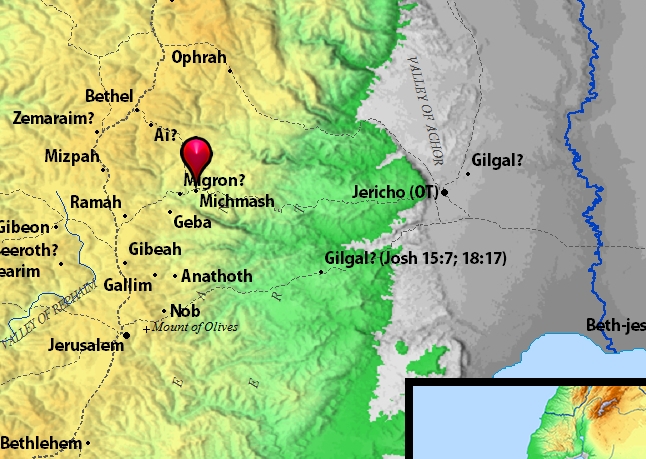
Michmash. Map by BibleAtlas.org.

Michmash. Map by BibleAtlas.org.

Michmash is about seven miles north and slightly east of Jerusalem. Consider how far into Israel’s territory the coastal Philistines had advanced at this point. Further, Israel’s forces were greatly outnumbered. The Philistines had 30,000 chariots and 6,000 horsemen, and “people as the sand which is on the seashore in multitude,” and were also “encamped in Michmash (1 Sam. 13:5). Jonathan had 1,000 men with him (at Gibeah at the point of 1 Sam. 13:2). Saul had only 2,000 men (ibid.) but as the chapter continues that number had shrunk down to a mere 600 men (v.15).

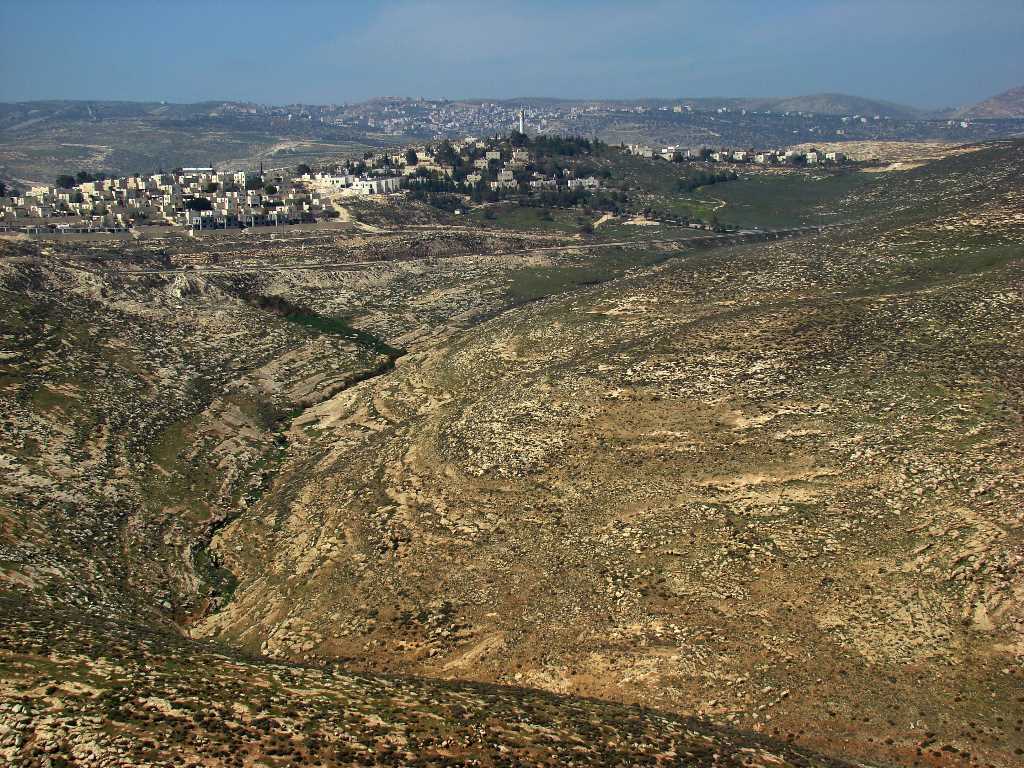
But Jonathan’s faith was not in numbers, but in YHWH. He told his armorbearer, “Come, let us go over to the garrison of these uncircumcised; it may be that the LORD will work for us. For nothing restrains the LORD from saving by many or by few” (1 Sam. 14:6). The two of them climbed up the steep pass to Michmash on hands and knees, attacked the Philistines, and “that first slaughter which Jonathan and his armorbearer made was about twenty men within about half an acre of land” (1 Sam. 14:14). The Philistine camp went into confusion. “So the LORD saved Israel that day” (v.23). Israel drove “back the Philistines that day from Michmash to Aijalon” (v.31).

Michmash. Area of battle between Israel and Philistines. Photo by Leon Mauldin.

Michmash. Area of battle between Israel and Philistines. Photo by Leon Mauldin.

After we read the biblical narrative, I showed my grandson some photos of the Michmash area, such as the one here above, and was able to say that what we just read took place in this area. He responded, “Have they found any skeletons there?” “Wouldn’t it be cool if they found skeletons there?” Also, “Do they still fight battles there?”

While I don’t know of any skeletal remains, this area was the site of an important battle between Britain and the Turks during WWI. Major Vivian Gilbert, in his book The Romance of the Last Crusade, “relates the story of an unnamed brigade major who was reading his Bible while contemplating the situation against the Ottoman forces. The brigade major remembered a town by the name of Michmash mentioned somewhere in the Bible. He found the verses, and discovered that there was supposedly a secret path around the town. He woke the brigadier general, and they found that the path still existed and was very lightly guarded. The British forces used this path to outmaneuver the Ottomans, and so took the town” (Wikipedia, referencing pp. 183-186).

The use of maps and photos of biblical sites helps children (and the rest of us) to better visualize and understand the biblical events.


The Johns Rylands Fragment P52

January 23, 2014

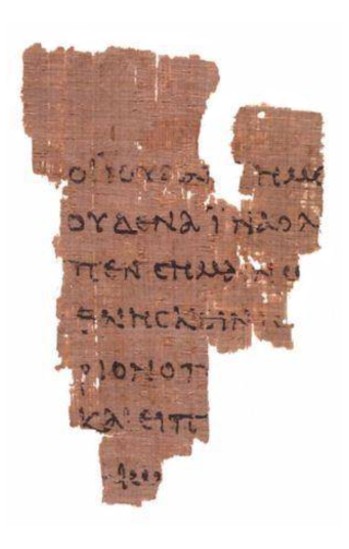
One of the most significant biblical manuscripts is but a fragment measuring only 2 1/2 by 3 1/2 inches, and containing only a few verses from John (18:31-33, 37-38). It is the oldest known copy of any portion of the New Testament, dating back to Hadrian’s reign (AD 117-138). Biblical scholar and textual expert Bruce M. Metzger (deceased, 2007) wrote:

Although it had been acquired in Egypt by Bernard P. Grenfell as long ago as 1920, it remained unnoticed among hundreds of similar shreds of papyri until 1934. In that year C. H. Roberts, Fellow of St. John’s College, Oxford, while sorting over the unpublished papyri belonging to the John Rylands Library at Manchester, recognized that this scrap preserves several sentences from John’s Gospel. Without waiting to edit the fragment along with others of a miscellaneous nature, he immediately published a booklet setting forth a description of the fragment,its text, and a discussion of its significance.

On the basis of the style of the script, Roberts dated the fragment in the first half of the second century. Though not all scholars are convinced that it can be dated within so narrow a range, such eminent palaeographers as Sir Frederic G Kenyon, W. Schubart, Sir Harold I. Bell, Adolf Deissmann, Ulrich Wilcken, and W. H. P. Hatch have expressed themselves as being in agreement with Roberts’s judgment.

Although the extent of the verses preserved is so slight, in one respect this tiny scrap of papyrus possesses quite as much evidential value as would be the complete codes. Just as Robinson Crusoe, seeing but a single footprint in the sand, concluded that another human being, with two feet, was present on the island with him, so p52 proves the existence and use of the fourth Gospel during the first half of the second century in a provincial town along the Nile, far removed from its traditional place of composition (Ephesus in Asia Minor). Had this little fragment been known during the middle of the past century, that school of New Testament criticism which was inspired by the brilliant Tubingen professor, Ferdinand Christian Baur, could not have argued that the Fourth Gospel was not composed until about the year 160. (The Text of the New Testament, 3rd edition, pp. 38-39).

As stated above, the fragment p52 is in Manchester, England, encased in a climate controlled cabinet.

John Rylands Papyrus p52. Photo by wikimedia-commons.

John Rylands Papyrus p52. Photo by wikimedia-commons.


William Ramsay on the Halys River and North Galatia

January 17, 2014

Sir William M. Ramsay (1851-1939), archaeologist, scholar, and author, was a champion of the South Galatia position (i.e., the N.T. letter to the Galatians was addressed to Antioch of Pisidia, Iconium, Lystra and Derbe) at a time when the North Galatia theory had been accepted for centuries. In his book, A Historical Commentary on St. Paul’s Epistles to the Galatians, he deals with the geography of north Galatia, giving evidence to eliminate that as the area intended in the book of Galatians. He was seeking to understand the geography of Galatia especially and specifically in the mid 1st century AD.

In that portion of his historical introduction, Ramsay mentions the Halys River and how it divided Galatia into two parts.

The country afterwards called Galatia was in primitive time divided ethnographically and politically into two parts, eastern and western: the division was made by the river Halys, which in this part of its course runs in a northerly direction towards the Black Sea. Galatia east of the Halys seems to have been originally reckoned to Cappadocia, though part of it was probably sometimes described as included in Paphlagonia; but the bounds of those countries were so indeterminate, and the ancient writers themselves were so ignorant of the geography of those lands, that it is quite impossible to say anything positive and certain on the subject. . .

Eastern Galatia lies mostly in the basin of the Halys (Kizil-Irmak, the “Red River”). The Halys itself has very few and quite insignificant tributaries. In Eastern Galatia the Delije-Irmak (whose ancient name is unknown) is the only tributary of any consequence; and most of the country lies in its basin; but the river, though it looks large on the map, carries very little water except in flood, when it becomes a broad and raging torrent, exactly as its name indicates, the “Mad River”. . .

Galatia west of the Halys, which was much larger than the eastern country, was the most important and the most typical part of the country; most of our scanty information relates to it; and in general, when any statement is made about North Galatia, the writer has the western part of it in his mind. This western region was originally part of the vast land called Phrygia; and, clearly, the population of the country in the early part of the fourth century were known to the Greeks as Phrygians (Φρύγες). (Ramsay, W. M. (1900). A Historical Commentary on St. Paul’s Epistle to the Galatians (pp. 15–17).

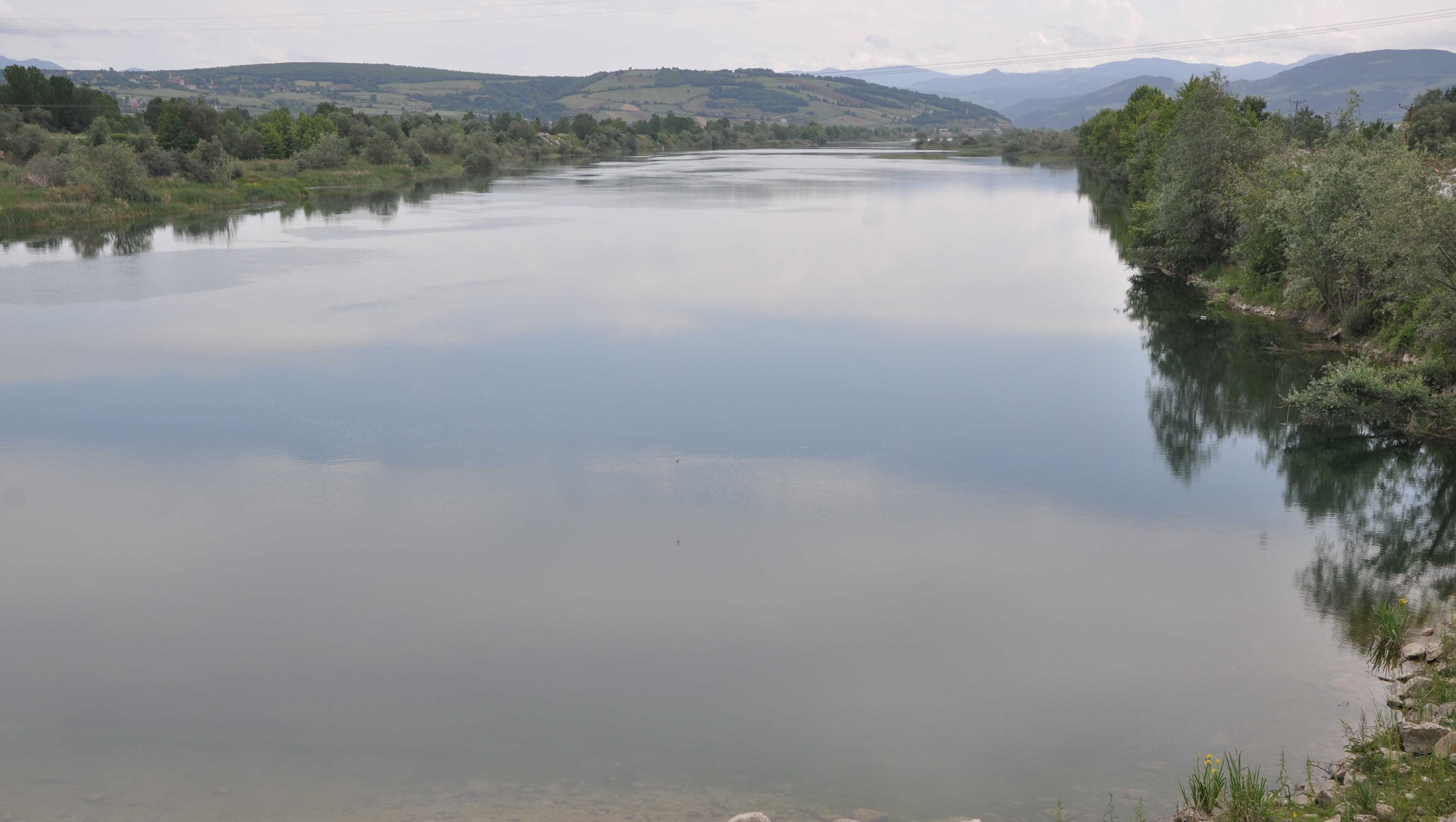
Halys River near the Black Sea. Photo by Leon Mauldin.

Halys River near the Black Sea. Photo by Leon Mauldin.

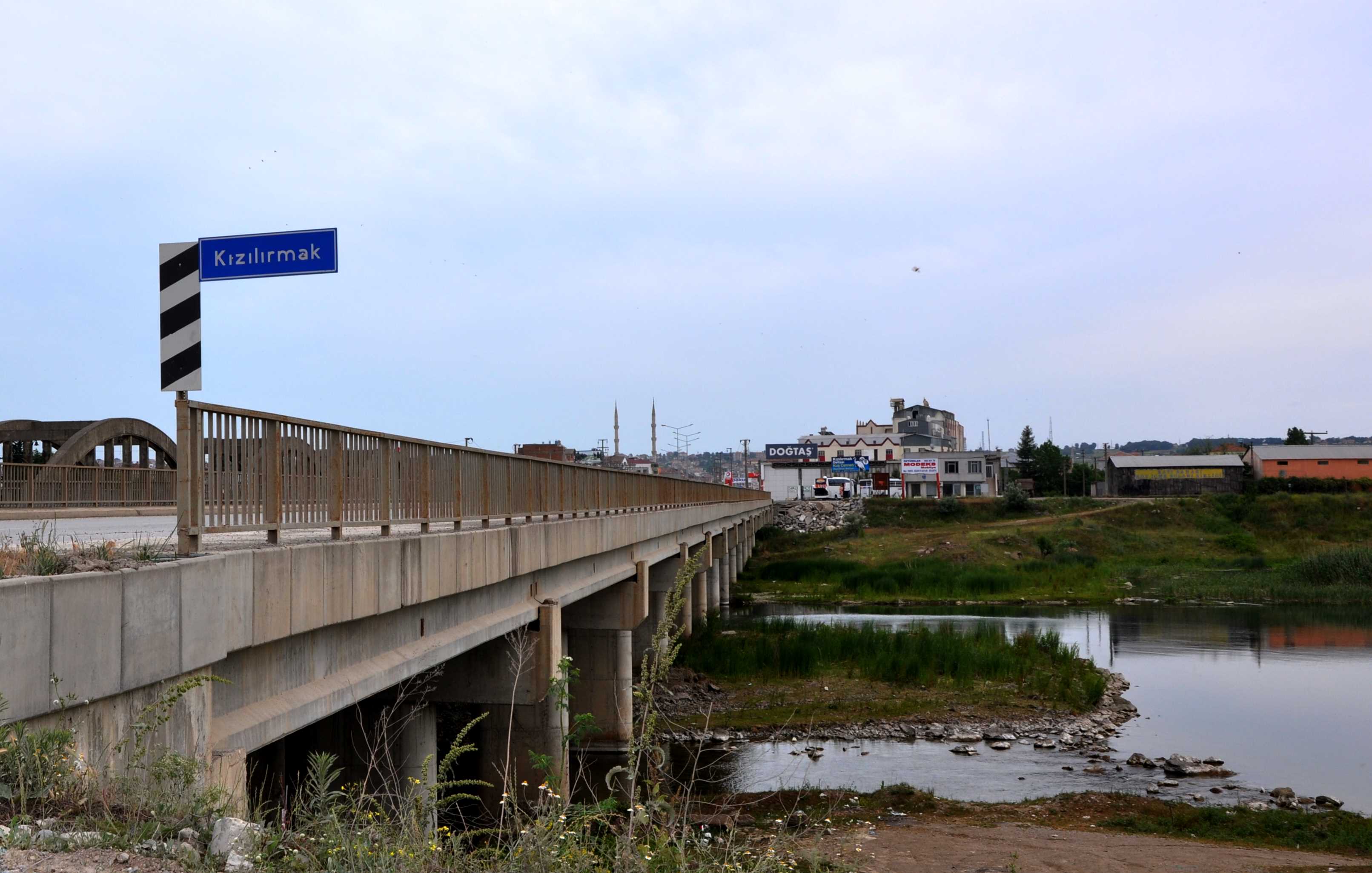
Sir Ramsay referenced the Halys as the Kizil-Irmak. Note the sign here at the bridge crossing the river.

Halys River/Kizil-Irmak. Photo by Leon Mauldin.

Halys River/Kizil-Irmak. Photo by Leon Mauldin.

Click images for larger view.


Just Weights and Measures

December 23, 2013

Our last couple of posts have illustrated some texts from Deuteronomy. Yet another text we want to consider is found in Deuteronomy 25:13-15:

13 You shall not have in your bag two kinds of weights, a large and a small. 14 You shall not have in your house two kinds of measures, a large and a small. 15 A full and fair weight you shall have, a full and fair measure you shall have, that your days may be long in the land that the LORD your God is giving you.

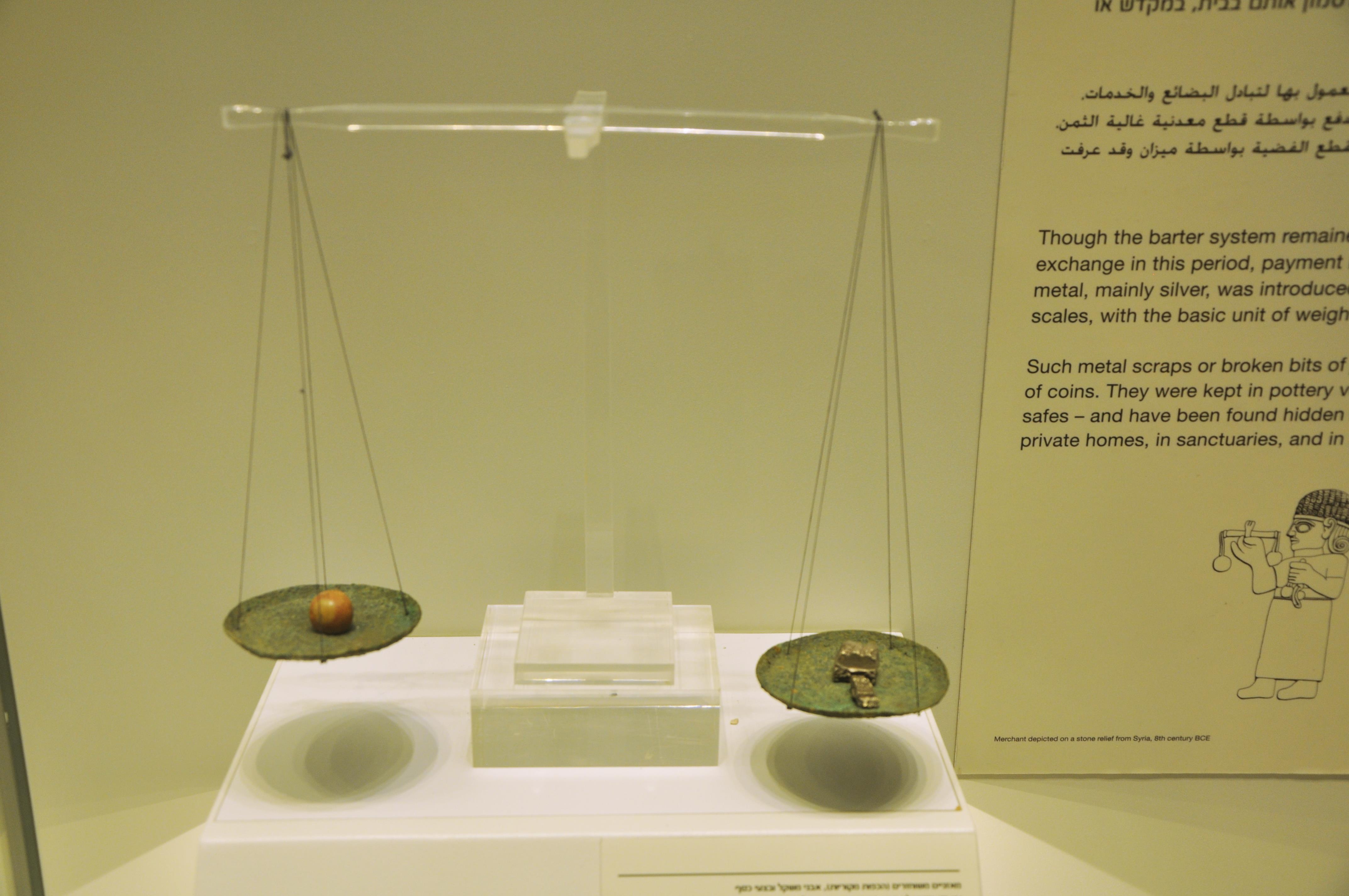
The Israel Museum has a set of scales on display that would be illustrative of this text.

Set of ancient scales. Israel Museum. Photo ©Leon Mauldin.

Set of ancient scales. Israel Museum. Photo ©Leon Mauldin.

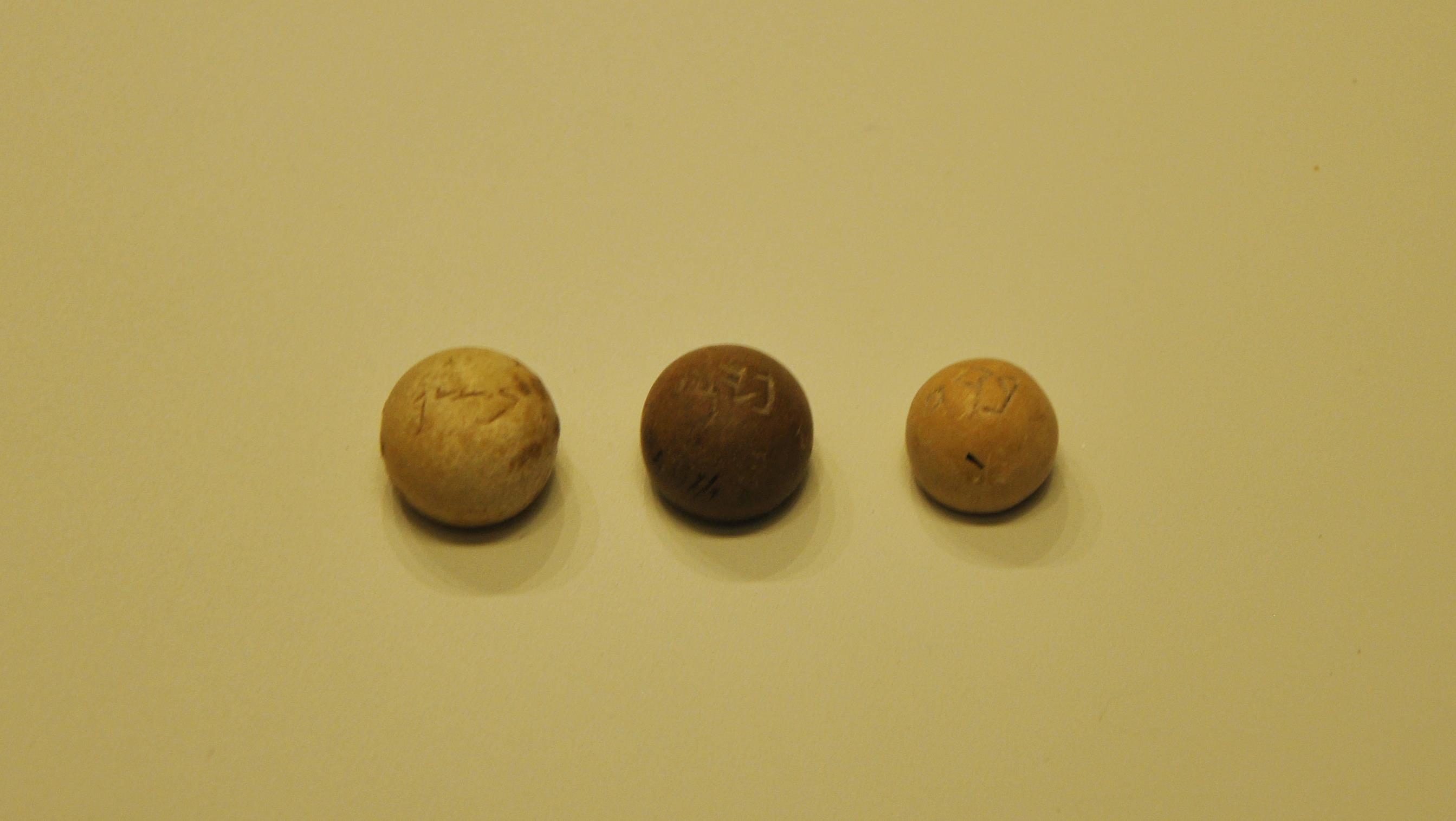
There are also some examples of standard weights.

Standard weights in biblical times. Israel Museum. Photo ©Leon Mauldin.

Standard weights in biblical times. Israel Museum. Photo ©Leon Mauldin.

At left is the beqa, at center is the pym (pim), and at right is the nezif. Of special interest to Old Testament studies is the “pim,” the Hebrew word occurring only in 1 Sam. 13:21: “and the charge for a sharpening was a pim for the plowshares, the mattocks, the forks, and the axes, and to set the points of the goads” (NKJV). This is speaking of the days of King Saul when the Philistines had a monopoly on the blacksmith industry. Others translations render, “They charged two-thirds of a shekel to sharpen plowshares and cutting instruments, and a third of a shekel to sharpen picks and axes, and to set ox goads” (NET).

The NET BIBLE has this textual note:

This word, which appears only here in the OT, probably refers to a stone weight. Stones marked pim have been found in excavations of Palestinian sites. The average weight of such stones is 0.268 ounces, which is equivalent to about two-thirds of a shekel. This probably refers to the price charged by the Philistines for the services listed. See P. K. McCarter, I Samuel (AB), 238; DNWSI 2:910; and G. I. Davies, Ancient Hebrew Inscriptions, 259.

As illustrated above, the pim, the standard would be on one side of the scales. The customer would put an equal weight of silver on the other side (this was before coinage).

Consider some related passages (NKJV).

Leviticus 19:36 You shall have honest scales, honest weights, an honest ephah, and an honest hin: I am the LORD your God, who brought you out of the land of Egypt.

Proverbs 11:1 Dishonest scales are an abomination to the LORD, But a just weight is His delight.

Proverbs 16:11 Honest weights and scales are the LORD’s; All the weights in the bag are His work.

Proverbs 20:10 Diverse weights and diverse measures, They are both alike, an abomination to the LORD.

Proverbs 20:23 Diverse weights are an abomination to the LORD, And dishonest scales are not good.

Ezekiel 45:10 You shall have honest scales, an honest ephah, and an honest bath.

Micah 6:11 Shall I count pure those with the wicked scales, And with the bag of deceitful weights?

We made a previous posts regarding scales to illustrate Daniel 5 here.

Click on images for larger view.


Build a Parapet on Your Roof

December 7, 2013

Reading recently in Deuteronomy I came across the following text: “When you build a new house, you shall make a parapet for your roof, that you may not bring the guilt of blood upon your house, if anyone should fall from it” (22:8, ESV). The NET renders, “guard rail.”

It  would be difficult to understand the meaning of that passage if we only read through 21st century eyes. The roof on my house is steep. It is much too steep for me to consider walking on it, or anybody else for that matter, except for roofers or repair men. There is no need for me to put a guard rail around my roof.

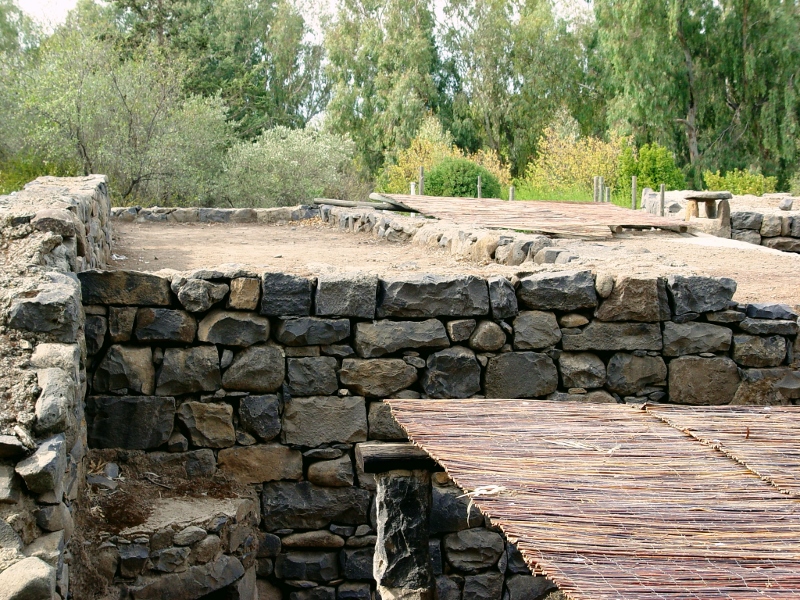
But roofs in biblical times were generally different (both Old and New Testament), being flat, and serving as a sort of “patio” or additional room. This is illustrated by the reconstructed two-story Talmudic house at Katzrin in the Golan:

Housetop at Katzrin in the Golan. Photo by Leon Mauldin.

Housetop at Katzrin in the Golan. Photo by Leon Mauldin.

It is not hard to visualize how several people might be on a housetop such as this. I might note that the above photo does not have a guard rail around the housetop, but does illustrate the need for one and the practical nature of the command in the Deuteronomy text.

Understanding this can make several biblical texts come alive:

Proverbs 21:9 It is better to live on a corner of the housetop than in a house in company with a quarrelsome wife.

Looking ahead to the Roman destruction of Jerusalem, Jesus said, “Whoever is on the housetop must not go down to get the things out that are in his house” (Matt. 24:17).

Acts 10:9: “On the next day, as they were on their way and approaching the city, Peter went up on the housetop about the sixth hour to pray.” Context: Men from Cornelius of Caesarea sent down the coast to Joppa where Peter was residing, to ask him to come to Caesarea to preach the Gospel there.

Click image for larger view.

We have previously posted on Katzrin here.