Reflections on the Cities of Refuge

November 11, 2013

Our previous three posts have featured the three cities of refuge on the western side of Jordan: Kedesh, Shechem and Hebron. There were also three on the Transjordan, making a total of six. These were to serve as sanctuary to one who was guilty of accidental manslaughter, such as when an ax head flew off the handle, etc.

I was recently reading Warren Wiersbe’s commentary on Deut. 19, pertaining to the cities of refuge and related matters. Wiersbe was tying in the OT city of refuge with the New Testament application made in Hebrews:

In the same way God, desiring even more to show to the heirs of the promise the unchangeableness of His purpose, interposed with an oath, 18 so that by two unchangeable things in which it is impossible for God to lie, we who have taken refuge would have strong encouragement to take hold of the hope set before us. 19 This hope we have as an anchor of the soul, a hope both sure and steadfast and one which enters within the veil, 20 where Jesus has entered as a forerunner for us, having become a high priest forever according to the order of Melchizedek (Heb. 6:17-20)..

Really, the comparison is one of contrasts:

1. The OT resident of a city of refuge was not guilty of murder, though he had accidentally shed man’s blood. But all those who have fled to Christ for refuge ARE guilty of sin (Rom. 3:23).

2. The accidental man-slayer had to dwell in the city of refuge until the death of the High Priest. But now there is a High Priest who never dies, “Therefore He is able also to save forever those who draw near to God through Him, since He always lives to make intercession for them” (Heb. 7:25).

Jacob’s well, referenced in John 4, is very near the ruins of ancient Shechem. It is housed inside a Greek Orthodox Church, the interior of which was completed in 2007. We were able to visit the church and the well while at Shechem last month.
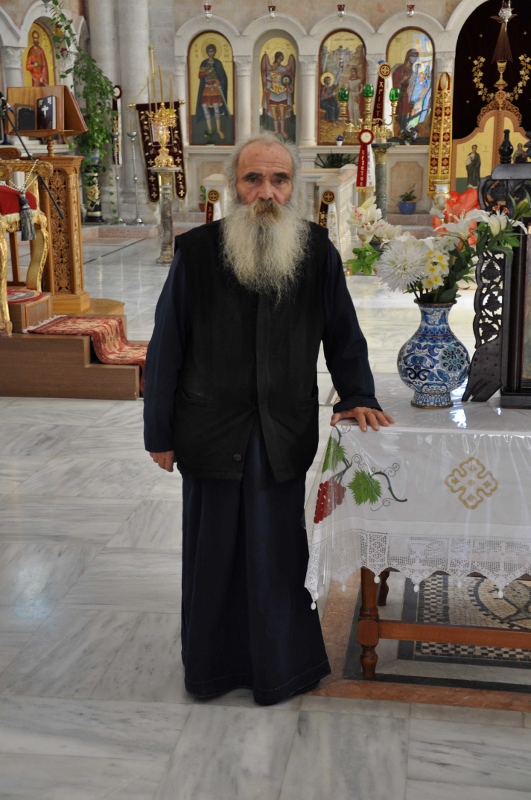
Shechem Jacob's Well Greek Orthodox church interior. Photo by Leon Mauldin.

Shechem Jacob’s Well Greek Orthodox church interior. Photo by Leon Mauldin.

A very cordial Greek Orthodox Priest was on duty during our visit there. Here is a view of the church from the outside:
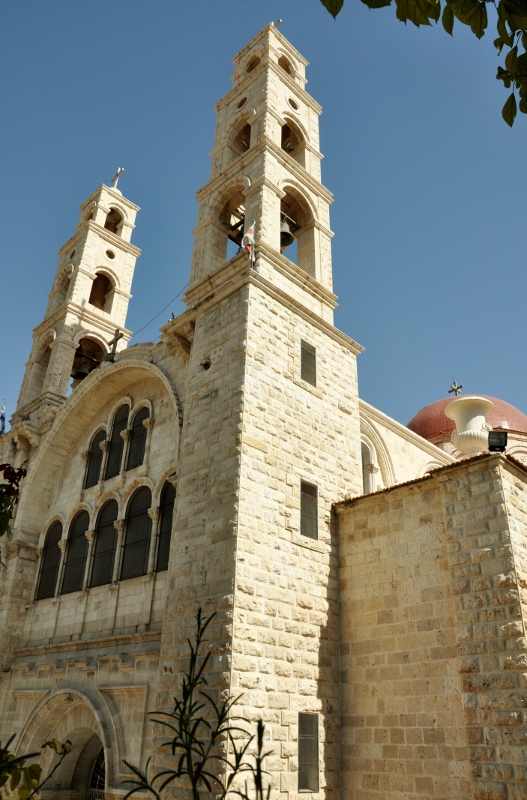
Jacobs Well Greek Orthodox Church Outside. Photo by Leon Mauldin.

Jacobs Well Greek Orthodox Church Outside. Photo by Leon Mauldin.

Click on images for larger view.


Jesus’ Promise at Caesarea Philippi

November 1, 2013

In our previous couple of posts we were looking at Caesarea Maritima, Herod’s capital city on the Mediterranean coast. Presently we are considering another Caesarea, up to the north at the foothills of Mt. Hermon, Caesarea Philippi. This area was ruled by Herod’s son Philip.

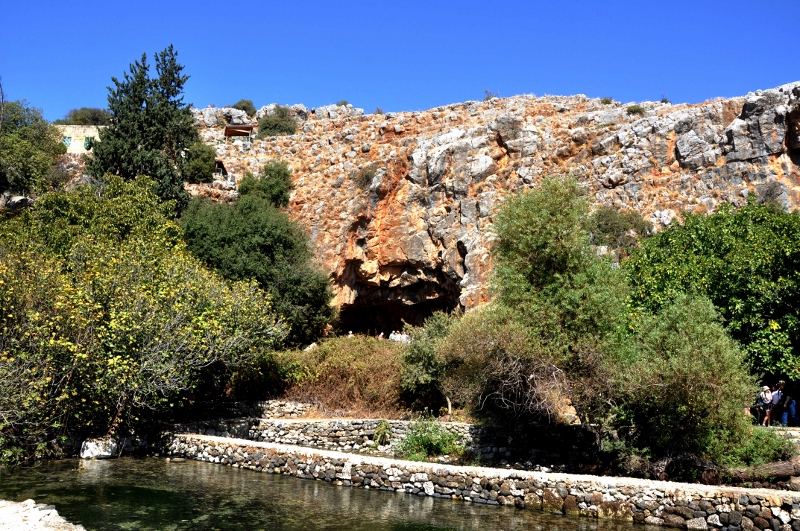
On-site Bible study can be a thrilling experience; to be able to walk in the steps of Jesus and various Bible characters is a wonderful opportunity. We had such an occasion in a visit a couple of weeks ago to Caesarea Philippi. It was in this region that Peter made his confession of the Christ, and Jesus promised to build His church.

Caesarea Philippi. Grotto of Pan, and Banias River. Photo by Leon Mauldin.

Caesarea Philippi. Grotto of Pan (center), and Banias River. Photo by Leon Mauldin.

The text does not specify that Jesus entered Caesarea Philippi, but that He came to the “region” (NKJV), “district” (NASB), “the area of” (NET) Caesarea Philippi (Matthew 16:13). It is interesting that Luke does not mention the place, but states, “Once when Jesus was praying by himself, and his disciples were nearby, he asked them, ‘Who do the crowds say that I am?'” (Luke 9:18, NET). Matthew gives the more complete record:

Now when Jesus came into the district of Caesarea Philippi, He was asking His disciples, “Who do people say that the Son of Man is?” 14 And they said, “Some say John the Baptist; and others, Elijah; but still others, Jeremiah, or one of the prophets.” 15 He said to them, “But who do you say that I am?” 16 Simon Peter answered, “You are the Christ, the Son of the living God.” 17 And Jesus said to him, “Blessed are you, Simon Barjona, because flesh and blood did not reveal this to you, but My Father who is in heaven. 18 “I also say to you that you are Peter, and upon this rock I will build My church; and the gates of Hades will not overpower it. 19 “I will give you the keys of the kingdom of heaven; and whatever you bind on earth shall have been bound in heaven, and whatever you loose on earth shall have been loosed in heaven” (Matt. 16:13-19 NASB).

A couple of observations:

1. This passage does not teach the primacy of Peter. What Jesus said here to Peter regarding his apostolic authority was said just two chapters later to all the apostles Matt. 18:1,18.

 2. Regarding the “binding” and “loosing:” the point is not that Peter or the other apostles would bind/loose something on earth and then God would bind/loose it in heaven. What they bound on earth was binding because God had bound it in heaven; what they loosed on earth had authority because God had loosed it in heaven. The rendering of the Christian Standard Bible (Holman) is, “I will give you the keys of the kingdom of heaven, and whatever you bind on earth is already bound in heaven, and whatever you loose on earth is already loosed in heaven” (Matt.16:19). The apostles did not have inherent authority; they were the instruments through which God’s revealed will was made known.

3. Jesus was anticipating the events of Pentecost, Acts 2. It was at that time the Spirit descended upon the apostles, empowering as Jesus had promised, and salvation through the crucified and resurrected Messiah was proclaimed. This was the beginning of the church, and the establishment of the kingdom, the reign/rule of Christ.

Click on image for larger view.


Behold the Sower Went Forth to Sow

October 28, 2013

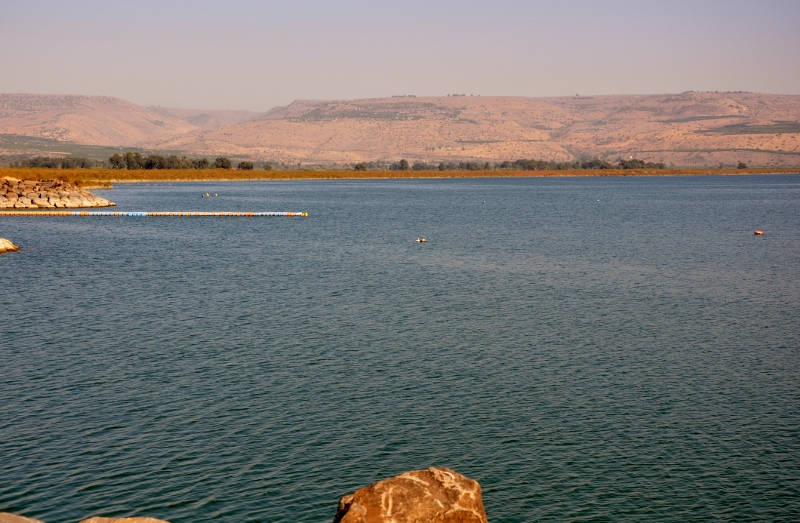
The setting of the kingdom parables of Mark 4 (parallels in Mt. 13 and Lk. 8) is on the Sea of Galilee.

Northern Sea of Galilee looking east. Photo by Leon Mauldin.

Northern Sea of Galilee looking east. Photo by Leon Mauldin.

One of the parables was the “Parable of the Sower:”

And again He began to teach by the sea. And a great multitude was gathered to Him, so that He got into a boat and sat in it on the sea; and the whole multitude was on the land facing the sea. 2 Then He taught them many things by parables, and said to them in His teaching: 3 “Listen! Behold, a sower went out to sow. 4 “And it happened, as he sowed, that some seed fell by the wayside; and the birds of the air came and devoured it. 5 “Some fell on stony ground, where it did not have much earth; and immediately it sprang up because it had no depth of earth. 6 “But when the sun was up it was scorched, and because it had no root it withered away. 7 “And some seed fell among thorns; and the thorns grew up and choked it, and it yielded no crop. 8 “But other seed fell on good ground and yielded a crop that sprang up, increased and produced: some thirtyfold, some sixty, and some a hundred.” 9 And He said to them, “He who has ears to hear, let him hear!” 10 But when He was alone, those around Him with the twelve asked Him about the parable. 11 And He said to them, “To you it has been given to know the mystery of the kingdom of God; but to those who are outside, all things come in parables, 12 “so that ‘Seeing they may see and not perceive, And hearing they may hear and not understand; Lest they should turn, And their sins be forgiven them.’ ” 13 And He said to them, “Do you not understand this parable? How then will you understand all the parables? 14 “The sower sows the word. 15 “And these are the ones by the wayside where the word is sown. When they hear, Satan comes immediately and takes away the word that was sown in their hearts. 16 “These likewise are the ones sown on stony ground who, when they hear the word, immediately receive it with gladness; 17 “and they have no root in themselves, and so endure only for a time. Afterward, when tribulation or persecution arises for the word’s sake, immediately they stumble. 18 “Now these are the ones sown among thorns; they are the ones who hear the word, 19 “and the cares of this world, the deceitfulness of riches, and the desires for other things entering in choke the word, and it becomes unfruitful. 20 “But these are the ones sown on good ground, those who hear the word, accept it, and bear fruit: some thirtyfold, some sixty, and some a hundred.” (Mark 4:1-20).

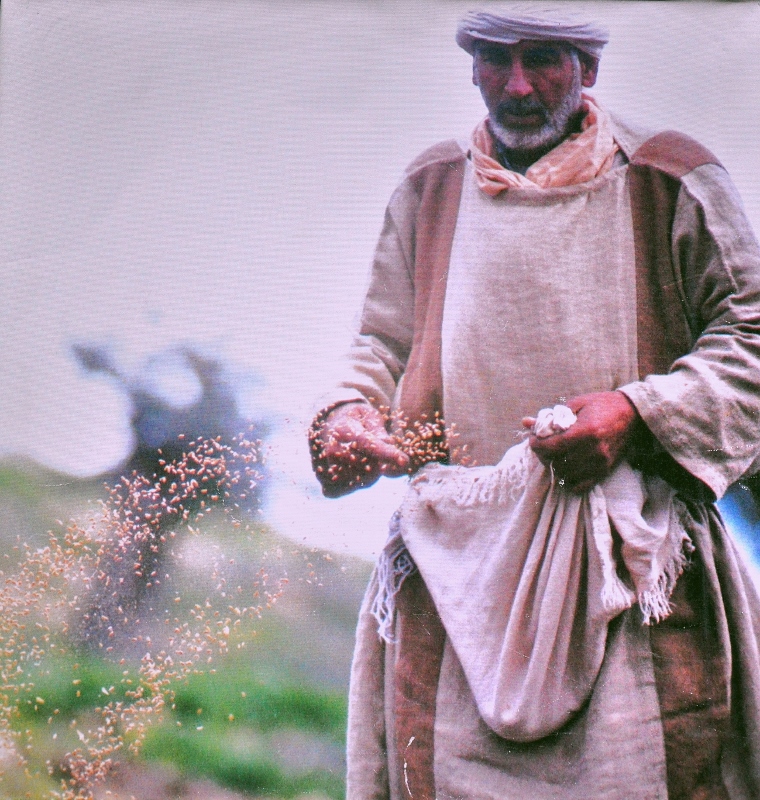
Photo at Nazareth Village. A sower sowing seed.

Photo at Nazareth Village. A sower sowing seed.

A photo of a sower sowing seed is featured on the wall inside an orientation room at the Nazareth village.

Things to remember regarding the parable:

The kingdom is the Lord’s. He is the king. The seed of His kingdom is the word of God.

When the seed is sown there are different results. Some people never respond. They are the wayside soil. Others respond enthusiastically, but fall away. These are represented by the rocky soil. Some are preocccupied and distracted and never bear fruit for the Lord. These are portrayed by the thorny ground. Then there are honest and good hearts that hold fast the word and bear fruit. This is the good ground.

Click on image for larger view.


Some Sources for Dealing with Ron Wyatt’s Claims

September 28, 2013

I recently received a question from a friend, which says in part:

It concerns the crossing of the Read Sea. There is an awful lot of talk about the “traditional” Red Sea crossing maps versus the so-called “archaeological findings” purportedly found at the Gulf of Aqaba.

. . . However, some of our brethren have begun using maps and pictures that show what is believed to be possibly the “real Mt. Sinai” with charred rock covering its cap, a “split rock” in the wilderness, chariot wheels, etc… (I’m not buying it.) All of these things I see look like the work of Ron Wyatt, but all sorts of people have these things on their internet sites.

. . . All of that said, I was wondering if you had any material or resources dealing with the subject head on. I do not plan on making this an issue… nor do I plan on bringing anyone else’s name into the mix. I would just like to be able to give a “ready defense” if I am ever called upon. I’d greatly value your input on the matter. Thank you.
Others more qualified that I have dealt with the claims of Mr. Wyatt. As a starting point I can recommend the following sources: Ferrell Jenkins has an article entitled, “Pharaoh’s Chariot Wheels and Other Things that Won’t Float — Examining the Claims of the Late Ron Wyatt ,” that you can access here, plus another article entitled, “Pseudo Archaeologists” here. These articles have numerous related links for further reading. Additionally I would recommend Gordan Franz’s site, Life and Land, here. Use the search box. He has several entries under “Cracked Pot Archaeology.” The use of caution in using Mr. Wyatt’s material/claims would be prudent.
While no one can be certain of the exact location of Israel’s crossing. the best evidence would be somewhere along the Suez.

From Sinai looking across Suez to Egypt. Photo by Leon Mauldin.

From Sinai looking across Suez to Egypt. Photo by Leon Mauldin.

I took the above photo in 2003, having crossed the Suez. We are standing on the Sinai side looking back across Egypt.

I personally conclude that the traditional Mt. Sinai (Jebel Musa) best fits the biblical criteria.

Click photo for larger view.


You May Eat the Wild Goat

September 27, 2013

Under Mosaic legislation, Israel was given strict dietary guidelines. This was for a stated purpose: “For you are a people holy to the LORD your God, and the LORD has chosen you to be a people for his treasured possession, out of all the peoples who are on the face of the earth” (Deut. 14:2, ESV). The dietary restrictions were but one means that YHWH used to mold His people into a holy nation and teach them that they were uniquely His.

Deut. 14:4 lists three domestic animals which could be eaten: “These are the animals you may eat: the ox, the sheep, the goat,” (This follows v. 3 which states, “You shall not eat any abomination.”)

Then v. 5 lists seven kinds of wild animals: “the deer, the gazelle, the roebuck, the wild goat, the ibex, the antelope, and the mountain sheep.” “Some of these animals cannot be identified with certainty.” [1] One thing that obviously makes the text challenging is that three of the seven words are hapax legomena (words that appear only once in a document). The word usually translated “wild goat” (ya’el) is a different word than the one used here (aqqo).

ya’el is found in Psalm 104:18 “The high mountains are for the wild goats. . .”

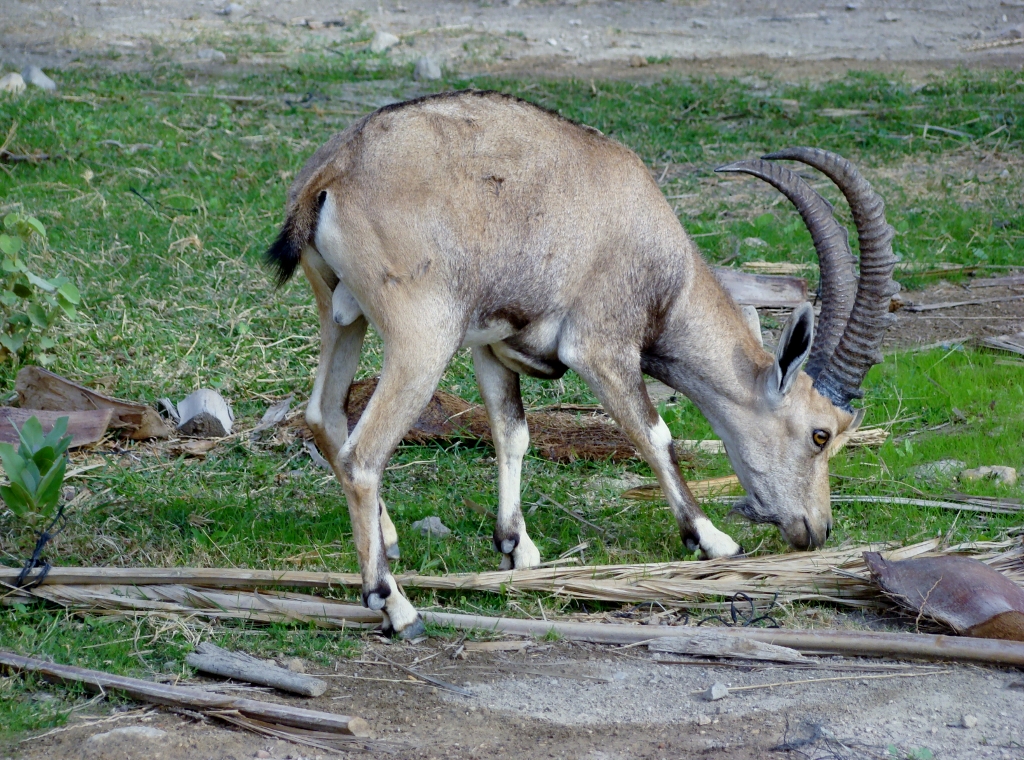
Another interesting text: “When Saul returned from following the Philistines, he was told, ‘Behold, David is in the wilderness of Engedi.’ Then Saul took three thousand chosen men out of all Israel and went to seek David and his men in front of the Wildgoats’ Rocks” (1 Sam. 24:1-2, ESV). Note that the site of Engedi is the location of the Rocks of the Wild Goats. The word Engedi means “spring of a kid,” and is located on the western shore of the Dead Sea. The biblical “wild goat” is still frequently seen there today and is most often identified with the ibex.

Goat at Engedi. Photo by Leon Mauldin.

Goat/Ibex at Engedi. Photo by Leon Mauldin.

See more on the wild goat in Ferrell Jenkin’s posts here and here.

Click on image for larger view.


[1] Christensen, D. L. (2001). Deuteronomy 1–21:9 (Vol. 6A, p. 291). Dallas: Word, Incorporated.


Mount Gerizim, the Mount of Blessing

August 24, 2013

Our previous couple of posts pertain to mounts Ebal and Gerizim, the setting of the curses and blessings of the law’s being read and accepted by all Israel as the basis of their receiving the land promise (Deut. 11:26-32; Deut. 27-28; Josh. 8:30-35).

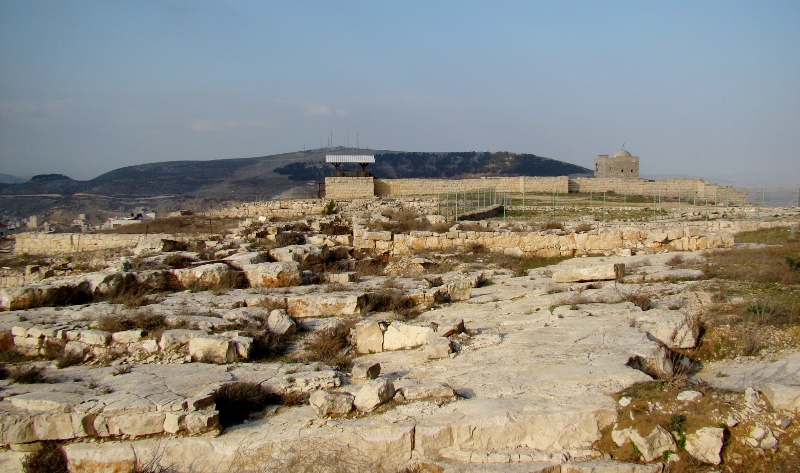
At the top of Gerizim there are archaeological ruins that date to the Persian and Hellenistic periods, as well as a Byzantine church.

Mount Gerizim, view at top. Photo by Leon Mauldin.

Mount Gerizim, view at top. Photo by Leon Mauldin.

In distance at right you are seeing the tomb of a 12th century sheikh. The mountain in background is Mt. Ebal, the mount of cursing. Out of sight below in the valley between lies Shechem.

In later times Mt. Gerizim would become sacred to the Samaritans, and still is today. In the intertestamental period there was a temple here, but it was destroyed by John Hyrcanus (Maccabean ruler) in 111-110 BC.

When Jesus conversed with the woman at the well, she said, “Our fathers worshiped on this mountain” (John 4:20). She was speaking of Mount Gerizim, which was very much in sight of Jacob’s well, where they were talking.

Click image for larger view.

Todd Bolen has an interesting post on the acoustics of mounts Ebal and Gerizim here. See also Ferrell Jenkin’s post here.

Hopefully this info and these photos will help you visualize the events of Joshua 8, at the time of the conquest under Joshua:

33 All the people, rulers, leaders, and judges were standing on either side of the ark, in front of the Levitical priests who carried the ark of the covenant of the LORD. Both resident foreigners and native Israelites were there. Half the people stood in front of Mount Gerizim and the other half in front of Mount Ebal, as Moses the LORD’s servant had previously instructed to them to do for the formal blessing ceremony. 34 Then Joshua read aloud all the words of the law, including the blessings and the curses, just as they are written in the law scroll. 35 Joshua read aloud every commandment Moses had given before the whole assembly of Israel, including the women, children, and resident foreigners who lived among them (Josh. 8:33-35, NET). 


Like Trees Planted Along a Riverbank

June 12, 2013

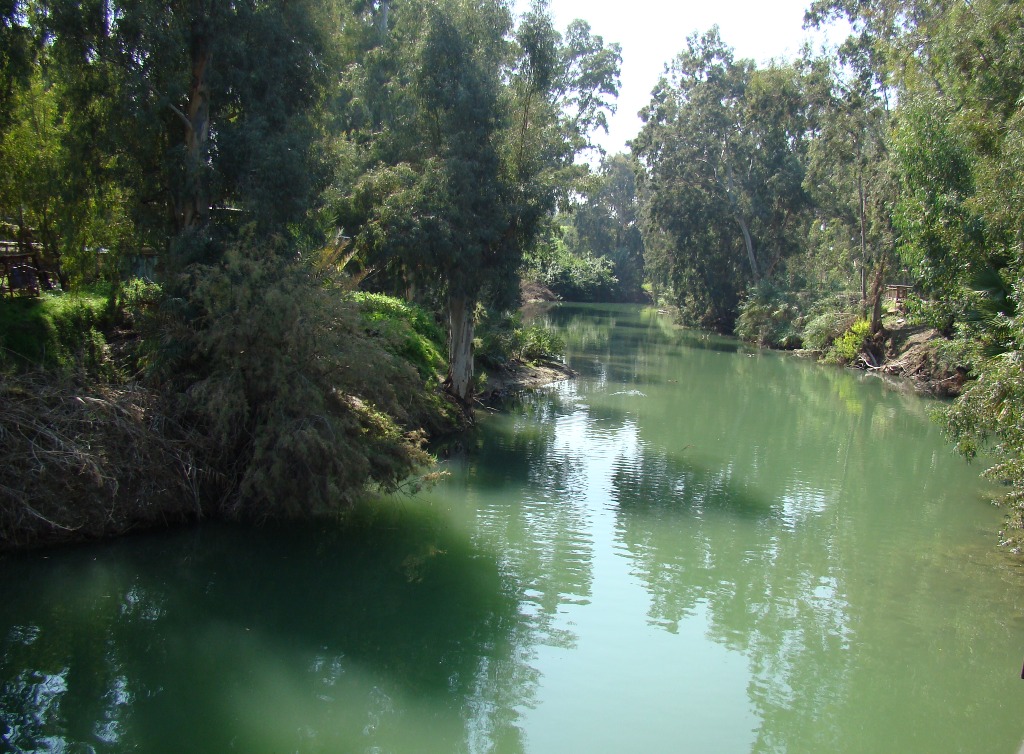
Our previous couple of posts illustrated the barrenness of a life without God, a life where God has been displaced with idolatry. The Old Testament often set forth the principle that disobedience results in divine punishment, whereas blessings are upon the obedient. Jeremiah places these concepts back to back. The “shrub in the desert” is contrasted with “trees planted along a riverbank.

Trees growing along the banks of Jordan. Photo by Leon Mauldin.

Trees growing along the banks of Jordan. Photo by Leon Mauldin.

But blessed are those who trust in the LORD and have made the LORD their hope and confidence. They are like trees planted along a riverbank, with roots that reach deep into the water. Such trees are not bothered by the heat or worried by long months of drought. Their leaves stay green, and they never stop producing fruit (Jer. 17:7,8).

That is a wonderful word picture. A fruitful, blessed life, resulting from right relationship with the One from whom all blessings flow.

Click on image for larger view.


A Shrub in the Desert (cont’d.)

June 10, 2013

We recently referenced Jeremiah 17:6-7, which refers to the consequences of a life which displaces God for idolatry, human wisdom (or anything else):

Thus says the LORD, “Cursed is the man who trusts in mankind And makes flesh his strength, And whose heart turns away from the LORD. For he will be like a bush in the desert And will not see when prosperity comes, But will live in stony wastes in the wilderness, A land of salt without inhabitant.”

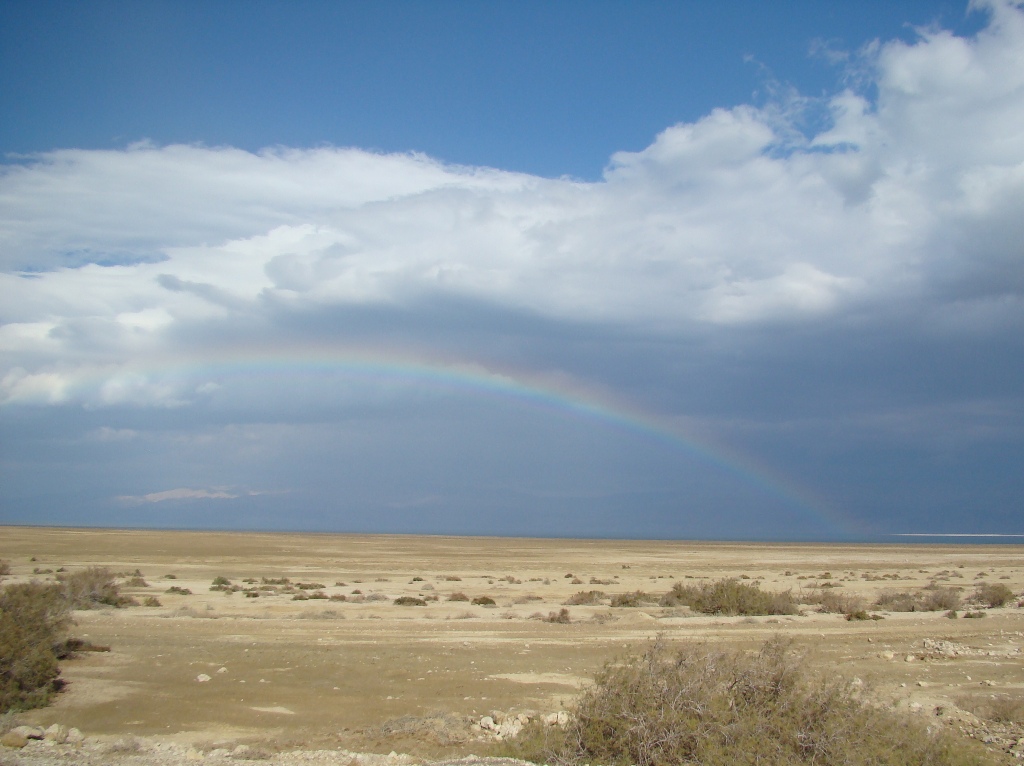
This passage reminded me of the bushes you can see along the Dead Sea area, a site that would certainly qualify as a land of salt without inhabitant.

Shrubs at Dead Sea. Photo by Leon Mauldin.

Shrubs at Dead Sea. Photo by Leon Mauldin.

This is certainly a “land of salt” as you view this area where the Dead Sea has receded. On right of photo you can see some glimmer on the Sea. Also in this photo I captured a rainbow. (It’s not everyday you see a rainbow over the Dead Sea!)

Again, the point of the text is how barren and how fruitless is a life which is not attuned to God and the doing of His will!

Click on image for larger view.


“Conviction Versus Mercy” by Gardner Hall

May 27, 2013

I’d  like to make our readers aware of a new resource by my friend Gardner Hall, a new book entitled Conviction Versus Mercy.

Gardner writes:

Conviction or Mercy? Which characteristic should most exemplify those who want to follow Christ? Many Christians tend to emphasize one or the other but not both. This book (144 pages) emphasizes the importance of merging the two to be truly like Christ. Though combining mercy and conviction has been a challenge throughout history, it is especially difficult now as our culture is increasingly affected by a Postmodern worldview and the backlash against it.


Three formats available
 
Paperback ($8.85) – Click here to order from Amazon.com. (Also, ask for this book in any bookstore you know that is operated by brethren. I’ve found that they respond more to requests from customers than to me!)
 
Kindle (99 cents) – Click here for kindle version
 
Audio (free) – Click here for free audio. Free audio available on same page for Foy Short biography.
 
I purchased mine on Kindle Fire, and am looking forward to reading it.


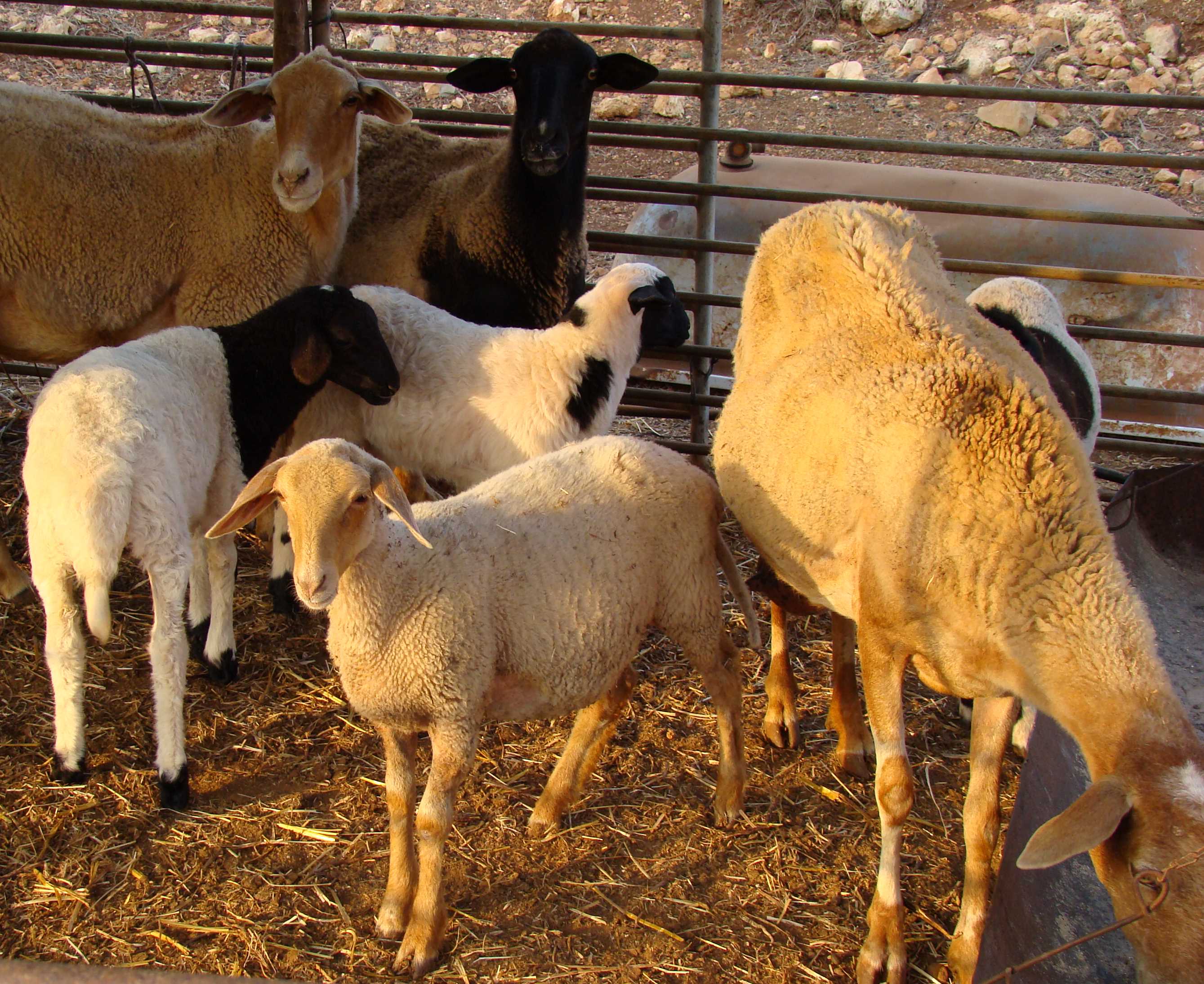
“I Am the Door of the Sheep” (John 10:7)

May 17, 2013

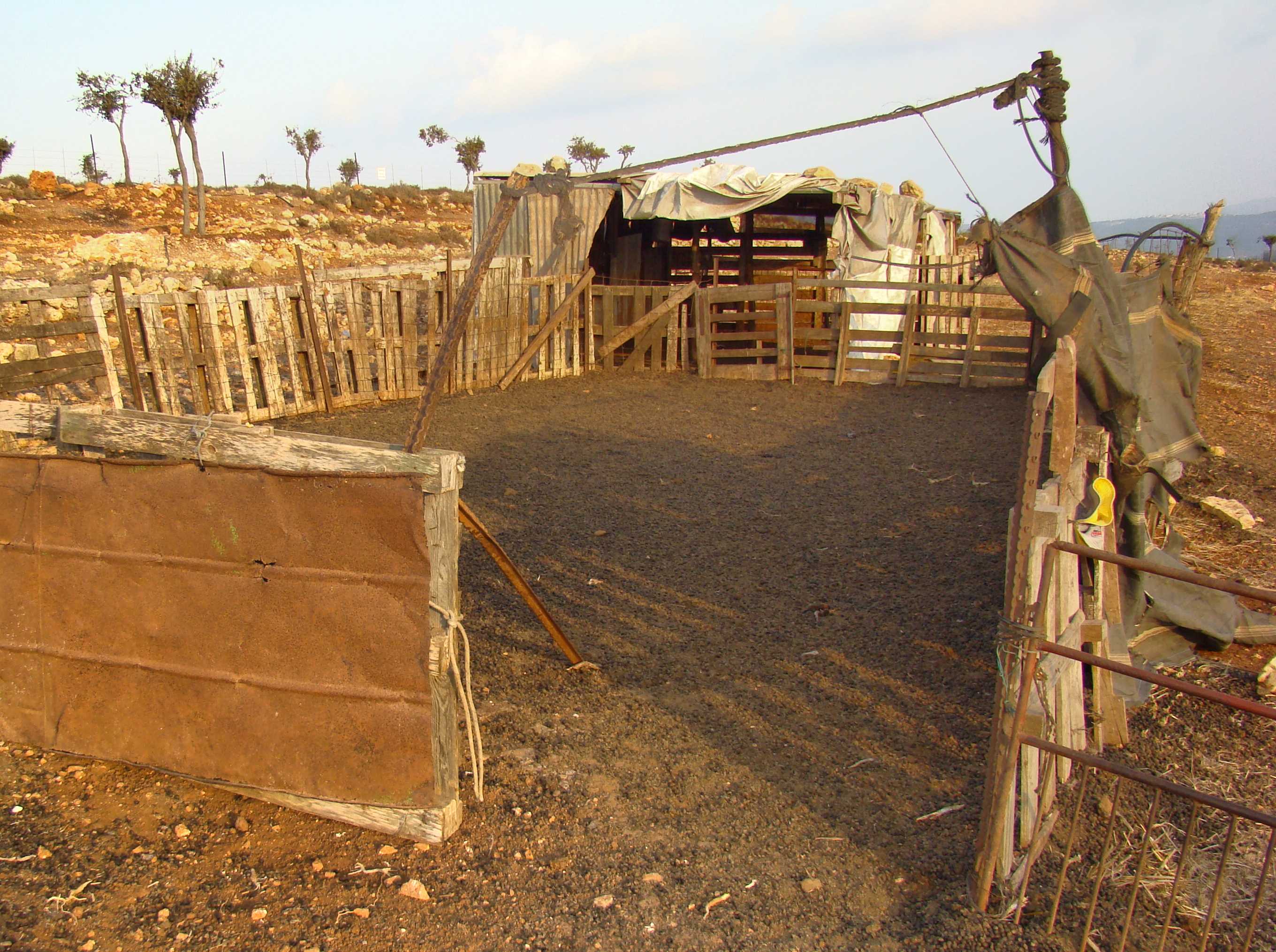
One of Jesus “I Am” statements in the gospel of John is found in John 10:7: “Then Jesus said to them again, ‘Most assuredly, I say to you, I am the door of the sheep'” and again in v.9: “I am the door. If anyone enters by Me, he will be saved, and will go in and out and find pasture.” Because of verses such as these I am intrigued to see sheepfolds in biblical lands.

Sheepfold near Yodfat in Israel. Photo by Leon Mauldin.

Sheepfold near Yodfat in Israel. Photo by Leon Mauldin.

Of course a door provides access. Inside is safety. Jesus is our access to the Father (John 14:6). In Him are all spiritual blessings (Eph. 1:3). The reference to going “in and out” is suggestive of going out for pasturage, and at the end of the day going in for rest. All of our spiritual needs are met in Christ.

With this in mind note John 10:1-9:

‘Most assuredly, I say to you, he who does not enter the sheepfold by the door, but climbs up some other way, the same is a thief and a robber. 2 But he who enters by the door is the shepherd of the sheep. 3 To him the doorkeeper opens, and the sheep hear his voice; and he calls his own sheep by name and leads them out. 4 And when he brings out his own sheep, he goes before them; and the sheep follow him, for they know his voice. 5 Yet they will by no means follow a stranger, but will flee from him, for they do not know the voice of strangers.’ 6 Jesus used this illustration, but they did not understand the things which He spoke to them. 7 Then Jesus said to them again, ‘Most assuredly, I say to you, I am the door of the sheep. 8 All who ever came before Me are thieves and robbers, but the sheep did not hear them. 9 I am the door. If anyone enters by Me, he will be saved, and will go in and out and find pasture. 10 The thief does not come except to steal, and to kill, and to destroy. I have come that they may have life, and that they may have it more abundantly’ (NKJV).

Sheep within the sheepfold. Photo by Leon Mauldin.

Sheep within the sheepfold. Photo by Leon Mauldin.

These sheep within the sheepfold were photographed near Yodfat in Galilee. From this site one can see Cana in the distance.

Wikipedia has this info regarding 1st century Yodfat, a city referenced by the Jewish historian Josephus:

By the first century CE Yodfat had expanded to encompass an area of 50 dunams (13 acres). Its siege and subsequent destruction in 67 CE are described in Josephus Flavius’ The Wars of the Jews, his chronicle of the Great Jewish Revolt against the Romans. Led by future emperor Vespasian, three Roman legions — Legio V Macedonica, X Fretensis, and XV Apollinaris — besieged Yodfat, meeting strong Jewish resistance. After 47 days the city fell by treachery, and Josephus describes the death of 40,000 Jews and the enslavement of 1,200 women and children. Yodfat was razed and burnt on the first of the Hebrew month of Tammuz. While a few dozen remaining fighters committed suicide, Josephus managed to survive this pact and was captured by the Romans.

Click on images for higher resolution.