Neapolis, Greece, Port City to Philippi

May 9, 2015

During the 2nd Missionary Journey, a milestone was reached when Paul left Troas (of Asia Minor) to sail across the Aegean to preach on European soil. The text reads, “So putting out to sea from Troas, we ran a straight course to Samothrace, and on the day following to Neapolis” (Acts 16:11).

We had the occasion recently to visit Neapolis, modern Kavala. Neapolis was colonized by the Athenians in the 5th Century BC.  It was taken by Philip of Macedon in the 4th century BC. Neapolis served as the port to Philippi, where Paul first preached on European soil, and it continues to serve as an important port today.

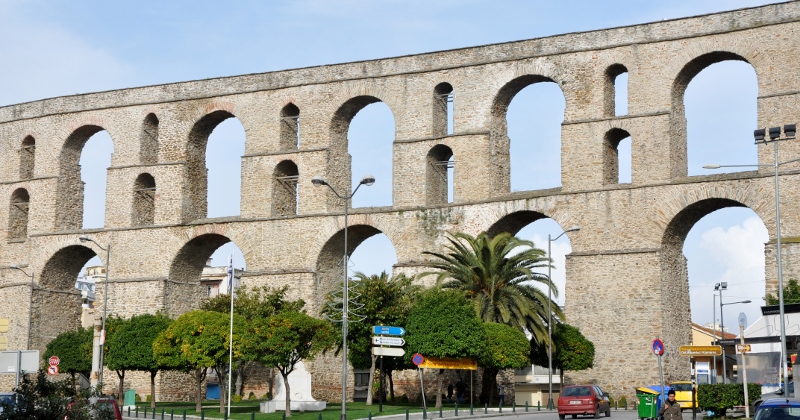
One impressive site is the aqueduct of  Suleiman the Magnificent, AD 16th century built. This landmark was built on the remains of the previous Roman aqueduct.

Aqueduct of Suleiman the Magnificent at Neapolis.

Aqueduct of Suleiman the Magnificent at Neapolis. Photo by Leon Mauldin.

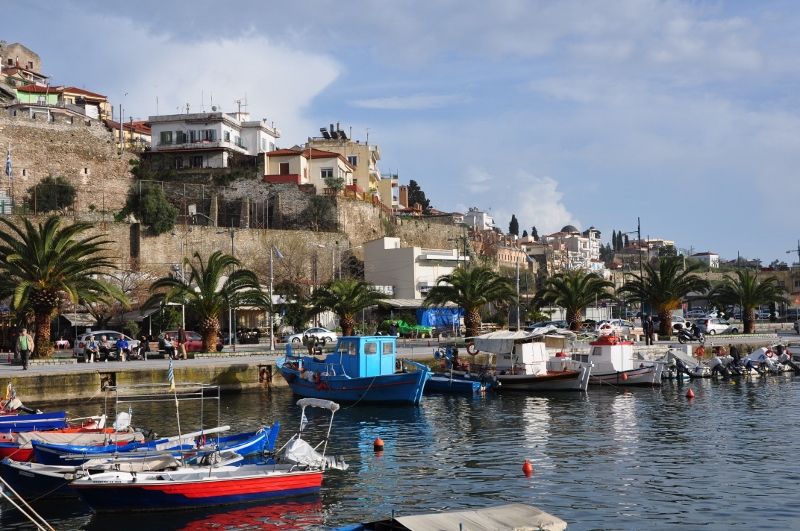
Here is a view of the harbor of Neapolis/Kavala. It is thrilling to know that Paul used this port city in his travels.

Neapolis Harbor. The site mentioned in Paul's travels in Acts 16:11. Photo by Leon Mauldin.

Neapolis Harbor. The site mentioned in Paul’s travels in Acts 16:11. Photo by Leon Mauldin.

A portion of the acropolis may be seen in background at left.

Click on images for larger view.


At Amphipolis, the Strymon River

April 6, 2015

Our recent Greece/Turkey tour included Amphipolis, briefly mentioned in Acts 17:1: “Now when they had passed through Amphipolis and Apollonia, they came to Thessalonica, where there was a synagogue of the Jews.” This biblical reference takes up where Paul and his companions left Philippi and were on their way to Thessalonica, 2nd Missionary Journey.

Fant and Reddish observe:

The modern, small village of Amphipolis belies the importance of the ancient city whose name it bears. Located strategically along the Strymon River and on the Via Egnatia, Amphipolis was one of the most important cities of Macedonia in antiquity. The site of ancient Amphipolis is located between Thessaloniki and Kavala, about 65 miles east of Thessaloniki. From highway E90 there are signs that point the way to Amphipolis. The ancient city sits on a bend on the east bank of the Strymon River, surrounded by the river on three sides. This geographical feature gave rise to the name of the city, since Amphipolis means “around the city.”

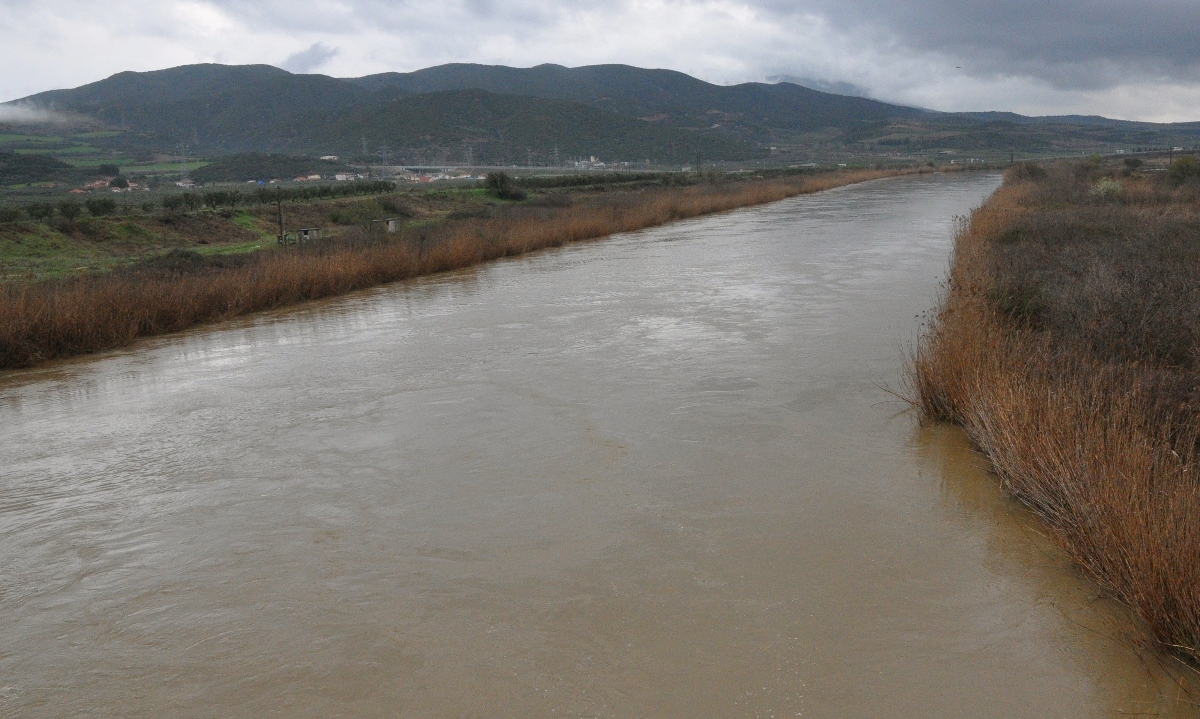
Here is a view of the Strymon River.

Strymon River at Amphipolis. Photo by Leon Mauldin.

Strymon River at Amphipolis. Photo by Leon Mauldin.

In addition to our above Acts 17:1 reference which specifically mentions Amphipolis, Todd Bolen in his notes in his excellent Pictorial Library collection quotes Acts 20:1-3, 6a (KJV) “And after the uproar was ceased, Paul called unto him the disciples, and embraced them, and departed for to go into Macedonia. And when he had gone over those parts, and had given them much exhortation, he came into Greece, and there abode three months. And when the Jews laid wait for him, as he was about to sail into Syria, he purposed to return through Macedonia…And we sailed away from Philippi after the days of unleavened bread.” Then Bolen notes: “Although no details are given of the stops Paul made during his 3rd missionary journey in this region, it is probable that he passed through Amphipolis, both on his way into and out of Macedonia as he left via Philippi.”

Click photo for larger view.


Seneca the Younger, Gallio’s Brother, Column at Corinth

February 12, 2015

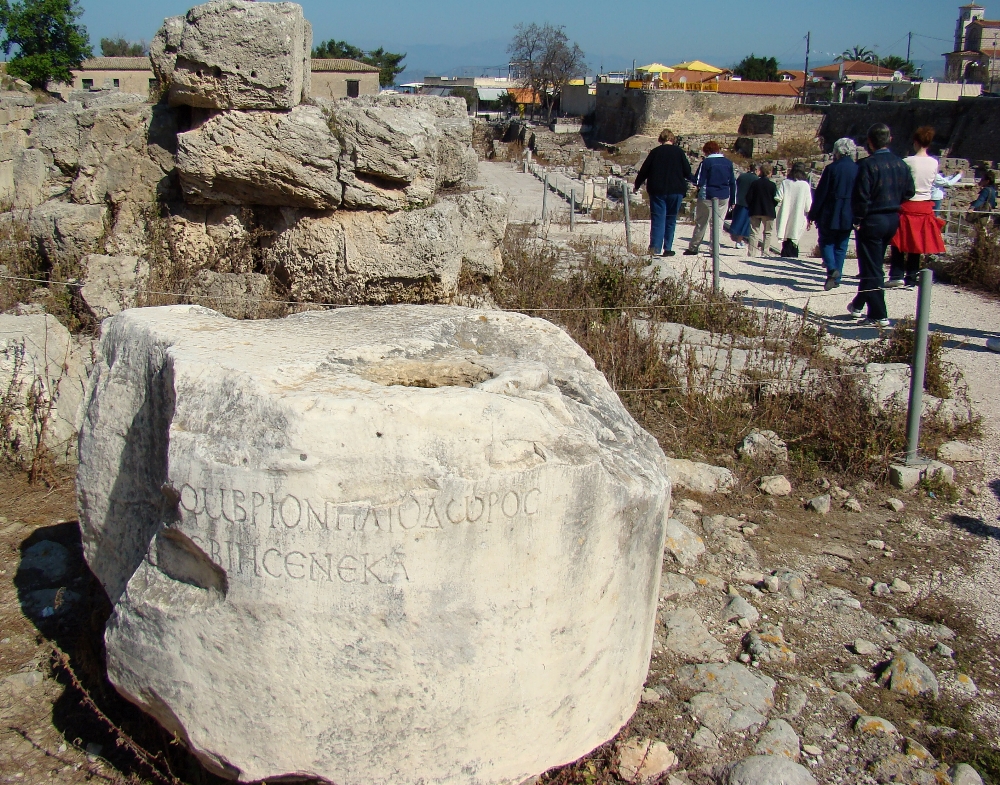
Among the ruins visible today as one visits biblical Corinth, is a portion of a column bearing the name of Seneca.

Column fragment at Corinth bearing Seneca's name (Latin Ceneka). Photo by Leon Mauldin.

Column fragment at Corinth with Seneca’s name (Latin CENEKA). Photo by Leon Mauldin.

Seneca is of interest to students of Acts, because he is the brother of the Proconsul Gallio, before whom Paul stood trial at Corinth (Acts 18:12-17). Usually when Paul was brought before rulers for his gospel teaching he was promptly beaten and often imprisoned (2 Cor. 11:23-27). However here at Corinth Gallio could see that Paul was not a law-breaker, and threw the case out.

Wikipedia has this info on Seneca:

Lucius Annaeus Seneca (often known simply as Seneca /ˈsɛnɪkə/; c. 4 BC – AD 65) was a Roman Stoic philosopher, statesman, dramatist, and in one work humorist, of the Silver Age of Latin literature.

He was a tutor and later advisor to emperor Nero. While he was forced to commit suicide for alleged complicity in the Pisonian conspiracy to assassinate Nero, he may have been innocent. His father was Seneca the Elder, his elder brother was Lucius Junius Gallio Annaeanus, called Gallio in the Bible, and his nephew was the poet Lucan.

The mention of Gallio in the text (Acts 18) is helpful in dating the events at that point in the ministry of Paul.

Gallio was the proconsul [Grk. anthupatos] of the Roman senatorial province of Achaia (Acts 18:12). Proconsuls generally served two-year terms, and such appointments offered potentially great financial rewards. Achaia’s administrative center was Corinth, a newly rebuilt city at the time and a busy commercial and transport center. The city had as many as 200,000 residents, and the province of Achaia may have had several million subjects. . .

An inscription at the Temple of Apollo in Delphi indicates that Gallio’s time in Corinth may be dated to AD 51–53. Thus, Paul’s appearance before Gallio probably occurred in the spring or summer of AD 51. (The Lexham Bible Dictionary).

In an article entitled “Paul, Dating, and Corinth: The Gallio Inscription and Pauline Chronology,” Gardner Gordon wrote:

Gallio’s younger brother, Seneca, was a philosopher, and apparently an inflammatory one. In AD 41, Emperor Claudius exiled this young thinker to the isle of Corsica. Usually, such disgrace tarnished the entire family. Whatever political ambitions Gallio may have had were effectively derailed by his brainy brother’s banishment. But in AD 49, Seneca was ushered back to Rome with a grand purpose: he was placed in the imperial court as the tutor to Claudius’ nephew and royal successor, a young, impetuous Roman named Nero. Undoubtedly, it was at this time that Seneca was instrumental in helping to secure a political post of proconsul for his older brother, Gallio.

That article may be read in its entirety by clicking here.

I have several posts on biblical Corinth, with photos and brief articles. Use search box at upper right.

Click image for larger view.


Paul’s Acts 17 Sermon, Greek Text, at Aeropagus, Athens Greece

February 5, 2015

In Acts 17 Luke narrates how Paul was invited to speak to the men of Athens in the midst of the Areopagus, at Mars Hill. Among the listeners were Epicurean and Stoic philosophers (v.17). He began his address by referencing an altar in their city with this inscription: “TO THE UNKNOWN GOD.” Using that as his starting point, he contrasted the true God with the idols they worshiped. The true God made all things, including us. He gives unto us life, breath, and all things. Because He is the Creator, and we are His creatures, we must seek after Him and find Him. He commands all men everywhere to repent; a day is coming in which He will judge the world in righteousness by the One whom He raised from the dead (summary of vv. 23-31).

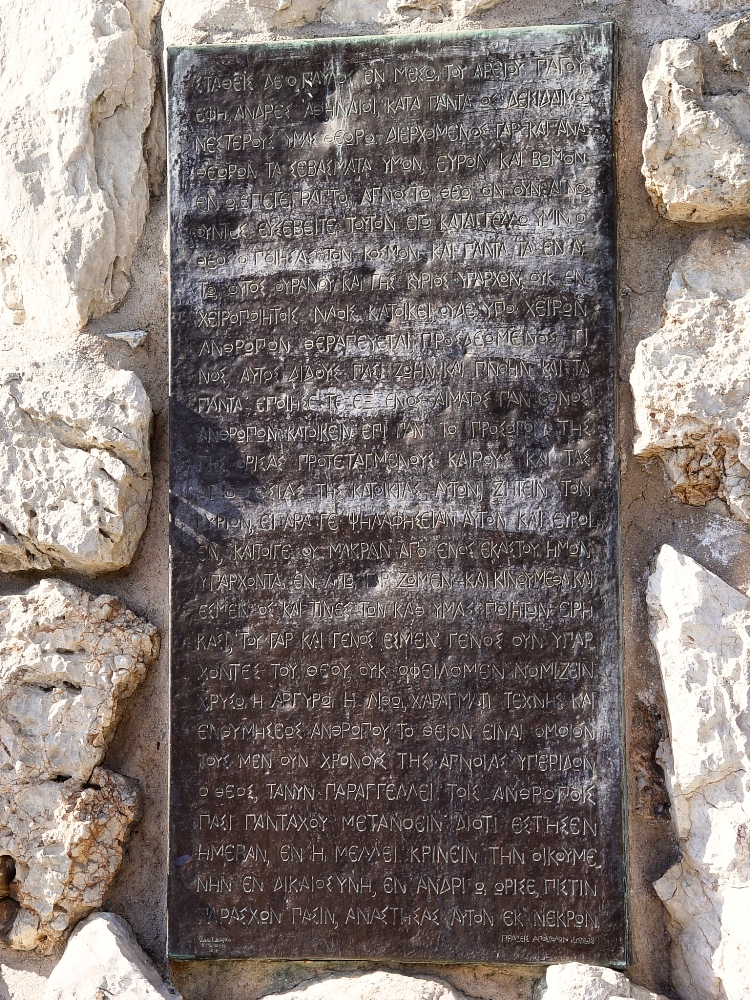
Today at the site of Mars Hill there is a bronze plaque with the text of Paul’s sermon engraved in the Greek language.

Paul's Acts 17 sermon, on bronze plaque at base of Mars Hill, Athens, Greece. Photo by Leon Mauldin.

Paul’s Acts 17 sermon, on bronze plaque at base of Mars Hill, Athens, Greece. Photo by Leon Mauldin.

The Greeks did not believe in a resurrection, so as soon as Paul mentioned that, many of his audience stopped listening (v.32). Others procrastinated (v.32). But there were some converts to Christ there: Dionysius the Areopagite, a woman named Damaris, and others with them” (v.34).

We have numerous other posts on Athens. Use search box at above right.

Click image for larger view.


Shepherd with His Sheep

December 22, 2014

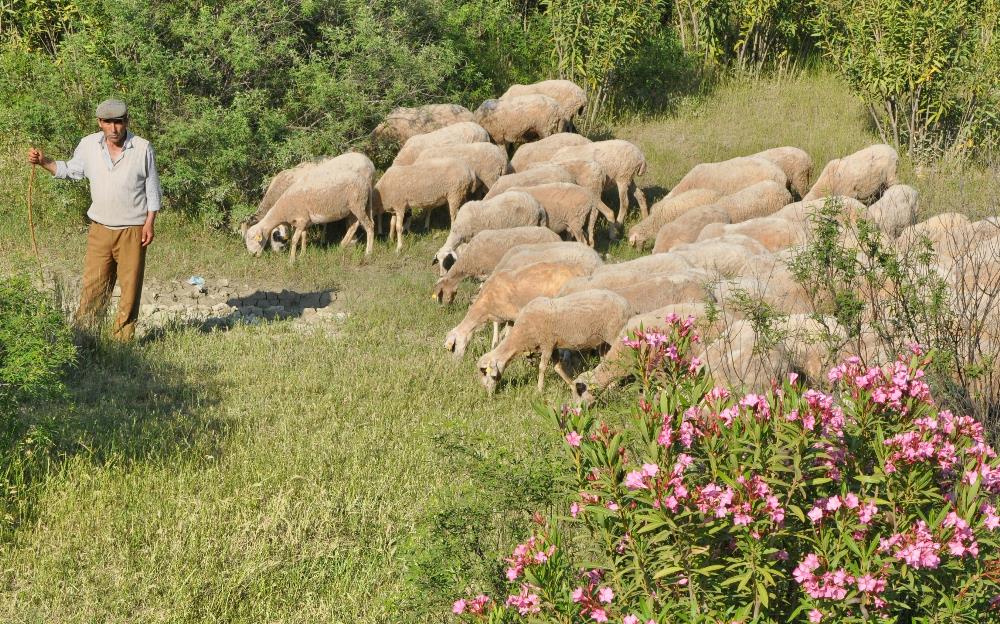
When visiting biblical sites I never tire of seeing sheep and their shepherds. I’m sure that is due in large measure to the frequent references in the Bible, not only to literal shepherds and sheep, but also the metaphorical usage.

Shepherd with sheep in biblical Pamphilia. Photo by Leon Mauldin.

Shepherd with sheep in biblical Pamphylia. Photo by Leon Mauldin.

Isaiah 53:6 All we like sheep have gone astray; We have turned, every one, to his own way; And the LORD has laid on Him the iniquity of us all.

Psalm 23:1 The LORD is my shepherd; I shall not want.

John 1:29 The next day John saw Jesus coming toward him, and said, “Behold! The Lamb of God who takes away the sin of the world!

John 10:27 My sheep hear My voice, and I know them, and they follow Me.

1 Peter 2:25 For you were like sheep going astray, but have now returned to the Shepherd and Overseer of your souls.

Elders of local churches are told: 1 Peter 5:2 Shepherd the flock of God which is among you, serving as overseers, not by compulsion but willingly, not for dishonest gain but eagerly.

Revelation 7:17 for the Lamb who is in the midst of the throne will shepherd them and lead them to living fountains of waters. And God will wipe away every tear from their eyes.


Samsun in Biblical Pontus

December 15, 2014

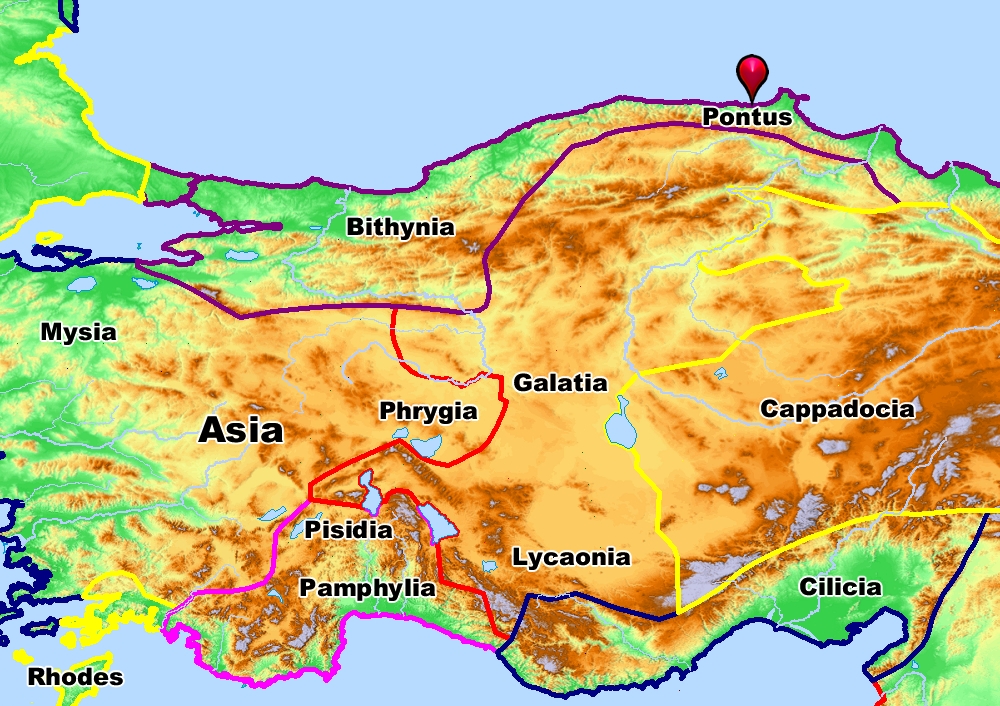
The Roman province of Pontus is mentioned three times in the Bible.

Pontus. Map by BibleAtlas.org.

Pontus. Map by BibleAtlas.org.

There were residents of Pontus (among many other) present for the Day of Pentecost in Acts 2, the day on which the Gospel message of salvation through the resurrected Christ was preached for the first time: “Parthians and Medes and Elamites, and residents of Mesopotamia, Judea and Cappadocia, Pontus and Asia” (Acts 2:9).

Paul’s dear friend and fellow-tentmaker Apollos, was from Pontus: “And he found a Jew named Aquila, a native of Pontus, having recently come from Italy with his wife Priscilla, because Claudius had commanded all the Jews to leave Rome” (Acts 18:2).

The Apostle Peter wrote the letter of 1 Peter to Christians in Pontus (and other Roman provinces): “Peter, an apostle of Jesus Christ, To those who reside as aliens, scattered throughout Pontus, Galatia, Cappadocia, Asia, and Bithynia. . .” (1 Pet. 1:1).

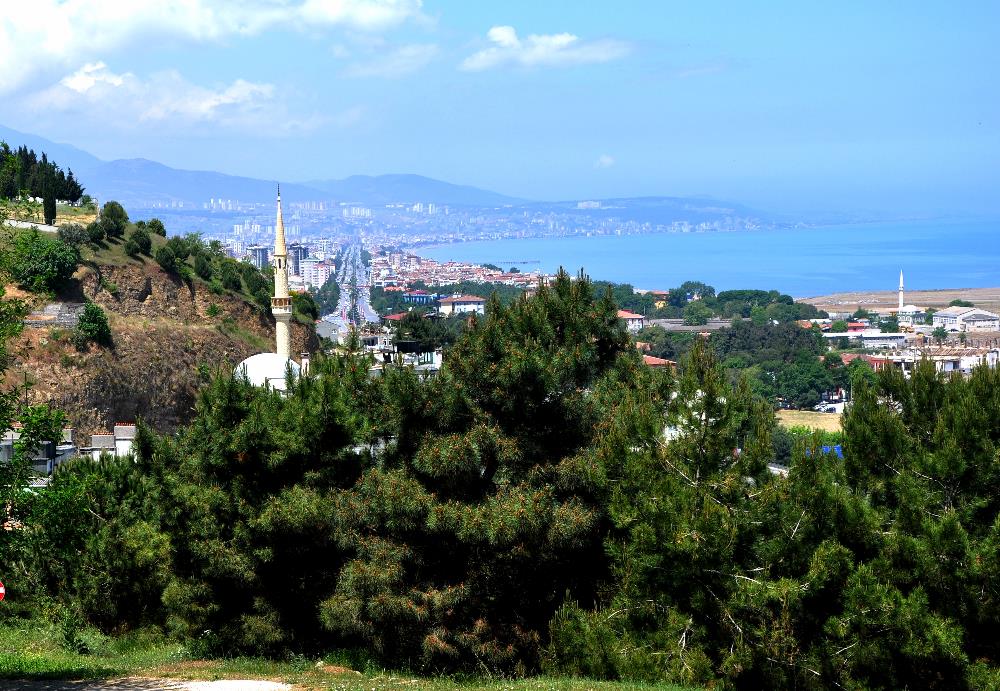
Samsun (also known as Amisus) was a major port city of Pontus located on the Black Sea. This is in Turkey’s territory today.

Samsun, port city of Pontus. Photo by Leon Mauldin.

Samsun, port city of Pontus. Photo by Leon Mauldin.

Many scholars believe that the messenger of 1 Peter (& 2 Peter) would have stopped here at Samsun. I concur. See Ferrell Jenkins here and here.

Click image for larger view.


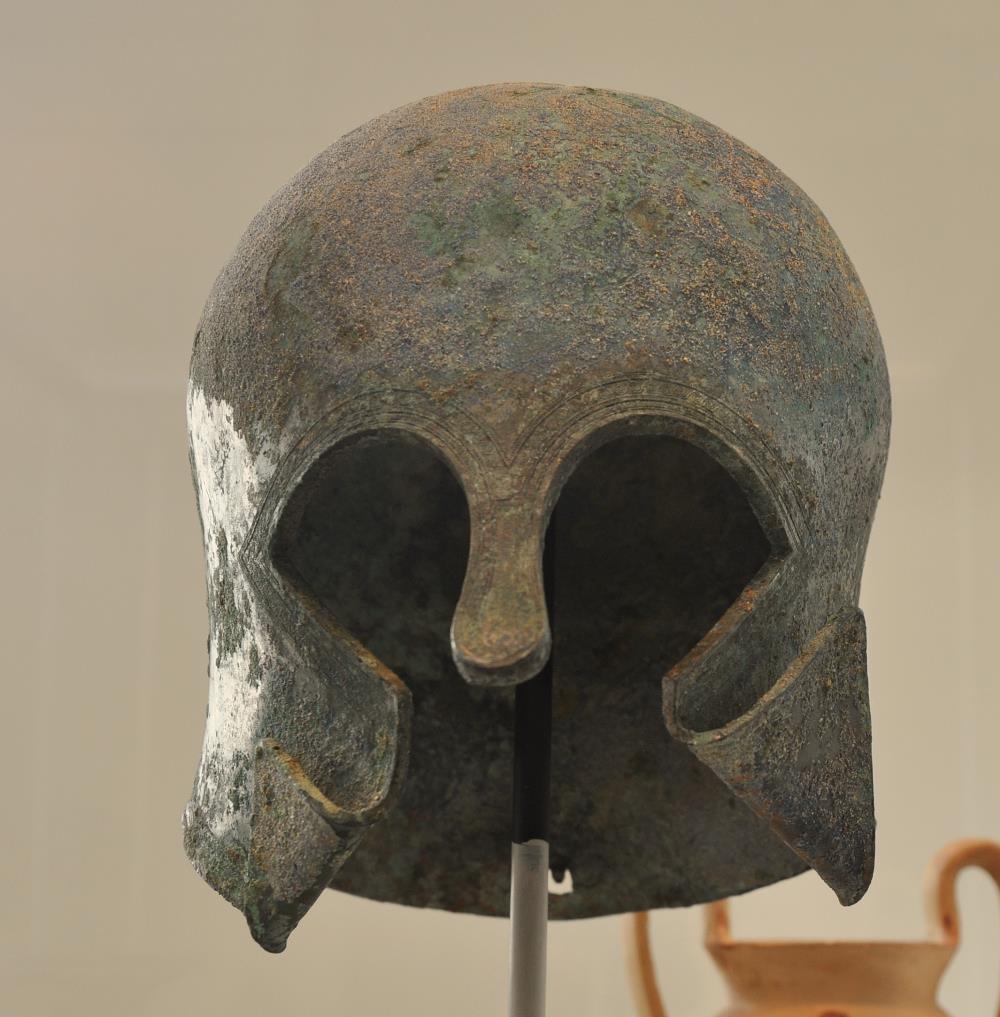
Corinthian Helmet

October 30, 2014

From an entry entitled, “Weapons” in the Harper’s Bible Dictionary we read:

As in the modern world, advancements in ancient technology were quickly adapted for use in instruments of war. One of the most important steps in the history of weapons was the development of carburized iron, a phenomenon that occurred in the eastern Mediterranean toward the end of the second millennium B.C., but earlier improvements in metallurgy (i.e., the production of copper and bronze) had been applied to arms production for nearly two thousand years before the Iron Age. Naturally, the shape, size, and overall durability of dagger and sword blades and spearheads and arrowheads were affected by such improvements in copper, bronze, and iron technology. Another important weapon that improved over time was the chariot, whose speed and maneuverability were increased by changes in design and construction materials, including metals. Other major steps in the development of ancient weaponry include the invention of the composite bow, piercing battle-ax, “Corinthian” helmet, and siege engines (pp. 1123-1124).

The Metropolitan Museum in NY has several such helmets on display.

Corinthian Style Helmet. Photo by Leon Mauldin. Metropolitan Museum, NY.

Corinthian Style Helmet. Photo by Leon Mauldin. Metropolitan Museum, NY.

This Grecian helmet, made of bronze and dating back to 7th-6th century BC, put me in mind of some biblical texts:

–Isaiah 59:17:  He put on righteousness like a breastplate, And a helmet of salvation on His head; And He put on garments of vengeance for clothing And wrapped Himself with zeal as a mantle. (Reference here is to the Lord, YHWH).

–Ephesians 6:17: And take THE HELMET OF SALVATION, and the sword of the Spirit, which is the word of God. The above Isaiah text provides background for this Ephesians passage. The New American Standard Bible uses all caps to indicate a quotation from the OT. The helmet is a vital part of the Christian’s armor listed in Eph. 6:10-17.

–1 Thessalonians 5:8: But since we are of the day, let us be sober, having put on the breastplate of faith and love, and as a helmet, the hope of salvation. A helmet protects the head. Here the hope of salvation possessed by Christians is said to be a helmet. Keep your helmet on. Keeping the hope of salvation constantly in the forefront of the mind serves to protect one against Satan’s devices.

I believe I’ll keep my helmet on!


The Goddess Sakhmet

October 9, 2014

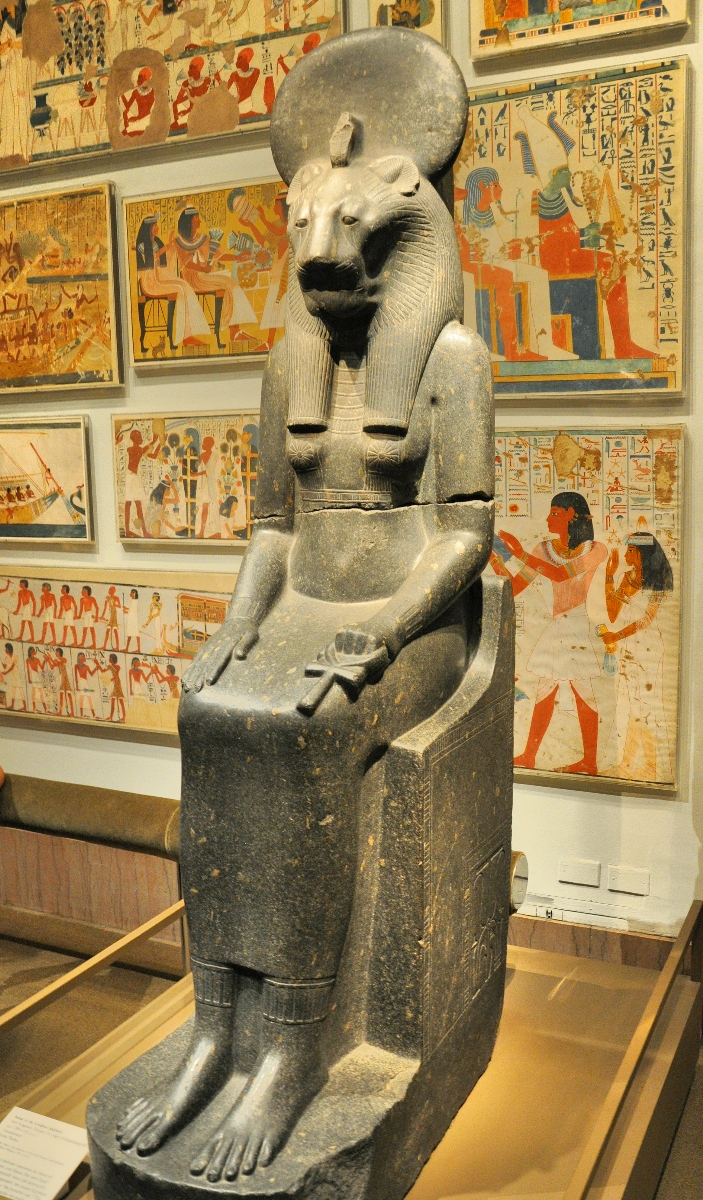
During Egypt’s New Kingdom Period, in the 18th dynasty, Amenhotep III (ca. 1390-1352 BC) commissioned hundreds of statues of the goddess Sakhmet for his mortuary temple in western Thebes. These statues were intended as monumental prayers to appease the goddess and guarantee peace and health.

Goddess Sakhmet. Metropolitan Museum, NY. Photo by Leon Mauldin.

Goddess Sakhmet. Metropolitan Museum, NY. Photo by Leon Mauldin.

“The goddess Sakhmet represents the forces of violence, disaster, and illness. Her lion’s head expresses her potentially fierce and destructive character and, appropriately, her ancient Egyptian name, Sakhmet, means ‘the powerful one.’ The sun disk on her head identifies the goddess as the daughter of the sun god Re” (from museum placard).

This puts me in mind of what YHWH said prior to the 10th of the ten plagues of Egypt: “and on all the gods of Egypt I will execute judgments: I am the LORD” (Ex. 12:12).

Click image for larger view.


Temple Inscription Fragment

September 15, 2014

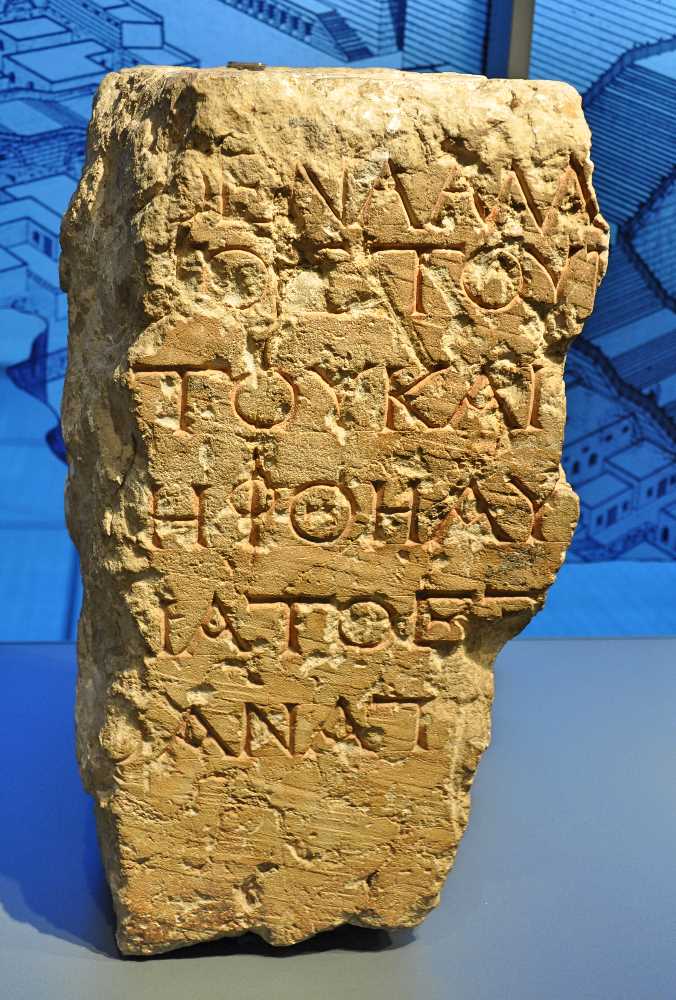
Some biblical texts are especially illuminated by archaeological finds. For example, Acts 21:28 records the false charge against Paul, “He also brought Greeks into the temple and has defiled this holy place” (v.28). The next verse shows this they “supposed” (NET “assumed). Ephesians 2:14 speaks of Jesus’ death breaking down “the middle wall of separation” between Jews and Gentiles.

Temple Inscription Fragment. Israel Museum. Photo by Leon Mauldin.

Temple Inscription Fragment. Israel Museum. Photo by Leon Mauldin.

Our photo shows one of the warnings posted marking the boundary within the temple complex beyond which no Gentile could proceed. The inscription read, “NO FOREIGNER IS TO GO BEYOND THE BALUSTRADE AND THE PLAZA OF THE TEMPLE ZONE. WHOEVER IS CAUGHT DOING SO WILL HAVE HIMSELF TO BLAME FOR HIS DEATH WHICH WILL FOLLOW.”

A complete tablet is housed in the Istanbul Museum, and can be seen in a previous post here.

So the Acts 21 text means that Paul was charged with taking a Gentile beyond the balustrade marked off by signs just like this one.

The Ephesians 2 text shows that with Jesus’ death on the cross, reconciliation is made possible between men (Jew and Gentile) and God, and those reconciled unto God are reconciled to each other. The reconciled are in one body (the church, Eph. 1:22-23). That distinction epitomized by the wall of separation, and reflected by these warning signs, has been removed.


Follow-up on Bethlehem of Galilee–Reader Response

September 2, 2014

In our previous post (click here) on Bethlehem of Galilee we referenced Ibzan (of Judges 12:8-10) of Bethlehem and observed: “Very likely this is the Bethlehem of Galilee, not the Bethlehem of Judah.” A reader asks, “I’ve learned about the existence of this town sometime ago, but I’ve never found out WHY it is likely that this Bethlehem is Ibzan’s hometown. Which arguments support this assumption?”

That is a good question. First, remember that Joshua 19:15 lists Bethlehem among other cities Zebulun inherited.

Wolf, in The Expositor’s Bible Commentary observes, “The Zebulun location is favored because the southern city is usually identified as “Bethlehem in Judah” (17:7-9; 19:1-2, 18)” (Vol. 3, p.459). Note that is the wording repeatedly in each of these verses. It seems consistent that when the southern Bethlehem is intended, it is indicated, for example, Judges 17:7: “Now there was a young man from Bethlehem in Judah, of the family of Judah, who was a Levite; and he was staying there” (NASB). Note the rendering of the KJV: “And there was a young man out of Bethlehemjudah of the family of Judah, who was a Levite, and he sojourned there.”

Keil & Delitzsch: “Ibzan sprang from Bethlehem,—hardly, however, the town of that name in the tribe of Judah, as Josephus affirms (Ant. v. 7, 13), for that is generally distinguished either as Bethlehem ‘of Judah’ (Judg. 17:7, 9; Ruth 1:2; 1 Sam. 17:12), or Bethlehem Ephratah (Micah 5:1), but probably Bethlehem in the tribe of Zebulun (Josh. 9:15)” (Vol 2, p. 287). To the Micah passage we could add Gen. 35:19: “So Rachel died and was buried on the way to Ephrath (that is, Bethlehem)” (see also Gen. 48:7).

Pulpit Commentary: “But as Bethlehem of the tribe of Judah is generally called Bethlehem of Judah, or Bethlehem-Ephratah, and as Elon and Abdon were judges in North-East Israel, it is perhaps more probable that Bethlehem of Zebulun is meant” (p. 136). In his comment above, author A.C. Hervey is making two points: the fuller designation (of Judah or Ephratah) is used when Bethlehem of the south is intended, and second, the context of Judges 12:8-10. Verse 11 mentions Judge Elon of Zebulun, and Judge Abdon (vv. 13-15), on the border between Ephraim and Manasseh. While it is not conclusive proof, Ibzan’s placement in the text is in the context of judges to the north. Note in this connection that Butler, in the Word Biblical Commentary observes, “The context appears to point to the northern location. . .” (Vol. 8, p. 297).

Avraham Negev states regarding Bethlehem of Galilee: “A town in the territory of Zebulun, (Josh. 19:15), the birth-place of the judge Ibzan and the place where he was buried (Judg. 12:8–10)” (The Archaeological Encyclopedia of the Holy Land).

While I do not think that truth is determined by the number of people who advocate a particular position, it is true that the majority of scholars favor Bethlehem of Zebulun of Galilee as best fitting the text and context of Judges 12:8-10.
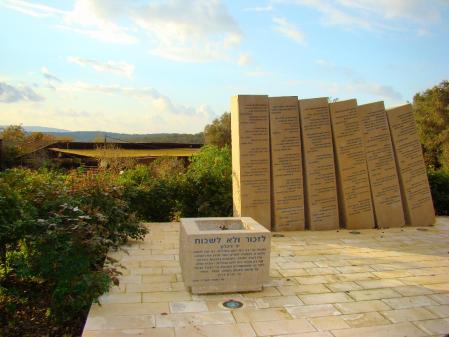
Bethlehem of Galilee. Further remains from the Templars. Photo by Leon Mauldin.

Bethlehem of Galilee. Further remains from the Templars. Photo by Leon Mauldin.

Click image for larger view.