Tel Hazor in Israel

November 18, 2016

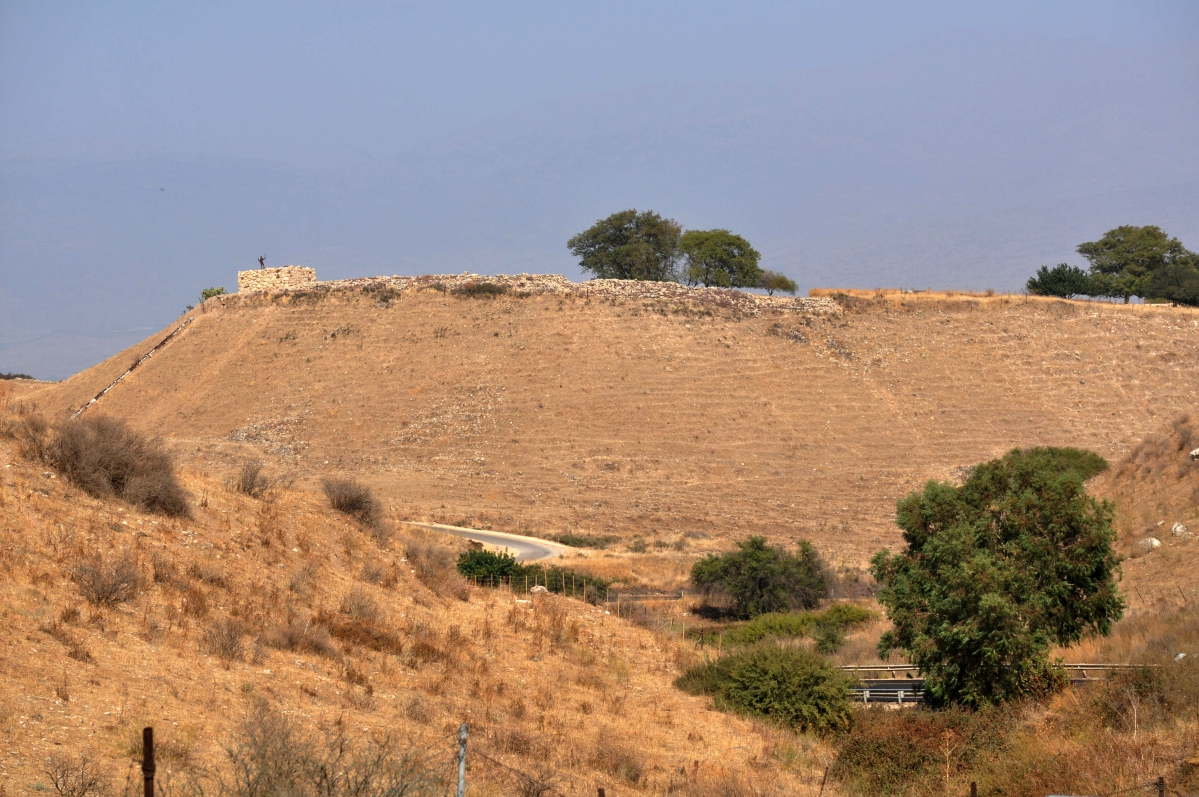
Hazor is first mentioned in the Bible in Josh. 11 in the days of the conquest under Joshua. Having conquered the central and then southern regions of Canaan, the victory of Hazor established Israel’s “toehold” in the north, for as Josh. 11:10 explains, “Joshua turned back at that time and took Hazor, and struck its king with the sword; for Hazor was formerly the head of all those kingdoms.” Or, as the NET renders the text, “for Hazor was at that time the leader of all these kingdoms.” As such, it was the head of a confederation of several Canaanite cities in the battle against Joshua & Israel’s forces at the waters of Merom. Nelson’s NIBD says, “Hazor was one of the most important fortresses in the land (Josh. 11:10). This was due to its enormous size, its large population, and its strategic location of the main road between Egypt and Mesopotamia” (p.546).

It is recorded in the next verse, Josh. 11:11, that Joshua burned Hazor down, but not the surrounding cities. Verse 13 continues: “But as for the cities that stood on their mounds, Israel burned none of them, except Hazor only, which Joshua burned.” The standard procedure during the conquest was not to burn down the cities—God was giving them to Israel as their inheritance in which to live. Therefore it should not surprise us when the “critic” says there is not a lot of evidence of destruction, etc., to date Joshua’s conquest of Israel. There is a big difference between destruction and conquest. I.e., cities such as Jericho, Ai, and Hazor were the exceptions and not the rule.

Biblical Hazor. "Formerly the head of all those kingdoms" (Josh. 11:10). Photo by Leon Mauldin.

Biblical Hazor. “Formerly the head of all those kingdoms” (Josh. 11:10). Note the watchtower at upper left. Photo by Leon Mauldin.

Between the time of the Conquest and the time of the Judges, Hazor had rallied and was again a very serious threat, as God allowed the armies of Hazor to oppress the Israelites because of Israel’s sinfulness (Judges 4:1-3). These were the days in which God raised up Deborah to be judge and prophetess; Israel’s army was led by Barak (Judges 4-5).

Solomon made Hazor one of his fortified cities, which functioned as a military outpost (1 Kings 9:15). It continued to be an important city until its destruction by Tiglath-Pileser in 732 B.C. (2 Kings 15:29). The Solomonic gates, like those at Megiddo and Gezer, were an important feature of the city.

The city of Hazor occupied some 200 acres, making it the largest city in ancient Israel. Hazor is now the largest archaeological site in Israel. Remains show not only evidence of Israel’s occupation, but also prior Canaanite structures as well.

Extra-biblical references to Hazor: Hazor is previously mentioned in the Egyptian Execration texts from the 19th or 18th century B.C. It is listed in the Mari documents of the 18th century B.C. as one of the major commercial centers in the Fertile Crescent. Hazor is also mentioned in the Egyptian documents of the New Kingdom, such as the city lists of Tutmoses III, as well as Amenhotep II and Seti I.

I’ve previously posted on Hazor here and here.


Pools Around the Temple

November 17, 2016

On our recent trip to Israel, while we were in the area of the Antonia Fortress, our guide Zack showed us some artwork that I found to be a helpful illustration of the area north of the temple in Jerusalem.

Pools of Jerusalem. Shows area north of temple mount. Photo by Leon Mauldin.

Pools of Jerusalem. Shows area north of temple mount. Photo by Leon Mauldin.

This is useful for showing the location of the Antonia Fortress, which would have housed the Roman soldiers stationed in Jerusalem to keep peace (to the chagrin of the Jewish nation). While many believe that it would have been here that Jesus was put on trial before Pilate, it is more likely that Pilate would have been at Herod’s palace there in Jerusalem. For more on this, see the excellent post by Ferrell Jenkins here.

The Antonia Fortress would have been the location of the barracks where Paul was taken when some Jews in Jerusalem were enraged to the point of seeking to kill him: “the commanding officer ordered Paul to be brought back into the barracks. He told them to interrogate Paul by beating him with a lash so that he could find out the reason the crowd was shouting at Paul in this way (Acts 22:24, NET).

This illustration is also helpful in visualizing the setting of John 5, where Jesus healed the man who had been paralyzed thirty-eight years: “Now there is in Jerusalem by the Sheep Gate a pool, which is called in Hebrew, Bethesda, having five porches” (v.2). Here you can see the location of the sheep gate, as well as the twin pools of Bethesda.

Excavations at the Pool of Bethesda. Photo by Leon Mauldin.

Excavations at the Pool of Bethesda. Photo by Leon Mauldin.

My previous posts on Bethesda can be seen by clicking here, here, here and here.

When you study the Bible, you are studying real events, real places, real people!


Pool of Siloam in Jerusalem

November 7, 2016

Today was a walking tour of Jerusalem. One of my favorite sites (among others) is the pool of Siloam, referenced in John 9. This site was excavated in late 2004. Jesus anointed with clay the eyes of the man born blind, and told him to go to this pool to wash his eyes. He did so, and he went away seeing. This miracle was evidence to validate Jesus’ claim that He was the light of the world (John 9:5).

At the pool of Siloam, where the blind man received his sight (John 9). Photo by Zachary Shavin.

At the pool of Siloam, where the blind man received his sight (John 9). Photo by Zachary Shavin.

Note the text of John 9:1-7:

Now as Jesus passed by, He saw a man who was blind from birth. 2 And His disciples asked Him, saying, “Rabbi, who sinned, this man or his parents, that he was born blind?” 3 Jesus answered, “Neither this man nor his parents sinned, but that the works of God should be revealed in him. 4 “I must work the works of Him who sent Me while it is day; the night is coming when no one can work. 5 “As long as I am in the world, I am the light of the world.” 6 When He had said these things, He spat on the ground and made clay with the saliva; and He anointed the eyes of the blind man with the clay. 7 And He said to him, “Go, wash in the pool of Siloam” (which is translated, Sent). So he went and washed, and came back seeing.

This was one of seven miracles recorded in the Gospel of John. John’s stated purpose:

And truly Jesus did many other signs in the presence of His disciples, which are not written in this book; but these are written that you may believe that Jesus is the Christ, the Son of God, and that believing you may have life in His name. (John 20:30-31)

We have previously posted on Siloam here and here.

Click on image for larger view. Thanks for following our travels.


Fauna, etc., in Israel

November 6, 2016

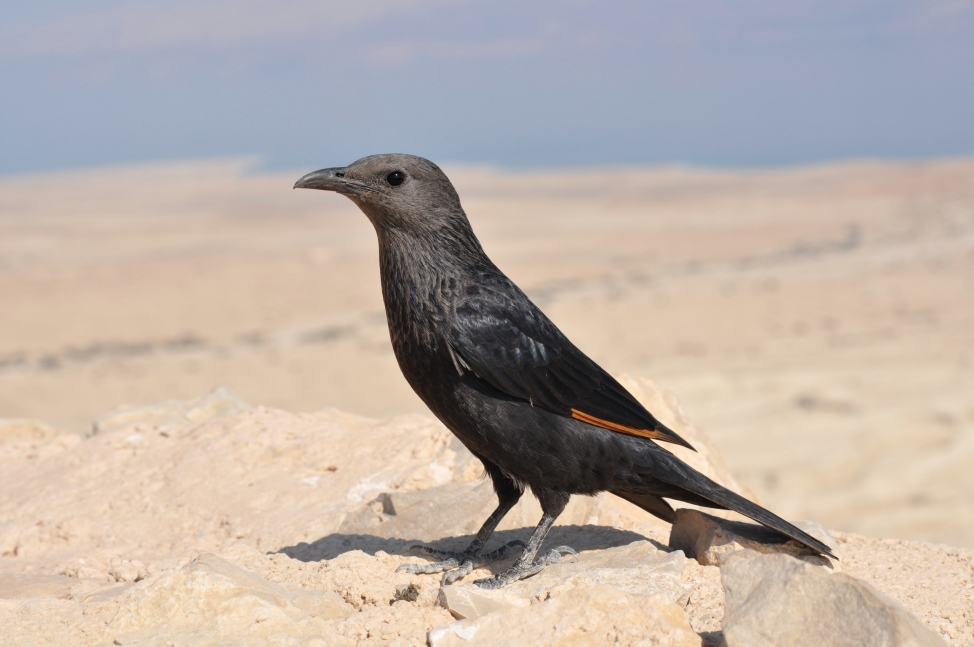
Today we made a trip to Masada, the site of the Jewish zealots last stand (AD 73) after the AD 70 destruction of Jerusalem. Tristram’s Starling, also called Tristram’s Grackle, were in abundance.

Tristram's Starling at Masada. Photo ©Leon Mauldin.

Tristram’s Starling at Masada. Photo ©Leon Mauldin.

This species is named after Henry Baker Tristram.

The males have glossy iridescent black plumage with orange patches on the outer wing, which are particularly noticeable in flight. The bill and legs are black. Females and young birds are similar but duller and with a greyish head, lacking the plumage gloss.
It is gregarious and noisy, with a call that resembles a wolf whistle. They are omnivorous, feeding on fruit and invertebrates, and can also be observed grooming Nubian ibex and domestic livestock for parasites. (Wikipedia)

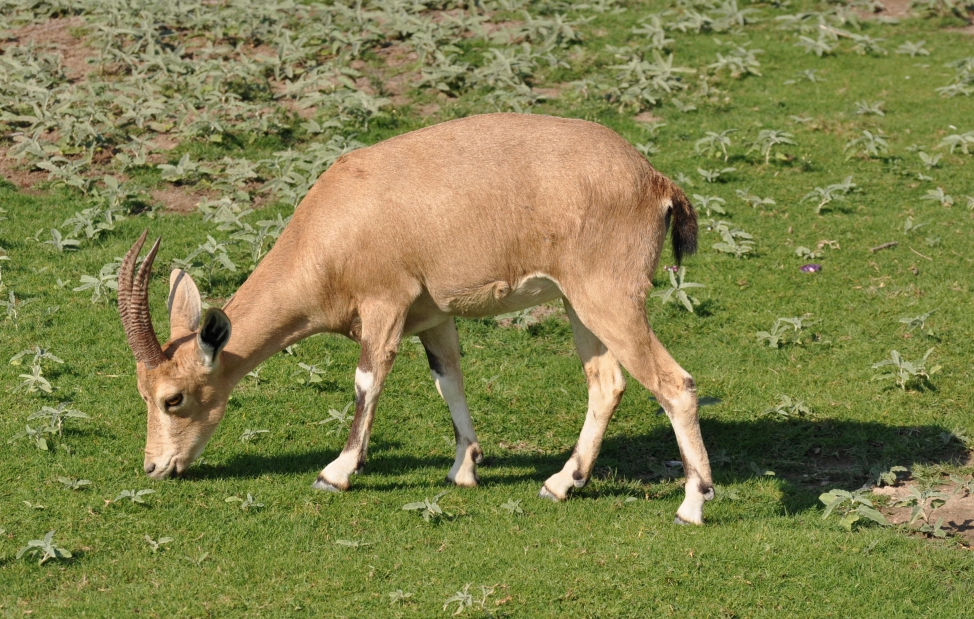
We also saw En Gedi, the site where David hid from King Saul, who was pursuing David with the intention of killing him (1 Sam. 23:29ff.). Here we photographed an ibex, the biblical “wild goat”of Psa. 104:18: “The high hills are for the wild goats; The cliffs are a refuge for the rock badgers.”

Ibex at En Gedi. Photo ©Leon Mauldin.

Ibex at En Gedi. Photo ©Leon Mauldin.

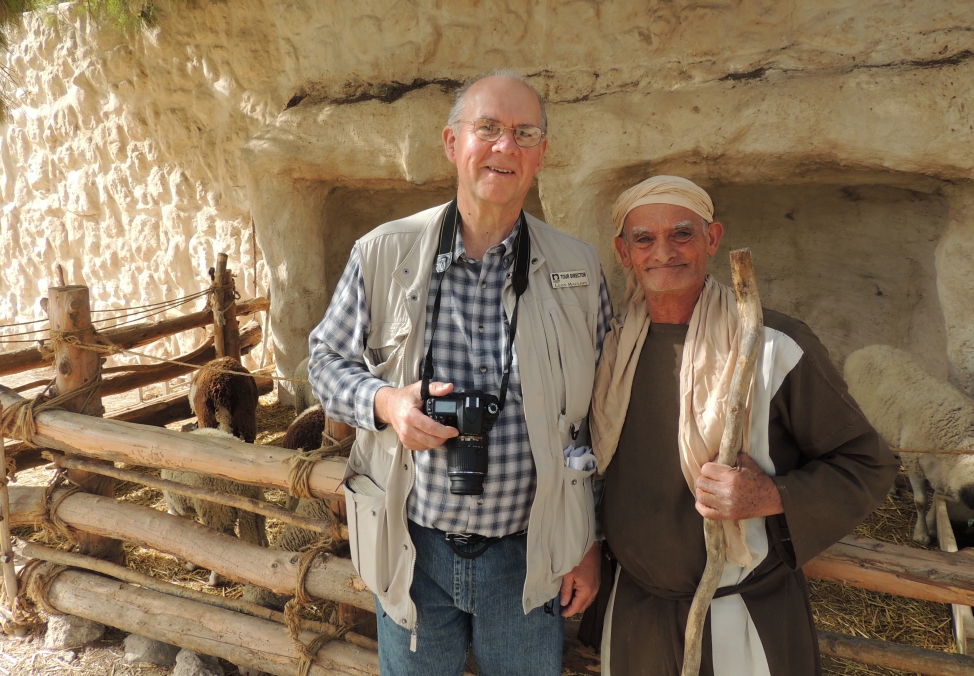
Tour member Mike Eison shared this photo he took this past Friday at Nazareth, at the Nazareth Village. The shepherd, his sheep in the fold behind.

Shepherd at Nazareth Village. Photo by Mike Eison.

Shepherd at Nazareth Village. Photo by Mike Eison.

Thanks for following our travels. Tomorrow is a walking tour in Jerusalem.


On the Mount of Olives

November 5, 2016

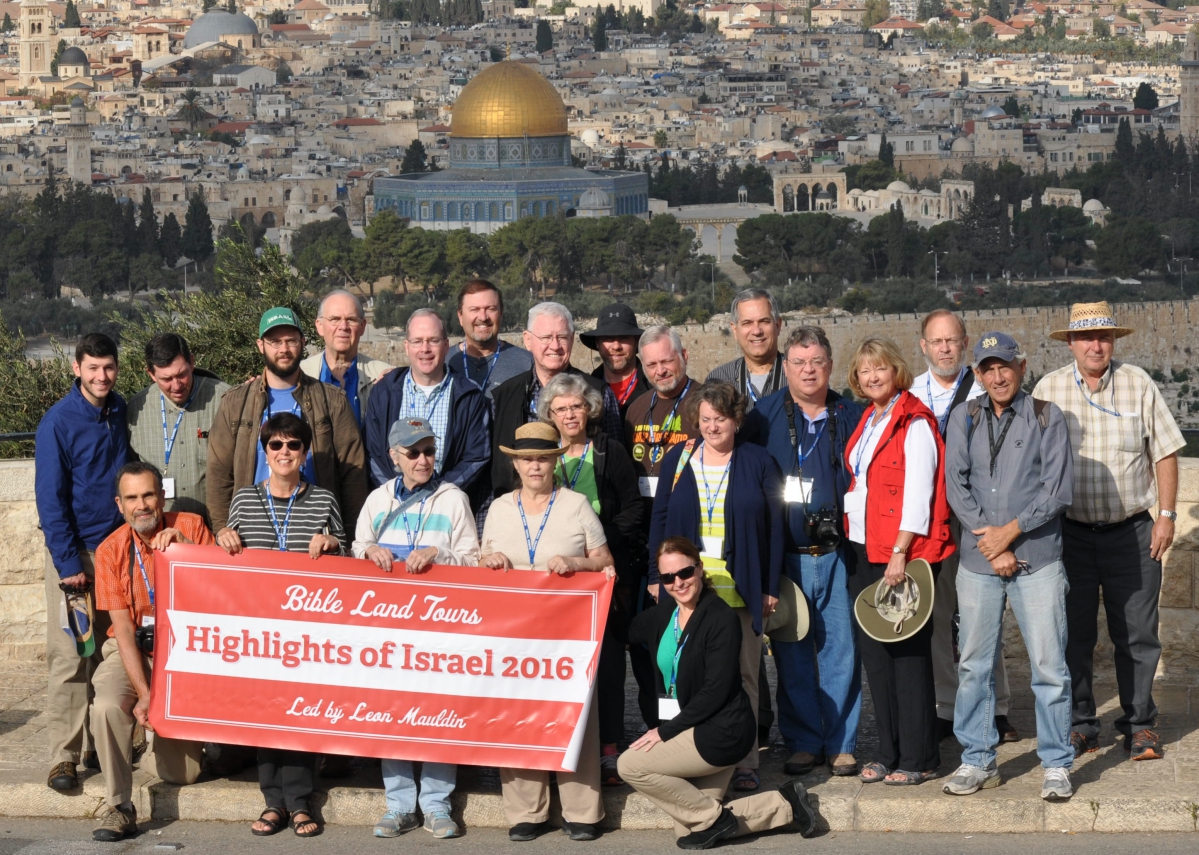
This morning we began the day with a visit to the Mount of Olives. We then saw Gethsemane where we reflected, read appropriate passages, and sang. We walked through Kidron to the southern end of the temple mount. We ended the day with a visit to Bethlehem.

Group Photo Mt. of Olives. Photo ©Leon Mauldin.

Group Photo Mt. of Olives. Photo ©Leon Mauldin.

We paused for a group shot while on the Mount of Olives.

It was on the Mount of Olives that Jesus gathered with His apostles and instructed them a final time before His ascension back into heaven:

4 And being assembled together with them, He commanded them not to depart from Jerusalem, but to wait for the Promise of the Father, “which,” He said, “you have heard from Me; 5 “for John truly baptized with water, but you shall be baptized with the Holy Spirit not many days from now.” 6 Therefore, when they had come together, they asked Him, saying, “Lord, will You at this time restore the kingdom to Israel?” 7 And He said to them, “It is not for you to know times or seasons which the Father has put in His own authority. 8 “But you shall receive power when the Holy Spirit has come upon you; and you shall be witnesses to Me in Jerusalem, and in all Judea and Samaria, and to the end of the earth.” 9 Now when He had spoken these things, while they watched, He was taken up, and a cloud received Him out of their sight. 10 And while they looked steadfastly toward heaven as He went up, behold, two men stood by them in white apparel, 11 who also said, “Men of Galilee, why do you stand gazing up into heaven? This same Jesus, who was taken up from you into heaven, will so come in like manner as you saw Him go into heaven.” 12 Then they returned to Jerusalem from the mount called Olivet, which is near Jerusalem, a Sabbath day’s journey. (Acts 1:4-12).

I’m thankful to say that all of our folks here continue to be well. Thanks for following our blog.


In Galilee and Environs

November 3, 2016

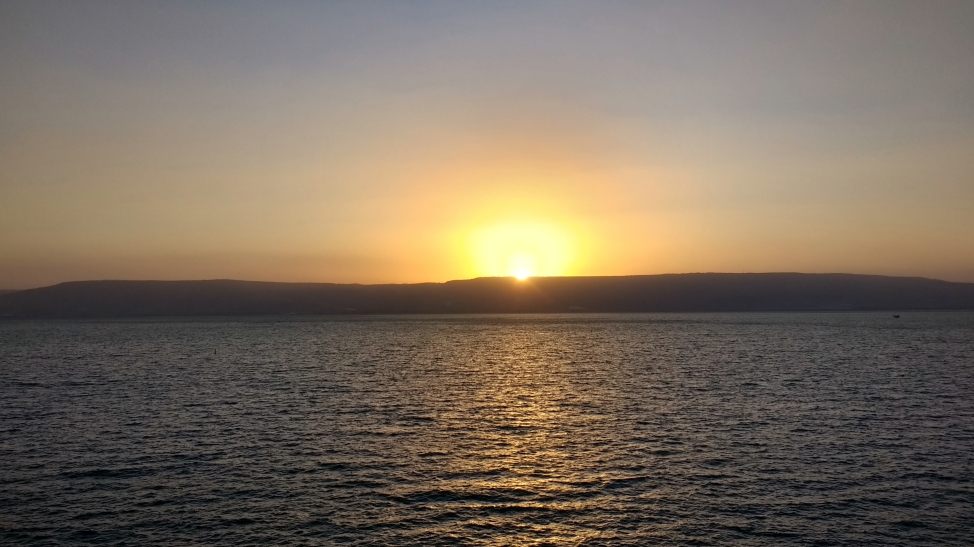
I never tire of seeing sunrise on the Sea of Galilee.

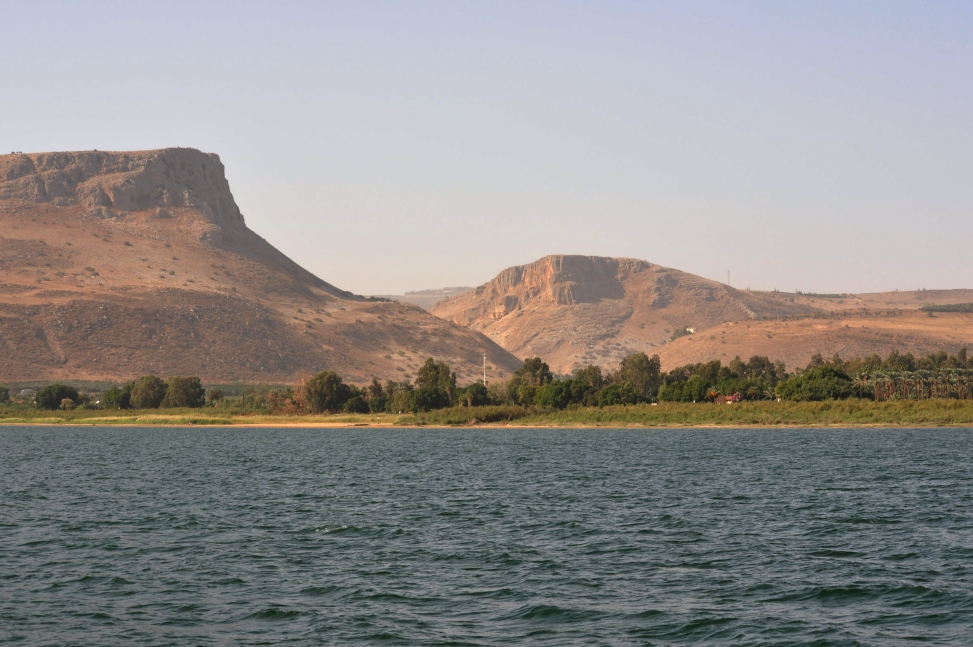
Via Maris at Arbel Pass. Photo by Leon Mauldin.

Sunrise, Sea of Galilee. Photo by Leon Mauldin.

From the Sea we had a view of Mt. Arbel, where the international highway, the Via Maris, passed.

Via Maris at Mt. Arbel. Photo by Leon Mauldin.

Via Maris at Mt. Arbel. Photo by Leon Mauldin.

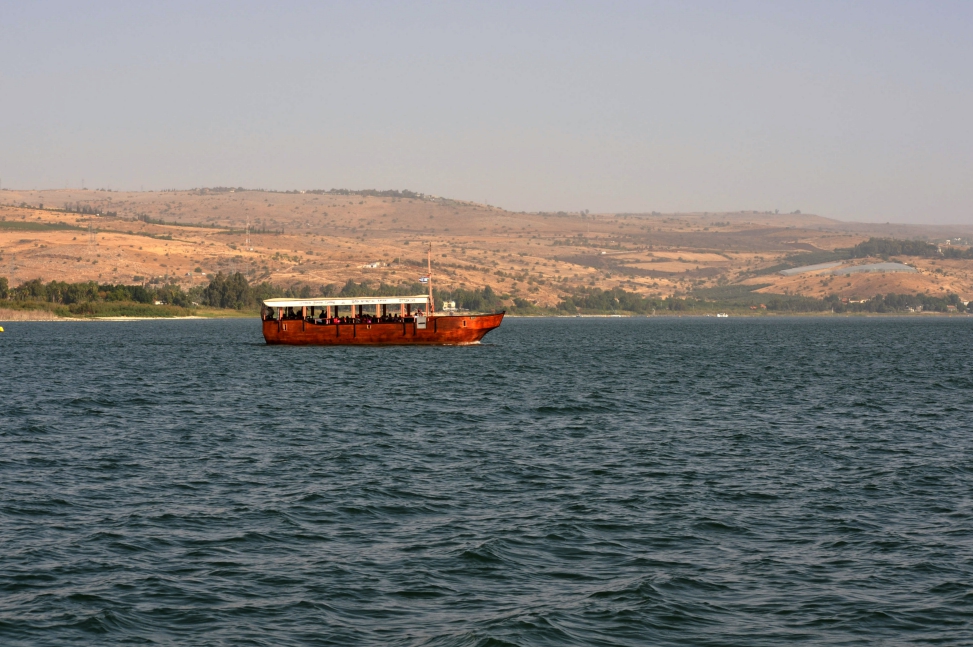
Boats such as these take passengers across the Sea of Galilee.

Photo by Leon Mauldin.

Photo by Leon Mauldin.

We visited Capernaum (“town of Nahum,” New Unger’s Bible Dictionary, p.209),  called “the most important city on the northern shore of the Sea of Galilee (Nelson’s New Illustrated Bible Dictionary, p. 245). Jesus’ home town was Nazareth, but Capernaum was where He lived during the Galilean ministry. Note the wording of the NET in Matt. 4:13: “While in Galilee, he moved from Nazareth to make his home in Capernaum by the sea, in the region of Zebulun and Naphtali.” To that compare Mark 2:1: “Now after some days, when he returned to Capernaum, the news spread that he was at home,” with its parallel in Mt. 9:1, which says Jesus came “to His own city.”

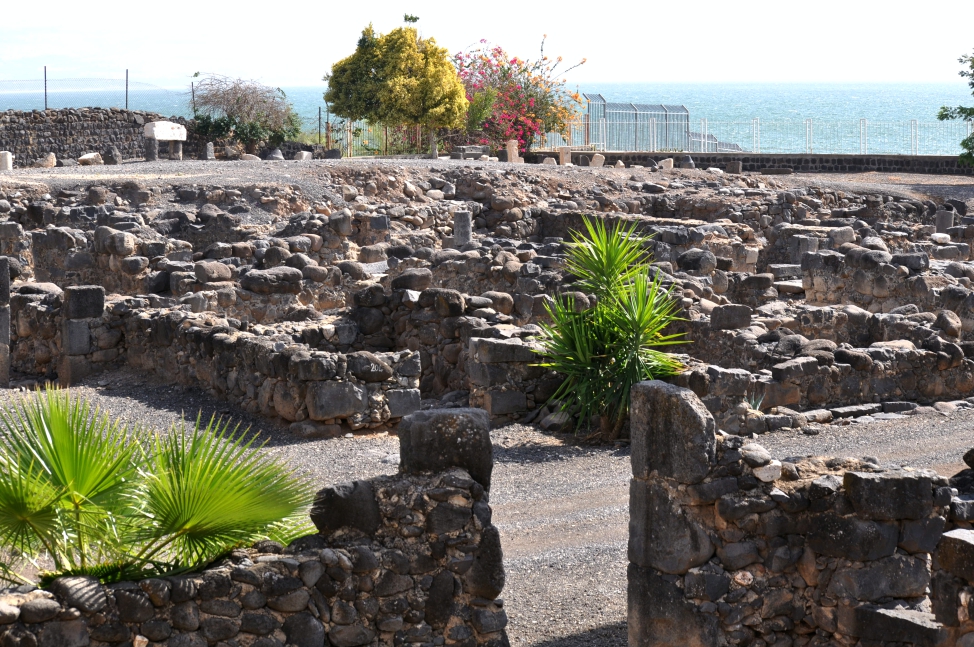
Here is a view of some of the excavations there.

Excavations at Capernaum, Jesus hometown. Photo by Leon Mauldin.

Excavations at Capernaum, Jesus hometown. Photo by Leon Mauldin.

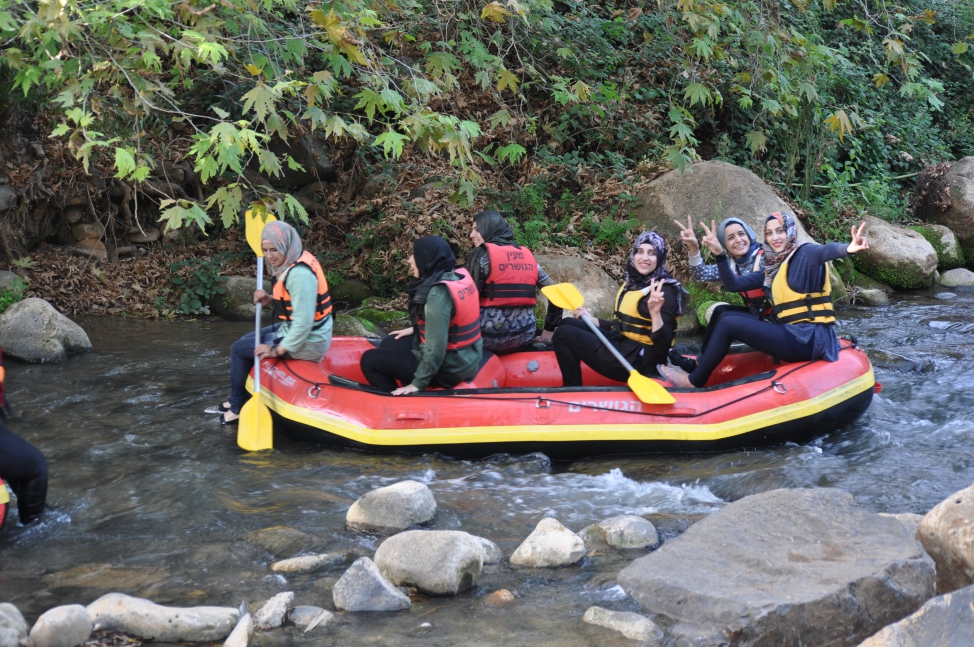
Moving north, we saw the Senir, one of the sources of the Jordan River. Some girls were rafting. Tomorrow we are to begin our journey south to Jerusalem. Thanks for following our travels.

Rafting in the Senir River. Photo by Leon Mauldin.

Rafting in the Senir River. Photo by Leon Mauldin. 


Caesarea, and on to Galilee

November 2, 2016

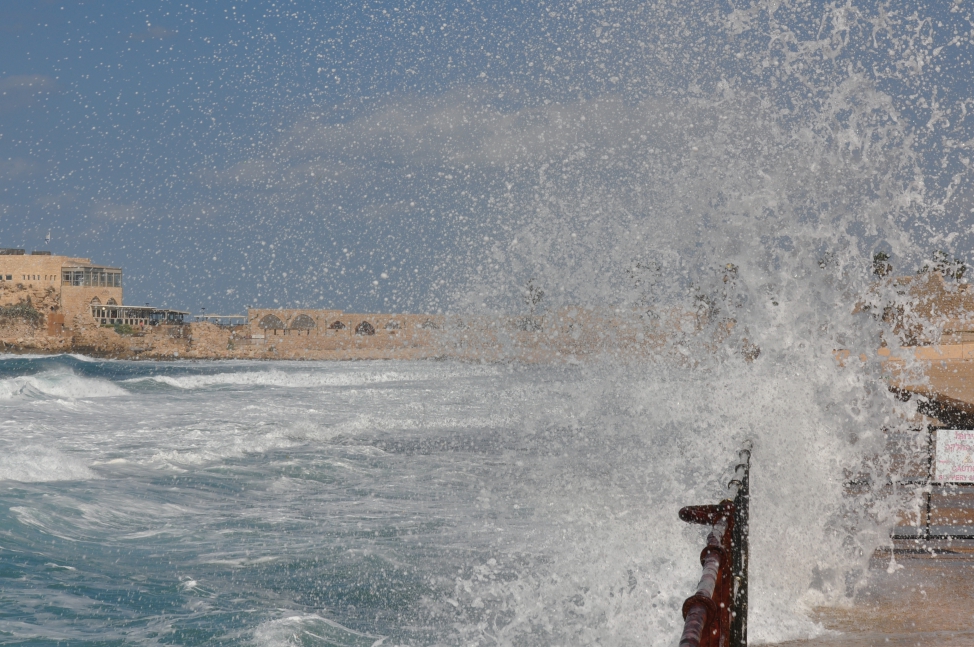
This morning upon leaving Natana with its beautiful view of the Mediterranean, we first visited Caesarea, the Roman capitol of Israel during Jesus’ Ministry. We saw lots of wave action.

Waves at Caesarea. Photo by Leon Mauldin.

Waves at Caesarea. Photo by Leon Mauldin.

Caesarea is mentioned numerous times in the New Testament. This became the home of Philip the evangelist (Acts 8:40; 21:8). Cornelius, the first Gentile convert, resided here (Acts 10-11). Paul used the port when leaving for Tarsus (Acts 9:30), and when returning from 2nd and 3rd journeys (Acts 18:22; 21:8). Later Paul was imprisoned here for two years (Acts 24:27), during which time he stood before Felix and Drusilla (Acts 24), Festus (Acts 25) and Herod Agrippa II (Acts 26). Paul left for Rome still as a prisoner from here (Acts 27).

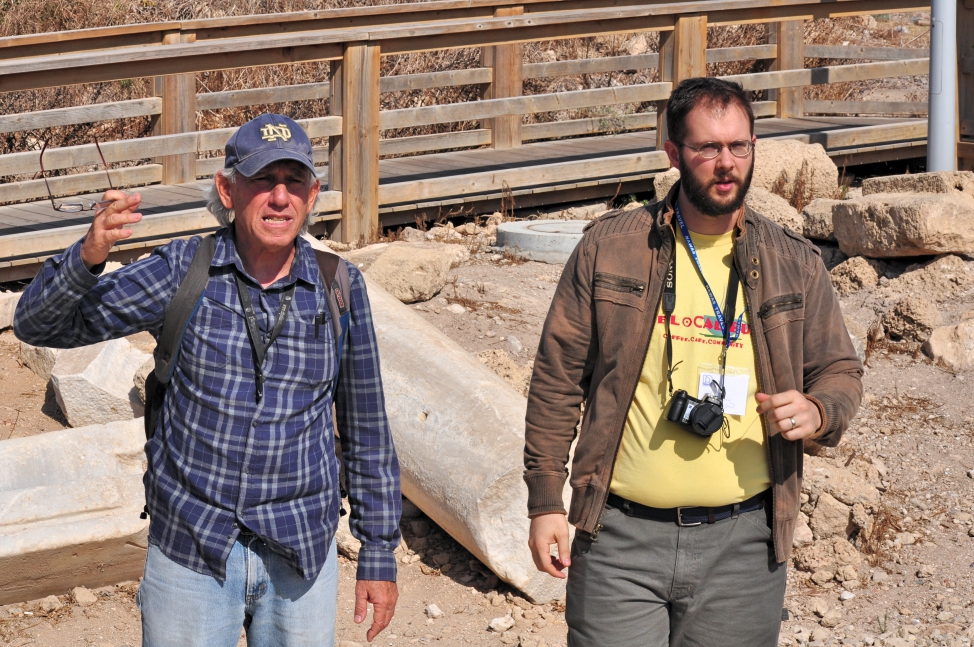
Our Israeli guide, Zack, and my son, Seth. Photo by Leon Mauldin.

Our Israeli guide, Zack (left), and my son, Seth, at Caesarea. Photo by Leon Mauldin.

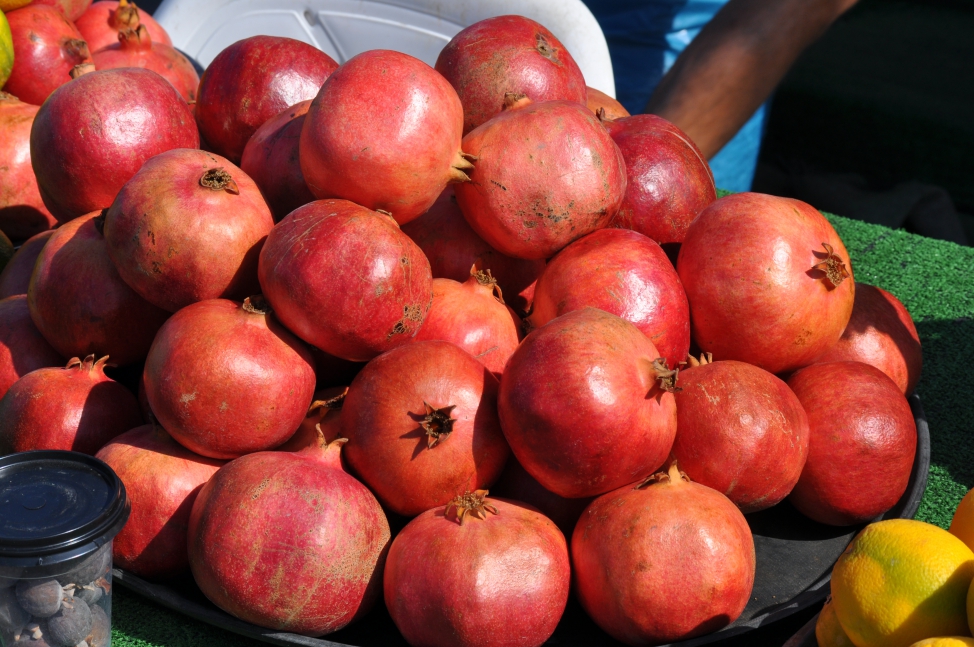
As we were leaving Caesarea I noticed some pomegranates. I was compelled to drink a glass of a couple of these, freshly squeezed.

Pomegranates at Caesarea. Photo by Leon Mauldin.

Pomegranates at Caesarea. Photo by Leon Mauldin.

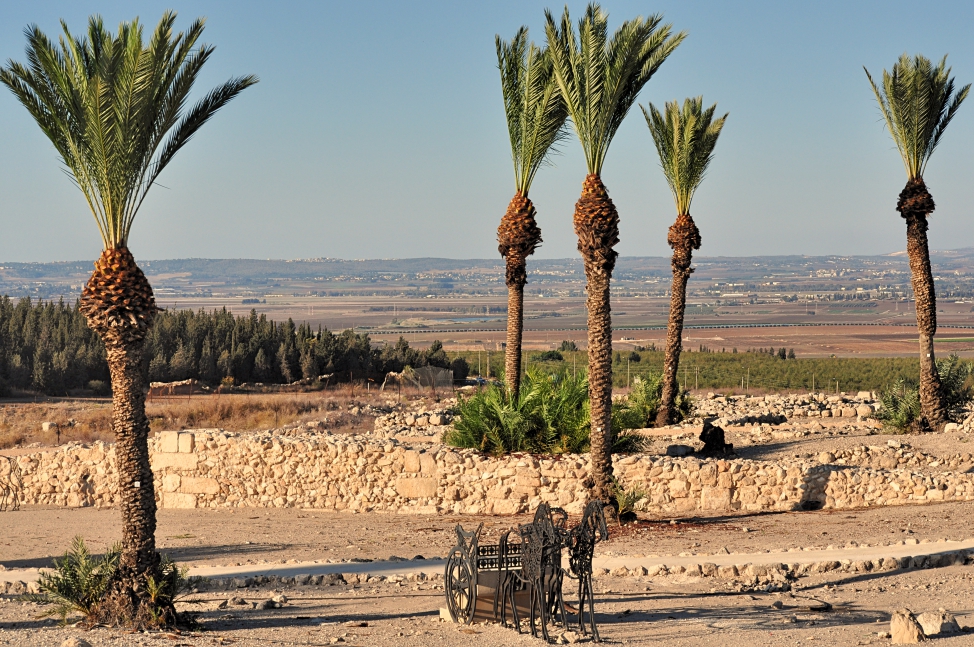
Later at the strategic city of Megiddo we saw several points of interest, including Solomon’s stables.

Solomon's Stables at Megiddo. Photo by Leon Mauldin.

Solomon’s Stables at Megiddo. Photo by Leon Mauldin.

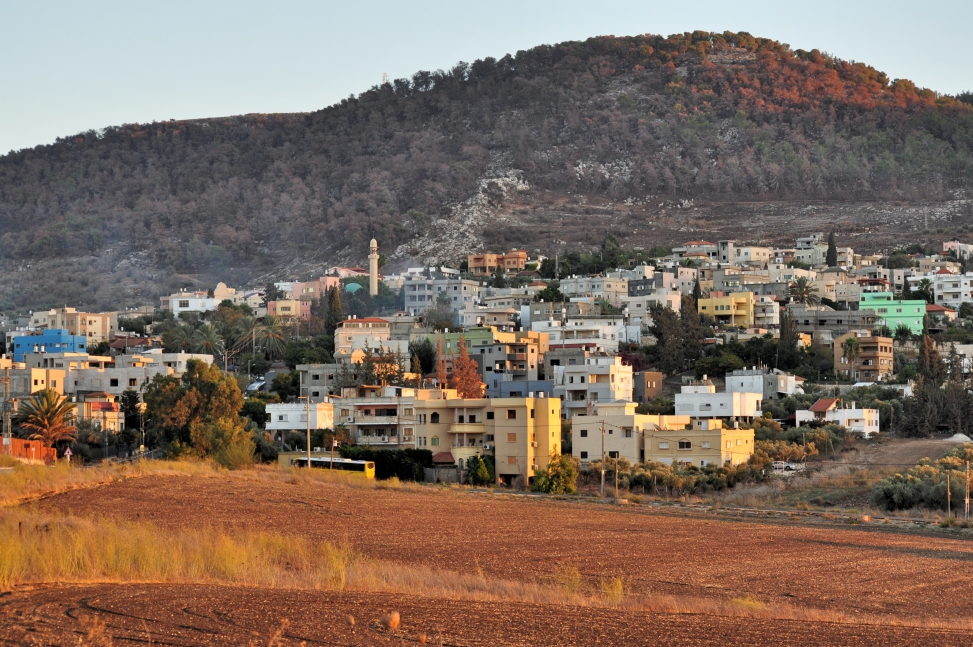
As we headed on the way to Tiberias we stopped briefly for a photo of Nain of Galilee, the village where Jesus raised from the dead a young man, the only son of a widow (Luke 7:11-17).

Nain, of Galilee, where Jesus raised a young man from the dead. Photo by Leon Mauldin.

Nain, of Galilee, where Jesus raised a young man from the dead. Photo by Leon Mauldin.

Thanks for following our travels. I’m writing this from Tiberias, on the Sea of Galilee. More to come!


En Kerem, in the Hill Country of Judah

October 18, 2016

After the virgin Mary was informed by the angel Gabriel that by “the power of the Highest” she would conceive “and bring forth a Son, and shall call His name JESUS” (Luke 1:31,35), she then went to visit her relative Elizabeth, who was the then 6-months expectant mother of John the Baptist. “Now Mary arose in those days and went into the hill country with haste, to a city of Judah, and entered the house of Zacharias and greeted Elizabeth” (vv. 39-40).

The text does not specify which city of Judah in which Zacharias (the priest) and his wife Elizabeth resided. However the traditional site is that of En Kerem, located 4+ miles west of Jerusalem.

En Kerem, in the hill country of Judah, west of Jerusalem. Traditional birthplace of John the Baptist. Photo by Leon Mauldin.

En Kerem, in the hill country of Judah, west of Jerusalem. Traditional birthplace of John the Baptist. Photo by Leon Mauldin.

R. Riesner has this entry on “The Birthplace of John the Baptist”:

A literary tradition that can be traced back to the sixth century identifies the birthplace with En-Kerem (Arabic Ain Karim), seven kilometers west of Jerusalem (ELS 44ff.). Remains of two fourth-century churches indicate, however, that the tradition stretches back to a still-earlier time (GBL II.776). (Dictionary of Jesus and the Gospels, p. 34).

En Kerem, city sign. Photo by Leon Mauldin.

En Kerem, city sign. Photo by Leon Mauldin.

I’m making this post from beautiful Fair Haven, Vermont, where I’m currently presenting an 8-lesson Visualized Survey of the Bible.


The End of Wicked Athaliah

August 16, 2016

When Jehu (841 BC) killed King Jehoram (Israel) and King Ahaziah (Judah), Ahaziah’s mother, Queen-mother Athaliah (daughter of Ahab and Jezebel) moved quickly to position herself in power as ruler of Judah. Called “that wicked woman Athaliah” (2 Chron. 24:7, NIV), she killed all of her son Ahaziah’s children, her own grandchildren, and proclaimed herself ruler of Judah. Only one-year-old Joash was spared (unknown to Athaliah) by faithful priest Jehoiada and his wife Jehosheba (sister to Ahaziah! (2 Kings 1:1-3)

Jehoiada waited six years to make his move:

Now in the seventh year Jehoiada sent and brought the captains of hundreds of the Carites and of the guard, and brought them to him in the house of the LORD. Then he made a covenant with them and put them under oath in the house of the LORD, and showed them the king’s son (2 Kings 11:4).

Then on a Sabbath at the time of the shift change, so as to include all who were finishing their duties as well as those who were arriving, armed with swords, spears and shields, and surrounding young Joash, Jehoiada “put the crown on him and gave him the testimony; and they made him king and anointed him, and they clapped their hands and said, ‘Long live the king!'”

Model of Temple Mount and city of David. Bible Lands Museum, Jerusalem. Photo by Leon Mauldin.

Model of Temple Mount and city of David. Bible Lands Museum, Jerusalem. Photo by Leon Mauldin.

The inspired historian continues:

When Athaliah heard the noise of the guard and of the people, she came to the people in the house of the LORD. 14 She looked and behold, the king was standing by the pillar, according to the custom, with the captains and the trumpeters beside the king; and all the people of the land rejoiced and blew trumpets. Then Athaliah tore her clothes and cried, “Treason! Treason!” 15 And Jehoiada the priest commanded the captains of hundreds who were appointed over the army and said to them, “Bring her out between the ranks, and whoever follows her put to death with the sword.” For the priest said, “Let her not be put to death in the house of the LORD.” 16 So they seized her, and when she arrived at the horses’ entrance of the king’s house, she was put to death there. 17 Then Jehoiada made a covenant between the LORD and the king and the people, that they would be the LORD’S people, also between the king and the people. 2 Kings 11:13-17.

Our photo shows a very nice model of the temple and city of David, featured at the Bible Lands Museum in Jerusalem. This can help us visualize the setting for the events of our text of 2 Kings 11.


Altar at Arad, in Southern Israel

July 14, 2016

During the Mosaic Dispensation God specified that the central place of worship (for offering sacrifices, attending annual feasts, etc.) was to be the tabernacle, and later, the temple built by Solomon. The temple was located in Jerusalem (called by Jesus “the city of the great King,” Matt. 5:35).

Unfortunately the will of God was not always sought and obeyed. After the death of King Solomon, Jeroboam built rival shrines at Dan and Bethel. There was also a temple built at the fortress city of Arad, to the south, east of Beersheba. The temple at Arad, built by the Israelites, was used at the same time Solomon’s temple stood in Jerusalem. Here is the altar upon which sacrifices were offered at Arad. Note the use of mud-bricks.

Altar at Israelite temple at Arad. Photo by Leon Mauldin.

Altar at Israelite temple at Arad. Photo by Leon Mauldin.

Here you can see the location of Arad.

Arad. BibleAtlas.com.

Arad. BibleAtlas.com.

Arad is mentioned five times in the Bible (Num. 21:1, etc.); however no biblical mention is made of the illicit temple there.