Haran, cont’d.

November 10, 2010

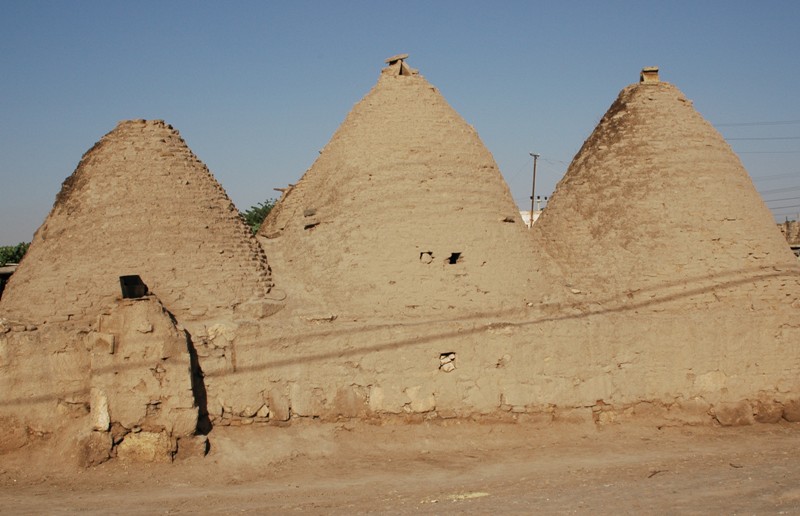
At Haran (Harran) one can see bee-hive houses that are said to be about 200 years old, but built on the same pattern as in the days of the Patriarchs.  On the back of the house on your left you can see the oven.


Bee-Hive structures at Haran. View of Oven. Photo ©Leon Mauldin.


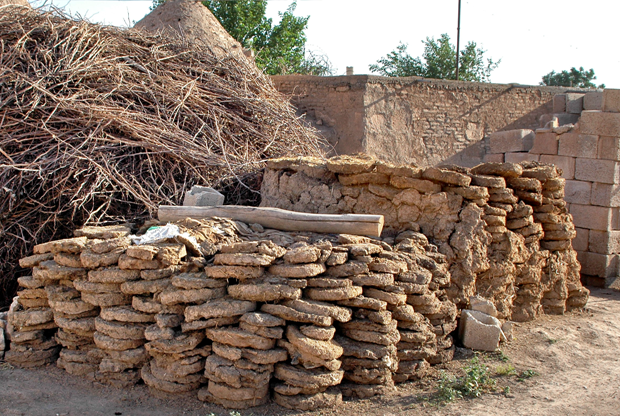
The fuel for such ovens would be wood and/or dung, as seen in photo below.


Fuel for the Fire. Dung cakes & wood for oven fires. Photo ©Leon Mauldin.


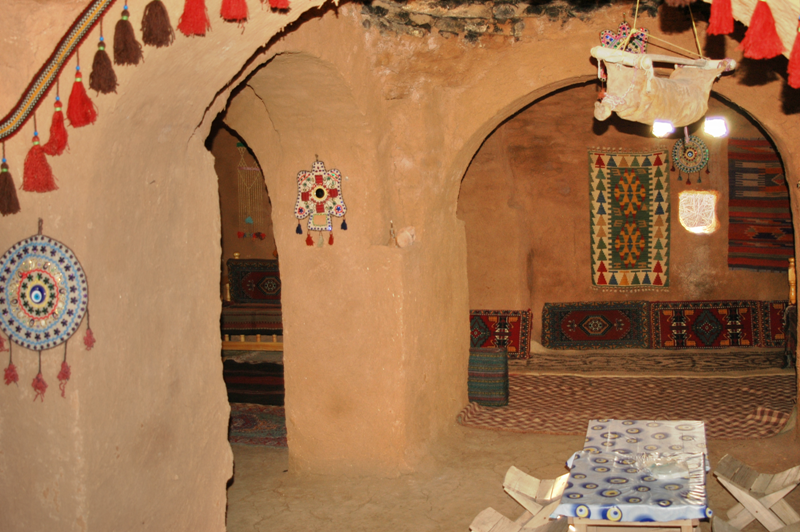
I was able to go inside one of the houses in Haran.  It was quite nice.


Inside a bee-hive house at Haran. Photo ©Leon Mauldin.

Click on image for larger view.


Jacob’s Sojoun in Haran

November 9, 2010

In our previous post we made reference to Jacob’s watering Laban’s flock.  Genesis 28 tells of his flight from Canaan to Haran of Mesopotamia: “Now Jacob went out from Beersheba and went toward Haran” (v.10).  Jacob’s mother Rebekah had said, “Now therefore, my son, obey my voice: arise, flee to my brother Laban in Haran. And stay with him a few days, until your brother’s fury turns away” (Gen. 27:43-44).  Ironically, those “few days” would turn into a sojourn of some twenty years!

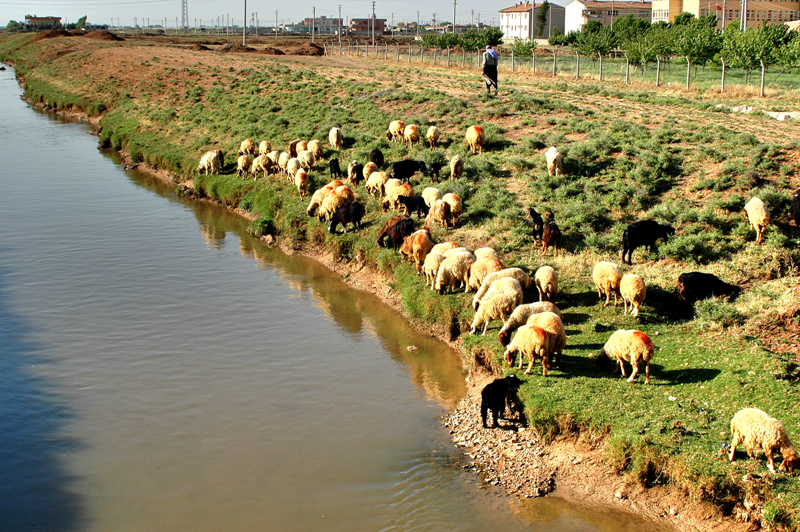
Previously we showed a photo of an ancient well to illustrate how Jacob watered the sheep as mentioned in Gen. 29:10. Our photo today was taken at Haran (modern spelling is Harran). Shepherds continue to lead their sheep to water and grazing these thousands of years later.

Shepherd w/Sheep at Haran. Photo ©Leon Mauldin.

Jacob agreed to work seven years as a shepherd for Laban in order to marry Rachel.  When the time quickly passed the wedding night arrived. But the next morning Jacob awoke to discover that he was married to Leah, Rachel’s sister.  When he demanded an explanation from Laban, he told his immeasurably shocked son-in-law that it was not their custom to marry the younger daughters before the older.  But he had a solution: let Leah have her one-week wedding festivities, then marry Rachel, on the condition that you work seven more years!  Jacob agreed to those terms.  After those fourteen (total) years had passed, Jacob worked another six years for Laban, making the total of twenty years we referenced above in our post.

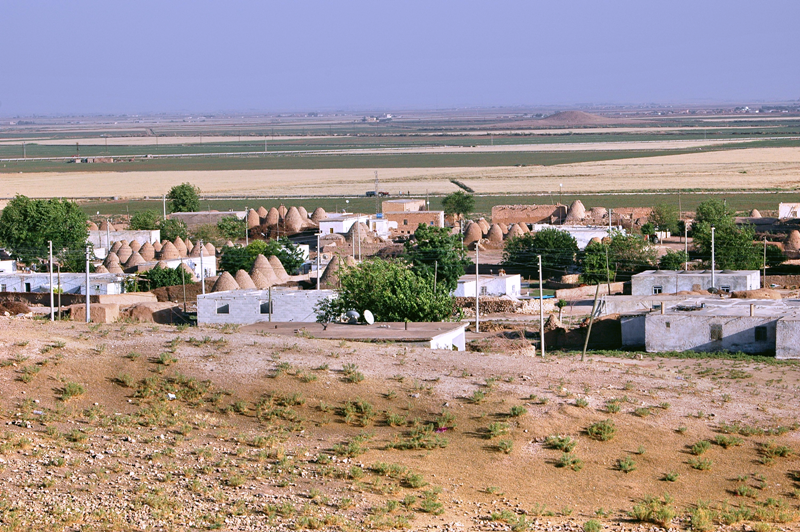
Photo below shows the site of biblical Haran.

Biblcial Haran. Jacob sojourned in this area 20 years. Photo ©Leon Mauldin.

Later, when Isaac died, Jacob and Esau buried him.  But there is no mention of all of Jacob’s seeing his mother after sending him away to Haran for what she thought would be just a short while.

Click on photos for larger view.  Also, see our post of May 4, 2010:
https://bleon1.wordpress.com/2010/05/04/mah-zzot-what-is-this/


Jacob Watered the Flock of Laban

November 8, 2010

Jacob left Canaan to go to Haran of Padan Aram, fleeing from the wrath of his brother Esau who had determined to kill him.  Beyond that urgency however, was the fact that Isaac and Rebekah did not want Jacob to marry a Canaanite woman, as Esau had done (Gen. 27:46; 28:1-2).  Those women “were a grief of mind to Isaac and Rebekah” (Gen. 26:35).

When Jacob arrived in the vicinity of Haran, he “saw a well in the field; and behold, there were three flocks of sheep lying by it; for out of that well they watered the flocks. A large stone was on the well’s mouth” (Gen. 29:2). Jacob found out from the men who were there that he was at the right place. They knew Abraham’s family.  They knew Laban, who was Rebekah’s brother.  At the very time they were speaking, Rachel, Laban’s daughter, arrived with their sheep.

Jacob removed the stone that covered the well and watered the flocks of Laban.  Our photo helps us to visualize that scene.


Ancient Well. Photo ©Leon Mauldin.


You can see the grooves worn into the stone by ropes hauling up the water. This well is in Israel, but we use it here to illustrate the Genesis text with the setting in Mesopotamia.

Click on image for larger view.


The Tabernacle

November 4, 2010

I am enjoying currently taking part in the lectures for Athens Bible School in Athens, AL. My assignment is “Shadows From An Ancient Priesthood”, showing how in many ways the OT priests foreshadow NT priests, i.e., Christians.  As Peter said, “you also, as living stones, are being built up a spiritual house, a holy priesthood, to offer up spiritual sacrifices acceptable to God through Jesus Christ” (1 Pet. 2:5).

This study reminded me of a tabernacle model situated south of Jericho in 2005.


Tabernacle Model in Wilderness S. of Jericho. Photo ©Leon Mauldin.


In the photo you can see the courtyard, altar for burnt offerings, the laver in which the priests would wash, and the tabernacle itself.

Behind the veil was the ark of the covenant.  Only the High Priest could enter here, and only on the annual day of atonement.


Ark of Covenant in Most Holy Place. Model. Photo ©Leon Mauldin.


Exodus 25:20 states: “And the cherubim shall stretch out their wings above, covering the mercy seat with their wings, and they shall face one another; the faces of the cherubim shall be toward the mercy seat.

I hope you find these photos useful in your own teaching. Click on image for larger view.


Beth Guvrin

November 2, 2010

The site of Beth Guvrin is also known as Betogabris, Eleutheropolis,Tel Maresha, Tell Sandahanna, Beith Jibrin, Bet Giblin, Beth-guvrin, Bet Guvrin, Gibelin and Maresha according to Todd Bolenhttp://www.bibleplaces.com/bethguvrin.htm

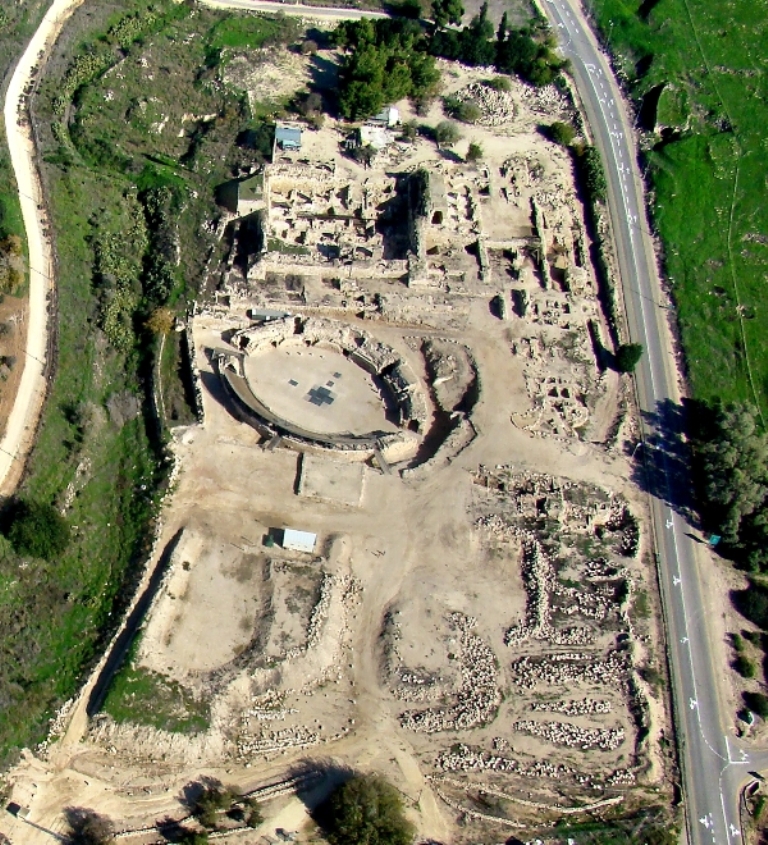
Aeriel Beit Guvrin. Photo ©Leon Mauldin.

An underground system of caves and tunnels was discovered where Jewish rebels hid from the Romans during the Second Jewish Revolt against Rome in the second century A.D. (132-135).  The Roman army was stationed in and around the city during this time.

At Beit Guvrin  an amphitheater has been excavated which can easily be seen in our photo (center). It was first identified in 1981 during an archaeological-architectural survey of Beth Guvrin.  Under the direction of Amos Kloner and A. Hubsch, large-scale excavations were conducted from 1993 to 1995.  Maximum measurements are 71 by 56 meters.  Gladiatorial contests, animal hunting exhibitions, contests between beasts and men as well as other forms of entertainment were conducted here.

“The construction of the amphitheater stemmed from the presence of these Roman army units in the area and the rebuilding of the city” (The New Encyclopedia of Archaeological Excavations in the Holy Land, Vol. 5, p. 1607).

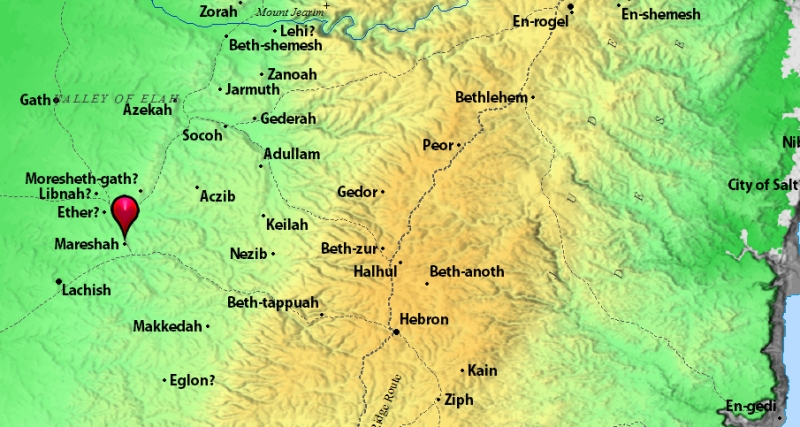
Beit Guvrin is about 1 1/2 miles north of biblical Mareshah, of the Shephelah. See map for orientation.

Mareshah. Map by BibleAtlas.org

Click on map/photo for larger image & higher resolution.


Gath of the Philistines

October 26, 2010

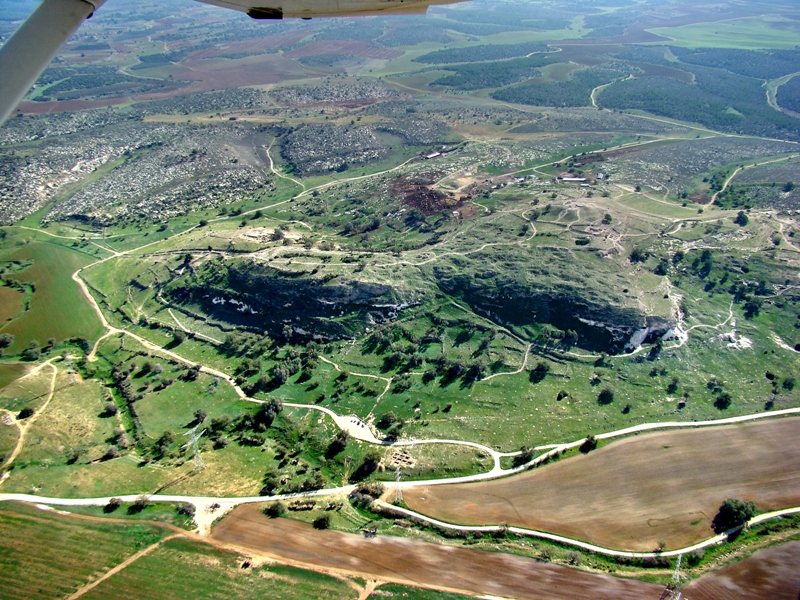
There were five Philistine cities; these are listed as Ashdod, Gaza, Ashkelon, Gath, and Ekron (1 Sam. 6:17). Today’s post features an aerial shot of the Philistine city of Gath.


Aerial of Gath of the Philistines. Photo ©Leon Mauldin.


There are numerous biblical references to Gath. Goliath the giant, the Philistine champion, was from Gath (1 Sam. 17:4).  David fled from King Saul, seeking asylum from Achish, king of Gath (1 Sam. 21: 10), but when he saw he was is danger there too, pretended to be insane.  However, David was later successful in finding refuge at Gath (1 Sam. 27:1ff), though subsequently the Philistines gave him his own city of Ziklag.

When Saul and his son Jonathan (David’s best friend) died at Mt. Gilboa, David wrote a song that included the words, “Tell it not in Gath, Proclaim it not in the streets of Ashkelon — Lest the daughters of the Philistines rejoice, Lest the daughters of the uncircumcised triumph” (2 Sam. 1:20).

“Later David defeated the Philistines and subdued them. He took Gath and its surrounding towns away from the Philistines” (1 Chron. 18:1, NET).

Also, bear in mind that when you see the word Gittite that reference is made to a resident of Gath.  One of David’s most loyal followers was Ittai the Gittite.  When David was forced to flee Jerusalem during his son Absalom’s rebellion, he told Ittai that he was not expected to accompany David. “But Ittai replied to the king, ‘as surely as the LORD lives, and as my lord the king lives, wherever my lord the king may be, whether it means life or death, there will your servant be'” (2 Sam. 15:21, NIV).

Remember to click on photo for higher resolution.

A couple of matters on a personal note:

I’m currently in a 4-day meeting in Lawrenceville, GA., presenting a series of lessons on “Becoming More Like Jesus.”  My friend Allen Shepherd is the local evangelist.  This is my second time to be with this congregation.  The meeting concludes tomorrow evening.

Also, my mother-in-law, Mrs. Ura May Creel, passed away this past Sat. after a long battle with Alzheimer’s.    My brother-in-law and I conducted the funeral service yesterday in Hanceville AL. Three of her grandsons led congregational singing.  I regarded her as a mother.   We sorrow, but not as those who have no hope (1 Thes. 4:13ff.).

Socoh, in the David & Goliath Narrative

October 21, 2010

Our recent posts have included aerial photos of Azekah and Khirbet-Qeiyaffa (Elah Fortress), both of which are in the Valley of Elah. (Some suggest that Khirbet-Qeiyaffa may turn out to be the biblical Ephes Dammim.)

Another site mentioned in the biblical record and featured in today’s post Socoh. 1 Sam. 17 includes this site as the geographical setting is provided for the battle between the Philistines and the Israelites, when David killed Goliath. The text reads:

Now the Philistines gathered their armies for battle; and they were gathered at Socoh which belongs to Judah, and they camped between Socoh and Azekah, in Ephes-dammim.  Saul and the men of Israel were gathered and camped in the valley of Elah, and drew up in battle array to encounter the Philistines.  The Philistines stood on the mountain on one side while Israel stood on the mountain on the other side, with the valley between them. (1 Sam. 17:1-3)

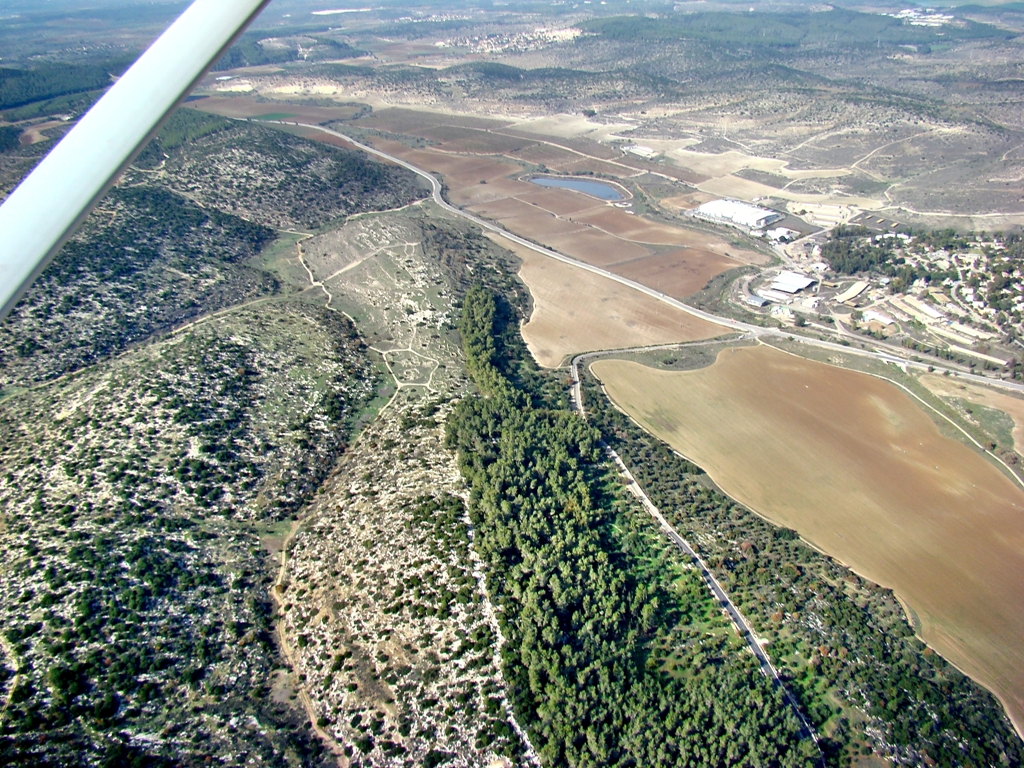
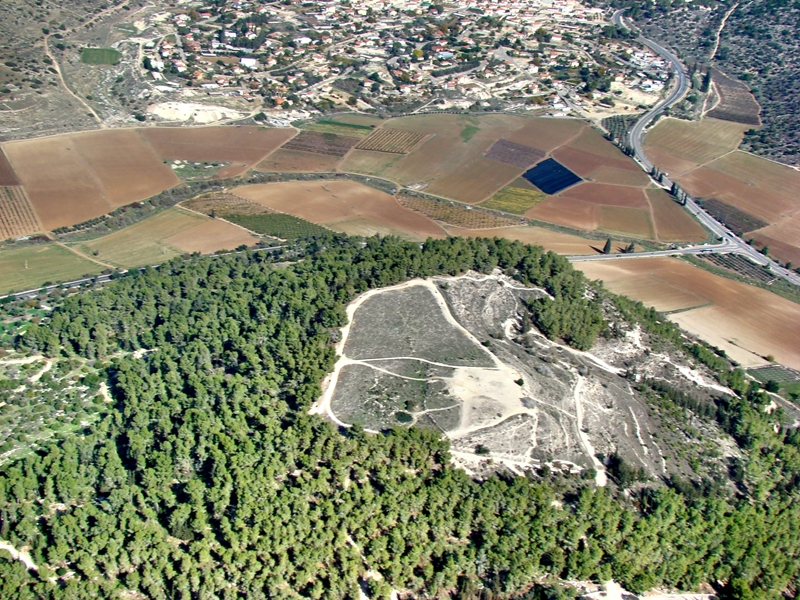
Our photo shows tel Socoh in center (look to the left and above the horizontal road that dissects the field in center).

Aerial of Socoh in Elah Valley. Scene of Philistine-Israel Battle of 1 Sam. 17. Photo ©Leon Mauldin.

If you note the tiny tree-line above tel Socoh, across the road, this is the brook from which David selected five smooth stones, one of which he used to slay Goliath.

In the distance (just right of wing brace at top) you can see tel Azekah. For 40 days this valley rang out with the threatening voice of loud-mouth Goliath, until the shepherd David rose to the challenge, prompted by this faith in the God of Israel.

Socoh (also spelled Sochoh and Soco) had earlier been assigned to the territory of Judah (Josh. 15:35). Later it was fortified by Solomons’ son King Rehoboam (2 Chron. 11:7).  Later still, in the days of King Kezekiah, Socoh was among the cities of the Shephelah listed in 2 Chron. 28:18 as raided and conquered by the Philistines.  Apparently Socho had been an administrative center during Hezekiah’s reign as indicated by the numerous stamped jar handles with the seal of Socoh.

Click on image for higher resolution.


Khirbet-Qeiyafa

October 18, 2010

An archaeological site of current interest is Khirbet-Qeiyafa, the Elah Fortress.  Luke Chandler has been involved in digs there, and his blog reports on some of the findings there and their implications. Go to:

lukechandler.wordpress.com


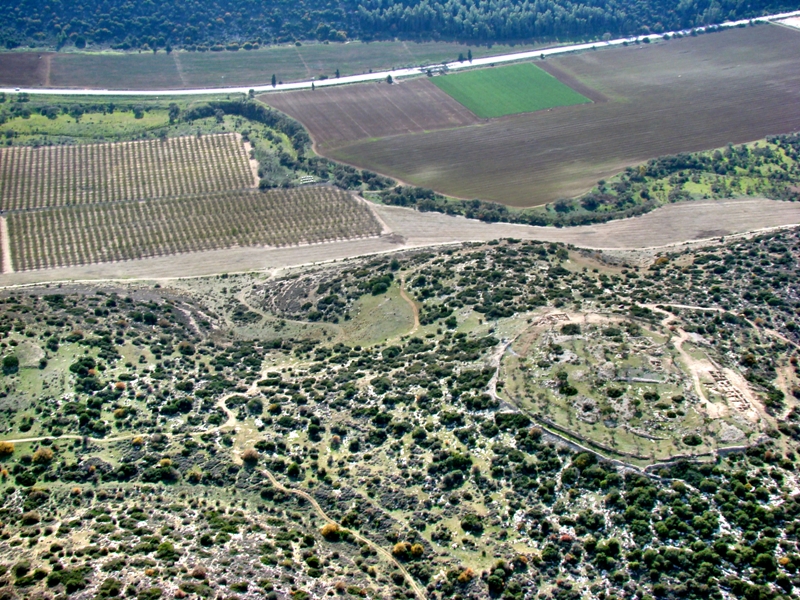
Many believe this site will prove to be an Israelite fortress that dates back to the reign of King David. Our aerial photo below shows the site in its context overlooking the Valley of Elah:

Khirbet-Qeiyafa, the Elah Fortress overlooking Valley of Elah. Photo ©Leon Mauldin.

You can see the circular tel on your right in the photo.  It was in the valley below that David killed Goliath.

Click on image for higher resolution.


Aphek/Antipatris

October 15, 2010

Aphek is mentioned in 1 Sam. 4:1 as the site of the Philistine camp as they prepared for battle against Israel.  This was in the last days of Eli’s tenure as High Priest and Judge of Israel.

Holman’s Bible Dictionary has this info on Aphek:

Place-name meaning “bed of brook or river” or “fortress.”  City whose king Joshua defeated (Josh. 12:18), where Philistine armies formed to face Israel in days of Samuel (1 Sam. 4:1) resulting in Philistine victory and capture of Israel’s ark of the covenant. Philistine armies including David and his men gathered in Aphek to fight Saul. The Philistine commanders forced Achish to send David back from battle (1 Sam. 29). Eventually the Philistines defeated Israel, bringing death to Saul and Jonathan. Aphek is located at modern Tell Ras elʹ Ain near the source of the Yarkon River in the Sharon plain northeast of Joppa. Egyptian execration texts from about 1900 B.C. apparently refer to Aphek.

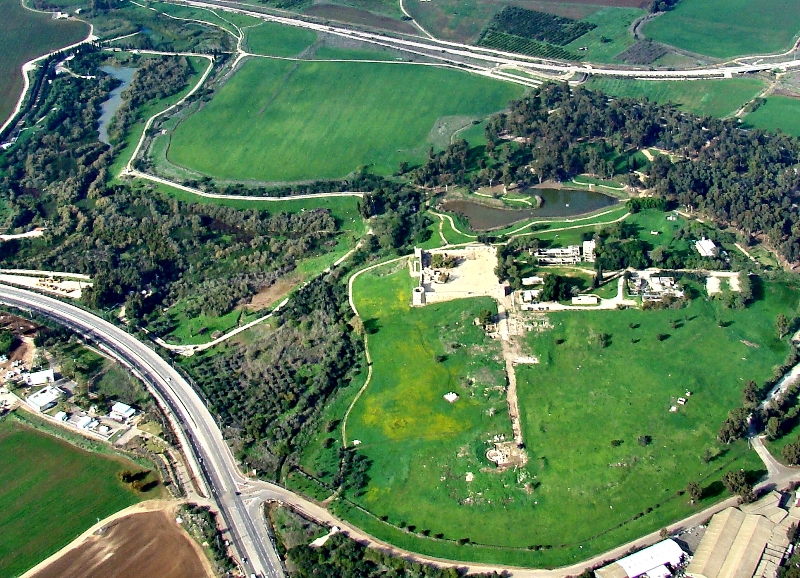
Our photo below gives an aerial view of Aphek. Click on image for higher resolution.


Aerial of Aphek. This was NT Antipatris. Photo ©Leon Mauldin.


In the New Testament this location was known as Antipatris, and is mentioned in Acts 23.  When the Roman commander Claudius Lysias became aware of an assassination plot to kill the Apostle Paul in Jerusalem, he order a military escort of Paul to Caesarea.  This was for Paul’s own protection.  The commander was thorough: two centurions were commanded to prepare 200 soldiers, 200 spearmen, and 70 horsemen.  The Roman militia departed at 9:00 PM (Acts 23:23). On the way to Caesarea, the governor’s residence, they went through Antipatris: “Then the soldiers, as they were commanded, took Paul and brought him by night to Antipatris” (v.31). The next day the horsemen went on with Paul to his destination, whereas the soldiers returned to the barracks (v.32) at Jerusalem.

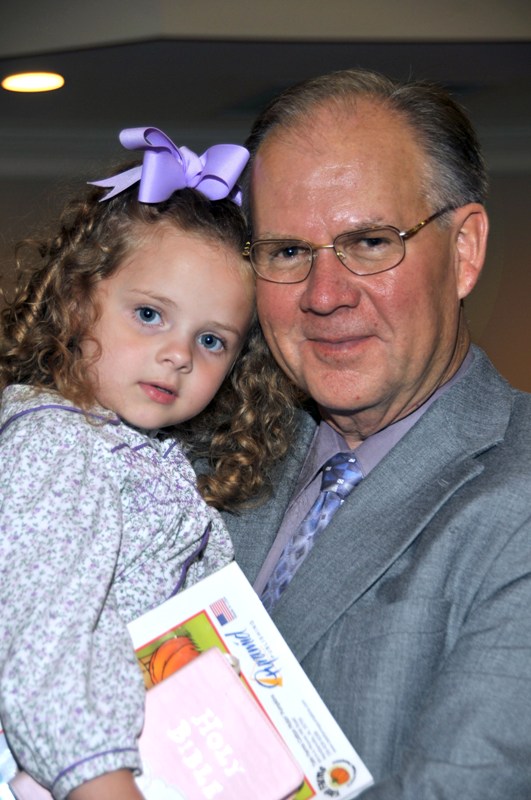
On another (personal) note, I mentioned in a previous post that we were currently conducting a meeting at Pine Lane, Birmingham, which concluded last night.  On Wed PM our granddaughter was with my wife and me. One of the members there took this photo:


Leon & Granddaughter.


Tel Azekah

October 12, 2010

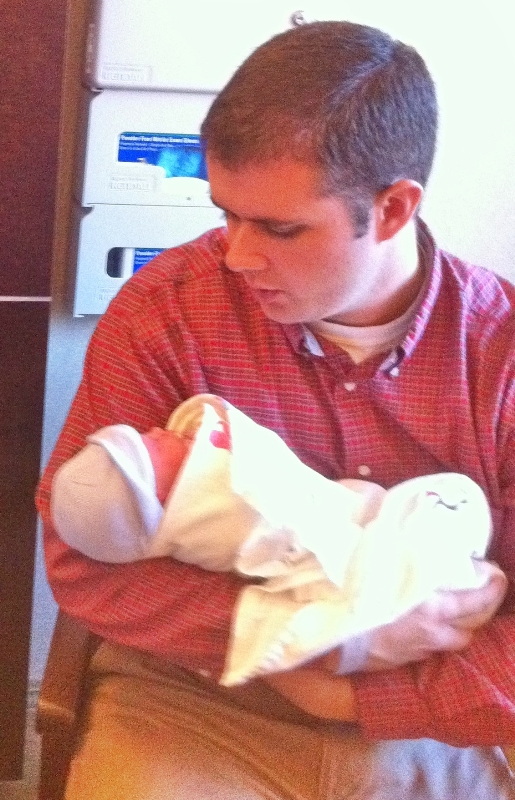
Well, a lot has happened since our last post of this past Friday!  Sunday morning, 10/10/2010, we were blessed with the birth of another grandchild. I just happen to have a photo:


Brand new granddaughter. My son Seth.


Then yesterday we began a 4-day meeting with the Pine Lane church of Christ, south Birmingham.  It is good to be with the church there again.  Terry Benton serves as evangelist.

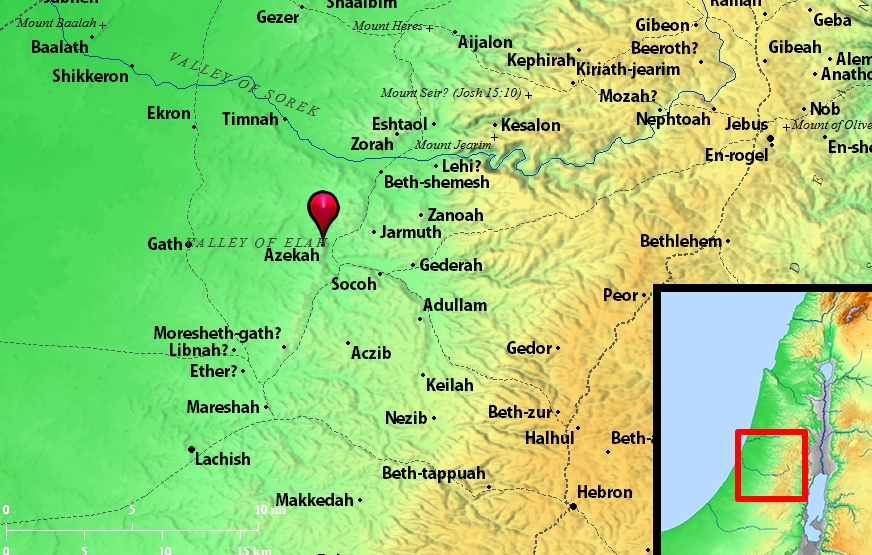
Our post today features an aerial photo of Azekah. First note the location of Azekah on the map below.


Azekah. Map by BibleAtlas.org


Azekah is mentioned in connection with the southern conquest of Canaan under Joshua:

And it happened, as they fled before Israel and were on the descent of Beth Horon, that the LORD cast down large hailstones from heaven on them as far as Azekah, and they died. There were more who died from the hailstones than the children of Israel killed with the sword. (Josh. 10:11).

Our photo below shows Tel Azekah as it overlooks the Elah Valley.


Aerial of Tel Azekah. Photo ©Leon Mauldin.


Azekah is included in the geographical setting for the stand-off between the Philistines and the Israelite army under king Saul.

Now the Philistines gathered their armies together to battle, and were gathered together at Sochoh, which belongs to Judah; they encamped between Sochoh and Azekah, in Ephes Dammim. (1 Sam. 17:1).

It was on this occasion that David killed the giant from Gath, Goliath.

(Click on images for higher resolution).