The Erechtheion in Athens

January 18, 2011

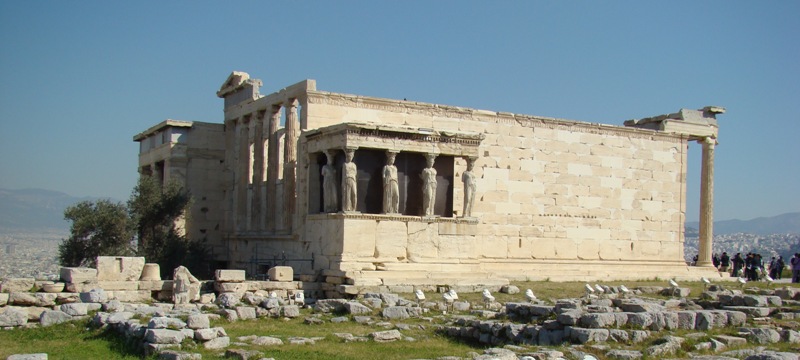
Among the important ruins situated upon the acropolis in Athens is the Erechtheion, a unique sanctuary dedicated to Athena Polias; Poseidon and Erechtheus were worshiped here.

Erechtheion at Athens. Photo by Leon Mauldin.

This view shows the Porch of the Kayatids, which used female figures as architectural supports as columns. These figures are a representation of the “Maidens of Karyai,” an ancient town of Peloponnese. The structure dates to the 5th century BC.

Below is a close up view:

Close-up of Porch of the Maidens. Photo by Leon Mauldin.

These maidens are actually replicas. The originals are encased in glass in the museum.

More to come.  Click on image for higher resolution.


The Parthenon in Athens

January 17, 2011

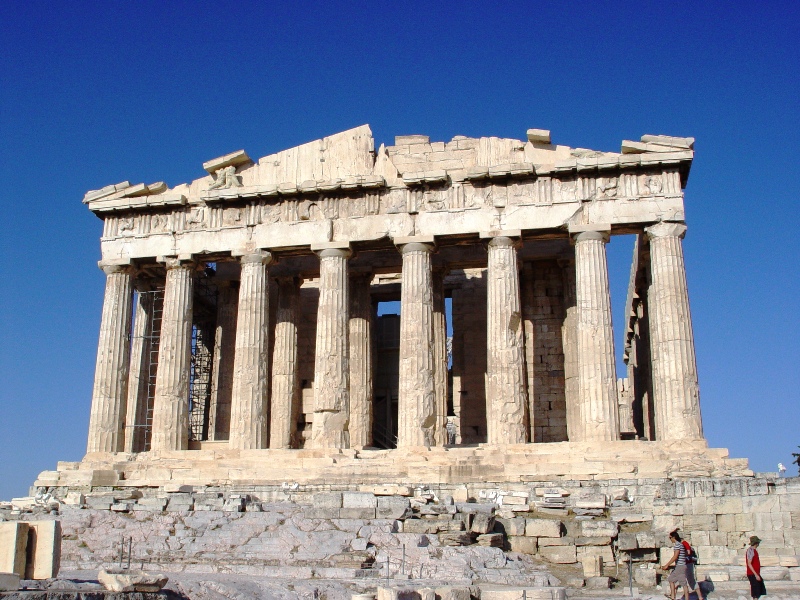
Our previous post referenced the Apostle Paul’s preaching in Athens as recorded in Acts 17:16-34. Up from the Areopagus was the Parthenon. The Parthenon was the temple devoted to the virgin Greek goddess Athena, of Greek mythology, goddess of wisdom and the arts.

The Parthenon in Athens. Photo by Leon Mauldin.


This temple was constructed with eight Doric columns in front and rear, and seventeen along each side. Within the Parthenon stood a thirty-four feet high statue of Athena, built by the sculptor Pheidias. It was made of wood with ivory additions and a plating of gold.

The city of Athens was said to be “full of idols,” (Acts 17:16), but it may well be that Paul had in mind especially the nearby Parthenon when he proclaimed,

The God who made the world and everything in it is the Lord of heaven and earth and does not live in temples built by hands. Nor is He worshiped with men’s hands, as though He needed anything, since He gives to all life, breath, and all things.

He went on to say in v. 29,

Therefore, since we are the offspring of God, we ought not to think that the Divine Nature is like gold or silver or stone, something shaped by art and man’s devising.

We plan to continue with more of the sites in Athens.

My friend & fellow-worker Ferrell Jenkins is currently directing a tour in Egypt. To keep up with their travels, and see the photos to be posted, see Ferrell’s Travel Blog. Link is provided to your right under Blogroll.

Remember to click on image for higher resolution.


The Areopagus in Athens

January 14, 2011

On Paul’s 2nd Missionary Journey, he taught the Gospel at Athens, reasoning with those in the synagogues as well as in the market place. Acts 18:18-20 tells us of another teaching opportunity that arose:

Then certain Epicurean and Stoic philosophers encountered him. And some said, “What does this babbler want to say?” Others said, “He seems to be a proclaimer of foreign gods,” because he preached to them Jesus and the resurrection.  And they took him and brought him to the Areopagus, saying, “May we know what this new doctrine is of which you speak?  “For you are bringing some strange things to our ears. Therefore we want to know what these things mean.”

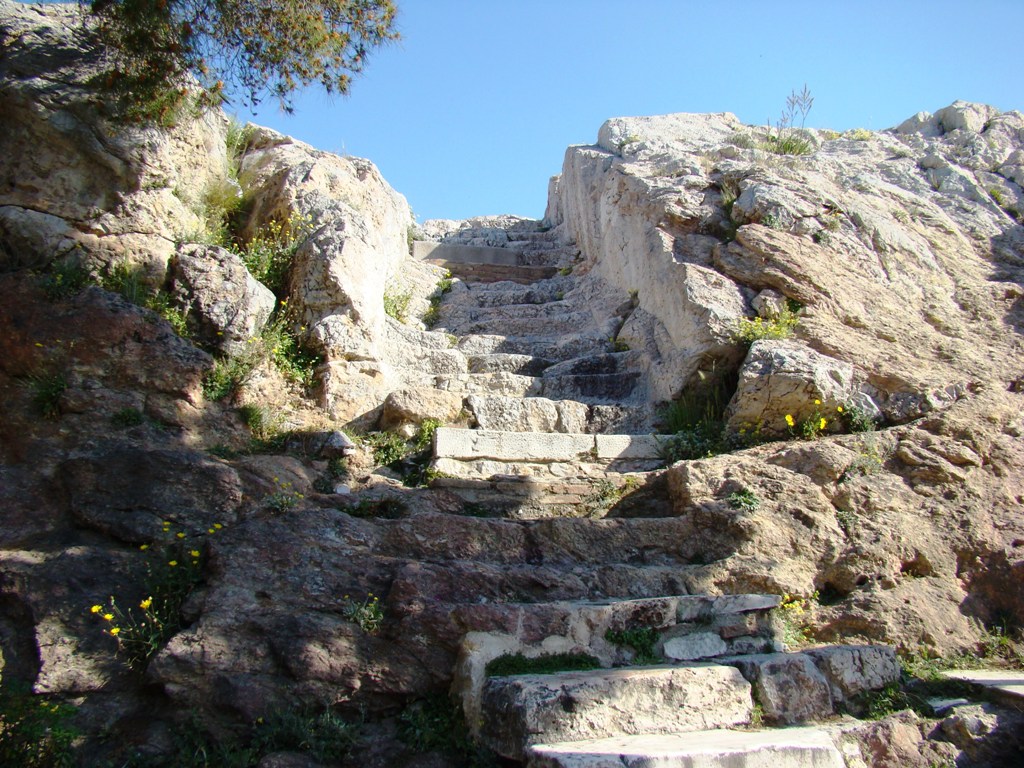
The word Areopagus means “Rock of Ares.” Ares is the the Greek god of war. Pagos is “rock.” The word Areopagus is used both with reference to the ruling council of Athens, as well as the place where the council met. Our photo shows the steps leading up to the Areopagus.

Steps leading up the the Areopagus in Athens. Photo by Leon Mauldin.

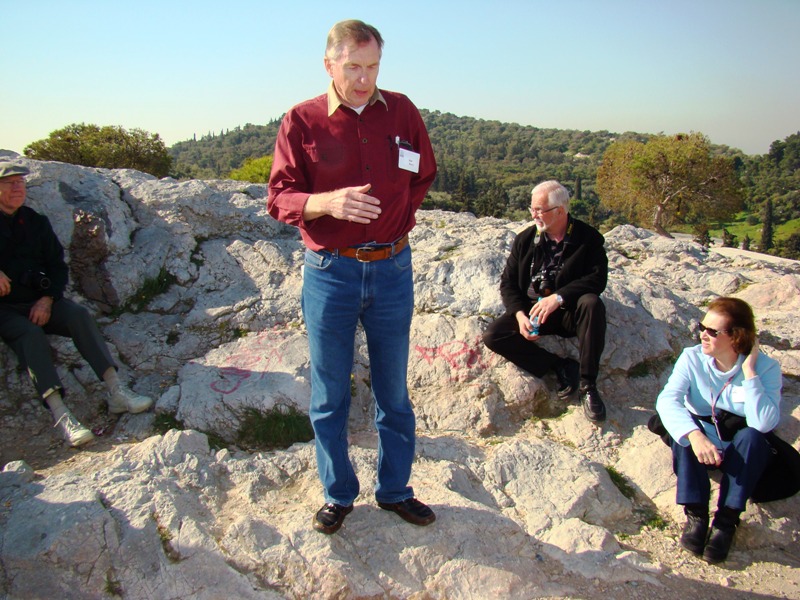
The Areopagus is also called “Mars Hill.” Mars was the Roman god of war. Photo below shows a few of my group on the top of the Areopagus. Bob Berry, center, quoted Paul’s sermon preached here (Acts 17).

Areopagus. A few of our 2010 tour group. Photo by Leon Mauldin.

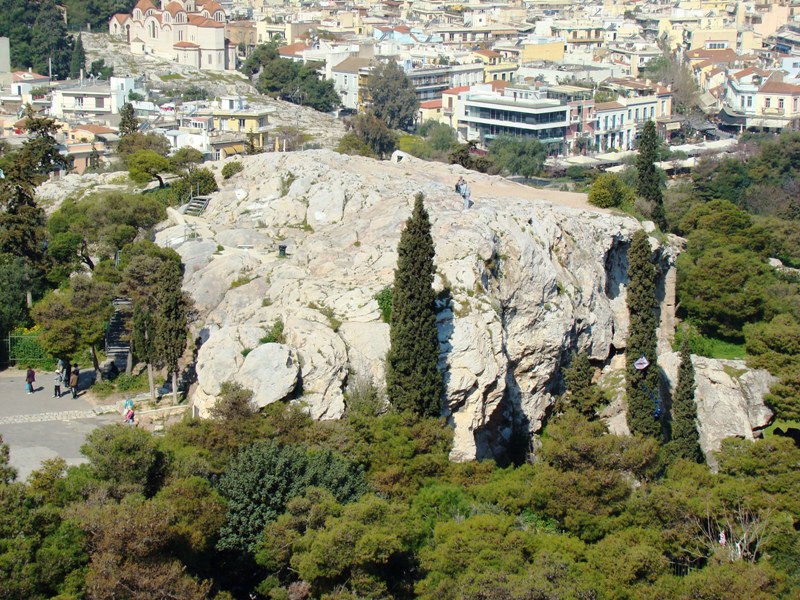
The Areopagus is composed of marble.  It is worn quite slick in places, so be careful of your footing if you have the occasion to visit.

Areopagus in Athens. Photo by Leon Mauldin.

The shot above was taken from near the Parthenon.

Click on images for higher resolution.


Thutmose III, Name and Titles

January 13, 2011

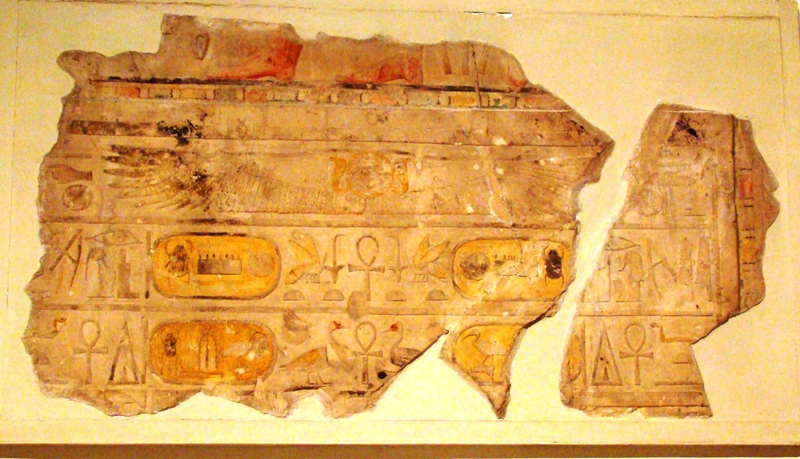
Today’s post features a relief with name and titles of Pharaoh Thutmose III.

Relief of Thutmose III, name and titles. Photo by Leon Mauldin. Boston Museum.

The accompanying informational sign at the Boston Museum explains,

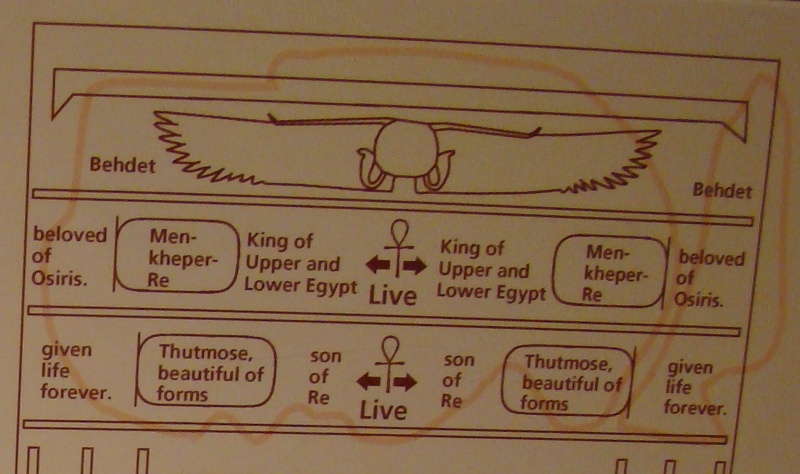
The full titulary of an Egyptian pharaoh contained five separate names. Two of the five names were enclosed in cartouches, or oval rings. The first was the prenomen, or accession name of the king, and the second was the nomen, or personal name. The prenomen (Men-kheper-Re) and nomen (Djehuty-mes, or Thutmose) of Thutmose III are carved on the painted relief above. It once formed the lintel of a doorway in the Dynasty 18 temple of Osiris at Abydos.

See diagram in photo below.

Diagram of Thutmose III name and title. Photo by Leon Mauldin.

Remember that this powerful Pharaoh would have been contemporary with Moses.

Click on images for higher resolution.


Victory Stele of Thutmose III

January 12, 2011

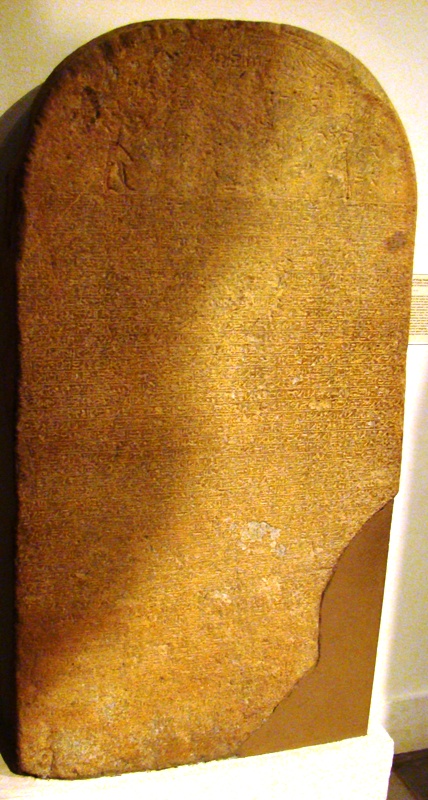
Today’s photo features the Victory Stele of Thutmose III, which was situated at Jebel Barkal in the Sudan. This location marked the extreme southern limit of the empire of this powerful Pharaoh. It has 50 lines of hieroglyphs, and includes praise of the king, his victorious conquest in Nahurin, an elephant hunt in Niy, and the Battle of Megiddo, which was referenced in our previous post.

Victory Stele of Thutmose III. Boston Museum. Photo by Leon Mauldin.

The remains of thirteen temples and three palaces have been uncovered at Jebel Barkal.


Thutmose III City Lists

January 11, 2011

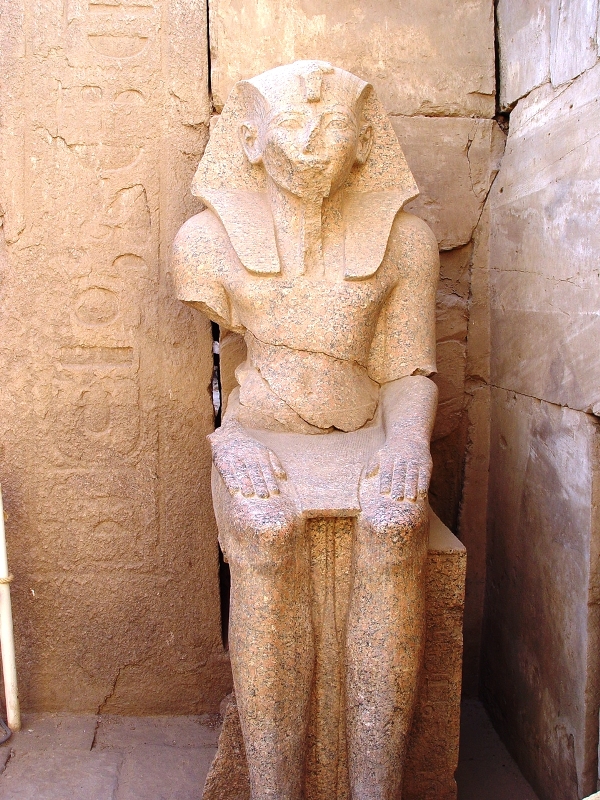
Thutmose III (ca. 1504-1450 BC) was a Pharaoh of the 18 dynasty. He was a powerful ruler who received tribute from as far away as Mesopotamia.

Thutmose III, seated by city list in Karnak. Photo by Leon Mauldin.

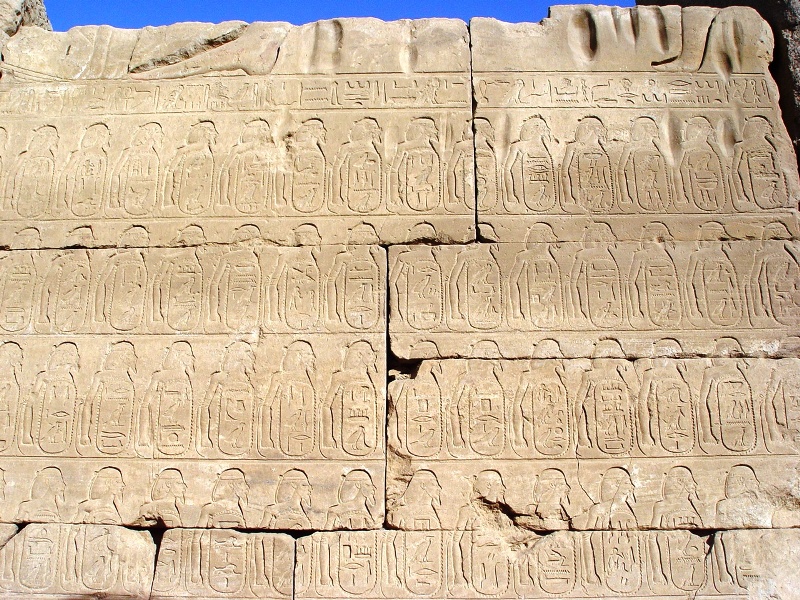
At Karnak in Egypt, Thutmose III left his listing of cities that he conquered in the Levant. Egyptian hieroglyphics list 119 place names in Canaan, Transjordan, Lebanon and Syria. Princes are depicted with hands tied behind their backs.  The rulers shown were trapped in Megiddo; when Thutmose III took the city after a seven month siege, he said it was the “capture of a thousand cities.”

Thutmose III City List. Canaanite princes were captured. Photo by Leon Mauldin.

Click on images for higher resolution.


Hollywood Hitpael

January 7, 2011

“There is one who makes himself rich, yet has nothing; And one who makes himself poor, yet has great riches” (Proverbs 13:7, NKJV). There may be many levels of application of Solomon’s words here. I think of the rich young ruler, who appeared to be rich, but when he “turned away sorrowful,” showed that he was in reality poor (Matt. 19:16-22). The rich man of Luke 12:15-21 was not really wealthy because he was “not rich toward God” (v.21).

It is interesting to compare the rendering of the English Standard Version which renders the text, “One pretends to be rich (emp. mine, L.M.), yet has nothing; another pretends to be poor, yet has great wealth” (Prov. 13:7; likewise rendered in NAS, CSB, NET, NIV, NRS).

This makes for an interesting word study. The NET textual note on the phrase pretends to be rich, states, “The Hitpael of עָשַׁר (’ashar, ‘to be rich’) means ‘to pretend to be rich’ (BDB 799 s.v. עָשַׁר Hithp); this is the so-called ‘Hollywood Hitpael’ (emp. mine, L.M.) function which involves “acting” or pretending to be something one is not.”

Hollywood Hitpael. That was a new one on me, but it makes sense. The world of Hollywood is a pretend world. Bearing this in mind may help us to pursue what is real and substantive: the Word of God, and being in right relationship with Him!


Corinth, cont’d.

January 6, 2011

Acts 18:11 informs us that Paul remained in Corinth for a year and six months; in v. 18 we are informed that “Paul still remained a good while.” This was during Paul’s 2nd Missionary Journey. Paul was a tent maker, as were his fellow-workers, Aquila and Priscilla, that great husband-wife team (Acts 18:3). Our photo below features the ruins of some of the many shops that were in ancient Corinth.  It is not difficult to imagine these biblical characters working in one of these locations.
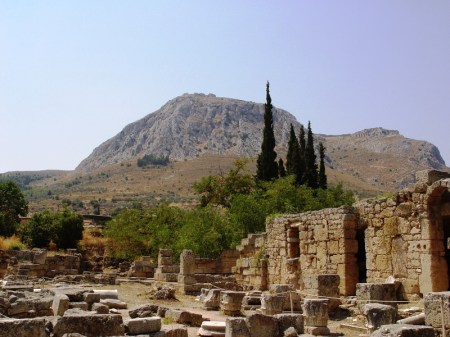
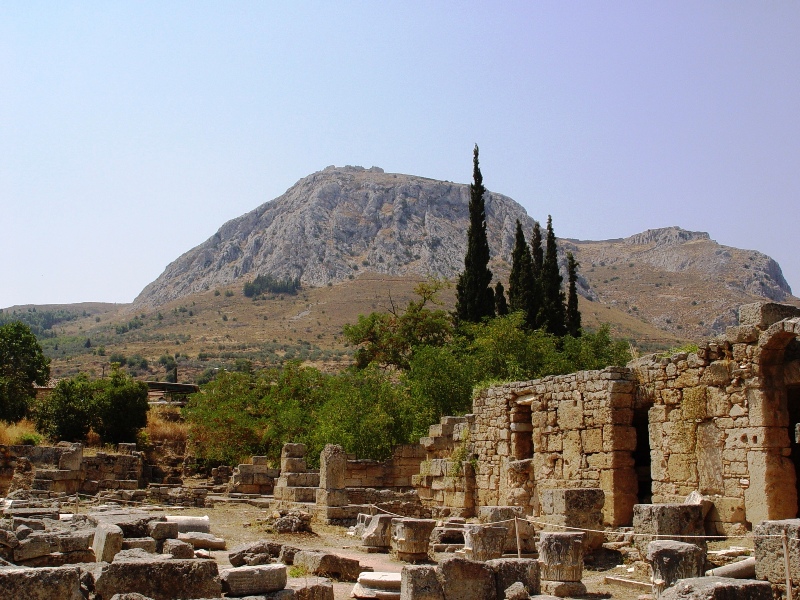
Shops at Corinth. Acrocorinth in background. Photo by Leon Mauldin.

The Acrocorinth is in the background. We have referenced this in some of the previous posts.

Of course during Paul’s stay at Corinth here his purpose was that of preaching the Gospel (Acts 18:11).  But he worked at his trade to help with the necessary financial support. Incidentally, these structures shown in our photo were the west shops of the city.

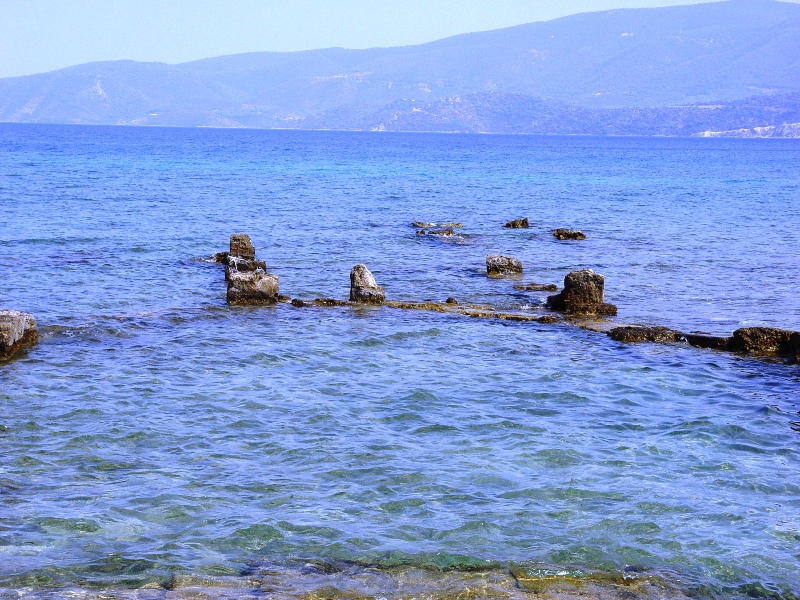
When Paul left Corinth, Aquila and Priscilla traveled with him, accompanying him as far as Ephesus, while Paul journeyed on to Jerusalem. We learn in Acts 18:18 that in their departure from Corinth they used the port of Cenchrea, shown in our photo below.
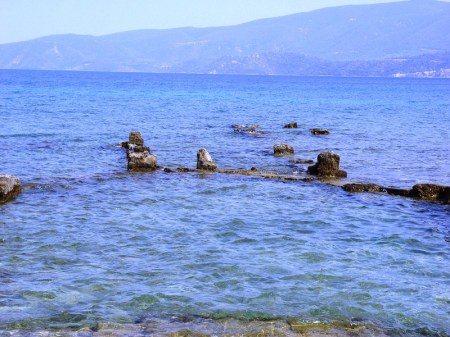
Cenchrea, Corinth's seaport. Photo by Leon Mauldin.

We learn from Romans 16:1 that there was a congregation of Christians there, as Paul makes special mention and recommendation of Phoebe, “a servant of the church in Cenchrea.” It was at this time during Paul’s 3rd Missionary Journey that he wrote the Christians at Rome from Corinth.  As Phoebe was traveling there to Rome, Paul asked, “that you may receive her in the Lord in a manner worthy of the saints, and assist her in whatever business she has need of you; for indeed she has been a helper of many and of myself also” (Romans 16:2).

The landscape in our Cenchrea photo would be what Christians such as Phoebe would have seen, as well as Paul and his companions.

Temple of Apollo at Corinth

December 28, 2010

The church at Corinth, which received two of the New Testament letters, 1 & 2 Corinthians, was situated in a world of sin and degradation.  By “church,” I’m not referring to the place that they met, but rather the people who had turned from their lives of sin and had been washed, sanctified, and justified “in the name of the Lord Jesus and by the Spirit of our God” (1 Cor. 6:9-11).

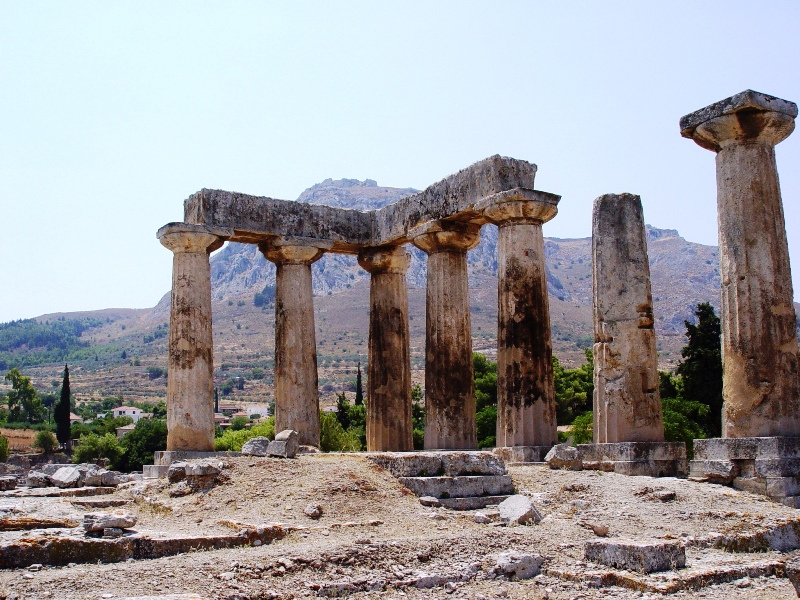
A visual example of the idolatry so prevalent at Corinth can be seen in our photo, which shows the ruins of the temple of Apollo.

Temple of Apollo at Corinth. Photo by Leon Mauldin.

Regarding this site BAS says,

The Temple of Apollo at Corinth was 700 years old by Paul’s time. On the hill directly overlooking the Roman city’s main forum, its sturdy Doric columns served as a dramatic reminder of Corinth’s ancient grandeur. But the temple was already in ruins; to Paul it would have served merely as a sermon illustration of the impotence of the Greeks’ “pagan” gods.

As noted above, the temple was in ruins in the days of Paul, but the centuries of pagan idolatrous influence was still very much there.

The Acrocorinth may be seen in the background.  It was there that the temple of Aphrodite was situated in ancient times.

The Apollo temple originally had 38 columns of the Doric order.  Today seven are standing.

Click on image for higher resolution.


The Diolkos At Corinth

December 23, 2010

In our previous post we referenced the canal that cuts through the Isthmus of Corinth connecting the Ionian Sea with the Aegean Sea.  In ancient times there was a paved road that stretched across the isthmus, called the diolkos, which enabled cargo and smaller ships to be hauled overland, thus avoiding the dangerous circumnavigation of the Peloponnese.

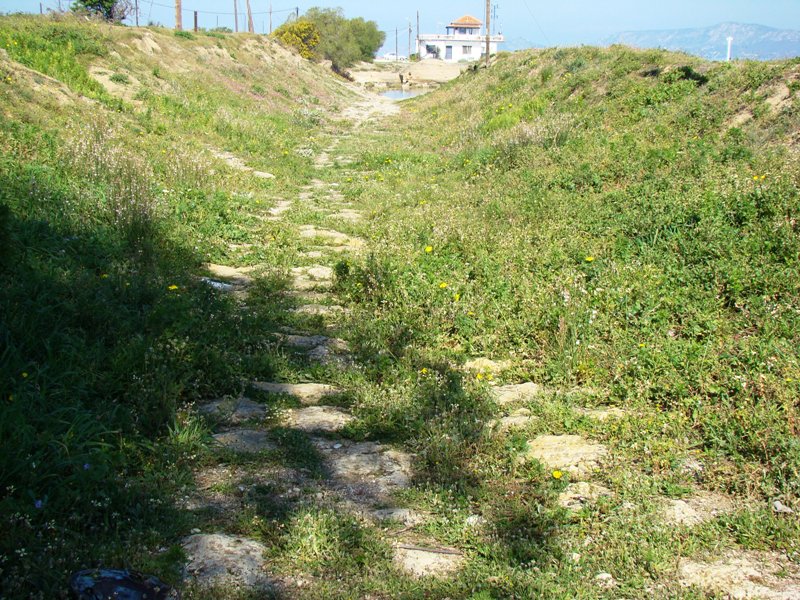
Our photo shows a portion of the western end of the diolkos. To the right and out of view, the canal runs parallel.

Diolkos at Corinth. Photo by Leon Mauldin.

The BAS has this information re: this site in their collection, The Biblical World in Pictures commenting on their photo taken in the same area as mine above:

In Paul’s day a stone-paved sledway, called the Diolkos, was used to haul ships and their cargoes across the isthmus. At both ends of the road the pavement continued down beneath the waterline, allowing the shallow-draft ships to be floated onto and off of the sleds. The sleds were then pulled out of the water and across the isthmus by mule-power.

This view of the Diolkos is near the western end, looking beyond to the Gulf of Corinth (and the mountains along its northern coast sheltering the oracle shrine of Apollo at Delphi). At the right can be seen the western outlet of the modern canal. The stone pavement of the Diolkos clearly shows the ruts formed by sled runners over centuries of use. Corinth, of course, controlled the Diolkos traffic. Moreover, since ship crews and passengers using this route had to leave their vessels temporarily at Corinth anyway, they had less reason to make an additional port-call at Athens’ harbor on the Piraeus. Thus, many more travelers of the Roman era passed through Corinth than through Athens.

The diolkos was paved with hard limestone.

Click on image for higher resolution.