Biblical Sites in Israel: Gath of the Philistines

April 9, 2016

A visit to the biblical site of Gath, Tel es Safi, on Israel’s coastal plain is worthwhile. Gath was the land of giants (Josh. 11:22). Goliath was from Gath: “Then a champion named Goliath, from Gath, came out from the Philistine camp. He was nine feet, nine inches tall” (1 Sam. 17:4, Holman’s Christian Standard Bible).

It is sad to read how that David (after killing Goliath) had to flee from Saul. He fled to Gath of the Philistines, but there, fearing for his life, pretended to be insane (1 Sam 21:10-15; cf. Psalms 34 and 56). Later David again fled to Gath and was given refuge (1 Sam. 27); the king of Gath gave David and his 600 men the city of Ziklag.

When David was residing when he heard news of the death of King Saul, and his three sons (1 Sam. 31) he composed a song which included the words “Tell it not in Gath, Proclaim it not in the streets of Ashkelon — Lest the daughters of the Philistines rejoice, Lest the daughters of the uncircumcised triumph” (2 Sam. 1:20).

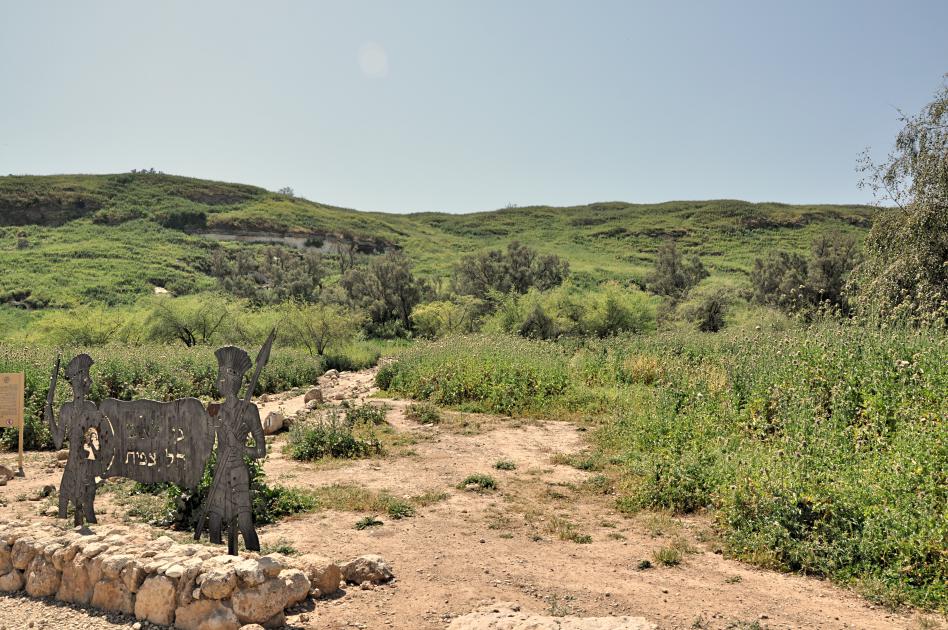
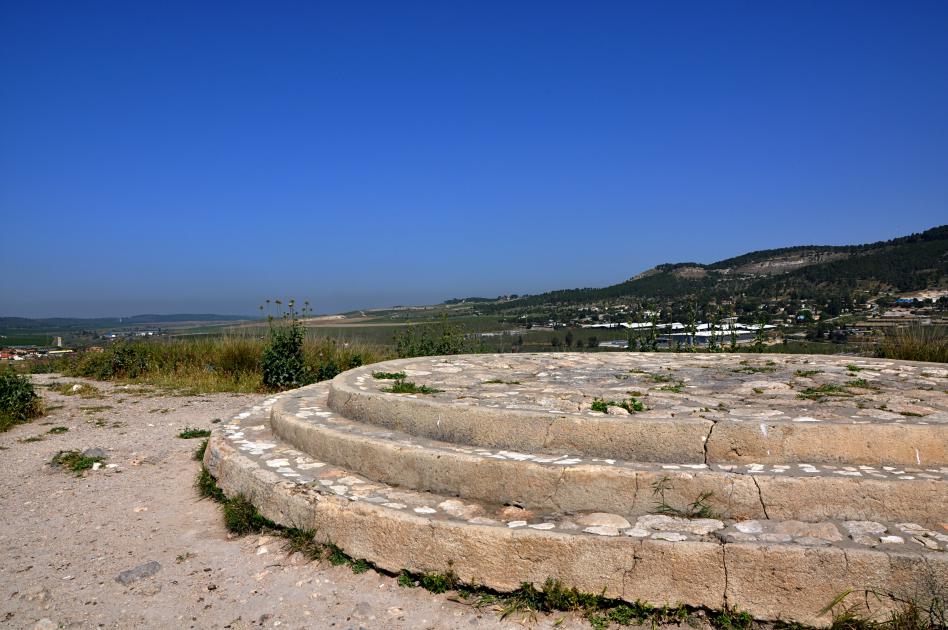
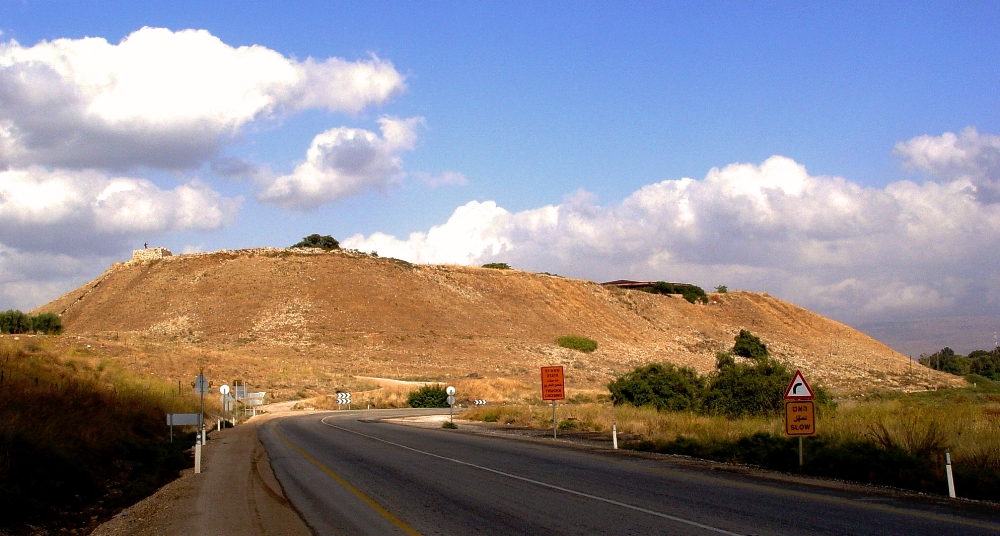
Our photo here gives a view of the large tel.

Tel Gath of the Philistines. Photo by Leon Mauldin.

Tel Gath of the Philistines. Photo by Leon Mauldin.

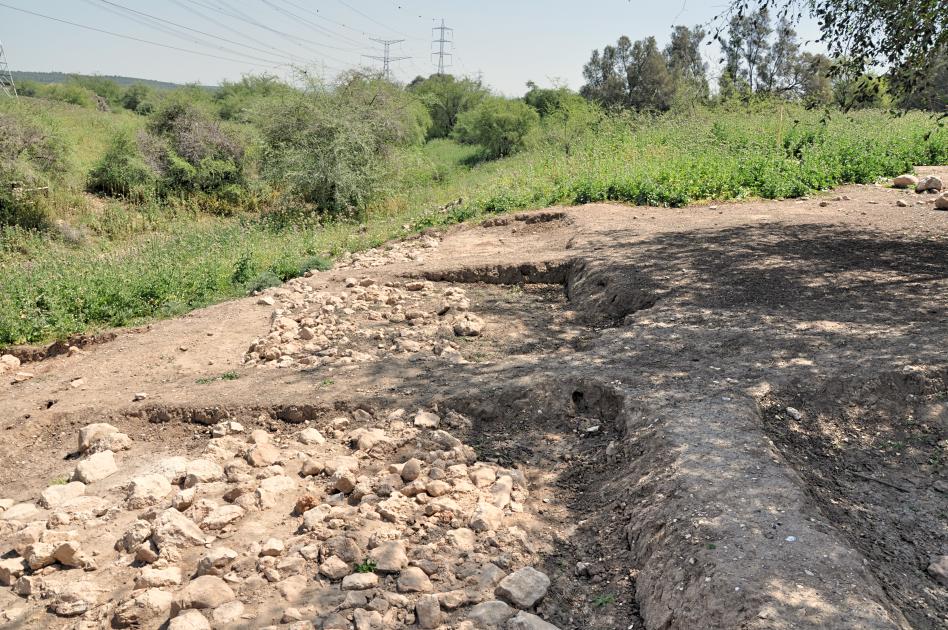
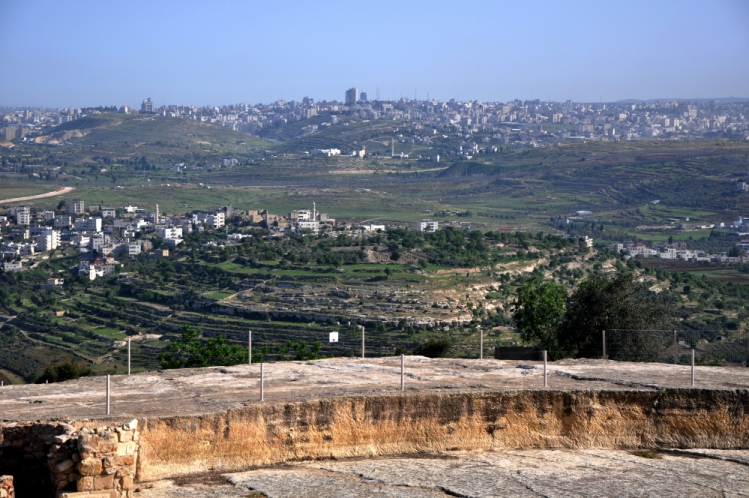
We were also able to see some of the excavations of the cities lower wall.

Recent Excavations at Gath. Lower wall of city. Photo by Leon Mauldin.

Recent Excavations at Gath. Lower wall of city. Photo by Leon Mauldin.

I have previously posted on Gath here (aerial photo).

Dr. Aren Maeir maintains a blog here devoted to news about Gath, Tel es Safi.

Tonight we are at Tiberias, on the Sea of Galilee; more photos and info to come. Thanks for following our travels.


Kiriath-jearim and Beth-shemesh in Israel

April 8, 2016

Today Ferrell Jenkins and I visited sites in Jerusalem, but for our post for now I wanted to note a couple of biblical sites we visited yesterday.

One was Kiriath-jearim. This location is of importance because the Ark of the Covenant was there from the days of Samuel (after Eli’s death and the Philistine destruction of Shiloh 1 Sam. 4-5). We read in 1 Samuel 6:21, “So they sent messengers to the inhabitants of Kiriath-jearim, saying, ‘The Philistines have brought back the ark of the LORD; come down and take it up to you.'”

At Kiriath-jearim. Our Lay of the Ark of the Covenant. Photo by Leon Mauldin.

At Kiriath-jearim. Our Lay of the Ark of the Covenant. Photo by Leon Mauldin.

Once the ark was returned to Israel by the Philistine enemies, ca. 1100 BC, it would remain there until King David made Jerusalem his capital, ca. 1003 BC, i.e. for 100 years. But first the ark came to Beth-shemesh. The biblical narrative explains how the hand of God was involved as two milk cows, with their calves kept behind, pulled a cart carrying the ark straight from Ekron of the Philistines to the border town of Beth-shemesh of Israel (1 Sam. 6).

Beth Shemesh, where the ark was returned from the Philistines. Photo by Leon Mauldin.

Beth-shemesh, where the ark was returned from the Philistines. Photo by Leon Mauldin.

Our photo shows the suggested site in Beth-shemesh (in foreground) where the cows pulling the ark were slain as sacrifices. Our view looks toward Philistia in the distance (left from center), the direction from which the ark would have come. As stated above (1 Sam. 6:21), from Beth-shemesh the ark was taken to Kiriath-jearim, where it remained until the days of King David.

We have previously posted here on Kiriath-jearim and here on Beth-shemesh, with aerial photo.


Traveling in Israel: Gibeon and More!

April 7, 2016

Today was a delightful day in Israel. We were able to see biblical sites from Jerusalem westward all the way to the coastal Philistine city of Gath.

Just north of Jerusalem (OT territory of Benjamin) is Gibeon, (Arabic El-Jib). This was formerly the Canaanite city that deceived Joshua and the men of Israel by pretending to be from a great distance, and thus entered into a covenant with Israel during the days of the Conquest (Joshua 9). There are subsequently several biblical references to this site.

Gibeon. Many OT texts refer to this site. Photo by Leon Mauldin.

Gibeon at center of photo. Many OT texts refer to this site. Photo by Leon Mauldin.

We have previously posted on Gibeon here and here.

Today we also saw Kiriath-Jeariam and  numerous sites in the Shephalah, including the valley of Elah, where David killed Goliath, Lachish, Beth-Shemesh, and the Philistine city of Gath, plus others. More on these later!


Odeion at Troy

April 1, 2016

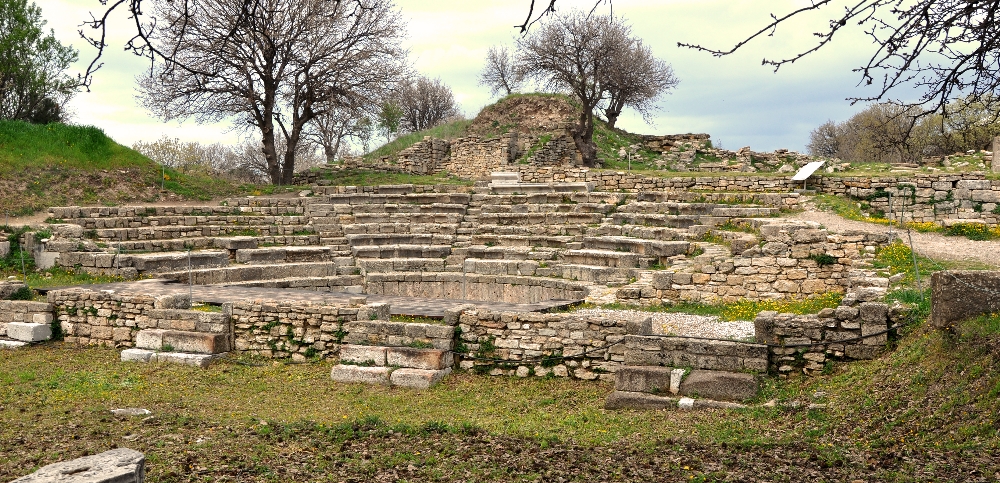
Ancient Troy has been made famous by Homer’s Iliad. Troy is located within the province of Çanakkale, located in extreme western Turkey. Troy’s extensive remains are the most significant and substantial evidence of the first contact between the civilizations of Anatolia and the Mediterranean world. This past Spring, 2015, we were able to visit Troy. Among the fascinating ruins there was the Roman Odeion, a small theater where concerts, lectures and other events took place.

Roman Odeion at Troy, Turkey. Photo by Leon Mauldin.

Roman Odeion at Troy, Turkey. Photo by Leon Mauldin.

The skene, stage building included a larger-than-life statue of the Emperor Hadrian (AD 117-138). Also, a sculpted head of Augustus was found at the odeion, causing some to surmise that this may have been erected in honor of his visit here in 20 BC. Beyond the odeion at the back you can see a portion of the fortification wall of Troia VI.

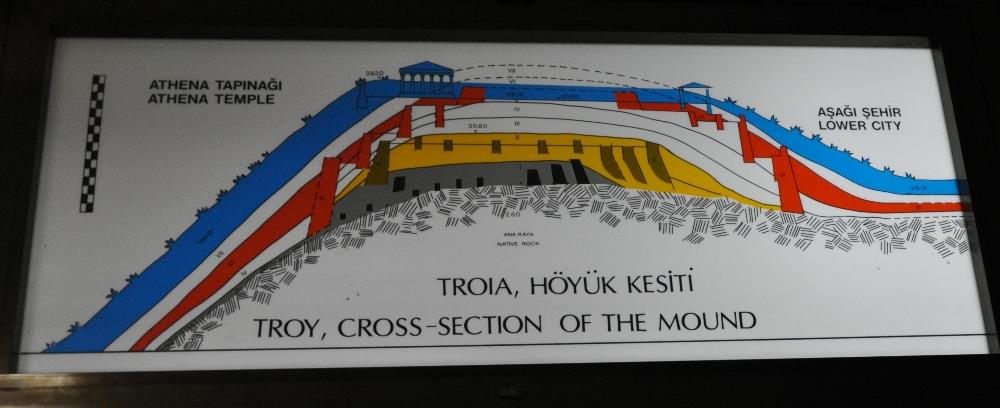
The Roman odeion is in Troy’s Level IX. Over the centuries there were nine levels of occupation.

Cross-section of Troy, showing 9 occupation levels. Istanbul Museum. Photo by Leon Mauldin.

Cross-section of Troy, showing 9 occupation levels. Istanbul Museum. Photo by Leon Mauldin. 

Wikipedia has this helpful chart:

Troy I 3000–2600 BC (Western Anatolian EB 1)
Troy II 2600–2250 BC (Western Anatolian EB 2)
Troy III 2250–2100 BC (Western Anatolian EB 3 [early])
Troy IV 2100–1950 BC (Western Anatolian EB 3 [middle])
Troy V: 20th–18th centuries BC (Western Anatolian EB 3 [late])
Troy VI: 17th–15th centuries BC
Troy VIh: late Bronze Age, 14th century BC
Troy VIIa: c. 1300–1190 BC, most likely setting for Homer’s story
Troy VIIb1: 12th century BC
Troy VIIb2: 11th century BC
Troy VIIb3: until c. 950 BC
Troy VIII: c. 700–85 BC
Troy IX: 85 BC–c. AD 500

Biblical significance: It was here at Troy (Ilium) at the temple of Athena that Xerxes (Ahasuerus) of the book of Esther sacrificed 1,000 head of cattle en route on his march through the Hellespontine region towards Greece. This was 480 BC.

We have previously posted on Troy here.


Jordan River

February 17, 2016

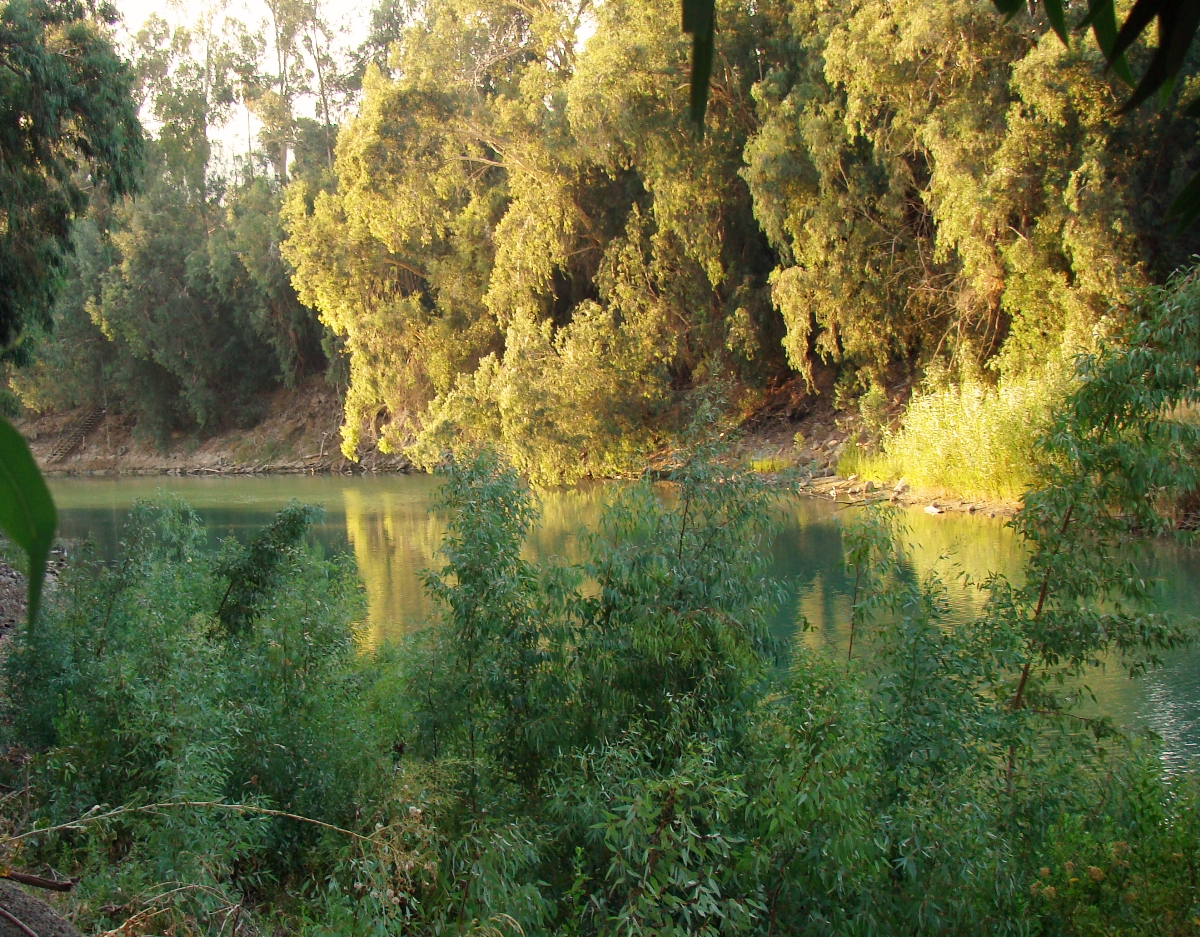
In preparing for our mid-week Bible study tonight (Life of Christ) I came across a photo of the River Jordan I took back in Sept. 2011.

Jordan River. Photo by Leon Mauldin.

Jordan River. Photo by Leon Mauldin.

This is where the Jordan continues its flow just south of the Sea of Galilee.

Some of my other posts and photos of the Jordan River may be seen by clicking here and here.

Click image for larger view.


Hazor, One of Solomon’s Fortress Cities

February 13, 2016

1 Kings 9:15 reads, “Now this is the account of the forced labor which King Solomon levied to build the house of the LORD, his own house, the Millo, the wall of Jerusalem, Hazor, Megiddo, and Gezer.

During the time of pre-conquest Canaanite occupation, “Hazor formerly was the head of all these kingdoms” (Josh. 11:10), a reference to the city states of northern Canaan. It was located on the strategic Via Maris. This is a view of the tel:

Tel Hazor, one of the cities Solomon fortified. Photo by Leon Mauldin.

Tel Hazor, one of the cities Solomon fortified. Photo by Leon Mauldin.

I have previously written on Hazor here.

Click image for larger view.


Jesus and the Money-changers

February 10, 2016

John records the beginning of Jesus’ ministry, including this visit to Jerusalem for Passover:

The Passover of the Jews was near, and Jesus went up to Jerusalem. And He found in the temple those who were selling oxen and sheep and doves, and the money changers seated at their tables. And He made a scourge of cords, and drove them all out of the temple, with the sheep and the oxen; and He poured out the coins of the money changers and overturned their tables; and to those who were selling the doves He said, “Take these things away; stop making My Father’s house a place of business.” (John 2:13-16).

It is noteworthy that Jesus both began (above text) and concluded (Matt. 21:12-13) His ministry by cleansing the temple (hieros), “My Father’s house,” of its abuses–of its being turned into a “house of merchandise.”

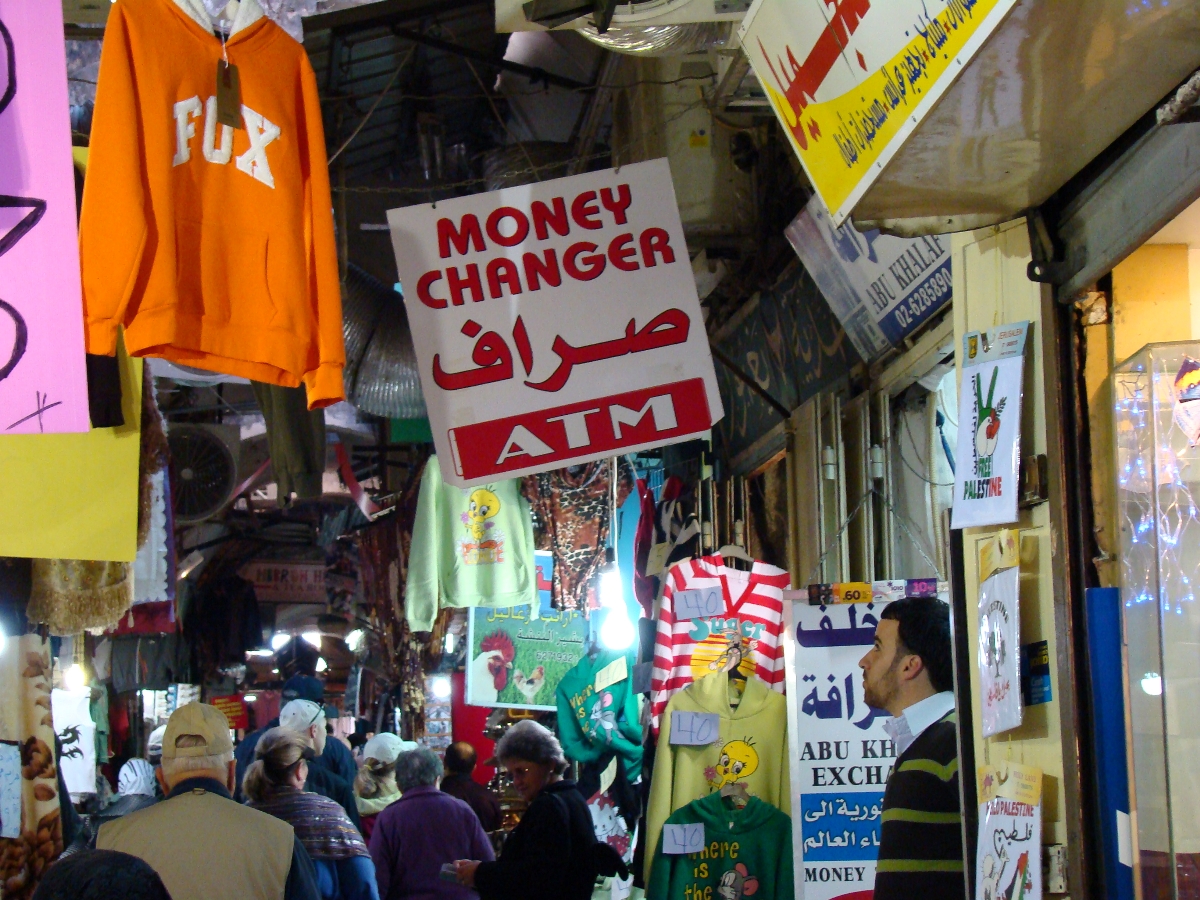
I’ve thought of these biblical texts when walking through Old Jerusalem and seeing signs such as this one:

Money-changers in Jerusalem. Photo by Leon Mauldin.

Money-changers in Jerusalem. Photo by Leon Mauldin.

Money-changers were:

bankers who exchanged one nation’s currency, or one size of coin, for another. These people provided a convenience, charging a fee (often exorbitant) for their services. Some moneychangers operated in the temple area (the Court of the Gentiles), because all money given to the Temple had to be in the Tyrian silver coin. According to Exodus 30:11–16, every Israelite 20 years old or older was required to pay an annual tax of a half-shekel into the treasury of the sanctuary (Nelson’s New Illustrated Bible Dictionary).

Note the location is the hieros (temple area with its spacious courts, John 2:14-15) and not the naos, or sanctuary, where only the priests could go.
What do you think Jesus might do if He were to walk among “modern churches” today? (I know the church in the biblical sense is not the physical church building/meeting place, but rather is the people of God).

Click image for larger view.


Paul Landed at Syracuse

January 20, 2016

In the book of Acts we read of Paul’s route from Caesarea, Israel, to Rome, as a prisoner, with the trip’s various stops along the way. As they journeyed in the Mediterranean there was a shipwreck which resulted in their staying for the winter at the island of Malta. Then Luke, who was on that journey with Paul continues, “After three months we sailed in an Alexandrian ship whose figurehead was the Twin Brothers, which had wintered at the island. And landing at Syracuse, we stayed three days” (Acts 28:11-12).

Syracuse is mentioned in the NT only as having been a harbour where St. Paul lay at anchor for three days on his voyage from Malta to Rome. The shipwrecked crew and passengers, after spending three months in Malta, set sail on the Dioscuri, evidently one of the Alexandrian fleet of imperial transports carrying grain from Egypt to maintain the food supply in Rome.† They started, evidently, very early in the year, probably in February, before the settled weather and the customary season for navigation (mare clausum 11 Nov. to 5 March) had begun. That implies that a suitable and seemingly steady wind was blowing, which tempted them to embark, and carried them straight to Syracuse, a distance of about 100 miles. On the voyage from Malta to Rome as a whole, see RHEGIUM.

Nothing is said with regard to any preaching by St. Paul in Syracuse, nor could any be expected to occur. The ship was certainly waiting for a suitable wind to carry it north to the straits of Messina; and under such circumstances no prisoner was likely to be allowed leave of absence, as the ship must be ready to take instant advantage of the wind (Ramsay, W. M. (1911–1912). SYRACUSE. In J. Hastings, J. A. Selbie, A. B. Davidson, S. R. Driver, & H. B. Swete (Eds.), A Dictionary of the Bible: Dealing with Its Language, Literature, and Contents Including the Biblical Theology (Vol. 4, p. 645). New York; Edinburgh: Charles Scribner’s Sons; T. & T. Clark.)

Sicily is noted for its rich history (Greek, Roman and more), culture, theater & amphitheater, architecture, and as the birthplace of the preeminent mathematician and engineer Archimedes. But my special interest in it has to do with its being included among biblical sites!

Siracusa Theater Greg and Carlo_Picogna

At Greek Theater at Syracuse. Greg Picogna (r) with his father Carlo (now deceased). Photo taken in 1998.

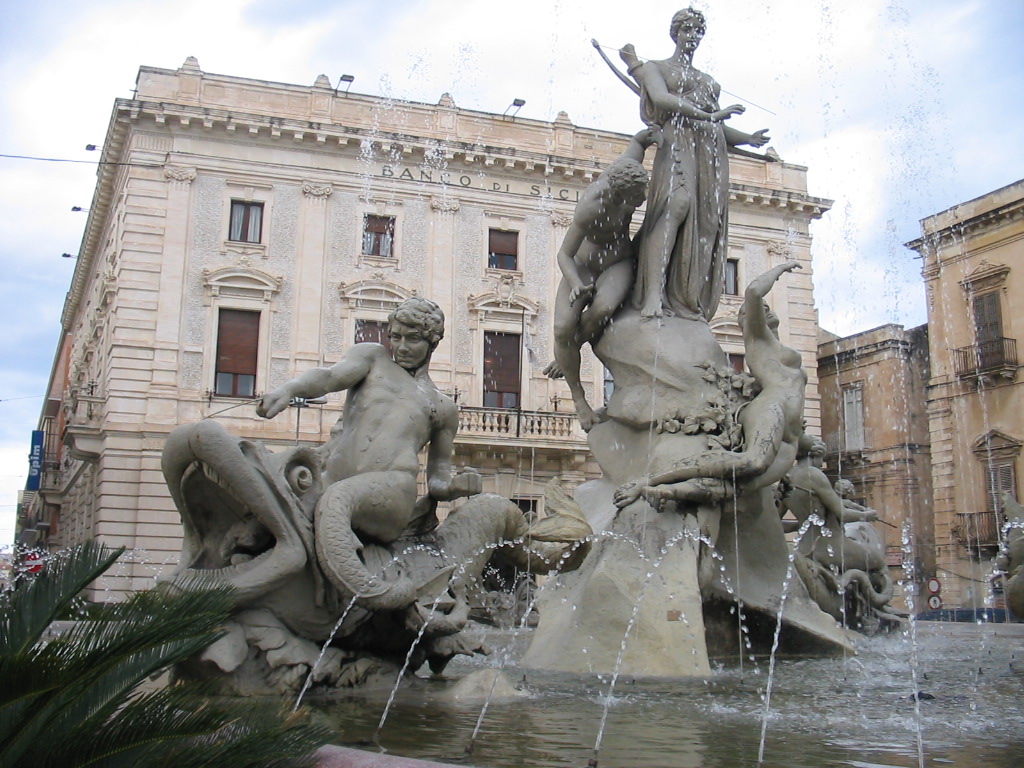
Also at Syracuse you can view the Fountain of Diana.
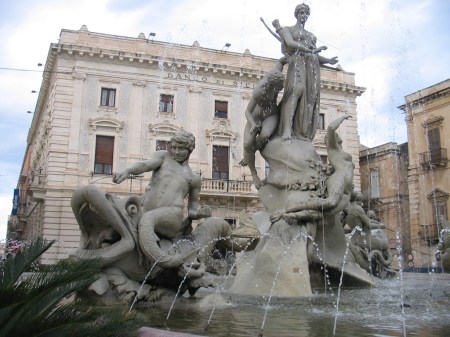
At Syracuse, Fountain of Diana, goddess of the hunt. Photo supplied by Greg Picogna.

At Syracuse, Fountain of Diana, goddess of the hunt. Photo supplied by Greg Picogna.

Giulio Moschetti (1847-1909) created this fountain in Syracuse; it portrays Diana, the mythical goddess of the hunt, in all of her calm and pride.

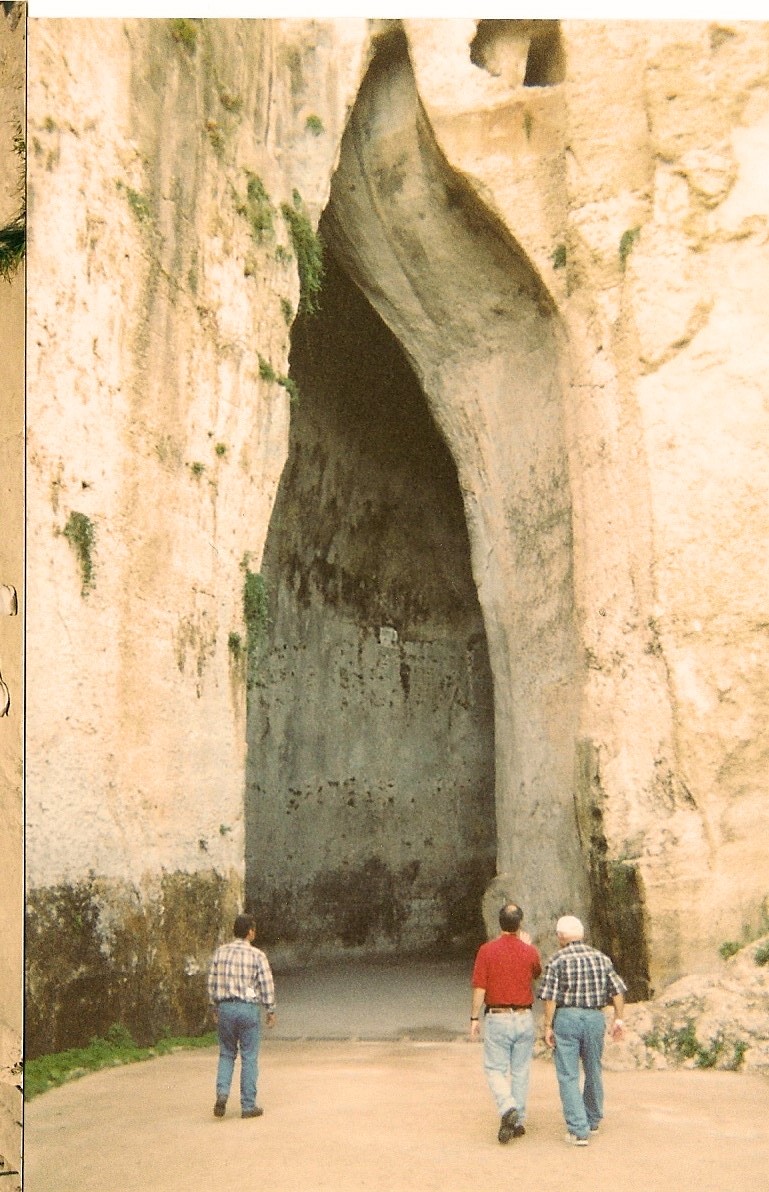
Another famous site in Syracuse is the “Ear of Dionysus” (Italian Orecchio di Dionisio). It was most likely formed out of an old limestone quarry. It is 75.5 feet high and extends 213 feet back into the cliff. Because of its shape this unusual formation has extremely good acoustics, making even a small sound reverberate throughout the cave.
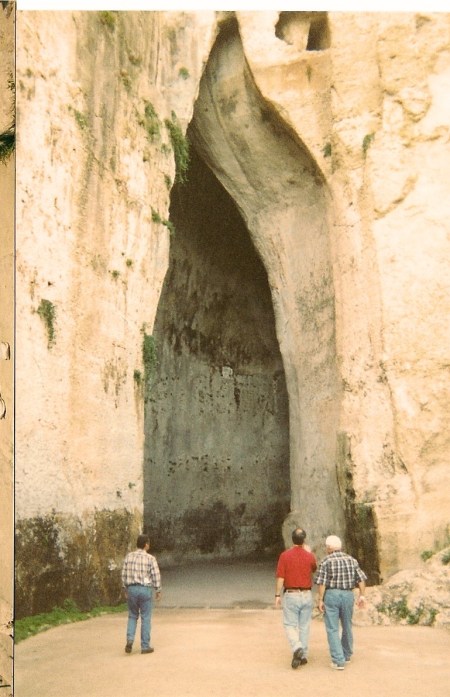
Ear of Dionysius at Syracuse. Photo supplied by Greg Picogna.

Ear of Dionysius at Syracuse. Photo supplied by Greg Picogna.

I’m looking forward to seeing these sites at Syracuse, along with other locations in Sicily and Italy, with my tour group coming up in March.

Sde Amudim in Lower Galilee

January 6, 2016

Jesus’ second miracle recorded by John (4:46-54) was that of His healing a royal official’s son. The official came to Jesus at Cana of Galilee, asking Jesus to go to his home Capernaum to heal his son who was “at the point of death” (v.47). Jesus’ response: “Go your way; your son lives: (v.50). When the official returned home the next day (distance from Cana to Capernaum is ca. 20 miles), he learned that his son had recovered the exact hour on the previous day when Jesus spoke the word.

Such miracles show who Jesus is (see John 20:30-31). Because He is God, Jesus did not have to be physically at Capernaum to heal the sick boy. He has power not only over sickness, but over distance!

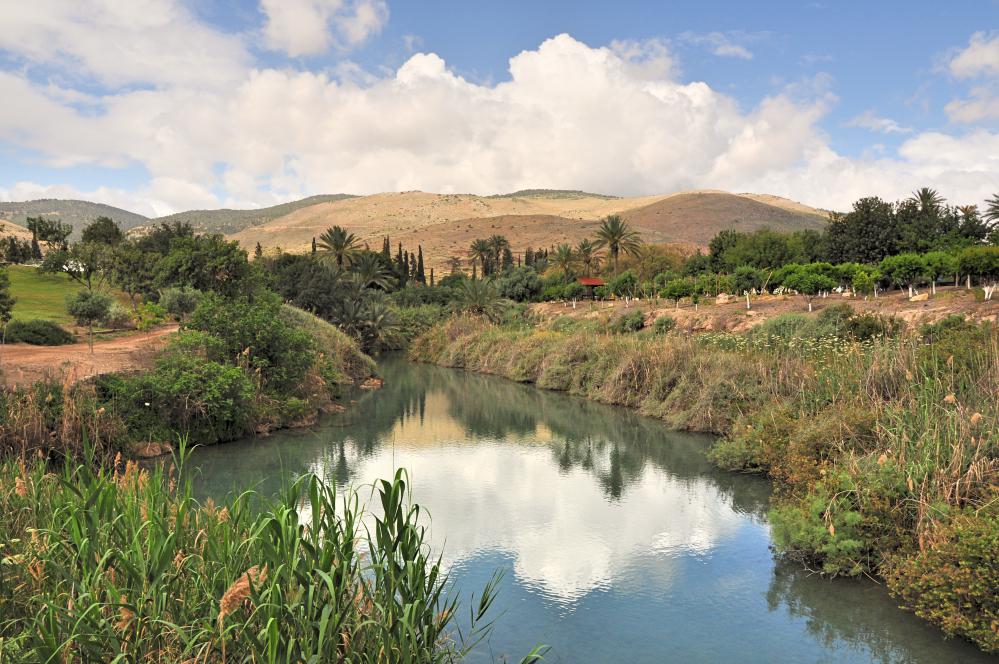
In New Testament times (and somewhat previously), an important road connected the coastal city of Ptolemais with Cana, which then passed through Sde Amudim (Khirbet Umm el-Amud), then on to Magdala and f to Capernaum. It is likely that the royal official of our text would have traveled this route, passing through the area pictured here.

Sde Amudim in lower Galilee looking toward Capernaum. Photo by Leon Mauldin.

Sde Amudim in lower Galilee looking east toward Capernaum. Photo by Leon Mauldin.


Here at this site are the remains of a synagogue (dates to AD 3rd century).

Synagogue at Sde Amudim. Photo by Leon Mauldin.

Synagogue at Sde Amudim. Photo by Leon Mauldin.

Interestingly, this location serves as a watershed.  In this photo we look north. The Bet Netofa Valley drains to the west (to your left); the drainage to your right is east going down to the Sea of Galilee at Magdala.

Watershed at Sde Amudim. Photo by Leon Mauldin.

Watershed at Sde Amudim. Photo by Leon Mauldin.

Click images for larger view.


Disciples Eat Grain on the Sabbath

December 11, 2015

Luke 6 records one of several clashes Jesus had with the Jewish leaders: “Now it happened that He was passing through some grainfields on a Sabbath; and His disciples were picking the heads of grain, rubbing them in their hands, and eating the grain. But some of the Pharisees said, ‘Why do you do what is not lawful on the Sabbath?'” (vv.1-2).

Lenski observes, “The time of this occurrence is certainly determined by the condition of the grain, which was ripe enough to be rubbed out ‘with the hands,’ dative of means, Robertson, 533. It was April, shortly after the Passover, a year before Jesus’ death” (The Interpretation of St. Luke’s Gospel, p. 321).

What Jesus disciples did was permitted by Scripture: “When you enter your neighbor’s standing grain, then you may pluck the heads with your hand, but you shall not wield a sickle in your neighbor’s standing grain” (Deut. 23:25). However the Pharisees had erroneously determined that this was working, and therefore in violation of the Sabbath.

Ripened Wheat. Photo by Leon Mauldin.

Ripened Wheat. Photo by Leon Mauldin.

Besides the fact that Mosaic Law actually permitted the disciples’ actions, Jesus showed the inconsistency of his opponents. They found no fault with David, even though when fleeing from Saul he and his men ate showbread from the tabernacle (Lk. 6:3-4). And yet they condemned the disciples, who were guiltless of wrongdoing.

Further: “The Son of Man is also Lord of the Sabbath” (v.5), and as such He knew what was right and wrong (re: the Sabbath and all things), and would not permit His disciples to violate the Sabbath. What was totally escaping Jesus’ opponents was the fact that “The Lord of the Sabbath” was in their midst and they did not see it! How sad!

Wheat_Carchemish_0447LMauldin

Fields of Wheat near Euphrates. Carchemish is in background. Photo by Leon Mauldin.