Jesus Walked through Bethphage

April 27, 2017

In the Final Week of Jesus’ ministry, Bethany and Bethphage (cities located on the slope of the Mount of Olives) are mentioned. It was from here that Jesus arranged for the donkey on which He would ride triumphantly into Jerusalem (Mark 11:1ff.). That final week would find Jesus walking back and forth from Bethany to Jerusalem.

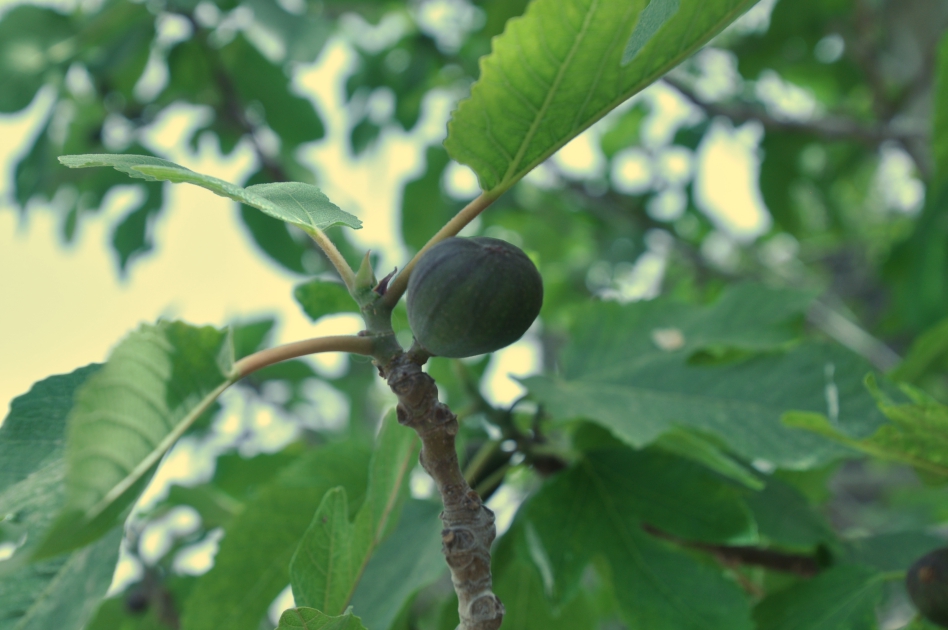
Fig close up at Bethphage. Photo © Leon Mauldin.

An interesting event happened in this area at this time:

And leaving them, he went out of the city to Bethany and lodged there. In the morning, as he was returning to the city, he became hungry. And seeing a fig tree by the wayside, he went to it and found nothing on it but only leaves. And he said to it, “May no fruit ever come from you again!” And the fig tree withered at once. (Matt. 21:17-19).

Unlike our photo above, that fig tree in our text received a curse because though it had a pretense of leaves, it was barren; there was no fruit. This was a great object lesson for Jesus’ disciples.

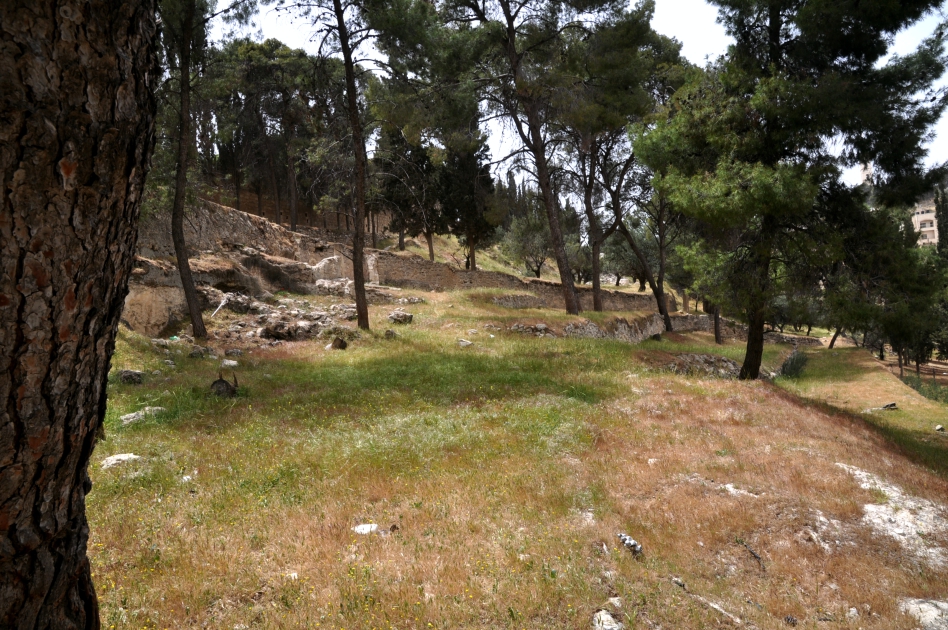
Here is a view of the terrain at Bethphage, with Bethany behind, and the Mount of Olives continuing to rise ahead.

Bethphage. Jesus passed through this area during His Final Week of ministry. Photo ©Leon Mauldin.

I was glad to have the opportunity to visit Bethphage yesterday. There are also several ancient tombs located there.

Click images for larger view.


King David’s Tomb in Jerusalem (Traditional)

April 26, 2017

David was described as the “sweet psalmist of Israel” (2 Sam. 23:1) and authored about half of the collection of the 150 psalms.

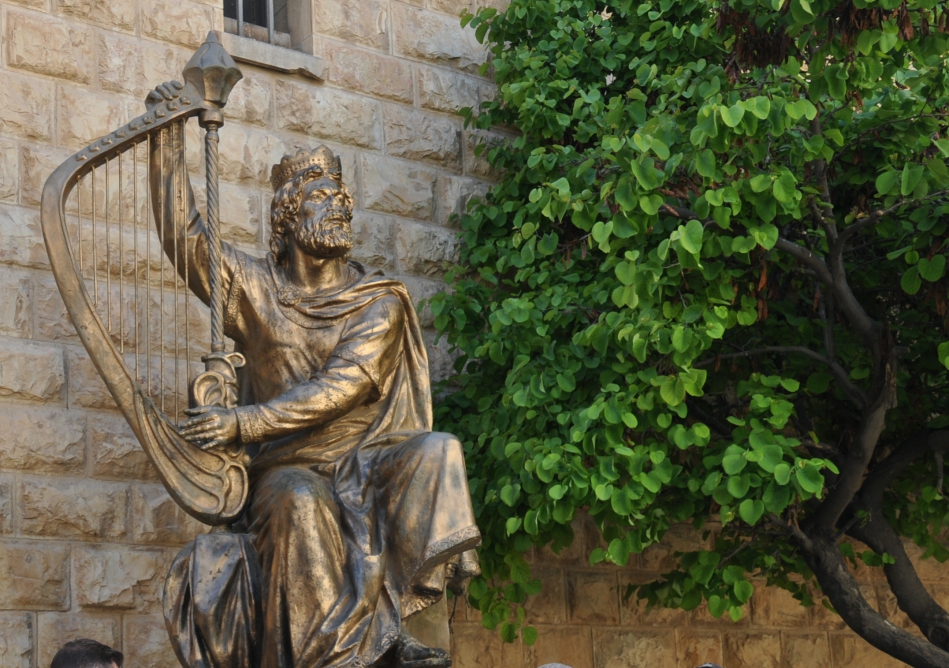
Sculpture of David near site of traditional tomb in Jerusalem. Photo ©Leon Mauldin.

Approximately 2,000 years ago on the Day of Pentecost (Acts 2), Peter said, “Brothers, I may say to you with confidence about the patriarch David that he both died and was buried, and his tomb is with us to this day” (v.29, ESV).

Yesterday I had the opportunity to visit the traditional tomb of David in Jerusalem.

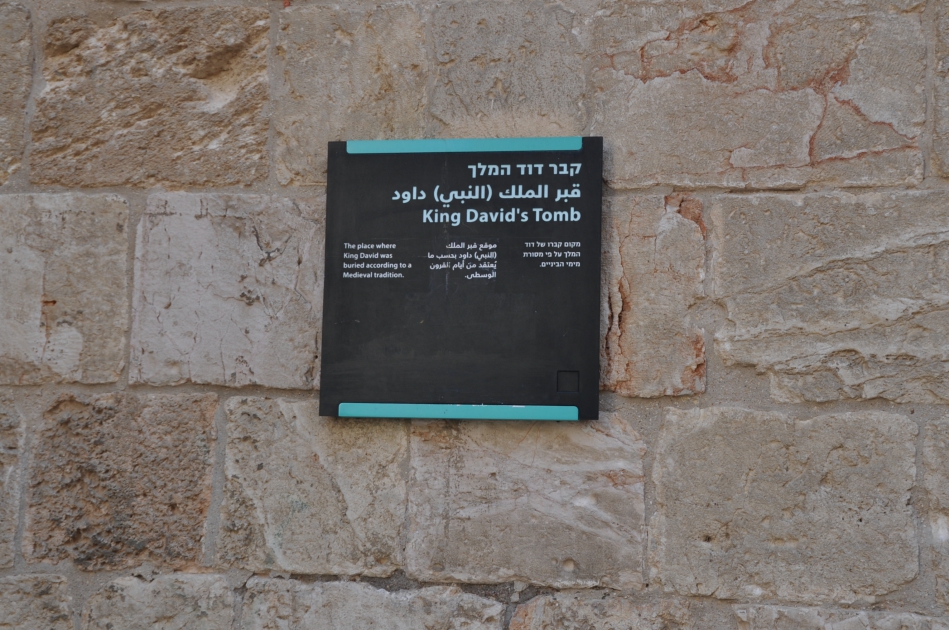
Sign designating David’s Tomb. Photo ©Leon Mauldin.

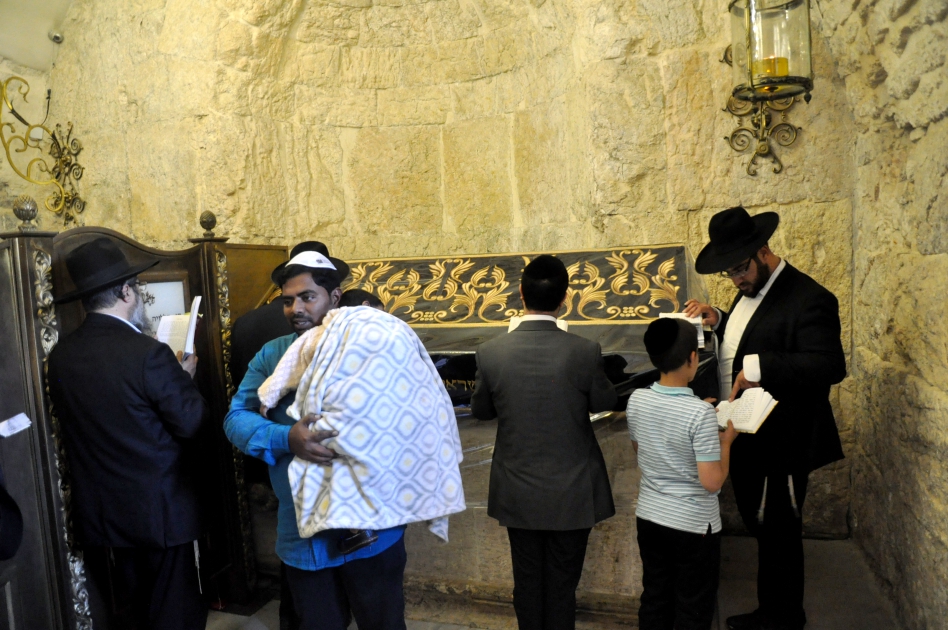
This location is said to be a pilgrimage for Jews, Muslims, and Christians. Inside is a massive cenotaph where visitors pay respect.

Inside David’s Tomb in Jerusalem. Photo ©Leon Mauldin.

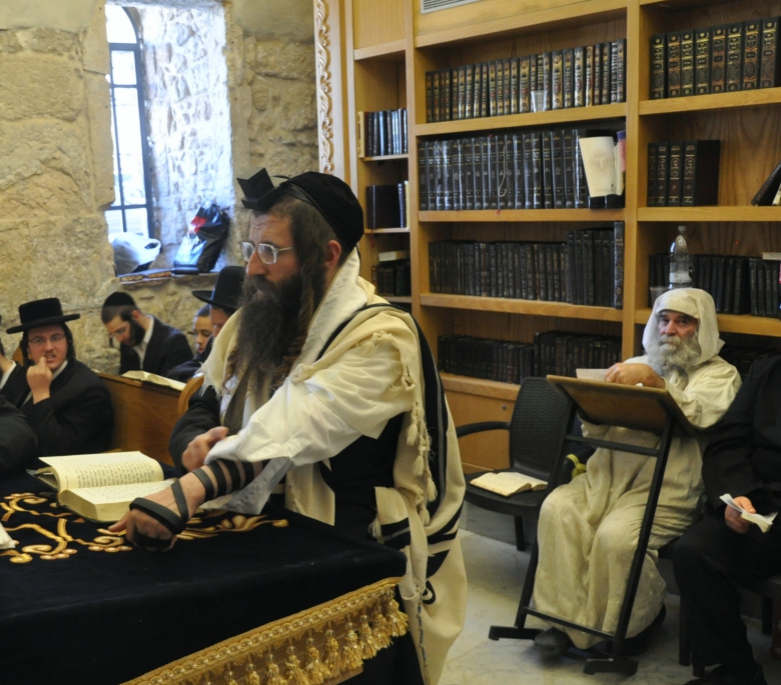
The adjoining room is dedicated to reading/study.

Adjoining reading room. Photo ©Leon Mauldin.

Another text referencing David’s death is Acts 13:36: “For David, after he had served the purpose of God in his own generation, fell asleep and was laid with his fathers and saw corruption” (ESV).

We mentioned this is the “traditional site” of David’s tomb:

In the 10th century a belief that David’s tomb was on the present Mount Zion began to develop among Christian pilgrims, who celebrated David’s memory along with that of St James, the first bishop of Jerusalem.

It was actually the Christian Crusaders who built the present Tomb of David with its large stone cenotaph. However, three of the walls of the room where the cenotaph stands are much older — apparently from a synagogue-church used by first-century Judaeo-Christians, which became known as the Church of the Apostles.

Gradually this memorial came to be accepted as David’s tomb, first by the Jews and later also by Muslims. (http://www.seetheholyland.net/tomb-of-king-david/)

The real point of the two passages cited in Acts above is that David, having served God’s purpose, died, was buried, and his body experienced decay. He was not the subject of those prophecies he uttered that spoke of a coming resurrection–he was speaking of the resurrection of Jesus, which is at the very heart of the Gospel message. Apart from the resurrection of Jesus there IS no Gospel!

In the first century in Jerusalem Peter said the actual tomb of David could be seen. David had died, his flesh went through the normal decaying process. I like the old English translation of Acts 2:24 in the KJV, “Whom God hath raised up, having loosed the pains of death: because it was not possible that he should be holden of it. Where David’s earthly remains are today at this point is not of primary importance to one’s faith or salvation. But the point was that it was certain that he could not be the object of those Messianic passages that foretold the resurrection–only Jesus could and did fulfill those resurrection prophecies!

Click image for larger view.


Tel Lachish, where King Amaziah of Judah Was Killed

April 22, 2017

“From the time Amaziah turned from following the LORD, conspirators plotted against him in Jerusalem, so he fled to Lachish. But they sent assassins after him and they killed him there” (2 Chronicles 25:27, NET).

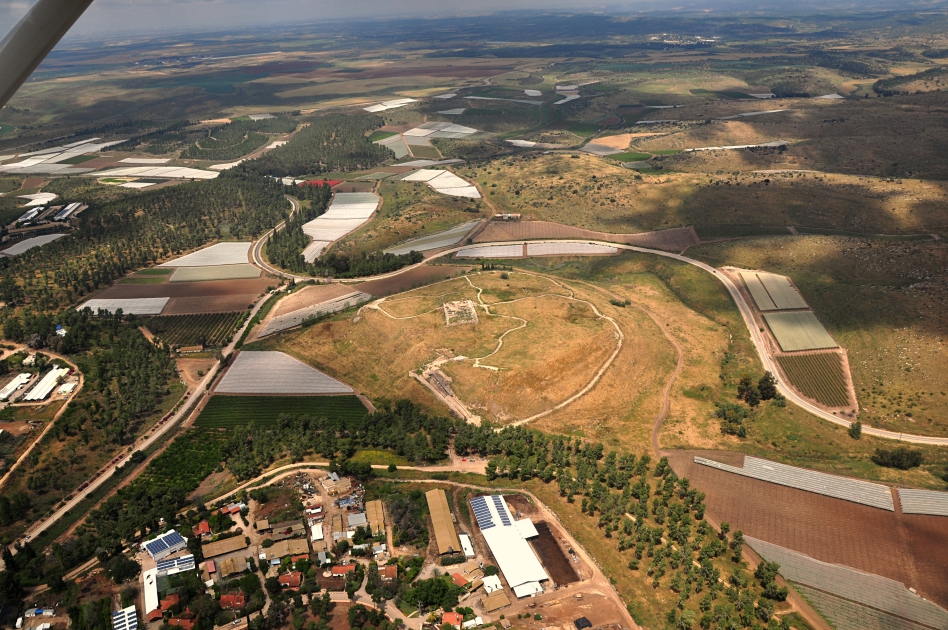
Tel Lachish at center. View is from the southwest. Photo ©Leon Mauldin.

Our photo gives the geographical setting for the biblical text, which tells of the assassination of one of Judah’s kings during the “Divided Kingdom” period. Amaziah reigned 796-767 BC. He is described by one author as “a mediocre king who suffered the consequences of his compromises” (Shepherds Notes, The Kings of Judah, p.79).

Later the city of Lachish would be one of 46 fortified cities captured by the Assyrian king Sennacherib, in 701 BC. His siege-mound formed for that invasion can still be seen at the southwest corner of tel Lachish.

Click photo for larger view.

We previously wrote about Lachish here and here.


The Nile River in Egypt

April 5, 2017

The Nile River is mentioned numerous times in the Bible. It was truly the “lifeblood” of Egypt.

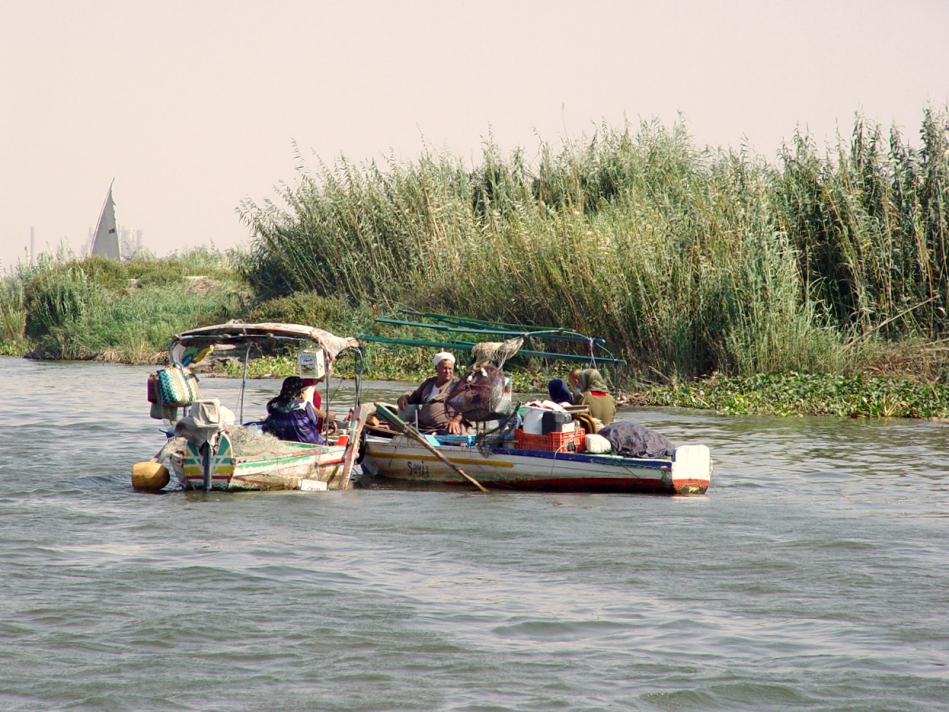
Nile River. Photo by Leon Mauldin.

These folks in the two boats in the photo had either been fishing or were about to go, as they had fishing nets with them.

From Harper’s Bible Dictionary we have this info on the Nile:

the great river of Egypt flowing north from its sources in Lake Victoria in Uganda and in the highlands of Ethiopia, a distance of 4,037 miles, the entire length of the Sudan and Egypt, to the Mediterranean. The two major branches, the White Nile (from Lake Victoria) and the Blue Nile (from Ethiopia), merge at Khartoum, with one modest tributary somewhat farther to the north and none at all in Egypt itself. Beyond Khartoum the Nile flows through several cataracts, inhibiting navigation but not preventing it. The last cataract is at Aswan, the beginning of the Nile Valley proper. (Because the Nile flows from south to north, the southern Nile valley is referred to as Upper Egypt.) From here on the Nile flows north in a well-developed valley with cliffs on either side almost as far as Cairo, and the river becomes important for its overflow and the hydraulic irrigation of the adjoining floodplain. Within the Nile Valley the river is fairly constant at about six-tenths of a mile in width, whereas the valley varies from six to nine miles across (p.705).

The land of Egypt has great significance for the biblical narrative. God told Jacob, father of the twelve tribes of Israel, that He would make of him a great nation in Egypt (Gen. 46:3). As the book of Exodus opens, Israel is already a numerous people, and the new pharaoh of Egypt felt he had to take oppressive measures against them (Ex. 1).

While a young child, Jesus, along with Joseph and Mary, were told to leave Bethlehem (where Herod would seek to kill them), and flee to Egypt. “Now when they [the wise men from the East] had gone, behold, an angel of the Lord appeared to Joseph in a dream and said, “Get up! Take the Child and His mother and flee to Egypt, and remain there until I tell you; for Herod is going to search for the Child to destroy Him” (Matt. 2:13)

The Nile River makes life in Egypt possible, both in ancient as well as modern times.

I’ve previously written on the Nile here and here.


At Rhegium, Italy, on the Way to Rome

April 3, 2017

Acts 28 narrates the Apostle Paul’s voyage to Rome, traveling as a prisoner. Having wintered at Malta due to a ship wreck, the journey continued: “We put in at Syracuse and stayed there three days. From there we cast off and arrived at Rhegium, and after one day a south wind sprang up and on the second day we came to Puteoli” (vv.12-13).

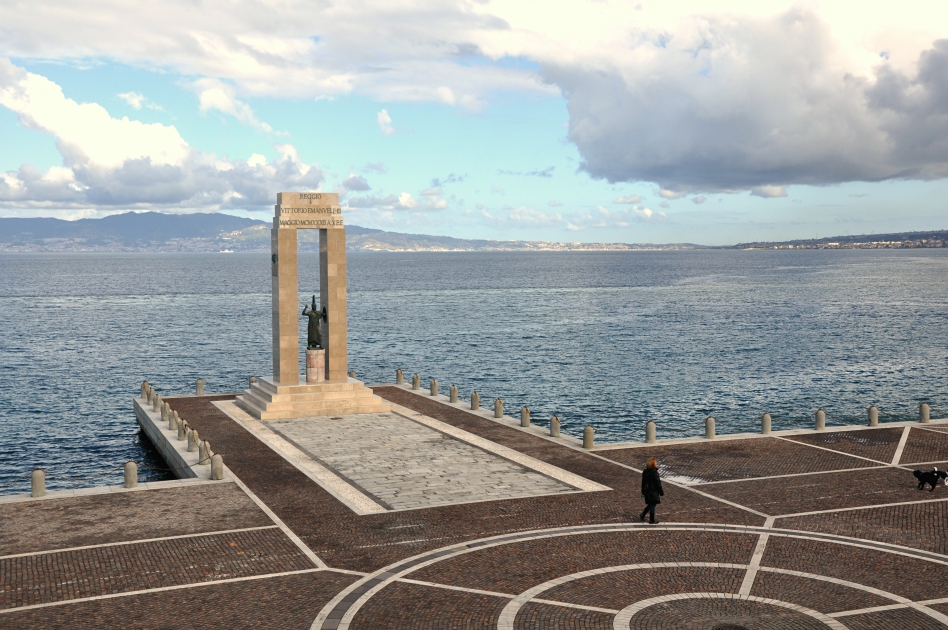
At Rhegium, Italy, looking across Strait of Messina to Sicily. Paul’s ship made a brief stop here. Photo by Leon Mauldin.

The Baker Encyclopedia of the Bible has this information on Rhegium:

Important Italian harbor visited by Paul in his journey to Rome (Acts 28:13). From Malta, Paul’s ship traveled north to the Sicilian capital of Syracuse; then in the absence of a south wind they may have tacked into the Strait of Messina, finding good harbor at Rhegium. Another south wind carried them from Rhegium to Puteoli in the Bay of Naples—the ship’s destination, since Puteoli was southern Italy’s chief port, receiving the great Alexandrian grain vessels.

The Strait of Messina was well known to every Roman navigator. Passage here was necessary in order to gain access to Italy’s west coast; but its obstacles were numerous. Obstructions, shallows, and the narrow width (c. seven miles from Rhegium to Messina) forced ships to stay at Rhegium until an adequate south wind arose.

The name “Rhegium” (modern Reggio or Reggio di Calabria) may have come from a Greek verb, meaning “to tear” or “rend.” Sicily, it seemed, had been “torn from the mainland” and Rhegium was the nearest Italian port. (Vol. 2, p. 1857).

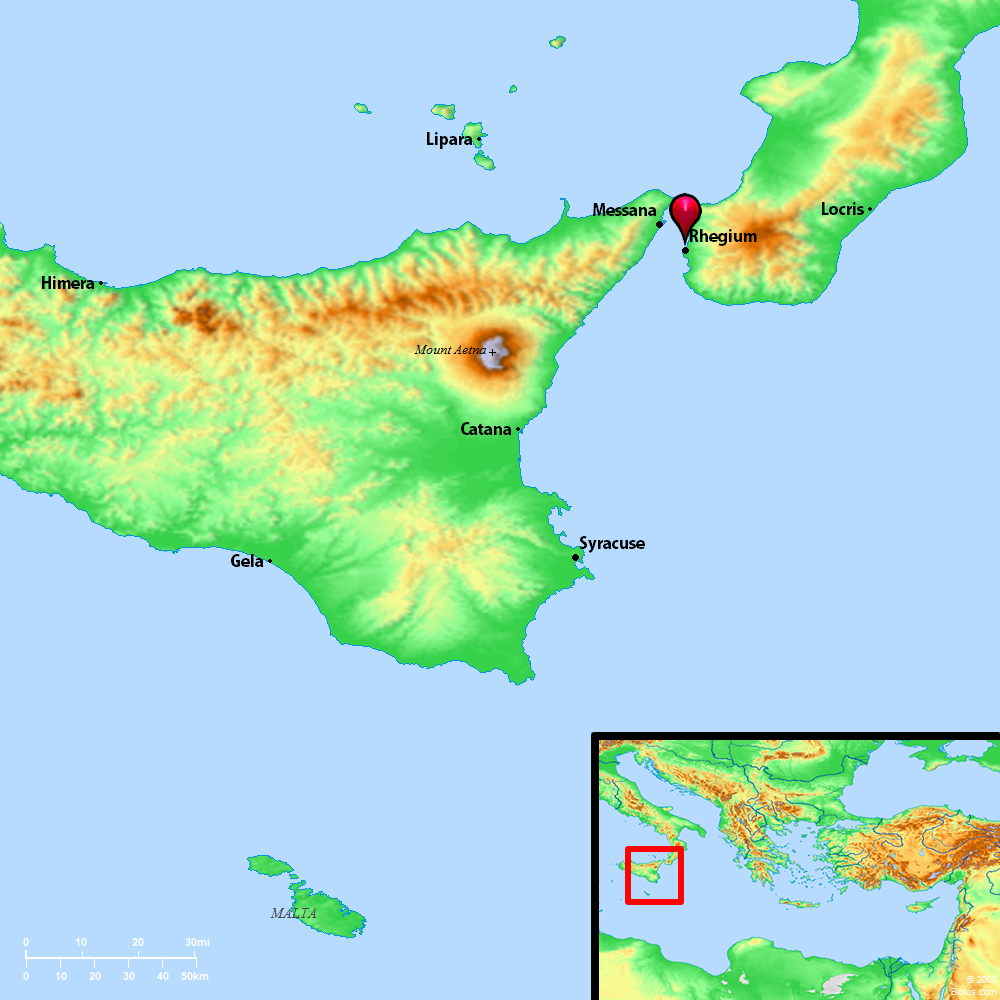
Rhegium, on the “toe” of the “boot” of Italy, across from the island of Sicily. BibleAtlas.org.

Click images for larger view.


Valley of Beracah

March 24, 2017

Jehoshaphat (873-848 BC) was the fourth king of the southern kingdom of Judah during the Divided Kingdom period. His war with the combined forces of the Ammonites, Moabites and Edomites is described in 2 Chronicles 20. It was reported to the king that a great multitude was encamped at En-gedi (v.2), located on the western shore of the Dead Sea.

This good king prayed to God for deliverance (vv.4-13). God answered by a prophet named Jahaziel: “You will not need to fight in this battle. Stand firm, hold your position, and see the salvation of the LORD on your behalf, O Judah and Jerusalem. Do not be afraid and do not be dismayed. Tomorrow go out against them, and the LORD will be with you” (v.17, ESV).

Encouraged by this word, the text narrates what happened next: “And they rose early in the morning and went out into the wilderness of Tekoa. And when they went out, Jehoshaphat stood and said, ‘Hear me, Judah and inhabitants of Jerusalem! Believe in the LORD your God, and you will be established; believe his prophets, and you will succeed'” (v.20).

God overruled on Israel’s behalf:

And when they [Jehoshaphat and the people of Judah] began to sing and praise, the LORD set an ambush against the men of Ammon, Moab, and Mount Seir, who had come against Judah, so that they were routed. For the men of Ammon and Moab rose against the inhabitants of Mount Seir, devoting them to destruction, and when they had made an end of the inhabitants of Seir, they all helped to destroy one another (vv.22-23).

All that remained was for Israel to gather the spoil: “When Jehoshaphat and his people came to take their spoil, they found among them, in great numbers, goods, clothing, and precious things, which they took for themselves until they could carry no more. They were three days in taking the spoil, it was so much” (v.25).

The site where this occurred is known as the Valley of Beracah (meaning: Valley of Blessing).

Valley of Beracah, near Tekoa. Facing east toward the Dead Sea, and Edom & Moab. Photo ©Leon Mauldin.

The text reads, “On the fourth day they assembled in the Valley of Beracah, for there they blessed the LORD. Therefore the name of that place has been called the Valley of Beracah to this day” (v.26).

Photos such as this are helpful in visualizing the setting of the historical events narrated in Scripture. Click on photo for larger view.

Back in 2010 Ferrell Jenkins did a post on the Valley of Beracah. He and I visited this site in Dec. 2009.


Dothan, Where Joseph Was Sold by His Brothers

March 11, 2017

The rivalry and jealousy that existed between Jacob’s wives (four) and sons (twelve) provides proof that polygamy was something God tolerated during the Old Testament period. It does not reflect His will as seen in the Garden of Eden (Gen. 2:24; Matt. 19:1-6). But God overruled for good to accomplish His will, and through Jacob’s wives and children the 12 tribes of Israel originated, as set forth in Genesis.

The book of Genesis does not fabricate a narrative that portrays the patriarch in an idealistic light. Rather their sins and foibles are included. Genesis 37 relates how Joseph’s envious brothers sold him to a traders in a caravan who were en route to Egypt, where they sold Joseph into slavery. The location where that occurred was Dothan in Canaan, on the international trade route which connected Mesopotamia to Egypt. We had the occasion to see Dothan in November ’16.

Tel Dothan, where Joseph was sold by his brothers. Photo by Leon Mauldin.

Here is the account in Genesis:

13 And Israel [Jacob] said to Joseph, “Are not your brothers pasturing the flock at Shechem? Come, I will send you to them.” And he said to him, “Here I am.” 14 So he said to him, “Go now, see if it is well with your brothers and with the flock, and bring me word.” So he sent him from the Valley of Hebron, and he came to Shechem. 15 And a man found him wandering in the fields. And the man asked him, “What are you seeking?” 16 “I am seeking my brothers,” he said. “Tell me, please, where they are pasturing the flock.” 17 And the man said, “They have gone away, for I heard them say, ‘Let us go to Dothan.'” So Joseph went after his brothers and found them at Dothan. 18 They saw him from afar, and before he came near to them they conspired against him to kill him. 19 They said to one another, “Here comes this dreamer. 20 Come now, let us kill him and throw him into one of the pits. Then we will say that a fierce animal has devoured him, and we will see what will become of his dreams.” 21 But when Reuben heard it, he rescued him out of their hands, saying, “Let us not take his life.” 22 And Reuben said to them, “Shed no blood; cast him into this pit here in the wilderness, but do not lay a hand on him”- that he might rescue him out of their hand to restore him to his father. 23 So when Joseph came to his brothers, they stripped him of his robe, the robe of many colors that he wore. 24 And they took him and cast him into a pit. The pit was empty; there was no water in it. 25 Then they sat down to eat. And looking up they saw a caravan of Ishmaelites coming from Gilead, with their camels bearing gum, balm, and myrrh, on their way to carry it down to Egypt. 26 Then Judah said to his brothers, “What profit is it if we kill our brother and conceal his blood? 27 Come, let us sell him to the Ishmaelites, and let not our hand be upon him, for he is our brother, our own flesh.” And his brothers listened to him. 28 Then Midianite traders passed by. And they drew Joseph up and lifted him out of the pit, and sold him to the Ishmaelites for twenty shekels of silver. They took Joseph to Egypt. 29 When Reuben returned to the pit and saw that Joseph was not in the pit, he tore his clothes 30 and returned to his brothers and said, “The boy is gone, and I, where shall I go?” 31 Then they took Joseph’s robe and slaughtered a goat and dipped the robe in the blood. 32 And they sent the robe of many colors and brought it to their father and said, “This we have found; please identify whether it is your son’s robe or not.” 33 And he identified it and said, “It is my son’s robe. A fierce animal has devoured him. Joseph is without doubt torn to pieces.” 34 Then Jacob tore his garments and put sackcloth on his loins and mourned for his son many days. 35 All his sons and all his daughters rose up to comfort him, but he refused to be comforted and said, “No, I shall go down to Sheol to my son, mourning.” Thus his father wept for him. 36 Meanwhile the Midianites had sold him in Egypt to Potiphar, an officer of Pharaoh, the captain of the guard.

Truly envy is as rottenness of the bones (Prov. 14:30).

Click photo for larger view.


Nain of Galilee, where Jesus Raised the Dead

March 6, 2017

I love to read the account of the time Jesus went to the Galilean city of Nain, raising a young man from the dead. How the widowed mother must have rejoiced!

Luke narrates as follows:

Now it happened, the day after, that He went into a city called Nain; and many of His disciples went with Him, and a large crowd. 12 And when He came near the gate of the city, behold, a dead man was being carried out, the only son of his mother; and she was a widow. And a large crowd from the city was with her. 13 When the Lord saw her, He had compassion on her and said to her, “Do not weep.” 14 Then He came and touched the open coffin, and those who carried him stood still. And He said, “Young man, I say to you, arise.” 15 So he who was dead sat up and began to speak. And He presented him to his mother. 16 Then fear came upon all, and they glorified God, saying, “A great prophet has risen up among us”; and, “God has visited His people.” (Lk. 7:11-16).

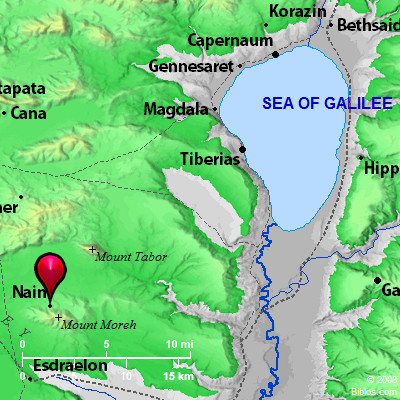
Nain in Galilee. BibleAtlas.com.

Nain in Galilee. BibleAtlas.com.

The purpose of Jesus’ miracles was to show who He was/is. The limited occasions recorded when He raised the dead give proof that He is Life, He is the source of Life. He is the resurrection and the life (John 11:25). And yet such occasions show the very real compassion of Jesus as well. The compassion He had during His ministry on earth He continues to have at this present time.

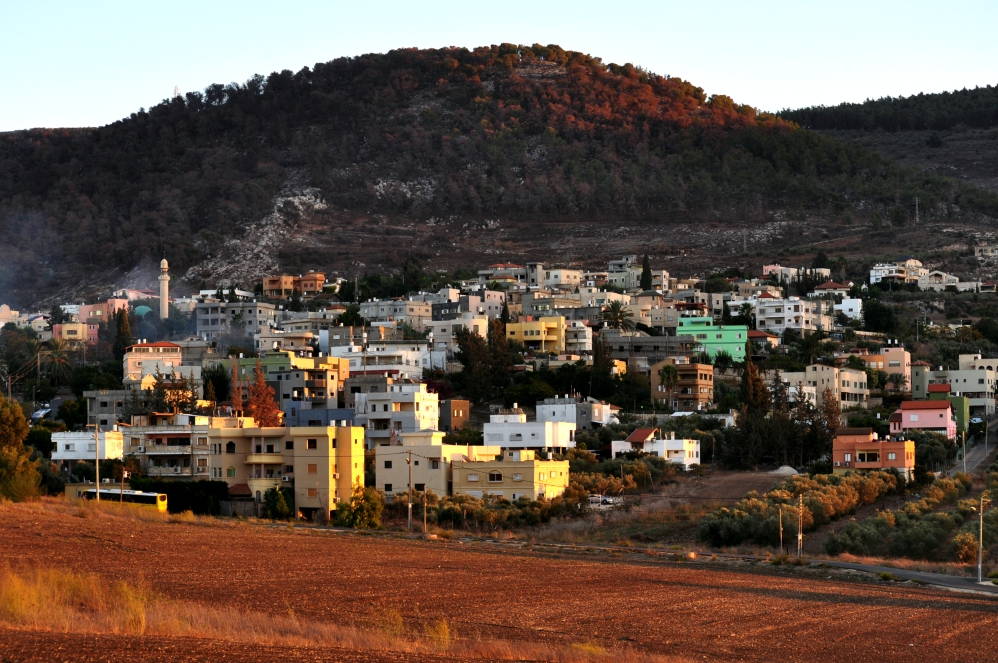
We had the opportunity to make a quick stop at Nain during our tour to Israel last November ’16.

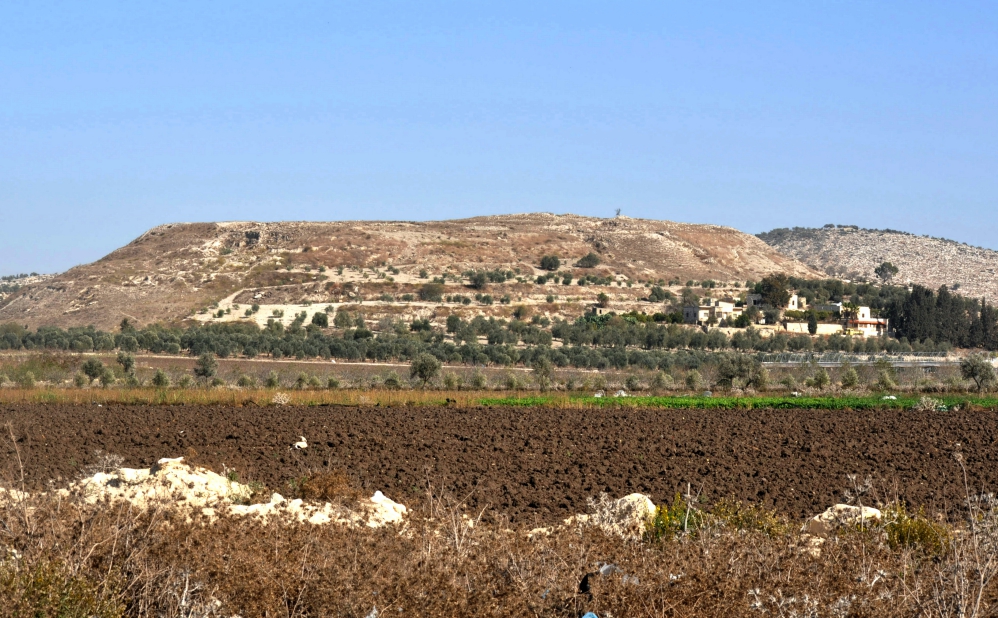
Nain, where Jesus raised the dead. Photo by Leon Mauldin.

Nain, where Jesus raised the dead. Photo by Leon Mauldin.

By the way, the mountain in the background is the Hill of Moreh, mentioned in connection with the account of Gideon and his 300 men (Judges 7). Click photo for larger view.


The Garden of Gethsemane

February 1, 2017

“When Jesus had spoken these words [Farewell Discourse/Prayer, John 14-18], He went forth with His disciples over the ravine of the Kidron, where there was a garden, in which He entered with His disciples” (John 18:1, NASB). Matthew’s record states, “Then Jesus came with them to a place called Gethsemane, and said to His disciples, ‘Sit here while I go over there and pray.'”

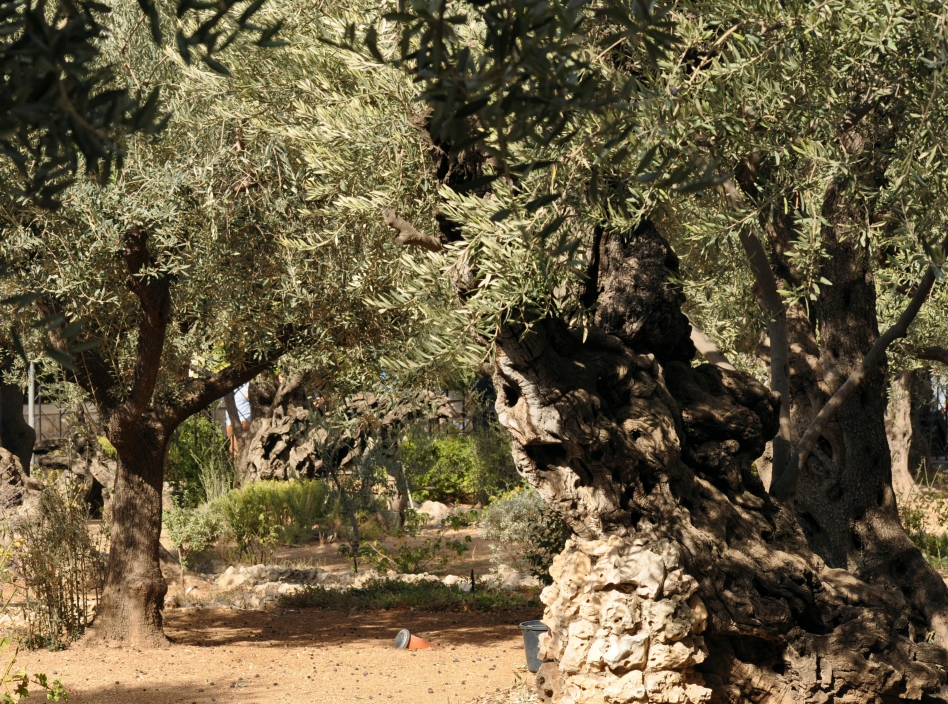
Ancient olive trees on the Mt. of Olives. The Garden of Gethsemane was in this area. Photo by Leon Mauldin.

Ancient olive trees on the Mt. of Olives. The Garden of Gethsemane was in this area. Photo by Leon Mauldin.

The meaning of Gethsemane is “olive press,” and therefore not a “garden” in the ordinary sense of the word, but rather an olive grove that contained an olive press. Though we cannot know the exact spot where Jesus went for prayer that awful night before His crucifixion, it would be situated on the Mount of Olives just east of Jerusalem and across the Kidron Valley.

It would be here that Jesus went with His disciples (minus Judas; see John 13:30) to pray. “They came to a place named Gethsemane; and He said to His disciples, ‘Sit here until I have prayed.'” (Mark 14:32, NASB). We get somewhat of a glimpse of the horrible terror of that night as Luke writes, “And being in agony He was praying very fervently; and His sweat became like drops of blood, falling down upon the ground” (22:44, NASB). He submitted willingly to the Father’s will, because there was no other way that God could be both Just and our Justifier (Romans 3:21-26).

So it was then at the site of Gethsemane that Jesus was betrayed by His disciple Judas, was arrested and from there led away to a series of trials before the Jews and the Romans, and then crucified. But then on the third day “was declared the Son of God with power by the resurrection from the dead, according to the Spirit of holiness, Jesus Christ our Lord” (Rom. 1:4, NASB). Hallelujah, What a Savior!


Tirzah (Tell el-Far’ah), Israel’s Ancient Capital

November 30, 2016

On our recent trip to Israel we included one day in the West Bank. On our itinerary among other sites for that day I included Tirzah, Israel’s capital prior to Samaria, during the earlier years of the Divided Kingdom period.

Todd Bolen, of BiblePlaces.com makes this interesting observation:

In my experience, the most important area of the biblical land that people know the least about is the hill country of Samaria. Its importance is reflected in the fact that it is easier for me to list biblical people who were not in this area than it is to name those who were.

Why is this region generally less known? Most tour groups avoid it. Yes, it is possible to come to Israel and not see Shechem, Samaria, Shiloh, and Ai. In fact, I would estimate that 95% of tourists never see these major sites. (April 28, 2014, in BiblePlaces Blog).

What Todd says here would also (and especially) be true of Tirzah! We did not visit Ai, but saw each of the other sites mentioned: Shiloh, Shechem (Tel Balata, and also Jacob’s Well at Nablus), Samaria and also Dothan.

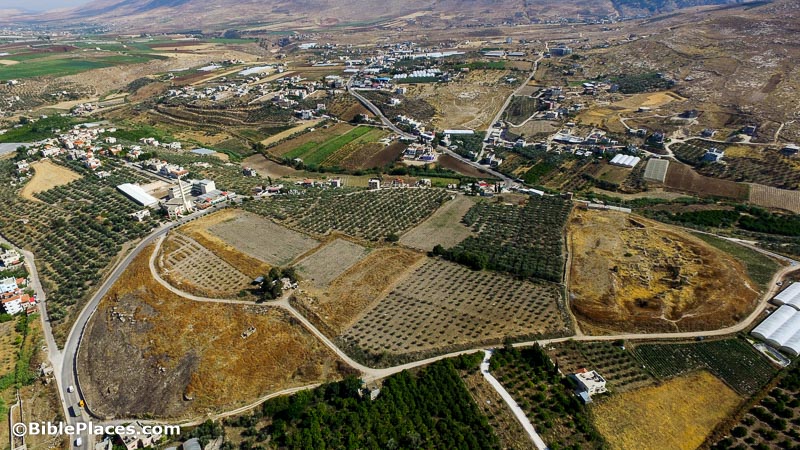
This aerial photo is the view of Tirzah from the north, used by permission of Todd Bolen.
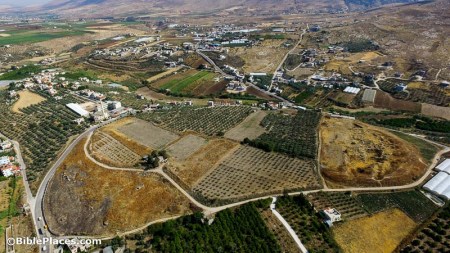
Tirzah, aerial from north. Photo ©Todd Bolen.

Tirzah, aerial from north. Photo ©Todd Bolen.

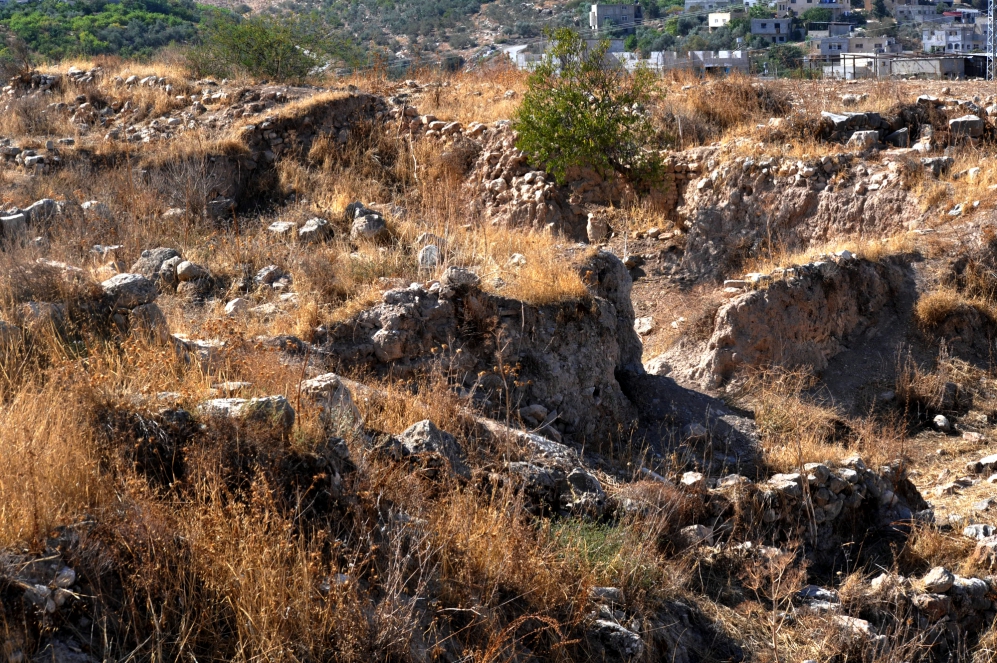
It is ironic that this important Old Testament city is today an unmarked tel. Not even a sign. Many decades have passed since the excavations here.
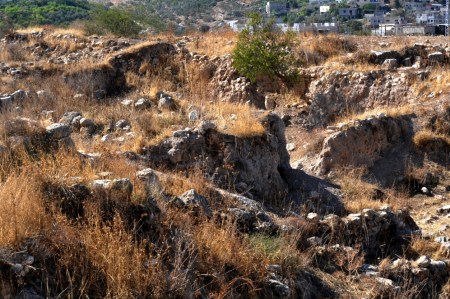
Excavations at Tirzah. Photo ©Leon Mauldin.
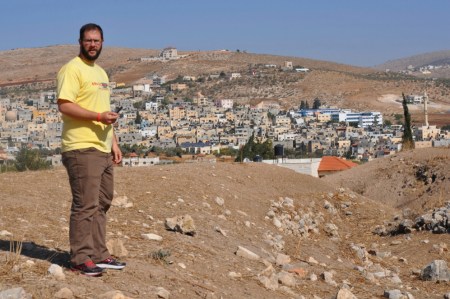
Excavations at Tirzah. Photo ©Leon Mauldin.

My son Seth at Tirzah. Photo ©Leon Mauldin.
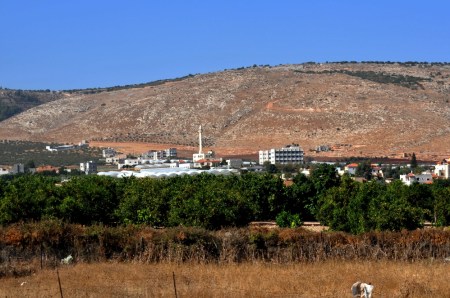
My son Seth at Tirzah. Photo ©Leon Mauldin.

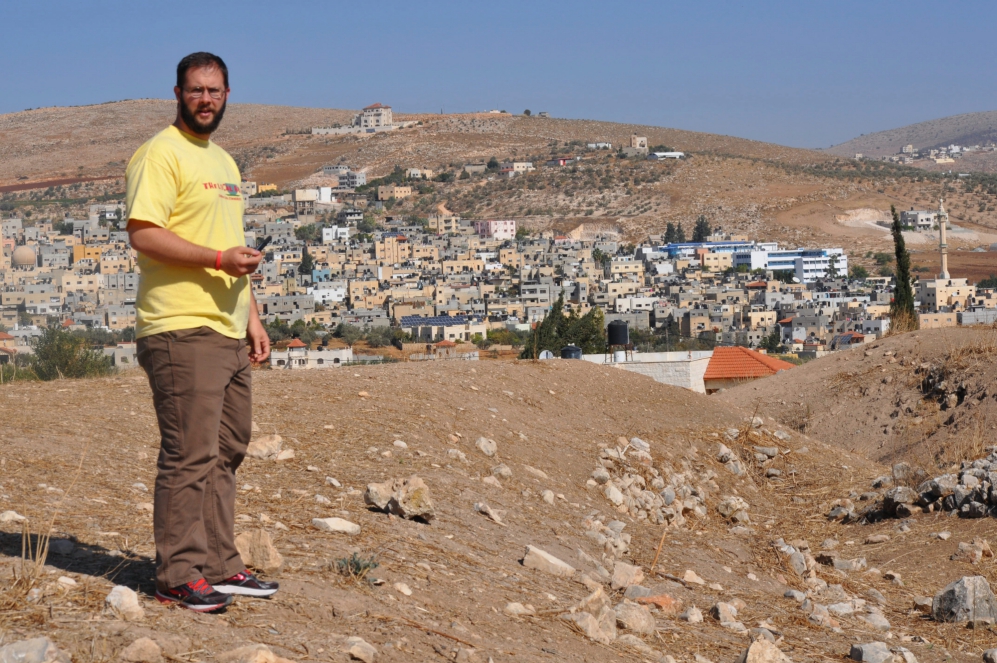
View from Tirzah. Photo ©Leon Mauldin.

View from Tirzah. Photo ©Leon Mauldin.

Biblical references to this Tirzah include:

1 Kings 14:17 Then Jeroboam‘s wife arose and departed, and came to Tirzah. When she came to the threshold of the house, the child died. Jeroboam was the first king of the Divided Kingdom following the death of Solomon.

1 Kings 15:21 Now it happened, when Baasha heard it, that he stopped building Ramah, and remained in Tirzah. Baasha was the king who destroyed all the family of the King Jeroboam.

1 Kings 15:33 In the third year of Asa king of Judah, Baasha the son of Ahijah became king over all Israel in Tirzah, and reigned twenty-four years. 

1 Kings 16:6 So Baasha rested with his fathers and was buried in Tirzah. Then Elah his son reigned in his place. 

1 Kings 16:9 Now his [Elah’s] servant Zimri, commander of half his chariots, conspired against him as he was in Tirzah drinking himself drunk in the house of Arza, steward of his house in Tirzah.

1 Kings 16:15 In the twenty-seventh year of Asa king of Judah, Zimri had reigned in Tirzah seven days. And the people were encamped against Gibbethon, which belonged to the Philistines.

1 Kings 16:17 Then Omri and all Israel with him went up from Gibbethon, and they besieged Tirzah.

1 Kings 16:23 In the thirty-first year of Asa king of Judah, Omri became king over Israel, and reigned twelve years. Six years he reigned in Tirzah.

Tirzah is located seven miles NE of Shechem; it is situated near the source of the Wadi Far’ah, which drains down to the Jordan. It was W.F. Albright who identified the site with biblical Tirzah.

Roland de Vaux gives a good summary of Tirzah’s identification and history in The New Encyclopedia of Archaeological Excavations in the Holy Land.

The stratum attributed to the Late Bronze Age shows signs of destruction, which can be regarded as the result of the Israelite conquest [of Canaan]. Tirzah, as the capital of the kingdom of Israel, corresponds to stratum III at Tell el-Far’ah. This level was devastated during the Omrid capture of the town, subsequent to Zimri’s seizure of power (c.885 BCE). The fortress in the northwestern corner may be the king’s castle mentioned in 1 Kings 16:15-18, which Zimri himself set on fire and in which he met his death. Omri was able to rebuild Tirzah and to set up his residence there only at the end of a four-year struggle with his rival, Tibni. The foundations sunk into level III probably belong to his structures. However, after two years, Omri transferred the capital to Samaria (cf. 1 Kg. 16:23-24). This explains why there are buildings in the area that were never completed. The royal household and military and state officials left Tirzah, undoubtedly followed by the artisans and merchants. It is quite possible that the town was completely abandoned for some time. This would explain the paucity of the interim stratum, apparently constructed after a short period of settlement. As the Northern Kingdom flourished under Joash and Jeroboam II, Tirzah, too, enjoyed a measure of prosperity. It is from this town that Menahem launched his attack on Samaria (2 Kg. 15:14). Stratum II represents this era with its magnificent structures and administrative headquarters. As some have suggested, these may have served Menahem, if indeed he held sway at Tirzah. During the Assyrian invasion of the Northern Kingdom (c. 732 BCE), the town was captured. The destruction in stratum II dates from that time.

The École Biblique et Archéologique Française in Jerusalem conducted nine seasons of excavations at the site, between 1946 and 1960, under the direction of R. de Vaux (Vol.2,p.433).

J.F. Drinkard Jr. notes:

Omri began his reign in Tirzah (1 Kings 16: 23), the capital of the northern kingdom during Baasha’s reign, and then built a new capital, Samaria. At Tirzah, identified as Tell el-Farah north along Wadi Farah about six miles northeast of Shechem, excavators have discovered that the Iron Age strata have a break and gap that match the point when Omri built his new capital. Apparently, he had begun new construction in Tirzah and abruptly stopped. Perhaps Omri began to rebuild Tirzah as his capital during the time of the conflict with Tibni. Once that conflict was resolved, Omri was free to establish his own new capital (IVP Dictionary of the Old Testament: Historical Books).

Click on photos for larger view.