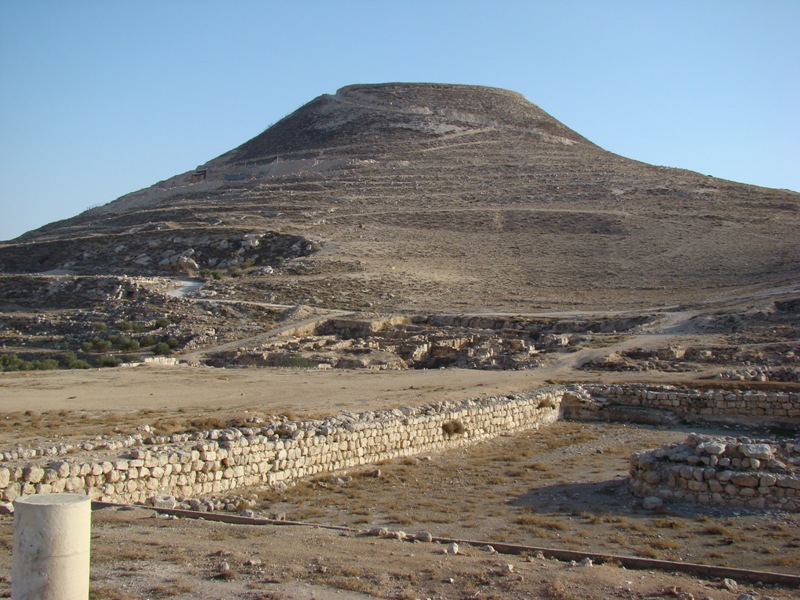
The Areopagus in Athens

January 14, 2011

On Paul’s 2nd Missionary Journey, he taught the Gospel at Athens, reasoning with those in the synagogues as well as in the market place. Acts 18:18-20 tells us of another teaching opportunity that arose:

Then certain Epicurean and Stoic philosophers encountered him. And some said, “What does this babbler want to say?” Others said, “He seems to be a proclaimer of foreign gods,” because he preached to them Jesus and the resurrection.  And they took him and brought him to the Areopagus, saying, “May we know what this new doctrine is of which you speak?  “For you are bringing some strange things to our ears. Therefore we want to know what these things mean.”

The word Areopagus means “Rock of Ares.” Ares is the the Greek god of war. Pagos is “rock.” The word Areopagus is used both with reference to the ruling council of Athens, as well as the place where the council met. Our photo shows the steps leading up to the Areopagus.
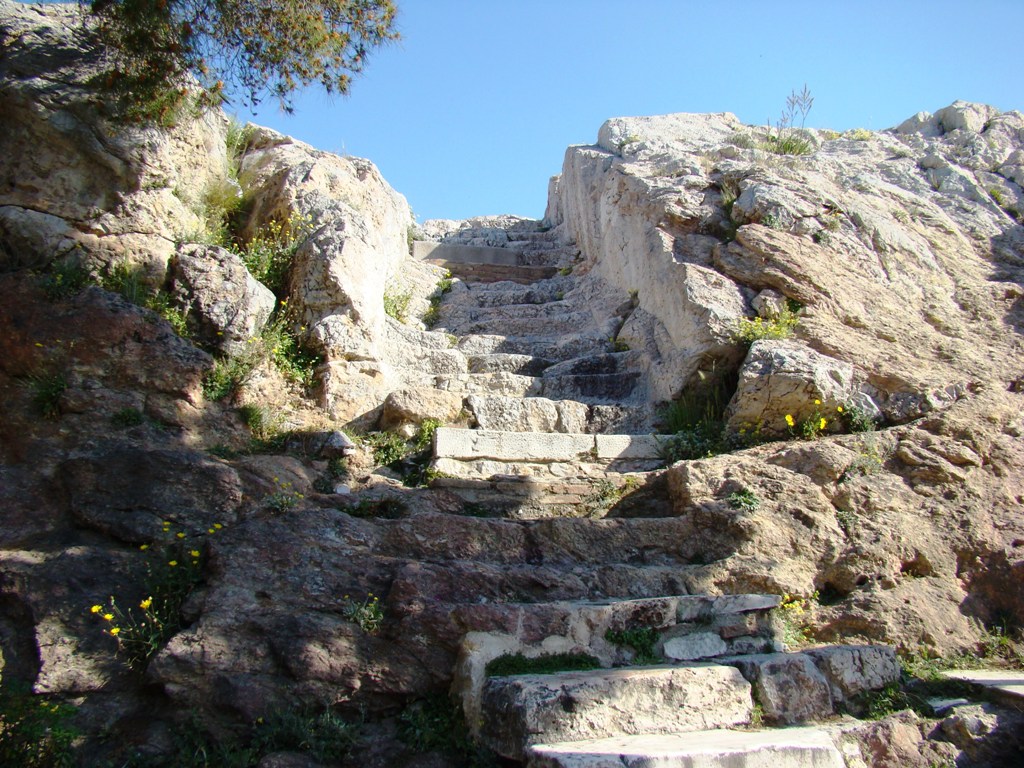
Steps leading up the the Areopagus in Athens. Photo by Leon Mauldin.

The Areopagus is also called “Mars Hill.” Mars was the Roman god of war. Photo below shows a few of my group on the top of the Areopagus. Bob Berry, center, quoted Paul’s sermon preached here (Acts 17).
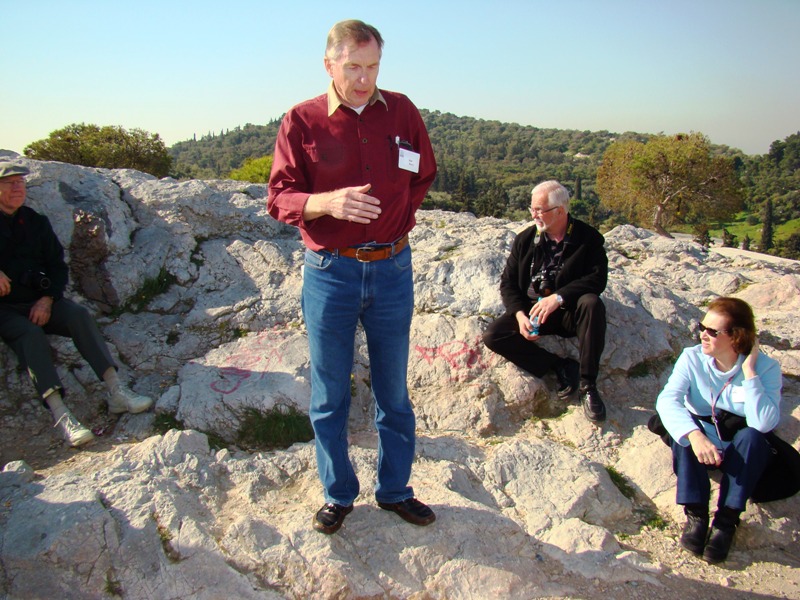
Areopagus. A few of our 2010 tour group. Photo by Leon Mauldin.

The Areopagus is composed of marble.  It is worn quite slick in places, so be careful of your footing if you have the occasion to visit.
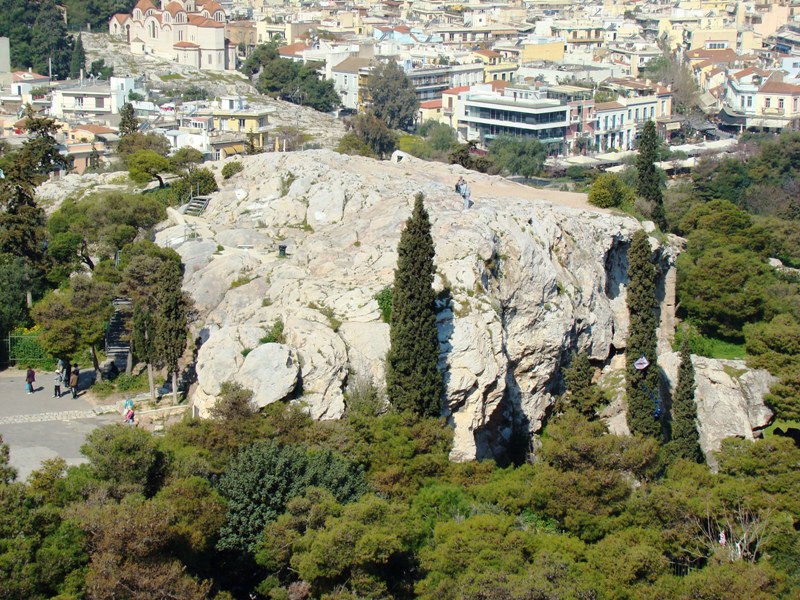
Areopagus in Athens. Photo by Leon Mauldin.

The shot above was taken from near the Parthenon.

Click on images for higher resolution.


Thutmose III, Name and Titles

January 13, 2011

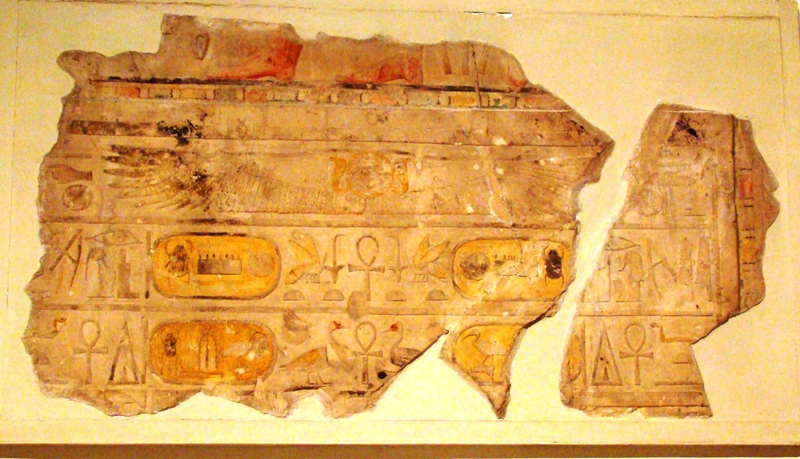
Today’s post features a relief with name and titles of Pharaoh Thutmose III.

Relief of Thutmose III, name and titles. Photo by Leon Mauldin. Boston Museum.

The accompanying informational sign at the Boston Museum explains,

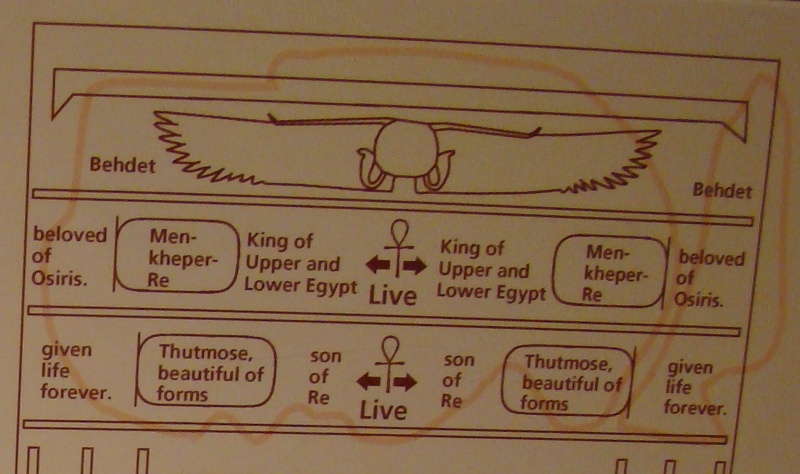
The full titulary of an Egyptian pharaoh contained five separate names. Two of the five names were enclosed in cartouches, or oval rings. The first was the prenomen, or accession name of the king, and the second was the nomen, or personal name. The prenomen (Men-kheper-Re) and nomen (Djehuty-mes, or Thutmose) of Thutmose III are carved on the painted relief above. It once formed the lintel of a doorway in the Dynasty 18 temple of Osiris at Abydos.

See diagram in photo below.

Diagram of Thutmose III name and title. Photo by Leon Mauldin.

Remember that this powerful Pharaoh would have been contemporary with Moses.

Click on images for higher resolution.


Victory Stele of Thutmose III

January 12, 2011

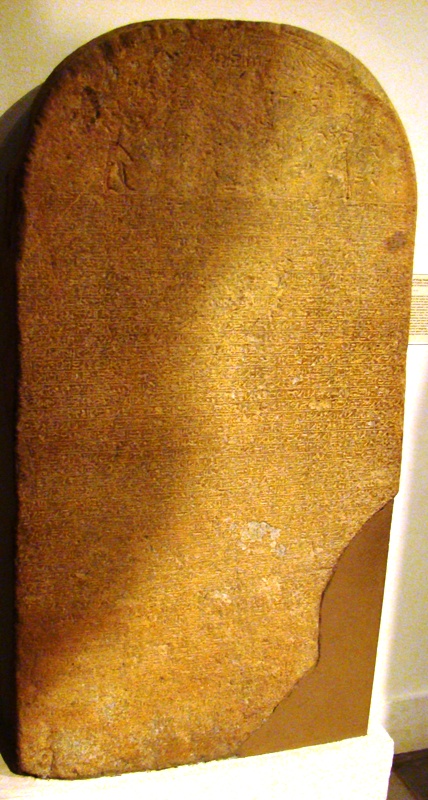
Today’s photo features the Victory Stele of Thutmose III, which was situated at Jebel Barkal in the Sudan. This location marked the extreme southern limit of the empire of this powerful Pharaoh. It has 50 lines of hieroglyphs, and includes praise of the king, his victorious conquest in Nahurin, an elephant hunt in Niy, and the Battle of Megiddo, which was referenced in our previous post.

Victory Stele of Thutmose III. Boston Museum. Photo by Leon Mauldin.

The remains of thirteen temples and three palaces have been uncovered at Jebel Barkal.


Thutmose III City Lists

January 11, 2011

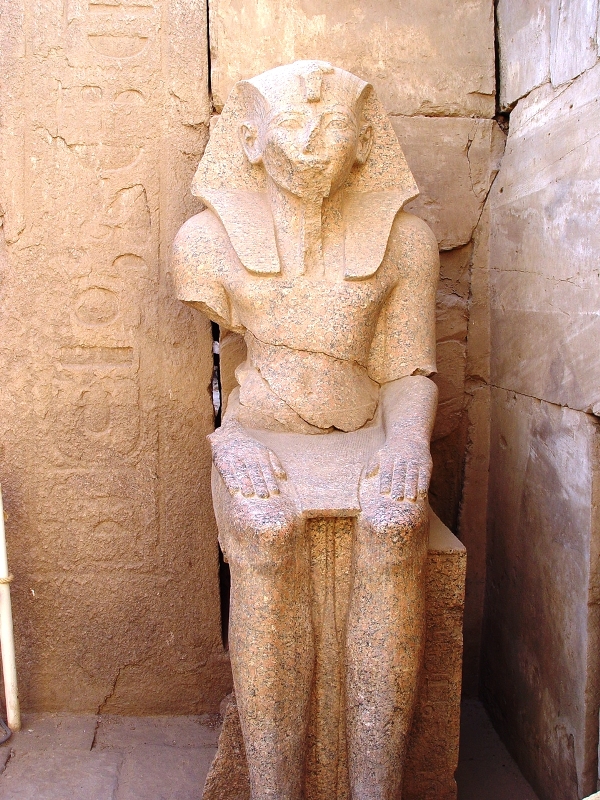
Thutmose III (ca. 1504-1450 BC) was a Pharaoh of the 18 dynasty. He was a powerful ruler who received tribute from as far away as Mesopotamia.

Thutmose III, seated by city list in Karnak. Photo by Leon Mauldin.

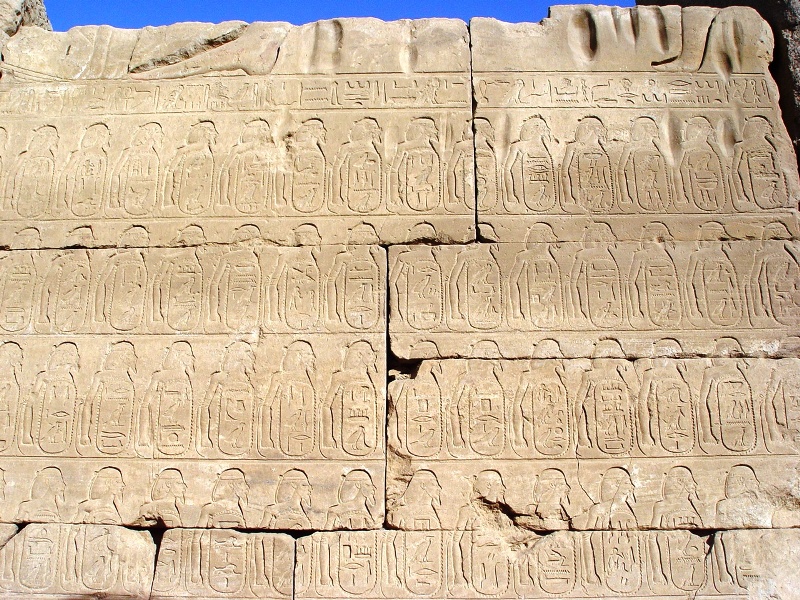
At Karnak in Egypt, Thutmose III left his listing of cities that he conquered in the Levant. Egyptian hieroglyphics list 119 place names in Canaan, Transjordan, Lebanon and Syria. Princes are depicted with hands tied behind their backs.  The rulers shown were trapped in Megiddo; when Thutmose III took the city after a seven month siege, he said it was the “capture of a thousand cities.”

Thutmose III City List. Canaanite princes were captured. Photo by Leon Mauldin.

Click on images for higher resolution.


Corinth, cont’d.

January 6, 2011

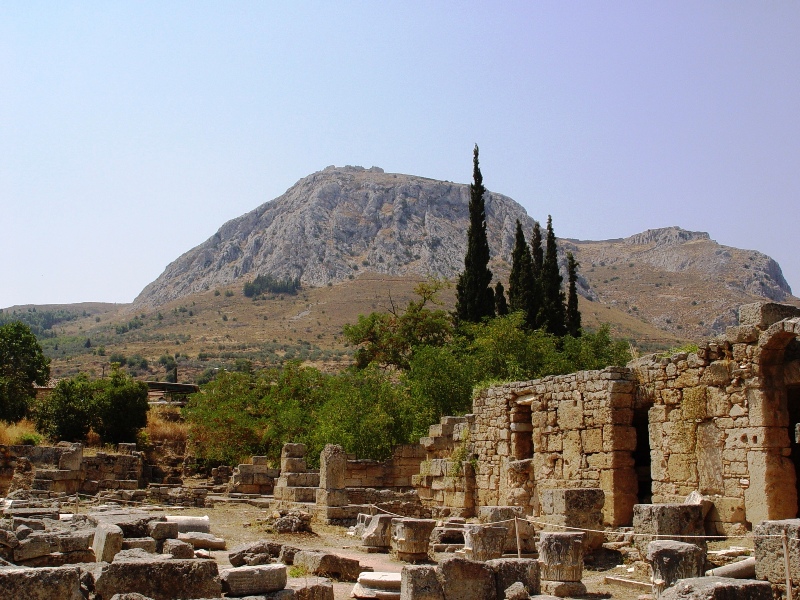
Acts 18:11 informs us that Paul remained in Corinth for a year and six months; in v. 18 we are informed that “Paul still remained a good while.” This was during Paul’s 2nd Missionary Journey. Paul was a tent maker, as were his fellow-workers, Aquila and Priscilla, that great husband-wife team (Acts 18:3). Our photo below features the ruins of some of the many shops that were in ancient Corinth.  It is not difficult to imagine these biblical characters working in one of these locations.

Shops at Corinth. Acrocorinth in background. Photo by Leon Mauldin.

The Acrocorinth is in the background. We have referenced this in some of the previous posts.

Of course during Paul’s stay at Corinth here his purpose was that of preaching the Gospel (Acts 18:11).  But he worked at his trade to help with the necessary financial support. Incidentally, these structures shown in our photo were the west shops of the city.

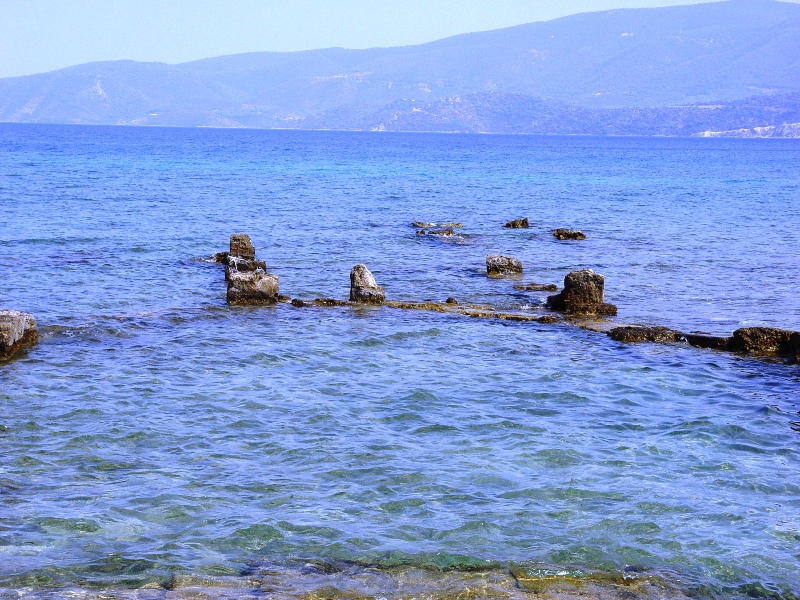
When Paul left Corinth, Aquila and Priscilla traveled with him, accompanying him as far as Ephesus, while Paul journeyed on to Jerusalem. We learn in Acts 18:18 that in their departure from Corinth they used the port of Cenchrea, shown in our photo below.

Cenchrea, Corinth's seaport. Photo by Leon Mauldin.

We learn from Romans 16:1 that there was a congregation of Christians there, as Paul makes special mention and recommendation of Phoebe, “a servant of the church in Cenchrea.” It was at this time during Paul’s 3rd Missionary Journey that he wrote the Christians at Rome from Corinth.  As Phoebe was traveling there to Rome, Paul asked, “that you may receive her in the Lord in a manner worthy of the saints, and assist her in whatever business she has need of you; for indeed she has been a helper of many and of myself also” (Romans 16:2).

The landscape in our Cenchrea photo would be what Christians such as Phoebe would have seen, as well as Paul and his companions.


Temple of Apollo at Corinth

December 28, 2010

The church at Corinth, which received two of the New Testament letters, 1 & 2 Corinthians, was situated in a world of sin and degradation.  By “church,” I’m not referring to the place that they met, but rather the people who had turned from their lives of sin and had been washed, sanctified, and justified “in the name of the Lord Jesus and by the Spirit of our God” (1 Cor. 6:9-11).

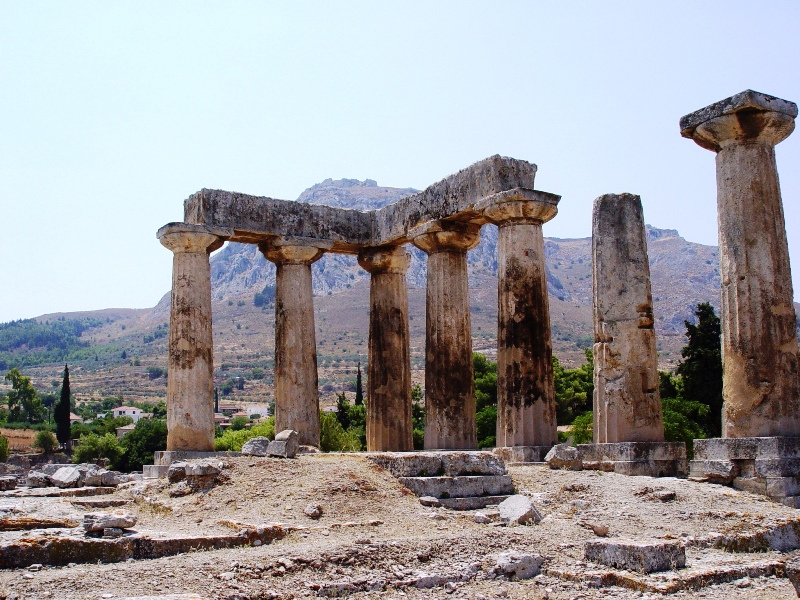
A visual example of the idolatry so prevalent at Corinth can be seen in our photo, which shows the ruins of the temple of Apollo.

Temple of Apollo at Corinth. Photo by Leon Mauldin.

Regarding this site BAS says,

The Temple of Apollo at Corinth was 700 years old by Paul’s time. On the hill directly overlooking the Roman city’s main forum, its sturdy Doric columns served as a dramatic reminder of Corinth’s ancient grandeur. But the temple was already in ruins; to Paul it would have served merely as a sermon illustration of the impotence of the Greeks’ “pagan” gods.

As noted above, the temple was in ruins in the days of Paul, but the centuries of pagan idolatrous influence was still very much there.

The Acrocorinth may be seen in the background.  It was there that the temple of Aphrodite was situated in ancient times.

The Apollo temple originally had 38 columns of the Doric order.  Today seven are standing.

Click on image for higher resolution.


The Diolkos At Corinth

December 23, 2010

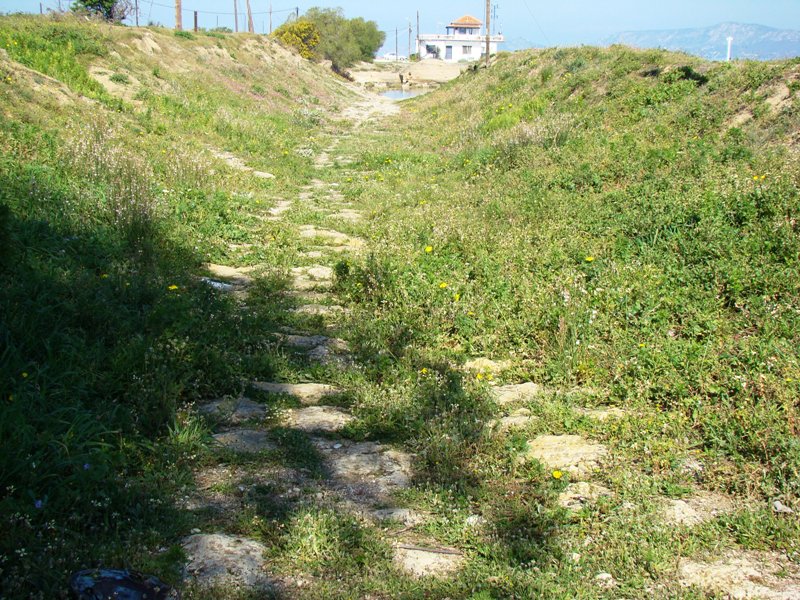
In our previous post we referenced the canal that cuts through the Isthmus of Corinth connecting the Ionian Sea with the Aegean Sea.  In ancient times there was a paved road that stretched across the isthmus, called the diolkos, which enabled cargo and smaller ships to be hauled overland, thus avoiding the dangerous circumnavigation of the Peloponnese.

Our photo shows a portion of the western end of the diolkos. To the right and out of view, the canal runs parallel.

Diolkos at Corinth. Photo by Leon Mauldin.

The BAS has this information re: this site in their collection, The Biblical World in Pictures commenting on their photo taken in the same area as mine above:

In Paul’s day a stone-paved sledway, called the Diolkos, was used to haul ships and their cargoes across the isthmus. At both ends of the road the pavement continued down beneath the waterline, allowing the shallow-draft ships to be floated onto and off of the sleds. The sleds were then pulled out of the water and across the isthmus by mule-power.

This view of the Diolkos is near the western end, looking beyond to the Gulf of Corinth (and the mountains along its northern coast sheltering the oracle shrine of Apollo at Delphi). At the right can be seen the western outlet of the modern canal. The stone pavement of the Diolkos clearly shows the ruts formed by sled runners over centuries of use. Corinth, of course, controlled the Diolkos traffic. Moreover, since ship crews and passengers using this route had to leave their vessels temporarily at Corinth anyway, they had less reason to make an additional port-call at Athens’ harbor on the Piraeus. Thus, many more travelers of the Roman era passed through Corinth than through Athens.

The diolkos was paved with hard limestone.

Click on image for higher resolution.


More on Corinth

December 18, 2010

Our last post featured a photo of the Erastus inscription. We referenced the biblical text of Romans 16:23.  Additionally, Erastus is mentioned in two other passages.  In Acts 19:22 we read, “And having sent into Macedonia two of his helpers, Timothy and Erastus, he himself stayed in Asia for a while” (ESV).  Lastly in, 2 Tim. 4:20, Paul observes, “Erastus remained at Corinth, and I left Trophimus, who was ill, at Miletus” (ESV).

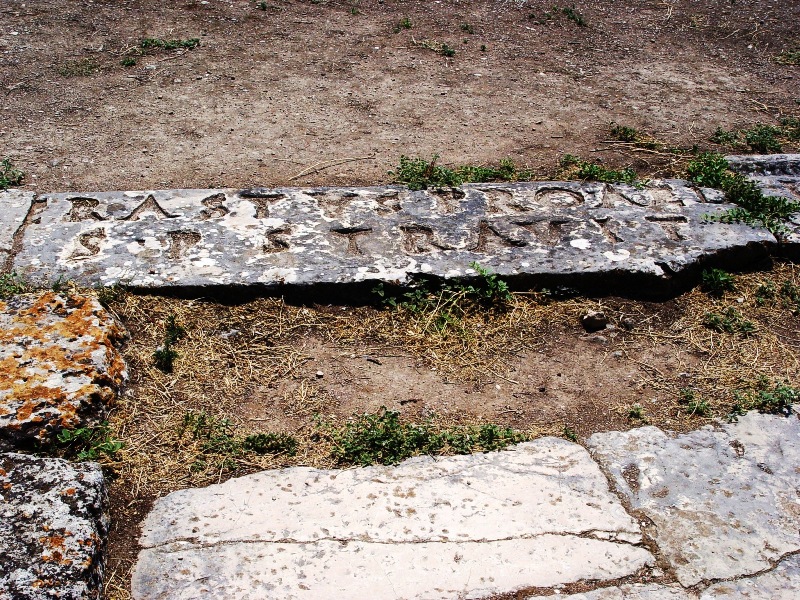
Here is a closer view of the inscription:

Closeup of Erastus Inscription at Corinth. Photo by Leon Mauldin.

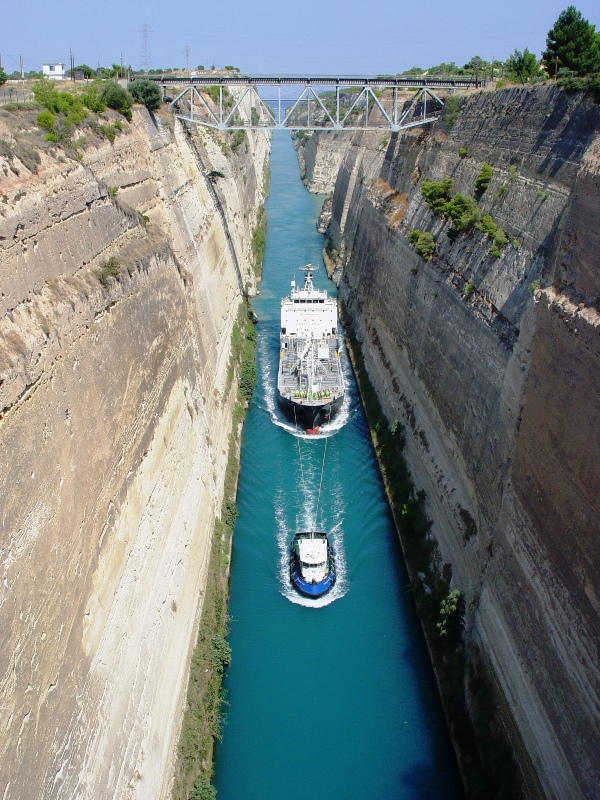
The narrowest point of the isthmus of Corinth is only 4 miles wide.  A canal was engineered and completed between 1882 and 1893.  Nero (A.D. 67) had the idea of building a canal at that exact route utilized by the modern engineers.  He planned to use 6,000 Jewish prisoners as his work force, but the idea was abandoned.

Canal at Corinth. Photo by Leon Mauldin.

The canal separates the Peloponnesian peninsula from the Greek mainland.  It connects the Gulf of Corinth with the Aegean Sea.

Click on images for higher resolution.  More to come on Corinth.


The Erastus Inscription

December 14, 2010

Paul wrote the New Testament letter of Romans from Corinth, 3rd Missionary Journey.  In Romans 16:23 we read, “Gaius, my host and the host of the whole church, greets you. Erastus, the treasurer of the city, greets you, and Quartus, a brother.”

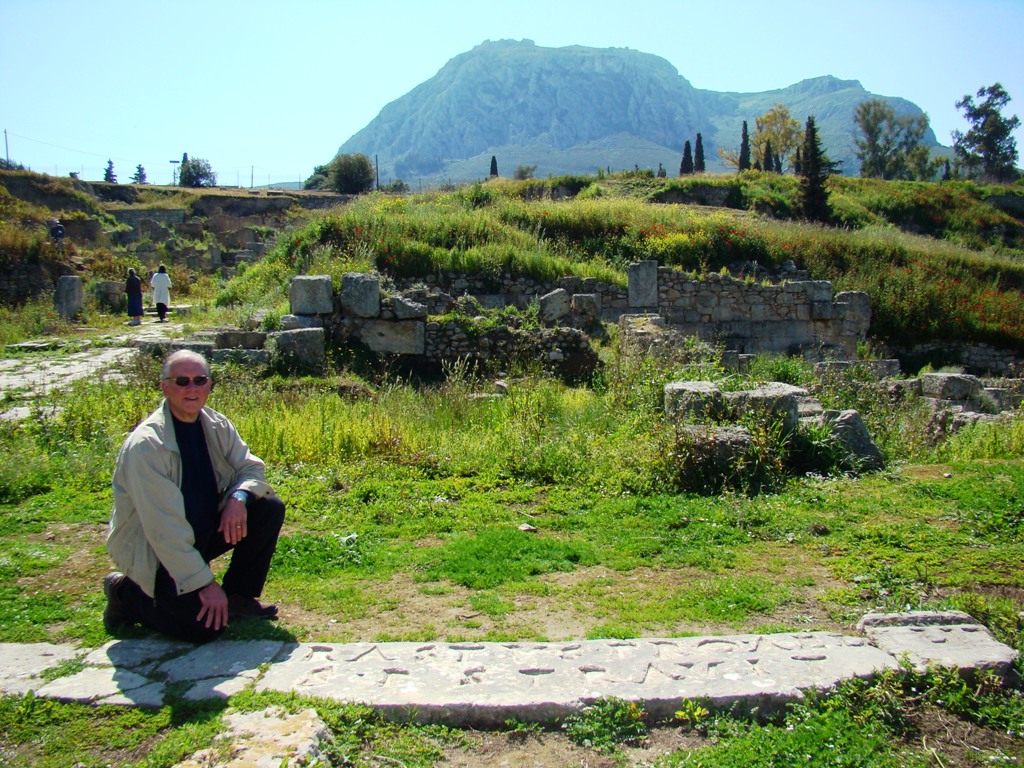
In 1929 an inscription was discovered at Corinth naming an Erastus as the one who paid for the paving of the street.  The inscription reads “ERASTVS. PRO. AED. S. P. STRAVIT” which is translated, “Erastus in return for his aedilelship laid [the pavement] at his own expense.” It would seem that the Erastus of the inscription is the same as the one mentioned in the biblical text.

Leon Mauldin at the Erastus Inscription. Photo by Johnny Felker.

Click on image for higher resolution.


Herodium, another view

December 9, 2010

Our previous post showed an aerial view of Herod’s fortress, the Herodium.  Today’s photo offers a view from ground level.

Herodium. Photo by Leon Mauldin.

The Herodium can easily be seen from nearby Bethlehem.

Herod is known for his atrocity of killing the baby boys in Bethlehem from age two and under.  That is consistent with what is known of him from secular history.

Click on image for higher resolution.