March 14, 2014
It is only in the last two years that photos have been permitted in the Israel Museum in Jerusalem. There are so many wings with so many artifacts, it is helpful to have some sort of guideline to serve as a starting point to make the most of a visit to the museum.
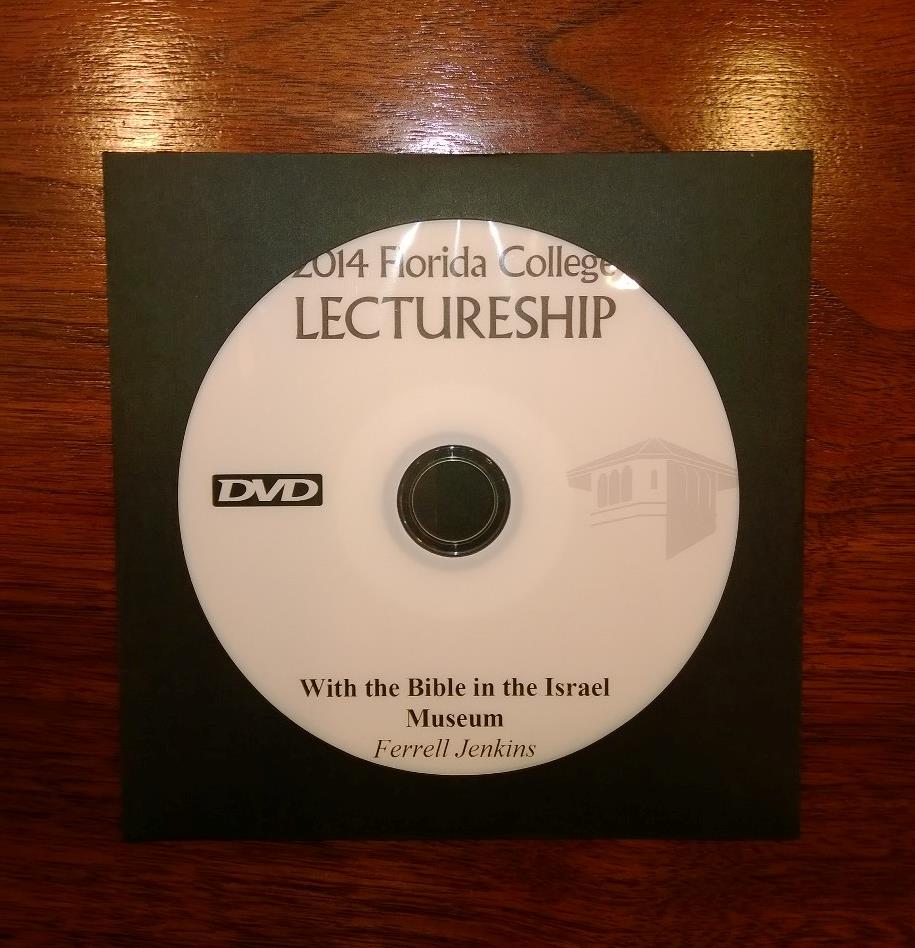
Ferrell Jenkins delivered a lecture entitled, “With the Bible in the Israel Museum” during the 2014 lecture series at Florida College, Temple Terrace, FL. In the lecture he selectively (because of so much to choose from) makes use of recent photos to deal with artifacts beginning with time of the patriarchs, continuing through Old Testament history (United Kingdom, Divided Kingdom, Captivity, Persian Period) and concluding with the Roman and Early Christianity. Included are numerous examples from various sites of Israel’s propensity to engage in idolatrous worship. Also there is insightful information on burial customs for different periods.
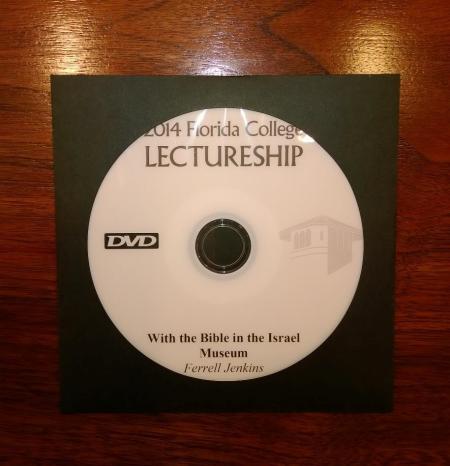
Ferrell Jenkins’ DVD on biblical artifacts in the Israel Museum. Photo by Leon Mauldin.
I recommend the DVD both as helpful to prepare for a visit to the museum, as well as to review and restudy if you have had opportunity already to go to.
You can place your order here with the FC Bookstore. Use the search box to enter keywords. Cost is $5.00 plus shipping.
0.000000
0.000000
 2 Comments |
  Archaeology, Bible History and Geography, Bible Study, Israel, New Testament, Old Testament, photography, Resources, Travel |
  Permalink
 Posted by Leon Mauldin
February 12, 2014
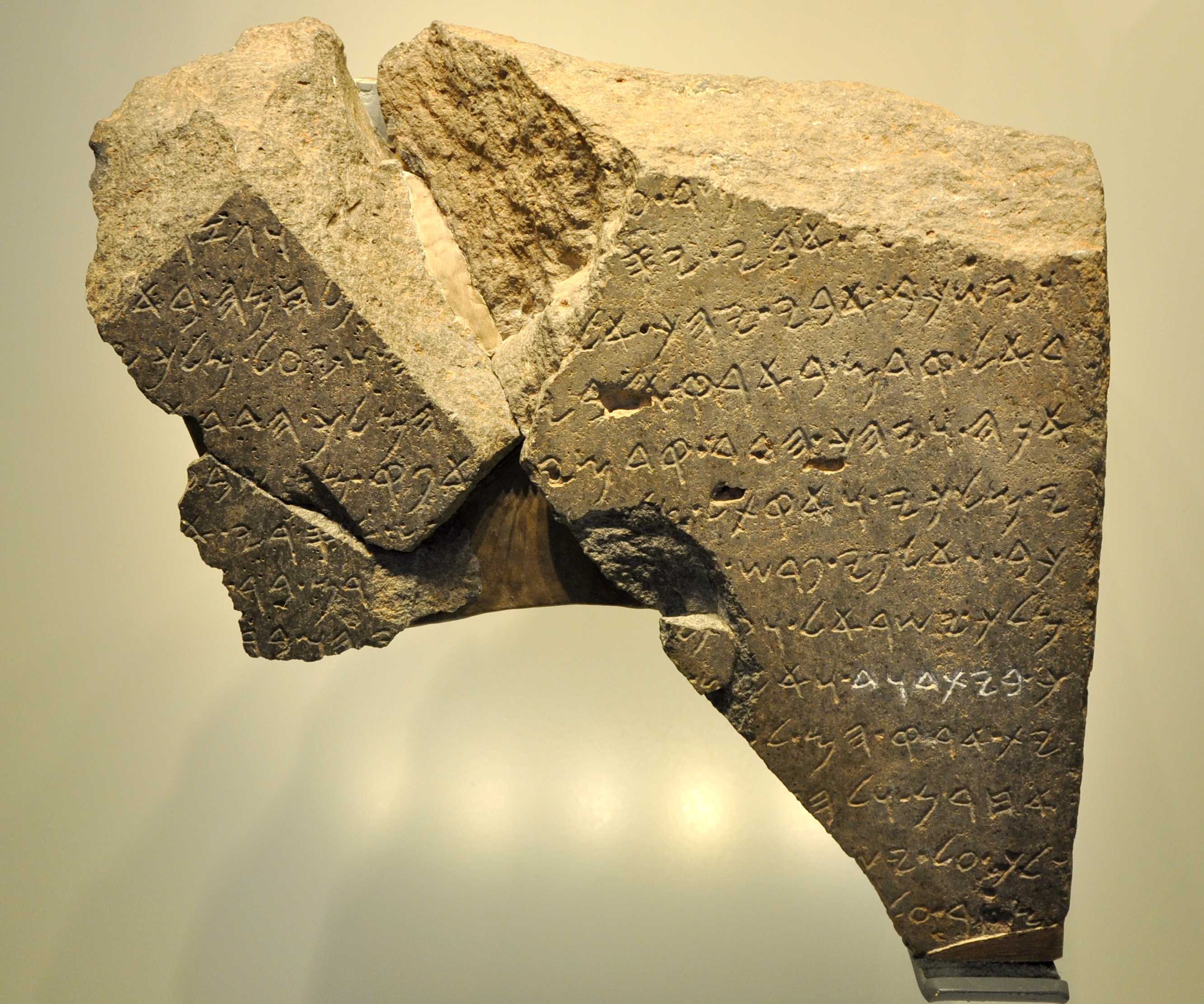
The current issue of Biblical Archaeology Review has an article entitled, “Archaeology Confirms 50 Real People in the Bible,” by Lawrence Mykytiuk. The first in his list is King David, whose name was found in the Tel Dan Stela, found in Tel Dan in July, 1993. Mykytiuk writes:
According to the Bible, David ruled in the tenth century B.C.E., using the traditional chronology. Until 1993, however, the personal name David had never appeared in the archaeological record, let alone a reference to King David. That led some scholars to doubt his very existence. According to this speculation David was either a shadowy, perhaps mythical, ancestor or a literary creation of later Biblical authors and editors. In 1993, however, the now-famous Tel Dan inscription was found in an excavation led by Avraham Biran. Actually, it was the team’s surveyor, Gila Cook, who noticed the inscription on a basalt stone in secondary use in the lower part of a wall. Written in ninth-century B.C.E. Aramaic, it was part of a victory stele commissioned by a non-Israelite king mentioning his victory over “the king of Israel” and the “House of David.” [See BAR 20:02, Mar-Apr 1994] Whether or not the foreign king’s claim to victory was true, it is clear that a century after he had died, David was still remembered as the founder of a dynasty.
This past October I had the occasion to photograph this important stela, which is housed in the Israel Museum in Jerusalem.
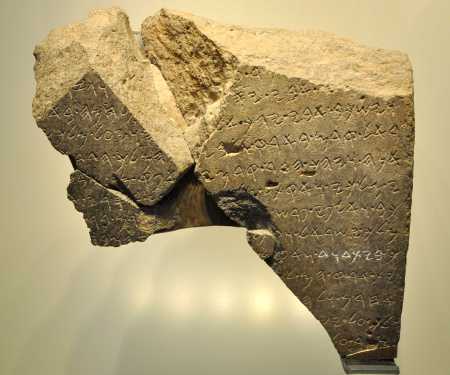
“House of David” Inscription. Discovered 1993. Photo by Leon Mauldin
Gary Byers suggests that the stela “most likely memorializes the victory of Hazael, king of Aram, over Joram, king of Israel, and Ahaziah, king of Judah, at Ramoth Gilead recorded in 2 Kings 8:28–29” (Bible and Spade 16:4, p. 121).
For more information on the House of David see Ferrell Jenkins’ post illustrating Isaiah 7 here.
Click image for larger view.
0.000000
0.000000
2 Comments | Archaeology, Bible History and Geography, Bible Study, Dan, Israel, Old Testament, photography, Travel | Tagged: House of David Inscription | Permalink
Posted by Leon Mauldin
September 28, 2013
I recently received a question from a friend, which says in part:
It concerns the crossing of the Read Sea. There is an awful lot of talk about the “traditional” Red Sea crossing maps versus the so-called “archaeological findings” purportedly found at the Gulf of Aqaba.
. . . However, some of our brethren have begun using maps and pictures that show what is believed to be possibly the “real Mt. Sinai” with charred rock covering its cap, a “split rock” in the wilderness, chariot wheels, etc… (I’m not buying it.) All of these things I see look like the work of Ron Wyatt, but all sorts of people have these things on their internet sites.
. . . All of that said, I was wondering if you had any material or resources dealing with the subject head on. I do not plan on making this an issue… nor do I plan on bringing anyone else’s name into the mix. I would just like to be able to give a “ready defense” if I am ever called upon. I’d greatly value your input on the matter. Thank you.
Others more qualified that I have dealt with the claims of Mr. Wyatt. As a starting point I can recommend the following sources: Ferrell Jenkins has an article entitled, “Pharaoh’s Chariot Wheels and Other Things that Won’t Float — Examining the Claims of the Late Ron Wyatt ,” that you can access
here, plus another article entitled, “Pseudo Archaeologists”
here. These articles have numerous related links for further reading. Additionally I would recommend Gordan Franz’s site,
Life and Land,
here. Use the search box. He has several entries under “Cracked Pot Archaeology.” The use of caution in using Mr. Wyatt’s material/claims would be prudent.
While no one can be certain of the exact location of Israel’s crossing. the best evidence would be somewhere along the Suez.
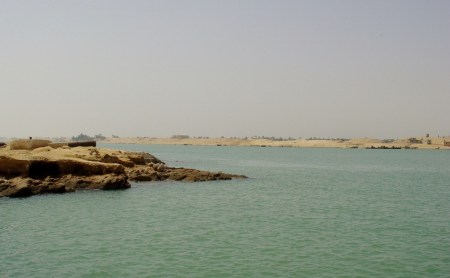
From Sinai looking across Suez to Egypt. Photo by Leon Mauldin.
I took the above photo in 2003, having crossed the Suez. We are standing on the Sinai side looking back across Egypt.
I personally conclude that the traditional Mt. Sinai (Jebel Musa) best fits the biblical criteria.
Click photo for larger view.
0.000000
0.000000
1 Comment | Archaeology, Bible History and Geography, Bible Study, Biblical Interpretation, Egypt, Old Testament, photography, Resources, Sinai, Travel | Permalink
Posted by Leon Mauldin
May 24, 2013
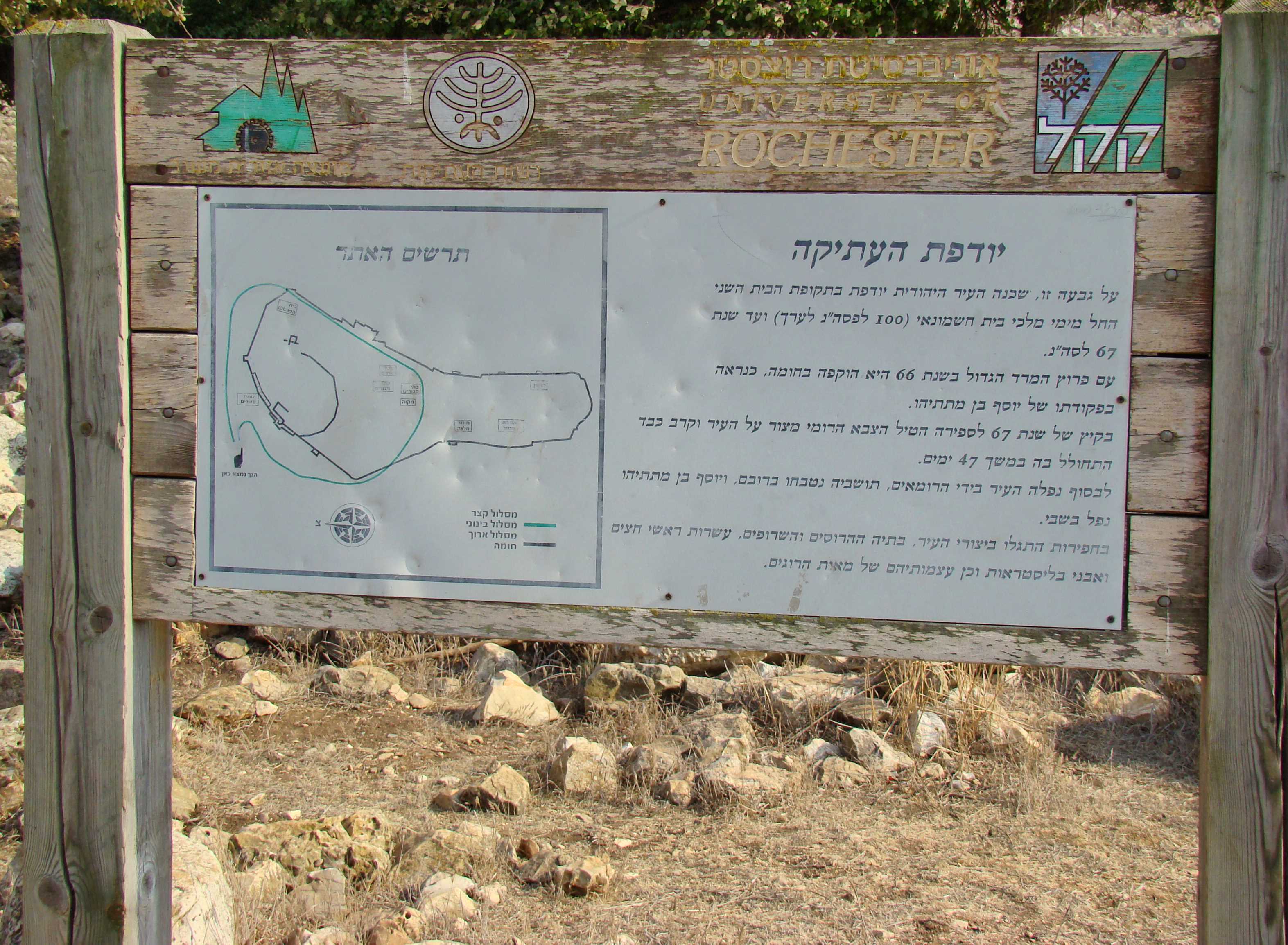
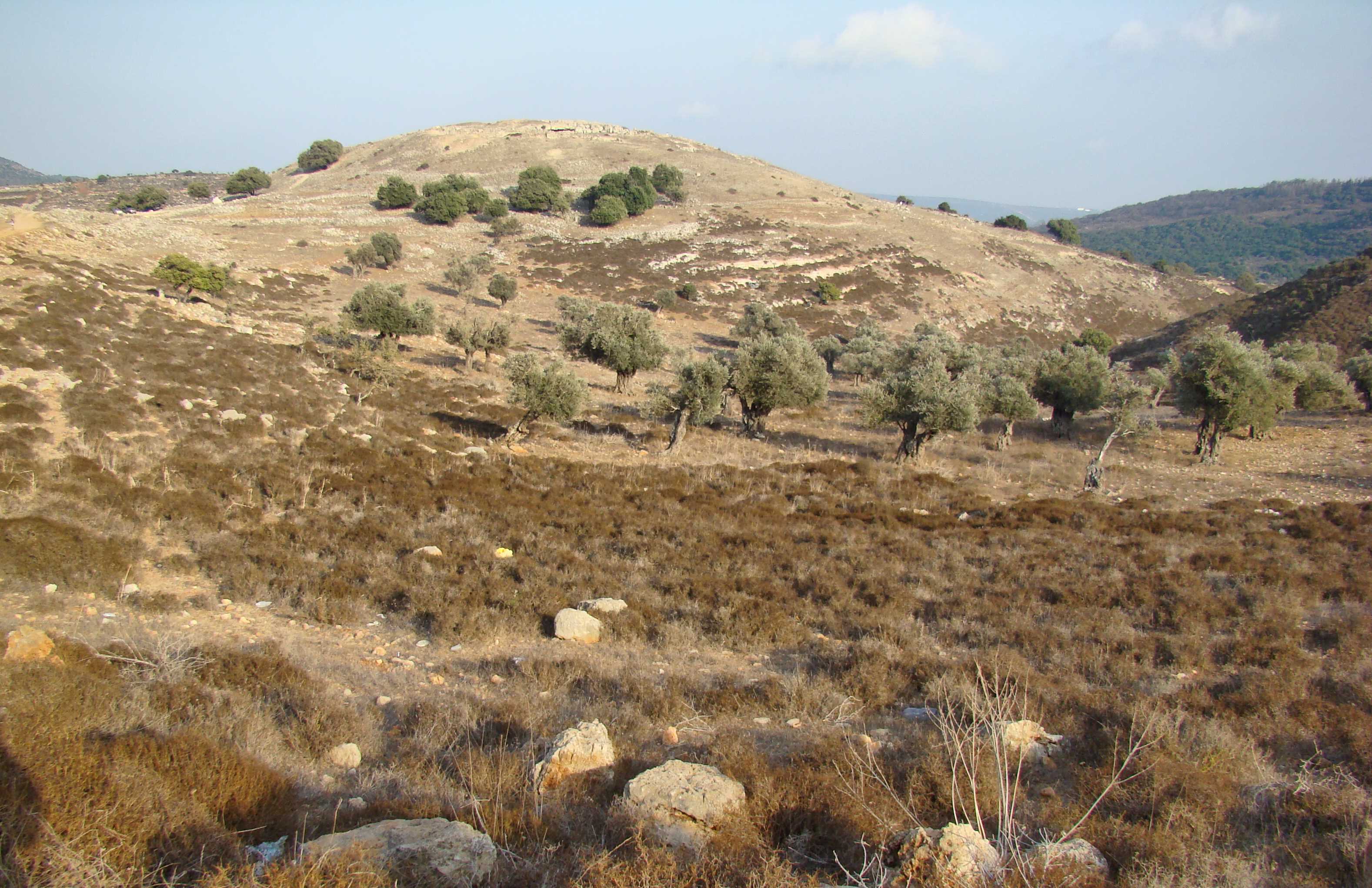
Yodfat, site of Josephus’ surrender to Vespasian’s Roman forces, was unoccupied after its destruction in AD 67. This Jewish Galilean city was considered to be very significant archaeologically, as it gives a glimpse of Jewish life just ca. 37 years after the death of Jesus. Beginning in 1993 Yodfat was excavated by a team of archaeologists led by the University of Rochester and the IAA. W.S. Green, educational director of the archaeological team, described Yodfat as a “pristine site.”
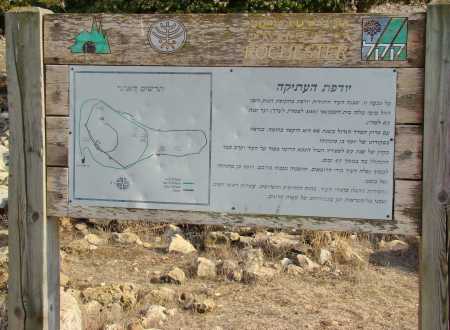
Yodfat info sign, in Hebrew. The University of Rochester led in the excavation. Photo by Leon Mauldin.
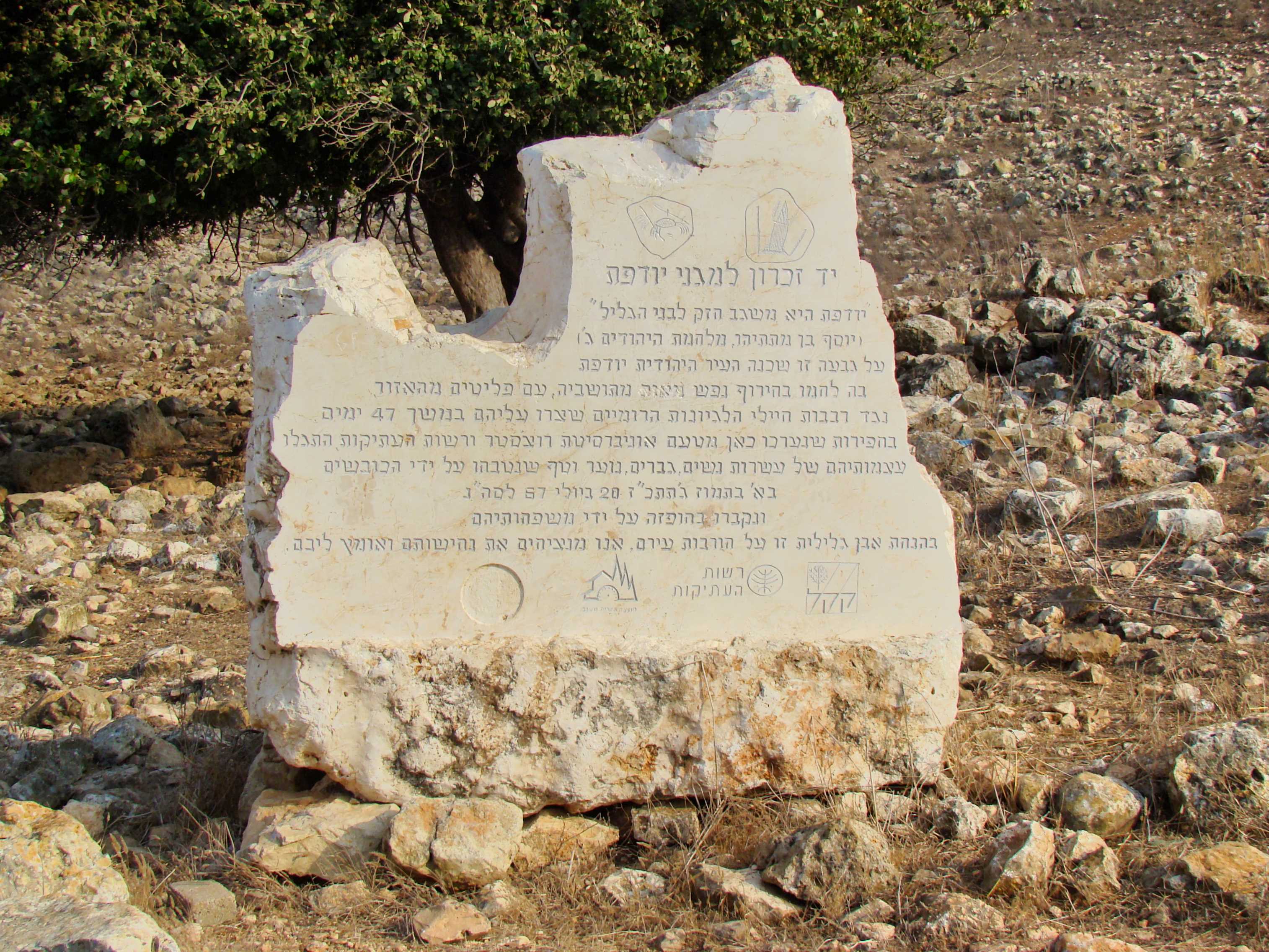
On the site is a memorial to the defenders of Yodfat.
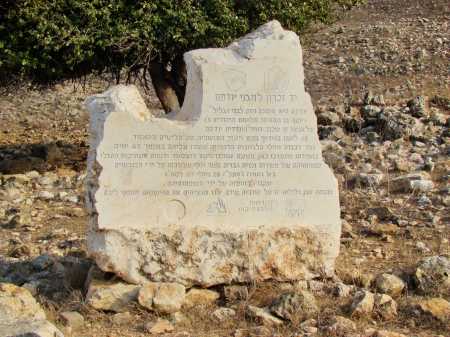
Onsite Memorial to Defenders of Yodfat. Photo by Leon Mauldin.
There were numerous caves at Yodfat. Inhabitants hid in locations such as these when the Romans advanced.
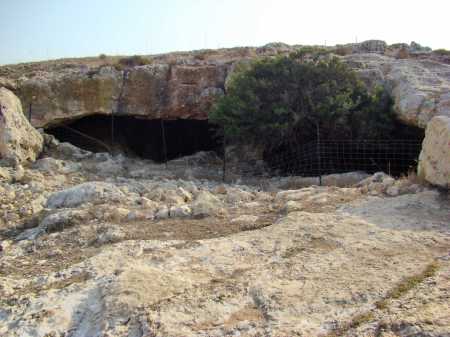
Natural Caves at Yodfat. Photo by Leon Mauldin.
The picture emerging at Yodfat is of a devout community that clung to Jewish observance despite its poverty and distance from the center of Jewish worship, the Temple in Jerusalem, says University of Rochester religion professor William Scott Green, educational director of the archaeological team (Bible and Spade Volume 10. 1997, p.66).
This is interesting in view of the fact that many of the Jewish Galilean cities were an admixture of Judaism and paganism.
Excavations have unearthed numerous stoneware pots and mikvaot, or ritual baths. Both items indicate that the Galilee Jews of Yodfat observed stringent laws regarding ritual purity, a dominant concern of Temple Judaism. Stoneware, unlike the more porous earthen pottery, was used by devout Jews for eating because they believed it did not transmit ritual impurity, notes Green. Ritual baths, while expensive and difficult to build, were constructed inside a number of Yodfat homes, even though the town was not particularly wealthy and other architectural embellishments were lacking.
The use of Jewish coins bereft of Roman idols, evident in the types of money unearthed at Yodfat, was another symbol of ordinary piety (ibid.67).
Click on images for higher resolution.
1 Comment | Archaeology, Bible History and Geography, Bible Study, Israel, New Testament, photography, Travel | Tagged: Yodfat | Permalink
Posted by Leon Mauldin
May 22, 2013
Yodfat (also Jotapata, Iotapata, Yodefat) was the site of a 47 day siege in AD 67 by Roman forces led by General Vespasian and his son Titus (both of whom would later be emperors). It is said that this was the second bloodiest battle of the Jewish revolt. The historian Josephus chronicled the siege. He was at that time the commander of the Jewish forces. (See The Wars of the Jews, III.7-8). The Jewish forces were killed, some died of suicide; the Romans sold the women and children into slavery.
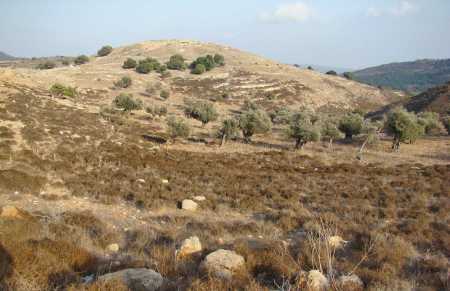
Site of ancient Yodfat. Photo by Leon Mauldin.
This site gave archaeologists what can be a rare opportunity; it was never resettled or built over after its destruction in AD 67.
Click on image for higher resolution.
1 Comment | Archaeology, Bible History and Geography, Bible Places, Bible Study, Israel, New Testament, photography, Travel | Tagged: Jodfat | Permalink
Posted by Leon Mauldin
October 9, 2012
We read in Joshua 10:29,30:
29 Then Joshua and all Israel with him passed on from Makkedah to Libnah, and fought against Libnah. 30 The LORD gave it also with its king into the hands of Israel, and he struck it and every person who was in it with the edge of the sword. He left no survivor in it. Thus he did to its king just as he had done to the king of Jericho.
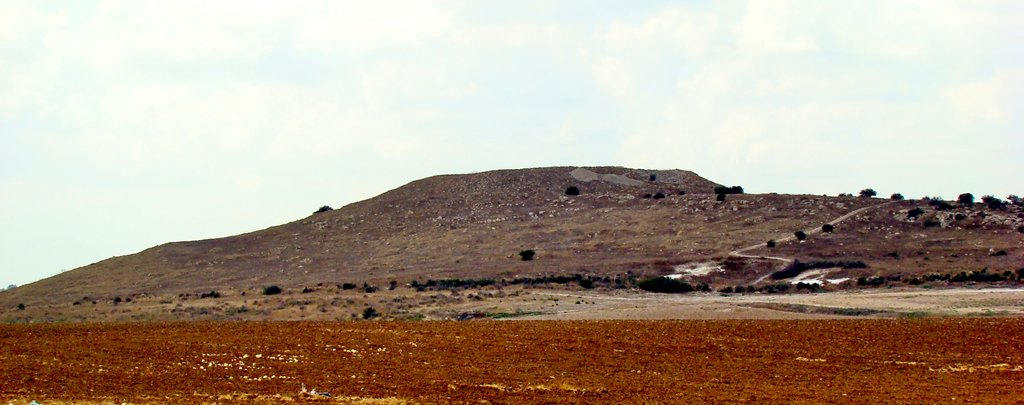
We had the occasion last year to visit Tel Burna, in Israel’s Shephelah, a location which many believe to be biblical Libnah.
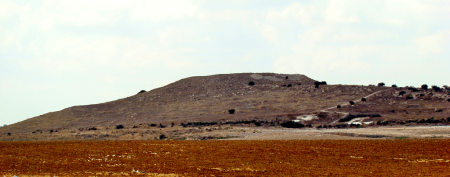
Tel Burna, believed to be biblical Libnah. Photo by Leon Mauldin.
The Tel Burna Excavation Project is devoted to this site and may be viewed here.
Another biblical reference to Libnah is found in 2 Kgs. 19:8, contextually speaking of the Assyrian invasion of Judah, 701 BC: “Then Rabshakeh returned and found the king of Assyria fighting against Libnah, for he had heard that the king had left Lachish.”
Leave a Comment » | Archaeology, Bible History and Geography, Bible Study, Israel, Old Testament, photography, Travel | Tagged: Libnah, Tel Burna | Permalink
Posted by Leon Mauldin
September 13, 2012
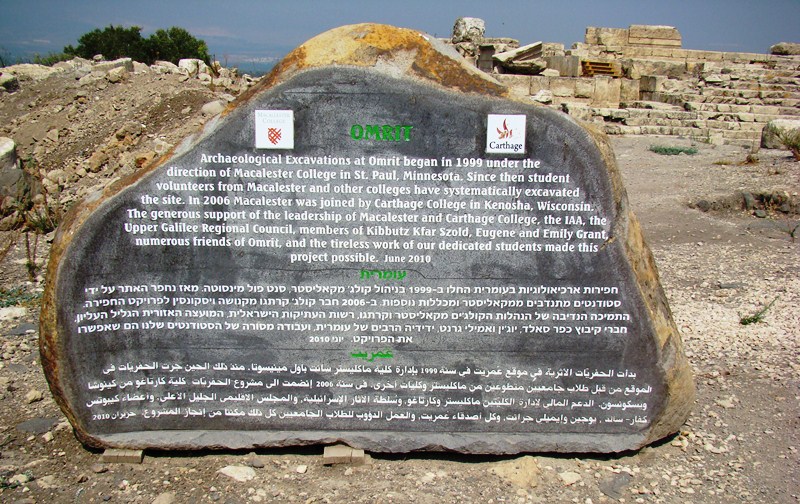
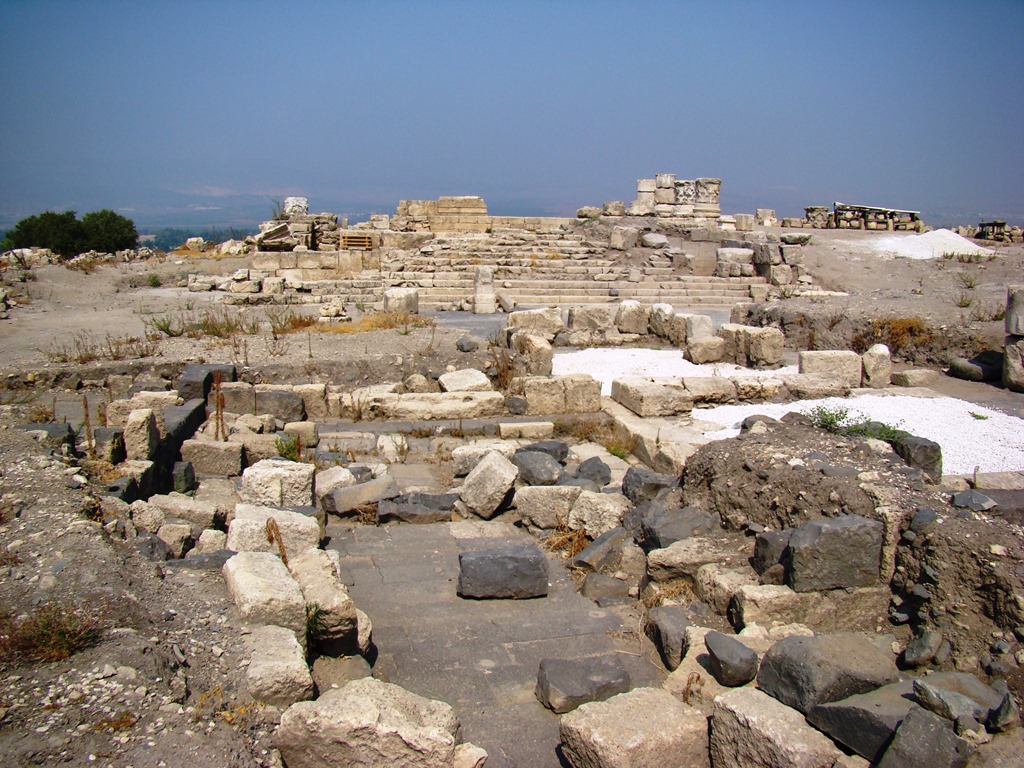
Archaeologists have determined there were three building phases at Omrit: first, the temple built by Herod the Great, second, the temple built probably by Trajan (AD 98-117), and third, an industrial complex to the north constructed in the Byzantine period.

Entrance to Omrit. Photo by Leon Mauldin.
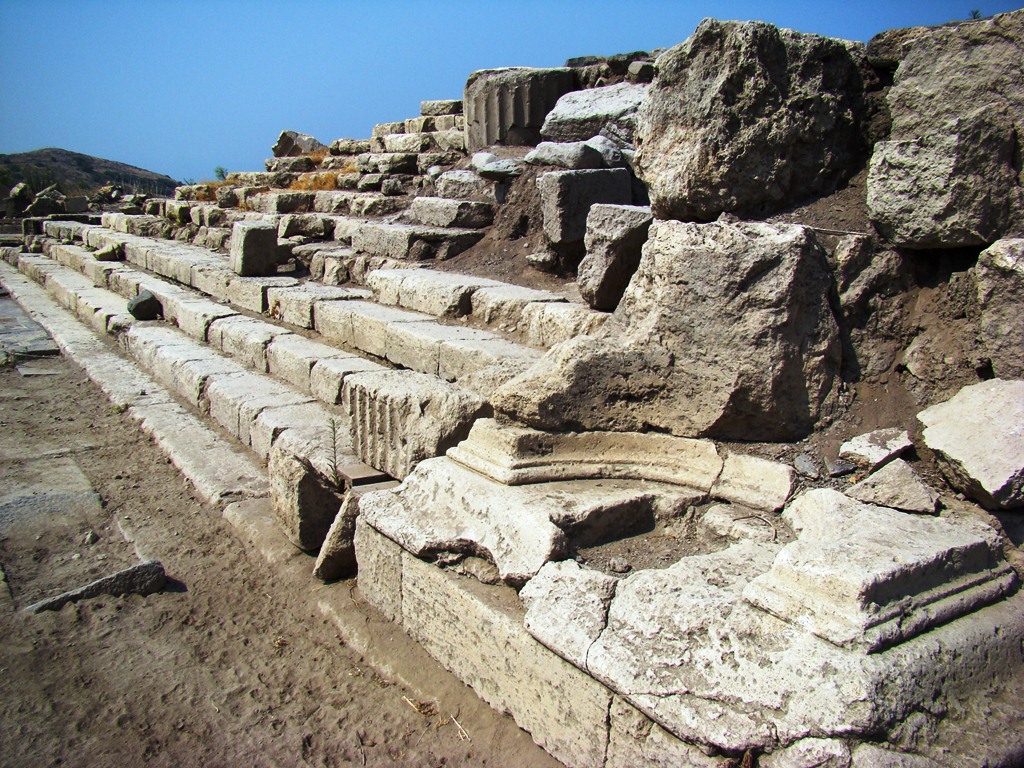
Here you can see the steps leading up to the temple. This site has been identified as a location for Imperial Cult Worship.

Steps to Imperial Temple at Omrit. Photo by Leon Mauldin.
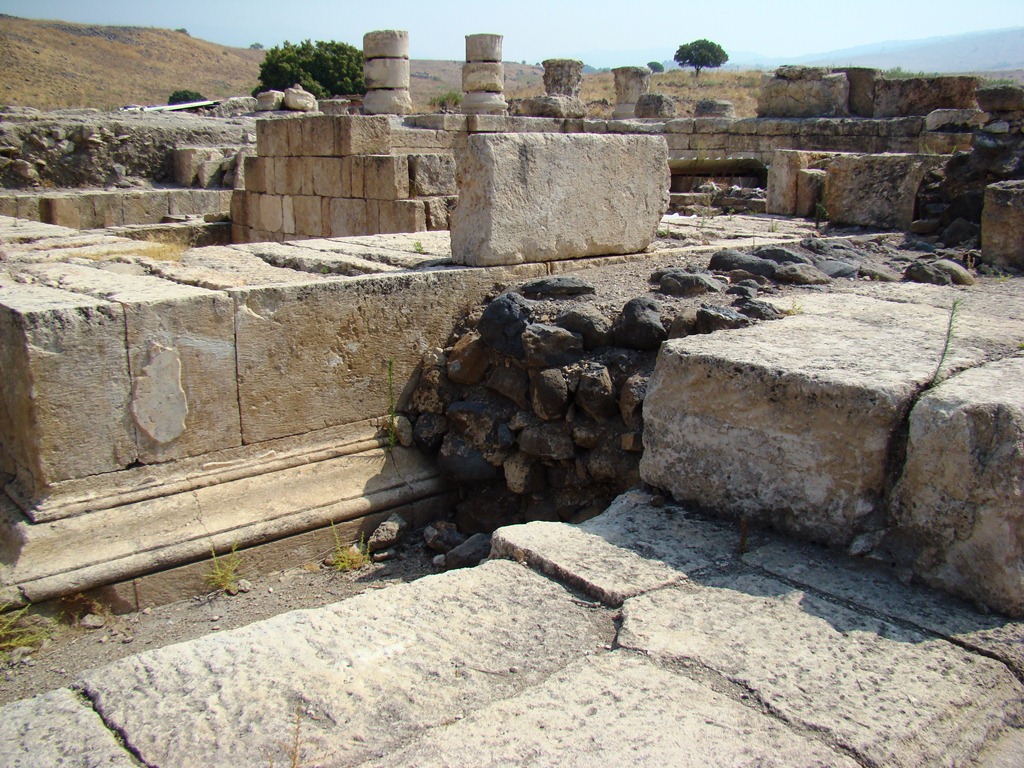
This photo shows the southwest corner of the temple. The large stones horizontally placed at center have been identified as Herodian. Herod was a politician and he overtly courted the favor of the Emperor Augustus.

Section of Herodian stones in Omrit Temple. Photo by Leon Mauldin.
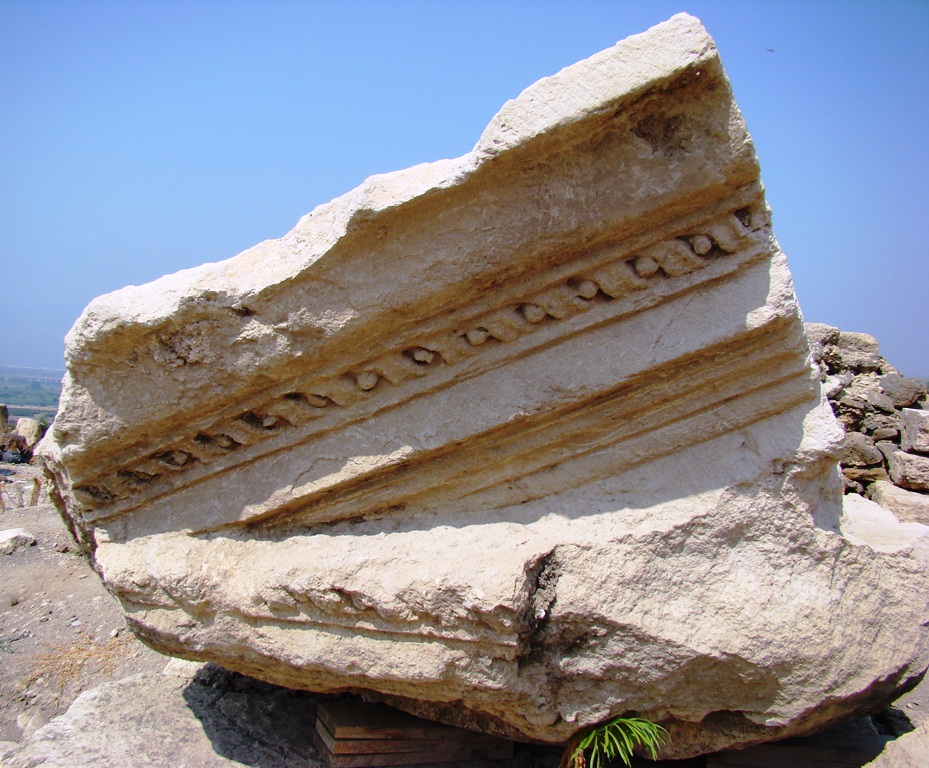
The site abounds with interesting architectural fragments.
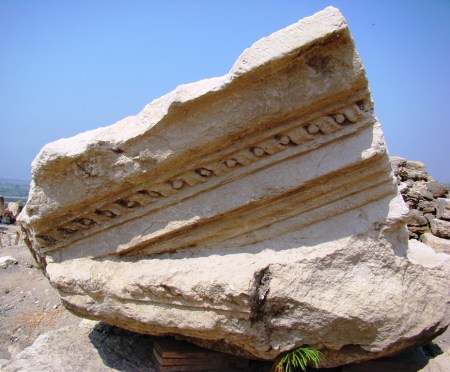
Architectural fragment at Omrit. Photo by Leon Mauldin.
Click on images for larger view.
1 Comment | Archaeology, Bible History and Geography, Bible Study, Israel, New Testament, photography, Roman Empire, Travel | Tagged: Omrit | Permalink
Posted by Leon Mauldin
September 11, 2012
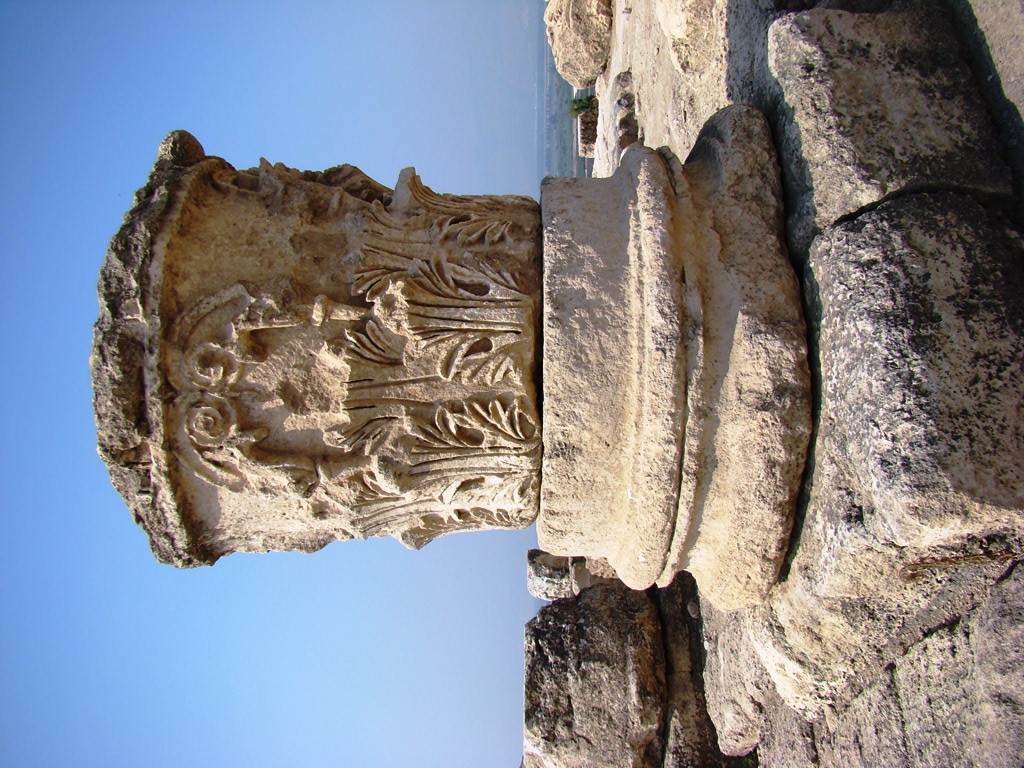
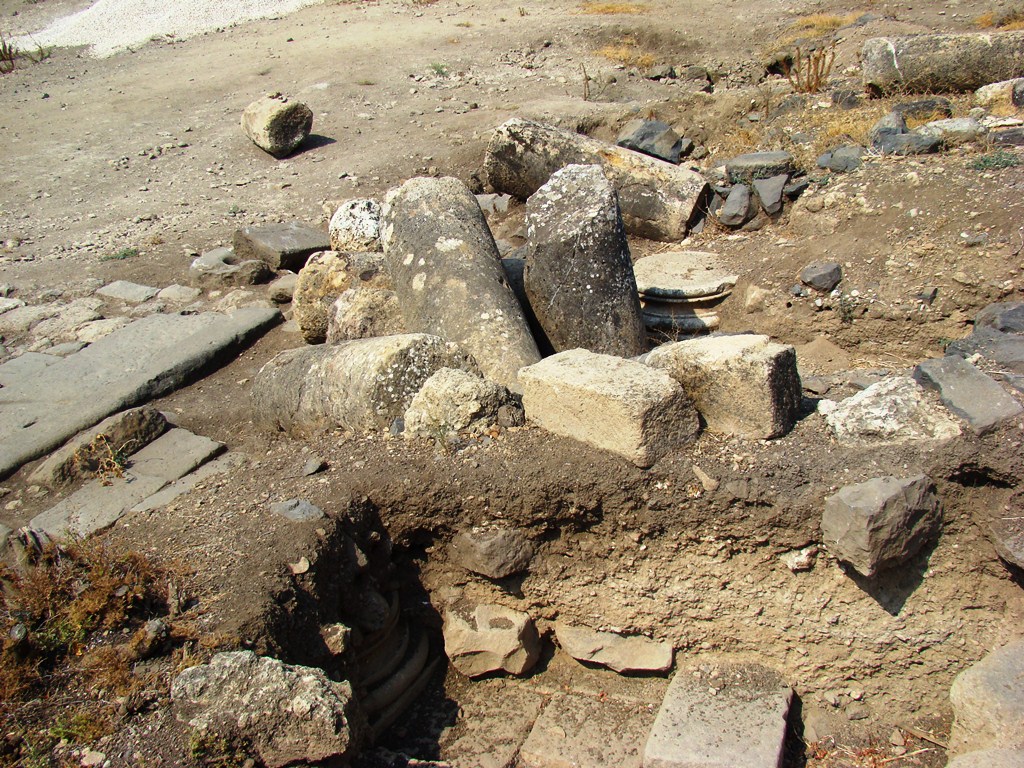
Among the interesting ruins at Omrit are several composite capitals. These are a combination of Corinthians and Ionic orders.
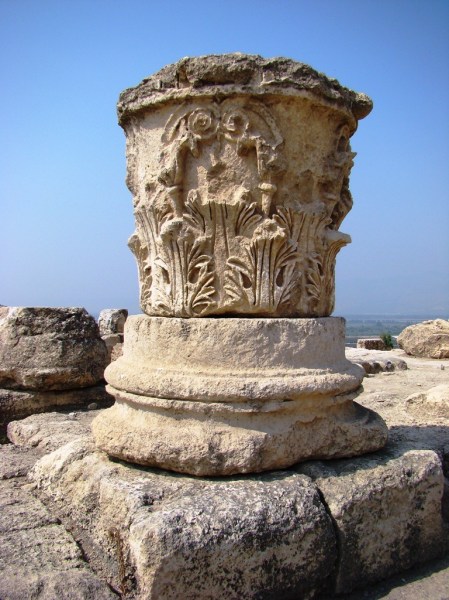
Composite Capital at Omrit. Photo by Leon Mauldin.
Note the beautiful acanthus leaves.
Omrit was destroyed by earthquakes in the 4th and 8th centuries AD.
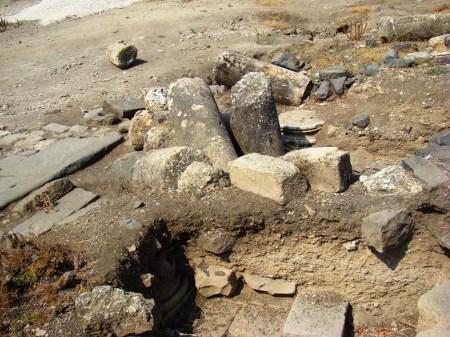
Evidence of Earthquake at Omrit. Photo by Leon Mauldin.
Click on images for larger view.
1 Comment | Archaeology, Bible History and Geography, Bible Study, Israel, New Testament, photography, Roman Empire, Travel | Tagged: Omrit | Permalink
Posted by Leon Mauldin
September 10, 2012
Omrit is located at the foothills of the Hermon Range, and is 2.5 miles from Caesarea Philippi (Banias). It was strategically situated near the crossroads of the Tyre-Damascus and Scythopolis (Beth-shean)-Damascus roads. Impressive remains of a temple devoted to Emperor worship may be seen here.

Herodian Imperial Cult Temple at Omrit. Excavators believe this temple was built by Herod to honor Caesar Augustus. Photo by Leon Mauldin.
I have enjoyed Dr. Carl Rasmussen’s recent posts re: Omrit. He said this was his “favorite site in Israel” (a statement I found very interesting) and just today posted another article on the site, dealing with Emperor worship that took place here in the Bible land. There are interesting implication of Peter’s confession that Jesus was the Christ, the Son of the living God so near a site where the Roman Emperor was worshiped as a “son of god.”
I was glad to visit this site this past September 2011, along with Ferrell Jenkins when he and I made a personal study trip at that time. BTW, Mr. Jenkins is currently directing a tour in Israel. You can follow their journeys here.
Leave a Comment » | Archaeology, Bible History and Geography, Bible Study, Israel, New Testament, photography, Roman Empire, Travel | Tagged: Omrit | Permalink
Posted by Leon Mauldin
May 2, 2012
The Roman goddess Vesta was the goddess of the hearth. She
was considered the patron of the fire that symbolized the perpetuity of the state. It was the responsibility of the priestesses to maintain this sacred fire and to renew it each year on March 1, the first day of the Roman year (The Wycliffe historical geography of Bible lands).
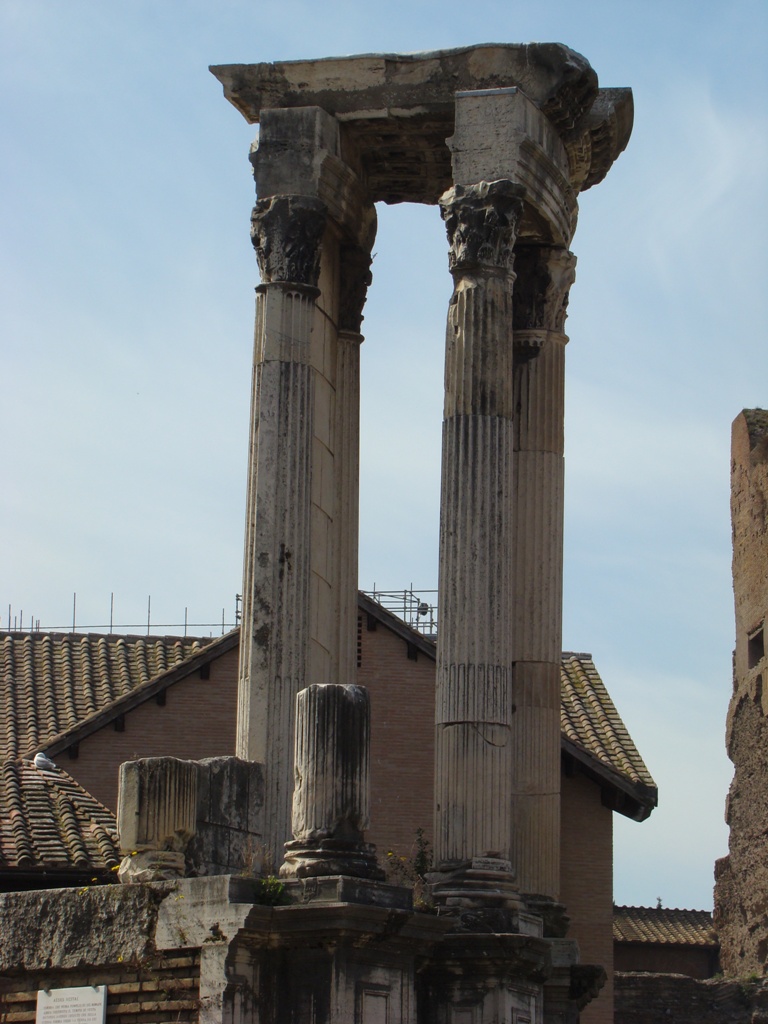
We photographed the remains of the Temple of Vesta in the Roman Forum a few weeks ago.
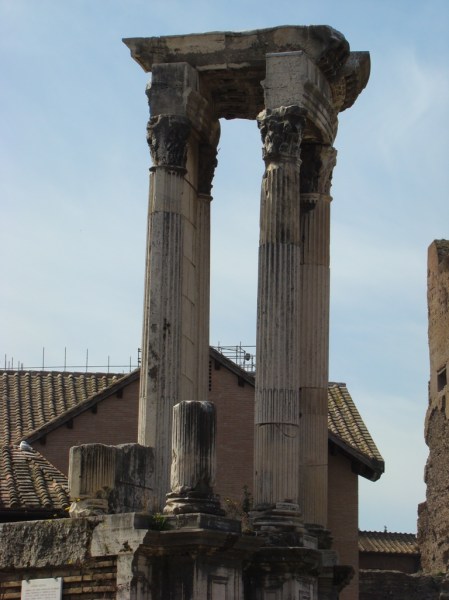 Temple of Vesta in Roman Forum. Photo by Leon Mauldin.
Vos, in his work, Nelson’s New Illustrated Bible Manners & Customs: How the People of the Bible Really Lived, asks the reader to suppose that when Paul’s trial was conducted in Rome that he entered the Forum on the east side:
As Paul came into the Forum area down the Sacred Way from the east, the first building he would have passed was the house of the vestal virgins. He might have observed that the house was rather large for a sisterhood of only six priestesses. But such an objection is erased with the observation that the vestals were held in high esteem and that their house was chosen by private citizens and by the state as a safe deposit for documents.
Adjacent to this house was the Temple of Vesta, considered the goddess of the hearth and the patron of the fire that symbolized the perpetuity of the state. It was the responsibility of the priestesses to maintain this sacred fire and to renew it each year on March 1, the first day of the Roman year (p.606).
Wikipedia has this additional info:
The extant temple used Greek architecture with Corinthian columns, marble, and a central cella. The remaining structure indicates that there were twenty Corinthian columns built on a podium fifteen metres in diameter. The roof probably had a vent at the apex to allow smoke release.
***********
My friend Ferrell Jenkins is currently directing a biblical study tour in Turkey & Greece. He will be posting as time permits on Ferrell’s Travel Blog.
Click on image for larger view.
Leave a Comment » | Archaeology, Bible History and Geography, Bible Study, photography, Roman Empire, Rome, Travel | Tagged: Vesta | Permalink
Posted by Leon Mauldin