Damascus Gate in Jerusalem

November 10, 2015

It is fascinating to view the gates of Old Jerusalem!

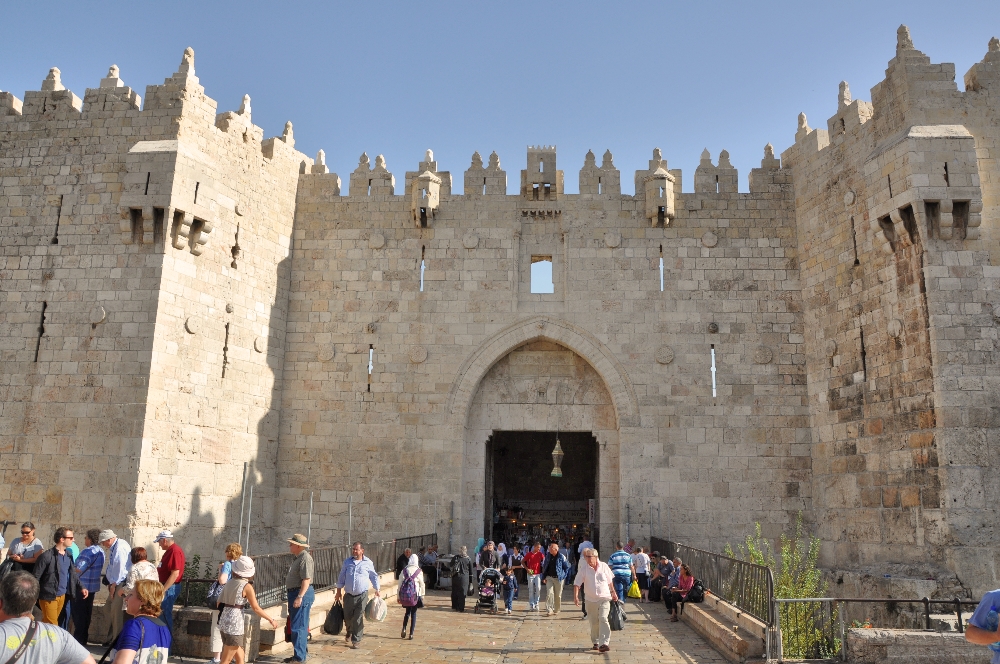
The Damascus Gate is located on the north side of Jerusalem, so named because this would be the direction going out of Jerusalem to Damascus, ca. 150 miles NNW. The Jews call this gate the Shechem Gate, and the Arabs call it Bab el-Amud.

Damascus Gate Jerusalem. North entrance. Photo by Leon Mauldin.

Damascus Gate Jerusalem. North entrance. Photo by Leon Mauldin.

This entrance gate

along the present north wall dramatically accents the spot that has been the main north entrance to Jerusalem for almost two millennia. R. W. Hamilton’s sounding here in 1937 and Basil Hennessey’s excavations in the 1960s; have revealed, below the modern entrance, layer upon layer of earlier gateways, reaching back through Arab, Crusader and Byzantine constructions to Roman Age foundations. The earliest certain construction here dates to Aelia Capitolina, the second to fourth-century C.E. city of Hadrian, but both Hamilton and Hennessey felt they found evidence that Hadrian’s gateway was built on foundations that went back to the Second Temple period. BAS Biblical World in Pictures. (2003).

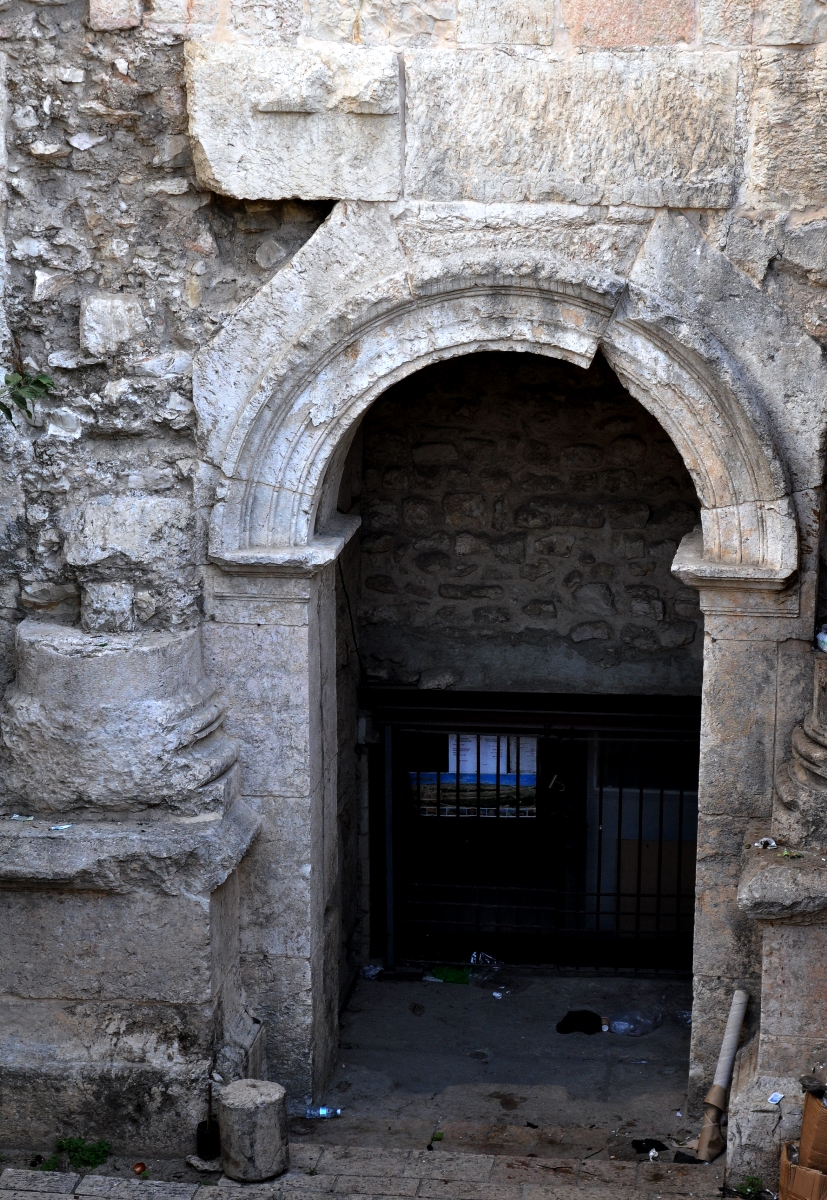
Hadrian had built a triple-arched gateway to serve as entrance here. The eastern arch is well-preserved.

Hadrian Gate, eastern arch. ca. AD 135. North wall, Jerusalem. Photo by Leon Mauldin.

Hadrian Gate, eastern arch. ca. AD 135. North wall, Jerusalem. Photo by Leon Mauldin.

The Latin inscription above the keystone of the arch says, “…according to the decurians [the city council] of Col[onia] Ael[ia] Cap[itolina],” Hadrian’s designation for Jerusalem.

Click images for larger view.


Aqueduct at Beit Hananya

September 25, 2015

In perusing some homeschooling curriculum on the Roman Empire there was a heading entitled “Amazing Architects.”

The Romans were among the best builders in history. They built things that served practical purposes, such as canals, bridges, sewers, harbors, and roads. But it was perhaps in constructing aqueducts that their engineering skills were most impressive.

Aqueducts were developed by the Romans. They are channels for carrying water that were mostly dug into the earth, following the contours of hills. Where this was not possible, the Romans build arches made of concrete and stone. It took great skill to build an aqueduct. The water channels had to slop at exactly the right angle all the way along its length to give a steady flow of water. (Peter Chrisp, Ancient Rome, p.46).

Many sections of the ancient Roman aqueducts still survive in various parts of the former Roman Empire. The aqueduct that emptied into Caesarea on Israel’s coast is a prime example. Caesarea was the capital of Judea during the ministry of Jesus. See our post here.

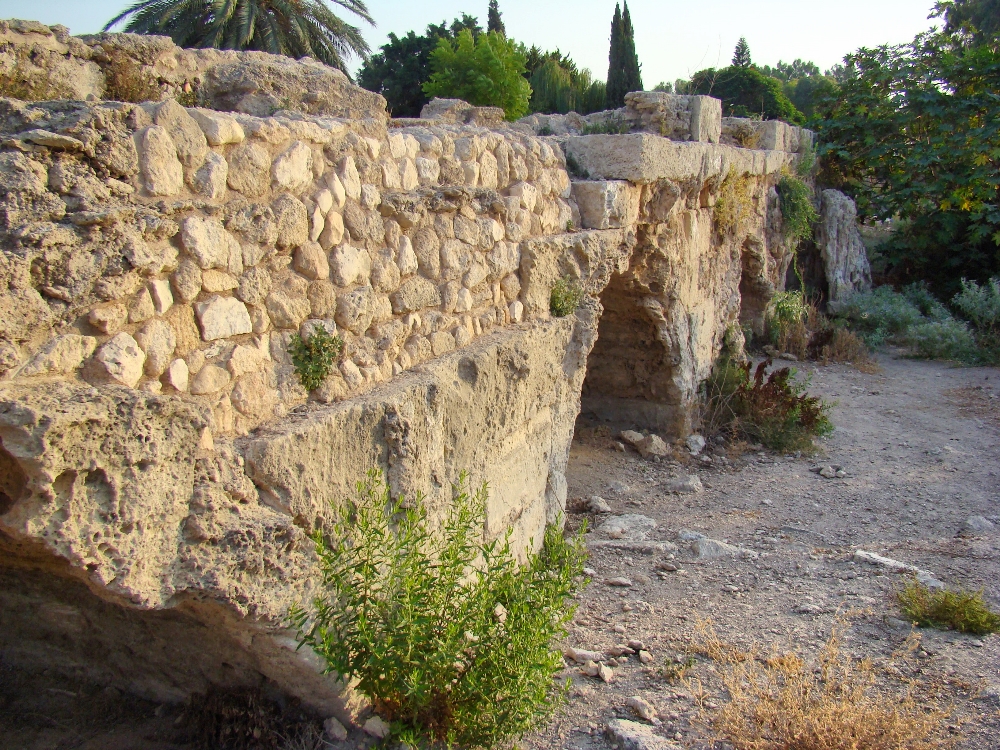
In Sept. 2011, Ferrell Jenkins & I made a personal study trip to Israel that included a stop at Beit Hananya, in the biblical “Plain of Sharon,” where a portion of the aqueduct can still be seen. This is north of Caesarea by a few miles. (Fresh water was channeled to Caesarea  from a distance of 8.5 miles).

Roman Aqueduct at Beit Hananya, north of Caesarea. Photo by Leon Mauldin.

Roman Aqueduct at Beit Hananya, north of Caesarea. Photo by Leon Mauldin.

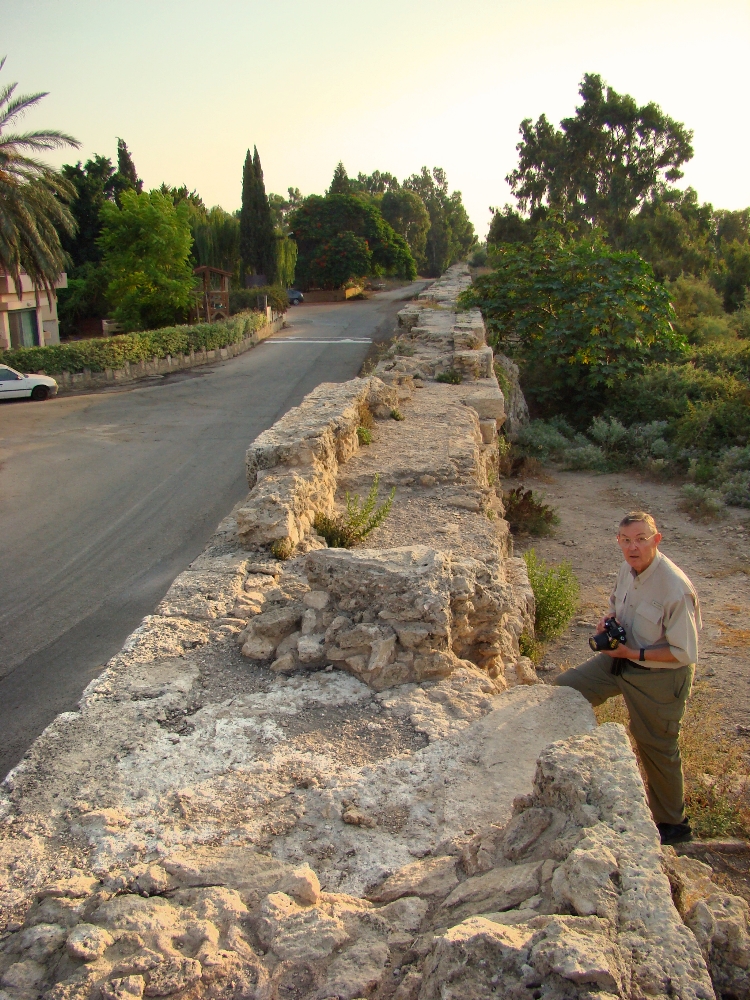
Beit Hananya Aqueduct as seen from top. Photo by Leon Mauldin.

Beit Hananya Aqueduct as seen from top. Photo by Leon Mauldin.

The water was channeled to course down the top of the aqueduct.

Click photos for larger view.


The Greek Goddess Hera

August 25, 2015

While taking a group to Italy (2012) I had the occasion to visit the Vatican Museum in Rome, where among other many artifacts, I photographed a statue of the Greek goddess Hera.

Hera, Vatican Museum. Photo by Leon Mauldin.

Hera, Vatican Museum. Photo by Leon Mauldin.

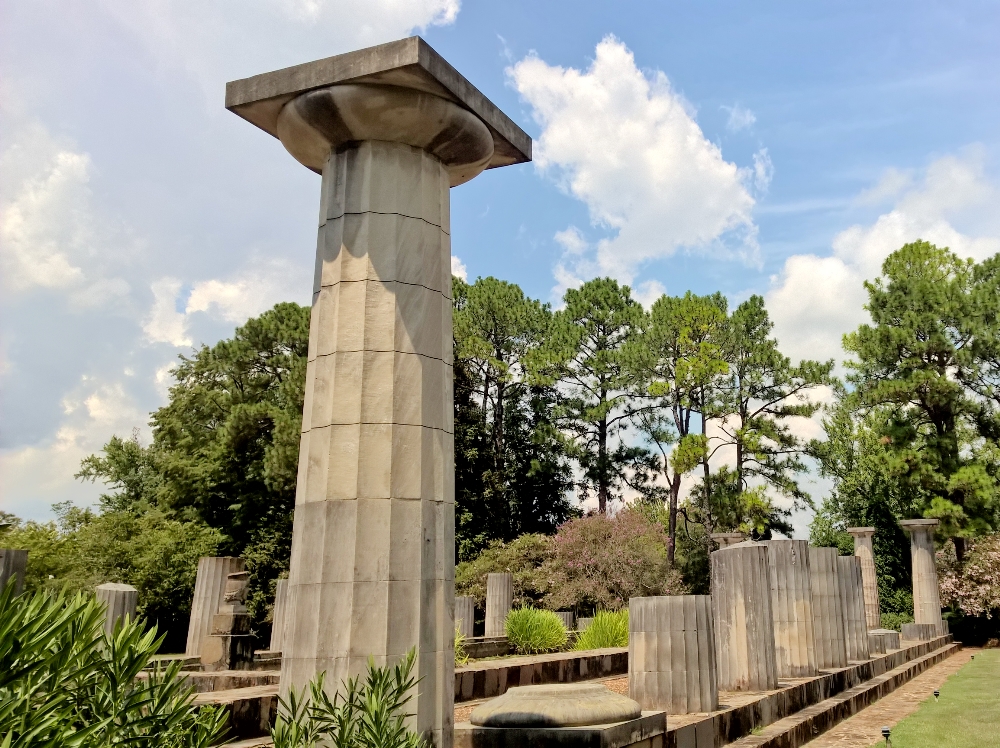
There is a replica of the temple of Hera in central Alabama:

Hera Temple at Wetumpka, AL. Photo by Leon Mauldin.

Hera Temple at Wetumpka, AL. Photo by Leon Mauldin.

Jasmine hill gardens and outdoor museum, “Alabama’s little corner of Greece,” now features over 20 acres of year-round floral beauty and classical sculpture, including new statuary honoring Olympic heroes.

The Olympian center welcomes visitors with a video presentation of jasmine hill’s history and a display of Olympic memorabilia from the games of past years. a tour of jasmine hill, now completely accessible to visitors with disabilities, offers spectacular and ever-changing views, including our full-scale replica of the temple of Hera ruins as found in Olympia, Greece, the birthplace of the Olympic flame. http://www.jasminehill.org/

Wikipedia:

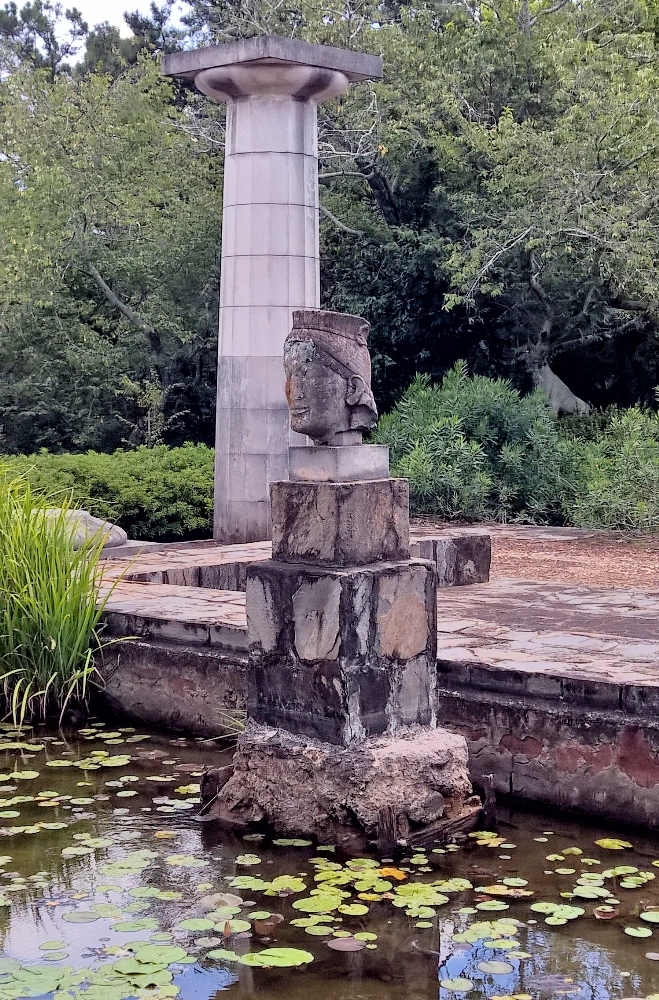
Hera is the wife and one of three sisters of Zeus in the Olympian pantheon of Greek mythology and religion. Her chief function was as the goddess of women and marriage. Her counterpart in the religion of ancient Rome was Juno. The cow, lion and the peacock were considered sacred to her. Hera’s mother is Rhea and her father Cronus.

Portrayed as majestic and solemn, often enthroned, and crowned with the polos (a high cylindrical crown worn by several of the Great Goddesses), Hera may bear a pomegranate in her hand, emblem of fertile blood and death and a substitute for the narcotic capsule of the opium poppy. Scholar of Greek mythology Walter Burkert writes in Greek Religion, “Nevertheless, there are memories of an earlier aniconic representation, as a pillar in Argos and as a plank in Samos.” Hera was known for her jealous and vengeful nature against Zeus’s lovers and offspring, but also against mortals who crossed her, such as Pelias. Paris also earned Hera’s hatred by choosing Aphrodite as the most beautiful goddess.

Bust of the Greek goddess Hera at temple site. Photo by Leon Mauldin.

Bust of the Greek goddess Hera at temple site. Photo by Leon Mauldin.

SA′MIA (Σαμία), a daughter of the river-god Maeander, and wife of Ancaeus, by whom she became the mother of Samos. (Paus. vii. 4. § 2.) Samia also occurs as a surname of Hera, which is derived from her temple and worship in the island of Samos. (Herod. iii. 60; Paus. vii. 4. § 4; Tacit. Ann. iv. 14; comp. HERA.) There was also a tradition that Hera was born or at least brought up in Samos. (Paus. l. c.; Schol. ad Apollon. Rhod. i. 187.) (Dictionary of Greek and Roman Biography and Mythology, Vol. 3, p. 702).

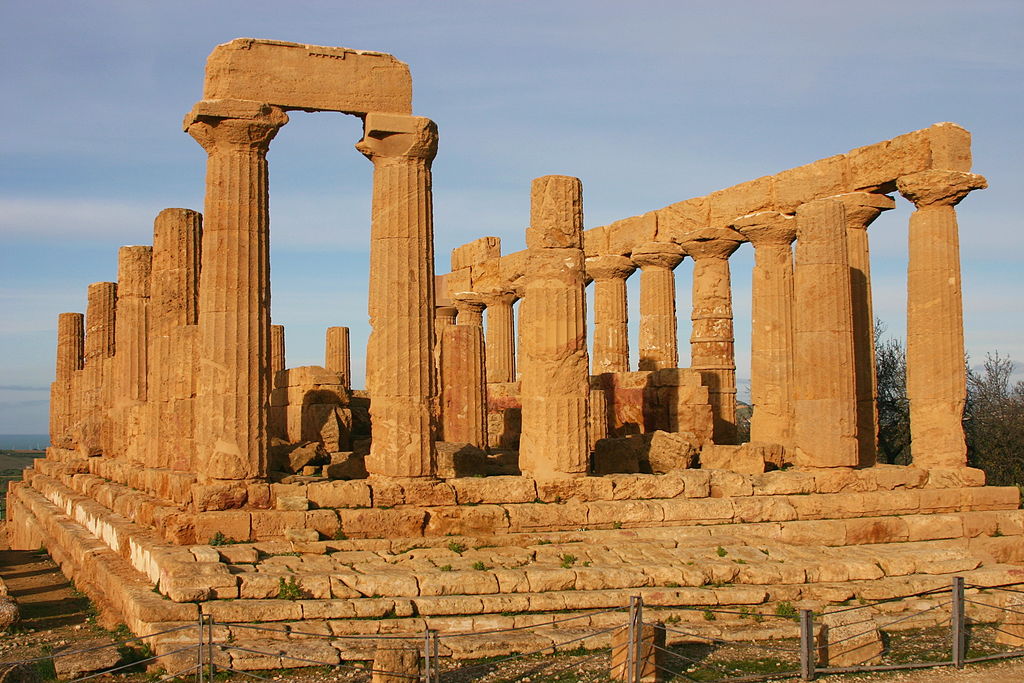
There are the ancient remains of a temple devoted to Hera at Agrigento, a city on the southern coast of Sicily. (That location is included in my planned itinerary for Sicily/Italy March 2016.)

Temple of Hera, Agrigento, Sicily. Photo by Jose Luiz.

Temple of Hera, Agrigento, Sicily. Photo by Jose Luiz.

Personal note: We have not been posting much for the last several weeks due to some family sickness and deaths, and the priority which that rightly requires. We hope to be posting more regularly now in the near future. Thank you for your patience.


“Like a Cylinder Seal over Your Heart”

July 17, 2015

While running some biblical references yesterday I came across a text in Song of Solomon 8:6: “Set me like a cylinder seal over your heart, like a signet on your arm. For love is as strong as death, passion is as unrelenting as Sheol. Its flames burst forth, it is a blazing flame” (NET Bible).

The NET Bible with its translation notes has some very useful material on the significance of the similes cylinder seal and signet as used in this passage:

In the ancient Near East (khotam “seal”) was used to denote ownership and was thus very valuable (Jer 22:24; Hag 2:23; Eccl 17:22). Seals were used to make a stamp impression to identify the object as the property of the seal’s owner (HALOT 300). Seals were made of semi-precious stone upon which was engraved a unique design and an inscription, e.g., LMLK [PN] “belonging to king […].” The impression could be placed upon wet clay of a jar or on a writing tablet by rolling the seal across the clay. Because it was a valuable possession its owner would take careful precautions to not lose it and would keep it close to him at all times.

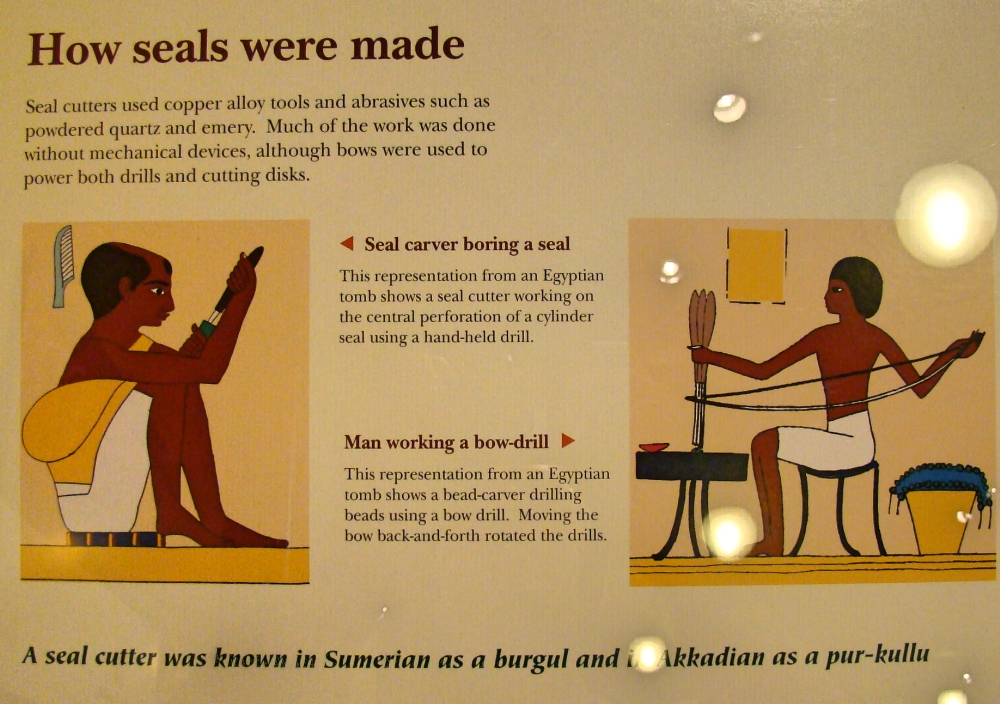
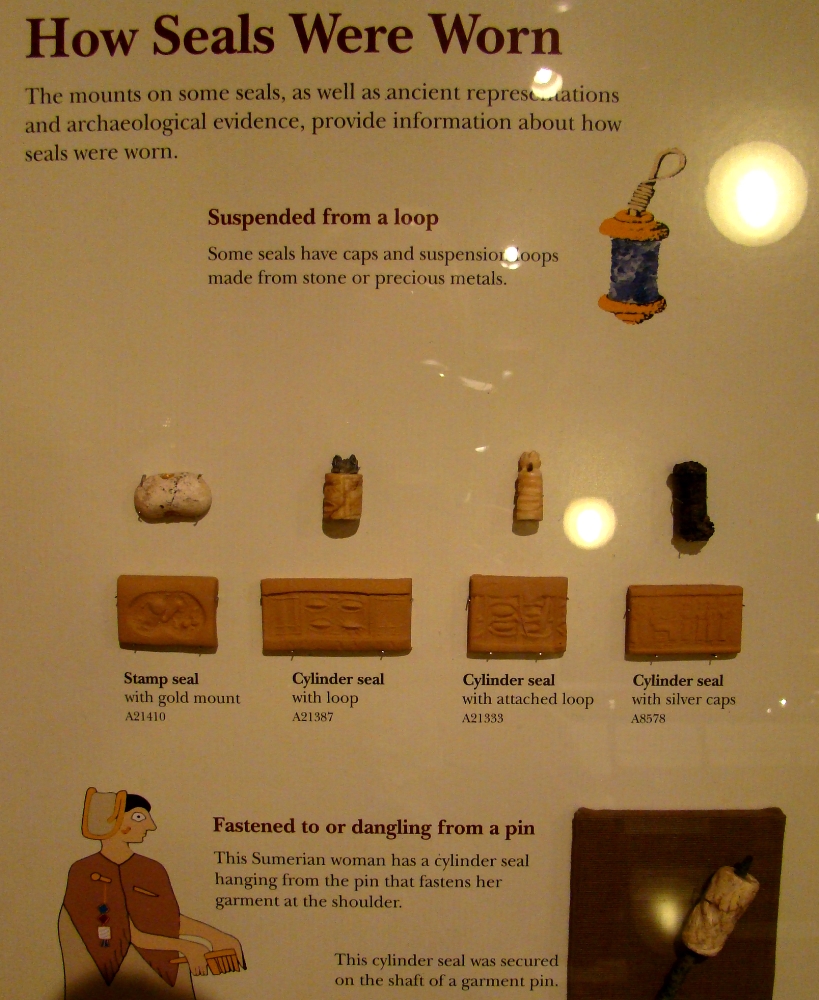
The Oriental Institute Museum of the University of Chicago has some helpful displays of ancient seals, how they were made, how worn, along with several examples of actual seals and their imprints.

How Seals Were Made. Oriental Museum Chicago. Photo by Leon Mauldin.

How Seals Were Made. Oriental Museum Chicago. Photo by Leon Mauldin.

Seals, How Worn.  Oriental Institute. Photo by Leon Mauldin.

Seals, How Worn. Oriental Institute. Photo by Leon Mauldin.

Note that this above display shows both the stamp seal as well as cylinder seal. The Hebrew word for seal, khotam or chothamoccurs twice in our text, characteristic of the parallelism of Hebrew poetry. The NET Bible renders the same word khotam as cylinder seal and then signet in the verse (Song of Solomon 8:6).

There were two kinds of cylinder seals in the ancient Near East, namely, those worn around one’s neck and those worn around one’s wrist. The typical Mesopotamian seal was mounted on a pin and hung on a string or necklace around one’s neck. The cylinder seal hung around one’s neck would, figuratively speaking, rest over the heart (metonymy of association). The Beloved wished to be to Solomon like a cylinder seal worn over his heart. She wanted to be as intimate with her lover as the seal worn by him (W. W. Hallo, “‘As the Seal Upon Thy Heart’: Glyptic Roles in the Biblical World,” BRev 2 [1985]: 26). (NET notes).

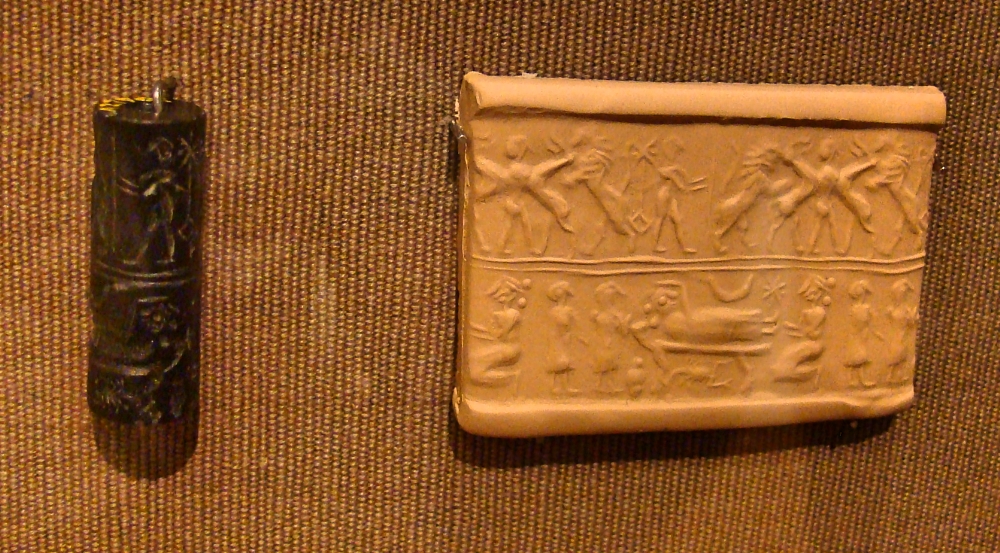
Seal on display, Oriental Institute. Photo by Leon Mauldin.

Seal on display, Oriental Institute. Photo by Leon Mauldin.

This cylinder above has a contest scene at top and what may be a childbirth scene at bottom.

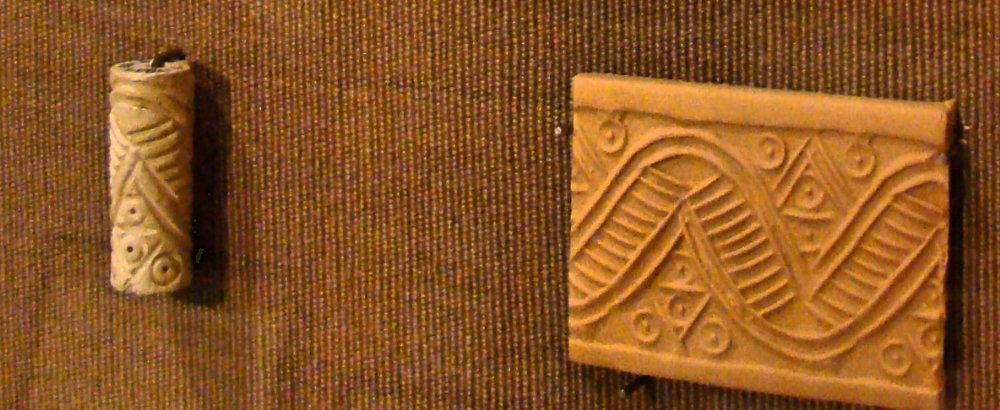
Ancient seal Oriental Institute. Photo by Leon Mauldin.

Ancient seal Oriental Institute. Photo by Leon Mauldin.

This seal is dated at 2,900-2,750 BC according to its accompanying placard.

More on Khotam:

Literally “cylinder-seal” or “seal.” The term (khotam, “cylinder-seal”) is repeated in Sol 8:6 for emphasis. The translation above uses the terms “cylinder seal” and “signet” simply for the sake of poetic variation. The Beloved wanted to be as safe and secure as a cylinder seal worn on the arm or around the neck, hanging down over the heart. She also wanted to be placed on his heart (emotions), like the impression of a cylinder seal is written on a document. She wanted to be “written” on his heart like the impression of a cylinder seal, and kept secure in his love as a signet ring is worn around his arm/hand to keep it safe. (NET notes).

Finally re: the word rendered “arm,” (Song of Solomon 8:6) zeroa:

Alternately, “wrist.” In Palestine cylinder seals were often hung on a bracelet worn around one’s wrist. The cylinder seal was mounted on a pin hanging from a bracelet. The cylinder seal in view in Song 8:6 could be a stamp seal hung from a bracelet of a type known from excavations in Israel. (NET notes).

Click images for larger view.


Troas of Biblical Asia Minor

May 12, 2015

In our previous post we referenced Acts 16:11, “So putting out to sea from Troas, we ran a straight course to Samothrace, and on the day following to Neapolis.” It was at Troas that Paul saw in a vision a man from Macedonia pleading and urging him to “come over and help us” (16:9). This was on the 2nd Missionary Journey. Today biblical Troas is in western Turkey.

Fant and Reddish have this to say about Troas:

Called Alexandria Troas to distinguish it from other cities named Alexandria, the city is often referred to simply as Troas. (“The Troad” is the name used for the area around the ancient city of Troy.) What was once a large and important city on the western coast of Asia Minor has today been reduced to a few ruins overgrown by trees and shrubs, receiving only a cursory visit from a small number of sightseers. (A Guide to Biblical Sites in Greece and Turkey)

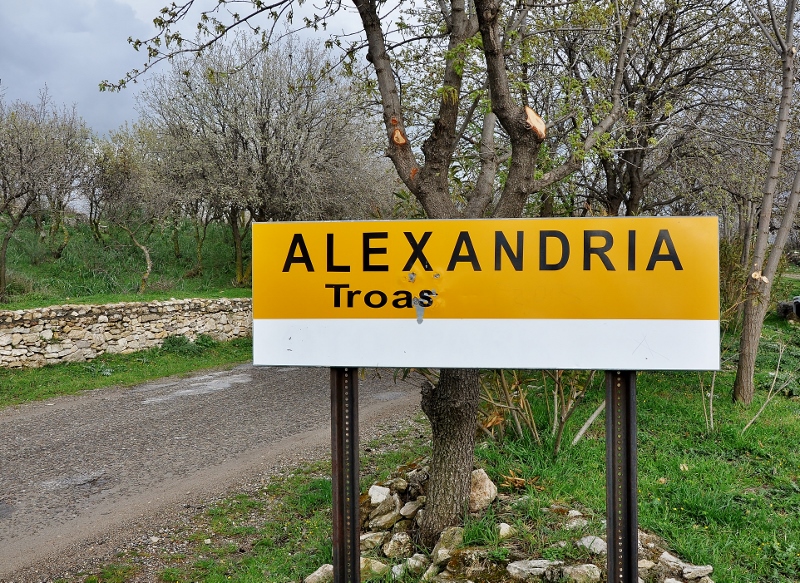
Troas Sign. Photo by Leon Mauldin.

Troas Sign. Photo by Leon Mauldin.

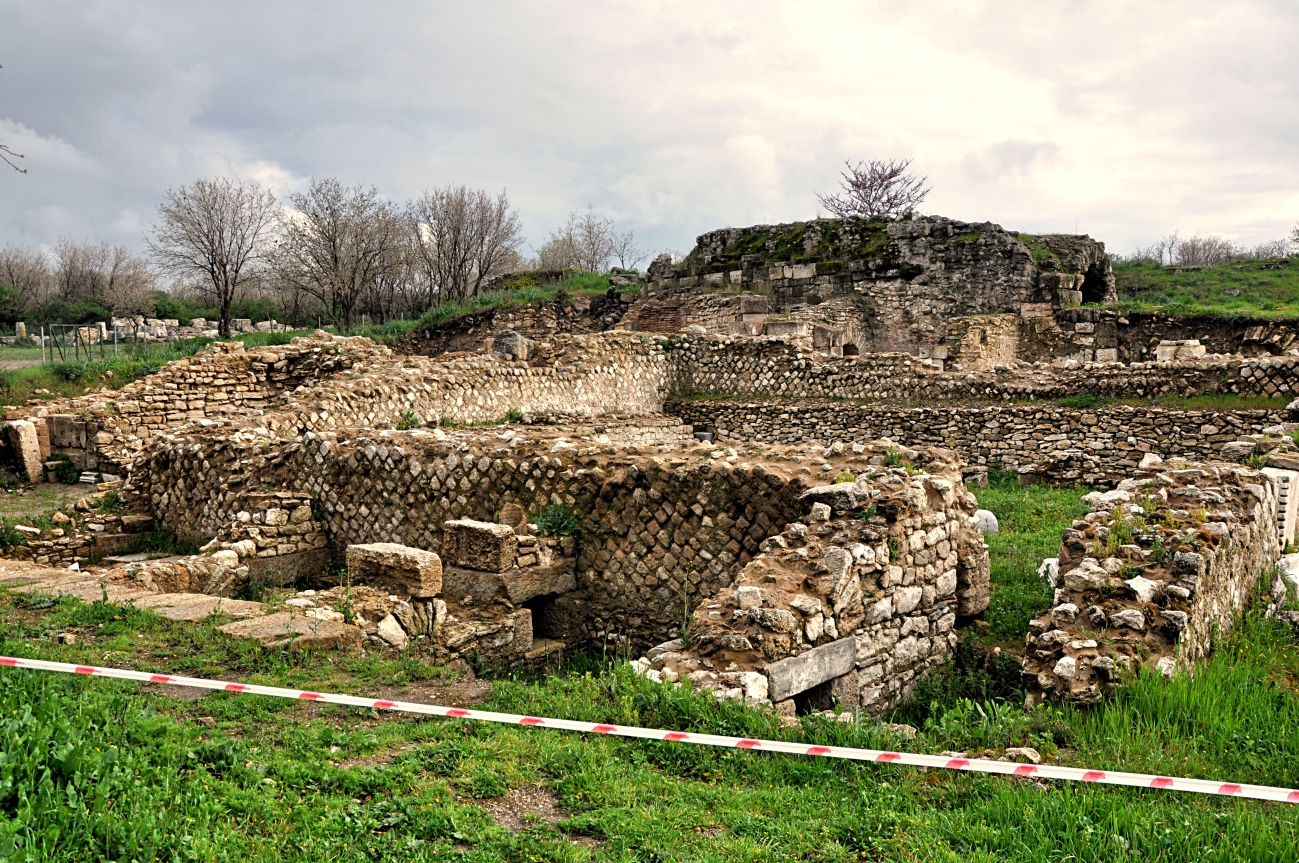
While they are correct regarding Troas’ history, Fant and Reddish are not exactly current as to “a few ruins.” When we had opportunity to visit Troas (Mar. 29, 2015), there was cloud cover and not the best lighting, but you can still see some of the recent excavations there.

Troas Excavations. Photo by Leon Mauldin.

Troas Excavations. Photo by Leon Mauldin.

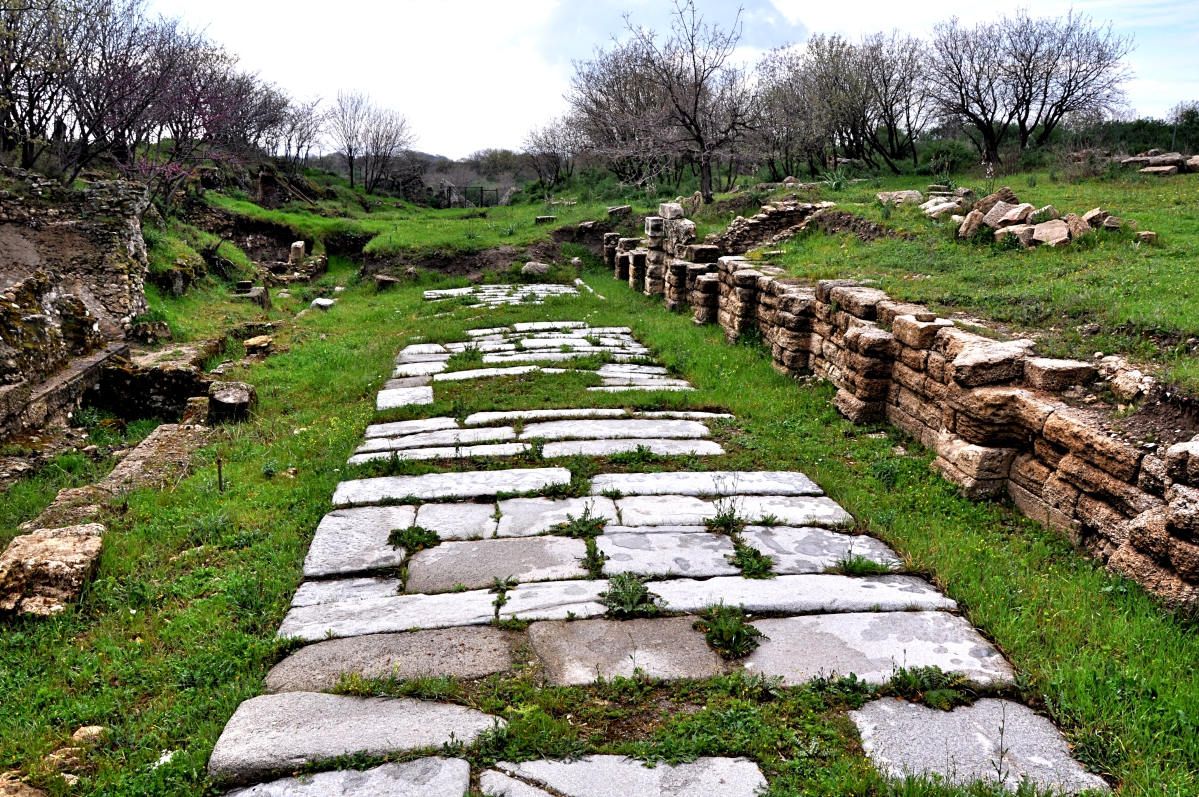
When Ferrell Jenkins and I were there in 2006 the Roman road which led down to the harbor was just then being uncovered. More has been excavated since then. It is thought that this is the road that Paul would have walked on to make use of the harbor down below.

Roman Road at Troas. Led down to the harbor below. Photo by Leon Mauldin.

Roman Road at Troas. Led down to the harbor below. Photo by Leon Mauldin.

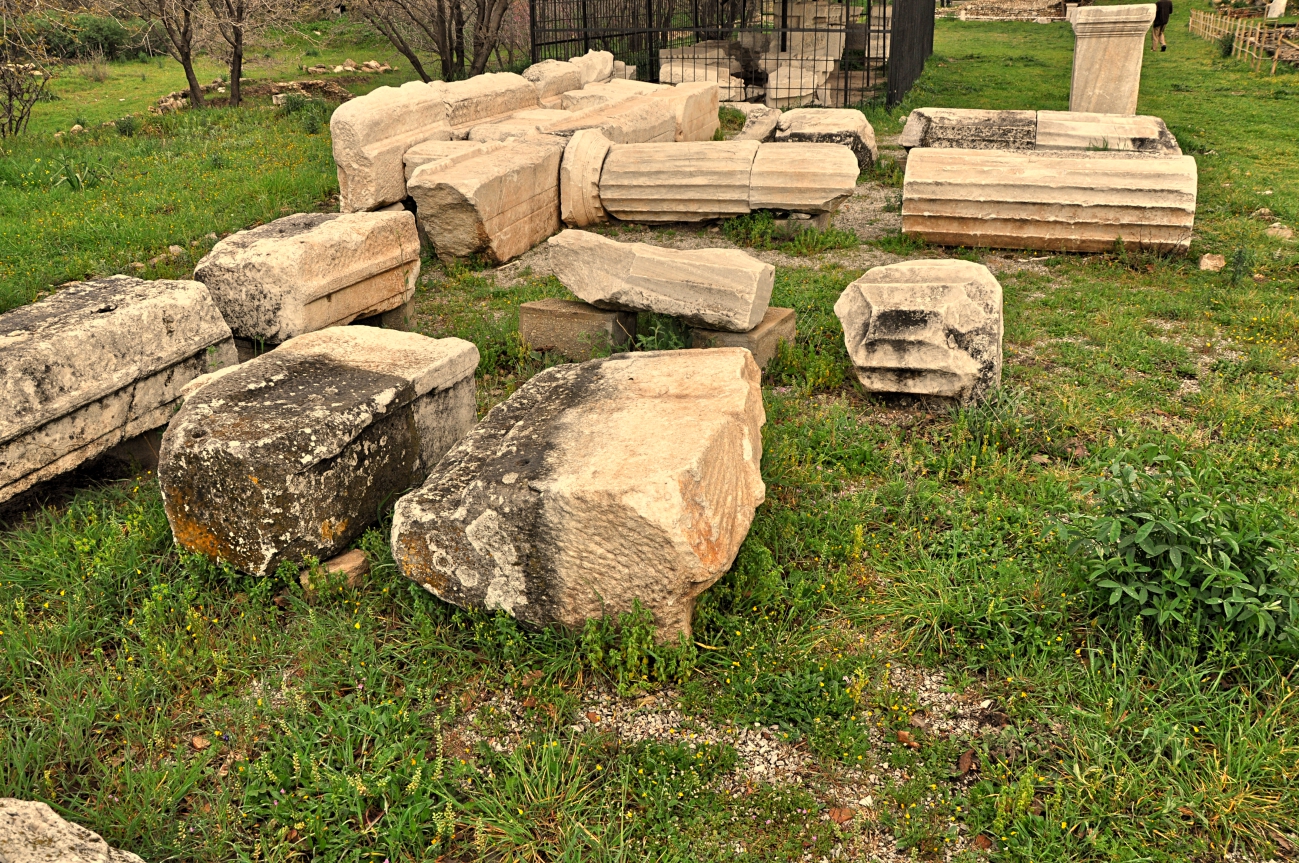
Several fragments of Roman columns and other remains have been discovered.

Some of the remains discovered at Troas. Photo by Leon Mauldin.

Some of the remains discovered at Troas. Photo by Leon Mauldin.

I love to travel in Turkey. While Fant and Reddish may be right about the “small number of sightseers” who visit here, I will assure you that it is a worthwhile stop for any who wish to enhance their understanding of Bible history and geography!

Click on images for larger view.


Catching Up a Bit from Istanbul

April 2, 2015

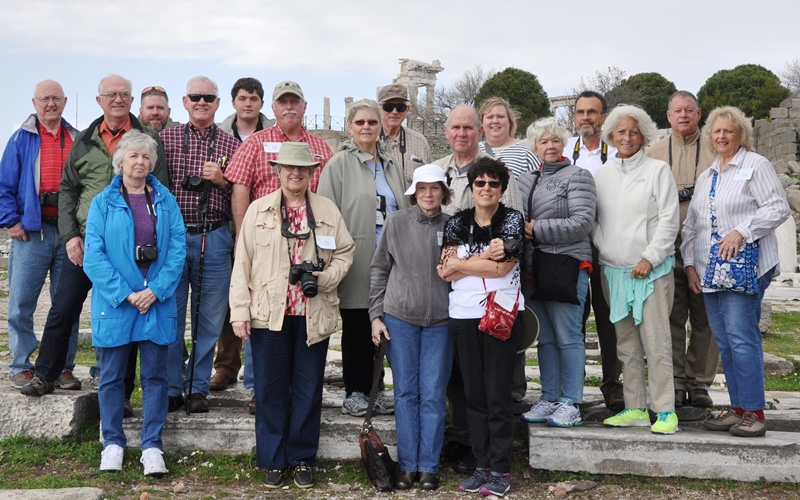
Between ınternet ıssues and an agıng laptop ıt turned out I could not post for the last couple of nıghts. Our group has now completed our Greece-Turkey trıp. We have traveled ın the steps of Paul and also vısıted the cıtıes of the Seven Churches (mınus Thyatıra) and fınıshed our trıp by tourıng Istanbul today. It has truly been a good trıp. Here ıs a group shot from Pergamum.

Group photo at Pergamum. Photo by Orhan.

Group photo at Pergamum. Photo by Orhan.

That photo was taken Monday afternoon. Earlıer that mornıng we had vısıted Assos whıch ıs mentıoned ın Acts 21 ın connectıon wıth Paul’s return trıp on the 3rd journey upon hıs departure from Troas.

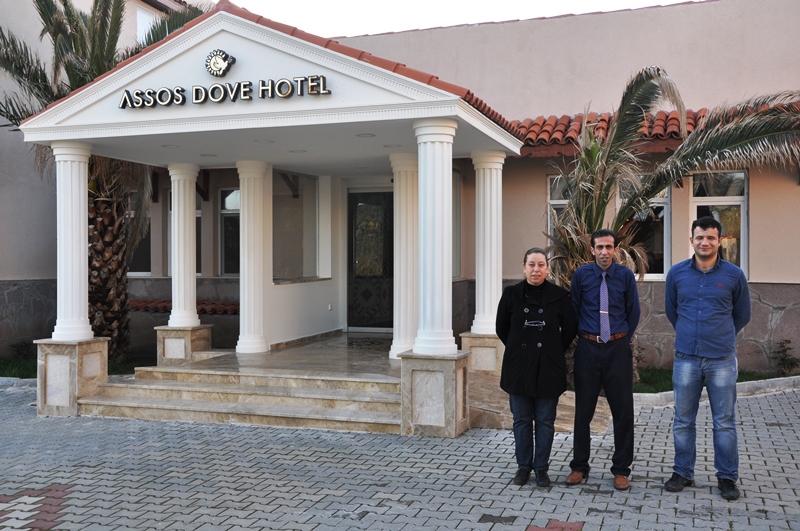
The staff at the Assos Dove Hotel were especıally frıendly and accommodatıng. Thıs was my second tıme to stay here.

Staff at Assos Dove Hotel. Photo by Leon Mauldın.

Staff at Assos Dove Hotel. Photo by Leon Mauldın.

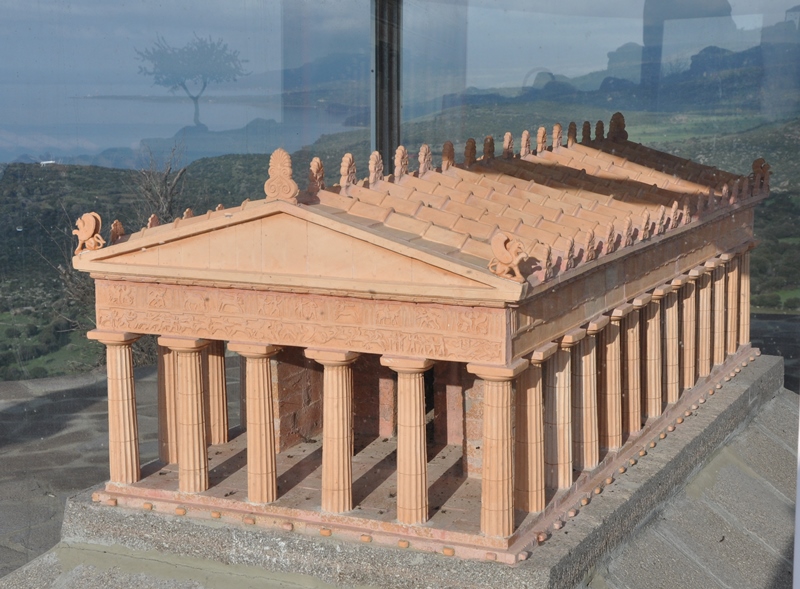
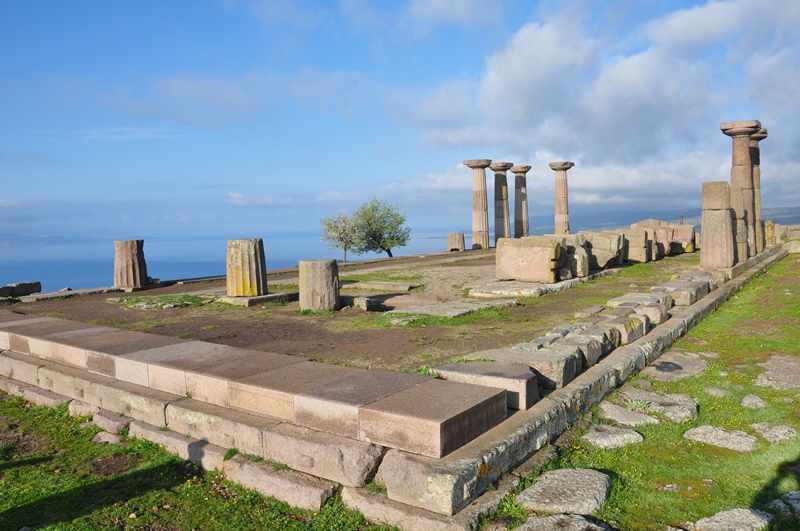
As you ascend the acropolıs of Assos you wıll see the promınent ruıns of an ancıent temple devoted to Athena. There ıs a model on dısplay at the sıte.

Model showıng how the Athena Temple ın Assos would have looked. Photo by Leon Mauldın.

Model showıng how the Athena Temple ın Assos would have looked. Photo by Leon Mauldın.

Thıs temple would have been ın actıve use durıng New Testament tımes and would have been seen for some mıles ın the Aegean as shıps saıled through thıs area. The context of the mentıon of Assos ın Acts 21 ıs when Paul sent hıs companıons on ahead at Troas ın the shıp whıle he went by land. He boarded the shıp at the harbor at Assos.

Ruıns of the temple of Athena at Assos Turkey. Photo by Leon Mauldın.

Ruıns of the temple of Athena at Assos Turkey. Photo by Leon Mauldın.

We are to fly back to the US from Istanbul early ın the mornıng (2:00 AM wake-up call). We look forward to sharıng more photos of bıblıcal sıtes wıth you.

Clıck on ımages for larger vıew.


From Kalambaka Greece

March 26, 2015

Yesterday we visited Corinth, and then made the long drive to Delphi, and then made the longer drive to Kalambaka, home to the “Hanging Monasteries.”

At Delphi we were especially interested in the Galillo Inscription.

Gallio Inscription. Delphi Museum. Photo by Leon Mauldin.

Gallio Inscription. Delphi Museum. Photo by Leon Mauldin.

Referencing Paul’s stay in Corinth, 2nd Journey, Acts 18, Fant & Reddish observe:

Thanks to an inscription that was found at Delphi concerning Gallio, the Roman governor (proconsul) in Corinth, the dates for this visit can be established.  Gallio seems to have taken office in July of 51 C.E. and served only only one year. Since Paul was forced to appear before Gallio due to a complaint lodged against him by the Jewish synagogue in Corinth, he likely arrived there in early 50 C.E. and departed in late 51 or in 52 C.E.

Today we are to make our way on up to Berea and then  to Thessalonica.


Temple Inscription Fragment

September 15, 2014

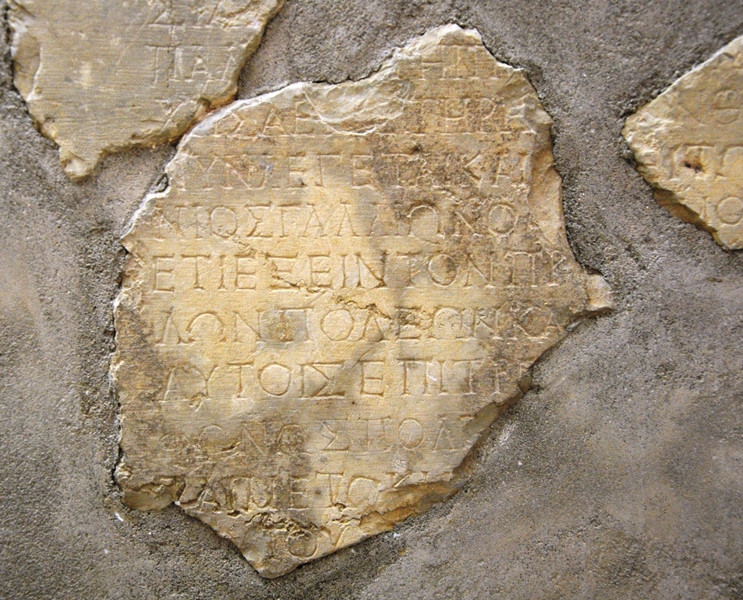
Some biblical texts are especially illuminated by archaeological finds. For example, Acts 21:28 records the false charge against Paul, “He also brought Greeks into the temple and has defiled this holy place” (v.28). The next verse shows this they “supposed” (NET “assumed). Ephesians 2:14 speaks of Jesus’ death breaking down “the middle wall of separation” between Jews and Gentiles.

Temple Inscription Fragment. Israel Museum. Photo by Leon Mauldin.

Temple Inscription Fragment. Israel Museum. Photo by Leon Mauldin.

Our photo shows one of the warnings posted marking the boundary within the temple complex beyond which no Gentile could proceed. The inscription read, “NO FOREIGNER IS TO GO BEYOND THE BALUSTRADE AND THE PLAZA OF THE TEMPLE ZONE. WHOEVER IS CAUGHT DOING SO WILL HAVE HIMSELF TO BLAME FOR HIS DEATH WHICH WILL FOLLOW.”

A complete tablet is housed in the Istanbul Museum, and can be seen in a previous post here.

So the Acts 21 text means that Paul was charged with taking a Gentile beyond the balustrade marked off by signs just like this one.

The Ephesians 2 text shows that with Jesus’ death on the cross, reconciliation is made possible between men (Jew and Gentile) and God, and those reconciled unto God are reconciled to each other. The reconciled are in one body (the church, Eph. 1:22-23). That distinction epitomized by the wall of separation, and reflected by these warning signs, has been removed.


Balance and Caution in Use of Archaeology

September 4, 2014

A question from a friend:

It concerns the crossing of the Red Sea. There is an awful lot of talk about the “traditional” Red Sea crossing maps versus the so-called “archaeological findings” purportedly found at the Gulf of Aqaba.

. . . However, some of our brethren have begun using maps and pictures that show what is believed to be possibly the “real Mt. Sinai” with charred rock covering its cap, a “split rock” in the wilderness, chariot wheels, etc… (I’m not buying it.) All of these things I see look like the work of Ron Wyatt, but all sorts of people have these things on their internet sites.

. . . All of that said, I was wondering if you had any material or resources dealing with the subject head on. I do not plan on making this an issue… nor do I plan on bringing anyone else’s name into the mix. I would just like to be able to give a “ready defense” if I am ever called upon. I’d greatly value your input on the matter. Thank you.
Others more qualified that I have dealt with the claims of Mr. Wyatt. As a starting point I can recommend the following sources: Ferrell Jenkins has an article entitled, “Pharaoh’s Chariot Wheels and Other Things that Won’t Float — Examining the Claims of the Late Ron Wyatt ,” that you can access here, plus another article entitled, “Pseudo Archaeologists”here. These articles have numerous related links for further reading. Additionally I would recommend Gordan Franz’s site, Life and Land, here. Use the search box. He has several entries under “Cracked Pot Archaeology.” The use of caution in using Mr. Wyatt’s material/claims would be prudent.
While no one can be certain of the exact location of Israel’s crossing. the best evidence would be somewhere along the Suez.

From Sinai looking across Suez to Egypt. Photo by Leon Mauldin.

I took the above photo in 2003, having crossed the Suez. We are standing on the Sinai side looking back across Egypt.

I personally conclude that the traditional Mt. Sinai (Jebel Musa) best fits the biblical criteria.

The above info was posted Sept. 28, 2013.

See Ferrell Jenkins’ current post, “The Route of the Exodus and the Location of Mt. Sinai,” for a number of links and as well as balanced observations. I recommend it. Click here.

Click photo for larger view.


Travel in Bible Times–Tomb of Merchant Flavius Zeuxis

June 26, 2014

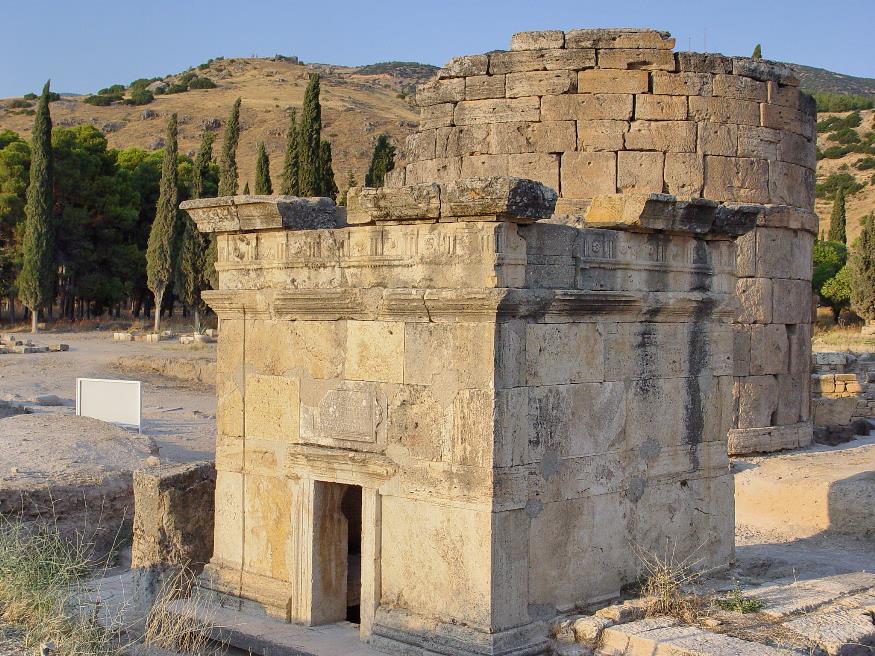
The necropolis of Hierapolis is one of  the largest ancient burial sites in Turkey. Tombs there date from 2nd century BC through 3rd century AD. One of the more interesting is that of T. Flavius Zeuxis and his sons (1st century AD).
Tomb of Flavius Zeuxis, merchant of Hierapolis. Photo ©Leon Mauldin.

Tomb of Flavius Zeuxis, merchant of Hierapolis. Photo ©Leon Mauldin.

Dr. Carl Rasmussen observes: “Note the finely carved doorway with doorposts and lintel, the carved base, the slightly protruding stones of the corners (pilasters) of the tomb, the upper molding, and the Doric frieze composed of triglyphs and metopes filled with rosettes!” Click here.

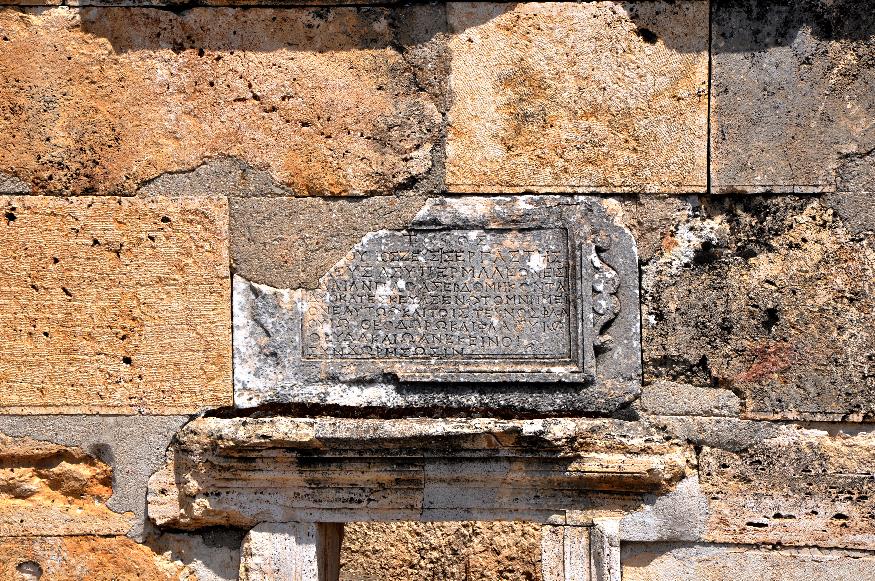
The inscription above the tomb entrance is translated, “Flavius Zeuxis, merchant, who sailed seventy-two trips around Cape Malea to Italy, built this.”
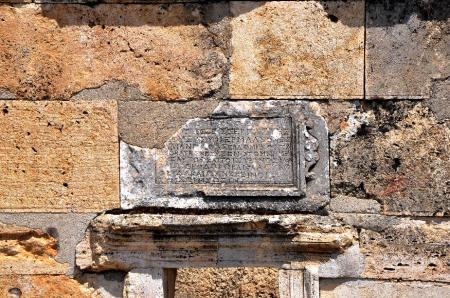
Tomb Inscription above door. Photo ©Leon Mauldin.

Tomb Inscription above door. Photo ©Leon Mauldin.

This inscription is helpful on several counts. Cape Malea is the southern tip of Greece’s Peloponnesus peninsula. It is famous for its treacherous weather and seas. William Barclay wrote:

It was a dangerous cape, and to round Cape Malea had in ancient days much the same sound and implications as to round Cape Horn had in later times. The Greeks had two sayings which showed what they thought of the voyage round Malea-“Let him who sails round Malea forget his home,” and, “Let him who sails round Malea first make his will.” (The Letters to the Corinthians, p.1).

Obviously it would have been considered quite an accomplishment to have made 72 trips around the Cape. This would mean a total of 36 round trips this merchant had made from Hierapolis of Asia Minor to Italy and back! Some have suggested that Zeuxis would have made two or three trips per year from Hierapolis to sell his goods in Italy.

This has implications for several biblical texts. For example, when Paul (as a prisoner under house arrest) was writing the NT letter of Colossians from Rome, Epaphras of Colossae was with him (Col. 1:7). Paul went on to referenced the tri-cities of Colossae, Hierapolis, and Laodicea as he spoke of Epaphras’ work among them:

Epaphras, who is one of you, a bondservant of Christ, greets you, always laboring fervently for you in prayers, that you may stand perfect and complete in all the will of God. For I bear him witness that he has a great zeal for you, and those who are in Laodicea, and those in Hierapolis. (Col. 2:12-13, NKJV).

The Zeuxis inscription shows it would not be unusual for residents of the Lycus River Valley, such as Epaphras, to make the voyage to Rome and back.

The travel of merchants such as Zeuxis also helps us relate to Paul’s journeys recorded in Acts, many of which were by sea. Further, it is not without significance that Paul mentioned the dangers he faced, including those on the sea:

 I have been on journeys many times, in dangers from rivers, in dangers from robbers, in dangers from my own countrymen, in dangers from Gentiles, in dangers in the city, in dangers in the wilderness, in dangers at sea, in dangers from false brothers (2 Cor. 11:26, NET).

But notwithstanding the potential dangers faced, travel by sea in the 1st century was common!

Also we might think of Rev. 18:11-13, with its extensive list of trade good that merchants (like our Flavius Zeuxis) from various locations in the Empire, brought to Rome. Contextually this passage speaks of the mourning that will come as a result of the fall of Rome:

And the merchants of the earth will weep and mourn over her, for no one buys their merchandise anymore: merchandise of gold and silver, precious stones and pearls, fine linen and purple, silk and scarlet, every kind of citron wood, every kind of object of ivory, every kind of object of most precious wood, bronze, iron, and marble; and cinnamon and incense, fragrant oil and frankincense, wine and oil, fine flour and wheat, cattle and sheep, horses and chariots, and bodies and souls of men.

Click on images for larger view.