The Persian Royal Road to Sardis

January 16, 2025

As one studies the biblical text, such as the letter to the church at Sardis (Rev. 3:1-6), one of the Seven Churches of Asia addressed in the book of Revelation, it is helpful to know somewhat of the conditions in which those first century Christians lived.

The city of Sardis has a rich history in many ways. This post will deal with just one: the Royal Road. Cyrus the Great (r. 559-529 BC) was the founder of the Persian Empire following his conquering of the Babylonian Empire. Cambyses II succeeded him (r. 529-522 BC), whose successor was Darius (r.521-486 BC). (This is the king who was defeated in 490 BC at the battle of Marathon).

But scholars make the case that his great achievement was his construction of the Royal Road, which extended from the capitol of Susa to Sardis:

Darius is perhaps best remembered for instituting an advanced highway system throughout the empire, a route traditionally called the “Persian Royal Road.” According to Herodotus, the “father of history,” this roadway stretched from Susa (in Elam) to Sardis (in Lydia) and was comprised of a total of 111 intermediate resting-stages, passing through some six Persian provinces, and requiring a total of 90 days to travel the entire course of approximately 1,685 miles. Herodotus adds that another three days were required to journey from Sardis to the coast at Ephesus, from which some scholars have deduced that the “Royal Road” may have extended as far as the Aegean coast. At its other end, a road continued from Susa that ran to Persepolis and beyond.

Beitzel, B. J. (2009). The New Moody Atlas of the Bible (p. 206). Moody Publishers.

The following map depicts this route:
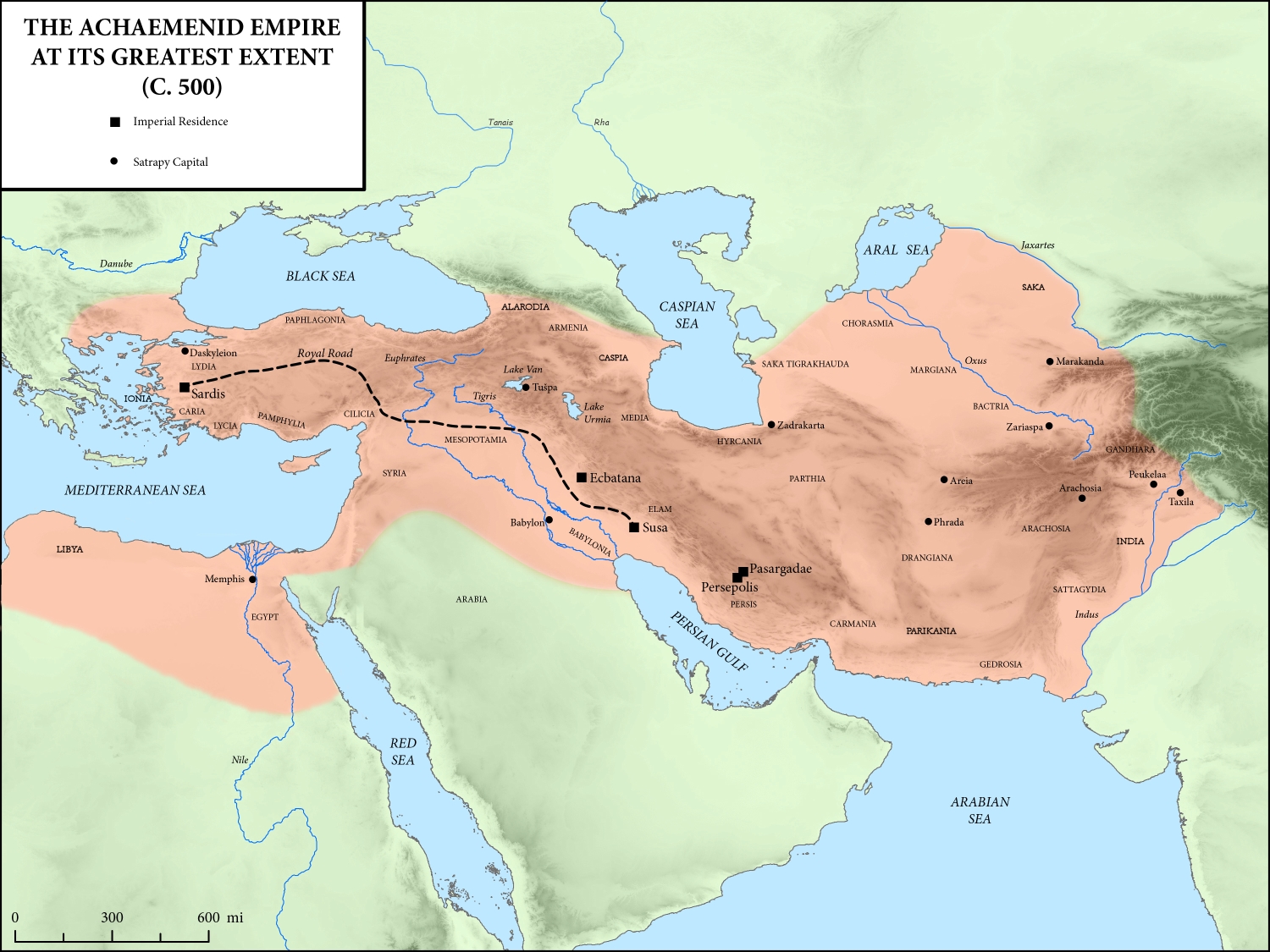
Map shows route of Royal Road from Persian capital at Susa westward to Sardis. Map courtesy of Wikipedia Commons.

This linkage from the capital to Sardis “located Sardis on a major trade and communications route that persisted into the Roman period, positioning the city for ongoing prosperity” (deSilva, Lexham Geographic Commentary, p. 667).

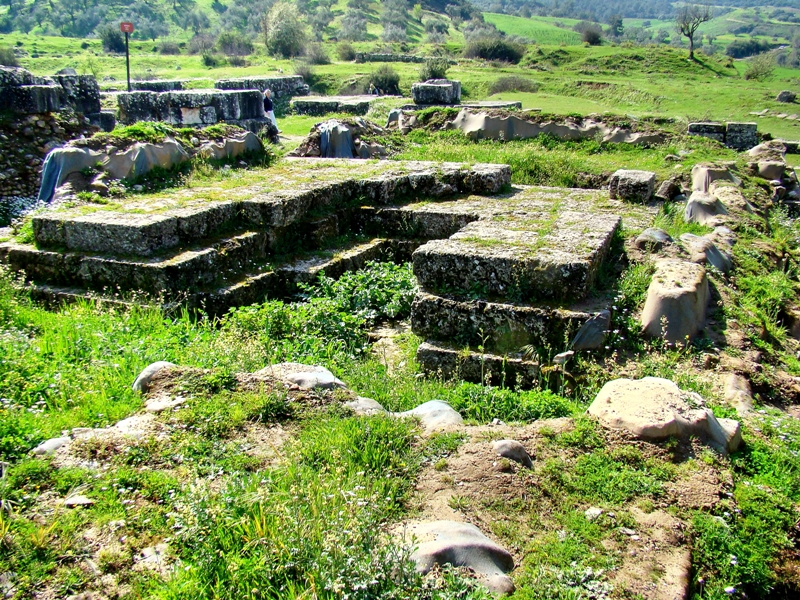
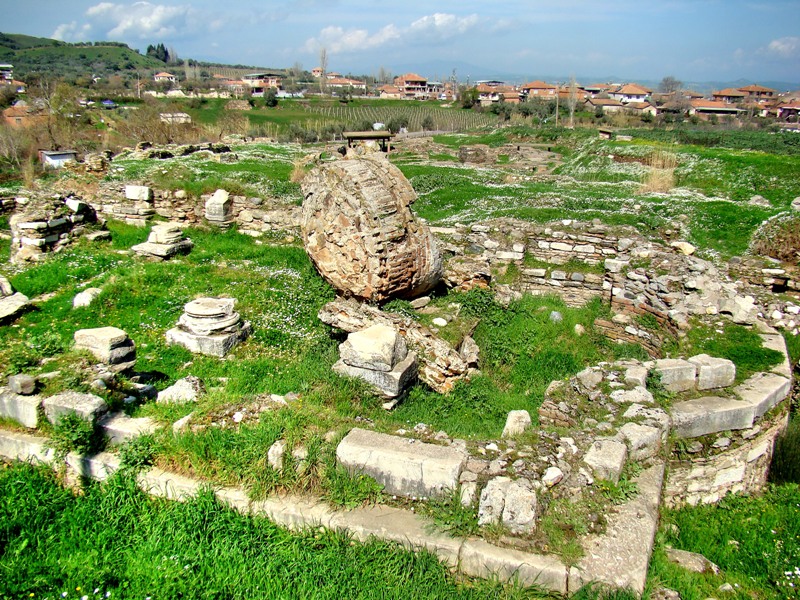
Royal Road at Sardis. Photo ©Leon Mauldin.

Benefits of this road:

  • Official communication. The historian Herodotus said of the Persian royal messengers:

Now there is nothing mortal that accomplishes a course more swiftly than do these messengers, by the Persians’ skillful contrivance. It is said that as many days as there are in the whole journey, so many are the men and horses that stand along the road, each horse and man at the interval of a day’s journey. These are stopped neither by snow nor rain nor heat nor darkness from accomplishing their appointed course with all speed.

Herodotus. (1920). Herodotus, with an English translation by A. D. Godley (A. D. Godley, Ed.). Harvard University Press.

  • Administration.
  • Rapid Troop Movemnt.
  • Trace and commerce.

In later history, Alexander the Great would make use of the Royal Road in his conquest of Persia. Dr. Mark Wison notes, “After Alexander the Great captured the city from the Persians in 334 BC, Sardis served as the western capital of the Selucid Empire nor nearly a hundred years (281-190 BC)” (Biblical Turkey, p. 290). In 133 BC Sardis became a part of the Roman province of Asia.

God had his people in Sardis. The church at Sardis was the 5th of the Seven Churches addressed by John (Rev. 1-3).


Sardis, the Dead Church with a Name

January 14, 2025

Sardis is the fifth of the seven churches addressed by Jesus through the Apostle John, while John was on the Island of Patmos. In summary, Jesus’ assessment of the church there was, “I know your works, that you have a name that you are alive, but you are dead” (Rev. 3:2).

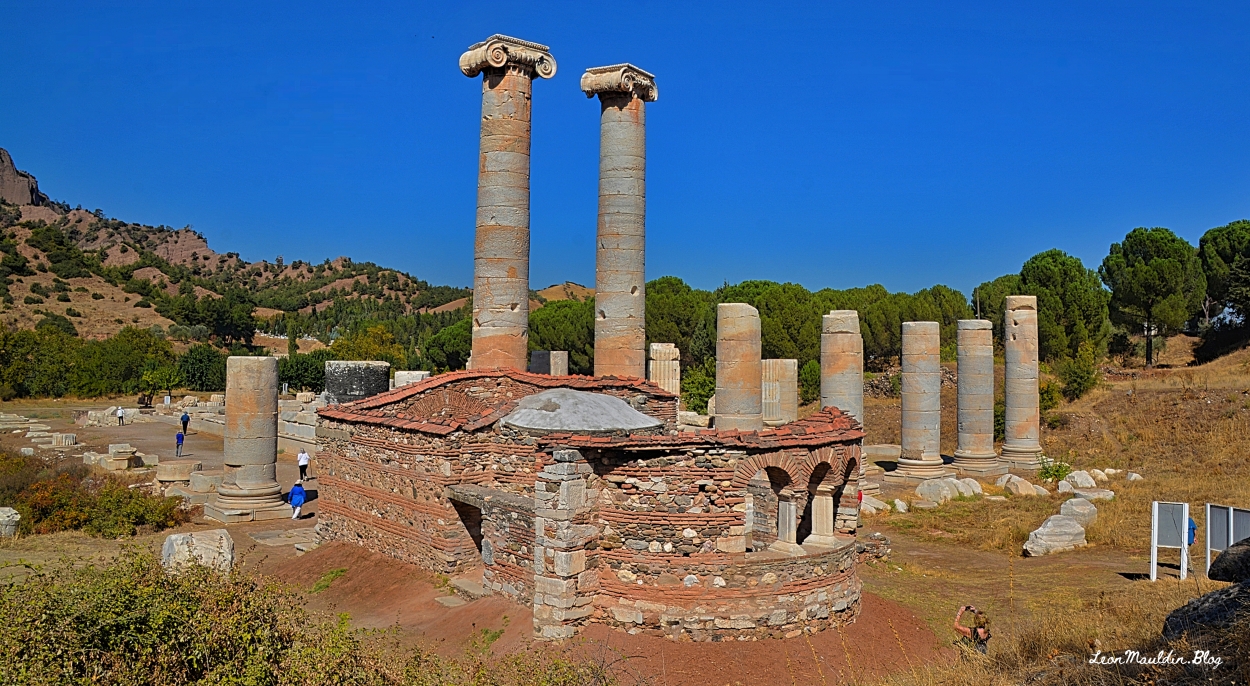
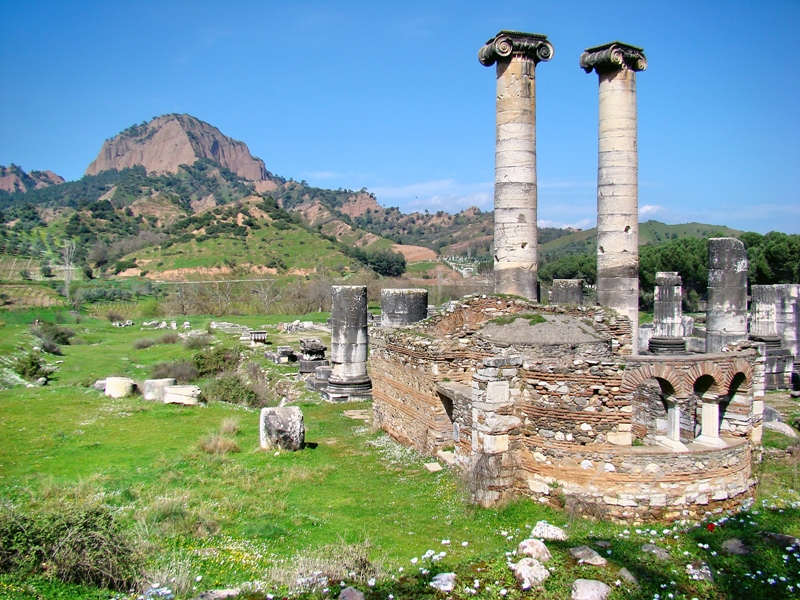
Archaeologists have uncovered and identified many structures and other items of interest at Sardis, including a Byzantine chapel in the southeast corner of the temple of Artemis.

Byzantine Church located at SE corner of temple of Artemis at Sardis. Photo ©Leon Mauldin.

Dr. Mark Wilson writes, “The inner western chapel dates to the 4C [4th century AD] and is one of the earliest preserved churches in western Asia Minor; the larger, outer apse dates to the 6C” (Biblical Turkey, A Guide to the cJewish and Christain sites of Asia Minor, p. 291).

The temple of Artemis, whose partial ruins are in view here, would have been in use when those Christians of the 1st century AD at Sardis received the letter (Rev. 3:1-6). It’s hard to overemphasize how pervasive idolatry was in the biblical world!

We have previously posted several articles on Sardis: click here here here and here.

Click image for larger view.


Sardis: Baptistry, Gymnasium, Sheep

June 9, 2010

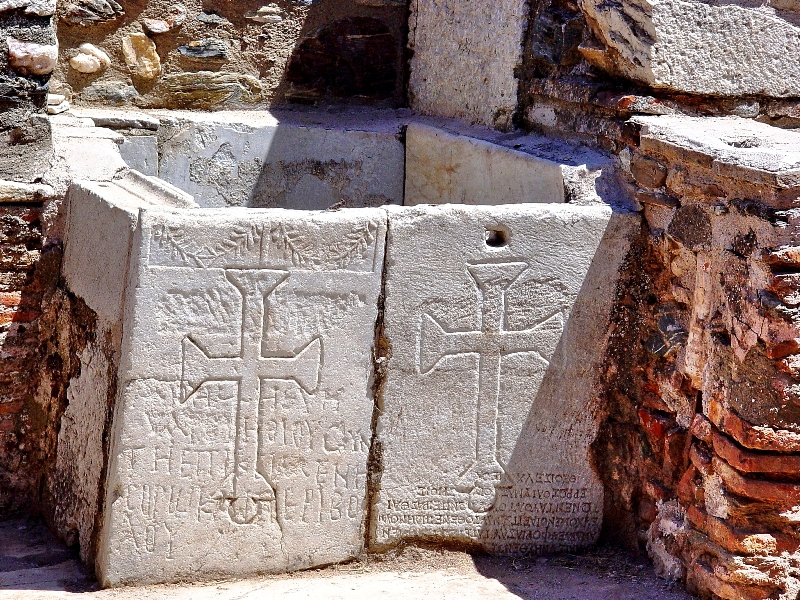
The concept of recycling is ancient; when visiting biblical sites it is common to see evidence of secondary usage of materials.  In our photo below, Fatih Cimok explains that this marble object is made of  “reused material from the Byzantine shops situated next to the synagogue in Sardis.”  This is believed to have been a baptistry.

Sardis Baptistry. Photo ©Leon Mauldin.

Cimok goes on to say, “The crosses were superimposed over pagan inscriptions and decorations” (A Guide to the Seven Churches, p.76).

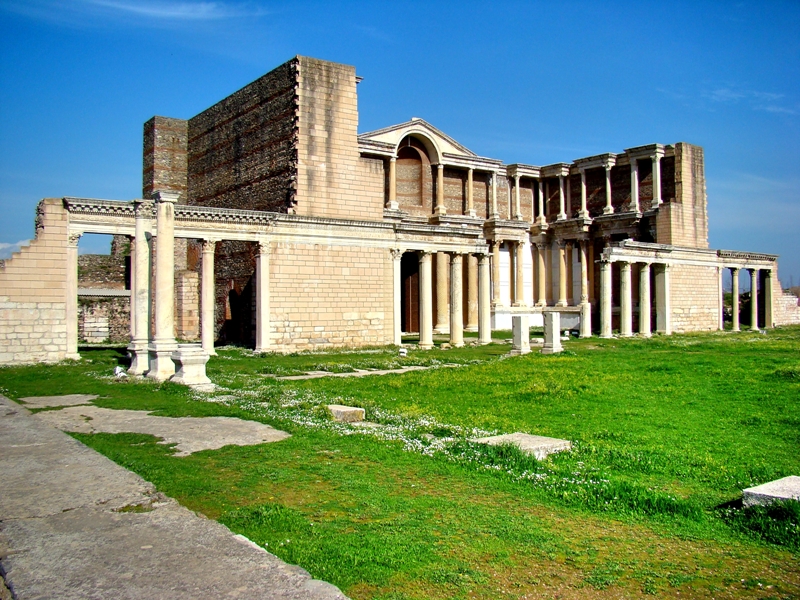
Sardis also had an impressive gymnasium and bath complex that comprised about five acres.

Sardis Gymnasium. Photo ©Leon Mauldin.

The open courtyard in front was for exercise; the bathhouse was directly behind the gymnasium. This complex is dated as 2nd century A.D.

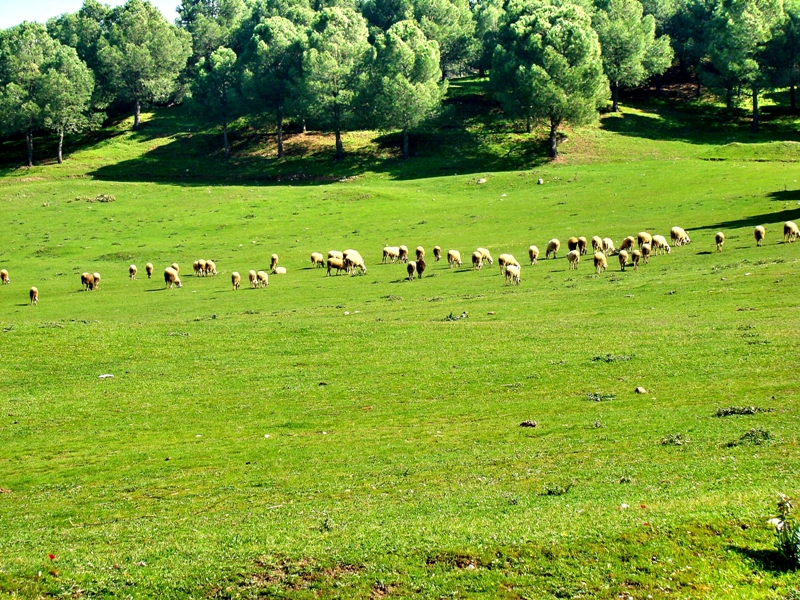
Another interesting topic while we are featuring Sardis is the matter of its wool-dyeing. In his Pictorial Library of Bible Lands, Todd Bolen writes,

Sardis was known for the invention of wool-dyeing.  Even today sheep are a commonplace appearance at the ruins of Sardis, a city once known for its luxury textile and clothing trade.  John’s reference to soiled garments and the white raiments of Christ in Revelation 3:4 would have been significant to the church at Sardis in light of the city’s trade: “Thou hast a few names even in Sardis which have not defiled their garments; and they shall walk with me in white: for they are worthy” (KJV).

Our photo below, taken in March 2010, shows sheep grazing at Sardis, a view essentially unchanged over thousands of years.

Sheep at Sardis. Photo ©Leon Mauldin.

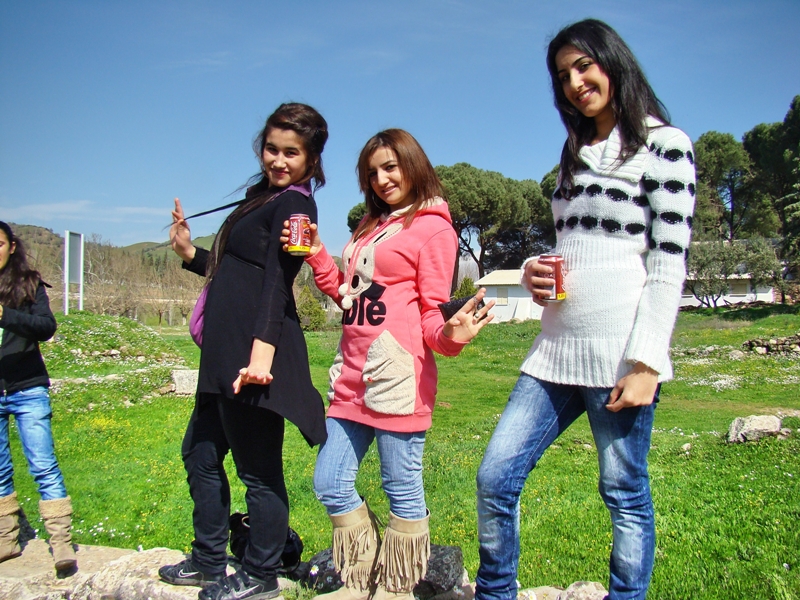
A frequent question that arises is, “What are the people like over there?” For the most part, people are quite friendly.  When our group was at Sardis there was apparently a school outing that was taking place there.  Some of the students wanted me to take their photo.

School Outing at Sardis. Photo ©Leon Mauldin.

Remember to click on photo for larger image.


Sardis Synagogue

June 3, 2010

There is evidence that each of the Seven Churches address in Rev. 2-3 were in cities which included Jewish populations. The synagogue at Sardis has been excavated. Fatih Cimok, in A Guide to the Seven Churches, writes:

The synagogue in Sardis is the largest of its type known to date.  Excavations show that the building was originally a civic basilica which was built between the main street and the gymnasium and converted into a synagogue sometime between 150-350 C.E.  Its unusually large dimensions and rich decoration, as well as the titles of the Jews mentioned in the inscriptions here, show the high status that the Jewish community in Sardis held.

In its final form the synagogue which is thought to date from about 320-40 CE consisted of a colonnaded entrance court and a long assembly hall (p.81).

Pictured below is the Sardis synagogue:

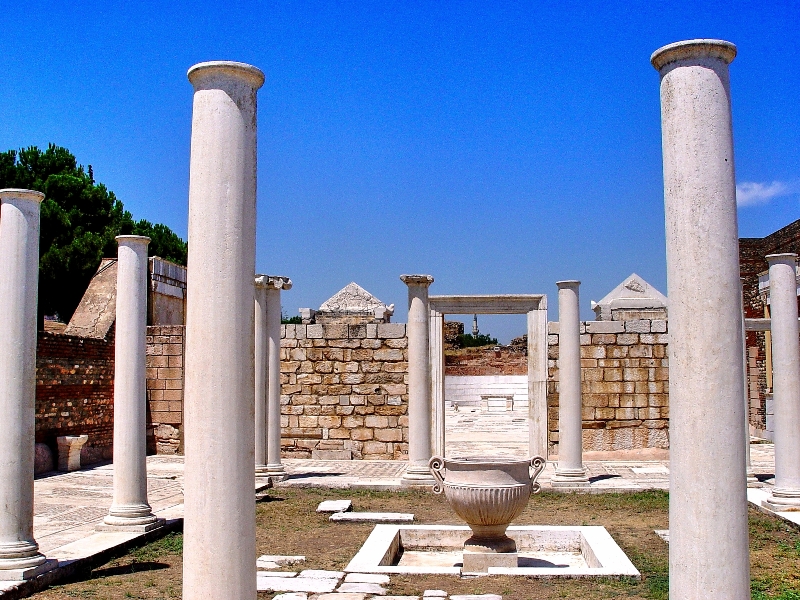
Sardis Synagogue. Photo ©Leon Mauldin.

Click on photo for larger view. In our photo you can see the forecourt fountain.  In the distance you can see the main hall with table.  Cimok gives the seating capacity of the main hall as one thousand occupants.

More to come.


Sardis, a Dead Church with a Name

May 31, 2010

As we continue to make posts of the cities of the seven churches of Asia (Rev. 2-3), we now come to the city of Sardis. The city of Sardis was located on the river Pactolus, at the foot of mount Tmolus. The modern name is Sart.

Sardis was formerly the capital of the ancient Lydian Kingdom and was one of the greatest cities of the ancient world. It was here at Sardis that coined money was invented.

Twice in the city’s history it had fallen into the hands of its enemies because the people of Sardis failed to “watch” (once to the Persians, 546 B.C., and later to the Selucids (215 B.C.).   The church at Sardis addressed in Rev. 3 had failed to be as watchful as they should.  Jesus said, “You have a reputation that you are alive, but in reality you are dead” (Rev.3:1, NET).  They had a good name, but their true character did not match their reputation.  They needed to change that.

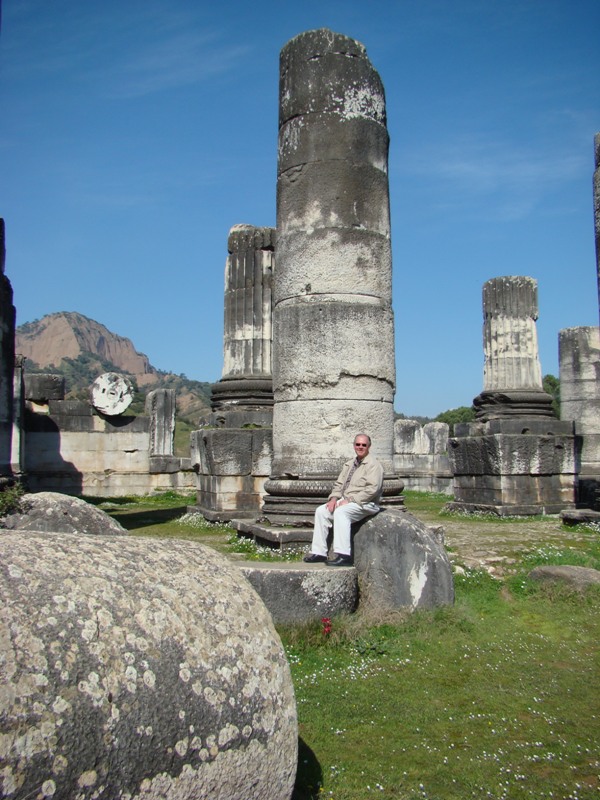
The city of Sardis was a center for the worship of the goddess Artemis.  The ruins of the temple were excavated by Howard C. Butler in the years 1910-1914. In our photo below you can see the ruins of the temple, and in the distance the city’s acropolis, on the edge of the Tmolus range.

The history of this temple goes back to the 5th century B.C.  Over time, additions were made to the site.  On the lower portion of the grounds you can see the ruins of the Roman altar.  See our photo below.

Sardis. Roman Altar at temple of Artemis. Photo ©Leon Mauldin.

Our photo below shows the site with Tmolus to our back. The brown brick building at right foreground is a church building constructed about the 5th century A.D.

Sardis. Artemis Temple and 5th century A.D. Church. Photo ©Leon Mauldin.

Remember to click on images for higher resolution.  More to come on Sardis!


Sardis, Philadelphia and Hierapolis

March 13, 2010

As we continued our visitation and study of the cities of the Seven Churches (Rev.2-3), we began the day today at Sardis, the former capital of the Lydian Empire.  Sardis has an interesting history. The inhabitants felt overly secure because of their seemingly impenetrable location, and fell to the Persians under Cyrus and later to the Greeks led by Alexander.  The spirit of the community tends to spill over into the church.  The church at Sardis had a name that they were alive, but Jesus said they were dead. Using their history of being caught off-guard as a springboard, Jesus told the church there to “be watchful, and strengthen the things which remain, that are ready to die, for I have not found your works perfect before God” (Rev. 3:2).

Pictured here is the temple of Artemis at Sardis:

Sardis Temple of Artemis. Photo by Martha Felker

Sardis Temple of Artemis. Photo by Martha Felker.

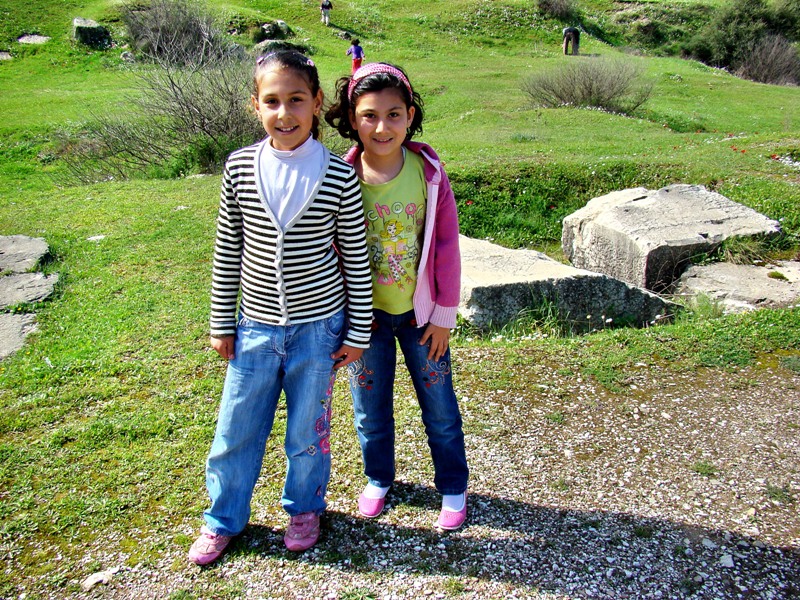
It seems that most kids, like these girls, like to have their picture taken.

Little Girls at Sardis. Photo by Leon Mauldin

Coinage was invented here at Sardis.  Pictured here is the site of the gold mining operation.Sardis Gold Mining.  Photo by Leon Mauldin.

Next we went to Philadelphia.  The church at Philadelphia had an “open door,” Jesus said.  This church and the one at Smyrna were the two which Jesus only commended and of which He had nothing to condemn.  The promise, “He who overcomes, I will make him a pillar in the temple of My God, and he shall go out no more” (Rev. 3:12), is likely a reference to the frequency of earthquakes in the area.  It is a promise of stability and strength.  Historically, the people would have to flee out of the city until the tremors had stopped; hence the promise, “he shall go out no more,” depicting safety and security for the faithful.

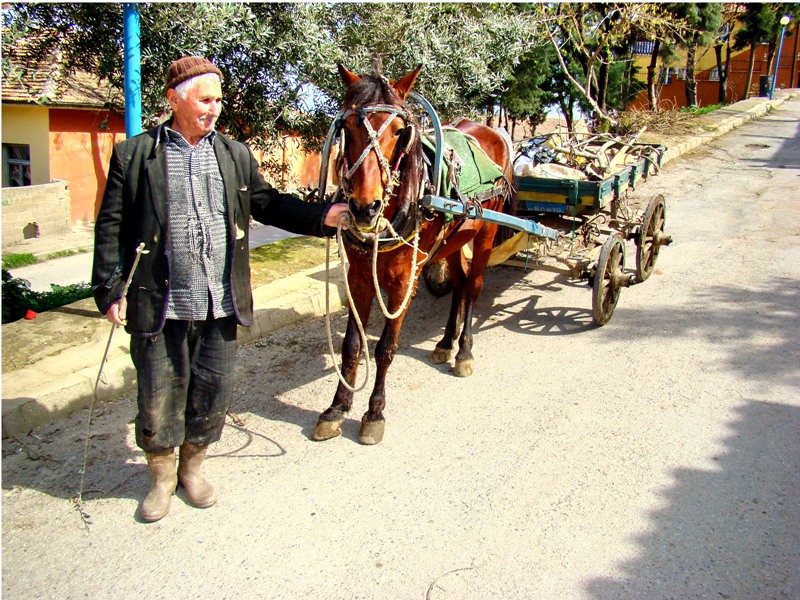
I thought I would post a couple of human interest photos from Philadelphia.Walking up to the acropolis we were met by an older gentleman with his horse.  He was very willing for me to take his photo.

Philadelphia Old Gentleman and Horse. Photo by Leon Mauldin.

Philadelphia Old Gentleman and Horse. Photo by Leon Mauldin.

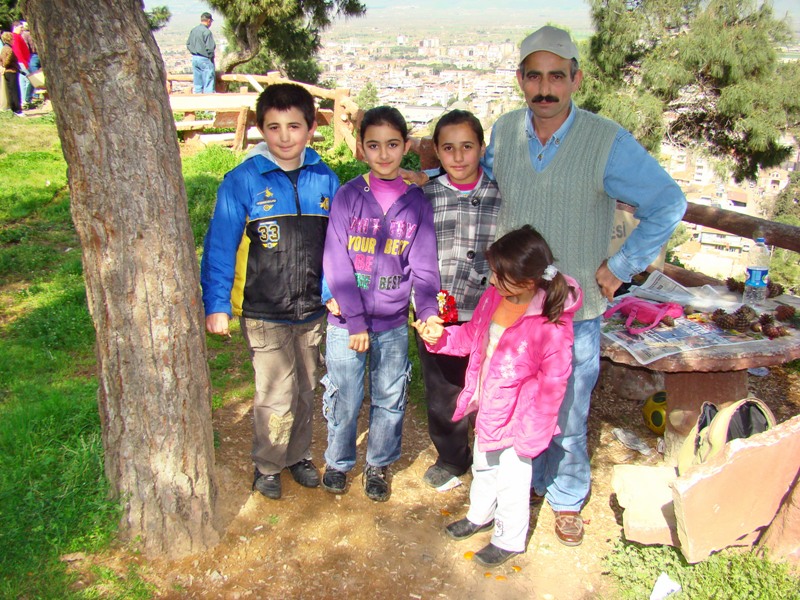
This photo was taken at the acropolis of Philadelphia.

Philadelphia Family Picnic. Photo by Leon Mauldin.

Philadelphia Family Picnic. Photo by Leon Mauldin.

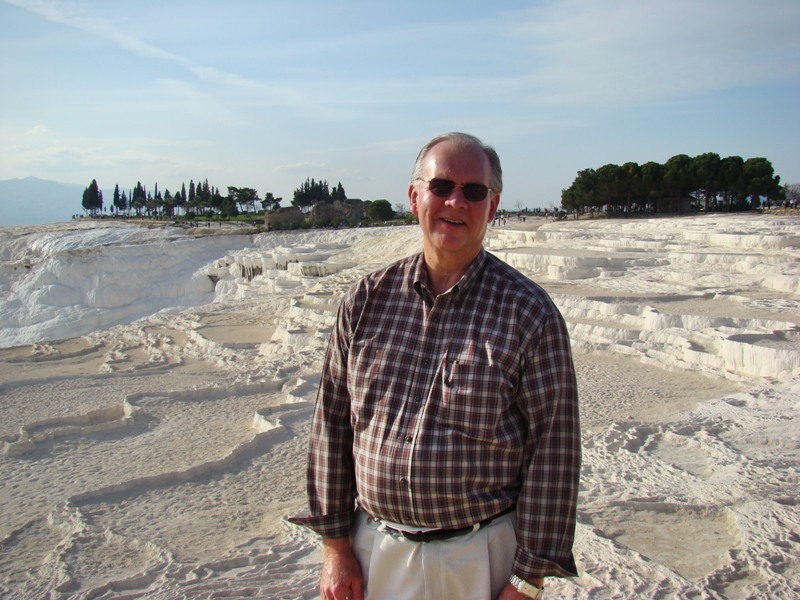
Next we traveled on to Hierapolis, just north of the Lycus River.  Hierapolis is not one of the Seven Churches, but is nearby Laodicea and Colossae.  Each of those three cities had New Testament churches, and are referenced in Col. 4:13-16.  Hierapolis was/is known for its medicinal thermal springs.  The warm water coursing down the slopes leaves behind white calcified limestone formations. Today the town is called Pamukkale, which means “cotton castle” or “cotton fortress.”

Leon at Hierapolis.  Photo by Johnny Felker.

Leon at Hierapolis. Photo by Johnny Felker.

For tonight I’ll leave you with a sunset photo.

Hierapolis Sunset.  Photo by Leon Mauldin

Hierapolis Sunset. Photo by Leon Mauldin