An Empty Tomb

April 4, 2010

As one descends Mt. Carmel going toward Megiddo, there is a rolling stone tomb whose usage dates back to the first century.
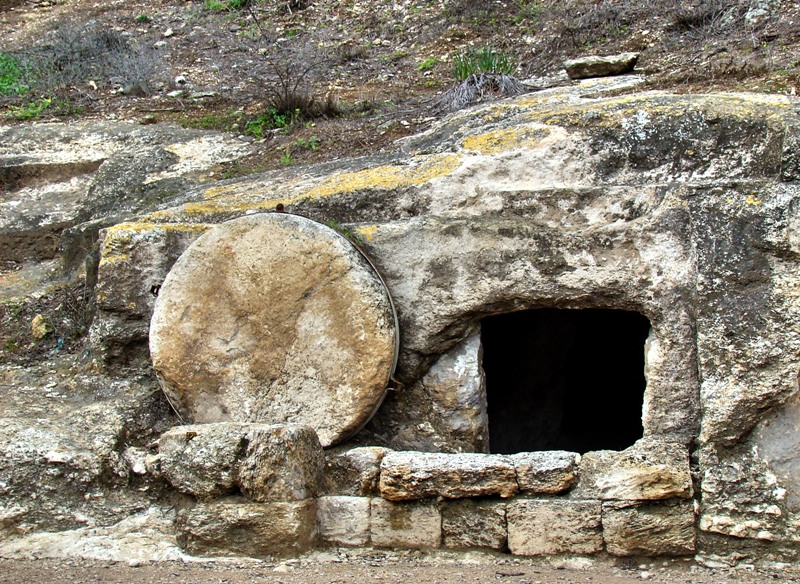
Rolling Stone Tomb Near Carmel. Photo by Leon Mauldin.

This tomb was discovered during road construction.  It so well illustrates the biblical texts that narrate the burial of Jesus.  Joseph of Arimathea had a new tomb (one which had not been previously used, John 19:38-42).  Assisted by Nicodemus, Joseph wrapped Jesus’ body in a clean linen cloth, “and laid it in his new tomb which he had hewn out of the rock; and he rolled a large stone against the door of the tomb, and departed” (Mt. 27:59-60). The tomb in our photo was hewn out of the rock, and you can see the large stone positioned to the left of the opening.

On Sunday, the 1st day of the week when Jesus was raised from the dead, the text says this about Peter and “the other disciple:”

So they both ran together, and the other disciple outran Peter and came to the tomb first. And he, stooping down and looking in, saw the linen cloths lying there; yet he did not go in. Then Simon Peter came, following him, and went into the tomb; and he saw the linen cloths lying there, and the handkerchief that had been around His head, not lying with the linen cloths, but folded together in a place by itself. Then the other disciple, who came to the tomb first, went in also; and he saw and believed. (John 20:4-8).

Note the record says the disciple stooped down to look in.  The tomb in our photo shows how this would of necessity be true.

Rolling Stone Tomb. Stooping to Look Inside. Photo by Ferrell Jenkins.

Note that we are not suggesting that this is the tomb in which Jesus was buried; it does however illustrate the type of tomb that would have been used.

For New Testament Christians, each first day of the week is significant.  Christians assemble in the name of Jesus Christ to partake of His memorial feast, the Lord’s Supper.  That Supper points back to His death, His body and His blood.  But we serve a risen Savior!  We proclaim His death till He comes (1 Cor. 11:26).


The Siloam Inscription

April 2, 2010

Another treasure in the Istanbul Archaeology Museum is the Siloam Inscription. Here is its history:

The Old Testament records the Assyrian threat to Judah in the days of good King Hezekiah (715-686 B.C.).  The Assyrians had already taken much of Judah’s territory (the Sennacherib Prism states Assyrian had taken forty-six fortified cities) and were advancing upon Jerusalem (701 B.C).  But Hezekiah had made wise preparation in anticipation of this fearsome foe. Hezekiah had two teams of tunnelers working from opposite directions; one starting from outside the city wall at the Gihon Spring, the other starting from inside the city, chiseling through 1750 feet of solid rock.  As a result, the “gently flowing waters of Shiloah” (Isa. 8:6) were channeled inside the city (2 Kings 20:20-21; 2 Chron. 32:30).

Thus Jerusalem had water inside the city walls, whereas Hezekiah “blocked the outlet of the water of the Upper Gihon” (2 Chron. 32:20, CSB). I.e., they would have water inside the city, but the enemy would not have ready access to water outside the city.

We hope the following photos will help illustrate the text for you:

Siloam Inscription. Istanbul Archaeology Museum. Photo by Leon Mauldin.

The inscription tells the story of when the two groups of workers met. The inscription reads:

“This is the story of the boring through. While [the tunnelers lifted] the pick-axe each toward his fellow and while 3 cubits [remained yet] to be bored [through, there was heard] the voice of a man calling his fellow—for there was a split [or overlap] in the rock on the right hand and on [the left hand]. When the tunnel was driven through, the tunnelers hewed the rock, each man toward his fellow, pick-axe against pick-axe. And the water flowed from the spring toward the reservoir for 1200 cubits. The height of the rock above the head of the tunnelers was a hundred cubits.”

Of course, more was involved than Hezekiah’s engineering feat of constructing the tunnel.  There was divine intervention as God delivered Jerusalem from the Assyrians: 2 Kings 19:35 records, “And it came to pass on a certain night that the angel of the LORD went out, and killed in the camp of the Assyrians one hundred and eighty-five thousand; and when people arose early in the morning, there were the corpses — all dead.”

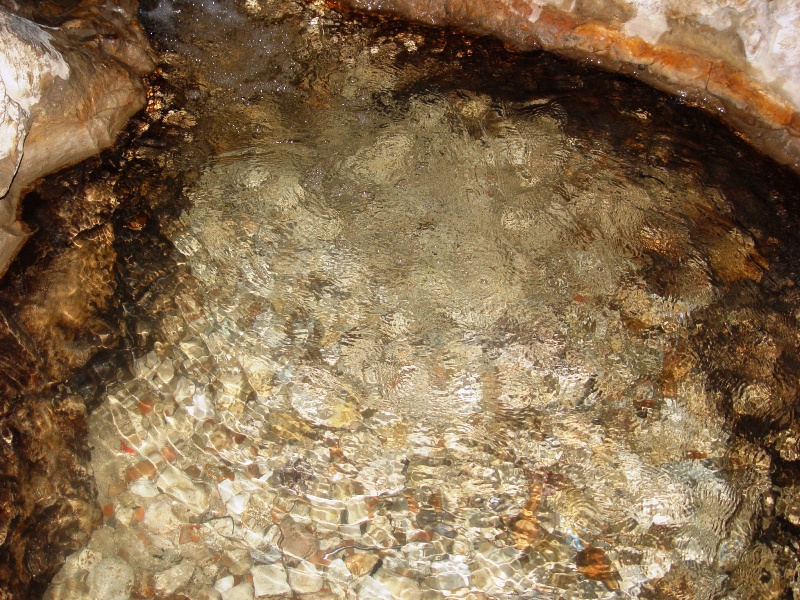
This photo shows the Gihon Spring, the source of the water supply.

Gihon Spring. Jerusalem. Photo by Leon Mauldin.

The water still flows inside the tunnel.

Inside Hezekiah's Tunnel. Photo by Leon Mauldin.

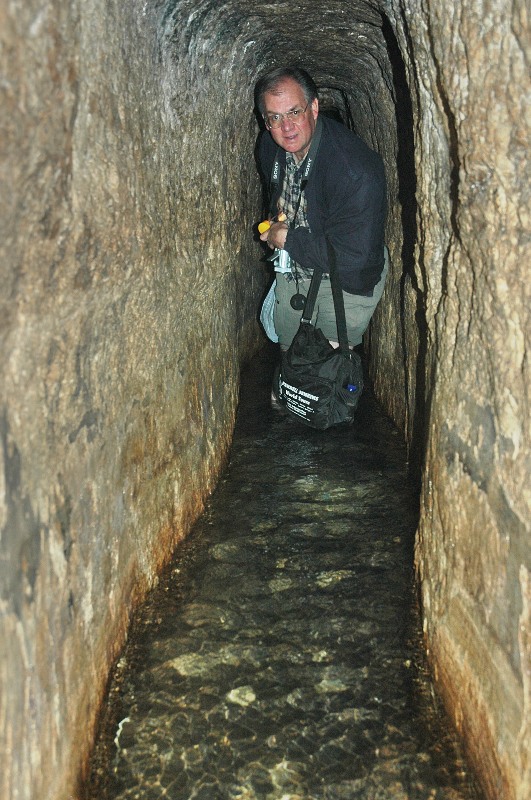
It’s a tight squeeze in places:

Leon Mauldin inside Hezekiah's tunnel. Photo by Ferrell Jenkins.

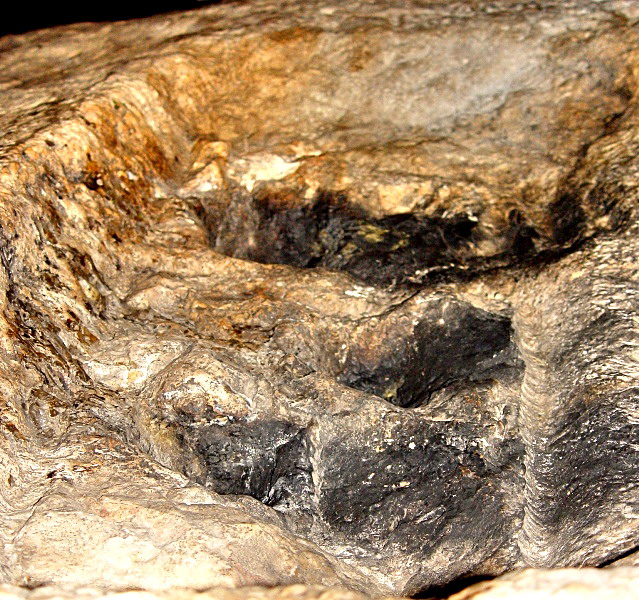
Finally, here is a photo of the location where the Siloam Inscription was chiselled out:

Siloam Inscription Location Inside Tunnel. Photo by Leon Mauldin.


Herodian Temple Inscription

April 1, 2010

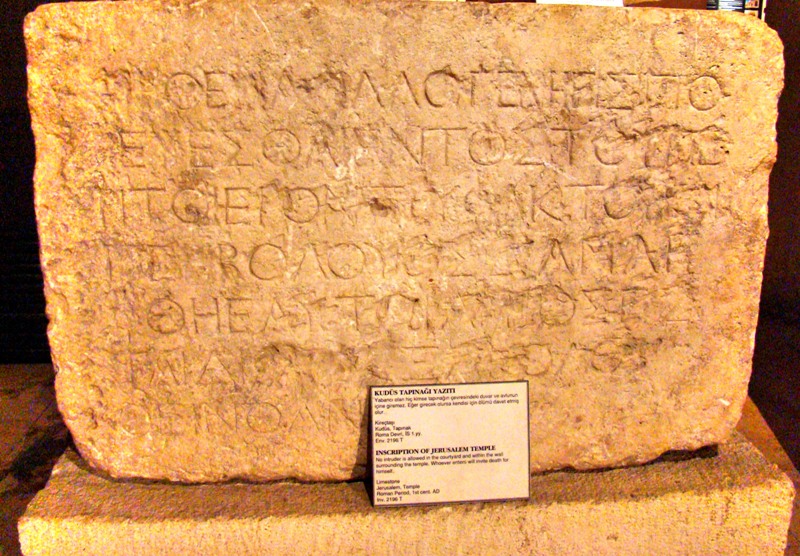
Recent posts have featured biblically related artifacts from the Archaeology Museum at Istanbul. Yet another very important exhibit housed there is an inscription from the Herodian temple, (so called because of extensive renovations by Herod the Great, renovations which continued after his death). Stones with inscriptions (written in both Latin and Greek) such as this featured below were posted at regular intervals within the temple, to designate the point at which Gentiles could proceed no further:

Herodian Temple Inscription. Istanbul. Photo by Leon Mauldin.

Thus far only one complete and two fragmentary copies (all in Greek) of this inscription have been discovered.  The inscription translates as follows:  “No foreigner is to enter within the balustrade and embankment around the sanctuary.  Whoever is caught will have himself to blame for his death which follows.”

Visitors to the temple in Jesus’ day, and in Paul’s time, would have seen this stone and others like it. Paul in mind this separation of Jew and Gentile, symbolized by this inscription, when he wrote to the Ephesians, telling what a difference the Gospel had made.

For He Himself is our peace, who has made both one, and has broken down the middle wall of separation [emp. mine, L.M.], having abolished in His flesh the enmity, that is, the law of commandments contained in ordinances, so as to create in Himself one new man from the two, thus making peace, 16 and that He might reconcile them both to God in one body through the cross, thereby putting to death the enmity.  And He came and preached peace to you who were afar off and to those who were near.  For through Him we both have access by one Spirit to the Father. Now, therefore, you are no longer strangers and foreigners, but fellow citizens with the saints and members of the household of God,  having been built on the foundation of the apostles and prophets, Jesus Christ Himself being the chief cornerstone,  in whom the whole building, being joined together, grows into a holy temple in the Lord,  in whom you also are being built together for a dwelling place of God in the Spirit. (Eph. 2:14-22).

So the separation of Jew and Gentile no longer exists in Christ; Jew and Gentile are on an equal footing; both are sinners and must be reconciled unto God through the cross, in one body.  This is the temple referenced in our text; a building made of people, living stones, Jews and Gentiles who have come to the Lord for salvation.


The Kadesh Treaty

March 30, 2010

Numerous references are made in the biblical text to the Hittites. You will remember that Abraham bought the cave and the field of Macpelah from Ephron the Hittite, as a burial place for his family (Gen. 29:49). Hundreds of references are made to Egypt and the Egyptians.  The oldest known treaty between two nations is the “Kadesh Treaty,” an agreement between the Hittites and the Egyptians.

You may be surprised to learn that until fairly recently, many skeptics ridiculed biblical references to the Hittites, saying there was no such people, and the biblical writers were inventing fiction. Now so much information is available on the vast Hittite empire that doctoral degrees may be earned in Hittite studies!

In an article entitled, “Is the Bible Trustworthy?” (The Apologetics Study Bible) Walter Keiser wrote:

Archaeology has helped to show that the culture, persons, and events of the Old Testament are trustworthy. Archaeology has done much to further the cause of showing the reliability of the OT. Where there were alleged missing persons mentioned in the OT, but not known from external sources, such as King Sargon in Isaiah 20:1, or Governor Sanballat of Samaria (Neh 2:10), or kings David, Ahab, Jehu, and Hezekiah, Menahem, and even a prophet, Balaam, in each case spectacular finds have vindicated the claims of the OT. In like manner, where the OT claimed there were peoples such as the Hittites or the Horites, later finds vindicated the presence of these as well as other allegedly missing peoples.

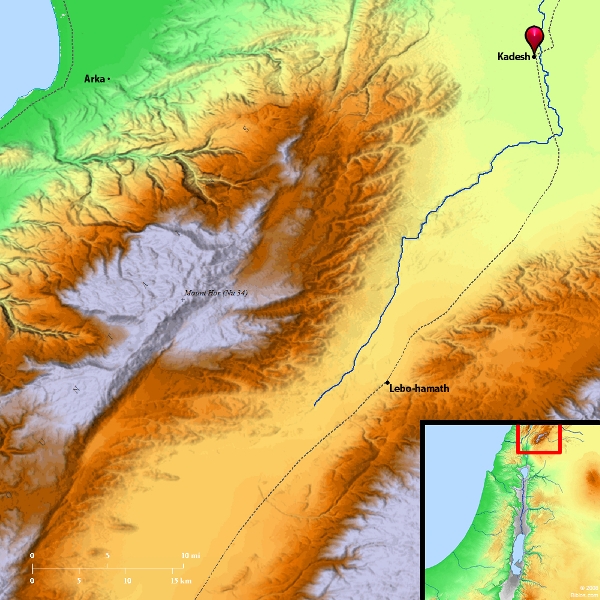
The treaty is called the Kadesh Treaty, as Kadesh (sometimes spelled Qadesh) on the Orontes River was the battle site for these two major forces in 1274 B.C.  See map here for location of Kadesh.

Kadesh, scene of battle Hittites vs Egyptians. Source: bibleatlas.org

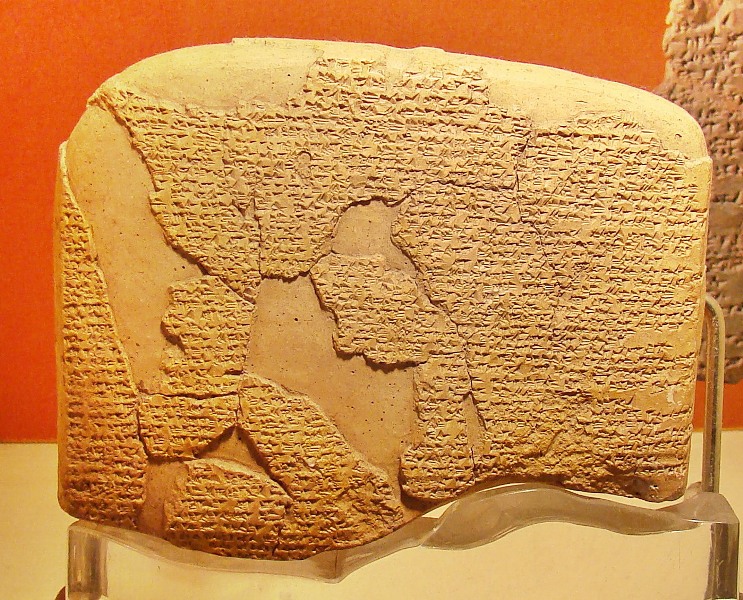
Both the Hittites and the Egyptians wrote their own version of the battle, each suggesting a more favorable outcome for their respective country; this is especially true of the Egyptian version.  Most scholars believe the battle was a stalemate.  Pictured below is a photo of the Kadesh Treaty, written in Akkadian, in Istanbul’s Archaeology Museum.

Kadesh Treaty, Istanbul Archaeology Museum. Photo by Leon Mauldin

The king of the Hittite Empire was Hattusilis III; the Egyptian king was Rameses II. In summary, the treaty states that neither of these nations would battle one another.  Further, if another nation were to attack either of them, they would rise to their assistance against the aggressor.

Remember to left-click on images for higher resolution.


Gezer’s Standing Stones

March 29, 2010

Regarding the biblical city of Gezer, editor Hershel Shanks wrote,

Gezer was a major metropolis in ancient times. It overlooked and dominated the Via Maris (or Way of the Sea), a major highway between Egypt and Mesopotamia. At 700 feet above sea level, Gezer commanded a magnificent view in every direction. Thus it controlled not only the main highway but also the principal trunkline that branched off to Jerusalem. This was one of the most important crossroads in the country. (Biblical Archaeology Review, May/June 1994).

Speaking specifically of the standing stones at Gezer’s high place, Shanks said,

This is one of the most impressive archaeological sites in Israel, yet it is rarely visited even by aficionados because it is so difficult to get to—unmarked and neglected. The high place consists of ten monumental standing stones dating from the Canaanite period (about 1600 B.C.) that probably retained their now-mysterious religious significance for hundreds of years thereafter. Does each of these huge standing stones represent a tribe? Or a city? Were they placed here as witness to some kind of covenant? (ibid.).

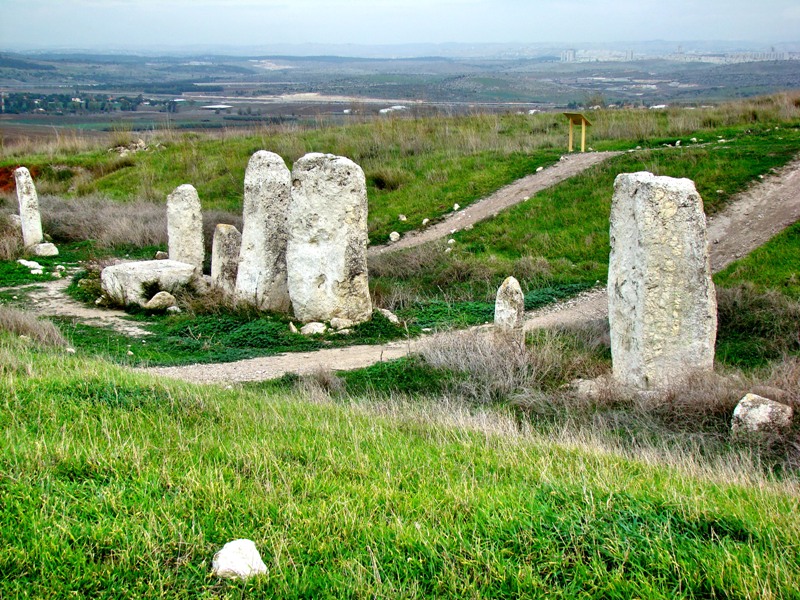
Today’s photo shows the standing stones at Gezer. This high place was located at the highest point in the city.

Standing Stones at High Place at Gezer. Photo by Leon Mauldin

Standing Stones at High Place at Gezer. Photo by Leon Mauldin

Scholars believe that this high place dates back to Canaanites occupation (1500 B.C.). While some suggest that these stones, some of which are more than nine feet high, were erected to signify treaties between nations, others believe this was a cultic center.  The site brings to mind Lev. 26:1: “You shall not make for yourselves idols, nor shall you set up for yourselves an image or a sacred pillar [Heb. matstsebah], nor shall you place a figured stone in your land to bow down to it; for I am the LORD your God” (NASB).


Gezer’s Defense Gate

March 28, 2010

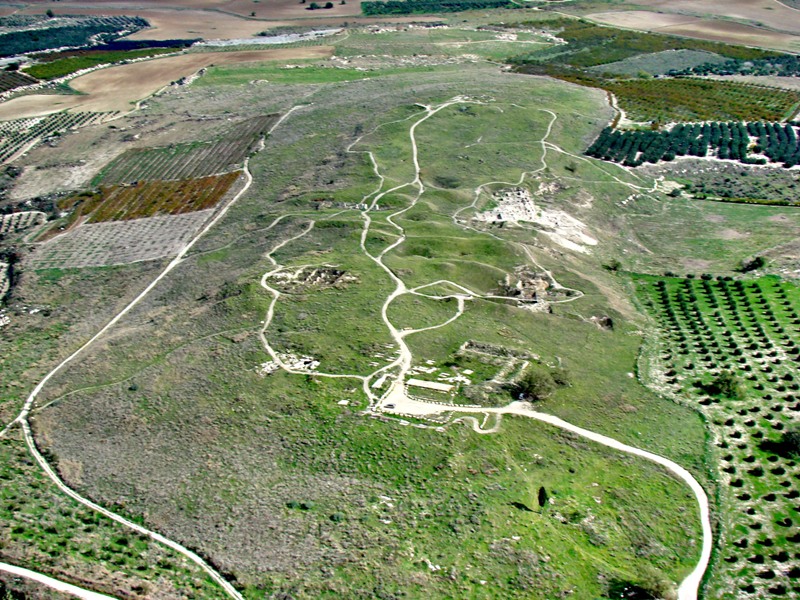
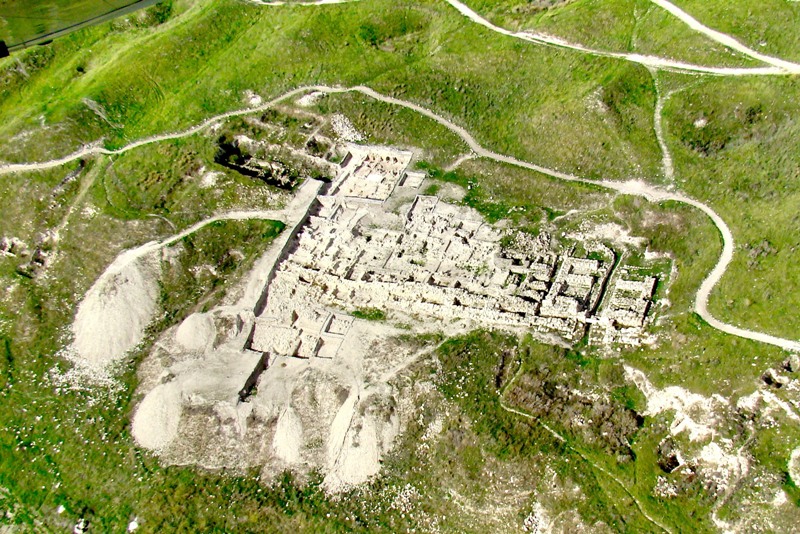
Our previous post featured a photo of one of Gezer’s boundary stones.  We noted, “Excavations (1964–73) have uncovered a six-chambered gate and defenses” (NBD).  Pharaoh king of Egypt took Gezer from the Canaanites and gave it as dowry for his daughter, who became Solomon’s wife (1 Kings 9:16).  Because of its strategic location in the Shephelah in the south, Solomon made it a fortress city.  The six-chambered gate referenced in the NBD article was characteristic of Solomon’s other fortress cities, such as Hazor and Megiddo (both also strategically located).

This aerial photo shows the tel of Gezer from the south looking north.

Gezer Aerial Overview. Photo by Leon Mauldin.

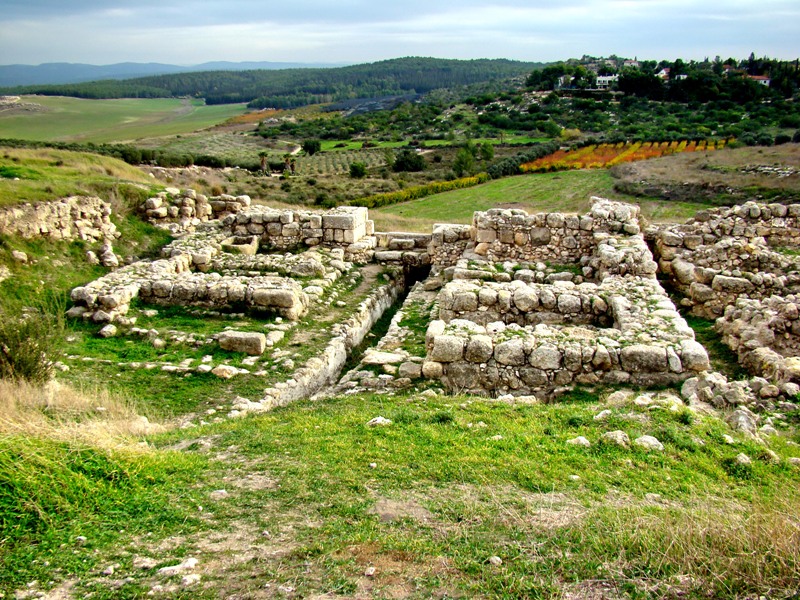
In the right center in photo below you can see the 6-chambered  gate.

Gezer Aerial Detail. Photo by Leon Mauldin.

This shows the gate at ground level. You can see the central hill country in the background.

Gezer Six-Chambered Gate. Photo by Leon Mauldin.

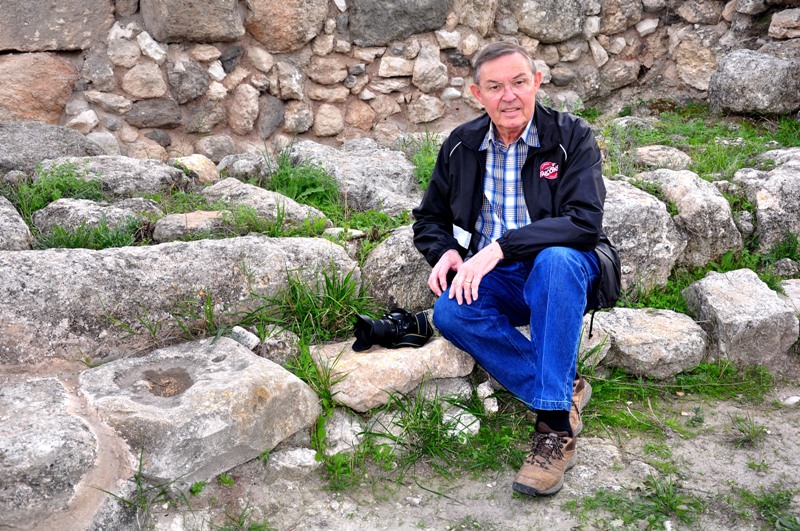
Inside the gates there were benches where people could sit and visit, or carry on business transactions. In Dec. 2009 my friend and former professor Ferrell Jenkins and I visited the site.  This photo demonstrates the concept of “sitting at the gates” references in such passages as Gen. 19:1; 2 Sam. 19:8; Prov. 31:23, etc. Visit his blog at http://ferrelljenkins.wordpress.com/

Ferrell Jenkins at Gate at Gezer. Photo by Leon Mauldin.


Gezer Boundary Stone

March 27, 2010

The New Bible Dictionary (3rd ed.) gives this information about the biblical city of Gezer:

One of the chief cities of pre-Roman Palestine from at least 1800 BC. It is strategically located on the road from Jerusalem to Joppa, on the most N ridge of the Shephelah overlooking the Ayyalon valley, and 12 km from the main highway between Egypt and Mesopotamia. Pharaoh Thutmosis III captured the Canaanite city in c. 1468 BC. Ten el-AMARNA letters from Gezer show the city vacillated but finally remained loyal to Egypt in the 14th century BC. At the time of the Hebrew conquest its Canaanite king, Horam, tried to help Lachish but was defeated (Jos. 10:33; 12:12). Gezer, however, was not taken by the Israelites (Jos. 16:10; Jdg. 1:29). Even so the city was included in Ephraim’s territory as a Levitical city (Jos. 21:21). Soon after the conquest Pharaoh Merenptah claims, on his stele, to have recaptured it. Archaeological evidence indicates that after 1200 BC the Philistines controlled the city, possibly with Egyptian approval, which may explain David’s battles in this region (2 Sa. 5:25). Gezer became an Israelite possession when the Egyptian pharaoh gave it to his daughter on her marriage to Solomon, who rebuilt the city and its defenses (1 Ki. 9:15–17). Excavations (1964–73) have uncovered a six-chambered gate and defenses.

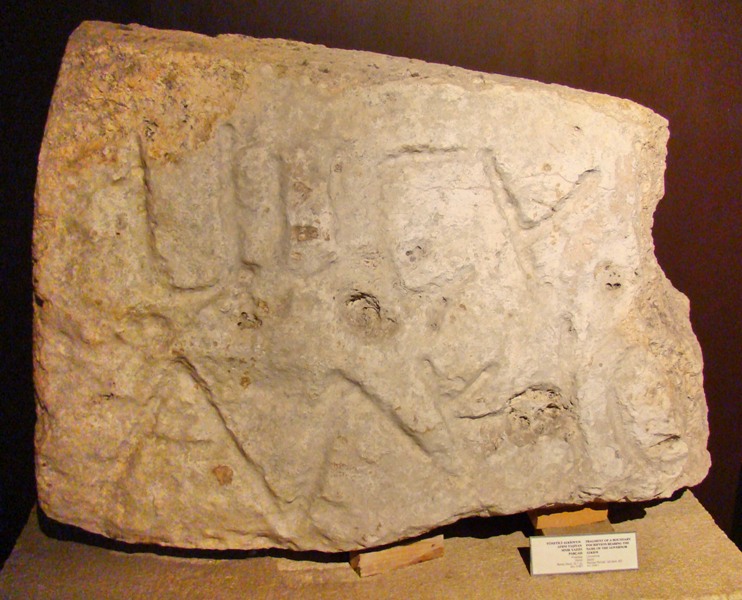
The Biblical Archaeology Review (July/August 1983) observes that the city of Gezer was one of only a handful of biblical cities identified by an inscription found at the site. In the case of Gezer there were eleven boundary stones found, nine of which contain the words, “Boundary of Gezer.” Most of these are bilingual, written in both Hebrew and Greek (see Dictionary of NT Background, entry on “Epigraphy”).  Today’s photo features one of the Gezer boundary stones which is located in the Archaeological Museum at Istanbul.

Gezer Boundary Stone. Istanbul. Photo by Leon Mauldin

When you study the Bible, you are not reading fiction.  It deals with real places, real people, and real events.  Discoveries such as these boundary stones reinforce the factual nature of Scripture.


The Shadow on the Sundial

March 26, 2010

King Hezekiah was one of Judah’s best kings. He faithfully led the nation in very difficult times.  Then he became sick and was near death. God sent the prophet Isaiah to Hezekiah with the message, “Set your house in order, for you shall die and not live” (Isa. 38:1).  Hezekiah fervently prayed to the Lord, his prayer was heard, and the Lord promised to add 15 years to his life. As a sign to confirm this promise, God said, “Behold, I will bring the shadow on the sundial, which has gone down with the sun on the sundial of Ahaz, ten degrees backward” (Isa. 38:7,8, NKJV).

Some translations render the Hebrew term maalah as “stairway” (see NAS, CSB).  The NET Bible notes, “These steps probably functioned as a type of sundial.”

Whether the term means “steps” or “sundial,” certainly what is under consideration is a means of telling time by the moving shadow cast by the sun.  The miraculous sign was that the shadow would return, it would go backward by 10 “steps” or “degrees.”

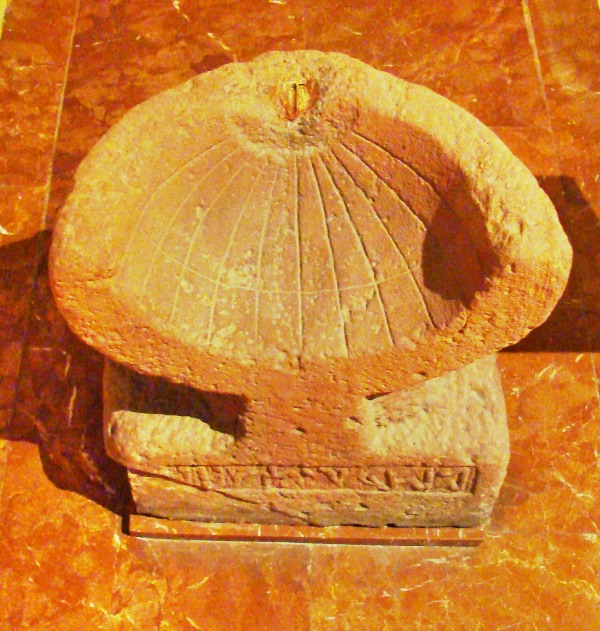
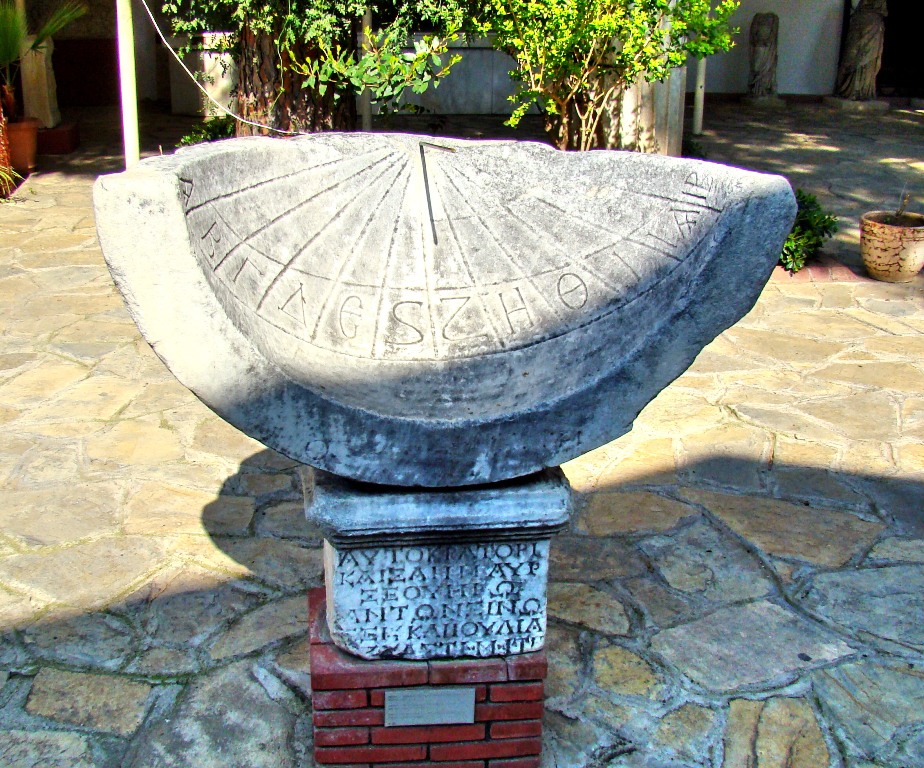
Today’s photos feature a couple of ancient sundials.

Sundial. Archaeological Museum, Istanbul. Photo by Leon Mauldin.

This sundial is housed in the Archaeological Museum in Istanbul, and is dated as 1st century B.C. The accompanying sign has this info: The concave inner side of the half dome shaped dial is divided into twelve parts by eleven radial lines.  The rod, perpendicular to the center, is the pointer. The shadow of the pointer falls on the radial lines as the sun moves. Although the system of dividing the time passing between sunrise and sunset into twelve equal units was used in Mesopotamia as early as the Sumerian times this type of dial is known as the Babylonian dial.

The rod referenced above is missing from this sundial.  But you can see the rod in the sundial below, casting its shadow.  This artifact is located in the Ephesus Museum.

Sundial. Ephesus Museum. Photo by Leon Mauldin.

Whether what is intended in Isa. 38 is this type of sundial, or another system (steps, stairway) is meant, the principle is the same.  God miraculously returned the shadow to confirm to Hezekiah that He would extend his life as He had promised.


Nebuchadnezzar’s Ishtar Gate Lions

March 25, 2010

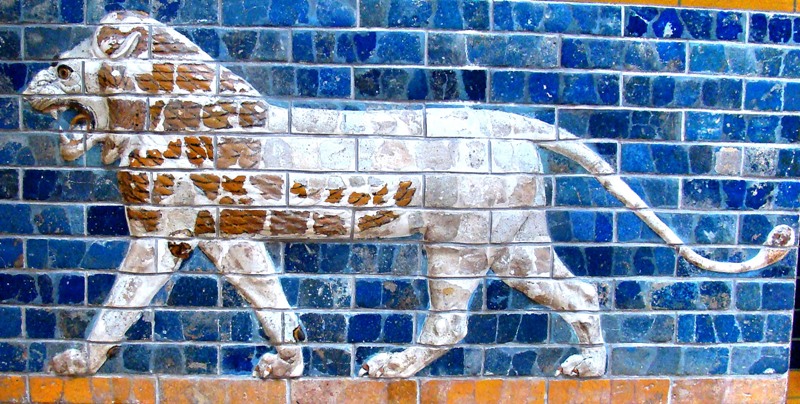
Nelson’s New Illustrated Bible Manners and Customs informs us that in Nebuchadnezzar’s original arrangement in Babylon, “…a section of paved road over two hundred yards long led into the Ishtar Gate. On either side of the roadway lions (sixty on each side), symbols of Ishtar, in molded glazed brick, in red, white, and yellow, lined the walls. The roadway still contains the paving stones inscribed with Nebuchadnezzar’s dedication” (p. 309).

Today’s photo shows one of the panels of glazed bricks, depicting a lion.

Babylon Ishtar Gate Lion. Istanbul Museum. Photo by Leon Mauldin.

“The excavator Koldewey carried off to Berlin many bricks from the Ishtar Gate and the approach to it, and a diminutive gate with its approach has been recreated in the archaeological museum in Berlin. Anyone who walks through this part of the museum can imagine himself as Daniel or Ezekiel walking into Babylon to meet Nebuchadnezzar. Panels of these sacred animals are also on display in the archaeological museums in Baghdad and Istanbul and the Metropolitan Museum in New York” (ibid.).

Such displays may give us a glimpse of the splendor and beauty of ancient Babylon. It gives us some insight into Nebuchadnezzar’s boast: “The king uttered these words: ‘Is this not the great Babylon that I have built for a royal residence by my own mighty strength and for my majestic honor?'” (Dan. 4:30, NET).  The mighty monarch learned that “the Most High rules the kingdom of men and gives it to whom he will and sets over it the lowliest of men” (Dan. 4:17, ESV), when God humbled him. “He was driven from human society, he ate grass like oxen, and his body became damp with the dew of the sky, until his hair became long like an eagle’s feathers, and his nails like a bird’s claws” (v. 33).  When he realized that God is sovereign, and that he reigned only because God permitted it, then he again ascended the throne.  He praised God saying, “But at the end of the appointed time I, Nebuchadnezzar, looked up toward heaven, and my sanity returned to me. I extolled the Most High, and I praised and glorified the one who lives forever. For his authority is an everlasting authority, and his kingdom extends from one generation to the next” (v.34).


Homeward bound

March 21, 2010

Today completed our biblical study tour of Turkey and Greece, as we have traveled in the steps of Paul and John.  Our flight is to leave early tomorrow (Mon) morning.  We have all profited from the trip, and our understanding of Scripture in its historical and geographical context has been enhanced.

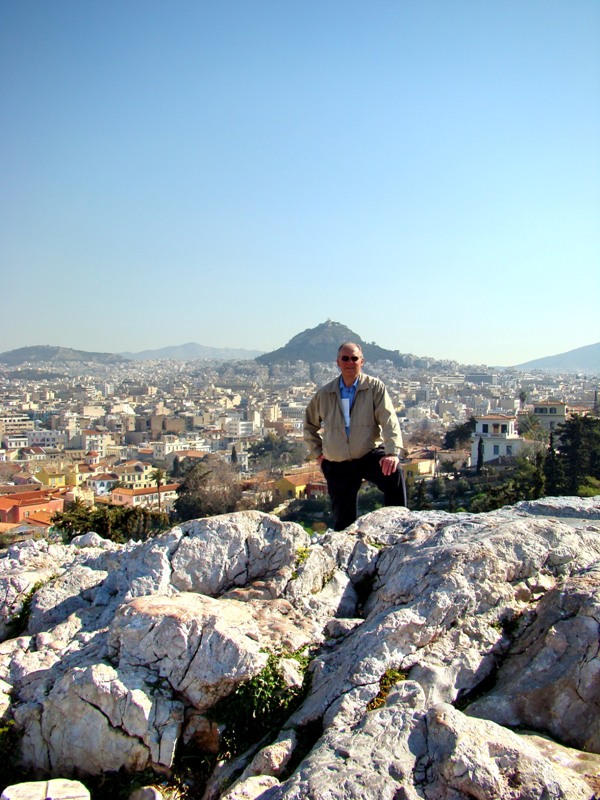
On Friday our group stood on Mar’s Hill in Athens.  During the 2nd Missionary Journey, it was in this area that Paul addressed the Stoic and Epicurean philosophers. While an invitation to speak to them sounded potentially promising (Acts 17:19), Luke informs us, “For all the Athenians and the foreigners who were there spent their time in nothing else but either to tell or to hear some new thing” (v.21).  It turned out that these people who were looking for novelty were not looking for truth.  Paul wrote of those who are “always learning and never able to come to the knowledge of the truth” (2 Tim. 3:7).  Sadly, when Paul spoke of the resurrection of Christ, the Athenians mocked (Acts 17:32). A few responded favorably, but the message of the Gospel was quickly dismissed by most of the hearers there.

Today’s photo shows the Areopagus (Mar’s Hill), which is situated slightly below the acropolis.  Ares was the Grecian mythological god of war; “pagos” means “a rocky hill.” Thus Areopagus means the “Hill of Mar’s; hence, Mar’s Hill.

Areopagos (Mar's Hill) at Athens.