The god Horus Protecting King Nectanebo II

October 21, 2014

The god Horus, symbolized by the falcon, had a very close relationship with the Pharaoh in Egyptian mythology. Pharaoh was believed to be the god-king, and “was regarded as the god Horus incarnate” (Bible and Spade 1990, vol. 3, no4, p. 111).

Our photo shows the Egyptian god Horus protecting King Nectanebo II. He reigned during the Late Period, Dynasty 30, 360-343 BC. This statue is said to be from Heliopolis, Egypt.

Egyptian god Horus. Metropolitan Museum. Photo by Leon Mauldin.

Egyptian god Horus. Metropolitan Museum. Photo by Leon Mauldin.

The king holds a sword in his left hand. This statue is on view in Gallery 128 in the Metropolitan Museum of Art, New York. Click image for larger view.


The Goddess Sakhmet

October 9, 2014

During Egypt’s New Kingdom Period, in the 18th dynasty, Amenhotep III (ca. 1390-1352 BC) commissioned hundreds of statues of the goddess Sakhmet for his mortuary temple in western Thebes. These statues were intended as monumental prayers to appease the goddess and guarantee peace and health.

Goddess Sakhmet. Metropolitan Museum, NY. Photo by Leon Mauldin.

Goddess Sakhmet. Metropolitan Museum, NY. Photo by Leon Mauldin.

“The goddess Sakhmet represents the forces of violence, disaster, and illness. Her lion’s head expresses her potentially fierce and destructive character and, appropriately, her ancient Egyptian name, Sakhmet, means ‘the powerful one.’ The sun disk on her head identifies the goddess as the daughter of the sun god Re” (from museum placard).

This puts me in mind of what YHWH said prior to the 10th of the ten plagues of Egypt: “and on all the gods of Egypt I will execute judgments: I am the LORD” (Ex. 12:12).

Click image for larger view.


Temple Inscription Fragment

September 15, 2014

Some biblical texts are especially illuminated by archaeological finds. For example, Acts 21:28 records the false charge against Paul, “He also brought Greeks into the temple and has defiled this holy place” (v.28). The next verse shows this they “supposed” (NET “assumed). Ephesians 2:14 speaks of Jesus’ death breaking down “the middle wall of separation” between Jews and Gentiles.

Temple Inscription Fragment. Israel Museum. Photo by Leon Mauldin.

Temple Inscription Fragment. Israel Museum. Photo by Leon Mauldin.

Our photo shows one of the warnings posted marking the boundary within the temple complex beyond which no Gentile could proceed. The inscription read, “NO FOREIGNER IS TO GO BEYOND THE BALUSTRADE AND THE PLAZA OF THE TEMPLE ZONE. WHOEVER IS CAUGHT DOING SO WILL HAVE HIMSELF TO BLAME FOR HIS DEATH WHICH WILL FOLLOW.”

A complete tablet is housed in the Istanbul Museum, and can be seen in a previous post here.

So the Acts 21 text means that Paul was charged with taking a Gentile beyond the balustrade marked off by signs just like this one.

The Ephesians 2 text shows that with Jesus’ death on the cross, reconciliation is made possible between men (Jew and Gentile) and God, and those reconciled unto God are reconciled to each other. The reconciled are in one body (the church, Eph. 1:22-23). That distinction epitomized by the wall of separation, and reflected by these warning signs, has been removed.


Balance and Caution in Use of Archaeology

September 4, 2014

A question from a friend:

It concerns the crossing of the Red Sea. There is an awful lot of talk about the “traditional” Red Sea crossing maps versus the so-called “archaeological findings” purportedly found at the Gulf of Aqaba.

. . . However, some of our brethren have begun using maps and pictures that show what is believed to be possibly the “real Mt. Sinai” with charred rock covering its cap, a “split rock” in the wilderness, chariot wheels, etc… (I’m not buying it.) All of these things I see look like the work of Ron Wyatt, but all sorts of people have these things on their internet sites.

. . . All of that said, I was wondering if you had any material or resources dealing with the subject head on. I do not plan on making this an issue… nor do I plan on bringing anyone else’s name into the mix. I would just like to be able to give a “ready defense” if I am ever called upon. I’d greatly value your input on the matter. Thank you.
Others more qualified that I have dealt with the claims of Mr. Wyatt. As a starting point I can recommend the following sources: Ferrell Jenkins has an article entitled, “Pharaoh’s Chariot Wheels and Other Things that Won’t Float — Examining the Claims of the Late Ron Wyatt ,” that you can access here, plus another article entitled, “Pseudo Archaeologists”here. These articles have numerous related links for further reading. Additionally I would recommend Gordan Franz’s site, Life and Land, here. Use the search box. He has several entries under “Cracked Pot Archaeology.” The use of caution in using Mr. Wyatt’s material/claims would be prudent.
While no one can be certain of the exact location of Israel’s crossing. the best evidence would be somewhere along the Suez.

From Sinai looking across Suez to Egypt. Photo by Leon Mauldin.

I took the above photo in 2003, having crossed the Suez. We are standing on the Sinai side looking back across Egypt.

I personally conclude that the traditional Mt. Sinai (Jebel Musa) best fits the biblical criteria.

The above info was posted Sept. 28, 2013.

See Ferrell Jenkins’ current post, “The Route of the Exodus and the Location of Mt. Sinai,” for a number of links and as well as balanced observations. I recommend it. Click here.

Click photo for larger view.


Follow-up on Bethlehem of Galilee–Reader Response

September 2, 2014

In our previous post (click here) on Bethlehem of Galilee we referenced Ibzan (of Judges 12:8-10) of Bethlehem and observed: “Very likely this is the Bethlehem of Galilee, not the Bethlehem of Judah.” A reader asks, “I’ve learned about the existence of this town sometime ago, but I’ve never found out WHY it is likely that this Bethlehem is Ibzan’s hometown. Which arguments support this assumption?”

That is a good question. First, remember that Joshua 19:15 lists Bethlehem among other cities Zebulun inherited.

Wolf, in The Expositor’s Bible Commentary observes, “The Zebulun location is favored because the southern city is usually identified as “Bethlehem in Judah” (17:7-9; 19:1-2, 18)” (Vol. 3, p.459). Note that is the wording repeatedly in each of these verses. It seems consistent that when the southern Bethlehem is intended, it is indicated, for example, Judges 17:7: “Now there was a young man from Bethlehem in Judah, of the family of Judah, who was a Levite; and he was staying there” (NASB). Note the rendering of the KJV: “And there was a young man out of Bethlehemjudah of the family of Judah, who was a Levite, and he sojourned there.”

Keil & Delitzsch: “Ibzan sprang from Bethlehem,—hardly, however, the town of that name in the tribe of Judah, as Josephus affirms (Ant. v. 7, 13), for that is generally distinguished either as Bethlehem ‘of Judah’ (Judg. 17:7, 9; Ruth 1:2; 1 Sam. 17:12), or Bethlehem Ephratah (Micah 5:1), but probably Bethlehem in the tribe of Zebulun (Josh. 9:15)” (Vol 2, p. 287). To the Micah passage we could add Gen. 35:19: “So Rachel died and was buried on the way to Ephrath (that is, Bethlehem)” (see also Gen. 48:7).

Pulpit Commentary: “But as Bethlehem of the tribe of Judah is generally called Bethlehem of Judah, or Bethlehem-Ephratah, and as Elon and Abdon were judges in North-East Israel, it is perhaps more probable that Bethlehem of Zebulun is meant” (p. 136). In his comment above, author A.C. Hervey is making two points: the fuller designation (of Judah or Ephratah) is used when Bethlehem of the south is intended, and second, the context of Judges 12:8-10. Verse 11 mentions Judge Elon of Zebulun, and Judge Abdon (vv. 13-15), on the border between Ephraim and Manasseh. While it is not conclusive proof, Ibzan’s placement in the text is in the context of judges to the north. Note in this connection that Butler, in the Word Biblical Commentary observes, “The context appears to point to the northern location. . .” (Vol. 8, p. 297).

Avraham Negev states regarding Bethlehem of Galilee: “A town in the territory of Zebulun, (Josh. 19:15), the birth-place of the judge Ibzan and the place where he was buried (Judg. 12:8–10)” (The Archaeological Encyclopedia of the Holy Land).

While I do not think that truth is determined by the number of people who advocate a particular position, it is true that the majority of scholars favor Bethlehem of Zebulun of Galilee as best fitting the text and context of Judges 12:8-10.

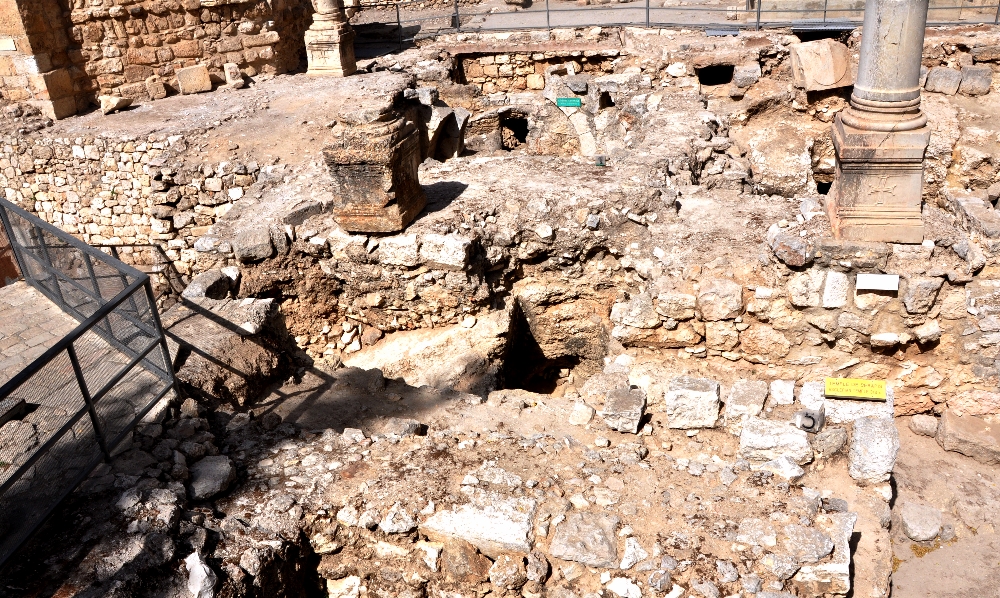
Bethlehem of Galilee. Further remains from the Templars. Photo by Leon Mauldin.

Bethlehem of Galilee. Further remains from the Templars. Photo by Leon Mauldin.

Click image for larger view.


Bethlehem of Galilee

August 28, 2014

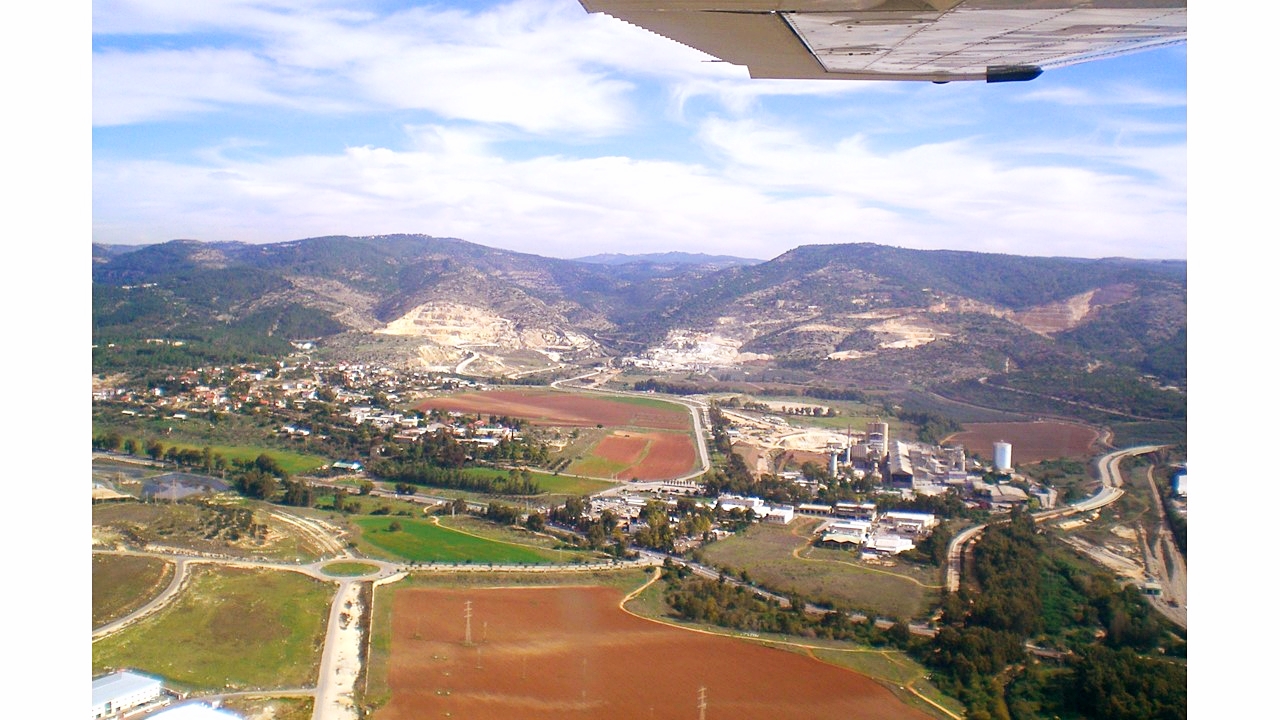
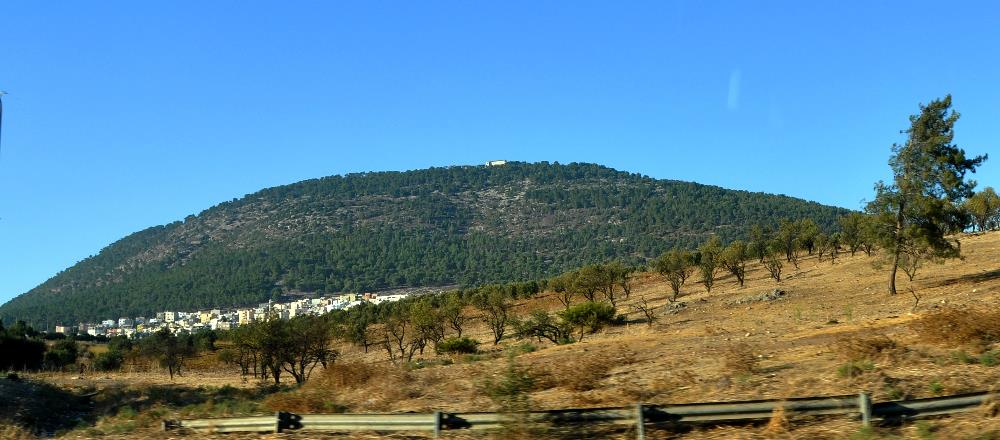
In studying the book of Judges, brief mention is made of Ibzan of Bethlehem. The text notes that he had 30 sons and 30 daughters, and states that he judged Israel for seven years (Jud. 12:8-10). Very likely this is the Bethlehem of Galilee, not the Bethlehem of Judah, the latter being remembered of course as the birthplace of Jesus (Micah 5:2; Matt. 2:1). There were two biblical cities named Bethlehem. This is why the Bible is very specific in clarifying that Jesus was born in Bethlehem of Judah in these texts.

Joshua 19 describes the inheritance of Zebulun (of Galilee) and Bethlehem is included in the list: “Included also were Kattah and Nahalal and Shimron and Idalah and Bethlehem; twelve cities with their villages” (v.15). Note the location of the map here:

Bethlehem of Galilee. Map by BibleAtlas.org.

Bethlehem of Galilee. Map by BibleAtlas.org.

Here is a shot of the city sign upon entering from the south.

Bethlehem of the Galilee sign. Photo by Leon Mauldin.

Bethlehem of the Galilee sign. Photo by Leon Mauldin.

The earlier presence of the Templars may still be seen.

Bethlehem Templar Folk House. Photo by Leon Mauldin.

Bethlehem Templar Folk House. Photo by Leon Mauldin.

Today Bethlehem of the Galilee is a moshav, a cooperative agricultural community of individual farms.

Pasture in Bethlehem. Photo by Leon Mauldin.

Pasture in Bethlehem. Photo by Leon Mauldin.

Cattle at Bethlehem. Photo by Leon Mauldin.

Cattle at Bethlehem. Photo by Leon Mauldin.


Equestrian Statue of Marcus Aurelius

August 26, 2014

We continue to share some photos and info from our recent trip to Italy. Capitoline Hill, one of the seven hills of Rome, was the citadel of the earliest Romans. The Campdoglio Piazza, created by Michelangelo in 1536-1546, encompasses Capitoline Hill.

At the center of the piazza is an equestrian (depicting horseback riding) statue of Roman Emperor Marcus Aurelius, (r. AD 161-180).

Emperor Marcus Aurelius at Campdoglio Piazza in Rome. Photo by Leon Mauldin.

Emperor Marcus Aurelius at Campdoglio Piazza in Rome. Photo by Leon Mauldin.

Wikipedia has this info:

The statue was erected in 175 CE. Its original location is debated: the Roman Forum and Piazza Colonna (where the Column of Marcus Aurelius stands) have been proposed.

Although there were many equestrian imperial statues, they rarely survived because it was practice to melt down bronze statues for reuse as coin or new sculptures in the late empire. Statues were also destroyed because medieval Christians thought that they were pagan idols. The statue of Marcus Aurelius was not melted down because in the Middle Ages it was incorrectly thought to portray the first Christian Emperor Constantine. Indeed, it is the only fully surviving bronze statue of a pre-Christian Roman emperor.

In the medieval era it was one of the few Roman statues to remain on public view. In the 8th century it stood in the Lateran Palace in Rome, from where it was relocated in 1538 to the Piazza del Campidoglio (Capitoline Hill) during Michelangelo’s redesign of the Hill. Though he disagreed with its central positioning, he designed a special pedestal for it. The original is on display in the Palazzo dei Conservatori of the Musei Capitolini, while a replica has replaced it in the square.

Click on image for larger view.


In Rome: Fountain of Four Rivers

August 25, 2014

Piazza Navona is a city square in Rome, Italy, built on the site of the Stadium of Emperor Domitian (AD 81-96). The piazza follows the layout of the open space of the stadium. One of the attractions here is the Fountain of Four Rivers.

Fountain of Four Rivers. Photo by Nancy Picogna.

Fountain of Four Rivers. Photo by Nancy Picogna.

The fountain, a work of the famous artist Bernini, depicts the four “river gods.” Wikipedia: “Collectively, they represent four major rivers of the four continents through which papal authority had spread: the Nile representing Africa, the Danube representing Europe, the Ganges representing Asia, and the Río de la Plata representing America.”

Info from http://www.rome.info/bernini/fountain-four-rivers/

Rome’s love affair with fountains goes back to antiquity, whilst the city today can boast a collection of public fountains that has no parallel to any other city in the world! In Baroque Rome, fountains were seen as a reflection of the generosity associated with papal families.

The play of water over marble, no matter how humble the design, provided local Romans with entertainments and a much needed, secure supply of water which could easily be carried home. The popes saw this art form as an excellent PR exercise and exploited the concept to the advantage of their standing with the local people. Pope, Innocent X Pamphilj (reigned 1644-1655) eventually commissioned Gian Lorenzo Bernini to sculpt Rome’s greatest achievement in this genre, the Fountain of the Four Rivers, located in Piazza Navona, the ancient stadium of the Emperor Domitian and the site of the Pamphilj family palace. As early as 1647 Innocent had decided to erect an obelisk as a central ornament for the piazza in tandem with a fountain, as he methodically cleaned up and beautified what was one of Rome’s most squalid neighbourhoods!

A competition was announced for design submissions by the leading artists of the day, with the exception of the gifted Bernini, who at the time was out of favor because of his close association with the previous papal regime, the Barberini. 

The greatest artist of the day was not to be deterred however, arranging for the model of his fountain design to be seen by the Pope, upon which Innocent immediately ordered Bernini to begin the execution of his design, reputedly saying afterwards, “that the only way to avoid employing Bernini was not to see his designs.”

The Fountain of the Four Rivers depicts gods of the four great rivers in the four continents as then recognized by the Renaissance geographers: the Nile in Africa, the Ganges in Asia, the Danube in Europe and the Río de la Plata in America. 

Each location is further enhanced by animals and plants of that country. The Ganges carries a long oar, representing the river’s navigability. The Nile’s head is draped with a loose piece of cloth, meaning that no one at that time knew exactly where the Nile’s source was. The Danube touches the Papal coat of arms, since it is the largest river closest to Rome. And the Río de la Plata is sitting on a pile of coins, a symbol of the riches America might offer to Europe (the word plata means silver in Spanish). 

Each River God is semi-prostrate, in awe of the central tower, epitomized by the slender Egyptian obelisk (built for the Roman Serapeum in AD 81), symbolizing Papal power and surmounted by the Pamphilj symbol of the dove. 

The Fountain of the Four rivers is a theater in the round, whose leading actor is the movement and sound of water splashing over and cascading down a mountain of travertine marble. The masterpiece was finally unveiled to the world on June 12, 1651, to joyous celebration and the inevitable criticisms of the day. Then as today the Fountain of the Four Rivers continues to amaze and entertain visitors to Rome. Bernini triumphs yet again!

Click on image for larger view.


Goddess Artemis at Vatican Museum

August 23, 2014

There is a statue of the goddess Artemis housed in the Vatican Museum.

Goddess Artemis in Vatican Museum. Photo by Leon Mauldin.

Goddess Artemis in Vatican Museum. Photo by Leon Mauldin.

This is the goddess mentioned in Acts 19, in the context of Paul’s preaching efforts at Ephesus:

About that time there occurred no small disturbance concerning the Way. For a man named Demetrius, a silversmith, who made silver shrines of Artemis, was bringing no little business to the craftsmen; these he gathered together with the workmen of similar trades, and said, “Men, you know that our prosperity depends upon this business. You see and hear that not only in Ephesus, but in almost all of Asia, this Paul has persuaded and turned away a considerable number of people, saying that gods made with hands are no gods at all. Not only is there danger that this trade of ours fall into disrepute, but also that the temple of the great goddess Artemis be regarded as worthless and that she whom all of Asia and the world worship will even be dethroned from her magnificence.” When they heard this and were filled with rage, they began crying out, saying, “Great is Artemis of the Ephesians!” (verses 23-28).

The ISBE has this info:

She may, however, be identified with the Cybele of the Phrygians whose name she also bore, and with several other deities who were worshipped under different names in various parts of the Orient. In Cappadocia she was known as Ma; to the Syrians as Atargatis or Mylitta; among the Phoenicians as Astarte, a name which appears among the Assyrians as Ishtar; the modern name Esther is derived from it. The same goddess seems to have been worshipped by the Hittites, for a female deity is sculptured on the rocks at Yazili Kaya, near the Hittite city of Boghazkeui. It may be shown ultimately that the various goddesses of Syria and Asia Minor all owe their origin to the earlier Assyrian or Babylonian Ishtar, the goddess of love, whose chief attributes they possessed. The several forms and names under which she appears axe due to the varying developments in different regions.

Tradition says that Diana was born in the woods near Ephesus, where her temple was built, when her image of wood (possibly ebony; Pliny, NH, xvi. 40; Acts 19:35) fell from the sky. Also according to tradition the city which was later called Ephesus was founded by the Amazons, and Diana or Cybele was the deity of those half-mythical people. Later when Ephesus fell into the possession of the Greeks, Greek civilization partly supplanted the Asiatic, and in that city the two civilizations were blended together. The Greek name of Artemis was given to the Asiatic goddess, and many of the Greek colonists represented her on their coins as Greek. Her images and forms of worship remained more Asiatic than Greek. Her earliest statues were figures crudely carved in wood. Later when she was represented in stone and metals, she bore upon her head a mural headdress, representing a fortified city wall; from it, drapery hung upon each side of her face to her shoulders. The upper part of her body was completely covered with rows of breasts to signify that she was the mother of all life. The lower arms were extended. The lower part of the body resembled a rough block, as if her legs had been wrapped up in cloth like those of an Egyptian mummy. In later times her Greek followers represented her with stags or lions standing at her sides. The most renowned of her statues stood on the platform before the entrance to her temple in Ephesus. As the statues indicate, she impersonated the reproductive powers of men and of animals and of all other life.

We have previously referenced Artemis in posts here, here, here and here.

Click on image for larger view.


Michelangelo’s Moses

August 22, 2014

One of the innumerable attractions in Rome is Michelangelo’s Moses, housed in the Church of San Pietro in Vincoli.

Church of San Pietro in Vincoli, Rome. Photo ©Leon Mauldin.

Church of San Pietro in Vincoli, Rome. Photo ©Leon Mauldin.

The main attraction inside is the statue of Moses, sculpted by Italian High Renaissance artist Michelangelo Buonarroti, creating this work in the years 1513-1515. This sculpture was originally commissioned in 1505 by Pope Julius II for his tomb.

Michelangelo's Moses, 1513-1515. In Rome. Photo ©Leon Mauldin.

Michelangelo’s Moses, 1513-1515. In Rome. Photo ©Leon Mauldin.

Moses is here depicted as seated, holding the two tablets of stone. Some suggest the intensity portrayed is meant to represent his holy anger when he cast down the stones upon being confronted with Israel’s idolatry.

Moses is seen here with horns on his head. This is based on a rendering in the Vulgate, the Latin translation of the Bible in use during Michelangelo’s time. The text of our English Standard Version renders Exodus 34:29, which speaks of Moses coming down from Mt. Sinai after talking with God, says, “When Moses came down from Mount Sinai, with the two tablets of the testimony in his hand as he came down from the mountain, Moses did not know that the skin of his face shone because he had been talking with God.” The Latin Vulgate renders the Hebrew word qaran, “to shine” as “horned.” Hence the horns on Michelangelo’s Moses.

The statue stands 8 feet, 4 inches and is made of solid marble.

Click on images for larger view.